

How the Shared Mobility Industry Can Benefit From App Gamification


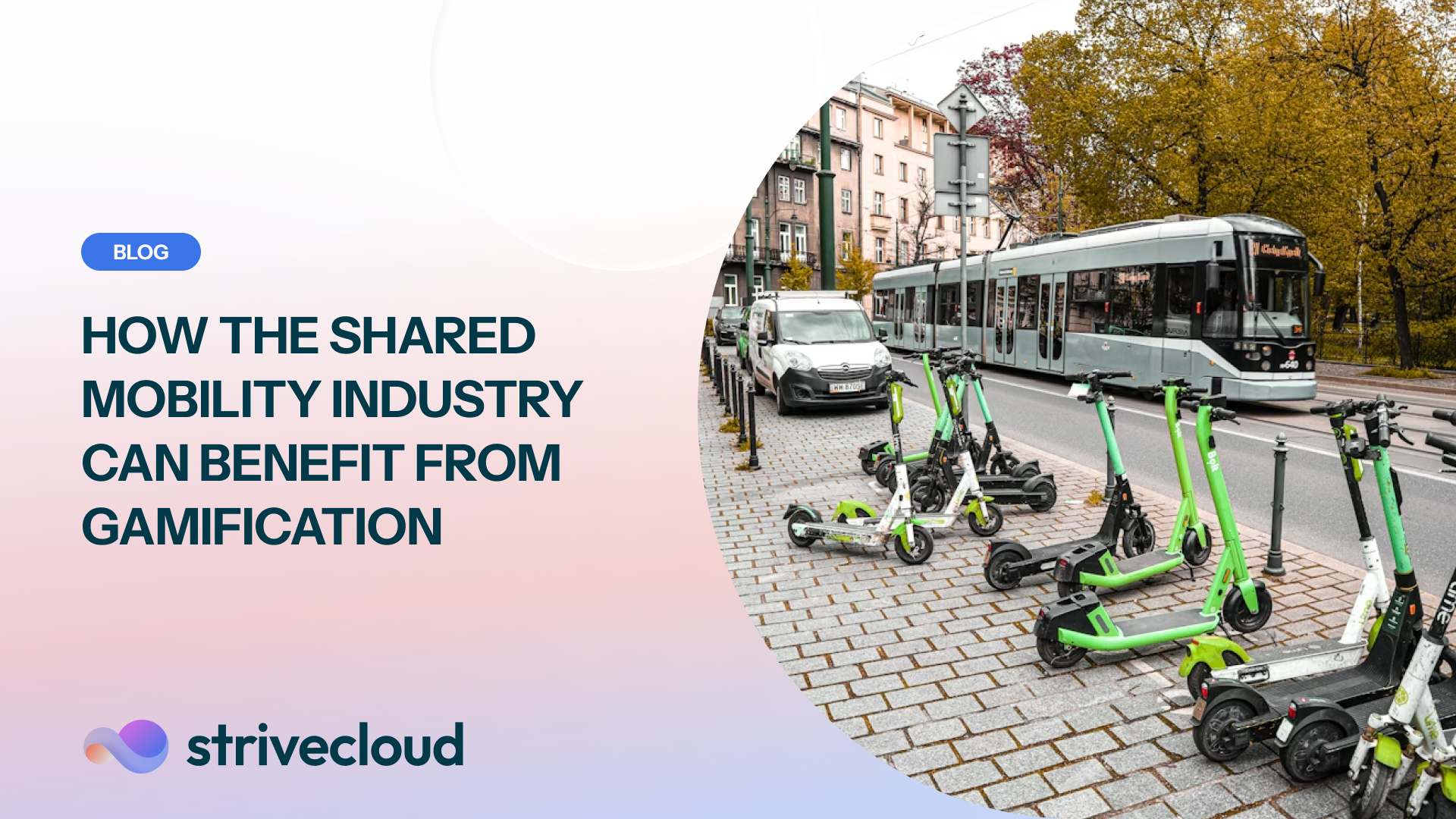
TL;DR: With ride-hailing and app-based platforms commanding a 54.12% market share as of 2025, shared mobility app gamification has evolved from a "nice-to-have" to a survival necessity. By integrating AI-driven challenges and loyalty rewards, providers can successfully differentiate their services in a crowded market, particularly in high-growth regions like Asia Pacific where congestion drives demand for smarter transit solutions.
While e-scooters are extremely popular and provide a good solution for short-distance commute in cities, the micro-mobility industry continues to face high competitive pressure. The main reason is strict regulation leading to little differentiation with competitors. Embracing shared mobility app gamification could, however, bring providers more peace of mind and strengthen their position in the fierce battle to build a loyal user base. In our experience, platforms that prioritize behavioral rewards see a significant lift in user retention compared to those relying solely on price-cutting.
Shared mobility solutions provider Wunder Mobility is teaming up with StriveCloud to introduce shared mobility app gamification and its benefits to clients, leveraging AI-driven features to maintain user engagement in an era of platform dominance.
In this article you'll find out about:
- The rize of e-scooters and market dominance in 2026
- Significant roadblocks in urban infrastructure
- How in-app gamification helps profitability and LTV
- The partnership between StriveCloud and Wunder Mobility to help providers build a connection with users
As we move through 2026, urbanization has reached a critical tipping point. According to recent industry market reports, the Asia Pacific region now commands a 45% global share of the mobility market, fueled by the massive demand for alternatives to on-road vehicle traffic in high-population hubs like India and China. Congestion remains a staggering economic obstacle, costing global economies billions in lost productivity annually.
Dedicated to beat this standstill, shared mobility players have entered the playing field, giving us more possibilities to get from one place to another. Shared mobility is a term used to describe transportation services that are shared among users, and with ride-hailing now representing over 54% of all app-based transport interactions, the implementation of shared mobility app gamification is the key to turning a one-time rider into a daily commuter.
The rize of e-scooters and app gamification
TL;DR: Shared mobility providers are leveraging app gamification to dominate a market where app-based platforms now control 54.12% of the industry. By integrating rewards and interactive challenges, e-scooter operators are transforming the "last-mile" commute into a high-retention user experience that thrives in congested urban hubs.
Micro-mobility has evolved from a novel trend into a fundamental category of portable, fun, and compact shared transport. These electrically powered devices, typically reaching speeds of 30-40km/h, rely on app gamification to foster deeper connections with users. Modern e-scooters are managed through sophisticated app-based services that utilize GPS for location tracking and AI-driven engagement tools to unlock devices and reward efficient riding behavior via smartphones.
E-scooters remain the fastest-growing segment of transport technology, catering to the urgent demand for solutions that bypass heavy urban traffic. According to recent industry forecasts from the New Urban Mobility Alliance (NUMO), the sector has moved beyond the early expansion phase into a period of high-intensity competition. Market data for 2025 reveals that app-based mobility platforms now capture a 54.12% market share, with the Asia Pacific region leading global adoption at 45%. In our experience, the most successful providers in 2026 are those who use interactive features to keep users engaged amidst this high competitive pressure.
Harriet Tregoning, Director @NUMO - "We are witnessing a sustained transportation revolution, and shared mobility continues to be the primary catalyst for urban transformation."
Significant roadblocks for app gamification in shared mobility
TL;DR: While the shared mobility market is maturing, providers face intense pressure from strict regulations, hardware maintenance costs, and razor-thin margins. To survive in 2026, companies are increasingly turning to app gamification to drive user retention, incentivize better parking behavior, and differentiate their services in a market where ride-hailing alone commands a 54.12% share.
Despite exceptional growth over the past years, the micro-mobility market faces important challenges including regulatory demands, limited infrastructure, and competitiveness. In our experience, solving these through app gamification is no longer optional; it is a prerequisite for operational efficiency.
#1 Strict regulation and app gamification compliance
The market is under strict regulation by cities. Local governments put out tenders setting operational, safety, and sustainability requirements the shared service providers have to meet. To stand out, providers must use app gamification to ensure users follow local laws, such as speed limits in pedestrian zones or designated parking spots. This is particularly vital in the Asia Pacific region, which holds a 45% global share of the market, where high-population density and extreme congestion drive the need for hyper-efficient urban management.
Each provider should, for instance, provide a fixed number of scooters with tech revisions made according to regulations. When every company offers similar hardware, the digital layer specifically how you engage the user becomes your only differentiator. We have seen that providers using "Safe Rider" challenges can reduce sidewalk riding by up to 30%, making them much more attractive to city planners during the tender process.
#2 Poor hardware health and gamified reporting
When hardware fails, app gamification serves as a critical bridge between the physical and digital worlds. Despite demands in terms of quality, fierce competition between micro-mobility providers forces players to cramp out enormous volumes of vehicles fast. Unfortunately, this often means quality suffers under the strain of 24/7 urban use.
When bikes or scooters break and you don't fix them in a timely manner, users get frustrated having to test several bikes before finding one that works properly. In our experience, leading platforms in 2026 now incentivize "Community Mechanics." By offering app gamification rewards such as ride credits or status badges to users who accurately report broken hardware, companies can reduce "dead vehicle" time and repair equipment faster than traditional maintenance teams could alone. This prevents damage to the public's perception of your company and ensures a reliable fleet.
#3 Scaling profitability via app gamification
Even though many micro-mobility companies have reached massive scales, numerous are struggling to achieve sustainable profitability. As of 2025, ride-hailing accounts for 54.12% of the shared mobility market, creating a high-pressure environment where smaller micro-mobility players must fight for every dollar of Lifetime Value (LTV). One of the main reasons for the difficult financial situation is the fact that, due to strict regulations, many providers can only compete at the price level.
In 2026, the industry has shifted away from the "growth at all costs" model seen in the late 2010s. Instead, providers use app gamification to lower Customer Acquisition Costs (CAC) and increase ride frequency. By moving away from simple discount codes and toward progression-based loyalty tiers, companies are finally seeing the unit economics shift toward the green. The breakdown of unit economics for an e-scooter ride below shows how small the profit margin actually is, emphasizing why digital engagement is needed to protect those margins.

This chart visualizes the costs associated with a single scooter ride, highlighting the narrow profit margins in the industry that app gamification aims to widen through increased user efficiency and retention.
How in-app gamification helps profitability
TL;DR: In 2026, app gamification is the primary driver for profitability in shared mobility. By shifting focus from price wars to behavioral engagement, operators can capture a larger slice of the ride-hailing market which currently holds a 54.12% share of the industry while simultaneously reducing operational costs through crowdsourced vehicle redistribution.
Gamification is a proven tactic to solve the challenge of acquisition and retention. Gamifying an experience doesn't mean you have to create a game. It is about taking customer data and creating milestones, levels, challenges, rewards, leaderboards, and all other app gamification elements to create a fun and rewarding experience.
Implementing app gamification provides three significant benefits for modern mobility providers:
- Market differentiation beyond pricing: As a company, you can stop worrying about competing solely on price and, instead, differentiate through the competition and user experience. In our experience, users are more likely to stick with a platform that recognizes their status. This is critical in 2026 as the Asia Pacific region now accounts for 45% of the global market share; in such high-density environments, brand loyalty is won through engagement, not just the lowest fare.
- High-fidelity data for urban scaling: App gamification allows you to gather more key data about your users. By linking important metrics such as the number of rides, the distance they drive, and how many minutes this drive takes them to milestones and challenges, you get users to come back. As a result, you will be able to generate even more data. This information is precious when making decisions to grow your company or when assessing performance in cities where increasing urbanization is driving demand. So the bigger your data sample, the more informed decisions you can take.
- Drastic reduction in redistribution costs: It gives you the chance to cut down on the costs of the redistribution for vehicles. In 2026, logistics and labor remain the heaviest burdens for micro-mobility operators. Instead, smart app gamification tactics such as achievements and rewards allow you to motivate people to leave scooters in designated areas or move them from low-demand zones to "hotspots." We have seen results where incentivized parking schemes reduce the need for manual van-based rebalancing by up to 20%, directly impacting the bottom line.
If you want to know more about gamification, read this post!
Scaling user loyalty: How app gamification powers the next generation of shared mobility
TL;DR: With ride-hailing and shared services capturing over 54% of the mobility market share in 2025, app gamification has moved from a "nice-to-have" to a core retention strategy. By integrating behavioral triggers, providers can influence high-value actions like off-peak riding or precise vehicle returns that directly improve the bottom line.
Following the sustained interest from global operators, Wunder Mobility continues to lead the industry by partnering with StriveCloud to bring advanced app gamification to the shared mobility ecosystem. As the market reaches a tipping point in 2026, StriveCloud offers a sophisticated plug-in toolkit that enables providers to transform a simple utility into an engaging user experience, crucial for standing out in a landscape where 45% of global shared mobility growth is concentrated in high-congestion regions like Asia Pacific.
In our experience working with high-growth operators, we’ve seen that the most effective gamification strategies are those that solve operational headaches. For example, providers can now give users the possibility to unlock achievements when they reach a certain number of drives or a certain distance traveled. Another powerful option is linking drop-off locations to rewards; this "incentivized rebalancing" helps steer user behavior toward high-demand hubs without the need for expensive manual van deployments. A third tactic is the use of raffles a digital lottery system where users enter with tickets earned through sustainable riding habits. The exact gamification elements are tailored during strategic workshops between StriveCloud’s experts and the provider’s product team.

These mockups illustrate how core app gamification features like user profiles, tiered achievements, and competitive leaderboards can be seamlessly integrated into a modern mobility app's interface to drive long-term retention.
Curious to see how app gamification could scale your shared mobility service? Book a demo with one of our experts and discover how you can leverage our technology for 2026!
Bottom line: smart shared mobility providers turn to app gamification ASAP
TL;DR: With ride-hailing platforms capturing 54.12% of the market share, 2026 is the year of the "retention-first" strategy. App gamification is the primary tool for shared mobility providers to differentiate themselves in congested urban markets, shifting the focus from price-cutting to long-term user loyalty through interactive, AI-driven rewards.
With competition in the shared mobility industry getting fiercer every day, it’s necessary to think about how you can differentiate yourself from other players and keep attracting users. Recent industry data shows that ride-hailing platforms now command a 54.12% market share, putting immense pressure on providers to innovate beyond basic GPS tracking. App gamification has emerged as a major opportunity to build that strong and loyal user base your company needs to thrive. In our experience, providers who pivot from static discounts to dynamic, challenge-based engagement see significantly higher daily active usage in high-traffic corridors.
Since the whole sector is currently on the lookout for ways to improve user acquisition and retention, the time is now to start experimenting. This is particularly critical in the Asia Pacific region, which currently holds a 45% global share of the market. As urbanization and traffic congestion continue to rize in these high-population areas, app gamification provides a way to turn a frustrating commute into a rewarding experience. By leveraging behavioral psychology, you can ensure your service remains the default choice in an increasingly crowded app ecosystem.
.png)
.avif)
Related Posts
Immediately Improve App Acquisition, Engagement and Retention With Gamification
Shared mobility providers are struggling to achieve profitability because competing at the price level is the only way to acquire and retain customers. What if we told you there's a smarter way to acquire more customers, engage them without losing money? Fire up your acquisition and retention game by gamifying your mobile app experience.

The Ultimate Guide on How to Become an Expert in App Retention & Engagement
Why is user engagement so important for apps today? Well, habitual apps simply do better. The average person spends 1/3 of their waking hours on mobile, still, the average 30 Day retention is only around 3%! We'll teach you how different gamification features can help you to acquire, engage, re-engage & retain more users. Get started with our definitive guide!