

4 ways to introduce gamification features that improve the user experience

4 ways to introduce gamification features that improve the user experience
TL;DR: To drive growth in 2026, brands are prioritizing gamification features that improve the user experience by integrating social streaks, progress tracking, and tiered rewards. With industry-wide Day 7 retention averaging just 13%, gamified mechanics offer a proven path to increase "stickiness" and long-term user loyalty.
Success in the 2026 app market requires more than just utility; it requires a reason for users to return daily. On the Google Play Store alone, there are over 2.4 million apps vying for attention. What then, do the best performing apps have in common? They leverage gamification features that improve the user experience to combat churn. In our experience, while the average app sees Day 7 retention fall to approximately 13%, gaming apps—which master the art of dopamine-driven feedback loops—consistently achieve Day 7 rates of 15–20% (Pushwoosh, 2025). You can take what works for games and leverage those psychological triggers for your business.
After setting up the right strategy, it takes two steps to put it into motion. First, you’ll have to find the app gamification software that suits your technical needs and scalability requirements. Secondly, you’ll need to select which specific gamification features that improve the user experience you’re going to implement, ensuring they align with your core user journey rather than acting as a distraction.
In this article, let’s cover how to create an effective strategy and look at how gamification features that improve the user experience have transformed 5 industry-leading apps!
- The biggest challenges that apps face today
- How gamification improves the user experience
- 4 gamification features that can transform your app and how to implement them
- 5 apps that found success with gamification
- Recap
The biggest challenges that apps face today
TL;DR: With average Day 30 retention hovering around 7%, most apps fail because they cannot maintain user interest. Implementing gamification features that improve the user experience is the most effective way to combat rising acquisition costs and "app fatigue" in 2026. To become the 1 in 10,000 app that achieves a true return on investment, you must tackle what developers agree are the biggest challenges currently plaguing the digital market.
App discovery is harder than ever
In 2026, the app marketplace is more consolidated than ever, and traditional marketing techniques are losing efficiency. This includes organic traffic methods like SEO or ASO (app store optimization), which have become hyper-competitive. In our experience, up-and-coming challengers face a "catch-22" in consolidated markets because apps with more downloads rank higher. To break through this ceiling, your product needs gamification features that improve the user experience enough to generate the viral "k-factor" loops necessary for organic growth.
Low rates of user retention
User churn remains the most critical issue for digital products. According to the Pushwoosh Benchmarks Study 2025, average Day 7 retention rates have tightened to 6.89% on iOS and just 5.15% on Android. Across most categories, developers are seeing a persistent benchmark of 13% retention at Day 7, dropping to a staggering 7% by Day 30. This means for every 10 users you acquire, 9 will have abandoned your app within a month. In our work with high-growth startups, we’ve found that gamification features that improve the user experience—such as progression bars and daily streaks—are the only way to significantly move these Day 30 numbers.

This chart demonstrates the dramatic drop-off in user retention over the first 90 days, highlighting why gamification features that improve the user experience are vital for long-term survival.
Are you experiencing low user engagement & high churn? Learn how gamification can help you →
The rising cost of user acquisition (CAC)
Acquisition costs have continued their decade-long climb, making existing customers even more valuable than new ones. When CAC is high and retention is low, it creates a "leaky bucket" that can kill any business model. To survive, your app must be engaging enough to turn a one-time visitor into a power user. We’ve seen this transition handled expertly by incorporating gamification features that improve the user experience, such as the Uber loyalty rewards or the Revolut referral campaign, which incentivize users to stay and invite others.
How gamification features improve the user experience
TL;DR: Strategic gamification features solve the modern retention crisis by increasing Day 1 engagement from the 26% market average to as high as 40%. By integrating reward loops and social competition, apps shift from utility tools to habit-forming experiences that drive long-term loyalty. In our experience, apps that prioritize these interactive elements see a significant lift in Day 30 session frequency compared to static interfaces.
Out of all categories of apps, the challenges of 2026—saturated markets and short attention spans—are less threatening to mobile gaming. Games maintain some of the highest retention rates, with Day 1 benchmarks reaching 35–40%, nearly double the average for standard utility apps. Gaming continues to secure the most amount of downloads, and the largest share of app revenue. Gaming dominates the app market! Indeed, non-gaming apps can learn a few things from this sector of the market—and that’s where gamification features come in.
Gamification is the use of game-like elements in non-game contexts. For example, this could mean adding a leaderboard to your educational app, which can show who in the community is earning more points. Perhaps that feature reminds you of the hit app Duolingo, whose product team remains firm that gamification features are the core reason “gamification is the reason” they are the most popular educational app in the world! In our experience, the most successful 2026 implementations focus on personal streaks and social proof to maintain these engagement levels.
What is gamification and how does it improve the user experience?
Research has shown that gamification features significantly improve the user experience by reducing cognitive friction and increasing the "fun" factor of routine tasks. Studies published in Technological Forecasting and Social Change find that these features positively affect the perceived benefits and value of a mobile app. Ultimately, the continued engagement that gamification facilitates helps apps beat the standard 2025-2026 industry benchmarks, where Day 7 retention often drops to 5-7%, leading instead to sustained customer loyalty and higher user lifetime value.
4 gamification features that can transform your app and how to implement them
TL;DR: With average Day 30 retention rates currently plateauing at just 7% across the mobile industry, gamification features are the most effective way to bridge the engagement gap. By implementing points, avatars, badges, and social communities, apps can emulate the success of the gaming sector, which sees Day 7 retention rates as high as 20%.
So, how does one implement gamification features? The right strategy is crucial - and the right gamification app software can be the perfect guide throughout the process. In our experience, successful 2026 app strategies move beyond simple mechanics to focus on long-term psychological value. While how to gamify your app will vary depending on your goals, these four features remain the gold standard for improving the user experience:
#1 Set up a points system and reward your users
A reward system does a great job of incentivizing user behavior. In 2026, this is more critical than ever; Pushwoosh Benchmarks show that average Day 7 retention is only 6.89% on iOS and 5.15% on Android. To beat these benchmarks, you must reward consistent action. For instance, if you want to push people to cycle instead of drive, you can reward points for it. This is how the app Changers saved 80,000kgs of CO2 in just 3 months! However, the points must mean something. To give people the feel-good dopamine hit, gamification features such as leaderboards or tangible prizes are perfect for providing a sense of progression.
#2 Invent a storyline with avatars and create a sense of personal involvement
Research is clear that avatars boost a user’s sense of ownership over the app. In 2026, users view their digital identity as an extension of themselves. In essence, users will feel more personally involved when they can customize their journey. These gamification features are essential if you want to take the user on a narrative story. Not only that, seeing other people’s avatars fulfills the need for social relatedness. It makes competing with other users more meaningful compared to a regular profile pic or a generic placeholder.
Easily incentivize & keep users motivated to use your product? Discover our app gamification platform!
#3 Hand out badges and boost customer motivation
Badges are a great way of recognizing a user’s accomplishments. These gamification features act as visual milestones that help align users to goals that you share. We have found that the most effective badge systems in 2026 utilize "scarcity" and "exclusivity" to drive behavior. Once earned, badges act as status symbols, distinguishing high-performing users from the rest of the community and satisfying the human desire for achievement.
#4 Encourage communities that make the experience fun
One of the most powerful needs that humans have is the need to belong. In the most basic terms, people crave social interaction. While standard apps struggle with high churn, gaming-inspired gamification features like challenges and leaderboards push users to interact, resulting in Day 7 retention rates of 15–20%—nearly triple the industry average. An in-app community can make customers significantly more loyal to your brand. For example, studies into Nike Run Club found that social interaction was the biggest source of customer motivation.
5 apps that found success with gamification features that improve the user experience
TL;DR: Leading apps maintain high engagement by utilizing gamification features that improve the user experience, such as habit-forming streaks, competitive leaderboards, and progress-tracking. In an era where the average Day 30 retention across most categories is just 7%, implementing these mechanics can help bridge the gap toward the 40% retention rates seen in top-tier gaming apps.
Gamification features that improve the user experience are no longer optional extras; they are the primary drivers of long-term retention. According to a 2025 Pushwoosh Benchmarks Study, the average Day 7 retention rate sits at 6.89% on iOS and 5.15% on Android. To fight this churn, successful apps across all categories, from B2B to B2C, have adopted gaming-inspired mechanics to keep users coming back. Here are 5 apps leading the way in 2026:
Headspace will make you a master of meditation
Headspace is a meditation app that leverages gamification features that improve the user experience for over 2 million subscribers. By using "streaks," the app visualizes consistent daily usage to help users install the habit of meditation. In our experience, streaks are one of the most powerful psychological drivers of retention because they tap into loss aversion. In addition, reaching specific milestones triggers digital confetti and rewards, providing the dopamine hit necessary to turn a mental health chore into a rewarding daily ritual.

Headspace uses a streak feature to visually represent a user's consistent meditation practice, motivating them to continue.
Fitbit’s leaderboard encourages users to run harder
Fitbit uses gamification features that improve the user experience by turning health data into a social competition. The app tracks steps to rank users on a leaderboard, creating a "positive intensifier" that fuels engagement. This social connection is key to Fitbit's massive active user base. 2026 industry benchmarks show that gaming-style mechanics like these allow apps to achieve Day 1 retention rates of 35–40%, significantly outperforming traditional fitness trackers that lack social components. Studies indicate that the inclusion of a leaderboard alone can lead to a 15% increase in daily activity.
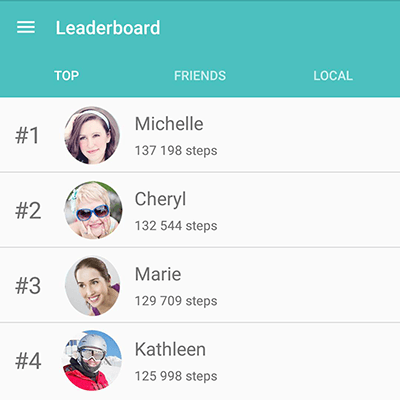
This leaderboard from Fitbit fosters a sense of competition and community, encouraging users to increase their daily step count.
LinkedIn improved its onboarding with this 1 gamification feature
LinkedIn utilizes subtle gamification features that improve the user experience during the profile creation process. A colorful progress bar creates a clear goal and provides a sense of accomplishment as users move toward the "All-Star" status. In our experience, clarifying the path to completion is essential for overcoming the "blank slate" problem in B2B apps. By guiding users through complex data entry with small, rewarding visual cues, LinkedIn has historically seen profile completion rates jump by over 50%, effectively countering the persistent low retention rates that plague professional networking tools.

LinkedIn's profile completion bar is a simple yet effective gamification element that guides a user toward a fully filled-out profile.
Setting targets with SWEAT creates goals to strive for
SWEAT incorporates gamification features that improve the user experience by allowing users to set personal targets and deadlines. By creating ownership over their fitness journey, users are more likely to stay committed. Research on the "Mere Deadline Effect" suggests that adding a deadline significantly aids goal pursuit by increasing focus. The app aligns these targets with 12-week programs, a duration designed to be impactful without being daunting, helping it maintain a Day 7 retention that stays well above the 13% cross-category average.

The SWEAT app uses goal-setting and program timelines to provide structure and motivation for users' fitness journeys.
The Starbucks loyalty program that truly rewards
Starbucks has mastered gamification features that improve the user experience through its iconic "Stars" loyalty program. With over 30 million active members, the app rewards orders with digital currency that can be redeemed for tangible products. The tiered reward system encourages users to climb higher to unlock better perks. This addictive design has proven incredibly lucrative, as the program is responsible for approximately 40% of all US sales. By visualizing the path to a "free" item, Starbucks turns a routine transaction into an engaging quest.
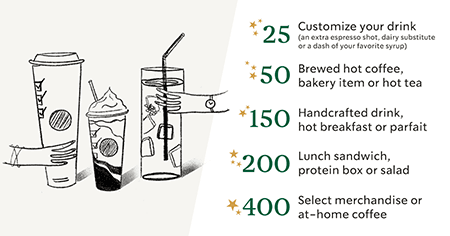
Starbucks' loyalty program visualizes rewards with 'stars,' making the path to a free item tangible and engaging for customers.
As you can see, depending on your business goals, gamification features can enhance the user experience and drive more of the customer behavior that you want to promote. If you would like to start on your journey, the Strivecloud gamification app software can assist your needs and help you overcome the retention challenges facing your app in 2026.
Recap: Integrating Gamification Features That Improve the User Experience
In 2026, launching a successful app requires more than just a clean interface. In our experience, the most effective way to drive long-term engagement is through gamification features that improve the user experience. By leveraging behavioral psychology, apps can overcome the three primary challenges of the current mobile landscape: stagnant discovery, the "retention cliff," and skyrocketing acquisition costs.
First, app discovery is more competitive than ever. Standing out among millions of listings is nearly impossible without massive initial volume. Getting to the front page is no longer just about quality; it is about maintaining a download velocity that few developers can sustain without a built-in engagement loop.
Once you acquire a user, the battle shifts to keeping them. Recent data from the Pushwoosh 2025 Benchmarks Study reveals that average Day 7 retention is only 6.89% for iOS and 5.15% for Android. Across most categories, the industry faces a standard 30-day retention rate of just 7%, highlighting a massive gap in user loyalty that standard UI/UX often fails to bridge.
Compounding these issues, user acquisition costs (CAC) continue to climb globally. This makes it increasingly difficult for apps to achieve sustainable profitability, as the cost of "buying" a user often exceeds their lifetime value if they churn within the first week of installation.
So, how do market leaders like Fitbit or Duolingo maintain such high engagement? They borrow the mechanics of the highest-performing category: gaming. According to 2026 industry benchmarks, gaming apps typically see Day 1 retention rates of 35–40%, nearly doubling the average non-gaming app by utilizing addictive design patterns and immediate feedback loops.
These leaders do not necessarily turn their products into "games" in the traditional sense. Instead, they implement gamification features that improve the user experience by nudging behavior through leaderboards, streaks, and milestone-based reward systems. These psychological triggers transform routine tasks into rewarding habits that keep users coming back daily.
Would you like to see how gamification could work for your app? Learn more →
Related Posts
How to use gamification for improved loyalty in telecom
Increasing digital competition is forcing telecom companies to innovate. Changing consumer behavior and low customer loyalty puts lots of extra pressure on marketing and service departments to fight customer churn. However, most initiatives never achieve what they set out to do: creating a more enjoyable and engaging customer experience. That's where gamification comes in, something we know all about.
How the greatest health apps use communities to boost user engagement
It's no secret mhealth apps have the power to drastically impact how we approach health. With solutions for diabetes testing, elderly care or general health & fitness everyone can achieve their goals with a little digital help. Unfortunately, most mhealth apps lose the attention of their users in a matter of days. If they want to truly impact a user's health, they need to build a better and more engaging user experience. In this article, you'll discover the peer community secret behind some of the greatest mhealth apps. check it out!