The 7-step Gamification Blueprint to Change mHealth Apps for the Better


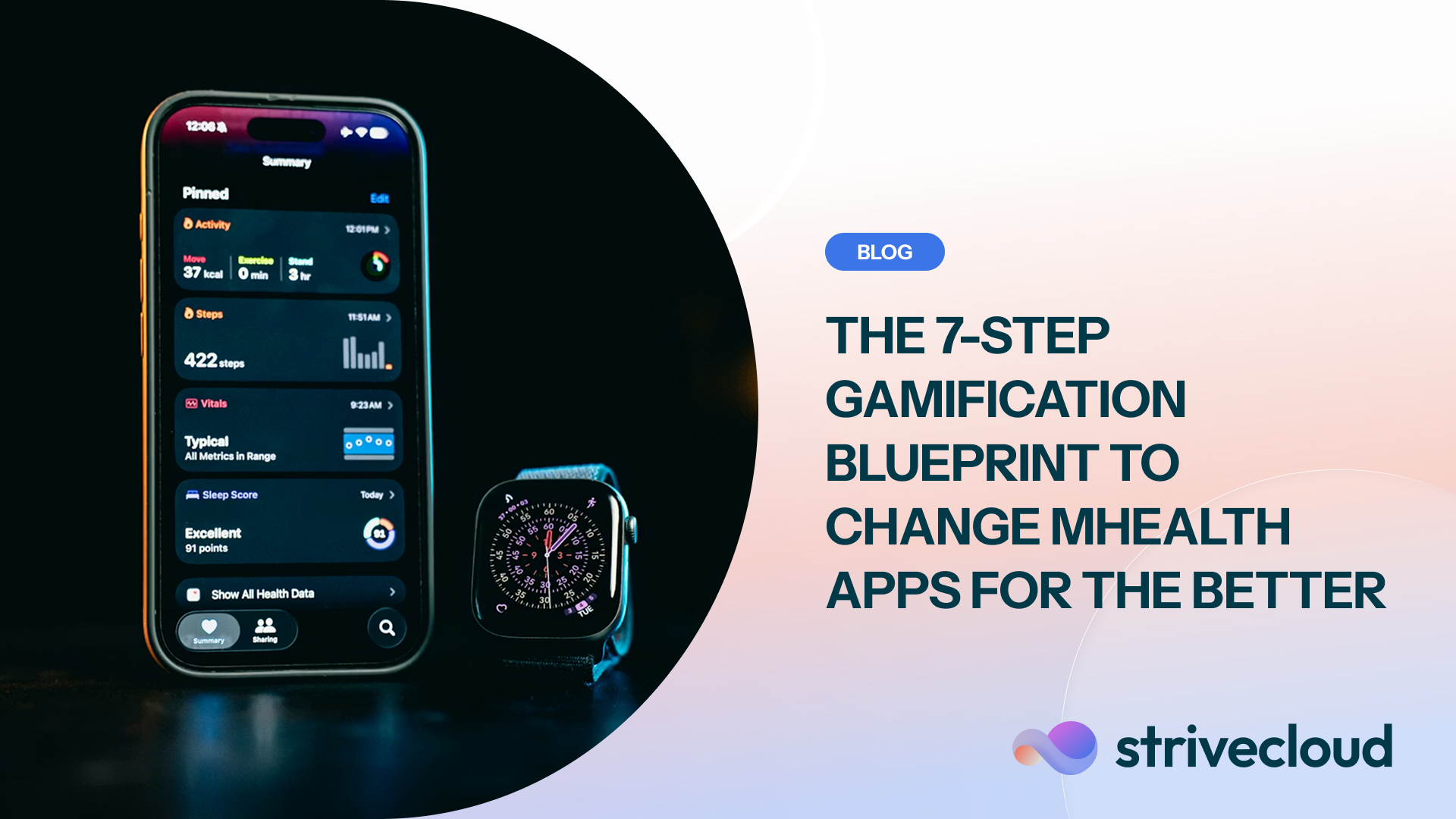
TL;DR: Gamification for mHealth apps is the integration of game mechanics like progression, social loops, and rewards into clinical contexts to drive long-term patient adherence. As of 2026, the global healthcare gamification market has surpassed USD 4.16 billion, with enterprise-level adoption reaching a 61% market share to solve the persistent challenge of user retention.
The core mission of most digital health tools is to facilitate lasting behavioral change. However, achieving this is difficult when apps target high-friction cohorts, such as patients managing chronic illnesses or those facing "log fatigue" from repetitive data entry. In our experience, the most successful gamification for mHealth apps moves beyond simple points to address the psychological needs of the user, turning clinical requirements into voluntary habits.
The stakes for engagement are higher than ever. Recent market reports indicate that the U.S. healthcare gamification sector is projected to reach USD 6.31 billion by 2032, growing at a CAGR of 23.19%. With exercise games now commanding a 45.22% share of the market, it is clear that users are gravitating toward platforms that provide intrinsic motivation. Gamification for mHealth apps is no longer an optional "extra" it is the primary driver for apps looking to stand out in a market that continues to expand rapidly in 2026.
In this article, we will discuss how gamification for mHealth apps drives user engagement and the specific steps required to implement these mechanics effectively!
Here’s what you’ll find out:
- What is gamification in a clinical context?
- Gamification for mHealth apps done right: 2026 Case Studies
- How to incorporate gamification for mHealth apps
- The measurable benefits of gamification for mHealth apps
What is gamification?
TL;DR: Gamification is the application of game-design elements in non-game environments to drive specific user behaviors. In the mHealth sector, it is the primary engine behind a market projected to reach USD 6.31 billion by 2032, transforming passive health tracking into active, habit-forming experiences.
Gamification is the strategic use of game elements and psychology in a non-game context. In our experience, implementing gamification into your user experience is the most effective way to motivate users and solve the retention challenges that plague digital health. By 2026, the global healthcare gamification market has matured into a USD 4.16 billion industry, where the most successful platforms prioritize behavioral science to drive long-term health outcomes rather than short-term novelty.
How does gamification for apps work?
Gamification for apps is mostly recognized through features like badge reward systems, leaderboards, or progress bars. We call these extrinsic motivators. However, as the industry moves toward more sophisticated clinical applications, research shows that extrinsic rewards alone are not sustainable. While they trigger initial downloads, the 23.19% CAGR currently seen in the market is driven by apps that successfully transition users from external rewards to internal habits.
True motivation comes from within. It’s the underlying emotions behind these features that make a user tick our innate desires for achievement, autonomy, and social connection. We call these intrinsic motivators. In our experience, the 61.25% market share held by enterprise-based healthcare gamification in 2024 demonstrates that providers now favor intrinsic design to ensure patients stay committed to long-term treatment plans.
The true power, however, comes from combining these two. It’s the difference between a gamification strategy that feels like a gimmick and one that changes lives. Currently, exercise games and fitness motivators hold a 45.22% market share because they masterfully balance these five psychological pillars:
- Relationships. Humans are biologically wired for social connection. We are encouraged by a sense of competition or collaboration between peers. To leverage this, modern mHealth apps use features like community challenges or real-time social feeds to foster accountability.
- Accomplishment. Satisfying the need to achieve creates an intrinsic loop that makes your app feel rewarding. In our experience, the most successful apps move beyond simple badges to "milestone mastery," where users feel a genuine sense of growth in their health journey.
- Empowerment. Successful apps empower users with autonomy. Recent industry reports confirm that when mHealth apps allow for deep customization, users report higher engagement. This includes everything from personalized health goals to customizable interfaces that reflect the user's identity.
- Unpredictability. Humans are naturally curious. By 2026, leading apps use AI-driven "variable rewards" and unexpected challenges to prevent user fatigue and keep the experience fresh and engaging.
- Constraint. People are highly motivated to avoid negative outcomes or lose progress. Implementing "streaks" or limited-time challenges creates a healthy sense of urgency, encouraging users to check in daily to maintain their hard-earned momentum.
Looking for more gamification goodness? Check out our ‘What is Gamification’ page!
Gamification for mHealth apps done right
TL;DR: Gamification for mHealth apps is the primary driver behind a healthcare gamification market projected to reach $6.31 billion by 2032. By leveraging social mechanics and enterprise-grade behavioral triggers, top apps are seeing a 23.19% CAGR as they transition from simple tracking to high-retention clinical tools.
There are many gamification tactics you can use to boost app engagement and user retention. However, it all depends on the user goals and requirements. Let’s see how top mHealth apps like Strava and Milk Man use these features to dominate a global market now valued at over $4.16 billion.

The chart above breaks down various gamification strategies, which top apps like Strava use to effectively motivate their user base in an increasingly competitive 2026 landscape.
Strava remains a titan in the fitness segment, which currently commands a 45.22% share of the exercise gaming market. With millions of active athletes tracking their activities, Strava succeeds by recognizing that data alone isn't enough; users need a social "hook" to remain consistent over years, not just months.
Runners can turn their local park or street into a racecourse, which the app calls ‘segments’. In doing so they can compete on a leaderboard with others in their area. In our experience, the genius of their leaderboard is how it thrives on the social and motivational aspect of the user experience. By 2026, this "community-first" approach is the gold standard for gamification for mHealth apps.
On the other end of the spectrum, Milk Man is an emerging app that encourages fathers to learn about the health benefits of breastfeeding. Milk Man represents the growing enterprise-based gamification sector which accounts for 61.25% of the total market share by driving engagement through points, badges, and social elements like forums. This model is particularly effective for healthcare providers looking to increase patient education and adherence.

This screenshot from the Milk Man app displays how badges and achievements can encourage fathers to learn about important health topics through structured, rewarding pathways.
Current industry trends show that consumer-facing fitness and wellness apps are the fastest-growing sub-segment due to rizing global health awareness. Within Milk Man’s ecosystem, over 72% of users reported learning new information, citing personalized notifications and milestone-based rewards as the primary reasons they didn't abandon the platform after the first week.
How to incorporate gamification for mHealth apps
TL;DR: In 2026, gamification for mHealth apps is no longer optional; it is a core retention strategy in a market projected to reach $6.31 billion by 2032. By following a structured 7-step blueprint from behavioral analysis to data-driven iteration developers can capture the 45.22% of users now gravitating toward exercise-based game mechanics. In our experience, the most successful apps prioritize "micro-incentives" that align with clinical outcomes to sustain long-term engagement.
A foundational Brazilian study found that gamification for mHealth apps leads to significantly higher health goal completion rates. This research laid out a 7-step blueprint that remains the gold standard for setting up a high-performance gamified user journey in 2026:
- Analyze the app’s requirements and key features - find out what specific medical or wellness actions your users need to take in order to experience "Time to Value" within your app.
- Identify the target users - Learn more about who your users are. In our experience, enterprise-level users (making up 61.25% of the market) respond better to progress visualization, while consumer-led users favor social competition.
- Pinpoint the interactions between the users and app - identify every touchpoint and define the ideal user behavior for each, ensuring the gamification for mHealth apps strategy feels like a natural extension of the UI.
- Learn the pros and cons of other gamification apps - with a projected 23.19% CAGR in the healthcare gamification sector, studying competitors’ reward loops is vital to avoid "point fatigue."
- Choose the most suitable gamification strategy - select the mechanics (e.g., streaks, leagues, or unlockable content) that are most likely to work based on your specific health vertical.
- Develop the gamification features - Leverage real-time biometrics and user data to develop scalable challenge and reward systems that adapt to the user’s physical progress.
- Evaluate the gamification features - Use A/B testing to measure how features drive desired health behaviors and iterate based on retention cohorts.
As the consumer segment becomes the fastest-growing area of digital health, the data you leverage will define your success. Essentially, you can gamify any interaction, but in 2026, the most effective gamification for mHealth apps strategies are those that feel personalized rather than prescriptive. Your strategy must evolve alongside your users' fitness levels and health literacy.
Setting up a gamification strategy is hard. Let our team of experts help you!
The benefits of gamification in health apps
TL;DR: Gamification in health apps has evolved into a $4.16 billion industry necessity as of 2025. By leveraging exercise games and interactive onboarding, developers can combat high uninstall rates and drive long-term patient adherence through dopamine-driven feedback loops.
Gamification in health apps drives long-term engagement by moving beyond short-term milestones. While users might initially be motivated by a specific weight-loss goal or a temporary fitness challenge, behavioral research suggests that intrinsic motivation often wanes once those targets are met. In our experience, mHealth gamification solves this by providing consistent positive reinforcement and a sense of "play" that sustains interest. With the global healthcare gamification market projected to grow 23.19% annually through 2032, it is clear that stimulating user experiences are now the baseline for top-tier wellness platforms.
The right strategy makes the user journey more enjoyable and reduces churn. In a competitive landscape where exercise games and fitness apps now hold a 45.22% market share, early engagement is the difference between a loyal user and a deleted app. While standard apps often struggle with high 30-day abandonment, gamification in health apps transforms mundane tasks like filling out medical history or daily logs into rewarding experiences. Current data indicates that enterprise-level adoption (healthcare providers and pharma) now accounts for 61.25% of the market share, proving that even clinical settings rely on these "fun" elements to ensure patient retention and data accuracy.
Finally, gamification in health apps reinforces permanent behavior change. Simply put, research shows that gamified systems stimulate goal completion more effectively than static tracking. By using motivators like dynamic progress bars and achievement tiers, developers can tap into the user's desire for mastery. According to industry reports, the U.S. healthcare gamification market is expected to reach $6.31 billion by 2032, fueled by the shift toward preventative care and the proven ability of these apps to support habit formation over time.
Want to pimp up your user experience to make it more fun? Check out our app gamification software!
Wrap up: Why mHealth app gamification is the standard for 2026
TL;DR: To succeed in 2026, mHealth apps must transition from static tracking tools to interactive ecosystems. With the global healthcare gamification market reaching USD 4.16 billion in 2025, sophisticated engagement features are now the primary defense against user churn and "app fatigue."
In order for mHealth apps to succeed in their goal of improving user health, they need to overcome the "engagement plateau." In our experience, the primary reason for churn in 2026 isn't a lack of features, but a lack of consistent user motivation. According to industry reports, exercise-based games now command a 45.22% market share, proving that users increasingly gravitate toward apps that reward their progress.
To combat abandonment, mHealth apps are increasingly turning to this 7-step gamification blueprint to drive long-term behavior change. By leveraging game mechanics, you can tap into the 23.19% CAGR growth currently transforming the U.S. healthcare gamification sector, which is projected to hit USD 6.31 billion by 2032. We have found that the most successful apps move beyond simple badges to integrate deep-rooted social and competitive elements that keep users coming back daily.
Looking to drive long-term engagement and positive behavior change yourself? This might be the right strategy for you!
.avif)
Related Posts
How to Increase Mobile App User Engagement? Here Are 7 Ways How!
The higher your mobile user engagement, the more revenue growth you create! Indeed, when your users are engaged, they stick around for longer, spend more, and generate more useful data. But in such a competitive market, how do you boost mobile app user engagement? Here's 7 ways how.