

App gamification: the most successful hack to user engagement demystified

App gamification: the most successful hack to user engagement demystified
App gamification is an innovative methodology that uses typical game-world elements in non-game contexts to stimulate user engagement. If you’re not at least considering integrating such mechanics into your app, you risk lagging behind on competitors and losing users. Why, you ask? And what app gamification elements are out there?
In this post, we’ll cover:
- Why you should invest in app gamification to boost user engagement
- It’s imperative you know a thing or two about app gamification and how it works
- Gamification elements for mobile apps
When it comes to getting people to do the things you want, engagement is critical. You have to capture their attention and motivate them. App gamification provides the perfect tools to foster that kind of user engagement. By integrating game-like mechanisms and, in doing so, appealing to people’s competitive nature, you can nudge them towards the actions you want them to take.
Why you should invest in app gamification to boost user engagement
These days, it is incredibly hard to keep users hooked on your service or product. Some of them might not understand it, others forget to use it over time. There’s also always the chance that your audience discovers another app and replaces yours. Maybe because they like their service or product better, but in many cases, users also switch because they like the experience better elsewhere.
Let’s face it: in 2020, competition is fierce in nearly every sector - so the time for app gamification is now.
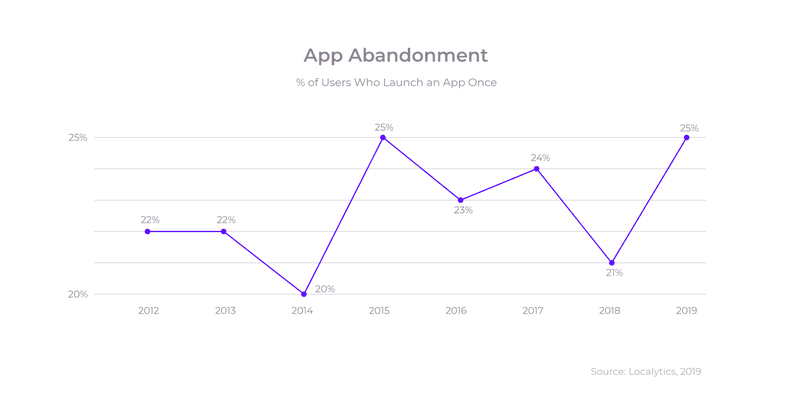
This graph clearly illustrates the dramatic impact app gamification can have on user activity and retention.
So how do you convince users to stick with your brand, product, or service? By playing on both intrinsic and extrinsic motivators. In short, it’s about giving rewards for a certain task or behavior and evoking positive emotions at the same time.
Want to know more about how game mechanisms trigger motivation? Read this post
It’s imperative you know a thing or two about app gamification and how it works
Unfortunately, not all companies succeed in making app gamification work for them. Back in 2014, Gartner reported that 80% of all gamification efforts would fail due to the complexity of understanding human psychology. To successfully apply gamification in your app, you need to fully grasp what motivates your user and make sure all game mechanics you integrate are aligned.
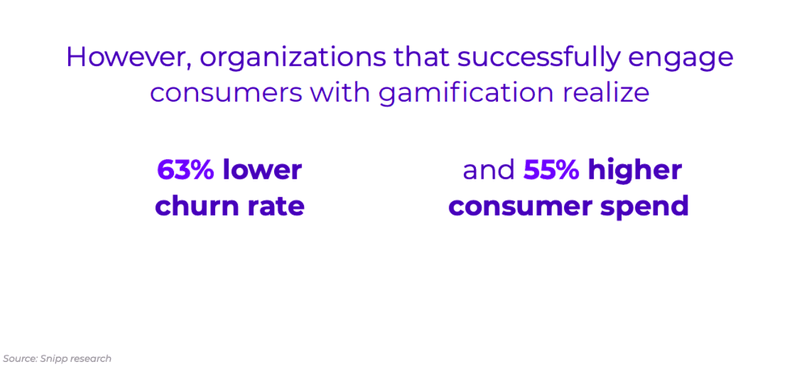
Understanding human psychology, as shown in frameworks like Octalysis, is key to successful gamification design and avoiding common pitfalls.
Gamification elements for mobile apps
So what app gamification possibilities are out there for you to explore? Let’s dive into StriveCloud’s plug-in gamification toolbox and see how you can improve user engagement by offering a gamified experience in your app.
Points collection
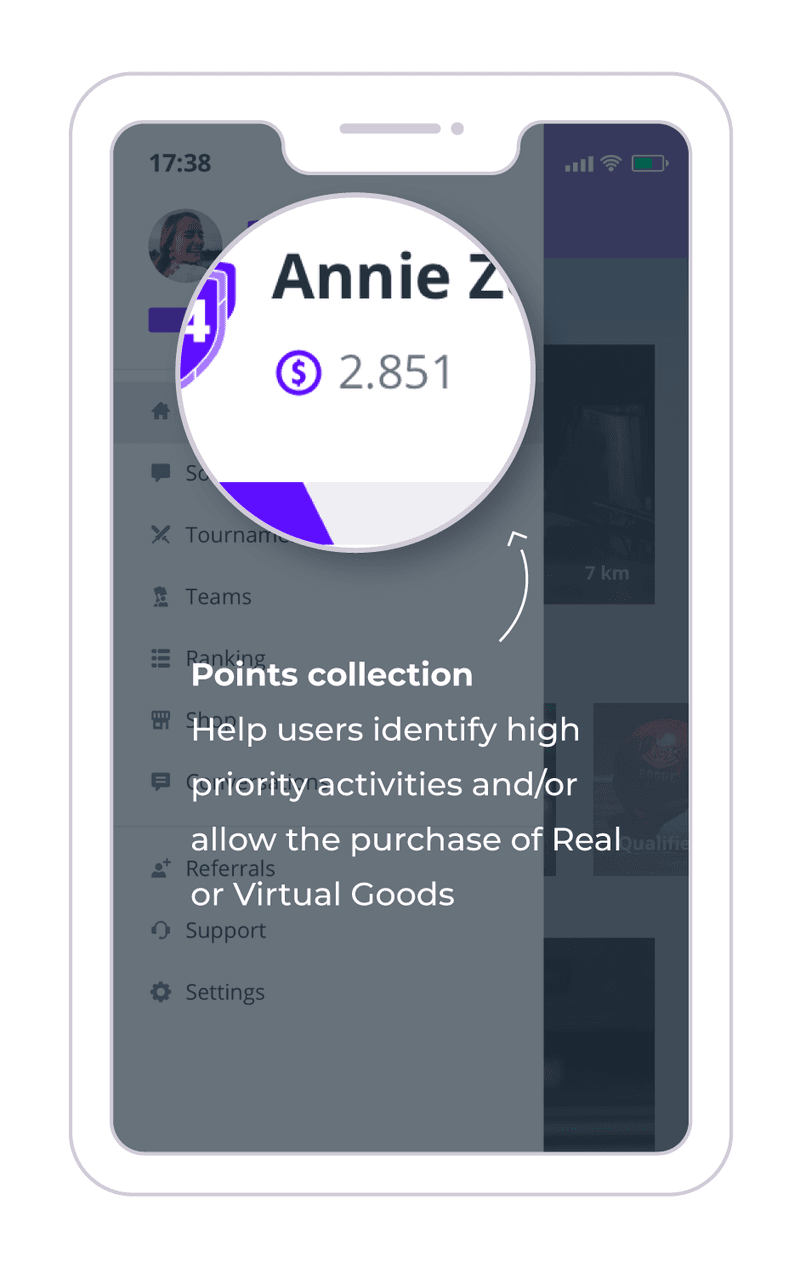
This example demonstrates how earning points for actions provides a tangible sense of progression for the user.
Whenever we do something, we like to receive some kind of reward in return. That’s no different when we’re using a mobile app. Point users towards high priority activities and have them perform them by promising points in return or allow them to purchase real or virtual goods.
Challenges
Presenting users with clear goals and rewards taps into their natural drive to achieve and encourages repeat engagement.
Challenges are a powerful game mechanic to motivate users into action. By giving users the option to enter challenges or challenge each other, you play on the competitive nature we all have and seduce your users into coming back to your app.
Leaderboards
This leaderboard shows how competition drives user retention and provides social proof of activity within the app.
Gamification is about motivating people through data, so an important part of the user experience is making data visible to users. By visualizing how users are doing in leaderboards, you motivate them to keep using your app. Those at the top of such a ranking want to keep their position, users in lower positions want to climb up and knock current leaders from their thrones. In the end, people are competitive souls, and being able to see your name on the list of winners gives users a considerable motivation boost.
Progress bars
A visual progress bar provides immediate feedback and motivates users to complete the next step in their journey.
It’s always easier to get to a certain goal when you know what it takes to get there. A progress bar is a nice visualization for the user of his journey towards achieving that goal. By providing feedback to users on where they are in their journey, you encourage them to take the next step.
There are different ways for you to show progress:
- Task progress: You can have each small task have its own goal and use a progress bar to indicate the stage of the task.
- Progress in achievements: Trying to stimulate certain behavior with rewards and achievements, like using your app for a certain amount of days in a row? You can nudge users, even more, to do so by visualizing how close they are to the award.
- Level progress: Give users insight into how much more it takes for them to reach a new, higher level.
Virtual badges
Awarding virtual badges for milestones creates a sense of achievement and status for users, making their progress feel valued.
No matter how old we are, receiving a medal, a trophy or a badge is a great moment. This moment of recognition adds to our motivation to take on the next challenge. If done right, badges are a powerful gamification tool.
Lotteries
A lottery system introduces an element of chance and excitement, encouraging users to perform actions to earn tickets.
A great way to hook users on your app is by integrating a lottery system. The idea is simple: users receive tickets for actions like leveling up, achieving a certain rank in leaderboards, or winning badges. Each ticket equals a chance to enter the lottery and to win nice prizes.
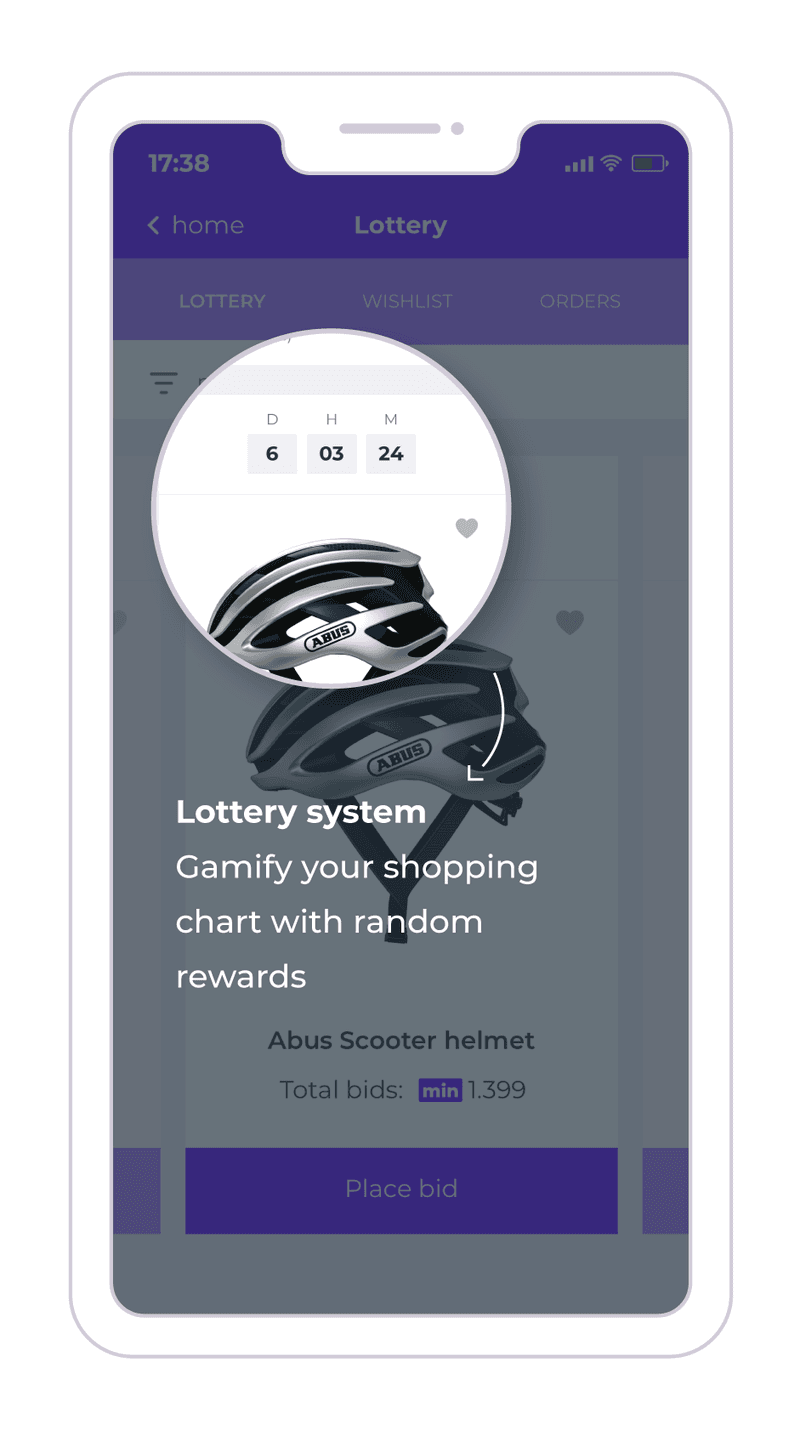
The visualization of a lottery ticket makes the potential reward feel more tangible and compelling to the user.
Referral programs
This illustrates how a referral program can be gamified, turning user acquisition into an engaging activity for your existing audience.
The more, the merrier, right? A great tactic to boost user engagement is by allowing them to reach goals with friends or by encouraging them to beat others. But as you know, it’s not easy attracting new users today. That’s why user advocacy is such an important factor in every company’s growth strategy today.
Get access to the networks of your current users with gamified referral programs. Let them invite friends and get rewarded in return. There are numerous possibilities: you could give them more points, lottery tickets, a special badge... Without having to put in a lot of effort yourself, you grow your user base.
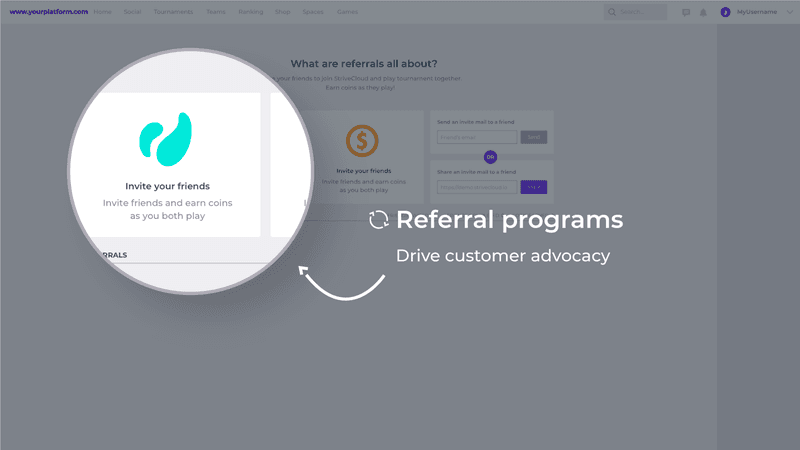
A clean referral interface makes it easy for users to share and track their invitations, maximizing participation.
Social feeds
An in-app social feed creates a community space where users can see each other's progress and achievements.
Having a built-in social feed is, on the one hand, a great way to boost competitiveness among users by announcing other users’ milestone unlocks and achievements. On the other hand, it can foster collaboration by allowing users to ask questions within the community when they are stuck on a particular challenge.

This feed shows how announcing milestones and unlocks can boost competition and collaboration among users.
Want to see a real-life example of a company integrating these elements? Read Kayzr’s story
All coming together: user engagement and app gamification go hand in hand
Users that continue to be engaged and keep using your app are kind of like the holy grail for lots of businesses today. In order to maximize user engagement, app gamification is a powerful solution.
It’s no longer an option you can ignore. Many businesses are looking into how they can keep users hooked and are finding out about gamifying the user experience. Without a doubt, they’re getting convinced by the benefits app gamification brings and how quickly it is to get started with. If you wait too long, your competitors will start stealing your users.

This call to action provides a clear next step for readers interested in implementing these engagement strategies.
Related Posts
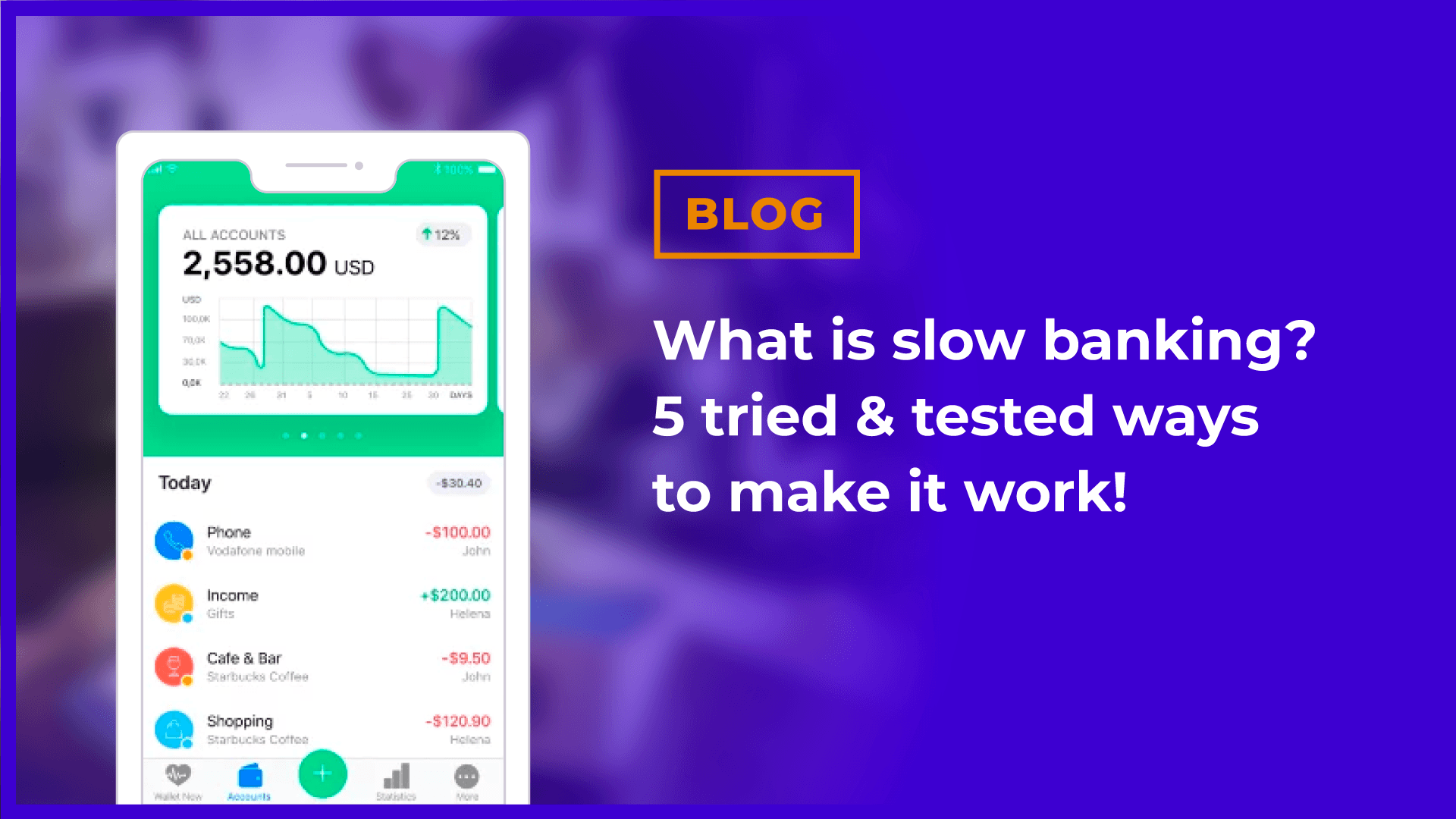
What is slow banking? 5 tried & tested ways to make it work!
While 84% of people research complex financial products like insurance online, 55% cannot ever imagine actually purchasing online. So what can the slow banking sector do to digitalize and grow? With gamifiation examples that create customer motivation, apps like Banx are leading the way.
Top tips on how to build a successful app gamification strategy
Why do gamified apps have higher engagement? App gamification is not just a gimmick. We've seen successful examples from fintech, health, mobility,... The science works! So how can you design & implement your own gamification strategy? Find out here!