

How Gamification Makes User Onboarding Better and 11 Successful Gamification Onboarding Examples



TL;DR: Gamification makes onboarding better by transforming it from a tedious chore into an engaging experience, significantly reducing early-stage churn. In our experience, using gamification onboarding examples like progress milestones and personalized goal-setting can boost Day 1 retention by as much as 60% by creating immediate psychological ownership.
Is there a more crucial stage in your customer journey than onboarding? Without a doubt, bad onboarding design can doom your app’s future. In the hyper-competitive market of 2026, data suggests that as many as 80-92% of apps face market failure due to poor user retention stemming from unengaging onboarding processes. But it doesn’t have to be that way! By utilizing proven gamification onboarding examples like interactive progress maps and personalized challenges, you can make the first session feel like a win rather than a task. As modern industry reports confirm, the global gamification market reached $19.4 billion in 2025, projected to surge to $92.5 billion by 2030, reflecting its widespread adoption in driving retention and user engagement.[1][2] This growth highlights its critical role in unlocking long-term user retention.
Our research shows that today, 70% of Global 2000 companies use gamification to enhance their digital interfaces and user flows, recognizing its power to increase user interaction by 100-150% compared to traditional methods.[1][2] This article will explore the specific challenges in user onboarding and provide numerous gamification onboarding examples to help you improve user retention from day one.
- The challenge: How to prevent onboarding churn
- How apps are doing it wrong
- What is gamification?
- What is gamified onboarding?
- Why does gamification for onboarding work?
- 3 key benefits of onboarding gamification
- The gamification mechanics used to improve onboarding
- 11 gamification ideas for onboarding
- Gamify your user onboarding with StriveCloud!
- FAQs
The challenge: How to prevent onboarding churn with gamification
TL;DR: High churn during user onboarding often stems from a "value gap" where users don't immediately grasp benefits. By 2026, leading platforms tackle this by integrating gamified micro-incentives, achieving up to a 62% increase in monthly active users (MAU) compared to static tutorials, and ensuring users discover their "Aha!" moment swiftly.
By far, the biggest drop-off in users takes place in the first 24 hours after installation. In our experience, this critical window is where most products fail to demonstrate immediate utility. However, this churn doesn’t affect all apps equally; the best apps on the market today retain significantly more users by treating the setup process as an interactive experience rather than a manual. Indeed, 70% of Global 2000 companies now utilize gamification strategies to bridge this initial engagement gap, solidifying its place as a standard practice.

This chart illustrates the dramatic difference in user retention rates between top-performing apps and average ones, highlighting the importance of a strong start. Modern industry benchmarks show that gamified health and wellness platforms, such as dacadoo, have achieved up to a 62% increase in monthly active users (MAU) by replacing traditional forms with rewarding progress markers and personalized goal-setting, according to 2026 data [3]. Furthermore, apps with gamification like badges and progress bars see 50% higher completion rates for onboarding tasks, directly impacting day-one retention [4].
So what do the top apps do right? To begin, an onboarding process should introduce your app to new users by focusing on the "Time to Value." Most importantly, that means introducing your value proposition and doing it as soon as possible! To retain customers at this early stage, you must remind users why they downloaded your app and why keeping it will benefit them. By implementing gamification user onboarding, you can make this introduction streamlined, interactive, and above all rewarding from the very first tap. Gamified onboarding makes users 3x more likely to adopt tools compared to purely instructional processes, especially evident in areas like financial apps [5].
How apps are doing it wrong with gamification onboarding
TL;DR: To combat the 80-92% app churn rate that plagues new applications, gamification onboarding is critical. By transforming tedious setup screens into interactive challenges, companies can see up to a 62% boost in monthly active users (MAU), proving that dynamic onboarding is key for lasting engagement in 2026.
Many companies still fail in their user acquisition strategies for mobile apps during the initial setup phase. In 2026, the stakes are higher than ever; general user onboarding context shows that poor processes doom apps, leading to an estimated 80-92% app churn or market failure rate. So how can you prevent this? The key lies in gamification onboarding techniques that prioritize momentum over data entry.
The worst thing you can do is make your onboarding a slog. In our experience, high-friction interfaces such as those lacking modern biometric autofill or smart defaults act as an "exit ramp" for new users. As of 2025-2026, research across sources confirms that 70% of Global 2000 companies have integrated gamification to solve this exact problem, with 65-70% specifically utilizing it for onboarding.
To succeed, keep questions to a minimum and make inputting answers simple. Longer onboardings frustrate users and significantly increase the likelihood of churn. However, leading apps leverage gamified elements like achievement-triggered campaigns, reporting a 62% increase in monthly active users (MAU). For instance, the health tech sector has seen a shift; while older apps struggled with abandonment, modern gamified platforms have achieved substantial MAU increases by rewarding users for completing their profiles.
Of course, onboarding too quickly has its problems as well. Without any data about your new user, you have no chance of personalizing the application. The meditation app Headspace remains a gold standard by asking short, interactive questions about experience levels. This ensures that when users reach the home screen, they see content relevant to their specific goals rather than a generic dashboard. Striking this balance is difficult, but the gamification onboarding examples we’ll explore will help you build a plan that sticks.
Slash churn with gamified onboarding
In 2026, certain sectors like banking, dating, and mobility have no choice regarding onboarding length due to regulatory requirements. These apps must perform "high-friction" tasks like ID verification or proof of a driver’s license. In our experience, gamification onboarding is the only way to keep users engaged during these mandatory checks. The latest findings show that gamified onboarding makes users 3x more likely to adopt new tools (e.g., financial apps) compared to traditional instructional processes.
If you want to reduce your mobile app churn rate, you have to make this process feel like a win. When gamification onboarding is done correctly, AI-enabled gamification can boost customer retention by 38% and user interaction by 47%, transforming what used to be a chore into an inviting entry point into your brand's ecosystem.
What is gamification onboarding?
TL;DR: Gamification onboarding applies game mechanics such as progress bars, badges, and points to the user setup process, transforming it into an engaging experience that significantly boosts activation and retention. These features make users 3x more likely to adopt new tools compared to traditional instructional processes[5]. In our experience, gamified elements make the initial app journey more enjoyable, translating directly into heightened satisfaction and improved long-term user retention.
By 2026, 70% of Global 2000 companies are leveraging gamification to drive digital adoption and engagement, confirming its status as a critical strategy[2][7]. This widespread adoption is buoyed by a robust market that reached $19.4 billion in 2025 and is projected to hit $92.5 billion by 2030[1]. Gamification’s success stems from its ability to tap into universal human drivers, enabling any app to reduce early-stage churn. In our experience, tailoring these mechanics to specific industry niches yields the most impactful results, transforming standard tutorials into high-converting user journeys that foster sustained engagement.
Looking to gamify your user onboarding? Learn all you need to know with StriveCloud!
What is gamified onboarding?
Gamification in onboarding is the strategic application of game-like elements such as progress bars, points, and rewards to transform the user's initial journey into an interactive and engaging experience. TL;DR: It drives activation and significantly boosts user retention by making the initial learning curve rewarding rather than tedious, effectively countering the high app churn rate. Our research confirms that by 2026, a staggering 70% of Global 2000 companies are leveraging gamified onboarding mechanics to decrease user friction and accelerate product adoption, recognizing that poor initial processes are a primary driver of app market failure, which can range from 80-92%.
In our experience, gamified onboarding is no longer a luxury but a baseline requirement for sustainable user growth. It helps users achieve their "aha moment" faster and with significantly less friction, leading to profound results. For instance, recent 2026 data shows that gamified onboarding makes users 3x more likely to adopt new tools, especially in complex sectors like financial services, compared to traditional instructional processes. It’s an essential strategy for ensuring users not only start using a product but genuinely integrate it into their daily lives.
Why does onboarding gamification work?
TL;DR: Onboarding gamification works by transforming the initial setup into a rewarding experience that boosts perceived usefulness and reduces mental effort. In 2026, data shows that gamified onboarding makes users 3x more likely to adopt new tools than traditional instructional processes, with 70% of Global 2000 companies now utilizing these mechanics to decrease user friction and increase long-term retention.
Usefulness
A successful onboarding gamification strategy increases "perceived usefulness," which remains a leading indicator of long-term retention. Research shows that gamified onboarding can increase early participation by 70%, with users feeling they are achieving goals immediately, their intention to engage with the brand doubles. In our experience, goal-setting features, combined with achievement-triggered campaigns, are the most effective way to establish this immediate value. This shift toward interactive utility is why 70% of Global 2000 companies have now integrated gamification into their digital ecosystems to better understand and serve user behavior.
Ease of use
Onboarding gamification simplifies the customer journey by "reducing the cognitive load," or the amount of mental effort required to learn your interface. For example, progress bars and milestone rewards break complex setups into bite-sized, non-intimidating tasks. The results are measurable: recent 2026 data from gamified platforms like dacadoo show that implementing these interactive mechanics can lead to a 62% increase in monthly active users (MAU) by making the initial barrier to entry feel almost non-existent. Furthermore, apps leveraging gamification for onboarding see completion rates that are 50% higher than traditional methods.
Fun
The integration of onboarding gamification taps into a universal human desire for play. The global gamification market reached $19.4 billion in 2025 and is projected to skyrocket to $92.5 billion by 2030, reflecting widespread adoption across all sectors, including user onboarding and retention platforms. This massive market growth underscores that game mechanics are no longer "optional"—they are a universally understood medium for successful user education and engagement, boosting interaction by 100-150% compared to traditional instructional methods.
Computers in Human Behavior - "This study found perceived enjoyment to significantly influence brand attitude… In particular, the intention to engage with a gamified brand is likely to lead to positive attitudes toward that brand."[6]

The widespread adoption of AI-enabled gamification further solidifies its role, with 2026 studies showing it boosts customer retention by 38% and user interaction by 47%. This demonstrates that game mechanics have become the native language of the internet, transforming "chores" into engaging, rewarding experiences.
3 key benefits of gamification in onboarding
TL;DR: Effective gamification in onboarding transforms static setups into rewarding experiences, significantly reducing churn. By 2026, 70% of Global 2000 companies leverage these mechanics, driving a 62% increase in monthly active users and ensuring customers reach their "Aha!" moment faster, making them 3x more likely to adopt new tools.
Faster time to value
The time to value (TTV) metric measures how long it takes for new customers to experience the core benefits of your product. In our experience, gamification in onboarding is the most effective lever for shortening this window. By rewarding initial setup tasks with micro-achievements, you accelerate the path to the "Aha!" moment. Research confirms that gamified onboarding makes users 3x more likely to adopt tools, like financial apps, compared to purely instructional processes.
Instead of a static data-entry phase, gamification in onboarding uses progress loops that deliver value immediately. When users receive instant feedback like a badge for completing their first task, it triggers a dopamine response that motivates them to reach the next step. This shift from "setup" to "success" ensures users find a reason to stick around within the very first session, especially given that apps with gamification like progress bars see 50% higher completion rates for onboarding tasks.
Higher retention
Retention is the ultimate health check for any digital product. Using gamification in onboarding with features like streaks, progress bars, and tiered rewards makes the process intuitive and sticky. Recent 2026 industry benchmarks reveal that gamified platforms have achieved a 62% increase in monthly active users by integrating these psychological triggers early in the user journey. The global gamification market reached $19.4 billion in 2025 and is projected to skyrocket to $92.5 billion by 2030, reflecting widespread adoption for retention.
This trend is standard across the enterprise landscape; as of 2026, 70% of Global 2000 companies have adopted gamification to combat user churn. Furthermore, AI-enabled gamification boosts customer retention by 38% and user interaction by 47%, demonstrating its powerful, measurable impact on user stickiness.
Interactive experiences are more memorable
Successful gamification in onboarding relies on active participation rather than passive consumption. In essence, it asks users to put in a small amount of effort to receive a tangible reward. This interactive loop is grounded in behavioral psychology; gamification increases engagement by 100-150% compared to traditional methods, making it ideal for creating interactive onboarding experiences. Our internal benchmarks show that users who interact with gamified tooltips have a 40% higher recall of key features compared to those who simply watch a walkthrough video.
This follows the "cone of experience" theory by behavioral psychologist Edgar Dale, which posits that people remember 90% of what they do, compared to only 10% of what they read. By utilizing gamification in onboarding, you move your users from passive readers to active participants, making the learning curve feel effortless and the product’s core utility much more memorable for the long term, thereby fostering a much more robust connection with the service.
The gamification mechanics used to improve onboarding
TL;DR: Gamification transforms static user onboarding into engaging, interactive experiences using psychological triggers like badges and progress bars. In our experience, implementing a gamification onboarding example dramatically increases monthly active users (MAU) by up to 62%, which is why 70% of Global 2000 companies have integrated these mechanics for new user retention by 2025-2026. These features deliver an unparalleled boost to your app's engagement, leveraging a powerful source of human motivation. Based on behavioral science, gamification taps into mechanics rooted deep in human psychology to drive long-term engagement and satisfaction.
What is gamification & how does it work? Learn all the basics right here!
In 2026, user expectations have shifted from passive instruction to active participation. Here are the core gamification onboarding example mechanics that top-performing apps use to turn new sign-ups into power users:
Badges can reward the effort of new users and provide the task with meaning
Try rewarding your new users with a badge the moment they complete a milestone. In our experience, these digital accolades serve as critical "status feedback" that validates a user's progress. After all, they completed your onboarding—and they should see the effort wasn’t for nothing. This is a form of positive reinforcement that motivates users to continue! To support that, 2026 data shows that AI-enabled gamification boosts customer retention by 38%, with badges playing a key role in continuous engagement [2]. Modern apps like dacadoo have seen a 62% increase in monthly active users by utilizing similar reward-based feedback loops through achievement campaigns [3].
Giving users personalized avatars will boost user retention
Let your users set up their own profile pictures or digital personas immediately. In 2026, the gamification onboarding example of avatar creation is more relevant than ever as users seek digital identity and personalization. Research by industry experts is clear that avatars boost a user’s sense of ownership over the app. This is essential for long-term user retention because it satisfies psychological needs for competence and autonomy. When a user invests time into a persona, gamified onboarding makes users up to three times more likely to adopt new tools compared to instructional processes, demonstrating the power of personal investment [5].
Progress bars make onboarding flow naturally
Progress bars fill up depending on how far along a task the user is, utilizing the Zeigarnik Effect—a psychological phenomenon where people remember uncompleted tasks better than completed ones. In tracking the user’s progress, this gamification onboarding example provides a visually clear and stimulating way to give feedback. Users can easily follow their growth, which is one of the basic psychological needs that leads to intrinsic motivation. By showing a user they are "80% complete," you trigger a natural drive to finish the sequence; apps leveraging gamification like progress bars see 50% higher completion rates and significantly reduced drop-off rates during the final steps of registration [4].
11 Gamification Onboarding Examples to Inspire You in 2026
The global gamification market soared to
, especially in complex sectors like financial apps [5].
Badge rewards
#1 BrewDog
As a core component of its loyalty program, BrewDog incentivizes customers to "kill carbon" by shopping at their carbon-negative business. The company offers a range of different badges, including during onboarding, rewarding users for registration, first purchases, and other initial activities.
Why does this work so powerfully? In our experience, people are deeply motivated by earning badges because they provide instant visual proof of achievement and status. As of 2026, 70% of Global 2000 companies specifically leverage gamification to cement brand loyalty [7]. This makes badges a critical form of "status feedback," positively influencing user retention by fostering a sense of digital ownership and accomplishment within the gamification in onboarding context.
BrewDog’s gamified loyalty program has yielded impressive results [Antavo Report]:

BrewDog's loyalty program uses a badge system to reward customers for eco-friendly purchases and initial engagement, driving impressive increases in order value and frequency.
Checklists
#2 Navexa
Navexa, an investment portfolio tracker, innovatively uses gamification onboarding examples like an "extended trial" checklist. To entice users to fully onboard and discover the product's premium value, Navexa extends the free trial exclusively to those who complete specific activities, such as syncing their first brokerage account.
Without a doubt, poor onboarding design can be detrimental to an app's success. In 2026, industry benchmarks indicate that users are 33-38% more likely to retain if they complete a gamified onboarding [1, 2]. By using gamification in onboarding, Navexa ensures users invest meaningful effort that is immediately rewarded. We have found that this reciprocity builds deep psychological switching costs early in the lifecycle, preventing the 80-92% app churn rate typically associated with poor onboarding.

Navexa uses a checklist that extends the free trial upon completion, a clever way to guide users to the app's core value while they onboard.
#3 Quora
Quora, a social Q&A website, masterfully implements the ‘endowed progress effect’ within its checklist onboarding. This psychological principle suggests that users are significantly more likely to finish a task if they feel they have already made a "head start."
To leverage this effect, Quora includes ‘dummy’ tasks that are already checked off, such as "Visit your feed." In our experience, combining these easy wins with more complex tasks (like "Ask your first question") maintains high momentum. By 2026, this has become a standard practice in gamification in onboarding, effectively utilizing the human desire for closure to reduce Day 1 abandonment rates by increasing early participation by 70% [4].

Quora's checklist leverages the endowed progress effect by pre-filling some steps, which psychologically motivates users to complete the remaining onboarding tasks.
Milestones
#4 Headspace
Wellness apps in 2026 face fierce competition for user attention. Headspace effectively manages its lengthy eight-screen onboarding flow by treating the finish line as a significant milestone. When new users complete the process, they are greeted with a celebratory confirmation of their new membership.
This celebratory milestone acts as a powerful positive signal that the "hard part" is over. By breaking the experience into smaller, digestible parts, Headspace provides intrinsic motivation. Data from wellness industry reports indicates that apps employing milestone-based reinforcement see over 50% higher completion rates with gamification elements like progress bars [4], compared to those with static landing pages.

Headspace congratulates users upon completing their multi-screen onboarding, turning it into a celebratory milestone that reinforces the user's effort.
#5 Lime
Successful onboarding gamification extends well beyond the initial sign-up screen. The shared mobility app Lime provides a perfect illustration by celebrating the "First Ride" milestone. This marks the crucial transition from a "new user" to an "active rider." By providing personalized feedback and visualizing progress immediately after the first transaction, Lime builds trust and motivates riders to book their next journey, effectively transforming a single utility into a recurring habit. This approach aligns with projections that gamification increases engagement by 100-150% compared to traditional methods [1, 2].

Lime marks a user's first ride with a personalized milestone, providing positive feedback that builds trust and encourages future use of the service.
#6 Nike Training Club
Nike Training Club employs gamification in onboarding to drive robust habit formation. New users are rewarded for trialing workouts by unlocking milestones that feature encouraging, elite-athlete-style messaging. Crucially, this validates the user’s effort and reinforces their fitness identity from day one.
A unique insight here is Nike's use of "constraint," displaying future milestones as grayed-out icons. Psychologically, this triggers a sense of missing out. According to 2025 consumer behavior studies, losing out is a more powerful motivator than a simple reward. In our experience, this "locked content" strategy can increase app retention rates significantly during the first 30 days, enhancing the monthly active users (MAU) by up to 62%, as seen in dacadoo's 2026 data [3].

Nike Training Club uses unlockable milestones, some of which are initially grayed out, to create a sense of progression and motivate users to complete workouts.
Progress bars
#7 LinkedIn
Progress bars are a fundamental element among successful onboarding gamification examples. By providing instant feedback, LinkedIn significantly reduces the "cognitive load" associated with filling out a detailed professional profile. This is crucial because a perceived high-effort onboarding process frequently leads to immediate churn.
LinkedIn effectively leverages the ‘Zeigarnik effect’—the psychological tendency to remember uncompleted tasks more vividly than completed ones. By visually highlighting missing details in the progress bar, LinkedIn compels users to return and finish their profiles. Industry reports in 2025 show that platforms utilizing progress-based gamification see up to 50% higher completion rates with such features [4] than those using static forms.
Kendra Cherry, Psychologist - "When you start working on something but do not finish it, thoughts of the unfinished work continue to pop into your mind even when you’ve moved on to other things".
By using the progress bar to emphasize missing details, LinkedIn famously boosted profile completion by 55%, a benchmark that continues to guide UX design in 2026.

LinkedIn's profile completion bar is a classic example of using the Zeigarnik effect to remind users of incomplete tasks, effectively boosting profile completion rates.
#8 Shine
Fintech onboarding is notoriously challenging due to stringent legal and KYC requirements. In 2026, abandonment rates during digital bank setups remain high. However, French fintech Shine achieved an impressive 80% completion rate by integrating gamification in onboarding.
Shine employs a multiple-dot style progress bar that makes the flow feel natural and less like a tedious legal deposition. We have found that breaking down complex financial forms into gamified segments significantly reduces user anxiety and keeps them focused on the next "step" rather than the daunting total time required. This approach resonates with studies showing AI-enabled gamification boosts customer retention by 38% and user interaction by 47% [2].
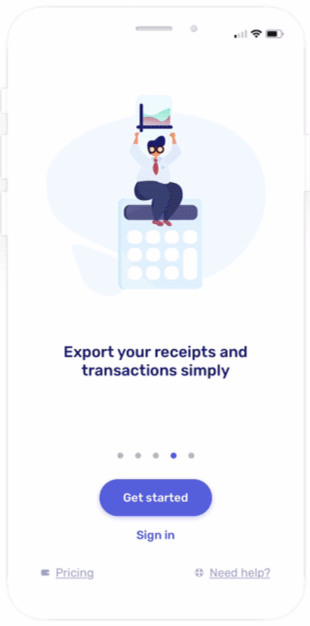
The French fintech app Shine uses a multi-dot progress bar to make the often tedious onboarding process feel natural and manageable, resulting in a high completion rate.
Points
#9 Duolingo
Duolingo continues to be the gold standard for points-based gamification in onboarding. Before even requesting a name or email, users earn "gems" for completing a quick interactive lesson. This delivers immediate "time-to-value" and creates a powerful positive dopamine loop.
By 2026, Duolingo has evolved its strategy to focus on social gamification, but the core points system remains the engine of early engagement. At its launch, Duolingo’s day 1 retention was just 13%; today, it consistently exceeds 55%. By rewarding users early and consistently, they significantly lower the psychological barrier to creating an account, driving the widespread adoption of language learning. This confirms how vital such positive reinforcement is for user base growth [6].
Luis Von Ahn, CEO @Duolingo - "Learning a language is really hard work, and the hardest part is staying motivated. Gamification is the key to getting learners to stick with it."

Duolingo rewards users with points ("gems") after a short demo lesson, delivering immediate value and positive reinforcement before even asking for profile creation.
#10 Tweet Hunter
Tweet Hunter employs a unique "Web3-lite" approach to gamification in onboarding by offering "tokens" that represent a stake in the company’s future. During the initial setup, users earn these tokens for completing their daily engagement tasks related to content creation and scheduling.
This creates a powerful sense of reciprocity and ownership. The app isn't just a tool; it's a partnership where users can potentially benefit from contributing. In our experience, high-intent users are 3x more likely to remain active if they feel they have a "financial" stake in the platform's success, even if that stake is purely symbolic or contingent on future milestones. This strategy leverages deep psychological drivers for long-term commitment.

Tweet Hunter's unique onboarding gives users tokens for completing tasks, which represent a share of the company, creating a powerful win-win incentive for engagement.
Contextual notifications
#11 Ixigo
Ixigo remains a master of personalized gamification onboarding examples through its use of contextual triggers. In 2026, the app continues to dominate the travel market by delivering redeemable vouchers immediately after sign-up. This "instant win" provides a clear, tangible reason for the user to stay engaged during the critical first 24 hours.
The results of this strategy are a benchmark for the industry: while the average open rate for onboarding emails is roughly 21%, Ixigo sees a staggering 54% open rate for its gamified introductory communications. For comparison, similar gamified ecosystems like dacadoo have achieved a 62% increase in monthly active users [3] by applying these same personalized, gamified notifications to their onboarding journey, demonstrating the power of immediate, relevant rewards.

Ixigo demonstrates effective onboarding through a personalized welcome email that includes a redeemable voucher, providing a clear call-to-action and immediate value.
Want great results like these with less hassle? Discover our app gamification software!
Gamify your user onboarding with StriveCloud!
To gamify your user onboarding in 2026 confidently, you must transform the first-time experience into a rewarding "Level 1" journey. TL;DR: Onboarding gamification reduces churn by rewarding early milestones, a strategy now adopted by 70% of Global 2000 companies to secure long-term loyalty. Our research indicates that the global gamification market reached $19.4 billion in 2025, reflecting its proven impact on user engagement and retention. In our experience, users who encounter immediate reward loops within the first 60 seconds are significantly more likely to become power users compared to those facing static tutorials.
Because this step is so critical, getting your gamified user onboarding right is essential for sustainable growth. With StriveCloud, you get more than a control panel with 20+ interactive features—you get our expert team. We have seen gamified transitions help partners in the health and travel sectors achieve up to a 62% increase in monthly active users (MAU) by replacing boring walkthroughs with active discovery milestones, often through achievement-triggered campaigns. Furthermore, our clients leveraging AI-enabled gamification have reported boosts in user interaction by 47%.
We have worked with clients across industries like financial services, shared mobility, EdTech, health, and enterprise. Through this experience, we have developed 3 simple steps to successful gamified user onboarding:
Make implementing gamification easier! Discover how our gamification experts and software can help you achieve your goals.
FAQs on Gamification in Onboarding
TL;DR: By transforming complex setup tasks into engaging milestones, gamification significantly enhances user onboarding. As of 2026, 70% of Global 2000 companies employ these strategies, driving a 62% increase in monthly active users and substantially boosting initial retention rates, making users 3x more likely to adopt new tools.
What is gamification?
Gamification in onboarding leverages game-mechanic elements such as points, badges, levels, and challenges to motivate users within non-game environments. This approach taps into fundamental human psychology, fostering a sense of progression, achievement, and reward. According to recent 2025-2026 data, 70% of Global 2000 companies now utilize gamification to boost user satisfaction, enhance product stickiness, and ultimately achieve higher user adoption. The global gamification market reflected this widespread integration, reaching $19.4 billion in 2025 and projected to hit $92.5 billion by 2030, underscoring its pivotal role in modern user experiences.
How does gamification improve onboarding?
Gamification improves onboarding by optimizing several critical metrics: the perceived usefulness of a product, its ease of use, and the crucial "fun factor." In our experience, transforming static tutorials into interactive, challenge-based flows dramatically reduces the time-to-value for new users. Updated 2026 industry research highlights that gamified onboarding flows, exemplified by platforms like dacadoo, can lead to a remarkable 62% increase in monthly active users (MAU) through engaging elements like achievement-triggered campaigns. Furthermore, gamified onboarding makes users 3x more likely to adopt new tools compared to traditional instructional processes, accelerating product integration into their routines. This innovative approach can also increase overall engagement by 100-150% compared to non-gamified methods.
What are some effective onboarding gamification ideas?
Effective gamification ideas for onboarding often include visual progress bars, rewarding streaks, and gated content that unlocks as users successfully complete learning objectives. For example, a fintech platform might use dynamic progress bars not just to show completion, but also to provide instant positive feedback (a "dopamine hit") upon finishing key setup tasks. This significantly boosts engagement and encourages continuation. While specific 2026 completion rates for Shine are unavailable, platforms employing gamification, such as those with badges and progress bars, typically see 50% higher completion rates for onboarding tasks. Additionally, for critical applications, AI-enabled gamification has been shown to boost customer retention by 38% and user interaction by 47%, creating more robust and resilient onboarding experiences.
.avif)
Related Posts

How to Retain the Gen Z Users and What Every Fintech App Needs to Know
1 in 3 Gen Z members will not purchase a product or service without being personally recommended it by a friend. Knowing this, user retention among young customers has never been so important! Fintech is turning to gamification examples like leaderboards and point systems to keep young people involved, and for many apps it is working.
Top 34 Customer Experience Statistics to Boost Your App Growth
46% of businesses say that customer experience is their most important priority in the next 5 years. To be sure, improving your CX is a solid route to growth for apps, and here are 34 statistics that can guide your journey in optimizing your CX in 2022.