

Immediately improve App Acquisition, Engagement and Retention with Gamification

Immediately improve App Acquisition, Engagement and Retention with Gamification
This visual represents how gamification elements can be integrated into a mobile app to enhance the user journey across acquisition, engagement, and retention.
Our mobile phones have become items most of us can’t imagine living without. Many businesses are competing to have their mobile app, and in extension, their service, be one of the few we use regularly. The challenge is threefold: it’s up to companies to maximize app acquisition, app engagement, and app retention. App gamification offers a toolkit of tactics that tackles each of these.
In this post, we’ll discuss :
- How gamification helps app acquisition
- How gamification boosts app engagement
- How gamification secures app retention
Looking at the growing number of available apps and actual downloads, it’s clear that the app market is growing hard. At the same time, the battle for users’ attention is becoming more and more fierce. That’s especially the case in the mobility industry, where (shared) mobility providers have little room to differentiate from each other apart from playing on price.
Product managers together with marketers face the challenge of building a strategy that successfully spans app acquisition, engagement, and retention.
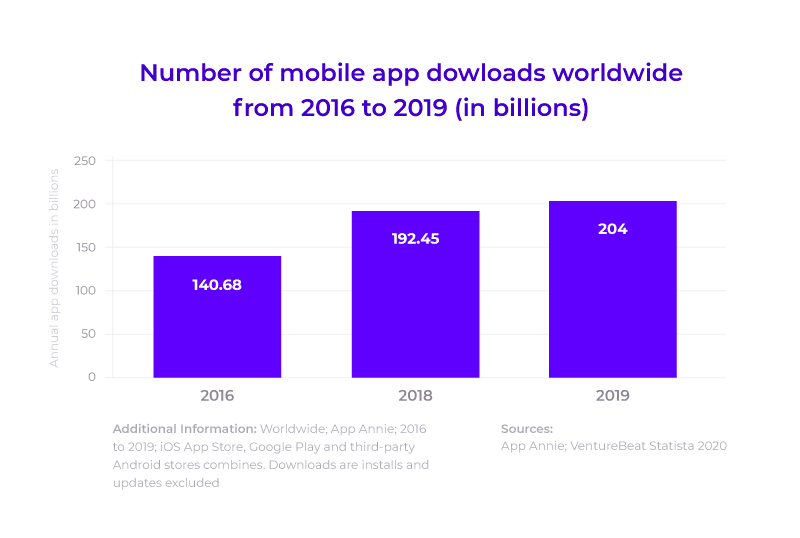
This graph illustrates the consistent growth in mobile app downloads, highlighting the increasing competition for user attention in a crowded market.
While such a strategy is different for every organization, a few tools provide a solution for each aspect. In-app gamification is one of these. Let’s take a trip down the app user journey and see how gamification helps grow your user base, boosts app engagement, and fosters retention.
Gamification is a technique you can use to insert gameplay elements in non-gaming settings, enhancing user engagement with your product or service. Discover all about in this our comprehensive ‘What is Gamification?’ guide.
How gamification helps app acquisition
Sorry to break it; you can go all-in on developing an awesome app, it will fail if nobody uses it. So how do you stand out from the dozens of competitors in order to acquire users?
The first prerequisite is app store optimization. That’s the practice of driving downloads through optimizing the title, keywords, ratings, and other ranking factors. In doing so, you make sure that your app pops up when people are looking for a service like yours.
On top of that, you can promote your app with ads on different social channels. It’s important to think about who you want to target and how much budget you want to spend. Otherwise, you risk attracting the wrong users and spending a lot of money.
Another, cheaper, and more effective tactic is tapping into the power of word-of-mouth promotion and referral programs. According to Kantar Media, 93% of users trust recommendations from their friends and family. In contrast: only 38% trust ads.
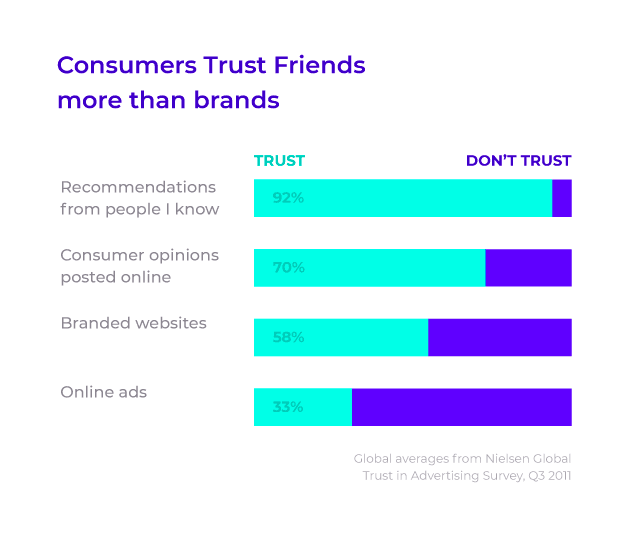
This data from Kantar Media emphasizes how much more users trust recommendations from friends and family over traditional advertising, underscoring the power of referral programs.
To leverage the power of word of mouth, you first need to build a loyal user base and in a second phase incentivize them to invite friends and family.
You’ll find out more about how you can increase user loyalty in the next part, but let’s take a closer look at the incentivization process from Uber first. The ride-hailing app gives all users a free ride (up to a certain amount) for every friend they get on board.
If you’d want to gamify this action, even more, you could make it a compulsory step in the user’s journey towards an exclusive status with special perks. Like a ‘Gold User’ who gets a discount for rides above a certain distance, for instance. Another example is to give a special “Referral Champion” badge to each user who gets a certain number of new users to install and use your app.
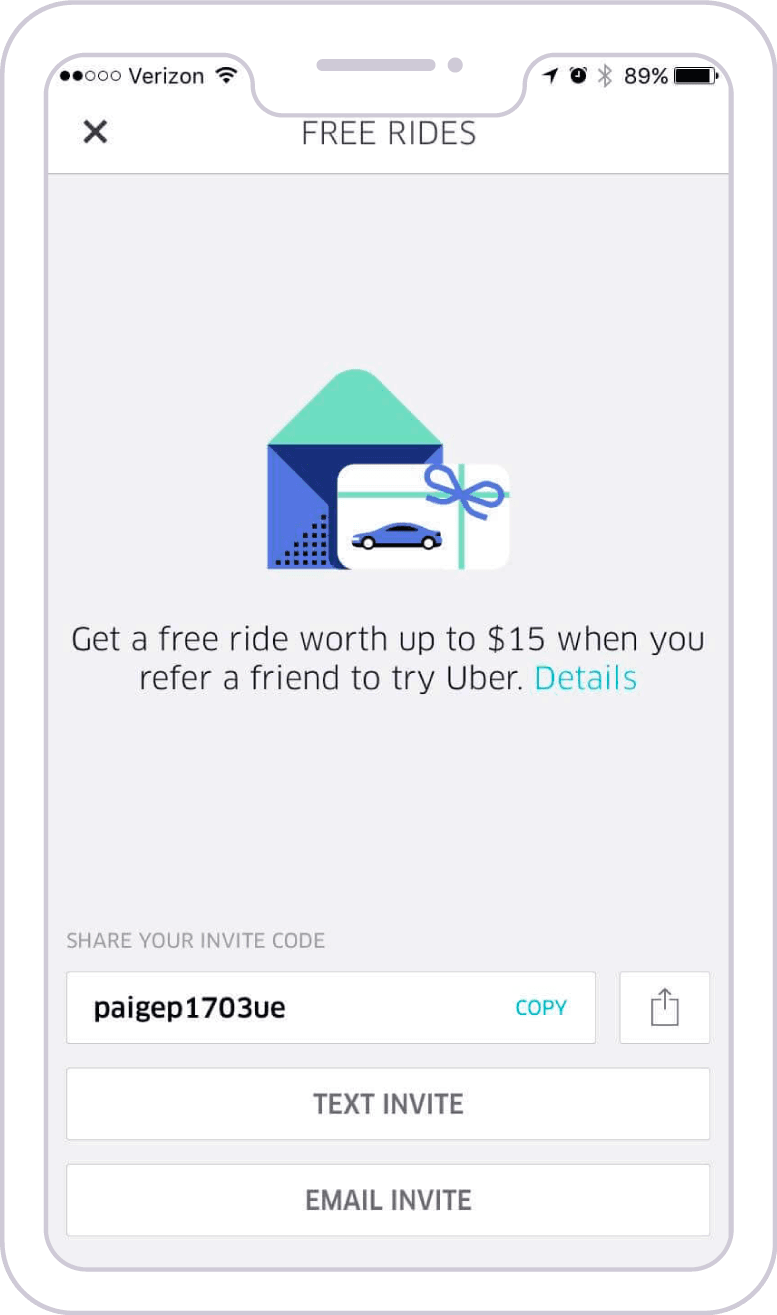
Uber's mobile interface provides a clear example of a user referral program, offering tangible rewards for both the referrer and the new user.
How gamification boosts app engagement
Okay, we’ve acquired users, the next challenge is to up their loyalty. Thanks to app gamification, shared mobility providers can enhance the user experience in such a way that it drives activity and loyalty, and even steers user behavior.
An example in today’s world of mobility is that of e-scooter companies like Bird and Lime. Both have deployed gamification features encouraging members of its community to hunt for scooters, take them home and charge them. To make this more interesting, users in some cases receive higher rewards for tracking down scooters that are more difficult to find.
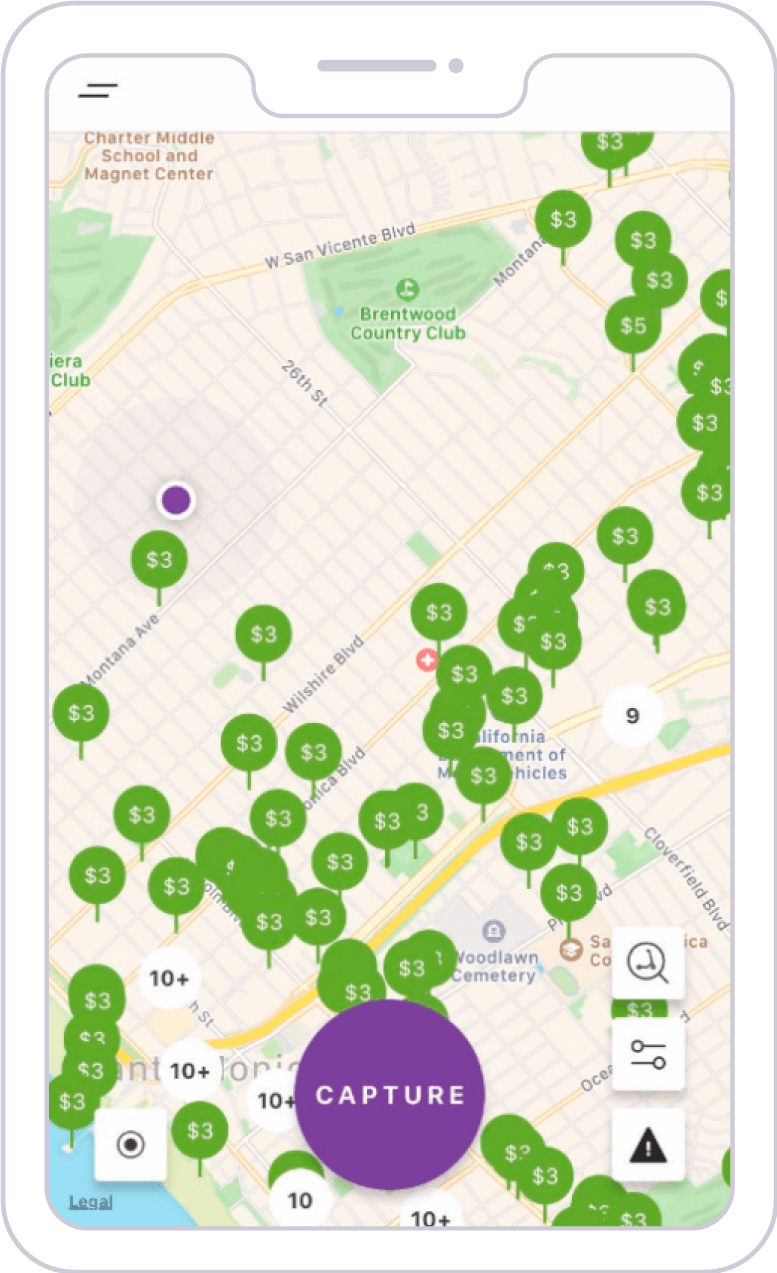
This screenshot from a scooter app demonstrates how users are incentivized to find and charge scooters, turning a logistical need into an engaging, game-like task.
Want to know more about the possibilities of app gamification for shared mobility providers to boost app engagement? Read all about it in this article.
How gamification secures app retention
Numerous shared mobility providers are struggling to achieve sustainable profitability. One of the main reasons is the fact that, due to strict regulations, many providers can only compete at the price level.
Retention is about more than just lowering your price. If you want to prevent users from abandoning your service because a competitor is offering rides a few cents cheaper than you are, you need to work on your app user experience. So how do you build an experience that makes users stick with your brand, product, or service? By playing on both intrinsic and extrinsic motivators. In short: it’s about giving rewards for a certain task or behavior and evoking positive emotions at the same time.
By integrating game-like mechanisms and, in doing so, appealing to people’s competitive nature, you can nudge them towards the actions you want them to take over and over again. One of our favorite examples here is Duolingo, a language learning app. The company’s mascot, a silly owl named Duo, is one reason why people love it, but a more important driver for the app’s retention rate is the great use of in-app gamification.
The entire learning experience is actually one big game. Each time you complete lessons or practice sessions in Duolingo, you earn experience points. Earn enough, and you’ll level up in the respective language, which in itself is gratifying but also gives you something to boast about to your Duolingo friends.
What’s more; when you meet your daily goal for consecutive days, you start (or extend) a streak. Your streak is prominently displayed whenever you’re in Duolingo, in the form of a fire icon with a number next to it. A confession from a hooked user: once you’ve earned it, you’ll do your very best to keep it.
App gamification by StriveCloud: the Kayzr story
As the largest esports online gaming platform in the Benelux region, Kayzr was struggling to keep users active on the platform at a low cost. They decided to partner up with StriveCloud and enhance the user experience with gamification.
Together with StriveCloud, Kayzr was able to:
- Acquire 350% more users
- Engage 60% more users to be active on the platform at least once a day
- Increase the average session time per user per day to 1.5h
Want to know how they were able to reach these astonishing results in just a couple of weeks? Read all about it in this case study!
Long story short...
- If you want your app to be a success, you’ll need to look at more than a nice design in order to attract, engage, and bind users. And if you want to stay profitable, you can’t keep lowering your price.
- App gamification is a proven solution to keep users hooked and even grow your user base. And hey, it’s easy to start experimenting.
- There are several tactics you can pick from, based on the stage of the user journey you’re in.
Related Posts

Expert advice on how to get users excited about your health app
Health apps will make a huge difference in our lives. Next to giving patients more autonomous treatment, it will help to improve general health. With fitness trackers, calorie trackers, or even medication reminders, everyone will get a personal health assistant on their phone. The only problem? Low user motivation and a shortage of data. When people aren't engaged enough, they won't get as much value from the app. Luckily, gamification can shift the tides. Check out the full post to find out how!

How to crush your competition like Strava
One could argue that fighting user churn is one of the most difficult tasks to achieve as an app. In 2019 only 3 in 10 users were retained after three months which means the average churn is over 70%! Not all apps seem to struggle with this however. Strava for example is one of the most used fitness apps in the world. With over 55 million users, growing at a rate of 1 million new users a month, it seems like they have figured out how to engage their audience. Read the full blog to find out how Strava keeps users hooked!