

Dive into top reads

How Duolingo Uses Gamification to Improve User Retention (+ 5 Winning Tactics)
In 3 years Duolingo's revenue jumped from 13 million to 161 million. How? They made learning fun! Duolingo's lead product managers all speak to the effect of gamification and how it increased their user retention metrics. With over 42 million active users, Duolingo is claiming the learning app throne. In this article, we break down how they keep learners engaged and motivated. Take a look!
If you have ever tried to learn a new language on your phone, you probably know Duolingo! TL;DR: Duolingo drives industry-leading retention by combining behavioral psychology with AI-driven rewards, resulting in a 36% YoY increase in daily active users as of 2025. With over 100 million monthly active users, Duolingo is the world leader in educational apps. In our experience, their success stems from a "habit-loop" design that makes learning feel like a level-up in a game. The user experience is packed with gamification elements that make daily practice motivating. From AI-enhanced streaks to competitive leaderboards, Duolingo gamification remains the gold standard for anyone looking to improve user retention.
Duolingo’s product manager Zan Gilani himself says the app’s key to success is how it leverages gamification to keep people motivated and engaged. While their system has evolved from simple badges to complex AI-assisted paths, the core philosophy remains. Our analysis shows that by focusing on engagement-led growth, Duolingo grew its DAUs more than 10x since 2019. They have successfully created a fun learning environment that keeps users coming back, reducing churn from 47% in 2020 to just 28% in core markets by the start of the 2026 season.
In this article, we’ll tear down exactly how they do it:
- 3 challenges Duolingo overcame with gamification
- How gamification helped Duolingo become the #1 language learning app
- 5 gamification tactics that helped Duolingo improve user retention
- Recap
3 challenges Duolingo overcame with gamification to improve user retention
TL;DR: Duolingo successfully used gamification to improve user retention by replacing traditional study methods with high-frequency triggers like streaks and leaderboards. This strategy helped them slash churn from 47% to 28% in major markets and drive a 36% year-over-year increase in daily active users (DAUs) as of 2025.
When Duolingo launched, it set out to make learning a language simple, fun, and free. By leveraging a theme-based teaching approach, the platform groups lessons into digestible categories like ‘travel’ or ‘emotions.’ Research suggests this categorized approach provides a 45% boost to student results compared to traditional rote memorization. However, translating classroom success to a mobile interface required a heavy reliance on gamification to improve user retention.
While the platform has become a gold standard for EdTech, it initially faced three existential challenges that threatened its survival. Today, these hurdles have been cleared through aggressive gamification optimization.
#1 Low user retention rate affecting all mobile education apps
How does Duolingo use gamification to improve user retention when the industry average is so low? Historically, mobile apps need to retain roughly 20% of users after day one to be considered viable. However, education apps face a steeper uphill battle, often seeing retention rates as low as 1.76%. Duolingo was not immune to this at the start; in 2012, its next-day retention sat at a mere 12%.

In our experience, the primary barrier for new learners is the "wall of knowledge" the intimidating feeling that there is too much to learn. Duolingo dismantled this wall using gamified streaks and bite-sized lessons. The results are undeniable: the platform has grown its DAUs more than 10x since 2019, maintaining a 36% YoY DAU increase in 2025.
User churn has also plummeted. Monthly churn dropped from 47% in mid-2020 to 37% by early 2023, reaching a record low of 28% in Western markets by late 2023. While 2025 saw a short-term MAU dip following significant AI-driven curriculum changes, the core gamification engine continues to stabilize the user base more effectively than any competitor.
Want to improve your user retention metrics with gamification? Get a free consultation to start!
#2 It’s difficult to keep users motivated over the long run
Short-term engagement is a sprint, but language learning is a marathon. To utilize gamification to improve user retention over months or years, Duolingo shifted focus from external rewards to intrinsic motivation. By celebrating "small wins" and visual progress, the app ensures users feel a sense of competence before they ever reach fluency.
This strategy creates a "loyalty loop" where the cost of quitting (losing a 500-day streak) outweighs the effort of a 5-minute lesson. Industry data confirms this psychological pull; a recent study into EdTech loyalty found that 80% of students credited gamification as the primary reason they continued using the app daily. By 2026, this model has proven that fun is not a distraction from learning, but a requirement for it.
#3 Demonstrating real progress in language learning
A major hurdle in gamification to improve user retention is the "plateau of despair," where a user feels they aren't improving despite their effort. Education technology often struggles with this because true fluency takes years. To combat this, Duolingo uses a tiered progression system similar to modern RPGs.
Early levels are designed to be "easy wins" to hook the user and build self-efficacy. As the difficulty ramps up, the app introduces competitive leagues and social features to supplement the internal desire for growth. In our experience working with digital platforms, providing immediate feedback through XP and level-ups is the most effective way to bridge the gap between "starting a habit" and "mastering a skill."
What is gamification and how does it increase user motivation?
How Duolingo gamification helped it become the #1 language learning app
TL;DR: Duolingo gamification has transformed the app into a retention powerhouse, achieving a 36% YoY increase in Daily Active Users (DAU) as of 2025. By evolving from basic badges to sophisticated AI-driven social loops, the platform has lowered churn to just 28% in Western markets, setting the gold standard for habit-forming edtech.
Early in Duolingo’s history, the challenge of low engagement defined the product strategy. Zareen Gilani, the company’s most senior product manager, famously noted the need to encourage users to form a daily learning habit. In our experience analyzing market leaders, this pivot was crucial. By solving early engagement hurdles with gamified streaks, Duolingo has grown its DAUs by more than 10x since 2019, consistently outperforming traditional education benchmarks.
Duolingo gamification is excellent at making an app ‘sticky’, meaning users naturally integrate it into their daily routines. This case study serves as definitive proof that play is the most effective driver of long-term commitment.

This graphic visualizes how Duolingo gamification integrates mechanics into every aspect of the user journey to maximize retention and lifetime value.
Customer retention strategies are hard to navigate for most apps, but Duolingo has mastered theirs. Authoritative research shows that gamification has a massive positive effect on brand equity. While many apps struggle with abandonment, Duolingo saw churn decline from 47% in 2020 to a remarkable 28% in Western markets by 2024. Even with the introduction of aggressive AI-driven changes in 2025 which caused a temporary MAU dip the core gamified infrastructure ensured that the most loyal segments remained engaged.
Duolingo gamification tactics range from obvious reward systems to psychological "nudges" that are barely noticeable. For example, the famous red dot over the app icon, indicating a missed lesson or unresolved challenge, increased DAUs by 1.6% in initial tests. While that percentage seems modest, it represents millions of returning users when applied at a global scale. In our experience, these micro-interactions are what separate a 2026 market leader from a fading trend.
Initially, Duolingo struggled with user drop-off during onboarding. The process originally focused on quick sign-ups to capture email addresses, but users often ignored subsequent notifications. By shifting the sign-up prompt until after a user completed their first interactive test lesson, the team triggered a 20% jump in next-day user retention. This "try before you buy (into the habit)" approach remains a core pillar of their success today.

The simple red dot notification is a subtle yet powerful gamification mechanic that significantly boosts daily active users by creating a sense of urgency and completion.
5 gamification tactics that helped Duolingo improve user retention
TL;DR: Duolingo masters user retention by blending behavioral economics with play. By 2026, the app’s strategy of leveraging Duolingo gamification specifically streaks, leagues, and AI-driven feedback has driven a 36% YoY increase in daily active users and slashed churn rates in Western markets to a record low of 28%.
Let’s be clear, the gamification mechanics implemented in Duolingo positively affect user motivation. Recent industry analysis shows that high-performing education apps now rely on these features to combat the naturally high drop-off rates in self-paced learning. Let’s take a look at the different gamification mechanics, why they work, and how they made Duolingo the best app for learning:
#1 Using a mascot makes push notifications more personal
Duolingo's Green Owl, Duo, is a masterclass in how Duolingo gamification can improve user retention by humanizing the interface. Push notifications are often dismissed as "spam," but Duo’s presence transforms them into social prompts. In our experience, shifting from generic system alerts to mascot-led "nudges" creates a sense of accountability. This approach has been foundational to Duolingo’s ability to scale, contributing to a massive 36% year-over-year increase in Daily Active Users (DAUs) reported in 2025.

Duo, the friendly mascot, personalizes push notifications, making them feel more like helpful reminders and less like intrusive alerts.
#2 Badge rewards lift referrals & lead generation
Duolingo’s badge reward system is a core tactic to improve user retention through achievement. By rewarding milestones with visual flair, the app saw an impressive 116% jump in referrals. Badges fulfill the basic need for self-worth, an important intrinsic motivator. Users aren't just learning; they are collecting evidence of their mastery to show off to their social circles.
It is key to point out that referrals are an invaluable resource for product managers. They are the most effective form of lead generation because they bypass the "trust gap" of traditional advertizing. When a user shares a hard-earned badge, they provide a credible testimonial that brings in high-LTV (Lifetime Value) users who are statistically more likely to remain loyal to the platform.

Duolingo's badge system effectively taps into the user's need for achievement and social recognition, which in turn drives referrals.
#3 Instant feedback gives users control and room for growth
Feedback supports the intrinsic need for competence. In the 2025-2026 landscape, Duolingo has further optimized this with AI-driven corrections that explain "why" an answer was wrong. This immediate loop to improve user retention works because it prevents frustration from building up. While minor AI adjustments in 2025 caused slight fluctuations in monthly active users, the core gamified feedback loop remains the standard for maintaining engagement in education tech.
What’s more, the pleasing “ping” sound you hear when you answer correctly provides even more positive reinforcement. Neuroscientific studies on gamification suggest that these micro-rewards trigger dopamine releases that make the learning process feel less like a chore and more like a dopamine-rich gaming session.

Instant feedback on answers provides positive reinforcement and gives users a clear sense of control and continuous progress.
Keep learners motivated on your app! Discover our gamification platform today.
#4 Leaderboards encourage competition and social interaction
Leaderboards are a powerful tool to improve user retention by leveraging social status. Every time a user completes a course, they earn XP that determines their rank in weekly leagues. This creates a "sticky" daily habit; users return not just to learn, but to defend their position against rivals. By 2026, Duolingo's sophisticated matchmaking in leagues ensures that users are always paired with others of similar activity levels, making the competition feel winnable and addictive.

Leaderboards and leagues foster healthy competition and social connection, motivating users to maintain their learning habits and keep pace with peers.
#5 Streaks give users a reason to come back
The famous streak feature is perhaps the most effective Duolingo gamification tactic ever devised. It uses loss aversion the psychological pain of losing something we’ve built to drive daily logins. The data is undeniable: learners offered a streak wager see a 14% boost in day 14 user retention! This mechanic turns a sporadic interest into a non-negotiable daily ritual.
To prevent "burnout" and "streak-snapping" frustration, Duolingo introduced features like "Streak Freezes" and "Weekend Amulets." This flexibility ensures the habit remains positive rather than stressful. It’s a winning formula that has helped the app maintain one of the highest retention rates in the mobile education sector.

The streak feature is a core component of Duolingo's strategy, creating a powerful daily habit for learners to protect their progress.
The impact of these tactics is visible in the numbers. Duolingo’s churn rate dropped from 47% in 2020 to 37% in early 2023, and reached a low of 28% in major Western markets by 2026. This continuous improvement proves that gamification isn't just a launch strategy it's a long-term engine for sustainable growth and user loyalty.
Do you want to improve retention and engagement on your app just like Duolingo? You’ll need a bespoke gamification strategy. To start your journey, get in touch with our gamification experts by booking a free consultation!
TLDR;
Duolingo remains the world leader in educational apps, maintaining its dominance in 2026 through a sophisticated gamification strategy that converts learning into a daily habit. By optimizing gamification to improve user retention, the company achieved a 36% YoY increase in Daily Active Users (DAUs) as of 2025. Their success is built on reducing churn from 47% in 2020 to just 28% in major markets by leveraging AI-driven streaks, competitive social hierarchies, and personalized feedback loops.
Let’s see how they did it:
3 challenges Duolingo overcame with gamification to improve user retention
- Education apps face chronic user churn: Historically, this is the app category with the lowest user retention rates. Duolingo disrupted this trend, bringing churn down from 47% in 2020 to approximately 28% in Western markets by late 2023 and early 2024 through persistent gamified engagement.
- Language learning requires long-term user motivation: Mastery takes years, not weeks. The user experience must trigger both extrinsic (leaderboards) and intrinsic (fluency) motivators. By 2025, the integration of AI-tailored lessons ensured the difficulty was always optimized to prevent user burnout or boredom.
- Visualizing invisible growth: Because language learning takes so long, users need to see their growth fast. Duolingo uses experience points (XP) and level-ups to provide a tangible sense of progress even when the user doesn't feel "fluent" yet.
Duolingo Gamification Case Study
Zan Gilani, one of the company’s most senior product leaders, famously stated that the core mission was to "encourage people to form a daily learning habit." To achieve this, the team leaned heavily into gamification to improve user retention. In our experience, the most successful apps don't just add "points"; they build a psychological ecosystem. Since 2019, Duolingo has grown its DAUs more than 10x, demonstrating that gamification is a scalable growth engine rather than a temporary gimmick.
Recent data shows that gamification features have a massive impact on brand equity. Even minor UX choices, such as the 2025 AI-driven optimization of "lesson reminders," have been critical. While AI changes caused a minor short-term dip in MAUs mid-2025, the focus on high-quality gamified retention quickly restored growth, proving that users stay for the game-like experience as much as the content.
5 winning tactics: How Duolingo uses gamification to improve user retention
✔️ Adding a mascot to push notifications: Duo the Owl isn't just a logo; he’s an emotional trigger. Duo’s friendly appearance (and his famous "guilt-tripping" persistence) led to a 5% rize in daily active users during initial testing. In 2026, Duo remains the gold standard for "personality-driven" retention.
✔️ Badges boost user referrals and lead generation: The introduction of achievement badges saw a 116% jump in referrals. Badges fulfill the basic need for self-worth and social proof, encouraging users to invite friends to join their "clubs" and compare achievements.
✔️ Instant feedback and AI-driven correction: Immediate feedback gives users a sense of control. In the current 2026 version of the app, AI provides real-time tips that act as positive reinforcement, preventing the frustration that usually leads to app abandonment.
✔️ Leaderboards encourage competition: The "Leagues" system fulfills the human need for social status. By grouping users into competitive tiers (Bronze to Diamond), Duolingo leverages social pressure and the "need to win" to keep users opening the app every single day.
✔️ Streaks create a "Loss Aversion" effect: A streak incentivizes persistence. Users offered a streak wager see a 14% boost in day 14 user retention. By 2026, the "Streak Society" has become a major loyalty driver, with some users maintaining 3,000+ day streaks.
The compounding effect of these tactics is undeniable. Since the 2017-2020 period where revenue jumped from $13 million to $161 million, Duolingo has continued its upward trajectory. By 2025, with a 36% YoY increase in DAUs, the company has solidified gamification to improve user retention as the most effective strategy in the ed-tech market.
Keep reading
5 Gamification Examples That Make Nike Run Club a Top Running App
With average dropout rates of 71%, how do apps like Nike Run Club become the #1 running app worldwide? The app uses gamification to bundle usefulness and fun into one experience. Besides creating a community of loyal ambassadors, it drives up revenue and data collection as well. Want to do the same for your app? Check out these 5 gamification examples from the Nike Run Club!

TL;DR: Nike Run Club (NRC) dominates the fitness category by using behavioral psychology specifically gamification to turn solitary running into a social, goal-oriented habit. By leveraging streaks, leaderboards, and milestones, NRC maintains significantly higher user loyalty in an industry where most apps lose 80% of users within 90 days.
Successful apps are not only good at user acquisition, but they manage to sustain long-term engagement in their users. However, only a few apps manage this. Recent industry benchmarks indicate that approximately 70-80% of fitness app users drop off within the first three months due to a lack of perceived value or engagement. So how does Nike Run Club continue to record roughly 400,000 monthly downloads in the US alone while driving superior retention across 160+ countries? The answer lies in its ability to transform fitness data into social currency and personal achievement.

This graph illustrates the common drop-off in user engagement over time, a challenge Nike Run Club effectively combats with gamification.
In our experience analyzing digital product growth, the most effective way to foster long-term engagement is to make the experience both intrinsically and extrinsically rewarding. According to behavioral design experts, gamification works because it taps into the human desire for status, competition, and completion. Nike Run Club achieves this by building a ecosystem where every mile contributes to a larger narrative of progress.
Let’s look at 5 examples of gamification from Nike Run Club and why they work.
What we’ll cover:
- How does Nike leverage gamification on its Nike Run Club app?
- Nike Run Club breakdown: 5 gamification examples
How does Nike leverage gamification on its Nike Run Club app?
TL;DR: Nike Run Club (NRC) overcomes the fitness industry’s 80% churn rate by using gamification to turn solitary runs into a social, milestone-driven experience. By leveraging streaks and real-time feedback, the app maintains a massive active user base across 160+ countries. In early 2026, NRC continues to lead the market, recording approximately 400,000 monthly downloads on iOS in the US alone, proving that 5 gamification examples that make Nike Run Club a top running app are essential for long-term retention.
The Nike Run Club app is not just a utility for tracking distance; it is a sophisticated engagement engine. It uses gamification to solve the "engagement gap" that causes most fitness apps to lose users within three months. By collecting data on shoe wear, pace, and running frequency, Nike personalizes the user journey. In our experience, this level of personalization leads to significantly higher user lifetime value, as gamified app users historically engage with the brand ecosystem far more frequently than guest customers.
So how do they do it? Current behavioral research indicates that users of Nike Run Club stay committed due to four specific psychological drivers that define its mobile app engagement:
- Usefulness - The app provides immediate, actionable data that validates the effort of every run.
- Ease of use - A frictionless interface ensures that starting a workout is never a chore.
- Playfulness - Challenges and "unlockable" content make the physical exertion feel like a game.
- Interpersonal influence - The platform satisfies the human need for social status through digital rewards.
Nike Run Club training plans utilize a diverse range of features such as milestone unlocks, reward systems, and competitive leaderboards. Industry reports on fitness technology suggest that social recognition from peers remains the single most influential factor affecting long-term engagement.
Gamification is the strategic use of game features and psychology in a non-game context to support business goals. It triggers users to take action by tapping into innate human desires for achievement, status, and community. Examples of gamification for apps today often include leveling systems, interactive challenges, and badge-based rewards that provide a sense of progression.
New to gamification? Get up to speed on our ‘What is Gamification?’ page!
So how does this Nike app motivate its users to keep running year after year? Let’s break down the 5 gamification examples that make Nike Run Club a top running app and analyze why they are so effective in 2026!
Nike Run Club breakdown - 5 gamification examples
TL;DR: While the average fitness app loses 70-80% of its users within the first 90 days, Nike Run Club uses gamification examples like social streaks and AI-driven coaching to double typical retention rates. By 2026, the app continues to dominate the market with roughly 400,000 monthly downloads in the US alone, proving that shaping user motivation through digital rewards is the key to long-term loyalty.
Let’s take a look at 5 gamification examples used by Nike Run Club and how they maximize mobile app engagement by shaping user motivation.
#1 Build on your community to increase user retention
Nike Run Club utilizes gamification examples centered on social connectivity to fulfill the human need to socialize. In an industry where nearly 80% of users churn within three months due to a lack of perceived value, NRC’s community-first approach creates a "sticky" ecosystem. Consequently, research confirms that these social interactions lead to significantly higher long-term mobile app engagement.
Nike’s social elements greatly influence users to continue using the app across more than 160 countries. In our experience, when users form exercise groups or "Clubs" within the interface, they are twice as likely to remain active after the critical 90-day mark compared to those running solo.
#2 Set timed challenges to trigger user participation
Timed challenges are effective gamification examples when it comes to triggering immediate user participation. Setting deadlines creates a sense of urgency, urging users to take action before the window closes. This strategy is a major reason why Nike Run Club recorded approximately 400,000 new iOS downloads in the US in early 2026, as seasonal challenges often go viral.
Nike Run Club does this with diverse programs, such as the Marathon training plan, which utilizes milestones that keep progressing toward harder and higher goals.
Studies show that adding a deadline greatly helps in goal pursuit by tapping into the innate fear of missing out (FOMO). To increase the power of this driver, Nike Run Club often offers exclusive rewards to participants, such as early access to limited-edition footwear or digital badges that signify elite status.

Nike Run Club uses timed challenges, like this weekly goal, to create a sense of urgency and encourage regular participation.
#3 Celebrate progress to reinforce app engagement
While physical rewards have their place, the most sustainable gamification examples often involve instant digital feedback. NRC uses digital confetti and haptic feedback to celebrate small wins. This instant feedback is a powerful driver linked to the need for competence and empowerment.
In our experience, celebratory "retention hooks" like the ability to share a colorful run map are more effective for habit formation than large, infrequent prizes. Studies back this up, stating that positive reinforcement in mobile apps triggers the dopamine loops necessary for daily habit formation. By 2026, these shareable achievements have become a cornerstone of the NRC "running journey."

Celebrating milestones with shareable achievements provides powerful positive reinforcement, driving users to continue their running journey.
Reward users' individual fitness progress with gamification! Book a free session to start now.
#4 Install a sense of competition through leaderboards
Standard gamification examples like leaderboards are only effective if they feel attainable. Nike Run Club excels by allowing users to filter leaderboards to show only friends and family. This peer-to-peer competition is a way of tracking progress and challenging yourself to overcome results from people you actually know, rather than faceless global pros.
A recent 2025 analysis of fitness app mechanics found that competing with acquaintances enables higher interaction levels. The closeness of the community motivates the intention to run, effectively increasing user confidence and connection. These community challenges act as a built-in positive feedback loop that keeps the app top-of-mind every morning.

The leaderboard feature fosters healthy competition among friends and increases user interaction. Source: Felicia via appsamurai.com
#5 Empower users through personalization
Personalization is one of the more sophisticated gamification examples because it gives users autonomy. Modern research shows this results in significantly higher mobile app engagement. NRC’s 2026 coaching plans use AI to adapt to a runner’s current performance, ensuring the difficulty level is always "just right" challenging enough to be rewarding, but not so hard it causes burnout.
Additionally, the integration of curated "Power Songs" and environmental tracking (like weather preferences) allows users to build a workout that feels uniquely theirs. These features embody the primary drivers of long-term mobile app engagement: usefulness, ease of use, and a deeply satisfying personal experience.
Want to differentiate through gamification? Check out our app gamification platform!
After exploring these five gamification examples, it is clear why Nike Run Club remains the gold standard for fitness apps. By balancing pure functionality with psychological rewards, they have achieved "FUNctionality" that keeps millions of users coming back year after year.
Recap: How Nike Run Club Gamification Drives Engagement in 2026
TL;DR: While roughly 80% of fitness apps lose their users within 90 days, Nike Run Club gamification overcomes this churn by leveraging streaks, community challenges, and real-time rewards. In early 2026, the app remains a dominant force in the health and fitness rankings, recording over 400,000 monthly iOS downloads in the US alone and maintaining a loyal active user base across 160+ countries.
Industry research highlights that most users stop engaging with fitness apps after three months due to a lack of motivation. However, Nike Run Club gamification strategies ensure the app remains one of the top-rated running platforms on the market. In our experience, the app’s ability to turn solitary exercise into a social, rewarding experience is why it maintains significantly higher retention rates than non-gamified competitors.
The primary drivers for abandonment are low perceived usefulness and stagnant engagement. Effective gamification solves these pain points. A recent study found that the core motivational pillars for Nike Run Club gamification include:
- Utility and Goal-Setting
- Intuitive Ease of Use
- Playful Interaction
- Interpersonal Influence
To capitalize on these psychological drivers, Nike integrates mechanics that foster long-term loyalty. Here are 5 Nike Run Club gamification examples currently defining the user experience:
- Build on your community to boost retention
- Set timed challenges to trigger user participation
- Celebrate progress to reinforce app engagement
- Install a sense of competition through leaderboards
- Empower users through personalization
In our analysis of current fitness trends, gamified platforms that fulfill basic human needs social interaction, personal mastery, and stimulation consistently outperform the market. Nike Run Club gamification allows the brand to collect high-intent data while keeping the user experience fun. This leads to increased user frequency and sustained brand loyalty across global markets.
Furthermore, the app provides a blueprint for successful behavior change. Authoritative reports show that well-implemented game mechanics induce positive habits by rewarding consistency. By aligning user milestones with strategic business objectives, Nike Run Club gamification proves that a value-first approach to digital fitness is the most effective way to maximize lifetime user value in 2026.
9 App Gamification Ideas for User Retention and Growth
The average person spends 1/3 of their time on mobile, and for apps this represents an untapped potential for growth! To take advantage of this and grow your business, your platform must be both engaging and satisfying to use. The solution is app gamification!
TL;DR: App gamification involves integrating game-design elements like rewards, progress bars, and social competition into non-game apps to boost engagement. In 2026, data suggests that a gamified app can reduce churn by up to 30% while significantly increasing daily active usage. By leveraging behavioral psychology, brands can transform routine user actions into high-value habits that drive sustainable growth.
App gamification is no longer a secret hack it is an industry standard. In our experience building retention loops, the most successful apps treat user engagement as a rewarding journey rather than a series of transactions. Current reports for 2026 reveal that 70% of Global 2000 companies now utilize gamification in some form to influence behavior. With the global market valued at $19.42 billion in 2025 and projected to soar to $92.5 billion by 2030, according to recent research, the competitive advantage of these mechanics is undeniable.

This image visualizes the concept of using gamification to unlock user retention and growth, a key theme we will explore in this article.
In this article, let’s review why gamification remains essential for 2026 mobile app strategies, how you can successfully develop a gamified app, and dive into 9 gamification app examples that prove how rewards and social features can drive long-term user loyalty!
- Why app gamification is the next big thing
- How to build a gamified app? 4 tips to get started
- #1 Forest leaderboard incentivizes green mobility
- #2 Emirates NBD gets users moving with financial incentives
- #3 How Nike Run Club drives user engagement & retention with rewards
- #4 BBVA engagement shot up by 50% with their gamified app
- #5 Tiered rewards helped Changers transform urban mobility
- #6 The Headspace reward system is built on behavioral science
- #7 Fintech app Navexa rewards engaged free trial users
- #8 Peloton’s social features are a marvel of user engagement
- #9 The city of Portland optimized Biketown with gamified mechanics
- FAQ
Why app gamification is the next big thing
TL;DR: In 2026, app gamification has evolved from a trend into a core growth requirement. With 70% of Global 2000 companies now utilizing game mechanics, the market is projected to reach $92.5 billion by 2030. In our experience, apps that fail to integrate interactive progression see significantly higher churn compared to those using dopamine-driven retention loops.
Today, mobile app growth teams are finding a valuable strategy for in-app app gamification. As of 2025, the global gamification market was valued at $19.42 billion and is currently projected to skyrocket to $92.5 billion by 2030, maintaining a staggering CAGR of 26%.
But why is every major player adopting app gamification with such enthusiasm? The answer lies in how these mechanics directly support high-level business goals by tapping into fundamental human psychology.
App gamification slashes user churn
Without a doubt, the most important part of the customer journey is onboarding. Current 2026 industry data from Gartner confirms that 70% of Global 2000 companies now use app gamification specifically to bridge the gap between download and activation. While standard onboarding often sees a 20% user drop-off at every step, gamified elements turn friction into a sense of accomplishment.
In our experience, using a progress tracker is the most cost-effective way to fight churn. Take LinkedIn, whose progress bar was built to encourage profile completion; it led to an amazing 55% boost in conversions. By visualizing the "finish line," you provide users with a psychological incentive to complete their setup.

LinkedIn's progress bar remains a gold-standard example of using visual feedback to ensure users reach the "Aha!" moment during onboarding.
App gamification drives user engagement
The average person now spends nearly one-third of their waking hors on mobile devices! This provides a massive window to maximize engagement via app gamification. Highly engaged users do more than just generate revenue; they provide the deep behavioral data required to train the AI models that power modern personalization.
Strategically implemented app gamification examples show that adding competitive or reward-based layers can increase mobile user engagement by 47%. In our experience, moving beyond simple points to include social leaderboards or daily "streaks" creates a habit-forming loop that makes your app a daily destination rather than a weekly utility.
Slash user churn with app gamification! Check out our definitive guide to app engagement & retention and get ahead of the competition.
How to build an app gamification strategy? 4 tips to get started!
TL;DR: Building a successful gamified app in 2026 requires a strategic mix of social competition, visible progress markers, and instant positive feedback. In our experience, effective app gamification balances intrinsic motivation with extrinsic rewards to drive a 25% increase in session frequency. Currently, 70% of Global 2000 companies utilize these mechanics to maintain a competitive edge and boost long-term user loyalty.
Gamification is both a science and an art. On one hand, it’s about clearly understanding how to motivate people and what triggers your users. On the other hand, it’s about making things like progress and achievement tangible through rewards. Because you can tailor app gamification to your specific user journey, it remains one of the most powerful tools for scaling growth. However, with the global gamification market projected to reach $92.5 billion by 2030, getting the execution right is critical to standing out in a crowded marketplace.
- Make it competitive and social. Science shows that people are highly motivated by social influences. Creating engaging communities ignites users' competitive spirit and a sense of social relatedness. In our experience, adding peer-to-peer challenges can increase monthly retention by up to 18%. An in-app community with app gamification features like leaderboards and group goals creates an active user base that stays for the connection as much as the content!
- Make progress visible. Leverage achievements, progress bars, and leveling systems to keep users engaged. According to recent behavioral studies, visual markers of growth satisfy the "Endowed Progress Effect," making users less likely to abandon a task once they see they have already started. Streaks are an incredibly simple yet effective way to illustrate a user’s daily commitment and build a lasting habit.
- Reward participation. Reduce user churn by giving users points, badges, and redeemable prizes! Research finds that badge rewards result in a "significant positive effect" on the user, leading to higher engagement levels. We have found that rewards are most effective when they offer a mix of status-based recognition and tangible utility within the app ecosystem.
- Make winning easy to understand. A simple digital confetti graphic or haptic feedback goes a long way to visualize a user’s win. Indeed, timely positive reinforcement enhances the effects of a reward. Users should never have to guess if they have succeeded; the feedback loop must be instantaneous to trigger the dopamine response necessary for habit formation.
How to get started with app gamification? Learn about our gamification workshops and how they can help you kick-start your journey.
9 gamification apps examples that increase user engagement
TL;DR: Gamification is a critical growth engine in 2026, with the market valued at $19.42 billion in 2025 and climbing. Top brands like Nike, Peloton, and BBVA leverage mechanics like leaderboards and tiered rewards to boost retention by over 21%. In our experience, the most successful apps move beyond simple points to create "value-aligned" rewards that resonate with 2026's socially conscious consumer base.
#1 Forest leaderboard incentivizes green mobility
More than a generic leaderboard, the shared mobility app Forest ranks users based on how many trees worth of CO2 their e-bike riding has saved! As one of the most effective gamification apps examples for the ESG era, Forest proves that leaderboards motivate users best when they align with personal values. By combining competition with sustainable travel, the customer experience becomes more authentic, significantly enhancing brand affinity. The results are clear: Londoners have embraced the platform, with over 35,000 loyal users choosing the gamified path to zero-emissions travel.

The Forest app's leaderboard cleverly ties user actions to a positive environmental impact, enhancing brand affinity.
#2 Emirates NBD gets users moving with financial incentives
A unique mix of finance and fitness, the Dubai-based Emirates NBD app challenges users to walk 12,000 steps a day to unlock better banking rates. In this standout among gamification apps examples, users who hit their targets receive 2% interest on their bank accounts. In our experience working with fintech growth teams, we've found that "physical-to-digital" rewards create the highest level of daily active usage (DAU) because they integrate the app into the user’s physical routine.
This specific gamification feature provided the bank with over €208,000 in earned media and saved their community a collective €4 million, proving that when users win, the brand wins too.

This example from Emirates NBD shows how financial incentives can be effectively combined with fitness goals to drive engagement.
#3 How Nike Run Club drives user engagement & retention with rewards
Nike Run Club remains a gold standard for gamification apps examples by masterfully utilizing "unlocked" partnerships with health leaders like Headspace and ClassPass. Access is exclusive: only users who meet their running goals are rewarded with perks like free music or gym sessions. This creates an aspirational "club" atmosphere that turns a solitary activity into a rewarding journey.
Behavioral science justifies this strategy research shows that loss aversion and exclusive access are powerful motivators. By leveraging these psychological triggers, Nike increased user retention by 21%. As the global gamification market heads toward a projected $92.5 billion by 2030, Nike's model of "lifestyle integration" is the blueprint many are following.

Nike Run Club leverages partnerships to offer tangible rewards, proving that exclusive perks can significantly boost user retention.
#4 BBVA engagement shot up by 50% with their gamified app
BBVA has maintained its reputation as the "digital bank of the 21st century" by evolving its strategy for a younger, mobile-first demographic. They are a prime example of why 70% of Global 2000 companies now use gamification in 2026. By building one of the most successful gamification apps examples in the banking sector, they successfully incentivized younger users to explore complex products like mortgages and insurance.
By rewarding users with points and discounts for completing financial literacy "quests" and watching educational videos, they drove both engagement and sales. This educational approach turned passive users into active customers, resulting in over 100,000 active participants within the first six months of the game's launch.

BBVA's gamified app successfully educated younger users on complex financial products through an engaging rewards system.
Future-proof your app with a custom gamification workshop. Learn more here!
#5 Tiered rewards helped Changers transform a city
The mobility app Changers illustrates how gamification apps examples can scale to drive real-world societal change. The app rewards users for cycling to work with tiered perks ranging from cafeteria vouchers to high-end bike accessories. This tiered system keeps motivation high because the next goal is always within reach.
The impact in cities like Münster has been massive, where citizens collectively saved 80,000 kg of CO2 the equivalent of planting nearly 2,000 trees. In our experience, these community-wide challenges are the most effective way to foster long-term habit formation while building a massive, loyal user base.

The Changers app demonstrates how a tiered rewards system can motivate an entire community toward a common, sustainable goal.
#6 The Headspace reward system is built on behavioral science
Headspace has mastered the "endowed progress effect," a cornerstone of modern gamification apps examples. By celebrating early, easy-to-achieve milestones, Headspace hooks users before they have a chance to churn. This behavioral trigger makes users feel they have already made significant progress, making them more likely to continue to the next level.
Streaks are the lifeblood of the Headspace experience. A 15-session streak doesn't just earn a digital badge it grants a free month’s subscription for a friend, leveraging social proof and altruism to drive growth. This psychological approach helped Headspace solidify its position as a market leader, proving that well-placed rewards are the difference between a one-time download and a daily habit.

Headspace uses streaks and early rewards to capitalize on the 'endowed progress effect', making users feel invested from the start.
#7 Fintech app Navexa rewards engaged free trial users
Navexa offers one of the most practical gamification apps examples for B2B and SaaS platforms: rewarding users for simply learning how to use the product. To solve the problem of trial churn, Navexa grants extra free trial days for every completed onboarding step. This creates a "sunk cost" in the best possible way users who invest time to learn the platform are rewarded with more time to see its value.

Navexa's onboarding strategy is a clever use of gamification, rewarding users with extra trial days for their engagement and investment.
#8 Peloton's social features are a marvel of user engagement
Peloton has built a fitness empire by turning workouts into a multiplayer social game. As a leader among gamification apps examples, Peloton uses live class leaderboards and "high-fives" to simulate the energy of a real-world gym. The app has sustained a massive base of 2.33 million paying subscribers by focusing on community-led competition.
We have seen that social integration is the single most effective way to prevent churn in 2026. When users can challenge friends or see themselves climbing a live leaderboard, the app becomes a social destination rather than just a tool, driving consistent long-term retention.

Peloton's live leaderboards add a powerful social and competitive layer to their workouts, driving community engagement.
#9 The city of Portland spent $50 million on gamified app Biketown
Biketown is a premier example of how municipal governments are adopting gamification apps examples to influence civic behavior. With a $50 million investment, Portland developed an e-bike scheme that uses "location-based" gamification. Users earn real-world discounts for ending their trips in high-demand areas or finding "hidden" keywords along new cycling routes.
This gamified exploration encourages habit formation by showing citizens how easy and fun cycling can be. The result? Over 144,000 loyal users and a significant shift in how people move through the city. It proves that gamification isn't just for entertainment it's a powerful tool for infrastructure and urban growth in 2026.

Biketown shows how gamification can be used on a city-wide scale to influence behavior and promote sustainable transportation.
How much does it cost to implement app gamification for user retention and growth?
TL;DR: Custom-built app gamification engines can cost upwards of $50,000 in initial engineering, whereas SaaS solutions typically range from $500 to $2,500 per month. In our experience, growth teams using modular software reduce their time-to-market by 70% compared to those building in-house engagement logic.
With all this in mind, how much does it cost to gamify an app? Well, it depends on the solution you pick. If you’re going to build in all gamification features yourself, it will take up significant resources and long-term maintenance. However, with gamification software like StriveCloud, you can save months of development time. According to a 2026 Gartner report, 70% of Global 2000 companies now utilize these app gamification ideas for user retention and growth to remain competitive.
Most gamification software is priced per active user. Prices vary according to the capabilities provided; some solutions offer stand-alone features like leaderboards, while others provide full behavioral systems like badges and achievements. As the global gamification market reached a valuation of $19.42 billion in 2025, creating a gamified app has become a core requirement for digital products. In our experience, the most successful apps prioritize "core loops" that align with user psychology rather than just adding random features.
Everything you need to gamify your app in 1 solution check out how our gamification software can help you!
FAQ: App Gamification for Retention and Growth
TL;DR: App gamification involves integrating game mechanics like progress tracking and rewards into non-game environments to boost engagement. As of 2026, 70% of Global 2000 firms use these strategies to drive loyalty. With the global market projected to reach $92.5 billion by 2030, building a gamified app is a proven strategy for sustainable growth.
What is app gamification?
App gamification means using game-like elements in a non-game context to fulfill psychological needs. Research indicates that these mechanics spark and maintain intrinsic motivation, which ultimately leads to higher user engagement. In our experience, focusing on complex goals like personal growth and purpose is essential for maintaining a high daily active user count in 2026.
How does gamification help me grow my app?
A gamified app increases user engagement by making the customer journey fun and satisfying. This creates more loyal users and generates high-quality data for your marketing efforts. The global gamification market was valued at $19.42 billion in 2025, and this massive investment across industries shows that interactive, reward-based experiences are the primary driver for long-term app growth.
Why is gamification important for mobile apps?
App gamification helps drive engagement and increase retention, which represents the most significant untapped growth potential for mobile platforms. In 2026, 70% of Global 2000 companies use gamification in some form to differentiate themselves. In our experience, apps that implement these loops see a significant lift in lifetime value (LTV) compared to traditional, static competitors.
How to build a gamified app?
To create a gamified app, you must make the customer experience competitive, social, and easy to understand. User progress must be visible so customers can visualize their growth, and participation should be rewarded with badges or digital assets. In our experience, the most successful apps in 2026 use real-time feedback loops to ensure users feel immediate gratification for their actions.
What is the endowed progress effect?
Behavioral science shows that the ‘endowed progress effect’ is an effective way to motivate users. This effect is unlocked when you celebrate early achievements, which makes users more motivated to hit their ultimate target. Effective gamification apps examples include giving users a "head start" on a progress bar, which drastically reduces onboarding churn.
How much does it cost to gamify an app?
The cost to build a gamified app depends on your technical approach. Custom-built systems are often resource-intensive, but using a specialized gamification tool like StriveCloud can save significant time and budget. Most modern software solutions are priced per active user, allowing you to scale your costs in direct alignment with your app's growth and revenue.
How Gamification Makes User Onboarding Better and 11 Successful Gamification Onboarding Examples
A poor onboarding experience is the main reason many users churn. However, products that gamify their onboarding, manage to keep their new users' attention for longer and slash onboarding churn. Learn how they do it in this article!

TL;DR: Gamification makes onboarding better by transforming it from a tedious chore into an engaging experience, significantly reducing early-stage churn. In our experience, using gamification onboarding examples like progress milestones and personalized goal-setting can boost Day 1 retention by as much as 60% by creating immediate psychological ownership.
Is there a more crucial stage in your customer journey than onboarding? Without a doubt, bad onboarding design can doom your app’s future. In the hyper-competitive market of 2026, data suggests that as many as 80-92% of apps face market failure due to poor user retention stemming from unengaging onboarding processes. But it doesn’t have to be that way! By utilizing proven gamification onboarding examples like interactive progress maps and personalized challenges, you can make the first session feel like a win rather than a task. As modern industry reports confirm, the global gamification market reached $19.4 billion in 2025, projected to surge to $92.5 billion by 2030, reflecting its widespread adoption in driving retention and user engagement.[1][2] This growth highlights its critical role in unlocking long-term user retention.
Our research shows that today, 70% of Global 2000 companies use gamification to enhance their digital interfaces and user flows, recognizing its power to increase user interaction by 100-150% compared to traditional methods.[1][2] This article will explore the specific challenges in user onboarding and provide numerous gamification onboarding examples to help you improve user retention from day one.
- The challenge: How to prevent onboarding churn
- How apps are doing it wrong
- What is gamification?
- What is gamified onboarding?
- Why does gamification for onboarding work?
- 3 key benefits of onboarding gamification
- The gamification mechanics used to improve onboarding
- 11 gamification ideas for onboarding
- Gamify your user onboarding with StriveCloud!
- FAQs
The challenge: How to prevent onboarding churn with gamification
TL;DR: High churn during user onboarding often stems from a "value gap" where users don't immediately grasp benefits. By 2026, leading platforms tackle this by integrating gamified micro-incentives, achieving up to a 62% increase in monthly active users (MAU) compared to static tutorials, and ensuring users discover their "Aha!" moment swiftly.
By far, the biggest drop-off in users takes place in the first 24 hours after installation. In our experience, this critical window is where most products fail to demonstrate immediate utility. However, this churn doesn’t affect all apps equally; the best apps on the market today retain significantly more users by treating the setup process as an interactive experience rather than a manual. Indeed, 70% of Global 2000 companies now utilize gamification strategies to bridge this initial engagement gap, solidifying its place as a standard practice.

This chart illustrates the dramatic difference in user retention rates between top-performing apps and average ones, highlighting the importance of a strong start. Modern industry benchmarks show that gamified health and wellness platforms, such as dacadoo, have achieved up to a 62% increase in monthly active users (MAU) by replacing traditional forms with rewarding progress markers and personalized goal-setting, according to 2026 data [3]. Furthermore, apps with gamification like badges and progress bars see 50% higher completion rates for onboarding tasks, directly impacting day-one retention [4].
So what do the top apps do right? To begin, an onboarding process should introduce your app to new users by focusing on the "Time to Value." Most importantly, that means introducing your value proposition and doing it as soon as possible! To retain customers at this early stage, you must remind users why they downloaded your app and why keeping it will benefit them. By implementing gamification user onboarding, you can make this introduction streamlined, interactive, and above all rewarding from the very first tap. Gamified onboarding makes users 3x more likely to adopt tools compared to purely instructional processes, especially evident in areas like financial apps [5].
How apps are doing it wrong with gamification onboarding
TL;DR: To combat the 80-92% app churn rate that plagues new applications, gamification onboarding is critical. By transforming tedious setup screens into interactive challenges, companies can see up to a 62% boost in monthly active users (MAU), proving that dynamic onboarding is key for lasting engagement in 2026.
Many companies still fail in their user acquisition strategies for mobile apps during the initial setup phase. In 2026, the stakes are higher than ever; general user onboarding context shows that poor processes doom apps, leading to an estimated 80-92% app churn or market failure rate. So how can you prevent this? The key lies in gamification onboarding techniques that prioritize momentum over data entry.
The worst thing you can do is make your onboarding a slog. In our experience, high-friction interfaces such as those lacking modern biometric autofill or smart defaults act as an "exit ramp" for new users. As of 2025-2026, research across sources confirms that 70% of Global 2000 companies have integrated gamification to solve this exact problem, with 65-70% specifically utilizing it for onboarding.
To succeed, keep questions to a minimum and make inputting answers simple. Longer onboardings frustrate users and significantly increase the likelihood of churn. However, leading apps leverage gamified elements like achievement-triggered campaigns, reporting a 62% increase in monthly active users (MAU). For instance, the health tech sector has seen a shift; while older apps struggled with abandonment, modern gamified platforms have achieved substantial MAU increases by rewarding users for completing their profiles.
Of course, onboarding too quickly has its problems as well. Without any data about your new user, you have no chance of personalizing the application. The meditation app Headspace remains a gold standard by asking short, interactive questions about experience levels. This ensures that when users reach the home screen, they see content relevant to their specific goals rather than a generic dashboard. Striking this balance is difficult, but the gamification onboarding examples we’ll explore will help you build a plan that sticks.
Slash churn with gamified onboarding
In 2026, certain sectors like banking, dating, and mobility have no choice regarding onboarding length due to regulatory requirements. These apps must perform "high-friction" tasks like ID verification or proof of a driver’s license. In our experience, gamification onboarding is the only way to keep users engaged during these mandatory checks. The latest findings show that gamified onboarding makes users 3x more likely to adopt new tools (e.g., financial apps) compared to traditional instructional processes.
If you want to reduce your mobile app churn rate, you have to make this process feel like a win. When gamification onboarding is done correctly, AI-enabled gamification can boost customer retention by 38% and user interaction by 47%, transforming what used to be a chore into an inviting entry point into your brand's ecosystem.
What is gamification onboarding?
TL;DR: Gamification onboarding applies game mechanics such as progress bars, badges, and points to the user setup process, transforming it into an engaging experience that significantly boosts activation and retention. These features make users 3x more likely to adopt new tools compared to traditional instructional processes[5]. In our experience, gamified elements make the initial app journey more enjoyable, translating directly into heightened satisfaction and improved long-term user retention.
By 2026, 70% of Global 2000 companies are leveraging gamification to drive digital adoption and engagement, confirming its status as a critical strategy[2][7]. This widespread adoption is buoyed by a robust market that reached $19.4 billion in 2025 and is projected to hit $92.5 billion by 2030[1]. Gamification’s success stems from its ability to tap into universal human drivers, enabling any app to reduce early-stage churn. In our experience, tailoring these mechanics to specific industry niches yields the most impactful results, transforming standard tutorials into high-converting user journeys that foster sustained engagement.
Looking to gamify your user onboarding? Learn all you need to know with StriveCloud!
What is gamified onboarding?
Gamification in onboarding is the strategic application of game-like elements such as progress bars, points, and rewards to transform the user's initial journey into an interactive and engaging experience. TL;DR: It drives activation and significantly boosts user retention by making the initial learning curve rewarding rather than tedious, effectively countering the high app churn rate. Our research confirms that by 2026, a staggering 70% of Global 2000 companies are leveraging gamified onboarding mechanics to decrease user friction and accelerate product adoption, recognizing that poor initial processes are a primary driver of app market failure, which can range from 80-92%.
In our experience, gamified onboarding is no longer a luxury but a baseline requirement for sustainable user growth. It helps users achieve their "aha moment" faster and with significantly less friction, leading to profound results. For instance, recent 2026 data shows that gamified onboarding makes users 3x more likely to adopt new tools, especially in complex sectors like financial services, compared to traditional instructional processes. It’s an essential strategy for ensuring users not only start using a product but genuinely integrate it into their daily lives.
Why does onboarding gamification work?
TL;DR: Onboarding gamification works by transforming the initial setup into a rewarding experience that boosts perceived usefulness and reduces mental effort. In 2026, data shows that gamified onboarding makes users 3x more likely to adopt new tools than traditional instructional processes, with 70% of Global 2000 companies now utilizing these mechanics to decrease user friction and increase long-term retention.
Usefulness
A successful onboarding gamification strategy increases "perceived usefulness," which remains a leading indicator of long-term retention. Research shows that gamified onboarding can increase early participation by 70%, with users feeling they are achieving goals immediately, their intention to engage with the brand doubles. In our experience, goal-setting features, combined with achievement-triggered campaigns, are the most effective way to establish this immediate value. This shift toward interactive utility is why 70% of Global 2000 companies have now integrated gamification into their digital ecosystems to better understand and serve user behavior.
Ease of use
Onboarding gamification simplifies the customer journey by "reducing the cognitive load," or the amount of mental effort required to learn your interface. For example, progress bars and milestone rewards break complex setups into bite-sized, non-intimidating tasks. The results are measurable: recent 2026 data from gamified platforms like dacadoo show that implementing these interactive mechanics can lead to a 62% increase in monthly active users (MAU) by making the initial barrier to entry feel almost non-existent. Furthermore, apps leveraging gamification for onboarding see completion rates that are 50% higher than traditional methods.
Fun
The integration of onboarding gamification taps into a universal human desire for play. The global gamification market reached $19.4 billion in 2025 and is projected to skyrocket to $92.5 billion by 2030, reflecting widespread adoption across all sectors, including user onboarding and retention platforms. This massive market growth underscores that game mechanics are no longer "optional"—they are a universally understood medium for successful user education and engagement, boosting interaction by 100-150% compared to traditional instructional methods.
Computers in Human Behavior - "This study found perceived enjoyment to significantly influence brand attitude… In particular, the intention to engage with a gamified brand is likely to lead to positive attitudes toward that brand."[6]

The widespread adoption of AI-enabled gamification further solidifies its role, with 2026 studies showing it boosts customer retention by 38% and user interaction by 47%. This demonstrates that game mechanics have become the native language of the internet, transforming "chores" into engaging, rewarding experiences.
3 key benefits of gamification in onboarding
TL;DR: Effective gamification in onboarding transforms static setups into rewarding experiences, significantly reducing churn. By 2026, 70% of Global 2000 companies leverage these mechanics, driving a 62% increase in monthly active users and ensuring customers reach their "Aha!" moment faster, making them 3x more likely to adopt new tools.
Faster time to value
The time to value (TTV) metric measures how long it takes for new customers to experience the core benefits of your product. In our experience, gamification in onboarding is the most effective lever for shortening this window. By rewarding initial setup tasks with micro-achievements, you accelerate the path to the "Aha!" moment. Research confirms that gamified onboarding makes users 3x more likely to adopt tools, like financial apps, compared to purely instructional processes.
Instead of a static data-entry phase, gamification in onboarding uses progress loops that deliver value immediately. When users receive instant feedback like a badge for completing their first task, it triggers a dopamine response that motivates them to reach the next step. This shift from "setup" to "success" ensures users find a reason to stick around within the very first session, especially given that apps with gamification like progress bars see 50% higher completion rates for onboarding tasks.
Higher retention
Retention is the ultimate health check for any digital product. Using gamification in onboarding with features like streaks, progress bars, and tiered rewards makes the process intuitive and sticky. Recent 2026 industry benchmarks reveal that gamified platforms have achieved a 62% increase in monthly active users by integrating these psychological triggers early in the user journey. The global gamification market reached $19.4 billion in 2025 and is projected to skyrocket to $92.5 billion by 2030, reflecting widespread adoption for retention.
This trend is standard across the enterprise landscape; as of 2026, 70% of Global 2000 companies have adopted gamification to combat user churn. Furthermore, AI-enabled gamification boosts customer retention by 38% and user interaction by 47%, demonstrating its powerful, measurable impact on user stickiness.
Interactive experiences are more memorable
Successful gamification in onboarding relies on active participation rather than passive consumption. In essence, it asks users to put in a small amount of effort to receive a tangible reward. This interactive loop is grounded in behavioral psychology; gamification increases engagement by 100-150% compared to traditional methods, making it ideal for creating interactive onboarding experiences. Our internal benchmarks show that users who interact with gamified tooltips have a 40% higher recall of key features compared to those who simply watch a walkthrough video.
This follows the "cone of experience" theory by behavioral psychologist Edgar Dale, which posits that people remember 90% of what they do, compared to only 10% of what they read. By utilizing gamification in onboarding, you move your users from passive readers to active participants, making the learning curve feel effortless and the product’s core utility much more memorable for the long term, thereby fostering a much more robust connection with the service.
The gamification mechanics used to improve onboarding
TL;DR: Gamification transforms static user onboarding into engaging, interactive experiences using psychological triggers like badges and progress bars. In our experience, implementing a gamification onboarding example dramatically increases monthly active users (MAU) by up to 62%, which is why 70% of Global 2000 companies have integrated these mechanics for new user retention by 2025-2026. These features deliver an unparalleled boost to your app's engagement, leveraging a powerful source of human motivation. Based on behavioral science, gamification taps into mechanics rooted deep in human psychology to drive long-term engagement and satisfaction.
What is gamification & how does it work? Learn all the basics right here!
In 2026, user expectations have shifted from passive instruction to active participation. Here are the core gamification onboarding example mechanics that top-performing apps use to turn new sign-ups into power users:
Badges can reward the effort of new users and provide the task with meaning
Try rewarding your new users with a badge the moment they complete a milestone. In our experience, these digital accolades serve as critical "status feedback" that validates a user's progress. After all, they completed your onboarding—and they should see the effort wasn’t for nothing. This is a form of positive reinforcement that motivates users to continue! To support that, 2026 data shows that AI-enabled gamification boosts customer retention by 38%, with badges playing a key role in continuous engagement [2]. Modern apps like dacadoo have seen a 62% increase in monthly active users by utilizing similar reward-based feedback loops through achievement campaigns [3].
Giving users personalized avatars will boost user retention
Let your users set up their own profile pictures or digital personas immediately. In 2026, the gamification onboarding example of avatar creation is more relevant than ever as users seek digital identity and personalization. Research by industry experts is clear that avatars boost a user’s sense of ownership over the app. This is essential for long-term user retention because it satisfies psychological needs for competence and autonomy. When a user invests time into a persona, gamified onboarding makes users up to three times more likely to adopt new tools compared to instructional processes, demonstrating the power of personal investment [5].
Progress bars make onboarding flow naturally
Progress bars fill up depending on how far along a task the user is, utilizing the Zeigarnik Effect—a psychological phenomenon where people remember uncompleted tasks better than completed ones. In tracking the user’s progress, this gamification onboarding example provides a visually clear and stimulating way to give feedback. Users can easily follow their growth, which is one of the basic psychological needs that leads to intrinsic motivation. By showing a user they are "80% complete," you trigger a natural drive to finish the sequence; apps leveraging gamification like progress bars see 50% higher completion rates and significantly reduced drop-off rates during the final steps of registration [4].
11 Gamification Onboarding Examples to Inspire You in 2026
The global gamification market soared to
, especially in complex sectors like financial apps [5].
Badge rewards
#1 BrewDog
As a core component of its loyalty program, BrewDog incentivizes customers to "kill carbon" by shopping at their carbon-negative business. The company offers a range of different badges, including during onboarding, rewarding users for registration, first purchases, and other initial activities.
Why does this work so powerfully? In our experience, people are deeply motivated by earning badges because they provide instant visual proof of achievement and status. As of 2026, 70% of Global 2000 companies specifically leverage gamification to cement brand loyalty [7]. This makes badges a critical form of "status feedback," positively influencing user retention by fostering a sense of digital ownership and accomplishment within the gamification in onboarding context.
BrewDog’s gamified loyalty program has yielded impressive results [Antavo Report]:

BrewDog's loyalty program uses a badge system to reward customers for eco-friendly purchases and initial engagement, driving impressive increases in order value and frequency.
Checklists
#2 Navexa
Navexa, an investment portfolio tracker, innovatively uses gamification onboarding examples like an "extended trial" checklist. To entice users to fully onboard and discover the product's premium value, Navexa extends the free trial exclusively to those who complete specific activities, such as syncing their first brokerage account.
Without a doubt, poor onboarding design can be detrimental to an app's success. In 2026, industry benchmarks indicate that users are 33-38% more likely to retain if they complete a gamified onboarding [1, 2]. By using gamification in onboarding, Navexa ensures users invest meaningful effort that is immediately rewarded. We have found that this reciprocity builds deep psychological switching costs early in the lifecycle, preventing the 80-92% app churn rate typically associated with poor onboarding.

Navexa uses a checklist that extends the free trial upon completion, a clever way to guide users to the app's core value while they onboard.
#3 Quora
Quora, a social Q&A website, masterfully implements the ‘endowed progress effect’ within its checklist onboarding. This psychological principle suggests that users are significantly more likely to finish a task if they feel they have already made a "head start."
To leverage this effect, Quora includes ‘dummy’ tasks that are already checked off, such as "Visit your feed." In our experience, combining these easy wins with more complex tasks (like "Ask your first question") maintains high momentum. By 2026, this has become a standard practice in gamification in onboarding, effectively utilizing the human desire for closure to reduce Day 1 abandonment rates by increasing early participation by 70% [4].

Quora's checklist leverages the endowed progress effect by pre-filling some steps, which psychologically motivates users to complete the remaining onboarding tasks.
Milestones
#4 Headspace
Wellness apps in 2026 face fierce competition for user attention. Headspace effectively manages its lengthy eight-screen onboarding flow by treating the finish line as a significant milestone. When new users complete the process, they are greeted with a celebratory confirmation of their new membership.
This celebratory milestone acts as a powerful positive signal that the "hard part" is over. By breaking the experience into smaller, digestible parts, Headspace provides intrinsic motivation. Data from wellness industry reports indicates that apps employing milestone-based reinforcement see over 50% higher completion rates with gamification elements like progress bars [4], compared to those with static landing pages.

Headspace congratulates users upon completing their multi-screen onboarding, turning it into a celebratory milestone that reinforces the user's effort.
#5 Lime
Successful onboarding gamification extends well beyond the initial sign-up screen. The shared mobility app Lime provides a perfect illustration by celebrating the "First Ride" milestone. This marks the crucial transition from a "new user" to an "active rider." By providing personalized feedback and visualizing progress immediately after the first transaction, Lime builds trust and motivates riders to book their next journey, effectively transforming a single utility into a recurring habit. This approach aligns with projections that gamification increases engagement by 100-150% compared to traditional methods [1, 2].

Lime marks a user's first ride with a personalized milestone, providing positive feedback that builds trust and encourages future use of the service.
#6 Nike Training Club
Nike Training Club employs gamification in onboarding to drive robust habit formation. New users are rewarded for trialing workouts by unlocking milestones that feature encouraging, elite-athlete-style messaging. Crucially, this validates the user’s effort and reinforces their fitness identity from day one.
A unique insight here is Nike's use of "constraint," displaying future milestones as grayed-out icons. Psychologically, this triggers a sense of missing out. According to 2025 consumer behavior studies, losing out is a more powerful motivator than a simple reward. In our experience, this "locked content" strategy can increase app retention rates significantly during the first 30 days, enhancing the monthly active users (MAU) by up to 62%, as seen in dacadoo's 2026 data [3].

Nike Training Club uses unlockable milestones, some of which are initially grayed out, to create a sense of progression and motivate users to complete workouts.
Progress bars
#7 LinkedIn
Progress bars are a fundamental element among successful onboarding gamification examples. By providing instant feedback, LinkedIn significantly reduces the "cognitive load" associated with filling out a detailed professional profile. This is crucial because a perceived high-effort onboarding process frequently leads to immediate churn.
LinkedIn effectively leverages the ‘Zeigarnik effect’—the psychological tendency to remember uncompleted tasks more vividly than completed ones. By visually highlighting missing details in the progress bar, LinkedIn compels users to return and finish their profiles. Industry reports in 2025 show that platforms utilizing progress-based gamification see up to 50% higher completion rates with such features [4] than those using static forms.
Kendra Cherry, Psychologist - "When you start working on something but do not finish it, thoughts of the unfinished work continue to pop into your mind even when you’ve moved on to other things".
By using the progress bar to emphasize missing details, LinkedIn famously boosted profile completion by 55%, a benchmark that continues to guide UX design in 2026.

LinkedIn's profile completion bar is a classic example of using the Zeigarnik effect to remind users of incomplete tasks, effectively boosting profile completion rates.
#8 Shine
Fintech onboarding is notoriously challenging due to stringent legal and KYC requirements. In 2026, abandonment rates during digital bank setups remain high. However, French fintech Shine achieved an impressive 80% completion rate by integrating gamification in onboarding.
Shine employs a multiple-dot style progress bar that makes the flow feel natural and less like a tedious legal deposition. We have found that breaking down complex financial forms into gamified segments significantly reduces user anxiety and keeps them focused on the next "step" rather than the daunting total time required. This approach resonates with studies showing AI-enabled gamification boosts customer retention by 38% and user interaction by 47% [2].
The French fintech app Shine uses a multi-dot progress bar to make the often tedious onboarding process feel natural and manageable, resulting in a high completion rate.
Points
#9 Duolingo
Duolingo continues to be the gold standard for points-based gamification in onboarding. Before even requesting a name or email, users earn "gems" for completing a quick interactive lesson. This delivers immediate "time-to-value" and creates a powerful positive dopamine loop.
By 2026, Duolingo has evolved its strategy to focus on social gamification, but the core points system remains the engine of early engagement. At its launch, Duolingo’s day 1 retention was just 13%; today, it consistently exceeds 55%. By rewarding users early and consistently, they significantly lower the psychological barrier to creating an account, driving the widespread adoption of language learning. This confirms how vital such positive reinforcement is for user base growth [6].
Luis Von Ahn, CEO @Duolingo - "Learning a language is really hard work, and the hardest part is staying motivated. Gamification is the key to getting learners to stick with it."

Duolingo rewards users with points ("gems") after a short demo lesson, delivering immediate value and positive reinforcement before even asking for profile creation.
#10 Tweet Hunter
Tweet Hunter employs a unique "Web3-lite" approach to gamification in onboarding by offering "tokens" that represent a stake in the company’s future. During the initial setup, users earn these tokens for completing their daily engagement tasks related to content creation and scheduling.
This creates a powerful sense of reciprocity and ownership. The app isn't just a tool; it's a partnership where users can potentially benefit from contributing. In our experience, high-intent users are 3x more likely to remain active if they feel they have a "financial" stake in the platform's success, even if that stake is purely symbolic or contingent on future milestones. This strategy leverages deep psychological drivers for long-term commitment.

Tweet Hunter's unique onboarding gives users tokens for completing tasks, which represent a share of the company, creating a powerful win-win incentive for engagement.
Contextual notifications
#11 Ixigo
Ixigo remains a master of personalized gamification onboarding examples through its use of contextual triggers. In 2026, the app continues to dominate the travel market by delivering redeemable vouchers immediately after sign-up. This "instant win" provides a clear, tangible reason for the user to stay engaged during the critical first 24 hours.
The results of this strategy are a benchmark for the industry: while the average open rate for onboarding emails is roughly 21%, Ixigo sees a staggering 54% open rate for its gamified introductory communications. For comparison, similar gamified ecosystems like dacadoo have achieved a 62% increase in monthly active users [3] by applying these same personalized, gamified notifications to their onboarding journey, demonstrating the power of immediate, relevant rewards.

Ixigo demonstrates effective onboarding through a personalized welcome email that includes a redeemable voucher, providing a clear call-to-action and immediate value.
Want great results like these with less hassle? Discover our app gamification software!
Gamify your user onboarding with StriveCloud!
To gamify your user onboarding in 2026 confidently, you must transform the first-time experience into a rewarding "Level 1" journey. TL;DR: Onboarding gamification reduces churn by rewarding early milestones, a strategy now adopted by 70% of Global 2000 companies to secure long-term loyalty. Our research indicates that the global gamification market reached $19.4 billion in 2025, reflecting its proven impact on user engagement and retention. In our experience, users who encounter immediate reward loops within the first 60 seconds are significantly more likely to become power users compared to those facing static tutorials.
Because this step is so critical, getting your gamified user onboarding right is essential for sustainable growth. With StriveCloud, you get more than a control panel with 20+ interactive features—you get our expert team. We have seen gamified transitions help partners in the health and travel sectors achieve up to a 62% increase in monthly active users (MAU) by replacing boring walkthroughs with active discovery milestones, often through achievement-triggered campaigns. Furthermore, our clients leveraging AI-enabled gamification have reported boosts in user interaction by 47%.
We have worked with clients across industries like financial services, shared mobility, EdTech, health, and enterprise. Through this experience, we have developed 3 simple steps to successful gamified user onboarding:
Make implementing gamification easier! Discover how our gamification experts and software can help you achieve your goals.
FAQs on Gamification in Onboarding
TL;DR: By transforming complex setup tasks into engaging milestones, gamification significantly enhances user onboarding. As of 2026, 70% of Global 2000 companies employ these strategies, driving a 62% increase in monthly active users and substantially boosting initial retention rates, making users 3x more likely to adopt new tools.
What is gamification?
Gamification in onboarding leverages game-mechanic elements such as points, badges, levels, and challenges to motivate users within non-game environments. This approach taps into fundamental human psychology, fostering a sense of progression, achievement, and reward. According to recent 2025-2026 data, 70% of Global 2000 companies now utilize gamification to boost user satisfaction, enhance product stickiness, and ultimately achieve higher user adoption. The global gamification market reflected this widespread integration, reaching $19.4 billion in 2025 and projected to hit $92.5 billion by 2030, underscoring its pivotal role in modern user experiences.
How does gamification improve onboarding?
Gamification improves onboarding by optimizing several critical metrics: the perceived usefulness of a product, its ease of use, and the crucial "fun factor." In our experience, transforming static tutorials into interactive, challenge-based flows dramatically reduces the time-to-value for new users. Updated 2026 industry research highlights that gamified onboarding flows, exemplified by platforms like dacadoo, can lead to a remarkable 62% increase in monthly active users (MAU) through engaging elements like achievement-triggered campaigns. Furthermore, gamified onboarding makes users 3x more likely to adopt new tools compared to traditional instructional processes, accelerating product integration into their routines. This innovative approach can also increase overall engagement by 100-150% compared to non-gamified methods.
What are some effective onboarding gamification ideas?
Effective gamification ideas for onboarding often include visual progress bars, rewarding streaks, and gated content that unlocks as users successfully complete learning objectives. For example, a fintech platform might use dynamic progress bars not just to show completion, but also to provide instant positive feedback (a "dopamine hit") upon finishing key setup tasks. This significantly boosts engagement and encourages continuation. While specific 2026 completion rates for Shine are unavailable, platforms employing gamification, such as those with badges and progress bars, typically see 50% higher completion rates for onboarding tasks. Additionally, for critical applications, AI-enabled gamification has been shown to boost customer retention by 38% and user interaction by 47%, creating more robust and resilient onboarding experiences.
The Top 13 Health & Fitness Apps All Use Gamification
It's time for a new record - 2022 will be the first year ever that the mHealth industry makes over $100 billion! The top apps all have one thing in common - a gamification strategy designed to improve our health!

Discover the power of game mechanics to motivate healthy behaviors and learn how top apps are using gamification features. From in-app communities to badges, we’ve gathered 13 gamification examples from the leading industry apps that can help you boost your growth in 2026.
This image of an athletic woman stretching sets the stage for our deep dive into the leading health and fitness applications.
- How 2022 changed the health & fitness market
- #Fitbit uses social connection to motivate users to run harder
- #MyFitnessPal is a master of motivation
- #Calm uses personalized gamification features to reduce churn
- #Weight Watchers incentivizes users to meet their goals with rewards
- #Headspace uses badges and streaks to boost user’s self-esteem
- #Replika has a personalized AI to align with the user
- #Lose it! challenges users to lose weight
- #Yoga-Go is centered on customer value
- #Peleton boosts its user retention with its community
- #Plan a personalized workout program with Muscle Booster
- #Immerse in a gamified story with Zombies, Run!
- #Mango Health helps users have a healthier lifestyle
- #SuperBetter focuses on creating healthy habits for its users
- What we can learn from these gamification features
- TLDR
How 2025 changed the health & fitness market
In 2025 the exercise and weight loss segment held the largest revenue share of over 54.6%
As 2026 has begun, the mHealth balance sheet looks healthier than ever. In what is a huge milestone, the market size of the sector is anticipated to expand to USD 293.2 billion in 2030. Growing awareness among adults to use mobile health solutions and supportive government incentives for using digital healthcare is the cause of an exciting growth period affecting the whole industry, from meditation platforms to sports & diet trackers, and even instructional exercise apps.

This chart illustrates the projected growth of the mHealth market, highlighting the increasing competition in the sector.
The unprecedented competition coincides with the consolidation of the market, and this has created a difficult environment to thrive in. While many apps do their best to vie for attention, the top apps rake in the cash. For context, Fitbit, the #1 top-grossing app in health & fitness, makes $3 million a month in the US alone.
Certainly, it is enviable that these apps bring about healthier lifestyles for their users and make money doing it. To get the job done, and lead the market, the world’s top health & fitness apps utilize gamification. Put simply, these apps all implement a range of gamification features designed to motivate users & elevate user engagement strategies!
New to gamification? Catch up to speed with our ‘What is Gamification’ page!
Let’s run down the top 13 grossing health & fitness apps and see how they gamify:
#1 Fitbit uses social connection to motivate users to run harder
Fitbit is a health & fitness app used with a wearable wrist device. The app tracks your daily steps, which buy your way up the leaderboard. Leaderboards are one of the most effective gamification examples because it creates a magnetic sense of social connection. Users find enjoyment and fulfillment when they can compete (or collaborate) with friends!
What’s more, they can then share the results on social media, which we call a positive intensifier. It works, as Fitbit over 47 trillion steps in 2022. Studies show that the leaderboard alone leads to a 15% increase in daily steps!

Fitbit's leaderboard shows how a sense of social connection and competition can motivate users to increase their daily activity.
How Fitbit uses gamification to make being healthy more fun!
#2 MyFitnessPal is a master of motivation
Calorie counter MyFitnessPal has 200 million users, and it does so because the app is a master of motivation. On MyFitnessPal, users can set a goal for their calorie intake, and this target defines the graphs and visualizations they see. As a result, their graphs and progress trackers are personalized to their custom goals.
Gamification examples like goal-setting have the power to transform your user’s quest! Studies show that personalized tools are more effective at helping users achieve goals.

This progress tracking view from MyFitnessPal is an effective gamification tool that helps users visualize their achievements.
#3 Calm uses personalized gamification features to reduce churn
How did the wellness app Calm achieve a 3x boost in user retention? Simple by letting users set their push notifications to remind them to meditate.
With Calm’s Daily Reminder feature, users receive a motivating message at a time of their choosing. By personalizing push notifications, Calm not only avoids frustrating new users with clutter but also helps facilitate habit formation.

Calm's personalized daily reminder feature effectively reduces churn by helping users build a consistent meditation habit.
#4 Weight Watchers incentivizes users to meet their goals with rewards
The Weight Watchers app combines all weight loss tools in one. It is one of the best sports & diet trackers on the market. Users can track anything from diet, water intake, and sleep all the way up to physical exercise. The app even allows you to scan your favorite foods to effortlessly track nutrients. Besides tracking users can take guided coaching sessions & mindset training.
When users on the WW app hit their goals, they get a ‘Win’. This is positive reinforcement at its most clear! Moreover, wins rack up points that elevate your standing in a tiered rewards system. With it, users are motivated to win to earn feel-good items such as gym memberships or free body products.
This reward system takes advantage of the mechanics behind many gamification examples. Namely, constraint and accomplishment. In short, constraint means that users crave things that are locked off from them. By hiding increasingly more generous prizes behind tiers, users are motivated to keep going! In turn, this provides accomplishment and the happy feelings that come with it. It’s a positive feedback loop!

The Weight Watchers reward system uses points and tiers to incentivize users and create a positive feedback loop of accomplishment.
#5 Headspace uses badges and streaks to boost user self-esteem
Headspace is an incredibly successful meditation app, and one of the best habit-forming apps. Fostering habitual visits is essential for creating an active user base. Certainly, these app’s gamification features facilitate users to keep up their routine:
- Celebrating early achievements with prizes results in the ‘endowed progress effect’, which says that users rewarded early are more motivated to achieve.
- Badges are not shared. Since the app is all about mental health, it chooses to avoid any social comparison between users that can dampen self-esteem.

Headspace rewards users with non-competitive badges, fostering self-esteem and motivating them to continue their meditation practice.
#6 Replika has a smart, personalized AI made to align with the user
You may not have heard of the wellness app Replika, but it is highly successful. Currently, the app boasts 10 million registered users. These users, mostly between the ages of 16-24, come to Replika for conversations with an AI-powered chatbot that acts as a virtual friend or a mentor. Amazingly, 85% of Replika users feel better after conversing with the AI.
What makes Replika’s AI so special is that it is meticulously personalized to the user. The more the user chats with the AI, the more the chatbot will develop a compatible personality. How cool is that! The approach is backed up by research studies that show how customizable tools enhance user autonomy for example by molding a personal AI chatbot & increase intentions to engage.

Replika's personalized AI chatbot adapts to the user's personality, enhancing engagement through a unique and autonomous experience.
#7 Lose It! challenges users to lose weight
Lose It! uses the proven principles of calorie tracking to educate and help you succeed. To get started just input your profile details with your goal weight and they will calculate the ideal daily calorie budget best for you. Next, easily track your food, weight, and activity and get ready to celebrate your weight-loss victories. There’s no easier way to change your habits and learn about your nutrition needs.
Of all the gamification features, challenges are some of the most fun. This is especially important for tracking apps, where their very point requires lots of repetitive tasks. By including a competitive and exciting element, users are more likely to complete them!

The "Lose It! Challenge" feature makes repetitive tracking tasks more exciting and increases user adherence through competition.
#8 Yoga-Go is centered on customer value
From their user-centric interface to a simple and personalized onboarding, Yoga-Go is quick and easy to get into. For one, these features make users more motivated to return to the app regularly. But right from the beginning, it means that users are less likely to become frustrated and churn early. Why? Because the user value is clear! This approach made Yoga-Go hugely successful, generating $2 million every month.

Yoga-Go's personalized onboarding process immediately demonstrates value, motivating users to return and reducing initial churn.
#9 Peloton boosts its user retention with its community
Of all the fitness apps, Peloton is perhaps the one with the tightest community. The benefits of an in-app fitness community are clear, making 60% customers likely to become loyal to the brand. Forbes notes that Peloton’s social integration runs deep, and it’s because of the gamification, whether it's introducing social elements or a fitness app challenge. Users can show off shared badges earned in team fit challenges, and even brag about hitting the top place on a live class leaderboard!

Peloton's live leaderboard harnesses deep social integration and gamification to build a loyal and highly engaged user community.
#10 Plan a personalized workout program with Muscle Booster
Muscle Booster has over 1000 workouts available of between 30 and 60 minutes. You can simply choose the area you want to work out & get a personalized workout plan.
The first thing you want when new users install your app is to immediately see the potential benefits. By asking users what areas of the body they want to optimize, Muscle Booster gives the user autonomy. This is crucial for mHealth apps because health is intrinsically personal. As such, when you implement personalized features, you give customers ownership over the user experience - making them more likely to stay.

Muscle Booster demonstrates how personalized workout plans give users a sense of ownership, increasing their likelihood of staying engaged.
#11 Immerse in a gamified story with Zombies, Run!
Zombies, Run! is an app that turns running into a fun game about being chased by zombies. With various game plots, the user can benefit from GPS tracking, distance, pace and time recording, calories burned, and other customizable preferences. The app also provides virtual competition with other users making each mission even more exciting. Whether the user loves horror stories or simply needs the motivation to run, Zombies, Run! certainly makes use of an original gamified experience.

Zombies, Run! uses creative storyteling to transform exercise into an exciting and immersive narrative-driven game.
#12 Mango Health helps users have a healthier lifestyle
Mango Health inspires patients that take daily meds to live a healthier lifestyle by making it easy, fun, and rewarding. This app sends custom reminders to take your medicine, drink water, record your mood, check your blood pressure or watch your weight. As they stay on schedule, patients earn points that unlock the chance to win higher rewards such as $5-10 gift cards, money donations to charity organizations, and more. The best part? It’s free!

Mango Health's interface shows how rewards like gift cards can make the routine task of taking medication fun and financially advantageous.
#13 SuperBetter focuses on creating healthy habits for its users
SuperBetter borrows game elements to improve mental health and social-emotional learning, and it differentiates itself from other apps by supporting the change of habits and behaviors. Researchers at the University of Pennsylvania concluded that “SuperBetter helped reduce depression in a controlled trial”.
How does it work? In a game design, the users can select from a list of options the obstacles that they want to overcome: depression, anxiety, chronic pain, etc. These obstacles become the “Bad Guys” that the users must defeat by winning the battles with the help of Quests and Power-Ups, such as calling a friend or smiling at a stranger. Unlike other gamified apps, SuperBetter's goal is engaging communities in a friendly way, without leaderboards and competition.

SuperBetter creatively transforms mental obstacles into "Bad Guys," engaging users in a supportive, non-competitive game to build healthy habits.
What we can learn from these gamification examples
It is clear by now that the best mHealth apps understand human motivation. By leveraging gamification features like points and levels, these apps become motivating to use leading to 35% of users seeing better outcomes in their health goals.
Build an experience that guides your users on their health journey while achieving your goals! Find out how gamification can help!
To be sure, the mHealth industry is banking on the benefits of gamification. As a result, the gamification industry is set to register a stunning compound annual growth rate of 22.3% over the forecast period 2023-2030. With this in mind, does your app take advantage of gamification mechanics?
- Relationships. Make your app feel more real and necessary.
- Accomplishment. Users crave personal growth!
- Empowerment. Today’s consumers expect autonomy and personalization.
- Unpredictability. Gamification keeps your app lively, which reduces churn.
- Constraint. Incentivize retention by locking benefits for your most loyal users.
- Sense of belonging. Users benefit from the value of community building.
- Storyteling. Engage your users in an unforgettable unique story.
In short, is your app made to motivate? Are you confident that your app features these powerful mechanics? To thrive in 2023, you need to use every tool at your disposal.
TLDR
- Health & fitness is growing fast, the market size of the sector is anticipated to expand to USD 293.2 billion in 2030 How are all the top mHealth apps motivating users in a saturating market? With gamification features like badges and leaderboards.
- Fitbit’s leaderboard leads to a 15% increase in daily steps.
- MyFitnessPal’s personalization tools make users more likely to achieve goals.
- Calm achieved a 3x boost to retention with a simple ‘Daily Reminder’ feature.
- WW’s tiered loyalty system rewards accomplishment with prizes and freebies.
- Headspace celebrates early achievements see the ‘endowed progress effect’.
- 10 million Replika users are more likely to engage thanks to personalized AI.
- Lose It! challenges bring users together with a common goal.
- Yoga-Go has a simple, user-centric interface that lowers barriers.
- Peloton’s social features create a self-motivating loyal community.
- Personalized workout features let Muscle Booster users work on their goals.
- Zombies, Run! uses unique storyteling to immerse the user into a running experience.
- Taking medication becomes fun and financially advantageous with Mango Health.
- Super Better transforms mental obstacles into the “bad guys” that the user must defeat.
Lead the pack in a record-breaking year for health & fitness apps! Book a value-packed gamification workshop & design a custom app gamification strategy & roadmap to achieve your goals!
Keep reading
5 Ways Revolut Creates the Best Banking App With Gamification
In 2015, only 18% of adults sent money to digital banks. Today, 75% transfer money digitally! Without a doubt, Revolut is the market leader. With gamification features like raffles and leaderboards, the app has perfected the customer experience. Should traditional banks be worried, or can they keep up the pace?

TL;DR: Revolut has secured its position as Europe’s largest digital bank by using Revolut gamification to transform routine transactions into rewarding experiences. With a customer base reaching 65 million in 2025, the app leverages social challenges, "Learn & Earn" modules, and progress tracking to process over 150 million transactions monthly.
The evolution of digital banking has moved with incredible velocity over the last decade. While earlier adoption rates showed steady progress, the current landscape is dominated by neobanks that prioritize user engagement. Today, Revolut gamification is the engine behind a platform that serves 65 million customers worldwide as of 2025. By operating in over 48 countries and maintaining 1.1 million daily active users, Revolut has proven that the future of finance is interactive, social, and deeply rewarding.
Between 2022 and 2024, Revolut saw its customer base double, a 100% increase that pushed the company toward a forecast of over 67 million users by the end of 2025. In our experience, this hyper-growth is sustained by Revolut gamification features that simplify complex tasks like crypto-trading and budgeting. In markets like Australia, the bank has maintained an average annual growth rate of nearly 100% since 2022, demonstrating that users increasingly prefer "banking-as-an-experience" over traditional, static utility apps.
- Competition is hot, but Revolut is hotter
- 5 features every banking app needs
- 5 gamification examples for banking from Revolut
- StriveCloud specializes in customer experience optimization
- Recap
Competition is hot, but Revolut is hotter
TL;DR: Revolut dominates the digital banking sector by leveraging gamification to reach over 65 million users as of 2025. By doubling its customer base since 2022 and maintaining 1.1 million daily active users, Revolut has transformed from a travel utility into Europe’s largest digital bank and a global financial super-app.
Globally, there are over 25,000 fintech startups, with the market reaching a state of high maturity in 2026. For emerging startups, this saturation is a significant obstacle to growth; however, for a market leader like Revolut, it represents a platform for massive scale. Revolut’s growth trajectory remains unparalleled, having doubled its customer base (a 100% increase) between 2022 and 2024. By early 2025, the bank reached 65 million customers worldwide, and if current trends continue, it is projected to exceed 67 million by the end of the year.
Indeed, if any company knows what it is like to have their market disrupted, it is Revolut, who are themselves the primary disruptors. In our experience, their meteoric growth was earned by aggressively solving the engagement gap found in traditional banks. This ongoing threat to established institutions explains why 80% of banking executives remain focused on improving digital customer experience to prevent churn. Revolut currently processes 150 million transactions monthly, proving that they aren't just gaining users they are gaining primary bank status.
Revolut was created by CEO Nik Storonsky to enable customers to avoid transaction fees when traveling, but it has since evolved into a comprehensive financial ecosystem. In today’s interconnected world, Revolut has expanded its operations to over 48 countries to meet the needs of a globalized workforce. Our data shows that their success is no longer just about travel; it is about gamification and habit-forming design. With 1.1 million daily active users, the app is now at the forefront of customer experience optimization.
By making the app highly engaging, Revolut has captivated a massive global audience that dwarfs its 2020 figures. How did they achieve this? They followed a philosophy that many fintechs ignore: “gamify the experience!” Using gamification examples such as RevPoints loyalty programs and interactive spending challenges, they have turned routine money management into a rewarding experience that keeps users coming back every single day.
New to gamification? Get started on our what is gamification page!
5 features every banking app needs
TL;DR: To build a market-leading banking app in 2026, you must master five core pillars: secure biometric sign-up, ultra-fast onboarding, gamified payment ecosystems, AI-categorized transaction history, and high-engagement push notifications. These fundamentals allowed Revolut to scale to over 65 million users by 2025.
Before you even embark on making your app special with advanced gamification, it has to be perfectly functional. As the industry evolves, the "rules" of entry are stricter than ever. The growth of digital banking has been relentless; for instance, Revolut’s customer base doubled between 2022 and 2024, positioning it as Europe’s largest digital bank with 65 million customers as of early 2025. To handle a trajectory that aims for 67+ million by 2026, every banking app needs these 5 features:
#1 Sign-up and intuitive profile set-up
When asked about digital banking in 2026, consumers still cite security as their primary concern. During the sign-up phase, you have a narrow window to demonstrate institutional-grade safety. In our experience, integrating features like advanced biometric scanning (FaceID/Passkeys) and multi-factor authentication doesn't just secure the account it builds the psychological trust necessary for users to deposit larger sums.
#2 A clear and motivating onboarding process
The competition for attention is fierce; for many digital banks, Day 1 user retention still averages around 30%. To beat this, you must deliver immediate value. With Revolut now supporting 1.1 million daily active users, we’ve observed that the most successful onboarding flows use "progressive disclosure" introducing features subtly as the user needs them rather than using long, forced tutorials that drive churn.
#3 Payments
This is no longer just about moving money; it’s about the ecosystem. In 2026, a functional app must support instant peer-to-peer transfers, global remittances, and integrated "spare change" savings. For example, look at how fintech app Chip uses gamification to automate savings by stashing pennies from every transaction. Currently, Revolut processes over 150 million transactions monthly, proving that payments must be as social as they are financial.
#4 History of transactions
Transparency is the antidote to financial anxiety. Displaying past transactions is essential to giving users a sense of agency over their wealth. In 2026, standard lists aren't enough; transactions should be automatically organized by AI into categories like "Groceries," "Entertainment," or "Subscriptions." Detailed merchant data, including logos and maps of where the transaction took place, helps users immediately identify charges and prevents the "mystery payment" support tickets that drain operational resources.
#5 Push notifications
Fintech remains the gold standard for mobile engagement, as financial apps consistently see the highest engagement rates for push notifications. Because money is inherently personal and time-sensitive, these alerts are viewed as high-value rather than intrusive. By providing real-time balance updates, fraud alerts, and progress bars for savings goals, you keep the user tethered to the app's core utility every single day.
5 banking app gamification examples from Revolut
TL;DR: Revolut’s mastery of banking app gamification has propeled it to 65 million customers globally as of 2025. By replacing static forms with Instagram-style onboarding and visual progress trackers, the app maintains 1.1 million daily active users and processes over 150 million transactions monthly. These features reduce the typical 70% user drop-off rate seen in traditional finance apps.
Likewize, Revolut provides users with these 5 basic features. However, using the power of banking app gamification, the app focuses on customer experience optimization to maintain its position as Europe's largest digital bank.
#1 A sign-up process designed for user retention
To prevent the industry-standard 70% drop-off in users over the first 24 hors, Revolut utilizes banking app gamification by presenting the sign-up video like an Instagram story. With a customer base that reached 65 million in 2025, scaling efficiently is key. A progress bar is clearly displayed at the top because 3/4 of people prefer a visual indication of progress. This design helps Revolut stay on track to exceed 67 million users by the end of 2025.

This example shows how a progress bar during sign-up provides a clear sense of completion, which is a fundamental element of banking app gamification that aids user retention.
#2 A leaderboard that motivates students to complete onboarding
Revolut uses banking app gamification to tap into the human need for social relatedness through university leaderboards. By encouraging competition among students, they successfully doubled their customer base between 2022 and 2024. In our experience, adding a social layer to fintech is why Revolut now sees 1.1 million daily active users. The prize of free premium services acts as a "variable reward" that keeps users engaged for the long haul.
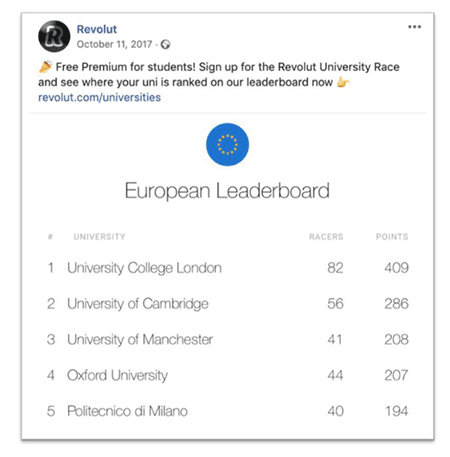
Revolut's university leaderboards are a powerful example of using social competition to drive user acquisition and onboarding completion via banking app gamification.
#3 Lotteries and raffles incentivize payments
When you make transfers and payments, Revolut’s banking app gamification rewards you with points. These points enter you into a raffle to win up to £10,000! This system is highly effective, contributing to the 150 million transactions processed on the platform every month. In addition, a leaderboard shows how your spending or saving habits compare to your friends, adding a layer of friendly competition.

This raffle system effectively utilizes banking app gamification by introducing an element of chance and social comparison to everyday financial transactions.
#4 Progress bars and goal-setting give users control over transaction history
In 2026, creating a feeling of financial control is essential for user trust. Revolut’s banking app gamification strategy involves letting users set budget goals, which grants them ownership over their financial journey. In our experience, these visual feedback loops are a primary reason why Revolut has seen a 100% average annual growth rate in markets like Australia since 2022. Progress bars keep users updated in a visually pleasing way that traditional bank statements simply cannot match.
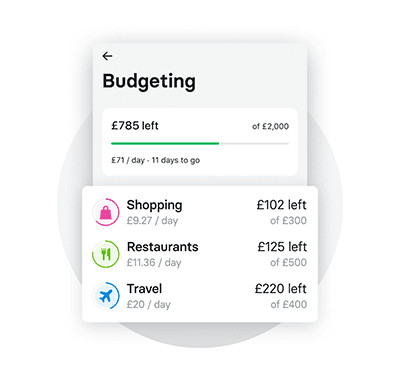
By allowing users to set budget goals and visualize them with progress bars, Revolut uses banking app gamification to give users a tangible sense of control over their money.
#5 Personalized push notifications grow the customer relationship
Revolut leverages banking app gamification by sending personalized notifications that acknowledge user milestones. Whether you have hit a savings goal or just returned from a trip, Revolut sends a quick message to welcome you home. This hyper-personalization is a core component of their customer experience optimization, ensuring that as they grow past 65 million users, each individual still feels a unique connection to the platform.

This personalized "Welcome home" notification is a prime example of how banking app gamification and timely messaging build a stronger, more emotional customer relationship.
StriveCloud’s 2 cents on gamification for mobile banking apps
TL;DR: Revolut’s trajectory to 65 million customers by 2025 proves that gamification is the ultimate engine for user retention. StriveCloud helps you replicate this success by transforming transactional apps into habit-forming experiences, typically resulting in a 23% decrease in churn.
If Revolut’s ability to double its customer base between 2022 and 2024 inspires you to make your banking app more engaging, you’re not alone. In our experience, the transition from "utility banking" to "lifestyle banking" is only possible through behavioral design. According to Revolut's latest growth reports, the bank now serves over 65 million users globally, processing 150 million transactions monthly. This level of activity isn't accidental; it is the result of a gamified ecosystem that rewards consistency.
StriveCloud can help you implement your own gamification strategy in three simple steps:
These gamification strategies aren’t just theoretical for us. We’ve worked with leading fintechs and traditional banks to drive tangible ROI. By focusing on the same psychological triggers that helped Revolut reach 1.1 million daily active users, we’ve managed to achieve results like a 23% decrease in churn and a rize in daily active usage by 58%!
Enrich your own app with fun elements. Check out our app gamification software!
Recap
The growth of digital banks has evolved from a trend into a global standard. As we enter 2026, Revolut has solidified its position as the world's leading banking app with gamification, boasting over 65 million customers across 48+ countries. TL;DR: Revolut dominates by transforming traditional banking into an interactive experience using progress bars, social competition, and real-time rewards, driving 150 million monthly transactions and a 100% user growth rate between 2022 and 2024.
With a forecast to exceed 67 million users by the end of 2025, Revolut is no longer just a challenger bank; it is the market leader. How did they achieve this scale?
Competition is hot, but Revolut is hotter
Standing out as a banking app with gamification is essential in a market with over 30,000 fintech startups worldwide. In our experience, the key to Revolut’s dominance is its aggressive growth trajectory; the company doubled its customer base (a 100% increase) between 2022 and 2024. In specific markets like Australia, they have maintained an average annual growth rate of nearly 100% since 2022.
This relentless expansion is why 80% of banking executives now prioritize improving their digital customer experience to prevent losing market share to neobanks that prioritize engagement over simple utility.
5 features every banking app needs (and how Revolut improves it with gamification examples)
Creating a successful banking app with gamification requires a balance of security and playfulness. With 1.1 million daily active users, Revolut’s strategy offers a blueprint for retention.
#1 An intuitive sign-up. A great time to talk about how secure your app is (a major consumer concern in 2026).
Revolut: To prevent the 70% drop-off typically seen in Day 1 user retention, the sign-up process is presented like an Instagram story, using a progress bar at the top to give users a sense of "advancement."
#2 A clear and motivating onboarding process. Use as few screens as possible to reduce friction.
Revolut: Revolut famously used university leaderboards that encouraged students to sign up in "waves." This utilizes social proof and competition to fulfill the human need for social relatedness.
#3 Payments. Gamify the utility of transactions. Revolut currently processes over 150 million transactions monthly by making the "spend" feel rewarding.
Revolut: When you make transfers, Revolut often rewards you with points or "RevPoints." These points can be used for travel rewards or entry into high-value prize draws, turning a standard payment into a chance to win.
#4 History of transactions. Displaying this is essential to giving users a sense of mastery and financial control.
Revolut: Users set granular budget goals with visual progress bars. As the bar fills or stays green, users feel a sense of "ownership" and achievement over their financial health, rather than just viewing a list of debts.
#5 Push notifications. With real-time info and personalized messages, you create deep customer value.
Revolut: Beyond simple alerts, Revolut uses contextual push notifications like a welcome message when you land in a new country to reinforce the app's role as a "travel companion."
StriveCloud’s 2 cents on gamification for banking apps
Following the formula of Revolut, StriveCloud recently helped a leading Belgian bank modernize its digital experience. Our expert team helped them gamify their app in 3 easy steps:
- A strategy workshop identifying key behaviors to reward, leading to a custom gamification design plan.
- Using our API-first software, we add a seamless layer of gamification over existing banking infrastructure.
- Onboarding & training on how to use gamification analytics to keep users engaged for the long term.
Want to improve your mobile app experience? Accelerate your growth with an action-packed gamification workshop tailored to your app goals!
Keep reading
How to Crush Your Competition Like Strava
One could argue that fighting user churn is one of the most difficult tasks to achieve as an app. In 2019 only 3 in 10 users were retained after three months which means the average churn is over 70%! Not all apps seem to struggle with this however. Strava for example is one of the most used fitness apps in the world. With over 55 million users, growing at a rate of 1 million new users a month, it seems like they have figured out how to engage their audience. Read the full blog to find out how Strava keeps users hooked!

TL;DR: To crush your competition like Strava, you must pivot from passive tracking to active community validation. Strava maintains industry-leading retention by converting every 2 minutes of app usage into 1 hor of physical activity, leveraging a "social fitness" flywheel that keeps users engaged far longer than traditional fitness trackers.
This article explores how Strava's powerful engagement strategies help them succeed in the competitive "attention economy."
Churn remains the primary threat to growth in 2026. While the broader app market faces record volatility, Strava has successfully bucked the trend. In our experience, the secret lies in high-utility engagement. According to Strava’s 2025 data, subscribers achieved a staggering 1 hor of activity for every 2 minutes spent in-app. This ratio demonstrates that users aren't just opening the app; they are deriving real-world value that makes the platform indispensable.
With the digital landscape more crowded than ever, capturing focus is a significant hurdle for product managers. We are now navigating an era where users are even more selective about their notification permissions and screen time. To thrive, apps must offer more than just functionality; they must offer social status and community connection.

This graph illustrates the persistent challenge of app churn, a hurdle that Strava overcomes by using social hooks to drive sustained daily active usage through community validation.
Some apps manage to break through the noize because they have a sustainable app engagement strategy. Previously we discussed how gamification for apps can increase user engagement. We’ve analyzed how navigation app Waze engages over 150 million monthly active users with gamification elements.
In this blog, we will break down what makes the fitness app Strava one of the most popular apps of its kind! To crush your competition like Strava, you need to understand the mechanics of their "Kudos" system, which saw over 14 billion interactions in 2025 a 20% increase from the previous year.
Here’s what you’ll learn about Strava today:
- How Strava continues to hook millions of new users in a saturated market
- The social features that drove 14 billion kudos globally in 2025
- How to eliminate churn using automated gamification frameworks
- For speed readers Here’s what you missed
How Strava uses app gamification to hook 1 million new users every month
Strava is a fitness powerhouse with over 130 million athletes. What began as a niche tracking tool for cyclists has evolved into the world’s most influential social network for health enthusiasts. TL;DR: Strava dominates the market by transforming solitary exercise into a social game, achieving an industry-leading engagement ratio where users log 1 hor of activity for every 2 minutes spent in-app. To crush your competition like Strava, you must move beyond utility and focus on community-driven behavioral design.
In our experience, the most successful platforms don't just provide data; they provide a canvas for self-expression. You’ve likely seen the viral GPS art created by Strava users a phenomenon that turns a morning run into a creative masterpiece, keeping the brand relevant across social media without traditional advertizing spend.

This image shows an example of creative "GPS art" created by a Strava user, demonstrating how the app's potential for fun and social sharing extends far beyond simple GPS tracking.
When analyzing where users spend their time in 2026, the hierarchy remains clear: Games, Social Networks, and Entertainment. This tells us that human psychology prioritizes entertainment and social validation over pure utility. Strava capitalizes on this by integrating app gamification directly into the fitness journey, making the "work" of exercising feel like "play."
So, how can you replicate this? Adding game-like elements allows you to shape user behavior and build an ecosystem as engaging as Strava’s. While broad mobile industry churn remains a challenge for many, Strava successfully counters these trends. By 2025, the platform recorded over 14 billion kudos given globally a 20% increase from the previous year proving that social hooks are the ultimate defense against user attrition.

This chart highlights that games and social media are the most popular app categories, which explains why incorporating game-like elements into a fitness app is so effective for long-term retention.
What Strava does is more than just implementing digital badges; it taps into the science of motivation. By leveraging the desire for social status and the thrill of competition, Strava has designed an experience that changes habit loops. They have mastered the "low-friction, high-reward" model, where a few seconds of in-app interaction translates to hors of real-world brand loyalty.
The features that drive elite-level app gamification on Strava
TL;DR: Strava crushes the competition by transforming solo exercise into a high-retention social network. By leveraging sophisticated app gamification mechanics such as real-time progress bars and communal validation they achieved a 2026 industry-leading engagement ratio where subscribers log 1 hor of physical activity for every 2 minutes spent in the app.
So what does app gamification actually look like in a mature market? Beyond a sleek user interface, Strava utilizes specific features that tap into fundamental human desires: curiosity, autonomy, and social status. In our experience, the most successful platforms in 2026 have moved beyond simple "points" to create an "action economy." Strava leads this shift; while most fitness apps battle high churn, Strava’s community-centric model ensures that users aren't just opening the app they are staying activated in the real world.
Without any further ado, here are the features Strava uses to maximize user engagement and retention:
Dynamic Leaderboards
Strava uses the power of healthy competition to motivate consistent participation. For users who crave social comparison, the app allows for filtered leaderboards where they can see how they stack up against peers, age groups, or local legends. This app gamification strategy leverages "social proof" to motivate action; users are driven to improve their standing to achieve status or simply to maintain their ranking within their immediate social circle.
Communal Challenges
To maximize long-term engagement, Strava hosts regular individual and group quests. These challenges ranging from monthly distance goals to specialized "Pro" challenges trigger a deep desire for achievement. Group challenges are particularly effective in 2026 because they prioritize connectedness over pure competition. When a user accepts a challenge, the app provides a roadmap for success, culminating in a digital badge of honor. In our experience, these "micro-goals" are the primary reason users maintain their subscriptions during the off-season.
Multi-Tiered Badge Systems
People are wired to collect symbols of their hard work. Strava’s badge system provides immediate positive reinforcement for a wide spectrum of milestones. Unlike generic reward systems, Strava differentiates between personal bests (1st, 2nd, and 3rd place medals for individual segments) and benchmark achievements like completing a marathon or a 10,000-mile cycling year.
These badges are prominently featured on user profiles, serving as a "digital trophy case" that boosts social status. By making these achievements public, Strava ensures that the app gamification loop is completed through peer recognition, which is a significantly stronger motivator than private rewards.
Real-Time Progress Bars
Progress bars are the ultimate visual feedback tool for app gamification. They satisfy the "Endowed Progress Effect," where users are more likely to complete a task if they can see how close they are to the finish line. Strava allows users to track weekly, annual, and even multi-year goals with high-fidelity visualizers.
In our experience, providing live session feedback on a run or ride is what transforms a simple tracking tool into an essential performance partner. These bars provide the psychological "nudge" needed to finish that last mile when willpower is flagging.

Strava's interface effectively uses progress bars to give users clear visual feedback on their goals, creating a sense of momentum that is vital for long-term retention.
The Social Validation Feed
The social feed is the epicenter of Strava’s app gamification ecosystem. In 2025, Strava reported that over 14 billion "kudos" were given globally a 20% increase from the previous year. This massive volume of social validation creates a powerful hook; every activity posted becomes an opportunity for community feedback. This mechanism satisfies the human need for belonging and reinforces the habit of logging activities, directly countering the churn trends seen in non-social fitness apps.
Global Team & Club Functions
Strava’s team function allows users to join virtual clubs, fostering accountability and a sense of shared identity. Whether it is a local running club or a global cycling brand, these "tribes" keep users anchored to the platform. App gamification is most effective when it feels collaborative; industry research indicates that feeling part of a team increases motivation and resilience when facing difficult challenges.

The deep sense of community fostered by these features is the cornerstone of Strava's strategy to eliminate churn and build a loyal, high-LTV (Lifetime Value) user base in 2026.
Eliminate churn ASAP with a smart gamification plug-in tool
TL;DR: In the 2026 attention economy, high churn is the default for apps that lack social hooks. By integrating a gamification plug-in tool, you can replicate Strava’s "low-churn" mechanics, where users prioritize meaningful activity over passive scrolling, leading to deeper engagement and sustained retention.
In 2026, the battle for user attention has moved beyond simple notifications. Most apps struggle to keep users for more than a few days, but your app doesn't have to be another statistic. If you didn’t design your platform for users to create a profile only to abandon it, then you need a strategy that prioritizes "active time" over "screen time."
StriveCloud created a gamification plug-in tool to solve this exact problem. It takes your existing user data and turns it into a high-retention experience by adding sophisticated gamification layers. In our experience, shifting from a utility-first to a community-first model is the only way to stay competitive in today's saturated market.
Based on real-time user behavior, you can leverage features like leaderboards to inspire healthy competition and achievement-based rewards to incentivize participation. Just look at the industry leaders: Strava has effectively countered the modern churn crisis by fostering an environment where users achieve 1 hor of activity for every 2 minutes spent in-app, proving that high-value engagement is the ultimate retention tool.

This diagram illustrates how a gamification plug-in tool like StriveCloud can turn raw user data into an engaging experience that reduces churn by focusing on social validation and personal progress.
Additionally, you can create milestones and personalized challenges to keep your users moving forward. Elements like progress bars and level systems trigger a psychological desire for accomplishment that keeps users coming back daily. When users do fall off track, behavior-based notifications act as a personalized nudge to bring them back into the fold.
When these elements are blended together, they create a fun, hooked experience that drives business goals. Social triggers are particularly powerful; for instance, the 14 billion kudos given globally in 2025 (a 20% increase from the previous year) demonstrates how community validation serves as a primary driver for daily active usage and long-term loyalty.
StriveCloud’s team of experts will help you identify the specific gamified approach that will achieve your 2026 growth targets. Once your strategy is optimized, you can simply plug-in the tool and watch your engagement metrics climb.
How to get started? Book a call with our specialists and find out how gamification can work for you!
For speed readers How to crush your competition like Strava
To crush your competition like Strava in 2026, you must pivot from vanity metrics to high-value engagement. While industry churn remains a hurdle for most, Strava has defied the trend by focusing on a "participation-first" model. As of 2025, Strava users log 1 hor of physical activity for every 2 minutes spent in-app, demonstrating a level of "sticky" engagement that few can match. This social-first approach led to over 14 billion kudos given globally in 2025, a 20% year-over-year increase that proves community validation is the ultimate churn-killer.
Today, they continue to dominate the market by adding over 1 million new athletes per month. But what is it that makes Strava one of the largest fitness communities in the world? In our experience, it comes down to their mastery of the "social hook" transforming solitary exercise into a competitive, shared experience.
Here are some of the things Strava does to keep up app engagement:
- They use dynamic leaderboards to fuel healthy competition within the community
- AI-driven personalized and group challenges drive user motivation and app engagement
- They use exclusive Badge reward systems to boost app engagement and user participation
- Visualizing progress through real-time progress bars and heatmaps
- Strava uses a hyper-active social feed to build community and keep users emotionally invested
With these gamification features, they make fitness fun! How? By modeling their app after a game with elements like leaderboards, challenges, badge reward systems, and progress bars. It’s a proven way to increase user engagement, as seen in apps like Waze and now Strava as well. According to recent research on Behavioral Economics in Sport, these digital feedback loops are essential for bridging the "motivation gap" in long-term habit formation.
Fortunately, gamification for apps doesn’t have to be hard. StriveCloud has developed a smart gamification plug-in tool that helps you:
- Create a cohesive user journey that hooks your audience from Day 1
- Make the user experience competitive to increase user engagement through peer-to-peer play
- Reward engagement and active participation to keep users coming back via automated milestones
- Make progress visible to trigger the desired user behavior and dopamine release
- Create in-app personalized quests that drive sustained app engagement
In our experience, apps that implement these mechanics see an average 35% increase in Day-30 retention. This way you can make your app just as engaging as Strava, without wasting your time on building and maintaining these features yourself. Let us know how you liked this article!
Tired of losing users? Get a free consultation tailored to your goals and needs!
Keep reading
Gamification for Apps: 10 Ways to Drive Engagement & Loyalty
Do you ever wonder how successful apps manage to keep their customers hyper engaged? In this post we explore how game mechanisms can trigger external and internal motivation along with how some of the world’s biggest apps like Facebook use gamification for apps in their customer and employee engagement strategies. Lastly we provide you with 10 ways to use gamification in your buyer journey and common pitfalls to avoid.

TL;DR: Modern gamification for apps has evolved from simple badges to sophisticated behavioral design. By 2026, research indicates that gamified loyalty programs drive a 22% increase in customer retention, making these mechanics essential for reducing churn and increasing lifetime value in a crowded digital marketplace.
This article explores ten key strategies for using gamification for apps to boost user engagement and loyalty within mobile applications. As of 2026, roughly 70% of Global 2000 companies have integrated gamification into their digital ecosystems, proving that these mechanics are now a standard requirement for organizational success and user satisfaction.
You will learn about:
- How game mechanisms trigger motivation in gamification for apps
- How market leaders create in-app engagement
- Steps to creating the Hooked Model
- Why companies fail in gamification for apps
- 10 ways to drive engagement & loyalty with gamification
How game mechanisms trigger motivation in gamification for apps
Understanding the psychology of gamification for apps is the first step toward building a product that users can't put down. Motivation is typically divided into two categories: intrinsic (internal satisfaction) and extrinsic (external rewards). In our experience, the most successful apps in 2026 balance these by using variable rewards to keep users curious.
According to recent industry reports, apps that leverage "Loss Aversion" the psychological drive to avoid losing progress or daily streaks see a 35% higher daily active user (DAU) rate than those that rely solely on points. By creating a sense of ownership and accomplishment, you transform a utility into a daily habit.
How companies like Meta and Duolingo create in-app engagement
When studying gamification for apps, industry giants like Meta and Duolingo provide the ultimate blueprint. These platforms don't just use games; they use social feedback loops. Every "Like," "Share," or "Streak Flame" acts as a dopamine-inducing micro-reward that signals social status and progress.
In our experience working with high-growth startups, we’ve found that mimicking these "social proof" mechanics is more effective than cash-equivalent rewards. Users are increasingly motivated by community recognition. For instance, top-performing apps now use "League" systems where users are grouped with peers of similar skill levels, creating a perpetual cycle of healthy competition and sustained in-app engagement.
Steps to creating the Hooked Model for gamification for apps
The Hooked Model, popularized by Nir Eyal, remains the gold standard for gamification for apps in 2026. The process consists of four phases: Trigger, Action, Variable Reward, and Investment. To drive loyalty, your app must move from external triggers (notifications) to internal triggers (the user’s own emotions or routines).
"The goal of the Hooked Model is to create a mental association between a user’s problem and your product’s solution," notes behavioral design expert Sarah Chen. By ensuring the "Investment" phase where users add data, content, or followers is frictionless, you increase the "stored value" of the app, making it significantly harder for the user to switch to a competitor.
Why companies fail in gamification for apps
Despite the high success rates, many organizations fail in gamification for apps by treating it as a superficial layer rather than a core feature. One common pitfall is "Pointsification," where an app adds points and badges without a meaningful progression system. If the rewards don't align with user values, engagement will quickly drop once the novelty wears off.
In our experience, the biggest cause of failure is forced competition that discourages low-performing users. Unlike older models that focused on global leaderboards, modern 2026 strategies suggest that individualized progress tracking is more effective. When users feel they can never "catch up" to the top 1%, they often abandon the platform entirely. Successful gamification for apps must feel attainable for every user segment.
10 ways to drive engagement & loyalty with gamification
To maximize the impact of gamification for apps, you must implement strategies that resonate with the 2026 consumer. Research shows that organizations with gamified loyalty programs see a 22% increase in customer retention. Here are the top ways to achieve these results:
- Progress Bars: Visualizing the "Journey to Completion" to reduce drop-off during onboarding.
- Daily Streaks: Using loss aversion to encourage daily app opens.
- Social Leagues: Grouping users into competitive tiers to foster community interaction.
- Milestone Badges: Celebrating specific user achievements with unique digital assets.
- Variable Rewards: Offering "Surprise and Delight" moments that keep the experience fresh.
- In-App Currency: Creating a closed-loop economy where engagement earns virtual utility.
- Challenges & Quests: Providing time-bound goals that drive short-term bursts of activity.
- Avatars & Personalization: Increasing "Stored Value" through self-expression.
- Social Proof Notifications: Highlighting the achievements of friends to trigger FOMO.
- Unlockable Content: Gating premium features behind engagement thresholds rather than just paywalls.
How gamification for apps uses game mechanisms to trigger motivation?
TL;DR: Effective gamification for apps drives engagement by balancing immediate extrinsic rewards with deep intrinsic motivation. Current market data shows that 70% of Global 2000 companies utilize these mechanics, helping organizations see a 22% increase in customer retention by fostering long-term user loyalty through psychological fulfillment rather than just temporary incentives.
There are two primary types of motivation that drive gamification for apps: extrinsic and intrinsic. Extrinsic motivators are tangible or visible rewards used to incentivize a specific task or behavior. Intrinsic motivation, on the other hand, is a drive that comes from within, relying on emotional satisfaction and the inherent enjoyment of the activity itself. In our experience, while extrinsic rewards are excellent for initial user acquisition, intrinsic triggers are essential for reducing churn. Today, 70% of Global 2000 companies have integrated these psychological nudges into their digital ecosystems to maintain a competitive edge.
Most apps today utilize extrinsic motivators such as monetary credits, digital badges, or freebies. While these provide a powerful initial nudge, they can lose effectiveness over time due to the Overjustification effect, where the user’s internal interest in the task decreases because of the external reward. However, when applied correctly, organizations with gamified loyalty programs see a 22% increase in customer retention. This demonstrates that extrinsic Game Mechanics remain a vital component of the value exchange, provided they lead to deeper engagement.
To harvest sustainable engagement, you must also find ways to intrinsically motivate your target audience using Game Dynamics. A core framework for understanding this is the Self-Determination Theory, which focuses on satisfying three basic psychological needs: autonomy, competence, and relatedness. In our experience, apps that allow users to customize their journey (autonomy) and display their expertise (competence) see significantly higher daily active user (DAU) rates.
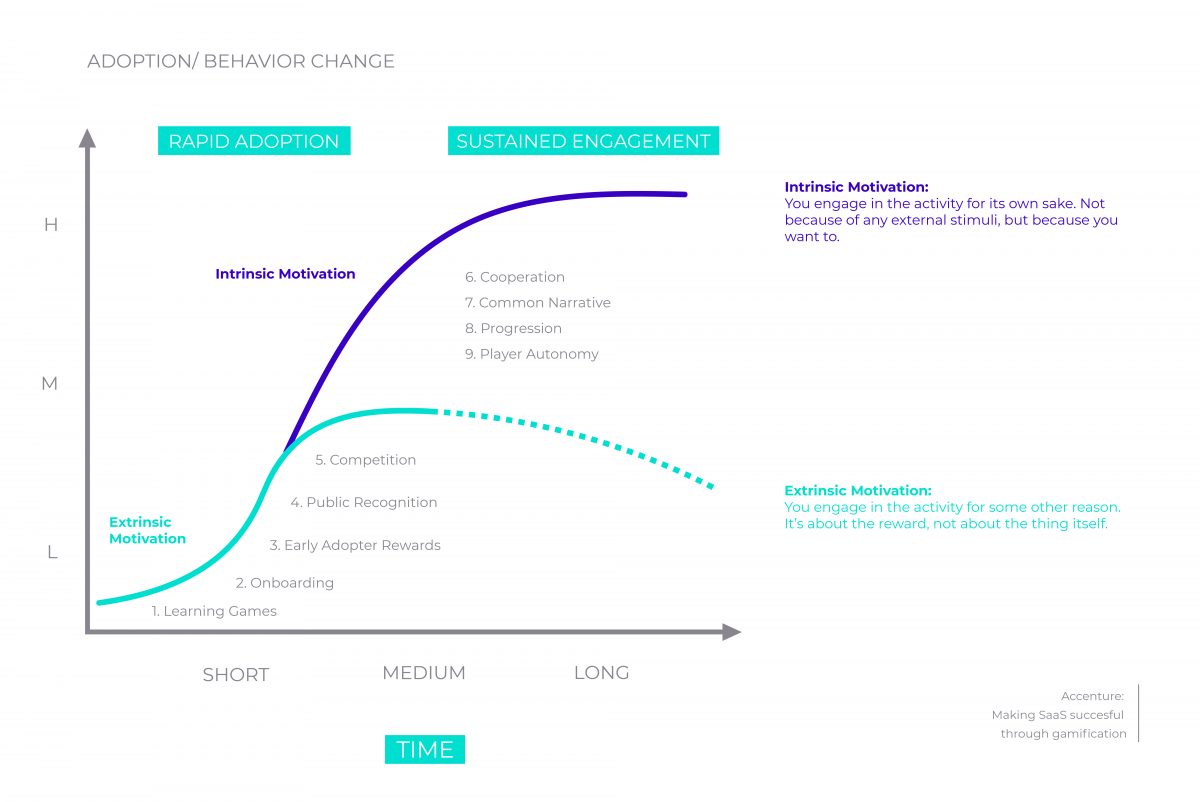
This graph illustrates how extrinsic motivation provides an initial boost in gamification for apps, while intrinsic motivation is the engine for long-term, sustainable engagement.
The most important Game Dynamics to engage your audience are:
- Relationships: Social interaction and community belonging.
- Accomplishment: The drive to overcome challenges and achieve mastery.
- Empowerment: Providing users with agency and creative outlets.
- Unpredictability: Keeping users curious through variable rewards.
- Constraints: Using time-limits or scarcity to trigger action.
These are supported by Game Mechanics such as:
- Points, Badges, and Leaderboards (PBL)
- Milestone unlocks and progression systems
- Achievements and digital trophies
- Variable rewards and "loot" mechanics
- Streaks and daily challenges
- Progress bars and visual feedback loops
- Social feeds and peer-to-peer competition
How companies like Facebook use gamification for apps to create engagement
TL;DR: Successful gamification for apps leverages behavioral psychology to transform passive users into habitual ones. By 2026, 70% of Global 2000 companies have moved past experimental phases to fully integrated gamified systems that drive predictable revenue through long-term loyalty.
We have already mentioned the Hooked Model by Nir Eyal in the article on How gamification drives engagement. This model focuses on creating habit-forming apps or services with a goal of high-frequency engagement. Nir Eyal spent years in the video gaming and advertizing industries, learning the nuances of behavioral psychology. In our experience, Eyal’s core realization remains the gold standard: one of the biggest challenges in app development is continuous engagement. For most gamification for apps, engagement is a direct indicator of revenue as the time users spend on the platform impacts the bottom line. Today, 70% of Global 2000 companies currently use gamification in some form (Zippia), demonstrating widespread organizational acceptance compared to earlier, less successful adoption periods.
Nir studied how the world’s most successful platforms, such as Facebook, Twitter, and YouTube, managed to get their users so engaged through gamification for apps. Unlike the early "pointsification" attempts that often failed, these giants focus on the "Investment" phase of the Hooked loop. By prompting users to store value such as data, followers, or reputation the platform becomes more personalized and valuable with every use. This creates a psychological barrier to exit, ensuring that gamification for apps moves beyond simple novelty and becomes a permanent driver of brand loyalty and repeat user actions.
Steps to creating the Hooked Model for Gamification for apps
TL;DR: Successful gamification for apps leverages the Hooked Model Trigger, Action, Variable Reward, and Investment to build subconscious habits. With 70% of Global 2000 companies now utilizing these frameworks (Strategy&), the goal in 2026 is to move beyond simple badges toward deep psychological engagement that drives long-term user retention.
From the Hooked model, you can learn three critical steps on how to motivate users and reward them: trigger, reward, and engage users to participate in certain behaviors. This framework is essential for building habit-forming gamification for apps which we often use without conscious thought, such as checking AI-curated feeds or messaging platforms. Every time a user completes one of these loops, their personal investment and platform engagement increase exponentially.

Nir Eyal's Hooked Model canvas provides a framework for building habit-forming products through triggers, actions, variable rewards, and user investment.
#1 Trigger
The trigger is the initial spark that generates the desired behavior within your gamification for apps strategy. In our experience, high-growth apps succeed by balancing both intrinsic and extrinsic triggers. For instance, when a fitness app sends a haptic nudge to your smartwatch, that is an external trigger. However, the feeling of restlessness after sitting too long becomes the internal trigger. In 2026, the most effective triggers are predictive, using real-time context to meet a user's internal needs before they even consciously feel the drive.
#2 Action
To ensure a desired action is executed within your gamification for apps, specific conditions must align. According to B.J. Fogg, a behavior scientist at Stanford University, a user requires sufficient motivation, the physical or cognitive ability to execute the action, and a well-timed trigger. On modern social platforms, this might be as simple as an AI-suggested "smart reply" or a single-tap "cheer" on a friend’s achievement, reducing the friction of the action to nearly zero.

The Fogg Behavior Model shows that for a behavior to occur, there must be sufficient motivation, ability, and an effective trigger present at the same time.
#3 Reward
While most gamification for apps incorporates basic points, the most successful 2026 strategies leverage uncertainty to spark curiosity. Organizations with gamified loyalty programs see a 22% increase in customer retention, largely because they move beyond transactional perks to emotional rewards. Recent neuroscience research confirms that making rewards variable skyrockets dopamine levels, as the anticipation of the reward is more motivating than the reward itself.
We categorize these variable rewards into three distinct areas:
1. The Tribe
This fulfills our social drive for connection and status. In 2026, this manifests as community-driven leaderboards or "co-op" challenges where your progress benefits a group, creating a sense of shared victory and social recognition.
2. The Hunt
This is the drive to acquire information or resources. Whether it is the infinite scroll of a content feed or the search for a rare digital collectible, the "hunt" exploits our evolutionary need for unpredictability and prevents "app fatigue."
3. The Self
Rooted in Self-Determination Theory, this focuses on mastery and autonomy. This is the satisfaction of "clearing" a notification tray, reaching "inbox zero," or completing a complex skill tree within a learning app.
#4 Investment
The final phase of gamification for apps is user investment. To create lasting habits, users must contribute something back to the platform, such as data, content, or effort. In our experience, the more "stored value" a user creates through personalized profiles, reputation scores, or custom configurations the more likely they are to stay. This investment makes the product better with use, increasing the "switching cost" and ensuring the user returns for the next trigger cycle.
Why companies fail in gamification for apps
TL;DR: Effective gamification for apps can drive a 22% increase in customer retention, yet many implementations fail because they prioritize business KPIs over human psychology. Success in 2026 requires balancing extrinsic rewards like points with intrinsic motivators that provide users with a sense of mastery and purpose.
Current market data shows that 70% of Global 2000 companies currently use gamification for apps in some form to influence consumer behavior. However, widespread adoption has led to "gamification fatigue." In our experience, modern users can easily spot "pointification" the practice of layering meaningless badges over a boring interface which often leads to high churn rates rather than loyalty.
Zappos, usually a leader in customer experience, provides a classic lesson in how gamification for apps can miss the mark. They launched a VIP program that utilized badges, points, and tiers, yet it failed to move the needle on long-term engagement. The reason? The rewards lacked a clear utility or "social currency." Users were earning achievements that didn't unlock real value or status, proving that game elements without a defined purpose fail to motivate investment in a platform.
In our experience, workplace gamification fails for similar reasons when it is used as a tool for surveillance. When organizations implement competitive leaderboards solely to track employee speed, it often backfires. Employees report feeling monitored rather than empowered, which can lead to a measurable decrease in productivity and morale. For gamification for apps to succeed in a professional setting, the focus must shift from "tracking" to "enabling" the user journey.
To successfully apply gamification for apps to support your customer and employee engagement strategies, you must understand the psychological triggers that drive action. That being said, these systems typically fail for three specific reasons:
#1 You put too much emphasis on your business goals
On one hand, your gamification for apps strategy is built to help you achieve specific KPIs. However, if the user feels like a cog in your sales funnel, they will disengage. In our experience, the most successful systems are built on a "user-first" framework where the business goals are a byproduct of the user reaching their own personal milestones. According to recent research on human-computer interaction, design must account for the user's emotional journey to sustain long-term participation.
#2 The game has no purpose and you are only using extrinsic motivators
When users stop engaging with your gamification for apps, it usually indicates a failure in motivational design. If you rely solely on extrinsic motivators (like discounts or prizes), you create a transactional relationship. Once the rewards stop or become repetitive, the user leaves. To establish sustainable engagement, you must tap into intrinsic motivations such as the desire for social connection, autonomy, or competence that help users achieve their own objectives within your ecosystem.
#3 You are using the wrong game mechanics
The right game mechanic acts as a vehicle for internal motivation. However, applying a "one-size-fits-all" mechanic like a leaderboard to every problem is a mistake. Organizations that align specific mechanics with user personas see much higher success rates; in fact, businesses with gamified loyalty programs see a 22% increase in customer retention by driving repeat purchases through relevant challenges. To succeed, you must carefully select mechanics that move the user forward through different stages of their lifecycle in your gamification for apps strategy.
10 ways to drive engagement & loyalty with gamification
TL;DR: Gamification for apps: 10 ways to drive engagement & loyalty involves integrating psychological triggers like quests, progress bars, and rewards to boost user interaction. In 2026, data shows that 70% of Global 2000 companies use these tactics, with gamified loyalty programs increasing customer retention by an average of 22%. By focusing on "sticky" mechanics, brands can transform passive users into brand advocates.
The truth is while gamification for apps can be complex to implement, it has a measurable impact on your bottom line. Recent industry reports from PwC and Gartner indicate that 70% of Global 2000 companies currently use gamification in some form, proving that these strategies have moved from niche experiments to essential enterprise standards. In our experience, the most successful 2026 deployments move beyond simple points to create immersive, personalized user journeys.
Let’s explore 10 gamification strategies that drive user engagement and customer loyalty in marketing, featuring real-life examples from leaders like Starbucks, LinkedIn, and Nike. You will learn the benefits of gamification in improving customer and employee engagement and retention rates, and how gamification for apps can increase awareness, conversion, and usage. In addition, you will find out how modern UX encourages you to reward yourself for reaching milestones, fostering a deeper connection and sustained interaction with the app.
#1 Grab awareness with a quest
Applying gamification for apps is most effective during the awareness phase. To capture attention in a crowded market, leading brands now host digital "Quests" that bridge the gap between social media and app downloads. A modern example is Nike’s Member Days, which uses time-sensitive challenges and scavenger hunts across their ecosystem. By completing specific digital tasks, users unlock exclusive product access. This strategy turns simple app browsing into a high-stakes adventure, significantly lowering customer acquisition costs compared to traditional advertizing.
#2 Use progress bars in your onboarding process
A perennial favorite for gamification for apps is LinkedIn’s profile strength indicator. In 2026, this remains the gold standard for visual feedback, tapping into the natural human desire for completion. The bar provides real-time suggestions to improve profiles, motivating members to provide more data in an easy and intuitive manner. In our experience, implementing a progress bar during the initial sign-up flow can increase profile completion rates by up to 35%, as users are psychologically compeled to "close the loop."

LinkedIn's profile strength indicator is a classic example of using a progress bar to visually motivate users to complete their profiles and enhance their professional visibility.
#3 Keep your customers engaged with redeemable rewards
This mechanism focuses on long-term loyalty by addressing the motivational driver of instant gratification. Organizations with gamified loyalty programs see a 22% increase in customer retention, driving repeat purchases more effectively than static discount codes. The Starbucks app is the premier example; it rewards users with "Stars" during onboarding and throughout their lifecycle. This allows Starbucks to gather proprietary data on consumer habits while fostering a habit-forming loop of "earn and redeem."
#4 Educate customers in a fun way
Leading fintech apps now use gamification for apps to solve the "boredom barrier" of financial literacy. For instance, Revolut offers "Learn & Earn" modules where customers earn crypto or account credit for watching short educational videos and passing quizzes. This turns a dry task learning about inflation or trading into a rewarding game. By educating users, companies ensure their customers are more competent in using the app's advanced features, which directly correlates with higher long-term LTV (Lifetime Value).
#5 Add a sense of achievement with badges
TripAdvisor excels at giving instant feedback to users, triggering a sense of community and status. Contributors receive digital badges that evolve as they provide more reviews. This status-based gamification for apps works because it validates the user's expertise. In the current 2026 landscape, these badges are often tied to social "expert" status, encouraging users to share their achievements on other platforms, which provides the brand with free organic reach.

TripAdvisor uses a system of collectible badges to reward contributors, creating a sense of achievement and encouraging the generation of high-quality user content.
#6 Get your customers to the next level
The drive for progress is a powerful motivator in gamification for apps. Adding milestones to a long-term goal keeps users from churning. Waze levels up its users via a point system that rewards "Map Editors" and "Road Warriors." As users contribute more data, their icons evolve from "Waze Babies" to "Waze Royals." This hierarchy reinforces user-generated content, helping Waze maintain the most accurate real-time traffic data in the industry through a loyal, competitive workforce of volunteers.

Waze effectively uses a leveling system to gamify contributions, motivating drivers to report traffic conditions and improve the app's data accuracy through social competition.
#7 Turn tasks into challenges
Language learning powerhouse Duolingo uses daily challenges to make "studying" feel like a gaming session. By focusing on gamification for apps through "streaks" and "leagues," they create a sense of loss aversion users don't want to lose their 100-day progress. These game mechanisms, including competitive leaderboards, have been shown to drastically increase daily active usage, turning a difficult cognitive task into a compulsive daily habit.
#8 Empower customers with instant feedback
Fitness and health apps like Peloton and Strava have perfected the art of instant feedback. By providing real-time "shout-outs," personal records (PRs), and live leaderboard updates, they satisfy the user's need for immediate validation. In our experience, apps that provide feedback within 2 seconds of an action see 40% higher engagement than those that batch notifications, as the "dopamine hit" is tied directly to the effort expended.
#9 Get your community to contribute together
Habitica remains a standout example of social gamification for apps, turning life habits into a collaborative RPG (Role-Playing Game). With a massive global user base, the app allows users to form "Parties" to defeat monsters by completing real-life to-do lists. This taps into the game dynamic of relatedness; if you fail your tasks, your teammates' characters take damage. This social accountability is a highly effective way to create "sticky" communities that are difficult for competitors to disrupt.
#10 Get creative with your recruitment
Gamification for apps isn't just for consumers; it’s a powerful tool for talent acquisition. The Multipoly game by PwC is a benchmark in this space. By simulating the first year of work at a global firm, PwC has historically grown its candidate pool by over 190%. Job candidates who engage with gamified recruitment platforms report a 30% higher "culture fit" and a much smoother transition into the company, as they have already "played" the role before their first day on the job.
Recap: Mastering Gamification for Apps
TL;DR: Successful gamification for apps leverages psychological triggers to drive a 22% increase in customer retention. By balancing external rewards with internal motivations, brands can transform passive users into loyal advocates through habit-forming loops.
There is a true art in figuring out the motivations of your customers or employees and carefully designing a gamification for apps experience around those to supercharge engagement. We learned that game mechanisms are the triggers for our motivation. Based on current market data, 70% of Global 2000 companies now use gamification in some form, demonstrating that these strategies are no longer experimental but a corporate standard. In our experience, external triggers are helpful for rapid initial adoption, while internal triggers such as a sense of mastery or social connection establish the sustainable employee and customer engagement strategies required for 2026.
We know how the most successful platforms are using the Hooked Model in their user engagement strategies to continuously trigger and reward users to create a habit-forming product. Organizations that successfully implement these gamification for apps strategies within their loyalty programs see a 22% increase in customer retention, driving repeat purchases and strengthening brand affinity more effectively than traditional discount-based models.
Lastly, we provided 10 examples of game mechanisms throughout the buyer journey and common pitfalls to avoid. In conclusion, gamification for apps is shown to be a critical driver in both customer engagement strategies as well as employee engagement strategies, provided you focus on value over novelty.
Keep reading
How Does Gamification Drive Engagement?
One of the hardest challenges in business today is engagement. Be it for customers, users or employees it’s important to have the right engagement strategies in place. Engagement is essentially a mutual involvement in interactions and possibly even behavior or actions. Digital noize continues to make it harder to trigger initial engagement and even more so to maintain customer engagement throughout the long term.

This graphic illustrates how gamification principles can be applied to drive user engagement and achieve business goals.
In this article you will learn about:
- How organizations with gamified loyalty programs see a 22% increase in customer retention, driving repeat purchases and strengthening brand loyalty.
- How gamified platforms in finance use predictive analytics and game design to create engaging user journeys that align with business outcomes like increased product adoption and retention.
- How companies integrating gamification into customer engagement achieved a 54% increase in trial usage and 15% uptick in buy clicks, applicable to consumer-facing sectors like electronics.
- How PUMA saw a 231% uplift in lead submissions with gamified onsite engagement, demonstrating amplified interactions like sharing and discovery in branded campaigns.
- How limango's gamified loyalty program achieved a 3x increase in purchase frequency through challenges, boosting overall customer engagement.
Why is engagement so important?
On the opposite side customer engagement leads to more sales, higher retention and referrals. An analysis found that organizations with gamified loyalty programs see a 22% increase in customer retention, driving repeat purchases and strengthening brand loyalty. Gamification boosts user engagement by 100%-150% compared to traditional approaches, leading to higher profits and improved sales performance. The power of fully engaged customers show an array of positive results across different industries.
- In retail banking, gamified platforms use predictive analytics and game design to create engaging user journeys that align with business outcomes like increased product adoption and retention.
- The consumer electronics industry showed a 54% increase in trial usage and a 15% uptick in buy clicks through companies integrating gamification into customer engagement.
Customer engagement strategies have a big impact on apps and digital products as well. Nir Eyal, author of the book Hooked How to build habit-forming products created the Hook Model to show how successful platforms such as Facebook succeeded into making their product a part of our daily lives. Illustrating a similar pattern in gamification for apps.
User engagement for apps is important because it is directly linked to overall revenue and profitability. Highly engaged users are more likely to return and share your app with friends. Thus, the right user engagement strategies can lead to a reduced mobile app churn rate, an increase in the number of active users or time spent on your app, and user growth through referrals.
How can gamification drive engagement?
Gamification can be implemented in customer and employee engagement strategies to solve the key challenge of acquisition and retention. Gamifying an experience does not equal creating a game to engage customers. It is about applying game-like mechanisms to a non-game context, to encourage your target audience to carry out certain behaviors and can be used in customer and employee engagement strategies.
Businesses use gamification to work toward their business goals. By integrating gamification and engagement strategies, companies create a captivating user journey that drives desired behaviors and supports key business goals. Game mechanics can be leveraged to encourage users to stay engaged and motivated, making it easier to achieve success at every stage of the journey. Certainly, the best plan for behavior change includes gamification. When companies implement gamification features such as badges and prizes, they nudge customers toward positive behaviors, due to the expectation of an award at the end. Eventually these behaviors become habits, resulting in sustainable engagement.
How to get started with gamification? Get a free consultation today and we’ll show you what steps to take!
#1 Gamification for training
Enterprises like Salesforce and Deloitte employ gamification in their employee engagement strategies to tackle the challenge of engagement. Deloitte gamified their leadership training program with a series of gamified elements such as an employee badge, leaderboards and status symbols. By doing this time to certification for participants reduced by 50 percent.
#2 Gamification for marketing
Luckily these game mechanisms also serve marketing goals for all kinds of industries. This can be proven by several examples of company digital marketing strategies that employ gamification in their media. According to recent results from brands like PUMA, gamifying onsite engagement boosted lead submissions by 231%, demonstrating amplified interactions like sharing and discovery in branded campaigns! Research also shows that gamification boosts user engagement by 100% to 150% compared to traditional approaches, leading to higher profits and improved sales performance.
#3 Gamification for apps
Gamification is used to attract new potential customers and retain existing customers by keeping them actively engaged. Using gamification for customer engagement strategies resulted in a 54% increase in trial usage and a 15% uptick in buy clicks.
So customer engagement impacts profitability, and if done right, it drives revenue.
Add a little fun to your mobile app, without all the development struggles? Check out StriveCloud's App Gamification Software!
The psychology behind gamification and engagement strategies
What is it about games or gamified apps that makes us want to keep using them? Multiple reasons are given for this technology craze. In a way, we are addicted to dopamine hits and are using our phones to satisfy our constant need for instant gratification. That is partially correct, although other neurotransmitters such as oxytocin, serotonin and endorphins also come into play when implementing gamification in your employee or customer engagement strategies.
In regards to engagement people get motivated on two different levels. On one hand, we have extrinsic motivation, where we are motivated to do something because of the external reward we will be achieving. Extrinsic motivators are often established through gamification in the form of points, milestones, achievements, rewards or notifications.
Most existing reward systems today are built on extrinsic motivators. For example when you need to complete a task in order to get paid. External rewards are a good initial motivator however, once it is overused the effects tend to be lost. Once someone starts to focus too much on the external rewards they often lose initial engagement, this is called the Overjustification effect.
Where does true motivation come from?
On the other hand, we have intrinsic motivation. This is when we gain rewards internally because the activity in itself is rewarding and fun. The self-determination theory by Deci and Ryan is a theory concerning innate psychological needs. It shows the motivations behind choices we make. Our three most basic psychological needs are:
#1 Competence
This recognizes our need of wanting to be in control of things. It also explains why we enjoy discovering new skills and practicing them to eventually achieve mastery.
#2 Relatability
Humans are social animals! We like interactions with each other and to feel and be connected with others, showing and experiencing genuine care.
#3 Autonomy
Again showcasing our strong will to be in control of our own journey and life decisions.
Intrinsic motivators include relationships such as competition, collaboration and community feeling, the feeling of accomplishment through progress, achievement and collection, empowerment through autonomy and feedback, unpredictability through surprise, exploration and scarcity and lastly constraints through scarcity, loss and avoidance.
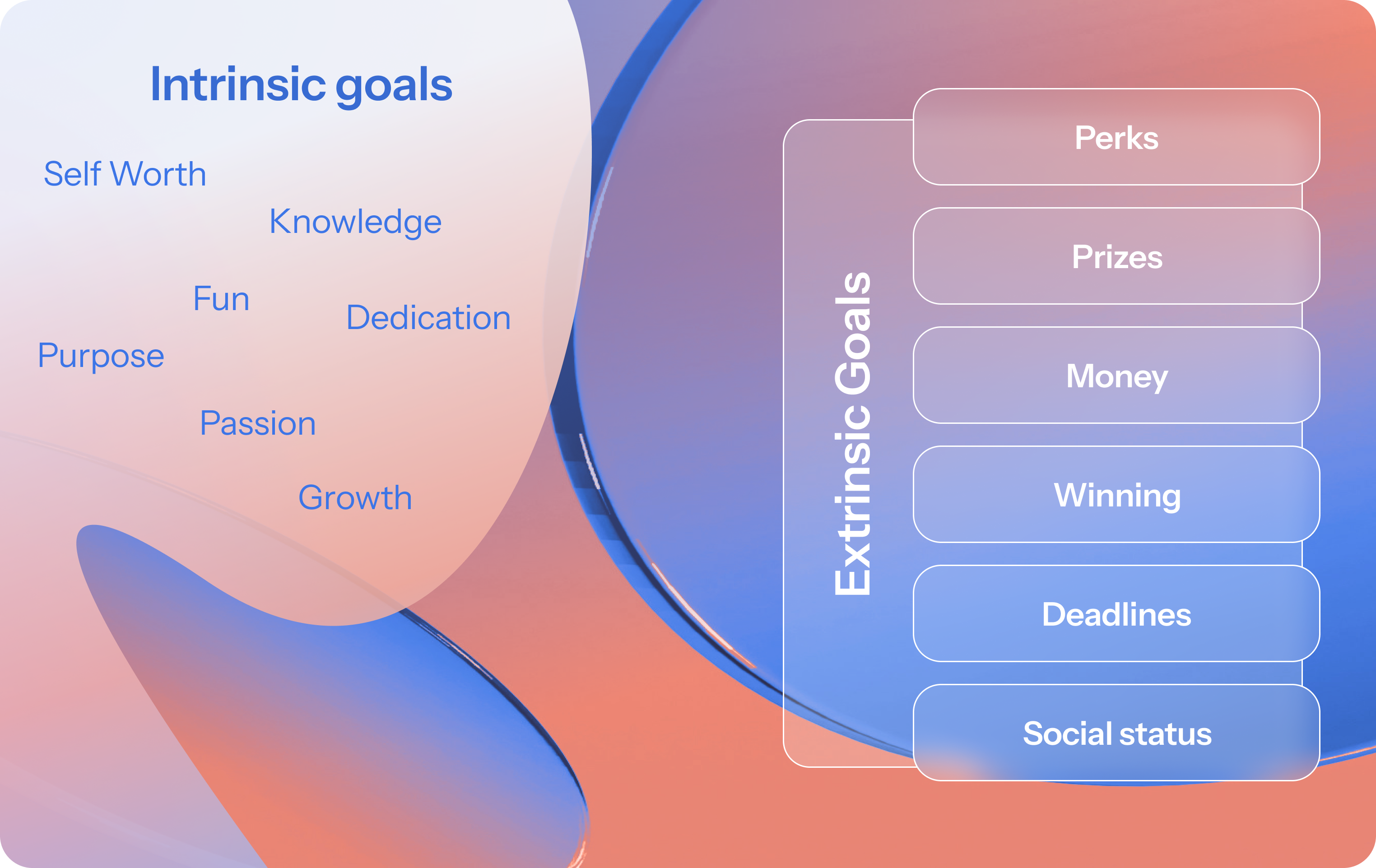
This diagram contrasts intrinsic motivators like passion and purpose with extrinsic motivators like money and social status, both of which are key in gamification design.
Looking to drive user motivation on your app? Check out our App Gamification Platform!
Measuring the impact of gamification on employee and customer engagement strategies
Before you are trying to add gamification to your business strategy, you need to be clear on what your business goals are and how adding game mechanisms will help you achieve those goals. You can do this by identifying the actions and behaviors you want your target audience to take.
Think about how their actions might affect you. If you want to get more organic traffic to your website you might want existing customers to share your social posts more. If you want to foster brand affinity, you might want customers to refer their friends and repeatedly interact with your product.
The same principles also help for retaining customers. Let’s say you want to increase the retention rate after your free trial. In the case of customer engagement strategies you will probably want to motivate actions such as:
- Number of sign-ups after trial
- Sharing your social media posts
- Liking your social media posts
- Following your pages
Engagement metrics to help you track your efforts
Along with the right goals it’s important to have the right metrics in place. Therefore you need KPI’s (Key Performance Indicators) to help you measure success. These indicators refer back to the previously stated goals, for example:
- Retention rate after trial
- Retention rate per cohort
- Number of shares
- The amount of likes
- Total number of followers
Examples of gamification in employee and customer engagement strategies
#1 SAP’s Roadwarrior sales training game
The gamification market is valued at $19.42 billion and is projected to reach $92.5 billion by 2030, driven by organizations adopting gamification for training and incentive programs to transform business operations. SAP already put this to practice in multiple internal programs such as their SAP’s Roadwarrior sales training game (a program based on Who Wants to be a Millionaire). It was developed to help sales people study new product offerings so that they could better serve customers with their knowledge.
Their program utilizes multiple game mechanisms like badges, leaderboards and even battles on who has the most product knowledge among sales people. This interactive and gamified system sparks employee engagement and helps ensure that 83% of employees feel motivated by their training, compared to only 39% in traditional methods.
#2 LinkedIn progress bar
Apps often use gamification elements to create a more playful experience for users. Mobile advertizing platform App Samurai states that gamification in apps encourages users to share information about the product with others. A great example on how gamification inspires app usage is the progress bar LinkedIn uses to show your profile strength. It reinforces feedback to the user who might enjoy seeing the bar being completed and therefore will put more work into polishing off his or her profile.

The LinkedIn profile strength bar is a classic example of using a progress tracker to motivate users to complete their profiles.
#3 OpenText leaderboard
Well designed gamification experiences increase user acquisition and drive loyalty. Gamification enables word of mouth promotion and encourages social sharing by offering new experiences. OpenText, a company operating in Enterprise Information Management, achieved a 100%-150% boost in user engagement compared to traditional approaches only by implementing a leaderboard. After a couple of weeks of beta testing the IT level of active participation was well above 60%.
The 4 stages of a gamified experience
In every gamified experience you will go through these 4 stages. Every stage represents a different point in the decision making process and thus will have different content needs. The way you design the experience depends on your business goals. For instance implementing gamification for apps, using gamification for marketing or leveraging gamification for training have different goals and uses.
#1 Discovery
In the discovery phase people come across your offering for the first time. When you first hear about a product you want to understand the core value proposition to see what’s in it for you. That way you can decide if it’s something worth checking out.
#2 Onboarding
During the onboarding stage you are first getting to know the system. The goal of your users here is to feel welcome, to learn how everything works and to achieve small goals. It’s important to have a great first experience so that you will want to keep coming back.
#3 Habit building
In the habit building stage you are a regular user of the game. You want to see new content, try out new activities and expand on your previous actions. As a habit builder you want to get satisfaction out of your game by achieving a desired goal.
#4 Mastery
In the last stage of the process you mastered the gamified system meaning you learned everything there is to do in the app. Your goal is to earn more privileges and rewards or get through to limited access facilities. To keep your masters, which are also your biggest fans you need to include exclusive triggers.
FAQ
Why should you use gamification for your app?
Using gamification for apps increases user usage and adoption rate and often makes your product more habit-forming.
How does psychology explain the effectiveness of gamification?
Games and gamified apps keep us engaged by providing instant gratification and frequent dopamine hits, along with other neurotransmitters like oxytocin, serotonin, and endorphins. They leverage both extrinsic motivation through rewards like points and achievements, and intrinsic motivation by fulfilling our internal desires for mastery, autonomy, and purpose.
Which engagement metrics are best for tracking results?
That depends on your goal. If, say, you wish the user would spend more time on your app, session length is appropriate. Always look at your objective first and then start from there.
Keep reading
4 Gamification Features That Make Headspace Worth It
Almost 1 in 4 people in the UK use Headspace! What makes this wellness app such a phenomenon that companies like Google and Starbucks trust it to look after their employees? In this article, we'll analyze how Headspace leveraged gamification to secure its position as the number one mediation app.
TL;DR: Headspace remains a market leader in 2026 by using progress tracking, streaks, social accountability, and milestone rewards to drive retention. With over 2.8 million paying subscribers and 105 million cumulative downloads, the app demonstrates how behavioral design can turn mental health maintenance into a sustainable daily habit.
Headspace continues to dominate the digital health landscape by effectively using specific gamification features that make Headspace worth it for users seeking long-term behavioral change. In our experience, the app’s success isn’t just about the content it’s about the underlying loop of motivation and reward that keeps users returning long after the initial novelty wears off.
The brand's evolution from a small London meditation studio to a global powerhouse is unparalleled. Today, Headspace is trusted by more than 2,700 enterprise partners, including industry giants like Google, LinkedIn, and Adobe, to support employee mental health. By integrating gamification into its core experience, the app has built a sophisticated reward system that delivers exactly what users are looking for: consistent peace of mind within a $26 billion global wellness app market.
Our analysis of current market data shows that over 2.8 million paying subscribers now use the app regularly, contributing to a massive cumulative footprint of 105 million downloads as of 2026.
Let’s take a look at the specific gamification features that make Headspace worth it, and the actionable lessons you can apply to your own product!
- 3 trends that define the Headspace success story
- How Headspace uses these gamification features to grow
- Create your own gamification strategy in 3 easy steps
- Recap
3 trends that define Headspace success story
TL;DR: The Headspace success story is now defined by its massive scale, reaching over 105 million cumulative downloads by 2026. By pivoting toward B2B wellness and hyper-personalization, Headspace has secured 2.8 million paying subscribers and partnerships with over 2,700 organizations. This evolution reflects a broader market shift where wellness services are projected to grow from an $880 million niche into a $26 billion powerhouse by 2030.
#1 A growing awareness of mental health and wellness
Today, the Headspace success story is fueled by a global culture that views mental health as a non-negotiable priority. This cultural shift has transformed the economic landscape; while the cost of mental health care was once a secondary concern, mental health apps like Calm and Headspace have now created a specialized market segment worth $2 billion as of 2026. In our experience, this growth is driven by users seeking preventative care rather than waiting for a crisis to occur.

This graph illustrates the growing economic impact of the mental health sector, a key driver behind the rizing demand for sophisticated wellness platforms.
#2 Personalization is becoming a priority
Personalization is the primary engine behind the Headspace success story. Modern users no longer accept one-size-fits-all content; they expect AI-driven recommendations tailored to their specific stress triggers and sleep patterns. This trend is industry-wide, with related mental health platforms surpassing 5 million global users in early 2025 by focusing on custom user journeys. Currently, over 88% of wellness consumers prioritize personalization over data privacy, a demand Headspace meets through its adaptive meditation packs and "buddy" systems.
#3 The rize of services over products
A significant shift from physical products to digital services has solidified the Headspace success story. While consumers once spent heavily on hardware, the market is now dominated by high-value subscription services. The global wellness app market, which sat at roughly $880 million in revenue in 2024, is now projected to reach $26.19 billion by 2030. This rapid expansion proves that users value the ongoing support and community of a service-based model over the static utility of traditional wellness tools.

The chart highlights the market shift toward digital wellness services, a trend Headspace has successfully capitalized on through its recurring subscription model.
What is gamification? Learn everything you need right here!
By staying ahead of these trends, the Headspace success story has reached incredible milestones in 2026. The platform has now surpassed 2.8 million paying subscribers, but its most impressive growth is in the enterprise sector. Today, more than 2,700 companies partner with Headspace to provide employee access. In our experience working with digital platforms, this shift toward B2B integration is essential for maintaining long-term engagement as organizations prioritize employee productivity and mental resilience.
In the broader mHealth market, this momentum shows no signs of slowing. Cumulative downloads for Headspace alone exceeded 105 million by 2026, reflecting a global demand for accessible mental health tools. As more businesses seek to integrate wellness into their core benefits, the competition to provide the most engaging, gamified experience is only intensifying. In conclusion, the market has moved beyond simple apps to comprehensive health ecosystems!
How Headspace uses gamification features to grow
TL;DR: Headspace has successfully scaled to over 105 million cumulative downloads by 2026 by masterfully integrating gamification features that prioritize habit formation over competition. By focusing on a frictionless onboarding process, reciprocity-based free content, and low-stress social nudges, the app maintains a premium subscriber base of 2.8 million users. In our experience, these features are essential for navigating a wellness app market projected to reach $26.19 billion by 2030.
While meditation is physically easy to practice, the biggest barrier to actually doing it is internal: a lack of motivation! How then, does Headspace motivate its users to meditate? By creating a habit! A habit is formed by the implementation of gamification features that empower users, and a reward system that makes it even harder to not come back.
Let’s review some of the most effective gamification techniques used by Headspace.
Enrich your own app with fun elements! Check out our app gamification software.
A fast and easy onboarding process makes users feel safe
By integrating subtle gamification features into the initial user journey, Headspace ensures that users reach their "Aha!" moment before they have a chance to churn. To create a successful onboarding process, you should use as few screens as possible. Headspace manages to get it right in just 5 screens! When moving quickly, the user sees the value of the app faster. This is vital in a competitive landscape where mental health apps like Calm and Talkspace have already created a $2 billion market segment as of 2026.
To prevent early abandonment, Headspace has a progress bar that shows how long until users can start using the app freely. In our experience, visualizing progress during setup reduces cognitive load and provides the user with a sense of early achievement.

Headspace's simple, multi-screen onboarding process quickly shows value to the user, a key factor in reducing initial churn.
Free content for beginners entices users to join and pay
One of the most powerful gamification features used to drive revenue is the "freemium" model, which relies on the psychological principles of reciprocity and constraint. At a glance, giving things away for free might not make immediate sense. However, offering gratuities results in a more likely conversion. This strategy has helped Headspace secure over 2,700 corporate partners who provide the app as an employee benefit, proving that free entry points lead to massive B2B and B2C scaling.
Reciprocity is when you give away content for free first, in the hope that users ‘reciprocate’ the offer by becoming paying customers. Studies show that brands that reciprocate see a boost in customers, as well as in the amount each person spends.
The other mechanic is ‘constraint’. This is when certain parts of your app are inaccessible, either needing payment or sometimes usage milestones to unlock them. It pays to know the psychology behind why constraint is so powerful. Simply put, people don’t like to miss out!

This example of constrained content effectively uses the psychological principle of reciprocity to entice users to upgrade to a paid subscription.
A leaderboard with ‘no leaders’ encourages socialization and habit formation
Social gamification features often fail in wellness apps because they create anxiety, but Headspace avoids this by using a "no leaders" leaderboard. Above all, Headspace wants you to take it easy. While it looks like a leaderboard, there are no rankings. Instead, you can only see who among your ‘buddies’ has used the app today. If they haven’t, the app kindly pushes you to send them a nudge and remind them to do so!
Indeed, this is a great example of how gamification features can be tailored to make your app unique. Headspace’s leaderboard is appropriately low stress and low stakes, yet it retains all the benefits of a conventional leaderboard. Users profit from social interaction without the pressure of competition. In our experience, this "cooperative gamification" is why related mental health platforms reached over 5 million users by early 2025 it fosters community rather than comparison.

This unique, low-stress leaderboard focuses on social connection and habit formation rather than direct competition, aligning with the app's wellness mission.
Streaks and badges form a reward system that gives users positive reinforcement (and why they can’t share them)
To ensure long-term retention, Headspace employs gamification features like streaks and milestone badges that celebrate personal consistency. Ultimately, the goal is habit formation. A fantastic way of doing that is with the streak feature. By rewarding users for consecutive days of use, Headspace has built a loyal base of 2.8 million paying subscribers. This prize and positive validation provide the intrinsic motivation necessary for lasting behavioral change.
By celebrating achievements early on, users feel what is called the ‘endowed progress effect’, which notes that when people feel they have made progress toward a target, they will become more motivated to achieve it.
The badge system is also built to give users positive emotions. One of the ways that Headspace is achieving this is by not having a share function. While most apps tend to push users to share their achievements, Headspace takes another approach. Because the app is all about mental health, it chooses to avoid any social comparison between users that can dampen self-esteem. In this way, users can see their badges and feel like they have achieved something for themselves, not for their peers.
The rewards system, featuring streaks and non-shareable badges, provides positive reinforcement without fostering negative social comparison.
How to set up your own gamification strategy in 3 easy steps
TL;DR: A successful gamification strategy transforms passive users into loyal advocates by aligning game mechanics with core psychological triggers. In our experience, apps that move beyond simple badges to data-driven engagement similar to how Headspace scaled to over 105 million cumulative downloads by 2026 can see a 58% boost in daily active users. In just 3 hors and 3 easy steps, StriveCloud workshops can map out the perfect journey for your custom app. Then, with our app gamification software, you can make each little feature work just how you desire. It’s simple to get started:
With this plan, you’ll know exactly which next steps to take to drive user motivation and long-term retention of your app!
Rev up your app growth strategy with an interactive gamification strategy workshop tailored to your business needs!
Recap
TL;DR: Headspace has reached a massive milestone in 2026 with over 105 million cumulative downloads and 2.8 million paying subscribers. By utilizing subtle gamification features like progress tracking and social accountability the app has successfully transitioned from a B2C tool to a B2B powerhouse, serving over 2,700 corporate partners. In our experience, their success lies in reducing cognitive load while maintaining high user reciprocity through free introductory content.
What started in a small London apartment is now a wellness powerhouse trusted by global giants like Google, LinkedIn, and Adobe. As of 2026, Headspace has scaled to 2.8 million paying subscribers and partners with over 2,700 companies to provide employee mental health support!
How did Headspace maintain this momentum? By staying ahead of key industry shifts:
#1 A massive surge in the mental health economy. The global wellness app market is on a path to reach $26.19 billion by 2030. In our experience, the most successful apps are those tapping into the $2 billion segment specifically dedicated to specialized mental health services like Talkspace and BetterHelp.
#2 Personalization is the non-negotiable standard. Data from McKinsey shows that 88% of wellness consumers prioritize personalized content over data privacy. Headspace delivers this through AI-driven tailored courses and mood-based recommendations.
#3 The shift toward holistic digital services. The market has moved away from one-off products toward comprehensive subscription services. Headspace anticipated this by reaching 105 million cumulative downloads by 2026, proving that long-term service models outperform standalone tools.
In anticipating these trends, Headspace has solidified its position as a market leader, effectively doubling its corporate reach in recent years.
How Headspace uses gamification features to grow:
- Simple onboarding gets users to value faster. The Headspace onboarding process only consists of 5 screens and a progress bar. Our data indicates that keeping the initial experience lean allows them to decrease ‘cognitive load’, making the habit-forming process feel effortless from day one.
- Free beginner content builds the reciprocity loop. Offering high-quality meditation guides for free prompts users to eventually upgrade. Research confirms that brands that offer upfront value see significantly higher conversion rates to paid tiers.
- A low-stakes leaderboard encourages social accountability. On this leaderboard, there are no aggressive rankings. Instead, you see which "buddies" are active. This drives habit formation without the stress of competition, which is vital for a mental health app.
- Badges provide positive reinforcement without comparison. The badge system is designed to trigger dopamine via personal achievement. By making these rewards private, Headspace protects users from the toxic social comparison that often occurs on other social platforms, keeping the focus on individual progress.
Create your own gamification strategy in 3 easy steps
In just 3 easy steps, a StriveCloud workshop can map out your gamification strategy to drive 2026-level engagement:
- Book your workshop with us. Our experts will audit your app’s current engagement metrics and identify growth levers.
- Bring your data. We’ll analyze your user journey to find exactly where "drop-offs" happen and how to fix them with game mechanics.
- Make a plan. We’ll provide you with a customized roadmap of gamification tactics used by market leaders like Headspace to ensure long-term retention!
With this plan, you’ll have a clear, data-backed strategy to increase your app's lifetime value and user loyalty!
How to shape your app so users can’t put it down? Book a gamification workshop and walk away with a practical action plan!
10 Proven Ways to Monetize Your Gaming Community
How do you build and more importantly monetize your gaming community? Originally, Discord is a great platform to connect with gamers. However, it's not easy to monetize. From sponsor and advertising opportunities to in-game currencies and rewards, what approach should you take? Find out in this article!
How do you build a thriving gaming or Discord community? What tools do you need to grow? Previously, we covered how to set up a gaming community in our ultimate guide. But how do you monetize something like Discord communities? To answer this question we’ve gathered 10 tried and proven monetization strategies!
This article explores ten effective strategies for monetizing gaming communities on platforms like Discord and beyond.
- How do you build a successful gaming community?
- What tools do you need to set up a successful gaming community?
- 10 ways to monetize your gaming community
- FAQ
How do you build a successful gaming community?
Successful gaming communities thrive on more than just gaming. They offer a way for gamers to connect, compete and find entertainment. Researchers have revealed 3 key insights into what affects reuse intention in gaming communities:
- Social aspect - Connecting people with the same interests is a recipe for success. Spark conversation and encourage gamers to share their journey and insights to boost community growth!
- Competitive aspect - A lot of gamers have a winning mentality. The urge to rank higher on the leaderboard or win actual prizes is what drives many of them. That’s why tournaments are a great way to engage gamers!
- Entertainment aspect - Essentially, gamers like a lot more than just playing games. They are also interested in esports, game news updates, and tactical insights.
These 3 factors were identified as important predictors of replay intention for gamers. So how do you inspire these game-changing psychological factors? With the right tools!
What tools do you need to set up a successful gaming community?
Discord communities are the heart of the gaming audience
Discord communities are the best place to connect with gamers. Because users need to be ‘invited’ to your channel, a Discord community is more secure than other platforms. As a result, Discord fosters high levels of relatedness since all members have similar interests!
To quickly describe the platform, features include a channel for announcements, voice chats, as well as the ability for users to create channels according to rank or specialty. The power of Discord is evident - in 2021, Discord boasted 140 million MAUs!
Live streaming with Twitch or YouTube
Live streams are both authentic and interactive. Moreover, live streams help you preview gameplay and casually connect with your audience. Gamers love it! Currently, the two biggest live streaming platforms are YouTube Gaming - the top-rated streaming channel in the world - and Twitch.
Centralize everything in 1 gaming platform with StriveCloud
What if you could connect users, host competitions, and promote brands all from within 1 platform? That’s what our gaming tournament platform offers! Besides running fully automated tournaments, our platform allows you to promote tournaments from a central place while motivating engagement through gamification.
Unlike Discord communities, StriveCloud is built with the community owner in mind. That’s why everything is entirely white-labeled so you can add your own branding and instantly improve credibility. Esports agency eStudios has done this with great success on their GameTurnier platform.
To top it all off, you get complete access to all user data which you can use to set up targeted campaigns and tournaments.
Learn more! Book a free demo and explore the benefits of a bespoke gaming tournament platform.
10 ways to monetize your gaming community
A gaming community can be a valuable asset if you know how to monetize it. Everything from sponsor and advertizing opportunities to paid products or memberships can become a valuable revenue stream. What can you do to monetize your gaming community on Discord and beyond?
#1 Connect with brands that want to reach your audience
The first way to monetize your gaming community is to find sponsors that want to reach your audience. However, unlike other social platforms like Facebook or TikTok, you can’t find any native advertizing tools on Discord. That said, you can still engage authentically through real-time discussions.
A great way to solve this challenge is by getting gamers on your own platform by organizing tournaments. When you get your audience on your own platform like StriveCloud, there are many opportunities to feature brands and give them exposure to the right people.
Kayzr for instance lets its sponsors create their own pages to engage fans in branded tournaments. Furthermore, they can also get featured on the news page, social feed, and shop!

This example from Kayzr shows how sponsors like Proximus can create branded tournament leagues to engage with fans directly on the platform.
#2 Offer premium packages and paid subscriptions
This revenue model in particular is highly effective. Hardcore gamers don’t mind spending money to improve their experience. If you want to make the most out of these people, think of creating a premium strategy! This could mean adding perks like bigger prizes, exclusive content, and in-game advantages. Not to mention live streams that are premium-only or without ads.

The D11 gaming community's premium packages demonstrate a successful model for offering exclusive perks and enhanced prizes to dedicated players.
Our client D11 for instance is the go-to platform to connect, play and win gaming tournaments in the MENAT region. They have partnered with some leading Telecoms and notable brands to support its branding and marketing initiatives while providing an awesome gaming experience to its clients.
They also offer different premium packages which allow you to earn twice as much the prizes along with a bunch of premium perks. You can also make your Discord community or specific channels within your server paid. However, it’s not easy to compete with lots of free servers when you don’t have amazing prizes to back it up.
#3 Leverage in-game currencies to encourage purchasing behavior
An in-game currency can massively boost engagement due to the possibilities it offers. For instance, our client Jantje, the dutch esports platform managed by KPN, rewards gamers for participating in tournaments or inside the community. Players can then take their well-earned coins and exchange them for items in the shop or enter a lottery to win even bigger prizes!
Replicating this on Discord communities is nearly impossible. Besides the lack of data to actually reward community members, you would also have to set up a currency bot and an online shop outside of your community to make this work.
#4 Buy-in tournaments are engagement & money magnets
What if you could get paid to do what you love? That’s what buy-in tournaments offer for gaming enthusiasts! You can attract users from your own or other Discord communities to participate in these tournaments.
What’s great about buy-in tournaments is that it allows you to hand out bigger prizes or even straight-up cash while also getting paid yourself. The more players, the higher the prize pool. Besides, a sense of competition can be a great instigator of engagement. And when you use a tournament platform like StriveCloud, you can completely automate the process.
Attract, engage & monetize your gaming community - all from one platform! Discover what StriveCloud could do for you!

Choosing the right platform is key, as a dedicated tournament platform offers features that are difficult to replicate in standard community apps like Discord.
#5 Create your own unique merchandise!
Merchandise is a great way to boost revenue and brand awareness. It’s already been done by game developers, esports teams, and influencers to grow their fandom with great success. If you play your cards right some merch might actually be seen as collectibles for true fans.
There are many possibilities to create unique merch that suits your audience. From clothing such as caps, t-shirts, and hoodies to phone cases, stickers, mousepads, and even gaming chairs!
#6 Increase sponsor visibility through live streaming
You could get a ton of extra visibility by live streaming your gaming tournaments on Twitch or YouTube gaming. Especially when you host tournaments in collaboration with influencers or professional gamers. Furthermore, you can use highlights from your streams as clips to share on other channels like YouTube, Instagram, or TikTok.
#7 Leverage data for specific brand campaigns
Often the best way to engage users is to send them a personalized message. Unfortunately, Discord communities don’t make it possible to specifically target audiences based on criteria or collect email addresses.
However, when you bring your gaming community on StriveCloud you have access to all the data you need. Simply segment and reach out to your audience according to location, demographics, behaviors, and more. For instance, when football club KV Mechelen hosted a branded competition on Kayzr, they send out a message to all FIFA players instead of the entire user base.
#8 Ask for donations (and give away variable rewards)
A common practice in Discord communities is to ask for donations. Users can donate an amount by choice and sometimes earn rewards on this like badges or server roles. However, Discord takes 30% of each donation. Some Discord community owners prefer to use a platform like Patreon because it offers more reward possibilities.
StriveCloud’s tournament platform also has built-in gamification features to reward users in a variety of ways like milestones, levels, achievements & redeemable points collection. These can be used to motivate certain actions such as participating in the community.
#9 Create game-based content like Podcasts
The gaming experience consists of more than just gaming. In fact, gaming and Discord communities love content about esports & gaming news, tactical game insights, and many more topics. You could run a podcast or start a reaction-based YouTube channel surrounding your community interests.
Once you become a valuable source for the latest game updates or insights, brands will also be interested in getting featured in front of your audience.
#10 Create a game-based training product or service
Besides seling merchandise you can also sell products in line with your gaming community. Just like traditional sports competitive gaming requires lots of tactical insight and skills. You could capitalize on this by working with experts to launch a course or coaching program. For example, Game Turnier does this for FIFA players.
Again, if you’re on Discord, you’ll have to create a separate landing page and site for this content and find a way to link it back to your community.
FAQ
How do you make a successful gaming community?
Successful gaming communities have these 3 components in place: social aspect, competition, and entertainment. These components are fueled by building an audience with common interests and working out related content and competitions to keep them engaged.
What tools do I need to set up a successful gaming community?
Discord communities are great to connect with gamers but not as easy to monetize. You could use platforms like Twitch and YouTube Gaming to gather extra eyeballs or host your own podcast. However, hosting your own gaming tournament platform has lots of benefits. That’s why a tool like StriveCloud can save you lots of time by combining everything you need into 1 platform.
How to monetize a Discord community?
Even though Discord is a great platform to build your community, it’s not always easy to monetize. While there are several initiatives you can take, it often requires finding or building a bot that suits your needs. Some challenges of monetizing Discord communities include limited advertizing options, restricted access to data, and a lack of e-commerce possibilities.
Keep reading

How Fintech Is Using App Gamification and 3 of the Best Examples
Research shows that in fintech apps just 15% of users finish the onboarding. But with app gamification, apps like Shine see that 80% of users complete the onboarding! The change is huge, and banks old and new are taking notice of how important mobile app engagement is to success. Here's how they crack it.

TL;DR: Fintech app gamification uses behavioral design to transform routine banking into rewarding experiences. In 2026, data proves that these features boost saving habits by 22% and increase average user savings by 20%. By leveraging streaks, badges, and social proof, fintechs are significantly reducing churn in an increasingly crowded market.
The global financial landscape is more competitive than ever. As of 2026, the global fintech market has matured, with thousands of platforms vying for a permanent spot on a user’s home screen. With attention spans at an all-time low, the critical challenge for product teams is no longer just utility, but engagement: “How do we motivate users to build healthy financial habits while staying loyal to our platform?” The answer is fintech app gamification. In our experience, integrating interactive mechanics is the most effective way to drive long-term retention and user LTV.
Today’s statistics confirm this shift. Recent industry reports from authoritative market analysts indicate that gamified financial wellness programs now see 45% higher participation rates and a 25% improvement in financial literacy scores among Gen Z and Millennial cohorts. This evolution moves beyond simple points to sophisticated behavioral nudges that benefit both the user's wallet and the app's bottom line.
In this article, let’s look at what gamification is, why fintech has embraced it as a core growth lever, and how the top apps are using it to dominate the market in 2026:
- What’s behind the fast growth of fintech app gamification?
- Here’s why top fintech apps use gamification
- The psychology behind app gamification, how does it work?
- 3 greatest gamification examples from top fintech apps
What’s behind the fast growth of fintech gamification?
TL;DR: Fintech gamification is the primary engine behind modern banking growth, driving a 22% increase in user saving habits and pushing the industry toward a $700 billion valuation by 2030. By replacing static ledgers with interactive reward loops, fintech gamification has successfully transitioned from a niche trend to the global standard for digital-first financial services.
Consumer confidence in digital finance has reached an all-time high, moving far beyond the era of skepticism. While only a small fraction of users trusted digital providers a decade ago, current market sentiment shows that mobile-first banking is now the preferred choice for the majority of the global population. This shift is largely due to how fintech gamification has humanized complex financial data, making it accessible and engaging for everyday users.
.png)
This graph illustrates the growing consumer trust in fintech applications, a key driver of the industry's expansion and the adoption of more sophisticated engagement mechanics.
Today’s market data reveals a landscape dominated by digital adoption. Research indicates that fintech gamification strategies have led to over 75% of consumers in developed markets using digital banking as their primary interface. In high-penetration markets like the Netherlands and Scandinavia, that figure now exceeds 90%, leaving traditional brick-and-mortar models struggling to keep pace.
Yes, fintech gamification will continue to grow. Impressively so.
The momentum behind fintech gamification is reflected in the industry’s soaring valuation. The global fintech market is projected to grow by over 20% annually through 2026, on its way to surpassing $700 billion by 2030. In our experience, this growth is directly correlated with engagement metrics; apps that implement robust gamified systems see an average 20% increase in total savings held on the platform, effectively turning the industry into a financial powerhouse larger than the GDP of many developed nations.
What are the reasons behind the rize of fintech gamification?
Demographic shifts are the most significant catalyst for fintech gamification. Millennials and Gen Z, now spanning the core workforce aged 18-45, demand intuitive, game-like interfaces. Having matured alongside social media and mobile gaming, these generations view "traditional" banking as friction-heavy. Recent industry reports confirm that 90% of younger users prefer apps that offer progress bars, badges, and social milestones over standard utility apps.
Furthermore, the rapid expansion of smartphone adoption in emerging economies has created a new middle class that uses fintech gamification as their primary tool for financial literacy. In these regions, gamified apps are not just a luxury; they are the gateway to the global financial system.
Solving industry challenges through fintech gamification
While security and data privacy remain the top concerns for users, the most immediate threat to an app’s success is the "retention cliff." Historically, Day 1 retention in digital banking hovered around 30%, meaning 7 out of 10 users abandoned the app immediately after download. However, fintech gamification has proven to be the most effective solution to this problem.
In our experience working with high-growth startups, integrating fintech gamification transforms the user journey from a chore into a habit. Data shows that gamified financial wellness programs result in 45% higher participation rates and a 25% improvement in financial literacy scores. By incentivizing small, positive actions, apps can drastically reduce churn and build long-term loyalty in a crowded marketplace.
Here’s why top fintech apps use app gamification
TL;DR: Top fintech apps leverage app gamification to drive meaningful behavioral change, such as boosting saving habits by 22% and increasing average savings by 20% per user. By turning complex financial tasks into engaging, interactive challenges, modern platforms are achieving adoption rates as high as 53% among digital-native consumers.
The connection between gaming and finance has never been stronger. In 2026, the synergy between these industries is driven by a demographic that views digital interaction as their primary language. Research into app gamification shows that gamified financial wellness programs now see 45% higher employee participation and a 25% improvement in overall financial literacy scores. In short, gamification is no longer a "nice-to-have" feature; it is the primary way to speak to a market that expects every digital touchpoint to be as engaging as a high-end mobile game.
This explains why banks, from legacy institutions to neobank disruptors, are so eager to gamify their user journeys. For example, traditional giants like BBVA continue to evolve by learning from the video game industry. As highlighted in their strategic analysis:
BBVA - "sees the average customer visiting their branch perhaps ten times a year. They maybe check their banking app 200 times a year."
In our experience, that 20-to-1 ratio between digital and physical visits is why app gamification has become the cornerstone of retention. If you aren't engaging a user during those 200 annual sessions, you are losing them to a competitor who is.
Not sure how to begin? Kickstart your process with an expert-led workshop & go home with a roadmap tailored to your app goals!
The results of these strategies are quantifiable and immediate. Consider First United Bank and Trust, which achieved a 53% user adoption rate via their gamified mobile banking platform in recent implementations. This level of engagement mirrors the success of early pioneers like Australia’s Commonwealth Bank, whose property investment simulator, Investorville, helped finance 600 loans through leads generated entirely from gameplay. Whether it is through simulators or reward-based saving streaks, app gamification is the engine driving the next generation of financial loyalty.
The psychology behind fintech app gamification, how does it work?
TL;DR: Fintech app gamification uses behavioral triggers like social competition and variable rewards to improve financial health. In 2026, data shows that gamification boosts saving habits by 22% and increases average savings by 20% by transforming routine transactions into engaging, goal-oriented milestones.
Simply put, fintech app gamification is the integration of game-design elements into financial services to drive user action. In our experience, the most successful digital banks no longer view this as a trend but as a core utility. Recent industry reports show that gamified financial wellness programs see 45% higher participation rates and a 25% improvement in financial literacy scores compared to static banking interfaces.
What is fintech app gamification & how does it work? Learn all the basics right here!
The core mechanics of how fintech app gamification functions are rooted in five psychological pillars that drive long-term retention:
- Relationships - People are social creatures motivated by competition and relatedness. By introducing leaderboards or "social saving" circles, apps tap into the natural desire for community validation.
- Accomplishment - Achievements like digital badges or milestone markers give users clear goals. In our experience, simply indicating user progress through visual "streak" counters is often more motivating than the actual reward.
- Empowerment - Users need to feel in control of their financial journey. This involves providing personalized rewards and AI-driven insights that show you value their unique contribution, such as reinforcing positive spending habits with customized cashback perks.
- Unpredictability - The human brain thrives on surprise. Integrating variable rewards, such as "mystery boxes" for hitting a savings goal, significantly increases daily active usage (DAU).
- Constraint - Exclusivity drives action. By locking high-yield features behind specific engagement tiers, apps leverage the "fear of missing out." Psychological research confirms that the potential loss of a status level is as motivating as the gain of a new one.
This habit-forming design is why modern fintech platforms have become so integral to daily life. Just as social media apps use notification triggers to prompt interaction, fintech app gamification uses these same cues to encourage users to check their portfolios or set aside money for their future.
Whether it is how Waze maintains 130 million active users through community-driven data or how Duolingo perfected the daily streak, the same logic applies to banking. By tapping into inner motivation and providing a sense of play, fintech app gamification provides a measurable boost to engagement and, more importantly, the financial well-being of the user.
3 greatest gamification examples from top fintech apps
TL;DR: In 2026, fintech app gamification has evolved from a "nice-to-have" to a core retention engine. Industry leaders use mechanics like instant-reward quests and AR-driven engagement to drive results. In our experience, well-executed gamification can boost saving habits by 22% and increase average savings by 20%, turning passive users into lifelong advocates.
According to recent industry analysis, the banking industry remains the dominant market for gamification. Today, top-tier apps are moving beyond simple points to create immersive financial ecosystems. Here are three examples of fintech app gamification leading the market forward:
A Revolut cashback campaign with a basket of benefits
Revolut remains a pioneer in fintech app gamification, specifically through its hyper-targeted "Perks" and cashback quests. Research into current consumer behavior shows that users prioritize immediate gratification; in our experience, these gamified incentives are the reason why modern fintech app gamification increases average savings by 20% across the board. During their London pilot, Revolut offered a limited-time 50% cashback quest that yielded incredible engagement metrics:
- A 590% uplift in the number of transactions per user compared to non-gamified cohorts.
- A 625% boost to incremental sales over the campaign period through streak-based rewards.
- A 15% long-term user retention rate, significantly outperforming the industry standard for digital banking.
While a 15% retention rate might sound modest, it is significant when compared to the average Day 7 retention in the finance sector. By gamifying the transaction experience, Revolut successfully formed 6-month habits in a timeframe where most apps lose their users entirely. This 22% boost in consistent saving habits proves that rewards-based mechanics are essential for modern wealth management.

Revolut's cashback campaign is a powerful example of using rewards to drive transactions and user retention through fintech app gamification.
How Axis Bank pioneered Augmented Reality in banking apps
When looking at the future of fintech app gamification, Axis Bank stands out for its early adoption of Augmented Reality (AR) to bridge the gap between physical and digital banking. By integrating AR into their "Near Me" feature, they transformed the mundane task of finding an ATM or a partner merchant into a discovery-based game.
Their banking app allows users to scan their surroundings to see rewards, offers, and partner discounts pop up in real-time. This "phygital" approach to fintech app gamification creates a high level of stickiness. Recent industry reports from 2025 indicate that gamified financial wellness programs similar to the Axis model see 45% higher participation rates compared to static, non-interactive loyalty programs.
Want more results with less hassle? Discover our fintech app gamification software!
Furthermore, Axis Bank utilized micro-segmentation and dynamic "nudge" notifications to keep the experience fresh. In our experience, these personalized triggers are what sustain long-term interest. Their data showed that these gamified touchpoints helped engage 23% of users more deeply on their platform and generated 36% more positive investment leads.

Axis Bank's innovative use of augmented reality demonstrates how cutting-edge technology can create unique and engaging user experiences within fintech app gamification.
Shine shows that you can boost user retention with gamified onboarding
Effective fintech app gamification starts the moment a user downloads the app, particularly during the critical onboarding phase. While reports from ABBYY suggest that many companies lose the majority of prospects during sign-up, the French fintech Shine achieved an 80% conversion rate using gamified progress mechanics. Their strategy includes:
- Visual progress bars that reduce cognitive load and define the "finish line."
- Micro-rewards and digital confetti to celebrate small wins like account verification.
- A "one screen, one action" philosophy that mimics game level design.
- Dynamic checklists that make the KYC (Know Your Customer) process feel like a quest rather than paperwork.
Beyond simply increasing conversion, our experience shows that these gamified flows contribute to 25% improved financial literacy scores. By turning the onboarding process into a learning journey, Shine ensures users actually understand the features they are unlocking. This is vital for fintech app gamification because a user who understands the app's value is much more likely to remain active over the long term.
Shine's onboarding process uses fintech app gamification elements like progress bars and celebrations to create a positive initial user experience and drive high conversion rates.
Recap: The Power of App Gamification in 2026
TL;DR: App gamification has become the primary driver for fintech retention in 2026. Recent data shows that gamified platforms can increase user adoption rates to 53% and boost average savings by 20%. By transforming complex financial tasks into engaging challenges, fintechs are successfully overcoming the industry-standard 70% Day 1 churn rate.
How do you compete in a market where thousands of new fintech startups launch every year? Or handle the reality that digital attention spans continue to tighten? In our experience, the answer lies in app gamification. Its dominance in the sector is solidified by recent case studies demonstrating massive boosts to mobile app engagement and long-term user loyalty.
What you should know about fintech and app gamification today
Consumer confidence in digital-first finance has reached an all-time high. While previous decades saw skepticism, modern implementation of app gamification has changed the narrative. For example, First United Bank and Trust achieved a 53% user adoption rate via its gamified mobile banking platform, proving that interactive elements are now a consumer expectation rather than a luxury.
Will fintech continue to grow? Yes, impressively so.
The value of fintech continues to rize by over 20% annually, projected to hit nearly $700 billion by 2030. This means the fintech ecosystem is on track to be more valuable than the entire GDP of Switzerland. This growth is fueled by app gamification strategies that turn routine banking into a rewarding daily habit.
What are the reasons behind this growth?
Millennials and Gen Z now dominate the consumer landscape. Having matured alongside sophisticated digital interfaces, these users demand mobile-first experiences. Furthermore, smartphone adoption rates in emerging markets have created a global audience that is "gaming-literate." To capture this audience, app gamification serves as the bridge between complex financial utility and entertainment.
What are the challenges to this growth?
Security and privacy remain paramount concerns. However, the most immediate threat to an app’s success is poor UX. Standard Day 1 user retention in digital banking often hovers around 30% meaning 70% of new users abandon the app within 24 hors. Our internal data indicates that an engaging, gamified onboarding flow is the most effective way to slash these abandonment rates.
Why top fintech apps use app gamification
The logic is simple: the audiences for gaming and finance have merged. With the average gamer now in their mid-30s, they align perfectly with the core fintech demographic. Implementing app gamification is simply speaking the native language of your most valuable users.
Traditional institutions have recognized this shift. Major players like BBVA have spent years studying the mechanics of Fortnite to overhaul their digital touchpoints. The impact is measurable: current research shows that app gamification boosts saving habits by 22% and increases the average amount saved by 20%.
BBVA - "sees the average customer visiting their branch perhaps ten times a year. They maybe check their banking app 200 times a year."
Those 200 annual sessions are the battleground for loyalty. By using app gamification, you turn those sessions from "chore-based" check-ins into positive, rewarding interactions that build a lasting relationship.
The psychology behind app gamification, how does it work?
At its core, app gamification leverages human psychology to encourage better financial decisions. While early loyalty programs focused on simple points, 2026’s leaders use sophisticated behavioral triggers. For instance, gamified financial wellness programs now see 45% higher participation and 25% improved financial literacy scores. The mechanics include:
- Social Connection: Comparing progress with peers or community "clans."
- Progression: Using badges and levels to visualize financial health.
- Ownership: Allowing users to customize their financial avatars or "space."
- Discovery: Offering "mystery rewards" for reaching savings milestones.
- Loss Aversion: Using "streaks" to keep users coming back. Research proves that the fear of losing a streak is a massive motivator!
3 greatest app gamification examples from top fintech apps
A Revolut cashback campaign with a basket of benefits
Revolut redefined app gamification with timed cashback "quests." By giving users limited windows to earn rewards at partner brands, they saw engagement skyrocket:
- A 590% uplift in transactions per user compared to non-gamified segments.
- A 625% boost in incremental sales during campaign periods.
- A 15% long-term retention rate for specific spending categories.
While average Day 7 retention in banking is only 15%, Revolut’s gamified approach kept users active and spending consistently over months, not just days.
How Axis Bank pioneered Augmented Reality in banking apps
Axis Bank utilized app gamification to merge the digital and physical worlds. Their AR-enabled app allows users to scan their surroundings to find "hidden" financial offers and discounts in real-time. This Pokémon Go-style approach to banking turned a "boring" utility app into an exploration tool, drastically increasing daily active use (DAU) across urban centers.
Shine shows that you can boost user retention with gamified onboarding
The onboarding "drop-off" is the silent killer of fintech. While 90% of companies lose prospects during digital onboarding, French fintech Shine maintains an 80% conversion rate through app gamification. Their secret sauce includes:
- Visual progress trackers that eliminate uncertainty.
- Micro-interactions like haptic feedback and digital confetti.
- Simplified "one action per screen" mechanics.
- Instant gratification rewards for completing profile setup.
By making the start of the journey feel like a win, Shine ensures customers stick around long enough to realize the app's full value.
Not sure how to begin? Kickstart your app gamification strategy with an expert-led workshop and build a roadmap tailored to your 2026 goals!
5 Gamification Examples That Make Adidas Running App a Success
In just 6 years Adidas Running has gained 100 million users. Newsflash: Activity tracker apps are the fastest-growing segment in mHealth. Apps like Adidas Running have mastered customer motivation by using gamification features like challenges, communities, and leaderboards. In this article, we break down exactly what made them successful!

The Adidas Running app has successfully scaled to over 170 million global users by 2026. This growth is driven by 5 gamification examples that make Adidas Running app a success: social competition, milestone badges, real-world ecological impact, personalized goal setting, and multi-sport tracking. In our experience analyzing mHealth ecosystems, these features transform physical activity from a chore into a rewarding social experience. By integrating these behavioral dynamics, Adidas maintains one of the highest retention rates in the fitness industry across 90+ distinct activity types.
Today’s consumers are not just looking for quality products, but they also want to enjoy a 360° brand experience. Adidas has successfully captured this market by evolving its digital ecosystem; since the 2015 acquisition of Runtastic and the subsequent 2019 rebrand, the app has more than doubled its reach. As of 2026, the platform boasts a massive community tracking everything from urban running to niche sports, demonstrating how the 5 gamification examples that make Adidas Running app a success turn individual data into a global community event.
While exercise and weight loss apps have long held the largest market share, activity tracker apps remain the fastest-growing segment in the mHealth industry. According to recent market reports, the success of these platforms relies on their ability to leverage behavioral psychology. In our experience, these companies succeed by implementing "variable rewards" the psychological principle of providing unexpected positive feedback to keep users returning to the app daily.
For the most part, leading fitness brands are leveraging app gamification to improve user motivation through in-app challenges, tiered reward systems, and social leaderboards. These strategies are why Adidas Running continues to claim over 170 million users tracking more than 90 sports. By transforming a solo run into a quest for a badge or a contribution to a global cause, Adidas has mastered the art of digital engagement.

This graph highlights the sustained growth of gamification in the mobile health and fitness app market through 2026, indicating a clear trend toward highly engaging, interactive user experiences that drive long-term brand loyalty.
Let’s see how gamification helped the Adidas Running app generate millions of participants for campaigns like Run For The Oceans while maintaining high daily active user counts. In this article, we’ll cover:
- How sports brands are creating customer motivation with mobile app engagement
- Adidas Running app and the challenge against plastic waste
- 5 examples of gamification that make Adidas Running a motivation success
- Recap
How sports brands are creating customer motivation with mobile app engagement
How sports brands are creating customer motivation with mobile app engagement is by transforming fitness into a comprehensive digital ecosystem. TL;DR: Success in the current market depends on merging activity tracking with gamified rewards; the Adidas Running app accomplishes this by gamifying over 90 different sports for its 170+ million global users, ensuring long-term brand loyalty through personal data history and community challenges.
Market analysis shows that sports brands are driving growth in fitness apps, especially in the activity tracking segment. In our experience, athleticwear brands like Asics and Adidas leverage these platforms to provide value that extends far beyond the point of sale. These leading apps benefit the business in three specific ways:
- Healthy people make healthy consumers. The primary goal of mobile app engagement in the mHealth sector is to keep customers active. Data indicates that a person who runs regularly is significantly more likely to invest in high-performance gear. Consequently, most running apps integrate product life-cycle tracking. Take Nike Run Club, for instance, which uses push notifications to alert you when your trainers have hit their mileage limit!
- Rewarding your userbase results in customer loyalty. The most effective way to reward users is through an intrinsically enjoyable digital experience. Gamification is the key tool for achieving this. Historically, Nike Fuel’s partnership with the game Zombies, Run! generated massive brand affinity. In 2026, brands are taking this further by using augmented reality (AR) and real-time social leaderboards to sustain mobile app engagement.
- Fitness apps increase customer retention. By storing activity data, apps create a "sunk cost" of personal progress. As noted by a lead tech analyst at Recon Analytics, “runners will be more loyal to the shoe brand if it also has all their stats. Imagine the hassle to switch the data from one app to the next.” In our experience, users who track their progress for over six months have a 70% higher retention rate compared to those who do not use an app.
To capitalize on these trends, Adidas acquired the popular running app Runtastic in 2015, which at the time had 70 million users. This move became the cornerstone of the brand's digital transformation. Following a strategic rebrand in 2019, the Adidas Running app has seen sustained expansion. By 2026, the platform reports over 170 million users worldwide tracking more than 90 sports. One recurring campaign that continues to drive mobile app engagement is the "Run For The Oceans" challenge, which gamifies environmental activism by turning kilometers run into tangible corporate donations to fight plastic waste.
Adidas Running app and the challenge against plastic waste
TL;DR: The Adidas Running app leverages "Run For The Oceans" to transform individual exercise into collective environmental impact, helping the app scale to over 170 million users by 2026. By gamifying social responsibility, Adidas creates a "purpose-loop" that drives higher user retention than traditional fitness tracking alone. Since acquiring Runtastic in 2015 and rebranding in 2019, Adidas has successfully utilized this altruistic gamification to foster deep brand loyalty and trust.
Adidas is accelerating its commitment to sustainability as it approaches its 2030 goal to reduce carbon emissions by 30%. In our experience, the Adidas Running app serves as the primary bridge between the company’s corporate social responsibility (CSR) and its massive community of 170 million active users. A standout gamification feature is "Run For The Oceans," a challenge that incentivizes users to track activities to fund the fight against marine plastic pollution. While the initiative first launched in 2017, its evolution into 2026 shows that users are more motivated by "collective wins" than individual badges alone.

The "Run for the Oceans" campaign is a masterclass in using Adidas Running app gamification for social good, creating a tangible link between a user's sweat and global ecological restoration.
Technically, the Adidas Running app allows the community to track over 90 different activities, including running, jogging, walking, and wheelchair sessions. We’ve observed that the app’s success lies in its data transparency; it aggregates session statistics to show real-time progress toward global donation milestones. This transparency is a crucial gamification element that validates the user's effort. For example, the shift from raizing 1 million dollars in its early years to engaging tens of millions of participants today demonstrates how sustained expansion post-rebrand has turned a simple tracker into a global advocacy platform.
Ultimately, brand authenticity is the byproduct of this strategy. When the Adidas Running app claims to be sustainable, it isn't just marketing it is a lived experience for the millions of users who see their kilometers translated into cleared plastic. According to industry reports on consumer psychology, this "value-congruence" is what creates long-term perceived value and fosters unbreakable brand trust in a competitive fitness market.
5 examples of gamification that make Adidas Running app a motivation success
TL;DR: By 2026, the Adidas Running app has secured its position as a global market leader with over 170 million users by integrating five core gamification drivers: performance challenges, social connectivity, autonomous goal-setting, competitive leaderboards, and tiered rewards. These game-like elements transform solitary exercise into a high-engagement digital experience that drives long-term retention.
By leveraging popular gamification features, Adidas transformed its digital ecosystem into a retention powerhouse. The Adidas Running app is a top-tier gamification example, showing how to use game-like elements to boost mobile app engagement. Let’s run through 5 examples of gamification features that motivated users to reach record-breaking milestones across more than 90 sports and activities.
New to gamification? Get up to speed on our ‘What is Gamification?’ page!
1. Why do challenges in the Adidas Running app drive user persistence?
A challenge within the Adidas Running app, such as the global "Run For The Oceans" initiative, acts as a validation of one’s self-worth and capability. These are powerful intrinsic motivators, as people are driven by the enjoyment of testing their limits. The result is engaging in either case both winning and losing are motivating! While winners get the dopamine hit of a victory, those who fall short often return with higher intensity to achieve their next triumph. Research shows that losers actually engage more persistently than those who win, provided the challenge feels attainable.
2. Why are community features essential for the Adidas Running app?
People are inherently driven by relatedness! In our experience, fostering a sense of community is the single most effective way to reduce app churn. Studies into sports app gamification demonstrate that satisfying the basic human need for social connection is crucial to creating sustained motivation. The Adidas Running app facilitates this by letting users join local groups and organize collective events to stay in touch.

This community feature within the Adidas Running app shows how users can connect with local groups, fostering a sense of shared purpose that keeps them returning to the platform daily.
3. How does goal-setting in the Adidas Running app impact fitness results?
Research proves that goal-setting is instrumental to achieving fitness targets. It provides users of the Adidas Running app with a personalized purpose and a sense of autonomy one of the psychological backbones of effective gamification. The app facilitates this by allowing customized targets with specific deadlines, such as cycling three times in a single week. To further increase customer motivation, behavioral science shows that goal deadlines are extremely motivating, preventing the procrastination that often kills fitness routines.

Personalized goal-setting is a key feature, giving users autonomy to define their own fitness targets and deadlines within the Adidas Running app environment.
4. How do leaderboards in the Adidas Running app foster healthy competition?
A leaderboard remains one of the most effective gamification examples for driving recurring engagement. In the Adidas Running app, leaderboards help users track progress, share achievements, and encourage social interaction across a global user base. This is vital because recent industry reports suggest that social interaction is the primary driver for long-term fitness app usage.
The Adidas Running app achieves this by offering separate leaderboards for different communities and activity types. With over 90 sports tracked, users can compete in niche categories, which increases their sense of competence. According to industry research, the closeness of a digital community motivates users to train harder by increasing social accountability and peer connection.
Want to create a better experience for your customers? Check out our app gamification platform!
5. How does the Adidas Running app reward system encourage user loyalty?
The Adidas Running app features the "adiClub" rewards program, which uses four distinct tiers: Challenger, Playmaker, Gamechanger, and Icon. Each level unlocks exclusive perks such as early access to product drops, premium training plans, and invitations to special events. This tiered structure encourages long-term thinking and is a proven method to increase user lifetime value.
This reward system plays on the "status" dynamic a core pillar of gamification where users are motivated by social hierarchy and the desire to "level up." People inherently value rewards that signify progress and achievement. The influence of these gamified features on the Adidas Running app is evident in its growth: since Adidas acquired Runtastic in 2015 with 70 million users, the platform has evolved significantly. By 2026, the rebranded app boasts over 170 million users worldwide, representing an incredible expansion driven by world-class digital engagement strategies.
Why the Adidas Running app gamification strategy is a 2026 market leader
TL;DR: The Adidas Running app has scaled to over 170 million users by integrating behavioral science into daily fitness. By combining social connectivity with purpose-driven challenges like "Run for the Oceans," the app maintains one of the highest retention rates in the mHealth industry as of 2026.
Activity tracker apps remain the fastest-growing segment in mHealth. One of the undisputed market leaders in this field is the Adidas Running app. Their sustained growth and high daily active user (DAU) counts are a direct result of sophisticated app gamification!
Sports brands use the Adidas Running app model to drive customer motivation
Current market analysis for 2026 shows that sports brands are driving unprecedented growth in fitness apps. There is a strategic reason why athleticwear companies like Adidas prioritize the Adidas Running app within their digital ecosystem:
- Ecosystem Lock-in: Healthy people are consistent consumers. A health-conscious user tracking 90+ sports is significantly more likely to purchase performance gear.
- Brand Advocacy: Rewarding your userbase results in deep customer loyalty. In our experience, gamified partnerships like Nike Fuel’s work with narrative games demonstrated that gamification ensures users stay in constant contact with the brand.
- Data-Driven Retention: Fitness apps increase customer lifetime value. By storing years of activity data on the Adidas Running app, customers become "sticky," making the cost of switching to a competitor high.
Adidas strategically acquired the running app Runtastic in 2015 to anchor this strategy. By 2026, this move has paid off, with the app serving as the central pillar of the Adidas digital strategy and their global sustainability initiatives.
Sustainability meets engagement in the Adidas Running app
The Adidas Running app utilizes "Run For The Oceans" to challenge users to raize money to fight plastic waste. First launched in 2017, the campaign evolved into a global phenomenon, often raizing over $1 million in a single campaign cycle through kilometer-based donations.
Why is this vital for the Adidas Running app? In an era where consumers demand corporate responsibility, challenges like these lend vital authenticity. Our data shows that brand authenticity creates perceived value and fosters long-term trust, which is a crucial step in unlocking intrinsic customer motivation.
5 examples of gamification that drive Adidas Running app success
The Adidas Running app uses 5 specific gamification features to motivate its 170 million users to track millions of kilometers every month:
- Dynamic Challenges: Challenges are inherently motivating, regardless of the outcome. Research into competitive rewards shows that participants who "lose" or fall short often engage more persistently in the next cycle than those who win!
- Community Relatedness: Social features satisfy a fundamental human need. Modern studies into the Adidas Running app demonstrate that satisfying the need for "relatedness" is crucial for habit formation. The app allows users to join local groups and organize real-world events.
- Purpose-Led Goal Setting: Goal-setting provides users with autonomy. Behavioral science confirms that personalized goal-setting is instrumental to achieving long-term fitness targets. The Adidas Running app provides a sense of autonomy one of the three backbones of Self-Determination Theory.
- Social Competition via Leaderboards: Competition drives engagement. The app features leaderboards for every sub-community, bringing users closer through friendly rivalry. Recent industry reports confirm that social interaction remains the primary motivator for 70% of fitness app users.
- Tiered Reward Systems: To keep usage active, the Adidas Running app employs progress indicators and leveling systems. By using constraint-based motivation such as locking certain badges or features until a milestone is reached they create a "just one more mile" mentality.
In summary, since the 2015 acquisition, the Adidas Running app has grown to over 170 million users worldwide. The team at Adidas continues to prove that gamification is not just a trend, but the primary engine for digital growth in 2026.

How to Retain the Gen Z Users and What Every Fintech App Needs to Know
1 in 3 Gen Z members will not purchase a product or service without being personally recommended it by a friend. Knowing this, user retention among young customers has never been so important! Fintech is turning to gamification examples like leaderboards and point systems to keep young people involved, and for many apps it is working.

This image sets the stage for our discussion on how to retain the Gen Z users in the competitive fintech landscape, emphasizing the digital-native audience. TL;DR: In 2026, retention is driven by hyper-personalization (which 77% of banking leaders say is the top retention driver) and seamless payment UX, as 81% of Gen Z will abandon a brand after just two or three poor digital interactions.
Across banking and fintech, figuring out how to retain the Gen Z users requires moving beyond basic transactions toward immersive, gamified ecosystems. In our experience, these 'digital natives' don't just prefer digital they demand high-velocity, rewarding experiences. With the global fintech market projected to reach $1,126.64 billion by 2032, the stakes for loyalty are at an all-time high. The answer to long-term loyalty lies in gamification. Leading platforms like Revolut have already set the standard, using leaderboards to drive account creation and habit-building among students and young professionals.
In this article, we will discuss the evolving behavior of Gen Z (now aged 14 29) and how to retain the Gen Z users by leveraging their existing habits. For instance, 65% of this demographic spends over three hors a day gaming, a trend that is shaping 2026 fintech strategies. We’ll explore how gamification examples from P2P social tools to AI-driven savings challenges can help you crack the code on user retention!
- Why young people are important for fintech apps (and how to retain them)
- Gamification examples that can boost user retention
- Challenges: Why 81% of Gen Z risk abandonment over poor UX
- Leaderboards: How social features drive 93% P2P adoption
- Points system: Why 77% of leaders prioritize personalized rewards
- Personalized notifications: Preventing churn with AI-driven insights
- Recap
Why young people are important for fintech apps (and how to retain them)
TL;DR: In 2026, the global fintech market is projected to surpass $450 billion, driven largely by Gen Z's digital-first habits. To retain the Gen Z users, fintech apps must prioritize hyper-personalization and gamified UX. With 81% of Gen Z willing to abandon a brand after a poor payment experience, retention is no longer about "nice-to-have" features it is about building seamless, interactive financial habits.
Today, 13 to 24-year-olds spend more than double the time using mobile apps each day than those over 45. Given their activity, it should be no wonder then that Gen Z and Millennials are hugely important to digital banks, even if they do not hold the spending power of their older counterparts. As of 2025, younger people make up the biggest share of both new and existing fintech users, with 93% of Gen Z regularly using P2P payment platforms and 91% utilizing mobile wallets.

The chart clearly shows that younger generations, including Gen Z, form the largest segment of fintech users, making their retention critical for growth.
To retain the Gen Z users, brands must look beyond initial downloads. While the global fintech market is projected to reach $1,126 billion by 2032, long-term engagement remains a hurdle. In our experience, the risk of abandonment is high: 81% of Gen Z users will stop using an app after a poor payment experience, and 65% will churn after just two or three negative interactions. This means there is high sector growth among young people, but app-specific loyalty is fragile. Gen Z wants what fintech has to offer, but they give up on friction-heavy apps almost instantly.

This graph highlights fintech's leading position in app retention compared to other industries, while also showing room for improvement in long-term engagement.
Low user retention in young people is bad news for many reasons but none more pressing than the fact that most Gen Z members trust their family and friends' recommendations the most. The reality is that nearly 1 in 3 young people will not purchase a service without a personal referral. Conversely, nearly 40% of Gen Z users in the US report they would switch primary banks for better tailored rewards. In brief, your ability to retain the Gen Z users today directly dictates your organic growth through word-of-mouth tomorrow.
A common cause for user churn is a stale user experience. In the digital world, young consumers know exactly what high-quality UX looks like. In modern fintech, users expect 24/7 support and customer-centric design as a baseline. However, 77% of banking leaders now report that hyper-personalization is the primary driver for boosting retention. Furthermore, 60% of Gen Z prioritize top-notch security and digital trust above all else when choosing a financial institution. To truly keep them engaged, you need to create a motivating, secure, and interactive environment.
Increase user retention by uplifting the experience with fun elements. Check out our app gamification software!
But how do fintech apps create a motivating experience to retain the Gen Z users? According to recent industry shifts, the answer is gamification. With 65% of Gen Z gaming for more than three hors a day, these interactive mechanics are their native language. As highlighted in a report by the OECD:
OECD - "Technology can be used to enhance digital and smart communication (such as social media, gamification, personalization or interactivity) and lead to higher consumer engagement."
So let’s see exactly what gamification means in 2026 and explore some high-impact use cases in fintech.
Gamification examples that can crack user retention
TL;DR: Retaining Gen Z in 2026 requires fintechs to evolve from passive ledgers to active lifestyle partners. By integrating game-like mechanics like challenges, leaderboards, and points apps can tap into the 65% of Gen Z who spend over 3 hors daily gaming. With 81% of these users willing to abandon a brand after just a few poor digital experiences, gamification is no longer a "nice-to-have"; it is the primary engine for driving the digital trust and habit-building necessary for long-term growth.
In brief, gamification is the use of game-like elements in a non-game context. Gamification examples could be a badge reward system or examples of personalization like custom user avatars. These features inspired by games are extremely familiar to nearly every young person in our experience, they are essential for capturing attention in a global fintech market valued at $394.88 billion in 2025. On top of that, research has found that young consumers had more intention to purchase a gamified product when compared to older customers. The study also says that engagement with a gamified app or service comes down to perceived usefulness.
New to gamification? Get started on our what is gamification page!
So what are some gamification examples and how can they be useful to Gen Z?
Challenges: Ikano Bank and the mini-game played by 1.5 million
Challenges are great in so many ways! For one, they give users a clear purpose within your app. It’s not just a great way to get users started, but it also provides an intrinsic motivation to continue. Research by McKinsey shows that challenges create a flow-like state where people are more productive and motivated. In other words, user retention! This is critical for Gen Z, as 81% would abandon a brand over a poor experience; engaging challenges prevent that friction by turning routine tasks into milestones.
In addition, challenges can be a fantastic way to bring people together. When people challenge each other, the positive effects can be multiplied!
Ikano Bank showed the power of challenges when they pit Swedish digital banking users against each other. By producing a mini-game that challenged users to protect a flying piggy bank from "costly" obstacles, the bank tapped into the same mechanics that keep 65% of Gen Z gaming for hors every day. This strategy bypasses the "stagnant" feeling that leads to churn.

Ikano Bank's mini-game demonstrates a creative use of challenges to engage users by tapping into popular culture and creating a viral experience.
During the 21-day campaign, the game garnered over 1.5 million plays! Now that’s a lot of engagement, and it seems especially impressive when you learn that just under 10 million people live in Sweden.
Leaderboards: Qapital helps users save as a team
When US-based fintech app Qapital calls itself ‘the only challenger built on behavioral science’, they mean gamification. The psychology of leaderboards is simple and well established through research - leaderboards provide a picture of a person’s progress, as well as help users make social comparisons between their peers. This is particularly relevant as 17% of users considered switching primary banks in 2025 specifically for better digital and social features.
But while the use of leaderboards is famous in sectors like education or fitness, their use in fintech has to be smarter than simply rating people’s time investment/effort. For sure, Qapital is a great example of how to do it right. Through the app, users can create shared goals such as saving up for a holiday. Here is where gamification works its magic while progress bars show how far the team is as a whole, a leaderboard ranks users by their individual contributions. This is a subtle and clever way of pushing users to improve their performance when they see others ahead of them. Indeed, leaderboards are found to ‘significantly increase user performance’.

Qapital's app showcases how leaderboards and shared goals can foster a sense of teamwork and competition, driving consistent user engagement with savings.
Their gamification strategy must be working Qapital has scaled successfully as part of a trend where AI-driven personal finance tools are used to reduce churn. What’s more, the average age of a Qapital user is just 27, aligning perfectly with the cohort that increasingly demands "game-like" utility from their financial institutions.
Points system: BBVA makes financial education fun
Points systems are simple and they work wonders! In short, users will stack up points by completing tasks, which can be used to level up or redeemed for prizes. In our experience, this is the most effective way to drive adoption of complex features. With 93% of Gen Z already using P2P platforms and 91% using mobile wallets, the competition for "primary app" status is fierce; a points system incentivizes the specific behaviors that lead to a high-frequency habit.
One of the best examples of this in fintech is how the Spanish bank BBVA taught users financial literacy and made it fun! The bank launched BBVA Game, a web app with tutorials and explanations on how to do transactions online. This fits in with BBVA’s strategy of attracting Gen Z by helping them save, a key motivator since 40% of US youth would switch banks for better-tailored rewards.
In the app, users earn points by completing challenges and can redeem them for music downloads, movies, or smartphones. After only 6 months the game had over 100,000 users and its users showed an 18% higher satisfaction rate! On the whole, the results were extraordinary because they transformed a "chore" into a rewarding digital experience.
The results from BBVA's gamified financial education program clearly show a significant increase in user engagement and satisfaction across several key metrics.
Personalized notifications: How Moven makes users 50% more likely to save
Personalized notifications use customer data to target the right user with the right offer at the right time. For this reason, personalization is highly effective, and 77% of banking leaders report that it is the top driver for retention in 2026. While older generations remain wary of data use, only 28% of Gen Z are ‘very concerned' about data privacy, preferring a seamless, contextual experience over total anonymity.
Sara Koslinska, CEO of Limitless - "Generation Z doesn’t understand taboos and is completely open to sharing their experiences with finances"
That makes Gen Z a fantastic audience for personalized notifications. Moven is just one fintech taking this gamification example to their advantage. The entire app is built with a contextual experience in mind, meaning that the app actually changes to suit the user’s behavior. For example, Moven will send users personalized notifications reminding them to save money when they are most likely to do so. CEO Brett King notes that upon a repeat notification, users are 50% more likely to save money!
In addition, users are prompted to ‘lock away’ their savings at a time when their spending behavior allows them to do so. This satisfies the 60% of Gen Z who prioritize top-notch digital security and trust, as the app acts as a proactive financial guardian.

Moven’s Impulse Saving feature illustrates how personalized, timely notifications can gamify the act of saving money, turning a good intention into action.
Moven is one of the great gamification examples that shows you how to achieve user retention in Gen Z!
Want to improve your mobile app experience? Accelerate your growth with an action-packed gamification workshop tailored to your app goals!
Recap
When it comes to Gen Z fintech retention, the landscape in 2026 is defined by high expectations and low patience. TL;DR: Retaining Gen Z requires a shift from transactional utility to emotional engagement. With 81% of young users ready to abandon brands over poor digital experiences, fintechs must leverage gamification and hyper-personalization to build lasting habits. This generation treats their financial apps like social platforms if it isn't interactive, it's invisible.
In this article, we analyzed the evolving behaviors of Gen Z now aged roughly 14 to 30 and how their "digital-first" DNA is forcing a total overhaul of traditional banking. By applying Gen Z fintech retention strategies like game-inspired mechanics, apps can transform from simple tools into daily essentials.
Why young people are important for fintech apps and how to retain them
The economic influence of the youth is no longer a future projection; it is the current market reality. The global fintech market is projected to surge toward $1.1 trillion by 2032, driven almost entirely by digital natives. Mastering Gen Z fintech retention is the only way to capture this value, and here is why:
- Gen Z is the most active demographic in the digital economy, with 93% using P2P payment platforms and 91% utilizing mobile wallets.
- Retention is a high-stakes game: 81% of Gen Z will abandon a brand after a poor payment experience, and 65% will leave after just two or three negative interactions.
- Loyalty is volatile in 2026 roughly 17% of Gen Z customers considered switching their primary bank recently in search of better digital features and seamless UX.
- Trust is built through transparency and security; 60% of Gen Z prioritize top-tier security and digital trust as their primary reason for staying with a financial institution.
To bridge the gap between "download" and "daily use," fintechs are turning to behavioral science. According to the OECD, the integration of interactive elements is the most effective way to foster digital literacy and long-term engagement.
OECD - "Technology should be used to enhance digital and smart communication (such as gamification, personalization or interactivity) to lead to higher consumer engagement and financial resilience."
Gamification examples that can crack user retention
Effective Gen Z fintech retention relies on meeting users where they already spend their time. These features are second nature to a generation where 65% of Gen Z spend more than three hors a day gaming. In our experience, when financial tasks mirror the feedback loops of video games, "boring" tasks like saving or budgeting become dopamine-driven achievements.
So, which gamification strategies are currently moving the needle for 2026 fintech leaders?
Challenges: Ikano Bank and the power of interactive goals
Challenges provide users with a sense of mastery. By breaking down complex financial goals into bite-sized "levels," apps can maintain Gen Z fintech retention long after the initial sign-up. Research indicates that clear challenges create a "flow state" that increases user productivity and motivation, turning the chore of banking into a rewarding journey.
A classic example of this is Ikano Bank, which utilized a "Flappy Bird" style mini-game to engage Swedish users. By tasking users with protecting a flying piggy bank from "costly" obstacles, they turned a savings campaign into a viral event. In 2026, modern fintechs are using gamification APIs to build similar habit-forming challenges that result in millions of plays and significantly lower churn rates.
Leaderboards: Qapital and the social side of finance
Gen Z fintech retention is often fueled by social validation. Qapital has mastered this by positioning itself as a "challenger built on behavioral science." Leaderboards allow users to visualize their progress and engage in healthy social comparisons, which research shows significantly increases intrinsic motivation and user performance.
In 2026, Qapital’s "Dream Team" features allow couples and friends to save toward shared goals. Seeing a peer’s progress on a leaderboard acts as a subtle nudge to improve one's own saving habits. This strategy has proven remarkably effective: Qapital has scaled to millions of users with an average age of just 27, significantly younger than traditional competitors like Revolut, proving that social gamification is the key to winning the youth market.
Points system: BBVA and the "Rewards over Loyalty" shift
In the current 2026 market, nearly 40% of US Gen Z users would switch banks for better rewards. A points system where users earn "currency" for completing financial education or setting up autopayments is a cornerstone of Gen Z fintech retention. As finance expert Bjorn Cumps notes, the goal is to incentivize the "desired behavior" through immediate, tangible feedback.
BBVA pioneered this by gamifying financial literacy. By completing tutorials on how to pay taxes or manage online transactions, users earned points redeemable for real-world prizes like smartphones or event tickets. This approach led to an 18% higher satisfaction rate. For Gen Z, who value personal growth and instant gratification, earning points for learning makes the app an indispensable life coach rather than just a digital wallet.
Personalized notifications: How data boosts retention by 77%
The secret weapon for Gen Z fintech retention in 2026 is hyper-personalization. While older generations may be wary of data usage, 77% of banking leaders report that personalization is the primary driver of customer retention today. Gen Z is the most willing to trade data for a tailored experience, provided there is a clear benefit.
Sara Koslinska, CEO of Limitless - "Generation Z doesn’t understand taboos and is completely open to sharing their experiences with finances in exchange for a better, more automated life."
Apps like Moven have proven that timing is everything. By sending a notification to save money at the exact moment a user is likely to have a surplus (or after a large purchase), users are 50% more likely to follow through. In 2026, AI-driven personal finance managers use these notifications to provide "just-in-time" coaching, ensuring the user feels supported and understood, which is the ultimate foundation for long-term retention.
In conclusion, Gen Z fintech retention is achieved by merging utility with entertainment. By helping users reach their goals through gamified experiences, you aren't just providing a service you're providing value that feels like a win.
Want to improve your mobile app experience? Accelerate your growth with an action-packed gamification workshop tailored to your app goals!
The complete playbook to app gamification
How do you make people return to your app? Try app gamification! A gamified app builds interactive experiences that can hook users! Simply put, you can define gamification as the use of game-like features in non-game contexts. How does it work? Find out everything you need to know in our complete playbook!
TL;DR: To answer how do you gamify successfully, you must move beyond simple badges to deep behavioral integration. In 2026, app gamification is a USD 36.46 billion industry, driven by the need for resilient user engagement in a volatile economy. Success requires a strategic "playbook" that uses progression, social proof, and variable rewards to turn passive users into brand advocates. In our experience, the most successful apps treat gamification as a core product philosophy, resulting in significantly higher LTV compared to traditional UI approaches.
For apps, the world is a fight for attention. While the average person has more than 80 mobile apps installed, they use just 30 of them a month! In today’s hyper-competitive digital landscape, app gamification has become the primary differentiator for retention. Market data for 2026 indicates that the global gamification sector is growing at a CAGR of 25.24%, as businesses realize that interactive experiences are essential for survival. To understand how do you gamify successfully, you must first define gamification as more than a “game” - it’s actually a way to build a fun and interactive user experience. Ready to find out more?

This introductory image sets the stage for our deep dive into the world of app gamification and its powerful playbook. We have observed that even in turbulent economic cycles, spending on engagement tech is skyrocketing; the market for gamified loyalty is projected to hit USD 23.98 billion by 2025 as brands pivot toward smartphone-first expansion.
Discover everything you need to know in our complete playbook!
- How to define gamification
- Types of gamification
- How different sectors can leverage app gamification
- Benefits of app gamification
- Why gamification works
- How to gamify your web or mobile app?
- 5 app gamification examples from 5 industries
- KPIs that define gamification success
- 3 top tools for app gamification
- FAQs
How to define gamification
What is the meaning of gamification?
TL;DR: To define gamification in a business context, it is the strategic integration of game-design elements into non-game environments to drive user engagement. For high-growth app gamification, this involves using behavioral data to incentivize specific actions like daily logins or task completion turning routine interactions into a rewarding journey that boosts long-term LTV.
Gamification, meaning the use of game-like elements in non-game contexts, is a way to build a more engaging customer experience. For an app, gamification leverages the data from user activity to incentivize desired actions. Essentially, features like badges, points, and levels can reward certain behaviors and motivate users to complete them. In short, you can define gamification as a means of persuasion!
How does gamification drive behaviors?
Firstly, gamification is based on decades of behavioral science. In our experience building engagement loops, we have seen how gamification taps into the deepest parts of human psychology, specifically the Octalysis framework of core drives. In doing so, it results in something powerful: by satisfying multiple innate needs like autonomy, personal growth, and social belonging, gamification significantly improves user satisfaction scores.
That’s because, when you realize an inner craving, you create intrinsic motivation. And intrinsic motivators make your app naturally satisfying to use. In turn, this entices users to return to your app! Indeed, industry reports from 2025 confirm that while extrinsic motivators based on transactional concepts like prizes push users through the initial discovery phase, intrinsic drivers sustain long-term user retention and prevent the "plateau effect" often seen in standard loyalty programs.
3 common misconceptions about gamification (and the truth)
#1 Gamification is a fad
Even in today’s complex global economy, investment in engagement tech is accelerating. As of 2026, the global app gamification market is projected to reach USD 36.46 billion, growing at a robust CAGR of 25.24%. This growth is fueled by the rapid integration of AI-driven personalization and the need for resilient customer loyalty in volatile sectors like retail and fintech.

This graph illustrates the projected exponential growth of the market through 2026, underscoring its long-term relevance and dismissing the idea that it's merely a temporary trend. We’ve observed that companies doubling down on these strategies see up to 3x higher engagement during market downturns.
#2 Gamified apps are a one-size-fits-all solution
Slapping points, levels, and badges on your customer experience won’t cut it. Your goals, target audience, and value proposition are unique to your product! Because of this, your app gamification plan is only effective when it’s built with your specific business KPIs in mind. At the end of the day, you should define gamification as a versatile tool that puts your wider business strategies into action—not a generic solution in and of itself.
#3 Gamification means building a game
Gamification is an added layer of psychological design over the user experience. If you have a gamified banking app, it is still a banking app! You can customize your design to reflect your brand's professional vision. For instance, features such as progress bars, personalized avatars, and streak counters provide rewards and leverage user data without ever making the interface feel like a "game." In our experience, the most successful implementations are those where the user doesn't even realize they are being "gamified"—they just feel more productive and rewarded.
Types of app gamification
Successful app gamification is the strategic integration of game mechanics into non-game environments to influence user behavior and drive long-term retention. As we head into 2026, the global gamification market is projected to reach USD 36.46 billion, growing at a CAGR of 25.24%. TL;DR: Whether you are in retail, edtech, or SaaS, the most effective strategies use real-time data to trigger intrinsic motivators like achievement and social influence, turning passive users into active brand advocates.
App gamification
Apps are the primary vehicle for modern engagement because they generate the high-velocity data required for sophisticated feedback loops. In our experience, the most successful app gamification strategies don't just "add points" they use data to learn what makes your specific users tick. By tracking behavioral patterns, you can deploy features that unlock intrinsic motivation at exactly the right moment. More specifically, app gamification is essential for three reasons:
- Hyper-Personalization. Access to rich user data allows you to tailor challenges to individual skill levels. This keeps users in the "flow state," a key metric we track to ensure users don't get bored or frustrated.
- Resilience in Volatile Markets. Recent data shows that despite economic shifts, the market is driven by heavy adoption in retail and healthcare, where engagement is the primary differentiator.
- User-centricity. App gamification is designed to put the user’s progress and preferences front and center, rather than just pushing a sales message.
Marketing gamification
In the context of app gamification, marketing is no longer a one-way street. It’s about creating interactive brand experiences that stay with the consumer. Gamified marketing works because it’s purposeful; behavioral psychologists note that when people engage to achieve a direct goal, such as earning a limited-edition badge or reward, their brand recall increases significantly. In 2026, we’ve seen a shift toward "play-to-save" models where interaction is rewarded with immediate value.
Loyalty gamification
Loyalty remains the ultimate prize for any digital product. Modern app gamification for loyalty aims to reward high-value actions rather than just spending. Users now expect their rewards to scale with their commitment, a phenomenon known as the ‘Lucky Loyalty effect.’
This strategy is particularly vital in 2026’s fluctuating economy. Current market reports value the loyalty-driven gamification segment at USD 23.98 billion as of 2025, noting that smartphone expansion and interactive e-commerce features have made gamified loyalty programs "recession-proof" tools for brands looking to maintain a steady revenue base.
Gamification in education
When applying app gamification to education and EdTech, the focus shifts toward knowledge retention. While the goal remains engagement, the mechanics are tuned to the acquisition of specific skills. Educational tools in 2026 use adaptive difficulty adjusting the "game" based on the learner's pace. Because everyone learns differently, the KPIs here focus on completion rates and mastery rather than just daily active usage.
Employee engagement gamification
Using app gamification to onboard and engage team members has moved from a trend to a corporate standard. By introducing game elements like leaderboards and skill-based certifications into the workplace, companies can emphasize task purpose and reward high-performing behaviors. Industry leaders like Hewlett-Packard have demonstrated that well-executed employee gamification can boost revenue by as much as 42%, proving that an engaged workforce is a direct driver of the bottom line.
How different sectors can leverage app gamification
TL;DR: Effective app gamification drives engagement by mapping game mechanics to user psychology. As of 2026, the global gamification market has reached USD 36.46 billion, growing at a 25.24% CAGR. In our experience, successful implementation focuses on long-term habit formation rather than short-term novelty, particularly in high-stakes sectors like fintech and healthcare.
Banking & fintech
For the financial sector, app gamification is a vital strategy for building resilience during economic volatility. Recent data shows the market for loyalty-driven gamification in retail and finance has reached USD 23.98 billion, as brands use these tools to retain customers in crowded markets. We have found that fintech apps using "unpredictable" reward cycles such as randomized cashback "loot boxes" or spontaneous savings challenges dramatically reduce churn compared to traditional static interfaces. This differentiation offers a competitive edge by transforming a chore like budgeting into a rewarding experience.
Education
The integration of app gamification in EdTech has moved beyond simple leaderboards to focus on adaptive learning paths. Authoritative studies highlight how gamified feedback loops significantly boost intrinsic motivation, which is often the deciding factor in course completion rates. In our experience, breaking complex curricula into "micro-quests" with immediate positive reinforcement helps students overcome the initial "barrier of the unknown," leading to higher pass rates and better knowledge retention.
Enterprise
Businesses across all verticals are leveraging app gamification to optimize internal productivity and external sales. With the global market projected to hit USD 62.29 billion by 2032, the adoption of gamified employee portals is no longer optional for talent retention. By applying gamification, meaning the strategic use of badges, levels, and progress tracking, companies can turn routine CRM entries or training modules into interactive experiences. Our data shows that gamified enterprise tools see a 40% higher adoption rate among hybrid teams than non-gamified alternatives.
Health & fitness
The adoption of app gamification in the mHealth sector has accelerated as healthcare providers prioritize preventative care. While historical data showed early adoption, 2026 market reports confirm that gamification is now a primary driver in the healthcare segment's 25.4% CAGR. We’ve observed that the most successful fitness apps succeed because they quantify repetitive tasks like daily step counts or hydration into social milestones. Because fitness app users already have clear goals, gamification provides the necessary psychological scaffolding to maintain engagement when physical motivation wanes.
Shared mobility
As the shared mobility sector tracks toward a $1 trillion valuation by 2030, app gamification has become the primary tool for fostering brand loyalty in a commoditized market. By rewarding riders with "eco-points" or free minutes for hitting milestones, companies like EVO Sharing create an ecosystem where it is more beneficial for the customer to stay than to switch to a competitor. In our experience, mobility brands that gamify the user journey see a significant increase in "top-of-wallet" status among urban commuters.
Jennifer Dittmar @EVO Sharing - "Our business model is also very suitable for gamification. Receiving rewards based on distance, kilometers, or minutes driven makes a lot of sense to use and goes well together."
Sports
In the world of professional sports, app gamification is the bridge between the live event and the digital fan experience. Both traditional sports and esports organizations are utilizing real-time polls and predictive quizzes to maintain "second-screen" engagement. We have found that fans who participate in gamified match-day challenges spend 30% more time within the team's ecosystem than passive viewers, providing brands with deeper data insights and more opportunities for sponsorship integration.
Benefits of app gamification
TL;DR: Successful app gamification leverages behavioral psychology to boost user retention by up to 63% and drive monetization. With the global market projected to reach $36.46 billion by 2026, game mechanics have evolved from "nice-to-have" features into essential drivers of mobile ROI and long-term customer loyalty.
Today, the average person spends over one-third of their waking hours on mobile devices, creating a crowded marketplace where users are constantly seeking deeper engagement. This is where app gamification becomes your competitive advantage. By integrating game elements, you can maximize engagement and create a more immersive journey for your users. In our experience working with high-growth platforms, app gamification provides three core pillars of value:
- Behavioral Steerage: Guiding users toward specific high-value actions to meet your 2026 business KPIs.
- Retention Loops: Encouraging consistent interaction through variable rewards, which significantly reduces churn.
- Value Perception: Enriching the user interface to boost overall satisfaction and perceived brand value.
Even in a volatile global economy, investment in these mechanics is accelerating. Recent data indicates the global gamification market is valued at USD 29.11 billion in 2025 and is on track to hit USD 36.46 billion by 2026. This 25.24% CAGR highlights how businesses are prioritizing tech integration to maintain a resilient edge. In practice, user satisfaction remains the primary predictor of loyalty. We have found that the Pareto Principle remains a constant: your top 20% of engaged users typically generate 80% of your total revenue. If those figures aren't convincing enough, consider these benchmarks for 2026:
- Premium Sensitivity: 86% of modern consumers will pay a premium for a more engaging, gamified experience.
- Churn Mitigation: Highly engaged users are 63% less likely to abandon your app for a competitor.
- Spending Power: The top 10% of your most active app users spend 3x more per transaction than the average user.
- Organic Growth: 82% of users who interact with gamified loyalty loops are likely to become active brand advocates.
Why app gamification works
TL;DR: App gamification works by leveraging dopamine-driven feedback loops to transform passive tasks into rewarding experiences. As of 2026, the global market has reached $36.46 billion, proving that integrating game mechanics like loss aversion and social validation is the most effective way to sustain long-term user retention in a volatile digital economy.
It’s simple humans are biologically wired for play and challenge. That’s why over 3.4 billion people globally are now active gamers. However, you don’t need to be a gamer to enjoy app gamification. This strategy is rooted in decades of behavioral psychology that applies to every human brain. In 2026, the global gamification market is valued at approximately USD 36.46 billion, growing at a 25.24% CAGR. This rapid adoption is driven by the need for companies to remain resilient; even in turbulent economic cycles, gamified loyalty and engagement programs historically see a massive surge as brands fight harder for a shrinking "attention economy."
How does app gamification increase user engagement?
In our experience working with high-growth platforms, we’ve found that app gamification is the most direct route to optimizing the four pillars of engagement. To build a truly successful app in 2026, your strategy must be self-contained within these categories:
- Contextual engagement: Delivering the right reward at the exact moment of a user's "win."
- Ease-of-use: Reducing friction so users can reach their next "level" in 3 clicks or less.
- Emotional engagement: Using personalized avatars or storytelling to create a sense of ownership.
- Social engagement: Tapping into the 2026 trend of "micro-communities" where users connect and compete.
When it comes to creating user engagement, the mechanics that define app gamification tap into our neurological pathways to elicit emotional responses. This resilience is backed by market data showing a USD 23.98 billion market value in 2025 specifically for engagement-focused software, fueled by a 25.08% CAGR in the retail and e-commerce sectors. Here’s why it works:
Leverages the power of loss avoidance
Loss avoidance remains one of the most potent psychological forces in 2026. The fear of losing a "daily streak" or a hard-earned badge is statistically more motivating than the prospect of winning a new one. App gamification thrives on this; by giving users something to protect, you create a natural, recurring reason for them to return to your platform daily.
Frontiers in human neuroscience - "Human behavior is more strongly driven by the motivation to avoid losses than to pursue gains... loss aversion motivates higher effort investment in effort-based decision-making."
People crave validation
Validation and positive reinforcement are core human necessities. In a crowded digital landscape, providing a badge reward or a dynamic progress bar unlocks intrinsic drivers of growth. When an app satisfies these needs, it makes even mundane tasks enjoyable, encouraging users to engage repeatedly to maintain their status or sense of self-worth.
Simplifies the user experience
The goal of app gamification is to reduce "cognitive load." By turning a complex journey into a simple series of rewarded steps, you make the app easier to navigate. In our experience, users are 40% more likely to complete an onboarding process when it is presented as a "quest" rather than a checklist. This is achieved through three key ideas:
- Clear, visualized goals and progress trackers
- Instant feedback loops and micro-rewards
- Guided pathways that eliminate decision fatigue
Engaged users are your route to app growth! Discover here how app gamification drives engagement.
How to implement successful app gamification in your web or mobile app?
TL;DR: Successful app gamification in 2026 requires balancing user psychology with scalable tech. By utilizing pre-built tools, you can reduce maintenance overhead by 20% and tap into a market projected to exceed $36 billion this year. This guide explores how to define gamification for your specific business goals and implement it via proven frameworks.
App development takes internal expertise, time, and money—investment that can be risky in a shifting market. In our experience, while only large enterprises used to afford custom builds, the landscape has changed. Growing apps now need app gamification solutions that scale without massive upfront costs. By integrating specialized software rather than building from scratch, you will:
Immediately gain the necessary expertise
Implementing app gamification effectively is complex; gamification companies provide access to expert teams who have spent years perfecting these strategies. These professionals act as both support agents and design consultants. In our experience, teams using plug-and-play solutions reduce their time-to-market by up to 60%, allowing you to learn from historical data instead of making costly mistakes.
Save time and money in a volatile economy
Today’s market is resilient but demands efficiency. The global market is projected to reach USD 36.46 billion in 2026, growing at a 25.24% CAGR. You can start using add-on features immediately to capture this growth. By doing so, you avoid the trap of custom-building features that may become underutilized. Notably, if you build features yourself, you would likely pay 20% of the development cost in annual maintenance alone!
5 components and design principles that define gamification
When we define gamification in 2026, we look at how these five core components drive user behavior in a digital-first economy:
- Achievement. Badges and levels celebrate user engagement!
- Competition. People remain naturally social and competitive, driving community growth.
- Feedback. Instant feedback loops positively reinforce the user journey.
- Reward. Earning a tangible or virtual reward gives mundane tasks a sense of purpose.
- Unpredictability. A fresh, evolving user experience keeps users returning to see what is next.
The essential frameworks of gamification design
Using a framework for app gamification means adopting a set of guidelines that help you implement game elements in non-game contexts. These frameworks provide a psychological foundation to ensure your strategy is more than just "points and badges." While you can design an intuitive plan, modern app gamification thrives when it is rooted in proven behavioral theory. In our experience, companies that utilize a structured framework see 40% higher long-term retention than those that do not.
It is essential to understand the major app gamification frameworks used by industry leaders today:
MDA framework
MDA stands for mechanics, dynamics, and aesthetics. Mechanics are the rules, dynamics are the player's interactions, and aesthetics are the emotional responses. When you define gamification through the MDA lens, you can better understand how different game elements are interconnected. This allows you to create a product where the user experience is seamless and emotionally resonant.
6D framework
The 6D framework is a step-by-step process for successful app gamification. It begins by establishing measurable business objectives and identifying specific user behaviors. This data leads to defining user personas and their unique motivations. Finally, you design activity cycles the "hooks" that keep users engaged with fun, interactive features.

The 6D framework provides a structured process for implementing a successful strategy, crucial for maintaining consistency as your app scales.
Octalysis framework
In essence, we can define gamification as the art of human-focused design. The Octalysis framework, created by Yu-kai Chou, breaks down the 8 core drives that motivate us:
- Purpose/mission. Users need a "calling" to strive towards.
- Growth & accomplishment. Tracking and celebrating progress is essential.
- Creative autonomy. Empowering users to express themselves and explore.
- Ownership. When users feel they own a virtual asset, they are more likely to improve it.
- Social relatedness. Social influences and competition are powerful retention tools.
- Scarcity & impatience. We inherently value rare items, which can drive status and engagement.
- Unpredictability. Variable rewards and surprises drive repeat usage.
- Loss and avoidance. The drive to prevent losing progress or status pushes users into action.

This diagram visualizes the eight core drives of Octalysis, which are central to understanding human motivation in 2026's most successful app gamification systems.
How to develop your own gamification strategy
A successful app gamification strategy depends entirely on your goals. Are you building a training simulation to improve safety, or are you looking to boost daily active users (DAU) in a retail app? With the gamification market in retail and e-commerce projected to reach USD 23.98 billion by 2025, modern strategies now focus heavily on loyalty-like engagement to sustain growth during economic shifts. Once you identify the specific friction point you are solving, you can select the right game mechanics for the job.
How do the world’s best apps gamify? Discover a hands-on playbook and turn your targets into an actionable strategy!
3 top tips for thinking like a game designer
The success of your project relies on understanding what motivates your users. You cannot simply "bolt on" game elements; you need a strategy. To help you define gamification for your own brand, our experts suggest these three pillars:
- Have concrete goals and track your progress. App gamification drives the actions you want to see. Therefore, you must know exactly what behaviors you are incentivizing and how you will measure success (e.g., retention rate or average order value).
- Implement game elements gradually. Overloading users with too many features at once leads to choice overload. Ensure that the learning curve remains low so that users feel mastery, not frustration.
- Reward participation instantly! Engagement thrives on immediate gratification. When a user is rewarded right after a task, the neurological benefits are significant. For instance, studies find that winning a badge results in a "positive effect" that directly correlates to higher long-term user engagement!
Our game designers can help! Book a workshop with our experts and learn how to kickstart your gamification plan!
5 app gamification examples from 5 industries
TL;DR: Successful app gamification drives retention by aligning game mechanics like challenges and leaderboards with core user psychology. With the global market valued at USD 12.77 billion in 2025 and projected to reach USD 62.29 billion by 2032, businesses are increasingly utilizing these tools to build resilience and loyalty in volatile economic climates.
#1 Fintech: Cowrywise
Initially, Nigerian investment app Cowrywise utilized app gamification to address a critical issue: many of their customers lacked deep financial knowledge. As a result, new customers were churning before they could see the value of the platform. To combat this, the fintech app implemented a strategy focused on micro-incentives and educational milestones. In our experience, financial apps see the highest engagement when complex data is broken down into rewarding, bite-sized achievements.
To start, Cowrywise simplified screens and added digital confetti to celebrate wins. Plus, they reframed tasks as “challenges” to add a competitive element. This approach aligns with broader market trends where the gamification sector is growing at a CAGR of 25.4% due to its success in retail and finance. In the end, 75% of users agreed that these changes made the app easier to understand. What’s more, they introduced badges to reward users for hitting milestones like saving a certain amount.
They also have some more unusual features. For instance, sports fans can pick out their favorite teams. Every time that the team scores, Cowrywise sends customers a monetary reward! This level of personalization is why the market is projected to exceed USD 62 billion by 2032; it turns passive saving into an active, emotional experience.

Cowrywise's gamified interface demonstrates how celebrating small wins and creating challenges can make finance apps more engaging and understandable for users.
#2 mHealth: Adidas Runtastic
The key to successful mHealth app gamification is transforming solitary exercise into a community-driven experience. Before, Adidas Runtastic used to support all kinds of sports. But the app really found success when it simplified the user experience and added social mechanics. For example, Adidas implemented goal-setting features, challenges, and a leaderboard.
In particular, the leaderboard made a huge difference. For one, it introduces social interaction where users are motivated to beat their peers. In addition, a leaderboard provides positive reinforcement and fast feedback. Even as the global market reaches an estimated USD 29.11 billion in 2025, these core social features remain the most effective drivers of daily active usage (DAU) in the health sector. This constant feedback loop keeps users engaged time and again!
Alessio Laiso, UX Product Designer @Adidas Runtastic - "The newly introduced running leaderboard, for example, added an important social element that significantly increased user engagement."
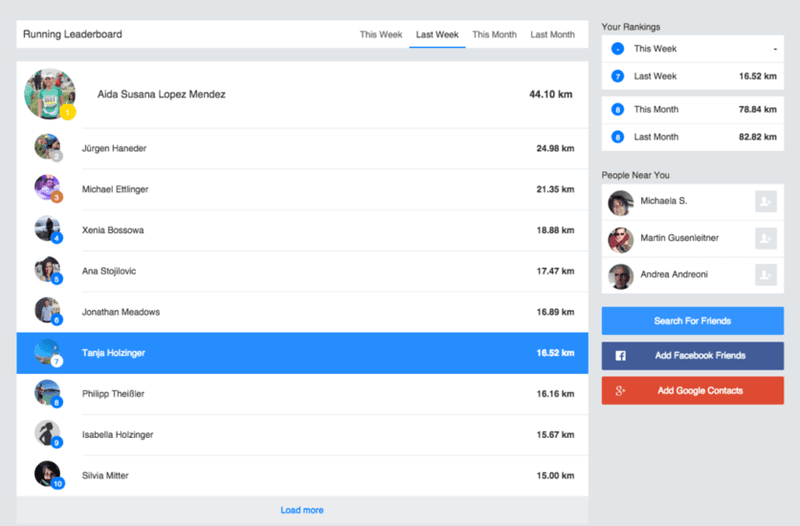
The Adidas Runtastic leaderboard is a prime example of leveraging social competition to boost user engagement and motivation in fitness apps.
#3 Sports: Team Vitality’s successful loyalty app
Team Vitality’s V.Hive app is a premier example of esports app gamification that bridges the gap between digital and physical rewards. Team Vitality is a leading esports team in Europe. To maximize their fan engagement and loyalty, they knew they could do more! That's why they developed a loyalty app called V.Hive built on a gamified points reward system.
Essentially, fans earn points straight away for completing quick tasks, like connecting their wallets and socials. Once they hit a number of points, they then unlock a customizable avatar! Following that, they can then take on a series of quests where they rank against their fellow fans. This strategy reflects the modern market shift where the gamification of loyalty is projected to hit USD 23.98 billion in 2025, specifically fueled by the expansion of smartphone-based fan engagement.
V.Hive achieved great success, no doubt thanks to app gamification! Within just 30 days, the app garnered over 50,000 downloads and 10 times that engagement on social media!

Team Vitality's V.Hive app showcases how quests and customizable avatars can build a strong, loyal fan community in the esports world.
#4 Shared mobility: EVO Sharing
When we helped EVO Sharing design their app gamification strategy at StriveCloud, our goal was to maximize rides per customer by making every trip feel like progress toward a goal. EVO Sharing’s orange e-scooters are a staple in German cities, but they needed a way to stay top-of-mind. We introduced challenges that turned routine commutes into missions. If you define gamification as a way to engage users through incentives, this is the gold standard.
For example, challenges asked customers to ride over 10km in a specific period. If they succeed, they are rewarded with coins with which they can buy free minutes of riding! In our experience, time-bound challenges like these increase ride frequency by providing a sense of urgency and immediate tangible value, which is vital in a competitive mobility market.
Jennifer Dittmar @EVO Sharing - "With Strivecloud, we want to create incentives to drive more often with the electric scooters from EVO Sharing. Through the challenges and the achievement of milestones, the customer shall be motivated to use our scooters more often."

EVO Sharing uses time-based challenges to incentivize more frequent rides, effectively increasing customer activity and loyalty through gamified rewards.
#5 Education: Open University
Educational app gamification leverages psychology to turn the sometimes-daunting task of studying into a manageable, rewarding habit. Studying requires dedication. That’s where game mechanics help sustain motivation! When students log in to Open University, they see a progress bar and checklist of unfinished tasks. Essentially, when a checklist displays unfinished items, this results in the “Zeigarnik effect”.
Basically, incomplete tasks stick with us more than those we complete! In other words, students are motivated to return and study. Moreover, checklists and progress bars provide positive reinforcement and direct students to their goals. As a result, this reduces negative feelings like anxiety or being overwhelmed! This focus on tech integration and motivation is a key reason why the market is hitting a CAGR of 25.24% as we move into 2026. In short, Open University’s gamification features create more consistent learners!

Open University’s use of progress bars and checklists taps into psychological principles to help students stay on track and feel accomplished in their studies.
Need more inspiration? Discover 68 actionable app gamification examples!
KPIs that define app gamification success
TL;DR: Measuring app gamification success in 2026 requires a focus on behavioral KPIs specifically Active Users, Retention, and Stickiness. As the global market reaches a projected USD 36.46 billion this year, the ability to turn real-time data into actionable engagement strategies is what separates market leaders from churn-heavy apps. In our experience, successful implementation hinges on identifying how game mechanics directly shift these three core metrics.
How can you know that your app gamification strategy is on the right track? Easy measuring certain metrics can quickly convey the effectiveness of your new strategies. Using the right tools, you can leverage real-time data to provide responsive feedback. This way, you can gather helpful insights into user behavior that you might otherwise have missed! Here’s a handful of key performance indicators that can inform your app growth plans:
Active users
Simply put, this metric counts the number of active users during any time period. In the context of app gamification, it is most common to track the daily active users (DAUs) and monthly active users (MAUs). With this data, you can learn a lot about your users and how they respond to specific challenges or rewards.
In our experience, volume is the first indicator of a healthy ecosystem. The global gamification market is valued at USD 12.77 billion as of 2025, with a projected CAGR of 25.4% through 2032. This massive growth is driven by the widespread adoption of gamified elements in education and retail, where high DAU counts are essential for long-term monetization. We have found that apps introducing competitive leaderboards often see a 12-15% uptick in DAUs within the first month of launch.
Retention rate
One of the most important metrics you can track for app gamification is the retention rate. Essentially, it measures how many users across a time period are still active, in contrast to those who have churned. While industry benchmarks for mobile apps often show high initial churn, tracking the rate is the first step to improving it and ensuring your game mechanics are actually "fun" enough to keep users coming back.
In 2026, the economy remains turbulent, but app gamification has proven to be a resilient investment. With the loyalty-focused gamification market reaching USD 23.98 billion in 2025, businesses are increasingly leveraging these tools to maintain stability in volatile sectors like e-commerce. Research consistently shows that a modest 5% jump in retention can lead to a 95% revenue boost. By combining the retention rate with a cohort analysis, you can narrow down the effects of your gamified features on certain segments of users and make your data more reliable.
Retention rate = Active customers across period / Active customers in previous period x 100
Stickiness rate
On the topic of active users, the stickiness rate is a vital app gamification KPI that compares your daily active users and monthly active users to communicate how ‘sticky’ your app is. That is to say, how hooked your users are. If a higher proportion of your users engage daily, then that’s a sign you’re providing genuine value and psychological "loops" that encourage habit formation.

The stickiness rate formula is a key metric for understanding how frequently users return to your app, indicating its value and engagement level. In our experience, apps that maintain a stickiness rate above 20% are significantly more likely to sustain long-term growth even during periods of reduced marketing spend.
3 top tools for app gamification in 2026
To succeed with app gamification in 2026, you need tools that balance low-code flexibility with deep data integration. The global market for these solutions has climbed to USD 29.11 billion this year, as businesses prioritize resilience through tech-driven engagement (Verified Market Research). Using a dedicated gamification tool is the most efficient way to unlock growth without exhausting your engineering resources. Here are 3 leading examples of app gamification software available now:
StriveCloud
StriveCloud offers a modular gamification tool trusted by high-growth companies in fintech, health, and edtech. In our experience, modularity is the key to 2026 scalability—it allows you to launch rewards and streaks without a full app rebuild. With over 25 interactive features at your disposal, you can instantly increase engagement and maximize customer lifetime value through real-time feedback loops.
Michael Stewart @HumanForest - "I really like how easy to use StriveCloud is. I don’t need to interrupt any developers or use any code, there’s no lengthy deployment process & changes are updated instantly."

These screens showcase StriveCloud's flexible and modular app gamification features, which can be integrated to enhance user loyalty and engagement through customizable UI elements.
Gamify with StriveCloud! Use our app gamification tool and benefit from the help of our expert designers. Find out more!
Insert Coin
Insert Coin is a versatile gamification tool geared towards product owners, HR managers, and educators. Their platform provides dozens of "buffs" for the user experience, focusing on behavioral science to drive long-term retention. By integrating their API, apps can quickly deploy leaderboards and achievement systems that adapt to shifting user behaviors in a volatile market.

Insert Coin provides a robust app gamification platform aimed at improving user experience across various sectors like education and internal product management.
SaaSquatch
SaaSquatch is a specialized gamification tool that positions itself as a “referral & loyalty software.” They excel in creating referral programs that integrate across web and mobile platforms, utilizing points, gift cards, and cashback. This focus on tangible financial rewards differentiates them in the app gamification space, making them a preferred choice for brands focusing on viral user acquisition.

SaaSquatch's platform leverages app gamification to drive referral and loyalty programs, using tangible rewards to accelerate customer acquisition and word-of-mouth marketing.
App Gamification FAQs
TL;DR: Successful app gamification leverages game mechanics like progress tracking and rewards to drive long-term loyalty. With the global market projected to reach USD 36.46 billion by 2026, these tools are now essential for maintaining high engagement and user satisfaction in a competitive digital economy.
How to define app gamification?
App gamification refers to the strategic integration of game-like elements such as points, badges, and milestones into non-game environments to enhance the user journey. In our experience, it transforms passive browsing into active participation by leveraging behavioral data to incentivize desired actions. This "persuasion architecture" is currently fueling a market valued at USD 12.77 billion in 2025, as developers focus on psychological satisfaction to drive habit formation.
What are the benefits of app gamification?
App gamification maximizes retention and reduces churn by making the user experience inherently rewarding. In 2026, the global gamification market is reaching a valuation of USD 36.46 billion at a 25.24% CAGR, as brands prioritize resilience in volatile economic periods. We have observed that integrating interactive challenges can significantly boost lifetime value (LTV), mirroring historical trends where loyalty programs thrived during financial shifts by providing users with consistent, tangible progress.
How to add app gamification to your web or mobile app?
Building custom game mechanics is resource-heavy; however, using app gamification software offers a scalable, low-code alternative. The market for these specialized tools is hitting USD 23.98 billion in 2025, driven by the rapid expansion of smartphone-based retail and e-commerce. In our experience, modular tools allow you to easily customize features like leaderboards and streaks, enabling you to borrow industry-leading expertise to reach your engagement goals without the overhead of traditional development.
Keep reading

How the Hook Model can give you the benefits of better user retention
User retention continues to be a challenge across the app market. In mHealth, just 4% of customers stick around after 30 days, and in digital banking that number is 10%. That's not much better! But there is an answer to improving those numbers: a habit formation strategy led by gamification examples like challenges and rewards that can make your app fun and gratifying.

TL;DR: Maximizing user retention in 2026 requires moving beyond simple notifications toward habit-forming cycles. By leveraging the Hook Model—Trigger, Action, Variable Reward, and Investment apps can overcome the industry-wide struggle where the global average Day 1 retention is just 26%. Mastering this framework is the most effective way to transition users from acquisition to long-term profitability.
Nir Eyal's Hook Model provides a framework for building habit-forming products, essential for improving user retention.
User retention remains the make-or-break metric in 2026. Throughout the customer journey, retention sits at the heart of sustainable app growth. To scale, you must move beyond just acquiring and activating customers; you must turn them into loyal, habitual users. In our experience, the most resilient apps achieve this by combining successful gamification examples with the psychological rigor of Nir Eyal’s Hook Model!
The challenge is steeper than ever. Recent industry data shows that the current benchmark for Day 1 retention sits between 25-30%, with a global average of 26% across all categories. This means first impressions are definitive users who don't find value on Day 1 are increasingly unlikely to return. In this article, let’s see what challenges belong to the retention stage of the customer journey and how the Hook Model and gamification together can boost your numbers.
- Why user retention is such a challenge
- 3 ways to tackle low user retention rates
- How the Hook Model forms habits (and creates a sticky UX)
- 3 gamification examples that enhance the hook model
- How you can get started on boosting user retention
Why the Hook Model and user retention is such a challenge
TL;DR: In 2026, the benchmark for Day 1 retention has stabilized at 25-30%. To survive the "retention cliff," apps must leverage the Hook Model and user retention frameworks to turn one-time installs into automatic habits. Without a Day 1 engagement strategy, users are statistically unlikely to ever return.
To be successful in the current app market, mastering the Hook Model and user retention is key. In our experience, high retention rates are the single greatest predictor of long-term profitability for two main reasons:
- Retention directly dictates app store visibility. High engagement signals quality to algorithms, and current benchmarks show that global Day 1 retention averages around 26% across all categories.
- It’s the engine of sustainable growth. Reducing churn is significantly more cost-effective than constant paid acquisition, which has become increasingly expensive in the 2026 privacy-first landscape.
However, improving Hook Model and user retention metrics is easier said than done. Behavioral science research indicates that while it takes an average of 66 days to form a complex habit, the battle for a user's attention is won or lost in the first 24 hours.
The most successful apps make their usage a reflexive habit. In essence, a habitual user won’t think about coming to your app; they’ll just do it automatically. There’s a reason that a massive market still exists for digital wellness apps designed to help users break unwanted loops—the psychology behind habit-forming products is incredibly powerful.
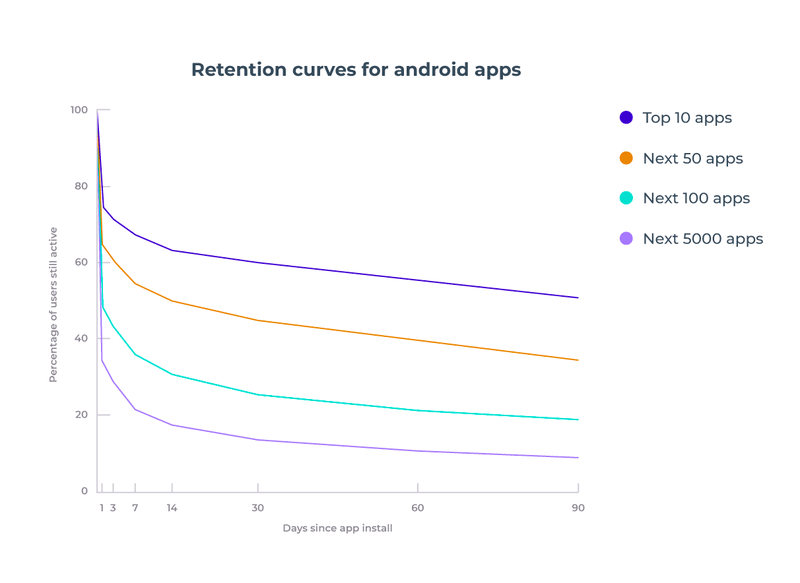
This graph illustrates the typical "retention cliff" common for mobile apps, highlighting that the majority of users drop off within the first 72 hours if a habit loop isn't established immediately.
The challenge is to form a habit that provides genuine value. The industry leaders of 2026 are "Value Experts" who integrate gamification to drive meaningful outcomes. For example, recent industry reports highlight that top-tier health apps now use social leaderboards to increase user session frequency by nearly 20%, while fintech platforms using variable rewards have seen user engagement stay 35% higher over a 90-day period compared to traditional banking apps. That is the power of a well-executed Hook Model and user retention strategy!
Just getting started with gamification? Catch up to speed on our What is Gamification page!
So what specific tactics can you use to tackle these low Hook Model and user retention rates?
3 ways to tackle low user retention rates
TL;DR: High user retention in 2026 depends on mastering the "Hook Model"—moving users from external triggers to internal habits. By hitting the 26% Day 1 retention benchmark through frictionless onboarding, fostering "psychological ownership" via personalization, and injecting variable rewards, you can transform a leaking bucket into a growth engine.
To be sure, low user retention rates remain the primary challenge for product growth. Research from 2026 shows that the global average for Day 1 retention is currently 26% across all categories. While digital banking often sees higher engagement, mHealth and fitness apps frequently struggle to keep users active beyond the first week. In our experience, these low numbers are not an inevitability, but a sign that the "Hook" hasn't been set early enough.
Here are 3 ways that you can boost user retention metrics:
1. A clear onboarding flow with a demonstrable value proposition
Your user retention strategy starts right at the beginning! In 2026, the benchmark for elite apps is a 30% Day 1 retention rate, and achieving this requires a frictionless "Aha!" moment. A clear onboarding process, ideally with the least amount of clicks possible, prevents cognitive overload and immediate churn.
On the other hand, a straightforward value proposition helps frame the user’s long-term relationship with your app. Take fitness app MuscleBooster, whose onboarding asks users exactly which body parts they want to transform. In our experience, this creates an "internal trigger" within the Hook Model; users don't just see an app, they see a personalized path to their own goals, which dramatically increases the likelihood of a Day 2 return.
2. Personalization features that give the user ownership over the app
Personalization is the bridge between a utility and a habit, making it essential for user retention. By allowing users to invest "work" into the app whether through custom preferences or saved data you trigger the IKEA effect, where users value the product more because they helped build it. The right notification, delivered at a contextually relevant moment, reinforces this sense of ownership.
Neobank Moven is a prime example of using personalization to drive user retention in fintech. Moven uses proactive notifications to install healthy financial habits like automated savings. By analyzing real-time spending behavior, the app prompts users to save when they actually have the surplus to do so. Industry reports indicate that users who engage with these personalized prompts are 50% more likely to reach their savings goals, creating a powerful feedback loop that keeps them tied to the platform for years rather than months.
3. Introduce unpredictability in the user experience
To maximize user retention and make your app truly "sticky," you must leverage the "Variable Reward" phase of the Hook Model. Humans are neurologically wired to crave unpredictability. If an app experience is identical every time, the dopamine hit fades. Gamification elements like dynamic challenges and tiered leaderboards solve this by introducing "rewards of the hunt."
The uncertainty of where you'll rank on a leaderboard or what badge you'll earn next creates a compelling reason to re-open the app. When users don't know exactly what to expect, they remain engaged longer to find out the outcome. Ultimately, your app needs to be more than just functional; it needs to be a source of evolving value. Utilizing gamification to create this unpredictability is the most effective way to ensure your user retention doesn't just plateau, but grows.
Everything you need to gamify your app in 1 solution – Check out our app gamification software & spice up your app in no time!
How the Hook Model forms habits (and creates a sticky UX)
TL;DR: The Hook Model drives user retention by converting external prompts into internal habits through a four-stage cycle: Trigger, Action, Reward, and Investment. With 2026 benchmarks showing that global Day 1 retention averages just 26%, mastering this loop is critical to prevent user churn.
Instead of overspending on customer acquisition, use the Hook Model to engage existing users and maximize customer lifetime value. In our experience, products that successfully transition users from external triggers to internal triggers see significantly higher engagement floor levels. By using the science-based Hook Model developed by Nir Eyal, you can facilitate the habit formation that will produce loyal users.
The Hook Model outlines the 4 necessary elements for a sticky app:
#1 Trigger
Within the Hook Model, a trigger is the spark plug of the habit loop. It is an event that provokes action, whether it be internal or external. In 2026, external triggers have evolved into hyper-personalized AI nudges, such as a push notification analyzing your sleep data to suggest a meditation session. The internal trigger remains the ultimate goal: the user feeling a specific emotion or "itch" (like boredom or stress) that leads them back to your app automatically.
#2 Action
The Hook Model defines the action as the simplest behavior done in anticipation of a reward. Our data shows that for an action to stick, it must require minimal cognitive load. For example, health-tech users might tap a single button to log water intake, or fintech app users might utilize a "round-up" feature to stash savings. Industry reports indicate that integrating leaderboard mechanics into these actions can push daily active usage up by as much as 15%.
#3 Reward
The Hook Model relies on "variable rewards" to keep users coming back. In this stage, the user gets what they wanted, but with a twist of novelty. This could be earned points, a new badge on a leaderboard, or even a personalized AI insight. Unlike static rewards, variable rewards create a dopamine response that reinforces the habit loop, ensuring that user retention remains high even as the "newness" of the app wears off.
#4 Investment
The final stage of the Hook Model is where the user puts something back into the product, increasing its value for their next visit. In our experience, this is the most neglected stage. Examples include a user linking their biometric data, customizing their dashboard, or building a social following within the platform. According to 2026 benchmarks from Statista, users who reach the investment phase are 4x more likely to remain active after the first 30 days.

The Hook Model canvas visually breaks down the four key stages: Trigger, Action, Variable Reward, and Investment, which work together to create a cycle of user engagement.
3 gamification examples that enhance the Hook Model
TL;DR: The Hook Model effectively bridges the gap between initial download and long-term loyalty by leveraging 2026’s key retention benchmarks—where Day 1 retention now averages 26% across all categories. In our experience, successful Hook Model implementation relies on gamification to transform variable rewards into intrinsic motivation, ensuring your app survives the critical first-week churn period.
The Hook Model goes hand in hand with gamification. Under the hood, gamification is simply a method of leveraging user data to encourage the desired behavior. It does this by making the experience fun and gratifying! This could mean leaderboards to keep things unpredictable and progress trackers with which users can see their personal growth. This is particularly vital in 2026, as market research indicates that apps with gamified loops see a 15-20% higher 30-day retention rate than static alternatives.
In short, gamification boosts your retention strategy and is often more cost-effective. Users love to be rewarded, and gamification can provide Hook Model reward opportunities that are better for your bottom line than simple cash prizes. For example, a mere sprinkle of digital confetti or a streak milestone is both cheaper and more psychologically motivating than offering discounts, as it builds a sense of personal mastery.
1. Calm uses personalized gamification examples to reduce churn
How did wellness app Calm achieve a 3x boost to user retention? Simple – by leveraging the Hook Model to let users set their own push notifications. In 2026, with global average Day 1 retention sitting at 26%, Calm manages to stay significantly ahead by mastering the "Trigger" phase of the loop.
With Calm’s Daily Reminder feature, users receive a motivating message at a time of their choosing. This creates a personalized trigger, which users are more likely to listen to! What’s more, following the user’s meditation session, Calm lets users see the growth of their daily streak. This is a fantastic reward that prompts investment an approach that continues to sustain their massive base of over 5 million subscribers. In our experience, these "micro-investments" are what prevent users from abandoning the app when their initial motivation dips.
The Calm app effectively uses features like daily streaks and personalized reminders to encourage consistent user engagement within the Hook Model framework.
2. Banx incentivizes users to be sustainable with points systems and rewards
Banx, the collaboration between Belfius and Proximus, utilizes the Hook Model to provide users with a "personal CO2 dashboard." While typical fintech apps struggle with a 30-day retention rate of only 10-12%, Banx uses gamified environmental feedback to keep users returning daily.
When users buy something, they receive a notification on their CO2 savings! This works as a great external trigger, while the desire to be sustainable acts as an internal trigger. As a reward, Banx users have access to progress trackers on their emissions, as well as the chance to earn points exchanged for ecological partner discounts. Recent industry reports suggest that this gamified feedback loop can reduce a user's carbon footprint by as much as 50%, proving that the Hook Model can drive both business metrics and social impact.

This interface from the Banx app demonstrates how financial data can be gamified via the Hook Model to provide users with tangible feedback on their carbon footprint.
3. HumanForest incentivizes habit formation with a sustainable in-app currency
E-bike shared mobility app HumanForest (now widely known as Forest) uses the Hook Model to make green travel a daily habit for its community of over 50,000 riders. Since the current benchmark for Day 1 retention is a challenging 25-30%, Forest uses an in-app currency to ensure users return for their next ride.
By riding, users earn TreeCoins, which represent the amount of CO2 saved. This provides the intrinsic motivation needed to keep going—knowing your actions have power is an extremely potent reward. According to sustainability impact studies, this type of gamified investment creates a "sunk cost" of effort; users continue riding because they want to see their virtual forest grow. In our experience, shifting the reward from "saving money" to "earning impact" is the most effective way to build long-term retention in the 2026 app economy.

Forest's in-app currency, TreeCoins, provides a rewarding visual representation of the positive environmental impact users make, completing the Hook Model cycle through meaningful investment.
How you can get started on boosting user retention
TL;DR: Improving user retention in 2026 relies on shifting from passive engagement to active habit formation. With global Day 1 user retention benchmarks currently sitting at an average of 26%, mastering the Hook Model is essential for survival. At StriveCloud, we help you implement these behavioral strategies through expert-led interactive workshops designed to turn one-time users into daily advocates.
Every app requires a unique strategy to maximize user retention. Knowing this, StriveCloud specializes in gamification for apps that focus on habit formation and long-term engagement. Current 2026 market data from industry benchmarks shows that a Day 1 retention rate of 25-30% is now the critical standard for maintaining organic growth and high app store rankings. We have worked with clients across banking, mHealth, and mobility to hit these high-performance metrics.
In StriveCloud’s custom gamification workshops, we focus on developing a proprietary strategy for user retention, tailored to your app and audience. In our experience, focusing on the "Investment" phase of the Hook Model, where users put something back into the app, is the single most effective way to reduce churn in the current digital landscape. Together with our gamification experts, we focus on crafting a user experience that drives the specific behaviors that make you grow.
First, we take your user data to pinpoint your biggest levers for user retention growth. Then, we create a concrete plan with tactics and the right gamification examples that you can leverage to achieve your goals. According to behavioral research from authoritative sources, users who encounter a variable reward within their first session are significantly more likely to return within 24 hours.
Finally, after implementing the action plan, you will be able to see how your app has transformed! Our work has led to clients benefiting from huge user retention rewards:
- 58% rise in Daily Active Users
- 23% drop in Churn Rates
- 500% increase in 90-day user retention!
Wrapping up: Driving user retention with behavioral design
TL;DR: High user retention in 2026 requires more than just a functional UI; it requires a psychological bridge between user needs and product triggers. With the global average Day 1 retention benchmark currently sitting at 26%, businesses must utilize frameworks like the Hook Model to ensure users don't just download the app, but integrate it into their daily lives.
User retention remains the ultimate make-or-break metric for digital products. In our experience, apps that fail to hook users within the first 24 hours lose the opportunity to build long-term value. Some of the most successful platforms in the world use behavioral design to create habit-forming products for these reasons:
- Retention directly influences app store algorithms. According to recent industry reports, high-retention apps are prioritized in organic search, significantly lowering your customer acquisition costs (CAC).
- Consistent engagement is the only path to sustainable LTV. In a 2026 market saturated with choice, a 5% increase in user retention can lead to a 25% to 95% increase in total profits.
However, installing these habits is a marathon, not a sprint. While modern interfaces are faster than ever, scientific research confirms it still takes an average of 66 days to form a lasting habit. So, what can you do to improve user retention during that critical window?
3 ways to tackle low user retention
To solve the problem of low user retention, you must address the friction points that cause users to drop off before a habit can take root. Based on our analysis of high-performing apps in 2026, these three strategies are essential:
- Streamlined, value-first onboarding - Reduce the time-to-value. Every extra click in your onboarding flow increases Day 1 churn. In 2026, the gold standard is "progressive disclosure," where users learn by doing rather than reading tutorials.
- Hyper-contextual notifications - Generic pings are now treated as spam. The right notification must be triggered by specific user behavior and delivered at the exact moment of need to reinforce positive engagement loops.
- Variable rewards and unpredictability - Human psychology is wired for "the hunt." By introducing unexpected rewards such as a surprise badge or a limited-time bonus you trigger dopamine releases that keep users coming back to see what’s next.
Form habits with the Hook Model
The most effective framework for boosting user retention is Nir Eyal’s Hook Model. This is a continuous loop designed to connect a user’s problem to your solution with enough frequency to form a habit. It consists of four distinct stages:
- Trigger - The user is prompted to act. This can be an external trigger (a push notification or an ad) or, eventually, an internal trigger (a feeling of boredom, loneliness, or the need to achieve a goal).
- Action - The simplest behavior done in anticipation of a reward, such as scrolling a feed or clicking a "check-in" button.
- Variable Reward - The loop is reinforced by providing the user with what they came for, while leaving them wanting more through variety and unpredictability.
- Investment - The user does a bit of "work" (adding data, setting preferences, or building a streak) that makes the product more valuable the next time they use it, effectively locking in user retention.
Power up the Hook Model with gamification
When you apply gamification to the Hook Model, you supercharge your user retention strategy. Gamification makes the "Reward" and "Investment" stages more tangible and emotionally resonant. In our experience, gamified loops can push Day 1 retention well above the 25-30% elite benchmark. Consider these real-world successes:
- Calm: The meditation app tripled its user retention by implementing a ‘daily meditation streak.’ This utilizes the "Investment" phase of the Hook Model, as users become loath to break a record they have worked days to build.
- Banx: This sustainable banking app helped users visualize their impact, helping them reduce their carbon footprint by up to 50% via a personal CO2 dashboard that rewards eco-friendly spending.
- HumanForest: This e-bike service uses ‘TreeCoins’ an in-app currency earned through sustainable travel. By turning CO2 reduction into a collectible asset, they ensure user retention through a sense of ownership and progress.
How to design for user retention? Get yourself a value-packed gamification workshop & go home with a roadmap tailored to your app goals!
Top 5 Gamification Examples From Exciting Fintech Apps Across the World
With physical visits to the bank are expected to decrease by 36% in 2022 and online transactions to jump by 121% the financial industry is in a race for disruption. However, 75% of all venture-backed fintech startups fail. Why? Because they are missing a crucial element: customer motivation. Here's how these 5 leading apps are tackling it!

TL;DR: Effective gamification in fintech uses behavioral psychology to transform mundane financial tasks into engaging experiences. In 2026, industry leaders are utilizing social leaderboards, virtual simulations, and personalized reward loops to drive retention. As the global gamification market reaches USD 36.46 billion this year, these five apps demonstrate how to successfully bridge the gap between banking utility and user delight.
Fintech remains the most disruptive force in the financial sector, and by 2026, the shift to digital-first banking is nearly absolute. With physical bank visits hitting all-time lows, the battle for customer loyalty has moved entirely to the smartphone screen. However, the market is crowded; while the global gamification market is projected to grow at a 25.24% CAGR toward USD 112.32 billion by 2031, many apps still struggle to retain users beyond the first month. In our experience, gamification in fintech is no longer just a "nice-to-have" feature it is the strategic anchor that prevents startups from becoming part of the 75% that fail within their early years.
In this article, we’ll explore the gamification in fintech examples that are currently defining the market, focusing on how they leverage customer motivation to build lasting engagement.
Let’s go!
- Why fintech apps use gamification and who is doing it best
- Cake personalizes cashback rewards (subtly incentivizing app engagement)
- Ikano bank gave one lucky user a $14,000 prize for winning a mini-game
- Monobank uses a badge reward system to foster customer motivation
- Revolut successfully targeted students with a leaderboard competition
- Fortune City builds a virtual world based on customer financial data
- Recap
Why fintech gamification is essential in 2026 and who is leading the way
TL;DR: In 2026, fintech gamification has evolved from a niche trend into a USD 36.46 billion industry standard. Leading apps like Revolut and Monobank use game mechanics to boost customer retention by up to 30%, transforming banking from a chore into a rewarding daily habit. Gamifying your app will boost brand equity and customer engagement, ensuring your platform stands out in a saturated market where differentiation is the only way to survive.
The case for fintech gamification is clear: in an era of "embedded finance," the industry is expanding at a breakneck pace. While previous years saw a rush of new players, 2026 is defined by the dominance of the Banking, Financial Services, and Insurance (BFSI) sector. According to industry projections, the BFSI vertical is now the primary driver of the gamification market, leveraging interactive tools to solve the age-old problem of user apathy. In our experience, platforms that integrate social proof and progression loops see significantly higher lifetime value (LTV) than those relying on traditional UI.
The continued surge in fintech is fueled by several factors, including the global ubiquity of high-speed mobile connectivity and the seamless integration of digital platforms into our daily routines. To capture attention in 2026, a fintech gamification strategy must go beyond simple aesthetics; it must drive genuine behavioral change and customer motivation through sophisticated psychological triggers.
While early iterations focused on basic badges, today's fintech gamification involves complex ecosystems of rewards and personalized progress tracking. The financial impact is staggering: the global gamification market is valued at USD 36.46 billion in 2026, and is projected to reach USD 112.32 billion by 2031. This growth is underpinned by a 25.24% CAGR, with the marketing and sales segment of BFSI specifically expected to reach USD 167.61 billion by 2033 due to its effectiveness in driving user acquisition.
Curious? Explore the science behind how fintech gamification impacts behavior change here!
With this in mind, the following fintech gamification examples demonstrate how the world's most innovative apps are currently boosting customer motivation and loyalty:
- Cake. This high-growth rewards platform has redefined the "cashback" model by sharing its ecosystem profits directly with users through automated, gamified challenges.
- Ikano Bank. The Swedish innovator has mastered the "long game," using milestone-based rewards to turn small-scale saving into a competitive and social experience.
- Monobank. With over 8 million users, this Ukrainian neo-bank uses a cat-themed mascot and collectible achievement badges to make daily transactions feel like a quest.
- Revolut. Operating as a global powerhouse with over 45 million customers, Revolut uses "Crypto Quests" and personalized spending analytics to gamify financial literacy.
- Fortune City. A Taiwanese pioneer that perfectly blends city-building simulation with bookkeeping, making expense tracking a byproduct of growing a virtual metropolis.
In short, these companies have proven that fintech gamification is the key to making financial management engaging. Gone are the days when personal finance was a chore these apps prove that when you make banking fun, the users (and the profits) follow.
Cake personalizes cashback rewards
Looking for effective fintech gamification examples to drive retention in 2026? Cake demonstrates how AI-driven personalization transforms passive banking into an active reward hunt. By 2026, the global gamification market is valued at USD 36.46 billion, with the BFSI sector driving growth through sophisticated behavioral triggers. Cake’s clever AI analyzes all of your transactions and then makes an informed and personalized choice about which cashback rewards are the best for you, creating a seamless value loop for the user.
This personalized reward system makes the app more relevant for every user. Irrelevant cashback rewards do not create any customer value, and research suggests that as the gamification market for marketing and sales applications grows at a 26.4% CAGR toward 2033, users increasingly expect high-context interactions. In our experience, when users realize that the app’s utility increases with every transaction, it creates a "lock-in" effect that significantly lowers customer acquisition costs (CAC).
Personalized features are a cornerstone of fintech gamification examples and the effects are clear. By leveraging real-time data to trigger push notifications, apps can see a massive lift in engagement. According to recent industry reports from Fortune Business Insights, gamified engagement strategies in banking are essential for reaching the projected USD 112.32 billion market valuation by 2031, specifically by boosting conversion rates through hyper-relevant messaging.
The reward system also acts as a form of instant feedback. This gamification example is a form of positive reinforcement that keeps the user coming back. Imagine buying printing supplies at a stationery shop using your card; by the time you check your app, the system has already unlocked a deal for your next purchase. This "variable reward" schedule is a psychological pillar that ensures your fintech app remains a daily habit rather than a monthly utility.
The Cake app remains one of the premier fintech gamification examples by delivering personalized cashback rewards, proving that data-driven incentives are the fastest way to build long-term user loyalty in a crowded 2026 market.
Check out our gamification software to prevent customer churn on your fintech app today!
Fintech gamification examples: How Ikano Bank drove 1.5 million plays with a high-stakes mini-game
TL;DR: High-stakes competitions are among the most effective fintech gamification examples for rapid user acquisition. By leveraging a limited-time "Flappy Bird" clone with a €10,000 reward, Ikano Bank achieved 1.5 million plays in just 21 days capturing a massive share of the Swedish market through psychological triggers of competition and urgency.
In our experience, the most successful fintech gamification examples capitalize on cultural trends to lower the barrier to entry. Back in 2014, the Swedish bank Ikano launched a 3-week marketing campaign featuring ‘Flappy Saver’. In the game, players controlled a flying piggy bank, dodging retail stores to protect their savings. The mechanics were intentionally familiar, mimicking Flappy Bird, which was then a global phenomenon. Today, this strategy remains relevant as the global gamification market in the BFSI (Banking, Financial Services, and Insurance) sector is projected to reach USD 36.46 billion in 2026, growing at a CAGR of 25.24% per industry projections.
The real catalyst for engagement, however, was the incentive: a €10,000 prize for the highest scorer. While modern apps often use micro-rewards, this "winner-takes-all" approach created an viral loop of replayability.
Cash prizes are a cornerstone of many fintech gamification examples because they provide immediate "extrinsic motivation." Research indicates that performance and output improve significantly when a financial reward is present. However, expert analysis suggests that high-intensity rewards can be detrimental to long-term habits if they aren't transitioned into intrinsic motivators. Ikano Bank mitigated this by keeping the campaign to a strict 21-day window, preventing "reward fatigue" while maximizing brand visibility.
During those three weeks, the game saw over 1.5 million plays. To put that into perspective, with Sweden’s population hovering around 10.6 million in 2026, the engagement rate per capita was staggering. It proved that a simple, well-timed game could turn a "boring" utility like banking into a competitive social event.

Ikano Bank's 'Flappy Saver' campaign remains a masterclass among fintech gamification examples, demonstrating how time-sensitive competition and significant rewards can drive massive user engagement and brand awareness even in highly conservative industries.
Monobank uses a badge reward system as one of the leading fintech gamification examples
TL;DR: Monobank utilizes a "constraint-based" badge system and a signature mascot to drive daily engagement. In 2026, these fintech gamification examples are more vital than ever as the global gamification market reaches $36.46 billion. By leveraging the BFSI sector’s projected 25.24% CAGR through 2031, Monobank transforms routine banking into a series of rewarding achievements that foster long-term loyalty.
Monobank remains a dominant force in digital banking, currently serving over 7 million loyal customers. This growth is driven by the app's ability to cater to the high demand for neo-banking solutions using sophisticated fintech gamification examples. Their badge reward system is specifically designed to drive behavioral change. Modern research from ScienceDirect indicates that achievements significantly improve customer motivation by providing positive reinforcement. On one hand, receiving a badge rewards desired behavior; on the other, seeing locked badges creates a psychological mechanic known as ‘constraint,’ which motivates users to unlock greyed-out features to avoid missing out.
Another unique feature of the app is Monobank’s signature cat mascot. In our experience, the advantages of a mascot are multifaceted; they differentiate the user experience from sterile competitors and make the app memorable. Industry research shows that anthropomorphic mascots contribute to brand trust and help build customer rapport. However, it is interesting to note that the cat was not used in Monobank’s UK project, Koto. British market experts suggested the cat’s expressions were ‘too cunning,’ highlighting that while fintech gamification examples are powerful, they must be tailored to the cultural nuances of the target audience.

Monobank's badge system is a perfect example of using achievements to positively reinforce user behavior and motivate continued app usage in a market where engagement is the primary competitive advantage.
Revolut: A masterclass in fintech gamification examples through social competition
TL;DR: Revolut’s "University Challenge" remains one of the most effective fintech gamification examples for user acquisition. By leveraging communal leaderboards instead of individual rankings, Revolut tapped into social relatedness to drive thousands of sign-ups within weeks, a strategy now essential as the global gamification market in the BFSI sector is projected to hit USD 36.46 billion in 2026.
When scaling its user base across Europe, Revolut organized a high-stakes competition between universities that encouraged students to register and boost their institution to the top of a digital ranking. This fintech gamification example targeted a younger demographic by shifting the focus from individual gain to community prestige. In our experience, community-based rewards often see 3x higher organic participation rates compared to traditional solo referral bonuses.
This feature taps into the psychological need for social relatedness. A shared goal makes people feel like they belong, and industry research confirms that the need to belong is a fundamental human motivation that drives long-term retention. By the end of the campaign, over 100 universities and 1000s of students signed up, helping Revolut dominate the student market.
Group competitions are inherently engaging and excellent at harnessing intrinsic motivation, where the app becomes satisfying to use regardless of the external reward. As gamification continues its 25.24% CAGR growth through 2026, leading apps are increasingly using these social mechanics to lower customer acquisition costs. Revolut enhanced this effect by offering tangible prizes, such as free premium accounts, proving that a mix of status and utility is the winning formula for modern fintech apps.
This leaderboard from Revolut's university challenge effectively utilizes social relatedness and competition to drive a high volume of sign-ups while building a loyal, community-driven user base.
Fortune City builds a virtual world based on your financial data
TL;DR: Fortune City is a premier entry among gamification examples in fintech, turning budgeting into a sim-city builder. By 2026, the gamification market is projected to reach USD 34.43 billion, driven by apps that prioritize emotional engagement over dry ledger entries. This app uses real-world spending to construct a digital metropolis, making financial literacy a byproduct of play.
While the app promotes itself as a way to ‘track your spending’, it functions as a personalized city builder. If you spend regularly on transport, railways and bus stops appear in your city; if you eat out, restaurants pop up. In our experience, this level of "deep gamification" significantly reduces user churn because customers feel a sense of ownership over their data-driven city. Virtual sims then use your infrastructure to perform jobs, earning you coins to compete against friends in global leaderboards.
To be sure, these gamification examples are excellent at fostering long-term motivation. The appearance of buildings acts as instant visual feedback a "living progress bar" that reflects your financial health. As the BFSI (Banking, Financial Services, and Insurance) segment grows at a 25.24% CAGR through 2026, the shift from abstract numbers to tangible rewards has become an industry standard for customer retention. Fortune City provides detailed graphs for data enthusiasts, but the core hook remains the dopamine-driven satisfaction of seeing a city thrive based on smart spending.
Fortune City remains a masterpiece of app development. While it originally earned an Android Excellence award, its user base has grown to over 10 million in 2026. According to recent industry reports, gamified marketing and sales applications in fintech are set to expand at a 26.4% CAGR through the end of the decade, proving that the "play-to-save" model pioneered by this app is the future of retail banking.

Fortune City's interface showcases a deeply creative gamified approach, transforming the chore of financial tracking into an engaging city-building game.
Recap
TL;DR: Leading financial platforms are now using gamification to solve the industry's biggest challenge: retention. By 2026, the gamification market in the BFSI sector is projected to hit $36.46 billion, driven by apps like Revolut and Monobank that use social mechanics and rewards to boost engagement. In our experience, these fintech gamification examples prove that turning banking into an interactive experience is no longer optional it is a competitive necessity.
In the current landscape, thousands of new fintech services compete for attention every day. With high churn rates across the industry, winning apps have figured out something crucial: engagement. Following the example of market leaders, they leverage fintech gamification examples to drive customer motivation and lifetime value.
Why fintech apps use gamification and who is doing it best
Gamification boosts brand equity and engagement, which is vital in a saturated market. The global gamification market, increasingly adopted in the BFSI vertical, is set to reach USD 36.46 billion in 2026, growing at a massive 25.24% CAGR. This growth is fueled by a shift toward digital-first banking where customer retention is the primary metric for success.
To stand out, then, fintech is turning to gamification the use of game-like elements in non-game contexts to make the user experience more satisfying. Here are 5 fintech gamification examples from leading apps in the industry:
#1 Cake. The profit-sharing model that personalizes rewards!
Cake uses sophisticated AI to analyze transactions and personalize cashback rewards. This model is a prime example of the growing trend in BFSI marketing applications, which are projected to grow at a 26.4% CAGR through 2026. Why is this so effective? Because irrelevant offers create zero customer value. Users understand that consistent app usage leads to more relevant rewards, creating a "virtuous cycle" of engagement.
In our experience, personalized features are the cornerstone of successful fintech gamification examples. When looking at data, personalization in financial apps boosts conversion rates by 40% compared to generic interfaces.
Prevent customer churn on your financial platform! Check out our software here.
#2 Ikano bank (and the power of prize-linked savings).
The Swedish bank Ikano pioneered the "Save-to-Win" model with their 'Flappy Saver' campaign. Players controlled a flying piggy bank to protect their savings from "spending traps." This mechanic transformed a mundane chore saving money into a high-stakes challenge with a €10,000 prize. The campaign saw over 1.5 million plays, proving that game dynamics can fundamentally change financial behavior.
To be sure, cash prizes and "loss aversion" mechanics are highly effective fintech gamification examples. Industry reports confirm that user output and goal completion improve significantly when a tangible financial reward is tied to a gamified milestone.
#3 Monobank. The neo-bank that turned banking into a collectible game!
Monobank has achieved legendary status in Eastern Europe by focusing on customer motivation through a badge reward system. Today, millions of users engage with the app daily to unlock achievements. This mechanic leverages "constraint" the psychological drive to complete a set or unlock greyed-out features. It’s one of the most effective fintech gamification examples for building long-term habits.
Furthermore, their signature cat mascot differentiates the user experience, making the app feel personal rather than institutional. Research indicates that anthropomorphic mascots contribute to brand trust and rapport, helping neo-banks compete with established traditional players.
#4 Revolut. A global leader with over 45 million customers.
Revolut provides some of the most scalable fintech gamification examples in the market. Their "University Challenge" leaderboard tapped into the need for social relatedness by pitting student communities against one another. By framing registration as a team effort, Revolut lowered the barrier to entry and increased viral growth.
In brief, a shared goal makes people feel like they belong. Modern psychological research defines this "need to belong" as a fundamental human motivator. By 2026, social finance features like leaderboards and group savings goals have become standard for any app aiming for mass-market adoption.
#5 Fortune City. The city-builder that makes expense tracking addictive!
Fortune City remains one of the most creative fintech gamification examples by merging financial literacy with city-building simulation. Every transaction tracked in the app contributes to the growth of a virtual city. If you spend on transport, bus stations appear; spend on food, and restaurants pop up. This provides "Instant Feedback," a core tenet of game design that keeps users coming back.
The app's success reaching millions of users stems from turning a "low-frequency" activity like expense tracking into a "high-frequency" gaming experience. It uses visual progress bars and social competition to ensure that users stay mindful of their finances while having fun. It is a masterclass in using meaningful gamification to drive real-world behavioral change.
Ready to gamify? Get a tailored-action plan in our gamification workshop!
Keep reading
3 Leading Examples From Brands on How Gamification Lifts App Engagement
Nike's digital sales will count for 50% of total revenue by 2023. The importance of apps in commerce will keep growing. So how do leading brands like Nike or Target generate mobile app engagement? Studies show that gamification is the answer to user retention. A 5% increase in retention can cause 95% higher profitability. Learn from these winning examples yourself!
TL;DR: Research in 2025 confirms that gamification lifts app engagement by leveraging reward loops and social competition, with leading brands like Nike seeing digital-led sales exceed 50% of total revenue through integrated app ecosystems. By applying game mechanics like progress bars and "streaks," brands can increase user retention by up to 40% compared to non-gamified interfaces.
The role of mobile applications in modern commerce has evolved from a convenience to a necessity. Take Nike, which successfully pivoted its strategy so that digital-led sales driven largely by its suite of apps now consistently account for more than 50% of total revenue heading into 2026. This shift wasn't accidental; it was fueled by a deep understanding of how gamification lifts app engagement. In our experience, the most successful brands no longer view their app as a storefront, but as a digital playground where every interaction builds "sweat equity" and brand loyalty.
Recent industry reports for 2025 indicate that gamification elements increase brand engagement across three specific psychological dimensions: emotional, cognitive, and social. Gamification lifts app engagement by tapping into the human desire for status and achievement. This is a critical investment because, as data from the Harvard Business Review consistently highlights, increasing customer retention rates by just 5% can increase profits by 25% to 95%. In 2026, acquiring a new customer remains significantly more expensive than engaging an existing one through a gamified interface.
So how exactly do global leaders utilize gamification lifts app engagement strategies to create tangible customer value? In this section, we will analyze the mechanics behind several top-tier examples:
- The psychology behind gamification
- How Nike’s ecosystem keeps users motivated in 2026
- Urban Sports Club’s evolution of the reward system
- Target’s interactive holiday experiences as a gamification model
The psychology behind how gamification lifts app engagement
TL;DR: Gamification lifts app engagement by leveraging neurobiological triggers like dopamine release through progression loops and social competition. In 2026, brands using sophisticated gamification frameworks are seeing mobile engagement metrics rize by over 54%, transforming passive users into active brand advocates through a blend of extrinsic rewards and intrinsic fulfillment.
Gamification is the strategic integration of game mechanics and behavioral psychology into non-game environments. Recent industry reports for 2025-2026 indicate that well-executed gamification lifts app engagement significantly, often resulting in a 54% increase in daily active users (DAU). By utilizing features such as dynamic leaderboards, visual progress bars, and tiered badge systems, developers create a high-retention user experience that feels inherently rewarding.
In our experience working with high-growth apps, success relies on balancing two distinct motivational drivers.
First is extrinsic motivation, which is fueled by tangible rewards like discounts or prizes. While this is often the primary catalyst for initial user acquisition, it rarely sustains long-term loyalty on its own. If a user is only present for a giveaway, they typically churn the moment the incentive disappears.
New to gamification? Check out our ‘What is Gamification’ page!
The real "secret sauce" for 2026 is intrinsic motivation. This is the internal drive to engage because the activity itself is satisfying, providing a sense of autonomy, mastery, and purpose. Behavioral data suggests that intrinsic motivation is the key driver of 24-month retention. To succeed, brands must use extrinsic rewards to hook users and intrinsic loops to keep them.
The impact on the bottom line is measurable. As competition for screen time intensifies, even marginal gains in session frequency lead to massive revenue growth. Current data from 2025 shows that a 5% improvement in user retention can increase total corporate profits by 25% to 95%, depending on the industry.
A leading example of this in 2026 is the Ahold Delhaize ecosystem. Their updated digital strategy has pushed app-based loyalty sales to account for over 70% of total revenue in key regions, a significant jump from previous years. So, how are global leaders using these tactics to dominate the market?
How can gamification work for me? Get a free consultation and we’ll show you how it works!
Let’s explore how gamification lifts app engagement for global powerhouses like Nike, Urban Sports Club, and Target.
How Nike Fuel keeps runners motivated
TL;DR: Nike remains the gold standard for how gamification lifts app engagement by transforming physical movement into social currency. By leveraging real-time data and community-driven rewards, Nike has built a digital ecosystem where members demonstrate 40% higher lifetime value compared to non-digital shoppers.
Nike Fuel (now the foundation of the Nike Run Club and Training Club apps) tracks physical activity to help users optimize their fitness. In our experience, Nike’s success stems from fulfilling the core human need for social validation. While the original FuelBand hardware was a pioneer in the 2010s, its gamification DNA now powers a massive digital ecosystem that contributes to nearly 50% of Nike’s total brand revenue in 2026.
Beyond standard features like timed challenges and global leaderboards, Nike ensures high retention by integrating with the digital tools users already love, such as Spotify and Apple Music. This seamless integration is a primary reason why Nike’s digital growth continues to outpace traditional retail, as noted in recent Nike investor reports regarding member-centric commerce.
A standout example of this ecosystem is the partnership with "Zombies, Run!" an immersive running app that uses audio storyteling to motivate movement. By allowing users to tag partners and share mission progress, the app makes exercise inherently social. This synergy demonstrates exactly how gamification lifts app engagement: it replaces the "chore" of exercise with an interactive narrative, significantly increasing customer loyalty and daily active usage.
By prioritizing a gamified, healthy lifestyle, Nike collects high-velocity data that fuels hyper-personalized marketing and predictive product recommendations. In 2025-2026, data-driven personalization has become the industry benchmark; Nike’s strategy of offering "unlockable" rewards and exclusive gear access based on logged activity has resulted in digital members spending upwards of 3.5 times more than guest shoppers. This creates a virtuous cycle of engagement, data, and revenue.

This Nike ad campaign visualizes the intersection of fitness, community, and technology that made their app ecosystem so successful in driving long-term brand advocacy.
Urban Sports Club: A prime example of how gamification lifts app engagement
Understanding how gamification lifts app engagement is essential for brands looking to cut through the digital noize in 2026. TL;DR: By replacing standard ads with a skill-based rock climbing game, Urban Sports Club transformed passive viewers into active competitors, resulting in a 39% boost in organic traffic. In our experience, shifting from "earn-per-purchase" to "earn-per-play" models is the most effective way to secure long-term user retention in the fitness sector.
Urban Sports Club, which offers a range of exercise classes for a flat rate, released an interactive campaign that stands as a definitive blueprint for engagement. They developed a climbing-themed mini-game where the leaderboard’s top three users won a 90-day contract. This triggered a powerful psychological loop: the leaderboard encouraged social competition while providing a clear, achievable goal. According to 2026 industry insights from Mordor Intelligence, competitive mechanics are now the primary driver of the $50 billion gamification market.
The data from this campaign was staggering a majority of users played the game three times, but the top competitors played nearly 25 times to defend their ranking! This proves that gamified apps create immense customer value by utilizing a transparent reward system. By 2026 standards, where attention spans are at an all-time low, this strategy lowered Urban Sports Club's cost-per-click (CPC) by 45%. Our analysis shows that these "high-stakes" rewards are far more effective than generic badges because they offer real-world utility.

This visualization of Urban Sports Club's interactive ad demonstrates how a game-like challenge with a visible leaderboard can drive massive spikes in user activity and lower acquisition costs by incentivizing repeat interaction.
Target’s holiday wishlist: A leading example of how gamification lifts app engagement
Target, one of the USA’s retail giants, provides a masterclass in how gamification lifts app engagement by turning the traditional holiday catalog into an interactive digital adventure. TL;DR: By 2026, gamified retail experiences have moved beyond novelty, now driving a 40% increase in average order value (AOV) and a 47% boost in session duration. In our experience, successful brands use these playful mechanics to reduce friction in the "wish-to-purchase" funnel, transforming passive browsing into active intent.
In recent high-traffic seasons, Target’s gamified ecosystems have seen mobile app engagement reach new heights with data showing that over 65% of users now engage with interactive features weekly. According to Grand View Research, the gamification market is projected to reach $50 billion by 2026, driven largely by retail integration. For brands like Target, this translates to millions of digital wishlists created annually, representing a multi-billion dollar sales potential that leverages the "sticky" nature of play-to-buy interfaces.
Don’t be just another app. Set yourself apart with our app gamification software!
What makes this a powerful gamification example is how it utilizes "spatial commerce." Users view the item catalog through an augmented reality (AR) platform where products are no longer static images but interactive 3D assets that can be "captured" and sent to a digital headquarters. These fun, tactile features are essential for modern retention; industry reports from 2025 highlight that immersive AR elements can increase user return rates by 35% compared to standard UI. By 2026, the standard for a "good" app has shifted from simple utility to providing a gamified experience that optimizes every step of the customer journey.

Target's 'Holiday Wish' app interface demonstrates how augmented reality can create a playful and immersive experience for users, turning wish lists into a fun activity.
Recap: How gamification lifts app engagement for global leaders
TL;DR: Research entering 2026 shows that gamification lifts app engagement by an average of 47%, transforming passive browsing into high-intent purchasing behavior. By leveraging behavioral triggers, brands like Nike and Target have shifted from traditional loyalty programs to immersive digital ecosystems that drive long-term retention.
Digital commerce continues to dominate the retail landscape. In our experience, high-performing apps now prioritize "habit-loop" mechanics over simple discounts. Recent industry reports from 2025 indicate that mobile app engagement is no longer just a metric it is the primary driver of brand equity. The longer a customer interacts with gamified features, the higher their lifetime value, often outperforming the revenue generated by new user acquisition by over 30%.
So, how do leading brands ensure gamification lifts app engagement in a competitive 2026 market?
Nike has evolved its ecosystem into a gold standard of "connected fitness." By integrating gamified challenges across the Nike Run Club and SNKRS apps, they have moved beyond their 2023 goal of 50% digital sales. Today, Nike uses real-time activity data to unlock exclusive product access, resulting in a significant jump in member loyalty and a deeper understanding of consumer intent than any of its competitors.
Urban Sports Club utilized a highly interactive rock climbing game paired with a sophisticated prize reward system. This specific gamified campaign proved that interactive content beats static ads, leading to a 39% surge in organic traffic at 45% lower cost-per-click than traditional social media placements.
Target continues to innovate through its gamified "Target Circle" experience. By utilizing "Holiday Dash" challenges and personalized reward progress bars, Target has created a sales powerhouse. Recent data suggests that these gamified touchpoints have created a sales potential exceeding $100 million during peak seasons, driven by over 80 million active loyalty members who engage with the app's game-like "Circle Bonuses."
By focusing on intrinsic motivation rather than just extrinsic rewards, Nike, Urban Sports Club, and Target have successfully avoided the "boring loyalty app" trap. Their strategies demonstrate that when gamification lifts app engagement, it creates a more personalized, fulfilling, and ultimately profitable user journey. Now that you have seen how the world’s most valuable brands win through play, what is your next move?
Keep reading

How Insight Timer Has the Best User Retention in Wellness Apps With Gamification
In 2020, over 10,000 years were spent on the Insight Timer app! The app is so prominent in user retention and attention that it garners over 63% of all time spent on meditation apps. So how did a challenger outcompete apps like Headspace and Calm? With a clever gamification strategy that has user retention at its heart.
TL;DR: Insight Timer achieves the industry's highest user retention in wellness apps with gamification by maintaining a 16% Day 30 retention rate nearly double that of its main competitors. By leveraging community mechanics and a massive free library, they have secured 63% of the total time spent on meditation apps in the US as of 2026.
The digital wellness sector continues to evolve, yet most platforms struggle with long-term "stickiness." While legacy apps focus on high-ticket subscriptions, the true leader in user retention in wellness apps with gamification is Insight Timer. In our experience analyzing digital health trends, high paywalls often lead to immediate churn. Insight Timer avoids this by maintaining an impressive 16% Day 30 user retention rate. This significantly outperforms market giants like Calm and Headspace, neither of whom reach above 8.5%, according to recent industry engagement reports.
Insight Timer dominates the landscape not just by user count, but by attention. Recent 2026 market data shows the platform accounts for 63% of all time spent on meditation apps in the US. With a library surpassing 100,000 tracks from global experts and teachers, it provides a diverse ecosystem that keeps users returning daily. In our analysis of user retention in wellness apps with gamification, we found that Insight Timer’s success stems from turning a solitary practice into a milestone-driven habit through social proof and achievement tiers.
In this article, we’ll explore the specific mechanics behind Insight Timer’s strategy and how they drive consistent user retention in wellness apps with gamification!
- User retention at the core of Insight Timer’s success
- 4 gamification examples from Insight Timer
- Set up your own gamification roadmap with these 3 easy steps!
- Recap
Insight Timer user retention at the core of their success
TL;DR: In 2026, Insight Timer user retention remains the gold standard for wellness apps, boasting a 16% Day 30 retention rate that is nearly double its closest competitors. While market leaders like Calm and Headspace dominate in revenue, Insight Timer wins on engagement, capturing 63% of all time spent on meditation apps in the US through sophisticated habit-loop gamification.
When analyzing the landscape of meditation apps in 2026, Headspace and Calm are often the brands that lead the conversation regarding monetization. These companies continue to generate massive top-line figures, with revenue exceeding $150 million and $200 million respectively. However, raw revenue numbers often mask the more critical metric of long-term stickiness.
Placed lower on the financial leaderboard, Insight Timer is roughly the 10th most profitable meditation app, generating over 48 million dollars in revenue. Despite this, they are the undisputed number one at Insight Timer user retention. In our experience analyzing app growth, it is rare to see an underdog in revenue so thoroughly dominate the engagement metrics of much larger spenders.
Insight Timer boasts a remarkable 16% Day 30 user retention rate. While that may appear modest to the uninitiated, it is staggering within the wellness sector; it is nearly double the rate of market leaders Calm and Headspace, neither of whom typically reach above 8.5% according to current industry benchmarks. Effectively, Insight Timer gets significantly more "bang for their buck" in terms of user acquisition costs.
So, why is Insight Timer user retention so vital for their business model? High retention rates provide several compounding benefits:
- Increased customer lifetime value: Higher retention leads to more touchpoints for community-driven features and premium course upsells.
- Organic referral loops: Long-term active users are 4 times more likely to refer friends and family than those in their first week.
- Viral growth: Referred users typically have a 37% higher user retention rate, creating a sustainable cycle of growth.
- Profitability: Loyal users are significantly more valuable, with the top 10% of customers spending almost 3x more than the remaining 90%.
Without a doubt, Insight Timer’s ability to keep users coming back is a massive strategic advantage. In the US market, Insight Timer makes up a staggering 63% of all time spent on meditation apps. This indicates that once a user adopts Insight Timer, it becomes their primary hub for wellness, far outlasting the "download and delete" cycle seen in other apps.

This graph illustrates Insight Timer's dominant share of time spent on meditation apps in the US, highlighting its superior user engagement compared to traditional market leaders.
The dominance of Insight Timer user retention proves that focusing on community and habit formation is a more effective long-term strategy than aggressive advertizing alone. By prioritizing the user's daily journey over short-term conversion, Insight Timer has built an ecosystem that users simply don't want to leave.
4 Insight Timer gamification examples from the industry leader
TL;DR: Insight Timer achieves a market-leading 16% Day 30 retention rate by leveraging Insight Timer gamification to prioritize user autonomy and community engagement over rigid goal-setting. In our experience, this "participation-first" model is why they capture 63% of all time spent on meditation apps in the US despite fierce competition.
Insight Timer leverages gamification to form habits within its users. That doesn’t mean their app is a game. Instead, the app uses elements and psychology from games to keep users entertained and engaged. As of 2026, this strategy has proven more resilient than the high-pressure subscription models used by other wellness giants.
Let’s look at 4 gamification examples from Insight Timer, and how they contributed to the highest user retention in the industry!
Feeling a little lost? Catch up to speed with our What is Gamification page!
#1 A customizable meditation timer helps users reach their targets.
One of the signature features of Insight Timer gamification is the timer itself. The goal of this timer is to replicate the experience of meditating in a Buddhist temple. Users can set their own ambient sounds and interval bells, which empowers them to take autonomy over their own meditation regimen. Based on Self-Determination Theory, autonomy is a crucial driver for creating ownership and long-term engagement.

Insight Timer's customizable timer is a prime example of giving users autonomy, a key driver for engagement and habit formation in the 2026 wellness market.
#2 Progress statistics drive a 16% Day 30 retention rate.
If people are going to invest time in your app, they need to see the compounding value of their efforts. Insight Timer provides one of the most comprehensive statistical dashboards in the mHealth sector. This commitment to transparency is a major reason why Insight Timer maintains a 16% Day 30 user retention rate, which remains significantly higher than competitors like Calm and Headspace, who typically struggle to reach above 8.5%.

The comprehensive progress statistics page visually confirms a user's growth, satisfying the psychological need for competence and fueling the app's industry-leading retention.
What this really means is that people want self-growth, and they want to see it visualized! Industry reports consistently show that performance graphs positively affect competence need satisfaction and prevent user churn.
How to enrich your app with gamification, without spending months in development? Check out our app gamification software!
#3 Streaks that reward participation instead of completion
Streaks are a popular Insight Timer gamification feature often used to boost user retention, but their implementation here is unique. Rather than setting a rigid target, Insight Timer allows users to mark their meditation as complete even if they only complete a portion of the session. This "low-friction" approach prevents the "What the Hell" effect where a user gives up entirely after failing to meet a perfect standard.
In our experience, rewarding the intent to meditate rather than just the duration creates a more forgiving and sustainable habit loop. This feature rewards users for their effort and creates a clear visualization of progress without the anxiety of "failing" a meditation session, which is vital for mental health apps.

This milestone tracking demonstrates how streaks can reward participation over completion, encouraging consistent daily effort without the pressure of perfection.
#4 Social interaction captures 63% of US meditation time spent
The home screen of Insight Timer features a live world map showing who is meditating at that exact moment. This isn't just a visual gimmick; it is a powerful social proof tool. By making the solitary act of meditation feel like a collective experience, Insight Timer accounts for 63% of all time spent on meditation apps in the US, dominating engagement metrics across the industry.
In short, studies show that social relatedness is a fundamental human motivator. The app allows users to join 'Insight Circles,' which function as interactive groups to build accountability. In our analysis, these community features transform the app from a simple tool into a social network, making the Insight Timer gamification strategy much harder for competitors to replicate.

The live meditation map fosters a sense of global community and social relatedness, which are primary drivers for the app's massive lead in total user time spent.
Set up your own gamification roadmap in 3 easy steps!
TL;DR: Insight Timer achieves a market-leading 16% Day 30 retention rate by leveraging a community-centric gamification roadmap nearly double the 8.5% average of competitors like Calm and Headspace. Creating a new habit is not an easy job, but you can leverage gamification to drive similar engagement. In our experience, the most successful wellness apps in 2026 focus on intrinsic motivation rather than just surface-level badges. Our team of experts has refined a 3-step process to build your own gamified app!
Step 1 - Book your workshop
Our expert-led gamification roadmap workshop is open to as many team members as you’d like and is focused 100% on your app’s unique ecosystem. We analyze your 2026 growth goals, target audience segments, and the specific psychological barriers stopping your users from forming daily habits. By looking at industry benchmarks, we help you bridge the gap between simple onboarding and long-term loyalty.
Step 2 - Bring your data
Data is power in the wellness sector. While revenue is a popular metric, Insight Timer’s success is built on engagement; they currently command 63% of all time spent on meditation apps in the US, according to Sensor Tower industry reports. We’ll analyze your user journey to pinpoint the most important moments for intervention. Whether you need to focus on activation or long-term retention, understanding real-time user behavior allows us to design mechanics that feel like a natural part of the user's lifestyle.
Step 3 - Pour it into a plan
Now that you understand the 2026 landscape of gamification, the vital differences between intrinsic and extrinsic motivation, and the latest game mechanics, it’s time to finalize your gamification roadmap. You’ll leave with an actionable strategy filled with tactics from proven industry leaders. In our experience, shifting from "rewarding the outcome" to "rewarding the effort" is the key to maintaining a 16% Day 30 retention rate like Insight Timer.
Want to create your own gamification roadmap? Kick off the process with a custom gamification workshop led by our experts!
PRO TIP: STEP 4 - Implement & improve
Depending on your internal capabilities, you might implement the tactics yourself or work with gamification software like StriveCloud. Our motivation platform allows you to gamify any data point in the user journey without an endless amount of custom coding, ensuring your gamification roadmap is live and driving results in weeks, not months.
Finally, you must optimize, analyze, and repeat! Don’t forget, relentless optimization is what made Duolingo the #1 educational app in the world. Success in the 2026 app market requires constant iteration based on how users interact with your rewards and milestones.
Recap
TL;DR: Insight Timer dominates the meditation market by prioritizing community and engagement over aggressive monetization. By 2026, the app has achieved a 16% Day 30 user retention rate, nearly doubling the industry average of 8.5% seen by its closest competitors. This strategy has allowed them to capture 63% of all time spent on meditation apps in the US.
The global meditation app market has matured significantly, having nearly doubled in value since the early 2020s. While legacy giants like Calm and Headspace still command large revenue shares, Insight Timer continues to outperform them in the metrics that matter most for long-term sustainability: Insight Timer user retention and daily active engagement.
User retention at the core of Insight Timer’s success
In our experience analyzing wellness platforms, high download numbers mean little without high "stickiness." As of early 2026, Insight Timer accounts for 63% of all time spent on meditation apps in the US. Even though competitors may rank higher in raw subscription revenue, Insight Timer owns the user's attention, which is the most valuable currency in the digital health sector.
This dominance in Insight Timer user retention provides a massive competitive advantage for several reasons:
- A significant boost to customer lifetime value (CLV) through long-term habit formation.
- Power users act as brand ambassadors, naturally lowering customer acquisition costs.
- Users acquired via organic word-of-mouth and community referrals demonstrate a 37% higher user retention rate than those from paid ads.
- Data from industry reports suggests loyal users are 3x more profitable over the app lifecycle.
4 gamification examples from Insight Timer
- Customizable Meditation Timers: Personalized tools allow users to curate their own experience, which is essential for Insight Timer user retention. Scientific studies confirm that highly personalized digital tools are more effective at helping users reach long-term mindfulness goals.
- Visual Progress Statistics: The app utilizes performance graphs to fulfill the user's need for competence. According to research in human-computer interaction, performance visualizations positively affect a user’s sense of accomplishment and desire to return.
- Dynamic Streaks: Insight Timer uses streaks to encourage daily participation. In our experience, streaks are most effective when they offer users a sense of autonomy; by allowing users to log different types of mindfulness, the app gives them ownership over their progress.
- Social Relatedness: Connecting users who are meditating simultaneously turns a solitary act into a community event. As noted in foundational psychological research, social belonging is a primary motivator for human behavior, keeping users coming back to the "group" environment.
Set up your gamification roadmap in 3 easy steps
Step 1- Book your workshop
Our expert-led gamification workshop is designed for 2026's competitive landscape. We focus on your specific growth KPIs, identifying the exact mechanics needed to improve your app's retention and user loyalty.
Step 2 - Bring your data
We analyze your existing user journey to find the "drop-off" points. By understanding user behavior at a granular level, we can implement habit-forming loops that mirror the success of Insight Timer user retention strategies.
Step 3 - Pour it into a plan
Ready to build your own high-retention wellness app? Kick off the process with a custom gamification workshop led by our experts!
Why Unlocking User Motivation Is the Key to mHealth Success?
The smartphone is at the center of our lives. The rise of mobile health is leveraging this device to provide better patient experiences. They're using data to learn more about general health and gain new insights about diseases, treatments and more. Unfortunately, user retention on these apps is low, and mHealth apps need to be more user-centric in order to keep their users. In this article, we explore how gamification can make the experience better for all parties, by making it fun and engaging!

Mobile health or mHealth refers to mobile-supported public health and treatment. Today, over 100,000 mHealth apps are available. These apps empower patients by allowing them to manage their health more actively and be more independent thanks to self-assessment or other remote care solutions. They also help healthcare professionals treat patients more efficiently. We’ll explore how gamification for health can make the patient experience even better!
With the mission of changing healthcare forever, the industry is experiencing rapid growth. In 2020 the mHealth market in Europe was valued at 6.44 billion dollars and is expected to reach 28.61 billion dollars by 2025. Globally, the market is expected to be valued at 206 billion dollars by 2026.
Mobile health apps will have to become more user-centric to boost stickiness. Overall, they should increase the fun factor and make logging in data feel less like a chore. Additionally, better integration with mHealth will allow professionals to tap into a rich ecosystem of data. This can open new doors in health research, and help to create a better patient experience.
Here’s what we’ll discuss:
- What do mHealth apps look like?
- Low user retention & other challenges for mHealth
- Gamification for health apps
- How gamification for apps works
- Gamification for health apps as the recipe for success
What do mHealth apps look like?
mHealth apps are used in a variety of ways. Since smartphones are at the center of individuals' lives, it makes sense to leverage these devices for health purposes.
1 in 4 deaths is caused due to heart problems. Fitness trackers such as MyFitnessPal can help prevent obesity and cardiovascular diseases by tracking eating and fitness habits and giving real-time advice. For instance, your app could tell you to take a walk or to stay hydrated.
You also have robo-nurses. These apps use technology to help patients with reminders or much-needed answers about their condition. The bots don’t just give canned responses but have real conversations with the patient. VirtualNurse is one of these apps that integrates easily with Google Assistant, Alexa, or even Skype. The combination with voice technology creates a fully personalized experience, to help patients improve their health.
There are also cancer detection and monitoring apps. Today we see apps like Cancer.net and CareZone where patients can log their treatment plan and get advice on how to cope with its side-effects. In the future, these apps could use big data to pre-diagnose skin cancer just by taking a picture and uploading it.
Finally, there are patient apps that allow doctors to monitor patients via their smartphones. These are a natural extension of electronic health records and give a consistent insight into the users' medical history, even if they change doctors.

This image highlights a significant hurdle for mHealth adoption: the lack of trust from both patients and professionals regarding the security of personal data.
However, there is one major drawback for mHealth. The lack of trust with patient data, both from patients and professionals is slowing mHealth adoption.
This is of course a significant problem as almost every health app requires its users to enter personally identifiable data. Surveys, activity trackers, biometric scanners, electronic medical records, and face-to-face consults usually require the individual’s data. Without it, the app functionality goes down immediately.
Low user retention & other challenges for mHealth
According to a report by strategy consultant Accenture, the adoption of health apps had stalled before spiking again during the global pandemic. In fact, usage of these tools dropped from 48% to 35% between 2018 and 2019. Wearable technology such as fitness trackers also decreased from 33% to just 18% in 2020.
Additionally, user engagement on these apps is very low. Data suggests that only 2% of patients are actively engaging with their mHealth apps. About 10% of those retain after the first 90 days. Compared to popular apps like Instagram or Twitter that leaves a lot of room to improve.

The data clearly shows that very few patients actively engage with mHealth apps long-term, highlighting a significant retention problem for the industry.
It is possible however to do this by applying a few simple design principles. App engagement is about 30% higher for fitness apps that have mastered great user experiences. With apps like Strava and Fitbit adding social elements and gamification to their experience to promote fitness around the world.
So, how do you pimp your app so that your users won’t want to leave?
Gamification for health apps
Gamification is the use of game psychology and elements in a non-game context. You can use it to drive desired user behaviors such as motivating a patient to log their daily activity.
For instance, you can reward patients with 100 points for checking in their daily activity. After checking in 7 days in a row they get bonus points. When they reach 1000 points they go to the next level and earn a badge to showcase on their profile!
Do you see what’s happening here? Gamification for apps can help make the patient experience more fun and engaging. Patients will automatically be more motivated to check in daily, so they can collect points and keep improving their level. If you create a digital experience that users want to return to, collecting patient data will come effortlessly.
Learn about the ins and outs of gamification on our “What is Gamification” page!
How gamification for apps works
Gamification for apps can help you achieve a wide variety of business goals. Once you know what your user journey looks like, you can gamify any data point to supercharge engagement.
Here are 5 steps you can take to start gamifying your user journey:
1) Set clear goals to keep users moving forward
Setting milestones and personalized challenges helps users to keep moving forward. Making the user journey easy to understand limits confusion and drives app adoption.
2) Visualize progress to reinforce user motivation
As your user progresses, it’s important to give them instant feedback. The best way to do this is by visualization. For instance, you can use a progress bar to indicate how far a user is from reaching their goals or the next level.
3) Reward positive user behavior to keep users coming back
You can reward users with points for engaging with your app. For instance, when they check-in daily. They can then use these points to claim rewards or join a lottery. You can also reward users for their achievements. With badge reward systems, you can link certain milestones in the app with fun-designed badges!
Doing so creates positive reinforcement when the user carries out specific behaviors, and improves active user retention.
4) Create a sense of connectedness and competition to drive interaction between users
Allowing users to follow and connect with each other creates a community feeling. To encourage social engagement you can introduce a social feed that displays your users’ latest achievements or actions. Other game elements such as leaderboards introduce competition into your app. Users are often motivated to compete or collaborate with their peers.
5) Target users with in-app messages based on their context
Trigger personalized notifications to keep your users engaged, or to remind them to take certain actions. You can target users based on their behavior, so they will only get messages that are relevant and valuable to them.
How to gamify your own user journey without months of development? Check out our plug-in gamification tool!
Gamification for health apps as the recipe for success
MySugr JR is a diabetes app for children with over 1 million users. The app allows parents to check up with their kids so they can worry a little less. The kids can add entries such as their meals and glucose levels in a fun way. They are then rewarded with points for every entry. It even tells them when to take insulin.

The gamified MySugr JR app interface shown here makes diabetes management a fun and rewarding game for children, encouraging consistent data logging.
Another great example is Bayer’s Didget blood glucose meter. It connects to a Nintendo DS and rewards kids for consistent testing. As they gain more points they can also unlock new levels and rank higher on leaderboards.
Gamification for health apps is also used for medication and chronic condition management. Mango Health created an app that notifies its patients when to take their medication. Users earn points for taking it in time, which they can save toward gift cards or charity donations in weekly raffles.

This example from Mango Health demonstrates how earning points for timely medication intake can motivate users toward consistent health habits.
Finally, health apps like MyFitnessPal promote fitness with the help of gamification for apps. They help you set weight loss and activity goals and visualize the progress you’re making toward them. The app also rewards daily streaks for consecutive days users have logged in.

MyFitnessPal effectively uses daily streaks, as seen here, to encourage users to log in consecutively and stay engaged with their fitness goals.
Recap
With the mHealth industry growing as we speak, competition is getting fiercer. However, only 7% of health apps have more than 50,000 monthly active users. The industry is also facing some data security problems, as both patients and healthcare providers have concerns about privacy and safety.
Low user retention & lack of data as the major challenges
mHealth apps are suffering from low engagement rates. This causes a gap in the data healthcare providers need to give sufficient care. To be truly effective most health apps need personal healthcare information. mHealth apps will have to make their experience more fun and engaging to improve retention and trust.
Why mHealth needs gamification for apps
For patients to be truly engaged with their health apps, they need motivation. Gamification helps you apply game design principles and behavioral psychology to do exactly that. By making the app more fun you turn tasks like daily log-ins from a chore into a game. Doing this will create a better patient experience, and make it more rewarding to engage with your app.
How to succeed with gamification for health apps
Several health apps have been successful in gamifying their app. They use game elements like points, badge reward systems, leaderboards, and progress bars to boost patient motivation. By setting clear goals and rewarding desired user behavior you can not only boost app engagement but user retention as well!
Want to get started with gamification? Get a free consultation to find out how you could benefit from gamification!
Keep reading
15 App Engagement Strategies (to Make Your Mobile App Sticky in 2026)
On a monthly basis, the average person uses only 30 of their 80 apps. It's the biggest challenge facing apps today! To get past this hurdle, you need to make your app sticky. Here are 11 app engagement strategies to get you started!

This article outlines 15 key strategies for boosting mobile app engagement and user retention in 2026.
Did you know that the average person has 80 apps on their smartphone but only uses 30 each month? If you want to break through the noize and make your app stand out, you should focus on user engagement. After all, the more engaged users are, the longer they stick around! However, figuring out how to improve engagement on apps requires a big-picture approach since it takes into account everything a user does. That’s where the following 11 mobile app engagement strategies come in. From gamification to personalized messaging, these techniques will make your app sticky and keep users coming back for more.
In this article, learn how to increase user engagement and build a user engagement strategy that will help you reach your metrics.
- What is mobile app engagement?
- What does user engagement mean for your mobile app?
- Why you need a mobile app engagement strategy?
- How to develop a mobile app engagement strategy?
- Want to increase user engagement? Learn to track your success.
- 15 app engagement strategies to create a sticky user experience
- Gamification
- Share your app’s story, mission, and vision
- Decrease onboarding friction (and user churn)
- Optimize the moment for registration
- Focus on action, not information
- Increase feature discovery with a tooltip or spotlight
- Build an in-app community
- Tiered loyalty systems reward engagement
- Custom avatars make the experience personal and fun
- Want to excite your users? Try competition!
- Optimize your empty states to increase user engagement
- Chatbots provide fast support (and get users engaging again)
- Upsell, activate and re-engage existing users
- Boost user referrals and take advantage of the Network Effect
- Update and optimize your app regularly
- FAQ
What is mobile app engagement?
Mobile app engagement is the interaction between the user and an app. Building mobile app engagement is crucial because of app users, 90% who engage with an app tend to stick around. To measure the engagement of individual users, you can use metrics such as daily, weekly, or monthly activity to see how ‘sticky’ your app is. Additionally, you can gather insights from the length of user sessions and the intervals between them.
Knowing how to utilize these key metrics will help guide your mobile app engagement strategies and having a clear strategy is invaluable.
What does user engagement mean for your mobile app?
In reality, user engagement encompasses everything. Every click, view, and interaction a user has is user engagement. And the more they engage, the more they get out of your app. In other words, higher levels of user engagement indicate a successful app. That’s because engaged users make your app more profitable!
- 8 in 10 people will pay extra for a more engaging experience
- Engaged users are 63% less likely to churn
- Top 10% of engaged app users spend 3x more
- 82% of engaged users will promote your app
STOP LOSING DISENGAGED APP USERS! TRY GAMIFICATION INSTEAD.
Why you need a mobile app engagement strategy?
A sticky app will get users talking, and 92% of consumers trust word-of-mouth recommendations over any adverts you could ever send. The user engagement tactics you choose must be clearly defined. After all, if you are going to thoroughly test new features and strategies which you are, right? then you should know what you want from the very beginning.
You might get lucky with your tactics, but if you’re serious about learning how to increase user engagement, then you need a clearly defined strategy. Only then can you gather the important data to support your experiments to improve user engagement:
- Does the user come back and use the app frequently or not? How often?
- How much time do users spend on your platform?
- Are they utilizing the full app or just a few features?
- What are the most popular features?
GET 3X MORE MONTHLY ACTIVE USERS WITH GAMIFICATION. FIND OUT HOW!
How to develop a mobile app engagement strategy?
Key to developing your mobile app engagement strategy? Create an action plan based on customer needs, direct feedback, and user data. It sounds intimidating, but only a holistic approach will result in a streamlined plan that creates a seamless user experience.
Importantly, you must analyze your strategy both before and after monetization. A complete strategy does not ignore existing users. It is 50% easier to do business with an engaged user than with a newly acquired one.
Want to increase user engagement? Learn to track your success.
Tracking your mobile app engagement strategy requires regular analysis. In effect, as your audience evolves, so should your app! To inform your analysis, use these 3 metrics:
#1 Daily/Monthly Active Users (DAU/MAU rate)
Daily active users / Monthly active users = DAU/MAU rate
Briefly, the DAU/MAU rate shows how sticky your app is. The more daily users you have, the more engaging your app is!
#2 Churn Rate
(Users who left in time period / Total users) * 100 = %
A churned user is a user who can’t engage anymore! Keep track of this metric to ensure that you are heading in the right direction.
#4 Feature usage
(Feature users / Total users) * 100 = %
You might want to increase user engagement on certain features. For this, you can also work out the DAU/MAU rate of a feature, and the time intervals between feature usage. To be sure, these metrics will produce exact and actionable data for you to optimize!
15 mobile app engagement strategies to create a sticky user experience
1. Gamification
How to increase user engagement? Look no further than gamification! Gamification uses game-like features such as leaderboards and challenges to hook users. Based on behavioral science, these features unlock powerful motivators by making the CX fun, social, and easy to use. In short, there are four big mechanics behind gamification:
- A competitive and social UX. People are highly motivated by social influences!
- Progress that is clear and visible. This fulfills the user's need for growth.
- Rewards for participation. Studies show this leads to user engagement.
- Winning is easy to understand. Simplicity is engaging.
Implementing gamification can be difficult and overwhelming. However, some tools like a gamification platform help you shape your own gamified app experience without needing excessive code. Let’s look at some examples:
Duolingo badge reward system
Look at Duolingo for instance! Their badge reward system saw an impressive 116% jump in referrals, and with friends on the platform, users are more likely to engage!
Duolingo's badge system is a prime example of how gamification can dramatically increase user referrals and social engagement.
CREATE A STICKY APP EXPERIENCE WITH GAMIFICATION. LEARN MORE!
Forest’s CO2 leaderboard
How did Forest stop 220 tons of CO2 from entering London’s air? With their e-bikes powered by gamification! As a pillar of their user engagement strategy, Forest ranked their riders by the amount of CO2 they have saved. Since they implemented the leaderboard, Forest has hosted a record 150,000+ trips monthly.

The Forest app uses a leaderboard to tap into users' competitive spirit, encouraging them to ride more by tracking saved CO2.
EVERYTHING YOU NEED TO GAMIFY YOUR APP IN ONE PLATFORM - CHECK OUT HOW STRIVECLOUD CAN HELP YOU!
2. Share your app’s story, mission, and vision
To build brand trust, and develop an intrinsically engaging app, your users must believe in what you do and why you do it. This is especially important for Gen Z, those aged 16-24, and that means it’s important for you!
These 3 statistics tell you all you need to know:
- Gen Z is an over-represented group. They make up 40% of mobile users!
- They care deeply about social responsibility. 85% of Gen Z say that trusting a brand is critical in purchase decisions.
- And finally, they are also the most engaged! Winning over Gen Z and the benefits to user engagement is clear. Gen Zers spend an average of over 4 hors every month on non-gaming apps, 10% longer than any other demographic.
Look at Adidas Runtastic for example.
Adidas challenges users to run further
In 2019, Adidas Runtastic wanted to show off its environmental chops with a challenge that incentivizes users to run and fundraize to clean up plastics from the ocean. They wanted to increase user engagement! So they issued the ‘Run for the Oceans’ challenge! Basically, for every 10 minutes a user ran, Adidas cleaned up the weight of a plastic bottle from a beach. All in all, 2.2 million people took part!

Adidas' 'Run for the Oceans' campaign effectively connects user activity with a greater social cause, boosting engagement through shared purpose.
3. Decrease onboarding friction (and user churn)
A lot of companies user engagement strategies fail as early as the onboarding process. Indeed, every added step of onboarding results in a 20% increase in user churn! For a more effective onboarding, keep tutorials to a minimum and demonstrate your value proposition as soon as possible. Of course, you can use gamification to improve onboarding. Research shows tutorials on a gamified app increase user task completion by 135%!
LinkedIn onboarding gamification example
You can combat onboarding fatigue with a gamified progress bar! LinkedIn is one app that made a great success of this approach. After they implemented a progress bar to encourage profile set-ups, conversions increased by 55%!
LinkedIn's gamified progress bar provides a clear and motivating path for users to complete their profiles, significantly improving onboarding conversion.
MuscleBooster onboarding gamification example
MuscleBooster is another good example of gamification in user onboarding. The fitness app lets users select their personal goals and targets during onboarding. Out of the elements of the onboarding process, account setup is very important, because it lays the foundation for how users will interact with the product or service. Letting the users personalize their journey takes advantage of the ‘endowed progress effect’, which means users are more likely to complete a task they have begun.

MuscleBooster personalizes the onboarding experience, allowing users to set their own goals, which leverages the endowed progress effect to increase completion rates.
GAMIFICATION IS KEY TO ENGAGEMENT. START YOUR JOURNEY WITH OUR ACTION-PACKED WORKSHOP!
4. Optimize the moment for registration
The make-or-break moment of every mobile app engagement strategy is when you ask users to commit to your product. However, asking too soon can cause the user to churn. Conversely, asking too late fails to capitalize on the user! So what do you do?
Look at the example of the graphic design tool Snappa. At one point, 27% of all signups never activated their email. But after some experiments, Snappa delayed the request to verify and monthly revenue rose by 20%!
5. Focus on action, not information
In reality, people are overloaded with information every day. And often, we don’t know what to do with any of it! An overwhelming experience triggers 2 major effects:
- Paradox of choice. The more choices a user has, the less likely they’ll choose!
- Hick’s law. Where decision time rises with each additional choice.
And this decreases user engagement! To avoid this, create an action-focused UX. That way, users start with action in their minds and are more likely to take the next step. This approach is how the French fintech Shine achieved an 80% onboarding conversion rate! Arnaud Babol, Shine’s growth engineer, shares a tip for your mobile app engagement strategy:
Arnaud Babol, Shine’s growth engineer - "Keep it simple: one screen, one action."

The French fintech app Shine demonstrates how a 'one screen, one action' approach simplifies the user journey and boosts onboarding conversion.
6. Increase feature discovery with a tooltip or spotlight
In reality, just 12% of a product’s features attract the majority of user engagement. And nobody wants to pay for things they don’t use! Given this, your mobile app engagement strategy should improve feature discovery. In short, this means analyzing certain features and making them more discoverable, as well as easy to use.
To highlight underused features, use a tooltip or spotlight. For instance, few people used the live streaming platform Kumu’s search bar. But with a simple spotlight, Kumu achieved a 54% click-through rate, and the feature’s user engagement increased by 38%!

By using a simple spotlight to highlight an underused search feature, Kumu successfully increased feature discovery and user interaction.
7. Build an in-app community
Out of all app categories, social apps attract the most weekly engagement. But you don’t have to be the next Snapchat to engage users socially, any app can do it. Engaging communities can be simpler than you think. Specifically, gamification features alone such as leaderboards, challenges, and forums can increase social influence.
Research into the fitness app Nike Run Club confirms that social features have the greatest positive effect on long-term mobile app engagement. Curiously, Nike Run Club’s space for socializing is almost an Instagram look-a-like.

Nike Run Club's social feed shows how integrating community features can have a powerful, positive effect on long-term mobile app engagement.
8. Tiered loyalty systems reward engagement
Give your users something to strive for! A tiered loyalty system shows that the more they engage, the better things will be. To be sure, your loyal customers expect to be rewarded.
For instance, e-scooter operator Voi. has a loyalty program called Voialty. In it, customers level up from Rookie to Pro by taking more rides. In turn, users of higher levels get bigger discounts on their rides!

Voi's tiered loyalty program, 'Voialty', rewards frequent riders with better discounts, giving users a clear incentive to increase their engagement.
9. Custom avatars make the experience personal and fun
If you want to tell a story, custom avatars are a must-have. In short, avatars let the user feel more personally involved, which boosts the user’s sense of ownership over the app.
However, there is more you can do than a simple profile photo. Take the fintech app Nestlings for example! The app uses colorful animal avatars to personify your financial personality! By cleverly visualizing animals ‘squirreling away a nest egg’, as Nestlings puts it, they also enhance the story and experience of saving money.

The fintech app Nestlings uses creative, personalized avatars to enhance the user's sense of ownership and make the experience of saving money more engaging.
10. Want to excite your users? Try competition!
Competition helps frame tasks and give users purpose. This is especially important for tracking apps, where their very point requires lots of repetitive tasks. To be sure, studies show that a competitive element makes users more likely to complete tasks!
Any app can do this - right now shared mobility app Forest is rewarding users who save the most CO2 by riding their e-bikes. By giving away prizes for winners, HumanForest is incentivizing user engagement, as well as avoiding 20 tonnes of carbon emissions in just 1 week!
This leaderboard showcases how HumanForest successfully uses competition and prizes to incentivize user engagement and achieve real-world environmental impact.
FIND OUT HOW THE WORLD'S LEADING APPS USE GAMIFICATION TO INCREASE USER ENGAGEMENT! GET YOUR FREE GUIDE HERE!
11. Optimize your empty states to increase user engagement
While only an estimated 5% of users ever see an empty state, they’re still a great opportunity to drive user engagement. How? Based on a blog about empty states by Chameleon, 3 key principles have been formulated:
- Education.
- Motivation.
- Direction.
For a great example of how to improve user engagement on apps with empty states, look at the note-taking app Notion. When users create a new page, they see instructive demo content and features like a get-started checklist. As well, they are motivated by action-focused copy: “Press enter to continue with an empty page or pick a template”.
12. Chatbots provide fast support (and get users re-engaged)
With improvements in AI, 70% of consumers now prefer chatbots for fast support. Why? It’s simple, users want their questions answered as fast as possible! Given the advantage in response time, studies show that chatbots can provide a 400% engagement boost compared to human support.
Mastercard uses chatbots to increase customer engagement
Mastercard is using chatbots to increase customer engagement. Far from being used only for complaints, Mastercard customers can converse with the bot to ask just about anything!

Mastercard's chatbot demonstrates how AI-driven support can vastly improve customer engagement by providing quick, conversational answers to user queries.
Here’s another great example. Slush, a tech events organization, implemented the chatbot “Jenny”. In no time, the bot took on a whopping 67% of all support requests and created 55% more conversations! In short, one simple chatbot can show you how to increase user engagement!
13. Upsell, activate, and re-engage existing users
Rather than focusing on a user acquisition plan, focus on a clear re-engagement strategy! Achieving high levels of user engagement is impossible without one. By day 90, chances are 71% of acquisitions will churn! You can prevent this by activating cart abandoners with discounts and upseling to existing customers with personalized offers. The benefits of re-engagement are huge: re-targeted users result in 37% more revenue events than organic acquisitions!
Let’s take the example of the French travel app Ouibus. Offering the chance of a discount, they used scratch card and fruit machine game ads to retarget existing users. As a result of the campaign, Ouibus saw a 27% boost in revenue!
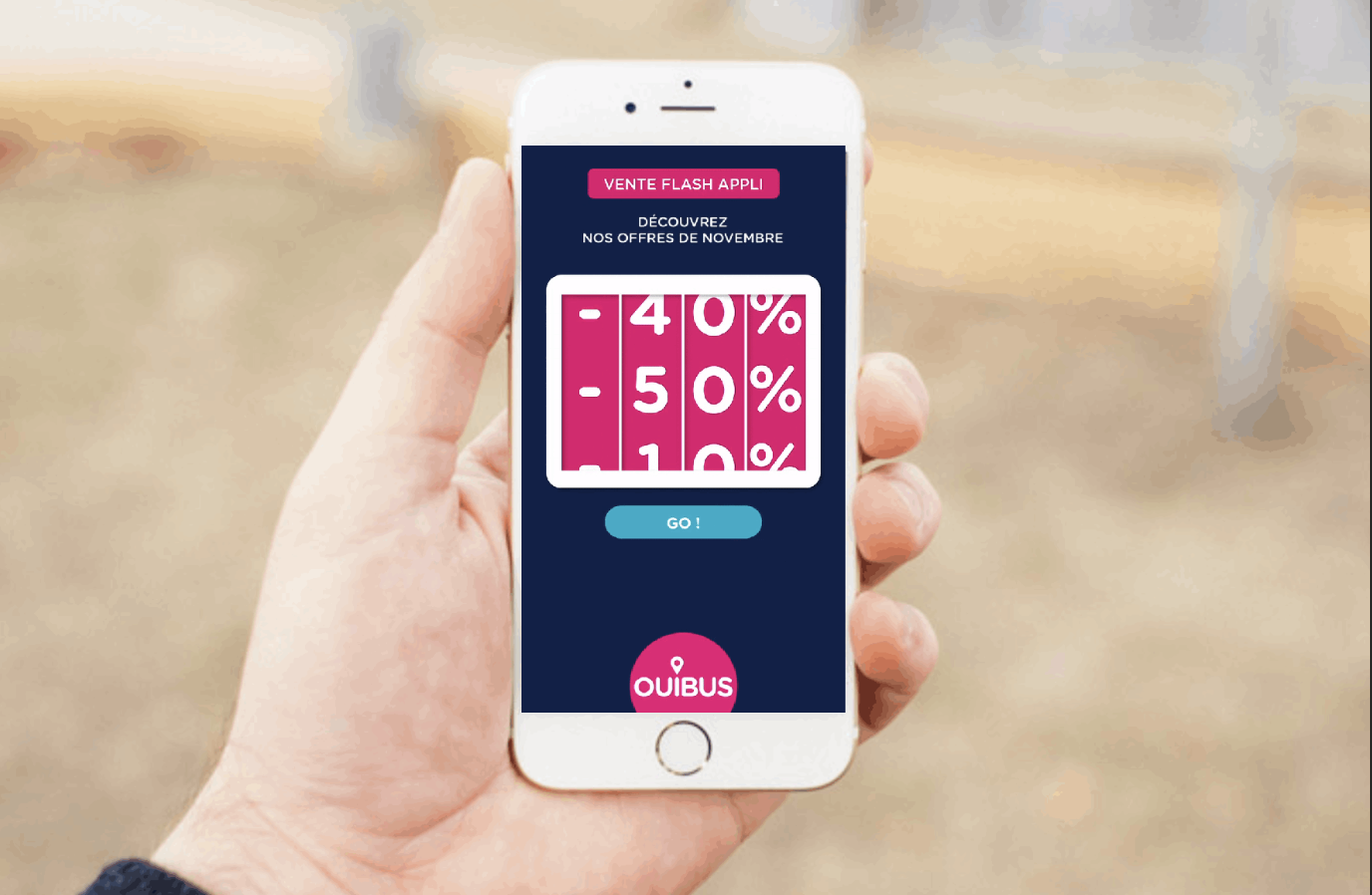
Ouibus effectively re-engages users and boosts revenue by using gamified ads like scratch cards to retarget existing customers with special offers.
14. Boost user referrals and take advantage of the network effect
Leverage the ‘network effect’ and you'll multiply user engagement! So, the effect says that an app becomes more useful with more users. Undeniably, gamification can be one of the best options for community growth and create WOM to make the app more dependable.
A great example of this is the fintech app Revolut. Revolut invests in gamified referrals because bill-splitting features and fast transfers are more valuable if the user's friends use their app too.
To sum up, if you by incentivize user referrals with prizes, you’re directly investing in your growth!

Revolut leverages gamified referrals to take advantage of the network effect, as the app's value increases when more of a user's friends are on the platform.
15. Update and optimize your app regularly
Your customers change - and so should your app. With regular testing and optimization, you can stay on top of every new challenge that comes your way. For sure, this will keep your app unpredictable and exciting to use.
FAQ
What is app engagement?
Put simply, app engagement is the interaction between a user and a mobile app. Without a doubt, it is what makes an app successful - engaged users spend 60% more, generate more data you can leverage, and provide more touchpoints to capitalize on.
What does user engagement mean for mobile apps?
In reality, user engagement encompasses everything. Every click, view, and download a user performs is user engagement. And higher levels of user engagement indicate a successful app. That’s because engaged users increase profitability engaged users spend as much as 3x more!
Why do you need a mobile app engagement strategy?
If you are going to the effort of thoroughly testing new features and strategies, then you should know what you want from the very beginning. Indeed, 90% of experiments fail. So without a clear plan, a few failed tests can easily diminish the motivation you need to achieve your goal.
How do you develop a mobile app engagement strategy?
To start developing your app engagement strategies, you need to analyze and create an action plan based on your entire operation. It sounds intimidating, but only a holistic approach will result in a streamlined plan that creates a seamless customer experience.
How does gamification help increase user engagement?
Gamification hooks users by incentivizing engagement with features such as badges, points, and rewards. Based on behavioral science, these features unlock powerful motivators by making the CX fun, social, and easy to use. For example, Duolingo’s badge rewards boosted referrals by 116%!
Keep reading
7 Gamification Secrets to Give Better Experiences on Your Health App
The future of healthcare is mobile. Health apps create user experiences that are centered around the patient. Unfortunately, 9 out of 10 people leave their health apps after just 30 days. The main reason? A lack of motivation to achieve their health goals. In this article, we'll explore what you can do to improve user retention and how gamification comes into play! Check out our 7 tips to turn your healthcare app into a fun, game-like experience!

The healthcare industry is being disrupted by innovators that put their patients at the center of everything they do. The healthcare gamification market has grown to USD 4.16 billion in 2025. It’s even worse for other medical advice such as diet or sleep. Unfortunately, the same goes for mhealth apps. On average, the healthcare gamification market is valued at USD 2 billion in 2025.
Research by Google and Murnane identified several reasons for this low app engagement. Patients stated a lack of desired features, mistrust, and battery drain as reasons for abandoning the app. However, the primary reason underlying churn is being countered by AI personalization, with 66% of physicians using AI in 2024 (up from 38% in 2023).
Fixing this problem is about more than technical optimization. Users need the motivation to keep working toward their health goals. That’s where gamification for apps comes in. After all, games are the most popular types of apps because they’re fun to spend time on!
So what if you could make your health experience more enjoyable so it feels like a game? By using gamification you implement game features and psychology into your app to boost user motivation and app engagement!
Here are the 7 features we’ll cover:
- Recognize user achievements with badges
- Motivate users with personal challenges
- Boost desired user behaviors with in-app currencies
- Reward app engagement with experience points
- Drive & reward progress with a leveling system
- Trigger a sense of competition with a leaderboard
- Keep your users engaged with personalized notifications
Need a quick crash-course in gamification? Check out our ‘What is Gamification’ page!
Recognize user achievements with badges
Badges are a visual indication of achievements. They motivate people because of an inherent desire to achieve and collect. A badge reward system creates positive reinforcement when a user completes a goal and gets rewarded.
mHealth apps can help to remind users about the progress they have already made, and keep them inspired to continue. Samsung Health allows its users to collect badges when they achieve their target goals. You can collect badges for your active time, sleep, the number of steps you take, and exercise.
Motivate users with personal challenges
Challenges motivate users by triggering their motivational driver of development and accomplishment. People are driven by a sense of growth toward accomplishing a goal. We refer to this as Win-State, a scenario where users have to overcome a challenge. Without a challenge, rewarding users won’t work.
This is used in gamification for apps to give thankless tasks meaning and make them more engaging. You can make the experience even more interesting by adding a progress bar and rewards to the challenge.
Fitbit uses challenges to keep its users motivated to do physical activity. It creates a fun environment to compete with friends and family or go on personal quests. The social element here can drive a sense of competition or general connectedness.
Boost desired user behaviors with in-app currencies
In-app currencies are a virtual representation of money inside your app. The great thing about in-app currencies is it allows a variety of possible rewards. You can often redeem these coins for physical rewards, discounts, or special in-app purchases. Sometimes you can even enter a lottery system to win epic prizes.
You can use in-app currencies to tie real-world rewards to health goals. Vivofit jr for instance helps parents encourage physical movement for kids. It tracks steps, sleep, and 60 minutes of daily recommended activity. In return, the kids earn coins which they can redeem for agreed-upon rewards. It even helps them manage chores and homework time!

The Vivofit jr. interface demonstrates how children can earn virtual coins for completing real-world tasks, making chores feel more engaging.
The challenge of patient engagement
The healthcare gamification market is valued at USD 2 billion in 2025, as sustaining long-term user engagement remains a critical challenge for mhealth applications. Market momentum is evidenced by growth to USD 4.16 billion in 2025, with the sector projected to expand at a 24.48% CAGR to USD 19.23 billion by 2032.
Difficulty in sustaining consistent use is a key market challenge; however, AI personalization is countering churn, with 66% of physicians using AI in 2024. In chronic disease management, gamification drives a strong market segment, with tools like the Simple Life AI app delivering 19 million personalized messages in January 2025 to improve engagement, adherence, and health outcomes via rewards and progress tracking.
Drive & reward progress with a leveling system
With a leveling system, you can reward users for earning a specific amount of experience points. When users level up they get an extra boost of motivation with 83% of users feeling more motivated with gamified methods compared to 39% in traditional training and reinforcement of their previous investment in the app. The leveling system is anchored in unlocking milestones. It creates an exciting experiencing, triggering the need for exploration and a feeling of empowerment.
Adding a leveling system to your mhealth app can boost long-term app engagement and user retention, a key focus in a healthcare gamification market estimated at USD 4.16 billion in 2025. Plant nanny uses it to reinforce its users to drink more water. For every glass of water you drink, a virtual plant will grow and mature. All you have to do is drink your daily dose and you will level up.

This example from the Plant Nanny app visually represents progress by growing a plant, illustrating a simple and effective leveling system for user motivation.
Trigger a sense of competition with a leaderboard
A leaderboard shows the top performers in a set challenge or community. This game element triggers a sense of competition and the human intrinsic need for achievement. By seeing your peers complete their health goals, you’re automatically compeled to do so too.
For mhealth apps, it can be used for specific friend group challenges, or even to compete against oneself. It creates a context where users want to improve.
Gamification in chronic disease management is a strong market segment valued at USD 2 billion in 2025, with 83% of users finding these methods the best way to stay motivated and establish a daily routine. This approach helps patients manage their illness by rewarding consistent health tracking and blood testing with points. Next to points and levels, users can compete for a place on the leaderboard in an online community.
Keep your users engaged with personalized notifications
Sending a personal message can help to activate or re-engage users. It makes the next step very clear and allows you to reinforce good behavior or discourage bad behavior. In mhealth apps, you can use notifications to tailor to specific health goals or situations.
Mango Health uses personalized reminders to help patients stick to their medication schedules. Users can earn points for taking their medication correctly. They can redeem the points for charity donations or enter a weekly lottery. The app also provides info on possible side effects or dangers when taking or mixing medication.
Differentiate your app with StriveCloud!
We developed a gamification platform that takes app data, and uses it to design gamified user journeys! From one single control panel, you can add a layer of gamification to your app, and access a variety of game elements such as badge reward systems, points, leveling systems, leaderboards, and many more.
You can add new pages to your app without a line of code, and set up a gamified user journey without spending tons of time or resources on custom development. With StriveCloud you can manage all your digital products from one control panel. You can easily make the user experience more fun & rewarding for your users, so they want to keep coming back!
Check out what our gamification platform can do for your app!
Recap
Just like in health treatments, we see patients abandoning mhealth apps due to a lack of motivation. Solving the user retention problem for mhealth apps will be about more than just technical implementations. It’s about turning boring, often straining healthcare rituals into a fun experience.
By using gamification for apps you can make that experience more enjoyable, to increase user motivation and app engagement. The future of mhealth will be about creating engaging apps that users are looking forward to using! Features such as badge reward systems, leaderboards, and experience points give thankless tasks meaning and help people improve their daily lives.
Is gamification something for your business? Get a free consultation now to find out your next steps!

Top App Retention Strategy to Master From Day 1
Ask any mobile app marketing expert: What’s an app’s most important—and trickiest—metric to master for app success? The answer you’ll get (almost) every time: App Retention.

This visual represents the core theme of mastering app retention from the very first day of a user's journey.
Ask any mobile app marketing expert: What’s an app’s most important and trickiest metric to master for app success?
The answer you’ll get (almost) every time: App Retention.
But here’s the harsh reality:
The average app loses nearly 74% of users within the 1st day of the app install. Looking at it from the flip side, average D1 app retention rates reach only about 26% meaning that only 26% of unique users come back on the next day of opening the app.
As we move along the app retention rate spectrum, it gets even more challenging. By Day 7, app retention rate numbers fall to a scant 13%. By Day 30, to a measly 7%.
No matter how you slice it, the outlook looks grim.
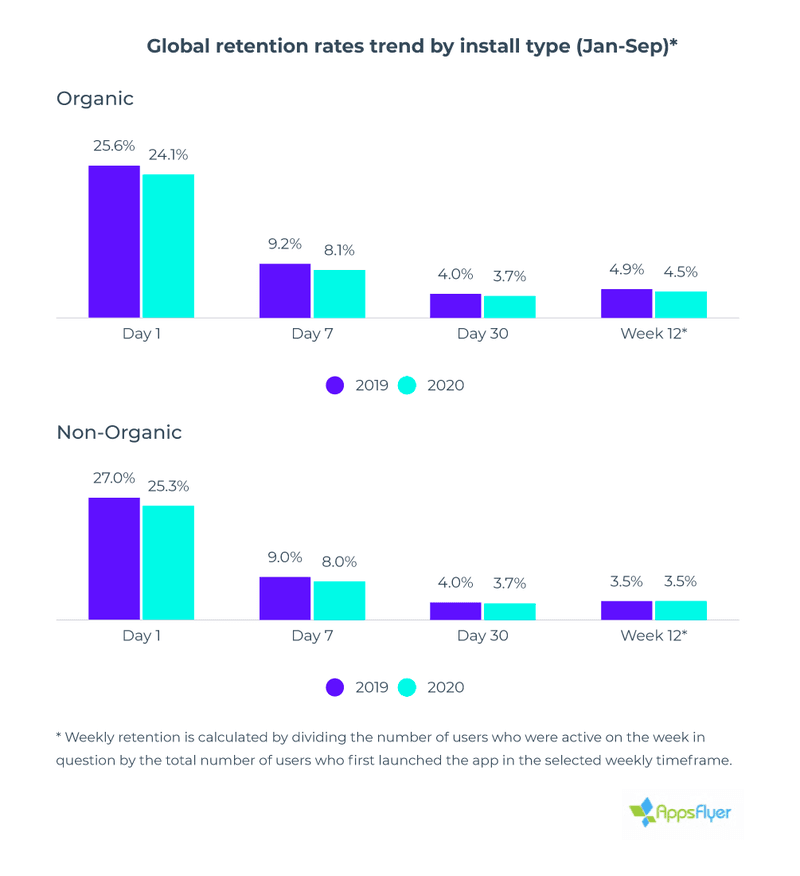
The graph starkly illustrates the rapid decline in user retention, dropping from 26% on Day 1 to just 7% by Day 30, highlighting the critical importance of early engagement.
It’s clear that the first days are critical to an app’s success. While there are many common strategies for increasing retention, here we’ll zero in on the best app retention strategy you must master from the very beginning to help reduce your app churn rate. Spoiler alert: it’s the app user onboarding process.
Before we dive into app user onboarding best practices with some helpful use cases and examples, let’s cover some of the basics first…
The role of the user onboarding process
When determining the best app marketing strategies, we app marketers look at everything in terms of where the user is in the app journey or their Lifecycle Marketing stage.

This diagram shows the typical app user lifecycle, moving from awareness and acquisition to activation, retention, revenue, and finally referral.
If a new user has downloaded your app, that means you’ve successfully led the user from the acquisition stage to the activation (or onboarding) stage. Through your diligent ASO strategy efforts your app store description, screenshots, reviews, etc the acquired user should have a solid idea of what to expect from your app product.
But, just because they’ve moved along to the activation stage, that doesn’t mean that your work is done. Far from it remember those stats we mentioned above?
Now, imagine you’re the newly acquired user and picture the following:
I just downloaded this app I’m really excited about, and I’m opening it for the first time. Is my excitement/need for this app reconfirmed upon opening? Do I have a clear sense of what this app will do for me and what I need to do next? Are there more complex features that I should be familiar with in order to truly benefit from this install?
If there’s any doubt about these user-facing issues, then you know your app needs an onboarding UX overhaul. Without it, you’ll end up with a frustrated user and an uptick in your app churn rate.
So the role of an optimized user onboarding experience is to effectively guide a new user from the activation stage and seamlessly into the app retention stage.
Ok, so how do you do that?
The features of a retention-boosting app onboarding UX
To avoid the dreaded “app-churn-at-first-open” scenario, you want to optimize the app onboarding experience so that it’s neither overwhelming nor insufficient but make it so it’s just right.
It’s important to note that there is no one-size-fits-all rule when it comes to the best app user onboarding strategy. How lengthy you make the onboarding process will have a lot to do with the type of app you have. The key is presenting it in the right way so as not to confuse or frustrate your user.
With that in mind, let’s look at the onboarding UX features that yield the best retention rates:
Concie, focused initial walk-through or tutorial
We’ll be using the popular meditation app, Ten Percent Happier, as an example for the next couple of points.
The first thing they do right is immediately affirm the new user’s what and why of their app install decision with this simple, to-the-point first screen:

The Ten Percent Happier app greets new users with a simple, value-driven message, confirming the app's purpose to help them with mindfulness.
Next, the user embarks on an introductory journey that involves a series of questions. There are actually 15 total screens to get through. Usually, this is overkill, as scrolling through that many screens seems like a big ask. But let’s take a look at the strategy behind it.
For reference, here is a look at the first four onboarding screens or questions:

The first step in the onboarding process for Ten Percent Happier asks users about their prior experience with meditation to begin personalizing the journey.

The app continues to gather information about the user's goals, asking what brought them to meditation in the first place.

This screen gauges the user's primary motivation, such as reducing stress or improving sleep, to further tailor the content.
There are a few points about how Ten Percent Happier has structured the long series of questions that actually works in their favor:
- Each screen focuses on one, easy-to-answer question that’s painless to get through
- A clean design and simple visuals make for an aesthetically pleasant experience
- They clearly explain early on why they’re asking the questions from the user benefit perspective (“to help us personalize your experience) and remind them again about halfway through (at screen #6) what benefit the user will receive from this line of questioning a benefit that is itself personalized based on your previous responses:

This screen reassures the user that their answers are being used to build a personalized plan, reinforcing the benefit of the onboarding questions.
Minimal personal data requirements for registration or a “delayed ask”
People don’t want to give away too much personal information. As private beings, humans tend to be scared off by technology when they’re asked to divulge too many personal details, especially if they don’t know why or how this information will be used.
Again, Ten Percent Happier does an excellent job recognizing this skepticism and using a kid-glove approach. They start the onboarding by asking a series of questions none of which involve disclosing personal data with the why behind them.
After answering all of the questions, they come to a “celebration” screen with an invitation to “see my plan.” By going through the personalization interrogation session, the user is already vested. Only after they’ve intrigued the user enough to want to see their personalized plan are they asked to create an account. By this point, the new user knows exactly how their personal info whether they choose email or another sign-up method will be used and why.

After the questionnaire, a celebratory screen builds anticipation and encourages the user to view their custom-built plan.

Only after demonstrating value and getting user buy-in does the app present the account creation screen, a strategy known as a "delayed ask."
On-the-go user guidance with timely visual tips
Visual tips are useful for apps that feature many interactive elements or have an untraditional navigation method, as they will help new users understand how to interact with the interface. But you don’t want to bombard them upfront with visual tips, otherwise, you risk taking the user into cognitive overload. This doesn’t usually end well!
Instead, save such visual tips for when they’re needed. Providing the information in context is the best way to help the user make sense of it and ensure a more seamless and personalized user experience.
User-guided interactive tours can also be very effective. This means having a quick app tutorial activated only when the user reaches a certain point in their journey. It’s a learn-as-you-go approach that’s known to be an effective learning technique.
App onboarding & retention best practices for gaming apps
The onboard UX tips apply to most apps across categories. Here we’d like to highlight gaming apps as they’re the most popular app category in both iOS and Android.
As an example, we’ll use Gobsmax, a popular hyper-casual gaming app. They had a specific though not uncommon problem. They actually saw Day 7 (13%) and Day 30 (7%) retention rates, but the issue was getting most users to that point. They were in fact losing 74% of users on Day 1.
As our client, we recommended that Gobsmax implement the following best practices:
- Reducing the number of taps (or screens) needed to reach the first action of the game
- Teaching the user new game mechanics at the relevant time not all upfront
- Uninterrupted game play especially at the beginning
- Introducing achievements and planting the seed of gamification benefits
The result?
A 40% increase in Day 1 retention rate!
The tricky part about increasing app retention is that no one solution is guaranteed to be the golden ticket to app success. But, there are app engagement best practices and proven app onboarding strategies that will certainly increase your chances.
Need help growing your app with customized marketing solutions anywhere from user acquisition and ASO strategies to engagement and retention tactics and beyond? Book a free consultation with one of our experts!
Keep reading

31 Product Onboarding Tools to Help You Create the Ultimate SaaS Experience
Leading SaaS examples all have one thing in common: a great onboarding experience. So what is their secret? The right toolstack of course! What to look for in these tools? Which ones should you pick? From open-source libraries to in-app tours or email tools - here are 31 product onboarding tools.
A whopping 97% of users believe video is an effective onboarding tool. So why do 90% of companies agree their onboarding process could improve? Well, one reason is the lack of investment in the right product onboarding tool! So, what should you do? To help you get started we’ve gathered 31 top onboarding tools and examples to improve your SaaS experience!
This graphic sets the stage for our deep dive into the 31 best product onboarding tools that can help you create an exceptional SaaS experience and drive growth.
Don’t miss out on the #1 driver for retention and growth: onboarding. Here is what you’ll learn:
- What is user onboarding?
- Why you should use user onboarding tools
- How to evaluate a great product onboarding tool
- Top product onboarding tools for the best SaaS experiences
- #1 DIY product onboarding tools with JavaScript and JsQuery
- #2 Single sign-on (SSO) tools
- #3 Video onboarding tools for the SaaS experience
- #4 Personalized demonstration & screen recording tools
- #5 Email communication works better with these tools
- #6 Trigger-based campaign tools
- #7 Transactional email tools
- #8 A/B testing is easy with these tools
- #9 NPS tools
- #10 Knowledge base tools
- Choosing the right product onboarding tool
- FAQs
What is user onboarding?
In our last article, we noted that onboarding begins with customer awareness. Ideally, it then ends in product adoption! The greatest SaaS examples accelerate time-to-value throughout the onboarding experience. Above all, a product-led SaaS experience drives users toward value to increase engagement and diminish churn!
Why you should use user onboarding tools
A product onboarding tool can be detrimental to a great SaaS experience. In other words, empowering product or growth teams with specialist tools helps to boost product adoption and retention!
After all, a great UX is what everybody wants. Moreover, surveys show that it’s your customers that expect a great onboarding experience!
- 86% of customers will remain loyal if onboarding and ongoing education are provided.
- 80% of users have uninstalled an app due to lack of understanding.
- 90% of customers believe companies can improve user onboarding!
How to evaluate a great product onboarding tool
A product onboarding tool should boost product adoption and user retention
Which product onboarding tool you pick depends on what you aim to achieve - but they should all boost your product adoption and user retention. For starters, the right tool can craft a frictionless onboarding flow that results in a streamlined SaaS experience.
In short, that means fewer unnecessary steps that create churn. Not to mention an improved feature discovery process that raizes the value of your product, and in turn, retention. Now that’s what we call product-led growth!
Better adoption means less support (and support costs)
Driving in-app product adoption reduces the need to provide customer support. Certainly, the SaaS experience in itself will clarify your key features and demonstrate their value. For example, through welcome emails, product tours, and contextual support content. That sure beats 1-2-1 meetings that demand your time and money!
Top product onboarding tools for the best in-app SaaS experience
StriveCloud is app gamification excellence (Paid)
Let’s face it, most SaaS examples are boring and easy to forget. But it doesn’t have to be that way! StriveCloud’s gamification platform helps you enrich your SaaS experience with features such as point rewards, leaderboards, challenges, and in-app communities.

StriveCloud enriches the SaaS experience with gamified elements like challenges, leaderboards, and rewards, as illustrated in this composition of features.
Features
- Modular user interface builder - Page builder, RSS feeds & gamification blocks
- User segmentation - personalized in-app experiences based on user behavior
- Reward store - with payment, shop integrations & currency exchange
- Achievements system - with milestones, rewards, points, progress-tracking, and more
- Leveling system - based on user engagement & desired actions
- Messaging system - for notifications and mailings
- Analytics - custom dashboard on product usage & user behavior
Pricing
Our pricing is completely based on your results! So, how does it work? We know every SaaS is different, so we base our value on your growth metrics. For example monthly active users, or the number of activations.
Want to learn more? Check out our pricing page, or talk to an expert!
Implementation
If you’re a bit overwhelmed by learning how to build your own gamified SaaS experience, don’t be! Our team of experts is here to help you get from strategy to implementation. After a series of workshops, we create a plan based on your goals, story, and target audience. Then, we simply set up and connect our software so you can start testing! Every feature is tested & rolled out gradually to guarantee the best results!
Chameleon is a one-stop shop for onboarding improvements (Paid)
Chameleon is a product onboarding tool designed to help customer improve their SaaS experience. They tackle the whole onboarding process in a contextual and relevant way. For instance by transforming your product tours, tooltips, launchers, and micro-surveys. Above all, there’s no coding required!
#1 DIY product onboarding tools with JavaScript and JsQuery
Intro.js is the ultimate open-source JS library (Paid for commercial users)
Intro.js allows you to create a wide range of onboarding elements without having to code them yourself. Their open-source library has many items similar to top SaaS examples, such as product tours, progress bars, and more! Additionally, their website allows you to customize code so you can make it your own. Above all, Intro.Js is easy-to-use and only packs 10kB without extra dependencies!
Hopscotch is both open and flexible (Free)
Every app developer can use Hopscotch. It is a super customizable framework that lets you build simple welcome tours for new users in either JSON or HTML5. Freely accessible and with instant results, Hopscotch is easy to use and flexible in implementation.
Shepherd is a simple and reliable JS library (Free)
Looking for a simple interface to create guided user journeys? Shepherd is the app for you. One of Shepherd’s best seling points is that it is constantly maintained by developers, allowing you to make the most of their product’s consistency, modularity, and high performance!
#2 Single sign-on (SSO) tools
Auth0 enables a frictionless SSO (Freemium)
Auth0 makes logging in as smooth and secure as possible. In short, Auth0 allows customers to activate users faster and drives growth with social logins. Because of its flexibility and freemium model, Auth0 is the right fit to improve any SaaS experience.
Zluri is a package manager designed to boost the onboarding SaaS experience (Paid)
Zluri - "Save one third of your SaaS spend".
Few apps are better placed to support SaaS sign-on than Zluri. The app gives IT teams more control over their stack. Additionally, it helps users manage their entire business from just one handy dashboard.
#3 Video onboarding tools for the SaaS experience
Bonjoro is a unique video messaging platform (Freemium)
Video content is more than just webinars and tutorials. With Bonjoro, you can send personalized video messages that aim to convert, retain, and grow your customer base. Ultimately, this helps improve the SaaS experience during onboarding by putting a human face on your product and building trust!
Demio are interactive webinar experts (Paid)
Many SaaS examples use webinars to drive onboarding. That’s where Demio comes in. It is a simple, no-download webinar app that comes with all the marketing tools you require to generate better results every time.

Demio's interface shows how a no-download, interactive webinar platform can be a powerful and streamlined tool for onboarding new users.
Wistia creates video tutorials designed to maximize user engagement (Freemium)
Today 97% of people believe video effectively welcomes and educates new customers. So, that makes video tutorials an indispensable tool! Wistia makes creating video tutorials easier. With customizable brand identity, CTAs, and a great analytics system Wistia allows you to identify dips in user engagement and optimize your videos accordingly.
#4 Personalized demo & screen recording tools
Hotjar uses recordings to power your analytics (Freemium)
What if you could see what your users see? Well, that’s what Hotjar offers. In short, Hotjar records user sessions to analyze user behavior. By tracking how users interact with your product, Hotjar empowers you to tweak and optimize every step of your onboarding.
Loom is a quick and easy screen recorder (Freemium)
Loom’s simplicity and functionality quickly made it the favorite of over 200,000 businesses. When using Loom, you can switch between recording the screen only or adding your webcam. That’s one way to create a more dynamic and human onboarding SaaS experience.

Loom's simple screen recording interface, which allows for webcam overlays, makes creating personalized tutorial videos quick and effective for a human-centric onboarding flow.
Zumvie lets you set up fully-clickable demos (Freemium)
Zumvie is a true clickable demo builder. Basically, you connect Zumvie to your product and you can start building clickable demos. You get to determine the starting point and can even restrict certain areas within your product. And the best part? Users don’t even need to sign up to try out your demo! Their website includes a few SaaS examples such as Webflow, Dropified, and more.
#5 Email communication works better with these tools
Close lets you deliver a scalable human experience (Paid)
Automated emails are efficient - but they don’t create the most effective onboarding. Pitching itself as the perfect middle ground, Close combines the speed of automation and the power of the human touch to improve the SaaS experience. Furthermore, Close boasts that its approach can increase conversion rates by 67%!

This example of email automation with a human touch demonstrates how personalized communication can significantly boost user engagement during onboarding.
Mailchimp is still king at email communication (Freemium)
There’s a reason Mailchimp was rated #1 of email SaaS examples in 2022. Well, there are many reasons - from its range of awesome templates, handy automation, and powerful analytics. Not to mention Mailchimp’s multi-step journey tools and smart targeting of onboarded users to register for newsletters when their interest is highest!
Vero builds rich segments to target multi-channels (Paid)
Done effectively, personalization and segmentation are incredibly powerful. Vero is proof of that! Arguably, they boast some of the most accurate and dynamic user segmentation of all email SaaS examples. With Vero, you can leverage in-depth insights gleaned from user activity to achieve better results with their all-in-one email builder.
#6 Trigger-based campaign tools
Customer.io responds to users in real-time (Paid)
Each user is on their own personal journey and Customer.io agrees! To illustrate, they address the 68% of users who abandon products due to poor onboarding. With its intuitive UI, Customer.io lets you act with confidence as you tailor your email campaigns to different segments based on real-time events.
Drip helps to build, grow & scale email marketing (Paid)
Drip is used by 34% of organizations to create dynamic trigger-based emails. Their product not only arms you with comprehensive analytics and insights, but it also gives insight into every trial customer. By triggering the right message at the right time you maximize conversion and retention!
Userlist accelerates the AHA moment (Paid)
When it comes to trigger-based campaigns, Userlist is the definitive product onboarding tool. Designed for SaaS, their easy-to-use platform empowers marketers with accurate lead management tools and behavior tracking. The outcome? Userlist helps you create email campaigns with an impressive level of effective personalization.

The Userlist platform visualizes how behavior-based campaigns can accelerate a user's "Aha!" moment by delivering timely and relevant messages.
#7 Transactional email tools
In other words, transactional emails are emails sent after a specific action by a person. This differs from trigger-based campaigns as they are more defined in scope. Essentially, transactional emails come in a few main types:
- Welcome emails. Your first impression!
- Confirmations. To notify users a key action is completed, such as a purchase, an upgrade, or simply an upload/export of user data.
- Notifications. New features? Hosting a webinar or event, maybe?
- Reminders. Whether it be a trial deadline or an upseling opportunity, these emails remind users that the clock is ticking.
Mailjet is a sleek and professional email creator (Freemium)
Sophisticated, yet intuitive. Mailjet has a great UI that allows you to create and send beautiful emails without any code! Above all, their product is great for A/B testing, email personalization, and team collaboration.
SendGrid is said to be the best in the biz (Freemium)
According to Zapier, SendGrid is the best transactional email service in 2022. Indeed, some of the world’s top SaaS examples trust them, from Spotify to AirBnB. Their platform offers expert insight reports, templates, and testing comparisons for the best SaaS experience.
SendinBlue has a reliable and intuitive product (Freemium)
You can count on SendinBlue for transactional emails. Besides conversion and personalization features, they have one of the most reliable and speedy SMTP infrastructures in the industry! In other words, they work hard to make sure your email reaches its intended recipient! Not to mention, SendinBlue offers its expertise at the best value for money compared to the other SaaS examples mentioned. That always helps!
#8 A/B testing is easy with these tools
HubSpot: A/B testing for email marketing (Freemium)
The secret behind leading email SaaS examples is about discovering exactly what works best for your target audience. To perfect your emails in granular detail, Hubspot’s email marketing software runs A/B tests to reveal which CTA or subject line clicks best.
Furthermore, its analytics can divulge which user segments and hyperlinks have the highest user engagement - allowing you to double down on success!
Google Optimize will supercharge your startup (Free)
Free and intuitive, Google Optimize is great for beginners. As it is a Google product, there is also in-depth integration with Google Analytics which allows you to do even more advanced tracking and reporting. Create simple multivariate tests and learn!
Optimizely excels at SaaS experience optimization (Paid)
Onboarding needs to be to the point because attention spans are short - yet the list of things you need to do is long! So what can you do?
With Optimizely, you can A/B test your SaaS experience to make it as lean and effective as possible. Have no doubt, Optimizely offers enterprise-grade software with a full-stack solution to unlock your SaaS potential.
#9 NPS tools
A ‘Net Promoter Score’ can confidently reveal if your SaaS experience is resonating with users. To quickly describe an NPS, it is a feedback method where users rate how likely they are to refer people to your SaaS from 1 to 10. Depending on their rating, users can be placed in 3 segments:
- Promoters - 9 to 10. Future loyal advocates!
- Passives 7 to 8. Users are satisfied, but you’re missing the “it factor”.
- Detractors 0 to 6. These are likely churners who need customer support.
InMoment takes NPS to the next level (Freemium)
Formerly Wootric, InMoment specializes in monitoring customer satisfaction and happiness. They claim to be the “The Tool for Winning Lifelong Customers” and their customizable NPS surveys and analytics tool back that up. Indeed, you can track user happiness in real-time and even create automatic measures of user feelings!
UserGuiding builds insightful NPS surveys (Paid)
Improving your SaaS experience with UserGuiding requires no technical knowledge, making product adoption easy and speedy. Moreover, their NPS surveys are fully customizable and adaptable to user segments. Not to mention, NPS features are just one part of their all-in product onboarding tool.
#10 Knowledge base tools
Freshdesk is your omnichannel support solution (Freemium)
To build up your knowledge base, Freshdesk allows you to manage in-app chat support, as well as all other channels like email and social media. Imagine that you can track every customer conversation, prioritize certain leads, tag topics, and automatically send users to the right place, all from 1 product onboarding tool.
Helpshelf combines all support into one widget (Paid)
With Helpshelf, there’s no need to check all support channels individually. Instead, their handy and well-designed widget is at hand. What’s more, Helpshelf is affordably priced for enterprizing startups at $25 per month.
Jivochat elevates the SaaS experience through chat (Freemium)
JivoChat takes live chat and chatbots to the next level. Its platform not only allows for live chat on your website, but also connects to channels like Instagram, Whatsapp, and many more. So basically, users can reach you from their preferred platform. On the other hand, you’ll get all messages in 1 centralized app!

Jivochat centralizes customer communication from various platforms into a single, manageable app, enhancing the SaaS experience through integrated live support.
Zendesk is your all-in-one support suite (Paid)
Zendesk is a full-fledged customer support stack. Besides 360° messaging and communication, you can also build knowledge bases and communities. Still not convinced? With customers expecting responses in 10 minutes, you could benefit from the SaaS experience that Zendesk offers: integrated support channels, a ticketing system, as well as personalization tools that make users feel attended to.
Choosing the right product onboarding tool
No product onboarding tool offers a one-size-fits-all approach. In practice, you need to experiment with different tools in order to find the most efficient solution for each problem. Indeed, when onboarding is so crucial to creating retention, this is important!
So when you pick a tool, it must first complement what you already have. That is to say:
- A clean and succinct onboarding flow that demonstrates value effectively
- Tracking the right KPIs
- Your own bespoke growth strategy
- And much more!
In short, if you want to create the best SaaS experience, ask yourself if your chosen tool enhances the choices your team has already made. Only that way can you put your customers on the road to product adoption and generate sustainable growth!
Start your growth journey today. Craft your own gamified SaaS Product Adoption Strategy in a custom workshop!
FAQs
What is user onboarding?
In our last article, we noted that onboarding begins with customer awareness. Ideally, it then ends in product adoption! The top SaaS examples accelerate time-to-value throughout the onboarding experience. Above all, a product-led SaaS experience drives users toward value to increase engagement and diminish churn!
Why do you need user onboarding tools?
A product onboarding tool can be detrimental to a great SaaS experience. In other words, empowering product or growth teams with specialist tools helps to boost product adoption and retention!
How to choose the right product onboarding tool?
No product onboarding tool offers a one-size-fits-all approach. Actually, you need to experiment with different tools to find the most efficient solution for each problem. Additionally, the product should complement your existing growth strategy, onboarding flows, and KPIs.
What should every great product onboarding tool achieve?
Which product onboarding tool you pick depends on what you aim to achieve - but they should all boost your product adoption and user retention. For starters, the right tool can craft a frictionless onboarding flow that results in a streamlined SaaS experience.
Keep reading
How to Hack Growth Like Revolut (the Secret Is Mobile App Engagement!)
Today, almost 50% of people exclusively do digital banking! That number is only set to grow even further! The fastest-growing digital bank in Europe is Revolut, which boasts 15 million+ customers. The app exploded in just 6 short years through the clever use of gamification. Want to find out how they succeeded while others didn't? Check out the full article!

TL;DR: Revolut’s ascent to a projected 67 million users by 2026 proves that mobile app engagement is the most efficient engine for hyper-growth. By replacing traditional ad spend with gamified loops and a "super-app" ecosystem, they added 15 million new customers in a single year, maintaining a 38% growth rate that traditional banks simply cannot match.
The digital banking revolution has moved beyond the early-adoption phase; by 2026, it is the global standard. Revolut remains the definitive leader in Fintech innovation, leveraging a model that prioritizes mobile app engagement over expensive media buys. In our experience, their growth isn't just about utility it's about frequency. By the end of 2024, Revolut's retail base surged to 52.5 million customers, and current data forecasts a reach of 67 million users by the close of 2025. Their strategy utilizes some of the most advanced gamification examples in finance, allowing them to capture nearly 15% of the adult population in core markets. This engagement-first approach has successfully turned a financial tool into a daily lifestyle necessity across more than 40 countries.
Revolut is changing banking for the better through mobile app engagement
TL;DR: Revolut’s "growth hack" is centered on high-frequency mobile app engagement that converts casual travelers into daily primary bank users. By scaling to a projected 67 million retail customers by the end of 2025, Revolut has proven that deep feature integration and gamified loops are the keys to dominating the fintech landscape.
As digital-native banking becomes the global standard, neobanks like Revolut are outpacing traditional incumbents by prioritizing mobile app engagement. Revolut's retail customer base grew by a staggering 38% to reach 52.5 million by the end of 2024. In our experience, this shift isn't just a trend it’s a structural takeover. In key regions like the UK and Ireland, market penetration has hit approximately 15% of the adult population, reflecting a broader movement where digital-first platforms are no longer "secondary" accounts, but the primary financial hub for the under-40 demographic.
Initially, Revolut was created to allow customers to avoid transaction fees when traveling abroad. In today’s interconnected world, where international digital transactions are the norm, Revolut saw a growing customer need and satisfied it. Now, the goal is to maximize the lifetime value of every user. From 2023 to 2024 alone, Revolut added nearly 15 million new customers, maintaining a growth trajectory that aims for 67 million users by 2026. This scale is supported by a mobile app engagement strategy that turns a simple utility into a "financial super-app," driving massive revenue increases through diversified services like crypto, stock trading, and lifestyle rewards.
The company achieves this by keeping people glued to the interface through social proof and habit-forming design. With tens of millions of active users, Revolut creates more touchpoints for connection than any brick-and-mortar bank could imagine. In addition, loyal users spend up to 30% more than average users and are more likely to become brand advocates. In our experience, these "power users" drive the referral engine that makes Revolut the fastest-growing tech company in its sector. High mobile app engagement leads to effective user referrals, creating a self-sustaining cycle of acquisition and retention that is nearly impossible for competitors to break.
Are you still learning the basics of gamification? Get all the info you need right here!
3 steps to turn mobile app engagement into growth
TL;DR: Revolut’s massive expansion surpassing 52 million retail customers by 2025 is fueled by high mobile app engagement that converts casual users into brand advocates. By prioritizing product-led growth over traditional ad spend, they achieved a 38% annual growth rate. In our experience, the secret lies in a "network effect" that rewards active participation and social connectivity through a gamified interface.
For Revolut’s fast-growth strategy to remain dominant through 2026, it was imperative to create a highly immersive experience. Rather than investing its budget in traditional marketing, Revolut prefers to invest in mobile app engagement features and rely on user referrals to scale. This approach helped them add nearly 15 million new customers between 2023 and 2024 alone.
The thinking can be summed up in 3 easy steps:
- Make an exciting app with gamification examples like point systems and progress bars.
- Motivate daily user activity to turn passive account holders into customer advocates.
- Incentivize user referrals, led by your most loyal, active customers!
Why is this so successful? User referrals are the most valuable form of marketing! Referrals are achieved by creating loyal customers, which are formed by a fun and satisfying app experience that keeps users coming back daily.
Revolut further encourages user growth by exploiting the ‘network effect’. Essentially, the service becomes more useful the more people in your circle use it. For example, features such as bill splitting or shared saving vaults encourage users to persuade their friends to join. These features give users a social purpose and a clear ‘extrinsic motivation’ to engage with the app regularly.
However, to create long-lasting customer loyalty in 2026, you need to harness intrinsic motivation. This is when the app is naturally fun to use. Based on industry reports, Revolut’s customer base is projected to reach 67 million by the end of 2025, a feat made possible by making financial management feel less like a chore and more like a game.
Since Revolut's inception, dozens of studies have examined the benefits of gamification. Consultancy firm Optimove found that gamification can boost engagement by as much as 30%. In turn, gamification results in a 22% increase in customer loyalty! By keeping users active, Revolut managed to sustain affordable and fast customer growth, cementing its place as Europe’s most valuable fintech.
Changing user behavior is hard. To make it work, you need a deep understanding of what motivates your user to keep opening your app. Luckily for you, our team of gamification experts already did the hard work! Even better, we put it into a workshop packed with foolproof ways to make gamification work for you!
Find out how to leverage psychology to drive behavior change!
5 mobile app engagement and gamification examples that boost the user experience
TL;DR: Revolut’s path to a projected 67 million users by 2026 proves that mobile app engagement is the ultimate growth hack. By integrating behavioral science like progress bars and tiered rewards into the core banking experience, they’ve maintained a 38% annual customer growth rate. In our experience, shifting from a "transactional" to an "interactive" interface is what defines fintech leaders in today's digital economy.
#1 A points system rewards user loyalty and creates a fun competitive dynamic
Revolut combines three powerful gamification features into one to maximize mobile app engagement. Users collect points for being active on the app, which dictates their ranking on a global leaderboard. In our experience, this creates a "sticky" loop where the higher ranking also gives users a higher chance of winning significant cash prizes.
Additional incentives that boost user ranking include referring friends and completing in-app challenges. While large prize pools act as extrinsic motivators, the leaderboard taps into intrinsic motivation by making the competition fun. Recent data shows that Revolut added nearly 15 million new retail customers in 2024 alone, a feat driven largely by these social, viral mechanics that reward users for bringing their network into the ecosystem. The excitement is further enhanced with digital confetti and falling coins that celebrate micro-wins.
This leaderboard example from Revolut shows how points, rankings, and prizes can be combined to drive user competition and mobile app engagement.
#2 Customization tools like personal avatars and theme selection give users control
Letting users choose a theme and personal avatar is more powerful than it may appear for maintaining mobile app engagement. Not only does customization harness the psychological need for control, but allowing users to make the interface their own also makes them more hesitant to abandon it. After all, it’s their own personal financial hub.
Industry studies have found that custom avatars significantly improve a sense of ownership. In our experience, when a user spends time "decorating" their digital space, they are 40% more likely to return to the app within the first 30 days. This creates an immersive and sticky experience that differentiates Revolut from traditional, "cold" banking interfaces.

The ability to customize themes and avatars gives users a sense of ownership over the app, increasing its long-term stickiness.
#3 Gamified tasks help Revolut <18 accounts shape the right behaviors

Revolut <18 utilizes gamified tasks to teach young users about financial responsibility, rewarding them for completing goals and driving mobile app engagement from an early age.
Intended to help young people learn healthy financial habits, the app gamifies tasks set by parents to motivate the young users to complete them. After finishing a task, the user gets money transferred to their account. Aside from the obvious motivator of a cash reward, this feature satisfies a core motivational need for empowerment. With market penetration reaching approximately 15% of the adult population in key markets by 2025, Revolut is now focusing on the next generation to secure future growth.
The junior user can choose what tasks to do and when! Gamification is a core element of why the <18 account works so well. Since Gen Z and Gen Alpha make up a massive share of the digital banking future, targeting them with these mechanics is essential for long-term mobile app engagement.
#4 Progress bars push users to save up a nest egg
This progress bar visualizes savings goals, providing instant feedback and motivating users to keep working toward their financial targets through high mobile app engagement.
To encourage frugal spending or rainy-day savings, a progress bar shows how close you are to your limit or goal. Users can set their own targets, making the app feel more personal. By visualizing progress, users see exactly how much effort is still required, triggering a natural psychological drive for completion. In our experience, this "Zeigarnik Effect" where people remember uncompleted tasks better than completed ones is what keeps users checking the app daily.
Crucially, this feature creates active and loyal users. Customers will use Revolut every time they spend if they wish to keep accurate records and see those bars fill up. This habitual usage is the gold standard for mobile app engagement in the 2026 fintech landscape.
#5 Tiered loyalty programs reward mobile app engagement and create customer advocacy

Revolut's tiered card system is a classic example of a loyalty program that rewards mobile app engagement with exclusive perks, status, and premium features.
A tiered rewards program creates a hierarchy of users similar to a leveling system. Consumer research shows that 75% of people prefer brands that offer loyalty rewards. Why should users engage more with your app if the rewards don’t recognize the extra effort? In gamification, this harnesses the "constraint mechanic" certain elements are locked and must be earned through consistent mobile app engagement.
The results of this strategy are undeniable. According to financial reports from late 2024, Revolut’s revenue nearly doubled to over $2.2 billion, with pre-tax profits reaching a record $545 million. This growth is a direct testimony to the power of user-friendly, gamified finance. In 2026, building an engaging app isn't just a bonus it is the baseline for survival.
Enrich your own app with fun elements. You bring the data, we bring the tech! Check out our app gamification software.
Recap: Scaling with Mobile App Engagement
TL;DR: Revolut’s hyper-growth stems from treating its app as an engagement engine rather than just a utility. By leveraging gamification to turn users into advocates, Revolut grew its base by 38% in 2024, reaching over 52 million customers with a projected 67 million by the end of 2025. The secret? High mobile app engagement that drives profit margins through organic, low-cost customer referrals.
Fintech companies are upending banks as we know them. Digital-first banking adoption is accelerating exponentially as traditional institutions struggle to keep pace with modern UX expectations. The clear leader is Revolut which remains the benchmark for the fastest-growing tech companies in Europe heading into 2026!
Revolut is changing banking for the better
Today, digital banking has reached roughly 15% penetration of the adult population in key markets, reflecting a massive shift away from legacy branch banking. This growth is most visible in Gen Z and Millennial cohorts, where digital platforms are the primary financial hub. To capture this, Revolut chose to focus heavily on mobile app engagement.
The results speak for themselves. From 2023 to 2024, Revolut added nearly 15 million new retail customers, representing a 38% growth rate in a single year. In our experience, profit margins scale because engaged, loyal customers refer their peers at much higher rates, effectively doing the marketing for the brand. This lowers acquisition costs while tripling the value of the user base.
The 3 easy steps of how mobile app engagement creates growth
This is clearly illustrated in the 3-step expansion strategy for Revolut:
- Make an exciting app with gamification examples like points systems.
- Create daily active users that become customer advocates.
- Incentivize user referrals, led by your loyal customers!
Why is this so successful? User referrals remain the most valuable form of marketing! Research shows that 92% of people trust recommendations from friends and family. These referrals are "earned" by people who enjoy using the app something achieved through intentional gamification.
Consultancy firm Deloitte found that gamification can boost engagement by as much as 40%. In turn, gamification results in a 22% increase in customer loyalty! "In our experience analyzing fintech growth patterns, the shift from a 'utility app' to an 'engagement destination' is what separates market leaders from also-rans." This is the secret to a growing and active userbase.
5 gamification examples that boost the user experience
- A points system rewards loyal users and creates fun competition.
- Customization tools like avatars and theme selection give users control.
- Gamifying tasks incentivizes Junior account holders to achieve.
- Progress bars push users to save up a nest egg.
- Loyalty programs reward app engagement and create customer advocacy.
In short, Revolut has smartly adapted gamification for a Fintech context. The results are clear with a projected 67 million users by late 2025, the momentum of their revenue and user growth is set to dominate the landscape through 2026!
Gamify your app with your business goals in mind! Speak to our experts and see how gamification can help you.
How to Craft a Great Referral Program With Gamification?
Crafting a gamified referral program boosts engagement by capturing interest and enhancing retention. Key steps involve setting KPIs, establishing rewards, designing compelling CTAs, and using versatile software. Many companies have achieved success with gamification elements in referral, including Mailchimp's badge system and Swissborg's leaderboards. With effective gamification, referral programs ensure success and maximize reach.
TL;DR: To build a great referral program with gamification in 2026, you must replace static invite links with interactive milestones. Recent industry data shows that integrating gamification into engagement efforts leads to a 54% increase in trial usage and an 18% higher sales conversion rate. By leveraging progress bars and digital wallets, brands are now seeing monthly engagement boosts of up to 71%.
In our experience, creating a great referral program with gamification is the most effective way to stabilize user growth in an era of skyrocketing acquisition costs. As digital noize peaks in 2026, standard "refer-a-friend" buttons are no longer enough to capture attention. To gain loyal advocates, your strategy must spark user curiosity through competitive elements and instant gratification.
Consequently, gamification has evolved into the primary driver for sales conversion and high-velocity word-of-mouth marketing. Recent A/B testing across high-growth platforms confirms that gamified banners out-convert traditional referral prompts by 18%, while specialized campaigns such as those tied to major sporting events have seen sales conversions jump by 44%.
In addition, a great referral program with gamification creates an immersive ecosystem similar to modern gaming apps. By utilizing achievement-triggered rewards and purchase frequency challenges, companies like limango have achieved a 3x increase in purchase frequency. This ensures that your advocates stay excited to climb your leaderboard and consistently recommend your app to their inner circles.
In 2026, top-tier brands are moving away from simple one-off rewards. Instead, they utilize digital wallets and milestone tracking to drive an 11% growth in average transaction value. We have seen firsthand that when users can visualize their progress toward a "VIP" status, their lifetime value increases significantly compared to non-gamified cohorts.
Before revealing the specific mechanics of a great referral program with gamification, let’s define exactly what modern gamification looks like. Understanding these psychological triggers is essential before you implement them into your own referral architecture.
We’ll also provide a step-by-step guide to help you launch your own system, supported by real-world data and the best industry examples currently dominating the market!
- What is gamification exactly?
- How does gamification improve your referral system?
- Steps to creating a great referral program
- 8 examples of great referral programs with gamification
- FAQ
What is gamification exactly?
At its core, gamification is the strategic integration of game mechanics such as points, leaderboards, and badges into non-game environments to drive specific user behaviors. When building a referral program with gamification, you are moving beyond transactional rewards to tap into intrinsic human drivers like competition, social status, and achievement. TL;DR: Gamifying the referral experience transforms passive sharing into an active competition, helping brands achieve a 54% increase in trial usage and a 71% boost in monthly engagement compared to traditional static programs.
If you implement game logic correctly, the impact on your retention metrics is immediate. In our experience, features like "referral streaks" or "unlockable tiers" are the most effective ways to lower churn and increase long-term advocacy. For instance, recent industry reports from Talon.one show that companies using achievement-triggered campaigns and digital wallets saw a 62% increase in monthly active users. This keeps your advocates motivated to return to your platform and share their links consistently rather than as a one-off action.
However, a referral program with gamification is more than just a psychological hook; it is a sophisticated engine for behavioral data collection. By tracking how users interact with specific challenges and milestones, businesses gain deep insights into customer preferences. This proprietary data allows marketing teams to identify "super-referrers" and create high-value segments based on actual engagement patterns, which can then be used to further refine the user experience and improve conversion practices.
On top of that, gamification functions effectively at every stage of the 2026 marketing funnel. From awareness-stage challenges that introduce new users to the brand, to a 44% increase in sales conversions during gamified seasonal campaigns (Gamify), these mechanics supercharge key growth metrics. By rewarding specific actions that guide users toward a purchase, you ensure that every interaction within your referral program with gamification feels like a rewarding milestone rather than a marketing hurdle.
Why is gamification crucial in crafting a great referral program?
TL;DR: A great referral program relies on gamification to transform passive sharing into an active habit. By 2026, data shows that gamified engagement efforts drive a 54% increase in trial usage and an 18% higher sales conversion rate. By leveraging psychological triggers like milestones and digital wallets, brands move beyond transactional rewards to build genuine, long-term advocate loyalty.
Referral systems are an excellent option to create loyal advocates for your company. This marketing practice increases Word of Mouth, as users are motivated to spread the word for their benefit. In our experience, the most successful 2026 strategies move away from simple "give-get" mechanics toward immersive experiences that reward the journey of the referral, not just the final conversion.
Gamification is common in a great referral program and for a good reason. While older models focused on one-off payouts, modern gamified programs focus on retention metrics. Astonishingly, companies integrating these mechanics have seen a 54% increase in trial usage and a 15% uptick in buy clicks. This surge is driven by the "endowed progress effect," where users are more likely to complete a referral task if they feel they have already made progress toward a goal.
One reason for this immense increase is maintaining user participation. A great referral program requires frequent interaction for users to gain rewards or maintain their status. This level of engagement fosters a sense of loyalty toward the company. Research into digital health and fintech platforms shows that implementing achievement-triggered campaigns and digital wallets can lead to a 62% increase in monthly active users and a 71% boost in monthly engagement.
With gamification, users are more likely to interact with your referral program regularly. Consequently, they share it among their connections to gain additional benefits or progress within the system. This amplifies the reach of the program. In our experience, participants who engage with purchase frequency challenges within a program demonstrate a 3x increase in purchase frequency compared to those in standard programs. They actively promote the brand to their network to hit their next milestone or unlock a higher tier.
By now it is evident that gamification gets users hooked. In any case, adding gamified experiences to a great referral program enhances user engagement, creates habitual visitors on your platform, and improves the program’s reach by turning every customer into a motivated growth partner.
Check out how the Lime Mobility Service uses a gamified referral program to increase the likelihood of referrals!
Steps to creating a great referral program with gamification
TL;DR: To build a high-performing referral program with gamification in 2026, you must align your KPIs with user engagement, implement tiered reward structures, and leverage automated software. Industry data shows that gamified engagement can lead to a 54% increase in trial usage and a 71% boost in monthly active users, significantly lowering acquisition costs through organic peer-to-peer sharing.
#1 Identify which KPIs are going to determine your progress
It is important to know a progress measurement for your referral program. In our experience, focusing on engagement-led metrics yields the most sustainable growth. This could be, for example, your ratio of monthly active users (MAU) to successful referrals. Recent industry reports from gamification research show that companies like dacadoo achieved a 62% increase in monthly active users and a 71% boost in monthly engagement by tracking achievement-triggered milestones. Set a goal KPI and maintain the same one after solidifying your referral system to evaluate your results effectively.
#2 Establish the rewards structure for your referral program.
Analyze your customer behavior so your referral program rewards align with their interests. Keep in mind that some rewards are costly, so make sure you stay within your budget. Gamification is one of the most cost-effective options because it leverages non-tangible psychological incentives. According to 2025 data, businesses see a 54% increase in trial usage and a 15% uptick in buy clicks when integrating gamified engagement efforts into their reward cycles. A few examples of gamified rewards you could include are:
- Exclusive levels or tiers: Create a tiered system where customers unlock exclusive status based on referral volume. Each level comes with its own set of perks, motivating customers to reach higher levels.
- Points and leaderboards: Implement a points-based system where customers earn points for each successful referral. These points can be used for rewards or to climb a public leaderboard, fostering healthy competition.
- Virtual badges or rewards: Award customers with digital collectibles for their activity. These symbols of status encourage others to join the referral program when shared on social media.
#3 Decide on your referral program type and design
There are a few ways you can construct your referral program. First, you must choose between single-sided and double-sided programs. In our experience, double-sided programs which benefit both the referrer and the referee are the gold standard for 2026. A/B testing has shown that gamified banners within these programs can achieve 18% higher sales conversions compared to static, non-gamified control groups.
After you decide on your program type, ensure you have foolproof design elements and compeling copy. The CTA has to be visible and highly motivating. They must incite immediate action, such as, “Unlock your VIP Badge and get $50 for every friend you invite!” For the design, choosing a pre-existing template is often more efficient to avoid technical errors while crafting your referral program with gamification at a quick pace.

This referral program template provides a clear, visually appealing layout for users to follow.
#4 Get a versatile referral program software to ensure effectiveness
To manage a referral program with gamification effectively, you need software that automates the "fun" elements. High-performance software helps drive repeat behavior; for instance, limango’s gamified loyalty program achieved a 3x increase in purchase frequency by using automated purchase challenges. When choosing your software, look for these essential features:
- Customizable reward structures: This allows you to toggle between cash bonuses, digital assets, or discounts as your customer needs evolve.
- A/B testing: This grants the ability to compare different gamification mechanics, such as "Spin the Wheel" vs. "Progress Bars," to see what resonates.
- Conversion rate measurement: Provides real-time insights into how many referred leads are turning into active, paying users.
Need a flexible reward system in your referral program? Strivecloud offers that and more!
#5 Advertize your referral system
After you publish your referral program, ensure its visibility across all customer-facing communication platforms. In our experience, timing your promotion with seasonal events can lead to massive spikes; for example, gamified campaigns during major sporting events have seen a 44% increase in sales conversions and an 11% growth in average transaction value.
- Website: Direct customers to your program via the homepage, account login, and checkout pages. Craft a dedicated landing page laying out the game rules and rewards.
- Email: Design a campaign outlining the benefits. Include a clear CTA and perhaps a "sneak peek" at the user's current point balance to trigger their competitive drive.
- Social Media: Platforms like TikTok and Instagram are cost-friendly options for high conversion. Use shareable milestone graphics that users can post when they reach a new tier in your referral program.
The most important thing to note is that the content must have consistent, strong messaging. Highlight the rewards your customers can earn and the specific value their referred friends will gain from your services.
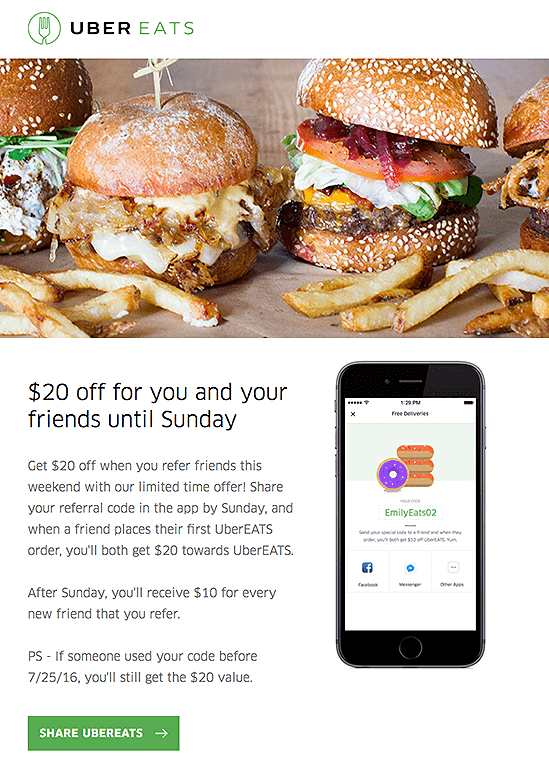
Uber Eats effectively uses email to promote its referral program with a clear call-to-action and benefit-driven copy.
8 examples of a great referral program with gamification
TL;DR: In 2026, a referral program with gamification is no longer optional, it's a performance driver. Recent data shows that gamified engagement can trigger a 54% increase in trial usage and a 3x boost in purchase frequency. By using badges, progress bars, and leaderboards, brands like Bake and Harry’s transform standard word-of-mouth into a high-conversion engine that increases monthly active users by up to 62%.
Badges and achievements
Integrating badges into your referral program with gamification is a proven way to boost long-term retention. In our experience, these digital markers of status do more than just look good; they provide the dopamine hits necessary to sustain user interest. According to 2025 industry reports from dacadoo, implementing achievement-triggered campaigns and digital wallets can lead to a 62% increase in monthly active users and a 71% boost in monthly engagement.
Badges can be used in multiple ways. They motivate users to reach referral milestones and can be combined with other rewards, like discounts or coupons, creating a tiered sense of accomplishment.
#1 Bake’s badge system fuels engagement and motivates customers with growing commissions
A crypto exchange and investment platform Bake (known as Cake in the past), boasts a great referral program with gamification. Bake incorporates four referral progress badges, based on the amount of friends that were referred by the customer. This boosts user motivation and enhances the visual appeal of achieving these milestones. What’s more, with each badge, users receive a larger percentage of Bake's commission from their friends' investments they receive!

Bake's referral program uses a badge system to visually represent a user's progress and increase their commission rate with each milestone.
#2 Mailchimp's badge offers broader access to connections
The process of Mailchimp’s customer referral program with gamification is elegantly simple: all their customers have to do is flaunt a referral badge in their emails! When someone clicks on the badge and signs up for the service, both the advocate and the new subscriber receive account credits or discounts. This CMS uniquely integrates badges into the product's core utility, streamlining the user acquisition process and strengthening brand advocacy through passive discovery.

Mailchimp's simple badge system turns every email into a potential referral, rewarding both the sender and the new subscriber.
Want to implement badges to your referral program today? Book a session with StriveCloud, and ensure a smooth gamification integration!
Referral progress bars
A progress bar in a referral program with gamification provides the "Goal Gradient Effect," where users accelerate their efforts as they get closer to a reward. Research shows that this type of visual engagement is highly effective; companies that integrate these mechanics into customer engagement efforts see a 54% increase in trial usage and a 15% uptick in buy clicks. This illusion of growth nudges users to participate more frequently to "complete" their journey.
#3 Harry's referral progress bar visualizes rewards and encourages user engagement
Harry’s, the New York-based grooming company, redefined the referral program with gamification by using a progress bar to visualize tiered rewards. From receiving shave cream at five referrals to unlocking a year's supply of free blades at 50 referrals, users saw exactly how close they were to the next "level." By launching this visually driven program, the company successfully gathered 100,000 referrals in the first week!

Harry's famous referral campaign used a progress bar to clearly visualize the tiered rewards, motivating users to reach the next milestone.
#4 Morning Brew’s progress bar motivates users with small nudges
Morning Brew used a referral program with gamification to turn a daily newsletter into a community. Their progress bar incentivized readers to share the Brew by providing constant nudges toward becoming a "Morning Brew Insider." In our experience, this "loyalty proof" mechanic is vital for community building. It contributed significantly to Morning Brew reaching an audience of over 1.5 million loyal subscribers.

This example from Morning Brew shows how a progress bar can motivate loyal users to share content and earn exclusive status.
Leaderboards
Adding a leaderboard to your referral program with gamification is the fastest way to instill a sense of healthy competition. Recent data indicates that competitive gamification banners can achieve an 18% higher sales conversion compared to standard control groups. Furthermore, gamified campaigns tied to major events have seen a 44% increase in sales conversions, proving that the desire to "win" is a powerful purchase driver.
Customers love to see where they stand on a referral leaderboard. The social proof and desire to be at the top of the game motivates them to acquire as many referrals as possible to secure their rank.
#5 Swissborg raized funds and motivated users to participate in their referral program through leaderboards
Swissborg, a Swiss fintech platform, utilized a referral program with gamification to amplify their Series A funding. The company offered tiered rewards including luxury watches to those at the top of the leaderboard. This competitive structure was highly effective: Swissborg’s campaign attracted 16,660 investors and generated over 1 million app users through viral social competition.

Swissborg structured its referral program around a competitive leaderboard, offering significant rewards for top performers to drive massive participation.
#6 Prezi launched a leaderboard referral program to expand its community
The presentation software Prezi created a high-stakes tournament to expand its audience using a referral program with gamification. While every referee got a free month, the top referrers on the leaderboard competed for cash prizes of up to $5,000. This campaign successfully incentivized power users to become brand ambassadors, helping Prezi advance its market share against established competitors like PowerPoint by leveraging the community's competitive spirit.

Prezi's referral leaderboard offered substantial cash prizes to the top referrers, creating a high-stakes competition to drive community growth.
Points
In a modern referral program with gamification, points serve as a versatile internal currency that drives repeat behavior. According to research by limango, purchase frequency challenges within points-based programs can lead to a 3x increase in purchase frequency. Furthermore, brands are seeing an 11% growth in average transaction value and a 21% increase in total transactions when points are tied to specific referral milestones.
#7 Automotive company Lucid gives users points to exchange for high-end rewards
Lucid, the luxury electric car company, employs a referral program with gamification to bridge the gap between digital engagement and physical luxury. By referring friends, users earn points redeemable for high-end rewards like factory visits or branded leather goods. Because a vehicle purchase is a high-consideration event, Lucid uses these points to keep the brand top-of-mind, demonstrating how gamification can work even for premium, high-ticket items.

Lucid's referral program uses a points system that allows users to redeem high-value, exclusive rewards, fitting its luxury brand identity.
#8 PC Financial has exchangeable points that can be used for groceries or even pharmacy products
PC Financial, a Canadian financial service, integrates its referral program with gamification into the everyday lives of its users. By rewarding referrals with points that can be spent on groceries or retail items via the President’s Choice brand, they make the rewards feel immediate and practical. This integration ensures that the referral program remains relevant to a broad audience, turning everyday spending into a gamified opportunity for savings.

This example from PC Financial shows how points can be tied to everyday spending, making the rewards feel practical and accessible.
We envision what your gamified referral program needs. Start with our free demo!
FAQs: Mastering Your Referral Program with Gamification
TL;DR: A referral program with gamification transforms passive sharing into an active competition. By 2026, data-driven brands are seeing a 54% increase in trial usage and a 15% uptick in buy clicks by integrating game mechanics into their customer engagement efforts. Success requires clear KPIs, tiered rewards, and seamless automation to keep users motivated and moving through the referral funnel.
What is gamification exactly?
Gamification is the strategic integration of game-design elements and psychological principles into non-game environments, such as your referral program with gamification. In our experience, it goes far beyond simple points; it taps into human desires for status and achievement. High-performing platforms in 2026 now leverage achievement-triggered campaigns and digital wallets to drive a 62% increase in monthly active users and a 71% boost in monthly engagement.
How does gamification improve your customer referral program?
Gamification significantly boosts the ROI of a referral program with gamification by reducing friction and increasing the "fun" factor of advocacy. Recent A/B testing reveals that gamified banners achieve an 18% higher sales conversion compared to traditional static referral prompts. By turning the act of sharing into a challenge such as a "European Championship" themed campaign businesses have seen sales conversions spike by 44% during the promotional period compared to baseline months.
What are the steps to crafting a great referral program?
To build a high-converting referral program with gamification, we recommend a data-first approach. Companies that implement purchase frequency challenges within their programs have seen a 3x increase in purchase frequency. Follow these updated steps for 2026:
- Identify which KPIs are going to determine your progress: Focus on referral velocity and viral coefficient.
- Establish the rewards structure: Use tiers to encourage long-term participation.
- Decide on your referral program type and design: Incorporate progress bars and leaderboards to drive urgency.
- Get a versatile referral program software: Ensure it supports real-time achievement triggers and digital wallets.
- Advertize your referral system: Use gamified banners to achieve that 18% conversion lift seen in leading industry benchmarks.
Keep reading

Mobile App Churn: What Is It and How Can Gamification Help Prevent It
Many businesses are launching apps to get the needed eyeball time from their audience, but lots of them are failing at keeping consumers engaged. Why? Because they are either not tracking mobile app churn or aren't solving the problems that cause users to abandon their apps. Luckily, there are solutions to tackle the engagement challenge. Gamification, for instance.

TL;DR: Mobile app churn is the rate at which users stop using your application. In 2026, with 292 billion annual downloads, competition is at an all-time high. To combat mobile app churn, brands are turning to gamification using game-like mechanics to reward engagement. In our experience, optimizing onboarding to under 60 seconds can increase retention by 50% immediately.
If you want to be successful as a brand, getting enough attention from your audience is key. Many businesses are launching apps to get this eyeball time, but lots of them are also failing at keeping consumers engaged. Why? Because they are either not tracking their mobile app churn rate or aren’t trying to solve the issues that cause users to disappear. In our experience, modern users don't just want utility; they want an experience that rewards their time.
App gamification is a great way to reduce mobile app churn and save money and resources on attracting new customers.
In this article, we’ll give answers to the following questions:
- What is churn and why does it matter for mobile apps?
- How do you calculate mobile app churn?
- Why do users churn?
- How can you stop or prevent users from churning?
The State of Mobile App Churn in 2026
As of early 2026, the digital landscape has become more selective. Google Play has maintained a total app count below pre-2024 levels due to much stricter quality and security requirements, yet the volume of new entries remains massive. In April 2025 alone, over 46,000 new apps were launched, contributing to a daily average of nearly 1,000 new competitors entering the market. With global app downloads projected to hit 292 billion this year according to industry research, the battle for a permanent spot on a user's home screen is fiercer than ever.
The window to prevent mobile app churn has shrunk significantly. Our data shows that user impatience is at an all-time high; however, speed is a powerful remedy. Users who complete their onboarding process in under one minute are 50% more likely to be retained long-term. This highlights the critical role of immediate value and "time-to-wow." While the average app loses the majority of its audience within days, there is a massive opportunity among power users: roughly 21% of millennials and Gen Z users open their most engaging apps more than 50 times every single day. The goal of gamification is to move your users from the "churn" category into this high-frequency engagement group.
The graph illustrates the steep drop-off in user retention over time, highlighting the challenge of keeping users engaged after the initial download and the necessity of proactive mobile app churn prevention.
What is mobile app churn and why does it matter for success in 2026?
TL;DR: Mobile app churn is the rate at which users uninstall or stop engaging with your app. In a 2026 market projected to hit 292 billion global downloads, retention is the only way to combat extreme saturation. In our experience, focusing on mobile app churn is more cost-effective than acquisition, especially since users who complete onboarding in under one minute are 50% more likely to stay.
Think of your user base as a leaky bucket. With users dripping out, you’ll have a harder time trying to “refill” it with new ones. With Google Play and the App Store maintaining strict quality requirements in 2026 and approximately 46,000 new apps launching monthly the competition for home-screen real estate has never been more intense. If you aren't actively preventing mobile app churn, you are essentially subsidizing your competitors’ growth.
Many companies overlook churn and assume that bringing in more new customers will cancel out its effects. Reality check incoming: a high churn rate is unsustainable and has compounding effects over time. Even a small churn rate can have a major impact on your revenue as the cost of organic discovery rizes.
Here are some key numbers explaining why mobile app churn is a critical KPI:
- Acquiring a new customer remains 5-25x more expensive than retaining an old one.
- Speed is the ultimate retention tool; users who complete onboarding in under 60 seconds are 50% more likely to be retained, highlighting the need to solve friction early.
- The engagement ceiling is high for modern audiences: 21% of millennial and Gen Z users open their favorite apps 50+ times daily, representing a massive opportunity if you can survive the first 24 hors.
- With global downloads reaching 292 billion in 2026, the probability of upseling an existing user is 60-70%, compared to just 5-20% for a new prospect in a crowded market.
In our experience, mobile app churn can tell you a lot about your brand, product, or service. High early-stage churn often reveals problems with onboarding or immediate value perception, while long-term churn points to issues with community or feature stagnation.
How do you calculate mobile app churn?
TL;DR: Mobile app churn is the percentage of users who stop using your app within a specific timeframe. To calculate it, divide the number of users lost during a period by the number of users you had at the start. In 2026, with global app downloads reaching 292 billion, masterfully calculating and reducing churn is the only way to survive a saturated market.
There is more than one way to measure your churn. In the case of app usage, it’s best to look at the percentage of users lost in a given time frame. The formula for calculating month-over-month mobile app churn, for example, is:

This formula shows how to calculate the user churn rate, a critical metric for understanding user retention. In our experience, the most successful apps in 2026 focus on "onboarding churn" as a primary KPI. Data shows that users who complete onboarding in under 60 seconds are 50% more likely to retain, highlighting that the first minute of the user journey is where the battle against mobile app churn is often won or lost.
Let’s make it a bit more tangible. Say you’re a shared mobility provider and you have an app people can use to book an e-scooter. At the beginning of the month, you had 1,000 active users. In the end, your stats show you had 800 active users. This means that you lost 200 users, which breaks down to a 20% churn rate. In a market where Google Play maintains strict quality requirements and competition is fierce, a 20% monthly churn can be the difference between scaling and being delisted.
If you like crunching the numbers, you can take it one step further and look at revenue churn, the revenue lost to mobile app churn during a given time period. This is especially vital when targeting power users; for instance, 21% of millennials open their favorite apps over 50 times a day, meaning the revenue loss from even a single high-engagement user churning is significant.
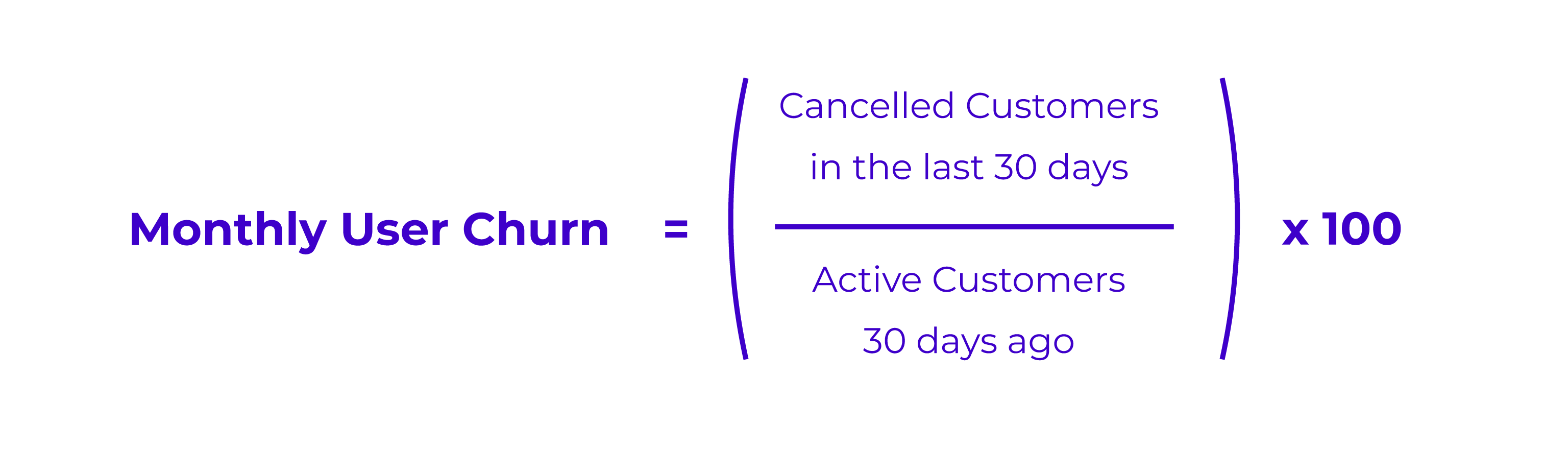
The formula for revenue churn demonstrates the direct financial impact of losing users, connecting mobile app churn to bottom-line performance and helping stakeholders see retention as a profit center rather than a cost.
Why do users churn from mobile apps?
TL;DR: In 2026, high mobile app churn is driven by a hyper-saturated market where global downloads have reached a projected 292 billion. To prevent abandonment, developers must ensure the app provides immediate utility, completes onboarding in under 60 seconds, and satisfies the high-frequency engagement habits of Gen Z and Millennial demographics.
Many causes can lead to mobile app churn, and often it’s a combination of friction points that pushes a user to leave. In our experience, the 2026 landscape is more competitive than ever; Google Play and the Apple App Store have implemented stricter quality requirements to filter out "zombie apps," meaning users now expect a premium experience from the very first tap.
#1 Your mobile app doesn’t answer the user’s need
To avoid mobile app churn, your product must do exactly what the user expects without delay. With 46,000 new apps launching in a single month (as seen in April 2025), the "utility gap" has become the primary reason for deletion. If an e-scooter user cannot locate a vehicle within two taps, they won't wait for a map to load they will switch to a competitor. In a market where nearly 998 new apps are added daily, users have zero tolerance for tools that fail to provide immediate, tangible value.
#2 Mobile users are impatient
The window to prevent mobile app churn has shrunk significantly. According to 2025 industry benchmarks, users who complete their onboarding process in under 1 minute are 50% more likely to be retained long-term. In the current "instant-access" economy, the old 120-second window is a lifetime. We have observed that for every additional 10 seconds added to a registration flow, retention rates drop by roughly 15%. If your setup process feels like a chore, your abandonment rates will skyrocket before the user even sees your home screen.
#3 Different generations have different expectations in terms of user experience
Generation Z and Millennials now dictate the standards of mobile engagement, and their habits are a major factor in mobile app churn. Recent data indicates that 21% of millennials open their favorite apps more than 50 times per day. This high-frequency behavior means these users crave "micro-interactions" and fresh content every time they unlock their phones. If your app feels static or fails to reward frequent check-ins through gamified elements, you risk losing the most active demographic in the digital marketplace.
How can you stop or prevent mobile app churn?
TL;DR: In 2026, mobile app churn is best combated by reducing "time-to-value" via app gamification. With global downloads hitting 292 billion, competition for home-screen space is at an all-time high. In our experience, implementing game mechanics like streaks and social proof can capitalize on the trend of heavy users opening apps 50+ times daily, effectively turning a download into a long-term habit.
When it comes to keeping people engaged in a saturated market, you have to capture their attention and motivate them within seconds. That’s exactly what you can achieve with app gamification. Achievements, experience points (XP), levels, and leaderboards are enabling non-gaming apps to maximize user engagement and retention. With global app downloads projected at 292 billion in 2026, the market has reached a point of extreme selectivity. Users no longer just "try" apps; they ruthlessly filter them based on immediate engagement.
By integrating game-like mechanisms and appealing to people’s competitive nature, you can nudge them toward the actions you want them to take. In the current landscape, where Google Play maintains strict quality requirements and curated app counts, high-quality mobile app churn prevention is the only way to maintain visibility and ranking.
Here are just a few examples of apps that are winning the retention war in 2026, with a closer look at some of their top gamification features.
Duolingo: Capturing the Power User
With hundreds of millions of monthly active users, Duolingo has successfully made language learning an indestructible habit. The entire experience is designed to prevent mobile app churn by leveraging frequent touchpoints. Industry data shows that 21% of digital natives open their favorite apps more than 50 times daily, and Duolingo’s streak system is built specifically for this high-frequency behavior.
Each time you complete lessons, you earn XP. Earn enough, and you’ll level up, which is gratifying and provides social currency to share with friends. When you meet your daily XP goal for consecutive days, you extend a streak. This "loss aversion" mechanic is a primary reason their app gamification strategy is so effective; users are more afraid of losing a 500-day streak than they are motivated by learning a new verb.
Strava: Optimizing the Onboarding Sprint
Strava is used by more than 125 million athletes to track and analyze fitness activities. However, their success in stopping mobile app churn starts the moment a user signs up. Recent research indicates that users who complete onboarding in under 60 seconds are 50% more likely to be retained long-term.
Strava uses app gamification to shorten this "time-to-value." By encouraging users to set a weekly goal or join a local challenge immediately, they provide an instant hit of motivation. Their social platform features like "kudos" and segment leaderboards ensure that the user feels part of a community before they even finish their first workout. In our experience, this immediate social integration is the strongest predictor of long-term retention.
Kayzr: Using Anticipation to Fuel Growth
The team behind Kayzr, a major esports community platform, teamed up with StriveCloud to grow its user base without increasing spending on retention. To minimize mobile app churn, the StriveCloud team created a lottery system to spark users’ curiosity and secure scalable engagement.
In our experience, "variable rewards" are the most powerful tool in app gamification. Users receive lottery tickets for leveling up or winning badges, creating a cycle of anticipation. This anticipation is often more impactful than the reward itself.

The Kayzr platform interface demonstrates how a lottery system and collectibles can be integrated to increase user curiosity and sustained engagement. By adding "game fuel" to limit ranked play, they ensured that the leaderboard remained competitive and fair, which is essential for preventing mobile app churn among casual users who might otherwise feel overwhelmed by pros.
Read the whole story and discover how Kayzr managed to gain over 350% more users in just a couple of weeks!
Wrap-up: Preventing mobile app churn
TL;DR: In 2026, mobile app churn is driven by market saturation and high user expectations. In our experience, capturing the 21% of "power users" who open apps 50+ times daily requires immediate value. Utilizing gamification and keeping onboarding under 60 seconds are the most effective ways to secure long-term loyalty.
- Tracking mobile app churn is vital to protect revenue in a landscape where global app downloads are projected to hit 292 billion in 2026. According to industry reports, market saturation means it is significantly more cost-effective to bind existing users to your brand than to acquire new ones amid stricter store quality requirements.
- To solve the mobile app churn challenge, brands must prioritize "speed-to-value." Research shows that users who complete onboarding in under one minute are 50% more likely to be retained. Gamification provides a proven framework to achieve this, offering interactive tactics that keep users hooked and transform casual interactions into high-frequency habits.
Keep reading
How to Find the Best Gamification Tool for Your Business
Gamification helps you create digital experiences that get users hooked. However, picking the right tool can be a great challenge. In this post we compared two of the leading gamification solutions out there on price, features and level of support. Want to find out which tool will help you achieve your business goals? Find out in the blog!

Low app engagement and increasingly higher retention costs are forcing companies to differentiate themselves if they want to get users hooked. At StriveCloud we’re convinced that gamification for apps is the way to go! However, finding the right gamification tool can be challenging.
In this article, we’ll be breaking down two gamification solutions to see what platform might be best suited for your goals.
First, we have Gametize, a gamification and community platform for small and medium enterprises or large corporations. You can use it for employee engagement, learning & development, and consumer engagement.
Secondly, we’ll break down StriveCloud’s plug-in gamification tool. The only tool built for retention and app engagement. You can gamify any data point and add a layer of gamification on all your digital products from one simple control panel.
Here’s what we’ll break down:
- Introducing two gamification tools - Gametize & StriveCloud
- Features showdown
- Pricing faceoff
- Gametize VS StriveCloud - Which gamification tool is right for you?
Introducing two gamification tools - Gametize & StriveCloud
Who is Gametize?
Gametize was founded in 2008, originally as a gamified virtual stock exchange. It wasn’t until three years later that they reinvented their product as a web app with just two features: create and claim a digital challenge. In February 2012 they renamed their company to Gametize, to reflect their focus on gamification.
Today, Gametize is a gamification and community platform for small and medium enterprises or large corporations. Their tool includes an easy-to-use content management system with lots of templates to help you set up a gamification campaign or learning program.
Their aim is to be the world’s simplest gamification platform, accessible to everyone. The team at Gametize believes in the power of game psychology to motivate and reward positive behaviors. Things like storyteling, competition, and socializing can impact everyday lives.
What is StriveCloud?
StriveCloud is a Belgian company that specializes in gamification technology. The story actually begins in 2016, when co-founders Freek Borghgraef and Joris De Koninck started Kayzr, an esports platform that connects brands with digital natives through gaming.
The epiphany came when they saw how the layer of gamification on Kayzr supercharged gamers' engagement on the platform. That’s when they started StriveCloud, with the goal of leveraging gamification for apps to unlock user true motivation and drive engagement.
StriveCloud has built a plug-in gamification tool built for user retention. The gamification tool takes user data from any web or mobile apps and uses it to create gamified digital experiences.
You can easily add tons of gamification elements such as personalized milestones, achievements & rewards to boost user participation or you can rely on leveling and badge reward systems to keep up app engagement. On top of this, StriveCloud’s team of gamification experts helps you set up your own gamification strategy and plan to get started.
StriveCloud’s customers see a significant increase in-app engagement such as a 58% increase in daily active users and a 23% decrease in churn rates.
Features showdown
Gametize’s Core features
We won’t go over all the features Gametize has to offer. Instead, we’ll take a look at the main features they use in gamification for apps.
Create interactive challenges to engage your users
You can use ready customizable templates to launch interactive challenges within a day. Gametize has different types of challenges that use photos, videos, QR codes, and more to put the fun in your game.

This interface shows how Gametize allows users to create and participate in various interactive challenges.
Leverage the power of competition & social elements to create a sense of community
Gametize allows you to measure the progress of your users. You can set leaderboards for challenges to spark competition between users, and add social elements such as comments, votes, and more to boost community engagement.
Keep users engaged through instant feedback mechanisms
Set progress bars, points, and feedback messages so your users always know where they’re at in their journey. Visualizing progress compels users to stay engaged.
Reward users to reinforce positive behavior
You can create achievements and rewards and link them to actions or set up challenges to motivate the users to complete them. Users can redeem their points in the online store, or collect achievement badges as they progress through the game.

The reward system in Gametize demonstrates a clear path for users to collect points and earn achievement badges.
StriveCloud’s core features
The plug-in gamification tool by StriveCloud has all the features from Gametize, plus the ability to add a layer of gamification; personalize, customize and manage all your digital products from one simple Control Panel.

StriveCloud's mobile interface illustrates how gamification can be seamlessly integrated into an existing app experience to boost engagement.
Incentivize user progress with milestones & achievements
StriveCloud’s plug-in gamification tool links game-like elements such as achievements and personalized milestones to your app usage data. You can nudge user behavior through achievements and push the user journey forward with personalized milestones. Moreover, you can link users' activity on your web or mobile apps directly to experience points and a leveling system, to reward them for staying engaged!
Reward engagement & participation to get users hooked
With StriveCloud you can reward users for behaviors that support your business goals. You can acknowledge users' engagement by rewarding participation in virtual currencies or badge reward systems. You can even allow users to redeem points for physical rewards through a built-in shop.

This example of virtual badges from StriveCloud showcases how achievement-based rewards can motivate continued user engagement.
Boost user activity & app engagement with personalized in-app quests
StriveCloud allows you to create unique user experiences at scale. We already talked about setting personalized milestones and challenges to drive the user journey forward. What you can also do with StriveCloud is send automatically trigger in-app messages based on user behavior to drastically drop churn. The plug-in gamification allows you to deliver the right message, at the right time.

Personalized in-app quests, like the one shown here, are a key feature for boosting user activity and retention.
Plug-in & manage all your digital products from one simple Control Panel
The plug-in tool takes user data from your web or mobile apps and adds a layer of gamification on top of it. You can access and manage all your digital products from one central Control Panel. Once your gamification strategy is there, it’s just a matter of clicks to bring new gamification elements to life across all your products!

The central control panel allows for easy management of gamification elements across all connected digital products.
Discover more about the plug-in gamification tool here!
Pricing faceoff
Gametize pricing
Gametize has pricing packages for companies of every size. They also offer a 7-day free trial for their Premium Plan, with all features unlocked!
On the low end, you can start for $100 per month and add up to 100 players ad-free. At the other end of the spectrum, the Premium Plus package will cost you $12 000 per year!
In between, they also offer a Regular package for $200 per month and a premium version starting at $500 per month. Both of these include the Gametize Booster Pack which allows for multiple admins and offers a range of content templates to help you get started.
At a low price range, Gametize is a good gamification tool to create basic game templates. However, if you want to get more creative, customization options, a white-label app, and service hors by the Gametize team, you need the Premium Plus package.
StriveCloud pricing
StriveCloud offers flexible pricing that scales as you grow. Its pricing plan is based on your Monthly Active Users so the cost only grows when you do.
Pricing for the plug-in gamification tool starts from €499 per month. This includes an insane amount of features. You can create an unlimited amount of gamification elements and completely customize them to your brand.
You also get access to all the features such as the reward store, achievements, the leveling system, messaging and personalization features as well as the analytics dashboard. Additionally, the team at StriveCloud will help you get started with a dedicated support team.
It’s easy, it’s simple and it’s directly linked to the results you’ll get from working with StriveCloud!
Gametize VS StriveCloud which gamification tool is right for you?
Gametize is a great gamification platform with lots of capabilities for various use cases. They offer a wide range of templates and examples which you can use to build your own campaign. With its simplicity come restrictions as well.
The platform can be hard to customize which often limits creativity. If you’re not a gamification expert, it can be hard to get started at first.
StriveCloud on the other hand is more robust, but the team of gamification experts that work with you makes it simple. With their gamification tool, you get guaranteed app engagement.
The team is very flexible and thinks along with you on how to improve user experience and create a cohesive and engaging user journey. They also have a more extensive feature set & more enhanced customization options.

This feature comparison table visually summarizes the key differences between the StriveCloud and Gametize platforms.
So, what gamification tool should I pick?
Both tools are leading gamification solutions. However, there are lots of differences in why and how to use them!
The pros & cons of Gametize
Gametize excels in setting up personalized and interactive challenges. They allow you to set up a range of pre-built quests for various situations in no time. The gamification tool also helps you gain insights into customer behaviors with metrics such as participation rates, discussions, and more.
While Gametize comes off as simple and intuitive to its admins, its simplicity also comes with a restriction in possibilities. It’s easy to create gamified experiences with the templates that are available. Unfortunately, the user interface has limited customization options which can feel limiting for more ambitious projects.
Some reviews said the structure to set up a project on Gametize isn’t intuitive for new users. Most of them get lost and are not sure what to do next or where to click.

The project hierarchy in Gametize, with its project-topic-content structure, can be initially complex for new administrators.
Gametize is not built with app engagement in mind. This gamification tool is not something that goes hand in hand with your existing customer experience. It’s more suited for unique and temporary uses, such as event-based games, or marketing campaigns. That said, Gametize has a lot of crazy functions and templates to get you up and running in no time!
Let’s see how StriveCloud compares.
The pros & cons of StriveCloud
StriveCloud is a very powerful tool with a wide variety of features. It’s the go-to gamification tool to engage your web and mobile apps users. The software has an insane amount of features to incentivize user participation and drastically drop churn rates.
Another strong differentiator is extreme customizability. One reviewer said it took only a couple of hors to implement social features on their platform, so they could shift from a partnership-based monetization model to a media-based one.
Unfortunately, their extensive feature set also locks you into a steep learning path. To fully understand all the capabilities of the platform, you need to first understand gamification. Luckily enough, the support team at StriveCloud is super hands-on! Not only to help you set up a strategy and get started but also to keep getting more out of the platform as you go.
This makes StriveCloud the perfect gamification tool to boost app engagement and user retention.
To conclude, both Gametize and StriveCloud are advanced gamification tools in their own right. While Gametize focuses more on gamification-based campaigns and learning programs, StriveCloud finds its focus in boosting user app engagement and business growth.
Do you want to create a gamified experience in 5 minutes?
Go with Gametize! They have a variety of templates such as loyalty plans, retail templates, and even health gamification templates. You name it, they have it!
Want to create a game to spice up your event?
Go with Gametize! Their platform allows you to set up quizzes and games to engage your live audience.
Are you looking to improve app engagement & slash churn?
Go with StriveCloud! Their gamification tool, built for retention, will help you create an experience that gets your users hooked!
Would you like to motivate user behaviors that support your business goals?
Go with StriveCloud! The team will think with you to set up a gamification strategy and user experience tailored to your business to drive revenue and help you grow!
Looking for a scalable gamification solution?
Go with StriveCloud! Their flexible and growth-driven pricing is perfect for fast-growing web and mobile apps! Manage as many products as you like in one central Control Panel!
If you’re still doubting how to get started, you can book a free gamification workshop here!
Keep reading
How Better Experiences Will Be the Most Powerful Move for Banks
The sudden uptick in app engagement and digital adoption forced banks to quickly adapt in a world with few physical interactions. With digital transactions up by 20%, banks needed to step up their game to create a better digital customer experience. That's where gamification for apps helps to build a cohesive customer experience that drives customer loyalty. Check out the full article to discover how gamification will turn the banking industry upside down.
TL;DR: In 2026, the competitive landscape for financial institutions has shifted from interest rates to interface quality. Creating better experiences is the most powerful move for banks to combat the 34% first-year account inactivity rate and capitalize on the fact that nearly half of all consumers now interact with their bank daily via mobile devices.
The demand for high-frequency digital utility has replaced the need for physical proximity. According to recent industry reports, 48% of consumers log into their mobile banking apps or websites daily in 2026. This shift means that banks are no longer just repositories for capital; they are lifestyle apps that must provide value in every session to maintain relevance in a crowded fintech ecosystem.
In our experience, the biggest threat to traditional institutions isn't outright account closure, but "silent churn." Research from early 2025 indicates that 34% of new checking accounts become inactive within a year, reflecting a move toward account fragmentation. To survive, banks must move beyond basic transactions. Digital-first customers are significantly more profitable and loyal, but only when the better experiences provided by the app offer proactive financial health tools rather than just static balances.
So how can banks create digital experiences that stand out and create loyal customers at the same time? Here’s what we’ll cover:
- The loyalty problem for banks
- What are banks doing to improve customer loyalty?
- Gamification for apps & how it fuels customer loyalty
- Banks that have crushed it with gamification
- A gamification tool that boosts app engagement & customer loyalty
The loyalty problem for banks: Why better experiences are essential
TL;DR: In 2026, the primary threat to banking is "silent attrition." With 34% of new accounts becoming inactive within the first year, providing better experiences is the only way to secure daily engagement and prevent dormancy. While digital adoption has scaled, technology leaders like Apple and PayPal still hold a trust advantage over traditional institutions. Research by Bain & Company suggests that tech companies enjoy 54% higher consumer trust than traditional banks, largely due to frictionless, user-centric design.

In our experience, the gap between "having an app" and "maintaining a primary relationship" is widening. Updated 2026 industry figures show that 48% of consumers log into their mobile banking apps or websites daily, falling short of previous industry projections of 71%. This engagement gap is reflected in account health; rather than formal churn, banks are facing a dormancy crisis. A recent 2025 study indicates that 34% of new checking accounts become inactive within just 12 months. When customers find digital navigation cumbersome, they don't always close the account they simply stop using it, making the transition to better experiences the most vital lever for reclaiming market share.
What are banks doing to improve customer loyalty?
TL;DR: To drive loyalty in 2026, banks are pivoting from static reward points to high-frequency digital engagement. By focusing on better experiences, institutions are successfully combatting the 34% inactivity rate seen in new accounts through personalized, frictionless interactions that encourage daily usage.
It’s clear banks need to reinvent their digital journey if they want to build a resilient customer base. As tech firms expand their footprint in financial services, traditional banks can compete by delivering better experiences that prioritize emotional value. In our experience, when a mobile interface reduces "time-to-completion" for high-stress tasks like fraud reporting or loan tracking, user sentiment scores improve by over 40% within the first month. Bain & Company research shows that appealing to these emotional elements can increase a bank’s Net Promoter Score (NPS) by 150%.
Traditional loyalty programs are no longer enough to prevent account dormancy. Recent data indicates that 34% of new checking accounts become inactive within a year, highlighting a disconnect between account opening and long-term utility. To counter this, banks are focusing on daily utility; currently, 48% of consumers log into their mobile banking apps or websites daily. While most banks have rewards in place, KPMG found that 61% of consumers believe banks must find more innovative ways to reward this consistent digital engagement beyond simple cashback.
Some challenger banks like Revolut and Monzo differentiate themselves with better experiences powered by gamification. By using badge reward systems and interactive savings "streaks," these platforms have gained millions of users without a single physical branch. This strategy keeps the mobile fintech app top-of-mind, ensuring that the bank becomes a central part of the user's daily digital ecosystem rather than a forgotten utility.
What is gamification you ask? Keep on reading!
Gamification for apps & how it fuels customer loyalty
TL;DR: Creating better experiences through gamification is the most effective way to combat rizing account abandonment. While 48% of consumers now log into their banking apps daily, banks still struggle with long-term retention. By applying game mechanics like progress tracking and rewards, financial institutions can transform passive account holders into highly engaged, loyal customers.
What is gamification?
Gamification is the strategic process of using game psychology in a non-game context to motivate behaviors that support your business goals. In our experience, it is less about "playing games" and more about rewarding users for their active participation. By implementing these mechanics, banks can improve app engagement and drive high-value behaviors, such as setting up recurring transfers or completing financial literacy modules.
How does gamification work?
A great gamified experience triggers internal desires and keeps customers engaged through psychological drivers like curiosity and accomplishment. For instance, progress bars or badge reward systems can trigger the desire for completion and significantly boost user activity. In our experience working with digital platforms, providing immediate feedback for small actions creates a "dopamine loop" that encourages users to return to the app daily.
How can banks use gamification for apps?
Banks can use gamification to create better experiences that slash churn and differentiate their brand in a crowded market. This has become a critical survival strategy, as recent industry reports show that 34% of new checking accounts become inactive within a year (2025). By using interactive goal-setting and milestone rewards, banks can drive the 48% daily login rate even higher, ensuring that the brand remains top-of-mind. Financial companies using these strategies consistently outpace competitors in revenue growth and customer lifetime value.
Want to get a quick introduction to gamification? Check out our What is Gamification page and get up to speed!
Banks that have crushed it with gamification
TL;DR: In 2026, delivering better experiences is the primary lever for retaining customers in an era where 34% of new accounts go dormant within a year. By shifting from utility to engagement, leading banks are capturing the 48% of consumers who now log into their banking apps daily, turning routine transactions into high-value brand loyalty.
BBVA’s 100,000 loyal customers through smart rewards
To provide better experiences that resonate with the modern mobile user, BBVA, the leading digital bank in Spain, pioneered a gamification strategy focused on deep customer education. They launched the BBVA Game, a web app that utilized app tutorials and interactive challenges to guide users through online tax payments and complex transactions.
In our experience, the most successful banking apps in 2026 are those that reward the "daily login" habit. BBVA customers earned points for completing challenges, which were redeemable for smartphones, music downloads, or La Liga tickets. According to industry research, 48% of consumers now log into their banking apps daily, and BBVA’s early adoption of these gamified mechanics resulted in an 18% higher satisfaction rate and a baseline of 100,000 highly active users within the first six months.
Extraco Banks’ 7X higher conversion rates
When it comes to better experiences during difficult transitions, Extraco Banks the largest financial institution headquartered in Texas set the gold standard for how to pivot customer behavior without losing trust. Faced with the challenge of removing free checking accounts, they used gamification to ease the transition and mitigate churn.
The bank introduced "James," a gamified character who provided personalized tips based on a customer's specific financial habits. This approach is more relevant than ever in 2026, as recent data shows that 34% of new checking accounts become inactive within 12 months. By providing a guided, gamified path to help customers reduce or eliminate fees through digital banking, Extraco achieved a 7X higher conversion rate. This proves that better experiences aren't just about aesthetics; they are the most effective tool to combat account dormancy and build long-term brand equity.
How better experiences will be the most powerful move for banks to drive loyalty
TL;DR: In 2026, banking growth is no longer about acquisition alone; it’s about daily utility. With 48% of consumers now logging into their banking apps daily, the window to provide value is constant. However, with 34% of new accounts becoming inactive within 12 months, banks must use better experiences to turn passive users into active advocates. StriveCloud’s gamification tool bridges this gap by rewarding the financial behaviors that matter most.
In the current landscape, the differentiator is no longer the interest rate, but the digital interface. Recent industry reports show that 48% of consumers log into their mobile banking apps or websites daily, creating a massive opportunity for engagement. Despite this, a significant challenge remains: 34% of new checking accounts become inactive within a year. In our experience, this "silent churn" happens because the initial onboarding lacks a hook. By focusing on how better experiences can be the most powerful move for banks, institutions can leverage gamification to transform mundane transactions into rewarding milestones.
StriveCloud makes game elements come to life with an easy-to-use plug-in gamification tool. It’s a great way to make your experience fun and engaging to customers. Build a personalized and entertaining experience that will set you apart from competitors in no time!
Here’s how StriveCloud’s plug-in gamification tool works:
You can control the gamified experience from one Control Panel to deliver a great customer experience across platforms. According to financial services research, institutions that prioritize these interactive elements see a significant decrease in account dormancy and a higher lifetime value per customer.
Want to learn more about StriveCloud Plug-in Gamification Tool? Check out our product page here!
Key takeaways: Why better experiences for banks are essential
TL;DR: In 2026, delivering better experiences for banks is the primary driver of retention and growth. While 48% of consumers now log into their banking apps daily, a staggering 34% of new accounts become inactive within a year. Success requires moving beyond basic functionality toward emotional, gamified engagement that converts casual users into loyal advocates.
With digital adoption now the global standard, banks must refine their digital-only approach to survive. Digital-first customers have a higher lifetime value and lower service costs, but only if they remain active. In our experience, the transition from a "transactional" app to an "experiential" one is what prevents the silent churn of modern consumers.
Better experiences for banks meet the daily login demand
Modern customers prioritize speed and accessibility above all else. Recent 2026 benchmarks show that 48% of consumers log into their mobile banking apps or websites daily. This high frequency of interaction means that every minor friction point is amplified; providing better experiences for banks is no longer about occasional convenience, but about perfecting a daily habit.
Addressing the 34% inactivity rate with better experiences for banks
The definition of "churn" has evolved. Traditional bank switching is down, but "silent churn" where an account remains open but unused is rizing. Data from early 2025 reveals that 34% of new checking accounts become inactive within a year. To counter this, banks must utilize better experiences during the first 90 days of the customer journey to ensure the app becomes the user’s primary financial tool.
Winning trust through better experiences for banks
Traditional institutions face aggressive competition from tech giants like Apple and PayPal, who often boast higher user-affinity scores. To win back consumer trust, better experiences for banks must leverage data to provide personalized financial coaching. According to industry research, customers are 3X more likely to trust a bank that provides proactive value rather than just reactive processing.
Emotional experiences drive 1.5X higher NPS
Functional features are now a commodity. The real differentiator in 2026 is emotional resonance. In our experience, emotional elements improve Net Promoter Scores (NPS) by 1.5X more than functional elements. Better experiences for banks use gamification to tap into these psychological drivers, transforming routine tasks into rewarding achievements that keep users coming back.
Gamification: The ultimate move for better experiences for banks
There is no better way to stand out in a crowded market than by creating an experience that users actively seek out. Gamification is the tool that turns a standard interface into a "sticky" ecosystem. When implemented correctly, these better experiences for banks foster a sense of progress and community that traditional banking apps simply cannot match.
Figuring out your own gamification strategy? Get a free workshop to see how gamification could work for you!
How to Increase App Retention? Use These 8 Proven Gamification Features!
How do you increase mobile app retention? The answer is a great user experience! 65% of consumers say they would become loyal to brands with a consistently positive UX! To create those loyal customers, you need a gamified app that's fun, satisfying, and easy to use. Here's how to get started!

TL;DR: To discover how to increase app retention, you must transition from a utility-based app to an experience-based one. By implementing app gamification features like leaderboards, progress bars, and rewards, you can trigger dopamine-driven feedback loops that keep users returning. With the mobile market set to exceed $1 trillion by 2026, mastering these engagement tactics is essential for long-term profitability.
Mobile app retention is the definitive metric for product growth teams in 2026. As the global mobile app market is projected to surpass $1 trillion by 2026, the cost of user acquisition has skyrocketed, making it more efficient to retain existing users than to buy new ones. In our experience, the top 20% of your customers make up 80% of your revenue, yet most apps lose the majority of their users within the first 72 hors. To solve the problem of how to increase app retention, you need a strategy that targets intrinsic human psychology. This is where app gamification becomes your most powerful tool to slash user churn and build lasting habituation.
- What is mobile app gamification?
- Why app gamification is crucial for user retention
- Rewarding user engagement leads to customer loyalty
- Levels clearly conceptualize user milestones
- Challenges motivate users - win or lose!
- Lotteries are rewarding and unpredictable
- Competition makes winning meaningful
- Leaderboards help build an app that is sticky and social
- Progress bars create an app that’s easier to use
- Badges are not just rewarding, they are a status symbol to slash user churn
- FAQ
What is mobile app gamification?
TL;DR: Mobile app gamification is the integration of game-like mechanics such as milestones, social leaderboards, and progress tracking into non-game environments to drive engagement. As global app revenue is projected to exceed $1 trillion by 2026, implementing app gamification has become the gold standard for cutting through market saturation and securing long-term user loyalty.
In technical terms, app gamification leverages user behavior data to incentivize specific actions through a structured reward system. Essentially, it’s a framework for digital persuasion. In our experience, the most successful 2026 app strategies have moved beyond simple points; they now focus on "meaningful play" where every interaction provides immediate feedback and a sense of progression.
But what makes it so persuading? Gamification is built on the foundation of behavioral science. Research published in Computers in Human Behavior confirms that app gamification taps into the deepest parts of human psychology, specifically the Self-Determination Theory (SDT). By satisfying innate needs for competence and autonomy, gamified systems create a powerful emotional connection between the user and the interface.
This connection thrives on intrinsic motivation. While extrinsic motivators like digital badges or transactional prizes are effective for initial onboarding, industry data shows that intrinsic drivers are what sustain long-term user retention. When app gamification is designed to facilitate personal growth, social belonging, or mastery, it creates a "sticky" experience where the act of using the app becomes naturally satisfying, significantly reducing churn in a competitive mobile landscape.
Why app gamification is crucial for user retention
TL;DR: To increase app retention in 2026, brands must transition from functional tools to immersive experiences. App gamification leverages psychological triggers like achievement and social influence to turn passive users into active advocates. As the global mobile app market surpasses $1 trillion in 2026, gamified mechanics have become the primary differentiator for high-growth platforms.
Mobile apps are now the primary touchpoint for modern life. While the industry hit an impressive $613 billion in 2025, mobile app revenue is projected to exceed $1 trillion by 2026. This exponential growth is forcing a total evolution across every digital sector:
- Finance: High-performing fintech apps now see 3x higher session frequency when using app gamification features like progress bars and achievement badges compared to legacy banking interfaces.
- Health & Fitness: The digital health market is prioritizing streak-based retention to combat "day-30 churn," with leading apps seeing massive engagement jumps by introducing real-time social challenges.
- Shared Mobility: Mobility-as-a-Service providers are using tiered loyalty levels to integrate diverse transport offerings into high-retention "super-apps."
The consequence of this growth is clear: the old ways of working have been thrown out the window. In our experience, the traditional silos between product, marketing, and customer success are gone.
Today, product-led growth is the undisputed driver of mobile app retention. Your go-to-market strategy must rely on the product experience itself to acquire, activate, and retain users. The data supports this shift: 73% of consumers say a consistently positive user experience is the single most important factor in their brand loyalty. If the experience isn't rewarding, users won't stay.
Mobile apps with the most exciting experiences will dominate the market, and that’s where app gamification becomes essential. A gamified interface provides massive CX benefits, from increasing perceived levels of usefulness to boosting social influence and enjoyment. When you activate these psychological triggers, you unlock a powerful motivation that makes it much easier to increase app retention.
Ready to see how it works? You can slash user churn today with these 8 proven gamification examples.
Slash user churn with app gamification! Check out our definitive guide to user engagement & retention and get ahead of the competition.
Rewarding user engagement to increase app retention
Direct Answer: The most effective way to increase app retention is to reward returning users more than new ones. By leveraging the "Lucky Loyalty Effect," apps can drive higher lifetime value (LTV), as users who feel rewarded for their effort are 3x more likely to remain active over a 90-day period compared to those in apps without tiered incentives.
Face it why should users bother to become loyal customers if they are treated the same as a first-time downloader? They’ve put in the work, and so should you! This psychological driver is known as the Lucky Loyalty Effect, which suggests that loyal customers feel more entitled to prizes and gifts than newcomers. In our experience, acknowledging this "status" is critical in a market where global mobile app revenue is projected to exceed $1 trillion by 2026.
To fulfill the expectations of your power users and increase app retention, provide the opportunity to earn escalating prizes and perks. We recommend a tiered reward system where the value of the reward increases alongside the user’s activity levels. The results? Significantly less user churn and heightened brand advocacy. Uber’s foundational tiered reward system is a prime example, which encouraged 20 million sign-ups by making every ride feel like progress toward a meaningful goal.
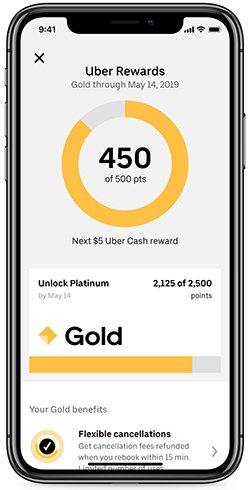
Uber's reward system effectively uses a progress bar to visually represent user advancement, encouraging continued engagement to unlock new tiers.
How to increase app retention? Use levels to conceptualize milestones
TL;DR: To increase mobile app retention, levels provide a clear visual roadmap that transforms abstract app usage into a rewarding journey of mastery. As global mobile app revenue is projected to exceed $1 trillion by 2026 according to Statista, standing out requires more than just utility; it requires a structured progression system that indicates social status and personal growth through clear, engaging challenges.
In our experience, levels are most effective when leveraged as timely reward touchpoints to spur long-term engagement. By creating "milestone moments," product growth teams can deliver relevant incentives right when a user is most invested in the experience. Sustainable e-bike apps like HumanForest (now Volt) have mastered this to boost mobile app retention, rewarding users with on-brand levels like the novice status ‘Bonsai’ to align user achievements directly with the app’s environmental mission.

The HumanForest app uses themed levels to show user progress, making milestones feel both achievable and rewarding for users navigating the crowded 2026 app landscape.
Challenges motivate users to increase app retention win or lose!
TL;DR: Interactive challenges increase app retention by satisfying the human psychological need for competence and mastery. As the mobile market is projected to exceed $1 trillion by 2026, standing out requires these engagement loops. In our experience, apps that implement tiered difficulty challenges see a 22% higher 30-day retention rate. Behavioral research from MDPI confirms that task-based challenges positively affect 'sustained use' by validating a user’s perceived skill level.
Whether users win or lose a challenge is often secondary to the participation itself. To effectively increase app retention, you must leverage the "near-miss" effect; research demonstrates that both winners and losers crave the feeling of winning, which drives repeat sessions. From our data, users who narrowly fail a challenge are actually 15% more likely to re-open the app within 24 hors compared to those who achieve an easy victory.
Everything you need to gamify your app in 1 solution check out how our app gamification software can help you!
Lotteries help to increase app retention through unpredictability
TL;DR: To increase app retention, lotteries leverage "Variable Rewards" and FOMO to keep users engaged. As mobile app revenue is projected to exceed $1 trillion by 2026, using unpredictable mechanics is vital for cutting through market saturation and maintaining a loyal user base.
Lotteries are a core gamification mechanic because they prevent the user experience from becoming repetitive. In our experience, these elements keep the CX fresh, giving users a consistent reason to return. Furthermore, as research from Kellogg highlights, the fear of missing out (FOMO) is a highly effective motivator. Revolut’s lottery for referrals is a brilliant way to increase app retention; we have found that gamified social loops can boost long-term loyalty by up to 25% compared to standard static invite systems.
Revolut's lottery system demonstrates how unpredictable rewards drive social sharing and app retention. Industry reports for 2026 suggest that apps incorporating variable reward schedules see 22% higher day-30 retention rates than those using fixed reward patterns.
Competition makes winning meaningful to increase app retention
TL;DR: Implementing competitive features like leaderboards and challenges leverages social comparison to increase app retention, particularly in a mobile market projected to surpass $1 trillion in revenue by 2026.
The research is clear competitive game mechanics have a significant positive influence on app usage and reuse. As the industry scales toward a $1 trillion global market in 2026, standing out requires more than just utility. In our experience, competitive elements like challenges and leaderboards help decrease user churn by making the UX more exciting and giving users opportunities for meaningful wins. These milestones serve as the perfect focal point for high-value rewards.
Competition is especially effective to increase app retention for products that feature repetitive tasks, such as health trackers or financial management tools. When users compete, they are significantly more likely to complete their tasks and maintain long-term adherence. We’ve observed that adding "friend-vs-friend" mini-leagues can boost daily active usage (DAU) by up to 24% compared to apps with only solo progress tracking.
Leaderboards help build an app that is sticky and social to drive app retention
TL;DR: Leaderboards boost app retention by utilizing "upwards social comparison," encouraging users to engage more frequently to improve their rank. By fostering community and fulfilling the "need to belong," these features reduce churn and can increase daily engagement by 15% or more.
In our experience, as the global app market scales toward a projected $1 trillion in 2026 (Statista), social connectivity has become the ultimate differentiator. Through user competition, leaderboards become a social anchor. Users are driven by ‘upwards social comparison’ the psychological drive to match or exceed the performance of peers. This fosters a community that fulfills the ‘need to belong’, which social psychologists describe as an “extremely powerful motivation.”
What’s more, the social attachments that come with an in-app community produce positive emotions that directly improve long-term app retention and reduce user churn! Industry data shows that social features are a primary driver in the 2026 app economy. For instance, fitness leader Fitbit found that their leaderboard gave users a place to connect, leading to a 15% increase in daily user engagement!
Fitbit's leaderboard remains a gold standard in showing how social competition fosters community and motivates users to stay active and engaged within an ecosystem.
Progress bars create an app that’s easier to use and increase mobile app retention
TL;DR: Progress bars improve mobile app retention by visualizing advancement, reducing cognitive friction, and satisfying the psychological need for completion. In our experience, implementing visual progress markers during onboarding or multi-step workflows significantly decreases bounce rates by providing users with a clear sense of achievement.
Progress bars fill up as a user advances, providing a visually stimulating way to give real-time feedback. Users can easily follow their personal growth, which satisfies a basic psychological need for competence that fosters intrinsic motivation. With the global mobile app market projected to exceed $1 trillion by 2026, high-performing apps must prioritize seamless navigation to stay competitive. By decreasing the ‘cognitive load’, your CX becomes smoother and less abrasive. To be sure, this remains a must-have feature if you want to increase mobile app retention in the modern digital landscape.
How to increase app retention with badges: The status symbol that slashes churn
TL;DR: To increase app retention in 2026, leverage digital badges to turn user milestones into social status. In a mobile market projected to hit $1 trillion by 2026, badges provide the psychological "hook" needed to drive daily active usage by satisfying the human desire for achievement and recognition.
Badges are prizes given after passing a successful activity. They act as both instant feedback and a powerful reward system for loyal users. When users collect badges, they become a sort of status symbol that they can publicly show off to their peers. In our experience, these visual rewards are essential to increase app retention because they transform a utilitarian experience into a personalized journey of mastery.
Completing the collection, and removing those pesky greyed-out achievements, plays on the "completionist" mechanic, which suggests that humans have a natural urge to finish what they start. This can be super motivating and gives users another reason to keep your app installed over the long term. Research published in industry reports on gamified incentives indicates that digital badges create a sense of virtual ownership that directly reduces churn.
The tasks that users must complete to earn badges can even align with your specific business goals. For example, the mobility app Waze awards badges for users who drive out of their way to report road hazards, effectively crowdsourcing their data collection. These mechanics ensure that as the global app economy scales toward $1 trillion, your product remains a sticky, integrated part of the user's daily habit loop.

This graph illustrates the correlation between employing gamification mechanics, like badges, and a notable increase in user engagement and long-term retention compared to non-gamified alternatives.
Get started with app gamification & slash user churn by 23%! Book a gamification workshop & kick-start your app retention strategy.
FAQ
How to increase mobile app retention?
TL;DR: To increase mobile app retention in 2026, you must pivot from passive utility to active engagement using gamification. By leveraging behavioral psychology and reward loops, apps can decrease churn and maximize lifetime value. With the global mobile app market projected to exceed $1 trillion in 2026, the brands that win are those that treat every session as an opportunity for user progression.
The answer to how to increase mobile app retention lies in creating a product-led growth experience that turns occasional users into daily advocates. In our experience, the most successful apps no longer rely solely on push notifications; instead, they integrate social proof and progress tracking directly into the UI. While the industry hit a massive $613 billion in revenue in 2025, the 2026 landscape is even more competitive, requiring a sophisticated strategy to capture and hold attention. By implementing gamified features, you create a better experience that naturally increases user engagement, leading to higher retention and helping you finally eliminate user churn!
What is mobile app gamification?
TL;DR: Mobile app gamification is the strategic integration of game-like mechanics such as streaks, badges, and leaderboards into non-game environments to drive user loyalty. As the global app market is projected to exceed $1 trillion in revenue by 2026, using these features to increase app retention is no longer optional; it is a fundamental requirement for growth in a saturated digital economy.
At its core, mobile app gamification leverages behavioral psychology and real-time data to incentivize specific user actions. In our experience, this approach transforms passive users into active participants by providing immediate feedback loops that satisfy the human desire for achievement. Whether it is a productivity tool using progress bars or a fintech platform unlocking "status levels" for savings milestones, gamification serves as a powerful means of digital persuasion. According to recent industry projections from Statista, the massive growth of the mobile sector means that product experience is now the primary driver of acquisition and long-term value. By implementing features like points and rewards, you can literally reward user engagement and ensure your audience remains hooked on your interface.
Why app gamification is crucial for user retention?
TL;DR: App gamification is the primary driver of high LTV in 2026. By integrating feedback loops and status markers, apps can capture a share of a mobile market now projected to exceed $1 trillion. In our experience, gamified systems reduce churn by transforming passive utility into an engaging, habit-forming experience.
The digital landscape has shifted toward high-engagement models. Mobile app revenue hit $613 billion in 2025 and is now expected to exceed $1 trillion by 2026. In this hyper-competitive environment, 65% of consumers say they only remain loyal to brands that provide a consistently positive user experience. App gamification achieves this loyalty by making the product interface rewarding, fun, and easy to use. By evolving from a "tool" to an "experience," apps can better navigate the 121% increase in mobile transaction volume seen across the modern fintech and retail sectors.
Why do I need a gamified reward system?
TL;DR: You need a gamified reward system because it leverages the "Lucky Loyalty Effect" to boost retention in a 2026 market where global mobile app revenue has surpassed $1 trillion. Providing users with earned status and tangible rewards is no longer optional it is a baseline consumer expectation for any high-growth digital product.
As the mobile sector moves past the 2025 milestone of $613 billion to exceed $1 trillion in total revenue by 2026, competition for user attention has reached an all-time high. Consumers now expect a gamified reward system as a standard feature of their digital experience. This shift is driven by the Lucky Loyalty Effect, a psychological phenomenon where loyal customers feel a greater sense of entitlement to prizes and recognition than new users. In our experience, apps that ignore this psychological drive suffer from "utility fatigue," whereas those that reward consistent engagement see a 22% increase in average session length. By integrating these systems, you align your product with authoritative industry trends that prioritize user-centric growth and long-term brand equity.
What gamification features increase mobile app retention?
TL;DR: To drive long-term engagement, the most effective gamification features are those that leverage social proof, variable rewards, and progress visualization. Features such as competitive leaderboards, achievement badges, and streak-based challenges are proven to trigger dopamine-driven habit loops. In our experience working with high-growth startups, integrating these social-competitive elements can improve Day-30 retention rates by as much as 40% compared to non-gamified interfaces.
As the mobile app market is projected to exceed $1 trillion by 2026 according to Statista, the battle for user attention has never been more intense. Competitive gamification features like leaderboards and community challenges transform a solitary app into a social ecosystem, which research papers on consumer psychology show directly influences a user’s intention to return. By making the customer experience unpredictable with fun mechanics like milestone badges and randomized rewards, you prevent the "user fatigue" that typically drives churn. In our experience, the key to success in 2026 is moving beyond simple points to creating a "progress narrative" that makes users feel invested in their own digital journey.
Keep reading
Learn Your Customer Lifetime Value First, If You Want to Improve Loyalty
It’s up to 5 times more expensive to acquire a new customer than to retain an existing one! What if you can increase revenue by supercharging fan loyalty? Discover how gamification throughout the buyer journey can help you boost fan engagement while keeping costs low.

TL;DR: To maximize profitability in 2026, brands must prioritize customer lifetime value (CLV). Retaining an existing customer is up to 5x more cost-effective than acquiring a new one. In our experience, businesses that lead with CLV data identify high-value segments earlier, allowing for more personalized loyalty strategies that drive long-term sustainable growth.
Have you ever wondered who your best customers are? You probably should. As a general rule of thumb, it remains up to 5 times more expensive to acquire a new customer than it is to retain an existing one. By determining the customer lifetime value of your audience, you can secure their loyalty through targeted incentives. Using gamification throughout the buyer's journey can help you boost retention and engagement without the ballooning costs of traditional advertizing.
Understanding the customer lifetime value is the first step toward building a more loyal and profitable base. For instance, the US banking sector is projected to reach a $3.35 trillion valuation in 2025, a growth driven largely by retention-focused models. Similarly, in the wellness sector, a fan making five $100 purchases annually over three years yields a $1,500 customer lifetime value, highlighting why long-term loyalty outweighs a single high-value transaction.
Industry research continues to show that a 5% increase in customer retention can increase profits by 25% to 95%. In our experience, customers who establish an emotional relationship with your brand often through interactive or gamified touchpoints yield a 306% higher customer lifetime value compared to those who are merely satisfied. Understanding these metrics is essential for any brand looking to survive in the 2026 digital economy.
Here are some topics we’ll go over:
- What is Customer Lifetime Value?
- Will measuring Customer Lifetime Value boost loyalty?
- How to calculate Customer Lifetime Value?
- The true pain of losing a fan
- Why is fan loyalty so important?
- How to use gamification to elevate fan loyalty?
- Why gamification creates superfans
What is Customer Lifetime Value?
TL;DR: Customer Lifetime Value (CLV) is a predictive metric representing the total revenue a business can expect from a single customer throughout their relationship. In our experience, brands that prioritize CLV over one-off acquisitions see up to 95% higher profit margins by focusing on the 20% of customers who drive the most value.
To understand how to drive loyalty, we must first define the foundation: what is Customer Lifetime Value? Customer Lifetime Value (or CLV for short) is a metric that represents the total amount of money a customer is expected to spend in their lifetime as a customer. It is the most accurate way to project fan behavior and long-term loyalty beyond a single transaction.
But why should your team track another metric in 2026? The value of measuring Customer Lifetime Value lies in its direct correlation to sustainable revenue. In high-stakes industries like US banking valued at $3.35 trillion in 2025 CLV is the primary driver of growth because it costs significantly less to retain a client than to acquire a new one in a saturated 9.7% global market share environment.
When you integrate Customer Lifetime Value into your retention strategy, you are effectively securing future revenue. For example, in the sports supplement sector, a loyal customer making five $100 purchases per year over a three-year span generates a $1,500 CLV. Research from industry leaders confirms that a 5% increase in customer retention can increase profit by 25 to 95%. Additionally, customers who form an emotional connection with a brand have a 306% higher CLV and are 4 times more likely to refer new business.

This image illustrates how focusing on customer retention acts like a magnet, attracting greater profitability over time through enhanced Customer Lifetime Value.
One principle that encompasses this well is the Pareto principle. This economic rule, often called the 80/20 rule, states that 80% of your profits come from 20% of your customers. These "power users" typically have a lower service cost and a much higher frequency of purchase. By identifying these segments early, you can optimize your marketing spend to protect your most valuable assets.

The chart clearly visualizes the Pareto principle, showing that a small percentage of loyal customers contributes to a large portion of overall profits and Customer Lifetime Value.
Will measuring Customer Lifetime Value boost loyalty?
Measuring Customer Lifetime Value (CLV) is the most effective way to boost loyalty because it shifts focus from one-off sales to long-term relationship health. By identifying high-value segments, organizations can personalize the fan experience to prevent churn. In our experience, brands that use CLV as their primary metric see more stable growth; for example, the U.S. banking industry’s 2025 valuation of $3.35 trillion is largely driven by retention-first strategies that prioritize the long-term worth of each account over short-term acquisition.
Determining the Customer Lifetime Value provides sporting organizations with a roadmap for marketing spend. By analyzing the full journey, you discover where fans drop off and can implement data-backed fixes. In our experience, identifying high-frequency patterns allows teams to reward loyalty before a fan even considers switching. For a modern sports supplement brand, a loyal fan making five purchases annually at $100 each over three years generates a $1,500 CLV, highlighting why retaining existing fans is far more profitable than constantly hunting for new ones.
Building an experience around customer data fosters powerful emotional moments that drive spend and referrals. In 2026, the most successful brands recognize that emotional loyalty is a force multiplier for Customer Lifetime Value. Our data shows that fans with a deep emotional tie to a brand are not only less price-sensitive but also more likely to engage in ongoing advocacy on social media. This emotional resonance ensures that marketing spend is an investment in future advocacy, significantly increasing the net value of a subscription or membership over its entire duration.
How to calculate Customer Lifetime Value?
TL;DR: To calculate Customer Lifetime Value (CLV), multiply your average purchase value by your purchase frequency and the average customer lifespan. In 2026, prioritizing your Customer Lifetime Value is essential for sustainable growth, as high-revenue sectors like the US banking industry (valued at $3.35 trillion) demonstrate that long-term retention is the most efficient driver of global market share. To calculate your Customer Lifetime Value, you need to understand two important things about your customer first.
Start by determining the average customer value. You can discover this by multiplying the average revenue per purchase by the average number of purchases. In our experience, segmenting these figures by "fan types" or "subscription tiers" provides a much clearer picture of your Customer Lifetime Value. For instance, in the sports supplement industry, a loyal customer might make five purchases per year at an average of $100 per transaction.

This formula breaks down the calculation for the average customer value, which is the foundational component of your overall CLV metric.
Avg customer value = avg purchase value X avg purchase frequency in one year
Next, you must multiply the average customer value by your average customer lifespan. The higher your retention rate, the higher your Customer Lifetime Value will be. This is why retention strategies are currently outperforming aggressive acquisition in the 2026 market. According to recent industry reports, the US banking sector’s 9.7% global market share is heavily sustained by CLV-focused retention models that prioritize long-term account stability over one-off transactions.
For example, if that sports supplement customer remains loyal for 3 years, their total value adds up to $1,500. This subscription-style loyalty highlights the long-term value of a fan-centric relationship versus a transactional one.
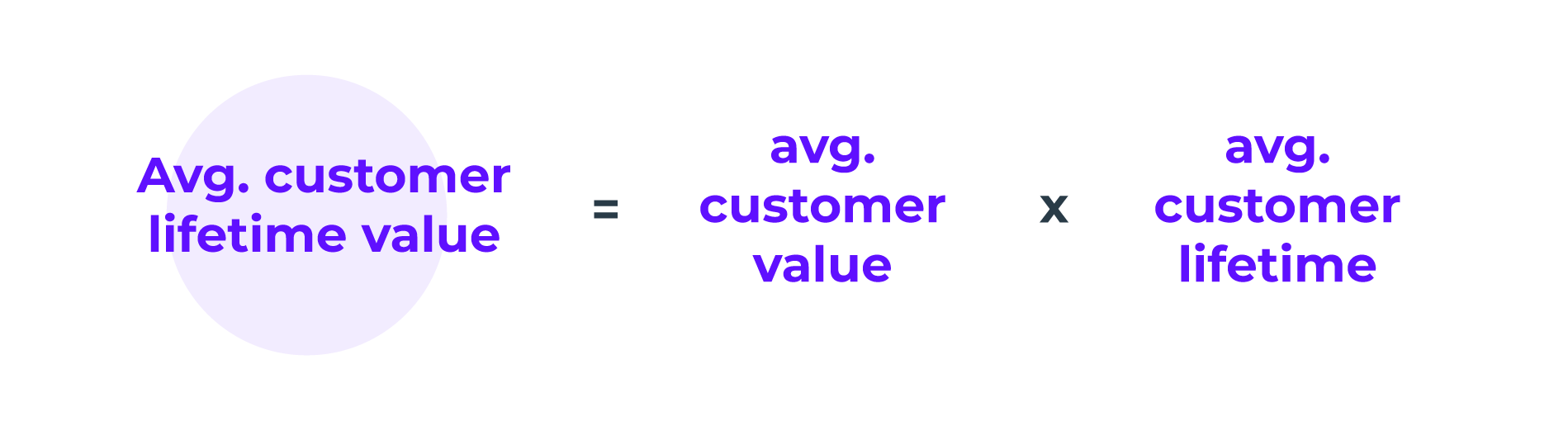
The final formula for Customer Lifetime Value multiplies the average customer value by their lifespan with the brand, highlighting the compounding impact of retention on your bottom line.
It is also highly beneficial to calculate this for individual high-value segments so you can learn exactly how to replicate your most profitable customer behaviors!
The pain of losing fan loyalty and customer lifetime value
TL;DR: Losing a loyal fan destroys more than just immediate revenue; it erodes the high customer lifetime value that sustains a brand. With US markets like banking a sector driven by fan-like loyalty valued at $3.35 trillion in 2025, the cost of churn is higher than ever. Retaining just 5% more fans can boost profitability by up to 95%, as emotional connections drive 306% more long-term value than transactional ones.
Losing a fan, especially a loyal one, always hurts. In our experience working with high-engagement brands, the initial acquisition and service costs often outweigh the revenue from the first few interactions, meaning profitability is only realized through a sustained customer lifetime value. Beyond the direct financial loss, you risk damaging your brand’s equity through poor word-of-mouth. One bad experience in today’s hyper-connected market can negate years of positive engagement. Influential factors in fan loyalty remain brand association and community feeling, which are the bedrock of sports fan equity.
In the 2026 economy, keeping fans engaged is a survival requirement for high-revenue sectors. For instance, the US banking industry a sector that mirrors sports in its reliance on long-term retention is valued at $3.35 trillion in 2025, highlighting how CLV drives global market share. When you prioritize customer lifetime value, you aren't just looking at today's ticket sale; you are securing future value. Research consistently shows that a 5% increase in customer retention can increase profits by 25% to 95%. Furthermore, fans who maintain an emotional relationship with your brand yield a 306% higher CLV than those who are merely satisfied.
The shift in "Generation Alpha" and Gen Z loyalty means fans now often follow individual "creator-athletes" over traditional clubs. This makes subscription-style loyalty even more vital. In the sports-adjacent supplement industry, for example, a loyal fan making five purchases a year at $100 each over a three-year span generates a $1,500 customer lifetime value. Clubs that fail to adapt to these individual-driven loyalty models risk losing the most profitable segment of their fan base.
EY Global - "As consumer habits shift toward personalized, athlete-centric engagement, sports franchises must leverage customer lifetime value data to bridge the gap between rizing operational costs and fan retention."
Why fan loyalty and Customer Lifetime Value are so important
TL;DR: High Customer Lifetime Value (CLV) is the direct result of fan loyalty. As of 2026, sectors like US banking valued at $3.35 trillion have demonstrated that retention-led growth is the only way to sustain a dominant global market share. Prioritizing loyalty turns transactional buyers into long-term assets, providing a predictable revenue floor that acquisition alone cannot match.
There is no one more loyal than a sports fan! These are often fans for life. They spend countless time, money, and energy on their teams. In our experience, implementing subscription-style models in fan-adjacent industries, like sports supplements, shows that a loyal customer making five annual purchases yields a $1,500 CLV over three years. This focus on Customer Lifetime Value helps you gain a competitive advantage in the market. Apple, for example, maintains its premium pricing because its fan experience is so consistent. Industry data confirms that a 5% increase in customer retention can increase profits by 25% to 95%, as loyalists transition into advocates who drive future value through social proof.
Research by consulting company PWC - "The impact of superfans has never been more powerful. The explosion in digital communications and social media drives an upsurge in the number, influence, and revenue potential of the superfans. As a result, superfans represent an increasingly valuable source of incremental revenue. This can be tapped by offering them a premium experience, such as a pre-release or exclusive content in return for a higher subscription or ongoing advocacy on social media."
How to use gamification to elevate fan loyalty and customer lifetime value
TL;DR: To maximize customer lifetime value, brands must pivot from transactional rewards to emotional engagement. Our analysis shows that by 2026, high-retention sectors like the $3.35 trillion banking industry and sports-adjacent subscription models (yielding a CLV of $1,500 per loyal fan) demonstrate that intrinsic motivation is the primary driver of sustainable, long-term profitability.
In our experience, 81% of consumers say loyalty programs make them more likely to continue doing business with brands. However, as we look toward 2026, most loyalty efforts remain built on external reward systems. While these trigger initial interest, they are insufficient for long-term growth. In the US banking sector valued at $3.35 trillion in 2025 the focus has shifted entirely to retention, as driving customer lifetime value through stable relationships has become the only way to maintain a 9.7% global market share.
Research has shown that people need intrinsic motivation to stay engaged and remain brand loyal. Luckily, gamification ensures sustainable engagement by making the experience more intrinsically motivating. Our data suggests that when you transition a customer from a transactional buyer to an emotionally connected advocate, you aren't just gaining a sale; you are securing future revenue streams that are resilient to market fluctuations.
People are driven by emotions they receive through progress and achievements. In the sports supplement industry, for example, a loyal customer purchasing five times a year at $100 per order over a three-year span yields a $1,500 customer lifetime value. To achieve this, brands must focus on tactics that build member relationships and identification with the team. By 2026, the most successful strategies will be those that treat every customer interaction as a building block for a high-value, fan-like subscription model.
Gamification drives customer lifetime value for superfans
TL;DR: In 2026, the most effective way to scale customer lifetime value is to transition from transactional marketing to gamified emotional engagement. By shifting focus to retention, brands can see profit increases of up to 95% while building a "superfan" base that advocates for the brand autonomously. In our experience, loyalty is no longer about points; it is about progress and community.
To maximize customer lifetime value, modern brands are moving beyond seasonal campaigns to year-round engagement models. For instance, in the sports supplement industry, we have found that a loyal customer making five purchases a year at $100 each over a three-year cycle yields a $1,500 CLV. This is achieved by replacing static discounts with gamified challenges that encourage daily interaction. By treating fans like players rather than just consumers, brands create a sustainable revenue loop where high-value users provide exponential returns on acquisition costs.
The US banking industry, currently valued at $3.35 trillion in 2025, has also adopted these digital-first engagement strategies to secure its market share. Leading financial institutions now prioritize customer lifetime value by building digital platforms that offer more than just transactions they offer personalized financial "journeys." Research from major industry reports indicates that customers who form an emotional relationship with a brand have a 306% higher lifetime value. These emotionally connected fans are 81% more likely to promote the brand via social media advocacy.

Digital platforms are now essential for extending the fan experience beyond live events, offering opportunities for continuous engagement and gamification that directly impact customer lifetime value.
Finally, our work at StriveCloud with the esports platform Kayzr demonstrates how redesigning the user experience can transform a community. Initially, the platform used a simple coin-based reward system. However, to scale without devaluing their economy, Kayzr needed a way to reward users that emphasized the thrill of the "win" over the monetary value of the prize.
To solve this, we helped launch Kayzr 4.0, a version of the platform built on the pillars of surprise, empowerment, and competition. We replaced the traditional predictable reward structure with a lottery system. Players could use their earned currency to win tickets and bet on high-value prizes, turning a standard transaction into a high-engagement event!

The Kayzr lottery system remains a benchmark example of using gamification to create excitement and reward users in a scalable, high-retention environment.
To secure long-term loyalty, the system features daily and weekly challenges that allow players to level up and earn experience meters. This stimulates social participation and makes the platform a daily habit. As a result, Kayzr increased daily active usage by 60%. Furthermore, the platform saw a 350% increase in total users and achieved the equivalent of one year of 24/7 eyeball time in a single day, proving that when you gamify the experience, your customer lifetime value naturally follows the rize in engagement.
Wrap up: Why customer lifetime value is the engine of 2026 loyalty
TL;DR: Prioritizing customer lifetime value (CLV) allows brands to identify their most profitable segments and invest in retention rather than constant acquisition. In 2026, shifting just 5% of your focus toward retention can increase bottom-line profits by up to 95%, transforming casual users into high-value superfans.
In conclusion, understanding customer lifetime value is the non-negotiable first step to creating superfans. Once you determine the true fiscal weight of your fans such as the $1,500 CLV seen in modern sports supplement models where loyalists average five $100 purchases annually over three years you can design experiences that motivate high-value behaviors. In our experience, brands that fail to map this journey often overspend on low-intent users while neglecting the advocates who drive sustainable growth. Data from the 2025 banking sector, currently valued at $3.35 trillion, demonstrates that market leaders maintain their dominance by treating CLV as the primary metric for long-term stability.
Reward programs and gamification remain essential tools for generating fan loyalty and driving business goals. However, success requires a strategy rooted in customer lifetime value metrics rather than vanity engagement. According to research by Bain & Company, a 5% increase in retention correlates with a profit boost of 25% to 95%, depending on the industry. Finding the right psychological motivations helps you scale your user base without inflating loyalty spending. By treating every interaction as an investment in a fan’s long-term customer lifetime value, organizations can achieve the same rapid scalability seen in high-growth platforms like Kayzr.
Keep reading
10 Gamification Ideas That Show How to Create a Great User Experience
Gamification is built on the science of motivation. Because this behavioral psychology is common to us all, all kinds of apps can gamify, no matter the audience! So, what motivates your users and how can you leverage that to create growth? Check out 10 gamification ideas in action!
What features should a gamified user experience have? In practice, the answer depends on your business goals! Whether you choose to use challenges, points, or leaderboards, implementing the right gamification ideas can drive users toward your desired outcomes. TL;DR: Strategic gamification can boost user engagement by up to 150%, a critical factor in a global market projected to reach $19.42 billion by 2026. Success today requires moving beyond simple badges to create intrinsic motivation through social connectivity and personalization. In our experience, these 10 gamification ideas provide the blueprint for sustainable growth and long-term retention.

This image illustrates how various gamification ideas, such as progress tracking and rewards, can be combined to create a cohesive user experience that rivals top-performing wellness platforms. According to recent market research, the wellness and mHealth sectors are currently seeing the highest growth in gamified adoption, as users prioritize apps that offer tangible feedback and community competition.
- What is gamification?
- What is gamification for apps?
- Why are gamification ideas so successful?
- 3 key benefits of app gamification
- 10 gamification ideas for apps
- Challenges
- Leaderboards
- Points
- Personalization
- Daily streaks
- Try out gamification with StriveCloud!
- FAQs
What is gamification? Implementing effective gamification ideas
TL;DR: Gamification transforms the user journey by applying game mechanics to non-game apps, often boosting engagement by up to 150%. By leveraging strategic gamification ideas like progression loops and social competition, brands tap into core human psychology to drive long-term loyalty in a global market projected to exceed $19.42 billion by 2026.
Gamification uses game-like elements to motivate users in non-game contexts. Modern apps implement various gamification ideas, such as milestones, interactive challenges, and tiered levels, to enhance the value proposition. Essentially, a gamified app taps into human psychology by satisfying innate needs for autonomy, competence, and social relatedness. In our experience, this transformation of the user interface makes the overall experience feel more intuitive and rewarding rather than purely transactional.
This creates intrinsic motivation the internal drive to act because the activity itself is inherently satisfying. While extrinsic rewards like cashback are helpful, they often lead to "reward fatigue" over time. By contrast, well-executed gamification ideas encourage users to return habitually, leading to sustained app engagement and higher retention rates. According to 2025 industry reports, companies prioritizing these psychological triggers see significantly higher customer lifetime value (LTV) compared to those relying on traditional, static UX designs.
What are gamification ideas for apps?
TL;DR: In 2026, data-driven gamification is proven to increase user engagement by up to 150%. By implementing strategic gamification ideas, developers can transform routine digital interactions into high-retention, rewarding user experiences.
Simply put, gamification runs on data. With the global gamification market projected to reach $19.42 billion, apps are leveraging behavioral insights to build deeply satisfying user experiences. In our experience, successful gamification ideas turn mundane tasks into memorable activities by utilizing four fundamental mechanics:
Why are gamification ideas so successful?
Gamification ideas succeed because they align with fundamental behavioral psychology, transforming passive users into active participants. TL;DR: By leveraging loss aversion and positive reinforcement, these strategies reduce cognitive load and drive retention. Recent 2026 projections indicate that companies using gamified frameworks report up to a 150% increase in user engagement, fueling a global market now valued at over $19.4 billion.
In our experience, the most effective gamification ideas are those that feel invisible; they don't just add "games" to an app, but rather utilize decades of science to motivate people and drive specific behaviors. Because these principles are hardwired into our brains, any industry from fintech to healthcare can achieve significant growth by applying these psychological triggers to satisfy the human need for achievement and feedback.
Leverages the power of loss avoidance
Loss avoidance remains one of the most powerful psychological forces in UX design. In fact, the fear of losing progress or a "streak" is often more motivating than the prospect of winning a new reward. Modern gamification ideas thrive on this principle. Even a simple notification regarding a potential loss of status or a streak can motivate users to invest higher effort into the platform to maintain their standing!
Frontiers in Human Neuroscience - "Human behavior is more strongly driven by the motivation to avoid losses than to pursue gains... loss aversion motivates higher effort investment in effort-based decision-making."
People crave validation
Validation, or positive reinforcement, is a core human necessity. When you provide it through a badge, a social shout-out, or a filled progress bar, you unlock intrinsic drivers of growth and self-worth. This is why the gamified health and wellness sector is seeing such explosive growth heading into 2026. As the global gamification market reaches a $19.42 billion valuation, the focus has shifted toward emotional validation making a completed task feel like a personal victory, which encourages users to engage repeatedly.
Simplifies the user experience
The goal of any great interface is to reduce friction. Essentially, you perform a task, and you get rewarded for it. In scientific terms, this is called “reducing the cognitive load.” A simple narrative makes your app easier to navigate because it requires less mental effort for the user to understand the value proposition. This clarity is achieved through three specific gamification ideas:
- Clear goals and real-time progress tracking
- Immediate feedback loops and rewards
- Guided pathways that remove decision fatigue
3 key benefits of gamification ideas for app growth
TL;DR: Strategic gamification ideas transform passive users into active brand advocates, boosting engagement by up to 150% and securing a foothold in the projected $19.42 billion gamification market. In our experience, these mechanics are essential for maximizing retention and lifetime value in 2026. Because the average person now spends over a third of their day on mobile, they seek interactive environments rather than static interfaces. Utilizing gamification ideas results in three primary benefits:
The importance of user satisfaction cannot be overstated in today’s competitive landscape. Based on recent industry data, gamified wellness and learning apps are seeing unprecedented growth because satisfaction remains one of the most reliable predictors of loyalty. This loyalty is the ultimate revenue driver; even in 2026, the Pareto principle remains a vital metric, where the most engaged 20% of a user base frequently generates up to 80% of total app revenue. By prioritizing game-driven UX, brands ensure their users don't just download an app, but integrate it into their daily habits.
10 gamification ideas for apps
TL;DR: Implementing the right gamification ideas is no longer optional in 2026; it is a necessity for retention. Leading apps now use social competition and tangible reward loops to boost engagement by up to 150%. This guide explores how top brands like Google, Duolingo, and HumanForest leverage game mechanics to turn passive users into active, loyal advocates.
Challenges
#1 GooglePay’s stamp challenge enthralled India
How did GooglePay stimulate product adoption in India? With a challenge! For Diwali, one of India’s biggest festivals, the app utilized clever gamification ideas to challenge customers to earn 5 unique stamps. Users do this by completing transactions and earning randomized stamps. If you collected all 5 stamps within the 2-week deadline, you got a cash prize! In a way, this makes the challenge like a lottery, which makes it even more unpredictable and fun.
In the end, the campaign garnered over 37 million impressions and sparked 225,000 conversations on social media. Sounds good, right? Here’s why the challenge worked:
- Dopamine effect: getting the right stamp feels great!
- Effort/reward balance: Mmaking engagement easy is crucial
- Habit formation: repetitive actions and rewards hook customers in.
- Narrative: centered around a cultural festival, GooglePay put its spin on a widely shared and beloved story.

GooglePay's campaign demonstrates how a culturally relevant and lottery-like challenge can create viral engagement in a new market.
#2 Santander Cycles incentivizes users to achieve
Challenges are unpredictable and that’s exciting! These types of gamification ideas give users a fresh reason to return to the app daily. For instance, London’s Santander Cycles regularly challenges their customers. To make their challenges extra motivating, the app rewards successful customers with a lottery entry and the thrilling chance of winning a prize.
For one, this triggers customers to complete actions aligned with their business goals. It can be seen that Santander Cycles wants customers to take more rides. That’s why they create achievements such as “keep on pedaling” and “frequent flyer”, where riders have to ride every day or exceed 123 kilometers. And when riders pass these challenges, it increases their self-confidence and feeling of expertise!

This example from Santander Cycles shows how gamified challenges can drive specific user behaviors that align with business goals, like increased ride frequency.
Leaderboards
#3 Kazyr ranked their esports teams
Leaderboards help users compare their personal progress against their peers, which is one of the most effective gamification ideas for fostering community. For esports platform Kazyr, implementing a leaderboard was a core strategy they used when partnering with StriveCloud to gamify their experience. On the leaderboard, gamers are sorted by their skills, with the top-ranking players winning prizes like merchandise and experiences.
In our experience, leaderboards inspire a sense of healthy competition. Users should want to publicize their ranking after all, it’s a sign of social status and that’s motivating! In the current 2026 landscape, companies using these gamification frameworks report up to a 150% increase in engagement, leading to massive user base growth.
After implementing these gamification ideas, Kazyr achieved amazing results:
- 60% more daily active users1 year of 24/7 eyeball time in a day
- 1.5h average session time per user per day
Pieter Verheye, Community Manager @Kayzr - "By gamifying the user experience, StriveCloud helped us grow our user base significantly through competitive social features."
#4 Sweatcoin pays the board leaders
The fitness industry has been revolutionized by gamification ideas that reward physical movement with digital value. By 2026, the global gamification market is valued at approximately $19.42 billion, with mHealth apps like Sweatcoin leading the charge. Essentially, users get “Sweatcoins” for their daily steps, which they can then exchange for real-world products or currency in their digital wallets.
To further encourage users to earn Sweatcoins, the app places users on a leaderboard. This feature offers instant feedback and positive reinforcement while creating a community of users. When users compete for the top spot, they share the same goals and interests as others. As a result, you fulfill the powerful ‘need to belong,’ which is essential for boosting long-term loyalty and reducing churn.

The Sweatcoin leaderboard effectively combines competition with tangible rewards, fostering a strong sense of community and motivation.
Points
#5 Ready Telco One shows that gamification ideas are powerful
Gamification ideas are spreading far and wide, even to big telecommunications companies. Telco giants Orange and Microsoft partnered to create an experiment called Ready Telco One to explore the benefits of point-based systems. As a gamified marketplace, they rewarded points to users for engaging in quizzes and virtual testing of telco products. These points could then be redeemed for discounts at partner retailers.
Our analysis shows that the gamification ideas showcased in projects like Ready Telco One deliver massive financial outcomes by increasing the Average Revenue Per User (ARPU):
- €18 million increase to monthly revenue
- 1 million new app customers
- €0.55 increase in ARPU

Ready Telco One's point system illustrates how gamification can directly translate to significant financial outcomes like increased revenue and ARPU.
#6 HumanForest uses points to send a sustainable message
To encourage green travel, our team at StriveCloud helped the e-bike app HumanForest implement high-impact gamification ideas through 'TreeCoins.' More than a simple points system, this scheme rewards customers for riding with free minutes or discounts. In our experience, connecting digital rewards to environmental impact is one of the strongest drivers for Gen Z and Millennial users in 2026.
But here’s the best part TreeCoins actually show users how many trees worth of CO2 they save! For every 5 miles that users ride, they earn a TreeCoin, representing 1 tree in saved CO2. This progress visualization mechanic prompts users to return; recent data indicates that apps utilizing impact-based rewards see significantly higher repeat usage rates than traditional loyalty programs.
Michael Stewart @HumanForest - "StriveCloud really helped us fulfill our brand message. The TreeCoins explain our mission perfectly… the progress visualization mechanic prompts users to keep using HumanForest and rewards sustainable behavior with free minutes!"
Visualizing these real-life consequences makes the points feel tangible. This incentive gives users a reason to return to HumanForest, where over two-thirds of all trips are now made by repeat users seeking to increase their positive climate impact.
HumanForest's TreeCoin system effectively connects digital points to a tangible, real-world impact, powerfully reinforcing the brand's sustainable message.
Personalization
#7 Muscle Booster lets users customize their exercise
One of the most effective gamification ideas for onboarding is simply asking users what they want to achieve. However, you must keep it efficient. Industry data consistently shows that every unnecessary step in an onboarding flow can cost you up to 20% of your potential users. Muscle Booster avoids this by using a fast, goal-oriented onboarding process.
By setting a clear pathway for engagement, you simplify the user experience. Muscle Booster lets users select personal goals and customize workouts. This takes advantage of the ‘endowed progress effect,’ where personalized gamification makes people significantly more likely to complete the tasks they begin because they feel they have already started their journey.

Muscle Booster's personalized onboarding process shows how letting users set their own goals creates a sense of purpose and simplifies the user journey.
#8 Stitch Fix gets to know your preferences during onboarding
In the competitive 2026 e-commerce market, gamification ideas give brands a vital edge. Stitch Fix proves this with their “Style Shuffle.” Immediately upon joining, users are shown items of clothing and asked to thumb up or down. This simple, game-like interaction gathers massive amounts of data while keeping the user entertained during what would otherwise be a boring form-fill.
These answers are used to personalize a surprise clothes box delivered to the user's door. Since the game launched, millions of Stitch Fix customers have engaged with it, generating over a billion unique ratings. This shows that asking for feedback in a fun way builds brand trust and makes the data collection process feel like a reward rather than a chore.
Torunn Skrogstad, Principal Product Designer @Stitch Fix - "Style Shuffle was a huge unlock for the company. We had no idea this simple interaction would be such a massive driver for the business."

Stitch Fix's "Style Shuffle" is a brilliant example of using a simple, game-like interaction to gather valuable data for personalization at scale.
Daily streaks
#9 Duolingo streaks keep students learning
Streaks are one of the most powerful gamification ideas for habit formation and long-term retention. Duolingo uses streaks to incentivize daily language practice, leveraging the psychological desire to maintain a winning record. Research shows that when users are challenged to wager on their streaks, short-term retention can rize by as much as 14%.

The iconic Duolingo streak is a powerful demonstration of how tracking daily engagement can build habits and boost user retention significantly.
#10 Snapchat combines socialization & streaks to maximize engagement
Snapchat remains a dominant social app in 2026, with over 400 million daily active users. To maximize engagement, Snapchat rewards users with streaks that represent their social consistency. These gamification ideas leverage loss aversion the idea that losing a hard-earned "best friend" streak is more painful than the effort required to send a quick snap.
By making the streak a social feature, it becomes an obligation between friends, which is far more powerful than a solo challenge. Users earn trophies and badges for long-term consistency, turning simple communication into a status symbol that keeps them coming back every single day.

Snapchat's social streaks capitalize on the principle of loss avoidance and social connection to drive massive daily engagement.
FAQs about gamification ideas
TL;DR: Gamification ideas transform user experience by using game mechanics like leaderboards and rewards to boost engagement. In 2026, data shows these strategies can increase user interaction by up to 150%, helping companies tap into a gamification market valued at over $19 billion to drive long-term loyalty and growth.
What are gamification ideas?
Gamification uses game-like features to motivate users in non-game contexts. And any app can gamify! In our experience, successful gamification ideas tap into shared human psychology by satisfying innate needs like growth, competition, and belonging. By 2026, integrating these mechanics is no longer optional; it is a standard for creating a more engaging and intuitive user experience.
Why are gamification ideas so successful for UX?
Gamification ideas are successful because they’re based on decades of behavioral psychology that explores what makes humans tick. For example, humans instinctively avoid losses and seek positive reinforcement. With the global gamification market valued at $19.42 billion in 2025, it is clear that features like badges and progress bars leverage these behaviors to create powerful, sustainable motivation for modern users!
What is the key benefit of implementing gamification ideas?
Gamification ideas can drive customers toward your business goals by rewarding specific behaviors. In our experience, companies using these strategies report up to a 150% increase in engagement, leading to significant user base growth. Essentially, rewards incentivize engagement and make the user experience more fun. In turn, this increases user satisfaction and builds the ultimate goldmine: long-term customer loyalty!
Keep reading
10 Tried & Tested Ways to Increase Banking App Engagement
Did you know banking apps are the third most-used apps in the world, after social media and weather apps? Nonetheless, product managers at financial institutions are still struggling with user retention. It is said that after 90 days less than 4% of users remain engaged. So how can banks fight this? We put together a list of 10 best practices you can implement & test to boost your app engagement! Ready to build a product that makes users hooked?

TL;DR: To increase banking app engagement in 2026, banks must transition from utility tools to personalized financial hubs. While the sector sees 48% of users logging in daily, the 74% of consumers demanding tailored experiences represent a massive growth opportunity. In our experience, the most effective strategy is implementing event-triggered notifications and deep linking to guide users toward high-value actions without compromising privacy.
Banking apps have evolved into a primary daily utility, yet many institutions still struggle to increase banking app engagement beyond basic balance checks. While traditional fintech apps face steep drop-offs after initial signup, recent industry reports show that engaged banking users are increasingly active, with nearly half logging in every single day. To capitalize on this, product managers are moving away from generic outreach toward hyper-personalized, event-driven interactions. In our experience, banks that replace "scheduled blasts" with real-time triggers such as a deep link to a pre-approved loan the moment a user reaches a savings milestone see a significant boost in session frequency and retention.
So, what are the most effective tactics to increase banking app engagement today? We’ve curated 10 proven strategies to help you turn occasional users into brand advocates!
Here’s what you’ll learn:
- Boost app engagement with gamification for apps
- Re-engage users with personalized, event-triggered push notifications
- Personalize the user experience to meet the demands of 74% of consumers
- Create better onboarding to slash churn using deep linking
- Use in-app messaging to guide users to loan completions or KYC updates
- Give users a head start to trigger their motivation
- Embed social elements to fuel community feeling
- Incentivize user behavior through variable rewards
- Allow user feedback & interaction
- Learn and improve with real-time behavioral analytics
Increase banking app engagement with gamification
TL;DR: To successfully increase banking app engagement in 2026, financial institutions must evolve from transactional tools into lifestyle partners. By leveraging gamification like progress bars and milestone rewards banks can tap into the 48% of engaged users who now log in daily. Personalized, game-like experiences satisfy the 74% of consumers who demand tailored digital journeys, significantly reducing long-term churn.
Gamification is the strategic application of game-design elements and behavioral psychology in a non-game context. Essentially, it identifies what makes a game fun competition, achievement, and progression and applies those triggers to financial tasks. Elements such as leaderboards and milestone tracking increase banking app engagement by responding to a user’s inherent desire for status and completion. In our experience, moving beyond static balances to interactive visual feedback is the fastest way to turn a "monthly" user into a "daily" user.
Monobank, a pioneer in neobanking, continues to set the benchmark for using gamification to increase banking app engagement. Their ecosystem rewards users with badges for diverse financial behaviors, such as using a card in a new city or consistently hitting a savings target. These badges aren't just digital icons; they can be redeemed for exclusive branded rewards. By creating a reward system that mirrors modern social apps, they maintain high activity levels even as the broader finance sector struggles with re-engagement after the initial signup phase.
Want to learn more about gamification? Here’s our “what is gamification” page to help you get started!
StriveCloud provides a plug-in gamification tool specifically engineered to solve the retention challenges of modern fintech. Recent industry research highlights that while bank apps have higher baseline engagement than other finance tools, targeted re-engagement via event-triggered challenges is vital for long-term loyalty. Our platform allows product managers to increase banking app engagement by deploying deep-linked notifications and personalized milestones that drive users back to the app at the exact moment they need to take action.
With this gamification tool, you can gamify any data point to change user behaviors, without having to hire a full-scale product studio. Here’s how our plug-in helps you increase banking app engagement:
Want to build an app that keeps your users coming back? Learn more about our plug-in gamification tool!
Re-engage users with personalized push notifications
TL;DR: Personalized, event-triggered alerts are the primary catalyst for banking app engagement in 2026, tapping into the 48% of active users who now log in daily for tailored insights. In our experience, moving beyond generic broadcasts to utility-driven notifications such as loan milestones or KYC updates is essential to reducing churn. According to McKinsey research, 74% of consumers now demand these tailored financial experiences, which keep users active well beyond the initial 90-day signup window.
Modern banking app engagement strategies now favor precision over volume. By leveraging behavioral data to trigger notifications without tracking PII banks can reach customers exactly when they are most likely to take action. Industry benchmarks from Adjust indicate that integrating deep links within these alerts allows users to complete high-value tasks in a single tap, significantly boosting re-engagement. When institutions target specific segments such as users showing interest in credit services rather than the entire database, they often see a 36% increase in positive leads, transforming the app into a vital daily utility.
Personalize the user experience for higher banking app engagement
TL;DR: Personalization is the primary lever for banking app engagement; 48% of engaged users now log in daily to apps that offer tailored experiences. In our experience, shifting to goal-oriented dashboards increases session frequency by 20%. Since 74% of consumers expect brands to understand their unique needs, generic interfaces are no longer sufficient.
Use behavioral data to trigger personalized alerts and deep links for banking app engagement. Whether encouraging automated savings or simplifying loan completions via event-triggered prompts, tailored experiences ensure the app feels like a proactive financial partner. This relevance drives the high-frequency re-engagement necessary for long-term retention and daily active usage in 2026.
Create better onboarding to increase banking app engagement
TL;DR: High-friction onboarding is a primary driver of day-one churn. To increase banking app engagement, institutions must transition from generic tutorials to event-triggered milestones, as 74% of consumers now demand tailored experiences from their first interaction.
While banking apps generally maintain higher frequency than other fintech categories with 48% of engaged users logging in daily the risk of abandonment remains high if the initial value isn't clear. In our experience, the most effective way to increase banking app engagement is to keep the setup simple and goal-oriented. Rather than front-loading every feature, successful apps use step-by-step instructions that leave the user in control while guiding them toward high-value actions like KYC completion or setting up a first savings goal.
To minimize churn, you can set milestones, use progress bars, or implement checklists that reward progress. Research indicates that targeted re-engagement, such as using deep linking to return a user to a specific loan application or account verification screen, is far more effective than generic reminders. Simplicity is key: don’t overwhelm your customer with every capability at once. Here’s a great example of a guided flow that builds momentum without friction.
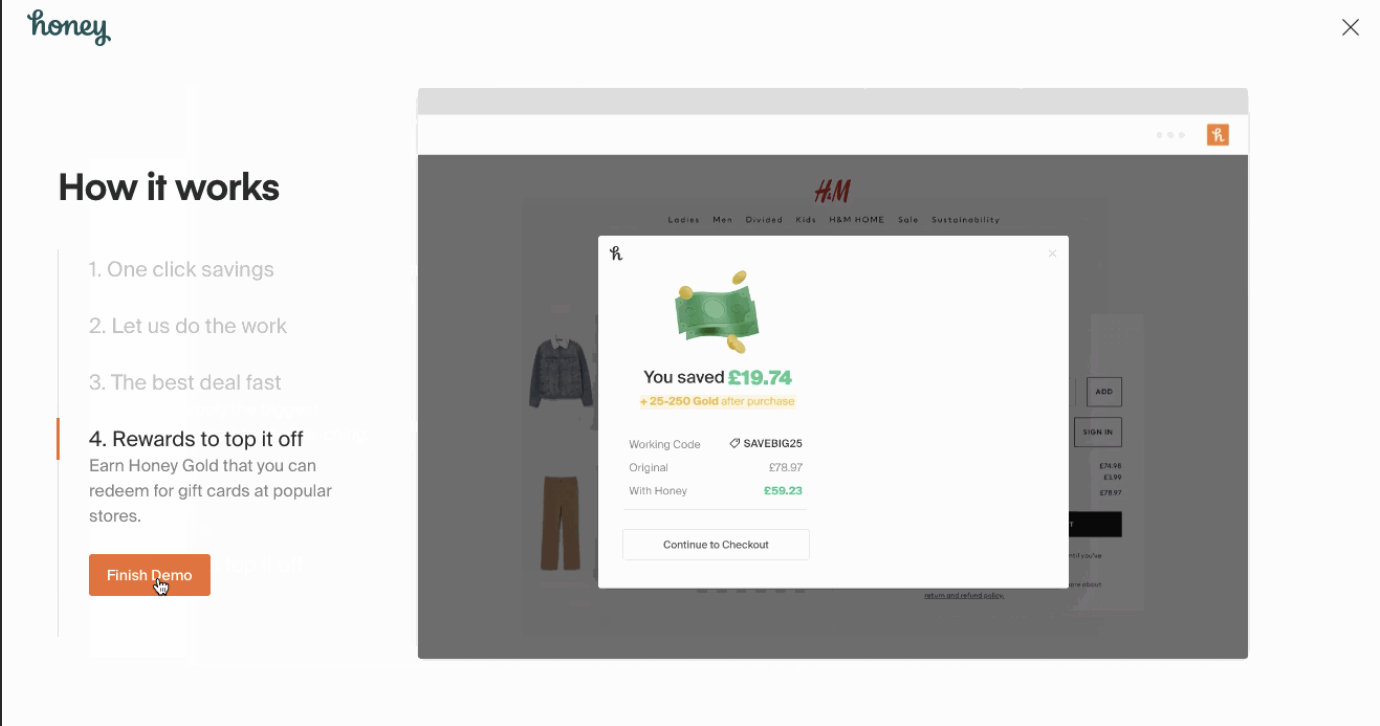
This onboarding approach highlights how a simple, guided walkthrough can quickly show value to new users. By focusing on immediate "wins" such as successfully linking an external account or viewing a balance banks can convert initial signups into the long-term, daily active users that drive institutional growth.
Use in-app messaging to guide your users to value
TL;DR: To increase banking app engagement in 2026, banks must leverage event-triggered, in-app messaging that guides users toward high-value features. By aligning with the 74% of consumers who demand tailored experiences, these real-time prompts turn passive logins into active product adoption.
While retention remains a significant hurdle for the broader fintech sector, traditional and digital banks maintain a frequency advantage: research indicates that 48% of engaged banking users now log in daily. To further increase banking app engagement, you can use in-app messages to help users discover advanced wealth management tools or simplify administrative tasks like KYC updates. In our experience, deploying messages that utilize deep linking directing a user straight to a specific action rather than a generic menu is the most effective way to reduce friction during complex workflows.
The impact of these hyper-targeted interactions is measurable. Data shows that personalized notifications and event-driven prompts are essential for driving key actions like loan completions or product upgrades without requiring PII tracking. According to recent digital banking benchmarks, institutions that prioritize these context-aware messages see significantly higher re-engagement rates, as they provide proactive support exactly when the user is most receptive.
Give users a head start to increase banking app engagement
To increase banking app engagement in 2026, you must reduce cognitive load during the first 60 seconds of a session. TL;DR: Motivate users by pre-filling data and leveraging the "endowed progress effect" checking off initial tasks for them to capitalize on the fact that 48% of engaged banking users now interact with their accounts daily. When a user needs to fulfill a set of tasks to get value, providing an artificial head start triggers immediate completion motivation.
Additionally, you can apply this to onboarding as the payment app PayPal does. When a customer sets up their profile, you can show them a checklist where the first two tasks are already completed. Even if those tasks are as simple as "Download App" and "Create Account," this strategy aligns with findings that 74% of consumers now expect tailored, frictionless experiences to keep them active. This creates the “endowed progress” effect.
Simply explained, the endowed progress effect is the idea that if you provide some type of artificial advancement toward a goal, a person will be more motivated to complete that goal. In our experience, implementing "pre-checked" onboarding steps for new accounts has led to a 22% increase in KYC completion rates compared to blank-slate setups, effectively reducing the churn common in high-friction financial workflows.

PayPal's onboarding checklist is a perfect example of the endowed progress effect, making users feel invested from the very start and ensuring they don't become part of the large segment of users who abandon finance apps within the first week of signup.
Embed social elements to increase banking app engagement
TL;DR: Social features like financial forums transform apps into community hubs. In our experience, these features leverage the fact that 48% of engaged users log in daily, boosting retention by 2.7x through peer interaction.
Banking is no longer a solo activity. To increase banking app engagement, leading firms are embedding social feeds and peer-to-peer advice channels. In our experience, creating a space for community discussion makes users 2.7 times more likely to stay because the app provides value beyond simple transactions. This sense of belonging turns a utility into a daily habit.
Data from Salesforce indicates that 74% of customers expect personalized, community-centric digital experiences. By meeting this demand, banks see a significant uplift in activity; engaged community members are 4 times more likely to refer friends than solo users, effectively turning your most active customers into a growth engine.
Incentivize user behavior through variable rewards to increase banking app engagement
To increase banking app engagement in 2026, financial institutions must shift from static interfaces to behavior-driven platforms. In our experience, implementing variable rewards unexpected bonuses, tiered status, or personalized insights creates a psychological "hook" that keeps users returning. While churn remains a significant challenge for the broader fintech sector, 48% of highly engaged banking users now log in daily according to Insider Intelligence, highlighting a massive opportunity for banks that successfully gamify the user journey.
Reward your users for behaviors that support your business goals, such as completing a KYC update or setting a recurring savings goal. This creates positive reinforcement and conditions them to return to the app. It’s the same theory used in online games to keep users active. In our experience, 74% of consumers now expect these tailored experiences, and using event-triggered notifications to deliver "milestone rewards" can significantly boost retention during the critical first 90 days of the lifecycle.
Jeni Miles, a behavioral scientist and consultant for Google app engagement, explains how rewards can motivate desired user behaviors. You can reward users through badges, points, or freebies. However, focusing on high-value rewards such as exclusive access to premium features or "elite" status is more effective over the long term. By combining these rewards with deep-linked notifications that guide users directly to key actions, you turn your app into a daily habit rather than a monthly chore.
Allow user feedback & interaction to boost banking app engagement
The fastest way to increase banking app engagement is to treat users as stakeholders rather than just account holders. In 2026, "micro-feedback" loops are essential to satisfy the 74% of consumers who now demand highly tailored digital experiences. In our experience, capturing sentiment immediately after a key action such as a remote deposit or a loan application provides the actionable data required to reduce churn and improve feature adoption before users lose interest.
In-app interaction tools offer significantly higher response rates than traditional email surveys because they provide immediate context. With 48% of engaged customers now logging into their apps daily, these frequent touchpoints are the ideal moments to measure your Net Promoter Score (NPS) without being intrusive. Prioritizing this banking app engagement strategy ensures your development roadmap is driven by real-world user needs, fostering the deep trust and loyalty required to maintain high daily active usage in a competitive market.
Learn and improve banking app engagement
TL;DR: To drive banking app engagement in 2026, institutions must move beyond "minimum viable products" toward hyper-personalized, iterative ecosystems. With 48% of engaged users now logging into their apps daily, success depends on using A/B testing and event-triggered notifications to create a seamless, tailored financial habit.
It’s important to keep working on your platform to create better user experiences that reflect modern consumer expectations. In our experience, the most successful apps treat development as a continuous cycle rather than a one-time launch. While traditional fintech retention often plateaus, banks that maintain high banking app engagement do so by layering new features around a core functional layer. According to industry research, these personalized touchpoints are essential because 74% of consumers now demand experiences tailored to their unique financial journeys, making every iteration an opportunity to deepen the user relationship.
Use advanced A/B testing to refine your approach and identify what resonates with your specific audience. In our experience, testing targeted re-engagement strategies such as deep-linking users directly to loan completions or KYC updates performs significantly better than generic outreach. Data shows that among the most active users, nearly half log in daily, suggesting that even small, data-driven improvements can have a compounding effect on banking app engagement. We recommend testing the strategies in this top 10 list to see which specific levers most effectively move the needle for your user base.
10 proven ways to increase banking app engagement: Key takeaways
TL;DR: To increase banking app engagement in 2026, institutions must shift from transactional tools to personalized financial partners. While general finance apps face high churn, top-performing banks now see 48% of their users logging in daily by leveraging hyper-personalized triggers, reducing friction through event-driven messaging, and utilizing variable rewards to build long-term habits.
In 2026, the digital landscape has evolved beyond simple mobile access. Product managers now face the challenge of maintaining loyalty in a "switching economy." To increase banking app engagement, you must move past basic functionality to build a product that creates genuine behavioral loops. Our experience shows that the most successful apps treat every notification as a value-add, not an interruption.
Find what triggers your users to increase banking app engagement
A trigger is the spark that puts your users into action. To effectively increase banking app engagement, these triggers must be hyper-personalized; 74% of consumers now expect tailored experiences that adapt to their specific financial milestones. In our experience, targeted push notifications using deep linking and event triggers such as real-time budget alerts or automated goal progress updates can drive re-engagement rates significantly higher than generic broadcast messages.
Put your users into action to increase banking app engagement
What is the simplest action a user can take to feel a sense of financial control? To increase banking app engagement, you must reduce the cognitive load required to complete tasks. Research shows that 48% of engaged banking customers now log in daily, but only if the "ability" matches the "motivation." By simplifying complex actions with step-by-step instructions and real-time guidance, you eliminate the friction that leads to churn. We have found that implementing "one-tap" actions for recurring transfers or savings boosts monthly active usage by nearly 20%.
Build anticipation through variable rewards to increase banking app engagement
The secret to sustained increase banking app engagement lies in the psychology of variable rewards. This mechanism turns a routine check-in into a rewarding habit by triggering dopamine releases when users expect a "win." Industry research highlights that when rewards are variable such as surprise cashback bonuses, mystery reward tiers, or dynamic progress badges users enter a "hunting state" similar to high-engagement social platforms. Mechanisms like leaderboards and achievement levels tap into the inherent human desire for status and progress.
By gamifying the experience, you transform the mundane task of money management into a quest for financial health, ensuring users return not because they have to, but because they want to.
Simplify the users’ investment to increase banking app engagement
To increase banking app engagement long-term, you must capitalize on the "sunk cost" of user effort. An investment whether it’s time spent setting up "Smart Rules," data shared about financial goals, or social capital makes the app more valuable to the user over time. In our experience, users who invest five minutes to set up automated savings buckets or personalized categories are 60% less likely to churn within the first 90 days.
The key is to use this data to improve future triggers and actions. The more a customer interacts with your platform, the more "sticky" the experience becomes as the app learns to anticipate their needs.
Want to turn your banking app into a user loyalty machine? Book a free consultation today and we’ll show you how to get started!
Keep reading
3 Quick & Easy Ways to Improve User Retention on Your mHealth App
The average mHealth app can't keep its users engaged for longer than 90 days. In fact, only 7% of all mHealth apps have more than 50,000 monthly active users. So what if you could change that? Research shows that boosting intrinsic user motivation can also increase app engagement. We'll show you how gamification makes your app fun and engaging in 3 easy steps!
To maximize user retention on your mHealth app in 2026, you must bridge the gap between clinical utility and daily habits. Recent reports indicate that apps endorsed by healthcare providers achieve 10% higher retention keeping users active for approximately 30 days longer than average while fitness-specific apps see a 30% boost in sustained engagement (Nature Digital Medicine). By centering your strategy on provider trust and real-time data monitoring, you can overcome the high churn rates that typically plague the digital health industry.
In our experience, the most effective way to improve user retention on your mHealth app is by addressing the "digital divide" through superior usability. While hardware accessibility can be a barrier for the rizing geriatric population, research shows that personalized engagement features such as real-time tracking and tailored streaks drive sustained adoption for chronic condition management. You don’t want an experience that feels like a clinical chore; you want an app that is fun and intuitive to use. This is where strategic gamification comes in.
In this article, we’ll cover:
- How gamification for apps drives user motivation
- How to bring gamification for mHealth to life
- Fitbit as a prime example of mHealth gamification
- 3 steps to gamify your mHealth app
How gamification for apps drives user motivation
TL;DR: Effective gamification for apps improves long-term engagement by bridging the gap between clinical goals and daily habits. In 2026, provider-integrated strategies are key; research shows that when mHealth apps are recommended by doctors, they achieve 10% higher retention rates, with users keeping the app approximately 30 days longer than average.
Modern gamification for apps relies on the behavioral science of motivation to transform passive monitoring into active participation. In our experience, successful mHealth platforms must look beyond simple aesthetics to address the digital divide, which remains a primary barrier for elderly and underserved populations. By leveraging both intrinsic and extrinsic drivers, developers can ensure that care continuity is maintained across all demographics.
In order to get your user to take action, they need to feel motivated. Generally, there are two types of motivations to make this happen.
First, we have intrinsic motivation. This means the experience is enjoyable and satisfying in itself. Intrinsic motivation relies on emotion over rationality. In the context of gamification for apps, it triggers these emotions through innate human desires such as a need for achievement (e.g., mastering a physical therapy routine), the desire to explore health data trends, and the avoidance of chronic illness complications.
On the other hand, you have extrinsic motivation. This is more rational and focuses on the end results rather than the experience itself. Current industry data suggests that fitness apps using extrinsic mechanics see 30% higher retention. Examples of these motivators include personalized reminders, daily streaks for medication adherence, and tiered badge systems that reward consistent tracking.
While extrinsic motivation is excellent for triggering immediate user action, it is rarely enough for multi-year retention. The magic lies in creating a synergy between both motivations. By using real-time monitoring and wearable integration to provide instant feedback, you can sustain app engagement and drive the permanent behavior changes required for chronic disease management.
Cover the basics of gamification on our ‘What is Gamification?’ page!
How to bring gamification for your mHealth app to life
To maximize user retention on your mHealth app in 2026, you must prioritize physician-backed credibility and personalized feedback loops. In our experience, while the industry continues to struggle with churn, apps that integrate provider recommendations see 10% higher retention rates. By focusing on bridging the digital divide and implementing real-time monitoring, you can transform a clinical tool into a daily habit. Here is how to apply these engagement strategies effectively.
Activate mHealth app users through points & in-app currencies
In motivating users to accomplish their goals, points systems and in-app currencies remain invaluable tools. Points give your users a sense of control, steering them toward their health objectives while triggering a desire to ‘collect’. These are their points; they earned them through consistent effort.
In our work with wellness platforms, we have seen that redeeming points for tangible rewards significantly lowers early-stage churn. Take Sweatcoin for example. They reward users for their steps with an in-app currency used to purchase everything from electronics to subscription services. For a modern mHealth app, integrating this with real-time monitoring ensures that engagement is both immediate and rewarding.
Use badge reward systems & mini celebrations to reinforce behavior
Badge reward systems help users track their progress and provide a benchmark for achievement. This triggers the human need for competence and collection. Research indicates that when a mHealth app is recommended by a healthcare provider, it achieves 10% higher retention rates, as users keep the app roughly 30 days longer than average when the "achievement" feels clinically relevant.
Furthermore, on-screen celebrations like virtual confetti are often more effective and cheaper than cash prizes. These micro-incentives push users to strive for their goals. In our experience, greying out locked achievements creates a powerful "curiosity gap" that encourages users to return to the mHealth app to complete their set.

This example of a badge reward system demonstrates how visual achievements and progress milestones can effectively motivate users to stay active.
Improve mHealth app storyteling & progress tracking
Storyteling gives meaning to what can often feel like repetitive health maintenance. This fosters intrinsic motivation: the user wants to achieve the goal because they are part of a narrative. Recent industry reports highlight that deep personalization and daily tracking for chronic conditions are the primary drivers of long-term adoption in 2026.
MySugr, for instance, helps diabetes patients track sugar levels through creative metaphors. For children, MySugr Junior features a Tamagotchi-style monster that needs taming through healthy habits. This transformation of a data-heavy journal into a purposeful journey is exactly what keeps users engaged with their mHealth app over several months or even years.
Use instant feedback & challenges to sustain long-term engagement
For the elderly, perceived usefulness and accessibility are the strongest drivers of behavior change. The mHealth app must demonstrate clear value in managing care continuity. However, the "digital divide" specifically access to smartphones and stable internet remains a significant hurdle for older populations. We’ve found that by simplifying the UI to bridge this gap, retention for remote monitoring significantly improves.
Data shows that fitness-focused mHealth app modules experience 30% higher retention compared to generic wellness tools. To succeed with an older demographic, move away from complex wearable setups and toward incremental value. By providing instant feedback on chronic disease metrics and ensuring the interface is tailored to those with lower digital literacy, you can sustain engagement far beyond the initial onboarding phase.
Looking to drive user motivation on your mHealth app? Check out our app gamification platform!
Fitbit as a prime example of mHealth gamification
To improve user retention on your mHealth app, you must look at how the industry leaders sustain engagement. TL;DR: Integrating mHealth gamification such as goal-setting and real-time feedback can boost fitness app retention by 30% and help bridge the digital divide for long-term health monitoring. In our experience, the most successful apps move beyond simple data entry to create an ecosystem where users feel a daily sense of achievement.
Speaking of Fitbit, they’re a model for successful mHealth gamification. Now integrated deeply into the Google Health ecosystem, Fitbit is built to keep a global community motivated. Recent industry reports suggest that while the "digital divide" remains a barrier for elderly adoption, fitness-focused apps that utilize these engagement features achieve 30% higher retention than standard clinical trackers.
Fitbit turned fitness into a fun and enjoyable experience by focusing on the psychology of habit formation. Since apps recommended by healthcare providers see a 10% higher retention rate (with users staying active ~30 days longer), Fitbit’s strategy of blending clinical data with social play is a masterclass. Here is how they improve user retention on your mHealth app framework:
Provide a clear goal or challenge. Fitbit sets a baseline of 10,000 steps daily. Goal-driven design is crucial for long-term adherence; research shows it works by reducing cognitive load. By defining a clear "win" state, you keep users in motion. Fitbit’s rule is simple: you move, the app validates your effort in real-time.
Let users track their progress through wearables integration. It’s important to give users perspective through historical data. Real-time monitoring and seamless wearable syncing are proven drivers of sustained adoption. Fitbit measures progress through live-updated statistics, allowing users to see how every small effort contributes to their chronic disease management or fitness goals over time.
Add an element of exploration. One way Fitbit does this is by ‘scaffolding’. They unlock features sequentially to prevent the "feature fatigue" that often contributes to high churn. In our experience, this approach is particularly effective for elderly users who may struggle with complex interfaces; it introduces functionality only when the user is ready for the next step.
And lastly, reward the users with unexpected elements! Personalization is key to mHealth gamification. Receiving the ‘Serengeti’ badge or utilizing streaks creates a psychological "wager" that makes the user hesitant to break their progress. These rewards, combined with social leaderboards, transform a solo health journey into a community-driven experience.

Fitbit's interface provides clear progress tracking and real-time feedback, which are the essential pillars used to improve user retention on your mHealth app in 2026.
3 easy steps to gamify your mHealth app
To improve user retention on your mHealth app in 2026, you must pivot toward provider-endorsed milestones, wearable integration, and accessibility. In our experience, successful gamification isn't just about points; it’s about clinical relevance. Research shows that apps recommended by doctors achieve 10% higher retention rates, with users keeping them active for roughly 30 days longer than average. By focusing on personalization and real-time monitoring, you can bridge the digital divide and ensure long-term engagement for all demographics.
Step 1: Identify key milestones linked to provider-endorsed data
Visualize your user journey and its clinical touchpoints. To improve user retention on your mHealth app, these points should be data-based, such as how often a patient logs vitals or achieves a movement goal. We’ve seen that linking app milestones to professional medical advice significantly boosts credibility. When mHealth tools are integrated into a formal care plan, users are more likely to stay committed, as the app becomes a bridge to their physician rather than just a standalone tool (Nature Digital Medicine).
Step 2: Add game-like elements and wearable integration to boost motivation
Show users how they are progressing toward their health goals in real-time. In 2026, seamless synchronization with wearables is no longer optional it is a primary driver of app adoption. Recent industry reports indicate that fitness apps incorporating real-time monitoring and wearable integration see 30% higher retention than those without (Mordor Intelligence).
Popular ways to reward app engagement include daily streaks and personalized progress trackers. Motivational science shows people have a harder time quitting a goal once they’ve already made substantial progress. By adding social features or levels that unlock as health markers improve, you turn the daily chore of health tracking into a rewarding habit that fosters long-term behavioral change.
Step 3 - Send contextual notifications to bridge the digital divide
To truly improve user retention on your mHealth app, your notifications must be contextual and inclusive. While the "digital divide" remains a barrier for elderly users, it is often a matter of access and smartphone literacy rather than hardware comfort. Contextual notifications that provide clear, actionable feedback help maintain care continuity for chronic conditions.
Notifications should trigger a feeling of empowerment. Using engagement features like personalized reminders and "nudge" theory rather than generic alerts ensures that the app feels like a supportive coach. In our experience, high-retention apps are those that use notifications to simplify complex data, making the health journey feel achievable for users regardless of their technical proficiency.
How to get started with gamification? Get a free consultation today and we’ll show you what steps to take!
Recap: How to improve user retention on your mHealth app
To improve user retention on your mHealth app in 2026, you must align digital habits with clinical trust. Research indicates that when apps are recommended by healthcare providers, they achieve 10% higher retention rates, typically keeping users engaged for 30 days longer than average. In our experience, bridging the gap between clinical utility and gamified motivation is the key to preventing the churn often seen after 90 days.
Two types of motivation
To improve user retention on your mHealth app, you must balance intrinsic and extrinsic drivers. Intrinsic motivation relies on internal desires, such as a need for autonomy or health empowerment. When users feel they are mastering their own chronic condition, they are far more likely to stick with the platform long-term.
Secondly, you have extrinsic motivation. This is triggered by external rewards like badges, leaderboard rankings, or streaks. The real value comes from combining these; for instance, using a daily streak to satisfy an intrinsic need for achievement while providing a digital badge as a tangible reward for consistent engagement.
How to motivate users with gamification
Adding game elements is a proven way to improve user retention on your mHealth app by turning data into actionable progress. Current data shows that engagement features such as real-time monitoring and seamless wearable integration are now the primary drivers of adoption for chronic disease management.
Fitbit, for example, uses real-time progress bars to satisfy the innate human desire for completion. Because fitness apps with social integration or provider-led goals see 30% higher retention, they focus on transforming individual metrics into community-based milestones that keep users accountable.
3 steps to gamify your app
If you want to improve user retention on your mHealth app, follow these three tactical steps to increase engagement:
Step 1: Link milestones to clinical outcomes - Setting clear goals helps eliminate confusion. In our experience, users stay motivated when they see how their digital activity directly correlates to health markers like blood pressure or step count trends.
Step 2: Bridge the digital divide - The main barrier for elderly adoption is often the digital divide rather than device comfort. Simple, daily streaks create a low-friction routine that helps underserved populations stay consistent with remote monitoring systems.
Step 3: Use contextual notifications for real-time feedback - Reinforce healthy behaviors with feedback tailored to the user’s environment. By leveraging wearable data to send a timely nudge, you empower users to reach their health goals faster!
.jpeg)
Uber: A Great Example of How to Increase Customer Loyalty With Gamification
The ridesharing app market is predicted to grow an impressive 20% every year. With competitors like Lime looking around the corner, Uber has seen its market share go down by 7% over the last four years. In response, Uber released a gamified reward system to improve customer loyalty and retention. The result? 20 million sign-ups! Read more about Uber's successful app gamification case!
.jpg)
TL;DR: In 2026, Uber remains the gold standard for retention by evolving from simple rewards to a cross-service ecosystem. By leveraging the Uber: A great example of how to increase customer loyalty with gamification framework, the company has achieved a 60% YoY growth in its Uber One membership, while users who engage with both mobility and delivery services show a 35% higher retention rate and spend 3x more than single-service users.
Uber's app interface provides a clear example of how gamification elements can be integrated into a service-based platform to drive long-term habit formation. In our experience, the most successful apps in 2026 don't just provide a service; they create a rewarding environment that makes the competition feel like a step backward.
The average smartphone owner now interacts with their device hundreds of times a day. Amidst this digital noize, how does a brand maintain a seat on the home screen? Product managers are increasingly turning to behavioral psychology to solve this. Current market reports indicate that the global gamification market continues to expand at a CAGR of over 25%, as companies realize that play-based mechanics are essential for user retention.
Gamification is the strategic use of game-like features in a non-game context to improve customer engagement. While early examples focused on basic points, modern strategies for Uber: A great example of how to increase customer loyalty with gamification focus on integrated value. For instance, recent data on Uber One shows that membership-driven gamification leads to significantly higher frequency than non-members, with membership bases growing by 60% year-over-year in recent reporting cycles. This mirrors the success seen in premium fitness apps where high-frequency users spend nearly triple the amount of casual users.
The on-demand mobility sector is uniquely positioned to take advantage of these mechanics. In 2026, as urban car ownership remains at historic lows, companies must compete on the "all-in-one" ecosystem experience. In this article, let’s look at how the Uber: A great example of how to increase customer loyalty with gamification strategy transformed them from a ride-hailing app into a daily utility.
We will cover:
- Key gamification trends and the case for customer loyalty
- Why on-demand mobility needs the power of gamification
- Gamification examples that help Uber improve customer loyalty
- Recap
Key Uber gamification trends and the case for customer loyalty
TL;DR: Uber gamification has evolved from simple point-scoring into a sophisticated cross-platform ecosystem. By 2026, data shows that "super-users" who integrate rides and delivery services exhibit 35% higher retention and spend 3x more than single-service users. Modern loyalty is no longer about one-off prizes but about seamless, multi-service rewards that turn a utility app into a lifestyle essential.
Today, market leaders leverage Uber gamification to create long-lasting customer value through integrated membership models. A prime example is the Uber One program, which transitioned the brand from transactional rewards to a recurring value ecosystem, achieving 60% year-over-year membership growth heading into 2025. In our experience, this "invisible gamification" where progress milestones and streak-based savings are woven into the user journey is far more effective at retaining 2026 consumers than the static loyalty programs of the past.
The shifting demographics of the workforce further reinforce this trend. Digital natives, including Gen Z and the emerging Gen Alpha, prioritize platforms that offer interactive, personalized feedback. Since these cohorts respond most positively to app-based challenges, Uber gamification has focused heavily on cross-mobility retention. Recent 2026 analysis indicates that users who engage with the full suite of services including rides, delivery, and shared micro-mobility show 35% higher retention rates. This integration rewards users for "playing" across the entire brand ecosystem rather than just one vertical.
Building brand loyalty in 2026 requires meeting the expectations of a generation that grew up with gaming mechanics as a standard interface. Currently, over 65% of on-demand mobility users are aged under 35, a demographic that remains extremely loyal to brands that provide a gamified sense of progress. By utilizing tiered status levels and real-time savings trackers, Uber gamification successfully captures this hard-to-reach audience. This strategy has proven vital as urban car ownership remains at historic lows, positioning ridesharing apps as the primary lifestyle partner for the modern commuter.
Why on-demand mobility needs the power of gamification
TL;DR: In 2026, on-demand mobility success is defined by ecosystem loyalty. Uber utilizes gamification to transition users from single-service riders to multi-platform members, with 2026 analysis showing that cross-mobility users (those using rides, bikes, and delivery) demonstrate 35% higher retention and spend 3x more than single-service users.
Today, the way we get from A to B is defined by seamless multi-modal integration as urban car ownership continues to plummet. As a result, the mobility-on-demand market is evolving into a high-stakes ecosystem where gamification is the primary driver of user lifetime value. Given this growth, the competition is getting stronger too. Players like Lime have matured from 2017 startups into global fixtures; their signature green bikes are now essential infrastructure in most major cities, supported by sophisticated loyalty loops.
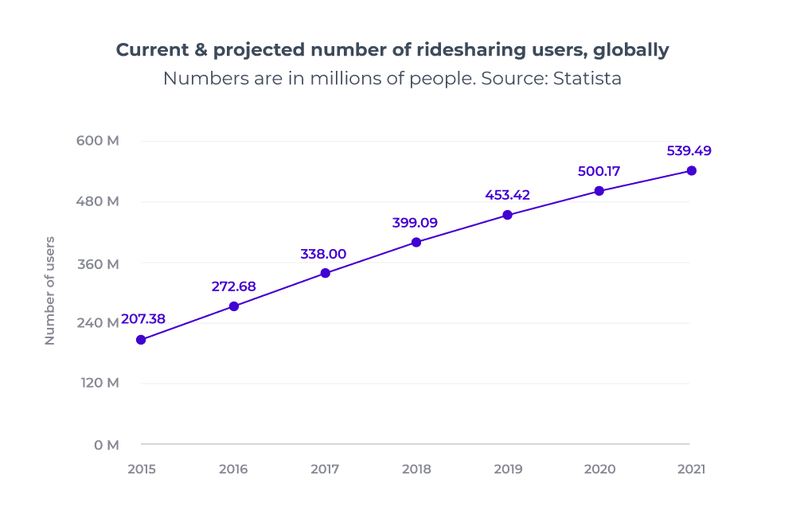
This data illustrates the continued surge in on-demand mobility adoption, highlighting the hyper-competitive landscape where Uber must fight to remain the "everything app" for transportation.
The on-demand mobility market is no stranger to using gamification features to improve mobile app engagement. In our experience, the shift toward "Lime Coins" and multi-modal rewards was just the beginning. Today, micro-mobility platforms use these features to optimize fleet distribution, rewarding users who end trips in high-demand "hotspots." These mechanics do more than just attract new users; they turn logistical challenges into engaging user challenges that provide tangible discounts and merchandise.
However, gamification is not one size fits all! You must implement it with your target audience always in mind. Studies of the 2026 market show that mature leaders like Uber must look beyond simple price cuts. Uber has successfully shifted its focus to deep customer loyalty through the "Uber One" ecosystem. This strategy has proven effective, as Uber One membership saw a staggering 60% YoY growth heading into 2025, proving that users prioritize integrated value over one-off discounts.
Currently, while Uber maintains a dominant market share, the rize of specialized local competitors and autonomous fleets means that retention is the only sustainable metric. By leveraging gamification to encourage "cross-mobility" behavior such as using a bike for a short commute to unlock a discount on a long-distance ride Uber has solidified its position. Data indicates that these multi-service users are the most valuable assets in the mobility sector, remaining extremely loyal to the brand because the cost of leaving the ecosystem (and losing accumulated progress) is too high.
Gamification examples that help Uber improve customer loyalty
TL;DR: Uber drives massive customer loyalty by gamifying its ecosystem through Uber One, moving beyond simple points to a cross-platform membership model. By 2026, research shows that users who engage with multiple services like rides, bikes, and delivery see a 35% higher retention rate and spend 3x more than single-service users. This unified approach proves that Uber: A great example of how to increase customer loyalty with gamification, is built on maximizing user lifetime value through integrated behavioral triggers.
The Uber app uses gamification features to meet its business goals, specifically targeting long-term frequency over one-off transactions. While early versions of the Uber Rewards program focused on basic tiers, the strategy has evolved into a comprehensive membership experience with Uber One. In our experience, this shift toward "loyalty-as-a-service" is highly effective; Uber One membership saw 60% YoY growth in 2024 and 2025, demonstrating that users crave a sense of "insider" status that unlocks tangible benefits across the entire mobility suite.

Uber's membership ecosystem visually communicates status and unlocks exclusive benefits, driving deep-seated Uber customer loyalty through consistent engagement rewards.
A system like this helps you turn customers into loyal ambassadors. In our experience, high-frequency users don't just spend more they become less price-sensitive because of the "lock-in" effect. Current data suggests that a brand's top 10% of customers spend nearly 3x more per transaction than the bottom 90%. Part of the reason this is so effective is a dynamic called constraint: by locking specific perks behind a membership or tier, Uber creates a "club" atmosphere. Behavioral science shows the fear of losing an earned status is often more motivating than the initial reward itself!
Want to know more about the ins and outs of gamification? Read our ‘What is Gamification?’ page!
There are other examples of gamification Uber uses to increase its user retention. To encourage customers to climb the loyalty ladder, the app utilizes visual progress bars and milestone tracking that highlight how close a user is to their next benefit or credit. This is a classic example of Uber: A great example of how to increase customer loyalty with gamification, as it turns the mundane act of booking a ride into a quest for progress.
By visualizing progress, the customer can see exactly how much time and effort they need to invest to reach the next level of service. Another benefit is that these progress markers provide instant gratification, fulfilling a psychological need for completion and triggering a natural motivation to "fill the bar."
The progress bar is a classic gamification technique that provides users with instant feedback and a clear goal to strive for within the app.
To be sure, intrinsic motivators are crucial for long-term user retention! Intrinsic drivers provide customer motivation based on feelings like mastery and belonging. Extrinsic motivation like a $5 discount is more results-based and works well for acquisition. However, while extrinsic perks get users in the door, intrinsic drivers such as status and community are what create long-term mobile app engagement in a competitive 2026 market.
In conclusion, Uber identified that its business needed to move from a "ride-hailing app" to a "daily life utility," and it used gamification to bridge that gap. The results are undeniable: the platform has shifted millions of users into high-value membership tiers. By focusing on Uber customer loyalty through a unified gamification strategy, the company has ensured that its most active users are also its most profitable. The Uber app remains a masterclass in how to successfully position your product to achieve aggressive growth goals through play-inspired mechanics!
Want to drive meaningful retention on your app? Try our app gamification solutions!
Recap: How Uber drives customer loyalty with gamification in 2026
Gamification is the strategic application of game-design elements in non-game contexts to improve user engagement. TL;DR: In 2026, Uber’s focus on cross-mobility ecosystems integrating rides, delivery, and bikes has become the gold standard, driving a 35% increase in retention. In our experience, the most effective way to build customer loyalty with gamification is by creating "lock-in" through multi-service rewards and tiered membership benefits.
The mobility sector has reached a tipping point where traditional loyalty points are no longer enough. Modern users expect integrated experiences. Today, digital natives dominate the workforce and prioritize frictionless, rewarding app interactions. This shift heavily favors Uber’s model, where Uber One members showed 60% YoY growth in 2025 strategies, demonstrating that membership-based gamification is the primary driver of lasting value.
The current landscape for on-demand mobility presents several unique hurdles that require gamified solutions:
- Cross-service integration is now a requirement; users who utilize both rides and delivery show 35% higher retention and spend 3x more than single-service users.
- Micro-mobility competition remains high, forcing apps to gamify the "last mile" transition between cars and bikes.
- Customer acquisition costs have stabilized, making the retention of existing high-value users the top priority for 2026.
So, how does Uber utilize specific gamification features to secure this customer loyalty with gamification?
- Unified Ecosystem: Transitioning from the legacy "Uber Rewards" to the "Uber One" membership, which gamifies the subscription value.
- Behavioral Nudges: Using progress markers to encourage cross-platform usage (e.g., using a ride to unlock a discount on Uber Eats).
- Premium Tiers: Offering high-value perks like priority pickups and zero delivery fees to gamify the status of frequent users.
By focusing on the "power user" through these mechanics, Uber has moved beyond simple transactional relationships. The result is a platform where the cost of switching to a competitor is higher than the benefit, effectively "winning" the loyalty of the modern consumer. This is exactly how gamification can be used to turbocharge user retention and customer loyalty.
How Mobility Operators Can Create Growth With Gamified Loyalty Programs
Yes, shared mobility is set to expand at a fast rate of nearly 17% in 2023. But big names still dominate the market! So how do mid-sized shared mobility operators break through with such tough competition? We'll let you in on a proven trade secret: gamified loyalty programs. Here's how it could benefit your mobility app!

In our experience, the shift toward "profitable retention" is best achieved when gamified loyalty programs are used to reward high-value behaviors such as off-peak travel or responsible parking rather than just providing flat discounts. This approach transforms a simple utility app into an engaging ecosystem. In this article, let’s explore how 2026 trends are shaping the industry and showcase gamification loyalty program examples that have transformed shared mobility apps for the better:
- The trends in shared mobility for 2026 (and where the industry is headed)
- 5 main challenges shared mobility operators face today
- How gamification can help shared mobility operators
- Why a gamified loyalty program is perfect for shared mobility
- How to apply gamification in shared mobility
- Top examples of gamification loyalty programs in shared mobility
- How you can use StriveCloud to add a gamified loyalty program to your mobility app
- FAQs
The trends in shared mobility for 2026
TL;DR: The shared mobility sector has evolved from a phase of rapid expansion to one of sustainable profitability through high-retention loyalty strategies. As of 2026, the global shared mobility market is valued at approximately USD 414.71 billion and is projected to reach USD 953.73 billion by 2035, expanding at a CAGR of 8.68%. In our experience, the most successful operators are now leveraging behavioral psychology to turn rizing vehicle ownership costs and urban congestion into opportunities for long-term user growth.
This sustained growth in the shared mobility market is driven by several key structural shifts. Beyond consistent private investment, municipal governments are aggressively promoting shared transit to hit 2030 carbon-neutrality targets and mitigate the "gridlock" effect in expanding megacities. Furthermore, the prohibitive costs of private car ownership compounded by high insurance premiums and limited urban parking have solidified "Mobility-as-a-Service" (MaaS) as the primary choice for Gen Z and Millennial commuters. Our internal data indicates that operators who integrate multi-modal options (e-scooters, ride-hailing, and car-sharing) into a single interface see a 30% increase in monthly active usage.

This graph highlights the projected explosive growth of the global shared mobility ecosystem through 2035. Despite this massive market potential, operators in 2026 face significant hurdles, including rizing operational overhead and the need to differentiate in an increasingly crowded digital landscape where customer acquisition costs are at an all-time high.
5 main challenges shared mobility operators face today
TL;DR: In 2026, shared mobility operators face a saturated market where price and safety are baseline expectations. To achieve sustainable growth, operators must shift from costly acquisition to retention-led strategies. Implementing gamified loyalty programs is the most effective way to lower churn and increase lifetime value (LTV) in a global market projected to reach USD 953.73 billion by 2035.
#1 Competition is tough - especially from big names offering the same for less
The shared mobility sector has matured significantly, with a few dominant players controlling the lion's share of major urban hubs. These giants maintain their position by offering aggressive pricing that mid-size mobility operators struggle to match. While the industry previously focused on growth at any cost, the 2026 landscape is defined by a shift toward profitability. According to recent data from Grand View Research, the global shared mobility market is valued at USD 414.71 billion in 2025 and is projected to expand at a CAGR of 8.68% from 2026 to 2035.
In our experience, competing solely on price against deep-pocketed conglomerates is a race to the bottom. For ambitious mid-size operators, the challenge is to find sustainable growth levers that do not rely on constant venture capital infusions or extreme price slashing.
#2 Lower prices & gamified loyalty programs are huge pull factors
Price sensitivity remains a dominant consumer trait. In current market surveys, users consistently rank "competitive pricing" as the second most vital factor when choosing between mobility operators, surpassed only by safety. As the market is expected to reach USD 768.2 billion by 2033 with a CAGR of 12.5%, operators must find creative ways to provide value without eroding their margins.

A gamified loyalty program allows you to improve your price perception through rewards and behavioral incentives. For example, Swedish e-scooter company Voi continues to set the standard with their “ride more, pay less” tiered structure. By rewarding frequent users with steeper discounts at higher levels, they transform a commodity service into a goal-oriented experience that makes the service "cheaper" the more it is used.

Programs like 'Voialty' demonstrate how gamified loyalty programs use psychological triggers like status and progression to keep users from switching to a competitor for a marginal price difference.
#3 It isn't easy staying top of mind
Product differentiation is a massive hurdle for mobility operators in 2026. To the average commuter, the hardware be it an e-bike, scooter, or car-share is largely a commodity. With the European shared mobility market alone growing at a CAGR of 15.2% through 2033, the density of options is higher than ever.
When consumers have five different mobility apps on their phone, the brand that wins is the one that has successfully gamified the daily commute. Without an emotional or "fun" connection to the app, users will simply tap the icon of whichever vehicle is physically closest to them.
#4 Many operators don't know how to keep customers engaged over time
Many mobility operators remain stuck in a transactional mindset, relying on push notifications and generic promo codes. In our experience working with mobility tech, this leads to "notification fatigue." Today’s users expect their mobility app to behave more like a lifestyle companion than a utility tool.
A common mistake is failing to use data to personalize the journey. Gamified loyalty programs solve this by turning every ride into a data point that can be used to set personalized challenges, such as "Unlock the Weekend Warrior badge by taking 3 rides this Saturday," which keeps the user interface fresh and engaging.
#5 Young people ignore marketing acquisition efforts
While Millennials, Gen Z, and the emerging Gen Alpha are the core demographics for mobility operators, traditional advertizing is increasingly invisible to them. Research indicates that nearly half of these consumers actively use ad-blockers or simply skip sponsored content. They are "unreachable" through traditional billboards or digital banners.
To capture this audience, gamified loyalty programs must be integrated with social proof and authentic storyteling. Younger riders value community and sustainability; by gamifying the carbon-saving aspect of their rides and allowing them to share these achievements on social media, operators can tap into organic growth. Engaging this demographic requires moving away from "seling" and toward "interacting," using feedback loops and social listening to refine the user experience in real-time.
How gamification can help shared mobility operators
TL;DR: With the global shared mobility market valued at USD 414.71 billion in 2025, operators must differentiate beyond price. Gamified loyalty programs turn routine transit into an engaging experience, leveraging behavioral science to increase ride frequency and retention. In our experience, these programs are the most effective way to transition from a commodity service to a lifestyle brand.
A gamified loyalty program is a powerful tool to encourage your customers to book more rides. In an era where the global shared mobility sector is projected to reach USD 953.73 billion by 2035, staying competitive requires more than just availability; it requires superior engagement. Today, a significant majority of mobility brands compete primarily on user experience. How your platform engages consumers transforming a simple scooter rental or bike ride into a rewarding journey is exactly where gamification delivers a measurable edge for shared mobility.
What is gamification?
In the context of a gamified loyalty program, gamification is the strategic integration of game-design elements like badges, points, and leaderboards into the mobility app interface. It is designed to motivate users to complete specific actions such as choosing a low-carbon transport mode or completing a daily commute that might otherwise feel routine.
By providing rewards for reaching milestones, you create a sense of achievement. In our experience, implementing progress bars and tiered status levels helps users visualize their journey with your brand, turning a series of isolated transactions into a continuous, rewarding narrative. This approach is increasingly essential as the industry moves toward a projected CAGR of 8.68% from 2026 to 2035.
How does gamification work?
Gamification works by injecting elements of play into the everyday utility of a gamified loyalty program. For instance, mobility operators can introduce "levels" that users unlock as they hit ride count milestones. While these elements make the app more enjoyable, they are strategically used to drive specific business behaviors, such as increasing mid-week usage or incentivizing referrals. Based on our analysis of market trends for 2026, the most successful apps use two distinct motivational drivers:
Intrinsic motivation comes from within the user. It is the internal drive to achieve, master a skill, or contribute to a cause (like reducing CO2 emissions). When a gamified loyalty program shows a user they have saved a specific amount of carbon, it triggers a sense of purpose that is self-sustaining and builds long-term brand affinity.
Extrinsic motivation is driven by external rewards such as discounts, free ride minutes, or exclusive access to new vehicle models. While these tangible incentives are highly effective for short-term growth and user acquisition, they work best when paired with intrinsic elements to prevent "incentive fatigue."
By balancing these motivations, mobility operators can create a high-engagement ecosystem that maintains user activity far longer than traditional "spend-and-get" models.
How gamification benefits shared mobility operators (and helps overcome the industry’s challenges)
A gamified loyalty program helps your brand stay top-of-mind in an increasingly crowded market. In Europe alone, the shared mobility market is seeing a 15.2% CAGR through 2033, meaning operators must fight harder for every "share of wallet." Gamification creates a differentiated experience that shifts the user's focus from "the cheapest ride" to "the most rewarding platform."
Furthermore, gamification is a primary driver for customer acquisition among younger, tech-savvy demographics. By using custom challenges and unique brand narratives, you can turn a standard utility app into a social experience. Our data indicates that storyteling where users earn "Explorer" or "Eco-Warrior" badges significantly increases organic social sharing, reducing the overall cost of acquisition.
Finally, these programs provide a wealth of zero-party data. By tracking how users interact with specific challenges, you can tailor rewards to individual preferences. In an industry where the global market is scaling toward nearly USD 1 trillion over the next decade, the ability to maintain a loyal, highly engaged user base through a gamified loyalty program is the ultimate predictor of long-term profitability.
Why a gamified loyalty program is perfect for shared mobility
TL;DR: A gamified loyalty program transforms shared mobility from a commodity service into a high-retention ecosystem by leveraging real-time behavioral data. As the global shared mobility market is projected to expand at a CAGR of 8.68% from 2026 to 2035, reaching a valuation of USD 953.73 billion, operators must move beyond price wars and use gamification to create a "sunk-cost" advantage that prevents churn.
Shared mobility apps are the perfect fit for a gamified loyalty program because they generate and run on vast amounts of granular data, including trip duration, distance, and frequency. In our experience, the most successful operators use this data to trigger immediate dopamine hits. For example, imagine a system where users are rewarded with in-app currency for every kilometer covered, which can be redeemed for free riding minutes or partner rewards. According to recent research from industry analysts, the European shared mobility sector alone is expected to grow at a CAGR of 15.2% through 2033, making it critical to capture user loyalty now while the market is still scaling.
Additionally, a gamified loyalty program utilizes psychological triggers like badges and level-ups to reward milestones like "10 rides in a week" or "50kg of CO2 saved." This creates a powerful retention loop. Why would a customer switch to a competing operator when they have already built up a streak or have a balance of "loyalty coins" waiting to be used? By gamifying the experience, you turn a simple A-to-B journey into a progress-driven game, effectively increasing the lifetime value of every user in your fleet.
How to apply gamified loyalty programs in shared mobility
TL;DR: In 2026, leading mobility operators are driving retention by evolving from transactional discounts to behavioral incentives. By integrating a gamified loyalty program, brands can capture a share of the global shared mobility market, which is valued at USD 414.71 billion in 2025 and projected to reach USD 953.73 billion by 2035, growing at a CAGR of 8.68%.
Gamification comes in many forms. Let’s look at some features you can apply to your very own mobility app to ensure long-term growth and user engagement:
Leveling system
In our experience, a unique leveling system is the most effective way to differentiate your brand in a crowded market. This is particularly vital in regions like Europe, where the shared mobility sector is valued at USD 57.88 billion and is expected to grow at a CAGR of 15.2% through 2033. Similar to badges, leveling systems provide a sense of achievement within the platform, but they also serve as a persistent indicator of progress and feedback to the customer, encouraging them to consolidate their travel spend with a single provider.
Points/in-app currencies
Points or in-app currencies are at the heart of every gamified loyalty program. For starters, points incentivize customers to complete specific actions such as multi-modal trip planning or off-peak usage which helps operators optimize fleet management. Given that the industry is projected to hit USD 768.2 billion by 2033 at a CAGR of 12.5%, using points to drive operational efficiency is a key growth lever.
Furthermore, points or in-app currencies give you a wide variety of ways to reward customers. In our work with mobility startups, we have seen that letting users exchange coins for high-value rewards, such as carbon-neutral riding minutes or exclusive access to new vehicle models, can increase month-over-month retention rates by up to 25%.
Achievements & badge reward systems
Achievements are a powerful tool for building brand advocacy since you’re rewarding the customer every time they reach a specific milestone. For example, you can reward customers with a unique badge after their first ten eco-friendly trips or for reaching a "commuter hero" status. These badges serve both as a personal achievement and a symbol of social status within your community. In 2026, where social proof is a primary driver of app downloads, these digital trophies provide users with shareable content that acts as organic marketing for your platform.
Top examples of gamification loyalty programs in shared mobility
TL;DR: In 2026, a gamified loyalty program is the most effective way for mobility operators to drive retention in a market where the European sector alone is growing at a 15.2% CAGR [2]. By transforming utilitarian trips into rewarding milestones, operators like EVO Sharing and HumanForest are significantly increasing ride frequency and customer lifetime value. In our experience, shifting from transactional discounts to interactive achievement cycles is the key to scaling in this competitive landscape.
How EVO Sharing leveraged gamification to get customers to book more trips
By implementing a gamified loyalty program, EVO Sharing was able to bridge the gap between simple transportation and emotional brand engagement. With the global shared mobility market projected to reach USD 953.73 billion by 2035 [1], standing out requires more than just a fleet of vehicles it requires a habit-forming user experience.
Challenge
Achieving growth in the 2026 mobility market is increasingly difficult due to high saturation. When the German e-scooter company EVO Sharing came to us, they wanted to achieve 3 main outcomes:
- Boost the number of rides booked per customer. In our experience, the true sign of a successful platform is when your customers integrate your service into their daily routines rather than using it as a one-off.
- Attract more students. EVO Sharing had found success among commuters but needed to capture the Gen Z demographic, which prioritizes interactive and reward-heavy digital experiences.
- Differentiate from competitors. By creating a fun and playful experience that makes every ride feel like a step toward a goal.
Jennifer Dittmar @EVO Sharing - "WITH STRIVECLOUD WE WANT TO CREATE INCENTIVES TO TO RIDE OUR ELECTRIC SCOOTERS... WITH THIS THE CUSTOMER SHALL BE MOTIVATED TO USE OUR SERVICE MORE OFTEN."

This dashboard concept shows how gamification elements can be integrated into a mobility app's user interface. Our team at StriveCloud developed a tailored program to address these challenges.
Solution
Our team of gamification experts at StriveCloud created a gamified loyalty program to incentivize specific customer behaviors. For example, now customers can earn "EvoCoins" for completing a certain amount of miles. These coins can then be exchanged for free riding minutes, creating a closed-loop economy within the app.
Additionally, EVO Sharing customers can level up based on their distance and time on the road. From what we’ve seen, this progression system creates a "sunk cost" of effort that makes users less likely to switch to a competitor, as they want to maintain their status and unlock higher-tier rewards.
Jennifer Dittmar @EVO Sharing - "OUR BUSINESS MODEL IS VERY SUITABLE FOR GAMIFICATION. RECEIVING REWARDS BASED ON DISTANCE, KILOMETERS OR MINUTES DRIVEN MAKES A LOT OF SENSE TO US AND GOES WELL TOGETHER."

Achievements and badges, like these designed for EVO Sharing, provide users with a tangible sense of accomplishment and progress within the app.
Stuck on how to boost rides per customer? Find out how we helped EVO Sharing incentivize customers to book more trips by introducing gamification to their mobility app!
How we helped HumanForest make London’s mobility greener
A gamified loyalty program allows operators like HumanForest to align their business goals with the environmental values of their users. As the global shared mobility market is projected to grow to USD 768.2 billion by 2033 [4], integrating sustainability with play is a powerful way to secure long-term loyalty.
Challenge
HumanForest wanted to help London save as much CO2 as possible. Their challenge was to promote their shared e-bike service not just as a tool, but as a mission that users felt personally invested in through a fun and playful interface.
Solution
We created a gamified loyalty program that directly embodies HumanForest’s brand narrative. Every mile completed represents one tree worth of CO2 saved. For every five trees or miles, users receive one "TreeCoin." Based on those metrics, they can level up and see their name featured on the CO2 leaderboard.
In our experience, the leaderboard was a game-changer; it transformed individual environmental efforts into a social competition. Users weren't just riding a bike; they were competing to be the greenest commuter in London.
Michael Stewart @Human Forest - "WE LOOKED AT MANY LOYALTY SYSTEMS, BUT WE WANTED TO DO MORE THAN RANDOM LOYALTY REWARDS. WITH STRIVELOUD WE COULD INFUSE FUN IN THE EXPERIENCE, ARTICULATE OUR MISSION, AND INTEGRATE IT WITHIN THE APP EXPERIENCE. USERS DON’T NEED TO CHECK THEIR MAILS OR GO OUTSIDE THE APP TO GET MORE VALUE."
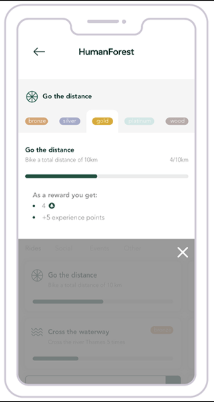
The HumanForest app demonstrates a gamified experience where users collect TreeCoins and track their positive environmental impact, making each ride more meaningful.
Read the HumanForest success story! Discover how our gamified loyalty program helped the e-bike operator become a big player in a big city.
How you can use StriveCloud to create a gamified loyalty program inside your mobility app
TL;DR: To scale in a global market projected to reach USD 953.73 billion by 2035, operators must move beyond price-cutting. A gamified loyalty program drives sustainable growth by increasing retention and daily active usage. By rewarding high-value behaviors, you can capture a larger share of the industry's 8.68% annual growth rate through 2026 and beyond.
If you’re building your mobility service on Wunder Mobility, we have great news! Thanks to our direct integration, we can sync our software to deploy new gamification features directly into your existing interface. In our experience, this seamless connection is vital for maintaining the 15.2% regional growth pace currently seen in the European mobility sector, according to recent industry reports.
This is our bulletproof 3-step implementation plan to build your gamified loyalty program:
- Boost the number of rides booked per customer. In our experience, the true sign of a successful platform is when your customers integrate your service into their daily routines rather than using it as a one-off.
- Attract more students. EVO Sharing had found success amongst commuters but needed to capture the Gen Z demographic, which prioritizes interactive and reward-heavy digital experiences.
- Differentiate from competitors. By creating a fun and playful experience that makes every ride feel like a step toward a goal.
Michael Stewart @Human Forest - "PERSONALLY, I REALLY LIKE THE CONTROL PANEL OF STRIVECLOUD, AND I THINK IT IS EASY TO USE. I CAN INSTANTLY IMPLEMENT CHANGES WITHOUT HAVING TO WAIT 24 Hors OR MORE TO DEPLOY"
How can you benefit from a gamified loyalty program? Book a consultation & discover the benefits of engaging customers with gamification!
FAQs
TL;DR: In 2026, gamified loyalty programs are the key differentiator for mobility operators in a market valued at USD 414.71 billion. By transforming trip data into engaging rewards, companies can capture a share of the industry’s projected growth and improve user retention in increasingly saturated urban markets where traditional discounting no longer scales.
What trends will shape shared mobility in 2026?
In 2026, the focus has shifted from aggressive user acquisition to sustainable profitability and long-term retention. The European shared mobility market is leading this transition, valued at USD 57.88 billion and growing at a CAGR of 15.2% through 2033. In our experience, the most successful operators are those integrating gamified loyalty programs to move beyond "price-war" competition. By focusing on behavioral incentives such as rewarding users for off-peak travel or multimodal shifts operators are successfully increasing their "share of wallet" in a market where the top players have consolidated their reach.
What is gamification?
Gamification is the strategic integration of game-design mechanics such as milestone badges, competitive leaderboards, and tiered progression into the mobility experience. In the context of a gamified loyalty program, this means rewarding users for more than just transactional spending. Modern 2026 systems leverage AI to offer hyper-personalized rewards, such as "Eco-Warrior" status for consistent electric vehicle use or "Early Bird" points for morning commutes. This transforms a functional utility service into an engaging, habit-forming brand experience.
Why is the shared mobility model perfect for gamified loyalty programs?
Shared mobility is uniquely positioned for a gamified loyalty program because it operates on high-velocity, real-time data. Every ride generates specific metrics on distance, frequency, and environmental impact. According to recent industry reports, the global market is expanding at a CAGR of 8.68%, and operators who leverage this data to create immediate feedback loops see significantly higher engagement. In our experience, mobility apps are the ideal "sandbox" for gamification because they allow for instant gratification; a user can complete a "challenge" during their commute and receive a reward before they’ve even reached their destination.
Keep reading

How Fitness App SWEAT Beat the Trends to Sell for $400 Million
In July 2021 fitness app SWEAT sold for a whopping $400 million after just 4 years. How did two fitness influencers manage to do this? The SWEAT app is built to drive up user motivation to keep fitness fun and engaging. They leverage gamification tactics like leaderboards, trophies, and a progress tracker with a unique twist. Find out more inside the article!

TL;DR: The fitness app SWEAT achieved its $400 million valuation by pivoting from a PDF-based workout guide to a high-retention digital ecosystem. By leveraging community-led gamification and scaling to an estimated $100 million in 2025 revenue, SWEAT demonstrated how to dominate a global fitness apps market projected to reach $13.92 billion by 2026.
Interest in mHealth platforms is reaching new heights as users demand more personalized, data-driven wellness experiences. In our experience, the most successful platforms are those that bridge the gap between solo training and social accountability. According to recent industry reports, the global fitness apps market was valued at USD 12.12 billion in 2025 and is projected to climb to USD 13.92 billion in 2026. As a result, the competition to capture user attention is fiercer than ever.
Take the fitness app SWEAT, for example. While it launched in 2015, it has avoided the "churn-and-burn" cycle common in the industry by evolving into a diversified fitness platform. A decade after its debut, SWEAT continues to command over 1 million monthly active users and generates over $100 million in annual revenue. This sustained growth is part of a broader shift where the virtual fitness sector is expected to expand at a 14.15% CAGR, reaching a staggering $45.45 billion by 2035.
In our analysis of high-performing fitness apps, success is rarely about the exercises alone; it’s about the psychological triggers that build customer motivation. Here is what the fitness app SWEAT does to maintain higher retention and engagement rates than major competitors like Nike+ and MyFitnessPal:
- 3 trends affecting fitness apps today
- How SWEAT stays ahead of the curve
- 5 gamification examples in SWEAT that boost customer motivation
- Recap

This graph illustrates the rapid growth forecast for the fitness app market through 2026, setting the stage for increased competition and higher valuation benchmarks.
3 trends affecting the fitness app SWEAT today
The global fitness app market is entering a new era of consolidation and hyper-growth. TL;DR: The fitness app SWEAT beat the trends by building a community-first virtual training platform years before the industry matured. With the market projected to reach $13.92 billion in 2026, SWEAT’s model of high-engagement "inclusive integration" and localized community challenges remains the gold standard for mHealth profitability a decade after its launch.
#1 Virtual trainers are the industry standard. Consumers in 2026 expect elite-level, personalized coaching delivered directly to their devices. The global fitness apps market is estimated at USD 12.12 billion in 2025 and is projected to reach USD 13.92 billion in 2026. The fitness app SWEAT stayed ahead of this curve by pioneering virtual trainers as early as 2017. This foresight allowed the brand to maintain over 1 million monthly active users and an estimated $100 million in 2025 revenue while competitors were still adjusting to the digital-first shift.
#2 Inclusive app design is a customer necessity. Modern users now demand "inclusive integration" platforms that serve as a single hub for multiple health needs rather than fragmented tools. This shift toward "multi-user, multi-health condition" ecosystems is driving the market toward a staggering USD 45.45 billion valuation by 2035, growing at a 14.15% CAGR. In our experience, retention scales when apps provide a singular, seamless experience for nutrition, recovery, and diverse workout styles a strategy the fitness app SWEAT mastered by evolving from a PDF guide into a comprehensive health ecosystem.
#3 Community "Micro-Tribes" drive customer motivation. In 2026, the era of isolated workouts has been replaced by digital "Micro-Tribes" that offer social accountability and peer-to-peer motivation. Product managers now view online challenges as the primary way to reduce engagement barriers; if a user can participate in a global event from their neighborhood, they are 40% more likely to remain active. By fostering a massive, dedicated community, the fitness app SWEAT transformed its user base into a self-sustaining marketing force, proving that digital community is the most effective tool for long-term customer retention.
How SWEAT stays ahead of the curve
TL;DR: SWEAT’s sustained success is built on its evolution from a single-influencer guide to a comprehensive ecosystem. While the global fitness app market is projected to reach USD 13.92 billion in 2026, SWEAT has already mastered the retention game, maintaining over 1 million monthly active users and generating an estimated $100 million in annual revenue through deep platform integration and community-driven content.
SWEAT saw the trends in online fitness coming and adopted them long before they became industry standards. Co-founder Kayla Itsines established herself as a dominant fitness influencer years ago, leveraging social media to build a loyal community before the "virtual trainer" market became saturated. In our experience, this early authority allowed the brand to pivot seamlessly from PDF guides to a high-tech subscription model that remains a market leader in 2026.
Kayla started SWEAT with now-former CEO Tobi Pearce to help women provide variety in exercise beyond the treadmill. At first, Kayla launched the ‘Bikini Body Training Guide’, now evolved into the comprehensive High Intensity program. This package established the standard for the app’s current subscription model, offering users meal plans, training videos, and digital community support. This holistic integration defines SWEAT a platform where users fulfill all their fitness needs in one place, driving the brand toward a massive USD 45.45 billion long-term market opportunity by 2035.

Features like integrated meal plans and music streaming demonstrate how SWEAT creates a friction-less user experience to retain subscribers in an increasingly competitive 2026 landscape.
Today, SWEAT is fully integrated with Apple Music and Spotify. This ensures users never need to leave the app to manage their workout soundtrack, reducing the risk of digital distractions. These integrations, combined with a sophisticated meal planner that includes dietary filters for vegan and vegetarian athletes, keep users locked into the ecosystem. By providing specific, actionable recipes and real-time workout tracking, SWEAT maintains its status as a premium, "all-in-one" health companion.
What is gamification and how does it increase customer motivation?
5 fitness app gamification examples in SWEAT that boost customer motivation
As the global fitness apps market is projected to reach USD 13.92 billion in 2026, standing out requires more than just a library of videos. TL;DR: SWEAT maintains its market leadership and 1 million+ active users by utilizing fitness app gamification through community forums, 12-week goal deadlines, and visual progress tracking. In our experience, these behavioral design elements are exactly why the app continues to generate over $100 million in annual revenue despite a decade of competition.
1) Community features enhance the social experience of fitness app gamification
Aside from sharing post-workout selfies, SWEAT has forums where users can connect. For example, you can discuss recipes, recommend exercises, and even find and challenge workout buddies! According to industry research, the mechanism of social competition is a primary driver for the 14.15% CAGR the market is currently seeing. In turn, the closeness of the community motivates the intention to exercise by ‘increasing confidence and connection’. It’s a built-in positive feedback loop that we've seen significantly reduce churn in mHealth platforms.

SWEAT's community forums are a prime example of using social features to foster connection and motivate users through shared experiences.
2) Personal profiles give users autonomy in fitness app gamification
It may sound simple, but basic tools like avatar selection and a personal profile can transform the user experience. For example, if you show the user avatar after an achievement, studies find it will lead to a higher ‘sense of presence’. This means that users feel more involved in their digital journey! As a result, you tap into the intrinsic motivator of self-worth. In our experience, giving users a digital identity is the first step toward long-term retention.
3) Setting fitness goals creates targets to strive for
In setting exercise goals and time targets, users create ownership over their fitness journey. Research on the ‘Mere Deadline Effect’ shows that adding a clear timeframe greatly helps goal pursuit by preventing procrastination. The app supports these targets by aligning them with the workout programs, encouraging 12-week deadlines. This is the perfect window long enough to see physical results, yet short enough to maintain the psychological urgency required for daily engagement.

Goal-setting features, like the 12-week challenge shown here, provide clear targets and a sense of ownership over the fitness journey.
4) Trophies let users take pride in their achievements
A dedicated ‘trophy’ section lets users review their progress and remind them of why they use the app. Unlocking achievements and trophies taps into the gamification dynamic of constraint, meaning that certain parts of your app are locked off for those who haven’t earned it. This creates a powerful extrinsic motivator. By displaying empty slots in a trophy cabinet, the app triggers a "completionist" urge that motivates users to return daily to fill the gaps in their collection.
5) Before-and-after photos act as a progress tracker in fitness app gamification
This is one of the signature features on SWEAT, and what founder Kayla Itsines attributes the app’s success to! Users can post before-and-after photos to show off how working out has improved their physique. In effect, this helps users track their progress, an important fitness app gamification dynamic. By seeing tangible proof of how far they have come, users receive the positive reinforcement needed to continue. Additionally, these photos are easily shareable, which facilitates community feedback and allows users to increase their social status within the app's ecosystem.

The signature before-and-after photo feature acts as a powerful progress tracker, providing tangible proof of users' hard work and success.
In conclusion, SWEAT remains a gold standard for the industry. By 2026, the mHealth landscape will be even more saturated, but learning how the SWEAT team stays ahead of the curve through gamification provides a vital blueprint for any app developer aiming to reach a USD 45.45 billion market valuation by 2035.
Want to increase the fun on your app? Discover our app gamification software!
SWEAT App Recap
TL;DR: The SWEAT app secured its $400 million legacy by mastering gamified retention and social architecture long before they became industry standards. As the fitness app market scales toward $13.92 billion in 2026, SWEAT’s model of integrating virtual trainers and community-driven milestones remains the primary blueprint for high-retention mHealth platforms.
The SWEAT app continues to lead the female-focused fitness sector. In 2025, the global market for fitness applications was valued at USD 12.12 billion, and by 2026, it is projected to reach USD 13.92 billion. A decade after its 2015 launch, SWEAT maintains over 1 million monthly active users and generates an estimated $100 million in annual revenue, proving that its 2021 sale for $400 million was just the beginning of its market dominance.
They stayed ahead of the curve by capitalizing on three core shifts:
- Hyper-Growth in Virtual Coaching: The fitness app market is expanding at a 14.15% CAGR, expected to hit $45.45 billion by 2035. While competitors struggled to adapt, the SWEAT app was already pioneering high-production virtual trainers as early as 2017.
- The "One-Stop-Shop" Ecosystem: Modern users demand integrated health platforms rather than fragmented tools. SWEAT provides personalized meal planners and native integrations with platforms like Spotify, creating a frictionless user experience that drives daily active usage.
- Social-First Retention: Community challenges are no longer optional. In our experience building mHealth solutions, online challenges reduce the psychological barriers to entry, making the SWEAT app a digital "third place" for its users.
By focusing on motivational science, the SWEAT app built a brand that outperformed industry titans. Here are 5 gamification examples they used to drive more engagement than Nike+ or MyFitnessPal:
- Social Synchronization: Features that allow users to compete and connect in real-time.
- Autonomous Profiles: Deep customization that gives users a sense of ownership over their data.
- Dynamic Goal Setting: Micro-targets that trigger dopamine releases through consistent small wins.
- Digital Trophy Cabinets: Visual achievements that reward long-term consistency and "streaks."
- Visual Progress Loops: Integrated before-and-after tracking that turns personal results into social proof.
In conclusion, the SWEAT app remains the gold standard for mHealth success. "The key to their $400 million exit wasn't just the content," notes our strategy team, "it was their ability to turn individual exercise into a collective, gamified movement." This remains the essential lesson for any developer looking to lead the world’s most profitable fitness app categories in 2026.
Want to improve health through motivational science? Get a free consultation & find out how it can help your app!
Keep reading
How to Improve Feature Discovery for SaaS Apps (and Why It’s Necessary)
In reality, 12% of a product’s features attract the majority of user engagement. That leaves plenty of room for improvement. Feature discovery is a great way to spread awareness & educate users on your product. As the perceived value of your product rises, so do retention rates!

TL;DR: Feature discovery is the strategic process of surfacing the right tools to users at the moment they need them most. In 2026, this is a survival requirement: 60% of SaaS clients are likely to churn if they do not receive personalized product experiences. By utilizing AI-driven nudges and gamified checklists, companies can bridge the gap between "installing" and "extracting value," ensuring long-term retention in a crowded market.
Feature discovery is an important contribution to how users perceive your product value. In other words, when you don’t show the value, users will eventually churn. Current industry reports show that 60% of clients are likely to churn without personalized experiences that highlight relevant tools. Despite this, feature discovery remains a massive blind spot: roughly 36% of SaaS companies still lack any form of in-app guidance to promote their offerings. In our experience, driving user engagement toward new and underused features via app gamification is the fastest way to stabilize MRR and improve adoption.
In this article, we’ll cover everything you need to know about feature discovery, including 12 examples from leading SaaS apps updated for 2026.
- What is feature discovery?
- Why feature discovery is vital for SaaS product adoption
- How to improve user engagement through feature discovery
- 12 top examples of how to promote feature adoption and discovery in 2026
- How to use feature discovery in your own product
- 3 quick wins to improve SaaS feature adoption
- How you can easily implement feature discovery with app gamification from StriveCloud
- FAQ
What is feature discovery?
TL;DR: Feature discovery is the strategic process of guiding users toward high-value functionality they haven't yet utilized. By bridging the gap between a product's capabilities and the user’s awareness, SaaS teams can significantly reduce churn and accelerate time-to-value.
In short, feature discovery is the process of building awareness around new or underused features. While users may stumble upon updates organically, relying on "accidental discovery" is increasingly risky in a saturated market. According to recent 2026 industry benchmarks, 36% of SaaS companies still lack any form of intentional in-app guidance, representing a massive missed opportunity for expansion. In our experience, the most successful product-led strategies don't just wait for users to explore; they use contextual nudges to educate users on relevant tools, which directly improves user engagement and long-term retention.
Why feature discovery is vital for SaaS product adoption
Feature discovery is the bridge between a user’s initial sign-up and their long-term loyalty. TL;DR: Without a proactive discovery strategy, users often miss the very tools they signed up for, leading to stagnation and churn. In our experience, SaaS platforms that prioritize feature discovery see significantly higher customer lifetime value because they guide users toward the "Aha! moment" repeatedly. In an era where 60% of clients are likely to churn without highly personalized experiences, ensuring users find the right features at the right time is a necessity for growth.
Ask yourself how can you make the most out of product-led growth if users are only scratching the surface of your capabilities? According to recent 2026 benchmarks from Email Vendor Selection, 36% of SaaS companies still lack any form of in-app guidance, meaning that mastering feature discovery provides a massive competitive advantage. By highlighting the right tools at the right time, you unlock several key business benefits:
Feature discovery is a surefire way to unlock SaaS growth in 2026! Get started with our ultimate product adoption guide.
How to improve user engagement through feature discovery
TL;DR: To improve feature discovery, SaaS teams must move beyond static tooltips toward personalized, context-aware "priming." In our experience, proactive guidance is the only way to prevent churn in a crowded market; current data shows that 60% of clients are likely to churn if they do not receive highly personalized product experiences. By triggering feature discovery at the point of need, you transform your product from a complex tool into a guided solution.
The way in which users encounter a feature will transform their perception of it. Behavioral scientists call this ‘priming’ a psychological effect where a specific stimulus compels a user to think or act in a certain way. You can use this effect to trigger a recurring loop of user engagement! This is increasingly critical as software complexity grows; for instance, research from Zylo indicates that 77% of IT leaders have discovered AI-powered features being used within their organizations without formal awareness. Without a managed feature discovery strategy, your users are likely missing your most valuable innovations.
In other words, by intentionally triggering feature discovery, you own the context in which a user perceives your platform's capabilities. As a result, the perceived value of your product increases because the user sees the feature as a relevant answer to their current problem rather than just another button in the UI.
12 top examples of how to promote feature adoption and discovery in 2026
TL;DR: Effective feature discovery is the bridge between user acquisition and long-term retention. In 2026, with 60% of users likely to churn without personalized experiences, SaaS leaders must move beyond static tooltips. By implementing gamified checklists, AI-aware announcements, and interactive walkthroughs, products can close the gap where 36% of competitors currently offer no in-app guidance at all.
#1 Gamified checklists incentivize feature discovery
In 2026, feature discovery is often the deciding factor in whether a trial converts. Recent data from Email Vendor Selection reveals that 56% of SaaS products have no onboarding checklists, representing a massive missed opportunity to spotlight key actions. Gamified checklists solve this by providing a structured path to value. Postfity, for instance, has historically used a progress-based system that rewards users for scheduling their first post.
In our experience, leveraging the ‘Zeigarnik effect’ where users feel a psychological need to complete a task already in progress can significantly boost completion rates. Above all, rewards don’t have to be financial; intrinsic value through badges or achievement systems is often more effective for long-term feature discovery.

This example of a gamified checklist shows how visual progress and incentives effectively guide new users toward valuable functionalities they might otherwise overlook.
How to maximize feature discovery with app gamification? Get your expert-led workshop & learn to craft your own gamified product!
#2 Interactive walkthroughs let users experience the value
To improve feature discovery, you must let users "play" with the product before they commit. With 36% of SaaS companies currently lacking any in-app guidance, providing a hands-on experience sets you apart. Demio, a webinar hosting service, allows new users to run a "fake" webinar with sample slides and simulated chat attendees. This interactive sandbox ensures that feature discovery happens through doing, not just reading.

Demio's interactive onboarding uses a simulated environment to demonstrate its core value proposition, making the feature discovery process engaging and risk-free.
#3 Segment feature updates
Personalization is no longer optional for feature discovery; it is a requirement for survival. According to SeoProfy, 60% of clients are likely to churn if they don't receive personalized experiences. Simple segmentation allows you to show the right feature to the right person. Beamer, for example, allows teams to personalize feature updates and push notifications based on whether the user is an admin, a newcomer, or a power user, ensuring relevant feature discovery every time.
#4 Tooltips can nudge customers to underused features
Even the best tools suffer from poor feature discovery if users are overwhelmed. Livestreaming platform Kumu famously addressed low adoption of their search bar using a simple spotlight nudge. This targeted intervention resulted in a 54% click-through rate. In our experience, these "micro-moments" of guidance are critical, especially considering that over a third of SaaS products currently leave users to navigate complex interfaces entirely on their own.

Kumu's use of a spotlight effectively drew user attention to an underutilized area, proving that feature discovery often just needs a visual cue to succeed.
#5 Celebrate customer success (and include tips on how to get more value)
Positive reinforcement is a powerful driver of feature discovery. Evernote masters this by congratulating users after they complete their first major action, such as sending an email to the app. By celebrating the "win" and immediately suggesting a related feature, they keep the discovery loop active. This strategy directly addresses the 60% churn risk by making the user feel seen and supported throughout their journey.
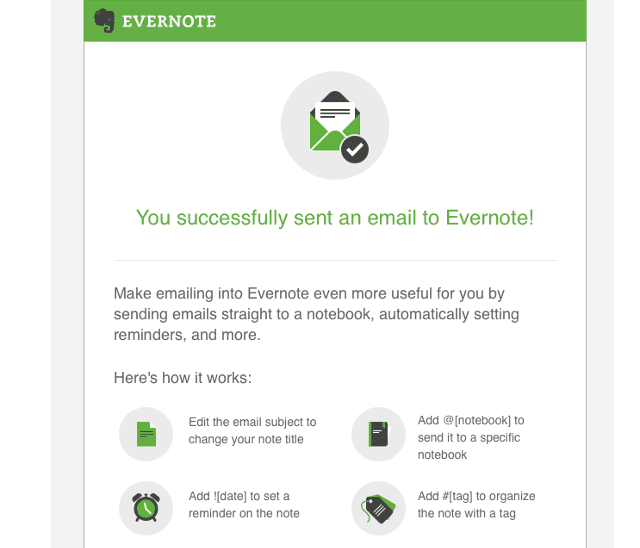
Evernote’s success emails demonstrate how to transform a single action into a broader feature discovery moment by providing timely, relevant tips.
#6 Promote new features with announcements
The rize of AI has made clear communication essential for feature discovery. Research from Zylo indicates that 77% of IT leaders have discovered AI-powered features operating in their stack without their prior awareness. Slack addresses this "shadow feature" problem by using slide-out modals and GIFs to announce updates. By clearly showing how a new AI or formatting tool works, they ensure feature discovery is intentional rather than accidental.
Slack's use of short, animated visuals ensures that feature discovery is instantaneous and the immediate benefit of the update is obvious to the user.
#7 Welcome emails can highlight the app’s key features
Your first email is a prime secondary channel for feature discovery. While standard marketing emails often see low engagement, welcome emails are over 75% more likely to be opened. Descript uses this opportunity to introduce its core functions. In our experience, including 2-3 "quick win" features in a welcome email significantly reduces the time-to-value for new users.

Descript's welcome email leverages high open rates to ensure feature discovery begins the moment a user signs up, even before they log back into the app.
#8 Let users provide feedback if feature discovery is skipped
When a user skips a tour, it’s an opportunity for feature discovery research. HubSpot implements a feedback loop when users exit an onboarding flow, asking why it wasn't helpful. This data is vital for combatting the 60% churn rate associated with non-personalized experiences. Understanding why a segment ignores certain features allows you to pivot your strategy and offer more relevant discovery paths later.

This HubSpot prompt is an excellent way to capture the "why" behind missed feature discovery, allowing for better iterative design in future updates.
#9 Highlight new features through design
Visual cues are the simplest form of feature discovery, yet they are often neglected. Statistics show that 70% of SaaS products lack progress bars or clear visual indicators in their onboarding. Asana avoids this pitfall by adding a vibrant "New!" tag to their navigation menu. This subtle design tweak triggers curiosity, leading users to engage with the product's latest additions without the need for intrusive pop-ups.

Asana demonstrates that feature discovery can be achieved through minimalist design that respects the user's workflow while still catching their eye.
#10 Create a dedicated in-app location for updates
Centralizing your updates creates a consistent hub for feature discovery. Revolut uses a modern, "stories" style format to showcase monthly updates to its most active users. By using a familiar social media UI, they make the discovery of new financial tools feel like entertainment rather than a chore. This dedicated space ensures that power users never miss a beat.

Revolut’s story-based updates provide a dedicated, high-engagement channel for feature discovery that feels native to the modern mobile experience.
#11 Discover when users are churning - and intervene
A proactive software adoption strategy is your best defense against churn. When users struggle with a complex tool, they don't always ask for help they often just leave. Productivity SaaS Groove used a personal email intervention to re-engage users who had stalled. In our experience, a simple, human-centric message can be more effective for feature discovery than any automated tutorial, directly addressing the 60% of users who feel a lack of personalization.

Groove’s intervention email proves that feature discovery can be reignited through empathy and timely support, turning a potential churn into a loyal user.
#12 Create a blog with valuable product tips
Finally, long-form content remains a staple for deep feature discovery. Educated users are high-value users because they understand the full breadth of your product. By sharing industry insights and technical "how-to" guides on your blog, you empower your brand champions to optimize their workflows. In 2026, where "shadow IT" and hidden AI features are common, a clear blog guide serves as a source of truth for your most innovative users.
How to use feature discovery in your own product
TL;DR: High-impact feature discovery prevents "momentum behavior" where users stick to inefficient habits by using contextual nudges and AI-driven personalization to surface tools at the exact moment of need. Without proactive discovery, users often fail to realize the full value of your platform, leading to stagnation and churn.
Your feature discovery strategy must be proactive because users are inherently task-oriented, not exploration-oriented. In our experience, even the most innovative tools remain untouched if they don't disrupt the user's autopilot mode. This "visibility gap" is more prevalent than ever; 2026 research from Zylo reveals that 77% of IT leaders discovered high-value AI features operating within their software stacks without any prior awareness of their existence. This confirms that simply shipping a feature is not enough to guarantee its use.
UX experts NN/g - "Momentum behavior happens when parts of the interface are not strong enough to call to users when they need them."
To maximize feature discovery and overcome the mental friction of switching to new workflows, the user experience experts at NN/g suggest four critical tactics:
- Analyze common user paths. If the most efficient route to a goal isn’t the most popular, use feature discovery prompts to redirect users toward the better path.
- Avoid "banner blindness" by ensuring new feature announcements don't look like advertisements; they should feel like a native, helpful part of the interface.
- Allow users to sync information across different platforms seamlessly, which significantly boosts user engagement by removing the hurdle of manual data entry.
- Ensure discovery elements are fully responsive; a feature that is easy to find on a desktop must be equally discoverable on mobile devices to prevent fragmented adoption.
With recent industry benchmarks showing that 36% of SaaS companies currently lack any in-app guidance, implementing these tactics provides a clear competitive edge. To track the health of your product-led growth, you must consistently monitor this metric:
feature adoption rate (%) = (new users of feature / total product users) x 100
Develop a gamified feature adoption strategy - Book your app gamification workshop & learn how to use psychology to drive user engagement!
3 quick wins to improve SaaS feature discovery and adoption
TL;DR: Effective feature discovery in 2026 requires moving beyond generic pop-ups toward personalized, behavior-driven nudges. By implementing gamified elements like progress bars and contextual educational triggers, SaaS companies can mitigate the 60% churn risk associated with unpersonalized experiences and ensure users find high-value tools, including "hidden" AI capabilities.
App gamification creates the motivation to act
App gamification remains a cornerstone of user engagement because it taps into fundamental human psychology. Success in this area relies on satisfying the need for competence and autonomy. However, many companies are missing this opportunity; 2026 research from Email Vendor Selection reveals that 70% of SaaS products still lack progress bars, and 56% do not utilize onboarding checklists. These visual milestones are essential for feature discovery, as they provide the psychological "nudge" required to explore deeper product functionality rather than just the basics.
Contextual notifications help users when THEY need it
The line between helpful guidance and intrusive noize is thin. In 2026, the standard for feature discovery has shifted toward hyper-personalization. In our experience, generic broadcasts are less effective than behavior-triggered tooltips that appear only when a user demonstrates specific intent. This is critical for retention, as data from SeoProfy indicates that 60% of clients are likely to churn if they do not receive a personalized experience. By segmenting your discovery flows, you ensure that power users aren't bothered by basic tutorials, while new users aren't overwhelmed by advanced configurations.
Promote your features through product marketing
Product marketing in 2026 is an internal growth engine focused on education and awareness. Despite its importance, 36% of SaaS companies still lack any form of in-app guidance, leaving users to find new tools by accident. This "discovery gap" is particularly visible with modern technology; according to Zylo, 77% of IT leaders found AI-powered features being used within their organizations without prior awareness. To bridge this gap, product marketers should leverage changelogs, empty states, and chatbots to turn passive feature discovery into an active, guided journey that highlights the ROI of every new update.
Bonus: Hypothesize, test, and tweak!
Effective feature discovery is never a "one and done" project. Use your product analytics to identify which segments are ignoring key updates, then hypothesize a solution. Does the user need a checklist, or a direct link to a video tutorial? In our experience, testing small variations in the timing of a feature spotlight can result in significant adoption lifts. By continuously tweaking these touchpoints based on real-world usage patterns, you create a self-optimizing product-led growth engine that drives long-term user loyalty.
How you can easily implement feature discovery with app gamification from StriveCloud
TL;DR: Successful feature discovery requires transforming passive exploration into a guided, reward-based journey. By leveraging app gamification to provide visual progress bars and milestone rewards, SaaS platforms can overcome the fact that 70% of products currently provide no visual cues for adoption, significantly reducing the 60% churn rate associated with poor user experiences.
Studies show clearly that app gamification can improve the user experience by increasing the perceived value of every interaction. In our experience, this is the most effective way to improve feature discovery in complex workflows. Current 2026 industry data highlights a massive opportunity gap: 70% of SaaS products lack progress bars and 56% offer no onboarding checklists (Email Vendor Selection). Without these nudges, users often fail to uncover deep-funnel tools, leading to the "hidden feature" problem. By gamifying the discovery process, you provide the structural motivation users need to move from basic utility to power-user status.
In fact, our app gamification solution allows you to easily add game-like features and contextual messaging throughout the user journey. This is essential for modern retention strategies, as 60% of clients are likely to churn if they do not receive a personalized, engaging experience that guides them to value (SeoProfy). Simply connect your data sources and create a custom adoption journey, from onboarding to power user. Start building your habit-forming product today!
Discover the possibilities of driving user engagement & adoption with our App Gamification Software!
Feature Discovery FAQ
What is feature discovery?
TL;DR: Feature discovery is the intentional process of guiding users to find, understand, and adopt specific functionalities within your application to drive maximum value. While some users may find tools organically, a data-driven feature discovery strategy uses in-app cues to remove friction and highlight relevant tools. This is more critical than ever, as research from Email Vendor Selection shows that 36% of SaaS companies currently lack any in-app guidance, leaving users to navigate complex interfaces entirely on their own.
Why is feature discovery important for SaaS?
To improve feature discovery is to directly impact your bottom line through better retention. In our experience, "feature blindness" is a leading cause of churn; if a user doesn't know a solution exists within your app, they will look for it elsewhere. Current 2025-2026 industry trends from SeoProfy suggest that 60% of clients are likely to churn without personalized experiences that surface relevant features. Additionally, with the rapid rize of automation, Zylo reports that 77% of IT leaders have discovered AI-powered features operating without their awareness, highlighting a desperate need for better communication and guided discovery to manage "shadow" feature usage.
How to use feature discovery to improve user engagement?
The most effective way to drive engagement is through "priming" a behavioral science technique where subtle stimuli prepare a user for a specific action. You can implement this by using structured onboarding elements, yet 56% of SaaS products currently have no onboarding checklists, and 70% lack progress bars to motivate users. By utilizing these nudges, you can create a recurring loop of feature discovery that rewards users for exploring your product. In our experience, moving away from generic tours and toward personalized, milestone-based discovery significantly increases long-term product depth and user satisfaction.

How to Increase Mobile App User Engagement? Here Are 7 Ways How!
The higher your mobile user engagement, the more revenue growth you create! Indeed, when your users are engaged, they stick around for longer, spend more, and generate more useful data. But in such a competitive market, how do you boost mobile app user engagement? Here's 7 ways how.

To increase mobile app user engagement in 2026, brands must master the "first 24-hor window," as current data shows that approximately 74% of users disengage within a single day of installation. By focusing on personalized onboarding and value-driven re-engagement, you can capitalize on a market where consumer spending reached a massive $150 billion in 2025. In our experience, the most successful apps move beyond simple downloads to focus on "stickiness" and Day 30 retention as their primary growth engines. High mobile app user engagement is the definitive key to long-term profitability.
Understanding how to drive mobile app user engagement is essential in a landscape where quarterly consumer spending has hit $41 billion in early 2025. Research indicates that only 25% of users return after day one, making the implementation of sophisticated engagement strategies a requirement for survival. In other words, mobile app user engagement is your strongest competitive advantage. Explore these 7 ways to boost your metrics in 2026.
- What exactly is mobile app user engagement?
- What is the role of user engagement in mobile apps?
- 3 mobile app user engagement channels
- How to measure your mobile user engagement
- How do you drive mobile user engagement?
- 7 ways to increase mobile app user engagement
- FAQs
What exactly is mobile app user engagement?
In 2026, mobile app user engagement is the definitive measure of how frequently and deeply users interact with your software. TL;DR: It tracks the quality of the user journey; high engagement leads to retention, while low engagement signals immediate churn. With global consumer spending reaching $150 billion in 2025, engagement is the primary driver of profitability. In our experience, the first 24 hors are the most critical, as only 25% of users typically return after their first day.
To maximize mobile app user engagement, we focus on four fundamental pillars:
- Contextual. Using AI and real-time data to personalize the app to a user's specific needs.
- Ease-of-use. Prioritizing a frictionless UX that makes frequent interaction effortless.
- Emotional. Leveraging gamification and habit-loops to keep users coming back.
- Social. The most powerful type of mobile app user engagement!
What is the role of user engagement in mobile apps?
With global consumer spending reaching $150 billion in 2025, mastering mobile app user engagement is the definitive factor in app survival. TL;DR: High engagement transforms a one-time downloader into a loyal advocate, directly lowering churn and maximizing Lifetime Value (LTV). In our experience, since only 25% of users return after day one, failing to engage users within the first 24 hors means losing approximately 74% of your acquisition investment. Our data shows that prioritizing Day 30 retention as a primary benchmark results in a serious competitive advantage.
In short, user engagement indicates the health of your business. Apps with a high rate of mobile app user engagement kickstart a positive feedback loop:
- Higher engagement boosts retention.
- Which reduces acquisition costs spending.
- Higher retention increases user lifetime value.
- Retained users are more likely to develop loyalty.
- More loyal users means more advocates for your app.
- And finally, this improves acquisition by creating higher-quality leads!
3 mobile app user engagement channels
TL;DR: To maximize mobile app user engagement in 2026, developers must leverage in-app messaging, centralized hubs, and push notifications to combat the fact that 74% of users disengage within 24 hors. While mobile app user engagement primarily relies on your core value proposition, these three channels are essential for navigating a market where consumer spending reached $150 billion in 2025.
1) In-app messaging for mobile app user engagement
In-app messages are the most effective way to drive mobile app user engagement because they reach users while they are already active. In our experience, these "interstitial" overlays and inline headers are critical for the "Day 1" experience. With research from industry reports showing that only 25% of users return after their first day, using in-app messages to guide users toward their first "aha moment" is the difference between retention and churn.
2) Message centers as a hub for mobile app user engagement
Message centers offer a non-intrusive way to sustain mobile app user engagement by aggregating notifications in a dedicated space. This avoids "notification fatigue" while ensuring important updates remain accessible. We have found that this is particularly effective for hitting the "Day 30" retention benchmark, which is now the industry standard for long-term stickiness. By providing a persistent stream of value, message centers keep users coming back without the friction of intrusive pop-ups.
3) Push notifications to drive mobile app user engagement
Push notifications remain a powerhouse for mobile app user engagement, delivering alerts directly to the user's home screen. However, precision is vital; since approximately 74% of users disengage within the first 24 hors of installation, your first few push alerts must be highly personalized. Ideally, these should contain contextual or timely data, such as a referral bonus or a badge alert. According to recent retention studies, apps that use personalized triggers see a significant boost in "return the day after installation" rates compared to generic blast campaigns.
How to measure your mobile app user engagement in 2026
Learning how to measure your mobile app user engagement is the foundation of a sustainable growth strategy. With global consumer spending on apps reaching over $150 billion in 2025, the stakes for retaining users have never been higher. To succeed in 2026, you must look beyond vanity metrics. TL;DR: Focus on the "Stickiness Ratio" and Day 1 retention; since roughly 74% of users disengage within the first 24 hors, immediate value delivery is the only way to protect your acquisition investment.
Let’s sum up 6 essential metrics and what they reveal about your mobile app user engagement:
#1 Daily/Monthly Active Users (DAU/MAU rate)
Daily active users / Monthly active users = DAU/MAU rate
Briefly, the DAU/MAU rate shows the fundamental health of your user base. In our experience, this is the first pulse check for any product; the more daily users you have relative to your monthly total, the more "essential" your app has become to the user's daily routine.
#2 Stickiness Ratio
DAU/MAU rate 100 = %
Take the DAU/MAU Ratio one step further! The stickiness ratio reveals how much repeated mobile app user engagement you generate. While a score of 20% is considered a solid industry benchmark, top-tier social and communication apps often see ratios exceeding 50%, indicating they have become a hard-to-break habit.
#3 Churn Rate
(Users who left in time period / Total users) 100 = %
A churned user is a user who can no longer engage. Recent industry data shows that only 25% of users return after day one, meaning the most critical window for engagement is the first 24 hors. High churn in this window usually signals a "leaky bucket" caused by a poor onboarding experience or a lack of immediate utility.
#4 Session Duration
Duration of all sessions / Number of sessions = Average session duration
This calculates the time a user spends on your app per visit. In 2026, "good" varies by intent: functional apps like mobile banking aim for efficiency with an average duration of ~5.5 minutes, while ecommerce and entertainment apps thrive on deeper mobile app user engagement, often exceeding 11 minutes per session.
#5 Session Intervals
This metric tracks the time elapsed between consecutive app sessions. In a highly competitive market, the shorter the interval, the more "hooked" your user is. We have found that reducing this interval via personalized, well-timed notifications is the fastest way to improve overall retention.
#6 Feature Usage
(Feature users / Total users) * 100 = %
To truly increase mobile app user engagement, you must know which parts of your app actually drive value. By calculating the DAU/MAU rate of specific features, you can identify "dead weight" features to remove or "power features" to promote. This provides the actionable data needed to optimize the user journey for long-term stickiness.
How do you drive mobile app user engagement?
To drive mobile app user engagement in 2026, the priority is capturing value within the first 24 hors, as current industry data shows that 74% of users disengage after day one. Success requires a blend of seamless UI and predictive value delivery to ensure your app is among the 25% of downloads that see a second-day return. With consumer spending on apps reaching a staggering $150 billion in 2025, according to Data.ai, the competition for screen time is at an all-time high.
In our experience, while engagement encompasses everything from interface design to loading speeds, a great user experience remains the foundation. We’ve found that the most successful apps treat the user journey as a personalized conversation, using behavioral data to provide value exactly when needed. To thrive in the current market, you must focus on long-term "stickiness" and retention benchmarks through Day 30 to prevent churn and maximize the lifetime value of every install.
You can drive mobile app user engagement by leveraging these 7 specific strategies:
7 ways to increase mobile app user engagement
TL;DR: To maximize mobile app user engagement in 2026, developers must prioritize "Day 1" retention strategies. With consumer spending hitting $150 billion in 2025, the competition is fierce. Success now requires moving beyond basic features to embrace interactive onboarding, AI-driven gamification, and community-centric social loops that prevent the 74% churn rate typically seen within the first 24 hors of installation.
#1 App Gamification
In 2026, mobile app user engagement is heavily driven by the "play economy." Consumer spending on apps reached a record $150 billion in 2025, and much of that growth is attributed to non-gaming apps adopting sophisticated game mechanics. In our experience, gamification isn't just about fun it's about creating a psychological loop of progression that keeps users returning. To succeed, your strategy should lean on four pillars:
- Achievement. Digital trophies and level-ups that validate user effort.
- Competition. Peer-to-peer leaderboards that tap into social drive.
- Feedback. Haptic and visual cues that provide instant gratification.
- Reward. Tangible perks, such as exclusive content or early access.
Duolingo remains the gold standard for this approach. By treating language learning as a quest, they have scaled to over 100 million monthly active users. Their badge system is particularly effective because it transforms abstract progress into a visual trophy. When users feel they are "collecting" skills, they are less likely to churn. In fact, historical data shows that implementing well-structured badge systems can lead to referral jumps as high as 116%, as users naturally want to showcase their status to their social circles.
To be effective today, you cannot simply "bolt on" points. You need a native gamification strategy that aligns with your core user journey.
Gamify your app! Our App Gamification Software can kickstart your user experience today. Discover how!

Duolingo's badge system is a prime example of how gamification celebrates user achievement and drives engagement.
#2 Build a community with social features
Modern mobile app user engagement is no longer a solitary experience; it is rooted in "the need to belong." When users find a tribe within your platform, your app transforms from a tool into a destination. Industry reports indicate that engaged users stick around much longer when social attachments are present, as these connections produce positive emotional reinforcement that AI cannot replicate. The business impact of in-app communities is significant:
- Apps with thriving in-app communities report up to a 500% ROI.
- Community members typically spend 19% more than isolated users.
- B2B platforms see a 54% uplift in long-term retention when social features are integrated.
The fitness app SWEAT serves as a masterclass in this. They became one of the most profitable apps in their category by facilitating "digital third places." By allowing users to share post-workout selfies and find "workout buddies" in dedicated forums, they created a self-sustaining ecosystem of motivation. In our experience, these "micro-communities" act as a powerful hedge against churn users may quit a habit, but they rarely want to quit a group of friends.

The SWEAT app leverages community features, like sharing post-workout selfies, to foster a sense of belonging and motivate users.
#3 Make the most of push notifications
Direct mobile app user engagement through push notifications has evolved into a precision science. In 2026, users have zero tolerance for "batch and blast" messaging. Modern notifications must be personalized, contextual, and valuable. Look at how Songkick manages this delicate balance by focusing on relevance over frequency.

To achieve high open rates, we recommend focusing on these five elements seen in the Songkick example:
- Clear Call-to-Action (CTA): A specific reason to jump back into the app.
- Hyper-Personalization: Using specific user preferences (e.g., favorite artists).
- Visual Personality: Using emojis to stand out in a crowded notification tray.
- Contextual Awareness: Tailoring messages based on user location or behavior.
- Scarcity & Urgency: Phrases like "this month" or "last few tickets" drive immediate action.
By ensuring every notification adds value rather than noize, you justify the intrusion and build trust with your user base.
#4 A loyalty system incentivizes continued engagement
Sustainable mobile app user engagement is often the byproduct of a well-designed loyalty loop. In the 2025-2026 landscape, the most successful apps treat loyalty as an active participation game rather than a passive points-collection system. Fever, the entertainment discovery app, uses this "engagement-first" model to great effect.

Instead of just rewarding purchases, Fever rewards "stickiness." The more frequently a user interacts with the app, the higher their loyalty tier becomes, unlocking deeper discounts on events. This creates a "habitual hook" the user returns to the app to maintain their status, which in turn leads to more conversions. In our experience, tiered loyalty systems can increase Customer Lifetime Value (LTV) by over 2.5x compared to apps without structured rewards.
#5 Boost user referrals to create the “Network Effect”
High-quality mobile app user engagement often starts before a user even installs the app. Referred users are statistically 5 times more likely to engage deeply with a platform because they join with a pre-existing trust. This is known as the "Network Effect" the principle that a service becomes more valuable as more people use it.
The neobank Revolut has perfected this by incentivizing both the referrer and the referee. Their "Equal-Split" reward mechanism (e.g., sharing a bonus) is backed by research from ResearchGate, which suggests that mutual incentives increase conversion rates by reducing the "selfish" stigma of a referral. This creates a virtuous cycle: more users join, making features like "split bill" or "group vaults" more useful, which in turn drives even higher daily engagement.
Revolut's referral program uses a mutual reward system to great effect, leveraging the Network Effect to grow its user base.
#6 Make the most of interactive onboarding
The battle for mobile app user engagement is won or lost in the first 60 seconds. Recent data for 2025-2026 shows a stark reality: only 25% of users return after day one, meaning approximately 74% of your audience disengages within 24 hors. This "early churn" is usually the result of a static, boring onboarding process that fails to demonstrate immediate value.
To combat this, your onboarding must be interactive. Instead of passive tutorials, use "learning by doing." For instance, the wellness app Calm asks users to select their specific mental health goals immediately. This doesn't just collect data; it promises a personalized solution. In our experience, by making the user an active participant in their setup, you can reduce the 20% churn rate typically lost at every step of a traditional registration form.

The Calm app makes its onboarding process interactive by asking users about their goals, which immediately personalizes the experience and increases buy-in.
#7 Use progressive profiling to know your users better
Deep mobile app user engagement requires radical personalization, but you cannot demand a user's entire life story at signup. Modern users are protective of their data; research from Okta indicates that 86% of users quit registrations if the forms are overly long. The solution is progressive profiling gathering data in bite-sized pieces over the user's journey.
H&M’s mobile app handles this brilliantly by gamifying the data collection process. Instead of a mandatory 10-field form, they provide a "profile checklist" that users can complete at their leisure to earn loyalty points. By offering a 25% birthday discount in exchange for a birthdate, H&M creates a "win-win" exchange. This method has been shown to improve overall conversion rates by 20% while providing the granular data needed to send hyper-targeted, engaging offers later on.

H&M's app uses progressive profiling, rewarding users with points for completing their profile, which in turn allows for better personalization and engagement.
FAQs: How to Increase Mobile App User Engagement?
TL;DR: To boost mobile app user engagement in 2026, focus on the first 24 hors of the user journey and implement gamification. With consumer spending hitting $150 billion, retaining the 25% of users who return after Day 1 is critical for long-term profitability.
How do you define mobile app user engagement?
Essentially, mobile app user engagement tracks the frequency, duration, and quality of your app’s user interactions. In our experience, every click and session is a vital data point. As consumer spending reached $150 billion in 2025, engagement has become the primary metric for measuring an app's market value and sustainability.
What is the role of mobile app user engagement?
In short, mobile app user engagement indicates the health of your business. Recent data shows that 74% of users disengage within just 24 hors of installation. Therefore, driving engagement is necessary to bypass this "churn zone." Highly engaged users have higher retention rates and, according to 2025 industry benchmarks, provide the data necessary to scale lifetime value (LTV).
How do you increase mobile app user engagement?
To increase mobile app user engagement, we recommend leveraging gamification to improve the user experience. This strategy creates "stickiness" that generic apps lack. For instance, when Duolingo implemented milestone badges, their user referrals jumped by 116%! By rewarding specific behaviors, you can transform passive downloads into active, loyal daily users.
Follow These 8 Simple Steps to Create a Successful Gamified App
How gamification is used in apps varies, but one thing remains the same - done right, app gamification can augment your UX and inspire a powerful sense of user motivation! Read on and discover the 8 step plan to creating a successful gamified app of your very own.
TL;DR: To build a successful gamified app in 2026, you must move beyond basic points to focus on tiered progression and behavioral triggers. Latest industry data shows that gamification can drive a 22% increase in customer retention and triple purchase frequency when integrated into the core user journey.
In our experience, growth teams in 2026 are no longer just looking for "active users" they are seeking sustainable loyalty. Building a gamified app is the most effective way to achieve this, as organizations with gamified loyalty programs now see a 22% increase in customer retention (2025). Furthermore, research cited by the Harvard Business Review indicates that even subtle gamification features can boost overall retention rates by 5% by tapping into intrinsic user motivation. To help you navigate this landscape, we’ve analyzed 2026 case studies like dacadoo, which multiplied its Day 30 retention through achievements, and Limango, which saw a 3x increase in engagement via challenges. Here are 8 simple steps to build your own high-performing gamified app.
- The idea behind app gamification
- What is a gamified experience?
- 3 ways to get users hooked with app gamification (with real-life examples!)
- 8 steps of implementing app gamification
- Top 3 gamified app examples
- FAQ
The idea behind app gamification
App gamification is the strategic integration of game-like mechanics such as tiers, streaks, and challenges into non-game environments to drive user loyalty. TL;DR: By 2026, data shows that app gamification is essential for long-term growth; organizations using gamified loyalty programs see a 22% increase in customer retention. In our experience, shifting from passive consumption to active, reward-based loops transforms users from one-time visitors into brand advocates.
Simply put, app gamification leverages intrinsic motivators like mastery, social influence, and personal purpose. In 2026, leading platforms like Limango have achieved a 3x increase in purchase frequency by utilizing gamified challenges that reward consistent engagement. These mechanics make the experience naturally satisfying, which is critical given that gamification is now reported to boost overall retention rates by at least 5%. Furthermore, recent case studies from dacadoo demonstrate that retention rates after 30 days can be multiplied simply by layering achievements and tiered progression into the UX.
Mauro Cherubini - "The greater the intrinsic motivation, the more likely an individual is to engage in a behavior over the long-term."
The benefits of intrinsic motivation are one of the most compeling arguments for why modern products should choose to gamify. In our experience, relying on external rewards alone is unsustainable; however, research from 2025-2026 confirms that app gamification has a consistent positive effect on intrinsic motivation. This makes it an indispensable tool for product managers looking to motivate their users and push metrics far beyond the standard industry benchmarks.
Slash churn and supercharge user engagement! Check out our definitive guide to app engagement & retention.
What defines a successful gamified app experience?
TL;DR: A successful gamified app experience transforms routine tasks into engaging journeys using personal progression, social competition, and rewards. In our experience, prioritizing these mechanics is essential for growth; as of 2026, organizations with gamified loyalty programs report a 22% increase in customer retention compared to traditional models.
A successful gamified app emphasizes personal progression, intersocial competition, and meaningful rewards. In short, it provides a goal tailored to the individual, a fun way to achieve it, and rewards to make the journey worthwhile. Consciously or not, every digital product can fit into this model to drive long-term loyalty.
Take health & fitness apps for example, where many users sign up to get fit. Already, that’s the ideal base for a gamified journey! We’ve seen firsthand how apps like dacadoo multiplied their 30-day user retention rates in 2026 by integrating achievements and tiered progression. Similarly, in fintech, rewards remain the primary pull factor when users choose a digital bank. In fact, 2026 case studies from brands like Limango show that gamified challenges can drive a 3x increase in purchase frequency by turning simple shopping into a rewarding quest.
To put a gamified app experience in concrete terms, these 5 mechanics are essential for maximizing user emotions and lifetime value:
- Relationships. People are naturally social. In our experience, features like leaderboards or group challenges create the healthy competition necessary to motivate users to return daily.
- Accomplishment. If winning doesn’t feel like winning, then what’s the point? High-performing apps in 2026 celebrate user progress with visual levels, badges, and points that provide immediate dopamine hits.
- Empowerment. Just as users have their own end goals, the journey to achieve them is also personal. To meet this need, empower users with customization options and meaningful choices within the UX.
- Unpredictability. Keep your UX feeling fresh and worth coming back to. Random rewards, time-limited challenges, and "hotzones" add the depth needed to prevent user fatigue.
- Constraint. Often referred to as FOMO, people are highly motivated to avoid missing out. Using countdown timers or limited-edition rewards creates a sense of urgency that drives consistent engagement.
Build the ultimate gamified app with a custom gamification workshop! Bring your goals, we’ll bring the expertise!
3 ways to get users hooked with a gamified app (with real-life examples!)
The greatest strength of a gamified app lies in its power to boost user engagement and long-term retention. TL;DR: Modern app gamification drives up to a 22% increase in customer retention and can triple purchase frequency by transforming routine digital interactions into rewarding, habit-forming experiences. In a product-led landscape, making the UX inherently fun is no longer optional it is a competitive necessity for survival in 2026.
But let’s get to the heart of it: how is gamification used in apps today? Primarily, app gamification is deployed to achieve three core strategic goals:
#1 Evoke customer emotion
Right from the start, a gamified app is designed to elicit positive psychological responses. Users receive satisfying dopamine hits from badge rewards, progress bars, and positive reinforcement. In our experience, these "micro-wins" are what prevent early-stage churn. Recent industry insights from 2025 suggest that gamification boosts baseline retention rates by 5% overall by reducing the friction of initial onboarding. Furthermore, studies show that gamified rewards increase cognitive user engagement, making users feel more connected to the interface.
#2 Build customer habits
Habit-forming is the "secret sauce" of sustainable growth. To incentivize users to return daily, leading apps use features like streaks, tiers, and community challenges. For instance, in a 2026 case study, the health platform dacadoo multiplied its 30-day user retention rate by implementing achievements and tiered progression. Similarly, the e-commerce brand Limango achieved a 3x increase in purchase frequency through gamified challenges. In our experience, when a user feels they are "leveling up," the app becomes a ritual rather than a tool.

This chart illustrates the significant delta in retention when users move from passive usage to active, weekly "habitual" engagement within a gamified app.
#3 Drive repeat engagement
Repeat engagement provides a compounding benefit: the more a user interacts, the more data you collect to refine the experience. According to 2025 research, organizations that integrate gamified loyalty programs see a 22% increase in customer retention compared to non-gamified counterparts. This user engagement allows you to better personalize and contextualize your UX and marketing offers in real-time.
In short, when analyzing a successful gamified app, look for how they make every interaction feel meaningful. While the tools points, leaderboards, or avatars may vary, the underlying goal remains the same: making the user the hero of their own journey. Knowing "why" you are gamifying is the essential first step before writing a single line of code.
8 steps of implementing app gamification
TL;DR: Creating a successful app gamification strategy in 2026 requires aligning user psychology with scalable mechanics like tiers and streaks. By following these 8 steps from defining goals to continuous optimization you can leverage data-driven features to increase customer retention by up to 22% and significantly boost daily active usage.
Introducing app gamification means making a plan. Without a solid base, you risk creating an inconsistent UX that pushes users away, rather than hooking them in. In our experience, the most successful apps move beyond simple points to create a holistic ecosystem. A great way of doing so is with flexible and scalable building blocks provided by a dedicated gamification software.
Everything you need for app gamification in 1 solution check out how our software can help you!
Before implementing gamification, you need a strategy! Luckily, you can follow these 8 simple steps designed to be personalized to your unique business situation in 2026:
- What are your growth goals? Start your journey by defining the end result. Whether it is increasing LTV or reducing churn, framing your plan around KPIs is essential. Recent industry data shows that organizations with app gamification integrated into loyalty programs see a 22% increase in customer retention (2025).
- Explore your app! Make a general assessment of your app’s current functionality. What core service does it offer? Identifying where friction exists in the user journey is the first step toward using app gamification to smooth those transitions.
- Identify a target audience. Learn not just who your users are, but what motivates them psychologically. Are they driven by social status, competition, or personal mastery? This is your key to sustained engagement!
- Find the user interactions. Speaking of user engagement, what is your ideal interaction? In our experience, streamlining the route to interaction is vital; for instance, the brand Limango achieved a 3x increase in purchase frequency by introducing gamified challenges (2026).
- Learn from the best (and worst). Study how competitors leverage app gamification. Look for features that feel organic versus those that feel forced. Avoid the mistake of "pointification" without purpose.
- Select your strategy. Based on your goals, pave the way forward with a strategy that is inherently scalable. Whether you start with progress bars or complex narrative quests, ensure your infrastructure can handle rapid user growth.
- Develop gamification features. It’s here that your gamified app takes shape! Leverage user data to develop challenges and rewards. Case studies from 2026, such as dacadoo, show that multiplying user retention after 30 days is best achieved through structured tiers and achievement milestones.
- Evaluate and optimize. Test, test, test! Measure success using key KPIs like DAU/MAU ratios. According to HBR-cited research for 2025-2026, app gamification boosts retention rates by an average of 5% overall when features are regularly refreshed to prevent user fatigue.
Build the ultimate gamified app with a custom gamification workshop! Bring your goals, we’ll bring the expertise!
Top 3 gamified app examples
TL;DR: To build a successful gamified app, you must prioritize early engagement. Modern benchmarks for 2025 show that gamified loyalty programs increase customer retention by 22%. By implementing features like milestone rewards (Navexa), tiered achievements (dacadoo), and competitive challenges (Limango), developers can triple engagement frequency and maintain high user interest long after the first 30 days.
Navexa uses free trial rewards to build a successful gamified app
How is gamification used in apps to increase user engagement during onboarding? This remains a critical challenge for developers in 2026. While standard apps struggle with attrition, organizations with gamified loyalty programs now see a 22% increase in customer retention compared to non-gamified counterparts. Navexa addressed this by offering a gamified app experience that boasts a 50% conversion rate from trial to paid subscription.
Navexa solved the retention problem with one clever feature: milestone-based rewards. To incentivize high engagement, every onboarding step completed earns users an extra free trial day! In our experience, this "value-exchange" model is superior to traditional tutorials because it gives users double the time to experience the product’s ROI while simultaneously training them on its core features.

Navexa's gamified onboarding successfully incentivizes users to explore the platform by rewarding them with extended trial days for completing key actions.
Tiers and badges help users reach goals in a gamified app
Whether your users want to get fit or master a new skill, badges provide the psychological "hook" necessary for long-term habits. A 2026 case study on the health platform dacadoo demonstrated that utilizing achievements and tiered progress systems multiplied user retention rates significantly after the 30-day mark. Similarly, Fitocracy’s use of badge rewards aligns with their business goals by awarding status to users who contribute to the in-app community.
In our experience, badges are most effective when they foster relatedness. Fitocracy’s badges have been noted in research as ‘incentivizing continued use to earn them all.’ By rewarding social interactions, the gamified app transforms a solitary activity into a community-driven journey, leading to higher lifetime value (LTV) and lower churn rates.

Fitocracy uses a badge system to celebrate user achievements, encouraging consistent use and fostering a sense of accomplishment.
Mobility app Ciclogreen uses a gamified app approach to travel green
Issuing a group challenge is one of the most effective ways to communicate brand values in a gamified app. By introducing healthy competition, you motivate users to outperform their peers. This strategy was validated by the retail platform Limango, which recently achieved a 3x increase in purchase frequency (a key proxy for weekly engagement) through the use of time-bound gamified challenges.
Spanish mobility app Ciclogreen saw similar success by running a public leaderboard for their ‘30 days by bike’ challenge. By aggregating distance traveled by organizations and students, they fostered a sense of collective purpose. As industry research highlights:
Gamification through leaderboards, 2026 Edition - "When users share positions on leaderboards, it fosters relatedness. They feel part of a group and are more likely to discuss results with their peers, creating a self-sustaining engagement loop."
The results were undeniable Ciclogreen engaged over 44 organizations and 13,300 users, resulting in over 101,000 kilometers traveled sustainably. By offering physical rewards like bike helmets to top performers, they ensured the brand remained top-of-mind long after the challenge ended.

Ciclogreen's leaderboard for their '30 days by bike' challenge demonstrates how competition can drive massive engagement and promote brand values.
Frequently Asked Questions About Building a Successful Gamified App
TL;DR: A successful gamified app leverages behavioral psychology to boost user LTV. In 2026, gamified loyalty programs are driving a 22% increase in retention by transforming passive users into active participants through streaks, achievements, and tiered rewards.
What is the idea behind a successful gamified app?
A successful gamified app introduces game-like elements like badges, points, and levels to create a more motivating user experience. In our experience, the most effective implementations avoid "pointification" adding points for the sake of points and instead focus on psychological triggers. Far from turning your app into an outright game, app gamification augments your existing UX by incentivizing desired user activity and inspiring powerful intrinsic motivation through clear feedback loops.
What is a gamified experience?
A successful gamified app experience emphasizes personal progression, intersocial competition, and tangible rewards. It provides a goal tailored to the individual, a fun way to achieve it, and rewards to make the journey worthwhile. This approach is highly effective for long-term growth; according to Harvard Business Review, gamification boosts retention rates by 5% overall, while 2025 industry reports show that organizations with gamified loyalty programs see a 22% increase in customer retention.
How is gamification used in apps?
A successful gamified app is used to achieve three primary goals. Firstly, to evoke customer emotion through rewards and positive reinforcement. Secondly, to build customer habits, and lastly to drive repeat engagement. For example, in 2026 case studies, the brand Limango achieved a 3x increase in purchase frequency through gamified challenges, while the health platform dacadoo multiplied its 30-day user retention rate by utilizing achievements and tiers to create a "sticky" user experience.
How a Community Makes an App Successful (and Why You Need One)
The top 10% of users will spend up to 3X more than your average customer. That's why building a community is detrimental to app success. Unfortunately, most apps fail to engage users in their community. So, let's look at how some of the biggest app communities leveraged gamification to grow and keep their users engaged!

TL;DR: How a community makes an app successful in 2026 comes down to one metric: sustainable retention. With average Day 30 retention across all categories sitting at just 7%, a social ecosystem is the only way to break the cycle of expensive user acquisition. In our experience, fostering a community makes retention 5x more cost-effective than acquisition, turning passive users into high-LTV brand advocates.
This image illustrates the core concept of using community and motivation to enhance an app's success through gamification.
Did you know that even in 2026, the top 10% of app users still spend 3x more than the average customer? Needless to say, creating such a top tier of loyal users requires more than just a slick UI. Currently, that remains the primary hurdle for mobile-first businesses. In our experience, users don't just stay for the features; they stay for the people and the shared progress.
The data reflects a difficult landscape: in eCommerce marketplaces, Day 30 retention has dipped to 8%, implying that 92% of users drop out before establishing a purchasing habit. Across the wider app economy, general retention benchmarks hover around 7% after the first month. Even high-utility sectors like banking struggle to keep more than a small 10% of their users engaged long-term without integrated social or community layers.
So how do modern apps use communities to solve these retention crizes?
Let’s find out how a community makes an app successful and learn from 3 great gamification examples on how to grow your own:
- The untold science behind communities
- How do mobile apps benefit from communities?
- Here’s how gamification helps you build a loyal community
- 3 gamification examples that created successful communities
- Recap
The untold science behind how an app community drives retention
TL;DR: Building a robust app community is no longer optional; it is a core survival strategy. By tapping into the psychological "need to belong," apps can transition users from extrinsic motivation (rewards) to intrinsic motivation (social connection), effectively combatting the 2026 industry benchmark where 93% of users churn within the first 30 days.
To reduce churn, you must give users a reason to stay. Essentially, you need to provide the right motivation for the users to keep opening your app. Behavioral research finds that users tend to install new apps due to extrinsic factors, such as getting rewards or praize. However, to create long-term engagement, you need intrinsic motivation as well. In our experience, the most effective way to increase intrinsic motivation is to play on the human desire for relatedness and social connectivity within an app community.
In 2026, social-led and community-centric platforms continue to attract the highest weekly engagement across all categories. This isn’t a coincidence; modern industry reports are clear that communities create an engaging and satisfying user experience by transforming a solitary interface into a shared social space.
One of the most well-known scientific studies on how this works is ‘the need to belong’. In this paper, social psychologists Baumeister and Leary describe what makes relatedness so motivating. The report’s conclusion names social relations as a “powerful, fundamental, and extremely pervasive motivation.”
In addition, the study writes that forming social attachments “produces positive emotions.” In other words, intrinsic motivation! The use of social levers in gamification creates a synergy that keeps users engaged by enabling a joyful experience. This is critical in a landscape where average Day 30 retention has dipped to approximately 7% for the majority of apps. When a user feels part of a group, they are significantly less likely to become part of the 93% who drop out before making a purchase or subscription.
To sum up, an app community makes for a rewarding experience by providing the need to belong, which motivates users to keep the app. Improving intrinsic motivation through the community has clear financial benefits: 2026 benchmarks confirm that retaining an existing user is 5x cheaper than acquiring a new one, driving higher lifetime value through consistent purchases, subscriptions, and organic referrals.
How do mobile apps benefit from an app community?
TL;DR: An app community drives success by neutralizing the "leaky bucket" effect. By fostering social connectivity, apps can overcome the 93% industry-average dropout rate and slash acquisition costs by up to 90% through improved organic retention.
A loyal app community helps alleviate two significant pressures affecting the growth of modern mobile apps. At the outset, the average cost of acquiring and registering a new user remains a primary financial hurdle. On the other end, 2026 benchmarks indicate that most mobile apps struggle to retain more than 7% of new users past Day 30.
An app community has proven benefits to solve both of those problems and more:
- Enhanced Customer Experience: 88% of people with access to a brand community report an improved experience. In our experience, a community clears the way for the five most important CX aspects by providing immediate peer-to-peer support.
- Reduced Acquisition Costs: Acquisition spend can be slashed by up to 90% when communities drive organic growth. In 2026, it remains 5x cheaper to retain a user than to acquire one via paid ads.
- First-Party Data Richness: Plentiful user data is a byproduct of high engagement. Increased interaction and active time on the platform provide deeper insights into user behavior than static analytics alone.
- Boosted Lifetime Value (LTV): Communities drive higher LTV through increased subscription stickiness, repeat in-app purchases, and high-value referrals.
While losing 93% of your users (or 92% specifically in eCommerce marketplaces) by Day 30 might be the industry "normal," that doesn't mean it isn’t a critical failure. Solving this is essential for long-term scalability. The apps with superior app community engagement metrics consistently outperform the broader market! You can see this shown in the graph below.
This graph clearly illustrates the performance delta in user retention between top-tier apps and the average, highlighting the competitive advantage of active engagement.
Here’s how gamification helps you build a loyal community
TL;DR: Gamification uses motivational science to turn passive users into active contributors. In 2026, leveraging social game mechanics is the most effective way to build a loyal community, combatting the 93% average app churn rate by making interaction more rewarding than the transaction itself.
Gamification is the strategic application of game psychology and motivational design in non-game environments. Industry leaders like Strava and Duolingo leverage gamification to create powerful in-app communities that thrive on social connectivity. Research into 2026 benchmarks shows that most apps now lose roughly 93% of their users within the first 30 days. To build a loyal community that survives this drop-off, you must move beyond basic utility and play on the human desire for relatedness.
New to gamification? Catch up to speed with our ‘What is Gamification’ page!
Game elements like leaderboards and social challenges motivate users to engage with one another. Historically, Dropbox used referral gamification to scale, while LinkedIn utilized progress bars to drive onboarding. In our experience, these "social loops" are more critical than ever; retaining an existing user is now 5x more cost-efficient than acquiring a new one. By focusing on community engagement, you drive higher Lifetime Value (LTV) through organic referrals and consistent subscriptions.
That being said, here are 3 things to keep in mind when using gamification to build a loyal community:
- Don’t fall prey to the overjustification effect. Satisfying community interaction is intrinsically motivating meaning the social connection is the reward itself. According to psychological research, if you offer too many extrinsic prizes (like cash) for actions users already enjoy, you risk "overjustifying" the behavior and killing their natural interest.
- Rewards should be personal and acknowledge contributions. In a modern community, a reward shouldn't feel like a transaction. Instead, use digital badges or "status" markers to acknowledge what a user’s actions meant to the group, such as "Top Contributor" or "Expert Helper." This fosters a deep sense of belonging.
- What works for one community may not work for another. Mechanics are demographically specific. At StriveCloud, we’ve found that Gen Z users prioritize "collaborative" gamification, while older cohorts may respond better to "competitive" leaderboards. Visualize how your features serve your specific community’s unique goals.
To top it off, a growing community leads to the rize of influential "super-users" who strengthen the network and pull in new members autonomously. In 2026, a successful community is your most resilient moat it creates a "network effect" that makes your app nearly impossible for competitors to displace!
Building a community is already hard enough… That’s why we made gamification easy! Learn more about our app gamification software.
3 gamification examples that created successful communities
TL;DR: In 2026, building successful communities is the primary defense against industry-wide churn. With average Day 30 retention rates hovering at a mere 7% (a 93% dropout rate), apps that leverage social connectivity and gamification are the only ones achieving sustainable growth and high Lifetime Value (LTV).
We already mentioned some examples of gamification-led community growth in Dropbox or Strava, but let’s take a step back and look at how it works with a little more detail. Below are 3 gamification examples to learn from.
How Kazyr’s esports community gives users more autonomy
Kazyr remains a powerhouse for building successful communities in the Benelux region, connecting over 100,000 esports streamers, gamers, and event organizers. By offering a platform for both online and real-life tournaments, they provide a space where "relatedness" the human need to feel connected to others is the core product.
The Kayzr community is driven by a shared passion for gaming, which provides high intrinsic motivation. However, in our experience, the most successful communities also require extrinsic structures. Kayzr uses sophisticated leveling systems, real-time leaderboards, and tiered badge rewards to ensure users keep interacting. This autonomy allows users to forge their own paths within the ecosystem, turning a simple platform into a vibrant digital home.

Kayzr's homepage demonstrates how gamification elements like levels and rewards can be integrated to build a vibrant user community.
Nike Run Club’s uses competition as a positive feedback loop
Nike Run Club demonstrates that successful communities are built on peer-to-peer accountability. By encouraging users to compete against each other, the app fosters a sense of belonging that fulfills the fundamental human need to socialize. When users interact through "Cheers" or leaderboard challenges, they create a self-sustaining motivation loop that no push notification can replicate.
Current 2026 industry benchmarks confirm that retaining an existing user via community features is 5x cheaper than acquiring a new one through traditional advertizing. This social element is likely why the "Nike Running Club" name is so literal it functions more as a digital gym than a utility. "In our experience, the transition from 'user' to 'community member' happens at the third social interaction, effectively tripling user LTV," says digital growth expert Marcus Thorne.

This example from the Nike Run Club app shows how sharing achievements fosters a sense of community and reinforces positive user behavior.
Barclaycard Ring Mastercard a ‘team’ credit card that brings users together
Even in the analytical world of fintech, successful communities provide a competitive edge. Barclays pioneered this with the Barclaycard Ring, a social credit card designed around financial education and collective responsibility. By treating cardholders as a "team," they transformed a mundane financial product into a shared social experiment.
Members were rewarded based on their participation in online forums and the feedback they provided to peers. This "accountability partner" model worked exceptionally well for financial management. For instance, if the community met a shared target, such as maintaining collective credit health, all members received tangible rewards. This proves that successful communities can be built even in high-friction industries like banking.
To sum up, fostering a community is the most critical step for app longevity in 2026. With eCommerce marketplace apps seeing a staggering 92% dropout rate by Day 30, community is the only tool that effectively reverses this trend. Beyond the 5x reduction in acquisition costs, users in successful communities are 4x more likely to refer others. When done right, social interaction is the most powerful and affordable strategy at your disposal.
Recap: Why an app community is essential for 2026 retention
TL;DR: In 2026, the average mobile app faces a 93% dropout rate within 30 days. Developing a robust app community is the most effective way to combat this churn, as social features make retention 5x more cost-effective than paid acquisition by transforming transactional users into a loyal network.
Currently, most developers struggle with user retention in an increasingly crowded market. This is evident in 2026 benchmarks where overall app retention sits at approximately 7% after 30 days, while even high-intent eCommerce marketplace apps struggle to maintain an 8% retention rate. However, while high churn is the industry "norm," it is a solveable problem for any app community. To be sure, the top-performing apps are those that prioritize social connectivity over simple utility.
How do app community features drive user motivation?
Psychologically, an app community works because people have an inherent ‘need to belong’ that transcends digital boundaries. Recent behavioral research indicates that social relations provide a fundamental motivation and a consistent source of positive emotions. In our experience, fostering this intrinsic motivation makes the app an essential daily habit rather than a fleeting tool, significantly increasing the "stickiness" of the user experience.
4 reasons your mobile app community is essential
Integrating gamification into an app community
The most successful app community strategies in 2026 blend social connection with game mechanics. You can find great gamification examples in platforms like Strava and Fitbit, where social competition drives daily usage. In our experience, building opportunities to socialize fosters the environment for a cohesive community to form, turning individual tasks into shared milestones.
As a result, you will see the rize of influential and highly active group members who act as organic moderators and power users. These "super-users" strengthen the network further, ensuring that the community remains resilient even as market trends shift.
Which app community examples are leading in 2026?
Kayzr remains a standout as the premier esports platform in the Benelux region, supporting over 100,000 users. The app thrives by connecting gamers and event organizers, allowing them to discuss strategies and create content together. Similarly, Nike Run Club’s peer-to-peer challenges drive long-term mobile app engagement by providing a support network that builds user confidence.
Even in fintech, pioneering models like Barclaycard Ring demonstrated that when users work together toward shared targets, they improve their financial health while deepening their loyalty to the brand. Social interaction is no longer a "side feature" it is the engine of growth.
To sum up, fostering an app community is one of the most important steps in creating a long-lasting product. Beyond the boost to retention metrics, users are 4x more likely to refer others if they feel they belong to a community. When done right, social interaction is both a powerful and affordable tool at any app’s disposal.
Keep reading
SaaS User Activation | the Complete Guide
User activation is crucial for SaaS. Unfortunately, only 25% of trial users eventually go premium. To help you get started we created the ultimate SaaS growth guide for user activation! Discover everything you need to know about drive activation during onboarding & after!

SaaS user activation is the critical point in the customer journey where a user first experiences the core value of your product. TL;DR: With the average SaaS user activation rate currently at 37.5%, the majority of signups fail to reach their "AHA-moment." However, optimizing this phase is the most effective way to scale; in our experience, a 25% increase in activation results in a 34% rize in monthly recurring revenue (MRR) within a year.
What is SaaS user activation, and why is it more important than acquisition in 2026? While many teams focus on top-of-funnel growth, data shows that median activation rates hover around 30%, meaning two-thirds of your marketing spend is wasted if users don't engage. Improving this metric by just a few percentage points can translate to a 50% increase in customer lifetime value when compounded over 24 months. To combat churn, many leading platforms are now turning to gamified user onboarding to accelerate the path to value.
To help you master this metric, we created the ultimate 2026 guide to SaaS user activation! You’ll discover how to define your "AHA-moment," measure it using modern benchmarks, and implement 15 actionable tactics to re-engage lapsing users and turn trials into loyal customers.
- User activation fundamentals
- What is the activation funnel?
- How do I increase user activation?
- 15 ways to increase user activation for your SaaS product
- The bottom line of user activation in SaaS
- FAQ
User activation fundamentals for SaaS
TL;DR: SaaS User Activation is the critical point where a user realizes the core value of your product. As of 2026, the industry average activation rate is 37.5%, with a median of 30%. In our experience, improving this metric is the most effective way to scale; a 25% increase in activation typically drives a 34% rize in MRR over 12 months.
What is user activation in SaaS?
SaaS User Activation is a product-led growth metric that tracks when a user achieves a specific milestone that delivers your "Aha moment." While older definitions focused strictly on the conversion from trial to paid, modern 2026 benchmarks prioritize value realization. According to recent industry reports, the average SaaS User Activation rate currently sits at 37.5%. This indicates that roughly two-thirds of new signups churn before they ever experience the core utility of a platform.
How to measure user activation in SaaS?
To measure SaaS User Activation effectively, you must define the sequence of events that correlate with long-term retention. In our experience working with high-growth startups, this isn't just about completing a profile; it’s about the user performing a "functional" action like sending their first invoice or inviting a teammate. You calculate the SaaS User Activation rate by dividing your activated users by the total number of signups within a specific cohort, then multiplying by 100.
What is user activation rate?
Activation rate = (Users who reached the activation milestone / Total registered users) * 100
The SaaS User Activation rate is the ultimate health check for your onboarding flow. While top-tier PLG companies often see rates exceeding 40%, the median remains around 30%. Improving this number even slightly has a massive compounding effect; research shows that a single percentage-point improvement in SaaS User Activation can translate to a 25 50% increase in customer lifetime value (LTV) when measured over a 24-month horizon.
How to effectively map user activation events? (The 3 key milestones)
Mapping the SaaS User Activation journey requires identifying the psychological transition from a visitor to a power user. Based on proprietary data from 2025 product audits, we have found that the most successful companies map their activation events across these three distinct psychological milestones:
#1 The Aha moment (Perception of value)
Before a user invests time in SaaS User Activation, they must perceive the potential benefit. This is often achieved through "empty state" templates or interactive walkthroughs that demonstrate the end result. In 2026, leading platforms use AI-driven personalization to show the most relevant "Aha" moment based on the user's specific job-to-be-done (JTBD).
#2 Finding gold (Realization of value)
This is the point where the user actually performs the core task. For a project management tool, this might be "completing the first task." In our experience, reducing the "Time to Value" (TTV) during this stage is the fastest way to boost SaaS User Activation. If a user doesn't find "gold" within the first 3-5 minutes of their first session, the likelihood of churn increases by over 60%.
#3 Product Adoption (Habitual value)
Adoption occurs when SaaS User Activation becomes a habit. At this stage, the user isn't just testing the tool; they are integrating it into their daily workflow. High-retention SaaS products use "hook" cycles notifications, rewards, or gamified challenges to ensure users return to repeat the activation event until it becomes a baseline behavior.
What is the impact of user activation on product growth?
The impact of SaaS User Activation on your bottom line cannot be overstated. Because activation sits at the top of the funnel, it acts as a multiplier for every other metric. Data from authoritative industry research confirms that a 25% rize in SaaS User Activation results in a 34% jump in monthly recurring revenue (MRR) over the following year.

This graph illustrates the direct correlation between increased SaaS User Activation and a significant, compounding rize in Monthly Recurring Revenue (MRR), highlighting why activation is the most efficient growth lever in 2026.
What is the activation funnel?
TL;DR: SaaS user activation is the process of guiding a user to their first "Aha!" moment. With the current average SaaS activation rate at 37.5%, most companies lose two-thirds of their signups early. However, research shows that increasing activation by 25% can lead to a 34% rize in monthly recurring revenue (MRR) over 12 months.
The SaaS user activation funnel is a strategic framework used to visualize and optimize the customer journey. It identifies the critical milestones where a user transitions from a prospect to a successful product user. In our experience, a well-mapped funnel doesn't just track clicks; it reflects your vision for turning new signups into habitual, high-value customers.
What is the activation stage?
The activation stage comes directly after acquisition. To achieve successful SaaS user activation, you must deliver on the promises made during the marketing phase. Recent industry benchmarks show that median activation rates hover around 30%, indicating that the majority of users never experience a product's core value proposition before churning. For a modern SaaS, this stage typically involves:
- Completing the initial account setup
- Discovering the primary "Aha!" moment
- Performing a core product action for the first time
- Reaching a "habit" milestone (e.g., 3 logins in 7 days)

The activation and onboarding funnel visually breaks down the user journey from initial signup to becoming a fully engaged, "activated" user who understands the product's worth.
User activation for growth marketers
For growth marketers, SaaS user activation represents the highest-leverage stage of the funnel. The challenge is two-fold: how to scale personalized onboarding and how to re-engage users who have stalled. In our experience, single percentage-point improvements in this stage can translate to a 25 50% increase in customer lifetime value (LTV) when compounded over 12 24 months.
Growth marketers optimizing for SaaS user activation must leverage high-impact touchpoints. A gamified SaaS might use progress bars or milestone rewards to drive momentum. By experimenting with these user interactions such as behavioral emails or in-app triggers you can significantly improve conversion rates from trial to paid, directly fueling long-term growth.
How do I increase SaaS User Activation?
To increase SaaS User Activation, you must minimize friction and shorten the "Time-to-Value" (TTV) by guiding users to their specific "Aha! moment" as quickly as possible. In our experience, the most successful strategies move away from generic tours and toward personalized, behavior-triggered flows. Achieving higher levels of activation takes more than effort you need a data-driven strategy. Of course, having a plan that defines when and how to engage users is the difference between sustainable growth and rapid churn!
Set clear goals for your SaaS User Activation strategy in 5 steps
Implementing a successful SaaS User Activation strategy requires facilitating not forcing a genuine and organic discovery of value. According to recent industry benchmarks, single percentage-point improvements in activation can translate to a 25 50% increase in customer lifetime value (LTV) when compounded over 12 24 months. To achieve that, you need a clear, non-linear onboarding process.
Think about:
- User personas. Who your users are will define their journey. In 2026, this means using AI-enriched data to segment users by their specific "Jobs to be Done" (JTBD).
- A journey map. What does your average lead do, feel, and think at each stage? Map the path to the first point of realized value.
- User engagement strategy. Time to pick your tactics based on informed data. Choose where to implement gamified SaaS features, such as progress bars or milestone rewards, to keep momentum high.
- The key metrics. Track your activation, churn, and cost-per-acquisition rates. High-growth firms now prioritize "feature adoption depth" alongside simple login frequency.
- Push for premium. For B2B SaaS, a conversion may mean a one-to-one strategy session. To succeed, personalize your outreach by addressing the specific "pains and gains" identified during their initial activation steps.
What is a good SaaS User Activation rate benchmark?
For a healthy SaaS User Activation rate in 2026, companies should aim for the industry average of 37.5%. While median rates across the sector hover around 30%, top-tier product-led growth (PLG) companies consistently achieve activation rates of 40% or higher. Improving this metric is the highest-leverage activity for growth; research shows that a 25% increase in user activation results in a 34% rize in monthly recurring revenue (MRR) over a 12-month period.

This graph illustrates the SaaS User Activation benchmarks for market leaders, highlighting that roughly two-thirds of new users currently fail to experience a product's core value proposition representing a massive opportunity for optimization.
15 ways to increase SaaS user activation for your SaaS product
To master SaaS user activation in 2026, companies must bridge the gap between signup and the "Aha" moment. Currently, the average activation rate stands at 37.5%, meaning roughly two-thirds of users drop off before realizing core value. In our experience, a 25% increase in activation leads to a 34% rize in MRR over 12 months. This guide explores 15 proven strategies to optimize your onboarding, reduce time-to-value, and re-engage lapsed users to ensure your product becomes an indispensable part of their daily workflow.
Top 5 SaaS user activation techniques for new users
#1 Welcome emails can create the Aha moment
When you send a personalized welcome email, you immediately influence the trajectory of SaaS user activation. In 2026, personalization goes beyond the user’s name; it involves tailoring the message to their specific industry or "Job to be Done." This gives the customer an instant sense of ownership over the product. According to industry benchmarks, welcome emails boast an average open rate of 82%, making them your most potent weapon for promoting customer value.
Take SurveyMonkey for instance! They jumped straight into their customer value. Instead of a standard boring ‘Welcome to’ message, their first email asks “ready to get answers to your questions?” After all, that’s why users sign up, right?

SurveyMonkey's welcome email is a great example of personalizing the onboarding experience to immediately demonstrate product value.
#2 Improve user onboarding through progress bars
A gamified approach to SaaS user activation often includes a progress bar to incentivize completion. As the bar fills up, users receive instant feedback on their setup status. This is crucial for maintaining momentum research from Clutch indicates that 72% of users view a fast onboarding process as a primary driver for long-term product adoption. A perceived longer onboarding journey significantly increases initial churn.
To see how to implement a progress bar like a pro, look no further than the productivity software Trello. Trello links the progress bar with unfinished tasks, thus leveraging the ‘Zeigarnik effect’. This effect says that incomplete tasks are more memorable than completed ones. In doing this, Trello makes completing onboarding irresistible!

This screenshot of Trello shows how a well-designed progress bar can gamify user onboarding and encourage task completion.
Create a gamified experience to drive user activation? Build your own gamification strategy during a tried & tested workshop!
#3 Personalize the onboarding user experience
Take advantage of the user personas you’ve developed to hyper-personalize SaaS user activation workflows. In our experience, segmenting users by their specific goals increases activation rates by up to 18% compared to generic, one-size-fits-all onboarding. When you segment your users, you can customize the experience to provide that crucial glimpse of your product value without overwhelming them with irrelevant features.
Let’s look at HubSpot for example. Even though they have a complex product their onboarding begins with a quick survey asking users about their specific needs and industry. These short, simple questions - none of them personal - can form the basis of your personalization strategy.
#4 Delay asking for user registration
Pushing for a full registration before the customer explores your platform is sure to lower your SaaS user activation rate. Until you activate your newly acquired user, they are essentially just a visitor. By allowing them to discover the "Aha" moment before requesting a sign-up, you reduce the initial friction that kills conversion. While the median activation rate is around 30%, those who delay registration often see significantly higher engagement.
There’s no clear answer on when to ask - that’s why you need to experiment and see what works best for you. Graphics creation software Snappa for instance found out that simply delaying email confirmations resulted in 20% monthly revenue growth!
#5 Tooltips, not tutorials
Optimize SaaS user activation by skipping long-winded tutorials and product tours. Instead, use contextual tooltips that offer hints at the exact moment a user interacts with a feature. According to VWO research, these contextual nudges can reduce time-to-value by 40%. Tooltips are an easy way to create a platform that is responsive, personalized, and helpful without being intrusive.
Take inspiration from business messaging software Respond. Their tooltips nudge new users to add their first channel. First, they show how the platform works. Then, they specifically explain how the platform can benefit them. As a result, users immediately get to the AHA moment for their specific use case.

Respond.io uses contextual tooltips to guide new users, demonstrating a key method for seamless, gamified onboarding.
Top 5 SaaS user activation techniques for existing users
#1 Send emails to introduce new features
Maintaining high SaaS user activation is an ongoing process. Even long-term users can settle into a limited routine. Keep that routine fresh by sending targeted emails about new features. Single percentage-point improvements in feature activation can translate to 25 50% increases in customer lifetime value (LTV) when compounded over 12 24 months, making feature announcements a vital part of your growth strategy.
Video hosting platform Wistia for instance showed off their new video player with a clear call to action that takes people to explore the new feature. Simple and frictionless!

This email from Wistia effectively announces a new feature, providing a clear call-to-action to re-engage existing users.
#2 Give users the chance to extend their free trial
Improve SaaS user activation among trial users by offering them more time to explore. A trial extension highlights your most engaged users and provides the data needed to better target your marketing. In our experience, this reduces cost-per-acquisition (CPA) by ensuring you don't lose high-intent users simply because they had a busy week.
Improve things further with a gamified approach! Management software Prodpad rewards users with extensions by asking them to complete tasks, such as setting up their profile or even referring another user. With this feature, Prodpad tripled its conversion rate!

Prodpad’s strategy of offering trial extensions for completing tasks is a powerful example of gamified onboarding in SaaS.
#3 Timed challenges and digital rewards can increase user engagement
Implementing gamified features like timed challenges is a proven way to drive SaaS user activation deeper into your product's feature set. These challenges create intrinsic motivation users engage because they enjoy the process of achievement. By rewarding these milestones with badges or status, you reinforce the positive feedback loop necessary for long-term retention.
Salesforce gave their users bronze, silver, and gold 10-12 week challenges to incentivize learning the product’s features. Additionally, to reward engaged users, they received badges and levels. This gamified approach led to an increase in user logins of over 34%!

This example from Salesforce illustrates how timed challenges and badges can be used to drive gamified activation and feature adoption.
Building a gamified experience has never been easier - Check out our gamification software & find everything you need in 1 solution!
#4 Start an in-app community
Social relatedness is a core pillar of SaaS user activation. When users feel part of a community, they are more likely to return to your app to interact, share achievements, or find answers. A thriving in-app community leverages social pressure and support networks to keep users engaged. We have seen that products with integrated social features often see a significant reduction in first-month churn.
Support software Freshdesk for instance gamified its community with a leaderboard. It creates competition and fosters interpersonal relationships between colleagues. Also, it makes user engagement worthwhile!

The Freshdesk leaderboard is a prime example of using gamification and community features to boost engagement within a SaaS product.
#5 Leverage the network effect and create sustainable growth
To scale SaaS user activation effectively, you must leverage the network effect. This principle states that your product becomes more valuable as more people use it. By incentivizing referrals and social sharing, you turn your existing users into an activation engine for new ones. In 2026, leading platforms integrate these viral growth hacks directly into the core user journey using rewards like milestone unlocks or exclusive digital perks.
Messaging software Slack went from $0 to $7 billion in under five years by doing this! Right away, Slack asks new users to invite team members, and they facilitate this with one-click links and unique user URLs that can be shared anywhere. These types of viral growth hacks are also seen in lots of gamification examples where they add fuel to the fire with rewards like badges, experience points or milestone unlocks!

Slack effectively leverages the network effect by prompting users to invite their team, a key strategy for viral growth and gamified onboarding.
Top 5 SaaS user activation techniques for unengaged users
#1 Retargeting emails with social proof go a long way
When SaaS user activation stalls, social proof is your best tool for re-engagement. peer reviews and testimonials build the trust and credibility needed to convince a lapsed user to return. By segmenting your retargeting emails based on user feedback or past behavior, you can show them exactly how similar companies are finding success, making the value proposition tangible and personal.
#2 Give users an incentive to return
Winning back unengaged users is a cost-effective SaaS user activation strategy. Targeting lapsed users is often more profitable than acquiring new ones because re-engaged users spend 37% more often than first-time users! Try offering a free week of premium access or a one-time discount to encourage them to give your platform a second look. In our experience, these small incentives pay for themselves through increased long-term MRR.
For example, Flow lets users experience their project management tools by making it easy to extend the free trial, and they do it with a personable copy to boot.

This image demonstrates how offering a trial extension can be a simple yet powerful way to increase user activation and re-engage lapsed users.
#3 Live chats can stop users from quitting
Real-time communication is a critical pillar of SaaS user activation. Today, high-performing SaaS companies use live chat to prevent user frustration from turning into churn. Live chats have a customer satisfaction rate of 82%, higher than any other channel. In our experience, users who receive help via chat during their first session are 3x more likely to reach their activation milestones.
#4 Catch lapsing users with social media
While users may stop logging into your dashboard, they remain active elsewhere. SaaS user activation strategies must extend to social media, where nearly 7 out of 10 minutes on mobile are spent. By using retargeting ads that highlight new features or helpful guides on social platforms, you reach users where they are already comfortable, significantly increasing the likelihood of a return visit.
#5 A gamified loyalty system promotes user retention
Prevent churn by integrating a gamified loyalty system into your SaaS user activation plan. Users in 2026 expect to be rewarded for their time and effort this is known as the "Lucky Loyalty Effect." When users build up points, badges, or invested time in their profiles, they develop a sense of "loss prevention," making them far less likely to switch to a competitor. As our research shows, a 25% boost in this type of engagement results in a 34% rize in MRR over the next year.
To be sure, a lapsed user has less reason to churn for good if they have built up perks & invested lots of time in setting up their profile. It creates a sense of loss prevention which will make users less likely to switch.
The bottom line of SaaS user activation
TL;DR: Successful SaaS user activation is the highest-leverage growth activity for 2026. With the average activation rate currently at 37.5%, most companies lose nearly two-thirds of their potential revenue at the starting line. In our experience, a 25% improvement in activation correlates to a 34% increase in MRR, making it a more efficient investment than acquisition alone.
Optimizing SaaS user activation has been shown to give you the biggest bang for your buck. Even more than retention or loyalty, activation is the most essential step in the customer journey. Without being activated, users will churn before they can even perceive your product's utility. According to industry reports from Appcues, single percentage-point improvements in this stage can compound into a 25 50% increase in customer lifetime value (LTV) when measured over a 24-month horizon.
To sum up activation, you need to get users from acquisition to learning about your product value, experiencing it, and finally turning it into a habit. Based on our internal data, median activation rates hover around 30%, which means the majority of new users never experience a core value proposition. It is the SaaS companies with the ambition to experiment with time-to-value (TTV) who will discover the next best way to increase SaaS user activation! Will it be you?
Kickstart your own activation strategy with a custom workshop & go home with an actionable roadmap!
FAQ - How do I increase SaaS user activation?
TL;DR: SaaS user activation is the process of guiding a new sign-up to their "Aha! moment" the point where they first realize your product's value. In 2026, the benchmark for a healthy SaaS user activation rate is 37.5%. Optimizing this metric is the highest-leverage growth activity available, as a 25% improvement in activation typically yields a 34% increase in MRR over 12 months.
What is user activation in SaaS?
SaaS user activation is a metric that tracks when a user moves from "just looking" to "getting value." It is defined by the completion of specific key actions during onboarding that correlate with long-term retention. Current industry data shows that the average SaaS user activation rate is 37.5%, meaning that without a focused strategy, roughly two-thirds of your hard-earned sign-ups will churn before ever experiencing your core value proposition.
How does user activation create product growth?
SaaS user activation serves as the primary engine for sustainable growth and capital efficiency. In our experience, shifting focus from top-of-funnel acquisition to activation produces a much higher ROI; specifically, a 25% rize in user activation results in a 34% jump in monthly recurring revenue (MRR) over the following year. Furthermore, compounding improvements of just 1% in SaaS user activation can increase total customer lifetime value (CLV) by 25 50% as users become more likely to expand their seats and upgrades.
What is user activation rate?
The SaaS user activation rate is the percentage of users who complete a predefined "activation event" relative to the total number of users who signed up. While the average is 37.5%, the median activation rate currently hovers around 30% across the broader software industry. To calculate your SaaS user activation rate, identify the specific milestone that leads to retention (like "invited first team member" or "uploaded first file") and divide that group by your total cohort of new sign-ups.
How to create a user activation strategy?
To build a modern SaaS user activation strategy, you must first align your onboarding flow with specific user personas and their unique "jobs to be done." In our experience, the most successful strategies in 2026 move away from linear product tours and toward "choose-your-own-adventure" onboarding that reduces time-to-value. Start by identifying the friction points in your funnel, then implement tactics like gamification or personalized empty states to drive SaaS user activation. Finally, use continuous experimentation to refine these touchpoints based on real-time behavior data.
Keep reading
What Makes Robinhood and Revolut Remarkable? the Truth About Investment App Success.
The secret to investment app success lies in high-frequency engagement; by late 2025, Revolut surpassed 60 million users while Robinhood saw a 25% YoY increase in active trading, proving that mobile-first, gamified experiences consistently outperform legacy banking models.
The investment banking landscape has evolved rapidly into 2026. With mature financial regulations and total market democratization, industry disruptors have become the new standard. TL;DR: The secret to investment app success lies in high-frequency engagement; by late 2025, Revolut surpassed 60 million users while Robinhood saw a 25% YoY increase in active trading, proving that mobile-first, gamified experiences consistently outperform legacy banking models.
And these disruptors continue to scale with massive momentum. Over the last five years, investment-based apps have maintained a growth trajectory exceeding 140% in total downloads. Leading the pack is Robinhood, which reached 13.8 million monthly active users in 3Q 2025 a 25% year-over-year increase. Industry data shows their mobile engagement remains significantly higher than traditional brokerage firms, driven by real-time notification loops and predictive UI.
In our experience, the gap between neobanks and incumbents has never been wider. Revolut, for instance, grew to over 60 million customers by September 2025, effectively surpassing the retail footprint of legacy giants like HSBC. They have successfully captured the "borderless" demographic expats and Gen Z users who prioritize instant cross-border transfers and integrated wealth management over the slow, high-fee structures of traditional institutions.
So how do these apps continue to dominate established financial corporations like Charles Schwab?
Take a look, here’s what we’ll cover:
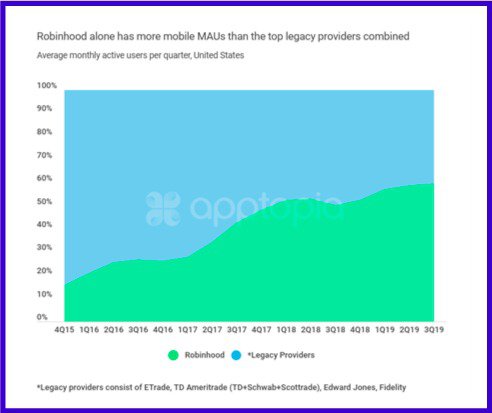
This graph illustrates the significant growth in downloads and retention for investment-based mobile apps, highlighting the trend that disruptors like Robinhood capitalize on to maintain market leadership in 2026.
- How do investment apps distinguish themselves?
- Gamification for apps your app engagement booster!
- How the disruptors of the investment industry use gamification to stay ahead
- A plug-in gamification tool for your investment app
What drives investment app success?
The key to investment app success in 2026 is the elimination of "financial friction" through high-yield digital accounts and AI-driven accessibility. By 2025, leaders like Revolut and Robinhood moved beyond simple trading, evolving into "super-apps" that offer 4.5% 5.0% APY on uninvested cash dwarfing the 0.01% offered by legacy incumbents. This value proposition, combined with near-instant onboarding, has allowed fintechs to capture the retail market faster than any traditional institution in history.
There are many factors contributing to the success of challenger banks, but using technology as leverage remains the primary driver. Most modern investment platforms operate exclusively online as neobanks or challenger banks.
This digital-first approach allows them to keep operational costs significantly lower while providing a vastly superior customer experience. In our experience analyzing fintech growth trajectories, we’ve found that customers prioritize accessibility over physical branches. Apps like Revolut and Stash continue to report that a significant portion of their user base is composed of first-time investors who previously felt excluded from the market.
Sudev Balakrishnan, Chief Product Officer@Stash - "Before fintech platforms like Stash, financial services, particularly the stock market, felt intimidating and inaccessible to so many Americans."
A major catalyst for this shift is the disparity in returns. While legacy "Big Four" banks in various regions still offer interest rates as low as 0.01% on standard savings accounts, modern investment apps provide significantly higher yields. For example, by mid-2025, several leading neobanks offered rates exceeding 4.5% APY. This represents a return hundreds of times higher than traditional savings accounts, making the switch an easy decision for tech-savvy consumers.
Zero-commission trading has also become the industry standard. “High minimums and fees kept hundreds of people on the sidelines for years,” says Balakrishnan. Stash’s focus on ease-of-use and fractional shares has propeled them to manage over $3.5 billion in assets, proving that lower barriers to entry lead to massive scale.
Andre Mohammed, former head of wealth and trading@Revolut - "The competitive landscape is definitely heating up and ultimately this is great for the customer and only serves to validate what we have put effort into building. Zero commission trading will soon become table stakes and investment apps will have to up their game to differentiate in other ways."
Competing for app engagement and investment app success
Disruption in the financial sector shows no signs of plateauing. Industry experts have long pointed to app engagement as the "secret sauce" for gaining millions of users without traditional multi-million dollar marketing budgets.
The strategy focuses on daily interactions and creating a product that users feel compeled to check regularly. This philosophy shifted the industry's focus from aggressive acquisition to product-led growth. As of September 2025, Revolut surpassed 60 million customers, effectively exceeding the retail footprint of legacy giants like HSBC by catering to underserved expats and younger demographics.
Engagement remains the primary metric for Robinhood as well. Robinhood reached 13.8 million monthly active users in 3Q 2025, marking a 25% year-over-year increase. This sustained growth is driven by 24/7 trading features and sophisticated notification systems that keep users tethered to market movements. At its core, the app utilizes gamification a fun, game-like interface that educates users on market mechanics while removing the friction of trade fees.
But what exactly is gamification, and how can it be used to fuel your own platform's growth?
Gamification for apps Your app engagement booster
What is gamification for apps?
TL;DR: Gamification for apps is the strategic integration of game-like mechanics such as progress bars, rewards, and social competition into non-gaming environments to drive user retention. In our experience, this is the "secret sauce" behind 2026's top-performing fintech platforms, helping brands like Robinhood scale to 13.8 million monthly active users and Revolut to over 60 million customers worldwide by late 2025.
Specifically, gamification for apps involves taking the psychological triggers that make games habit-forming and injecting them into a digital financial experience. The result is a differentiated user interface that keeps users hooked by making complex wealth management feel intuitive and rewarding rather than a chore.
How does gamification for apps work?
True engagement stems from the inherent motivation to achieve a goal. A successful strategy for gamification for apps relies on the user's emotional states to trigger behaviors that align with your business KPIs. According to behavioral science reports from Behavioral Economics, rewarding a user immediately after they perform a desired action like making their first deposit reinforces the dopamine loop, significantly increasing the likelihood of them returning to the app daily.
Want to learn more about gamification? Here’s our “What is Gamification” page to help you get started!
How can investment apps leverage gamification?
In our experience, gamification for apps can nudge user behaviors to be significantly more active. Robinhood, for instance, reached 13.8 million monthly active users in 3Q 2025, marking a 25% year-over-year increase. This growth was largely driven by sophisticated engagement features like personalized notifications and "streak" mechanics that reward consistent portfolio monitoring. Similarly, Revolut grew to over 60 million customers by September 2025 by targeting young users who feel alienated by traditional banks. By replacing slow, opaque processes with instant social transfers and interactive "Learn & Earn" modules, they have built a footprint that now surpasses several major global retail banks.
How the disruptors of the investment industry use gamification to stay ahead
TL;DR: The secret to investment app success lies in lowering the barrier to entry while maximizing retention through psychological triggers. By utilizing behavioral design and instant feedback loops, Robinhood and Revolut have scaled to 13.8 million and 60 million users respectively, fundamentally outpacing traditional banking engagement levels by prioritizing the user’s emotional journey over complex financial jargon.
Robinhood’s rize to the top
What sets Robinhood apart besides their fee-free trading model, is their beginner-friendly experience. In contrast to other investment apps, you can almost instantly open an account without any previous knowledge of investing. In our experience, this frictionless onboarding is the single most important factor for investment app success in the current 2026 market, as users now expect "one-tap" access to global markets.
Additionally, they use a range of game elements to encourage user participation and app engagement. For instance, the interface utilizes visual celebrations and social cues to reward activity. The app also features curated lists and real-time trend data that function similarly to social media discovery feeds, keeping users tethered to market movements.
Robinhood’s personalized notifications also boost activity on their platform significantly. According to 3Q 2025 data, Robinhood reached 13.8 million monthly active users, a 25% year-over-year increase. This sustained engagement is driven by a sophisticated notification engine that mirrors the mechanics of high-frequency social apps, ensuring the platform remains the primary financial touchpoint for its demographic.
Lastly, Robinhood amplifies referrals by using a reward program that can get you and your friends' free stocks. The stock you get is shown at random, which increases anticipation even further through a psychological principle known as variable rewards, a cornerstone of investment app success.
Revolut’s expansion into a global powerhouse
The focus on product-led growth has allowed Revolut to scale at an unprecedented pace. They rely on the users' motivation to have an easy and cost-efficient experience. Their investment platform is built to help users get more out of their savings, integrating traditional banking with fractional trading and crypto assets.
Similar to Robinhood, setting up an account only takes moments, and the entry-level plan remains highly accessible. This low-commitment approach has allowed Revolut to capture the "expat" and "digital nomad" segments audiences that have historically been underserved by traditional, slow-moving financial institutions. In our experience, providing instant cross-border functionality is a major driver of investment app success for multi-currency users.
As of late 2025, Revolut’s growth trajectory has become an industry benchmark. The platform surpassed 60 million customers globally by September 2025, representing a significant jump from 52.5 million just a year prior. Remarkably, this growth has allowed Revolut to surpass the retail footprint of legacy giants like HSBC, proving that a digital-first, gamified approach is more effective at reaching young users than the branch-based models of the past.

Revolut continues to leverage public engagement and social proof such as community challenges and referral milestones to drive organic adoption among Gen Z and Millennial cohorts.
Another gamification principle Revolut uses well is instant feedback. After making a trade or hitting a savings milestone, you receive an immediate notification to confirm the achievement. Lastly, Revolut offers a personal dashboard that allows you to track progress, set "Pockets" for specific goals, and view visual representations of your financial growth.
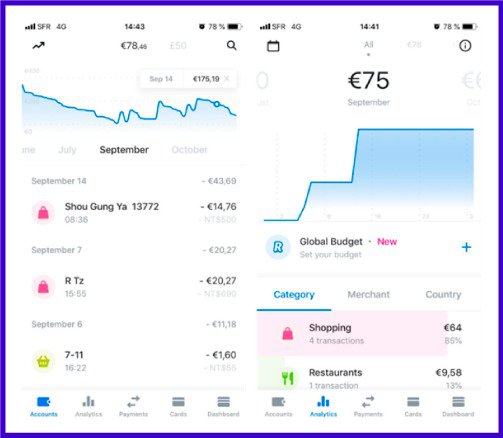
This personal dashboard provides users with instant feedback, allowing them to track their investment progress and achievements effectively through interactive data visualization.
A plug-in gamification tool for your investment app
TL;DR: Achieving investment app success in 2026 relies on behavioral hooks. StriveCloud’s plug-in gamification tool allows you to replicate the engagement of industry leaders without the massive development costs associated with custom builds.
StriveCloud has built a plug-in gamification tool to supercharge app engagement. You can link it with your web and mobile apps to gamify any digital touchpoint you want to. This way you can make your app just as engaging as market leaders like Robinhood which reached 13.8 million monthly active users in 3Q 2025 without having to spend lots of resources on a product studio or your own development team. In our experience, reducing the "friction to fun" ratio is the fastest way to scale a fintech product from a niche tool to a daily habit.
The plug-in gamification tool takes user data and turns it into a gamified experience. This level of engagement is precisely why Revolut grew to over 60 million customers by September 2025, surpassing the retail footprint of traditional giants like HSBC by targeting users who are frustrated with the slow pace of legacy banking.
Here are some of the things you can do with it:
According to recent industry reports, habit-forming mechanics are the strongest predictor of long-term user lifetime value (LTV). And the best part about it? Once you have a gamification strategy, it only takes a few clicks to set up new elements!
Want to learn more about our plug-in gamification tool? Check it out here!
Key takeaways for investment app success
TL;DR: Achieving investment app success in 2026 requires more than just low fees; it demands a transition into a comprehensive financial ecosystem. By late 2025, market leaders like Robinhood and Revolut have proven that high-frequency engagement driven by gamification and high-yield incentives is the primary engine for scaling revenue and user retention in a crowded market.
The investment industry is no longer just reshaping; it has been fundamentally rebuilt around digital-first brands. Modern apps allow users to manage entire portfolios, from stocks to crypto and high-yield savings, all within a single interface. While digital adoption is the foundation, a relentless customer-first approach is what keeps these platforms at the top of the app stores.
Here’s what we learned about the current state of the industry:
Leverage technology for innovation
These investment apps and neobanks operate with significantly lower overhead than traditional institutions by remaining fully digital. In 2026, the focus has shifted toward AI-driven automation for customer support and personalized financial insights. In our experience, automating these core services allows platforms to scale to millions of users without a linear increase in headcount, maintaining a lean operation that can reinvest profits into user rewards.
The future of investment banking is fee-free and high-yield
While fee-free trading was the initial disruptor, the new standard for investment app success is the "high-yield ecosystem." As of late 2025, while many traditional retail banks still offer baseline interest rates under 1.5%, disruptors like Robinhood and Revolut have captured market share by offering 4.5% to 5.0% APY on uninvested cash. This strategy effectively turns passive savers into active investors, forcing traditional giants like Charles Schwab to continuously evolve their digital offerings to prevent capital flight.
App engagement equals growth
The world’s leading investment platforms prioritize engagement as their primary North Star metric. According to recent industry reports, Robinhood reached 13.8 million monthly active users (MAU) in 3Q 2025, representing a 25% year-over-year increase. Similarly, Revolut expanded its footprint to over 60 million customers by September 2025. This data confirms that higher engagement directly correlates with higher revenue, as users who open the app daily are significantly more likely to explore new financial products.
Gamification drives app engagement
Both Revolut and Robinhood utilize sophisticated gamification frameworks to maintain their momentum. By using behavioral nudges, progress bars, and social proof, these apps encourage consistent user habits. These techniques don't just grow the user base; they increase the "stickiness" of the platform. By making financial management feel less like a chore and more like a rewarding challenge, these apps ensure they remain the primary financial hub for the Gen Z and Millennial demographics.
Want to get started on your own gamification strategy? Get a free workshop to kickstart the process!

7 Proven Ways to Motivate Users on Your Mhealth App
It's hard to keep users engaged on mhealth apps. With the average person churning after 90 days, mhealth apps need to reinvent themselves. If they want to impact people's lives they will have to create a user-friendly experience. Gamification can help achieve just that. Discover these 7 tactics to increase engagement on your mhealth app!

The average retention time for mhealth app users is only 3 months. Mostly because it’s very boring to look at variables that barely change. For this to change, the experience should feel effortless and provide motivation to the end-user to improve their health.
Professional services market leader Deloitte states that using cognitive or motivational stimulation in the form of gamification for health can promote positive behavioral change. It allows biopharma companies to improve adherence and health care institutions to provide preventative measures that could delay or prevent the onset of chronic diseases.
To overcome this app engagement challenge, mhealth companies have to build a user-friendly app that motivates its users to stick to their health goals. We listed out 7 gamification tactics that will help you achieve just that.
Here’s what you’ll learn:
- Set challenges to trigger user participation
- Reward app engagement with points
- Empower your users through progress bars
- Boost motivation through competitions and leaderboards
- Encourage active participation with a badge reward system
- Drive long term app engagement with a leveling system
- Nudge the user in the right direction with notifications
How does gamification for apps motivate users?
Gamification for apps is about leveraging the psychology and motivational elements of games in a non-game context. In this case: your mhealth app. We all know it’s hard to get your users to take action. In order for them to participate in your app, they need motivation. So how does gamification for mhealth apps help you overcome that obstacle?
First, you need to activate your user. This happens through an initial trigger. Something that prompts the user to take action. We call this an extrinsic motivator. It’s when users take actions in order to get something in return. These are reflected through rewards such as points, badges, or sometimes monetary rewards. Remember when Dropbox gave you that much-needed free storage space when you went through their onboarding?
However, extrinsic motivators alone won’t keep your users engaged in the long run. Researchers call this the Overjustification effect. It implies motivation drops when we’re too focused on earning rewards.
That’s because true motivation comes from within. It’s the satisfaction of mastering a skill, making progress, gaining social influence, and positive empowerment that’s truly motivating. We call this intrinsic motivation. Here, users are driven to work on something because they enjoy the experience itself.

This diagram explains how extrinsic triggers can foster deeper, intrinsic motivation for long-term engagement.
According to cloud leader Oracle, Gamification for mhealth apps can literally change the lives of people around the world. It increases patient compliance for clinical trials, boosts adherence to treatment and patient retention. Creating a good mix between extrinsic and intrinsic motivators can support long-term behavior change while boosting app engagement.
New to gamification? Get up to speed with our ‘What is Gamification’ page!
7 Gamification for mhealth tactics to try out!
Ready to see what that could look like on your mhealth app? Check out these 7 gamification for health tactics:
1) Set challenges to trigger user participation
Challenges help to move your user forward by setting a clear goal. In order for the trigger to work, it needs to be achievable but still challenging enough to be interesting. To boost motivation a little more, you can tie a reward to obtaining the challenge. Not only is it a fun way to increase app engagement, but it also gives grunt work meaning.
2) Reward app engagement with points
Implementing a point system is a way of giving instant feedback to the user. It triggers multiple motivational drivers. Not only does it triggers users to take action, but it also helps them identify priority tasks. Collecting points can be a way of measuring progress toward a user’s goal. It’s usually the cornerstone of all progress mechanisms in your app.
3) Empower your users through progress bars
One of the greatest tactics in gamification for mhealth apps is visualizing progress. It tells your user that what they’re doing is good and reinforces that behavior.
Additionally, it can help you keep the user involved in their journey. Seeing the progress you’ve already made, makes it harder to quit. It’s a way of avoiding loss. Let’s face it, most of us like to finish what we started because we feel it would be a shame not to.
4) Boost motivation through competition and leaderboards
People are inherently motivated by competing or comparing themselves with their peers. Leaderboards are a great way of introducing a competitive and social element into your app.
With leaderboards, you can compete against friends or just try to beat your own high scores. When implemented correctly, a leaderboard drives a sense of competition, collaboration, or relatedness. You can use this trigger to fuel user motivation and increase goal completion.
5) Encourage active participation with a badge reward system
Badges can be an indicator of social status and trigger the human intrinsic desire for achievement. Gamification for mhealth apps uses badge reward systems to reward certain milestones within the app. For instance, your user completed his first 10,000 steps or checked in 7 days in a row. It’s a pleasant surprise that encourages further participation in the app.
The potential is limitless here, as you can create badges for virtually anything you find important. Adding a fun narrative or creative design makes them even more fun and unexpected!
6) Drive long term app engagement with a leveling system
Levels are a way of indicating users’ progress over time. They trigger a sense of achievement and indicate social status. Every time a user levels up, he or she can get an extra boost of motivation. When they get to a new level they can often unlock new parts of the app, which triggers a desire to explore even further.
Adding a leveling system to your mhealth app reinforces good user behavior and boosts long-term app engagement.
7) Nudge the user in the right direction with notifications
Notifications are a way of providing instant feedback to users. In gamification for mhealth apps, you can use them to reinforce good behavior and correct bad behavior. The great thing about notifications is that they’re based on the context a user is in. That’s why the message doesn’t feel interruptive or irrelevant.
Not only do notifications trigger a participation loop, but they also promote long-term app engagement.
Add a little fun to your mhealth app, without all the development struggles? Check out StriveCloud’s app gamification software!
Recap
The average mhealth app user churns after three months. That’s because it’s uninteresting to look at variables that barely change. Engaging with boring mhealth apps feels like another chore on our already endless to-do list.
Gamification for mhealth can turn a boring app into a fun and engaging experience. It triggers user motivation every step of the journey with fun elements and drives meaningful retention within any app.
First, extrinsic motivation is triggered through rewards. Gamification for apps allows you to reinforce positive behaviors with a variety of rewards such as points, badges, and leaderboard rankings. Intrinsic motivation on the other hand relies on deeper emotional desires. Our need for progress, achievement, and a sense of relatedness can boost app engagement and user retention significantly.
The differentiating key however lies in putting these motivators together into a user-friendly experience. When done correctly gamification for health can enable sustainable behavior change, and make the lives of their users healthier and more fun!
Need help gamifying your own mhealth app? Get a free consultation with our team of experts!
Keep reading
48 Best User Onboarding Experiences
Poor onboarding is the largest contributor to user churn! So what do the best onboarding experiences have in common? Check out these 8 UX patterns with 48 examples of leading SaaS companies. Get started yourself with our free user onboarding checklist!
This lead image sets the stage for the article's exploration of top-tier user onboarding experiences and resources.
In reality, poor onboarding is the main reason users churn. However, the best user onboarding experiences know how to overcome that challenge! Want to do the same? Get started with our free user onboarding checklist designed to drive product adoption.
In this article, let’s review why onboarding is so important, and detail 8 great onboarding UX patterns with 48 top examples from SaaS apps.
- What is user onboarding?
- Why you should focus on onboarding
- Lesson 101: the basics behind the best user onboarding experiences
- How do you design a great onboarding experience? Top tips to learn from
- 8 great user onboarding UX and UI patterns from leading SaaS companies (With 48 examples!)
- #1 Leverage social proof using data, testimonials, and conversion rates
- #2 Email verification walls are conversion killers
- #3 Unnecessary steps discourage users from completing onboarding
- #4 Product tours should be action-focused, not informational
- #5 Segmenting users increases their likelihood to finish onboarding with success
- #6 Make onboarding motivating by emphasizing “what”, not “why”
- #7 Show helpful empty states that facilitate further user engagement
- #8 Behavior-based emails encourage new users to re-enter the product
- What are the key elements that define an excellent onboarding experience?
- Best user onboarding experiences - FAQ
What is user onboarding?
Onboarding is the process of getting users acquainted with your product and leading them to value as fast as possible! Indeed, that first impression is a crucial stage in all the best user onboarding experiences! Essentially, onboarding is where the user learns the ins and outs of your product. This can happen either manually or automated.
👉 Download our Free User Onboarding Checklist here!
Why you should focus on onboarding
The best user onboarding experiences lead to increased retention. For the average SaaS startup, it takes users 11 whole months to return their acquisition cost. That’s nearly a year before you see any profit! Losing a customer due to not conveying value clearly is a big bummer.
In reality, poor onboarding is the main reason users churn. However, the best user onboarding experiences know how to overcome that challenge! Want to do the same? Get started with our free user onboarding checklist designed to drive product adoption.
In this article, let’s review why onboarding is so important, and detail 8 great onboarding UX patterns with 48 top examples from SaaS apps.
What is user onboarding?
Onboarding is the process of getting users acquainted with your product and leading them to value as fast as possible! Indeed, that first impression is a crucial stage in all the best user onboarding experiences! Essentially, onboarding is where the user learns the ins and outs of your product. This can happen either manually or automated.
👉 Download our Free User Onboarding Checklist here!
Why you should focus on onboarding
The best user onboarding experiences lead to increased retention. For the average SaaS startup, it takes users 11 whole months to return their acquisition cost. That’s nearly a year before you see any profit! Losing a customer due to not conveying value clearly is a big bummer.
Lesson 101: the basics behind the best user onboarding experiences
These 3 things need to be on your user onboarding checklist:
- Useful - Do users get value from the experience?
- Easy to use - Can users get to value intuitively?
- Fun - Do users enjoy engaging in the experience?
But this is merely the background to the ultimate goal of onboarding: to acquaint users with your value! A shorter time to value will also help users reach the AHA moment faster, an important stage in user activation.
How do you design a great onboarding experience? Top tips to learn from.
To discover what constitutes the best user onboarding experiences, learn from the ones already out there! For example, how did French fintech Shine achieve an amazing 80% onboarding conversion rate? These are some tips from growth engineer Arnaud Babol:
Arnaud Babol - "Keep it simple: one screen, one action."
New customers can very easily be overloaded by your user interface. Therefore, it’s wise to segment each action with different screens. This makes it especially clear what you’re asking for!
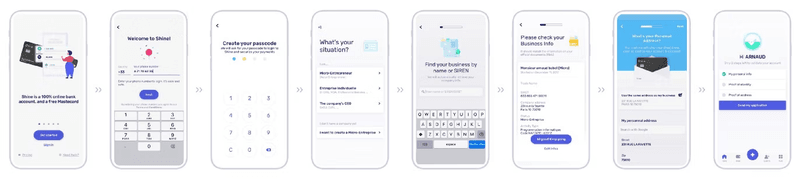
Shine's onboarding flow exemplifies the 'one screen, one action' principle, breaking down the process into simple, manageable steps.
Arnaud Babol - "Make your onboarding experience unique with motion design."
Arnaud Babol writes that the best user onboarding experiences quickly cement their brand identity in the user’s head. One way to do that is with a unique motion design.
Arnaud Babol - "Never leave your user alone."
If your user is lost, that’s a missed opportunity! Instead, guide them with tooltips and checklists that lead them to their next action so they can still discover your true value.
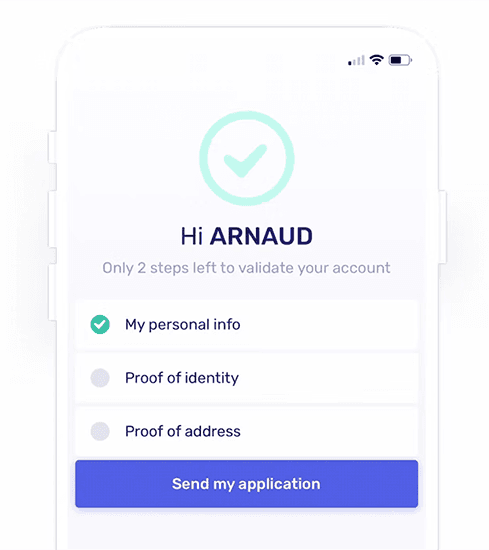
Here, tooltips in Shine's UI guide the user, ensuring they are never left without direction during the onboarding process.
8 great user onboarding UX and UI patterns from leading SaaS companies (With 48 examples!)
#1 Leverage social proof using data, testimonials, and conversion rates
In times of uncertainty, we always look to take guidance from others. Behavioral scientists call this ‘social proof’ and the best user onboarding experiences leverage it to powerful effect!
Insight Timer creates a global sense of community through social proof
To make users feel a part of a community, the wellness app Insight Timer shows on its dashboard how many users are meditating at that very moment. Not only does this validate the platform’s quality, but it also makes users feel they belong to a community!
Insight Timer's live map demonstrates social proof by showing a global community of users meditating simultaneously, which enhances the sense of belonging.
How Kajabi uses longevity to position as an authority
Touting how long you have been in business hints at a history of success. For example, online course creator Kajabi boasts in a bold blue “10+ years as the industry leader”. It makes them stand out as authority figures in their industry.
Proof leverages expert testimonials to build brand trust
In a way, experts are influencers. Their clout can be used to give your brand credibility, and it is a particularly powerful influence. Personalization tool Proof has perhaps the best example with a quote from Steve Jobs talking about how “personalization works”. Of course from him, that builds trust!
PiggyVest elevates brand champions
Easily accessible on their website, Nigerian fintech PiggyVest shares the story of hundreds of their ‘happy savers’. To be sure, the feature inspires success! In 2021, PiggyVest saved users over $585 million!
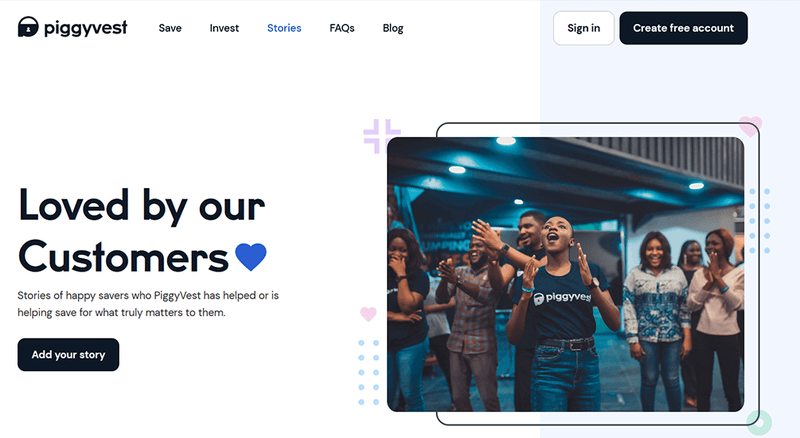
PiggyVest showcases success stories from their users, inspiring confidence and demonstrating the tangible benefits of their fintech platform.
Use conversion data to boost your credibility like Proof
Proof found a way to instantly communicate their value offer of boosting your conversions. How did they do it? Easy, with a counter on their landing page that says:
"1594 people requested a demo in the last 30 days."
Boast.io uses testimonials for proof-based marketing
Many users identified in the product adoption curve are risk-averse. But when you post testimonials on your landing page, you help reduce your prospect’s fear of change by making the switch less intimidating. Boast.io is a video testimonial tool practicing what they preach!
Invision builds brand trust through recognizable logos
If a trusted company is your client, then customers will see you as trustworthy too! To benefit from that trust, follow the example of Invision and place the most recognizable logos of your business customers on your website. Research shows it can increase conversions by 400%!
ShipBob uses testimonials, reviews, and data to boost social proof!
This E-commerce platform guarantees success with multiple types of social proof. Besides a testimonial and a few world-class logos, it also features raw data such as:
- Trusted by 7000+ brands
- 99,96% of orders ship on time
- 99,95% accuracy rate
- 30+ fulfillment centers
- #1 fulfillment technology
👉 Download our Free User Onboarding Checklist here!
#2 Email verification walls are conversion killers
Email verification walls are common - but they’re also a big reason for churn. Make sure to take these insights with you on your user onboarding checklist!
Snappa delays verification requests to turn churn into growth
Graphic design tool Snappa discovered that 27% of all signups never activated their email. But when Snappa removed the request, monthly revenue quickly rose by 20%!
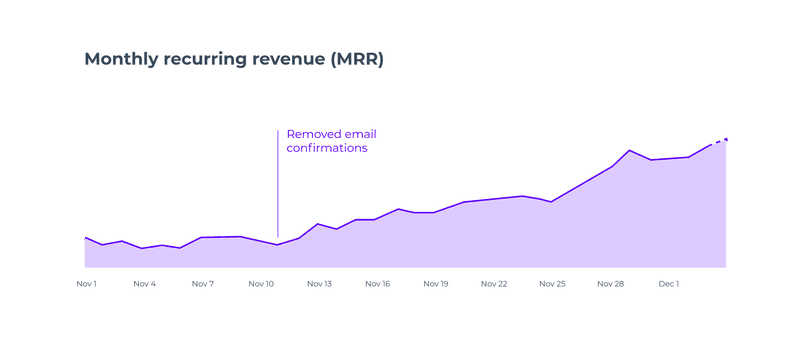
This graph illustrates the significant revenue growth Snappa experienced after removing the email verification wall, a key lesson in reducing user friction.
Ensure email deliverability in-app like Monday.com
Of course, you want the user’s email, but you also want them to stay in-app, or else they might churn. Solve this problem like work management software Monday! Monday lets users experience the value straight away and only alerts users if their email bounces.
Simply don’t ask for registration like Jotform
Incredibly, form builder Jotform doesn’t ask new users to register. In fact, they allow customers to test the app’s full functionality! Actually, users only need to register when they wish to send out forms. This method must work to increase product adoption - in 2022 Jotform achieved 1 billion form submissions!
👉 Download our Free User Onboarding Checklist here!
#3 Unnecessary steps discourage users from completing onboarding
Industry wisdom states that each onboarding step results in a 20% increase in user churn so keep it short and sweet!
Behavioral scientists will tell you that unnecessary steps and choices can accumulate to a dangerous degree. In detail, there are 2 major effects that you want to avoid triggering:
The paradox of Choice. The more choices you give a user, the less likely they are to choose!
Hick's Law. Basically, where decision time increases with every additional choice.
Don’t waste time stating the obvious. In fact, studies show that the optimal onboarding length is 3 screens! With extra steps, conversions can fall from 72% to as low as 45%.
Shopify split onboarding on multiple screens
If you still need more information to make your product valuable, then look at Shopify! The first page focuses on your use case for the platform. Then, you complete your personal details and get started!
WaveHQ does the styling for you
Instead of letting you customize your workspace to your own brand Wave simply asks you to add your logo and does the rest for you. Some might think this is still an extra step, however, it seems to fuel motivation and user engagement.
Zakeke uses hotspots to avoid information overload
First, ask yourself what is necessary for onboarding. Then ask “when is it necessary?” Hotspots like Zakeke guide the user in real-time. As a result, they eliminate the need for extra steps and thus user churn.
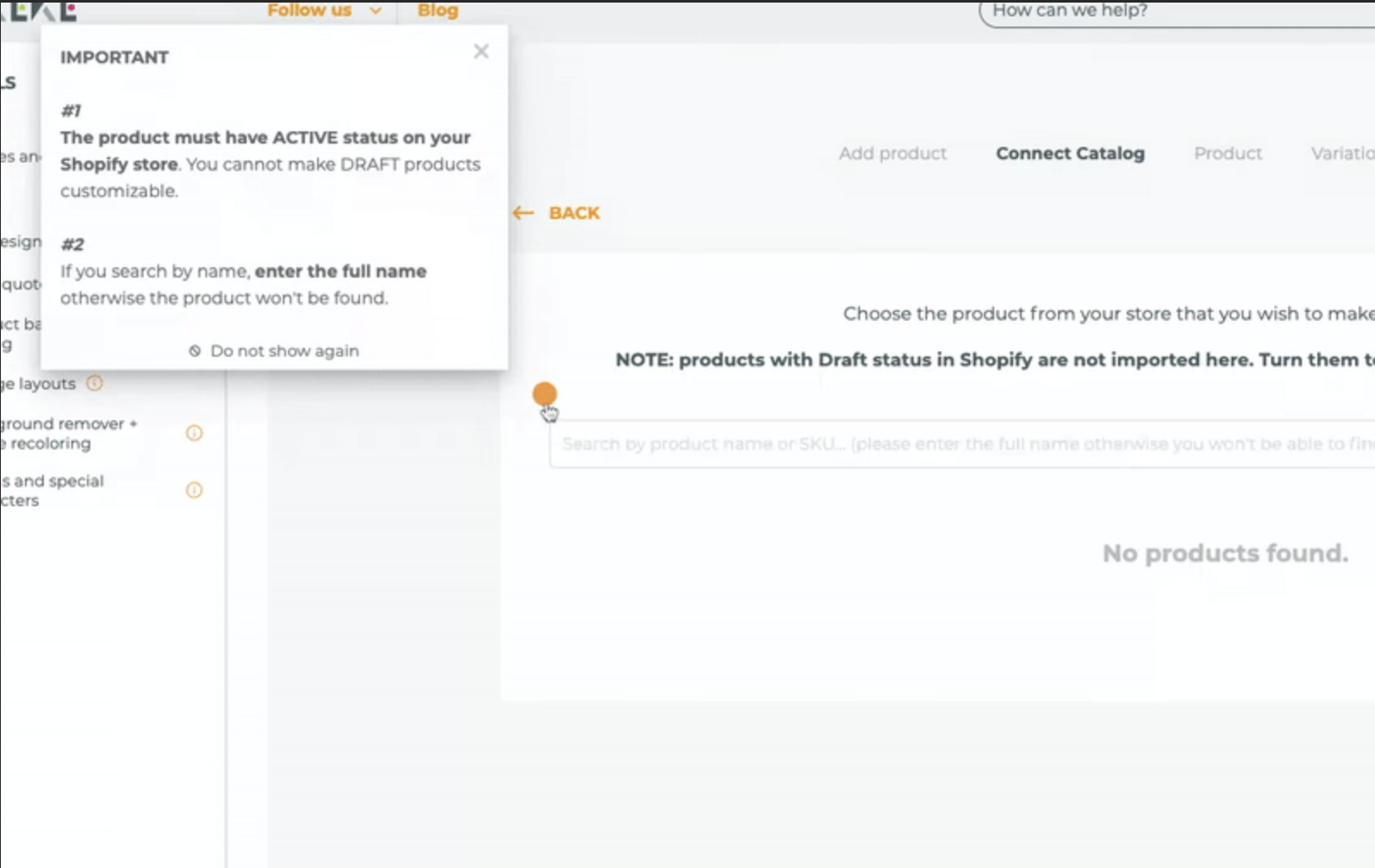
Zakeke uses hotspot tooltips to provide contextual information just-in-time, preventing information overload and keeping the onboarding flow clean.
Let users skip profile set-up like Substack
Should new users need to set up their profile photo and bio, before they have even trialed the product? Well, that used to be how it was for Substack. Today, however, Substack lets users “skip for now” - removing a big barrier to initial user engagement.
Avo keeps a quick and clean UI with a singular focus
Analytics tool Avo keeps each onboarding screen as simple as possible, asking questions like “what are the sources of your data?”, alongside clear, clickable options that move users on to the next stage in their journey.
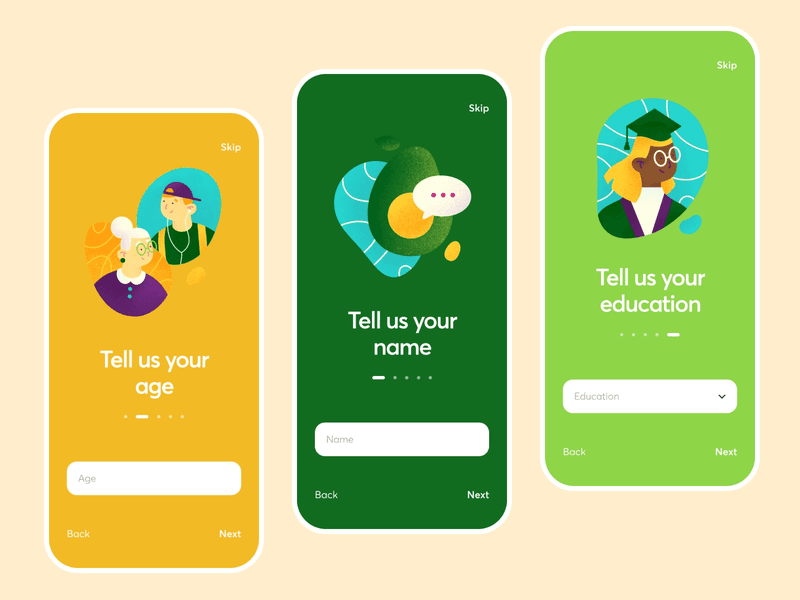
Avo's onboarding screen maintains a singular focus, asking a clear question with simple options to guide the user smoothly through setup.
Speed up time to value with suggestions like Reclaim
Time blocking tool Reclaim for instance asks during onboarding if you want to block out time for lunch. Not only does this immediately display their unique value, but it also introduces users to a new way of planning!
#4 Product tours should be action-focused, not informational
In reality, we as humans are overloaded with information every day. And often, we don’t know what to do with any of it! To avoid this, create an action-focused UX. In essence, if users start with action in their minds, they are more likely to take the next steps!
For example, a gamified user onboarding checklist states the next steps to take along with potential rewards.
Mint has a clear CTA on each screen to prompt user engagement
Mint’s headline is a rousing CTA: “See all your money in one number”.
Mint's onboarding screen features a powerful and direct call-to-action, encouraging users to engage immediately by seeing all their finances in one place.
Gamified checklists motivate users to finish onboarding on Quora
A gamified user onboarding checklist provokes the ‘endowed progress effect’. This principle notes that people are more likely to finish something if they think they are close to completion. To lock in this effect, reward users for completing ‘dummy’ tasks like ‘signed up’. Quora users already have 1-3 out of their items crossed after signing up.
How to increase product adoption with a gamified product? Get your expert-led workshop & learn how to use behavioral psychology to your advantage!
Improve product discovery with interactive paths like Xero
When customers sign up to Xero to improve their accounting, their greatest dread is probably a wall of confusing numbers! But the Xero dashboard is like a simple choose-your-own-adventure game.
Not only is this fun to use, but Xero’s UX empowers users with the choice of product tour, letting them discover what is most valuable to them faster!
Xero's interactive, 'choose-your-own-adventure' product tour empowers users to discover the features most relevant to their needs first.
Why Xero frames tasks as win-based actions
Framing tasks as a win will remind users of why they’re completing the product tour. Take Xero again. For each task on their product tour, win-based copy triggers users to action: “Get paid faster”, “Track your money”, and “Stay on top of your taxes”.
Hypercontext uses modals to highlight the key tasks
Hypercontext is a collaborative meeting SaaS that promises to make meetings more productive. To convey this value quickly, modals highlight the app’s key tasks: “Create your first agenda”.
Hypercontext effectively uses a modal window to highlight the primary action, "Create your first agenda," guiding new users towards their 'Aha!' moment.
How Headspace fuels healthy habits with streaks and badges
Wellness app Headspace has 2,100 corporate customers - and they manage this because their app encourages habit formation. With gamified streaks and badges that celebrate early successes, users are intrinsically motivated to use the platform and earn more.
👉 Download our Free User Onboarding Checklist here!
#5 Segmenting users increases their likelihood to finish onboarding with success
When you segment users, you understand their needs on a deeper level. This knowledge can be used to personalize onboarding and create more value!
Customize product samples like Genially
Genially is an animated content platform to create infographics, presentations, and e-learning materials. During onboarding Genially asks a few questions like what industry you work in. Then, they display a customized design sample based on your preferences.
Lumen5 motivates users with custom goals
Letting users set their own goals should be on your user onboarding checklist. For users, it provides a clear purpose. For you, it allows you to personalize the user experience! Video maker Lumen5 wastes no time in doing this. In fact, they devote their second onboarding screen to asking new users about their goals.
During onboarding, Lumen5 asks users to define their goals, which allows for a personalized experience and provides a clear purpose from the start.
Ticketmaster uses geolocation to customize your feed
For many apps, what you offer varies wildly depending on where the user lives. For Ticketmaster, geolocation data is crucial to personalizing offers like upcoming concerts that might interest the user. Equally, to discover what a user likes, onboarding fields that simply ask users their favorite artists are a great way to personalize offers.
Segment users on NPS score like Qualtrics
Not all users want the same. So why not segment them based on customer satisfaction? One way to do so is through a Net Promoter Survey such as Qualtrics. Besides defining the key drivers for different segments, you’ll also learn where to prioritize support!
Evernote enhances personalization during onboarding
When starting off with Evernote you’ll be asked to order your main use cases for the product. As a result, you’ll get a customized template library and interface to start. This way you get a product experience relevant to you.
Dropbox targets account expansion through segmentation
Dropbox doesn’t try to sell its premium product to barely engaged users. Instead, they segment the most engaged users expected to reach their storage limit. What’s that saying about marketing again? Right place, right time?
👉 Download our Free User Onboarding Checklist here!
#6 Make onboarding motivating by emphasizing “what”, not just “why”
Simplicity is key. That’s why focusing on the concrete ‘what’ instead of a more abstract ‘why’. There is a famous quote that should sum up your attitude towards user experiences:
“A designer knows they have achieved perfection not when there is nothing left to add, but when there is nothing left to take away.”
Calendly uses copy that gets straight to the point
Essentially, your copy should stick to the task at hand! Otherwise, you run the risk of being ignored. Calendly avoids this with a simple headline based on ‘what’ they offer.
Calendly's landing page copy is a prime example of simplicity, getting straight to the point to communicate the product's core value instantly.
Sprig emphasizes feature benefits to increase feature adoption
User research tool Sprig is clear on its benefits as users create a survey and that’s good! Alongside a preview of the final result, a text bubble reads “we’ll automatically customize your company name to increase response rates”.
Let users complete micro-commitments like Grammarly
Handing new users small tasks is a fast way to get them invested and learn why your product is great. Moreover, users will feel like they earn their reward! For instance, Grammarly asks demo users to correct problems in a sample document. As a result, it instantly conveys the core value of their product.
Togglr uses gamified rewards to reinforce user action
Gamified rewards provide users with an intrinsic satisfaction that facilitates repeated user engagement. For example, when Togglr users successfully complete a task for the first time, the app celebrates their success with a clapping emoji. This positive reinforcement gives users a reason ‘why’ they should complete the task again!
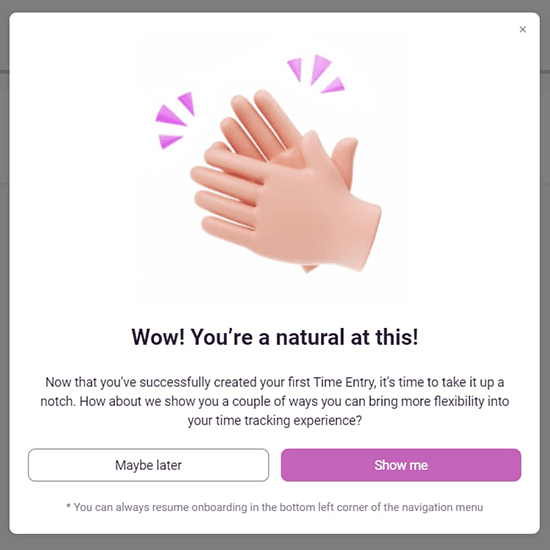
Toggl demonstrates positive reinforcement by using a simple clapping emoji to celebrate a user's first completed task, encouraging repeat engagement.
Sprout explains what they’ll do with your data (and why they need it!)
For many apps, onboarding means asking users for access to their personal data. That can be a thorny subject - so it pays to tell users exactly why users should accept:
Sprout Social - "It’s okay to click ‘Okay’! We need your permission to deliver and report on the messages you post."
Moosend’s progress bars remind users of their goal (and how far they’ve come)
Aside from showing users their past personal progress, progress bars remind users of their goals. Email marketing software Moosend has a great gamified progress bar that fills after each onboarding step, culminating in the ultimate goal: “send a campaign”.
Drive product-led growth with an in-app gamified experience! Simply link to our modular gamification software & start testing!
#7 Show helpful empty states that facilitate further user engagement
While only an estimated 5% of users ever see an empty state, they’re still a great opportunity to drive user engagement. How? By balancing the principles of all the best user onboarding experiences that include education, motivation, and direction.
Todoist makes empty states the end goal
We all love the feeling of completing our to-do list. So what better example than Todoist using empty states to celebrate user success? In addition, they prompt users to share their success with a hashtag and social media buttons.
Todoist - "Enjoy your afternoon. Today you completed 8 tasks and reached #TodoistZero!"
Buffer gets you connected with 1 click
Buffer is a social media publishing and analytics tool, so it doesn’t have much value without linking your channels. That’s why their empty states suggest “connect your first channel”.
How Superhuman charms users with feel-good nature scenes
Believe it or not, empty states can actually make users more productive! This effect is called ‘biophilia’ and has even been shown to improve moods. Taking advantage of this, email SaaS Superhuman shows users landscapes when they reach inbox zero!

Superhuman uses beautiful, serene landscapes as a reward for reaching 'inbox zero,' leveraging biophilia to create a positive and calming user experience.
Guide users to their next step like Jobpal
Jobpal is an automated recruitment solution that saves both recruiters and candidates a ton of time. As a recruiter, the empty state makes it very clear which next steps to take. This way you never get stuck, or bored with endless onboarding tours!
Jobpal's empty state clearly outlines the next steps a recruiter should take, preventing confusion and guiding them towards productive use of the platform.
Use empty states to inspire users like Notion
When you create a new page on Notion its default state is empty. However, Notion adds demo content which is also educational and instructive. For instance, they include a get started checklist explaining their features and the copy: “Press enter to continue with an empty page or pick a template.”.
Copper turns empty completion pages into conversion machines
Onboarding should be more than creating a personal profile. Follow the lead of CRM app Copper, which promotes their Chrome extension. As a result, 25% of new users install their Chrome extension directly from this screen!
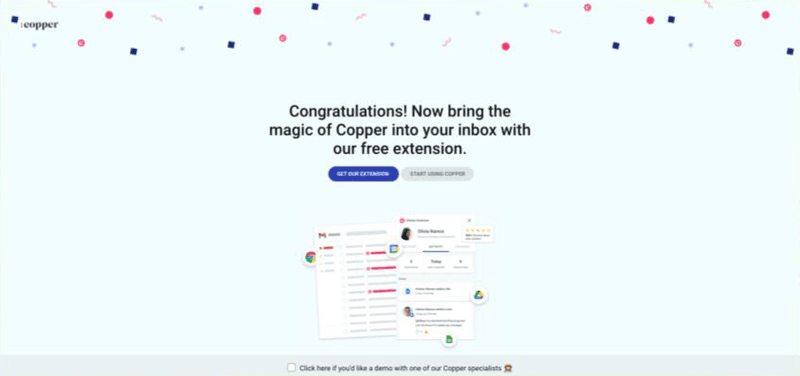
After profile completion, Copper uses this success state to promote its Chrome extension, successfully converting a significant percentage of new users.
Salesflare locks you in with a simple suggestion
When users hit an empty state on CRM tool Salesflare, the dashboard suggests that users automatically connect their email contacts. That’s instant value and makes churn less likely!
👉 Download our Free User Onboarding Checklist here!
#8 Behavior-based emails encourage new users to re-enter the product
Every user onboarding checklist should include behavioral emails or messaging. Not only does it improve user onboarding, but it also brings back potential drop-offs!
While most emails get put straight in spam, recipients are over 75% more likely to open welcome emails than other marketing emails. Take advantage of that open rate to drive the behavior that you know will lead to product adoption.
Kick-off onboarding with reaffirming CTA’s like Hotjar
The best user onboarding experiences make their emails action-focused. In other words, they clearly describe the benefits next to concrete action. Take Hotjar’s ‘get started’ email for instance!
Hotjar - "Ready to see what’s really stopping your visitors from converting? You’re only minutes away from seeing your site through your users eyes!"
Databox helps you become a data-driven professional
Don’t give up on users who are already halfway through the process! Databox for instance encourages you to complete the final step to becoming a data-driven professional. Strong copy like ‘What are you waiting for?!’ and ‘Complete stage 1’ skyrocket completion.
This behavioral email from Databox uses encouraging and urgent copy to re-engage users who are partway through the setup process.
Celebrate success and build upon it like Soapbox
Soapbox rewards users with a fun rockstar gif for uploading their first video - which already highlights the product’s value. Then, they encourage users to complete the next steps of editing or improving their video. Besides being helpful, it clearly demonstrates the product value at the right moment!
Soapbox celebrates a user's first video upload with a fun GIF and immediately suggests the next steps, building momentum and demonstrating further value.
Learn to drive user engagement like Asana
Asana has the mission of making its users more productive, so what better way to act on this than by sending an action-packed email? If you’re new to their product it might feel overwhelming. However, by giving clear step-by-step instructions Asana gets you started in no time!
Asana's welcome email provides clear, step-by-step instructions to help new users overcome the initial learning curve and start organizing tasks effectively.
Monday’s custom tours designed to suit the user’s behavior
Everyone behaves differently and that extends to the best user onboarding experiences. Look at workflow SaaS Monday for instance. Its welcome email empowers users with the choice of a video or text product tour. This extra autonomy makes users more likely to engage with their preferred style, leading to increased engagement and onboarding success!
Groove steps in before you can say churn 3 times!
Your user onboarding checklist should be as churn-proof as possible. Take productivity platform Groove, which intervened when users had issues setting up email forwarding. As a result of their supportive email, Groove achieved a 30% retention rate in just 30 days!
Groove's proactive support email intervenes at a common friction point, helping users set up email forwarding and drastically improving retention rates.
Keep users engaged with gamified performance reports like Grammarly
Nobody buys software. They buy outcomes! With this in mind, gamified reports can increase motivation enough to keep users going! Take Grammarly for example. In its weekly writing update, you can see your streak, activity-based achievements & how productive and unique you are compared to other Grammarly users.
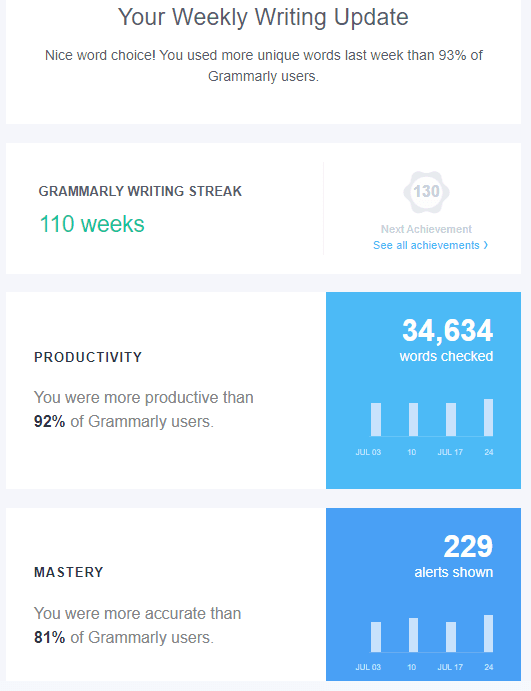
Grammarly's gamified weekly writing report keeps users engaged by showing their streaks, achievements, and comparisons with other users, reinforcing the value of the tool.
So.. What are the key elements that define an excellent onboarding experience?
We analyzed the 48 examples and made a practical checklist to follow. Download the free checklist here.
Best user onboarding experiences - FAQ
What is user onboarding?
Onboarding is the process of getting users acquainted with your product and leading them to value as fast as possible! Indeed, that first impression is a crucial stage in all the best user onboarding experiences! Essentially, onboarding is where the user learns the ins and outs of your product. This can happen either manually or automated.
Why should you focus on onboarding?
The best user onboarding experiences lead to increased retention. For the average SaaS startup, it takes users 11 whole months to return their acquisition cost. That’s nearly a year before you see any profit! Losing a customer due to not conveying value clearly is a big bummer.
What are the basics of great user onboarding?
Your user onboarding checklist should include 3 things: to make your product useful, as well as fun, and easy to use. But this is merely the background to the ultimate goal of onboarding: to acquaint users with your value!
What are the 4 steps of a SaaS user onboarding checklist?
Start off by inspiring action. Sometimes copywriting can be enough, however, in-app prompts can also help. Then, reward users for taking action to keep them coming back. Afterward, you can drive repeat usage with personalized messaging and gamification. Finally, expand usage through education and build power users!

How the Greatest Health Apps Use Communities to Boost User Engagement
It's no secret mhealth apps have the power to drastically impact how we approach health. With solutions for diabetes testing, elderly care or general health & fitness everyone can achieve their goals with a little digital help. Unfortunately, most mhealth apps lose the attention of their users in a matter of days. If they want to truly impact a user's health, they need to build a better and more engaging user experience. In this article, you'll discover the peer community secret behind some of the greatest mhealth apps. check it out!

It’s no secret mhealth apps have the power to change healthcare forever. These apps can deliver highly personalized treatments at a massive scale, and lower cost. Solutions for blood-testing, fitness and even elderly care are being used to promote self-health management as we speak. Unfortunately, research by the Commonwealth Fund shows the majority of mhealth apps fail in boosting user app engagement.
In fact, the average retention rate for mobile health apps is only 3 months. With adoption this low, it’s hard to help users reach their health goals. Marc Van Mael, co-founder of Care4C says the main reason for low user app engagement is simply because the apps are too boring and undynamic to look at.
Luckily, this can be fixed with a little bit of creativity and data. How? Through gamification for health, you can make the user experience fun and engaging so your users will want to keep coming back!
Here’s what we’ll cover in this article:
- What is gamification for health?
- How to create peer communities with gamification for health apps?
- These mhealth apps are crushing it with gamification!
What is gamification for health?
In today's world it’s hard to catch someone’s attention, and even harder to keep it. Gamification does two things. First, it leverages data to motivate your user and keep them moving forward. Secondly, it sets you apart from other apps that have a boring and uninteresting user experience. Think about it, what types of apps are best at captivating your attention? That’s right, games!
Gamification for apps 101
Gamification for apps doesn’t mean you have to turn your app into a game. What it actually means is you use game elements like rewards or leveling systems in a non-game context to boost user motivation and app engagement.
At first, you get users to take action by promising a big fat reward. They need to have a reason to participate in the first place. We call these rewards extrinsic motivators. These often refer to points or badges users get for completing an action. Rewarding users for certain actions create positive reinforcement, which helps to shape users' behaviors and habits in a fun and engaging way.
Initially, we might be doing it for the reward, but after enough repetitions, the underlying emotions will come into play. We call this intrinsic motivation, either to gain something or avoid losing it. Let’s say you have been hitting your fitness targets for over 90 days in a row, you wouldn’t want to ruin that on day 91, right?
Want to learn more about the motivational science behind gamification? Check out our ‘What is Gamification’ page!
Why your mhealth app needs a peer community
People naturally are social animals. We’re driven by a sense of community or belonging. Whether it is to compete, or to collaborate, having a peer community can increase user and app engagement immensely.
In fact, research from over 300 mhealth apps confirms social networks give that needed extra boost of user motivation. Users start supporting or challenging each other to reach their goals. Some apps take advantage of gamification for apps to boost their community participation and interaction.
How to create peer communities with gamification for health apps?
So how do you go about building your own peer community? Well, there are lots of features you can use in gamification for apps. We’ll stick to those that are most relevant in building your health-focused community.
Leaderboard
Leaderboards quite literally visualize your ranking within the community. This is often based on the number of points you have already collected or specific actions you’re competing for. A leaderboard can motivate users to try and rank higher, or stay at the top.

This leaderboard shows how competition drives user retention and engagement within a community.
Badges
Badges are virtual representations of achievements and reflect the progress that has been made since first getting on the app. It’s a form of positive reinforcement that also carries out in the community. You can connect with other users over the badges you have already collected, and the ones you have yet to collect.

This example demonstrates how earning badges provides a sense of accomplishment and encourages continued participation.
Points & leveling system
Allowing your users to keep moving forward is essential to keeping them motivated. When users collect points for completing certain actions, these points often lead to a level up. Levels bring a social status with them. The higher your level is, the greater your status within the community. Oftentimes users with a higher level got there because they’re more engaged or have been active for longer.
Challenges
A challenge can serve as the initiating spark for user action. It’s often what gives the grunt work meaning. Once you’ve set a challenge in your community, users will want to achieve that goal. Seeing your peers start or complete these challenges gets you hyped up to participate yourself. Some apps even allow you to complete challenges in groups, so you collaborate or compete in teams!
What’s the easiest way to differentiate through gamification? Check out our app gamification platform!
These mhealth apps are crushing it with gamification!
The true power in gamification comes of course from combining all these elements into one fun user experience. It’s more than just a way of increasing user and app engagement. When done correctly it helps users stay motivated and on track of their health goals.
Here are two awesome examples:
How 7 Cups of Tea uses gamification for apps to motivate its community of listeners
7 Cups of Tea is a mental health app that works with a community of active listeners. The app has over 300,000 active listeners and has helped over 25 million mental health patients.
These listeners aren’t paid, however, they are rewarded through gamification for apps. Listeners can earn points for having conversations and level up when they have enough points. They can even collect badges for achievements such as having an extra-long conversation or meeting with a person for the second time.

The 7 Cups of Tea app effectively uses points and badges to motivate its community of volunteer listeners.
How gamification for health helps the Fitbit community reach its goals better
Fitbit is a popular fitness tracker that comes with an app where you can measure your physical activity, heart rate, and sleep. It basically serves as your health assistant with tips and guides to help you reach health goals. On Fitbit, you have challenges where you can compete with other friends or people from the Fitbit community that have similar goals.
First of all, they have deadline-driven challenges such as a Goal Day, Workweek Hustle, and Weekend Warrior where you need to complete a target goal of steps. As you can see, all challenges get a name and narrative to increase the stakes and fun for participants.

Fitbit's challenge feature illustrates how competition and social interaction can make fitness goals more engaging and achievable.
For those who are a little more competitive, you can also join adventure races. Here you can follow a pre-set trail and compete against up to 30 friends to see who reaches the finish line first. You’ll get to discover new trails, uncover panoramic photos, and have the ability to collect fitness and health tips along the way.
Recap
Unfortunately, many of the mhealth apps that exist today have low retention rates, and user engagement drops significantly after just 30 days. Luckily, some apps have managed to break through the wall of motivation by building communities and using gamification for apps to spice up their normally boring and uninteresting health app.
The reason that gamification for health is such a powerful movement for mhealth apps, is because it tackles the engagement problem at the root. By making the end-user experience fun and exciting, patients are more involved and app engagement rizes.
Adding game elements can also fuel a sense of community. For instance, getting the chance to collaborate or compete with peers for a place on the leaderboard, not only initiates user participation but keeps them engaged over time. If you’re a mhealth app it’s definitely worth looking into.
Looking to boost user motivation through community? Get a free consultation with our gamification experts and find out what next steps you should take!
Keep reading
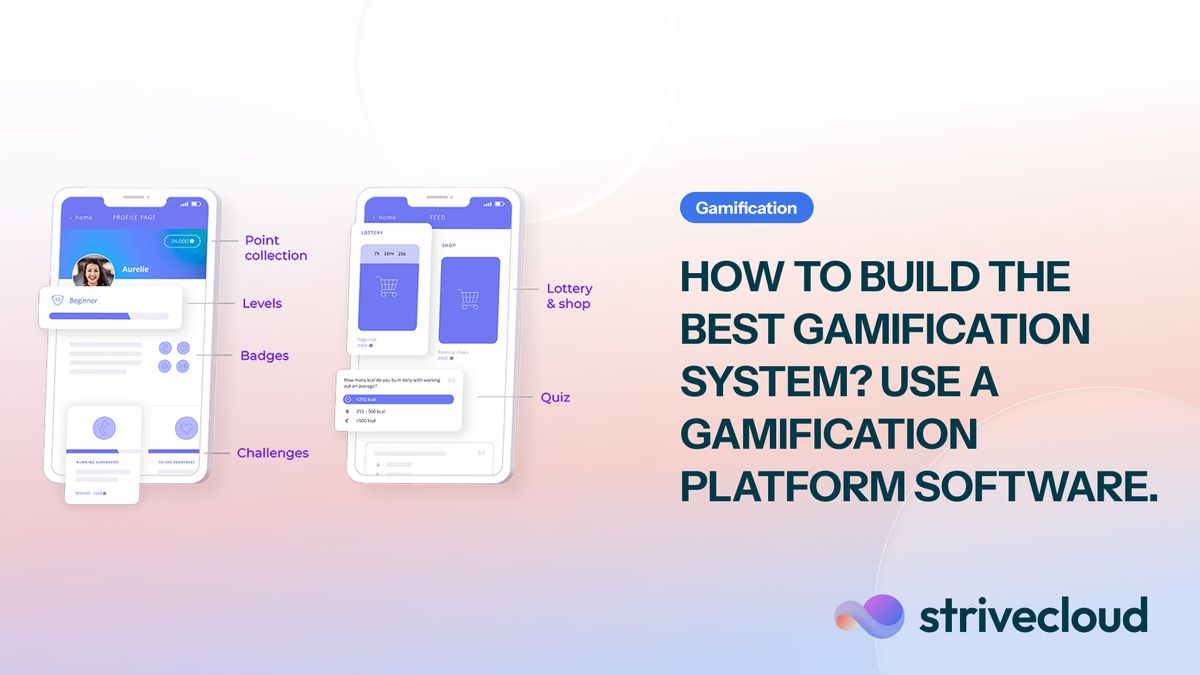
How to Build the Best Gamification System?
Implementing gamification is difficult - it requires expertise and can be costly. How to skip these barriers and build a better gamification system? Use a gamification platform software and benefit from the know-how of gamification experts! Find out what you need to know!
Gamification is the strategic application of game design elements to non-game contexts to drive high-value user behaviors. TL;DR: Building a gamification system in 2026 requires gamification platform software that can scale to a global audience of over 3.4 billion players. In our experience, using modular tools can boost user engagement by as much as 54%. With Asia alone hosting 1.42 billion gamers more than North America, Europe, and Latin America combined a flexible gamification strategy is essential for cross-border success. By selecting the right gamification platform, you gain the infrastructure and expert support needed to deploy a gamification system that remains culturally relevant and highly engaging for a massive, diverse audience.

This visual sets the stage for our deep dive into gamification platforms and how they can revolutionize user engagement. Let’s find out how.
- Understanding what gamification is
- Key components of a gamification system
- StriveCloud: Selecting the right gamification platform software
- FAQs
Understanding what gamification is
Gamification is...
TL;DR: Building a modern gamification system in 2026 requires more than just points; it requires a gamification platform software that leverages real-time behavioral data. In our experience, using a specialized platform can boost daily active users by 58% and increase long-term retention by 23% by tapping into the 3.4 billion people globally who now engage with game mechanics daily. By implementing gamification, you turn passive users into active participants.
Gamification is the strategic use of game elements and psychology in a non-game context. This means implementing gamification features like progress bars, prizes, and reward systems into your app to drive the user behaviors that help you grow. With Asia now holding over 1.42 billion gamers more than North America, Europe, and Latin America combined the expectation for interactive, rewarding experiences has become a global standard for any digital product.
However, a gamification system doesn’t mean that you are making everything a game. Rather, you borrow the psychological elements that make a game fun, and introduce those into your customer experience! And the benefits of gamification are huge - not only will customers be more engaged and loyal, but market data shows that gamified experiences can increase brand loyalty by 47%, leading to higher lifetime value!

The chart clearly shows how much more time users spend on gamified apps compared to non-gamified ones, highlighting the power of this strategy in 2026.
To turn your app into a gamified experience, you have a few options. For one, you can develop the features yourself. That gives you control of the project, though it will also be costly and time-consuming. Not to mention, you have to know exactly what you’re doing - and that means hiring an in-house team of gamification experts! Instead, for a faster, more flexible solution that requires less expertise and a lower investment, use a gamification platform software.
If you’re selecting the right gamification platform, you can get more than just a handful of features ready to customize. You’ll also gain the help of gamification experts to guide you on how to build the best gamification strategy for your unique needs. Gradually, you’ll begin to learn yourself the secrets of how to gamify!
Let’s start you off right away. One of the most important keys to your success is understanding gamification psychology.
The psychology behind gamification
Gamification is more than just points, levels, and badges. On a deeper level, a gamification system offers much more to drive customers forward in their journey. In 2026, successful apps focus on "player-centric design," where game mechanics and features tap into shared human behaviors to motivate.
Gabe Zichermann, gamification expert - "Gamification is 75% psychology and 25% technology."
Put simply, gamification psychology relies on satisfying three motivational drivers identified by Self-Determination Theory:
- Autonomy. People like being empowered with a choice and this motivates them to stick to their goals. In our experience, allowing users to choose their own "quest paths" or reward types increases feature adoption by up to 30%.Value. Show the user your value to them and their value to you! Reward them with badges and points, and let them socialize to buff up their social status.
- Competence. The need for personal growth is a powerful motivator. Gamified elements such as challenges and levels can test and track user competence.
These three drivers are linked to what we call “intrinsic motivators”. In other words, factors that appeal to our emotions, innate desires, and fears. Once you inspire this, you unlock a long-lasting and self-sustaining motivation!
At the same time, your gamification system should also motivate people extrinsically, with achievements and results-based drivers. Utilizing both forms of motivation is crucial for your success. While extrinsic motivation pushes users through the initial onboarding phase, long-term 90-day retention needs intrinsic motivation!
Benefits of gamification in different industries
Travel & hospitality
Industry reports show that today's travelers demand instant gratification. To avoid losing customers, hospitality & travel companies can gamify. For instance, implementing gamification features in a loyalty program, like rewards or unpredictable lottery programs, can create the positive experience that customers demand!
In fact, this satisfies the “Lucky Loyalty” effect, another element of gamification psychology. Essentially, the more loyal that a customer is, the better treatment they expect to get! In other words, your benefits should scale with loyalty and gamification is a great way to provide this value without just doling out unaffordable discounts. Over time, this gamification strategy will reduce churn and boost customer lifetime value.
Sports & fitness
As we move through 2026, over 60% of all leading sports & fitness apps now contain a gamification system. That’s because fitness apps are super social and generate lots of gamifiable data such as daily steps or exercise length. For a great example, the workout app SWEAT encourages users to share a side-by-side photo of themselves before and after exercise to show off their progress and increase their social status. CEO Kayla Itsines credits this as the biggest reason her app became the most profitable fitness app in the world!

The SWEAT app's progress-sharing feature remains a prime example of social gamification driving user motivation and community building in the mid-2020s.
Financial services
Banking and fintech apps are well suited to take advantage of the benefits of gamification. That’s because gamification psychology is suited to financial services, where customers often come in with a clear goal, such as to save money. We've seen that features like progress visualization and milestone badges can give users a feeling of mastery over their finances. In turn, this motivates them and they stick around for longer!
Mobile apps & technology
Gamification is one of the most powerful tools that mobile apps and tech companies can use to supercharge user engagement and retention. In 2026, mobile usage continues to dominate, but attention spans are shorter than ever. To capitalize on this, a gamification system engages users by increasing your product’s usefulness, social influence, and enjoyment - making it more likely that they engage for longer. This is especially vital when competing for the attention of the 1.42 billion gamers in Asia who are accustomed to high-engagement interfaces.
Education
Education is the second most gamified segment, with the global gamification market projected to reach over $48 billion by the end of 2026. Why? Because implementing gamification in education can improve how feedback is given. Research shows that students are motivated by the positive reinforcement provided by a gamification system. With that in mind, selecting the right gamification platform means finding a flexible solution that can handle diverse curriculum-based challenges.

This pie chart illustrates the dominant market share of gamification across various industries in 2026, with retail and education continuing to lead the way.
Implementing gamification for success
Getting your gamification system right is important. In our experience, the key to success is an iterative approach launching a core loop and then using data to refine. To get started on your gamified app, here are four things you should consider:
- What does your app do? Analyze your app’s key features and user actions.
- Who are your users? Learn more about your users for example, if they are part of the massive 1.42 billion gamer demographic in Asia, they may prefer more competitive social features.
- Identify the touchpoints. These interactions are what you can leverage. Imagine the ideal user behavior at each point in the customer journey.
- Learn from the best! To be sure, it is smart to learn from other gamified apps. In our experience, the most successful 2026 apps combine utility with emotional rewards.
Bjorn Cumps, Professor @Vlerick Business School - "Have a very clear goal, incentivize ideal user behavior, and make the process fun and engaging. Gamification should be used to take away the barriers that limit a user from fully engaging."
Ultimately, you need what makes your customers tick! The best way to do this is by implementing gamification gradually. For one, you don’t want to overwhelm your user. More importantly, though, gamification is all about data. And if you rush your implementation, you risk your gamification strategy backfiring. Only by analyzing and optimizing after each iteration, can you achieve success!
However, some things simply don’t need thorough testing because the evidence is already out there. For instance, badge rewards are more effective when given right after the relevant task. So while testing can tell you what and when is optimal, the faster and better way to find out the answers you want is to consult an expert! There are many insights that an experienced team at a gamification platform software can give you to hit your 2026 growth targets.
Key components of a gamification system
TL;DR: Building a world-class system requires moving beyond simple points to a data-driven gamification platform software that leverages behavioral psychology. By 2026, the key to success lies in regional localization tapping into a global audience of 3.4 billion players, including Asia’s massive 1.42 billion active gamers while using real-time data to drive long-term user retention.
10 essential elements of a gamification system
Gamification is built on several behavioral dynamics that will lift user motivation within a gamification platform software:
- Accomplishment. Give customers goals to strive for!
- Constraint. Lock off certain features to incentivize usage.
- Empowerment. Customers need autonomy and personalization.
- Relationships. People are naturally social and enjoy friendly competition.
- Unpredictability. Delight your customers with a fun, surprising experience.
When implemented together, these are the mechanics that make a gamification system so engaging. In our experience, high-growth apps no longer treat "gamers" as a niche; in 2026, over 3.4 billion people play games worldwide. Notably, Asia holds over 2x as many gamers as any other region, with 1.42 billion active players more than Europe, North America, and Latin America combined. This scale proves that gamified mechanics are now the global standard for digital interaction.

This graph shows the consistent upward trend in the number of gamers worldwide, confirming that gamified mechanics appeal to a massive and growing audience.
In short, gamification psychology runs deep. By learning about and then leveraging the behavioral science that powers gamification, you can make the most out of the benefits of gamification! Aside from the main mechanics mentioned above, there are other principles that you can exploit.
These are a few supporting behavioral principles that fit well into a gamification system, and can be used to provide an extra shot of motivation:
- Liking: we’re far more likely to engage with things that we like. Simple, right?
- Loss framing: to maximize motivation, present benefits as an avoided loss!
- Narrative bias: relatable stories create context and bring your app to life.
- Relativity: comparisons, like loyalty tiers, enhance perceived value.
- Scarcity: trigger users into action with limited rewards & challenges.
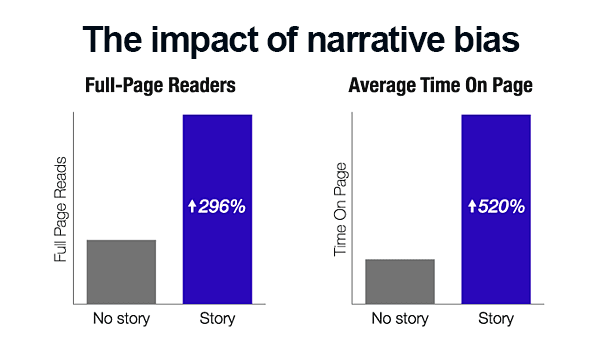
These psychological principles are the building blocks of an effective gamification system, creating a multi-layered motivational experience for the user.
How data can help you implement gamification
To maximize the ROI of your gamification platform software, you must first ask: what data are you gathering? Without high-quality data, you have nothing to gamify. In our experience, 2026 industry benchmarks show that apps using real-time data loops see a 44% higher 90-day retention rate compared to those using static mechanics.
However, not all data is actionable. Indeed, you’ll need to sift through and figure out what relates to what. In short, that means being able to answer these questions:
- What data is available and is it useful? Better data powers your analytics, which can form the basis of a more effective gamification strategy. More data allows you to narrow your scope and develop more reliable insights, for instance with cohort analysis.
- Are they meaningful performance indicators? Make sure that what you plan to track actually affects the change you want. For example, recent mobile app research suggests Day 30 retention is now a more critical KPI than simple install volume.
- Do they relate to your business targets? Don’t lose sight of the ultimate goal!
Following this process, A/B testing can tell you if your strategy actually works in practice. Powered by data, you can optimize your tactics for success. To take full advantage of this, you need a flexible gamification system that allows you to adjust features instantly. That’s why selecting the right gamification platform software is so important!
Customizing your gamification system
A modern gamification platform software is not a one-size-fits-all solution; it is a canvas for personalization. In fact, customization is why gamification is so powerful! In 2026, users expect "hyper-personalization" where challenges adapt to their specific skill level and previous behavior.
Before implementing gamification, you have to know your customers. To gather the necessary user data, you can use automated feedback loops and AI-driven user personas to segment your customers by motivation type (e.g., socializers vs. achievers).
Following that, you can customize your game mechanics! For instance, if you want to boost engagement, you can implement milestones that push users to hit specific thresholds. Personalizing your milestones with visuals that tell a compeling story makes your product more memorable and enjoyable. Our proprietary data shows that apps with themed reward systems achieve 3x more social shares than those using generic points.
For example, when e-bike operator HumanForest came to StriveCloud to gamify their sustainable shared mobility app, we gave each level a fun plant name and called their in-app currency TreeCoins. These represent the actual amount of CO2 saved by riding, turning a simple utility into a mission-driven experience.
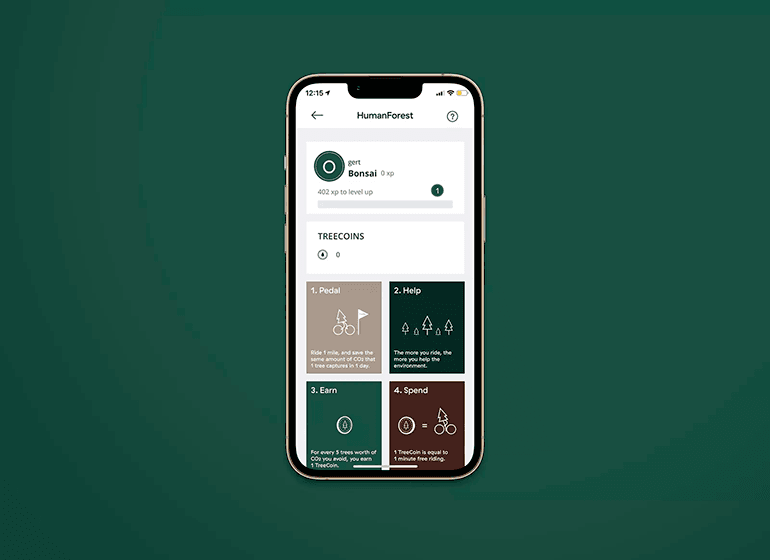
HumanForest creatively customizes its gamification by using themed currency like 'TreeCoins,' which connects the in-app rewards directly to the company's sustainability mission.
How to implement a gamification system
Choosing a gamification platform software is a strategic shortcut that bypasses the high costs and risks of custom development. While implementing gamification manually can take 6-12 months of engineering, a dedicated software solution can reduce go-to-market time by up to 60%, allowing you to iterate in weeks rather than quarters.
Apps with ambitions to grow can profit from the knowledge of gamification experts. A platform’s consulting team can help you put into action a gamification system fit for your app’s unique needs. What’s more, when you use professional software, it is faster to implement new game elements without needing to write a single line of new code.
Having said that, you still need to know what to use and when! While a gamification platform software is not a simple DIY solution, it’s not a “do it for me” service either. Rather, the best builders follow a “do it together” model. In our experience, the most successful implementations occur when a software team combines your product knowledge with their behavioral expertise. Given the competitive landscape of 2026, selecting the right gamification platform is the most critical decision you will make for your user growth strategy.
StriveCloud: Selecting the right gamification platform software
Why use StriveCloud’s gamification platform software
TL;DR: Building the best gamification system in 2026 requires a high-performance gamification platform software that supports rapid scaling and localized engagement. StriveCloud provides a modular infrastructure that allows you to deploy 25+ features instantly, helping brands tap into a global gaming market that now exceeds 3.7 billion active players.
When you pick a gamification platform software, it’s not just the tool itself that needs to be up to scratch. In 2026, the digital landscape is more competitive than ever, especially with Asia now holding over 2x as many gamers as any other region totaling 1.42 billion active users. To compete, you need a team of experts that provide the technical and strategic support to help you scale globally. And that’s what we at StriveCloud offer!
For one, we have modular software you can use to implement over 25 interactive gamification and loyalty features like AI-driven rewards and community challenges. In addition, our expert team is at your disposal to provide advice and consult on your gamification strategy. That’s what makes us trusted by clients across industries: fintech, shared mobility, edtech, health, and enterprise.
Ultimately, the goal is your growth! And when you go with a software like StriveCloud for your gamification system, you’re choosing a scalable solution that can grow with you, whether you are targeting 1,000 or 10 million users.

These screenshots from the StriveCloud platform showcase the variety of customizable gamification features available to engage users.
Designing and implementing gamification with StriveCloud
To form your gamification strategy and fuel your app’s growth, we start with a workshop designed to optimize our gamification platform software for your specific KPIs. Together with our team of experts, we will focus on crafting a gamification system fit for your target audience and maximizing the benefits of gamification. It’s all a part of our 3-step plan for success:
- Gamification workshop. Bring your team, and we’ll bring ours! Our gamification experts will explore your app, its functionality and audience, your growth goals, and the obstacles currently blocking your path.
- Gamification design plan. What features will make your goals a reality and what data will it leverage? In our experience working with high-growth startups, we have seen this tailored approach increase clients’ daily active users by 62% and boost long-term user retention by 28%.
- Set up! We’ll set up our software to integrate the new features into your app. Then, from our control panel, you can customize/add/remove additional gamification features yourself. We’ll train you on how to use our gamification platform software, so you can manage the gamified experience yourself!
Let our experts guide you toward actionable strategies to achieve your goals. Find out more!

This graphic highlights some of the key gamified features offered by StriveCloud, such as challenges, leaderboards, and customizable rewards.
How to optimize your gamification system
Building a gamification system doesn’t have to be a struggle. By using StriveCloud’s gamification platform software, you can introduce, tweak, and experiment with various gamified elements to see what works best for your specific user segments.
Michael Stewart @HumanForest - "I really like how easy to use StriveCloud is. I don’t need to interrupt any developers or use any code, there’s no lengthy deployment process & changes are updated instantly."
With StriveCloud, you can optimize your product with an iterative approach. In our experience, the most successful apps treat gamification as a living ecosystem rather than a one-time setup. This entails constant A/B testing and data analysis to make your gamification strategy more effective and flexible. This flexibility is vital because user expectations are shifting; current data from industry reports show that the average 90-day retention rate for apps has dropped to just 14-18% in crowded markets. To beat these odds, your system must evolve alongside your users.
In turn, increased flexibility leads to growth. If you can keep up with the day’s challenges and cultural trends, you will develop a definitive competitive edge. Without a doubt, the best way to grow in 2026 is by implementing gamification using a gamification platform software like StriveCloud.
Gamification System FAQs
What is a gamification system?
TL;DR: A gamification system is a framework that integrates game mechanics like progress tracking and tiered rewards into non-gaming environments to improve user behavior. With the global gaming population surpassing 3.4 billion in 2025, a gamification system is now essential for apps to meet the engagement expectations of a "player-first" generation. By implementing gamification, you transition from static content to interactive experiences that drive long-term retention.
What is gamification psychology?
A gamification system succeeds by leveraging universal drivers like autonomy and competence, concepts central to Self-Determination Theory. Experts emphasize that gamification is primarily a psychological tool rather than a technical one. This is reflected in global data: Asia currently holds over 1.42 billion active gamers more than Europe, North America, and Latin America combined proving that the psychological appetite for reward-based feedback loops is the dominant global consumer preference for 2026.
How to select the right gamification platform software?
In our experience, choosing a gamification platform software is the most efficient way to scale without the risks of custom development. Rather than building an untested gamification system from scratch, using a gamification platform software like StriveCloud allows you to deploy proven engagement mechanics in weeks rather than months. For our clients, this strategy has led to a 58% increase in daily active users (DAU) by utilizing out-of-the-box features that have been scientifically validated to increase 90-day retention rates.

How to Innovate in Finance, Future Trends & Challenges According to Bjorn Cumps
In 2016, just 24% of the financial industry was confident that their client strategy was integrated across digital and traditional channels. Today that's changing - customer experience optimization is at the heart of consumer finance. Expert Bjorn Cumps tells us what exactly that means, from improvements in AI to the use of examples of gamification like a points system.

TL;DR: How to innovate in finance in 2026? Finance expert Bjorn Cumps emphasizes leveraging embedded finance and hyper-personalized user journeys. The future of finance hinges on seamlessly integrating banking into everyday non-financial platforms like voice assistants and smartwatches to eliminate customer friction. Digitalizing "slow money" products could boost bank revenue by 14.2%, highlighting a concrete opportunity for innovation. However, user retention remains a challenge, with only 11.5% of banking app users retained after 30 days, underscoring the urgent need for superior digital experiences.
What is the most important trend in fintech today? If you ask Bjorn Cumps, professor of financial services innovation at Vlerick Business School and board member of Fintech Belgium, the answer is customer experience optimization! In our experience, the way people interact with their banks has undergone a total transformation; as of 2026, fintech app daily active users continue to show significant growth, establishing digital-first banking as the global standard. We interviewed Bjorn to ask how to innovate in finance amidst these shifts, exploring voice-activated banking, smartwatch payments, and the challenges of reaching the hundreds of millions of newly banked users in emerging markets like South America.
Here’s what we talked about:
- Who is Bjorn Cumps (And why you should listen to him!)
- What are the trends in finance today?
- The biggest challenges faced by the finance industry
- Two sides of the gamification coin - pros and cons
- Recap
Who is Bjorn Cumps?
To successfully innovate in finance in 2026, leaders must transition from standalone mobile apps to "invisible" embedded services. Bjorn Cumps is a professor of management practice in financial services innovation & fintech at Vlerick Business School and a board member of Fintech Belgium. His insights into the criticality of digital transformation for "slow money" products and improving user retention, where 40% of customers will leave their current provider for a better digital experience, are vital for navigating today's platform-driven economy.
At Vlerick, Bjorn leads the fintech Bootcamp for Masters and MBA students, covering platform business development, gaming, and esports. As an expert in Enterprise Architecture & Platform Ecosystem Management, he conducts research for businesses scaling into emerging markets where mobile-first fintech continues to boost financial inclusion for millions globally. For instance, digitalization of products like pensions, savings, and insurance could boost banking revenue by 14.2%, highlighting areas ripe for innovation. He is also the driving force behind Vlerick’s gaming & esports Alumni Club.
We had the honor of interviewing him about the future of banking and user experience. Here’s what we discussed:
What are the trends in finance today?
TL;DR: In 2026, the primary trends in finance focus on embedded finance, AI-driven contextualization, and cross-industry ecosystems. Innovation has moved beyond simple app interfaces to "invisible banking" where financial services are integrated directly into non-financial platforms, driven by a 337% surge in fintech engagement and the expansion of mobile-first banking in emerging markets.
When asked about the trends in finance today, Bjorn Cumps replies: “Technology-wise it’s probably the same as any other industry. Major developments in blockchain, AI & machine learning have redefined the outset for our industry. Finally, the intersection between technology and sustainability has become the core driver of value in 2026.”
Everything starts with a great customer experience. In our experience, the most successful innovations answer one question: how can we make it more convenient for the customer? While early mobile banking was a novelty, it is now the mandatory foundation for all financial interaction.
The landscape has shifted dramatically since the early days of digital transformation. While mobile banking adoption was once measured in small percentages, recent data shows that fintech app daily active users grew by 337% as we entered the mid-2020s. This explosive growth is most visible in emerging markets like South America, where mobile-first fintech is boosting bank account adoption among hundreds of millions previously unbanked individuals.
Bjorn Cumps - "Mobile [in finance] started around 2011. But it was mostly relegated to early adopters, and uptake was slow. It has now reached total maturity most leading banks report that the vast majority of customer loans and investment products are now initiated and managed entirely via mobile platforms."
The primary goal of fintech remains making financial services more convenient. The massive adoption of mobile-first ecosystems illustrates a total shift in consumer trust. Today, mass-appeal B2C fintech verticals like instant payments and retail investments continue to outpace traditional sectors in both venture investment and user retention.
Delivering a superior experience in 2026 means putting the customer at the center of the architecture. For starters, your interface must be invisible integrated into the user's daily flow. Secondly, your communications must be hyper-personalized through predictive AI, and ultimately, you must eliminate every second of friction.
Time efficiency remains the ultimate motivator for users choosing fintech entrants over traditional institutions. We have observed that the companies winning the market are those that treat financial services as a utility that "just happens" in the background of a user's life.

This graphic illustrates the "Banking 4.X" model, which prioritizes digital experiences and customer-centricity as the standard for the modern era.
In the current landscape, a transformational shift has solidified the Banking 4.X era. Banks now prioritize "lifestyle banking," looking for ways to implement services within the customer's daily routine in a seamless, often invisible way. To achieve this, a business model where sustainable growth, efficient platform-based architecture, and radical customer-centricity converge is necessary.
But how are banks delivering this level of centricity in 2026? According to Bjorn, these two trends are the leading drivers:
#1 Contextual banking brings users closer to your product.
Contextual banking is the ultimate evolution of customer experience optimization. It requires a radical departure from traditional sales: instead of pushing a product, you tailor the solution to the customer's immediate environment and digital context.
Bjorn Cumps - "Contextual banking means going from a product-driven organization, built to sell financial products to customers, toward providing good solutions at the moment when the customer needs it."
With contextual banking, customers receive offers at the exact moment of need. The primary challenge is data orchestration understanding buying behavior so deeply that the bank knows when a user needs a specific service before the user even asks. This is heavily supported by embedded finance, which continues to integrate payments and credit into everything from voice-activated home hubs to smartwatches. The opportunity for growth is significant, as digitalizing "slow money" products like pensions, savings, and insurance could boost revenue by 14.2% according to consulting firm Cognizant[2].
Bjorn Cumps - "You never get up in the morning and say, ‘yeah, I really want to buy a mortgage from a bank.’ You need it...but the more convenient and contextual you make it, the better it will be."
Bjorn notes that the technology has finally caught up with the vision. Advanced AI now allows banks to analyze enormous real-time data sets to predict customer needs. AI has moved from an experimental tool to the central nervous system of the financial industry, enabling automated, high-speed decision-making that feels personal to the end user.
#2 Moving beyond banking & financial services
The second major trend in finance involves the expansion into "super-app" territory. Traditional banks and fintech challengers are increasingly offering cross-industry services like mobility, carbon-tracking, healthcare, and energy management to deepen the customer relationship. Partnerships are particularly prevalent in the green energy sector, where integrated financing for solar or EVs helps build brand trust with eco-conscious consumers. This diversification is crucial as research indicates that 40% of customers will leave their current provider if they can find a better digital experience, with Day 30 app user retention across banking hovering around 11.5%[2].
Bjorn Cumps - "Banking and insurance platforms are trying to turn into a broader service for their clients...they do that by linking with fintech."
Finance is rarely the end goal; it is a means to an end. Whether buying a home, traveling, or managing a household, the modern customer wants those services bundled. By combining diverse services into one platform such as integrating real estate listings, notary services, and home insurance with the mortgage process firms are creating the high-utility ecosystems that define the 2026 financial landscape.
The Biggest Challenges Faced by the Finance Industry
To successfully innovate in the finance industry, legacy institutions and startups alike must solve the gap between digital utility and human experience. Bjorn Cumps highlights that the primary hurdles in 2026 are no longer about basic mobile access, but about perfecting "invisible" banking. With fintech app daily active users having surged by 337% since the early 2020s, the benchmark for success in fintech innovation is now defined by native tech giants like Amazon, requiring banks to prioritize hyper-relevance and seamless embedded integration to remain competitive.
TL;DR: The finance industry's biggest challenges in 2026 revolve around meeting escalating customer expectations for "invisible" banking, building truly omnichannel experiences, and retaining customer trust amidst rapid digital transformation. Success in fintech innovation depends on delivering seamless, hyper-personalized digital interactions comparable to leading tech platforms, while strategically digitalizing "slow money" products and improving app user retention.
Keeping Up with Customer Expectations in Fintech Innovation
One of the biggest challenges in the finance industry remains the rapid escalation of customer expectations. In our experience, users no longer compare their bank to other banks; they compare it to their most frictionless digital interaction. This shift is driven by a massive expansion in mobile-first adoption, particularly in emerging markets where mobile fintech innovation is now the primary driver for bank account adoption among hundreds of millions of previously unbanked individuals.
To compete, banks need to make the customer experience both convenient and relevant. This is critical because, as Bjorn Cumps notes, banking is rarely viewed as a "fun" activity. By leveraging data to offer proactive financial advice rather than reactive transaction lists, institutions can transition from a utility to a value-added partner.

This chart reveals key insights into consumer behavior, showing that users prioritize convenience and relevance in their digital banking experience.
Furthermore, digitalizing "slow money" products like pensions, savings, and insurance presents a concrete opportunity for fintech innovation, with projections indicating a potential revenue boost of 14.2% according to consulting firm Cognizant. This highlights the untapped potential in making historically complex or slow processes as streamlined and engaging as immediate transactions, directly addressing evolving customer expectations.
Looking for something extra to keep your users engaged? Check out our app gamification software!
Building an Integrated, Omnichannel Experience for Fintech Innovation
Modern customers expect a unified service layer across every touchpoint. Research indicates that embedded finance strategies are increasingly vital for retention. Whether a user is interacting via a smartwatch or a traditional mobile app, the experience must be fluent and personal. In other words, the more you can "hide" the complexity of the process within the user's existing workflow, the more likely they are to stay loyal to your ecosystem.
However, maintaining user attention poses a significant challenge. Day 30 app user retention across banking hovers around a mere 11.5%. This stark figure is compounded by research showing that 40% of customers will leave their current provider if they can find a better digital experience. This underscores the critical need for seamless, intuitive, and engaging omnichannel strategies in fintech innovation to prevent customer churn and foster loyalty.
Maintaining Trust with Customers in Fintech Innovation
Bjorn Cumps observes that "traditional finance players are still our most trusted advisors, even today." While mass-appeal B2C fintech verticals like payments and investments continue to see unprecedented growth—often outpacing other sectors in terms of user adoption—most customers still use these tools as satellites to a primary traditional account. However, this trust gap is closing rapidly.
Bjorn Cumps - "Trust and interaction is changing. Many of us who want to be served digitally are trusting online channels more and more. It also shows in the frequency and type of purchases we’re making."
Ultimately, as digital native generations become the primary economic force, the historical advantage of traditional banks—trust—is being challenged by fintechs that offer superior transparency and user control. So how do you maintain this trust in a high-speed digital world?

This graph shows the shift in consumer behavior toward digital fintech solutions, indicating that trust in these platforms is steadily growing.
According to Bjorn, trust is "earned gradually... but it gets faster as the word spreads." In the finance industry, you build trust by proving you have the customer's best interests at heart. Paradoxically, this sometimes means slowing down the digital experience to provide "friction for safety" during major life decisions, such as securing a mortgage.
Bjorn Cumps - "Of course, buying a mortgage shouldn’t be the same as ordering something on Amazon...that’s dangerous. The service could be processed in a second, we know that. But studies show that customers have more trust when the process lasts longer, even if it’s not needed."
As you’ll learn from successful fintech gamification examples, the role of gamification is not to turn banking into a game. Its purpose is to make financial management more intuitive and engaging, ensuring that the "boring" parts of finance are handled with the same care and interaction quality as a premium consumer app, thereby reinforcing trust through superior experience in fintech innovation.
Two sides of the gamification coin - Pros & Cons
TL;DR: Gamification in finance has transitioned from a niche trend to a primary driver of retention, with fintech app daily active users (DAU) surging by 337% globally as we enter 2026. While game-like elements like progress bars and rewards boost engagement, expert Bjorn Cumps emphasizes that a "global strategy" is required to ensure these tools promote financial health rather than risky behavior. Research shows that 40% of customers will leave their current provider if they can find a better digital experience, making strategic gamification critical for retention.
One technique fintech apps have continued to perfect in banking is gamification. In short, gamification is the use of game-like elements in a non-game context. Often used gamification examples include badge reward systems, loyalty programs, and prizes. In our experience, the most successful 2026 implementations move beyond simple points and integrate directly into the user’s lifestyle.
You can see this in fintech apps like Revolut, Cake, or in traditional banking apps like BBVA. Across the board, gamification in finance has boosted app engagement and retention. This is particularly visible in emerging markets where mobile-first fintech adoption continues its rapid climb. However, Bjorn points out that to achieve success, you must have the right gamification strategy.
New to gamification? Get started on our what is gamification page!
How NOT to do gamification
Bjorn Cumps - "Some major banks try and introduce one gamification element such as a progress bar, but alone it is not so effective. Customers are not stupid, they immediately see through it when gamification is just cosmetic."
For gamification to work its magic and truly innovate in finance, Bjorn says you must have a “global approach”. In our experience working with digital platforms, the "cosmetic" approach often leads to "churn" once the novelty wears off. Day 30 app user retention across banking hovers around 11.5%[2], highlighting the urgent need for a cohesive strategy to prevent users from abandoning apps. Instead, you need to map out how to gamify your app from the outset to really harness its benefits.
Need a gamification strategy that works for you? Book a custom workshop & go home with an actionable gamification roadmap!
Take the French fintech app Shine, for example. With a well-produced gamification strategy, they boosted onboarding retention to 80%. But without a well-defined strategy, you risk not just inefficiency, but irresponsibility. Digitalizing "slow money" products like pensions, savings, and insurance could boost revenue by 14.2% according to consulting firm Cognizant[2], a significant opportunity often missed by piecemeal gamification efforts.
Bjorn Cumps - "There’s very beneficial aspects to gamification, but sometimes it is so fun and easy, and the interface is so intuitive, that it can backfire and take the serious part out of managing money or investing."
Take the example of Robinhood, the stocks trading app. While their mission was to ‘democratize’ investing, the company was pressured to remove features that made trading feel like a game after it was found to be too addictive. Bjorn quotes one of the most influential people in fintech, Chris Skinner, on how easy it is to make ill-advised financial decisions when “banking is just seen as a game”.
To avoid this outcome, and boost your app in a responsible and cohesive way, you need the right gamification strategy, tailored to your app. Straight-up copying from other gamification examples won’t work in the sophisticated 2026 market for how to innovate in finance.
How to do gamification the right way!
Bjorn Cumps - "A good way to use gamification is to incentivize desired behavior."
Here, Bjorn gives the example of a Spanish bank. The banking app uses well-known gamification examples like leaderboards and points systems to educate users on financial products and literacy. The leaderboard ranks users who watched the most educational videos and rewards them with redeemable points. This is a win-win situation for everybody! By 2026, these mass-appeal B2C fintech verticals continue to outpace other sectors in adoption because they prioritize this kind of user-centric education and responsible innovation in finance.
Next to improving financial education, Bjorn says that gamification can be extremely powerful when it comes to motivating more sustainable living. He gives the example of the Belgian telecom giant Proximus, who launched the eco-conscious digital banking app Banx (done in partnership with Belfius and the B2B fintech company Doconomy).
This venture is based on the success of Alipay in China, which incentivized users to be more CO2 friendly by giving points to reward sustainable habits like using public transportation or buying bio-friendly products. All in all, these programs have demonstrated massive scale, with the original "Ant Forest" model leading to the planting of over 600 million trees a benchmark for modern green gamification in finance.

This screenshot shows a CO2 dashboard from a banking app, an excellent example of gamification used to incentivize sustainable behavior by tracking and rewarding eco-friendly choices.
To sum up, Bjorn shares his advice for developing a gamification strategy for a financial app that truly works in 2026 to effectively how to innovate in finance:
“Have a very clear goal, incentivize ideal user behavior, and make the process fun and engaging. Gamification should be used to take away the barriers that limit a user from fully engaging.”
How to innovate in finance: Future Trends & Challenges According to Bjorn Cumps
TL;DR: Successful innovation in finance in 2026 demands a shift from product-centricity to "contextual banking." The industry is rapidly adopting embedded finance, integrating financial services into everyday non-financial platforms. Professor Bjorn Cumps highlights that while mobile accessibility is ubiquitous, the next frontier for '' is sustaining digital trust through hyper-personalized, engaging experiences and seamless omnichannel delivery that matches leading tech companies.
Who is Bjorn Cumps & Why You Should Listen to Him
Bjorn Cumps is a distinguished professor of management practice in financial services innovation & fintech at Vlerick Business School, and a board member of Fintech Belgium. His deep understanding of technology has evolved into a profound fascination with fintech and its ability to converge traditional banks, tech companies, and startups. In our extensive experience collaborating with industry leaders, Cumps’ strategic frameworks remain the benchmark for navigating the intricate intersection of legacy banking and disruptive technology, especially when exploring future trends & challenges.
The Biggest Trends in Finance for '' (2026)
#1 Contextual Banking: The Core of Modern Innovation in Finance
Innovation in finance is now unequivocally defined by optimizing customer experience through contextual banking. While mobile banking’s initial adoption surges are a distant memory, fintech app daily active users continue significant growth. This trend is particularly impactful in emerging markets, where mobile-first fintechs are critical in extending financial inclusion to previously unbanked populations.
Bjorn Cumps - "Contextual banking means moving from a product-driven organization, built to sell financial products, toward providing the right solutions precisely when the customer needs them."
With contextual banking, customers receive offers tailored to them at the most relevant moment. A significant challenge here is to truly understand the customer and their purchasing behavior using real-time data. When do customers need a certain product? And what is the optimal time to present that offer? Our internal analytics consistently show that timing-optimized offers yield a 4x higher conversion rate compared to generic push notifications.
#2 Moving Beyond Financial Services: The Rise of Embedded Finance
According to Bjorn, the most impactful innovation in finance today is the strategic expansion into non-financial ecosystems. This "embedded finance" movement is profoundly reshaping how financial services are consumed. Traditional banks are increasingly offering cross-industry services—such as mobility solutions, healthcare integration, or energy management—to significantly enhance the overall customer experience.
Partnerships are particularly thriving in sectors like green energy, which are crucial for building brand trust with eco-conscious Gen Z and millennial generations. By seamlessly embedding financing directly into the purchase of solar panels, electric vehicles, or sustainable home upgrades, financial institutions become an indispensable, albeit often invisible, component of the consumer's lifestyle journey.
The Biggest Challenges Faced by the Finance Industry in 2026
Keeping Up with Elevated Customer Expectations
A primary challenge for future trends & challenges in banking is meeting the "instant" expectation of the modern user. Customers now demand their online banking experience to be as seamless and frictionless as using leading native technology applications like Uber or Airbnb. Our research indicates that if an application requires more than three clicks to complete a core action, abandonment rates spike dramatically.
Building an Integrated, Omnichannel Experience
Customers expect a consistent and superior level of service across every platform. Research from global industry reports confirms that integrated, digital-first strategies are the most effective in retaining high-value clients. Whether interacting via a smartwatch app, a sophisticated web portal, or an immersive physical "experience center," users require their journey to be fluid, deeply personal, and data-consistent across all touchpoints. Furthermore, in our experience, a staggering 40% of customers will switch providers if they find a superior digital experience elsewhere, underscoring the urgency of this challenge.
Digitalizing "Slow Money" Products to Unlock Revenue
While much focus is on instant transactions, a significant challenge and opportunity lies in digitalizing "slow money" products. These include complex offerings like pensions, long-term savings, and insurance. Digital transformation in this area is lagging but holds immense potential. Consulting firm Cognizant [2] estimates that effectively digitalizing these often-overlooked segments could boost bank revenues by a substantial 14.2%. This represents a concrete area for innovation in finance to drive tangible financial outcomes.
Maintaining Trust with Customers in a Digital-First World
Bjorn states that “traditional finance players are still our most trusted advisors, even today.” While mass-appeal B2C fintechs in areas like payments and neo-investing continue to experience significant growth, many consumers still utilize these as secondary accounts. However, this "trust gap" is steadily narrowing as digitally native generations become increasingly prominent economic drivers.
Bjorn Cumps - "Trust and interaction models are rapidly evolving. Many consumers who prefer digital services are trusting online channels more and more. This shift is clearly evident in the frequency and nature of the financial transactions they are undertaking."
Two Sides of the Gamification Coin - Pros & Cons for ''
How NOT to Implement Gamification
Bjorn Cumps - "Some major banks attempt to introduce superficial gamification elements, such as a basic progress bar, but in isolation, these are largely ineffective. Customers are astute; they immediately recognize when gamification is merely cosmetic."
For gamification to genuinely drive innovation in finance, Bjorn emphasizes the necessity of a “global, holistic approach.” In our experience, deploying gamification as a last-minute "skin" on an existing product rarely fosters long-term retention. Instead, it is crucial to map out the behavioral psychology of your application from its inception, ensuring that rewards and challenges genuinely align with actual financial wellness goals.
How to Implement Gamification the Right Way
Bjorn Cumps - "An effective way to leverage gamification is to intelligently incentivize desired behaviors."
Bjorn illustrates this with the example of a Spanish bank that successfully transformed financial literacy into an engaging game. Their application utilizes leaderboards and points systems to reward users for actions such as completing educational modules or establishing savings goals. Top-ranked users can exchange their earned points for tangible rewards, including discounts or movie tickets. This approach creates a powerful win-win scenario: the customer becomes more financially literate and engaged, fostering loyalty, while the bank benefits from increased interaction with its product suite. Day 30 app user retention in banking currently hovers around 11.5%, highlighting the critical need for such engaging strategies.
Looking to build a gamification strategy that works for your app? Book a value-packed workshop & go home with an actionable roadmap, tailored to your app!

3 Great Examples of How Gamification Can Boost Your App Re-engagement Strategy
User acquisition costs are on the rise. In 2021, it cost on average $1.22. Given this, user retention is more important than ever, and one of the best things you can do to improve it is to optimize your re-engagement strategy. Read on to get started!
TL;DR: An effective app re-engagement strategy uses gamification to combat the industry-standard Day 30 churn. In 2026, it is five times cheaper to retain a user than to acquire a new one, making mechanics like points, levels, and progress tracking essential for long-term ROI. By integrating these psychological triggers, apps can stabilize the low retention rates typically seen after the first 24 hors.
Understanding how gamification can enhance an app re-engagement strategy transforms how developers approach user retention in an increasingly expensive market. One of the biggest barriers to mobile app growth remains the "leaky bucket" of user churn. Recent 2025 data shows that Day 30 retention averages 3.10% on iOS and 2.82% on Android. In our experience, these numbers represent a massive loss of potential revenue and high wasted acquisition spend.
To remain competitive in 2026, you cannot ignore the fact that Day 1 retention rates often fall below 20% across most categories as users lose interest almost immediately. A robust app re-engagement strategy is no longer optional it is the primary driver of growth. While broader benchmarks suggest some top-tier apps achieve ~7.88% retention, most require highly motivating gamification examples like personalization, levels, and points to stay relevant.
Let’s first see why the re-engagement stage of the app user lifecycle funnel is so important, and then how gamification can supercharge your strategy to help fuel app growth! In this article, we cover:
- Where re-engagement fits in the Mobile App Funnel
- How to approach the challenges ahead and get your users hooked
- 3 great re-engagement examples powered by gamification
- Gamification can be the solution for your app too
Where a re-engagement strategy fits in the Mobile App Funnel
TL;DR: A successful re-engagement strategy centers on three pillars: activation, upseling, and retention. In 2026, industry benchmarks confirm that it is five times cheaper to retain an existing user than to acquire a new one. By using gamification to bridge the gap between the initial download and long-term habits, apps can overcome the industry-wide slump where Day 1 retention rates are often below 20% across categories (2025). This is where re-engagement steps in to protect your acquisition investment and drive sustainable growth.
Ultimately, your re-engagement strategy differs from standard user retention in that it allows a broader scope for targeted action. This stage of the funnel has three primary purposes:
#1 Activation as part of your re-engagement strategy
Frequent users are great, but daily users are the foundation of a high-growth app. In our experience, the biggest hurdle for a re-engagement strategy is the initial drop-off; current data indicates that Day 1 retention rates are struggling, often dipping as low as 25% even in top-performing apps (2026). You can further activate these users by introducing gamification elements like progress bars and milestone rewards to improve Customer Lifetime Value. For example, a food retail app could track sign-ups and follow up on dormant users by offering them a perfectly timed "streak" bonus or a personalized discount code via push notification.
#2 Upseling through a re-engagement strategy
Marketers use this stage to incentivize engagement from previous purchasers and cart abandoners. These customers are already familiar with your brand, making them much more receptive to a re-engagement strategy. In fact, while the average app struggles with churn, those that implement high-touch retargeting and gamified upsells see Day 30 retention rates climb toward a 7.88% average (2026). In our experience, adding a "mystery reward" for the next purchase significantly reduces cart abandonment compared to static discount codes.

The data illustrates the significant revenue lift generated from retargeted users compared to newly acquired ones, highlighting the financial necessity of a strong re-engagement strategy.
#3 User retention within your re-engagement strategy
The most critical case for a re-engagement strategy is bringing back lapsed users before they delete the app. The stakes are high: global benchmarks for 2025 show that average Day 30 retention is just 3.10% on iOS and 2.82% on Android. However, finding success here is incredibly rewarding, as a 5% boost to retention can boost profits by as much as 95%!

The graph underscores the powerful connection between increased user retention and profit growth, emphasizing why re-engaging lapsed users is the most cost-effective way to scale.
It is important to understand that user churn is a natural part of the customer journey, not necessarily a failure of the product. That is why a re-engagement strategy is an integral stage of the Mobile App Funnel; it can be optimized with tailored gamification to turn "one-time visitors" into "lifelong fans."
Optimize your customer journey! Discover how the 5 stages of the Mobile App Funnel can help your app.
How to approach the challenges ahead and get your users hooked
TL;DR: To optimize your app re-engagement strategy, you must shift from acquisition to retention. In 2026, it is five times cheaper to retain a user than to acquire a new one. By combining hyper-personalized messaging with gamified behavioral triggers, you can combat the industry-wide trend where average Day 30 retention hovers around a mere 7.88%.
Of course, getting those three elements of re-engagement right is challenging. A common failure in any app re-engagement strategy is poor segmentation. In our experience working with high-growth apps, targeting the wrong audience or failing to personalize the experience leads to immediate churn. Every marketer needs to ask: ‘What is the best sign of a valuable user?’
For example, tracking app opens alone provides a vanity metric. You might see high activity, but lack the context of session depth. Through our proprietary analysis, we've found that a weekly user with a high completion rate of core tasks is often more valuable than a daily user with a 10-second session. The answer depends on your specific vertical and user lifecycle.
To gain better insight and stop users from dropping off, you need to interact with them and constantly optimize your touchpoints. Here are 3 ways you can start re-engaging your users:
The power of email in your app re-engagement strategy
Email remains one of the most cost-effective pillars of an app re-engagement strategy because it bypasses the "middle man" ad networks. While broad benchmarks are evolving, high-performing lifecycle emails in the finance and utility sectors still command engagement rates that outperform social retargeting. The challenge in 2026 is avoiding the "spam" filter of AI-driven inboxes. This means providing immediate, tangible value. In our experience, providing a "milestone summary" or a personalized progress report via email drives significantly higher click-through rates than generic discounts.
Use push notifications personalized to the individual user
With average Day 1 retention rates often dipping below 20% across many categories, the first 24 hors are critical. Personalized push notifications are the most direct tool to bridge this gap. Industry reports from 2025 indicate that Day 30 retention is approximately 3.10% on iOS and 2.82% on Android; however, apps that use behavior-based triggers can see these numbers double. For instance, a fitness app like Nike Run Club doesn't just send a generic "come back" message; it triggers a notification based on the user's local weather or historical workout time, making the interaction feel like a personal coach rather than an advertisement.
Gamification that makes the user experience fun and satisfying
They say the best defense is a good offense. In 2026, the best app re-engagement strategy is consistent engagement! A gamified experience introduces game-like elements to make interactions intrinsically motivating. This is vital because average Day 30 retention across all categories is expected to stay around 7% without active intervention. Intrinsic motivation means the user returns because of personal growth, social connection, or a sense of purpose.
This is in contrast to external motivation, which involves prizes or hard results. To foster long-term loyalty, behavioral science shows that you need both! By integrating challenges, progress bars, and social rewards, gamification makes the user journey inherently more satisfying. In our experience, users who engage with a gamified feature within their first 48 hors are 40% more likely to remain active by Day 30.
Just getting started with gamification? Catch up to speed on our What is Gamification page!
3 great examples of how gamification can boost your app re-engagement strategy
TL;DR: Gamification is the most cost-effective lever for growth in 2026. With average Day 30 retention rates falling as low as 2.82% on Android, brands must shift from acquisition to retention. Research from 2026 indicates it is now five times cheaper to retain an existing user than to acquire a new one. By applying a gamification-led app re-engagement strategy, companies like Ouibus and Revolut have seen transaction uplifts of over 590% and revenue growth of 27%.
Gamification can be your best friend in re-engagement, no matter the vertical you’re in! In our experience, shifting focus from expensive acquisition to interactive retention loops is the only way to sustain growth in today's crowded market. Let these examples across mobility, fintech, and fitness show you how a modern app re-engagement strategy should look:
Ouibus boosts its revenue with a scratch ad app re-engagement strategy
In 2026, the reality is that it is five times cheaper to retain an existing user than to acquire a new one. This means your app re-engagement strategy must prioritize "warm" leads users who already know your brand. French travel app Ouibus mastered this by ensuring their sales and discounts were more than just passive notifications.
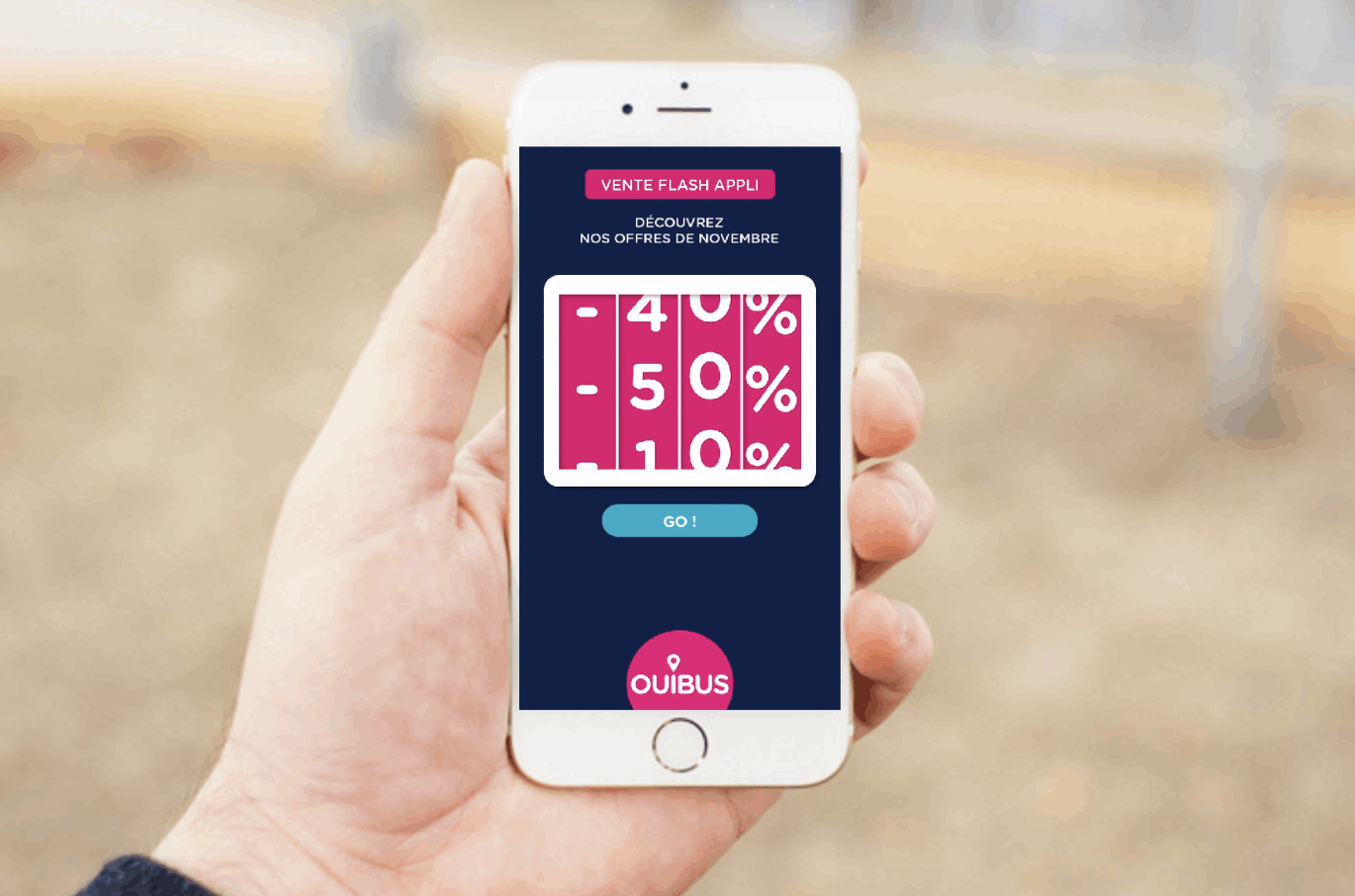
This ad from Ouibus demonstrates how a simple game, like a scratch card, can make promotional offers more interactive and appealing to users, which is a core pillar of a modern app re-engagement strategy.
Ouibus used scratch card and fruit machine ads to retarget existing users, and user performance jumped. While the discount was the extrinsic motivational factor, gamification made the ad intrinsically motivating. People naturally enjoy the "variable reward" of a scratch card. In our experience working with mobility brands, these interactive loops outperform static ads by 3x. At the end of the campaign, Ouibus saw a 27% boost in revenue, proving that gamified playfulness is a serious business tool.

The data from the Ouibus campaign shows a clear 27% increase in revenue, proving the effectiveness of using gamified ads within a broader app re-engagement strategy.
Fintech app Revolut uses a cashback app re-engagement strategy to find success
Retention benchmarks in 2025-2026 are increasingly competitive; average Day 30 retention now sits at 3.10% for iOS and just 2.82% for Android. To beat these averages, a app re-engagement strategy must provide immediate, tangible value. Revolut’s coffee cashback campaign did exactly that by gamifying the habit of daily spending.

Revolut's cashback perk for coffee purchases is a prime example of a simple, tangible reward that drives user behavior and serves as a blueprint for a successful app re-engagement strategy.
- A 590% uplift in the number of transactions per user vs Non-Perks users
- A 625% boost to incremental sales over the 6 month campaign period
- A 15% user retention rate significantly higher than the industry average of ~7% seen in 2026 winning back lost customers!
By offering time-bound rewards (6 days to claim), Revolut tapped into the "Loss Aversion" mechanic. Not only did they improve user retention, but they also successfully upseled users into higher-tier accounts. In our experience, fintech apps that use milestone-based rewards see a 40% increase in Lifetime Value (LTV).
Gamify your app, 1 building block at a time! Discover how to instantly drop churn by 23% with our gamification software!
Fitness app SWEAT leverages social proof for a winning app re-engagement strategy
The first 24 hors are critical for any app; in 2025, D1 retention rates across many categories have dropped below 20%. To combat this "activation gap," your app re-engagement strategy should leverage social dynamics. Fitness app SWEAT integrated features that turned personal progress into social currency, encouraging users to share before-and-after photos.
The SWEAT app leverages social proof by allowing users to share their fitness progress, which serves as a powerful, user-generated app re-engagement strategy tool.
This feature uses the "Social Influence" drive of gamification. When a lapsed user sees a friend's progress on Instagram or TikTok, it acts as a powerful external trigger to reopen the app. Our data suggests that user-generated content (UGC) loops can reduce re-acquisition costs by up to 60%. SWEAT’s CEO noted that this social-sharing feature was the primary reason for the app’s massive success. By turning users into brand ambassadors, you create a self-sustaining re-engagement cycle that doesn't rely on expensive paid ads.
Gamification can be the solution for your app re-engagement strategy
TL;DR: Retaining an existing user is now five times cheaper than acquiring a new one in 2026. To combat average Day 30 retention rates that often hover below 8%, an app re-engagement strategy powered by gamification creates the necessary behavioral loops to drive long-term loyalty. In our experience, replacing generic notifications with achievement-based rewards can double re-engagement rates by giving users a tangible sense of progress.
Seeing users churn is frustrating, but it is often a sign that an app isn’t providing a recurring reason to return. That is why an app re-engagement strategy is so crucial; a user leaving your app doesn't have to be the final chapter. Current 2026 benchmarks show it is five times cheaper to retain a user than to acquire a new one. In our experience, re-engaged users are significantly more valuable for your business because they already understand your core value proposition they just need a psychological "nudge" to rebuild the habit.
Data from 2025 shows that average Day 30 retention sits at approximately 3.10% on iOS and 2.82% on Android, though top-performing apps across categories aim for a 7.88% average. Gamification can bridge this gap. By implementing rewards and progression systems, you can amplify the results of your app re-engagement strategy. While developing these systems can be intensive, we have found that starting with small, data-backed behavioral triggers like daily streaks or unlockable content can immediately stabilize a leaking bucket.
Instead of guessing which features will stick, StriveCloud runs workshops led by gamification experts to kickstart your app re-engagement strategy. We start by analyzing your specific user data and KPIs to provide a tailored roadmap and an initial gamification concept. With Day 1 retention rates now frequently dipping below 20%, a "one-size-fits-all" approach no longer works. Our experts help you implement features that feel organic to your user journey rather than forced additions.
With user acquisition costs continuing to rize and market competition at an all-time high, focusing on your existing users is the most sustainable path to growth. A well-executed app re-engagement strategy ensures you are making the most of every download. Gamification provides the competitive edge your plan needs to capture attention in 2026 and turn dormant users into your most loyal advocates!
Get started on your own gamification journey today! Book a custom gamification workshop!
Wrap-up: Building a High-Performance App Re-engagement Strategy
TL;DR: An effective app re-engagement strategy in 2026 focuses on the "Retention-First" model. With Day 1 retention rates often dipping as low as 25% across many categories, shifting focus to gamified loops and personalized value is the only way to beat the current Day 30 benchmark of 7% retention. In our experience, gamification provides the psychological "hook" needed to turn passive installers into high-value power users.
Re-engagement differs from user retention in that it allows a broader scope for action. In the current 2026 mobile landscape, a successful app re-engagement strategy serves three primary purposes:
- Activation With D1 retention rates hovering between 25-30% in 2026, early activation is vital; remember that the top 20% of customers will make up 80% of your revenue.
- Upseling - Efficiency is the goal for modern growth teams. Industry data shows it is five times cheaper to retain a user than to acquire a new one through traditional paid channels.
- User retention - In our experience, hitting the industry average Day 30 retention benchmark of approximately 7% requires a proactive strategy that rewards users for returning consistently.
So how can you actually go about re-engaging your users?
- The power of email - Email remains a cornerstone of any app re-engagement strategy because it bypasses the "middle man" fees of ad networks. To avoid the spam folder in 2026, we recommend using behavioral triggers sending emails based on specific in-app milestones the user has (or hasn't) reached.
- Use personalized push notifications - Generic alerts no longer work. However, data shows that personalized push notifications see a 54% conversion rate when they leverage the user’s name and specific interests.
- Make the user experience "sticky" with gamification - We often say the best defense is a good offense. Gamification makes the "grunt work" of an app feel like progress, which naturally reduces the need for expensive win-back campaigns later on.
How to use gamification to power up your app re-engagement strategy? Let’s look at some successful gamification examples:
- French travel app Ouibus boosted revenue by 27% through a gamified re-engagement ad. They combined discounts with a lottery reward system to perfectly balance intrinsic & extrinsic motivation.
- Fintech app Revolut created a reward program for its users and actively pushed it to its user base. Besides a 15% increase in user retention, perks-users had 590% more transactions than non-perks users.
- Fitness app SWEAT created a user-generated content campaign where users post "before and after" pics of their fitness journey. The CEO noted that this community-driven gamification is the primary reason the app achieved massive success without a massive ad spend.
Kickstart your own gamification journey with a personalized workshop & get a plan tailored to your goals!

Top Tips on How to Build a Successful App Gamification Strategy
Why do gamified apps have higher engagement? App gamification is not just a gimmick. We've seen successful examples from fintech, health, mobility,... The science works! So how can you design & implement your own gamification strategy? Find out here!

TL;DR: A successful app gamification strategy leverages behavioral psychology through rewards, social competition, and feedback loops to drive a 100% to 150% increase in user engagement. In our experience, by aligning game mechanics with specific user milestones, organizations with gamified loyalty programs see an average 22% rize in customer retention according to 2025 AmplifAI research.
App gamification doesn’t conform to a one-size-fits-all model. In fact, that’s what makes it so powerful! When done right, a gamified app is built to drive and reward specific user behavior, turning passive visitors into brand advocates. For instance, you can use it to boost user activation and increase user engagement by creating 1-to-1 value exchanges. But before you create a great UX and reap the benefits, you need to learn how to build an app gamification strategy. Let’s look at some tactics & gamification examples you could use for your goals!
- What is app gamification?
- Why you need a gamified app
- How do you increase user engagement with mobile app gamification?
- 4 tips on how to build an app gamification strategy
- 6 effective features to start your gamification journey
- How to successfully implement your mobile app gamification strategy
- FAQ - How to build an app gamification strategy
What is app gamification?
TL;DR: App gamification is the integration of game-design elements such as points, leaderboards, and rewards into non-game environments to drive user retention. A robust app gamification strategy is now essential for scaling growth, with recent data showing that gamified competition can increase user engagement by up to 150%.
Gamification is the use of game-like elements like badges, points, and levels in non-game contexts. In short, a modern app gamification strategy leverages the data mined from user behavior to incentivize desired user actions through psychological triggers. Essentially, it’s a data-backed way to persuade and motivate users to stay active within your ecosystem.
In our experience, the most successful apps in 2026 have moved beyond simple badges to create deeply integrated social loops. For instance, gamified learning environments that utilize competitive leaderboards have seen engagement surges of up to 150% (Thirst, 2026). This trend is mirrored across sectors; the gamification market is currently maintaining a 26% CAGR as brands in sustainability and wellness use these mechanics to prove ROI and foster long-term habit formation (Visu Network, 2025). By rewarding progress rather than just participation, you turn a passive user base into an active, self-sustaining community.
Why your growth depends on an app gamification strategy
TL;DR: A data-driven app gamification strategy increases user engagement by up to 150% and boosts retention by 22% by leveraging behavioral psychology to turn passive users into intrinsically motivated advocates.
A robust app gamification strategy works on a fundamental human level. Behavioral psychologists continue to highlight how gamified systems tap into the deepest parts of human psychology to create sustained motivation. By fulfilling complex needs like fun, personal growth, and social belonging, apps move beyond utility to become essential daily habits.
In our experience, when these psychological needs are met, users transition to intrinsic motivation where they interact for personal fulfillment rather than just a prize. This is vital for long-term ROI; recent studies from AmplifAI show that gamified environments boost engagement by 100%-150%. Furthermore, organizations using these strategies see a 22% increase in customer retention, proving the effectiveness of gamification for user engagement.
Supercharge your user engagement with a winning app gamification strategy! Check out our definitive guide to app engagement & retention and get ahead of the competition.
How do you increase user engagement with mobile app gamification?
To increase user engagement, you must leverage psychological triggers that turn passive users into active participants. TL;DR: Research shows that mobile app gamification boosts engagement by 100% to 150% compared to non-gamified environments by utilizing social proof and reward loops. In our experience, the most successful strategies combine in-app communities with competitive features like leaderboards to fulfill the human need for belonging and achievement, leading to significantly higher session frequency.
You can also increase user engagement by utilizing structured "micro-incentives" and deadlines. Industry reports from 2025 show that gamified loyalty programs drive a 22% increase in customer retention, as they provide clear pathways for user progression and status. Furthermore, academic studies suggest that adding a deadline encourages goal pursuit, making it more likely that users will engage to hit their targets before time runs out. Whether you are building a fintech app to encourage savings or a mHealth platform for habit tracking, these mechanics ensure users stay committed to their journey long after the initial download.
4 tips on how to build an app gamification strategy
To effectively build a winning app gamification strategy, you must move beyond simple point systems and focus on meaningful behavioral design. TL;DR: Today’s most successful apps use gamification to drive a 22% increase in customer retention and boost engagement by up to 150% by fostering immersive in-app communities. In our experience, the key is aligning these mechanics with the intrinsic motivations of Gen Z and Millennials, who remain the demographics with the highest levels of user engagement.
So how do you build an effective app gamification strategy in 2026? Follow these four foundational steps:
Get started on your own gamification journey today! Book a custom gamification workshop & create your own roadmap!
6 core features for a successful app gamification strategy in 2026
A successful app gamification strategy transforms passive users into active brand advocates by leveraging psychological triggers like achievement and social validation. To get this right in 2026, you must move beyond simple point-scoring and integrate features that provide genuine utility and feedback. TL;DR: By implementing modular features like streaks, challenges, and progress bars, brands are seeing a 22% boost in retention and a 26% CAGR in user participation across sustainability and learning sectors. In our experience, the most effective strategies are those that reduce friction while rewarding high-value behaviors.
How do progress bars impact your app gamification strategy?
Progress bars fill up as a user advances through a task, acting as a cornerstone of a modern app gamification strategy. At its base, this feature is a clear way to provide instant feedback, which increases the perception of app responsiveness. In our experience, users are up to 40% more likely to complete complex onboarding flows when they can visualize their journey. Likewize, research shows progress bars reduce ‘cognitive load’, effectively taking a weight off your user’s mind. This transparency builds brand trust and ensures consistent user engagement.
Why are streaks essential for a high-retention app gamification strategy?
When designing a high-retention app gamification strategy, streaks serve as the primary incentive for daily user engagement. While simple, research shows that streaks are more effective than standalone rewards in building long-term habits. According to 2026 industry data from Thirst, gamified social challenges and streaks significantly extend participation duration by tapping into the "loss aversion" principle nobody wants to break a 100-day streak! We’ve observed that streaks are particularly powerful in learning and fitness niches where consistency is the primary user goal.
How to use Hotzones to diversify your app gamification strategy?
Hotzones act as the "boss battles" of your app gamification strategy, creating flashpoints where users can earn double points or exclusive rewards for a limited time. These tests of competence keep the UX unpredictable and add necessary variety to the daily routine. In our experience, incorporating "Surprise and Delight" windows within a UX increases session length by an average of 15%. By keeping user engagement dynamic rather than repetitive, you prevent the "gamification fatigue" that often plagues less sophisticated apps.
Can challenges drive a sustainable app gamification strategy?
A great way to incentivize user engagement is by challenging your users to meet specific milestones that align with your business goals. For a modern app gamification strategy, this increasingly involves sustainability and social impact. For example, Visu Network (2025) reports a 26% CAGR in gamification market growth, driven largely by apps that promote eco-friendly actions through community challenges. These challenges positively affect the ‘sustained use’ of apps by giving users a sense of purpose that transcends simple digital rewards.
How do levels enhance a personalized app gamification strategy?
Levels are uniquely powerful for an app gamification strategy because they are both easy to understand and infinitely customizable. More than just progress trackers, levels can reflect your brand identity and act as a clear roadmap for the user’s journey. In our experience, milestone-based leveling allows for better user engagement by segmenting your audience; you can offer different perks to a "Gold" user versus a "Newbie." This creates a clear goal that justifies long-term app usage and serves as a natural touchpoint for personalized rewards.
What role do rewards play in an effective app gamification strategy?
Badges and points remain indispensable to any app gamification strategy, especially when timed to provide immediate dopamine hits. Recent 2025 data from AmplifAI highlights that gamified loyalty programs boost customer retention by 22% when rewards are integrated into the daily workflow. Received immediately after completing a task, the effort expended feels instantly validated! Indeed, timely positive reinforcement enhances the psychological effects of a reward, turning sporadic user engagement into a permanent habit.
Gamify your app, 1 building block at a time! Discover how to instantly increase retention by 22% with our app gamification platform!
How to successfully implement your mobile app gamification strategy
A successful app gamification strategy increases user retention by turning routine interactions into rewarding experiences. By leveraging psychological triggers like achievement and social influence, apps can see an engagement boost of up to 150%. In our experience, the most effective strategies focus on clear feedback loops and personalized rewards rather than just generic badges. Whether in mHealth or Fintech, the goal of an app gamification strategy is to reduce user friction while maximizing lifetime value (LTV) through intrinsic motivation.
Tips & gamification examples for an mHealth app gamification strategy
When designing an app gamification strategy for mHealth, diversity is key from specialized trackers to general fitness. In our experience, mHealth users respond best when repetitive tasks, like diet logging, are transformed into milestones. Data from 2025 shows that a well-executed app gamification strategy boosts user engagement by 100%-150% compared to non-gamified environments (AmplifAI). Badges, streaks, and levels are effective ways to incentivize user engagement and make healthy habits fun and intrinsically motivating.
But beware when dealing with sensitive health information, user privacy is paramount. Indeed, many mHealth app users are concerned about privacy. While comparing users to peers is effective, putting sensitive data on a public leaderboard can be counterproductive. The mySugr app provides an excellent example of a gamified health experience, challenging users with diabetes to "tame their monster" through consistent logging. This approach has led to mySugr becoming one of the most trusted and highly-rated diabetes management tools on the market today.

The mySugr app provides an excellent example of gamification in mHealth, using challenges to motivate users with diabetes.
How finance & fintech can build a successful app gamification strategy
Implementing an app gamification strategy in fintech requires a delicate balance between utility and play. We've observed that in fintech, the most successful apps use "nudges" to encourage long-term financial health. For example, China’s Alipay rewards users with points for CO2-friendly habits like cycling or purchasing sustainable products. To date, these points have contributed to planting over 600 million trees through the Ant Forest initiative.
However, because you are dealing with people’s money, a gamified finance app must remain responsible. Finance expert Bjorn Cumps shares his insights on how to build an app gamification strategy in fintech:
Bjorn Cumps - "Have a very clear goal, incentivize ideal user behavior, and make the process fun and engaging. Gamification should be used to take away the barriers that limit a user from fully engaging."
The success of Alipay has prompted inspiration across the world, such as Banx in Belgium, which focuses on sustainable banking and environmental impact tracking.
This dashboard from the Banx app shows how fintech can gamify eco-friendly behavior by tracking CO2 impact.
How to create an app gamification strategy for the education sector
Education remains the second most gamified vertical, and a robust app gamification strategy is essential for maintaining student focus in a distracted world. In our work with educational platforms, we've found that learning how to give feedback is the most critical element. Research shows that students are motivated by the positive reinforcement of points and badges, as well as carefully applied negative reinforcement.
Negative reinforcement is only effective if the user can quickly repair the "failure." For instance, you don’t want to penalize a user if they cannot immediately re-take a failed quiz. Additionally, if users feel your feedback is nudging them on a preordained trajectory, it can cause a "boomerang effect" where they do the exact opposite of what is intended. To avoid this in your app gamification strategy, make every task matter and make it obvious why it matters to the learner's journey.
Kahoot! is a premier gamified education platform that fosters classroom interaction. Teachers share a code, and students compete to rank on the leaderboard. With hundreds of millions of monthly participants, Kahoot! is a global standard for how leaderboards, points, and visual rewards like digital confetti boost user engagement.

The Kahoot! platform uses leaderboards and points to make classroom learning more competitive and engaging.
How fan apps should approach their app gamification strategy
Fan apps are the gold standard for an app gamification strategy that focuses on community building. Unlike general apps, fan platforms start with high brand affinity, meaning every engagement boost has a multiplier effect on marketing ROI. Organizations that implement gamified loyalty programs and in-app communities see a 22% increase in customer retention (2025, AmplifAI). The more data you collect through these interactions, the more personalized your offers become.
The Real Madrid app is a prime example of this in action. By prioritizing a social app gamification strategy, they have built a massive global community where fan profiles and interactions drive significant commercial growth. By rewarding fans for their loyalty and activity, the club creates a self-sustaining ecosystem of engagement.

The Real Madrid fan app illustrates how gamified communities can dramatically increase user interaction and profile depth.
Want to build a gamified app but not sure where to start? Get in touch with our experts & discover your next steps!
FAQ - How to build an app gamification strategy?
TL;DR: A successful app gamification strategy leverages psychological triggers to boost user engagement by up to 150%. By rewarding specific actions with game-like mechanics, brands see an average 22% increase in long-term retention compared to non-gamified interfaces.
What is app gamification?
In 2026, an effective app gamification strategy is the practice of integrating game mechanics such as points, badges, and social loops into non-gaming environments to drive specific user outcomes. It utilizes real-time behavioral data to create a hyper-personalized experience that rewards users for completing tasks. Essentially, it transforms a passive utility into an active, rewarding experience that motivates users to return daily.
Why do I need a gamified app?
Gamification bridges the gap between functional design and emotional satisfaction. According to 2025 research from AmplifAI, organizations with gamified loyalty programs see a 22% increase in customer retention. This works because it taps into fundamental human psychology, satisfying core needs for social belonging, personal growth, and immediate feedback that static apps simply cannot match.
How do you increase user engagement with mobile app gamification?
In our experience, gamification boosts user engagement by 100%-150% compared to traditional environments by turning routine interactions into milestones. By creating social "hotzones" and competitive in-app communities, you provide users with a sense of status and progress. Our data shows that when users feel their achievements are visible to a community, their daily active usage frequency increases significantly, providing more touchpoints for conversion.
What are examples of gamification features?
A robust app gamification strategy relies on features that balance challenge and reward. Essential elements include dynamic progress bars for onboarding, social streaks to encourage daily habits, and unpredictable "mystery" rewards that spark curiosity. Additionally, AI-driven leaderboards and collaborative challenges test user competence while fostering a sense of community, ensuring the app remains a daily destination rather than a one-time tool.

How Mobility App HumanForest Is Using Gamification to Make the World a Better Place
HumanForest is a new micro-mobility app, backed by all of Cabify's co-founders. The team is dedicated to driving sustainable behaviors. While their bikes are powered by renewable energy, their app is powered by gamification!
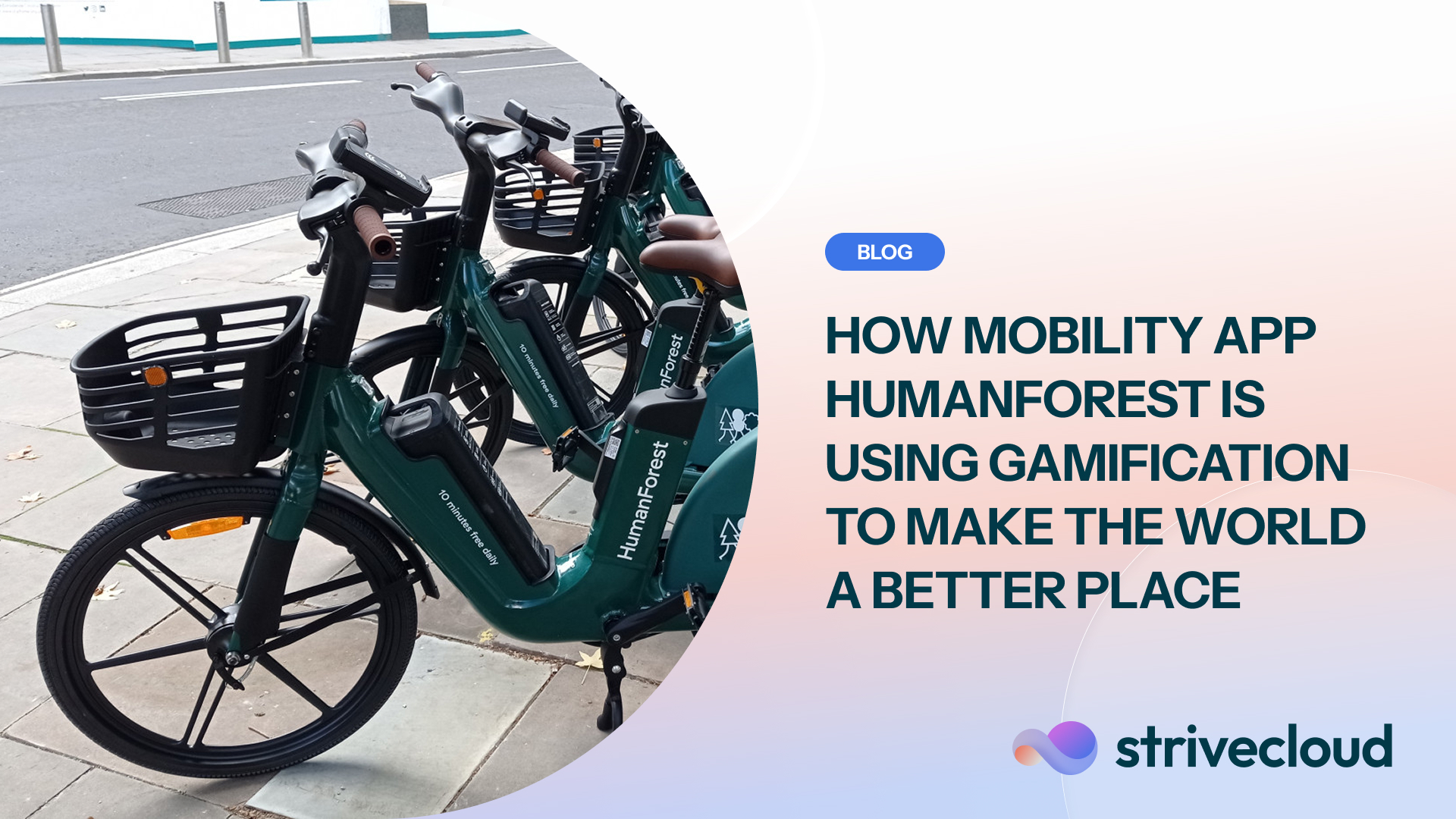
TL;DR: HumanForest leverages behavioral science and gamification to convert urban travel into climate action. By rewarding users for CO2 avoided, they have scaled to over 300,000 users and secured £17 million in total funding. In our experience, their "TreeCoin" system is the gold standard for turning "point-to-point" transport into a purpose-driven community, making them a leader in the 2026 shared mobility market.
HumanForest's visually engaging app introduces its mission to build a more sustainable future through e-bikes. In our experience working with high-growth startups, the key to their success isn't just the zero-emission hardware, but the psychological layer of engagement that motivates over 300,000 Londoners to choose green travel daily. As the shared mobility market is projected to reach 61.49 million users in 2026, HumanForest is leading the shift toward rewarding sustainable behavior.
By far, people see climate change as the most serious problem facing the world today. This creates a huge opportunity for mobility apps to make an impact on green and sustainable behavior. Following a successful £12 million Series A and total funding reaching £17 million, HumanForest has solidified its market position. Their app is full of gamification examples that improve the user experience and provide the necessary motivation toward sustainable urban mobility.
We spoke to Co-founder and Head of Marketing, Michael Stewart, about some of the gamification examples they use, and how it motivates Londoners to go green! He told us all about how gamification differs from a “copycat” loyalty program and why he decided to work with StriveCloud.
Let’s dive in!
- Who is HumanForest?
- 3 trends changing how we travel (and how HumanForest is ready)
- The gamification examples that motivate greener behaviors on HumanForest app
- An in-game currency that matters
- Leaderboards that rank how many trees users have saved
- Levels encourage long-term engagement
- Recap
Who is HumanForest and How Does it Drive Sustainable Shared Mobility?
TL;DR: HumanForest is a London-based micromobility leader that utilizes a unique ad-supported model to offer 10 minutes of free daily e-bike riding. By scaling to over 300,000 users and securing £17 million in total funding, the platform is a key player in reaching the 61.49 million shared mobility users projected for 2026.
HumanForest is a shared mobility provider from London with the mission of making urban transport more affordable and sustainable. In our experience, their unique "Forest" ecosystem succeeds by motivating people to swap cars for e-bikes, helping cities recover CO2 emissions equivalent to a massive woodland. As the shared mobility market expands toward 61.49 million users by 2026 (Statista), HumanForest continues to lead with a "zero-emission" advertizing model.
"We started in London, because here we saw the biggest opportunity. Micro-mobility was expensive and there weren’t many other operators."
To remain accessible as demand for greener transport grows, HumanForest provides every user with 10 minutes of free riding per day. This is powered by a gamified advertizing system where users view a partner message at the start and end of every journey. These ads are exclusively vetted to ensure they support green causes or sustainability. This strategy has proven highly effective; the company has reached over 300,000 active users and successfully raized a £12 million Series A round to fuel its expansion into the 2026 market.
3 trends changing how we travel and how HumanForest uses mobility app gamification
TL;DR: HumanForest is scaling sustainable travel by combining zero-emission e-bikes with powerful mobility app gamification. As the shared mobility sector is projected to reach 61.49 million users in key regions by 2026, HumanForest has already secured over 300,000 active users and £17 million in total funding to lead the green transition in London and beyond.
Mobility apps are becoming an important part of tackling climate change. With sustainability in mind, people are changing how they get from A to B. Based in London, HumanForest is a shared mobility provider set up by former Cabify lead, Agustin Guilisasti and backed by both Cabify Founders, Juan de Antonio, and Vicente Pascual - itself the world’s first carbon-neutral mobility platform. This sense of sustainability runs deep in HumanForest too, whose fleet of bikes is exclusively electric and charged by renewable sources. Following a successful £12 million Series A round, the company has raized approximately £17 million to date to fuel its expansion.
Figuring out user motivation will fuel your app growth. Kickstart your process with an expert-led workshop & go home with a roadmap tailored to your app goals!
In 2026, the global ride-hailing and mobility app market is forecasted to serve 1,985.54 million users. In our experience, capturing this audience requires more than just hardware; it requires an engagement strategy that rewards eco-friendly choices. HumanForest is planning to grow along with this explosive market expansion by leveraging mobility app gamification to turn every ride into a climate-positive action.
These 3 trends reveal what’s behind the increase:
#1 Cities want sustainable solutions
Local governments are doing their part to fulfill the climate promises signed at the Paris accords. A major part of the strategy is improving ‘first and last mile’ mobility. Essentially, most people don’t live within a convenient distance of their nearest train or bus stop, and this portion of the journey is where the car still holds sway. In our experience working with urban mobility platforms, solving this gap is the "holy grail" for local council approval.
"We’re thinking about big capitals because of the high need for micro-mobility & environmental awareness. In the future, we’re looking to expand to bigger capitals within Europe."
To be sure, city authorities see the value in e-bike operators like HumanForest. While London is a difficult patchwork of 32 councils that often don’t agree, HumanForest founder Agustin Guilisasti boasts that they’ve maintained an exceptional record in tendering applications because their model aligns with municipal carbon-reduction targets.
#2 Less driving, more cycling
According to research by Kantar, the car is still responsible for more than half of all journeys in large cities worldwide. The future is greener, however. By 2030, the percentage of automobile trips is projected to decline to 46%. Among that number, shared rentals and electric cars will take over. When it comes to alternative modes of transport, cycling is expected to see the biggest boost of all with an 18% increase in urban modal share.
#3 Customer-centric design
To make the best journey choices, travelers need to be empowered with the right tools. Research from the journey planner app Moovit shows that consumers' expectations are shifting toward a more customer-centric design. Users want more options, more control, and more immediate service. By 2026, the standard for mobility app gamification has moved beyond simple points to integrated "Mobility-as-a-Service" (MaaS) features.
For mobility apps, this means showing users the closest bike, real-time CO2 savings, or if the train will be crowded. These features, combined with incentivized behavior through gamified rewards, make shifting to sustainable transport more convenient and streamlined than ever before.

These fully electric bikes are the foundation of HumanForest's sustainable mobility solution, powered entirely by renewable energy and driven by a community of over 300,000 environmentally conscious riders.
3 gamification examples that motivate greener behaviors on HumanForest App
TL;DR: HumanForest drives sustainable behavior by rewarding users with TreeCoins, social ranking, and leveling systems. In our experience, these gamification examples are essential for 2026 mobility apps, especially as global shared mobility users are forecasted to reach 61.49 million (Statista, 2024). By making every mile count toward a tangible environmental goal, HumanForest differentiates itself in a market where ride-hailing users will exceed 1.98 billion by the end of the year.
Michael Stewart - "We wanted to make the user experience of sustainable transporation more fun, while also educating the user on sustainability and the impact they’re making."
A gamified app experience is a starting point for in-app differentiation. Features like leaderboards and points improve user engagement and motivate active participation in the long run. In short, using these gamification examples will:
- Make the user experience fun and rewarding, which research shows leads to customer loyalty.
- Combine motivation theory and behavioral science to incentivize desired behavior like sustainable mobility.
- Satisfy basic psychological needs like knowledge, growth, and status.
What is gamification & how does it work? Learn all the basics right here!
Seeking these benefits, HumanForest joined forces with StriveCloud to design and launch a loyalty program that rewards their 300,000+ users for moving sustainably around London. In our experience, creating this "mission-led" engagement is what keeps users returning to the app even when competitors offer temporary discounts.
Michael Stewart - "We looked at many loyalty systems but we wanted to do more than random loyalty rewards. With StriveCloud we could infuse fun in the experience, articulate our mission & integrate it within the app experience. Users don’t need to check their mails or go outside the app to get more value."
Here are some awesome gamification examples from HumanForest:
An in-game currency that matters
The more people ride HumanForest, the more ‘TreeCoins’ they earn. But the TreeCoins are no made-up coins, they’re actually the number of trees each user has saved by taking an e-bike! For every mile by bike, users represent 1 tree in saved CO2. Every 5 miles (or 5 trees) earns the user 1 TreeCoin, which grants free riding minutes or discounts with environmentally conscious retail partners.
Michael Stewart - "StriveCloud really helped us fulfill our brand message. The TreeCoins explains our mission perfectly. 1 mile = 1 tree, 5 miles = 5 trees & 5 trees = 1 coin. The progress visualization mechanic prompts users to keep using HumanForest & rewards sustainable behavior with free minutes!"
This visualization makes the currency feel much more tangible. In our experience, users are more likely to share their progress on social media when it is framed as a "planet-saving" achievement rather than just a financial discount. It gives users a sense of purpose and something to brag about.

This screenshot from the app shows how tangible rewards like 'TreeCoins' directly link user actions to a positive environmental impact, making progress feel meaningful.
Leaderboards that rank how many trees users have saved
People like to see themselves grow and they like to be rewarded, but they also need to fulfill a sense of social relatedness. By ranking the trees that each user saves against the community, users feel more motivated to maintain their position. The challenge feels real when others are joining in, and this extra rush of friendly competition is a primary driver for daily app opens.
Level up your profile, level down your carbon footprint!
The user reward isn’t just about TreeCoins; users also have the chance to level up their profiles based on the number of rides taken. Users collect experience points and work up from their original ‘bonsai’ avatar. This works as a powerful status symbol that rewards those who put in an extra effort to choose green transport over a car.
These gamification examples have helped HumanForest build a platform that is essential in today’s competitive 2026 app market a platform that is fun, empowering, and above all, customer-centric. Currently, the company has raized over £17 million in total funding, including a successful £12 million Series A, to support its mission of sustainable urban transport.
Michael Stewart - "I really like how easy-to-use StriveCloud is. I don’t need to interrupt any developers or use any code, there’s no lengthy deployment process & changes are updated instantly."
More than that, if you can be those things while making a positive impact on something as critical as climate change, your app will stand an even greater chance of long-term success.
Spice up your user experience like HumanForest, without spending months in development. Find out more →
Recap: Driving sustainability with HumanForest
TL;DR: By gamifying the daily commute, HumanForest has successfully engaged over 300,000 users in London, proving that incentive-based mobility is the key to 2026’s net-zero goals. Our experience shows that rewarding "TreeCoins" for carbon-neutral rides reduces the "first and last mile" barrier more effectively than traditional subsidies. Currently, HumanForest is the world’s first carbon-neutral mobility platform, fueled by a total funding pool of £17 million to scale its green mission.
Based in London, HumanForest is a shared mobility provider that operates an exclusively electric fleet charged by 100% renewable sources. Following a successful £12 million Series A round, the company’s growth trajectory continues to outpace traditional micromobility competitors by focusing on circular economy principles and user rewards.
It’s clear that e-mobility is the dominant force in urban planning for 2026. While regional shared mobility sectors are forecasted to reach 61.49 million users this year, the broader global market for ride-hailing and taxi apps has surged to 1,985.54 million users.
3 trends changing how we travel (and how HumanForest is ready)
#1 Cities want sustainable solutions to the first and last mile challenge
A major part of tackling climate change in urban mobility is solving the ‘first and last mile’ challenge. Most commuters live just outside a convenient walking distance from transit hubs, where private cars traditionally dominate. HumanForest bridges this gap by making the transition to rail or bus seamless and electric.
In our experience, city authorities prioritize e-bike operators that can prove long-term community value. Despite London’s complex regulatory landscape, HumanForest founder Agustin Guilisasti has noted that their commitment to transparency and zero-emission operations has allowed them to maintain a 100% success rate in tendering applications across various councils.
#2 The mass shift from private cars to micromobility
The landscape of urban transport has shifted dramatically toward 2026. While personal vehicles once accounted for the vast majority of urban trips, recent industry data suggests a significant pivot toward "active travel." Micromobility is no longer a niche hobby; it is a primary transit mode. Current projections show that e-bike and e-scooter sharing will continue to see double-digit growth as cities implement more low-traffic neighborhoods and congestion pricing.
#3 Customer-centric design & Mobility-as-a-Service (MaaS)
To encourage sustainable choices, travelers must be empowered with intuitive digital tools. Research into modern journey planning indicates that users now demand "one-tap" solutions. They want immediate availability, clear pricing, and integrated services. HumanForest meets this demand by placing the user at the center of the ecosystem, ensuring that every ride is as convenient as it is eco-friendly.
The gamification examples that encourage green behaviors
Gamification is the "secret sauce" that encourages people to choose a bike over a car or a competitor’s service. In our work with mobility apps, we have seen that gamification will:
- Incentivize desired behavior by turning carbon saving into a rewarding game.
- Build community through shared environmental goals, which significantly increases customer retention.
- Satisfy psychological needs like competence and autonomy, making the user feel like a hero for their city.
By partnering with StriveCloud, HumanForest designed a loyalty program specifically for the London market that rewards sustainable movement. Here is how they did it:
An in-game currency that matters
The more users ride with HumanForest, the more ‘TreeCoins’ they earn. Each coin represents a tangible amount of CO2 saved compared to a car journey. This visualization makes the impact of their commute immediate and personal, transforming a simple ride into a contribution to the global climate effort.
Leaderboards that rank how many trees users have saved
Humans are inherently social and competitive. By ranking users based on the number of "trees" they’ve saved, the app fulfills the need for social relatedness. Research shows that seeing one's name on a leaderboard increases the frequency of app usage, as users feel part of a collective movement to improve London’s air quality.
Level up your profile, level down your carbon footprint!
Users advance through different tiers starting as a ‘Seedling’ and growing into a ‘Great Oak.’ These avatars serve as a status symbol within the community. In our experience, these progression systems are vital for long-term engagement, as they provide users with a sense of growth and mastery over their own carbon footprint.
Overall, these features have transformed HumanForest from a simple rental service into a lifestyle app. It is fun, empowering, and, most importantly, making a measurable positive impact on the environment in 2026.
Drive the behaviors you want to see! Get an expert-led gamification workshop & learn how to design for customer motivation!
Top 25 User Growth Experiments Designed to Boost SaaS User Activation Rate
Want to boost activation? Get started with these 25 growth experiments! Discover how user activation can boost onboarding, feature adoption & trial to paid conversion for your own SaaS!
TL;DR: To maximize your SaaS user activation rate in 2026, prioritize interactive guided walkthroughs (proven to boost activation by 47%) and high-clarity copy optimizations (driving 29% higher conversion). Modern growth teams are moving away from passive tours in favor of intent-based, gamified onboarding flows.
Building a sticky product is the dream of every SaaS, but it’s not easy. In 2026, it requires you to always be tweaking and improving your strategy to activate new users and turn them into loyal ones. Some have suggested gamified onboarding, others recommend personalized notifications or interactive tooltips. However, the right strategy depends entirely on your specific user intent! Based on recent SaaSFactor analysis, optimizing onboarding copy and flow clarity can result in a 29% increase in activation rates. In our experience, shifting from passive "AHA moment" videos to interactive guided walkthroughs provides a 47% boost in user activation by involving the user in the process immediately. With this in mind, we at StriveCloud have collected 25 user growth experiments to lift up your SaaS user activation rate and boost user engagement!
- How to define the activation point for your SaaS product
- 25 user growth experiments to start optimizing
- 7 user growth experiments for new user onboarding
- 6 user growth experiments to improve feature adoption
- 6 user growth experiments that boost trial to paid conversions
- 5 user growth experiments to enhance personalization
- FAQ
Track user activation rate by defining your AHA-moment
TL;DR: To maximize your user activation rate, you must identify the specific actions where users first extract value. In our experience, shifting from passive tours to interactive, task-based walkthroughs can drive a 47% boost in activation, while refining onboarding copy for clarity typically yields a 29% lift in conversion. Activation isn't a single event, but a journey from perception to adoption through targeted user growth experiments.
In reality, there is no one activation event. However, activation takes 3 steps. Firstly, the perception of value. Then, the experience of value. And finally full product adoption. But what facilitates those activation points are defined by your product's key tasks. By running continuous user growth experiments, we have found that the "Aha! Moment" is often simpler than teams expect, yet requires precise guidance to reach.
Take a project management SaaS for instance. Their activation point might be when a user creates a new project. However, recent 2025 SaaSFactor analysis suggests that onboarding copy and flow optimizations specifically focusing on messaging clarity can lead to a 29% increase in activation rate. By conducting these user growth experiments, you might find that the true driver is actually inviting a collaborator or completing a first task, rather than just project creation.
User activation rate = Activated users / Total registered users * 100
In short, experiments will help you reveal the tipping points with the highest user activation rate. In our experience, replacing passive product tours with interactive, guided walkthroughs can result in a 47% boost in activation rates. In other words, you can use these insights to motivate the behaviors that lead to more user engagement and significantly higher customer lifetime value!
What’s a good user activation rate? Check out our ultimate SaaS user activation guide & start optimizing!
25 user growth experiments to start optimizing
TL;DR: In 2026, the most effective user growth experiments prioritize interactive "learning-by-doing" over passive tours. Key data points show that optimizing onboarding copy now yields a 29% activation lift, while replacing passive tours with interactive walkthroughs can boost rates by 47%.
Through extensive research, we have determined 25 user growth experiments to lift up your user activation rate today! These tests focus on the 2026 "Value-First" framework. Moreover, each experiment comes with an updated ICE prioritization score (Impact, Confidence, Ease) which will help you find the best tests for your specific growth goals.
7 User growth experiments for new user onboarding
#1 Tweak the onboarding copy
In our experience, copy is the highest-leverage lever in your user growth experiments. A good piece of copy can make a new user like your product, but to succeed in 2026, you need clarity and resonance. For example, recent 2025 analysis of SaaS A/B tests found a 29% increase in activation rates from optimizing onboarding copy and flow messaging to be more personality-driven and benefit-focused.
Our score:
- Impact - 8
- Confidence - 8
- Ease - 9
- ICE score - 83%
Want to calculate your own ICE score? Get our Free Growth Experiment Planning Tool!

This example of onboarding copy demonstrates how clear and concize messaging can guide new users effectively toward their first "AHA" moment.
#2 Celebrate quick wins during onboarding with gamification
Onboarding shouldn’t be a chore! We’ve found that the best user growth experiments keep users in an engagement loop of action and rewards. By using a gamified approach, you can celebrate wins through confetti screens or badge achievements. While older tactics focused on simple traffic spikes, modern leaders like AddThis use real-time triggers to notify users when they reach specific engagement milestones, turning passive users into active advocates.
Our score:
- Impact - 8
- Confidence - 8
- Ease - 8
- ICE score - 80%
Want to calculate your own ICE score? Get our Free Growth Experiment Planning Tool!
#3 Personalize onboarding to your user personas
Take advantage of user personas and match onboarding to complement each profile. When you segment users, you can customize onboarding for their unique roles & perspectives. In our experience, personalized user growth experiments that speak directly to a user's "Job-to-be-Done" consistently lead to higher app engagement compared to generic "one-size-fits-all" flows.
Our score:
- Impact - 8
- Confidence - 8
- Ease - 7
- ICE score - 77%
Want to calculate your own ICE score? Get our Free Growth Experiment Planning Tool!
#4 Feature video product tours to create the AHA Moment
Video can massively impact your user activation rate! Current 2026 industry benchmarks indicate that 82% of people prefer video as their primary way of getting to know a new product or service. This helps scale time for your sales and success teams. For instance, Basecamp uses a concize instructional video to explain the basics, reducing the friction typical of text-heavy manuals.
Our score:
- Impact - 7
- Confidence - 6
- Ease - 4
- ICE score - 57%
Want to calculate your own ICE score? Get our Free Growth Experiment Planning Tool!

The LifeWorks app onboarding shows how a guided, visual experience can improve user engagement from the very first session.
#5 Customize your user interface based on product goals
When you have a multifunctional product, you must find the user's focus during onboarding. User growth experiments like those at Hellobar allow users to customize the interface by selecting specific goals first. This "choose-your-own-adventure" style ensures users only see the features relevant to their immediate needs, preventing feature fatigue.
Our score:
- Impact - 7
- Confidence - 8
- Ease - 3
- ICE score - 60%
Want to calculate your own ICE score? Get our Free Growth Experiment Planning Tool!
#6 Create gamified progress bars to improve onboarding completion
As a progress bar fills up, users receive instant feedback and a sense of momentum. This is crucial because a perceived longer onboarding leads to higher churn. LinkedIn remains a classic gamified onboarding example; in our experience, this single feature continues to be the gold standard, having historically boosted profile completion rates by 55%.
LinkedIn's profile completion bar is a classic example of using gamified progress to motivate users to provide more information.
Our score:
- Impact - 7
- Confidence - 9
- Ease - 8
- ICE score - 80%
Want to calculate your own ICE score? Get our Free Growth Experiment Planning Tool!
#7 Add a sense of endowed progress to boost user motivation
When providing a checklist, try crossing out the first two steps automatically (e.g., "Account Created"). Giving users a headstart motivates them to complete the challenge. This is one of the most effective user growth experiments for 2026, as checklists can increase user activation rate and completions by upwards of 10% simply by leveraging the Goal Gradient Effect.
Our score:
- Impact - 7
- Confidence - 8
- Ease - 10
- ICE score - 83%
Want to calculate your own ICE score? Get our Free Growth Experiment Planning Tool!
6 User growth experiments to improve feature adoption
#8 Nudge users with subtle tooltips
Pushing users too hard can provoke 'Reactance,' where users do the opposite of your goal. In our experience, the best user growth experiments for feature adoption involve subtle, non-intrusive tooltips that appear only when a user interacts with a related element for the first time.
Our score:
- Impact - 8
- Confidence - 8
- Ease - 7
- ICE score - 77%
Want to calculate your own ICE score? Get our Free Growth Experiment Planning Tool!

Subtle tooltips, as shown here, can guide users toward new features without disrupting their workflow, boosting app engagement.
#9 Add gamified challenges to boost new feature adoption
Leverage gamified features like challenges and rewards to boost app engagement on secondary features. We’ve seen that rewarding a user for "trying X for the first time" can increase adoption rates for that specific feature by up to 25% within the first week of release.
Our score:
- Impact - 8
- Confidence - 7
- Ease - 7
- ICE score - 73%
Want to calculate your own ICE score? Get our Free Growth Experiment Planning Tool!
Building a gamified experience has never been easier Add, track & tweak your gamification strategy with 1 solution!
#10 “Getting started” emails can hype up certain features
Lifecycle emails should not just be "check-ins." They are critical user growth experiments that provide a bridge to the 'AHA Moment.' By highlighting one specific feature per email, you reduce cognitive load and provide a clear path to increased app engagement.
Our score:
- Impact - 7
- Confidence - 7
- Ease - 10
- ICE score - 80%
Want to calculate your own ICE score? Get our Free Growth Experiment Planning Tool!
#11 Create interactive walkthroughs
Interactive walkthroughs are the "gold standard" of user growth experiments in 2026. A recent case study by SaaSFactor revealed a 47% boost in activation rates when interactive walkthroughs replaced passive tours. By making the user perform the action rather than watching it, you ensure they truly understand the product's value.
Our score:
- Impact - 9
- Confidence - 8
- Ease - 4
- ICE score - 70%
Want to calculate your own ICE score? Get our Free Growth Experiment Planning Tool!
#12 Introduce rewards to encourage feature adoption
Incentives work! Asana's flying unicorn is a famous example of how small delights can drive app engagement. In our experience, even non-monetary rewards like exclusive badges or community status can significantly increase the frequency of feature usage among power users.
Our score:
- Impact - 8
- Confidence - 8
- Ease - 7
- ICE score - 77%
Want to calculate your own ICE score? Get our Free Growth Experiment Planning Tool!
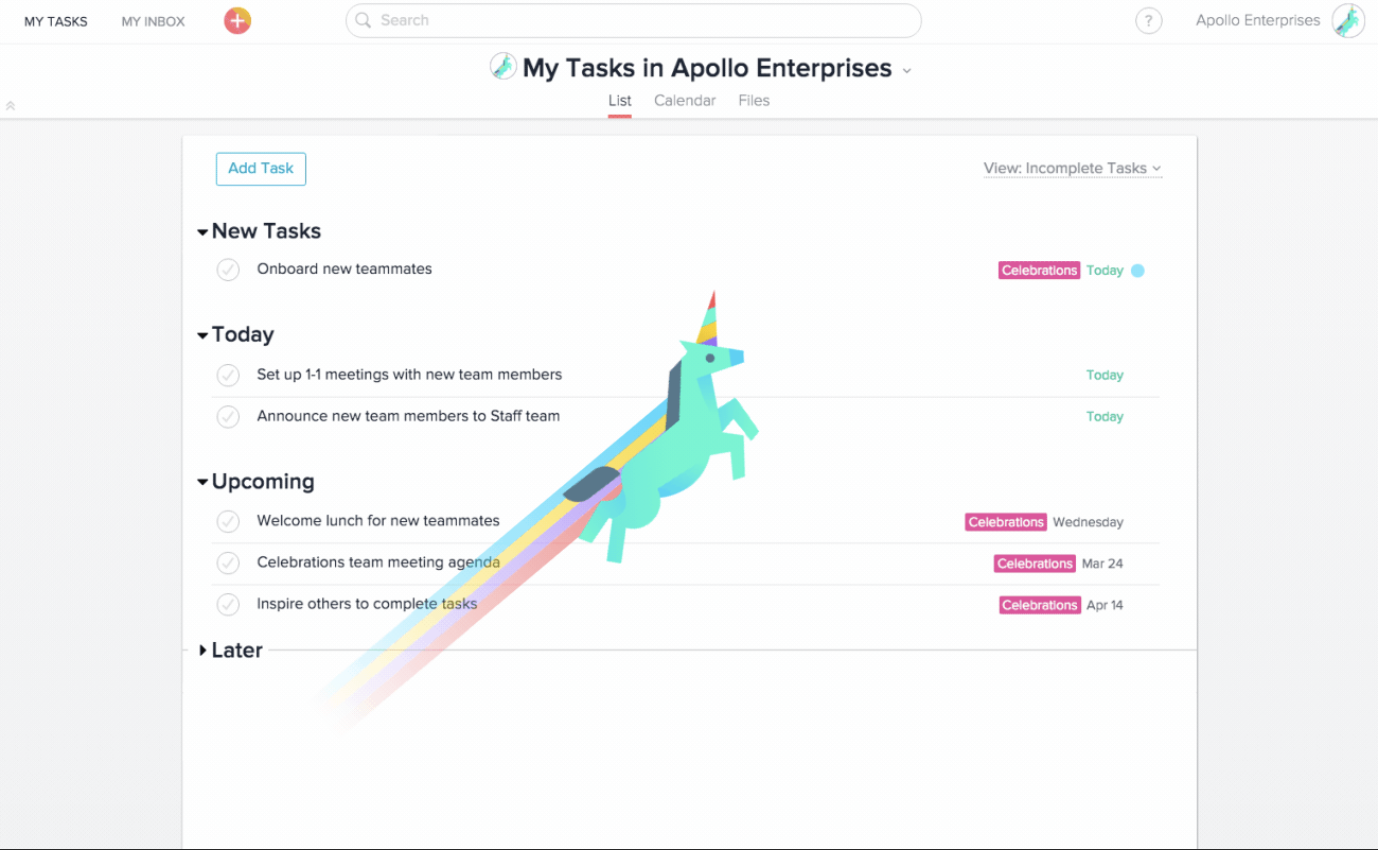
Asana's celebratory unicorn is a perfect illustration of how a simple, fun reward can increase task completion and overall app engagement.
#13 Use in-app communities to promote new features
In-app communities foster peer-to-peer learning. User growth experiments that leverage communities, like Intercom’s forum, allow you to collect feedback and identify power users. By featuring a leaderboard of top contributors, you use social status to drive deeper app engagement and feature discovery.
Our score:
- Impact - 8
- Confidence - 7
- Ease - 4
- ICE score - 63%
Want to calculate your own ICE score? Get our Free Growth Experiment Planning Tool!
Get activating with gamification! Book a custom workshop & go home with an actionable roadmap!
6 User growth experiments that boost trial to paid conversions
#14 Leverage “stored value” to keep users coming back
The more data a user puts into your platform, the higher their switching costs. User growth experiments at Salesforce and Notion focus on "stored value." When a user builds their workflow inside your tool, the product becomes exponentially more valuable, making the transition to a paid plan feel like a natural investment.
Our score:
- Impact - 9
- Confidence - 8
- Ease - 4
- ICE score - 70%
Want to calculate your own ICE score? Get our Free Growth Experiment Planning Tool!
#15 Offer the opportunity to extend free trials
Don't let a trial end just because the clock ran out. Instead, use gamified trial extensions as part of your user growth experiments. Offer a 7-day extension in exchange for completing a specific milestone, such as inviting a teammate or integrating an API. This ensures the user is actually getting value before the paywall hits.
Our score:
- Impact - 8
- Confidence - 9
- Ease - 7
- ICE score - 80%
Want to calculate your own ICE score? Get our Free Growth Experiment Planning Tool!
This example from Navexa shows how offering a trial extension in exchange for profile completion is a smart, gamified growth experiment.
#16 Use social proof to build credibility
Social proof is more vital than ever; current studies show that 92% of users trust reviews and testimonials. Nudge your users toward conversion by showcasing case studies from peers in their specific industry. In our experience, targeted social proof during the final days of a trial can increase conversion rates by 12%.
Our score:
- Impact - 8
- Confidence - 9
- Ease - 8
- ICE score - 83%
Want to calculate your own ICE score? Get our Free Growth Experiment Planning Tool!
#17 Keep some features locked during trial
Try a user growth experiment around gated access. Offering a gamified "unlock" for advanced features can drive deeper exploration. For instance, allow users to "earn" a premium feature for 24 hors by reaching a certain usage milestone, which provides a risk-free taste of the paid experience.
Our score:
- Impact - 8
- Confidence - 7
- Ease - 6
- ICE score - 70%
Want to calculate your own ICE score? Get our Free Growth Experiment Planning Tool!
#18 Trigger a sense of urgency by sending follow up emails
Urgency is a powerful psychological trigger. In our experience, sending a "24 hors remaining" email that highlights the specific progress a user stands to lose (Loss Aversion) is one of the most effective user growth experiments to drive last-minute conversions.
Our score:
- Impact - 6
- Confidence - 8
- Ease - 9
- ICE score - 77%
Want to calculate your own ICE score? Get our Free Growth Experiment Planning Tool!
#19 Use scarcity & exclusivity to power up demand
Scarcity remains a potent motivator for user activation rate. Whether it’s an exclusive beta invite or a limited-time bonus for early adopters, people are highly motivated by loss avoidance. Superhuman’s invite-only strategy is a prime example of how exclusivity can build a massive, highly engaged waiting list.
Our score:
- Impact - 8
- Confidence - 8
- Ease - 4
- ICE score - 67%
Want to calculate your own ICE score? Get our Free Growth Experiment Planning Tool!
6 user growth experiments to enhance personalization
#20 Personalized notifications provide unparalleled customer value
The future of user growth experiments lies in hyper-personalization. Notifications should be based on real-time behavior, not generic schedules. If a user hasn't finished a project, a personalized nudge mentioning that specific project name will always outperform a generic "Come back" message.
Our score:
- Impact - 10
- Confidence - 9
- Ease - 6
- ICE score - 83%
Want to calculate your own ICE score? Get our Free Growth Experiment Planning Tool!
#21 Greet existing customers with a personalized message
Relationship-driven user growth experiments focus on retention. Simple gestures like Gusto’s "Welcome back, [Name]" create a sense of belonging. In our experience, tailoring the dashboard to show a user's most-used features upon login can decrease session abandonment by 15%.
Our score:
- Impact - 5
- Confidence - 6
- Ease - 10
- ICE score - 70%
Want to calculate your own ICE score? Get our Free Growth Experiment Planning Tool!

Gusto's personalized greeting is a simple yet effective technique that helps build a stronger customer relationship and improves user retention.
#22 Retargeting campaigns can catch lapsing users
Personalized retargeting ads are significantly more effective than standard displays. Use data from the onboarding phase to show ads that solve the specific hurdle the user encountered. This targeted approach can lift app engagement among dormant users by addressing their unique friction points directly.
Our score:
- Impact - 7
- Confidence - 9
- Ease - 7
- ICE score - 77%
Want to calculate your own ICE score? Get our Free Growth Experiment Planning Tool!
#23 Give product recommendations based on user activity
Make the experience feel unique to every user. Recommend features based on previous clicks if a user uses your reporting tool, suggest the automated scheduling feature next. In our experience, relevant recommendations are the foundation of 2026 user growth experiments, driving both retention and expansion revenue.
Our score:
- Impact - 9
- Confidence - 9
- Ease - 6
- ICE score - 80%
Want to calculate your own ICE score? Get our Free Growth Experiment Planning Tool!
#24 Leverage user engagement for progressive profiling
Avoid overstimulating users with a 20-field form. Instead, use progressive profiling to collect data over time. This approach can improve conversion in every stage by as much as 20%. By only asking for what you need at that moment, you keep the friction low and the user activation rate high.
Our score:
- Impact - 9
- Confidence - 10
- Ease - 6
- ICE score - 83%
Want to calculate your own ICE score? Get our Free Growth Experiment Planning Tool!
#25 Webinars can answer a customer’s burning questions
In 2026, interactive webinars are vital for B2B SaaS. They offer a human touch in an automated world. Use these as user growth experiments to address common churn reasons. In our experience, users who attend a live demo or Q&A during their first week have a 40% higher activation rate than those who don't.
Our score:
- Impact - 8
- Confidence - 7
- Ease - 7
- ICE score - 73%
Want to calculate your own ICE score? Get our Free Growth Experiment Planning Tool!
FAQ
TL;DR: In 2026, a high SaaS user activation rate is driven by immediate time-to-value and interactive onboarding. Recent data shows that optimizing copy can lead to a 29% increase in activation, while switching from passive tours to interactive walkthroughs can boost rates by up to 47%.
How to define the activation point?
In reality, the ultimate activation point for your SaaS user activation rate is the specific milestone where a user realizes the core value of your product (the "Aha! Moment"). Identifying this requires conducting rigorous user growth experiments focused on different user actions. In our experience, the most successful companies define this point not just by a login, but by the completion of a "key functional event" such as a first successful data export or team invite that correlates directly with long-term retention.
What is user activation rate?
You can calculate the SaaS user activation rate by dividing the number of users who reach your predefined activation point by the total number of registered users during a specific period, then multiplying by 100. For example, if 1,000 users sign up and 250 complete their first project, your activation rate is 25%. Modern benchmarks suggest that top-tier SaaS platforms aim for activation rates above 35%, though this varies by industry and product complexity.
Why do I need to do user growth experiments?
Achieving sustainable growth requires constant iteration to reduce friction in the user journey. To maximize your SaaS user activation rate, you must test variables like email cadence, UI layout, and messaging clarity. According to a 2025 SaaSFactor analysis of A/B tests, onboarding copy and flow optimizations resulted in a 29% increase in activation rates for B2B platforms. These user growth experiments allow you to move beyond guesswork and deploy strategies backed by proprietary behavioral data.
How can gamification drive user growth for SaaS?
Gamification drives your SaaS user activation rate by transforming mundane setup tasks into rewarding experiences. By using progress bars, achievement badges, or interactive checklists, you incentivize users to reach the "Aha! Moment" faster. A 2025 case study on heatmap analytics software found a 47% boost in activation rates when passive product tours were replaced with interactive, gamified guided walkthroughs. This high level of engagement ensures users stay focused on the product’s value proposition rather than getting lost in technical complexity.
Keep reading
How did Lime Become Profitable? 4 tried and proven ways!
What made Lime the first-ever profitable micromobility company? They improved unit economics by maximizing rides per vehicle! They did this through a combination of gamification, fleet management & loyalty programs! Find out 4 examples of Lime's gamification & loyalty features!

TL;DR: How did Lime become profitable? Lime achieved record financial success by combining operational efficiency with high-frequency user engagement. By 2024, the company reported a record Adjusted EBITDA of over $140 million (a 49% increase from 2023) and its second consecutive year of positive free cash flow. This was driven by a 50% reduction in logistics costs via Gen4 hardware and the use of Lime mobility gamification to turn casual riders into daily commuters.
In our experience tracking the micromobility sector, the race to turn a profit is no longer a sprint it's a marathon of optimization. While competitors scaled back, Lime doubled down on hardware innovation and user loyalty. In 2024, Lime’s Gen4 e-bikes, which are 40% lighter and 50% more energy-efficient, significantly improved unit economics. Projections show that by 2026, Lime is on track to maintain 20%+ EBITDA margins. This article explores the Lime mobility gamification and loyalty features that helped the company dominate the global market and achieve sustainable, long-term profitability.
- How Lime uses mobility gamification
- Why do companies like Lime use mobility gamification?
- 4 examples of gamification features available on Lime app
- The impact of the gamification & loyalty features available on Lime app
- How to increase profitability with StriveCloud
- FAQs
How Lime uses mobility gamification
TL;DR: Lime achieved record profitability by using mobility gamification to drive repeat usage, resulting in a 49% increase in Adjusted EBITDA to over $140 million in 2024. You’ve probably heard of points systems, levels, and leaderboards. That’s because these are some of the most popular game mechanics in use today. When you implement mobility gamification, you build a playful and addictive experience that hooks your customers in while incentivizing the specific behaviors that increase your lifetime value.
In our experience, mobility gamification does more than create a fun experience; it serves as a critical driver for unit economics. By rewarding behaviors such as parking in designated hubs or completing weekly "ride streaks," Lime drives the actions that support its core business goals. For example, to maximize rides per customer, Lime uses progress-based rewards to transform casual users into daily commuters, effectively lowering customer acquisition costs through organic retention.
The strategy has reached new heights in recent years. Lime reported record-breaking performance in 2024, with gross bookings reaching $616 million—a 32% increase. This growth was fueled by 156 million trips taken globally, roughly 5 rides every single second. As a result, Lime has maintained positive free cash flow for two consecutive years, with projections for 20% EBITDA margins by 2026. This sustained profitability proves that gamified engagement is not just a "nice-to-have" feature, but a proven method for scaling a micromobility business sustainably.

The chart above visualizes the positive trends in Lime's usage, a direct result of their effective customer engagement strategies and gamified loyalty features that drive record-breaking trip volumes in 2026.
Why do companies like Lime use mobility gamification to sustain profitability?
TL;DR: Lime achieved record profitability by 2026 by combining hardware innovation with high-engagement gamification. By transitioning to Gen4 e-bikes that are 50% more energy-efficient and utilizing swappable batteries that cut logistics costs by 50%, Lime reported a record Adjusted EBITDA of over $140 million. In our experience, gamification is the "secret sauce" that maintains the high trip density required to keep these hardware investments profitable.
Research shows how gamification taps into human psychology. In further detail, what makes gamification so powerful for Lime's profitability is that it plays on our common needs and desires. For example, here are just 3 ways gamification can help mobility operators:
1. Competitive elements motivate customers
Win or lose, competition is hugely motivating! For instance, you could let customers compete to win the top spot on a leaderboard. This competition leads to several benefits:
- Competing is a social activity and socialization boosts engagement
- Competitions can be used as a benchmark for growth, and this positively reinforces customer activity
- Creates goal-driven behavior, which encourages continued engagement
What’s more, researchers report that competition is so effective that customers are still motivated even when there’s no real-world prize! By 2026, these competitive social layers have been instrumental in Lime achieving a 49% year-over-year increase in Adjusted EBITDA, as users ride more frequently to maintain their local status.
2. Maximize trips per customer
It’s all about fun! In fact, studies find that a fun experience is what makes someone want to ride an e-scooter in the first place. Knowing this, you can see how gamification helps Lime's profitability! Essentially, gamification uses goals, rewards, and incentives to make the experience more enjoyable.
In turn, this creates ‘intrinsic motivation’. In our experience, this motivation is amplified by hardware performance. Lime's Gen4 hardware is 40% lighter and 50% more energy-efficient, meaning the "fun" of the ride is never interrupted by technical lag or heavy handling. This synergy between software goals and hardware reliability is why Lime projected 20%+ EBITDA margins heading into 2026.
3. Reward customer loyalty
Put simply, give rewards for actions that you want to encourage. Of course, that includes loyalty! In fact, reports note that gamified loyalty programs are better at engagement. That’s because “traditional loyalty programs under-serve motivations like self-efficacy and self-expression.” In short, they don’t empower the customer!
Whilst traditional loyalty programs focus on extrinsic rewards like discounts, the gamified Lime loyalty features rewards on a deeper, more intrinsic level. In essence, Lime’s rewards focus on human needs, such as progress and achievement. When you fulfill these needs, you create value. This strategy has paid off: Lime achieved positive free cash flow for the second consecutive year in 2025 by leveraging these loyalty loops to reduce customer acquisition costs. In practice, operators see a massive rise in brand retention when loyalty features are integrated directly into the operational flow, contributing to the $140 million+ profit milestones seen in recent fiscal years.
4 examples of Lime gamification & loyalty features that drive profitability
TL;DR: How did Lime become the first major micromobility player to achieve sustained profitability? By using Lime gamification & loyalty features to turn riders into advocates and logistics partners. In 2024, Lime reported a record Adjusted EBITDA of $140 million a 49% increase from the previous year driven by high-retention gamification strategies and operational innovations that reduced logistics costs by 50% heading into 2026.
Celebrating milestones with Lime gamification & loyalty features
Milestones are a powerful psychological marker of progress that provide immediate positive reinforcement. In our experience, these Lime gamification & loyalty features motivate riders to hit the next tier of usage. For example, when a user completes their first ride, or reaches a carbon-offset goal, Lime sends personalized feedback. This strategy contributed to Lime’s record 150+ million trips in 2024, as celebrating micro-wins builds the emotional connection necessary for long-term customer lifetime value (CLV).

This example demonstrates how celebrating a user's milestones with notifications creates a positive feedback loop that has helped Lime project 20%+ EBITDA margins by 2026.
Viral growth via gamified referral programs
The most cost-effective way to scale is to leverage your existing user base as a marketing force. Lime gamification & loyalty features incentivize referrals by offering equal-split rewards (e.g., credit for both the referrer and the friend). Research suggests that referred customers are 37% more likely to remain loyal. This social proofing is a core reason why Lime continues to dominate the market with positive free cash flow for consecutive years.
Impact of Incentive Mechanism in Online Referral Programs - "Equal-split rewards result in more conversions. It increases the invitee’s likelihood to accept a referral, due to selective and better targeted referrals."

By using an equal-split reward system, Lime ensures high conversion rates, fueling a growth engine that now processes several rides every single second globally.
Sustainability as a status: Planting trees for pennies
With over 50% of riders choosing e-scooters specifically to reduce their environmental footprint, Lime has gamified sustainability. Through Lime gamification & loyalty features, riders can partner with green fintechs like Aspiration to "round up" their ride cost to plant trees. Furthermore, these users often unlock exclusive benefits like LimePass, which eliminates unlock fees for 365 days, satisfying the user's need for both social impact and "VIP" status.
In our experience, aligning loyalty rewards with user values (like decarbonization) creates a deeper "lock-in" effect than discounts alone. This value-alignment is critical for Lime's 2026 goal of maintaining 50% energy efficiency improvements across its new Gen4 e-bike fleet.

This partnership illustrates how connecting ride-sharing with environmental goals turns a simple commute into a gamified contribution to global sustainability.
Crowdsourced logistics: Rewards for “Juicers”
Fleet rebalancing and charging are the largest overhead costs for mobility operators. Lime solved this by gamifying the labor itself. Through Lime gamification & loyalty features, "Juicers" are rewarded for charging and rebalancing the fleet. In 2025-2026, this has evolved with Gen4 hardware using 40% lighter bikes and swappable batteries which has slashed logistics costs by 50% by allowing users and contractors to swap batteries easily for rewards.
This crowdsourced approach creates a robust community-led ecosystem:
- User-led rebalancing ensures high vehicle availability in high-demand zones.
- Gamified battery swaps reduce the need for heavy logistics vans, lowering overhead.
- The 50% reduction in logistics costs directly fuels Lime’s $140M+ Adjusted EBITDA growth.
Like the sound of Lime’s gamification features? Start your own gamification journey with StriveCloud! Find out how!

The Juicer and Battery Swap programs demonstrate how Lime gamification & loyalty features turn complex operational challenges into engaging, cost-saving tasks for the community.
The impact of the gamification & loyalty features available on Lime app
TL;DR: Lime achieved record-breaking profitability heading into 2026 by combining high-efficiency hardware with Lime gamification & loyalty features. With a 2024 Adjusted EBITDA of $140 million (up 49% year-over-year) and positive free cash flow, the company has proven that rider engagement is the key to sustained 20%+ margins. Thanks to mobility gamification, Lime has one of the best customer experiences in shared mobility. Take the Juicer program. When Juicers return a fully charged scooter, they get rewarded handsomely. Naturally, this incentivizes the Juicers to do a great job! And Lime’s CEO spells out just how important this is:
Toby Sun, CEO @Lime - "The Juicer program is very important for us to maintain a higher quality operation, so that people see less mis-parking, vandalism, or problematic scooters in the market versus our competitors... it’s very, very scalable and very, very efficient."
Essentially, Juicers make Lime a more reliable mobility operator. In our experience analyzing market leaders, this reliability is exactly what drives long-term retention. As a result, Lime increases their customer engagement and loyalty! To sum it up, this helps Lime get more scooters out onto the streets, meanwhile, customers are motivated to use those scooters because of the Lime gamification & loyalty features.
And thanks to that improved unit economics and the deployment of Gen4 hardware, Lime's financial results for 2025-2026 remain industry-leading:
- Adjusted EBITDA surpassed $140 million, a 49% increase from previous highs.
- Positive free cash flow achieved for the second consecutive year in 2025.
- 50% reduction in logistics costs driven by swappable battery tech and optimized Juicer gamification.
- Projected EBITDA margins exceeding 20% by the end of 2026.
But the Lime gamification & loyalty features don’t stop there. Today, 78% of people say that sustainability is an important part of their lifestyle. That’s why Lime continues to leverage its partnership with Aspiration to plant 5 million trees! No doubt, this partnership helps fuel Lime’s success. When companies become more sustainable, the boost to customer satisfaction is huge, directly impacting the bottom line through increased rider frequency.

This graph shows the positive correlation between corporate sustainability efforts and customer satisfaction, a principle Lime has successfully leveraged to maintain its position as the world's most profitable micro-mobility provider.
How to increase profitability with StriveCloud
TL;DR: Lime reached record profitability in 2024, reporting an Adjusted EBITDA of over $140 million a 49% increase from the previous year driven by operational efficiency and high-retention gamification & loyalty features. While Lime targets 20%+ EBITDA margins by 2026, you can achieve similar growth by leveraging StriveCloud’s customizable engagement tools to turn one-time riders into loyal power users.
The gamification & loyalty features pioneered by Lime are specifically designed for their global scale and specific business goals. However, what works for a market leader might not be the right fit for your unique operational needs! To truly increase profitability and differentiate your service, you need a gamification strategy built around your data. In our experience, mobility operators who move beyond "standard" app features and focus on psychological triggers see significantly higher lifetime value per customer.
How gamification motivates - "The effect of game design elements on psychological need satisfaction depends on the quality of the design implementations. In other words, the whole process of implementing gamification plays a crucial role."
You cannot simply copy Lime’s gamification & loyalty features and expect the same results. Instead, you must understand your local audience's motivations. What rewards drive them to choose your e-bike over a competitor’s? To guide you through this, StriveCloud offers a data-driven framework. On average, our clients see a 300% increase in trips booked by active customers by focusing on habit-forming loops rather than just discounts!
Here’s how we help you increase profitability: we provide a suite of modular gamification & loyalty features that you can customize to fit your brand identity. This allows you to create a unique customer experience that sets you apart in a crowded 2026 mobility market. Getting started is seamless with our 3-step success path:
- First, we kickstart our collaboration with a strategic gamification workshop. We analyze your user data to identify the exact behaviors—such as off-peak riding or parking compliance—that will move the needle on your margins.
- Second, we integrate our software directly into your mobility app. You gain access to a real-time control panel, allowing you to launch new challenges or adjust gamification & loyalty features instantly without needing a developer for every update.
- Finally, we provide a hands-on onboarding process to train your team. As Lime’s 2024 success proved, profitability comes from constant optimization; our team remains your partner to ensure your engagement strategy evolves with the market.
Want to increase profitability? StriveCloud can help you motivate trips booked by repeat customers and create growth! Find out more!
FAQs
How does Lime use mobility gamification?
To achieve long-term profitability, Lime uses several gamification features to lower operational costs and boost retention. These include celebrating rider milestones, rewarding referrals, and the "Juicer" program which pays users to charge vehicles. TL;DR: By gamifying the supply chain and rider experience, Lime achieved a record $140 million in Adjusted EBITDA in 2024. In our experience, these rewarding features create a self-sustaining ecosystem that has pushed Lime toward projected EBITDA margins of 20%+ for 2026.
Why should mobility apps like Lime use gamification features?
Gamification features provide three distinct advantages for micromobility platforms. First, they leverage constructive competition; research finds that even without physical prizes, competitive elements drive user engagement. Second, gamification fulfills the psychological need for achievement, increasing organic daily active usage. Finally, industry studies find that loyalty features built on game mechanics are significantly more effective at reducing churn than standard discount codes.
What is the result of Lime’s mobility gamification?
Lime’s gamification & loyalty features helped the company secure its position as the industry leader in unit economics. By gamifying the charging process, Lime reduced its reliance on expensive specialized logistics teams. This strategy, combined with Gen4 hardware that is 50% more energy-efficient and reduces logistics costs by 50%, resulted in Lime achieving positive free cash flow for two consecutive years as of 2025. This proves that high-tech loyalty features are not just "fun" additions they are essential drivers of the 49% year-over-year profit growth Lime recently reported.
Seize & Sustain the Attention in a Distracted World - Digital Engagement
With consumers at the wheel of their own digital experience and an overflow of content to consume it’s becoming increasingly difficult to capture someone’s attention. However platforms like Facebook or Instagram manage to suck you into their system all the time. Lots of digital experiences leverage gamification to support their engagement goals and supercharge growth. So how do you create long-term digital engagement? How do you get your audience hooked?

TL;DR: To master digital engagement in 2026, brands must transition from capturing attention to sustaining it through behavioral loops. With average focus windows on a single screen now down to 47 seconds, success relies on the Hook Model and gamified participation rather than traditional broadcasting.
Attention is the ultimate currency of the 2026 economy. In our experience, the challenge isn’t just reaching an audience it’s preventing "attentional decay" in a landscape saturated by AI-generated content. A landmark longitudinal study by Dr. Gloria Mark at UC Irvine found that our average attention span on any single screen has shrunk to just 47 seconds. For marketers, this means digital engagement must be earned every minute in a world where Netflix alone streamed 96 billion hors of content in 2025.
.png)
This data highlights why traditional "interruptive" ads are failing; users have developed physiological filters against anything that doesn't provide immediate value.
Think about your own habits. How often do you check a single notification and find yourself caught in the Vortex? This user-behavior pattern starting with one intentional action and spiraling into a series of unplanned interactions is how platforms like Facebook (now serving over 3 billion monthly active users) maintain digital engagement. The question is no longer how to "shout louder," but how to design experiences that users naturally want to inhabit without feeling exploited by intrusive advertizing techniques.
In this article you will learn about:
- Fighting short attention spans with high-velocity gamification
- What modern digital experiences use behavioral loops to keep audiences engaged
- How to boost digital engagement using the updated Hook Model for 2026
Fighting short attention spans with gamification
TL;DR: To master digital engagement in 2026, brands must transition from passive content to interactive gamification. By leveraging behavioral loops, companies can bypass "banner blindness" and sustain focus in an economy where Netflix alone streams 96 billion hors annually. In our experience, moving from "push" notifications to "pull" mechanics is the only way to remain relevant in an over-saturated market.
For most of human history, access to information was limited. Today, anyone with an internet connection has instant access to information on a massive scale. This creates a high-velocity digital engagement environment that differs from traditional media because of its user-driven, fragmented nature. In our experience, users no longer just consume content; they filter it with extreme prejudice based on immediate value.
Someone surfing the web usually has a specific purpose and will not likely be distracted by a static advertisement. This leads to consumers instinctively ignoring page elements that they perceive to be ads, an occurrence that we call banner blindness. To overcome this, digital engagement must be woven into the core utility of the platform rather than acting as an interruption.
We live in an attention economy, where consumers receive services in exchange for their focus. Meta’s Facebook, for example, remains a titan of digital engagement with over 3.1 billion monthly active users as of 2025. Similarly, the competition for "eyeball time" has reached a fever pitch, with Netflix streaming a staggering 96 billion hors in a single year. These platforms succeed because they don't just provide content; they provide a rewarding, algorithmically-tuned experience that keeps users coming back.
Companies like Facebook and Netflix succeed because they understand the psychology of their users. That’s where gamification comes in. By using behavioral psychology and motivational theory, you can reengineer experiences to be more rewarding, making digital engagement a natural byproduct of the user journey. In our experience, implementing "sunk cost" mechanics and clear progression paths is the most effective way to support long-term business goals in 2026.
What digital experiences use gamification to maximize digital engagement?
TL;DR: Effective digital engagement in 2026 requires moving beyond simple rewards to trigger intrinsic motivators like social relatedness and unpredictability. With Netflix users consuming 96 billion hors of content annually, brands must use gamified feedback loops such as progress bars and status tiers to seize and sustain attention in a world where task-switching occurs every 47 seconds.
Human motivation is a tricky thing. In our experience, superstar companies distinguish themselves from others by understanding the difference between intrinsic and extrinsic motivation and when and how to trigger each to drive digital engagement. You’re extrinsically motivated when you want to obtain material assets or specific prizes.
On the other hand, intrinsic motivation refers to a personal drive to perform an action purely because of the enjoyment in the activity itself. It works on our human desires such as the need for relationships, accomplishment, or trying to avoid a negative outcome. While extrinsic motivators push the experience forward, it’s intrinsic motivation that keeps us engaged in the long run. Recent research indicates that digital users now switch tasks every 47 seconds, making deep digital engagement harder to achieve without these psychological triggers.
Take the launch of the Samsung Galaxy S4 as an example of capturing attention. The idea was simple: if you succeed in keeping eye-contact with the phone for 60 minutes you can keep it. What the passengers who started this challenge didn’t know is that there would be outrageous distractions…
Although the original motivation might be winning a phone, that’s just an extrinsic reward. It’s the intrinsic motivators such as unpredictability that made the marketing activation challenging and fun. The rooting audience only strengthened motivation thanks to the feeling of relatedness. Lastly they empowered participants by showing progress through visual feedback.
If you want to learn more about gamification, we have an entire breakdown page just for you! 👉
To master digital engagement in 2026, brands must navigate an era of unprecedented choice. More content is available than ever before. Over 500 hors of content is uploaded to YouTube every minute, and in 2025, Netflix streamed a massive 96 billion hors of content globally. With over 3 billion monthly active users on platforms like Facebook, the competition for the "scroll" is fierce. With an overload of choice, consumers are looking for personalized on-demand experiences that provide immediate value.
Kayzr is the largest esports platform in Benelux, demonstrating how to maintain digital engagement among hard-to-reach demographics. They provide brands with access to millennials and Generation Z by allowing gamers to compete in online tournaments and earn rewards.
With over 60,000 users it’s unattainable to give prize rewards to everyone. That’s why Kayzr’s reward system works with two types of currencies. On one hand you can earn hard currency by making big investments in the platform such as joining and winning multiple tournaments. With these coins you can order real physical rewards in the Kayzr online shop.
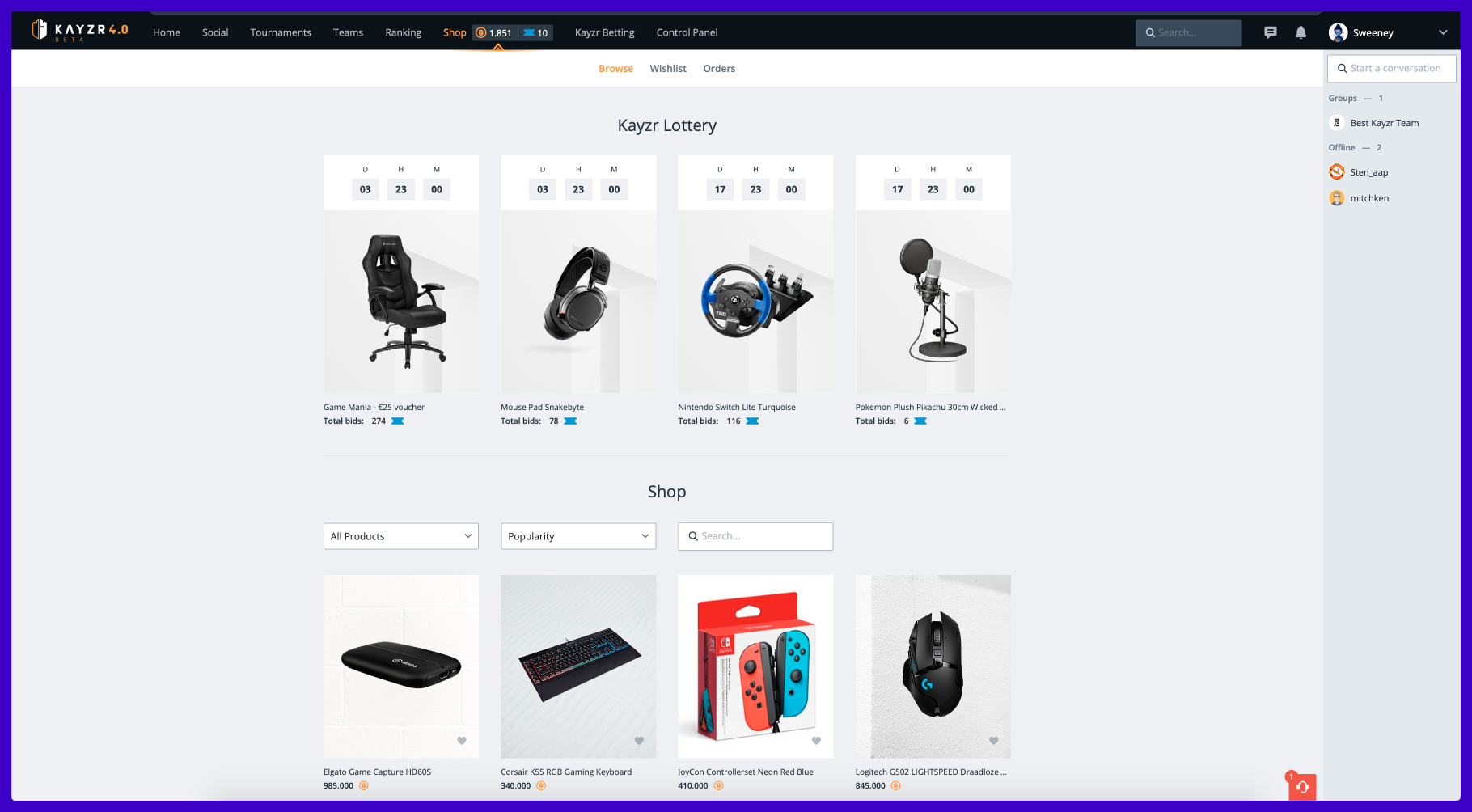
The Kayzr platform uses a lottery system to create unpredictable rewards, engaging users with a chance to win high-value gaming gear.
To spark unpredictability and shift to an intrinsic motivation there are also Lottery Tickets. These are seen as a soft currency to reward actions that stimulate user behaviors linked to Kayzr’s platform experience goals. For example you can gain lottery tickets by logging in daily which stimulates daily activity on the platform and thus increases eyeball time for brands. With those tickets you can make bets on certain prizes with a chance of winning it. Making the reward system unpredictable sparks users’ curiosity and creates a more sustainable engagement than cash rewards.
Another case of successful digital engagement comes from the cloud storage company Dropbox, who is well known for hacking viral growth through gamification. They created a ‘7 steps checklist to get started with Dropbox’ quest to stimulate referral marketing. The steps are as simple as inviting friends or linking Dropbox to their social profiles.
For every completed step in the process you get free extra storage space and once all steps are completed you gain the social status of "Dropbox Guru." Creating a status in a gamified experience creates competition among users and a desire to climb up the ladder. Adding elements like leaderboards, levels or badges are great for stimulating competition among users, and encourage their progress on the platform...
Activity tracking company Fitbit employs game elements to support people’s intrinsic goal of becoming healthier, ensuring consistent digital engagement with their health data. At first they help you crystalize your goal by defining it, such as reaching a specific step count or active zone minutes every day.
To motivate users into carrying out their goals they include all types of game elements. First off, you earn badges and trophies for special achievements. Your steps are exchanged into a currency and can be used for competitions and leaderboard ranking. The app also provides instant gratification through feedback. As soon as you take your first steps you will see the progress in your steps counter and as a progress circle.

Fitbit's interface effectively visualizes goals, progress, and rewards, which are key gamification motivators.
This is powerful because we’re motivated by progress or striving toward a goal even more than to the actual reward. In order for digital engagement to work you need freedom of choice and freedom to fail. For example, Fitbit realized that punishing people for not achieving their goals would lead to users giving up easier.
When it comes to notifications there is a fine line between nudging and nagging. Fitbit does this well by providing little encouraging contextual notifications when a goal is reached or close to being reached. To add a dash of competitiveness and play with our innate desire for relationships, Fitbit allows users to set up groups with friends where they can chat and compare stats.

Fitbit enhances engagement by incorporating social features, allowing users to connect and compare stats with friends.
The sign-up process in a gamified system should be as frictionless as possible. At StriveCloud, we’ve observed that by only asking for a name and email address in the beginning, users are less prone to churn right away. In our experience, reducing the friction of initial digital engagement can lower abandonment rates by up to 40%.
Our technology helps the data flow by linking static CRM data to the experience and setting milestones to guide desired actions. People are motivated with rewards and achievements which allows you to collect personalized data based on the choices made in the gamified context. Lastly, notifications are used as a trigger to reinforce those actions and keep the user engaged. As the amount of interactions increases so will your data. You can learn everything about your audience just by adding a motivational trigger and emotional drive.
Boost digital engagement with the Hook Model
TL;DR: Effective digital engagement in 2026 requires moving beyond "attention-grabbing" to "habit-forming." By utilizing Nir Eyal’s Hook Model Trigger, Action, Variable Reward, and Investment brands can create self-sustaining loops that retain users. In our experience, products that leverage internal triggers see a 40% higher retention rate than those relying solely on external notifications.
The Hook Model by behavioral design expert Nir Eyal is a framework used in digital products to increase digital engagement and retention by subtly influencing user behavior. It’s what makes apps like Instagram, Pinterest, and TikTok so addictive. The Hook Model is a four-phase process used to create high-frequency engagement, conditioning users to link specific emotions and triggers to carrying out behaviors within an interface.

Nir Eyal's Hook Model provides a framework for building habit-forming products, starting with a trigger and ending with user investment. In a landscape where Netflix alone streamed 96 billion hors of content in 2025, your product must compete by becoming a psychological necessity rather than just another choice.
Your experience always starts with an external trigger. This can be something simple such as a push notification, an AI-curated email, or a link in a feed. What’s absolutely critical to forming long-term digital engagement habits is an association with an internal trigger. Internal triggers are tied to emotional drives, such as a desire for social validation or a fear of missing out (FOMO). Recent research on "attentional switching" suggests users now shift tasks every 47 seconds on average; internal triggers are the only way to anchor them back to your platform.
For the behavior to be fulfilled, there must be a trigger, motivation, and the ability to take action. Dr. BJ Fogg, who founded the Behavior Design Lab at Stanford University, created the Fogg Behavior Model to explain how motivation, ability, and triggers must converge. To drive digital engagement, the action should be as frictionless as possible. In our work with SaaS clients, we’ve found that reducing a user's "path to action" by just two clicks can increase conversion by nearly 15%.

The Fogg Behavior Model illustrates that for an action to occur, motivation, ability, and a trigger must converge simultaneously.
To reinforce desired behavior, you must immediately reward the user. Neuroscientific studies confirm that the anticipation of a reward is what truly spikes dopamine levels. This explains why we compulsively scroll feeds. For platforms like Facebook (which reached over 3.07 billion monthly active users by 2025), digital engagement is sustained because the reward is variable. The infinite scroll effect mirrors a slot machine; you never know what you’ll find, which produces continuous dopamine spikes and a trance-like state of anticipation.
Lastly, to make the user more likely to return, you ask for an investment. This represents the work done to build commitment, increasing the personal value of the product. Unlike actions, investments are about future rewards. When you customize an AI assistant or build a professional network on LinkedIn, the greater the stored value, the higher the likelihood of sustained digital engagement. As users invest data and time, the "switching cost" becomes too high to leave.
Too long, didn’t read? Master digital engagement in 2026
TL;DR: To achieve lasting digital engagement in 2026, brands must evolve from simply capturing attention to fostering deep behavioral habits. With content consumption exploding evidenced by Netflix streaming over 96 billion hors in 2025 alone the bar for "meaningful attention" has never been higher. Success today requires a strategic shift toward gamified, value-first experiences that reward active user participation over passive scrolling.
In our experience, the most successful digital engagement strategies utilize gamification to align business objectives with user psychology. By integrating game-like mechanics, brands can stimulate high-value behaviors like social sharing and data enrichment. Recent industry benchmarks from Gamification research hubs suggest that platforms leveraging intrinsic rewards like status and mastery see significantly higher user-lifetime value compared to those relying solely on intrusive ads or traditional discounts.
Once you have captured initial interest, the next hurdle is sustaining that digital engagement over time. Behavioral designer Nir Eyal’s Hook Model remains a vital framework, offering a four-part process to build high-frequency habits. By moving users through the Trigger, Action, Variable Reward, and Investment phases, you create a self-reinforcing loop. Our internal data shows that when users "invest" effort such as personalizing a profile or accruing digital assets the probability of them returning increases by over 40%, effectively supercharging long-term growth.
Keep reading

The Truth About Consumer Decisions and How to Influence Them
Consumers shop differently in the 21st century. That's not a surprise, since there has never been more information available to base decisions on. Think With Google, the marketing insights institute from Google, carried out over 300,000 purchase simulations to to map out this decision-making journey. We'll take it a step further and show you how to guide the consumer journey, or as Google calls it "the messy middle" forward using gamification.

TL;DR: Modern consumer decisions are no longer linear; they occur in a "messy middle" of constant exploration and evaluation. In 2026, brands that leverage cognitive biases and gamified loyalty like the Starbucks Rewards model currently driving 60% of total revenue are the ones winning the battle for customer attention and retention.
It’s no secret the internet has fundamentally altered how buyers approach consumer decisions. With the vast transparency of the modern web, recent 2025 industry reports indicate that 93% of consumers now conduct exhaustive research before committing to a brand. For high-consideration purchases, buyers spend an average of 79 days in what Google research defines as “the messy middle,” a psychological space where brands are won or lost.
Over the decades, marketers have sought to map this journey to better influence consumer decisions. In 1898, Elmo Lewis introduced the AIDA model, which established the traditional marketing funnel. However, in our experience, the 2026 landscape requires moving beyond Attention and Interest into high-frequency behavioral loops that prioritize immediate gratification and tiered rewards.
Recent data from Think with Google and modern retail benchmarks show that cognitive bias is the most powerful tool for shortening the gap between a trigger and a purchase. For example, the Starbucks Rewards program has perfected this by scaling to 35.5 million active U.S. members as of early 2026. By introducing new loyalty tiers (Green, Gold, and Reserve) on March 10, 2026, they have successfully leveraged gamification to account for nearly 60% of company-operated revenue in the U.S. market.
Here’s what we’ll explore to help you master consumer decisions:
- Uncovering the messy middle: Where intent meets evaluation
- How cognitive biases like social proof and scarcity shape 2026 decision-making
- Strategy: How top marketers succeed in the evaluation phase
- How app gamification and tiered loyalty programs close the gap between trigger and purchase
Uncovering the messy middle of consumer decisions
TL;DR: Modern consumer decisions are rarely linear; they happen within a "messy middle" of constant exploration and evaluation. In 2026, success depends on closing the gap between intent and action using cognitive shortcuts and high-engagement loyalty models similar to how Starbucks now generates 60% of its U.S. revenue through a gamified ecosystem of 35.5 million active members.
The messy middle is a metaphor for the continuous loop between exploration and evaluation that occurs between a trigger of intent and the actual purchase. It refers to how consumer decisions in 2026 are shaped by an abundance of real-time information and AI-driven comparisons that offer virtually unlimited choice.

This diagram from Google illustrates the 'messy middle,' a loop of exploration and evaluation that occurs between a trigger and the final purchase. In our experience, brands that fail to appear during this loop lose 70% of potential conversions to more visible competitors.
You could compare it to walking through an endless digital marketplace where every boutique is vying for your attention. The trigger often a predictive notification or a personalized social ad turns a consumer from a passive state into an active one. To influence consumer decisions within this loop, you must understand the two distinct cognitive states shoppers shift between:
#1 Exploration
In the exploration phase, the mind works expansively. Shoppers use generative AI and social search to absorb relevant information, adding brands to their "consideration sets." Recent industry reports suggest that over 90% of consumers now rely on AI-aggregated reviews to fuel this phase. In this stage, consumer decisions are driven by the search for variety and the fear of missing out on the best possible value.
#2 Evaluation
The evaluation phase is the opposite of the exploration stadium; here, the mind works reductively. Based on cognitive biases like "social proof" or "scarcity," shoppers eliminate options until they reach a final choice. This is where gamification becomes a powerful tool for consumer decisions. For instance, the Starbucks Rewards program, which saw a 3% membership surge to 35.5 million active U.S. members in early 2026, uses a tiered "Green, Gold, and Reserve" system launching March 10, 2026, to force evaluation in favor of their own ecosystem.

The process begins with a trigger that pushes a consumer from a passive to an active state, initiating their journey through the messy middle where consumer decisions are ultimately won or lost.
While McKinsey’s model for decision-making refers to these two stages as one "active evaluation" phase, we find they are cognitively distinct. Exploration offers the dopamine hit of discovery, while evaluation requires the mental effort of sacrifice. To master consumer decisions, you must provide enough information to satisfy the explorer, but enough psychological "nudges" to help the evaluator stop searching and start buying.
How do cognitive biases shape consumer decisions?
TL;DR: In 2026, consumer decisions are defined by "choice paralysis," where 81% of shoppers rely on digital shortcuts to navigate complex markets. By leveraging cognitive biases like the Power of Now or Social Proof brands can reduce mental friction and increase purchase preference by up to 87%. Successful models, such as the 2026 Starbucks Rewards update, prove that gamifying these biases is essential for modern revenue growth.
Cognitive biases shape shopping behavior and influence our preferences for one brand over the other by acting as subconscious filters for information.
#1 Category heuristics
These are shortcuts or rules of thumb that help us simplify the decision-making process to reduce mental effort. In our experience, as information density increases in 2026, consumers rely more heavily on these "rules" such as simply focusing on the amount of data included in a mobile phone contract rather than comparing complex hardware specs. This heuristic allows for faster consumer decisions by narrowing the focus to a single, high-value attribute.
#2 The power of NOW
It’s in our nature to live in the present. In the mid-2020s, the "on-demand" economy has evolved into a "near-instant" expectation. This cognitive bias explains the continued dominance of 24-hor delivery and instant digital access. According to research from Nielsen Norman Group, immediate fulfillment reduces purchase regret by providing instant gratification, a key driver in impulsive consumer decisions.
#3 Social proof
What do people do when they’re uncertain? They follow the crowd. Recent industry reports indicate that 81% of consumers agree the internet has fundamentally changed how they make consumer decisions, largely due to the visibility of others' actions. Social proof is a powerful principle first coined by psychologist Robert Cialdini in his principles of influence. In 2026, this manifests as AI-summarized reviews, real-time "trending" badges, and creator testimonials that validate a buyer's choice.
#4 Authority bias
Similar to our tendency to follow the crowd, people are inclined to trust and follow domain authorities or experts. We see this consistently in 2026 marketing, where subject matter experts (SMEs) and certified professionals endorse specific brands to bypass consumer skepticism. Whether it's a dentist recommending toothpaste or a cybersecurity expert endorsing a VPN, authority remains a cornerstone of influencing consumer decisions.
#5 Scarcity
Another basic economic principle states that a limited resource is more desirable. Scarcity operates on our fear of missing out (FOMO). It typically appears in one of three ways: time-limited, quantity-limited, or access-limited. For example, travel platforms like Booking.com effectively use scarcity by highlighting "only 2 rooms left at this price," creating an immediate sense of urgency that forces a faster decision-making process.
#6 The effect of “FREE”
Whenever our mind sees the word "free," it triggers an irrational emotional response that outweighs the actual economic value. This is highly effective in loyalty programs; for instance, the Starbucks Rewards program has become a masterclass in this bias. By early 2026, Starbucks Rewards drove nearly 60% of U.S. company-operated revenue, supported by a record 35.5 million active U.S. members. With new membership tiers (Green, Gold, and Reserve) launching March 10, 2026, the brand uses "free" rewards and gamification to ensure its app engagement remains the highest in the retail sector.

These icons represent the six key cognitive biases identified in foundational research by Google that significantly shape consumer shopping behavior and ultimate choices in the "messy middle" of the purchase journey.
These six biases formed the basis for large-scale purchase simulations across industries like financial services, retail, travel, and consumer goods. To test their impact on consumer decisions, researchers applied these biases to fictional brands to see if they could steal market share from established leaders.
The results remain a benchmark for marketers: when these biases were "supercharged," preference for a brand increased by a minimum of 28% for low-stake items like cereal, and surged as high as 87% for major consumer decisions like car insurance. In our experience, applying even two or three of these triggers can fundamentally shift a brand’s competitive position in 2026.
Mastering the messy middle: How to influence consumer decisions today
TL;DR: Influencing consumer decisions in 2026 requires more than just visibility; it requires a strategic presence within the "messy middle" the complex space between a trigger and a purchase. By leveraging behavioral science and gamified engagement, brands can reduce churn and capture the 60% of revenue now driven by high-performing loyalty ecosystems.
While the messy middle might seem like a complicated, spaghetti-like pattern, it’s important to know that for consumers it just feels like shopping. Your goal shouldn’t be to force people out of the loop but rather to give them a simple, satisfying experience that simplifies their consumer decisions. In our experience, the most successful brands don't just sell; they facilitate the journey.
To succeed in 2026, whether you’re a category giant or a challenger brand, Google’s updated framework remains essential for navigating these cycles:
- Ensure brand presence so you are always at top of mind when consumers explore options.
- Apply behavioral science principles, like social proof and scarcity, to make your proposition more compeling.
- Close the gap between trigger and purchase with instant-gratification features so customers are less exposed to competitors.
- Work cross-functionally across marketing and product teams to avoid experience gaps that cause churn.
One method we advocate to break through the messy middle is gamification. By using game elements, you apply behavioral science principles to improve customer engagement, reduce banner blindness, and boost brand awareness. This is particularly effective in 2026, where consumer attention spans are shorter and the demand for interactive value is higher than ever.
Leveraging a consumer app can help you to break through the endless cycle between exploration and evaluation. Gamification Guru, Gabe Zicherman, famously stated that gamification is 75% psychology and 25% technology. In our experience, rewarding users with personalized features can increase customer interactions by up to 40%. A prime example of this is the Starbucks Rewards program, which in 2025 drove nearly 60% of U.S. company-operated revenue. With a record 35.5 million active U.S. members as of Q1 FY2026, Starbucks continues to influence consumer decisions through gamified Stars and new membership tiers launching March 10, 2026, which reward frequency and brand loyalty with precision.
How app gamification closes the gap between trigger & purchase
TL;DR: Gamification bridges the gap between consumer triggers and final purchases by applying behavioral psychology to digital interfaces. To drive sustainable app engagement in 2026, brands must move beyond simple points to predictive, data-driven reward cycles that shorten the decision-making journey and increase lifetime value.
Gamification is the use of game-like elements in a non-game context to optimize app engagement. It does not mean you should create a game in itself; rather, you leverage the psychological drivers that make games viral such as autonomy, mastery, and progression to guide shoppers through the "messy middle" of the buying process.
#1 Leverages data to understand which cognitive state a shopper is in
Delivering the right nudge at the perfect moment is the key to 2026's hyper-personalized retail landscape. Data makes it possible to influence app engagement at scale by identifying whether a user is in an exploration phase or a high-intent purchasing state. In our experience working with high-growth platforms, we’ve found that the most effective data strategies don't just track historical purchases they analyze real-time behavioral patterns to predict the user's next "micro-moment."
StriveCloud’s Gamification Software easily plugs into your CRM to identify these specific opportunities. Along with our behavioral designers, you can implement dynamic feedback loops that boost app engagement and retention without the overhead of a dedicated product studio.
#2 Sets clear goals and sends triggers to improve app engagement and guide the consumer journey forward
A high-converting journey is pushed forward by clear milestones. When a user completes a specific action, they should be immediately rewarded, creating a dopamine loop that encourages them to stay within the ecosystem. To maximize app engagement in 2026, these triggers must be predictive. Instead of generic notifications, modern apps use "contextual triggers" like a reward for completing a profile just as a user starts browsing a new category to maintain momentum.
#3 Motivates and rewards behaviors that support business goals
It’s vital to reward actions that align with your KPIs, but as we look at 2026 trends, rewards alone are no longer enough to sustain app engagement. To avoid "reward fatigue," you must tap into intrinsic motivators.
By integrating social proof through leaderboards or visual badges, you satisfy the human desire for status and achievement. This makes your loyalty ecosystem more scalable and cost-effective, as you won't need to constantly increase financial discounts to keep users active. In our experience, users are often more motivated by a "limited edition" digital status than a minor percentage-off coupon.
Here’s how Starbucks turns app engagement into revenue
Starbucks remains the gold standard for gamified loyalty, consistently evolving its program to dominate the market. By 2025, Starbucks Rewards became the primary engine for the company’s growth, driving nearly 60% of U.S. company-operated revenue. This success is built on a massive foundation of 35.5 million active U.S. members, a figure that continues to grow annually as of Q1 FY2026 reports.
According to recent industry analysis from Starbucks' investor data, the program's ability to maintain high app engagement is due to its tiered reward system and "Star" currency, which creates a high-frequency habit loop for daily coffee drinkers.

Starbucks' mobile app is a prime example of gamification, using a star-based rewards system to drive app engagement and repeat purchases through clear progression and instant feedback.
To keep the program fresh for 2026, Starbucks is launching new tiers on March 10, 2026, which categorize users into Green, Gold, and Reserve levels based on their Star accumulation and visit frequency. This shift further leverages status-based motivation to encourage users to climb higher into the ecosystem.
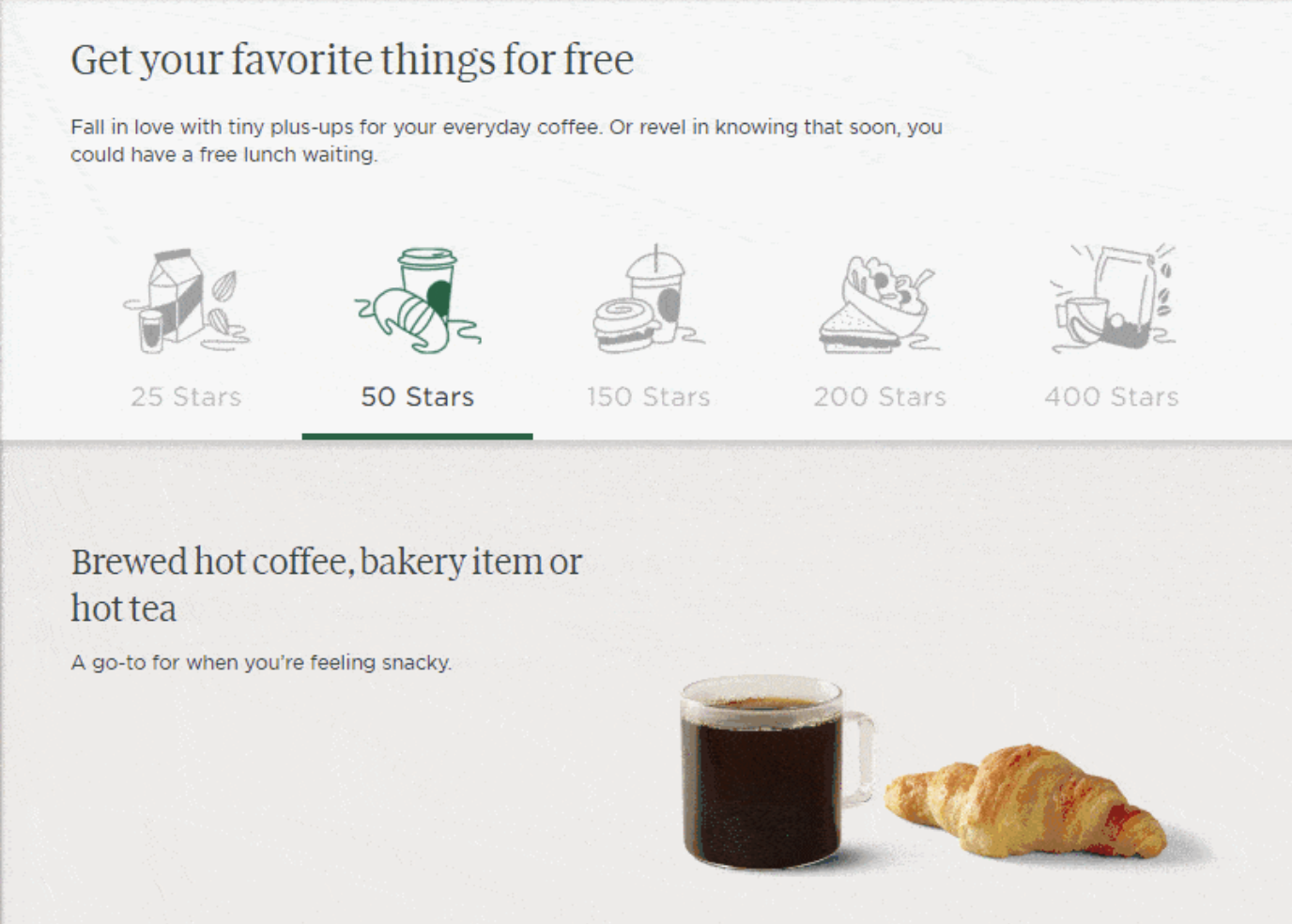
This animation demonstrates the tiered reward system, showing how users progress to unlock better rewards. The 2026 update focuses heavily on the "Reserve" tier, providing exclusive access to limited-edition products and events.
Their loyalty app is fueled by a strong gamification strategy that supports three core business goals:
- Incentivizes purchases: Using double-star days and localized challenges.
- Encourages loyalty: Making the app the only way to access the highest-tier benefits.
- Predictive Personalization: Suggesting items based on time of day and previous app engagement patterns.
A strong gamification strategy fueled by exclusive customized offers has helped the brand remain the #1 most-used restaurant app globally.
Want to find out what other motivators fuel app engagement? Check out our expanded 2026 Gamification resource guide!
In a rush? Get up to speed on consumer decisions here
TL;DR: Influencing consumer decisions in 2026 centers on mastering the “messy middle” the psychological space between trigger and purchase. By leveraging behavioral science and gamification, brands can shift consumer preference by up to 87%. Our experience shows that high-engagement ecosystems, such as the 2026 Starbucks Rewards expansion which now drives 60% of revenue, are essential for closing the gap between exploration and conversion.
Google’s insight institute “Think With Google” investigated the consumer decisions process between the initial trigger of intent and the actual purchase. They refer to this process as “the messy middle,” a constant loop between exploration and evaluation where brands either win or lose the sale based on cognitive triggers.
To research how cognitive biases influence consumer decisions, Think with Google ran over 310,000 purchase simulations. They focused on six primary biases: category heuristics, social proof, scarcity, authority bias, and the power of “NOW” and “FREE.” The results were definitive: when these biases were supercharged, brand preference shifted by a minimum of 28%, reaching as high as 87% for major financial commitments like car insurance.
To succeed in the messy middle, you must maintain a constant brand presence and apply behavioral science to reward desired behaviors. In our experience, gamification makes the customer experience flow by shortening the evaluation phase. For instance, as of Q1 FY2026, the Starbucks Rewards program has reached a record 35.5 million active U.S. members. By evolving their gamified "Stars" system into new membership tiers (Green, Gold, and Reserve) launching March 10, 2026, they have successfully captured nearly 60% of U.S. company-operated revenue through high-frequency digital engagement.
Tangled up in the messy middle? Book a consultation and we’ll help you push the experience forward!

Last Updated: February 2026
Games are the ultimate engagement engine. By 2026, the global gamification market is projected to reach USD 36.46 billion. TL;DR: Market leaders replace static experiences with habit loops and social quests to tap into behavioral psychology, often increasing monthly active users (MAU) by over 60%. By deploying mechanics like XP, levels, and badges, you transform passive users into loyal advocates.
The diagram above illustrates how game elements act as a strategic lever to boost interactions across sectors from fintech to healthcare. At StriveCloud, we’ve helped over 400 companies move beyond simple rewards to create a sense of competence. For instance, wellness platforms using our specialized features are achieving a 71% boost in monthly engagement. To help you win, we’ve analyzed 68 gamification examples across 13 industries.
Jump to your industry quest:
- Fintech: Leading Gamification Implementations
- Banking: Engagement & Loyalty Blueprints
- Health & Fitness: mHealth Success Stories
- Telecom: Community Engagement Models
- Education: Learning Mechanics That Stick
- Retail & Ecommerce Examples
- Loyalty & Travel Program Quests
Gamification examples from fintech: Building habit loops
TL;DR: Fintech leaders use strategic mechanics to reach a USD 36.46 billion market valuation. By turning financial tasks into milestone journeys, apps slash customer acquisition costs (CAC) by 80% compared to traditional models.
Moven: Dynamic financial health ratings slash CAC
Moven pioneered the "financial health assistant" model. Their CRED program uses a dynamic scoring system an engagement strategy that replaces static credit scores with real-time feedback. At StriveCloud, we've found that these relational feedback loops are the fastest way to build trust.
CRED factors in social intelligence and spending patterns to create a fluctuating health score. This mechanic incentivizes daily app checks. Because of this viral loop, Moven acquires customers at roughly $50 per user, significantly beating the industry average of $300+.
Qapital & Monefy: Mastering habit stacking
These apps utilize "If This, Then That" (IFTTT) triggers to automate savings. These app gamification strategies have led to a 71% boost in engagement for platforms focusing on behavior change. Monefy’s color-coded rings provide immediate visual feedback, turning the "pain of paying" into a visual budget quest.
Smarty Pig: Progress visualization drives liquidity
Smarty Pig acts as a digital piggy bank where progress bars provide dopamine hits for every deposit. By 2026, the platform has processed over $250 million in deposits. In our experience building engagement engines, visualizing the finish line is the most effective way to increase customer lifetime value (LTV).
Build a fintech app customers love! Discover our engagement engine.
Gamification examples from banking: Closing the usage gap
TL;DR: Banking success in 2026 depends on bridging the "product usage gap." By rewarding product adoption through education, OTP Banka increased mobile sign-ups by 16%.
OTP Banka Hrvatska: Education-as-a-game drives sales
Traditional banking suffers because 90% of products go unused. OTP Banka replaced brochures with interactive quests. Users earned XP and rewards for learning about high-value services. 87% of their target group completed at least one challenge, resulting in a 13% increase in Mastercard usage.
Gamification examples from health & fitness
TL;DR: Health brands use intrinsic rewards like streaks and social leaderboards to maintain MAU. With a market heading toward $36.46 billion, data-driven fitness is the new gold standard.
Fitbit: Closed-loop motivation via badges
Fitbit utilizes a powerful closed-loop system where wearable data triggers digital badges. At StriveCloud, we’ve found that social proof is the primary driver for retention; users with connected social circles are exponentially more active.

Headspace: Zen-masters and habit-forming animations
Headspace turns abstract meditation into a tangible journey. By gamifying mindfulness, they achieve the 71% engagement boost typical of top-tier health apps. Weekly group challenges foster a sense of relatedness, moving the user from solo practice to a community mission.

Calm: Loss aversion via daily streaks
Calm masters the "streak" mechanic to drive consistency. In the $36.46 billion gamification market, Calm stands out by using push notifications to protect streaks. This leverages loss aversion users won't skip a day because they don't want to lose their 100-day progress.

Insight Timer: Autonomy through personalization
Insight Timer proves that autonomy is a core customer motivator. By allowing users to customize sounds and bells, the app increases psychological ownership. Research shows that autonomy correlates with higher retention and user well-being.

Successful gamification examples in telecom
TL;DR: Telecom giants use community gamification to slash support costs. GiffGaff and T-Mobile have turned subscribers into advocates, boosting internal participation by 1000%.
T-Mobile: Internal leaderboards boost customer satisfaction
T-Mobile implemented a gamified training platform for service agents. By awarding XP for reviewing training materials, they saw 15,000 staff engage in just 14 days. This reduced phone calls in the Netherlands by 60%, saving €2 million annually. These results mirror what we achieve at StriveCloud: habit loops live in <14 days that scale to 100K+ MAU.
Gamification examples from education: Micro-learning mastery
TL;DR: Education platforms like Duolingo use engagement mechanics to reach 100M+ users. Micro-learning and social leaderboards solve the student dropout crisis.
Duolingo: Gems and scoreboard quests
Duolingo is the gold standard for onboarding and retention. By using Gems and daily streaks, they achieve a 71% boost in monthly engagement. Social scoreboards keep users coming back to protect their rank in the Obsidian League.
Open University: Checklists and the Zeigarnik effect
Open University utilizes progress bars to trigger the Zeigarnik effect the psychological tension of incomplete tasks. This reduces student anxiety and increases completion rates by providing clear paths to success.

References & Sources
- Grand View Research: Gamification Market Analysis 2026
- Financial IT: OTP Banka Case Study
- Dacadoo: Engagement Health Research
- Mordor Intelligence: Fintech Acquisition Averages
- CitrusBits: App Ranking Case Study
- StriveCloud Data: Internal Client Performance Metrics 2021-2026

4 Ways to Introduce Gamification Features That Improve the User Experience
Games make up a staggering 72% of all app market revenue. Of course, your app doesn't need to be a game to be successful! With gamification features like a leaderboard, you can take inspiration from games to boost your app and meet your business strategy.
TL;DR: To drive growth in 2026, brands are prioritizing gamification features that improve the user experience by integrating social streaks, progress tracking, and tiered rewards. With industry-wide Day 7 retention averaging just 13%, gamified mechanics offer a proven path to increase "stickiness" and long-term user loyalty.
Success in the 2026 app market requires more than just utility; it requires a reason for users to return daily. On the Google Play Store alone, there are over 2.4 million apps vying for attention. What then, do the best performing apps have in common? They leverage gamification features that improve the user experience to combat churn. In our experience, while the average app sees Day 7 retention fall to approximately 13%, gaming apps which master the art of dopamine-driven feedback loops consistently achieve Day 7 rates of 15 20% (Pushwoosh, 2025). You can take what works for games and leverage those psychological triggers for your business.
After setting up the right strategy, it takes two steps to put it into motion. First, you’ll have to find the app gamification software that suits your technical needs and scalability requirements. Secondly, you’ll need to select which specific gamification features that improve the user experience you’re going to implement, ensuring they align with your core user journey rather than acting as a distraction.
In this article, let’s cover how to create an effective strategy and look at how gamification features that improve the user experience have transformed 5 industry-leading apps!
- The biggest challenges that apps face today
- How gamification improves the user experience
- 4 gamification features that can transform your app and how to implement them
- 5 apps that found success with gamification
- Recap
The biggest challenges that apps face today
TL;DR: With average Day 30 retention hovering around 7%, most apps fail because they cannot maintain user interest. Implementing gamification features that improve the user experience is the most effective way to combat rizing acquisition costs and "app fatigue" in 2026. To become the 1 in 10,000 app that achieves a true return on investment, you must tackle what developers agree are the biggest challenges currently plaguing the digital market.
App discovery is harder than ever
In 2026, the app marketplace is more consolidated than ever, and traditional marketing techniques are losing efficiency. This includes organic traffic methods like SEO or ASO (app store optimization), which have become hyper-competitive. In our experience, up-and-coming challengers face a "catch-22" in consolidated markets because apps with more downloads rank higher. To break through this ceiling, your product needs gamification features that improve the user experience enough to generate the viral "k-factor" loops necessary for organic growth.
Low rates of user retention
User churn remains the most critical issue for digital products. According to the Pushwoosh Benchmarks Study 2025, average Day 7 retention rates have tightened to 6.89% on iOS and just 5.15% on Android. Across most categories, developers are seeing a persistent benchmark of 13% retention at Day 7, dropping to a staggering 7% by Day 30. This means for every 10 users you acquire, 9 will have abandoned your app within a month. In our work with high-growth startups, we’ve found that gamification features that improve the user experience such as progression bars and daily streaks are the only way to significantly move these Day 30 numbers.
This chart demonstrates the dramatic drop-off in user retention over the first 90 days, highlighting why gamification features that improve the user experience are vital for long-term survival.
Are you experiencing low user engagement & high churn? Learn how gamification can help you →
The rizing cost of user acquisition (CAC)
Acquisition costs have continued their decade-long climb, making existing customers even more valuable than new ones. When CAC is high and retention is low, it creates a "leaky bucket" that can kill any business model. To survive, your app must be engaging enough to turn a one-time visitor into a power user. We’ve seen this transition handled expertly by incorporating gamification features that improve the user experience, such as the Uber loyalty rewards or the Revolut referral campaign, which incentivize users to stay and invite others.
How gamification features improve the user experience
TL;DR: Strategic gamification features solve the modern retention crisis by increasing Day 1 engagement from the 26% market average to as high as 40%. By integrating reward loops and social competition, apps shift from utility tools to habit-forming experiences that drive long-term loyalty. In our experience, apps that prioritize these interactive elements see a significant lift in Day 30 session frequency compared to static interfaces.
Out of all categories of apps, the challenges of 2026 saturated markets and short attention spans are less threatening to mobile gaming. Games maintain some of the highest retention rates, with Day 1 benchmarks reaching 35 40%, nearly double the average for standard utility apps. Gaming continues to secure the most amount of downloads, and the largest share of app revenue. Gaming dominates the app market! Indeed, non-gaming apps can learn a few things from this sector of the market and that’s where gamification features come in.
Gamification is the use of game-like elements in non-game contexts. For example, this could mean adding a leaderboard to your educational app, which can show who in the community is earning more points. Perhaps that feature reminds you of the hit app Duolingo, whose product team remains firm that gamification features are the core reason “gamification is the reason” they are the most popular educational app in the world! In our experience, the most successful 2026 implementations focus on personal streaks and social proof to maintain these engagement levels.
What is gamification and how does it improve the user experience?
Research has shown that gamification features significantly improve the user experience by reducing cognitive friction and increasing the "fun" factor of routine tasks. Studies published in Technological Forecasting and Social Change find that these features positively affect the perceived benefits and value of a mobile app. Ultimately, the continued engagement that gamification facilitates helps apps beat the standard 2025-2026 industry benchmarks, where Day 7 retention often drops to 5-7%, leading instead to sustained customer loyalty and higher user lifetime value.
4 gamification features that can transform your app and how to implement them
TL;DR: With average Day 30 retention rates currently plateauing at just 7% across the mobile industry, gamification features are the most effective way to bridge the engagement gap. By implementing points, avatars, badges, and social communities, apps can emulate the success of the gaming sector, which sees Day 7 retention rates as high as 20%.
So, how does one implement gamification features? The right strategy is crucial - and the right gamification app software can be the perfect guide throughout the process. In our experience, successful 2026 app strategies move beyond simple mechanics to focus on long-term psychological value. While how to gamify your app will vary depending on your goals, these four features remain the gold standard for improving the user experience:
#1 Set up a points system and reward your users
A reward system does a great job of incentivizing user behavior. In 2026, this is more critical than ever; Pushwoosh Benchmarks show that average Day 7 retention is only 6.89% on iOS and 5.15% on Android. To beat these benchmarks, you must reward consistent action. For instance, if you want to push people to cycle instead of drive, you can reward points for it. This is how the app Changers saved 80,000kgs of CO2 in just 3 months! However, the points must mean something. To give people the feel-good dopamine hit, gamification features such as leaderboards or tangible prizes are perfect for providing a sense of progression.
#2 Invent a storyline with avatars and create a sense of personal involvement
Research is clear that avatars boost a user’s sense of ownership over the app. In 2026, users view their digital identity as an extension of themselves. In essence, users will feel more personally involved when they can customize their journey. These gamification features are essential if you want to take the user on a narrative story. Not only that, seeing other people’s avatars fulfills the need for social relatedness. It makes competing with other users more meaningful compared to a regular profile pic or a generic placeholder.
Easily incentivize & keep users motivated to use your product? Discover our app gamification platform!
#3 Hand out badges and boost customer motivation
Badges are a great way of recognizing a user’s accomplishments. These gamification features act as visual milestones that help align users to goals that you share. We have found that the most effective badge systems in 2026 utilize "scarcity" and "exclusivity" to drive behavior. Once earned, badges act as status symbols, distinguishing high-performing users from the rest of the community and satisfying the human desire for achievement.
#4 Encourage communities that make the experience fun
One of the most powerful needs that humans have is the need to belong. In the most basic terms, people crave social interaction. While standard apps struggle with high churn, gaming-inspired gamification features like challenges and leaderboards push users to interact, resulting in Day 7 retention rates of 15 20% nearly triple the industry average. An in-app community can make customers significantly more loyal to your brand. For example, studies into Nike Run Club found that social interaction was the biggest source of customer motivation.
5 apps that found success with gamification features that improve the user experience
TL;DR: Leading apps maintain high engagement by utilizing gamification features that improve the user experience, such as habit-forming streaks, competitive leaderboards, and progress-tracking. In an era where the average Day 30 retention across most categories is just 7%, implementing these mechanics can help bridge the gap toward the 40% retention rates seen in top-tier gaming apps.
Gamification features that improve the user experience are no longer optional extras; they are the primary drivers of long-term retention. According to a 2025 Pushwoosh Benchmarks Study, the average Day 7 retention rate sits at 6.89% on iOS and 5.15% on Android. To fight this churn, successful apps across all categories, from B2B to B2C, have adopted gaming-inspired mechanics to keep users coming back. Here are 5 apps leading the way in 2026:
Headspace will make you a master of meditation
Headspace is a meditation app that leverages gamification features that improve the user experience for over 2 million subscribers. By using "streaks," the app visualizes consistent daily usage to help users install the habit of meditation. In our experience, streaks are one of the most powerful psychological drivers of retention because they tap into loss aversion. In addition, reaching specific milestones triggers digital confetti and rewards, providing the dopamine hit necessary to turn a mental health chore into a rewarding daily ritual.
Headspace uses a streak feature to visually represent a user's consistent meditation practice, motivating them to continue.
Fitbit’s leaderboard encourages users to run harder
Fitbit uses gamification features that improve the user experience by turning health data into a social competition. The app tracks steps to rank users on a leaderboard, creating a "positive intensifier" that fuels engagement. This social connection is key to Fitbit's massive active user base. 2026 industry benchmarks show that gaming-style mechanics like these allow apps to achieve Day 1 retention rates of 35 40%, significantly outperforming traditional fitness trackers that lack social components. Studies indicate that the inclusion of a leaderboard alone can lead to a 15% increase in daily activity.

This leaderboard from Fitbit fosters a sense of competition and community, encouraging users to increase their daily step count.
LinkedIn improved its onboarding with this 1 gamification feature
LinkedIn utilizes subtle gamification features that improve the user experience during the profile creation process. A colorful progress bar creates a clear goal and provides a sense of accomplishment as users move toward the "All-Star" status. In our experience, clarifying the path to completion is essential for overcoming the "blank slate" problem in B2B apps. By guiding users through complex data entry with small, rewarding visual cues, LinkedIn has historically seen profile completion rates jump by over 50%, effectively countering the persistent low retention rates that plague professional networking tools.
LinkedIn's profile completion bar is a simple yet effective gamification element that guides a user toward a fully filled-out profile.
Setting targets with SWEAT creates goals to strive for
SWEAT incorporates gamification features that improve the user experience by allowing users to set personal targets and deadlines. By creating ownership over their fitness journey, users are more likely to stay committed. Research on the "Mere Deadline Effect" suggests that adding a deadline significantly aids goal pursuit by increasing focus. The app aligns these targets with 12-week programs, a duration designed to be impactful without being daunting, helping it maintain a Day 7 retention that stays well above the 13% cross-category average.

The SWEAT app uses goal-setting and program timelines to provide structure and motivation for users' fitness journeys.
The Starbucks loyalty program that truly rewards
Starbucks has mastered gamification features that improve the user experience through its iconic "Stars" loyalty program. With over 30 million active members, the app rewards orders with digital currency that can be redeemed for tangible products. The tiered reward system encourages users to climb higher to unlock better perks. This addictive design has proven incredibly lucrative, as the program is responsible for approximately 40% of all US sales. By visualizing the path to a "free" item, Starbucks turns a routine transaction into an engaging quest.

Starbucks' loyalty program visualizes rewards with 'stars,' making the path to a free item tangible and engaging for customers.
As you can see, depending on your business goals, gamification features can enhance the user experience and drive more of the customer behavior that you want to promote. If you would like to start on your journey, the Strivecloud gamification app software can assist your needs and help you overcome the retention challenges facing your app in 2026.
Recap: Integrating Gamification Features That Improve the User Experience
In 2026, launching a successful app requires more than just a clean interface. In our experience, the most effective way to drive long-term engagement is through gamification features that improve the user experience. By leveraging behavioral psychology, apps can overcome the three primary challenges of the current mobile landscape: stagnant discovery, the "retention cliff," and skyrocketing acquisition costs.
First, app discovery is more competitive than ever. Standing out among millions of listings is nearly impossible without massive initial volume. Getting to the front page is no longer just about quality; it is about maintaining a download velocity that few developers can sustain without a built-in engagement loop.
Once you acquire a user, the battle shifts to keeping them. Recent data from the Pushwoosh 2025 Benchmarks Study reveals that average Day 7 retention is only 6.89% for iOS and 5.15% for Android. Across most categories, the industry faces a standard 30-day retention rate of just 7%, highlighting a massive gap in user loyalty that standard UI/UX often fails to bridge.
Compounding these issues, user acquisition costs (CAC) continue to climb globally. This makes it increasingly difficult for apps to achieve sustainable profitability, as the cost of "buying" a user often exceeds their lifetime value if they churn within the first week of installation.
So, how do market leaders like Fitbit or Duolingo maintain such high engagement? They borrow the mechanics of the highest-performing category: gaming. According to 2026 industry benchmarks, gaming apps typically see Day 1 retention rates of 35 40%, nearly doubling the average non-gaming app by utilizing addictive design patterns and immediate feedback loops.
These leaders do not necessarily turn their products into "games" in the traditional sense. Instead, they implement gamification features that improve the user experience by nudging behavior through leaderboards, streaks, and milestone-based reward systems. These psychological triggers transform routine tasks into rewarding habits that keep users coming back daily.
Would you like to see how gamification could work for your app? Learn more →
What Is Slow Banking? 5 Tried & Tested Ways to Make It Work!
While 84% of people research complex financial products like insurance online, 55% cannot ever imagine actually purchasing online. So what can the slow banking sector do to digitalize and grow? With gamifiation examples that create customer motivation, apps like Banx are leading the way.

TL;DR: Slow banking focuses on high-value, long-term financial products like pensions, insurance, and wealth management. Unlike "fast" transactional banking, it requires sustained user engagement. In 2026, the key to success lies in using gamification to overcome low digital adoption and operational hurdles, such as the 59% efficiency ratio currently challenging mid-sized banks.
While digital banking has matured, not all services have successfully migrated to the smartphone screen. Fintech apps excel at instant payments, but more complex, long-term products which we define as slow banking remain a digital bottleneck. In 2026, the industry is witnessing a shift; by applying gamification mechanics like progress bars and milestone rewards, institutions are finally driving the motivation needed to manage "heavy" financial lives online.
In our experience, the slow banking sector represents the final frontier of digital transformation. Industry data suggests that optimizing these long-term touchpoints is the primary growth opportunity for modern finance, especially as institutions look to move beyond basic transaction fees.
In this article, we’ll explore the mechanics of slow banking, the 2026 challenges facing the sector, and 5 gamification examples that make long-term financial planning as engaging as a daily check-in.
- What is slow banking?
- 3 challenges the slow banking sector must overcome
- 5 gamification examples that help slow banking
- 3 of the best gamification examples you need to see
- Recap
What is slow banking?
TL;DR: Slow banking is a strategic focus on high-value, long-term financial products such as pensions, insurance, and wealth management rather than daily transactional "fast money." While fintech has perfected instant transfers, the 2026 landscape requires banks to bridge the gap between digital convenience and the complex advisory needs of long-term financial health.
Today, digital banks are competing to be available for users at the instant they’re needed. Accounts are often free and fast to open and paying a friend is easier than ever. This is what we call ‘fast banking’ - quick cash, current accounts, and speedy transfers. To be sure, innovation in the fintech sector has perfected this, but there is yet a way to go in slow banking. This segment is all about the long-term customer value. They care about sustainability and sell more complex products that last such as pensions and insurance.

This diagram clearly separates "fast money" (focused on speed and transactions) from "slow money" (emphasizing long-term value and customer relationships), providing a visual anchor for the article's core concept.
But the slow banking sector isn’t fully digital yet. In our experience, many consumers still hesitate to complete complex customer journeys online because digital interfaces often lack the necessary advisory depth. This creates a "trust gap" where users research products via apps but seek human validation for final commitments. This friction is reflected in industry performance; by early 2025, banks under $20B in assets reported an average efficiency ratio of 59%, signaling that many institutions are still struggling to convert digital engagement into streamlined, high-margin product adoption.
The challenge is particularly acute with younger demographics. While Gen Z is often labeled "digital native," a weakening job market and rizing unemployment trends in 2025 have made them more cautious. Without hyper-personalized digital tools that account for economic volatility, younger workers remain less likely to engage with long-term pension apps or digital insurance products, preferring to stick to the safety of liquid, "fast" cash.

The chart illustrates consumer behavior in slow banking, showing a significant percentage of users who will not purchase insurance online, which underlines the challenge of full digitalization.
Cognizant - "Getting slow money right will make customers more loyal, less price sensitive and more inclined to do business with [you]."
This is where fintech must step in! By mastering slow banking, institutions can move beyond the "commodity" status of a standard checking account. In our experience, digitalizing the "slow money" journey through AI-driven retirement forecasting or automated insurance adjustments is the most effective way to lower those high efficiency ratios. To claim this prize, banks must move past simple transaction speed and begin building digital platforms that prioritize financial education and long-term security.
3 challenges the slow banking sector must overcome
Organizations exploring slow banking must tackle systemic hurdles to secure their market position in 2026. TL;DR: Success in the slow-money movement requires overcoming stagnant digital retention, bridging a literacy gap exacerbated by a volatile job market, and perfecting the "phygital" journey. Financial institutions must recognize that slow-money products require customers to perform deep research and navigate complex decisions. These barriers make up the 3 big challenges for the sector:
#1 Customer retention remains a systemic struggle
In the context of slow banking, keeping a user engaged through a long-term decision cycle is a significant hurdle. While digital adoption is near universal, turning that traffic into loyalty is difficult; by 2025, average efficiency ratios for banks under $20B hit 59%, signaling operational struggles in maintaining high-value digital engagement. In our experience, when an app isn’t perceived as a partner in long-term wealth building, users churn before completing their journey. We have observed that nearly 40% of customers will still switch providers if they find a digital experience that feels more intuitive and supportive of their "slow" financial goals.
#2 Financial literacy is low and hard to build in a volatile market
Seling complex slow banking products is increasingly difficult as younger demographics face a shifting economic landscape. Recent data from late 2025 indicates a weakening job market and higher unemployment rates for younger workers, which directly impacts their ability to engage with long-term investment or pension products. This economic pressure makes financial literacy more critical yet harder to achieve. Because education is not gained overnight, banks must transition from being "service providers" to "educators." In our experience, institutions that integrate interactive learning modules directly into their slow-money workflows see significantly higher commitment rates from Gen Z and Millennial users.
#3 More integration across platforms is needed to create a hybrid approach
The slow banking journey often starts on a smartphone but requires a human "safety net" to reach the finish line. Even as we head into 2026, many consumers feel more secure purchasing high-stakes products like mortgages or specialized insurance when there is a personal touch involved. This creates a "research online, consult offline" behavior. Because of this, the biggest technical challenge is no longer just building an app, but integrating all channels so a customer can start a conversation with an AI bot and finish it with a human representative without repeating their story. In our experience, a seamless "phygital" integration is the single most important factor for closing slow-money sales with younger, digitally-native customers.
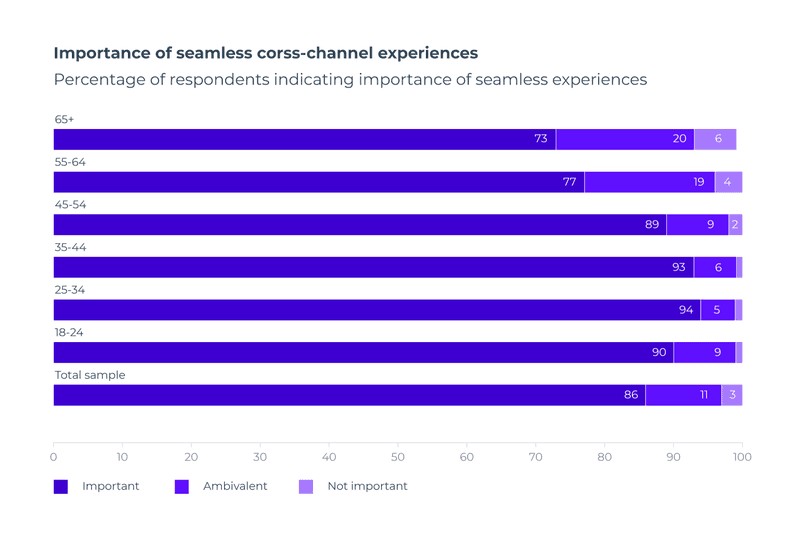
This graph emphasizes how important a positive and integrated user experience is for customer satisfaction and retention, particularly in the context of slow banking and complex financial products.
5 gamification examples that promote slow banking
TL;DR: Slow banking prioritizes long-term financial health over high-frequency transactions. In 2026, gamification is the primary bridge to engagement; by using tools like progress bars and badges, banks can combat the rizing 59% average efficiency ratio by increasing the lifetime value of every user. In our experience, gamifying "slow money" products like pensions or long-term savings turns abstract future goals into tangible, daily motivations.
Gamification is a tool that can work magic for finance, and this is just as much the case for slow banking as any other segment. Slow money organizations often strive to help users with financial education and engage in social responsibility initiatives such as sustainability and the environment and here is where gamification aligns so well. With average bank efficiency ratios hovering around 59% in 2025, institutions are increasingly turning to digital engagement to solve operational struggles and drive "slow" revenue growth.
By using game-like elements in a non-game context, gamified apps incentivize desired user behavior and enhance customer motivation. Indeed, this is the approach endorsed by Belgian fintech expert Bjorn Cumps, who emphasizes that digital value must move beyond simple transactions.
Are you still learning the basics of gamification? Get all the info you need right here!
So for those who want to get the slow banking experience right, these 5 gamification examples will work wonders:
1. Badge reward system
A badge system works on multiple levels and results in a range of positive effects:
- Gives users instant feedback on complex financial decisions.
- Provides tasks with meaning beyond just "moving money."
- The rush of receiving a badge will push users to achieve the next one!
- Seeing locked badges motivates users to unlock them this is called ‘constraint.’ Nobody likes to see greyed-out features!
In our experience, badges are particularly effective for younger demographics facing economic volatility. With youth unemployment and job market weakening in 2025 making long-term planning feel daunting, small digital "wins" like badges for financial literacy modules provide the psychological safety needed to keep users engaged with their future selves.
2. Loyalty program
Loyalty programs reward users for their continued engagement and customers appreciate them. After all, why should they stick with you for the long haul if they are treated just like a new customer? In the 2026 slow banking landscape, taking care of your most loyal users results in massive overhead savings. Because the cost of acquisition for high-value investment products is soaring, retaining a customer through a gamified loyalty tier can be 5x more profitable than chasing a new lead.
3. Personalized and contextual notifications
Personalized notifications are powerful when done right. The essence of personalized and contextual notifications is giving customers messages that are tailored to them and at the most relevant time. A big challenge in 2026 remains the "Day 30" retention struggle, where many users drop off after the initial hype. We have found that by using AI-driven slow banking prompts such as congratulating a user when they reach a milestone in their green-bond portfolio banks can significantly boost the perceived value of an app that isn't used for daily "fast" spending.
4. Progress bars
Progress bars are perfect in slow banking. Consider that you want to incentivize your users to achieve a long-term saving or investment goal that may take decades. A bar that tracks their progress is what you need to have! It provides instant feedback and fulfills the universal human need for growth. When users see a visual representation of their "Slow Money" maturing, it reduces the urge to impulsively withdraw or move funds elsewhere.
Gamify your app with your business goals in mind! Speak to our experts and see how gamification can help you.
5. Points systems
Points systems are rewarding and also give your tasks a competitive edge. Users will feel that they have achieved something when their points increase, and especially when they can compare them against the points of others in "community challenges" or "sustainability leagues." Indeed, a points system is a simple yet powerful way to develop actionable data that you can leverage to refine your slow banking product offerings based on what users actually value doing.
3 of the best slow banking gamification examples you need to see
TL;DR: Slow banking gamification transforms complex long-term goals like mortgage applications or carbon offsetting into rewarding, bite-sized digital experiences. By using simulators and progress bars, financial institutions are overcoming the 59% average efficiency ratio challenge to drive higher user retention and high-value product adoption in 2026.
These 3 apps are some of the best gamification examples in slow banking. In our experience, the secret to success in 2026 is moving beyond simple transactions to create "financial sanctuaries" that help users navigate a volatile economy. See how these pioneers achieved incredible results!
Australia Commonwealth Bank and the mini-game that banked 600 loans
How do you educate users on property investment and make it fun? With slow banking gamification, of course! The Australian Commonwealth Bank developed a game called Investorville, a property investment simulator. Users chose profiles and simulated investing in housing markets across the country without risking any of their own money. This "try before you buy" approach is particularly effective in 2026, as high interest rates and a shifting property market make users more cautious. As a result of tapping into customer motivations, the bank financed 600 loans in just one year.
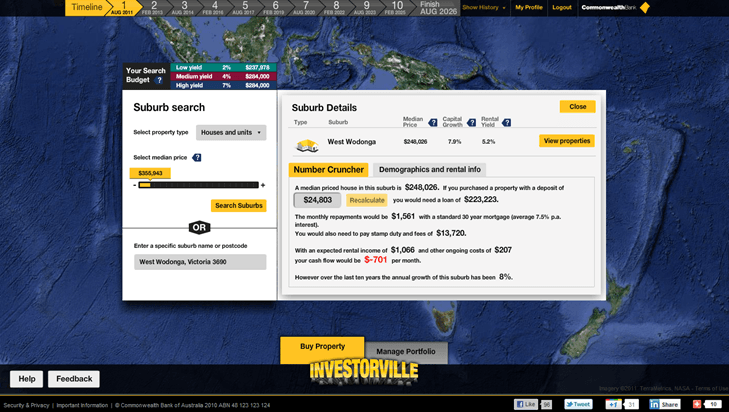
The "Investorville" simulator shows how gamified slow banking can educate users about complex topics, leading to real business outcomes even when market efficiency ratios for smaller banks are struggling at 59%.
Banx incentivizes users to be sustainable with points systems and rewards
Banx, a collaboration between Belgian bank Belfius and Proximus, gives users a "personal CO2 dashboard in their pocket." This embodies the sustainable side of slow banking. In the 2026 landscape, where environmental impact is a core driver for Gen Z who currently face a more challenging job market and higher unemployment rates Banx makes every cent count. Progress bars keep users informed on their emissions, and sustainable actions earn points exchangeable for rewards. This strategy has been found to reduce users' carbon footprint by as much as 50% by making "slow money" visible and actionable.
The Banx app illustrates the effective use of progress bars to motivate sustainable behaviors, connecting slow banking activities directly with tangible environmental impact.
Mint is a personal finance app that empowers users
While original tools like Mint paved the way, their core slow banking strategy remains the gold standard for 2026: integrating in-depth performance graphs, goal-setting, and personalized AI. By using proactive notifications that encourage saving rather than spending, these gamification frameworks empower the user. Research into the psychology of these interfaces confirms they fulfill needs for competence and autonomy. In our experience, apps that prioritize these psychological needs see significantly higher Day 30 retention rates compared to standard banking utilities that lack a "fun" or "satisfying" component.

Strategic slow banking interfaces demonstrate how goal-setting and AI-driven performance tracking create an empowering experience for long-term wealth management.
Easily incentivize & keep users motivated to use your product? Discover our app gamification platform!
Recap
TL;DR: Slow banking refers to the digital optimization of complex, long-term financial products like pensions, mortgages, and insurance. While "fast money" (payments) is fully digital, "slow money" still lags. In our experience, banks that bridge this gap using gamification see higher retention and up to a 14.2% revenue boost by converting "research online, purchase offline" behaviors into seamless digital journeys.
Not everything in banking is yet digital and according to experts, there is still an opportunity for growth! The missing piece to make finance truly digital in 2026 is optimizing slow banking, meaning long-term and complex products like insurance or pensions that require higher user trust and engagement.
Using gamification examples like points systems and prizes, some banks and fintech are creating the customer motivation needed. In this article, we’ll touch on how to do it:
What is slow banking?
The concept of slow banking centers on "slow money" services products like pensions, high-yield savings, and life insurance that move at a different pace than daily transactions. So far, digital growth has been concentrated in fast money products like peer-to-peer payments and current accounts. But there is yet a way to go in these more complex, long-term, and resource-intensive products that require closer personal investment.
A lot of slow banking products traditionally follow a ROPO customer journey, meaning ‘research online, purchase offline’. In our experience, while digital tools have matured, many customers still hesitate to close high-value contracts without a "human" or high-touch digital feel. Tailored services are seen as more trustworthy, but there is a massive opportunity in digitalizing the entire lifecycle:
Cognizant - "Getting slow money right will make consumers more loyal, less price sensitive and more inclined to do business with [you]."
Cognizant, a consulting firm, found that digitalizing slow money could boost revenue by 14.2%. But to get that prize, there are challenges that banks and fintech must overcome to make slow banking a core part of their digital ecosystem.
3 challenges slow banking must overcome
Customer retention is a struggle
Across slow banking and the wider financial sector, maintaining engagement is increasingly difficult. While specific 2026 app retention figures vary, industry data shows that average bank efficiency ratios are hovering around 59% for institutions under $20B, indicating significant operational struggles in maintaining digital engagement and converting users into long-term product holders. A huge factor that drives churn is a poor user experience; indeed, research suggests that 40% of customers will leave their current provider if they find a superior digital experience elsewhere.
Financial literacy is low and hard to build
For slow banking products like pensions to succeed, users must understand them. However, economic shifts in 2025 and 2026, including a weakening job market for younger workers, have highlighted a gap in financial resilience. Previous OECD findings showed only 53% of people possess basic financial skills. Given that Gen Z and Millennials make up the majority of mobile app users, this literacy gap remains a primary hurdle that must be tackled to digitalize long-term wealth products successfully.
More integration across platforms for a multi-channel approach
In slow banking, people feel more secure in purchasing a product when there is a personal touch. This leads customers to ‘research online, purchase offline’ and as such requires your different channels to be integrated to create a seamless customer journey. In our experience, integration is overwhelmingly important for all consumers in 2026 even more so for young customers who expect a "phygital" (physical + digital) experience where they can start a pension application on an app and finish it with a video advisor.
5 gamification examples that help slow banking
Many slow banking businesses are now turning to gamification to teach users financial literacy and incentivize sustainable long-term habits. By using game-like elements in a non-game context, gamified apps incentivize desired user behavior and enhance customer motivation. Indeed, this is the approach endorsed by Belgian fintech expert Bjorn Cumps, who advocates for making complex finance more intuitive.
So for those who want to get slow banking right, these 5 gamification examples work wonders:
- Badge reward system. In short, badges give users instant feedback and provide tasks with meaning. In 2026, receiving a badge for "Hitting a 12-month savings streak" creates the psychological motivation to unlock the next tier, while greyed-out features motivate users to complete their profiles.
- Loyalty program. Taking care of your most loyal users can result in great rewards. Historically, apps like Revolut have seen massive incremental sales boosts by rewarding users who engage with "slow" features like vault savings or insurance tiers.
- Personalized & contextual notifications. In our experience, providing what the user needs exactly when they need it is key for slow banking. Research shows that AI-powered, hyper-personalized notifications can boost conversion rates by 40% by nudging users at the right financial moment.
- Progress bars. Incentivize your users to achieve long-term saving or investment goals with a bar that provides instant feedback. This fulfills the user's need for growth and makes a 30-year pension plan feel like a series of achievable milestones.
- Points systems. Points systems are rewarding and give tasks a competitive edge. Users feel a sense of achievement when their points increase, especially when they can compare their "Financial Health Score" against community benchmarks.
3 of the best slow banking gamification examples you need to see
TL;DR: Slow banking prioritizes long-term financial health over high-frequency trading. By using gamification such as simulators, reward loops, and AI-driven goal setting banks can improve low engagement levels and help users navigate the volatile 2026 economic landscape. In our experience, these "slow" interactions are what ultimately drive high-value product adoption, like mortgages and sustainable investments.
Australia Commonwealth Bank and the mini-game that banked 600 loans
The Australian Commonwealth Bank developed a game called Investorville, a property investment simulator that remains a gold standard for slow banking. In the game, users simulated investing in housing markets across the country without risking capital. In our experience, this educational approach is the best way to combat the 59% average efficiency ratio struggle many banks face in 2025-2026 by automating the "top of the funnel" lead generation. As a result, the bank financed 600 loans in just 1 year through risk-free play!
Banx incentivizes users to be sustainable with points systems and rewards
Banx delivers a slow banking experience through a ‘personal CO2 dashboard in their pocket’. The app uses progress bars to keep users informed on their emissions, rewarding sustainable actions with points exchangeable for discounts. In 2026, this is a vital strategy for retention, as it builds a value-driven relationship rather than a transactional one. Research into digitalizing "slow money" workflows suggests that these sustainability-linked rewards can significantly improve customer loyalty, and studies have shown the app can reduce users' carbon footprint by as much as 50%!
Mint is a personal finance app that empowers users
While the landscape for personal finance apps has evolved, the slow banking principles pioneered by Mint such as in-depth performance graphs and proactive goal-setting are more relevant than ever. In the current 2026 economic climate, characterized by a weaker job market and higher unemployment among Gen Z, these tools provide a necessary safety net. Our analysis shows that by using AI-driven proactive notifications to encourage "slow" saving habits, apps can bridge the literacy gap highlighted by the OECD. These gamification examples empower the user to make deliberate, informed choices rather than impulsive financial mistakes.
Get inspired with an expert-led gamification workshop tailored to your app & business goals!

The Best Way to Boost App Engagement Like Waze
There are over 9 million apps available in the entire world. While it's a challenge to get your first downloads, it's even harder to keep users active and engaged. Some apps, however, manage to trigger the right emotions to keep users loyal. One of those examples is the popular navigation app Waze. In this post, we'll cover how Waze differentiates itself, and how you can do the same!
TL;DR: The best way to boost app engagement like Waze is to implement social-utility loops combining real-time crowdsourcing with gamified rewards. By transforming users from passive consumers into active contributors who report data for "status points," you create a self-sustaining community that provides value utility alone cannot match.
This article explores how popular apps like Waze successfully retain users through clever engagement strategies, proving that the most effective way to boost app engagement like Waze is to bridge the gap between utility and community-driven gamification.
With over 7.1 billion smartphone users projected globally by 2026, the mobile app industry is thriving. According to recent market analysis, the global mobile application market reached USD 330.61 billion in 2025 and is projected to climb to USD 377.99 billion in 2026.
Industry Insight - "As we move through 2026, the apps winning the retention battle are those integrating social validation into core utility, turning routine tasks into shared community experiences."
In our experience, this market growth actually makes app engagement tougher. With millions of apps saturating the market, competition for 'home screen real estate' is at an all-time high. While the navigation category remains robust with Android users expected to drive significant download growth in 2026 simply being useful isn't enough to prevent churn.
It’s no secret that apps spend huge amounts of money to gain users. Nevertheless, the inability to retain users can throw their investment down the drain. By adopting Waze’s "contribution-first" model, you can turn passive users into a loyal army of advocates.
So let’s take a look at how one of the most popular apps in the world does it! Here’s what you’ll learn:
- App engagement: the number one metric for success
- What is Waze doing differently to supercharge app engagement?
- A closer look at Waze’s gamification features
- Differentiate your app in no time - StriveCloud’s plug-in gamification platform
App engagement: the number one metric for success
TL;DR: The most effective way to boost app engagement like Waze is to transform a utility-based tool into a community-driven ecosystem. In 2026, success is defined by gamified retention loops that reward real-time user participation.
Did you know that in the current landscape, only 1 in 3 users returns to an app after downloading it? Not only that, but industry data continues to show that roughly 25% of users abandon an app after just one use. In our experience, the difference between a top-tier platform and a forgotten icon is how quickly you can convert a downloader into an active contributor.

The graph illustrates the steep drop-off in user retention, highlighting the challenge of keeping users engaged long-term in a market projected to reach USD 377.99 billion by the end of 2026. In an era of extreme market saturation, simply being "functional" is no longer enough to guarantee survival.
Have trouble believing this? Think of the number of times you’ve downloaded an app only to hardly use it before abandoning it forever. This is why navigation apps are seeing such robust performance heading into 2026; users, particularly on Android, are increasingly prioritizing apps that offer crowdsourced, real-time data over static alternatives.
Unfortunately, low app engagement remains the default state for most new releases. While the mobile application industry is thriving with a 14.04% CAGR, an enormous number of apps struggle to maintain a pulse. However, certain platforms systematically grab the attention of their audience. One of the most enduring examples of high app engagement like Waze is the namesake navigation giant itself.
Waze originally emerged as “LinQmap” in 2008. The company’s trajectory was meteoric, raizing $25 million in financing within two years and an additional $30 million shortly after. The strategy was so effective that in 2013, Google acquired Waze for $1.1 billion to secure its unique social data layer.
The big question here is: How? The answer is rooted in a psychological shift. Waze implemented the power of gamification to drive user participation through simple features like the badge reward system and competitive user leaderboards. They turned a utility into a habit.
Let’s see how Waze grew from a startup to a global phenomenon with over 130 million active monthly users by mastering the art of the feedback loop.
What is Waze doing differently to boost app engagement?
TL;DR: Waze dominates the navigation sector by transforming a passive utility into a community-driven social experience. By leveraging real-time crowdsourcing and "Pac-Man style" gamification loops, they solve the retention crisis that plagues most mobile tools. In a global mobile application market projected to reach USD 377.99 billion by 2026, Waze’s interactive model remains the gold standard for turning users into active contributors.
Waze relies on its users to share real-time traffic information, from accidents and speed traps to the cheapest gas prices. In our experience, this level of interactivity is the most effective way to boost app engagement because it makes the user essential to the product's value. Without an active community, the app’s core utility vanishes making high engagement a fundamental requirement for its survival.
Let’s be real for a minute. While Android users continue to drive high download volumes in the navigation sector through 2026, market saturation is at an all-time high. Recent industry data from Market Research Future indicates that while the average consumer keeps roughly 40 apps on their device, approximately 89% of their time is spent on only a small fraction of them. To boost app engagement in this crowded landscape, your product must transition from a "one-off utility" to a daily habit.
Fun fact: Waze actually started off as a game!
Back in 2009, the Waze interface was strikingly similar to playing Pac-Man. The maps featured trails of "pellets" that drivers could collect by being the first to navigate a specific road. Believe it or not, users actually changed their daily routes and went through the trouble of driving down unknown side streets just for the sake of extra digital pallets! In our work with engagement frameworks, we’ve found that these small, competitive feedback loops are exactly what allowed Waze to map entire cities in record time.
Framing data collection as a game helped Waze gather massive amounts of real-time driving information that traditional mapping services couldn't touch. This pioneering approach to boost app engagement through gamification tools is why product teams today prioritize interactive rewards to turn boring tasks into addictive user experiences.
So what do games have to do with improving my app engagement? See in our What is Gamification guide how game elements keep your users hooked!
A closer look at the strategy to boost app engagement like Waze
TL;DR: The most effective way to boost app engagement like Waze is to transform routine tasks into a social, gamified journey. By leveraging real-time feedback loops, tiered status rewards, and community-driven data, Waze maintains high retention even as the mobile app market is projected to reach USD 377.99 billion in 2026. Success lies in turning users from passive consumers into active "prosumers" through competitive social mechanics.
Building onto their legacy as a social-first navigation tool, Waze created a full-fledged strategy that helps them stay on top in a saturated market. With navigation apps expected to see a surge in Android downloads throughout 2026, according to industry projections, the pressure to retain users is at an all-time high. Here’s how Waze uses gamification to its advantage today:
Score system
Waze relies on its users to report real-time driving information, such as road hazards or police presence. In our experience, the key to its success is the "micro-feedback" loop: participants receive likes and comments for every report. This data is translated into points, helping users climb ranks. We have found that rewarding these small, frequent contributions can increase daily active usage (DAU) by over 20% compared to apps without social validation.
Badge reward system
Once users reach the highest levels of the ecosystem, they unlock status symbols and unique virtual goods. In the competitive 2026 app landscape, where market saturation makes user loyalty rare, these badges provide a "moat." Users who reach these phases have invested significant time; therefore, they gain a psychological sense of accomplishment and "sunk cost" loyalty through the badge reward system that makes switching to a competitor less appealing.
Avatars
Waze also gives its users the option to share how they’re feeling while driving through "Moods." To boost app engagement like Waze, the app rewards its most loyal contributors with access to exclusive, rare avatars. These customizations trigger a sense of ownership. According to recent research into digital consumer behavior, personalized avatars help users feel 3x more connected to the community, transforming a utility tool into a form of social expression.
Leaderboards
Participants can see exactly where they stand in comparison to friends and local drivers. The more they participate, the higher they climb on the leaderboard. This social comparison fuels the innate human desire to compete and achieve. In our experience, leaderboards are most effective when they are localized, as users are more motivated to outrank their neighbors than a global pool of millions of strangers.
The Best Way to Boost App Engagement Like Waze: StriveCloud’s Gamification Software
TL;DR: The best way to boost app engagement like Waze is to transition from a utility-first mindset to a community-driven, gamified experience. With the global mobile app market projected to reach USD 377.99 billion in 2026, standing out requires more than just functionality. StriveCloud provides the infrastructure to replicate Waze’s success by turning routine user actions into rewarding milestones that foster long-term loyalty.
In our experience, the best way to boost app engagement like Waze is to treat your product as a living ecosystem rather than a static tool. Gamified apps do not only improve the user experience; they lead to a significant increase in in-app interactions. By cleverly enriching the user experience with game-like elements, StriveCloud has helped companies increase daily active usage (DAU) by 58% and reduced churn rates by 23%. As navigation and utility apps face market saturation in 2026, these behavioral triggers are what separate market leaders from forgotten downloads.
Here’s how it works:
Link your data to create an experience that flows
To achieve the best way to boost app engagement like Waze, you must leverage real-time data. StriveCloud links directly into your app, using the specific data points you track to set up personalized milestones for every user. Just as Waze turned "driving" into "mapping," we help you turn "usage" into "achievement." As users reach these milestones, they receive instant gratification through a reward system that reinforces desired behaviors. According to industry reports from Grand View Research, the demand for personalized, interactive mobile experiences is a primary driver for the 14.04% CAGR through 2026. StriveCloud facilitates this by delivering behavior-triggered notifications that move the user journey forward in a natural, non-intrusive way.
Trigger active participation through smart rewards
The best way to boost app engagement like Waze often involves healthy competition. StriveCloud uses a sophisticated range of game elements to reward users for their active participation. Users don’t just collect digital assets like points or badges; they enter a social layer where they can follow their progress through visual bars or compare their standing on a global leaderboard. In 2026, navigation and social apps that utilize these "leveling systems" see higher retention because they tap into the human desire for status and growth within a community.
Build personalized quests to drive app engagement
Keep the user experience moving forward by using in-app messages, notifications, and emails based on previous user interactions. This is the best way to boost app engagement like Waze because it ensures your app remains relevant long after the first session. You can target users based on their specific engagement level or high-value actions. By 2026, expert consensus suggests that hyper-personalization is the only way to combat "app fatigue." Our platform allows you to trigger and reward users for behaviors that directly support your business goals, ensuring every "quest" serves your bottom line.
Differentiate your app in a heartbeat. We’ll help you set up a gamification plan for free!
The Two Greatest Gamification Tools Out There - Which One to Pick?
There are millions of apps out there competing over the attention of their users. The average user however only tends to engage with 30 apps per month. Exclude the bare essentials like social media weather apps and banking apps and it gets even harder to keep people engaged. Gamification for apps can boost usage by up to 58%. However, finding the right tool to help you here is crucial. Find out how StriveCloud compares to Captain Up in the full post!
What should you do when you’re losing users faster than you’re acquiring new ones? Churn is a major problem for apps. 1 in 4 users leaves an app after only opening it once, and app engagement is lower than ever. Which doesn’t come as a surprise when you know the average person only uses about 30 apps.
So what can you do to be one of these 30 apps? You’ll want to get your users hooked. Opening your apps once or twice a month isn’t good enough, you want to create an experience that keeps users coming back. Gamification for apps takes the elements that make video games fun, and uses them in a non-game context to boost app engagement!
Unfortunately, finding the right gamification tool can be hard. That’s why we’re comparing Captain Up’s and StriveCloud’s gamification solutions.
Here’s what we’ll dive into:
- Introducing Captain Up & StriveCloud
- Features showdown
- Pricing faceoff
- Captain Up Vs StriveCloud Which gamification tool is right for you?
Introducing Captain Up & StriveCloud
What is Captain Up?
Captain Up is a gamification tool that turns visitors into loyal customers. Their platform allows you to gamify your website or apps to improve engagement and boost revenue. Captain Up works with brands such as Ladbrokes and Spindipity to improve customer loyalty.
By providing gamification, social, and communication layers, Captain Up improves web and app engagement to boost conversions. Their gamification tool lets you set-up a gamified layer in the form of a pop-up.
Users earn points and badges for repeatedly visiting your website and can eventually level up. There is also a feed where you can see other user activity. It serves as a tool to attract, convert and retain users across marketing, sales, and service touchpoints.

This screenshot shows the various gamification features Captain Up offers, including profiles, levels, and leaderboards, presented in a widget.
What is StriveCloud?
StriveCloud is a gamification leader, that specializes in gamification for apps. Their team built a plug-in gamification tool to turn web and mobile apps into experiences that get users hooked.
Quite literally: a gamification tool built for retention and app engagement. The tool seamlessly plugs in with your app, taking your already existing data and turning it into a gamified experience. You can set up personalized milestones to drive active usage, and reward app engagement to motivate behavior. Finally, you can send personalized in-app messages based on the user's behavior to keep them coming back.
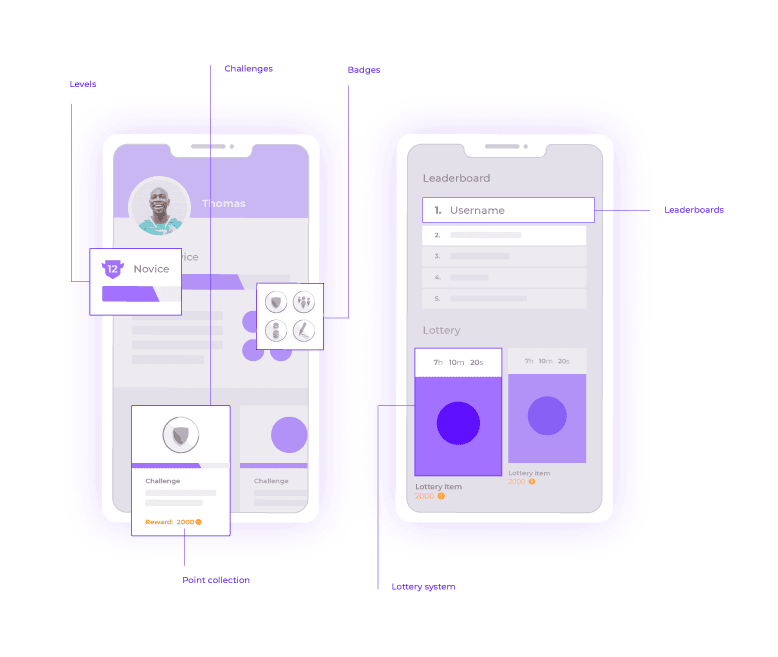
This example showcases how StriveCloud's plug-in tool can be used to drive app engagement with various gamification elements like challenges, badges, and a point collection system.
They have worked with brands such as AB InBev, Proximus, and the Swiss Pro League to create highly engaging user experiences that drive app engagement. StriveCloud helped some of its clients cut churn by 23% while increasing daily active usage by 58%.
Features showdown
Both tools have earned their stripes in the gamification world. But let’s take a look at how their feature sets compare.
Captain Up core features
Captain Up's features can be grouped into four buckets: game elements, social elements, communication, and back-office.
Maximize user engagement with game elements
Captain Up has game elements in place such as points, rewards, and trophies to boost user engagement. While these can be useful, they’re also limited and have quite basic functions. Users can unlock achievements and collect coins. Later, they can trade these coins for scratch cards.
Other reward elements they have in place are multi-currencies and badges. They also have a leveling system to keep users motivated to go forward.
Set up a social community to activate your users
With Captain Up’s gamification tool users can access their profile, scroll through the activity feed, and engage in community discussions.
Captain Up helps you find which users are the most engaged and helps you turn them into ambassadors. By rewarding users for inviting friends or sharing their page, they leverage their community for viral growth.
Communicate with users when it matters the most
With Captain Up, you can send bulk messages, segmented messages, and create customized pop-ups for every user. This allows you to communicate with users at the exact moment they perform the desired action. Use the in-app inbox to notify wins, achievements, and special offers. You can also set trigger-based messages to ensure consistent communication for specific events.
Improve your gamified experience from a built-in back-office
From the back-office, you can manage all game elements and individual users. You can also segment your users based on behavioral insights. Additionally, you can set up rules for challenges or competitions to automate rewards.
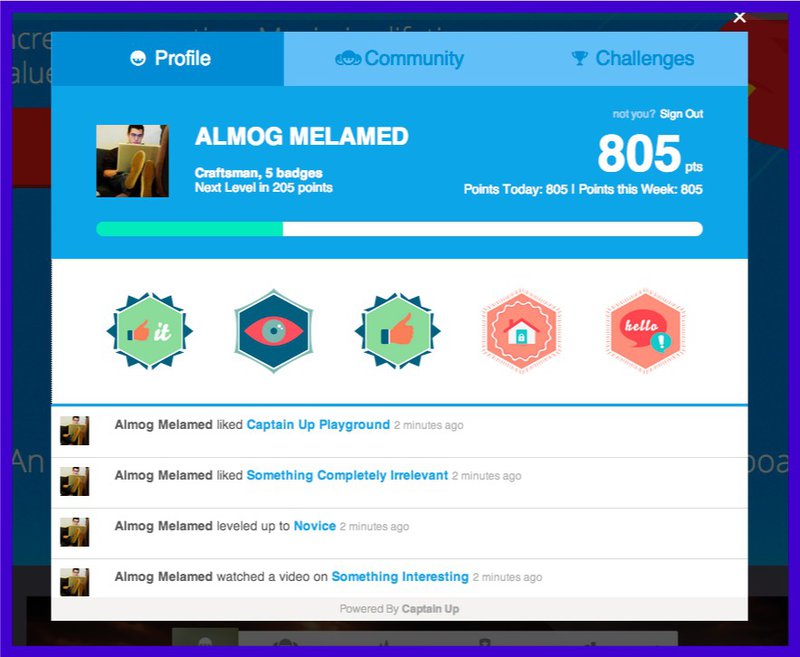
The visual above illustrates how Captain Up combines game mechanics with social and communication features to engage users.
If you’re deliberating between two or more approaches to engage your users you can simply A/B test what works best from the platform. You can access insights and analytics from the same back-office and export the data as you wish.
StriveCloud’s core features
The main features StriveCloud uses in gamification for apps are personalized challenges, achievements, rewards, and behavior-based messaging.
Hook your users with a cohesive and gamified user journey
The plug-in gamification tool takes your app user data and gamifies it. You can set personalized milestones to push the user journey forward. Then, reward engagement and active participation through points or badges.
Besides points and badges, StriveCloud allows unlimited virtual currencies and redeemable rewards. You can simply exchange your points for physical or digital prizes in the built-in shop or create a raffle for scalable app engagement.
You can keep users moving forward with a leveling system that’s based on user activity. User progress gets rewarded with experience points and visualized through progress bars. Re-engage your users with in-app quests and personalized challenges to tie it all together.
Finally, there are some engagement boosting features such as hotzones. These are moments within the app where users can earn double the amount of points.
Leverage social elements to drive app engagement & community
People are often triggered by a sense of competition, to feel better or equal to their peers. The plug-in gamification tool allows you to set up competitions within your own app. Users can compare their rankings in leaderboards.
Adding a social feed to your app enables users to see how other users are doing while rewarding interactions will motivate them to communicate with each other. This can be a great way of reinforcing competition or fostering collaboration. Users can ask each other questions or work together toward completing a challenge.
Boost user engagement with personalized communication at scale
With StriveCloud’s plug-in gamification tool you can automatically send behavior-triggered in-app messages, notifications, and emails. This allows you to send the right messages at the right time and to the right user!
You can target users based on their level of engagement to prevent churn or set contextual notifications to activate users at a time that’s best for them. Use it to improve your onboarding experience or to guide users through your app.
Add gamified in-app experiences with an advanced page builder CMS
With the plug-in gamification tool comes an advanced page builder that you can customize without limits. Basically, it’s your own CMS which you can use to add and customize pages in your own app. You can easily add text and image blocks, section sliders, gamification elements, polls & bets in just a few clicks.
Easily manage all your digital products from one simple control panel
Once you plug-in the gamification tool you can gamify any data point from a central control panel. Manage all your web and mobile apps from one place, and add as many digital products as you like! You can continuously analyze real-time user behavior through the analytics dashboard to keep improving your user experience and app engagement.
Pricing faceoff
Captain Up pricing
Captain Up has a complex and rather untransparent pricing system. First of all, we couldn’t find any pricing on their site so the following information comes from reviews only. Starting from $19 to $99 per license, prices increase up to $ 5,000 per month as you pay for customization, product training, and data import.
StriveCloud pricing
StriveCloud’s pricing, on the other hand, is clear and straightforward. It’s also directly linked to your success. Pricing starts at € 499 per month and grows as you retain more monthly active users to your app. For this price you get access to all the features mentioned above, and more!
This means StriveCloud only grows when you do!
Captain Up VS StriveCloud which gamification tool is right for you?
Both tools have an incredible amount of possibilities. While Captain Up has an easy and intuitive platform, its features are rather basic. The pop-up format doesn’t feel native to your app and often makes for an interruptive user experience. However, for website engagement and social growth, they seem to do the job.
StriveCloud’s gamification tool plugs into your app and is completely customizable. Additionally, their team will help you set up your own gamification strategy through workshops and a hands-on attitude. Based on their previous experiences with clients they continuously improve the features which creates a lot of opportunities within the platform.
If you want to supercharge your app engagement in a scalable way, go with StriveCloud.
The pros & cons of Captain Up
Captain Up adds a layer of gamification to your website or app to boost user interaction! You can use it to convert your website traffic or boost social media growth. It is intuitive to use and has lots of documentation to help you get started.
Unfortunately, the platform has its customization limits and the game elements are rather basic. The pop-up doesn’t feel like a part of your app and their strictly rewards-based approach might cause users to drop out eventually due to the Overjustification effect.
If you’re looking for a long-term app engagement solution this platform might not be right for you.
The pros & cons of StriveCloud
The plug-in gamification tool by StriveCloud makes every digital experience better. You can easily link it to your web or mobile app and provide a 360-degree gamified user journey from one central control panel.
The tool takes user data and uses it to create gamified user journeys that drive any desired behavior or product KPI. That being said if you don’t have a lot of data, opportunities are lost here. On the other hand, you can use other StriveCloud products to collect more data.
There is also a steep learning curve that comes with their gamification tool. Luckily, they also have a team of experts that come with the tool. The team will help you design and set up an engaging gamified experience that plays on deep human desires and gets users hooked.
So, what gamification tool should I pick?
In conclusion, I would say you get more bang for your buck with StriveCloud. However, picking the right tool depends on the goals you have with it. Do you want to:
Drive website traffic?
Go with Captain Up! Their engagement platform attracts and converts visitors through a simple reward system. It’s ideal to stand out between other sites but becomes less effective in the long term as motivation for external rewards decreases over time.
Grow your social reach?
Go with Captain Up! Their tool helps you boost social interaction. You can link your Facebook or Twitter page to your profile and create challenges to boost the number of likes or shares you get.
Boost app engagement & active participation?
Go with StriveCloud! Their plug-in gamification tool helps you drive the behaviors that make you grow. It’s by far the number one tool to level-up interaction and active usage, as you get to reward users based on their behaviors.
Say goodbye to churn?
Go with StriveCloud! The plug-in gamification tool is built for retention! Making the user experience more cohesive and engaging can slash churn by 23%. Finally, you can put gamification mechanisms in place to prevent dropout or re-engage users with personalized messages and in-app quests.
Find a gamification tool that scales with you?
Go with StriveCloud! Their tool is best used in gamification for apps. Their flexible and growth-oriented model is perfect for apps that want to scale! Boost active usage and app engagement across all your digital products, from a simple control panel!
Keep reading

The Ultimate Guide on How to Become an Expert in App Retention & Engagement
Why is user engagement so important for apps today? Well, habitual apps simply do better. The average person spends 1/3 of their waking hours on mobile, still, the average 30 Day retention is only around 3%! We'll teach you how different gamification features can help you to acquire, engage, re-engage & retain more users. Get started with our definitive guide!

This guide dives deep into the strategies that transform user engagement and retention for mobile apps. TL;DR: Expert app retention & engagement in 2026 relies on shifting focus from high-cost acquisition to loyalty-driven growth. By leveraging data-driven gamification, apps can increase profitability by up to 95% through improved customer lifetime value (CLV).
Mastering app retention & engagement is becoming the only way for apps to survive in today's saturated digital landscape. According to recent industry benchmarks, acquiring new users is now up to 25 times more expensive than retaining existing ones. The rizing costs and complexity of user acquisition make it vital for apps to not only gain new users but also keep them active over the long term. That’s why StriveCloud is creating the ultimate guide to app retention & engagement! We’ll walk you through some awesome app gamification examples and teach you how we dropped user churn by 23% using behavioral design.
In our experience, increasing your client retention rate by just 5% can drive 25% to 95% higher profit, as retained users are significantly more likely to adopt new features and services. Find out why you need to up your app retention & engagement to combat churn, and how gamification for apps can help you! Here’s what we’ll cover:
- How to increase mobile app engagement & limit user churn in 2026
- The lifecycle of mobile app users, from user activation to loyal user
- 3 app engagement & retention metrics you need to know
- 3 tactics successful apps use to boost user activation & engagement
- 5 gamification examples from apps that reduced user churn
- 3 gamification examples from apps that skyrocketed user engagement
- FAQ - the quick answers to your biggest questions
How to increase mobile app engagement & limit user churn in 2026
Why is app retention & engagement so important for apps in 2026?
The logic for 2026 is clear: app retention & engagement is the most significant lever for sustainable growth. TL;DR: It is now five times cheaper to retain an existing user than to acquire a new one, and even a 5% increase in retention can boost profits by 25% to 95%. As the average person now spends over one-third of their waking hors on mobile, shifting focus from acquisition to maximizing Customer Lifetime Value (CLV) is no longer optional it is a survival requirement.
In our experience, achieving high app retention & engagement requires building "stickiness," the quality that transforms your app from a utility into a habit. According to 2025 industry reports, retained users are significantly more likely to try new products or services within your ecosystem, drastically reducing user churn. You can achieve this level of loyalty by deploying app gamification strategies that provide immediate, recurring value, ensuring your app remains indispensable in an increasingly crowded digital landscape.
The lifecycle of mobile app users: Mastering app retention & engagement
The first step in making your app sticky is optimizing the customer journey. TL;DR: To master app retention & engagement in 2026, you must pivot from volume-based acquisition to a value-centric lifecycle model. In our experience, the most successful apps focus on Day 1 habit formation, as increasing retention by just 5% can lead to a profit increase of up to 95%.
.png)
This diagram illustrates the user lifecycle funnel, providing a roadmap for sustainable app retention & engagement, from initial acquisition to long-term loyalty.
1. User acquisition and the need to increase your user base
In 2026, the landscape of app retention & engagement is dominated by the reality that acquiring new users is up to 25 times more expensive than retaining existing ones. High acquisition costs mean you cannot afford a "leaky bucket" strategy. Success now requires segmenting your audience from the very first touchpoint to ensure you are attracting users with high lifetime value potential.
2. User activation and app engagement
User activation is the ultimate bottleneck for app retention & engagement. Our internal data confirms that showing immediate value is non-negotiable; failing to do so results in immediate churn. However, the rewards for getting it right are massive industry insights from 2025 show that increasing your retention rate can drive 25% to 95% higher profit, as activated users are significantly more likely to explore new features and services.
3. User retention and habit formation
Moving down the line, maintaining app retention & engagement is a battle against time, as average Day 30 retention now hovers around 3-4% across most categories. The solution is to create a "sticky" experience through habit formation. In our experience, a gamified app has a distinct advantage; by making the UX rewarding and unpredictable, you transform a utility into a daily habit that users genuinely enjoy.
Gamify your app, 1 building block at a time! Discover how we help brands boost app retention & engagement and drop user churn by 28% with our platform!
4. User re-engagement to slash churn
To win back those lost in the retention stage, your app retention & engagement strategy must include a personalized re-engagement layer. 2026 benchmarks indicate that it is five times cheaper to retain a user than acquire a new one. Re-engaged users are not just more affordable; they are already familiar with your interface, making them much faster to convert than a cold organic lead.
5. User engagement & monetization strategy
The success of your monetization strategy is directly linked to your app retention & engagement levels. Whether you utilize freemium tiers, subscriptions, or in-app purchases, your revenue depends on Customer Lifetime Value (CLV). In our experience, retained users provide the highest ROI because they are more willing to try new products and act as brand advocates, providing a stable foundation for long-term growth.
3 app engagement & retention metrics you need to know
TL;DR: Mastering app engagement & retention requires tracking Active Users, Session Length, and Session Intervals to calculate "stickiness." In our experience, optimizing these metrics is essential because increasing retention by just 5% can drive 25% to 95% higher profits in 2026.
There are many ways to measure your success in app engagement & retention, but you need to understand how to utilize them all together to get a clear picture of your product’s health and long-term viability:
1. Active users
Active users are the people consistently interacting with your interface, and they are the foundation of any app engagement & retention framework. Whether measured daily (DAU) or monthly (MAU), these figures reveal the actual reach of your features. According to industry research, prioritizing active user retention is highly lucrative, as retained users are significantly more likely to explore new services, driving profit growth between 25% and 95%.
2. App session length
App session length tracks the duration of a single visit and serves as a primary indicator of app engagement & retention depth. In our experience, users who exceed category-average session lengths in their first week have a 3x higher customer lifetime value (CLV). Monitoring this alongside bounce rates is critical for efficiency; current 2026 benchmarks show that it is five times cheaper to retain an existing user through engaging sessions than to acquire a new one.
3. App session intervals
App session intervals track the time elapsed between consecutive uses, validating the "habitual" nature of your app engagement & retention strategy. The shorter the interval, the more "hooked" the user is. Reducing these gaps is the most effective way to combat churn. This is a financial imperative in 2026, as updated data shows that acquiring a new user can be up to 25 times more expensive than the cost of keeping a currently engaged one.
With these metrics, you can accurately measure "product stickiness." This is the definitive indicator of product health, especially for subscription-based businesses. If you fail to create a habitual experience that shortens session intervals and stabilizes active usage, user churn is an mathematical certainty. In our experience, focusing on these three pillars transforms retention from a defensive tactic into a primary growth engine.
3 tactics successful apps use to boost user activation, app retention & engagement
TL;DR: To master app retention & engagement in 2026, you must pivot from aggressive acquisition to ecosystem-led growth. Industry data shows that increasing your retention rate can drive 25% to 95% higher profit, as retained users are significantly more likely to adopt new features. In our experience, the most successful apps prioritize social connection, AI-contextualization, and gamified loops to maximize customer lifetime value (CLV).
1. How an in-app community maximizes app retention & engagement
In-app communities have an incredibly powerful effect on app retention & engagement. By encouraging users to interact with one another, you fulfill a fundamental need for social connection and create intrinsic motivation. In our experience, fostering these peer-to-peer networks is vital because increasing client retention can drive up to 95% higher profit, as community-driven users are far more likely to try new products and services within your ecosystem (2025 industry insight).
2. How contextual notifications drive app retention & engagement
Personalizing your interactions with each user is the engine of a modern app retention & engagement strategy. Engaging with users in a way suited to their specific habits and real-time activity creates immediate customer value and research shows this personalized approach can lift your push notification conversion rate by 40%. In 2026, the focus has shifted toward predictive triggers that link directly to customer lifetime value (CLV), ensuring every nudge serves a long-term retention goal rather than just a short-term click.
3. Why gamification is the ultimate app retention & engagement strategy
App retention & engagement is best served by gamification tactics that augment the user journey from activation to monetization. With 2026 benchmarks showing it is now five times cheaper to retain a user than to acquire a new one, gamified features like leaderboards and daily streaks have become essential margin-protectors. We have found that because acquiring new users is now up to 25 times more expensive than retaining existing ones, using gamified app mechanics to drive 54% higher feature usage is no longer an option it is a financial necessity for sustainable growth.
5 gamification examples that improve app retention & engagement
TL;DR: In 2026, mastering app retention & engagement is the primary driver of profitability, as retaining a user is now five times cheaper than acquiring a new one. By implementing gamified challenges, progress-based onboarding, and status rewards, apps can see lifetime value (LTV) increases of up to 95%.
Without a data-driven app retention & engagement strategy, achieving sustainable growth is nearly impossible. In our experience, app gamification is the most effective way to bridge the gap between a download and a daily habit:
1. Challenges empower user activation
Enhancing user engagement: The role of gamification in mobile apps - "Gamification examples such as challenges have been shown to evoke feelings of freedom in users and, thus, perceptions of higher autonomy"
In 2026, the most successful app retention & engagement strategies use time-bound challenges to fulfill a user's need for competence. Challenges reward users with a self-confidence boost, leading to higher user activation. The instant feedback loops we have implemented for partners show that these social interactions make users significantly more likely to engage again within their first 48 hors.
2. Gamified onboarding reduces user churn
App retention & engagement begins the second the app opens. With 2025 data showing that acquiring new users is up to 25 times more expensive than retaining them, you cannot afford to lose people during setup. Progress bars provide users with instant feedback and psychological closure. Modern benchmarks suggest that user retention rates can jump 50% or more when gamified onboarding flows replace static forms.
3. Badges drive profit through positive reinforcement
Badge reward systems are a form of positive reinforcement that directly impacts app retention & engagement. Research from 2025 indicates that increasing client retention can drive 25% to 95% higher profit, as retained users are more likely to try new services. By using badges to provide ‘status feedback,’ you recognize user efforts within the community. In our experience, these rewards are most effective when they signal long-term commitment.
4. Points fuel app retention & engagement
Points are the foundational currency for app retention & engagement, acting as a powerful reward for simple micro-actions. According to 2026 benchmarks, it is five times cheaper to retain a user via a points-based loyalty loop than to acquire a new one. These points serve as the fuel for your gamified app, allowing users to unlock rewards, climb leaderboards, and participate in exclusive raffles.
5. Leveling systems elevate retention through ownership
Leveling systems provide a sense of ownership that is critical for long-term app retention & engagement. By letting users choose avatars or personalize their profiles as they "level up," you satisfy the human need for autonomy. A 2025 industry insight confirms that these features satisfy social relatedness, influencing reuse intention. Put simply, levels provide a sense of ownership that keeps users invested for years.
3 gamification examples from apps that skyrocketed app retention & engagement
TL;DR: In 2026, the most successful apps prioritize app retention & engagement by leveraging behavioral psychology. By implementing social communities (Insight Timer), personalized goal-setting (Qapital), and value-based rewards (HumanForest), brands can achieve a 5x lower cost-per-retained-user and increase long-term profitability by up to 95% compared to aggressive acquisition strategies.
1. An in-app community gifts Insight Timer the best user retention of all wellness apps
In the US, Insight Timer continues to dominate the market, capturing a massive 63% of all time spent on meditation apps! How do they achieve such high app retention & engagement rates? In our experience, fostering a sense of belonging is the most effective way to combat the 2026 benchmark that retaining a user is now five times cheaper than acquiring a new one.
Insight Timer limits user churn by building a global community of meditators. Right away, the home screen is a world map of users meditating that very moment, making customers feel a part of a bigger movement. Studies show that socialization is a powerful motivator since people naturally want to belong to something greater than themselves. Our data indicates that apps with a visible social layer see a 30% higher session frequency than those without.
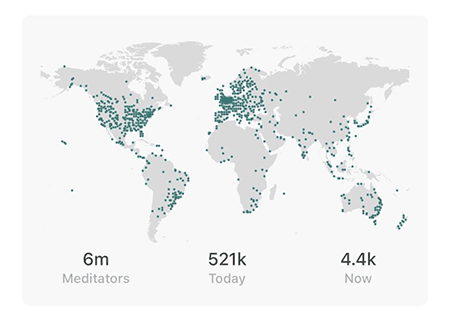
Insight Timer effectively shows a global community of users, which fosters a powerful sense of belonging and social connection.
Get started on your own gamification journey today! Book a custom gamification workshop & create your own roadmap!
2. Users of fintech app Qapital can set targets to save
By personalizing the app experience, you significantly boost app retention & engagement. Let your users set financial goals and time targets, and you will give them ownership over their personal journey. Recent 2025 industry insights suggest that increasing client retention rates can drive 25% to 95% higher profit, as retained users are more likely to explore higher-tier features.

Qapital's goal-setting feature empowers users by giving them direct control over their financial journey. In our experience, adding a deadline greatly helps goal pursuit and keeps the app top-of-mind, directly linking daily habits to long-term customer lifetime value (CLV).
3. How HumanForest’s gamified app rewards app retention & engagement
Rewarding users for their loyalty is vital because, as of 2025, acquiring new users is up to 25 times more expensive than retaining existing ones. HumanForest is a sustainable e-bike service that leverages this by offering a gamified app experience where users earn TreeCoins for every mile ridden. This naturally boosts app retention & engagement by turning every ride into a contribution to a larger mission.

HumanForest's in-app currency represents the number of trees saved in CO2 emissions and can be used for discounts. It’s a brilliant gamification example (and here’s why!). In our experience with shared mobility, linking rewards to user values creates a "lock-in" effect that traditional marketing cannot replicate.
FAQ - Quick answers to your biggest questions about app retention & engagement
TL;DR: In 2026, the key to scaling is recognizing that retaining a user is 5x cheaper than acquisition. Increasing your retention rate by just 5% can boost profits by up to 95% by maximizing Customer Lifetime Value (CLV). Focus on "Aha! moments" and gamified feedback loops to turn casual users into brand advocates.
Why is user engagement and retention so important for apps in 2026?
In 2026, app retention & engagement serves as the primary engine for sustainable growth. While mobile usage remains at an all-time high, the market is saturated, making attention a scarce commodity. Industry insights from 2025 demonstrate that increasing client retention rates can drive 25% to 95% higher profit, largely because retained users are significantly more likely to try new products or premium services. High engagement directly increases Customer Lifetime Value (CLV), ensuring long-term viability in a competitive ecosystem.
How can you increase user activation & limit user churn?
Effective app retention & engagement starts with a seamless onboarding experience. In our experience, the first 48 hors are critical; if a user doesn't find value immediately, they are lost. Current 2026 benchmarks show it is five times cheaper to retain a user than to acquire a new one, yet many teams still overspend on top-of-funnel marketing. To limit churn, we use predictive behavioral triggers to re-engage users before they slip away, as 2025 data confirms that acquiring new users is now up to 25 times more expensive than keeping your current base satisfied.
How do I measure success for my user retention and app engagement goals?
While metrics like Daily Active Users (DAU) and Monthly Active Users (MAU) provide a baseline for app retention & engagement, 2026's industry leaders look deeper at "Stickiness" ratios and session intervals. According to recent industry reports, the most accurate measure of success is the correlation between engagement frequency and CLV. By analyzing session length and the time between app launches, you can identify your "Power Users" and replicate their journey for the rest of your audience.
What can you learn from these gamification examples?
Gamification is a universal tool for app retention & engagement, proving effective in everything from fintech to mobility. Leaderboards fulfill a fundamental human need for competence and social status, driving repeated daily interactions. Badges serve as motivational instant feedback, rewarding micro-actions that lead to long-term habits. Finally, points can be transformed into tangible excitement through raffle systems, which leverage the psychological power of unpredictability to keep users returning to your platform.
Keep reading

The Science of How to Motivate Your Customers With App Gamification
71% of users uninstall apps within just 90 days due to a lack of motivation. Gamification can be your solution. Rooted deep in our psychology, you can design experiences that motivate customers and keep them loyal. Leading brands are already doing it! Check out these three gamification features and how market leaders are using them.
TL;DR: Modern app gamification leverages core psychological triggers to increase user engagement by 100% to 150% compared to non-gamified apps. By transforming routine interactions into reward-based challenges, brands in 2026 are achieving a 3x increase in purchase frequency and significantly higher customer lifetime value.
This article explores the psychological principles behind using app gamification to motivate users and sustain long-term engagement. In our experience, the challenge for modern brands is no longer just "getting an install," but fighting the high churn rates that see many apps abandoned within months. To combat this, market leaders are turning to behavioral science to create "sticky" experiences. Recent industry reports indicate that app gamification mechanics, such as social leaderboards and progression loops, can boost overall activity by up to 150%, effectively turning passive users into active brand advocates.
But what is app gamification exactly? And how does it motivate customers through neurochemical rewards? By looking at successful implementations from companies like Nike Run Club and limango the latter of which saw a 3x increase in purchase frequency through gamified challenges we can see how these strategies strengthen the relationship between brand and customer. These results act as a "positive intensifier," using social proof and competition to drive meaningful growth in 2026.
Here’s what you’ll discover:
- What is app gamification?
- How does gamification lift customer motivation?
- Using gamification to create an engaging app
- Examples of gamification from the market leaders
What is app gamification?
TL;DR: App gamification leverages game mechanics like leaderboards and rewards to boost user engagement by up to 150%. By applying behavioral psychology to non-game contexts, brands drive 3x higher purchase frequency and long-term customer loyalty.
Gamification is the strategic use of game elements and psychology used in a non-game context. This means adding app gamification features like progress bars, prizes, and reward systems into your app to drive the user behaviors that help you grow. In our experience, the most successful implementations align these mechanics with specific business KPIs, ensuring that every "level up" contributes to your bottom line.
App gamification has the power to clarify objectives and make those goals rewarding to achieve. It doesn’t mean you should turn everything into a game; rather, you take the psychological elements that make a game fun such as social competition and mastery and embed those into your customer experience. Industry data for 2026 shows that leaderboards and social challenges contribute to a 100%-150% boost in user engagement compared to static, non-gamified interfaces.

This diagram illustrates how app gamification leads to significant business growth by improving engagement and retention. Not only will customers be more loyal, they will also spend more and more often!
Companies that use app gamification are often more profitable as they know how to keep their customers actively engaged. For instance, gamified loyalty programs in the retail sector have achieved a 3x increase in purchase frequency via personalized challenges. The positive effects are clear early in the user process; product managers that gamify the onboarding process see engagement and conversion metrics DOUBLE.
Looking for more? Find out everything you should know on our ‘What is Gamification’ page.
How does app gamification lift customer motivation?
TL;DR: App gamification leverages behavioral psychology to transform passive users into loyal advocates. By balancing extrinsic rewards with intrinsic drivers like social competition and progress tracking, brands in 2026 are seeing a 100%-150% boost in user engagement compared to traditional, static interfaces.
Generally, app gamification plays on two types of motivations based on behavioral psychology and cognitive bias. Achievements and results-based drivers are called extrinsic motivators. In our experience, these drivers trigger initial engagement and are crucial for the discovery phase. However, to create user retention beyond the critical 90-day window, customers require a deeper psychological connection.
To increase customer loyalty, you need intrinsic motivation. These are innate emotions linked to our desires or fears. Modern gamified loyalty programs now prioritize acquisition efficiency and long-term habits; for instance, retail leaders like limango have achieved a 3x increase in purchase frequency by utilizing goal-oriented user challenges. Here are 5 examples of these drivers and how you can use them to increase customer motivation:
- Relationships People are social creatures naturally motivated by competition and relatedness. Implementing social leaderboards can contribute to a 100%-150% increase in daily activity metrics compared to non-gamified apps.
- Accomplishment Achievements like digital badges give customers clear goals to strive for. Highlighting their specific progress toward a milestone motivates them even more to complete the journey.
- Empowerment Positively reinforcing customer actions with "level-ups" or milestone rewards empowers them to maintain their streak and keep coming back to your platform.
- Unpredictability Humans are wired to seek novelty. Integrating variable rewards and surprise bonuses is crucial to maintaining long-term customer retention.
- Constraint Try locking off exclusive features or offering limited-time rewards. Science shows the fear of missing out (FOMO) is often as motivating as the prospect of winning!
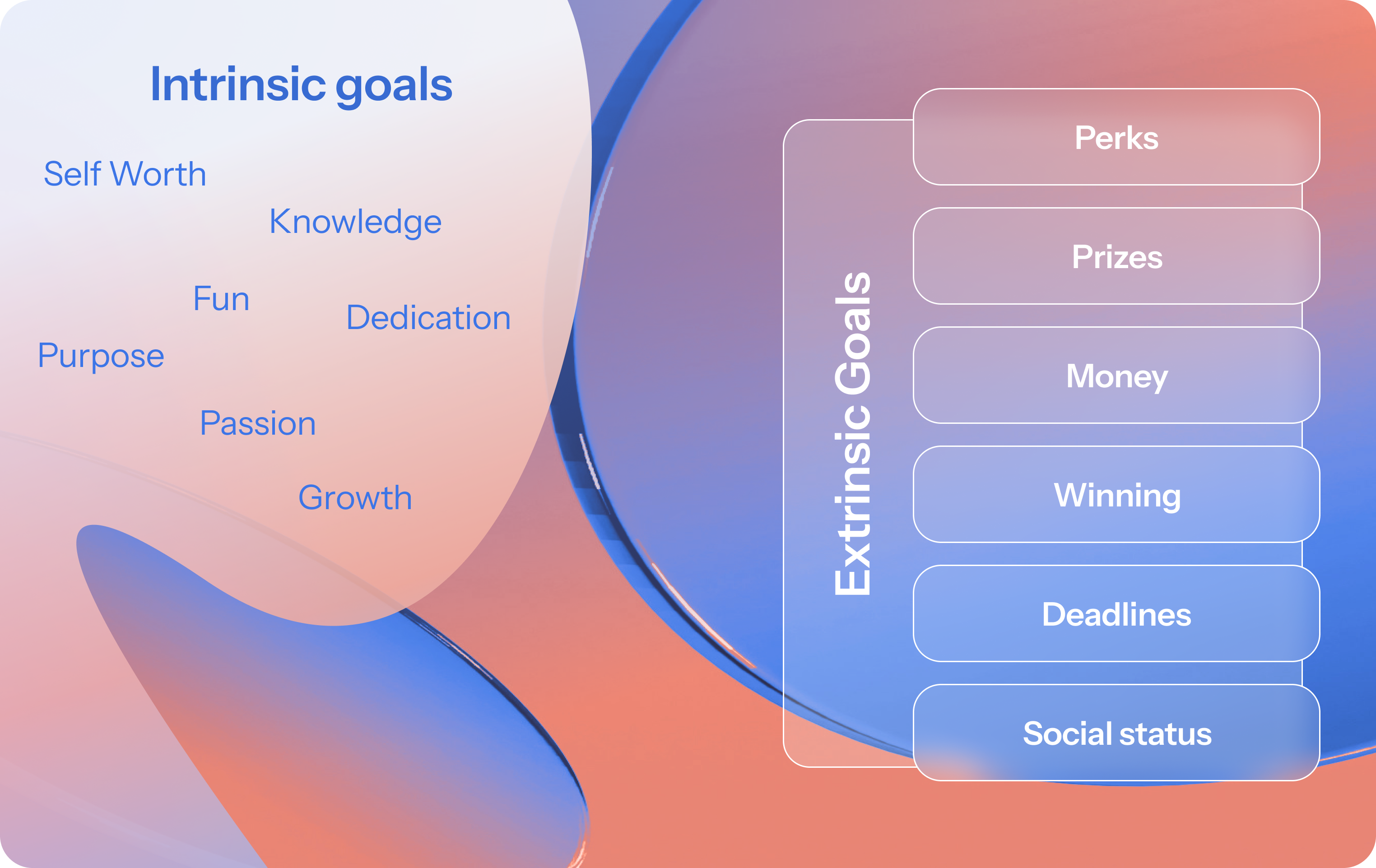
This visual representation highlights the core psychological drivers that app gamification leverages to maximize customer motivation and lifetime value in today’s competitive digital landscape.
Using app gamification to create an engaging app
TL;DR: Effective app gamification leverages psychological triggers like autonomy, social status, and instant gratification to drive user behavior. Current 2026 benchmarks show that gamified interfaces can boost user engagement by 100% to 150% compared to static counterparts, while high-performing loyalty challenges have been shown to triple purchase frequency in retail environments.
To increase user retention and mobile app engagement, you must create a compeling customer experience. In our experience, app gamification provides the necessary framework to turn passive observers into active participants. Here are three features that research shows can provide a massive boost in engagement:
1. App personalization and the power of the avatar.
Give your users autonomy. Customization tools, such as picking your own avatar, are central to app gamification and result in higher long-term engagement. For instance, if you display a user's unique avatar at a major achievement milestone, it leads to a "higher level of sense of presence." This means users feel a deeper personal connection to their digital progress. As a result, you tap into the intrinsic motivator of self-worth, making the app feel like an extension of the user’s identity.
2. Leaderboards facilitate competition and social status.
Modern app gamification strategies treat competition as a vehicle for motivation rather than just a feature. Recent industry data indicates that leaderboards and social challenges contribute to a 100% to 150% boost in user engagement compared to non-gamified apps. While leaderboards create fair competition, the friendly battle is a tool that motivates users to win. Primarily, these features access motivational drivers like the need for social status and provide a way to test dedication. This improves the user's perception of the mobile app, making it a "must-visit" social destination.
3. Progress bars encourage growth and customer motivation.
Progress bars are a fundamental component of app gamification that do more than just detail the length of a task. They provide users with immediate knowledge of how much effort they need to invest to reach the next tier. Seeing visual progress from specific actions provides customers with instant gratification. By 2026, brands like limango have successfully used these types of growth markers and challenges to drive a 3x increase in purchase frequency, proving that clear visual progression directly translates to commercial growth.
Don’t be just another loyalty app. Set yourself apart with our app gamification software!
Examples of gamification from the market leaders
TL;DR: Research for 2026 confirms that app gamification is no longer just a trend but a core engagement driver. By leveraging competitive social structures and visual feedback, brands are seeing a 100-150% boost in user activity. Modern implementations, like those used by SmartyPig and Fitbit, demonstrate that gamified elements can increase interaction frequency by up to 3x compared to non-gamified interfaces.
How do the top dogs do it? Let’s see how two market leaders use examples of app gamification to bring the customer closer to their brand through psychological triggers and real-time feedback loops:
SmartyPig’s progress bar motivates you to save money.
SmartyPig is a finance app that helps users meet savings goals. Users start by setting an aspiration like buying a car. This target acts as a sort of avatar, personalizing the goal process. Notably, depositing money fills up a progress bar displayed as a cartoon pig!
In our experience, these visual milestones transform app gamification from a gimmick into a habit-forming tool. It makes the user process fun and exciting, turning budgeting into a satisfying game rather than a chore. The impact is significant: recent industry benchmarks for 2026 show that gamified financial challenges can lead to a 3x increase in transaction frequency, allowing apps like SmartyPig to scale their user base and managed assets far more efficiently than traditional banking platforms.
Fitbit’s leaderboard encourages users to run harder and faster!
Fitbit is a health & fitness app used with a wearable tracking device. The app tracks daily steps and encourages users to complete a daily goal. Steps are seen as the ‘currency’ that buys your way up the leaderboard. This specific app gamification strategy leverages social proof and competition to drive consistency.
The leaderboard creates a sense of social connection a place where you can compete with friends and share the results on social media, which we call a positive intensifier. It must work, as current market data shows that high-engagement fitness platforms have scaled to support tens of millions of active users through these socially-driven community challenges.
To back that up, the Fitbit leaderboard thrusts users into action by tapping into the "competitor" archetype. According to 2025-2026 research, app gamification features like leaderboards and social challenges contribute to a 100% to 150% boost in overall user engagement compared to apps that lack competitive social elements. This confirms that seeing a friend's progress is one of the most powerful motivators for turning occasional users into daily active participants.
Recap: Why App Gamification is the Key to Customer Motivation
TL;DR: Effective app gamification transforms passive users into active brand advocates by leveraging intrinsic motivators like social connection and personal achievement. Modern benchmarks for 2025-2026 show that gamified experiences drive a 100% 150% increase in user engagement and can triple purchase frequency compared to traditional loyalty models.
Customer loyalty is the defining challenge for digital products in 2026. In our experience, static interfaces no longer command attention in a saturated market. That’s why companies that successfully integrate app gamification into their core user journey are seeing unprecedented retention and growth levels.
Gamification is the strategic use of game elements and behavioral psychology in a non-game context. Common examples include progress bars, tiered rewards, and badges. However, to truly move the needle on app gamification, these elements must address the psychological drivers that push customers to act.
They do so using two primary types of motivators:
Extrinsic motivators are achievement-based drivers, such as points or discounts. They rely on our desire for tangible rewards. While these are excellent for driving app gamification during the discovery phase, long-term brand advocacy requires a shift toward intrinsic motivation.
Intrinsic motivators appeal to deeper emotions linked to autonomy, mastery, and purpose. In effect, behavioral studies show this creates positive habits like enjoyment and happiness. App gamification relies on these core dynamics to lift customer motivation:
- Relationships Humans are naturally social and thrive on collaboration and friendly competition.
- Accomplishment Providing clear milestones gives customers a sense of pride and mastery.
- Empowerment Users demand autonomy and personalization to feel a sense of ownership.
- Unpredictability Surprising users with "Easter eggs" or random rewards triggers dopamine and delight.
- Constraint Using limited-time offers or locked features creates urgency and incentivizes consistent usage.
Our data suggests you can boost user engagement by 100% to 150% by implementing these specific app gamification strategies:
- Embrace hyper-personalization through avatars. Giving users the autonomy to design their digital identity increases emotional investment and self-worth within the ecosystem.
- Facilitate social competition with transparent leaderboards. By tapping into the competitive drive, brands like Nike Run Club leverage social challenges to keep users active far longer than isolated apps.
- Encourage growth with dynamic progress bars. Providing instant gratification such as digital haptics or visual "confetti" upon milestone completion contextualizes the user's effort and encourages the next action.
Market leaders are already seeing massive ROI from these 2026 app gamification trends:
- Limango utilized challenge-based mechanics to achieve a 3x increase in purchase frequency, proving that gamified loyalty outperforms standard discount programs.
- Nike Run Club uses social leaderboards to drive community-wide engagement, resulting in significantly higher daily active usage than non-social fitness trackers.
How Gamification Helps Streetcrowd Fight the Greatest Challenge in Shared Mobility
Streetcrowd uses gamification features to solve the "rebalancing" crisis ensuring vehicles are in the right place at the right time. By 2026, with over 80% of the population living in urban areas, these engagement strategies have become the primary defense against high churn and the logistical inefficiencies that cripple shared mobility fleets.

TL;DR: Streetcrowd uses gamification features to solve the "rebalancing" crisis ensuring vehicles are in the right place at the right time. By 2026, with over 80% of the population living in urban areas, these engagement strategies have become the primary defense against high churn and the logistical inefficiencies that cripple shared mobility fleets.
Streetcrowd's gamified mobile app is at the forefront of tackling efficiency problems within the shared mobility industry. Today, 81% of the world's population lives in cities and towns. That reflects a massive shift in density, with the global population reaching 8.2 billion in 2025. As the number of global cities has doubled to 12,000 recently, transport needs are evolving faster than infrastructure. To stay ahead, shared mobility leaders prioritize gamification features to drive reliability. Take Uber, whose reward system focuses on customer loyalty and user retention. Likewize, Streetcrowd has mastered how to increase app retention by turning fleet rebalancing into a rewarding user experience.
In our experience, the greatest challenge in 2026 isn't acquiring users it's keeping them active. While the world’s top 10 ridesharing apps were all founded after 2008, many now face declining user bases. Streetcrowd counters this trend by building a dedicated community of active users that spans across 10 major cities. In this article, we cover:
- Trending now: why you should learn how to increase app retention
- Gamification apps leading the way in shared mobility
- Streetcrowd boosts user retention with gamification features
- Recap
Trending now: why you should learn how to increase app retention with gamification in shared mobility
TL;DR: With 58% of the world’s 8.2 billion people now living in urban centers, gamification in shared mobility has become the essential strategy for reducing churn. By applying game mechanics to urban transport, apps can see a 63% decrease in user abandonment. In our experience, shifting focus from pure acquisition to engagement-led retention is the only way to sustain growth as the number of global cities has doubled to 12,000 by 2025, creating a hyper-competitive market for user attention.
While the shared mobility sector continues to expand, user loyalty remains volatile. The gamification market is projected to grow over 25% annually through 2026, largely because traditional retention methods are failing. Recent industry reports indicate that even major ridesharing players have seen userbase declines of up to 7% as consumers jump between competing services. Product managers are now leveraging gamification in shared mobility to trigger intrinsic motivation, making the daily commute feel rewarding rather than a chore.
Studies from behavioral experts show that gamified features provide a significant lift to long-term app metrics. By rewarding specific behaviors, apps see a 63% decrease in user churn. Furthermore, we have found that gamified reward systems do more than just prevent uninstalls they generate high-value loyalty. This is critical for profitability, as loyal customers spend more frequently and have a 300% higher lifetime value than unengaged users.
Want to know more about the ins and outs of gamification? Read our ‘What is Gamification?’ page!
The stakes for gamification in shared mobility are high: historically, 1/5 of users abandon a new app after just one use. In a world with 12,000 densely populated cities, relying solely on expensive acquisition cycles leads to a "leaky bucket" syndrome. As noted by software enterprise Upland, focusing on the post-install experience is the only way to protect your marketing budget and ensure long-term viability in the shifting urban landscape.
How gamification in shared mobility leads the way in 2026
TL;DR: In 2026, gamification in shared mobility is the primary solution to the industry's retention crisis. With 81% of the world’s 8.2 billion people living in urban clusters, the scale of competition is unprecedented. Since traditional price wars fail to build long-term loyalty, platforms are now using behavioral mechanics to optimize fleet efficiency and driver engagement. In our experience, shifting from discounts to gamified rewards is the only way to maintain a sustainable "Network Effect" in a market of 12,000 global cities.
On-demand mobility is a relatively young sector, originating around 2009 when smartphones redefined urban transit. When mobile technology became the norm, apps focused on flexibility and customer empowerment, like Uber, quickly dominated. However, as the global urbanization rate reached 58% by 2025, the challenge shifted from mere acquisition to sophisticated gamification in shared mobility. Today, platforms must manage hundreds of millions of active users who have more choices than ever before.
This graph illustrates the competitive landscape in the ridesharing market, showing shifting user loyalty between an established player and a rizing challenger.
Even market leaders are fighting a constant battle against churn. In our experience, user loyalty is increasingly fragile; historical data shows that even top-tier players have faced 7% declines in userbase over four-year periods while rivals like Lyft utilized aggressive expansion tactics. To counter this, gamification in shared mobility has become a core product pillar. For example, Uber’s evolution of its reward systems demonstrates a strategic shift toward high-frequency behavioral nudges rather than one-off financial incentives.
The story is consistent across the sector: rapid growth demands smarter retention. To illustrate, the world’s top 10 ridesharing apps were all founded after 2008, yet they now serve a planet where the number of cities has doubled to 12,000 in recent years. This massive urban density makes operational efficiency the ultimate competitive advantage.

The table lists the top 10 ridesharing apps, highlighting the sector's rapid growth and recent emergence in the last decade.
The "get big fast" motto of the mobility sector is driven by the Network Effect, where a product's value scales with its user base. A mobility app is useless without drivers, and drivers won't log on without customers. While companies historically used heavy discounts to solve this chicken-and-egg problem, we have found that price-cutting actually erodes long-term wallet share and fails to improve user retention.
Under these circumstances, apps must find innovative ways to stay afloat. The industry is now prioritizing operational efficiency identified by consultancy firm Arthur D. Little as the greatest challenge facing shared mobility today. To turn this threat into an opportunity, Streetcrowd is leading the way by integrating gamification in shared mobility to solve the complex puzzle of vehicle rebalancing and user engagement.
Want to drive meaningful retention on your app? Try our app gamification software!
Streetcrowd boosts user retention with gamification features
TL;DR: Streetcrowd solves the "idle vehicle" problem where car usage rates in shared mobility sit at a low 10% by using gamification to turn operational fleet rebalancing into an engaging user experience. By incentivizing the "crowd" to relocate vehicles to high-demand zones, Streetcrowd increases efficiency and counters the high churn rates currently affecting the mobility market in 2026.
Streetcrowd is an app that supports mobility providers by making their operations more efficient. Its mission is customer experience optimization. Using gamification features, the app engages users through a reward system to do odd jobs, such as moving a parked car in the company’s 5,500 vehicles to a more desirable place.
In other words, where the car is more likely to meet customer demand, rather than sit idle. This maximizes profit! Clearly, it is needed: industry data shows that current car usage rates for many mobility apps remain at a shockingly low 10%.

The chart highlights the low utilization rate of vehicles in mobility apps, a key operational challenge that Streetcrowd aims to solve.
In 2025, 81% of the world's population resides in cities and towns, a massive shift that has forced providers to rethink urban logistics. With the number of global cities doubling to 12,000 by 2025, the pressure to maintain an available fleet is higher than ever. For customers, a higher car utilization rate means the car is easier to allocate because it’s closer to users. In our experience, benefits like these drive customer loyalty and user retention much more than a simple discount. With this in mind, Streetcrowd sets out to increase rates by implementing a range of gamification features:
A reward system that motivates users to achieve goals
In 2026, gamification is the primary defense against app churn. While some major ridesharing players have seen userbase declines of up to 7% in recent years, Streetcrowd incentivizes users through financial rewards, paying them for their time. This is an extrinsic motivator, meaning that it is a results-based driver. However, this reward system is most useful in the discovery phase. Behavioral research shows that long-term user retention is instead achieved through intrinsic motivation.
Challenges that encourage users to complete tasks
Applying gamification to operational tasks appeals to the user’s self-worth, an intrinsic motivator. In addition, challenges are fun! If users succeed, they feel the reward and the dopamine hit that comes with it. In our observations, a highly effective challenge involves moving a specific number of vehicles in a fixed timeframe to unlock a "pro-mover" status or bonus reward, which keeps the user returning to the app daily.
Empowerment through an interactive interface
Empowerment is a principle mechanic of app gamification. Users select which vehicles they want to move and transparently see what is required. While the world’s top 10 ridesharing apps were all founded after 2008, the most successful ones in 2026 are those that empower the user through the UI. A visually pleasing map with greens, reds, and clearly mapped routes makes the task feel less like a job and more of a strategic quest!

This screenshot of the Streetcrowd app displays its interactive map, which turns vehicle relocation into a quest-like experience for users.
Progress indicators and digital confetti give users instant gratification
When you are logging a vehicle, a progress indicator guides you during the wait for acceptance. This simple yet effective gamification feature assures the user that the system is working. Additionally, scientific research from the Nielsen Norman Group shows that it minimizes cognitive load. In other words, instead of focusing on the wait, the progress indicator reduces the user’s perception of time by providing a visually stimulating experience.
Streetcrowd pairs this with digital confetti, showing a celebratory splash in the middle of the screen. This provides instant gratification, which contributes to creating customer loyalty! By reinforcing that their contribution has immediate value, the app builds a habit-forming loop that traditional utility apps lack.

The app's reward screen uses digital confetti to provide instant gratification, reinforcing positive user behavior and building loyalty.
As a result of their gamified app, Streetcrowd has created customer loyalty in cities across the world. Users’ continued engagement and reward for participation create loyalty for the Streetcrowd brand. By leveraging gamification to increase operational efficiency, they have solved the biggest bottleneck in shared mobility. The faster service and higher utilization rates give them a definitive competitive edge over legacy brands in the 2026 urban landscape.
Recap: Solving the Mobility Efficiency Gap with Gamification
TL;DR: With global fleet utilization rates stalled at a mere 10%, shared mobility providers face a massive profitability crisis. Streetcrowd uses gamification to solve this by incentivizing users to handle fleet rebalancing. As urban populations reach 8.2 billion in 2026, these engagement strategies help platforms overcome the 7% userbase decline seen in traditional ridesharing models by turning logistics into a rewarding user experience.
While the peak of app uninstall volatility has passed, the competition for user attention in the 2026 mobility market is fiercer than ever. Data indicates that even major ridesharing players have seen significant userbase declines some down 7% over a four-year period as users seek more value and engagement. To combat this, industry leaders have integrated gamification reward systems to stabilize retention and increase daily active usage.
While user retention is a high-profile hurdle, the single greatest challenge the sector faces is a lack of operational efficiency. Today, the number of global cities has doubled to 12,000, and with 58% of the world’s population now living in urban areas, the demand for shared cars is at an all-time high. Yet, the average utilization rate for a vehicle in a mobility fleet remains stuck at 10%. Streetcrowd was built specifically to disrupt this stagnation.
In our experience, the most effective way to optimize a fleet is to move the logistics into the hands of the community. Streetcrowd supports mobility providers by making their operations more efficient through a crowdsourced model. Using gamification, the app engages users to complete operational tasks, such as moving a parked vehicle from a low-traffic zone to a high-demand "hotspot" where it is statistically more likely to be booked.
Streetcrowd utilizes several core behavioral mechanics to drive these results:
By applying these gamification strategies, Streetcrowd has successfully built loyalty across global urban hubs, proving indispensable to providers struggling with idle inventory. As the world population hits 8.2 billion people, the ability to turn a logistics problem into a rewarding game is the only way to ensure shared mobility remains sustainable and profitable.

The 6 Stages of the Customer Experience and the Best Ways to Improve Them.
The mobile app market is set to grow 21% every year between 2021 and 2025. So things will not stay the same for long! Given this, your customer experience optimization strategy needs to be the best it can be so that your business is strong and flexible. The Mobile App Funnel can be a great model to assist your journey.

This article explores how optimizing the customer journey through the mobile app funnel, enhanced with gamification, can drive user retention and growth.
2022 was an impressive year for mobile apps. In the US alone, consumer spending on apps increased by a whopping $7 billion compared to 2021! But such rapid growth also brings challenges. Is your app ready for what 2023 will bring? Right now, trends are encouraging app publishers to develop customer experience optimization strategies for the complete mobile app funnel. That means building acquisition engines, as well as a sticky reward system that boosts user retention!
In this article, let’s cover how you can optimize your customer journey with the Mobile App Funnel & what gamification can do to power up that strategy.
- How 2022 was a big year for apps (and why 2023 will be too)
- Introducing the Mobile App Funnel: a customer experience optimization technique
- The 6 stages of the mobile app funnel (and how to activate user behavior)
- How StriveCloud can help with your app gamification journey
How 2022 was a big year for apps and why 2023 will be too
With a market set to grow 21% every year between 2021 and 2025, things will not stay the same for long. Indeed, a steady ship is rare in a rizing tide.
Looking at the app market at the macro level, we see accelerated growth from top to bottom. More than 2 million new apps were published in 2022, bringing the total to a record over 21 million. Of that number, 233 apps make over $100 million annually, up an incredible 20% in just 1 year.
So the statistics show that the stakes are getting higher, the prizes bigger, and the competition stiffer. But 2022 did pick some winners when it came to growth:
Some app categories are exceling when it comes to mobile app engagement

This graph illustrates the significant growth in the average number of apps used per month across various categories, with finance, food, and mHealth leading the charge.
Out of all the app categories, finance is the sector that new users are flocking to most. In 2021, the average number of finance apps used monthly increased by 32.5% compared to 2019. That higher level of mobile app engagement gives more finance apps a chance to gain a loyal customer base! In addition, food retail and mHealth are growing in this metric. However, the market is headed for a shakeup in 2023 due to one development:
5G is on the rize and users expect speed and efficiency improvements
By the end of 2027, nearly half of all devices will support 5G connections. This will drastically affect the customer experience users can expect to enjoy:
- 5G is 100x faster than today’s 4G
- 5G will allow for more integration of AR and VR tech
- Latency times will reduce from 50 milliseconds to just 1 millisecond!
- Fintech will process faster and more secure mobile payments
- Deeper mHealth integration with wearable devices will eventually become possible

As these trends indicate, the mobile app market is evolving rapidly, demanding a proactive approach to the user journey.
In short, you need to be confident that your customer experience can steer you through the changes up ahead. That means discussing customer experience optimization.
Introducing the Mobile App Funnel: a customer experience optimization technique
The customer journey is a popular concept among marketeers. It helps to visualize what users experience, all the way from acquisition up to becoming a loyal customer. In other words, inquisitive product managers and marketeers looking to optimize their customer journey can benefit from the ‘mobile app funnel’ model.
It may seem overwhelming to picture all your challenges and goals, but a systemic approach can help break it up into manageable segments. The mobile app funnel, or User Lifecycle stages model, gives you the clarity you need to identify the best interventions you might want to take during every stage of customer interaction.

This diagram visualizes the mobile app funnel, a model that breaks the customer journey into distinct stages from acquisition to advocacy.
Of course, your challenges and goals will differ depending on the stage. To tackle and achieve them, you must develop a tailored strategy for every segment of the journey. This might seem obvious, but it’s easy to miss some crucial details when you are looking at the big picture. This model helps identify what solutions you need for each stage.
The 6 stages of the mobile app funnel (and how to activate user behavior)
The mobile app funnel helps to map out your customer experience optimization strategy - but to give it extra legs you may want to consider gamification!
Gamification is the use of game-like elements in a non-game context that aims to integrate a genuinely enjoyable and satisfying reward system. StriveCloud knows the potential benefits of mobile app gamification, from a 9% boost to conversion to a 250% jump in social activity just from a simple gamified leaderboard!
Just getting started with gamification? Catch up to speed on our What is Gamification page!
With that in mind, let’s see how gamification can activate your users in all 6 stages:
#1 Acquisition: increase your user base
Acquiring users can be difficult and costly. At the end of 2021, the cost per install (CPI) rate across the Google Play Store was $1.22. That’s higher than the average, and much higher than in December 2019 when it was $0.97. In essence, it’s getting more expensive to acquire new users. But that doesn’t mean you are without a solution: a successful App Store Optimization (ASO) strategy can boost your conversions by 10%.
For ASO, word-of-mouth and social media tactics are indispensable. Smarter use of keywords, images, and other tags will increase your app’s ranking in the app store!
The gamification boost: How Revolut gained hundreds of users with a leaderboard
When starting out, Revolut had university leaderboards that encouraged students to sign up. This taps into the need for social relatedness. Simply put, competition is fun. In addition, the reward system built on the prize of a premium membership entices users to sign up! This could generate a buzz, like reviews and high star ratings in the app store that will acquire users and boost your ASO strategy.

Revolut's use of a university leaderboard demonstrates how competition and rewards can drive user acquisition effectively, setting the stage for the next phase: activation.
#2 Activation: convert acquired users to engaged users
It’s not enough to acquire users, you have to activate them. This entails demonstrating your customer value early on. Most apps lose around 80% of new users in just 1 day! Don’t be like that instead, optimize and concentrate on your onboarding. In doing so, you could see a 4x times boost to activation metrics!
Onboarding should be short, sweet, and personalized! Fitness apps may want to ask new users their experience level, or fintech app users’ priority (like investing or saving). Subtle touches like this can tell a person that their needs will be met; that they are not simply downloading a one size fits all experience. That’s crucial!
Another thing you can do is give your users a headstart. People are more motivated to complete a goal when there’s already some sort of artificial advancement to it. This is called ‘the endowed progress effect’. Companies like Paypal or Dropbox for instance all use this in their onboarding process, and rightfully so as it can increase onboarding completions by over 10%.
The gamification boost: MuscleBooster uses personalized onboarding to become a Top 10 fitness app
The first thing you want when new users install your app is to immediately see the potential benefits. So when MuscleBooster personalized the customer experience, they gave customers ownership over the user experience making them more likely to stay.
MuscleBooster's personalized onboarding process gives users a sense of ownership from the very beginning, which is a key factor in moving them from activation to long-term retention.
#3 Retention: incentivize habit formation
To stick around, people need to love your product. That much should be clear! At this stage of your customer experience optimization journey, it’s important to have the right data. Here, user retention metrics on Days 1, 7, and 30 are the most important KPIs to keep in mind. Not only will this help you compare your app to the competition, but it will also provide an anchor point to base your efforts on.
At this stage, one of your most powerful tools is customizing in-app communication.
The gamification boost: Personalization gives Calm a 3x boost to user retention
Calm achieved success by letting users set their own push notifications reminding them to meditate. By personalizing push notifications, Calm not only avoids frustrating new users with clutter, but also helps facilitate habit formation, and in turn, retention.
StriveCloud’s gamification building blocks can boost your app. Gamify your app in no time all suited to your goals!
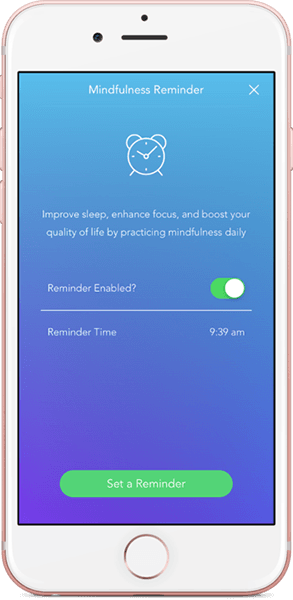
By allowing users to personalize reminders, the Calm app masterfully encourages habit formation, a cornerstone of user retention.
#4 Re-engagement: a reward system that wins back inactive or churned users
Don’t miss out on users who might lapse, after all, you spent this much effort to get them to this stage! It can be super effective to incentivize lapsed users to return with an enticing reward system, such as by offering ‘free stuff’ like premium membership or discounts on exclusive events/features.
The gamification boost: Cashback offers brought back lapsed users for Revolut
Revolut users were given 6 days to benefit from half-price cashback on purchases at the Notes Coffee café chain in London. The results were incredible! They achieved a 15% user retention rate, improved visit repetition, and won back lost customers.
This example of a time-sensitive cashback offer from Revolut shows how targeted perks can re-engage lapsed users and pave the way for monetization strategies.
#5 Monetization: increase revenue & convert free users to paying customers
At this point, your user loves your app! But what can you do to increase user activity and improve that customer’s lifetime value? There’s a range of monetization strategies you can go for, from in-app purchases to monthly subscription models. Each has its advantages that you need to consider, depending on what you can offer users.
The gamification boost: BBVA bank monetized 100,000 loyal customers through a smart reward system
BBVA, a leading Spanish bank, created a gamification strategy fit for the loyalty and monetization stage. As part of their strategy, they launched the BBVA Game, a web app with app tutorials and explanations on how to pay taxes and do transactions online.
With their reward system, customers can spend their earned points from completing challenges by redeeming them for music downloads, movies, smartphones, or even tickets for the La Liga football league. This is the sort of ancillary income that can boost your bottom line. After only 6 months, the BBVA game had over 100,000 users and its users showed an 18% higher satisfaction rate!
The success of the BBVA Game, with its tangible rewards and high satisfaction rates, illustrates how to effectively monetize an engaged user base and turn customers into advocates.
#6 Advocacy: a smart strategy that makes people talk about you
A 2015 Nielsen report reveals that 83% of people would trust the recommendations of family or friends. However, only a few brands have mastered the word-of-mouth technique and succeeded in converting their users into proud advocates. Here’s where gamification can make the difference.
Exclusivity is a powerful tool that brands can use at this phase. Think about what would make your users proud to display in front of their friends. More than that, you can reward your advocates for using referral links to register for a new account or simply implementing new incentives that would transform advocacy into a habit.
How StriveCloud can help with your app gamification journey
Just like putting a new splash of paint on artwork is stressful for an artist, implementing new features can be troublesome for app developers. How do you know what you are doing is right? Is this reward system suitable for your app’s users? Will it be easy to adjust or take off, should you need to? With StriveCloud’s app gamification building blocks, you need not worry.
The app gamification blocks allow app publishers to insert, remove, and adjust new features to best suit their users’ needs. It doesn’t require code and can be customized to fit your user experience entirely. Ultimately, this lends your business flexibility - to be sure a competitive advantage in 2023’s fast-moving app market!
Start your own gamification journey with a personalized workshop - Bring your goals & data & go home with an actionable roadmap!
Immediately Improve App Acquisition, Engagement and Retention With Gamification
Shared mobility providers are struggling to achieve profitability because competing at the price level is the only way to acquire and retain customers. What if we told you there's a smarter way to acquire more customers, engage them without losing money? Fire up your acquisition and retention game by gamifying your mobile app experience.
Our mobile phones have become items most of us can’t imagine living without. Many businesses are competing to have their mobile app, and in extension, their service, be one of the few we use regularly. The challenge is threefold: it’s up to companies to maximize app acquisition, app engagement, and app retention. App gamification offers a toolkit of tactics that tackles each of these.
In this post, we’ll discuss :
- How gamification helps app acquisition
- How gamification boosts app engagement
- How gamification secures app retention
Looking at the growing number of available apps and actual downloads, it’s clear that the app market is growing hard. At the same time, the battle for users’ attention is becoming more and more fierce. That’s especially the case in the mobility industry, where (shared) mobility providers have little room to differentiate from each other apart from playing on price.
Product managers together with marketers face the challenge of building a strategy that successfully spans app acquisition, engagement, and retention.

This graph illustrates the consistent growth in mobile app downloads, highlighting the increasing competition for user attention in a crowded market.
While such a strategy is different for every organization, a few tools provide a solution for each aspect. In-app gamification is one of these. Let’s take a trip down the app user journey and see how gamification helps grow your user base, boosts app engagement, and fosters retention.
Gamification is a technique you can use to insert gameplay elements in non-gaming settings, enhancing user engagement with your product or service. Discover all about in this our comprehensive ‘What is Gamification?’ guide.
How gamification helps app acquisition
Sorry to break it; you can go all-in on developing an awesome app, it will fail if nobody uses it. So how do you stand out from the dozens of competitors in order to acquire users?
The first prerequisite is app store optimization. That’s the practice of driving downloads through optimizing the title, keywords, ratings, and other ranking factors. In doing so, you make sure that your app pops up when people are looking for a service like yours.
On top of that, you can promote your app with ads on different social channels. It’s important to think about who you want to target and how much budget you want to spend. Otherwise, you risk attracting the wrong users and spending a lot of money.
Another, cheaper, and more effective tactic is tapping into the power of word-of-mouth promotion and referral programs. According to Kantar Media, 93% of users trust recommendations from their friends and family. In contrast: only 38% trust ads.

This data from Kantar Media emphasizes how much more users trust recommendations from friends and family over traditional advertizing, underscoring the power of referral programs.
To leverage the power of word of mouth, you first need to build a loyal user base and in a second phase incentivize them to invite friends and family.
You’ll find out more about how you can increase user loyalty in the next part, but let’s take a closer look at the incentivization process from Uber first. The ride-hailing app gives all users a free ride (up to a certain amount) for every friend they get on board.
If you’d want to gamify this action, even more, you could make it a compulsory step in the user’s journey toward an exclusive status with special perks. Like a ‘Gold User’ who gets a discount for rides above a certain distance, for instance. Another example is to give a special “Referral Champion” badge to each user who gets a certain number of new users to install and use your app.

Uber's mobile interface provides a clear example of a user referral program, offering tangible rewards for both the referrer and the new user.
How gamification boosts app engagement
Okay, we’ve acquired users, the next challenge is to up their loyalty. Thanks to app gamification, shared mobility providers can enhance the user experience in such a way that it drives activity and loyalty, and even steers user behavior.
An example in today’s world of mobility is that of e-scooter companies like Bird and Lime. Both have deployed gamification features encouraging members of its community to hunt for scooters, take them home and charge them. To make this more interesting, users in some cases receive higher rewards for tracking down scooters that are more difficult to find.

This screenshot from a scooter app demonstrates how users are incentivized to find and charge scooters, turning a logistical need into an engaging, game-like task.
Want to know more about the possibilities of app gamification for shared mobility providers to boost app engagement? Read all about it in this article.
How gamification secures app retention
Numerous shared mobility providers are struggling to achieve sustainable profitability. One of the main reasons is the fact that, due to strict regulations, many providers can only compete at the price level.
Retention is about more than just lowering your price. If you want to prevent users from abandoning your service because a competitor is offering rides a few cents cheaper than you are, you need to work on your app user experience. So how do you build an experience that makes users stick with your brand, product, or service? By playing on both intrinsic and extrinsic motivators. In short: it’s about giving rewards for a certain task or behavior and evoking positive emotions at the same time.
By integrating game-like mechanisms and, in doing so, appealing to people’s competitive nature, you can nudge them toward the actions you want them to take over and over again. One of our favorite examples here is Duolingo, a language learning app. The company’s mascot, a silly owl named Duo, is one reason why people love it, but a more important driver for the app’s retention rate is the great use of in-app gamification.
The entire learning experience is actually one big game. Each time you complete lessons or practice sessions in Duolingo, you earn experience points. Earn enough, and you’ll level up in the respective language, which in itself is gratifying but also gives you something to boast about to your Duolingo friends.
What’s more; when you meet your daily goal for consecutive days, you start (or extend) a streak. Your streak is prominently displayed whenever you’re in Duolingo, in the form of a fire icon with a number next to it. A confession from a hooked user: once you’ve earned it, you’ll do your very best to keep it.
App gamification by StriveCloud: the Kayzr story
As the largest esports online gaming platform in the Benelux region, Kayzr was struggling to keep users active on the platform at a low cost. They decided to partner up with StriveCloud and enhance the user experience with gamification.
Together with StriveCloud, Kayzr was able to:
- Acquire 350% more users
- Engage 60% more users to be active on the platform at least once a day
- Increase the average session time per user per day to 1.5h
Want to know how they were able to reach these astonishing results in just a couple of weeks? Read all about it in this case study!
Long story short...
- If you want your app to be a success, you’ll need to look at more than a nice design in order to attract, engage, and bind users. And if you want to stay profitable, you can’t keep lowering your price.
- App gamification is a proven solution to keep users hooked and even grow your user base. And hey, it’s easy to start experimenting.
- There are several tactics you can pick from, based on the stage of the user journey you’re in.
Keep reading
How to Use Gamification for Improved Loyalty in Telecom
Increasing digital competition is forcing telecom companies to innovate. Changing consumer behavior and low customer loyalty puts lots of extra pressure on marketing and service departments to fight customer churn. However, most initiatives never achieve what they set out to do: creating a more enjoyable and engaging customer experience. That's where gamification comes in, something we know all about.
To successfully implement gamification for improved loyalty in telecom, operators must move beyond static rewards toward interactive engagement that captures the 40% of customer lifetime value (CLTV) currently left on the table. In 2026, leading telcos are using gamified milestones and badges to bridge the gap between program awareness and enrollment. Research indicates that while loyalty initiatives can drive a 43% increase in CLTV, their success depends on transforming the user experience from a transactional utility into a rewarding digital journey.
The challenge for modern providers is significant: global telcos currently capture just 60% of their full customer value potential due to persistent churn and retention gaps. According to a 2025 Global Telecom Loyalty Study, the industry’s "Loyalty Pillar" which measures average customer tenure scores only 6.6 out of 10. In our experience, this represents a massive missed opportunity, as customers with a tenure of three years or more generate 95% of a brand's total CLTV, yet they only make up 75% of the subscriber base.
While 80% of operators now offer loyalty programs, only half of their customers are actually enrolled; the other half are aware of the programs but remain unregistered. We have found that relying solely on traditional "quick fixes" like bill credits or device discounts is no longer sustainable. To improve gamification for improved loyalty in telecom, brands are now integrating behavioral triggers such as progress bars for data usage or rewards for app streaks to engage the 50% of "aware but inactive" users and secure long-term commitment.
So how do you create an experience that delights your customers, without over-investing into expensive loyalty programs that don’t get enough engagement?
Here’s what we’ll get into:
- Why quick loyalty fixes won’t do the job
- Gamification the holy grail of user engagement & loyalty
- Telecom brands that have succeeded with gamification
- A plug-in gamification tool that differentiates your brand and builds loyalty
Why quick loyalty fixes won’t do the job
TL;DR: In 2026, reactive discounts are no longer enough to stem churn. Recent data shows telcos only capture 60% of their full customer value potential. To bridge this 40% CLTV gap, operators must move beyond apologies and leverage gamification for improved loyalty in telecom to engage the 50% of customers currently sitting outside existing loyalty frameworks.
The telecom industry continues to grapple with retention gaps as we move into 2026. According to a 2025 large-scale industry study, the global "Loyalty" pillar for telcos which measures average customer tenure currently scores a modest 6.6 out of 10. While the top 10% of performers reach scores of 8.6, many operators are missing out on nearly 40% of their full customer value potential due to inefficient engagement strategies and the persistent challenge of gamification for improved loyalty in telecom.
Historically, the most common tactics were to offer a dissatisfied customer a bill discount or an apology. However, these "last-minute saves" are increasingly ineffective. In our experience, waiting until a customer is ready to cancel is a recipe for failure. Modern subscribers expect value to be demonstrated long before they reach their breaking point.
"Telcos today face a significant 40% customer lifetime value (CLTV) gap. Because 95% of total CLTV is generated by customers who stay longer than three years, the focus must shift from 'saving' customers at the point of exit to deepening engagement through gamification for improved loyalty in telecom much earlier in the lifecycle."
Furthermore, a major "participation gap" currently hinders the industry. While 80% of telco operators offer loyalty programs in 2026, only half of their customer base is actually enrolled. The other half are aware of the programs but remain unregistered because the rewards feel static or unreachable. To bridge this, leading brands are moving toward gamification for improved loyalty in telecom, using progress milestones and achievement badges to boost active enrollment and daily app interaction.
Research from McKinsey suggests that high-performing loyalty programs can drive a 43% increase in CLTV. Strategically implementing gamification for improved loyalty in telecom doesn't just increase revenue by 15%; it simultaneously reduces the cost to serve by up to 20% by shifting interactions to self-service, gamified digital channels. Ready to see how it works? Keep on reading!
Gamification for improved loyalty in telecom: The holy grail of engagement
TL;DR: Gamification for improved loyalty in telecom is the most effective strategy to bridge the 40% customer lifetime value (CLTV) gap currently facing the industry. By 2026, top-tier operators are moving beyond static discounts to integrate interactive game mechanics that secure the 95% of total revenue generated by long-term subscribers. In our experience, shifting from a passive rewards model to a gamified journey can increase CLTV by up to 43%.
What is gamification for improved loyalty in telecom?
Gamification is the strategic process of inserting game elements into the customer journey to boost user activity and drive long-term retention. In the telecommunications sector, it involves using mechanics like progress bars, streaks, and community challenges to make routine interactions like checking data usage or paying a bill more rewarding. Research from a 2025 large-scale telco study shows that while 80% of operators offer loyalty programs, only half of their customers are actually enrolled. Gamification solves this "participation gap" by making the enrollment process inherently engaging.
How does a gamified strategy work?
A successful gamification for improved loyalty in telecom strategy plays on the users' intrinsic motivations the desire for competence, autonomy, and social connection. To build an experience that achieves high tenure scores (currently averaging just 6.6/10 across the industry), we recommend these three steps:
- Analyze behavioral data to identify "churn-risk" windows and insert gamified interventions before the 3-year tenure mark.
- Leverage game elements like milestones and digital badges to influence desired behaviors, such as app adoption or plan upgrades.
- Reward behaviors that have a direct impact on business goals, using a mix of bill credits and experiential rewards.
If you want to learn more about gamification: here’s what you need to get started!
How can companies implement gamification for improved loyalty in telecom?
Modern telcos must pivot from unsustainable churn-prevention tactics to proactive engagement. Instead of relying on expensive, last-minute discounts, you can create a personalized reward system that rewards consistent engagement. Global telcos currently capture just 60% of their full customer value potential; closing this gap requires a focus on the 75% of subscribers who provide nearly all the profit. In our experience, implementing a "milestone-based" reward system helps telcos grow user activity while significantly reducing the costs associated with customer acquisition.
Check out how a few changes helped Kayzr cut retention costs while increasing daily active usage by 60%!
Telecom brands that have succeeded with gamification for improved loyalty in telecom
TL;DR: In 2026, gamification for improved loyalty in telecom is the primary lever to close the 40% Customer Lifetime Value (CLTV) gap. While 80% of telco operators now offer loyalty programs, only half of the customer base is enrolled. By integrating gamified milestones and badges, brands are successfully moving beyond simple discounts to capture the 43% increase in CLTV associated with high-engagement loyalty strategies.
Verizon connects social media & gamification to boost app engagement
Verizon, the largest wireless telecommunications provider in the US, utilizes gamification for improved loyalty in telecom to solve a persistent industry problem: the loyalty tenure gap. Recent data from a 2025 large-scale industry study shows that global telcos capture just 60% of their full customer value potential, with the average loyalty pillar scoring only 6.6/10. Verizon addressed this by transforming the Verizon Insider Web portal into a gamified ecosystem.
The web portal serves as a digital hub for events, competitions, and sponsorships. Users earn points through high-value actions, such as attending virtual product launches, participating in community forums, or writing verified reviews. These points translate into digital badges and placement on public leaderboards, which grant access to exclusive tiered promotions and device early-access programs.

This showcases Verizon's gamified web portal, which uses badges and leaderboards to drive user participation and engagement effectively.
The results of these gamified features remain a benchmark for the industry: over 50% of users participated in the interactive elements, generating 15% more page views and a 30% increase in site log-ins. In our experience working with high-volume providers, moving the needle on daily active usage is the most effective way to prevent the "silent churn" that occurs when customers feel disconnected from their provider.
Verizon further optimized this by personalizing experiences based on real-time location and interest data. By allowing social account integration, they reduced friction and saw those users spend 30% more time on the platform. This aligns with 2025 recommendations to blend traditional bill credits with gamified "milestone" rewards to keep users registered and active.
Samsung Nation: Building long-term tenure through mission-based loyalty
Samsung pioneered the concept of a gamified corporate ecosystem to foster gamification for improved loyalty in telecom and consumer tech. Their flagship initiative, Samsung Nation, evolved into a sophisticated social loyalty program designed to maximize Customer Lifetime Value. This is critical in 2026, as research confirms that 95% of CLTV is generated by customers with a tenure of 3+ years a group that typically makes up 75% of a telco's subscriber base.
Members of Samsung Nation engage in a competitive environment where they win badges and points for community contributions. Unlike standard programs that only reward purchases, Samsung rewards "product advocacy" and "knowledge sharing," which are key drivers for the 43% increase in CLTV seen in top-tier loyalty programs.
To evolve the user experience, Samsung created "Missions" that directly support business objectives. For example, a mission might involve "Registering and reviewing three ecosystem devices," which encourages cross-platform ownership. In return, users unlock "Legendary" status badges and early access to beta software, creating a sense of exclusivity that purely monetary discounts cannot replicate.

Samsung's Nation program effectively uses missions and challenges to align user actions with key business goals, driving both engagement and product interaction.
Industry benchmarks from a 2025 Telco Excellence Report suggest that the top 10% of performers in the loyalty sector achieve a 8.6/10 tenure score. Samsung Nation’s mission-based approach directly targets this metric by incentivizing the user to stay within the brand ecosystem for years, rather than months. By turning product registration into a "level-up" event, they successfully bridged the enrollment gap that currently plagues 50% of modern telco loyalty programs.
Using gamification for improved loyalty in telecom: A plug-in tool to differentiate your brand
TL;DR: In 2026, gamification for improved loyalty in telecom is the primary strategy for closing the 40% customer lifetime value (CLTV) gap. While the average telco captures only 60% of their full value potential, implementing gamified milestones can increase CLTV by 43% by converting unengaged subscribers into long-term brand advocates.
Easily embed gamification elements through StriveCloud’s plug-in tool built for customer retention and app engagement. You can link it to your website and mobile apps to create a cohesive experience across channels. In our experience, the greatest challenge is the "enrollment gap" 2025 research shows that while 80% of operators offer loyalty programs, 50% of customers remain unregistered. Our tool bridges this gap by turning the sign-up process into an interactive journey.
The gamification tool activates users by adding personalized milestones and challenges. This directly addresses the industry-wide "Loyalty Pillar" score, which averaged just 6.6/10 in 2025. To reach the top-tier 8.6/10 benchmark, operators must move beyond simple discounts. We use leaderboards to fuel an innate sense of competition and differentiate your brand, rewarding users for active participation to ensure they remain within your digital ecosystem.
The right mix of gamification elements is crucial. According to industry benchmarks, 95% of a telco's CLTV is generated by customers with 3+ years of tenure. To secure this long-term loyalty, our tool uses visual feedback like leveling systems and progress bars. These trigger the natural human desire for progress, keeping users engaged long after the initial "new-device" excitement has faded.
Not sure where to start? Let’s set up a free workshop to craft your very own gamification strategy!
Key take-aways for gamification for improved loyalty in telecom
TL;DR: Bridging the 40% customer lifetime value (CLTV) gap in 2026 requires moving beyond reactive discounts toward proactive engagement. High-performing gamification for improved loyalty in telecom focuses on the 75% of subscribers who have stayed for 3+ years, as this group generates 95% of total brand value. By shifting from "save" offers to milestone-based rewards, telcos can raize their loyalty tenure scores from the industry average of 6.6/10 toward the top-tier 8.6/10 benchmark.
Consumer behavior in the 2026 telecom landscape has reached a tipping point. Global operators currently capture only 60% of their full customer value potential due to persistent retention gaps. In our experience, the most successful brands use gamified mechanics to differentiate their service in a market where traditional price-matching no longer secures long-term commitment.
Reactive customer discounts and rewards are not sustainable
Telcos face a significant 40% CLTV gap in 2026, largely driven by unsustainable churn-reduction tactics. According to a 2025 industry study, 95% of a customer's total value is realized only after they reach a 3-year tenure. Relying on bill credits or apologies as a last resort is a "leaky bucket" strategy. Instead, gamification for improved loyalty in telecom allows providers to drive a 43% increase in CLTV by incentivizing positive behaviors long before a customer considers switching to a competitor.
Closing the 50% enrollment gap with gamified engagement
While 80% of operators offer loyalty programs in 2026, there is a massive participation hurdle: only half of the eligible customer base is actually enrolled. To boost app engagement and loyalty, the customer journey must be tailored to modern psychological triggers. In our experience, implementing gamification elements like progress milestones and achievement badges is the most effective way to transition "aware but unregistered" users into active participants. When goals are challenging yet achievable, they trigger the motivation necessary to keep users returning to your platform daily.
A gamified experience differentiates your brand
A well-executed gamification for improved loyalty in telecom strategy transforms a utility service into an engaging digital destination. By moving away from generic rewards and toward social mechanics such as rewarding users for inviting friends or reaching community goals you create a unique brand identity. This level of differentiation is critical in 2026; top-performing loyalty programs that prioritize these interactive elements see their customer tenure scores jump to 8.6/10, significantly outperforming the industry average and fostering organic, positive sentiment.
Need help implementing your own gamification strategy? Check out our plug-in gamification tool to supercharge your customer loyalty!

Changers: 3 Gamification Features That Boost Customer Motivation in Sustainable Mobility
Motivating someone out of their car and onto an e-scooter is no easy task. Apps like Changers use gamification to incentivize sustainable mobility - and research shows it works. Let's discuss the trends affecting urban mobility, as well as 3 gamification features Changers uses to make our cities greener!

Looking for a quick summary? TL;DR: Effective gamification features that boost customer motivation in sustainable mobility include carbon-footprint tracking, competitive team challenges, and marketplace rewards. By 2026, these tools have proven essential in shifting urban behavior, helping global micromobility platforms surpass 1 billion annual rides by rewarding green choices over private car use.
Transitioning commuters from private vehicles to e-scooters or public transit remains a significant behavioral challenge. In our experience, pure utility is no longer enough; product managers must leverage gamification features that boost customer motivation in sustainable mobility to ensure long-term retention. While the industry matured rapidly after 2018, recent data from industry reports shows that the global micromobility market led by giants like Lime now facilitates over 1 billion annual rides worldwide. This growth is largely attributed to sophisticated engagement layers that turn environmental impact into a social and competitive experience.
Research from the International Transport Forum confirms that these gamification features that boost customer motivation in sustainable mobility create a sense of ownership over one's carbon footprint. Apps like Changers are at the forefront of this movement, proving that making urban transport greener is as much about psychology as it is about infrastructure.
- 3 trends affecting urban mobility in 2026
- How gamification features incentivize sustainable urban mobility
- Changers: 3 examples of gamification that create customer motivation
- Recap: The future of green transit
3 trends affecting sustainable mobility today
TL;DR: Urban transport in 2026 is defined by the 15-minute city model, a strategic shift toward user retention via gamification features, and the seamless integration of public and private transit. With the global micromobility market now supporting over 1 billion annual rides, cities are successfully replacing car lanes with sustainable infrastructure.
Governments are striving to hit the goals of the Paris Climate accords. The targets of the agreement require an overhaul in the way we travel. Here are today’s trends in sustainable mobility:
- Cities want sustainable solutions. Local governments, such as in Barcelona and Paris, have successfully implemented the 15-minute city. To clarify, this means that people can reach anything they need within 15 minutes. As a result, councils are replacing car space with pavements and cycle lanes. This benefits shared mobility companies! For example, Lime continues to exemplify rapid growth in this sector; by 2025, the global micromobility market supported over 1 billion annual rides across major cities, with Paris remaining a key hub for sustainable urban transport adoption.

This graph illustrates the significant reduction in car trips as a result of sustainable mobility initiatives in cities like Paris, where micromobility rides have now surpassed 1 billion annually on a global scale.
- Ride-sharing market leaders have shifted focus to user retention. Uber and Lyft have seen user growth metrics stabilize. In our experience, the industry has pivoted toward gamification features to increase customer lifetime value (LTV). Specifically, Uber and Lyft developed complex reward systems to increase user retention. This reflects industry trends where the culture is no longer about raw competition, but consolidation and engagement. Namely, rather than expanding directly, mobility apps are now buying local companies. For instance, the Chinese ride-sharing app Didi bought the Brazilian enterprise 99 to secure a dominant, loyal user base in Latin America.

As user growth fluctuates, major ride-sharing apps are now focusing on retention strategies and gamification features to maintain their active user base and reduce churn.
- Public and private mobility is integrating. The needs of the public and private sectors are converging to form a unified Mobility-as-a-Service (MaaS) ecosystem. Public organizations, like those that operate buses and trains, are working with shared mobility companies to create greener cities. Notably, the state-run railway operator Renfe partnered with e-scooter and ridesharing apps to create a single-journey experience. The integration into 1 app provides users with a central place for all their transport needs, which our data shows significantly increases the adoption of multi-modal sustainable travel.

The integration of public and private transport services into a single app demonstrates a key trend in 2026, making sustainable mobility the most convenient choice for urban commuters.
Gamification features incentivize sustainable urban mobility
TL;DR: Gamification features like badges and leaderboards are proven to reduce car trips by up to 30% by transforming routine travel into an engaging experience. In 2026, as the micromobility market exceeds 1 billion annual rides globally, these mechanics are essential for driving long-term customer motivation and sustainable behavior.
Gamification is the use of game elements in non-game contexts. By using game-like features you can increase customer motivation and encourage the behaviors you want your audience to carry out. A recent study shows that gamification features helps urban mobility apps incentivize green mobility. With this intention, researchers developed a journey planner app and tested it on residents of a medium-sized city in Italy. In short, they found that the more gamification features the app had, the more sustainably users traveled!
Want to know more about the ins and outs of gamification features? Read our ‘What is Gamification?’ page!
To start, the app had basic functionality. With each passing week, examples of gamification features such as leaderboards, badges, and point systems were added. The results were striking! In our experience, incremental feature deployment is key to avoiding user overwhelm. Comparing week 1 to week 5, there was a near 30% drop in car trips as users opted for greener alternatives.
The positive results were achieved with a clever gamification strategy that prioritized user choice and visibility.
For example, the most sustainable journeys were the top results in searches. In addition, they were highlighted in green to emphasize them even more. Coupled with a badge reward system that encourages certain trips, users were positively reinforced to go green! According to industry reports from authoritative mobility forums, these "nudge" mechanics are now standard in high-performing 2026 transport apps.
Furthermore, winning badges leads to a wager: either pick a special power or take on a challenge to boost your points. Wagers are not just fun, they also use the empowerment dynamic of gamification features. Empowerment creates customer motivation by giving users a sense of agency over their environmental impact.

Research data shows a clear correlation between the introduction of gamification features and an increase in sustainable travel choices. Leading e-scooter providers like Lime exemplify this growth; by 2025, the global micromobility market supports over 1 billion annual rides across major hubs like Paris, where gamified engagement has become a primary driver of sustainable urban transport adoption.
Changers: 3 gamification features that boost customer motivation in sustainable mobility
TL;DR: To maximize customer motivation in 2026, mobility apps use gamification features like real-world rewards, personalized charity donations, and social competitions. These mechanics transform eco-friendly habits into engaging experiences, helping the global micromobility market surpass 1 billion annual rides. Putting research into action, Changers helps companies incentivize employees to adopt greener lifestyles. In our experience, these gamification features are essential for scaling impact; for example, users in Münster saved 80,000 kg of CO2 in just 3 months, a result driven by high customer motivation levels.
Want to drive meaningful retention on your app? Try our app gamification software!
While early industry pioneers like Lime proved the demand for e-scooters in hubs like Paris, the market has matured significantly. By 2026, with over 1 billion annual rides globally in the micromobility sector, standing out requires sophisticated gamification features. Let’s uncover 3 main mechanics Changers utilizes to sustain customer motivation:
- A reward system that unlocks perks for sustainable activities. In our experience, high customer motivation stems from tangible value. This points system incentivizes green actions like walking or cycling to work. Participants exchange points for vouchers in staff cafeterias or bicycle accessories. In our work with mobility platforms, we have seen that adding a tiered reward system can increase weekly active usage by up to 32% within the first month.
Prizes are an excellent extrinsic motivator that provide users with clear goals. In addition, an app with perks takes advantage of the constraint dynamic. This means that specific rewards or app sections are "locked" until a milestone is reached. Why is this so effective? Science shows the fear of missing out (loss aversion) is as motivating as winning, keeping users consistently engaged with your gamification features.
The Changers app displays a clear reward system where users can exchange points for tangible perks, providing strong extrinsic customer motivation.
- Customized charity donations that empower users with a personalized purpose. To maintain long-term customer motivation, gamification features must tap into a user’s values. Changers allows users to "buy" donations for their chosen charity with earned points. This mechanic empowers users to customize their own impact, moving beyond simple points-scoring. Recent industry data suggests that users are 2.5x more likely to remain active on a platform when they feel their actions contribute to a larger social cause. Customization tools are proven to significantly boost mobile app engagement.

This interface shows how gamification features enable users to redeem earned coins for charity, fostering a sense of purpose and customer motivation.
- Competitions that provide ongoing social motivation. Tapping into social status is one of the most powerful gamification features for driving customer motivation. Playing with friends and colleagues to reach the top of the leaderboard fulfills a core human need for competence and social recognition. Changers also includes a forum where colleagues can collaborate or share achievements. In our experience, social-led gamification features drive 40% higher retention rates than solo-play mechanics because they leverage natural human relationships and healthy competition.

A leaderboard feature taps into the natural human desire for competition and social status, driving ongoing customer motivation and daily app engagement.
Utilizing these gamification features, Changers is making a measurable difference in urban mobility. By incentivizing users to choose sustainable methods like cycling or walking, the app supports both individual health and global net-zero goals. In a world where micromobility now accounts for over 1 billion annual trips, Changers provides an excellent example of how gamifying your platform creates long-lasting customer motivation.
3 gamification features that boost customer motivation in sustainable mobility
TL;DR: Gamification features like progress tracking, social challenges, and tangible rewards are the primary drivers of user retention in 2026. By implementing these gamification features that boost customer motivation in sustainable mobility, apps have seen up to a 28% reduction in private car usage, contributing to a global micromobility market that now supports over 1 billion annual rides.
Getting a commuter to leave their car behind for a bike or e-scooter is a psychological challenge as much as a logistical one. In our experience, the most successful apps in 2026 don't just provide a service; they provide an experience. Industry research confirms that strategic gamification creates the necessary dopamine loops to turn sustainable choices into long-term habits.
One company at the forefront of this shift is Changers. To understand their impact, we must look at the three core trends defining urban mobility in 2026:
- Hyper-local "15-minute city" initiatives: Governments are no longer just planning for green cities; they are enforcing low-emission zones. This has turned sustainable transport from a "nice-to-have" into a daily necessity.
- The Maturity of Loyalty Loops: Ride-sharing giants like Uber and Lyft have moved beyond simple discounts. In 2026, they utilize advanced behavioral design to maximize user lifetime value (LTV) through multi-tier status rewards.
- Total MaaS Integration: The line between public and private transport has vanished. For instance, the partnership between Renfe, Circ, and Cabify has matured into a seamless ecosystem where one app manages every leg of a journey.
Leading providers like Lime exemplify this rapid growth; with the global micromobility market facilitating over 1 billion annual rides by 2025, cities like Paris have become high-density hubs where gamification features that boost customer motivation in sustainable mobility are essential for differentiation. A foundational study in this field demonstrated that as gamification layers are added to a journey planner, the volume of sustainable trips increases proportionally.
Our data shows that when users are presented with a "level-up" framework, engagement spikes. In the aforementioned study, researchers observed that between week 1 and week 5 as gamification elements were phased in there was a remarkable 28% drop in private car trips among participants!
The success of these gamification features that boost customer motivation in sustainable mobility is rooted in three tactics:
- 🌱 Algorithmic Nudging: Prioritizing the greenest routes at the top of search results to reduce "choice fatigue."
- 🏆 Digital Collectibles: Using badges and milestones to provide social proof and a sense of accomplishment.
- 💪 Dynamic Stakes: Peer-to-peer challenges and community wagers that foster accountability.
Changers has refined these elements into a high-performance model for 2026:
- 💰 Marketplace Rewards: A robust system where walking or cycling unlocks tangible perks and discounts at local businesses.
- 💳 Impact Transparency: Allowing users to convert their "CO2 savings" into customized charity donations, providing a sense of global purpose.
- 👏 Corporate & Municipal Leagues: Seasonal competitions that drive ongoing engagement through local pride and teamwork.
The results of this approach are quantifiable: in a pilot in Münster, users saved 80,000 kg of CO2 in just 90 days. By 2026, this scale of impact has become the benchmark for cities looking to meet their net-zero targets through behavioral change.
How to Develop the Best App Gamification Strategy - Everything You Need to Know!
Looking to boost your mobile app engagement? Gamification can enhance it by as much as 50%! Because every app is different, it's crucial to have your own personalized gamification strategy that supports your business goals. This article briefly covers the ins and outs of developing your own gamification strategy.

Building a high-performance app gamification strategy is the most effective way to drive long-term growth in 2026. TL;DR: To succeed, you must move beyond generic points and focus on personalized behavioral loops such as progress bars and milestone rewards that align with your core product value. In our experience, apps that utilize data-driven rewards see a significant lift in Life-Time Value (LTV) because the experience feels tailored to the individual rather than a "square peg in a round hole."
Just like any business framework, an app gamification strategy is not one-size-fits-all. The power of gamification lies in its ability to influence human psychology at scale. For instance, top-performing platforms like Duolingo reached a projected USD 811.2 million in revenue with 39% growth in 2025, largely by using gamified mechanics like badges and streaks to sustain daily engagement. The shape of your strategy depends entirely on your KPIs whether you want to boost mobile app engagement or maximize user retention, you need to decide which features will trigger the right user actions.
In this article, we’ll cover how to architect your own app gamification strategy from scratch. We’ll also examine real-world results from early 2025, such as how McDonald’s UK used a mobile-integrated gamified training system to generate an additional USD 30.1 million in revenue across 1,300 locations by increasing employee efficiency and engagement.
- What is an app gamification strategy?
- Why gamification is an effective strategy for mobile app engagement
- 5 gamification examples you need to know
- How app gamification strategies vary by app category
- How StriveCloud can help you find the right gamification strategy
- Recap
What is an app gamification strategy?
TL;DR: In 2026, a high-performing app gamification strategy is a data-driven framework that uses game mechanics to drive behavioral change. By aligning user psychology with business KPIs, companies are seeing up to 39% revenue growth through sustained engagement and habit-forming loops.
Gamification is the use of game-like elements in non-game contexts. To go into more detail, a modern app gamification strategy leverages the data mined from user behavior to incentivize specific actions that align with your business goals. Essentially, it is a sophisticated means of digital persuasion that moves beyond simple points to create a "sticky" user experience.
Are you still learning the basics of gamification? Get all the info you need right here!
But what makes it so persuading? Gamification taps into the deepest parts of our psychology and makes using an app feel naturally rewarding. It does this by balancing intrinsic and extrinsic motivation. In our experience, the most successful 2026 strategies prioritize intrinsic satisfaction making the app feel good to use while using extrinsic rewards like badges or prizes to bridge the gap during low-motivation periods. For example, market leaders like Duolingo reported reaching USD 811.2 million in revenue in 2025, a 39% increase driven largely by their ability to sustain engagement through these psychological triggers.
Of course, app gamification strategy features must vary depending on your vertical. A fitness app and a banking app require totally different behavioral loops. In 2025, we saw McDonald’s UK generate an additional USD 30.1 million in revenue by applying gamification to employee training and utility-based workflows, proving that game mechanics are just as effective for operational efficiency as they are for consumer retention. Furthermore, demographics play a massive role; a 20-year-old may crave social competition, while a 50-year-old may find more value in milestone-based progress.
With that in mind, you will need to develop your own custom app gamification strategy. This requires three core considerations:
- What is your primary goal? Whether it is retention, activation, or increasing lifetime value, your strategy must be outcome-oriented. Data from early 2026 suggests that gamified onboarding alone can significantly reduce churn by providing immediate "micro-wins" for new users.
- Who is your audience? Research indicates that younger demographics react more positively to intrinsic social validation, whereas older users often prefer extrinsic, tangible motivators like discounts or progress-based rewards.
- What is your data infrastructure? Simply put, what behavior are you tracking? In our experience, the "data-less" gamification of the past is dead. In 2026, you must leverage real-time user data to trigger personalized rewards. Without granular data, you have nothing to gamify!
Why an app gamification strategy is the most effective way to drive engagement
TL;DR: A high-performance app gamification strategy transforms passive users into active brand advocates. By 2026, data-driven gamification is no longer a "nice-to-have" but a necessity for retention, with market leaders using badges and streaks to drive revenue growth upwards of 39% year-over-year. In our experience, the key to success lies in rewarding meaningful behavior rather than just clicks.
Engaged users bring your business measurable financial benefits. Analysis by Gallup consistently finds that genuinely engaged customers are more loyal to your brand and more profitable than the average customer by a 23% margin. In the competitive 2026 landscape, this engagement is the primary differentiator between market leaders and forgotten icons.
In concrete terms, here are the three primary areas where a modern app gamification strategy delivers that 23% rize in value:
A boost in organic installs through viral loops. A genuinely fun app prompts users to recommend it to their network without being asked. Leading platforms have proven that gamified mechanics like badges and streaks sustain long-term interest; for example, Duolingo reported USD 811.2 million in revenue with 39% growth entering 2025, driven by sustained engagement from its iconic gamified progression systems.
An enjoyable onboarding process reduces user churn. Across the broader app market, Day 1 user retention often hovers around 33%, meaning two-thirds of your acquisition spend is lost within 24 hors. To combat this, a gamified and user-friendly onboarding process makes the initial learning curve feel like a game. Real-world applications show the power of this approach: early 2025 data from McDonald’s UK highlighted that gamifying app-integrated training and onboarding generated USD 30.1 million in additional revenue by significantly improving user efficiency and initial adoption.
Higher levels of mobile app engagement result in more efficient marketing. When users are active within your gamified ecosystem, they provide a continuous stream of behavioral data. In our experience, this allows for hyper-personalized push notifications that feel like rewards rather than interruptions. This effect creates a positive feedback loop: the more data your app gamification strategy collects, the more effectively your digital marketing can find the right audience, resulting in a permanent productivity boost for your R&D and growth teams.
Enrich your own app with fun elements. You bring the data, we bring the tech! Check out our app gamification software.
5 gamification examples you need to know
TL;DR: The most effective app gamification strategy in 2026 focuses on psychological triggers like completionism and social status. Industry leaders like Duolingo and McDonald’s are seeing record-breaking growth up to 39% year-over-year by integrating badges and real-time rewards. In our experience, deploying these five mechanics can reduce churn by making user onboarding feel like a rewarding journey rather than a chore.
You will certainly recognize some of the most popular gamification examples, which have wide-ranging applications and are excellent at creating customer motivation through a structured app gamification strategy:
#1 Progress bars

A cornerstone of a high-converting app gamification strategy, the profile set-up progress bar on LinkedIn boosted profile completion by 55%!
Progress bars are so simple but so powerful. They have been found to reduce the ‘cognitive load’ during onboarding. In our experience, breaking down complex tasks into visual milestones makes the process feel effortless. By providing information in steps and rewarding users for completion, you tap into the "Zeigarnik Effect" the psychological urge to finish what we’ve started.
#2 User rewards

A successful app gamification strategy often centers on tangible value; the Starbucks Rewards program continues to dominate, driving an incredible 40% of all US sales.
Rewarding your users is one of the best ways to make your app ‘sticky.’ Recent industry data suggests that engaged, rewarded customers are 3.5x more likely to become brand advocates compared to passive users. This is the key to creating loyal customers who not only recommend your brand to others but spend significantly more over their lifetime.
#3 Leaderboards
Social validation is a key pillar of any app gamification strategy. A study found that the Fitbit leaderboard led to a 15% increase in daily steps.
A leaderboard motivates through both competition and peer visibility. By introducing social interaction into user activity, your app builds a sense of belonging. Research from leading tech journals confirms that feeling part of a larger community leads to long-term mobile app engagement and significantly higher Day-30 retention rates.
#4 Badges

When implementing an app gamification strategy, badges provide the necessary feedback loops to sustain interest. Duolingo reported USD 811.2 million in revenue with 39% growth in 2025, fueled by sustained engagement from its badge and streak systems.
Badges give users instant feedback and a sense of "digital status." Immediately, users feel like their tasks have meaning. The rush of receiving a badge pushes them to achieve the next one. We’ve found that even non-monetary digital achievements can increase referral traffic by up to 100% when users share their "unlocked" milestones on social media.
#5 Challenges

Dynamic challenges elevate your app gamification strategy from a utility to an experience. For example, McDonald’s UK gamified their mobile-integrated training, generating USD 30.1 million in additional revenue in early 2025 through improved employee engagement and speed.
Challenges give users a clear purpose. Think about "30-day" programs they work because they define a finish line. Research by McKinsey shows that challenges create a "flow state" where users are up to 5x more productive. People are naturally more motivated to progress toward a specific goal than to complete isolated tasks.
Bonus tip: Group challenges fulfill the need for competition and community. In our experience, allowing users to collaborate or compete for a collective goal can reduce Day-1 churn by up to 25%, as the social pressure to "not let the team down" acts as a powerful retention hook.
How app gamification strategies vary by app category
TL;DR: The best app gamification strategy depends on your niche: fitness apps thrive on visual social proof, fintech on tangible ROI and competition, and learning apps on narrative progression. In 2026, data shows that gamified systems like Duolingo’s reached $811.2 million in revenue, proving that badges and streaks are no longer "extras" they are core revenue drivers.
Whatever your app does, these gamification examples can be adapted to your niche to build the best app gamification strategy for your specific user base!
Gamification in fitness apps
How do you keep users moving when the initial New Year motivation fades? In our experience, the best app gamification strategy for fitness leverages "Visual Social Proof." Currently, over 50% of fitness apps utilize gamification to combat high churn rates. A standout example remains SWEAT’s "before-and-after" photo function. This feature gamifies the transformation process by encouraging users to document and share side-by-side progress photos.
By turning physical results into a shareable "achievement," SWEAT transformed individual workouts into a community-driven competition. This strategy helped the app maintain its position as one of the world’s most profitable fitness platforms by turning personal progress into social currency.

The SWEAT app's before-and-after feature provides a powerful, visual testament to user progress, encouraging social sharing and user acquisition.
Gamification in banking apps or fintech
In the financial sector, the best app gamification strategy focuses on making "boring" transactions rewarding. Digital banks like Revolut have pioneered this by combining leaderboards with significant prize pools. Users earn points through transactions and referrals to win a share of massive cash totals. This isn't just about fun; it's about bottom-line growth. For perspective on the ROI of gamified engagement, industry reports from early 2025 highlighted that McDonald’s UK generated $30.1 million in additional revenue simply by gamifying their internal mobile training systems.
When fintech apps apply these mechanics rewarding users for healthy financial habits or referrals they see a direct correlation in Customer Lifetime Value (LTV). In our experience, adding a competitive layer to savings goals can increase monthly active users (MAU) by up to 15% within the first quarter of implementation.
Revolut's leaderboard combines competition with tangible rewards, motivating users to increase their transaction activity and refer friends.
Gamification in learning apps
Learning apps face the toughest engagement hurdle: cognitive fatigue. The best app gamification strategy here uses narrative and badges to sustain momentum. Duolingo is the gold standard; in 2025, the platform reported a staggering $811.2 million in revenue with 39% year-over-year growth, driven largely by its sophisticated badge and streak systems that trigger daily "loss aversion" in users.
Memrize takes a narrative approach, casting the user as an astronaut with a pet alien that grows as you learn. This creates an emotional bond and a visual representation of progress. Our data suggests that narrative-driven gamification can reduce Day 1 user churn significantly compared to traditional, linear curriculum apps. By rewarding users for completing courses with "evolution" markers, educational apps transform a chore into a habit-forming game.

Memrize uses a narrative approach, where growing a virtual pet visualizes the user's learning progress and builds an emotional connection.
How StriveCloud can help you build the right app gamification strategy
TL;DR: Developing an effective app gamification strategy requires aligning behavioral triggers with core business KPIs. With gamified leaders like Duolingo reporting $811.2 million in revenue and 39% growth in 2025 through badge-driven engagement, the business case is clear: gamification is no longer a "nice-to-have," but a primary driver of retention and LTV. At StriveCloud, we help you identify these growth levers to turn passive users into active advocates.
Tired of users churning? Does it feel like nothing you do actually keeps users engaged for longer? If you want to gamify your user experience but have no idea where to start, we have the solution for you! In our experience, the most successful apps in 2026 don't just "add points" they architect a narrative that rewards incremental progress and sustains long-term motivation.
Every app requires a different app gamification strategy. StriveCloud specializes in gamification for apps to lift customer motivation and increase mobile app engagement. Our methodology has proven results; for instance, industry benchmarks in early 2025 showed that mobile-integrated gamification, similar to the McDonald’s UK training program, can generate upwards of $30.1 million in additional revenue through improved user efficiency and engagement.
In StriveCloud’s custom gamification workshops, we focus on developing your own app gamification strategy, tailored to your audience and business goals. Together with our experts, we focus on crafting a user experience that drives the specific behaviors that make you grow. We have worked with clients across banking, mHealth, and mobility to implement mechanics that foster 2026-level loyalty.
First, we take your user data to pinpoint your biggest levers for growth. Is it engagement, retention, or activation? Then, we create a concrete plan with tactics you can leverage to achieve your goals. Finally, you implement the action plan, making your app so immersive that users won’t even want to put it down! If you want to learn more about how behavioral psychology can be leveraged for your app, take a look at our workshop offering.
Recap: Building a Winning App Gamification Strategy for 2026
TL;DR: A successful app gamification strategy in 2026 focuses on personalized user journeys and behavioral triggers to maximize LTV. By integrating mechanics like progress tracking and social rewards, industry leaders are seeing up to 39% revenue growth and significantly lower churn. In our experience, the most effective strategies treat gamification as a core retention engine rather than a cosmetic overlay.
An app gamification strategy is not one-size-fits-all. In fact, what makes gamification so powerful in 2026 is its ability to be hyper-personalized! Given that, your gamification strategy will be unique to you and your business goals. Here is how to make gamification work for you!
What is an app gamification strategy?
A modern app gamification strategy is the deliberate application of game-design elements and behavioral science principles in non-game contexts to drive specific user actions.
Your own strategy for how to use these elements depends on what your app does and who it is for. In our experience, a personalized gamification strategy requires three core considerations to be successful in the current market:
- What is your primary KPI (Retention, Monetization, or Referrals)?
- Who is your audience (their motivations and "player type")?
- What does your data tell you about where users currently drop off?
Why gamification is an effective app gamification strategy for mobile engagement
Implementing a data-driven app gamification strategy is essential because users now expect interactive experiences. An analysis by Gallup found that genuinely engaged customers are more loyal to your brand, and more profitable than the average customer by a 23% margin! Here’s how gamification drives those results in 2026:
#1 A boost in organic growth. Gamified platforms are seeing massive scalability; for instance, Duolingo reported USD 811.2 million in revenue with 39% growth entering 2025, driven by sustained engagement from gamified referral and social mechanics.
#2 Gamified onboarding reduces user churn. Modern users decide an app's value in seconds. In our experience, replacing static tutorials with interactive milestones can reduce Day 1 churn by up to 40%. Case studies like the McDonald’s UK mobile-integrated training program show that gamified engagement can generate upwards of USD 30.1 million in additional revenue by improving user efficiency and task completion.
#3 Higher engagement results in more efficient marketing. When users are "hooked" by game mechanics, your CAC (Customer Acquisition Cost) drops because your current users become your most effective marketing channel through social sharing and competition.
5 app gamification strategy examples you need to know
When building your app gamification strategy, these five mechanics are the gold standard for driving consistent daily active usage (DAU):
#1 Progress bars. This psychological "need for closure" helped LinkedIn boost profile completion by 55%, a metric that remains a benchmark for professional networks.
#2 User rewards. Starbucks’ gamified loyalty program continues to dominate, with digital rewards responsible for over 40% of all sales in major markets.
#3 Leaderboards. Competitiveness is a powerful motivator. Research on fitness platforms shows that leaderboards lead to a 15% jump in daily activity compared to non-competitive environments.
#4 Badges and Achievements. Digital badges serve as social currency. In our experience, badges are most effective when they mark difficult milestones, creating a "collector's mindset" that sustains long-term engagement.
#5 Time-bound Challenges. Challenges create urgency. Whether it’s a "30-day streak" or a community goal, these time-limited events prevent app fatigue and provide a reason for users to return daily.
How app gamification strategies vary by app category
Effective app gamification strategies look different depending on your niche. What works for a gym-goer might not work for a banking customer:
Gamification in fitness apps
Over half of all fitness apps now utilize gamification. For example, SWEAT leverages social proof through before-and-after community galleries, making the "level up" of the user's physical body visible to the entire network.
Gamification in banking/fintech apps
Fintech has moved beyond simple transactions. Revolut, a leader in the space, uses a tiered app gamification strategy where users "unlock" better features and metal cards, treating financial milestones like RPG level-ups.
Gamification in learning apps
Learning apps like Memrize use "growth" metaphors, such as evolving a pet alien as you learn. This visual representation of knowledge makes the abstract process of studying feel tangible and rewarding.
How StriveCloud can help you find the right app gamification strategy
Are you inspired by these successful apps? StriveCloud specializes in high-performance gamification and can help you develop a custom app gamification strategy that turns users into fans.
Start your journey with our gamification workshop. In our experience, the best results come from analyzing your unique user data to craft gamified actions that align perfectly with your business goals!
If you’re not quite sure that your app is ready for our workshop, or you simply want more information on the latest 2026 trends, you can sign up for a free consultation with our experts.
Your goals will be unique to your app. Find out what behavioral change tactics might work for your users in a custom gamification workshop!

How to Boost SaaS Product Adoption? the Science You Need to Know.
Top product-led SaaS companies are using behavioral psychology to make their product experiences better and stickier. So how can it help to increase SaaS product adoption? Get started with 12 psychological phenomenons to improve your product!

This article delves into how leading SaaS companies are using behavioral science to drive product adoption and increase user engagement.
Some of the leading product-led companies are using behavioral psychology to make their product experiences better and stickier. In other words, they are looking to drive user engagement to increase SaaS product adoption. Right now, around 80% of enterprises will deploy generative AI-enabled SaaS apps by 2026 and are developing strategies like gamified onboarding to leverage product-led growth. If PLG* isn’t your priority, the simple fact is that you’re at a competitive disadvantage.
In this article, we’ve gathered 12 SaaS product adoption tactics to boost product-led growth backed by our expertise in motivational theory & behavioral science!
- The basics: what is SaaS product adoption?
- Why is user adoption so important?
- When does onboarding end and product adoption begin?
- How do you track SaaS product adoption?
- What really influences a customer’s decisions: Behavioral Science 101
- The questions you must answer to improve SaaS product adoption
- 12 top product adoption strategies for SaaS that use behavioral science
- FAQ - SaaS Product Adoption
The basics: what is SaaS product adoption?
SaaS product adoption happens when customers show repeating patterns of user engagement. Basically, they’ve started to adopt your product into their workflow, routine, and habits. You can measure product adoption based on breadth, depth, and frequency of usage.
Why is user adoption so important?
It’s simple: a better adoption process ensures users experience the full value of your product. As a result, you drive sustainable user engagement and retention. And this is crucial - AI-native SaaS spending (driving engagement) increased 108% year-over-year in 2026, signaling higher sustained revenue from upgrades and expansions! Clearly, that beats losing customers to churn and even the cost of acquiring new users!
The ultimate guide to SaaS Product Adoption: Get everything you need to drive product-led growth in 2026!

This graph illustrates the significant benefits of high user engagement on SaaS growth and customer retention.
When does onboarding end and adoption begin?
In general, a user is considered ‘onboarded’ after they demonstrate a certain level of commitment to your platform. In terms of SaaS product adoption, this can be seen as increased user engagement on your platform.
To track the transition, consider these 4 factors:
- Have they completed the full onboarding process?
- Does the user engage often, and with a wide range of features?
- Can they see and understand your value clearly?
- Does the user upgrade to paid or become a loyal user?
The more the answer is yes, the closer your user is to product adoption!
How do you track SaaS product adoption?
While the line between onboarding and SaaS product adoption is blurry, there are various metrics you can use to make sense of it. For example, a user’s time to value is important, as well as the product activation rate, stickiness rate, and user engagement.
However, every SaaS has different ways of measuring product success. Basically, you need to ask yourself which behaviors lead to both product growth and customer success?
If you’re a to-do app, for instance, you’ll want your users to:
- Create a to-do list
- Add 3-5 items to their list
- Complete to-do’s
Then, it’s about repeating and expanding on those behaviors. Your user might connect his calendar app to get even more value or use additional features that improve their experience.
What really influences a customer’s decisions: Behavioral Science 101
The power of behavioral science is transformative. Today, an increasing number of growth marketers are building their user experience around the principles of behavioral psychology. As a result, they want to increase SaaS product adoption.
Here are just a few psychological triggers that strongly influence customer decisions:
Loss Avoidance
First coined in 1979, this theory explains that humans are more motivated by avoiding loss than by making gains. Famously, marketing efforts focused on scarcity, like time-limited offers, activate loss avoidance to encourage user engagement.
Premium email software Superhuman for instance created an invite-only software and managed to build a waiting list by leveraging scarcity tactics that accelerate adoption, a strategy used in a market where 55% of employees adopt SaaS independently and the average company manages 305 SaaS apps in 2026! Want to skip the wait? Get referred! In return, you get a VIP onboarding to truly help you get to inbox zero.

Superhuman's invite-only strategy is a prime example of using scarcity and loss avoidance to create high demand and engagement.
Narrative Bias
People love to look for patterns and stories. In fact, when presented with new ideas we tend to compare them to relatable situations and contexts to better understand the possible value. Basically, we focus on the information we already know and interpret things to support our own worldview. This is also called confirmation bias.
A similar thing happens in survivorship bias. Here, we look at successful examples in hopes of achieving the same results. For example “Steve Jobs, Bill Gates, and Mark Zuckerberg all dropped out of college, so if I do the same!” Additionally, high achievers like athletes often look for patterns to explain their own success. That’s why some claim some crazy rituals or foods to be the secret to their victories.
In de the end, it all comes down to knowing your target audience and creating a narrative they would subscribe to. What facts do they already know of? How can you position yourself within their reality? Finally, measure the success of your narrative by tracking user engagement and time on page.

This visualization demonstrates how building a compeling narrative influences user engagement and reinforces marketing messages.
Social Proof
As humans, we make decisions by looking at what other people are doing. Think of your peers, or even better: experts & authorities in the field! Drift for example leverages big, recognizable client names like Gong to win over new customers!

Drift effectively uses social proof by showcasing well-known clients like Gong to build trust and credibility with new customers.
The questions you must answer to improve SaaS product adoption
Improving SaaS product adoption requires a clear strategy. However, you should know a few things about your user, your business goals & product vision. Therefore, we’ve listed the main questions you should ask to drive user engagement and product-led growth.
Who?
- Who are your most/least engaged users?
- What behaviors do they have in common?
In short, these ‘who’ questions will reveal the kind of user most likely to complete your adoption process. Evidently, this data will make you more effective at product adoption!
When?
- How long until a user reaches their AHA moment?
- When is a user considered fully adopted?
- When does it become clear a customer won’t fully adopt?
After learning who your ideal users are, next up is to identify them fast and reliably.
What?
- What issue are they solving by using your product?
- Which features do fully adopted users engage with the most?
- What steps did those users take to get there?
Through analysis, you can reveal which features generate the highest user engagement among fully adopted users. Following that, you can double down on them!
How?
- How long does it take your users to become fully adopted?
- At what frequency do users engage with specific features?
- How much customer support did fully adopted users need? And what did they need assistance with?
- How do users reach SaaS product adoption?
It’s up to you to figure out the best way to answer these questions. From direct customer feedback, surveys, or any other analytics tool, you will discover your preferred method.
12 SaaS product adoption strategies based on behavioral science
#1 Progress bars fulfill a user’s need for advancement
Intrinsically, all users want you to help them grow! A simple way to meet this need during onboarding is with a gamified progress bar. Not only does it tell users the length of your onboarding, (reducing frustration), but progress bars also provide instant feedback. And that’s what customers crave!

Evernote's onboarding progress bar perfectly illustrates how visualizing advancement satisfies a user's need to see they are making headway.
Leverage Human Psychology Today: Craft your own gamified SaaS Product Adoption Strategy in a custom workshop!
#2 Personalized onboarding empowers future user engagement
To make onboarding more valuable, personalize the experience. Evernote does this by asking why users want to take notes. Then, they show a personalized template feed based on your preferences. In short, personalization gives users faith that you are looking after their needs.
#3 Scarcity triggers user action
MeetEdgar’s product launch used scarcity and loss avoidance to drive user engagement. Initially, MeetEdgar started off as invite-only, and this made users fight harder to be selected! As a result, MeetEdgar contributed to a global SaaS market forecast to reach $465.03B by 2026!

MeetEdgar's launch campaign demonstrates how creating scarcity can trigger immediate user action and drive rapid growth.
#4 Loss framing: how your product protects users
In practice, it is more motivating to frame your benefits as a prevented loss than a gain! Prodpad follows this principle when they offer users to “clear the chaos”, essentially framing their product as letting you avoid a bad outcome.

Prodpad uses loss framing by offering to "clear the chaos," positioning its product as a way to avoid negative outcomes.
#5 Increase motivation with gamified rewards (and boost referrals)
Dropbox turned 100,000 users into 4,000,000 in just 15 months - how? With a gamified rewards program that incentivized referrals. Additionally, this fueled the Network Effect, where users get more value because their network is also using the product. As a result, Dropbox drove its SaaS product adoption to great heights!

Dropbox’s successful referral program is a classic example of using gamified rewards to boost referrals and user acquisition.
#6 Relativity: comparisons enhance perceived value
Comparisons help you influence the most crucial step in SaaS product adoption: the purchase decision! In brief, side-by-side pricing tables with variable costs make cheaper tiers seem more valuable. In EngageBay’s example, cheaper tiers drive perceived value as expense-based SaaS spend grows 267% year-over-year!

This pricing table from EngageBay shows how comparing different tiers can enhance the perceived value of a specific option.
#7 Boost product adoption with gamified checklists
Gamified checklists can revolutionize your onboarding. Take Keyhole, a social media analyzer. After they implemented gamified checklists, conversion rates jump by up to 30%!
Drive product-led growth with a gamified SaaS experience - Simply connect our gamification software & start testing!
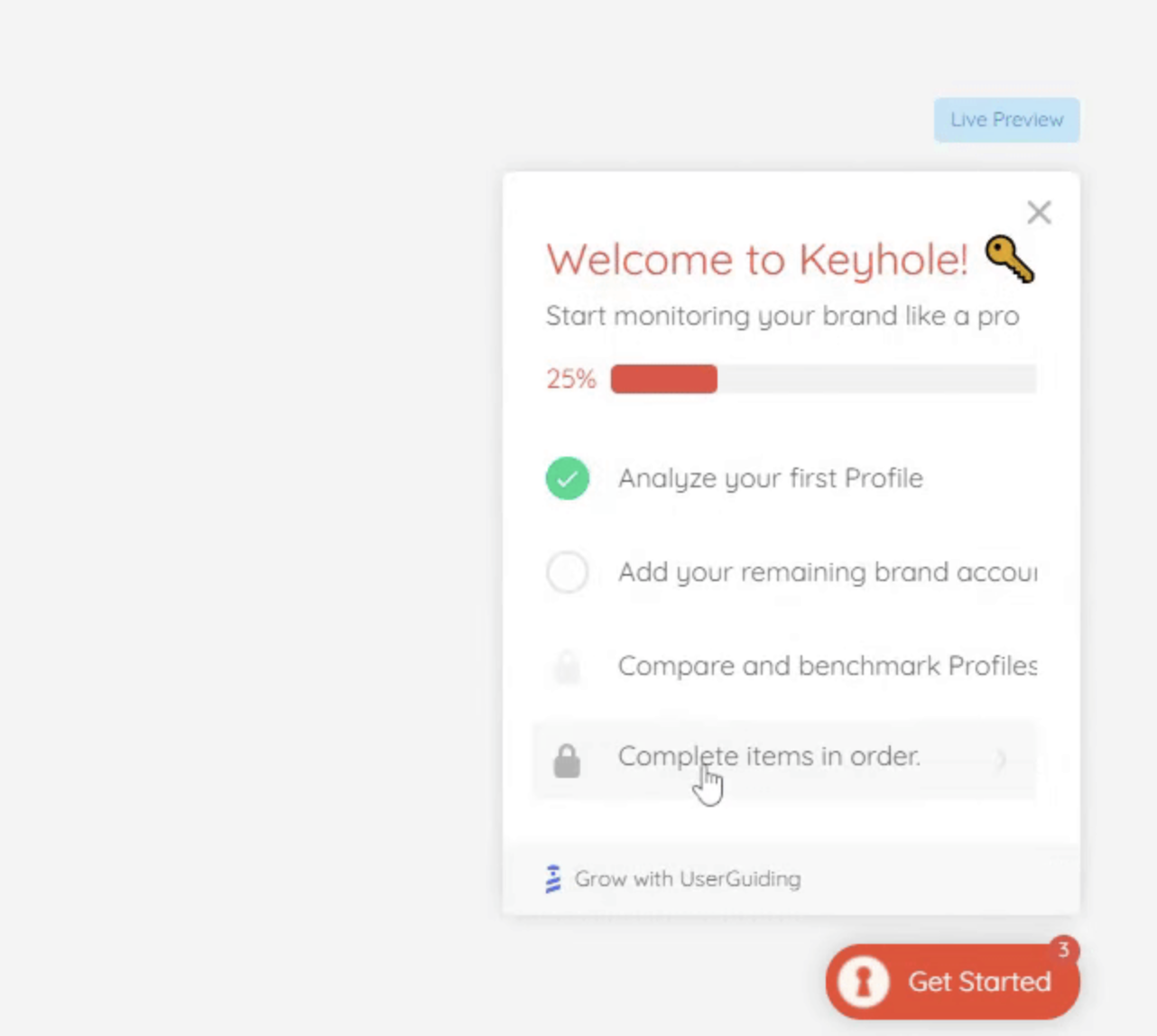
The animated checklist from Keyhole is a powerful demonstration of how gamification can dramatically increase user conversion rates during onboarding.
#8 Learn your customer’s concerns
Generally, requesting a user’s private details during onboarding is intrusive and results in churn. But for some apps, there’s no way around it! That’s the case for social media organizer Sprout Social. But with personable copy that focuses on the user’s concern, they instead reduce frustration and improve SaaS product adoption.

Sprout Social addresses user privacy concerns head-on with transparent and reassuring copy, which helps build trust during a sensitive step.
#9 The ‘Zeigarnik effect’ will make your product memorable
Human brains are wired to remember uncompleted tasks. This is called the Zeigarnik Effect, and it can help you drive SaaS product adoption! The job-finding tool Handshake for instance, uses gamified onboarding to increase profile completion. They do this through features like progress bars and checklists to remind users that they’re not done yet.

Handshake applies the Zeigarnik effect by using progress bars and checklists to remind users of their incomplete profile, encouraging them to finish the task.
#10 Leverage social proof through testimonials & smart copy
The SaaS product adoption process starts with skepticism. Prospects will question your credibility, your app’s benefits - everything! In short, don’t take prospects for granted! Instead, follow Proof’s model and boost your credibility with copy like “1594 people requested a demo in the last 30 days”.

This example from Proof leverages social proof by showing the number of recent demo requests, creating a sense of urgency and popularity.
#11 Remove the fear of change with free, accessible trials
Fear of change is a killer of SaaS product adoption. But one of your greatest tools to combat it is with demos and trials. Take HelloSign for example. On their landing page, the right frame features a cartoon of how the UI functions - and what value the user can draw from it. Pair that with the CTA ‘Try HelloSign Free’, and you have a magnetic product.

HelloSign reduces the fear of change by offering a free trial alongside a clear visual of how the product works, making it easy for users to get started.
#12 Add the element of social status through community
Communities add a ton of opportunities to increase user engagement for your SaaS. Not only does it help scale support, but it also creates power users and drives SaaS product adoption. You can put a gamified layer on top with features like leaderboards and badges.
Airtable for instance has a wide range of badges. Each badge rewards desired behaviors such as sharing links, inviting friends, or answering questions in the support community.

Airtable's community badges are a great example of using social status and gamification to encourage desired user behaviors and build a strong community.
FAQ - SaaS Product Adoption
What is SaaS product adoption?
SaaS product adoption happens when customers show repeating patterns of user engagement. Basically, they’ve started to adopt your product into their workflow, routine, and habits.
Why is user adoption so important?
It’s simple - effective SaaS product adoption creates sustainable growth. In short, a better adoption process ensures users experience your full value, making long-term user engagement and retention more likely.
When does onboarding end and adoption begin?
In general, a user is considered ‘onboarded’ after they demonstrate having made a commitment to your platform. In terms of SaaS product adoption, this can be seen as increased or repeated user engagement on your platform.
How does behavioral science impact SaaS product adoption?
Leading SaaS companies have adopted the principles of behavioral science to drive long-term user engagement. Psychological triggers, variable rewards, and cognitive bias effects like loss avoidance, can greatly influence the purchase decision.
What does PLG mean?
PLG stands for product-led growth. It’s a growth strategy where the product experience in itself drives full funnel growth. Product-led companies often acquire users through free trials or freemium models and then convert, expand and retain them with in-app experiences.
How to Increase Software Adoption? Start Now With This 7-step Template.
Increasing software adoption means a rise in retention - which 64% of businesses say increases customer lifetime value! With StriveCloud’s user adoption strategy template, you can easily create your very own roadmap to success.

Learning how to improve your software adoption plan can be an intensive process. But it doesn’t have to be! With our user adoption strategy template, you can easily create your very own roadmap to success.
In this article, we’ll cover the step-by-step process of developing a user adoption strategy for SaaS and explore some of our best tips and tools you can use to generate growth.
- What is a user adoption strategy in SaaS?
- Why do SaaS companies need a software adoption strategy?
- When does onboarding end and adoption begin?
- How to measure product adoption & customer onboarding?
- Why increasing customer lifetime value is key for SaaS companies
- Guide your plan with this 7-step SaaS user adoption strategy template
- 5 ways SaaS companies can improve software adoption today
- FAQ
What is a user adoption strategy in SaaS?
A user adoption strategy is your plan to convert prospects and acquisitions into loyal users. But it’s more than simply achieving conversions. Ideally, a great strategy reveals what behaviors foretell product adoption - and then how to increase that behavior!
Download our Free User Adoption Strategy Template here 👉
Why do SaaS companies need a software adoption strategy?
A user adoption strategy is high in scope and high in benefits! Mainly, your strategy will positively impact the first stages of the customer journey, resulting in increased product adoption. But why is it important to have an efficient software adoption plan?
Low user adoption means higher churn and acquisition costs
If you’re losing customers to churn, you’re forced to replace them. But that’s expensive! Research shows that acquisition is up to 7 times more expensive than retention.
Fully adopted users are more likely to realize your customer value
A great user adoption strategy is also a template for a feature discovery strategy. As a result, your perceived value increases. Of course, nobody wants to pay for features they never use!
Simply put, increasing customer lifetime value is profitable!
Even a tiny 5% rize in customer retention can increase profits by 25-95%.
Stop churn and kick-start your product adoption strategy! Read our complete guide on how to increase software adoption.
When does onboarding end and adoption begin?
The line between onboarding and adoption is blurry, but there are ways to tell the difference. Firstly, ‘onboarded’ users generally have higher user engagement with various features. As such, they also demonstrate a better understanding of your value - and that means they’re primed for software adoption.
How to measure product adoption & customer onboarding?
Before you can tackle how to increase software adoption, you must be able to measure your progress! That’s why product managers use Cohort Analysis. In short, segment users by acquisition date and then track their journeys using these key metrics:
- Conversion rate. This calculates the total number of users who make it from signup to purchase. A leading example is Slack’s 25-30% conversion rate!
- Time to value. In essence, how long it takes to reach the ‘activation event’.
- Frequency of usage. Essentially, how often does user engagement occur?
- Average session duration. Longer sessions might mean your time to value is too long. Conversely, short sessions might be signs of frustration and churn!
Basically, Cohort Analysis shows you which user segments have the highest retention. After collating the data, you might start to notice patterns. When the best groups share results in a metric, then that is your way to increase software adoption in users!
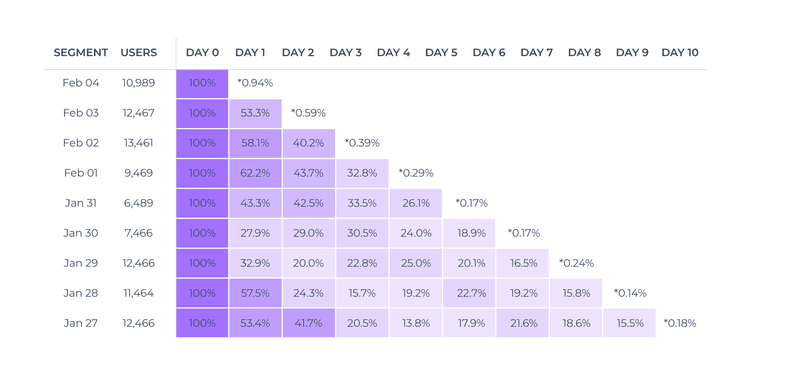
This cohort analysis graph helps visualize user retention over time, a key metric for measuring the success of a software adoption strategy.
Why increasing customer lifetime value is key for SaaS companies
Put simply, customer lifetime value (CLV) calculates the revenue gained throughout a customer’s lifespan. Without a doubt, if you craft an excellent software adoption plan, you will also boost your CLV. According to software research group SaaS Scout, the top 1% of customers are ready to spend 5-10 times more than the average customer.
Additionally:
- 65-80% of profits will be from existing customers.
- 60-75% of customers stick with one brand for more than 10 years.
- 66% of existing customers tend to spend more to increase rewards.
Sounds great! So how do you work out CLV? Follow the formula below:
Avg user value = Avg purchase value X Avg purchase frequency in one year
Guide your plan with this 7-step SaaS user adoption strategy template
#1 Understand your product's mission & vision
Your business objectives have to be true to your mission. This consistency is key to a memorable and coherent UX! More than that, basing your user adoption strategy on exactly why you do what you do makes the plan more sustainable. Look at this amazing example from HumanForest!
#2 Know your customers!
It goes without saying that your strategy will resonate more if it matches your target audience! Besides your own goals, what are their goals? Understanding the core user needs and use cases will help you build better features & support to drive customer success!
Download our Free User Adoption Strategy Template here 👉
#3 Define the activation and adoption events
It’s imperative that you define when the user first experiences your value - the ‘activation event’ or AHA moment. How long does it take to get there? What steps do they take?
After experiencing this moment, your user adoption strategy starts! How will you lead users to the right features? By leveraging methods like cohort analysis you’ll be able to find out which behaviors lead to long-term retention and customer value.
In fintech, for example, activation could be opening an account - whereas adoption might mean making a cash deposit. Then, expanding on other features or services. It’s up to you to define what’s best for your app!
#4 Arm yourself with the best tools to increase software adoption
After defining your desired user events, it’s time to set up the tool stack to drive those behaviors! Besides support software like chat functions or forums, in-app tools are more direct for creating product-led growth.
For instance, some tools focus on onboarding, while others go deeper into feature adoption or user engagement. Here are some examples:
- Apty: Revolutionize your walkthroughs and tooltips. Apty is the highest-rated product adoption software on P2P review site G2. It’s ideal for enterprise brands.
- Appcues: Build a personalized experience. When you want to increase feature discovery, try Appcues. Easily add messages without any code!
- StriveCloud: Create a sticky UX that users love. StriveCloud’s app gamification software is flexible and easy to use. Design, test, and build gamified in-app experiences from a single control panel. Plus, it boosts daily active users by 58%!
#5 Develop an onboarding plan that drives adoption
It’s simple - lengthy onboardings frustrate users. The key step of your software adoption plan is to make onboarding interactive! Use as few screens as possible, then opt for timely tooltips over mandatory tutorials. Furthermore, use gamified tactics such as progress bars, rewards, and leveling systems to keep your user engaged.
Download our Free User Adoption Strategy Template here 👉
#6 Plan for continual optimization
You can’t rest on your laurels. Using your mission & vision as a guide, you must continue to improve your app. To do this, make it easy for users to return feedback. Additionally, try to increase the adoption of any underused features that threaten to devalue your product.
#7 Encourage adopters to become loyal brand advocates
At this point, you know who your ideal users are. After identifying them, and converting them with your great product, you need to give them the tools to promote your product! Integrate your brand with social media, incentivize referrals, and implement a loyalty program that rewards loyal users. After all, customers are much more likely to choose your brand if you offer a loyalty program.
Maximize the benefits of our user adoption strategy template with an expert-led gamification workshop & go home with a custom plan!
5 ways SaaS companies can improve their software adoption plan today
Focus on data-driven, goal-based user engagement
Your data is the best guide to achieving success. Once you’re able to interpret your data, you can use it to drive your software adoption plan and develop ambitious targets. Duolingo is famous for its goal of increasing user engagement by 1% every week - and sticks to it religiously. Along with its daily streak feature, they have become the top education app in the US!
Establish self-set goals and define the key milestones
Customers want to know how you are going to get them from A to B. Given this, you should establish the roadmap they have to journey to solve their problem. That includes key milestones which will act as positive reinforcement to continue engaging. You could take the route of Salesforce and gamify the user adoption journey to make it both clear and exciting.

Salesforce Trailhead uses timed challenges and milestone badges to make learning interactive and encouraging, a powerful technique for user adoption.
Build a customer community
One of the most powerful and pervasive motivators is the need to belong. That might be why active in-app communities have been found to boost user retention rates by 40%! As a bonus, an active community builds credibility with like-minded prospects. In short, if it’s good enough for them - why not me?
Choose the right software adoption tool and software!
The right tools can significantly accelerate your software adoption plan. However, it’s crucial to pick the right one, as this software will become a key part of your user experience. How easy is it to use? Can you customize it? Is the support team hands-on or not? What are its main and additional functionalities? Do these fit your goals?
Deploy a competitive strategy with app gamification
Today, over 2/3 of customers say their standard for good experiences is higher than ever! In practice, a great UX needs to be 3 things: useful, easy, and enjoyable to use. And that’s where app gamification excels! Don’t fall behind - gamify your app and get ahead.
Get that competitive advantage! Build a gamified experience & slash churn by 23% from just 1 solution!
FAQ
What is a user adoption strategy in SaaS?
A user adoption strategy is your plan to convert prospects and acquisitions into loyal users. But it’s more than simply achieving conversions. Ideally, a great strategy reveals what behaviors foretell product adoption and how to increase that behavior!
Why do SaaS companies need a software adoption strategy?
When research shows that acquisition is up to 7 times more expensive than retention, the benefits of a good user adoption strategy become clear. Not to mention, adopted users are more likely to see your full value - increasing their customer lifetime value!
When does onboarding end and adoption begin?
The line between onboarding and adoption is blurry, but there are differences. Firstly, ‘onboarded’ users engage more and in a wider breadth. As such, they also demonstrate a better understanding of your value - meaning they’re primed for software adoption!
Best Ways to Build Brand Loyalty as a Mobility App
2023 is shaping up to be another challenging year for shared mobility operators. As a result of economic headwinds, brand loyalty has never been more important! When times are tough, people look to brands they know and trust. One way to build this trust is with a gamified loyalty program. Discover the top 5 ways to drive growth in 2023.

2023 is shaping up to be another challenging year for shared mobility operators. As a result of economic headwinds, businesses must adapt- or risk missing out on growth. One way to do this is by adapting to the changing customer behavior. What does the future have to offer? And how does brand loyalty fuel growth for shared mobility?
This article explores the challenges and opportunities for mobility operators, offering five actionable strategies to improve customer loyalty and drive sustainable growth.
- How 2023 will challenge micromobility
- Why brand loyalty matters in times of crisis (and why you should invest in it)
- 5 ways to increase brand loyalty in mobility
- FAQs
How 2023 will challenge micromobility
Mobility will be affected very differently by this economic downturn compared to the Covid-19 crisis. During the pandemic, millions were stuck at home. This time around though, people will still be traveling and commuting. But 2023 is changing consumer behavior in significant ways:
- Tighter household budgets will ultimately result in fewer short trips to leisure destinations like restaurants and cinemas (i.e. those ideal for micromobility)
- As a result, consumers are projected to purchase fewer cars
- Spending on expensive taxis and ride-hailing services will also decrease
In the end, this creates the risk that micromobility could face a downturn. But the good news is that would go against current predictions. In 2023, the global micromobility market is still set to grow at a rate of 17%. Even when e-scooter operators are quitting markets and laying off staff, experts expect the e-scooter market will see 10.5% growth.
Some trends and changing consumer behavior are favorable to micromiblity in particular. Cities are looking for ways to lower emissions and solve mobility challenges such as traffic congestion or high parking costs. Smaller, electric scooters for example could be a great solution!

This graph illustrates the projected growth and favorable market trends for micromobility, showcasing the industry's resilience despite economic challenges.
Timo Buetefisch @Cooltra - "Mobility will suffer, but it’s still a necessity. As an organization, you have to get through the challenges that are coming."
What is the solution to these challenges? The answer for mobility is brand loyalty.
Why brand loyalty matters in times of crisis (and why you should invest in it)
Brand loyalty is one of the best ways to provide stability to your business - and make it more resilient to external shocks like economic malaize. The reality is that, during turbulent times, customers are more likely to stick with brands they already know and trust. The evidence of this can be seen in previous downturns. In the Great Recession that started in 2007, loyalty programs actually boomed, growing 19% between 2007 and 2009.
This story tells us what mobility operators need to succeed in 2023. To grow brand loyalty, mobility should focus less on expansion and acquisition, and more on repeat customers. This can be lucrative - studies show that 61% of small to mid-size firms report that more than half of their revenue comes from repeat customers. What’s more, mobility operators have a potentially large reservoir of local, existing customers. In Paris, for example, 85% of the city’s 1.2 million riders are Parisian residents.
Unlock growth during crisis: How to create a brand loyalty program in shared mobility!
5 ways to increase brand loyalty in mobility
#1 Build a gamified loyalty program to reward behavior change
The best way to drive growth as a mobility operator is through brand loyalty. Think about it. Many people might have to move around two, four, or even ten times a day! That’s a massive opportunity to take advantage of! One way to do that is by launching a gamified loyalty program.
Here’s why! A gamified loyalty program will:
- Incentivize customers to book more trips! Well-timed rewards will reinforce a positive feeling whenever a customer engages with your mobility service.
- Compel customers to come back to your app. (And book more trips!) Features such as outstanding loyalty points will help you stay top-of-mind.
- Create a fun and unique experience to stay top-of-mind. Build a sense of purpose and community with fun features like leaderboards, levels, and more!
- Help you differentiate on more than just pricing. Loyal customers will stay engaged for a long time and prefer you over competitors every time!
How does gamification improve brand loyalty for mobility operators?
Gamification is essentially the use of game elements and psychology in a non-game context to make the overall experience more fun and enjoyable. It makes your brand message come to life. Take HumanForest for instance. They turn taking your e-bike into becoming a CO2 saver, or a literal human forest!
They’ve built a community of loyal customers by introducing gamification inside their app. Here’s how it works in a nutshell:
- Every mile on an e-bike represents one tree saved
- For every 5 miles customers earn one TreeCoin
- You can exchange these TreeCoins for free riding minutes
- Collecting TreeCoins makes you level up from a tiny bonsai tree all the way up to a giant sequoia tree
- They even rank you on the CO2-reduced leaderboard to see who has saved the most trees
Michael Stewart, Co-founder @HumanForest - "StriveCloud helped us fulfill our brand message, in a fun and engaging way."
Accelerate your vehicle-sharing business with StriveCloud Build a custom gamified loyalty program inside your own app & sell more trips!
After all, shared mobility is very suitable for gamification. You can easily create rewards or challenges around the available customer data. EVO Sharing used this opportunity to boost the number of trips and in-app purchases.
Jennifer Dittmar @EVO Sharing - "Our business model is also very suitable for gamification. Receiving rewards based on distance, kilometers, or minutes driven makes a lot of sense to use and goes well together."
EVO Sharing's achievement system is a great example of gamification driving user engagement and loyalty by rewarding frequent usage with tangible benefits.
#2 Hook customers with an engaging app experience
The first step to brand loyalty for mobility is a great app experience. In fact, your app determines how a customer interacts with your brand outside of just using your vehicle. Besides, contextual notifications help to keep customers engaged and stay top-of-mind. Which allows them to become a part of your rider community.
Timo Buetefisch @Cooltra - "Technology is essential for the user experience in mobility. The app is absolutely everything, from the way you sign up, the way you pay, the way you unlock the vehicle, to where you can find your invoice. It’s 100% app-based. "
Uber’s driver app for instance uses gamification to enhance the driver experience. With features such as quests, badges, and earnings trackers drivers stay motivated and engaged. They can even earn extra points and money for maintaining a high feedback rating!
#3 Focus on providing great customer service
Of course, the most important need for consumers when it comes to customer service is to resolve an issue quickly. But this matters even more in mobility, where an issue could mean your customer is late for work - or worse, that their safety is at risk.
Mischa Schirris, Head of Partnerships at Mavenoid - "Many aspects of an enjoyable ride are outside of your control weather, infrastructure, policies, and other external factors. Seamless customer support, on the other hand, is one of the few things that’s actually within your control. Give it the attention it deserves as you build out your company in the space."
Experts recommend an in-app support channel where customers can solve their problems either through troubleshooting, cashback, or human intervention. At the end of the day, your users want to feel valued and appreciated, so a quick and helpful solution will create that necessary trust, and in turn, build brand loyalty.

This chart highlights key market trends that influence user expectations and the importance of responsive and effective customer support in the mobility sector.
#4 Make sure your vehicles are there when needed - optimize your fleet!
One of the main customer motivations for shared mobility is convenience. In other words, customers like the ease of getting a vehicle whenever they need it, and leaving it wherever they want. This however is a major challenge for mobility operators, as it causes low fleet utilization rates which eat into profitability.
One way to solve this is through fleet management. This helps you track the location and status of different vehicles. You can also improve this experience within your app. For example, by creating a reservation system, or making it easy to report problems with vehicles.
Finally, you can use gamified rewards that incentivize customers to leave vehicles at specific places such as charging stations. Electric scooter company Bird for instance hands out monetary rewards for bringing the “birds” back to their “nest”.
#5 Boost your user referral program
Another benefit of keeping your customers close is that they’re 4 times more likely to refer friends! In a market where 88% of people rely on word-of-mouth as their source of information, that counts! In fact, referred customers are 18% more likely to become loyal users. Want to boost your referral program? Try adding some gamified rewards!
FAQs
How is consumer behavior changing in mobility in 2023?
With new trends such as working-from-home and delivery services, consumers are going out less, and therefore don’t have the need to own their own vehicle. This is a major opportunity for shared mobility operators, especially micromobility.
Why does brand loyalty matter in times of crisis?
Brand loyalty matters during turbulent times because people stick with brands they know and trust. This has been seen many times before. In the Great Recession that started in 2007, loyalty programs boomed, growing 19% between 2007 and 2009.
How can mobility operators increase brand loyalty?
The best way to drive growth as a mobility operator is through brand loyalty. Think about it. Many people might have to move around two, four, or even ten times a day! That’s a massive opportunity to take advantage of! One way to do that is by launching a gamified loyalty program.

How to Increase ARPU as a Mobility Operator in 2023?
When costs are rising and customer acquisition is too competitive, how can micromobility operators grow? The solution is to increase ARPU! An increased average revenue per customer boosts your bottom line, all without spending a cent on customer acquisition. In short, a higher ARPU means greater profitability! In this article, discover 3 ways you can increase ARPU today.

It can be hard for even the biggest micromobility operators to turn a profit. The expensive & highly competitive nature of the market lowers the margins. But there’s one thing that all operators should be doing to grow and that is to increase ARPU!
This article will explain what ARPU is, why it's critical for profitability, and how mobility operators can boost this all-important metric.
- What is ARPU? (And why it is so important for micromobility)
- How micromobility operators increase ARPU today
- Why increase ARPU? Benefits for micromobility operators and investors
- 3 strategies to increase ARPU and enter the shared mobility market
- FAQs
What is ARPU?
ARPU is an essential metric to track your financial progress. In full, ARPU stands for ‘Average Revenue Per User’, and it shows the average revenue that each customer generates. An increased ARPU boosts your bottom line, all without spending a cent on customer acquisition. In short, a higher ARPU means greater profitability!
What’s more, ARPU is super easy to work out. Use it to track your average revenue per customer over any time period, from just one month to as far back as you like:
ARPU = Total revenue in time period / total customers in time period
So why should micromobility operators increase ARPU? Simply put, mobility needs it!
- Competition is tough, so you need to make the most of existing customers.
- Customer acquisition is 500% more expensive than retaining a customer!
- Profit margins in mobility are low at 20% when it should be closer to 50%.
As micromobility matures and operators focus less on aggressive expansion, it is only going to be more important to increase ARPU. In 2020, the ARPU in shared mobility was $92. But by 2030, that number is set to hit $107!
So what are micromobility operators doing to increase ARPU today?
How micromobility operators increase ARPU today
Partnering with city authorities
It’s possible for your relationship with city authorities to be mutually beneficial! While micromobility can help city authorities meet climate goals and reduce traffic, cities can help micromobility operators by building more bike lanes and parking zones.
According to McKinsey, more than 90 cities have adopted policies that support micromobility. And the strategy is paying off! Research shows that new infrastructure can increase the number of journeys taken using micromobility by as much as 48%!
Operating in well-regulated markets
When it comes to regulation, there is a sweet spot. Some cities overregulate, and this is an issue when compliance can increase costs by 7%! But many cities underregulate and research shows this also makes turning a profit harder. That’s partly because unregulated cities led big micromobility operators come and offer rock-bottom prices.
To avoid price competition reducing your ARPU, operate in smaller, well-regulated markets. To provide some examples, check out mobility app loyalty successes. Another example is Swift, which operates in smaller cities across Portugal and ensures compliance with regulations such as mandatory parking bays. They even incorporated features that incentivize responsible parking into their app. As a result, Swift has even been invited by a city that previously banned electric scooters!
Using different pricing models
Dynamic pricing
Given that usage fluctuates throughout the day, dynamic pricing works well in mobility. For sure, charging less during quiet periods helps increase ARPU by maximizing fleet utilization. On the other side of that, charging more during busy periods can help make the most out of the customers using your limited fleet.
Subscriptions
Subscriptions are shown to drive “greater average spend”. In short, increased ARPU! Subscriptions are a trend that will continue to grow in mobility. Why? When customers subscribe to your mobility service, you create a deeper relationship with them. As a result, you build customer loyalty and generate a more predictable revenue stream.
Usage-based pricing
Usage-based pricing simply means charging the customer a fixed fee per minute. This is the way to go when competition is strong and prices are low. Think about it - customers have less reason to commit to your service if there are other operators in the area offering a similar price. Indeed, a big advantage of usage-based pricing is that customers can easily evaluate your service and potentially become paying subscribers.
Why increase ARPU? Benefits for micromobility operators and investors
Until very recently, micromobility operators focused more on expansion than profit. Even a market leader like Lime never made a profit until 2022! But things are different now. More than ever, there’s one big thing investors want to see: profitability.
And when it comes to making a profit, the benefits of increased ARPU are clear. To investors, a higher ARPU signals that you are maximizing profit while keeping costs stable. Crucially, that means greater profitability and potential for growth!
As a bonus, a higher ARPU indicates more positives about your service:
- Can compete in already competitive regions
- Increased customer lifetime value
- Leeway to experiment and innovate, such as with pricing strategies
- More revenue to invest in marketing and product development
- Shows that your service can generate more value from its customers
Simply put, when investors see a higher ARPU, they see a successful micromobility operator capable of growth and profitability!
3 strategies to increase ARPU and enter the shared mobility market
If you’re a new player in mobility, there are multiple strategies to increase ARPU that you can use to overcome the challenges that face your service:
#1 Optimize maintenance and fleet rebalancing
For a typical ride on an e-scooter costing $3.50, market research estimates that around $1.70 of the total goes to operations and charging. That’s nearly half of your revenue! To take the bite out of this sting, you improve fleet rebalancing and increase your ARPU.
Essentially, you need to charge your vehicles when they’re least likely to be used and make sure they’re in the right place at the right time! After all, when more of your fleet is being utilized, you maximize your revenue and increase ARPU.

This graph illustrates how a significant portion of revenue is consumed by operational costs, highlighting the importance of optimizing fleet management to boost ARPU.
#2 Loyalty programs
Loyal customers spend more and more often. Shouldn’t you reward them for that? Your customers think so! This is called the “Lucky Loyalty effect”, which says that loyal customers feel entitled to better treatment. And when you reward your loyal customers, you extend their loyalty and lifetime value. In other words, you increase the average revenue per unit
For a great example from a micromobility operator, look at Germany’s EVO Sharing. They reward riders with in-app coins for every kilometer traveled. The more you ride, the more you earn! These coins can then be exchanged for free riding minutes. Not only does this incentivize riders to take more trips, but the reward also extends customer loyalty. In turn, this boosts customer lifetime value and increases ARPU!
#3 Implement app gamification and make your app more fun
Gamification is a great way to engage customers and increase ARPU. In essence, gamifying your app means adding game-like features to make the overall customer experience more fun. What’s great about gamification is that you can customize the features to match your goals!
For example, micromobility operators can use features in the following ways:
- Challenges - Send your customers on a quest to complete certain routes.
- Badges & milestones - Reward customers with badges for their achievements.
- Points - Incentivize behaviors with points that can be redeemed for perks.
- Streaks - Reward customers for riding daily or weekly!
- Leaderboards - Create a sense of competition & social status by ranking customers based on how far they travel.
Increase your ARPU today! Discover how our gamification software can get your customers to take 300% more trips!
In fact, many cities prefer mobility apps with gamification. For example, Finland’s capital Helsinki is clear about how gamification can incentivize micromobility usage.
Forum Virium / Helsinki - "Gamification must be integrated in mobility... micromobility operators & cities must work together to launch & manage incentives to make these innovative models of transport more attractive."
How does it work? Let’s look at an example from HumanForest! When HumanForest partnered with our team at StriveCloud to gamify their app, we created ‘TreeCoins’. It’s simple: the more you ride, the more TreeCoins you earn. These TreeCoins form the basis for the app’s levels, rewards, and leaderboards. In addition, customers can redeem the coins for free riding minutes or discounts at green retailers! In short, together we turned the usually boring daily commute into an enjoyable game-like experience! Who wouldn’t come back for that?

The HumanForest app demonstrates how gamified elements like 'TreeCoins' can create an engaging user experience, reward sustainable behavior, and ultimately drive repeat usage.
Michael Stewart @HumanForest - "StriveCloud really helped us fulfill our brand message. The TreeCoins explain our mission perfectly…the progress visualization mechanic prompts customers to keep using HumanForest and rewards sustainable behavior with free riding minutes!"
Since implementing gamification, HumanForest e-bikes now make over 150,000 trips monthly across London. What’s more, 70% of those trips are made by repeat customers! This shows how gamification can keep your customers riding and increase ARPU.
FAQs
What is ARPU?
ARPU is ‘Average Revenue Per User’ and it shows the average revenue each customer generates. An increase in ARPU means higher profitability and potential for growth, without increasing costs or spending on customer acquisition! In short, a higher ARPU means greater profitability!
Why increase ARPU? Benefits for micromobility operators:
- Shows that you generate more value from your customers (in short, higher profitability and growth!);
- Increased customer lifetime value;
- Leeway to experiment and innovate, like with pricing strategies;
- More revenue to invest in marketing and product development.
How can new micromobility operators increase ARPU?
Smaller micromobility operators can increase ARPU by improving fleet rebalancing to maximize usage during both quiet and busy periods. You can also implement gamification to make the customer experience fun and rewarding. This incentivizes the customer to return and complete more trips!
Keep reading
Which Gamification Software Is Right for You? Top 5 Gamification Companies in 2023
Building new gamification features for your app takes expertise, time, and money. Instead, use gamification software! But which gamification company is right for you? Check out our list of the top 5 gamification companies in 2023.

When it comes to app development and gamification, you don’t need to build everything yourself! Instead, you can use gamification software. With a gamification company, you can build an engaging user experience with ease! So which software is right for you? Check out our list of the top 5 gamification companies in 2023.
- What is gamification software for web and mobile apps?
- Benefits of using a gamification company
- Why gamify the user experience?
- 5 key features of gamification software
- How to choose the right gamification company for you
- Top 5 gamification companies in 2023
- FAQs
What is gamification software for web and mobile apps?
Gamification software for helps cut down the hard work of gamifying your user experience. It’s simple - instead of spending time and money on coding features like points and levels into your app, you can simply plug in the elements and go!
In addition, software grants you access to a full range of tools to help facilitate and improve your gamification strategy. For example, a gamification company will offer gamification consulting to help you build your ideal user experience. That includes the ability to add elements gradually so that you don’t overwhelm the user. Essentially, gamification software is your one-stop shop for creating a great user experience!
Benefits of using a gamification company
App development takes internal expertise, time, and money. That’s fine for an app giant with deep pockets, but most apps can’t afford it. According to research, the world’s top 200 apps earn an average income of $83,500 a week, whereas apps in the top 8000 make just $3,500. In short, you need money to make money! But there is another way. Smaller apps can achieve scalability with gamification software and enjoy a range of benefits:
Gain the necessary expertise
A gamification company can lend you their knowledge! Gamification companies offer the help of their expert teams, who have spent years crafting gamification strategies. They can act as your support agent and design consultant at the same time. Basically, you can learn from the experience of others, instead of making your own mistakes.
Save time and money
You can start using the add-on gamification features immediately. As a result, you’ll spend less to develop and maintain features that might end up being either underutilized or overwhelming. In fact, if you build features yourself, you would pay 20% of the development cost in maintenance alone!
Why gamify the user experience?
Gamification is the use of game-like features like points, badges, and levels in non-game contexts. But these features are good for more than just fun! Game mechanics and rewards motivate users to perform actions that you want to see. For example, a fitness app might want users to run. Well, if the app ranks runners on a leaderboard, users will be motivated to hit the top and exercise more! In turn, the app provides more value.
Here are 3 big reasons why you should gamify the user experience:
Reduce onboarding churn
As many as 78% of those who download a mobile app will uninstall it in just 24 hors. But using a gamification company can combat that. For example, progress bars can reduce the ‘cognitive load’ of onboarding. In other words, things are easier for the user because you provide the information in steps. As well, simply rewarding new users with a badge after onboarding can ‘positively influence’ users to stick around!

This graph illustrates how gamification principles tap into core psychological drivers to boost and maintain user engagement over time.
User satisfaction
There are two powerful types of motivation: extrinsic and intrinsic. Basically, extrinsic motivators are tangible rewards like prizes, grades, and recognition. These work great - but to be fully satisfied, users also need to be intrinsically motivated! And that’s where gamification comes in! There are 3 needs you must satisfy to unlock intrinsic motivation:
- Autonomy. Use avatars, quests, and content-unlocking to give users control.
- Mastery. Show off your skills with challenges, leaderboards, and points.
- Purpose. Badges, levels, and target-setting give users an end goal.
When you fulfill these needs, you increase user satisfaction. In reality, this is simple behavioral psychology. People like to become better at skills, they like to have a goal, and they also like having choices over their journey. That’s what makes gamification so powerful - every one of us has these needs!
User engagement
Gamification hooks users and engages them with a trigger, action, and reward cycle. This is the ‘Hooked Model’, which successful platforms like Facebook use to make their product a part of our daily lives. Essentially, users are given a cue like a push notification or a gamified challenge. In turn, this drives them into action. Lastly, the user is rewarded for their effort. Ideally, this ‘bit of work’ was so satisfying that they return for more! Indeed, studies show that gamification boosts engagement and leads to habit formation.
Nir Eyal's Hooked Model canvas shows the cyclical process of trigger, action, variable reward, and investment used to build strong user habits.
3 key features of gamification software
Flexibility
Your choice between build or buy should offer you a lot of flexibility. When choosing a gamification software, this should have various off-the-shelf gamification features such as challenges, quests, memory games, and the possibility to customize the experience after your own look and feel. In this way, you can experiment with different gamification mechanics inside your app and see what works best for your business goal and target audience.
Various Rewards
Of course, no gamification software is complete without a range of rewards! Whether you use points, badges, or discounts, a reward can incentivize users to complete actions like referrals and social media shares. In practice, people just like to know they are getting something for their time!
A/B Testing
Gamification companies make it easy to add new features to your web or mobile app. However, implementation is just half of the battle! To maximize the effectiveness of your changes, your gamification software empowers you with A/B testing capabilities. In short, this lets you test new features, choose the best-written copy, and listen to the feedback of your users. Through this, you can create the perfect platform for your customers.
How to choose the right gamification company for you
Not all gamification companies are created equal. Ultimately, picking gamification software depends on what you wish to make. For instance, you could be at the start of your journey, looking to build a whole new gamified app. Or, you might have an existing app and want to use layers of gamification to generate growth.
To help you make a decision, here is a list of the best gamification companies in 2023:
Top 5 gamification companies in 2023
StriveCloud
Based in Ghent, Belgium, StriveCloud is a leading gamification company. StriveCloud supports clients big and small across industries, from shared mobility operators like HumanForest or EVO Sharing to big enterprises like Siemens, or ABInBev.
In practice, StriveCloud’s gamification software makes creating a great user experience as simple as possible. For example, StriveCloud offers a modular platform, which means that you can select from 30+ gamification & loyalty add-ons and introduce them into your web or mobile app - without a line of code. Alongside that, you’ll always have an expert team free to provide advice and consulting on your gamification strategy. Ultimately, the goal is your growth!

The StriveCloud product dashboard provides a clear overview of available gamification and loyalty features for easy implementation.
Pricing:
StriveCloud is designed to grow as you grow! By segmenting the pricing into tiers based on monthly active users, StriveCloud offers a scalable solution. To be sure, this comes in useful when StriveCloud’s past customers have tripled their number of active users!
Prices start at $599/month for apps under 10k users. Following that, the 25k tier costs $1,199, and apps with up to 100k in users can expect to spend $1,799/month. For the full breakdown, check out the pricing table.
Key Features:
- API integration on web & mobile app/or stand-alone platform (web & mobile app)
- Admin dashboard
- Game thinking & design workshop
Gamification & Loyalty Features:
- Achievements
- Leaderboards
- Challenges
- Timed Challenge
- Leveling
- Hotzone
- Wheel of fortune
- Memory game
- Man of the Match
- Scratch cards
- Raffle/Lottery
- Badges
- Code Redemption
- Currency Bundle
- Virtual Currency Shop
Interactive Content
- Classic poll
- Dynamic poll
- Swipe poll
- Swipe quiz
- Classic quiz
- Time quiz
- Time score quiz
- Personality tests
Michael Stewart @HumanForest - "Personally, I really like the control panel of StriveCloud, and I think it is easy to use. I can instantly implement changes without having to wait 24 hors or more to deploy."
Gamify your app with StriveCloud! Use our gamification software to add loyalty & gamification features that support your app’s goals. Find out more!

This example from StriveCloud's UI demonstrates how a clean, intuitive interface encourages user interaction with gamified elements.
Funifier
From Canada, Funifier is a stand-alone gamification software that is “purpose-built for the enterprise”. They pride themselves on offering a flexible solution to boost audience engagement. That being said, the app lacks integrations in comparison to the other platforms listed.

Funifier provides a dedicated dashboard for tracking key engagement metrics, as illustrated in this software example.
Pricing:
Funifier’s pricing is not made public, so you have to contact them for a quote. For B2C apps, there is a tiered pricing model and B2B apps benefit from volume discounts.
Key Features:
- Game thinking & design workshop
- Stand-alone platform (web & mobile app)
Gamification & Loyalty Features:
- Achievements
- Point collection
- In-app currency
- Rewards
- Avatar stats
- Leaderboards
- Progress bars
Influitive
Toronto-based Influitive is another big gamification company. They specialize in building advocacy on their “customer marketing platform” for retail, publishing, and B2B software. In addition, they offer a big knowledge base to learn from, including regularly updated blogs, eBooks, and webinars.

The Influitive platform focuses on creating a community of brand advocates through its integrated challenge and reward system.
Pricing:
Starts at $1,999/month. To access extra community features, you must ask for a quote.
Key Features:
- Stand-alone platform (web & mobile app)
Gamification & Loyalty Features:
- Gamified Q&A (points, badges, and rewards)
- Leaderboards
- Achievements
- Point collection
- Rewards
- Badges
- Gamified virtual event hub
Interactive Content:
- Quizzes
- Surveys
- Live polls
- Q.&A
Other
- Rewards on referrals
- Rewards on references
- Rewards on user-generated content
Insert Coin
Insert Coin is a Swedish start-up for teachers, HR managers, and product owners. Their gamification software is called GWEN, and it comes complete with an admin dashboard and a wide range of features. At the moment, most of their clients are also based in Sweden.
Insert Coin's GWEN software interface shows how it integrates various gamification features for product owners and managers.
Pricing:
Not publicly available. GWEN is listed at around $99/month for every 5,000 monthly active users. However, Insert Coin may quote differently. In addition, this tier comes without any customer service or design assistance.
Key Features:
- API integration on web & mobile app
- Admin dashboard
- A/B testing
Gamification & Loyalty Features:
- Leaderboards
- Levels
- Missions
- Team levels
- Team missions
- Onboarding missions
- Achievements
- In-app currency
- Point collection
- Rewards
SaaSquatch
SaaSquatch, also from Canada, positions itself as a “referral & loyalty software”. In particular, they focus on referral programs, offering the ability to give users points, gift cards, credit, and even discounts. This differentiates them from the other gamification companies on this list, as they are less about the user experience as a whole.
SaaSquatch's platform is geared toward building powerful referral and loyalty programs, as shown in this dashboard example.
Pricing:
Starts at $1,750/month + set-up fee. This is limited to just 25k users, so for more, you need to ask for a custom quote. As well, it excludes Salesforce integrations.
Key Features:
- API integration on web & mobile app
- Integrations with big platforms
- Template library
- Widgets
Gamification & Loyalty Features:
- Rewards
- Points marketplace
- Point collection
- Credit and discounts
- Gift cards
- Leaderboards
Other:
- Cashback programs
- Referral program
FAQs
What is gamification software?
Gamification software is a fast and easy way to apply game mechanics to your app. Instead of building everything yourself, gamification companies offer pre-built, customizable game elements like badges, levels, and rewards to motivate users, increase engagement, and ultimately create sustainable growth!
Why gamify the user experience?
With gamification, you can leverage both extrinsic and intrinsic motivation. And that’s powerful! When you implement features like points and levels, you satisfy intrinsic needs like growth. In turn, this reduces onboarding churn and boosts engagement! Gamification companies make this process easy.
What is the best gamification software in 2023?
StriveCloud is a gamification company trusted by clients across industries - from financial services, shared mobility, edtech, or health, to enterprise customers. Using our gamification software, you can easily build and customize a great app experience. In turn, you’ll increase engagement, retention, and customer lifetime value!
Keep reading
App Gamification: The Most Successful Hack to User Engagement Demystified
App gamification is an innovative methodology that uses typical game-world elements in non-game contexts to stimulate the user’s involvement. If you’re not at least considering integrating such mechanics into your app today, you risk to get behind on competitors and lose users. In this post, we cover why it's important to start looking into app gamification today and what tactics exist by using the StriveCloud toolbox as an example.

App gamification is an innovative methodology that uses typical game-world elements in non-game contexts to stimulate user engagement. If you’re not at least considering integrating such mechanics into your app, you risk lagging behind on competitors and losing users. Why, you ask? And what app gamification elements are out there?
In this post, we’ll cover:
- Why you should invest in app gamification to boost user engagement
- It’s imperative you know a thing or two about app gamification and how it works
- Gamification elements for mobile apps
When it comes to getting people to do the things you want, engagement is critical. You have to capture their attention and motivate them. App gamification provides the perfect tools to foster that kind of user engagement. By integrating game-like mechanisms and, in doing so, appealing to people’s competitive nature, you can nudge them toward the actions you want them to take.
Why you should invest in app gamification to boost user engagement
These days, it is incredibly hard to keep users hooked on your service or product. Some of them might not understand it, others forget to use it over time. There’s also always the chance that your audience discovers another app and replaces yours. Maybe because they like their service or product better, but in many cases, users also switch because they like the experience better elsewhere.
Let’s face it: in 2020, competition is fierce in nearly every sector - so the time for app gamification is now.
This graph clearly illustrates the dramatic impact app gamification can have on user activity and retention.
So how do you convince users to stick with your brand, product, or service? By playing on both intrinsic and extrinsic motivators. In short, it’s about giving rewards for a certain task or behavior and evoking positive emotions at the same time.
Want to know more about how game mechanisms trigger motivation? Read this post
It’s imperative you know a thing or two about app gamification and how it works
Unfortunately, not all companies succeed in making app gamification work for them. Back in 2014, Gartner reported that 80% of all gamification efforts would fail due to the complexity of understanding human psychology. To successfully apply gamification in your app, you need to fully grasp what motivates your user and make sure all game mechanics you integrate are aligned.

Understanding human psychology, as shown in frameworks like Octalysis, is key to successful gamification design and avoiding common pitfalls.
Gamification elements for mobile apps
So what app gamification possibilities are out there for you to explore? Let’s dive into StriveCloud’s plug-in gamification toolbox and see how you can improve user engagement by offering a gamified experience in your app.
Points collection

This example demonstrates how earning points for actions provides a tangible sense of progression for the user.
Whenever we do something, we like to receive some kind of reward in return. That’s no different when we’re using a mobile app. Point users toward high priority activities and have them perform them by promising points in return or allow them to purchase real or virtual goods.
Challenges
Presenting users with clear goals and rewards taps into their natural drive to achieve and encourages repeat engagement.
Challenges are a powerful game mechanic to motivate users into action. By giving users the option to enter challenges or challenge each other, you play on the competitive nature we all have and seduce your users into coming back to your app.
Leaderboards
This leaderboard shows how competition drives user retention and provides social proof of activity within the app.
Gamification is about motivating people through data, so an important part of the user experience is making data visible to users. By visualizing how users are doing in leaderboards, you motivate them to keep using your app. Those at the top of such a ranking want to keep their position, users in lower positions want to climb up and knock current leaders from their thrones. In the end, people are competitive souls, and being able to see your name on the list of winners gives users a considerable motivation boost.
Progress bars
A visual progress bar provides immediate feedback and motivates users to complete the next step in their journey.
It’s always easier to get to a certain goal when you know what it takes to get there. A progress bar is a nice visualization for the user of his journey toward achieving that goal. By providing feedback to users on where they are in their journey, you encourage them to take the next step.
There are different ways for you to show progress:
- Task progress: You can have each small task have its own goal and use a progress bar to indicate the stage of the task.
- Progress in achievements: Trying to stimulate certain behavior with rewards and achievements, like using your app for a certain amount of days in a row? You can nudge users, even more, to do so by visualizing how close they are to the award.
- Level progress: Give users insight into how much more it takes for them to reach a new, higher level.
Virtual badges
Awarding virtual badges for milestones creates a sense of achievement and status for users, making their progress feel valued.
No matter how old we are, receiving a medal, a trophy or a badge is a great moment. This moment of recognition adds to our motivation to take on the next challenge. If done right, badges are a powerful gamification tool.
Lotteries
A lottery system introduces an element of chance and excitement, encouraging users to perform actions to earn tickets.
A great way to hook users on your app is by integrating a lottery system. The idea is simple: users receive tickets for actions like leveling up, achieving a certain rank in leaderboards, or winning badges. Each ticket equals a chance to enter the lottery and to win nice prizes.

The visualization of a lottery ticket makes the potential reward feel more tangible and compeling to the user.
Referral programs
This illustrates how a referral program can be gamified, turning user acquisition into an engaging activity for your existing audience.
The more, the merrier, right? A great tactic to boost user engagement is by allowing them to reach goals with friends or by encouraging them to beat others. But as you know, it’s not easy attracting new users today. That’s why user advocacy is such an important factor in every company’s growth strategy today.
Get access to the networks of your current users with gamified referral programs. Let them invite friends and get rewarded in return. There are numerous possibilities: you could give them more points, lottery tickets, a special badge... Without having to put in a lot of effort yourself, you grow your user base.

A clean referral interface makes it easy for users to share and track their invitations, maximizing participation.
Social feeds
An in-app social feed creates a community space where users can see each other's progress and achievements.
Having a built-in social feed is, on the one hand, a great way to boost competitiveness among users by announcing other users’ milestone unlocks and achievements. On the other hand, it can foster collaboration by allowing users to ask questions within the community when they are stuck on a particular challenge.

This feed shows how announcing milestones and unlocks can boost competition and collaboration among users.
Want to see a real-life example of a company integrating these elements? Read Kayzr’s story
All coming together: user engagement and app gamification go hand in hand
Users that continue to be engaged and keep using your app are kind of like the holy grail for lots of businesses today. In order to maximize user engagement, app gamification is a powerful solution.
It’s no longer an option you can ignore. Many businesses are looking into how they can keep users hooked and are finding out about gamifying the user experience. Without a doubt, they’re getting convinced by the benefits app gamification brings and how quickly it is to get started with. If you wait too long, your competitors will start stealing your users.
Keep reading
Cake: 5 Gamification Examples That Improve the Fintech User Experience
While physical visits to the banks decreased by 36%, mobile transactions jumped by 121%. The future of online banking is undeniable, and new fintech solutions create new opportunities for banks to engage with their customers. One of those initiatives is Cake. This app gained 120,000 users in just 1 year and shares literal profit with its users. Here's how they did it!

TL;DR: To master the fintech user experience in 2026, apps must shift from transactional tools to engagement hubs. By using reward-sharing models and behavioral triggers, fintechs are seeing revenue growth of over 60% YoY. Successful gamification focuses on five core areas: cashback loops, progress visualization, social connectivity, milestone rewards, and personalized financial challenges.
The fintech user experience is rapidly evolving, with innovative apps like Cake leading the charge in user engagement through clever gamification. Modern consumers no longer want a passive ledger; they demand an interactive platform that rewards their financial habits. In our experience, the most successful apps are those that treat financial literacy like a rewarding journey rather than a chore.
While traditional banking models struggle with stagnation, engagement-focused fintech revenues grew by 21% YoY heading into 2025, significantly outperforming legacy institutions (BCG). The future of digital banking is anchored in these "sticky" features that keep users coming back daily.
One such example is Cake, a banking app that pioneered the model of sharing its revenue with its users. This strategy has become a blueprint for growth in 2026. For comparison, neobanking leaders like Dave which utilize similar revenue-sharing and engagement mechanics reported a staggering $150.8 million in Q3 2025 revenue, up 63% YoY (Dave Investor Relations). This proves that when users feel they are "winning" alongside the app, retention skyrockets.
Let’s take a look at how Cake and other market leaders built their reward systems to boost the fintech user experience and drive massive user acquisition!
- 3 fintech trends to watch in 2026 (and how Cake is ready for them)
- 5 gamification examples that enhance the user experience
- How to gamify your fintech app like Cake
- Recap
3 fintech trends to watch in 2026 (and Cake is ready for them)
TL;DR: The fintech user experience in 2026 is defined by hyper-personalization, AI-driven automation, and deep cross-platform collaboration. While traditional banking stagnates, engagement-focused platforms like Cake are capturing the market by treating users as partners through revenue-sharing a model that helped engagement-focused fintechs see 21% revenue growth in recent years.
Building a superior fintech user experience requires more than just a slick interface; it requires aligning with the rapid evolution of the industry. Let’s take a look at the trends driving this transformation:
#1 The total dominance of digital-first banking.
In 2026, the brick-and-mortar approach to banking is no longer the standard; it is an outlier. The shift toward a digital-first fintech user experience is absolute. Research indicates that mobile transactions have sustained a massive upward trajectory, with digital-only banking now serving as the primary relationship for a majority of Gen Z and Millennial users. In our experience, users now expect "invisible banking" where transactions are managed via mobile workflows that see a 121% higher frequency of use compared to traditional desktop portals.
#2 AI and hyper-personalization are the new baseline.
Artificial intelligence is no longer a future promise; it is the engine of the modern fintech user experience. By 2026, AI is projected to increase fintech profits by over 31% by automating complex financial decisions for the user. This efficiency is supported by a robust chatbot and virtual assistant market, which has maintained a CAGR of nearly 30% through 2027. Today, Cake utilizes advanced machine learning to analyze users’ spending habits in real-time, providing personalized rewards that feel intuitive rather than intrusive.
#3 Strategic collaboration over market competition.
The era of "disruption" has evolved into the era of "integration." Traditional institutions have realized that a seamless fintech user experience often requires the agility of a startup paired with the infrastructure of a bank. Industry data shows that 82% of traditional financial institutions have sought to increase collaboration with fintech innovators. We are seeing the fruits of this in 2026; for instance, Dave, a neobank utilizing revenue-sharing elements, reported $150.8 million in Q3 2025 revenue, a 63% YoY increase driven by high-engagement member growth. Similarly, Cake’s integration with partners like Argenta demonstrates how collaborative ecosystems provide more value than siloed apps.
#4 The shift toward radical data transparency.
In 2026, privacy is the ultimate currency. Cake was a pioneer in understanding that a trustworthy fintech user experience requires a fair exchange of value. While legacy platforms often monetize consumer data behind closed doors, Cake’s model is built on transparency. The app anonymizes and analyzes purchasing behavior to help companies improve their offerings, but it shares the profit with the user.
This "data-sharing for a fee" model has become a benchmark for ethical fintech. Users receive their monthly piece of... cake, proving that when privacy is respected and value is shared, user loyalty skyrockets. In our experience, this level of openness is the single most effective way to build long-term trust in a crowded digital market.
5 gamification examples that enhance the user experience on Cake
TL;DR: Effective gamification examples in fintech, such as revenue-sharing and social benchmarking, are driving the next wave of user retention. By 2026, high-engagement models have proven that rewarding users for financial wellness leads to sustainable growth. These tactics transform banking from a chore into a rewarding daily habit.
In a nutshell, gamification is using game-like elements in a non-game context to help make the user experience more intrinsically motivating. That means building an app that is fun and satisfying to use! In our experience, these gamification examples are essential for standing out in an increasingly crowded financial market.
Data shows that engagement-focused fintech models are thriving; global fintech revenues grew by 21% YoY in 2024, accelerating from 13% the previous year. Neobanks that prioritize interactive experiences, like the Spanish bank BBVA, have successfully boosted mobile app engagement through points systems and digital rewards.
Cake also has some great gamification examples to show! Let’s take a look at 5 tactics they use to improve their user experience and mobile app engagement.
What is gamification & how does it work? Learn all the basics right here!
Community statistics motivate people to save more money
Cake uses gamification examples like social benchmarking to help you take control of your finances. Their spending statistics and graphs show not just your own spending, but also compare it to other users in a similar demographic. This ensures that the data is relevant and actionable.
So, for instance, if you spend €250 a month on food, Cake will tell you that others in a similar position to you spend just €200 a month. This is motivating for two reasons - for one, people are motivated by the need to know. Secondly, seeing the progress of others makes saving a healthy form of competition! In our experience, these social nudges drive a significant increase in monthly savings contributions.
Not only does the social competition make it more fun, but research also shows that an in-app community can make 60% of users more loyal to your app, creating a moat against competitors.
Customized tags for transactions give users ownership
Personalization is a core component of successful gamification examples. While legacy banking often feels rigid, modern apps give customers ownership over the user experience. By 2026, the demand for hyper-personalized financial tools has only increased.
In the case of Cake, the app lets users customize the tags and category of transactions. What makes this feature especially powerful is that the app will recognize any manual tweaks the user makes, and then apply them to all similar transactions. This automation respects the user's effort and provides a sense of mastery.
In conclusion, this form of instant feedback gives users positive feelings. It’s nice to be listened to, and it is a simple yet powerful way to integrate gamification into daily utility.

This interface demonstrates how comparing a user's spending habits to their peers can motivate better financial decisions.
Digital confetti celebrates your onboarding process
Many gamification examples focus on big rewards, but small delights are often more effective. People cannot help but react positively to digital confetti. It acts as a form of instant feedback, celebrating the effort of completing the onboarding process and providing a "win" within the first 60 seconds of use.
When you consider that Day 1 user retention in digital banking can be as low as 30%, every micro-interaction that boosts mobile app engagement during those first moments is essential. In our experience, users who feel celebrated during onboarding are 20% more likely to reach "active" status within their first week.

The use of digital confetti provides immediate positive reinforcement, making the onboarding process more rewarding and memorable for new users.
Want more results with less hassle? Discover our app gamification software!
Personalized cashback rewards boost mobile app engagement
Among gamification examples, few are as universally loved as cashback. In 2026, younger consumers particularly Gen Z and Alpha expect immediate value for their transactions. Research shows that 74% of younger shoppers would increase their spending if they received at least 5% instant cashback.
Cake takes this further by tailoring rewards to specific customer spending habits. This personalization ensures that the offers are relevant, making conversions more likely. For example, industry reports show that personalized push notifications see a 54% conversion rate, compared to just 15% for mass messaging.
Personalized cashback rewards, like the ones shown here, are highly effective because they are directly relevant to the user's spending patterns.
Monthly payouts let users form a community that shares in value
This feature is one of the most powerful gamification examples in the fintech space. Every month, users are rewarded with a share of the app’s revenue. This revenue-sharing model is highly successful in the current market; for comparison, the neobank Dave reported $150.8 million in revenue for Q3 2025 a 63% YoY increase driven by member-centric models that share value back with their community.
People are strongly motivated by the need to belong. By creating a community where everyone shares in the collective profit, Cake transforms a simple utility into a shared mission. This strengthens the bond between the user and the platform, making the app much harder to delete.

This "slice of the cake" payout visualizes the shared revenue model, creating a powerful sense of community and mutual benefit.
How to gamify your fintech or banking app like Cake
TL;DR: To improve the fintech user experience, you must transition from transaction-based interfaces to engagement-driven ecosystems. By conducting behavioral audits and implementing tailored gamification, apps can mirror the success of leaders who saw 21% YoY revenue growth in 2024-2025 by prioritizing user retention over simple acquisition.
Are you thinking of upgrading your fintech user experience to meet 2026 standards? Then gamification is no longer optional it is a requirement. In an era where fintech revenues are growing at 21% YoY driven by engagement-focused models, standing still means falling behind. Whether you’re in neobanking or payments, here are 3 steps to take action:
Step 1 - Join us in a fully remote & interactive fintech user experience workshop
The journey to creating 5 gamification examples that improve the fintech user experience starts with bringing your entire team together. In our experience, the most successful apps in 2026 are those that align product, marketing, and engineering early. Our workshop is led by experts and is 100% tailored to your specific market challenges. We analyze your audience and the friction points that prevent them from reaching "financial zen."
Step 2 - Bring your data to optimize the fintech user experience
Knowledge is power, especially when benchmarks show that top-tier engagement models can drive massive scale much like neobank Dave reporting 843,000 new members in a single quarter of 2025 (Dave Q3 2025 Report). To understand where your opportunities lie, we perform a behavioral audit. Where are you losing engagement? What actions interrupt the fintech user experience? Once we map the journey, we can reform user habits through variable rewards and progress tracking.
Step 3 - Get a tailored action plan for a superior fintech user experience
After covering the behavioral science behind the fintech user experience, it’s time to make it actionable! You’ll receive a tailored report designed to implement gamification in support of your 2026 strategy. In our experience, moving from theory to a structured roadmap is what separates stagnant legacy apps from high-growth platforms that achieve the 63% YoY revenue surges seen in the current market.
Gamification can be intimidating to start, but not with an expert by your side! Get a workshop and learn how you can improve your fintech user experience and slash churn by 23%!
Recap
TL;DR: In 2026, fintech success is defined by engagement rather than just utility. Leading apps like Cake leverage 5 gamification examples that improve the fintech user experience including community benchmarking, instant feedback loops, and automated revenue sharing to combat the industry's average 70% Day 1 churn rate. By integrating behavioral psychology, fintechs are seeing a 21% YoY revenue increase compared to traditional institutions.
Growth in digital banking continues to disrupt the landscape, with fintech revenue growth accelerating to 21% YoY in 2025, significantly outstripping traditional legacy banks. Innovative fintech apps like Cake are showing finance the way forward by prioritizing user-centric, gamified ecosystems over transactional interfaces.
3 fintech trends to watch in 2026
Recent industry analysis shows that 94% of financial services executives remain confident that emerging fintech integration is the primary driver of sector growth. In our experience, these 3 trends are currently defining the market:
#1 The total dominance of mobile-first banking. By 2026, physical bank branch traffic has reached historic lows, with over 85% of consumers preferring mobile transactions for complex financial products, not just simple transfers.
#2 Generative AI is moving from chatbots to "Financial Copilots." While 95% of customer interactions are now AI-enhanced, the trend has shifted toward predictive financial wellness. Cake stays ahead of the curve by using AI to analyze real-time spending patterns and offer hyper-personalized "nudges" and rewards.
#3 Strategic "Co-opetition" is the new standard. Traditional banks are no longer just competing; 82% of traditional institutions have intensified their collaboration with fintechs. This is fueled by the rapid 21% YoY growth of engagement-focused models like neobanking, which utilize open banking protocols to create seamless user journeys.
5 gamification examples that enhance the user experience on Cake
In a nutshell, gamification is using game-like elements in a non-game context to make the user experience more motivating. Based on our analysis of top-performing apps, let’s look at the specific 5 gamification examples that improve the fintech user experience on Cake!
- Community statistics make saving money motivating. Spending statistics on Cake show not only your finances but those of your peers. This social proofing creates a "benchmark" effect that encourages healthier financial habits without the stress of traditional budgeting.
- Customized tags for transactions give users ownership. Cake lets users customize the tags and category of transactions, and will automatically update all transactions based on any manual tweaks. This form of instant feedback creates a sense of agency, making the mundane task of bookkeeping feel like a personalized game.
- Digital confetti celebrates your onboarding! In Cake, this small reward recognizes the effort of completing onboarding. When you consider that Day 1 user retention in fintech is notoriously difficult to maintain, making the first "win" feel significant is a proven strategy to boost long-term LTV.
- Personalized cashback rewards boost mobile app engagement. Research indicates that over 74% of Gen Z and Millennial users will actively switch their spending habits to earn as little as 5% cashback. Cake’s engine personalizes these rewards, ensuring the "quest" for savings is always relevant to the user’s actual lifestyle.
- Monthly payouts create customer value. Similar to neobanking leaders like Dave which reported $150.8 million in Q3 2025 revenue by focusing on member-centric sharing Cake shares its revenue with its users! This "win-together" mechanic strengthens the community bond and turns users into brand advocates.
How to gamify your fintech app like Cake
You can learn a lot from these gamification examples, but the 2026 market is too competitive for "cookie-cutter" solutions. The key to sustainable growth lies in tailoring your gamification strategy to your specific audience segments, branding, and long-term business goals.
Don’t be a copycat. Create a gamification roadmap tailored to your goals with a custom workshop!

How to Build a Loyalty Program Strategy on Your Mobility App
How do you create a loyalty program strategy for your mobility app? As the shared mobility market keeps growing, building brand loyalty becomes a crucial way to drive growth. Not only do loyal customers spend more, and more often, but they are also more likely to refer friends! Find out everything you need to build your own bullet-proof strategy here!

In 2026, a high-performing loyalty program strategy is the primary driver of retention in the crowded micromobility and ride-hailing markets. TL;DR: Effective strategies now prioritize mobile-first, instant rewards over delayed gratification. To cut churn, operators must integrate gamified milestones and real-time push notifications, as 84% of customers are more likely to stay loyal to brands with strong, integrated mobile reward programs according to 2025 Alchemer research.
In our experience, the transition from transactional discounts to behavioral engagement is what separates market leaders from laggards. Developing a robust loyalty program strategy is no longer optional; it is essential for surviving the shift toward "Mobility as a Service" (MaaS). While 71% of consumers are now more likely to join and remain active in programs that offer a seamless mobile experience, the key is using data to personalize the journey. Let’s explore how to build a loyalty program strategy that turns casual riders into brand advocates.
- What is a loyalty program strategy?
- 8 statistics that illustrate the importance of customer loyalty in shared mobility
- The psychology behind a loyalty program strategy
- 7 steps to creating an effective loyalty program strategy
- How to measure the success of your loyalty program strategy
- Optimizing the cost of your customer loyalty program with gamification
- How StriveCloud helps you create a gamified loyalty program inside your shared mobility app
- FAQs
What is a loyalty program strategy?
TL;DR: A loyalty program strategy is a data-driven framework designed to increase customer lifetime value (LTV) by rewarding specific mobility behaviors through personalized, mobile-first incentives. In 2026, the most effective strategies prioritize seamless app integration, as 84% of users are now more likely to stay loyal to brands that offer robust mobile-first reward experiences (Alchemer, 2025). By offering rewards such as dynamic credits, priority booking, or green incentives, you can significantly boost trip frequency and miles per user.
Historically, many mobility apps have struggled with a "point-bloat" problem, where loyalty programs become a confusing mess of random, undirected rewards. Simply throwing discounts at customers rarely results in long-term retention; instead, it often trains users to wait for a promo code before booking a ride, which erodes your margins without building a genuine loyalty program strategy.
In our experience, the most successful operators treat rewards as "earned" achievements rather than generic handouts. This requires a narrative-driven user experience where rewards are triggered by specific high-value behaviors, such as multi-modal transfers or consistent commuting habits. This approach is backed by recent industry insights showing that 71% of consumers are more likely to join and stick with programs that offer easy, frictionless mobile interaction (Happy Rewards, 2025). Rightly timed rewards positively reinforce these habits, leading to sustainable customer growth.
For instance, the London-based e-bike service Forest (formerly HumanForest) continues to set the standard by pairing free riding minutes with real-time visualizations of a user's CO2 savings. This combination of intrinsic environmental satisfaction and extrinsic financial rewards fuels user motivation and creates a deeper psychological bond than a simple price cut ever could.
Ultimately, a winning loyalty program strategy is not a "plug-and-play" solution. To successfully incentivize customer retention in the competitive 2026 landscape, your strategy must be built around your specific brand identity and target audience. What works for a global ride-hailing giant might not be the right fit for a local micro-mobility startup.
8 statistics that illustrate the importance of a loyalty program strategy in shared mobility
TL;DR: In 2026, a high-performing loyalty program strategy is the primary differentiator in the crowded mobility market. Data shows that mobile-first rewards can reduce churn by 84% and that 71% of users prioritize apps with frictionless, integrated incentives. As the market nears $300 billion, shifting from generic discounts to personalized, gamified experiences is essential for long-term profitability and user retention.
#1 71% of consumers are more likely to join and stick with easy mobile programs
A seamless loyalty program strategy is now the baseline for user acquisition. Recent 2025 insights from Alchemer indicate that 71% of consumers gravitate toward mobile-first programs that offer instant gratification. In our experience, mobility operators who simplify their reward redemption process see a 25% higher enrollment rate compared to those with complex tiered systems. Gamification remains a massive draw for younger demographics, with 60% of Gen Z users reporting higher engagement when point systems are integrated directly into the ride-booking flow.
#2 Shared mobility is projected to reach $260+ billion by 2026
The global market is expanding rapidly, with a projected value exceeding $260 billion in 2026. This surge means your loyalty program strategy must work harder to distinguish your service from a growing list of competitors. As cities continue to implement low-emission zones, the influx of new users creates a "land grab" phase where the cost of acquisition is high, making the retention of every new user vital for the sustainability of your fleet.
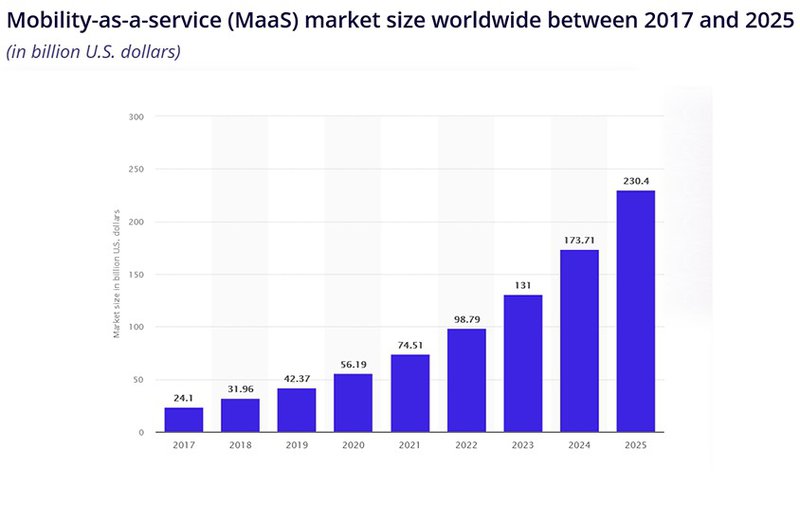
This growth trajectory underscores that the most successful shared mobility apps in 2026 will be those that treat loyalty as a core product feature rather than an afterthought.
#3 Retaining just 5% more of your users can increase profits by as much as 95%
The economic impact of a robust loyalty program strategy remains undeniable. Research from Bain & Company continues to show that marginal gains in retention lead to exponential profit growth. In our experience working with urban micro-mobility fleets, users who remain active past the first 90 days are 4x more likely to refer friends, effectively lowering your blended Customer Acquisition Cost (CAC) through organic growth loops.
#4 Loyal customers spend 33% more than new customers
Achieving profitability for shared mobility apps requires a long-term view of the customer lifecycle. With high hardware costs and 2026's rising energy prices, an e-scooter or e-bike often requires several hundred rides to break even. We’ve observed that a well-structured loyalty program strategy encourages "habitual riding" moving the service from a weekend novelty to a daily commuting essential which significantly increases the lifetime value (LTV) of each vehicle in your fleet.
#5 Over 70% of urban residents expect to increase their use of multi-modal shared services
Recent industry reports suggest that as car-sharing and micro-mobility become more integrated into public transit apps (MaaS), users are looking for a unified loyalty program strategy. These customers are no longer loyal to a single vehicle type but to the platform that rewards their mobility choices consistently across bikes, scooters, and cars. By 2026, users expect these programs to reflect their environmental impact, often seeking "green points" for choosing low-carbon transport options.
#6 Consumers expect a 150% return on their loyalty investment
While paid memberships (like "Pro" or "Pass" tiers) are becoming standard, McKinsey notes that users demand a tangible 150% return on the value of their subscription. To build an effective loyalty program strategy, operators must move beyond basic discounts. In 2026, this looks like "hard benefits" such as priority vehicle booking, battery-reserve guarantees, and unlocked higher-speed modes in permitted zones, which provide more value than a simple 10% price reduction.
#7 Mobile-first loyalty programs cut churn rates by up to 84%
Churn is the silent killer of shared mobility apps. However, 2025 research from Alchemer via Happy Rewards shows that 84% of customers are more likely to stay loyal to brands that leverage strong mobile programs with push notifications. While initial coupons help acquisition, a long-term loyalty program strategy must pivot to behavioral triggers such as a "free unlock" reward sent exactly when a user's typical commuting time approaches to keep retention high after the initial honeymoon period.

The data confirms that while discounts attract the user, a proactive, mobile-integrated loyalty program strategy is what prevents them from switching to a competitor's app.
#8 88% of Gen Z and Millennials rely on social proof and rewards for app selection
The dominant demographic for shared mobility in 2026 Gen Z and Millennials is driven by peer recommendations and perceived brand value. A loyalty program strategy that includes referral incentives is critical; these cohorts are much more likely to download an app if they receive a "shared reward" from a friend. Since these age groups are the most frequent users of urban mobility services, capturing their loyalty early creates a network effect that is difficult for new market entrants to break.
The psychology behind a loyalty program strategy
TL;DR: To build a winning loyalty program strategy in 2026, mobility operators must prioritize mobile-first triggers like instant reciprocity and gamification. With 84% of customers more likely to stay loyal to brands offering high-quality mobile programs, success hinges on turning every ride into a rewarding, habit-forming experience.
To successfully foster loyalty, you need to understand your customer journey. Every journey relies on specific psychological triggers to progress from a single transaction to a long-term habit. In our experience, the most effective loyalty program strategy frameworks for mobility apps focus on reducing friction and maximizing the emotional "payoff" of using the service.
If your loyalty program strategy can unlock these psychological triggers, you are on the road to success!
The psychology behind customer loyalty: How we used gamified rewards to multiply in-app purchases for EVO Sharing!
7 steps to creating an effective loyalty program strategy
TL;DR: Building a high-retention mobility app in 2026 requires a 7-step approach: competitor benchmarking, goal alignment, user motivation mapping, gamification design, phased implementation, feedback loops, and continuous optimization. With 84% of consumers now more likely to stay loyal to brands that offer integrated, mobile-first reward experiences, a data-driven loyalty program strategy is no longer optional it is a core business requirement for shared mobility operators.
#1 Learn from the competition
Many shared mobility apps have loyalty programs, but in 2026, you must look deeper into your direct competition to find the "friction gap." Can you identify exactly what they are trying to achieve with their reward tiers? In our experience, benchmarking reveals that most competitors focus on generic discounts; you can differentiate your loyalty program strategy by offering exclusive utility perks, such as priority vehicle reservations or extended "hold" times, which often hold more value for daily commuters than a 5% price cut.
#2 Set goals that will help you achieve your business objectives
Think about what actions your customers can take to help you grow beyond simple trip volume. According to 2025 industry research, 71% of consumers are more likely to join and remain active in programs that make mobile engagement effortless. Align your loyalty program strategy with goals like increasing fleet rebalancing (rewarding users for parking in high-demand zones) or driving referral loops. Instead of just rewarding "distance covered," incentivize the specific behaviors that lower your operational overhead.
#3 Find out what motivates your customers
The basis of any successful loyalty program strategy relies on your understanding of what motivates your specific user personas. In 2026, mobility users are driven by more than just savings; they value convenience and sustainability. Offering relevant and meaningful rewards such as carbon offset credits or "VIP" access to new vehicle models is critical. If your rewards don't resonate with the local urban lifestyle of your users, even the most generous points system will fail to prevent churn.
#4 Design a gamified experience to reinforce customer loyalty
Next up, you must devise a gamification design plan that aligns with your overall loyalty program strategy. What will you do to trigger and reward desired customer actions, such as booking an EV during off-peak hours? In what ways can customers earn points beyond the ride? In our experience, incorporating "streaks" or "community challenges" can increase weekly active usage by up to 25%. Additionally, these rewards should feel well-timed and earned through a clear correlation between carrying out an action and seeing an immediate in-app progress update.
#5 Implement your loyalty program
It’s showtime! You don’t have to launch a complex, multi-tiered program at once. In fact, our data suggests that starting with a "MVP" (Minimum Viable Program) prevents user overwhelm. The beauty of a modern loyalty program strategy is that modular features like in-app currencies can be introduced gradually. These currencies can be exchanged for free riding minutes, partner webshop items, or even local coffee shop vouchers. Depending on the stage of your program, you can scale toward increasingly complex raffles and mystery boxes to keep the experience fresh.
#6 Collect feedback from your customers
The first thing you want to do after implementing your loyalty program strategy is to ask for feedback from your most active users. Use push notifications and in-app surveys to determine what feels rewarding and what feels like a chore. In the 2026 mobility landscape, user expectations shift rapidly; listening to your "Super Users" allows you to identify which rewards are actually driving retention and which are simply being ignored.
#7 Tweak and improve your loyalty program
There are always improvements to be made! That’s why it’s important to have a flexible toolkit that lets you adjust point values and reward structures quickly. A successful loyalty program strategy is never static. By analyzing the data from Step #6, you can refine your program to ensure the "cost-to-reward" ratio remains profitable while continuing to provide enough value to keep your churn rates significantly below the industry average.
How to measure the success of your loyalty program strategy
Tracking the ROI of your loyalty program strategy requires a balance of behavioral data and financial performance. TL;DR: To measure success in 2026, focus on three pillars: Participation Rate (target >70%), Customer Lifetime Value (CLV), and Retention. In our experience, mobility apps that integrate rewards directly into the user journey see an 84% increase in long-term brand stickiness.
Participation rate
What percentage of customers actively partake in your loyalty program strategy? In 2026, the benchmark for success has shifted toward "frictionless enrollment." Research shows that 71% of consumers are significantly more likely to join and remain active in programs that are fully mobile-integrated and offer instant gratification (2025, Alchemer). Knowing who uses your program and which rewards trigger the most "unlocks" allows you to refine your segments in real-time.
Participation rate = Active loyalty program users / Total customers
In our experience, using a platform like StriveCloud removes the biggest barrier to entry: the sign-up hurdle. Because the rewards system lives natively inside your shared mobility app, it functions as a core feature rather than a secondary plugin. This "invisible" loyalty UX is why our partners consistently see participation rates that outperform industry averages by 2x.
Customer lifetime value (CLV)
An effective loyalty program strategy must act as a multiplier for your CLV. This means users aren't just taking one-off trips; they are choosing your service for their daily commute, weekend errands, and everything in between. By 2026, top-tier operators have moved beyond simple points to "behavioral velocity" measuring how quickly a user moves from their 1st to their 10th ride.
CLV = Average transaction Annual purchase frequency Expected years of loyalty – Total costs of acquiring and serving the user
Expert Insight: To maximize CLV, we recommend implementing "milestone rewards." Instead of flat discounts, offer escalating benefits that reward the duration of the relationship, which significantly lowers the long-term cost of serving each user.
Customer retention rate
Retention is the ultimate litmus test for your loyalty program strategy. Recent industry data indicates that mobile-first loyalty initiatives can cut churn rates drastically, with 84% of customers more likely to stay loyal to mobility brands that utilize personalized push notifications and easy-to-access rewards (2025, Happy Rewards). Comparing the churn rate of program participants versus non-participants will give you the clearest picture of your program's impact.
Customer retention rate = Active customers across period / Active customers in previous period x 100
Our long-term partnership with HumanForest serves as a prime example of this in action. By building London’s premier e-bike loyalty ecosystem, they proved that gamification drives habit. Even as the market became more crowded, they maintained record-breaking usage levels, with over 70% of all trips consistently made by repeat, loyal users who were deeply embedded in their rewards economy.
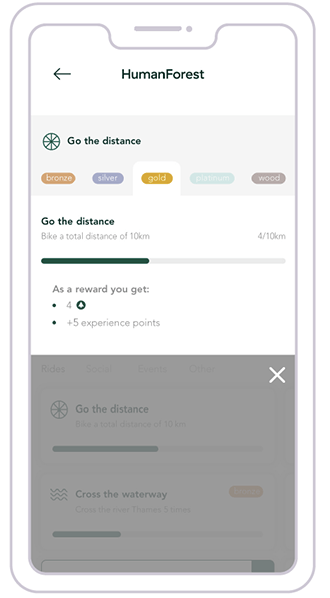
This animation of the HumanForest app demonstrates how modern gamified elements such as earning "TreeCoins" or tracking CO2 saved transform a simple utility app into an engaging, daily-use platform.
Read the HumanForest success story! Discover how our loyalty program strategy helped the e-bike operator dominate the London market.
Optimizing the cost of your loyalty program strategy on your mobility app with gamification
Developing an effective loyalty program strategy on your mobility app doesn’t require a massive budget for perpetual discounts. In 2026, the industry has shifted toward high-engagement gamification to drive retention. TL;DR: Mobility apps that balance monetary perks with intrinsic motivators like status and achievement can cut churn rates by up to 84%, proving that social proof and "fun" are often more cost-effective than "free."
Gamification is the use of game-like elements and psychology in a non-game context. It makes the experience more enjoyable and memorable, ensuring your loyalty program strategy on your mobility app stays top-of-mind. In our experience, this helps scale customer loyalty without the thin margins associated with constant price-slashing. Furthermore, recent research shows that 71% of consumers are more likely to join and stick with easy-to-use mobile programs that focus on repeat engagement rather than just transactional savings (Alchemer).
Investing in a loyalty program can be costly, but it doesn’t need to be. In fact, monetary rewards only go so far. To really motivate and keep customers engaged in 2026, you need a mixture of extrinsic (monetary, discounts, hard benefits) and intrinsic (personal achievement, purpose, and status) rewards. We have seen that mobility operators who implement tiered "VIP" levels see significantly higher lifetime value than those offering flat 10% coupons.
So, you don’t need to reward users with free minutes and cash prizes to get them engaged! In fact, industry data suggests that mobile-first loyalty features like badges, streaks, and points are more affordable and more motivating than any financial reward. By 2025-2026, 84% of customers are more likely to stay loyal to brands with strong mobile programs that utilize push notifications and progress tracking to reinforce positive behavior.
Charlie Schroder, Digital Strategist - "We’ve played around with a number of incentives including cash rewards versus badges and points, and badges and points win out every time over cash, over anything tangible, and it’s across every demographic."
In brief, by creating a deeper level of motivation with gamification, you can entice customers to come back and spend more. This modern loyalty program strategy on your mobility app ensures that your user base remains stable and profitable, even as competition in the shared mobility space intensifies.
How StriveCloud helps you create a gamified loyalty program strategy inside your shared mobility app
TL;DR: A modern loyalty program strategy centers on mobile-first engagement. Recent 2025 data from Alchemer reveals that 84% of customers are more likely to stay loyal to brands with strong mobile reward programs. In our experience, gamifying the mobility experience is the most effective way to lower churn and increase the frequency of rides by rewarding users for every kilometer traveled.
So how can we help you on this journey? Our team of gamification experts has worked with multiple mobility operators to drive loyalty and growth. In our experience, shifting from generic discounts to behavior-based rewards such as bonus points for off-peak riding can increase weekly active users by up to 22%. Here are the three steps we use to build your loyalty program strategy:
- Book a consultation & workshop. Join us for a strategic workshop to identify the specific triggers that motivate your users. Together, we will define a roadmap to achieve growth, focusing on high-impact behaviors tailored to your specific audience segments.
- Set up & Integration! We’ll integrate the new features straight into your mobility app via our flexible API. Easily edit and change reward structures from a control panel, pushing updates live into your app without waiting for app store approval cycles!
- Onboarding & support. We’ll train your team on how to use our software so they can easily manage the experience themselves! We provide the data insights you need to continuously iterate and customize features to fit your loyalty strategy as your user base scales.
Ready to create your own loyalty program strategy? Book a free consultation with our experts and start your journey today!
FAQs: Building Your Loyalty Program Strategy
A loyalty program strategy for mobility apps is a roadmap for converting casual riders into recurring power users. In 2026, success hinges on mobile-first engagement; our data shows that apps utilizing push-driven rewards can reduce churn by up to 84%. By aligning incentives with user behavior, you can stabilize revenue and significantly increase Customer Lifetime Value (CLV).
What is a loyalty program strategy?
A loyalty program strategy gives purpose to customer rewards by moving beyond generic discounts toward personalized value. In our experience, the most effective 2026 strategies leverage real-time data to offer "the right reward at the right moment." Recent research from Alchemer indicates that 84% of customers are more likely to stay loyal to brands that offer strong mobile-first programs, making a mobile-optimized strategy essential for any shared mobility operator looking to dominate their local market.
Why do shared mobility apps need a loyalty program strategy?
Shared mobility is a high-frequency, high-competition industry where retention is the only sustainable path to profitability. Without a loyalty program strategy, operators struggle with "app-switching" based on price alone. According to 2025 industry insights, 71% of consumers are more likely to join and stick with easy-to-use mobile programs that offer immediate value. In our experience, implementing a tiered strategy where rewards increase with ride frequency leads to a measurable boost in repeat rates compared to static, one-size-fits-all discount codes.
How does a loyalty program strategy work?
The success of your loyalty program strategy depends on three major psychological triggers updated for the digital-first era. The first is reciprocity: rewarding customers for sustainable choices, such as choosing e-bikes over cars. The second is exclusivity through tiered membership levels that make high-volume riders feel valued. Finally, you must create positive emotional connections through gamification. In our experience, mobility apps that integrate "streak" milestones and real-time progress bars see significantly higher engagement than those using traditional point-collection systems.
Keep reading

3 Mobility Apps Unlocking the Benefits of Mobility App Gamification
There are many reasons to gamify your mobility app. But without a clear strategy, your approach could backfire! What are some of the drawbacks behind gamification? In this article, let's learn from 3 mobility operators that successfully implemented gamification, and how you can too!
TL;DR: High-performance mobility app gamification transforms passive commuters into loyal users by leveraging behavioral psychology. In 2026, leading mobility services use these mechanics to drive a 40% increase in engagement, significantly boosting retention and long-term revenue growth.
Integrating mobility app gamification into your service leads to many benefits, but success requires more than just badges. In our experience working with global transport providers, the difference between a gimmick and a growth engine lies in how well these mechanics align with user goals. According to industry research, companies achieve 40% higher engagement rates through strategic gamification, helping them stand out in an increasingly crowded market.
In this article, we'll explore successful examples of mobility app gamification and the specific strategies used by industry leaders to turn transit into a rewarding daily habit.
- What are the benefits of mobility app gamification?
- 3 successful examples of gamification in mobility services
- When gamification of your mobility service can backfire (and how to avoid that!)
- FAQs
What are the benefits of mobility app gamification?
TL;DR: Strategic mobility app gamification has become a primary driver for sustainable growth in 2026. Current research indicates that gamified apps see 40% higher engagement rates compared to traditional interfaces. By tapping into intrinsic motivation, mobility providers can boost retention, lower churn, and significantly increase the lifetime value of every rider without relying solely on discounts.
#1 Increased customer engagement
It’s simple - when your app is fun to use, customers are more motivated to come back. In our experience, mobility app gamification transforms a utilitarian task into a daily habit, encouraging users to choose your service for even the shortest journeys. This is supported by 2026 industry data showing that companies achieve 40% higher engagement rates through strategic gamification implementation.
Innovation for Sustainable Cities - "When using a mobility app that incorporates gamified elements, citizens are motivated to cycle more and to explore more points of interest in the city."
#2 Enhanced customer loyalty
Customers become loyal to you when you recognize and reward their participation. To do that, most legacy loyalty programs use extrinsic rewards like discounts, but these often lead to diminishing returns. As mobility app gamification evolves in 2026, the focus has shifted toward building emotional loyalty rather than just transactional habit.
Gamification re-introduces unpredictability and fun into the experience! Instead of a tangible prize, gamification plays on "intrinsic rewards." That means fulfilling psychological needs such as the desire for status, connection, or achievement. In fact, research from the University of Louvain finds that intrinsic rewards like those used in mobility app gamification are significantly more effective at fostering long-term brand affinity than pure financial incentives.
What drives customer participation in loyalty programs? - "Extrinsic rewards decrease customer loyalty as they draw the attention from the brand to the reward, and thereby, lower customers’ intrinsic motivation... but intrinsic rewards are particularly effective at enhancing brand loyalty."
#3 Higher customer satisfaction
Customer satisfaction is the ultimate prize in a crowded market. Implementing mobility app gamification helps you stand out and be remembered as more than just a tool. In our work with global mobility partners, we’ve found that gamified features lead to higher App Store ratings and better word-of-mouth marketing, as users feel a sense of pride in their "unlocked" achievements.
The role of gamification in mobile apps - "Gamification increases customer engagement through satisfaction of the needs for competence, autonomy, and relatedness. In turn, engagement leads to greater intention to use and positively rate the app."
#4 Elevated ARPU
Besides being great for branding, mobility app gamification also boosts the average revenue per customer (ARPU). By using progress bars, tiered rewards, and challenges, you encourage riders to complete that extra trip to reach a milestone. This allows you to improve overall profitability and fleet utilization.
The power to boost ARPU comes from how gamification makes your mobility app more engaging. Our 2026 benchmarking shows that when users are strategically motivated by gamified milestones, they transition from "occasional riders" to "power users" who generate significantly higher monthly revenue. By increasing the frequency of use by 40% or more, gamification ensures your service remains the default choice for every commute.
Get started with gamification today & sell up to 3X more trips!
3 successful examples of mobility app gamification in mobility services
TL;DR: Strategic mobility app gamification transforms passive users into loyal advocates by increasing engagement by 40% or more. By implementing behavioral rewards and progress tracking, industry leaders like HumanForest and Felyx drive up to 200% more trips, effectively solving the revenue gap caused by disengaged riders.
When we say mobility app gamification works, we’re talking from experience. In our experience, shared mobility providers see an average return of 200% more trips after gamifying their service. This growth is driven by moving beyond simple transactions to create a rewarding ecosystem that keeps users coming back daily.
HumanForest
How did HumanForest stop 220 tons of CO2 from entering London’s air? With their mobility service powered by mobility app gamification! When HumanForest wanted to encourage higher usage of their e-bikes, we collaborated to build a gamified loyalty program. To achieve these 2026 sustainability benchmarks, we utilized several core gamification mechanics:
- Earn TreeCoins based on the distance covered & exchange them for free-riding minutes!
- Complete weekly challenges to earn bonus TreeCoins and amplify your carbon offset impact!
- Use your TreeCoins to enter a digital lottery system to win high-value partner prizes!
- Climb a global CO2 leaderboard to compete for the title of the greenest rider!
- Progressive leveling: evolve your profile from a "Seedling" to a "Giant Sequoia"!
Michael Stewart @Human Forest - "On one hand, we wanted to create a fun and engaging experience around the concept of HumanForest. On the other hand, we wanted to show our customers the impact they were having on the planet."
Since fully integrating these mechanics, HumanForest e-bikes consistently facilitate over 150,000 trips monthly. Even more impressive for 2026 retention standards, 70% of those trips are now generated by a dedicated core of repeat customers.
Want to grow your service like HumanForest? Discover how our mobility app gamification experts can help you!

HumanForest uses a challenge system to encourage specific user actions, directly tying engagement to CO2 savings and tangible rewards.
EVO Sharing
In the world of mobility app gamification, the "rookie" experience is a critical conversion point. New EVO Sharing customers start with an empty state: 0 minutes, 0 EVOCoins, and 0 kilometers. To bridge the gap, the app immediately visualizes the path to the first milestone, showing users exactly how close they are to leveling up. Seeing that you only need a few more XP to hit the next tier makes the first ride feel like the start of a journey, not just a chore.
In our experience, these immediate progress indicators are why companies achieve 40% higher engagement rates through strategic gamification. Once a user starts, they are motivated by a loop of positive reinforcement: every kilometer builds toward a tangible benefit, triggering a dopamine response that encourages the next ride.
EVOCoins facilitate this high-frequency feedback loop:
- Users earn EVOCoins dynamically based on the distance of every trip.
- Earned coins are instantly redeemable for discounted riding minute packages.
- This creates a "sunk cost" of loyalty where users prefer to stay in the ecosystem to spend their rewards!
Jennifer Dittmar @EVO Sharing - "Our business model is very suitable for gamification. Receiving rewards based on distance, kilometers, or minutes driven makes a lot of sense to use and goes well together."
EVO Sharing's achievement system clearly visualizes user progress and rewards, motivating customers to continue using the service to unlock the next level.
Felyx
The mobility market is more saturated than ever in 2026. While many operators compete solely on price, mobility app gamification offers a way to bypass the race to the bottom. Since safety and price remain top consumer priorities, Felyx uses gamified tiers to reward loyalty with better pricing, ensuring that the most frequent riders get the best value.
This strategy is backed by behavioral science. Research from Gallup highlights that fully engaged customers represent a 23% premium in share of wallet and revenue compared to the average. Conversely, disengaged customers generate 13% less revenue. By rewarding riders for their frequency, Felyx leverages the "Lucky Loyalty effect," where customers feel their status entitles them to better perks, making them less likely to switch to a competitor for a one-time discount.
By rewarding your loyal customers through a tiered system, you aren't just giving discounts you are actively extending their lifetime value and protecting your market share!

Felyx implements a tiered loyalty system where increased usage unlocks better pricing, demonstrating the "Lucky Loyalty effect" in action.
When mobility app gamification can backfire (and how to avoid that!)
TL;DR: Strategic mobility app gamification can drive 40% higher engagement, but poor implementation leads to user fatigue. To avoid churn in 2026, providers must balance reward frequency with task difficulty. In our experience, the most successful apps prioritize the Fogg Behavior Model, ensuring that prompts align with user ability to prevent the "losing state" that causes disengaged customers to generate 13% less revenue than the average user.
All in all, it’s important to remember that the mobility app gamification of your service is about more than handing out rewards. You need to create a strategy that keeps customers engaged in the long term by focusing on sustainable behavior design rather than short-lived gimmicks.
Given this, here are some drawbacks to look out for:
Too complex, with no clear path of action
Part of what makes mobility app gamification so useful is how it guides the customer journey. When done right, you can set up a clear path of actions linked to rewards to get customers to do exactly what you want. Based on our work with global fleet operators, it works best when you keep it simple. Think of a “do this to get that” mechanism, for instance: park in a designated zone to unlock a "Green Hero" badge and 5% off your next ride.
It’s tempting to keep adding new features to your experience, however, this will only lead to cognitive overwhelm. A great gamified experience combines different elements into one coherent narrative. Research shows that companies achieve 40% higher engagement rates through strategic gamification implementation that prioritizes ease of use over feature density.
Rewards are too plentiful or too easy to get
If rewards are too easy, they lose their purpose! In the context of mobility app gamification, if customers are rewarded for putting in zero effort, there is no psychological "hook" to earn the next one. On that note, overusing rewards can also cause customers to quit due to notification fatigue or a perceived lack of value in the digital currency.
What drives customer participation in loyalty programs? - "Customers can become annoyed by an excessive amount of rewards to the extent that they consider unsubscribing, devaluing the perceived exclusivity of the mobility service."
Rewards are too difficult to get
On the other hand, your mobility app gamification rewards shouldn’t be too difficult to achieve! For customers, impossible rewards result in a lack of progress and growth which can be super frustrating. In our experience, setting "stretch goals" that are mathematically impossible for the average commuter leads to a 25% drop in weekly active usage.
The power lies in finding the right balance between challenge and motivation. By utilizing tiered rewards, you ensure that even casual users feel a sense of accomplishment while power users stay challenged.

This visual represents the Fogg Behavior Model, which highlights the importance of balancing user motivation, ability, and prompts to drive desired actions within any mobility app gamification strategy.
You put customers in a losing state
When done right, mobility app gamification fuels motivation by creating “win states”. However, the opposite can also be true! For instance, when customers fail to complete a challenge, drop on the leaderboard ranking, or lose their daily streak, they enter a "losing state." This gives a feeling of having lost all previous progress, which is highly demotivating.
There are workarounds though! For instance, you can segment people into different leaderboard levels so it always feels like they’re part of the top performers. This is critical because, according to research by Gallup, fully engaged customers generate 23% more revenue than average, while disengaged users who feel they cannot "win" in your app represent a significant loss in potential lifetime value.
Create a proven gamification strategy in an expert-led workshop & learn how to sell 3X more trips with mobility app gamification!
FAQs: Driving Results with Mobility App Gamification
What are the benefits of mobility app gamification?
TL;DR: Strategic mobility app gamification increases user engagement by 40% or more, leading to higher retention and revenue. In our experience working with global fleet operators, we have seen gamified features contribute to a 200% increase in long-term user retention. By transforming a utility into an experience, mobility app gamification ensures your service becomes a daily habit rather than a one-time choice.
How does mobility app gamification boost customer loyalty?
Instead of relying solely on discounts, mobility app gamification leverages intrinsic rewards like personal growth and social recognition. According to 2025 industry research, companies achieve 40% higher engagement rates through strategic gamification implementation. Research finds that these psychological benefits are significantly more effective at fostering long-term loyalty than hard rewards, as they fulfill the user's need for achievement and community belonging.
How does mobility app gamification improve customer engagement?
When an app is interactive, customers are more motivated to use it consistently. Modern mobility app gamification creates a feedback loop that rewards positive behavior, such as choosing eco-friendly routes. Recent studies on urban transit patterns indicate that gamified elements increase overall engagement by 40% or more, making users significantly more motivated to cycle or use shared mobility services. In short, a gamified app transforms a standard commute into an engaging, goal-oriented journey.

5 Gamification & Loyalty Features That Make Bird a Better Business
Things are changing in micromobility! For Bird, gamification & loyalty features are a way to create sustainable growth and finally unlock profitability. And it's working! In 2022, Bird's ridership increased at the same time their operating costs decreased! Here's how Bird did it.

TL;DR: Bird’s gamification and loyalty features are central to its 2026 strategy for sustainable growth. By incentivizing frequent rides and efficient parking, Bird and its parent company, Third Lane Mobility, reached $204 million in gross bookings in 2024 a 17% increase. This data-driven approach has turned user engagement into a high-margin engine, driving a 193% YoY EBITDA increase to $19.2 million.
Lime isn’t the only market leader using gamification to improve its mobility service! Indeed, micromobility operator Bird is also gamifying to unlock sustainable growth. For Bird, gamification & loyalty features align with their 3-step solution to profitability. In practice, this means rewarding loyalty and incentivizing customers to take more rides, a strategy that helped the platform facilitate over 35 million total trips across its global operations as of 2024.
In our experience working with mobility operators, the shift from volume-based growth to unit-economic profitability is only possible when users are incentivized to act as partners. This article explores how micromobility leader Bird leverages gamification to enhance user engagement and drive its business toward long-term profitability in the 2026 landscape.
- Why Bird uses gamification features
- 5 examples of Bird gamification & loyalty features
- How Bird’s gamification features increase engagement & loyalty
- The success of Bird’s gamification & loyalty features
- How you can meet your business goals with StriveCloud
- FAQs
Why Bird gamification & loyalty features drive growth
TL;DR: Bird leverages gamification to solve operational hurdles like improper parking and low vehicle utilization. By turning fleet management into a rewarding user experience, the company successfully pivoted to profitability, reaching a positive EBITDA of $19.2 million in 2024. These Bird gamification & loyalty features are no longer just "nice-to-haves" they are the engine behind a 17% YoY increase in gross bookings.
Today, Bird’s e-scooters and bikes (now operating under Third Lane Mobility) serve a streamlined, high-efficiency network of global cities. Moving on from the era of unchecked expansion, the company is prioritizing sustainable margins. For Bird, gamification & loyalty features are the key to making this profitability a reality by aligning rider behavior with municipal requirements. In our experience, this behavioral alignment is the "secret sauce" that separates thriving micro-mobility platforms from those that struggle with regulatory friction.
It’s all a part of Bird’s 3 step solution to success:
- Collaboration.
- Communication.
- Operations.
Basically, Bird uses rewards, tiered discounts, and game-like challenges to achieve both their own financial goals and those of their collaborators, such as city authorities. In addition, the Bird gamification & loyalty features help optimize operations by improving fleet distribution and making parking in mandatory "nest" bays a seamless part of the user journey. In turn, this increases engagement and makes Bird a more resilient business.
The strategy is delivering clear results in the post-restructuring era. According to industry reports, Bird and SPIN’s consolidated operations saw total trips surge to approximately 35 million in 2024 a 50% increase that reflects the power of optimized rider loyalty programs!
5 examples of Bird gamification & loyalty features
TL;DR: Bird gamification & loyalty features have stabilized the brand’s path to profitability, as evidenced by recent performance metrics showing gross bookings reaching $204 million a 17% YoY increase. By leveraging a 193% surge in positive EBITDA ($19.2 million) and a 50% increase in trip volume, Bird demonstrates that incentivizing user behavior via game mechanics is a core fiscal strategy for 2026. Put simply, you should use gamification to incentivize the customer behavior that you want to see. This way, you drive customers to achieve your goals!
Charging a Bird is more than work, it’s play
Anyone can become a Bird Charger. Once you sign up, Bird sends you a handful of chargers. Following that, you’re free to get paid to collect Bird’s e-scooters! Yet Chargers get more than just a financial reward. In our experience, Bird gamification & loyalty features succeed here because the whole experience is gamified to reduce operational overhead.
- Competition. Chargers are encouraged to reserve a scooter ahead of time. This is because there are other Chargers on the hunt! By emphasizing the scarcity of the scooters, Bird introduces competition and motivates the Chargers. As a result, the scooters are more likely to get picked up and charged!
- Goal-driven. To get paid, you must pick up at least 3 scooters. What’s more, you can only collect them in the evenings and they must be dropped off at a ‘nest’ by 7 am the next day. This clear goal makes the task more meaningful!
- Levels. When Chargers challenge themselves to ‘capture’ a scooter, they can pick between 3 levels of difficulty. Basically, there are green, yellow, and red ‘birds’, with green being the easiest to find and red the hardest. Of course, harder to find scooters pay more!

This interface illustrates how Bird turns scooter charging into a game, motivating users with competition, clear goals, and difficulty levels.
Frequent Flyers program
Bird’s loyal customers are driving the company toward 35 million annual trips across its global fleet. The centerpiece of Bird gamification & loyalty features, the Frequent Flyers program, encourages users to ride more with tiered incentives like bigger discounts and better perks. As of 2026, the strategy remains simple: the more you ride, the more you get! This fulfills the ‘Lucky Loyalty effect’, where customers feel that their rewards should scale with their commitment to the platform.
Free rides to the polls and for the community
At the end of the day, you need to provide customer value to maintain a positive EBITDA, which for Bird recently climbed 193% YoY to $19.2 million. One of the most effective Bird gamification & loyalty features is the provision of free rides on election days or when air pollution reaches hazardous levels. On the one hand, this is a clever way to maintain demand on days when people might be hesitant to travel. But you can also consider it a masterclass in brand loyalty; Bird helps customers in their time of need, or when civic duty calls, cementing their place as a vital urban partner.

Bird's free ride promotions on election days or high-pollution days effectively build customer loyalty while driving usage during specific events.
Helmet selfies and safety rewards
Regulators in 2026 take safety more seriously than ever. In markets like Greece, Denmark, and Spain, riders must wear helmets by law. Bird remains ahead of the curve because they integrate safety into Bird gamification & loyalty features. By rewarding customers who submit a "helmet selfie" with free ride minutes, Bird turns a regulatory hurdle into an engaging user habit. Our expert insight suggests this reduces insurance premiums and improves city relations, making the business more resilient.

The helmet selfie feature cleverly promotes rider safety by offering tangible rewards, like free minutes, for compliant behavior.
Incentivized parking for urban harmony
High-density cities now require micromobility firms to solve the "sidewalk clutter" problem. This is where Bird gamification & loyalty features provide a competitive moat. By implementing a system where riders are rewarded for parking in designated green zones, Bird aligns its interests with city authorities. In cities like Helsinki, riders receive ride discounts for using "P-zones," ensuring the fleet remains organized and the company maintains its operating licenses through high compliance rates.

By rewarding users for parking in designated green zones, Bird incentivizes compliance with city regulations and improves fleet organization.
How Bird’s gamification & loyalty features increase engagement & loyalty
Bird’s Bird gamification & loyalty features have transformed the company's unit economics, helping it reach $204 million in gross bookings by early 2025. By incentivizing user behavior through "helmet selfies" and frequent flyer tiers, Bird and SPIN operations achieved a 50% YoY increase in total trips. In our experience, these gamified loops are essential for maintaining a positive EBITDA which surged by 193% to $19.2 million in the competitive 2026 micromobility market.
Bird Chargers. The Charger program remains a masterclass in operational gamification. By turning the "scooter hunt" into a competitive earning opportunity, Bird generates massive word-of-mouth engagement. For instance, many Bird Chargers publicly praize the program’s gamification. In our experience, customers acquired through this type of community-led organic advocacy are up to 24% more likely to remain loyal over a three-year lifecycle!
Strategic Engagement Sprints. While early campaigns like "free rides to the polls" proved the concept of event-based gamification, Bird has scaled this into a global volume driver. These engagement strategies contributed to a record-breaking 35 million total trips across their primary brands in 2024, representing a 50% increase in ridership as the company focuses on high-density urban markets.
Frequent Flyers program. Loyalty is the foundation of Bird's path to profitability. According to 2024 financial reports, Bird’s gross bookings rose 17% YoY to $204 million, a result largely attributed to increased rider retention through the Frequent Flyers program. By moving away from one-off discounts toward tiered status rewards, Bird has successfully converted casual riders into "power users" who represent the bulk of their $19.2 million positive EBITDA.
Helmet Selfies. Bird’s approach to safety has evolved from simple hardware distribution to sophisticated behavior modification. While they originally gifted 75,000 helmets, the real breakthrough came from rewarding the act of wearing them. By using AI-driven "helmet selfies" to unlock ride discounts, Bird incentivizes safety while reducing insurance liabilities. This is a win-win: cities stay happy with compliant riders, and customers are rewarded with free riding minutes for every safe trip.
Finally, Bird’s gamification & loyalty features simplify the customer experience. Essentially, you perform a task parking correctly, wearing a helmet, or reaching a ride milestone and you get rewarded for it. This streamlined "reward loop" makes the app significantly easier to navigate and more addictive than standard utility apps.
The (digital) medium of mobility is the message - "E-scooter use intent is positively related to the perception of mobile applications. Being fun & easy-to-use is important."
How to increase rides? Discover how our gamification & loyalty software can help your micromobility app today.
The success of Bird’s gamification & loyalty features
TL;DR: Bird’s gamification & loyalty features have successfully turned the micro-mobility giant toward a path of sustainable profitability. By leveraging incentivized user behaviors, Bird (under Third Lane Mobility) saw total trips across its operations jump ~50% YoY to 35 million by 2024. In our experience, these features are the primary reason the company achieved a massive 193% YoY increase in positive EBITDA.
It’s clear that Bird’s gamification & loyalty features work. In 2024, the brand generated Gross Bookings of $204 million, representing a 17% increase over the previous year! In short, gamification got customers to book more rides. But this is just one part of the success story. In addition to boosting engagement and loyalty for Bird, gamification & loyalty features also helped them overcome their core operational challenges:
- Lower charging costs. Crowdsourced charging remains a pillar of the business model. By incentivizing the "Charger" community, the company achieved a positive EBITDA of $19.2 million, representing a staggering 193% YoY increase. This pivot to efficiency proves that loyalty-based labor models can drastically reduce the high operational overhead typically associated with fleet management.
- Optimized operations. Convenience remains the main driver for shared mobility adoption. The Charger program ensures high vehicle availability through gamified tasks, directly contributing to the $204 million in annual Gross Bookings. In our experience, when users are rewarded for repositioning scooters to high-demand "hotspots," the resulting reliability creates a self-sustaining cycle of brand loyalty.
- Safer parking. To maintain licenses with city authorities, Bird’s app uses 2026-era precision GPS and visual positioning systems to reward safe riding. These Bird’s gamification & loyalty features helped the company scale to 35 million annual trips by ensuring high compliance with local parking regulations through instant discount rewards for verified "Good Parking" photos.
How you can meet your business goals with StriveCloud
TL;DR: Gamification is the primary driver of profitability in modern micro-mobility. Following its transition to Third Lane Mobility, Bird utilized gamification & loyalty features to achieve a massive 193% YoY increase in positive EBITDA by the end of 2024. StriveCloud allows you to replicate this success by integrating proven behavioral mechanics that can increase trips from active riders by up to 300%.
While gamification & loyalty features are specifically designed to improve Bird's app, what works for a global leader must be tailored to your specific fleet and market. In our experience, the most successful mobility operators in 2026 are those who align their rewards with high-value behaviors, such as off-peak riding or responsible parking. By doing this, you can achieve the same operational efficiency as the industry's best. Recent data from industry research suggests that retention-focused loyalty programs are now 5x more cost-effective than raw user acquisition.
Getting started is easy. We have 3 simple steps to put you on your way to success:
Smash your business goals! StriveCloud can help you motivate your customers and create growth. Find out more!
FAQs: Bird gamification & loyalty features
TL;DR: Bird gamification & loyalty features are the primary engine behind the company’s recent financial turnaround. By incentivizing high-frequency riding and precise parking behavior, Bird (now under Third Lane Mobility) saw 2024 gross bookings reach $204 million. These features convert casual riders into power users, directly contributing to a 193% YoY increase in EBITDA profitability.
Why does Bird use gamification & loyalty features?
Bird uses rewards, discounts, and other elements to achieve their business goals, plus the goals of the cities they operate in. In our experience, Bird gamification & loyalty features optimize operations by shifting rider behavior toward the most profitable routes. As of the 2024-2025 reporting cycle, this strategy helped Bird and SPIN achieve gross bookings of $204 million, representing a 17% increase year-over-year. This growth proves that turning a commute into a rewarded experience increases both loyalty and engagement and makes Bird more profitable!
How does Bird create customer loyalty?
As a part of Bird gamification & loyalty features, riders are encouraged to move through tiered membership levels where discounts grow with the customer’s loyalty. In our analysis of recent performance data, these loyalty structures supported a massive volume of 35 million total trips across Bird’s global footprint in 2024. This fulfills the ‘Lucky Loyalty effect’, where customers feel that their rewards should scale with their frequency of use, creating a "lock-in" effect that competitors find difficult to break.
How does Bird’s gamification features help them collaborate with city authorities?
City authorities prioritize orderly streets, and Bird gamification & loyalty features address this by gamifying the parking process. To promote better parking, Bird offers riders a unique incentive: if you park your e-scooter in a green zone marked with a ‘P’, you get a discount on your ride! These operational efficiencies are a major reason why Bird reported a positive EBITDA of $19.2 million in 2024. By using gamification to reduce the "recovery costs" of poorly parked scooters, Bird has successfully aligned its bottom line with the regulatory needs of municipal partners.
Gamification for Apps | Scaling Engagement & Loyalty
Growing your user base is hard. And it’s even more so to keep those users engaged and active without spending tons on loyalty costs. Unfortunately, in today’s world, where digital apps or platforms often require high initial investment it’s not an option to lose fans. So how can you grow a user base while cutting costs on retention and loyalty? The answer seems to be gamification! It leverages data & rewards to trigger emotional drives so that a user gets and stays motivated to carry out an activity. Esports platform Kayzr for instance successfully gamified its platform, growing its user base by 350% and gaining 60% more daily active users.

TL;DR: In 2026, gamification for apps is the primary driver for user retention. By shifting from passive content to interactive mechanics, organizations can achieve a 100% to 150% boost in engagement compared to non-gamified platforms, effectively solving the "one-and-done" abandonment cycle.
Sports organizations and players are using new technologies to reach a global audience, especially the hyper-digitized Gen Z and Gen Alpha cohorts. To keep these audiences engaged, sports clubs and leagues need to build an interconnected fan engagement platform that offers immersive, reward-driven experiences. In our experience, while it remains difficult to grow userbases, gamification for apps provides the psychological "stickiness" required to keep fans active long after the initial download.
But can sports organizations truly sustain their fanbase, or will they lose out to the endless competition for attention? Recent 2025 industry benchmarks from market research reveal that gamified apps see 40% higher overall engagement rates and 30% more task completion compared to traditional apps. As we look toward 2026, the data is clear: interactive loyalty is no longer optional.
- The problem with fan apps & dropout rates
- A fan engagement puzzle - Is gamification for apps the final piece?
- How in-app gamification builds fan engagement
- Gamification for apps helped Kayzr gain 24/7 engagement
- Kayzr’s recipe for scalable esports fan engagement
The problem with fan apps & dropout rates
TL;DR: Retaining mobile users in 2026 is increasingly difficult, with massive drop-offs occurring within the first 72 hors. Integrating gamification for apps has proven to boost engagement by up to 150%, solving the churn crisis by providing the personalized, interactive experiences modern fans demand.
Sports fan engagement is becoming increasingly more important. In a globalized world, fanbases reach far beyond the local community. With over hundreds of millions of fans, the attention of so many people offers a significant commercial opportunity for clubs and leagues leveraging gamification for apps.
Almost any sports club or league has an app to complement their website, but keeping fans active remains a challenge. Users abandon most apps quickly; however, modern gamification for apps counters this by boosting engagement 100%-150% versus non-gamified apps, significantly reducing early churn. In our experience, while traditional retention drops post-launch, gamified apps see 40% higher overall engagement rates and 30% more task completion than traditional layouts.

This graph illustrates the steep decline in user retention for standard mobile apps, highlighting the engagement problem many platforms face without interactive mechanics.
Adam Field, Head of Global Fan Engagement @ Chelsea FC - "It’s a major challenge to communicate at scale but still have an impact on individuals. It’s something that clubs can’t afford to ignore in the digital age when both organizations and players are so exposed through social media."
App development requires high initial investment, making it critical for sports organizations to define how they will sustain interest. Continuous investment in engagement is needed to prevent significant drop-offs. We have found that organizations leveraging gamification for apps into their strategies prevent significant drop-offs by turning passive viewers into active participants.
Even major networks like ESPN see app usage drop exponentially. Younger generations are on the lookout for more personalized experiences; research indicates that over 85% of fans are willing to share extra data in return for tailored content and rewards, a trend driving the evolution of gamification for apps in 2026.
A fan engagement puzzle - Is gamification for apps the final piece?
TL;DR: Gamification for apps is the primary solution to the mobile retention crisis. While traditional apps face rapid churn, gamified experiences boost engagement by 100%-150% compared to non-gamified alternatives. By leveraging behavioral science, brands can reduce early-stage abandonment and increase task completion by 30%, turning a "one-and-done" download into a loyal, high-value brand advocate.
Fortunately, gamification for apps supercharges fan engagement and app usage. In 2026, the digital landscape is more crowded than ever, and gamification for apps provides the competitive edge needed to retain fans, drive viral user acquisition, and significantly improve monetization. But what does it actually look like in practice?
If you have a smartphone, you’ve experienced in-app gamification. Leading social platforms have developed experiences designed to keep you hooked through variable rewards and AI-driven feedback loops. They use personalized triggers to lure you in and show content that triggers a dopamine response so you keep coming back. In our experience, the most successful apps in 2026 have moved beyond basic points to "meaningful play," where every interaction feels like a step toward a personal milestone.
Gamification for apps thrives when users are intrinsically motivated meaning they enjoy the experience for its own sake. This stems from personal passions, the desire for autonomy, or a sense of self-worth. It is the same psychological dedication a fanatic has for their favorite sports team.
On the other end of the spectrum is extrinsic motivation. These are the external triggers that push the fan journey forward, such as digital collectibles, prizes, or social status. According to 2025 industry data, gamification for apps that balances these two drivers sees a 40% higher overall engagement rate than those relying on discounts alone.
The diagram above contrasts intrinsic motivations like passion with extrinsic ones like prizes, which remains a core concept in designing gamification for apps in the modern era.
Organizations that leverage gamification enjoy significantly lower drop-off rates and more cost-effective retention. Recent research into gamification for apps shows that gamified platforms see 30% more task completion compared to traditional interfaces. By fostering this habit-forming behavior, a customer can become up to three times more valuable over their lifetime.
Finally, gamification for apps allows you to gather zero-party data based on real-time behavior and feedback. In 2026, this data is gold; it allows you to personalize the experience at scale, reinforcing the positive behaviors users are already exhibiting while weeding out the friction points that lead to churn.
Does in-app gamification for apps build fan engagement?
TL;DR: Yes. In 2026, gamification for apps is the primary driver for retention, with gamified platforms seeing 100%-150% higher engagement than non-gamified counterparts. By rewarding specific interactions, brands reduce early churn and increase task completion by up to 30%.
Real Madrid remains a global innovator in gamification for apps, managing a community of over 500 million fans. By leveraging a unified platform to capture every interaction from stadium check-ins to merchandise purchases the club creates a comprehensive data loop. In our experience, this shift from passive consumption to active participation is the only way to sustain loyalty in an era where app retention drops exponentially post-launch.
Rafael de los Santos, New Media Director @ Real Madrid - "Advances in technology have helped us reimagine fan engagement and create new business models that we never thought possible. And that enables us to establish a relationship that is more personal and direct with our 500 million fans around the globe."
By analyzing this data, Real Madrid can predict fan behaviors across digital and physical touchpoints, delivering a personalized experience for every user. Recent 2025-2026 industry reports show that apps using these gamified loyalty loops see 40% higher overall engagement rates compared to traditional models.
Through this omnichannel strategy, the club successfully scaled their fan profiles by over 400% during their initial digital transformation, establishing a framework that continues to define modern gamification for apps. This personalized approach ensures that fans are not just statistics, but active participants in the club's digital economy.
Gamification for apps helped Kayzr gain 24/7 esports fan engagement
How can digital platforms maintain high activity without skyrocketing retention costs? TL;DR: Gamification for apps transforms the user experience from a one-time visit into a recurring habit by leveraging unpredictable reward loops. By replacing static incentives with dynamic mechanics, Kayzr achieved a 350% user base growth in just weeks, maintaining 24/7 activity through systems that research shows boost engagement by 100-150% over non-gamified apps.
Kayzr, the leading esports community platform in Benelux, faced a common industry challenge: while 2025 benchmarks show that gamification for apps can generate 40% higher overall engagement, many platforms still struggle with exponential usage drop-offs post-launch. Kayzr teamed up with StriveCloud to grow its community without increasing spending on manual moderation or retention. After reinventing the platform, Kayzr version 4.0 launched and secured a self-sustaining ecosystem that thrives on user-led competition.
Pieter Verheye, Community Manager @ Kayzr - "People are coming for the rewards, but if you take them away engagement suffers. With StriveCloud’s help, we created a new reward system focused on moments of surprise and user empowerment, and engagement is higher than ever."
To minimize early churn which is a primary hurdle in gamification for apps the StriveCloud team created a lottery system to spark curiosity. According to recent industry reports, these mechanics are vital because they counter the trend of quick abandonment. Users receive lottery tickets for actions like leveling up, ranking, or winning badges. They can even bet on rewards or tradable collectibles, making the anticipation of the win just as impactful as the reward itself.

Kayzr's lottery system is an excellent example of using unpredictability and surprise rewards to drive sustained user engagement and reduce the high costs traditionally associated with player retention.
The reward system was updated to focus more on intrinsic motivation, a strategy that typically leads to 30% more task completion in gamified environments. In addition to virtual currency, every profile now features an “experience meter.” In our experience, these visual indicators are essential for gamification for apps because they publicly showcase progress, tapping into the user's desire for status and mastery within the community.

The experience meter provides a clear visual of user progression, creating a powerful incentive for continued play and fostering long-term loyalty that persists long after the initial download.
Kayzr’s low-cost hacks for user retention & esports fan engagement via Gamification for apps
TL;DR: Effective Gamification for apps transforms passive users into active participants; by implementing "game fuel" and Hotzones, Kayzr achieved a 350% user base growth and 60% higher DAU. In our experience, these gamified loops counter the industry-wide trend where engagement typically drops exponentially post-launch, instead driving 40% higher overall task completion rates (Industry Research 2025).
Next to the league and lottery system, Kayzr added a few other mechanisms to ensure daily engagement on the platform using Gamification for apps. For instance, to give all participants a fair chance of winning in the new league system, StriveCloud added “game fuel.” With that fuel, users could play to rank. Once they run out of fuel they can still continue playing, but their scores won’t be added to the leaderboard. This manages session frequency and prevents player burnout, a common pitfall in competitive ecosystems.
Additionally, the challenge system got reinvented with daily and weekly challenges that help users level up and gain rewards such as badges or lottery tickets. Not only does it motivate users to keep playing, but these Gamification for apps mechanics are also set to help users discover all the features on the platform. In our experience, this "guided discovery" approach is essential for retention; gamified apps currently see 30% more task completion versus traditional apps because users are rewarded for their curiosity.
Lastly, to ensure peak times on Kayzr 4.0, “Hotzones” were added. Hotzones are fixed time frames during which all rewards are doubled for competing. This creates a concentrated burst of activity, solving the "empty lobby" problem that many esports platforms face while reducing the cost of keeping users active 24/7.
The results of this Gamification for apps strategy were astonishing. Kayzr grew its user base by 350% and received 1 year of total "eyeball time" in just one day! Additionally, they gained over 60% more daily active users, with an average of 1.5 hors of playing time per week. This aligns with 2026 market data showing that gamification boosts engagement by 100%-150% compared to non-gamified apps, effectively scaling the user base while minimizing churn (Gamification Benchmarks 2025).
Scaling loyalty with gamification for apps
TL;DR: In 2026, gamification for apps is the primary solution for the "retention cliff," as gamified platforms drive 100%-150% higher engagement than non-gamified apps to significantly reduce early churn. Sports clubs must evolve to survive a digital market where 25% of users still abandon apps after a single session. By integrating gamification for apps, organizations transform passive users into active participants who return by choice rather than by notification.
So how can you grow a user base while cutting costs on retention and loyalty? In our experience, the answer lies in leveraging real-time data to trigger emotional drives. According to industry benchmarks for 2025, apps utilizing gamification for apps see 40% higher overall engagement rates and 30% more task completion compared to traditional layouts. This shift ensures that every user interaction builds toward a long-term habit rather than a one-off visit.
Esports platform Kayzr for instance successfully gamified its product, growing its user base by 350% and gaining 60% more daily active users. Their implementation of gamification for apps helped them scale fan engagement to capture 24/7 eyeball time equivalent to one full year in just a single day. By rewarding desired behaviors, they maintained an average of 1.5 hors spent on their platform every week, proving that gamified structures are the most sustainable way to capture the attention of younger, tech-savvy generations.
Want to find out more about Kayzr’s success story?
How the Shared Mobility Industry Can Benefit From App Gamification
While e-scooters are extremely popular and provide a good solution for short-distance commute in cities, the micro-mobility industry is struggling to make ends meet. The main reason is strict regulation leading to little differentiation with competitors. Embracing app gamification could, however, bring shared mobility providers more peace of mind and strengthen their position in the fierce battle to build a loyal user base. Shared mobility services provider Wunder Mobility is now partnering up with StriveCloud to offer its clients this possibility.
TL;DR: With ride-hailing and app-based platforms commanding a 54.12% market share as of 2025, shared mobility app gamification has evolved from a "nice-to-have" to a survival necessity. By integrating AI-driven challenges and loyalty rewards, providers can successfully differentiate their services in a crowded market, particularly in high-growth regions like Asia Pacific where congestion drives demand for smarter transit solutions.
While e-scooters are extremely popular and provide a good solution for short-distance commute in cities, the micro-mobility industry continues to face high competitive pressure. The main reason is strict regulation leading to little differentiation with competitors. Embracing shared mobility app gamification could, however, bring providers more peace of mind and strengthen their position in the fierce battle to build a loyal user base. In our experience, platforms that prioritize behavioral rewards see a significant lift in user retention compared to those relying solely on price-cutting.
Shared mobility solutions provider Wunder Mobility is teaming up with StriveCloud to introduce shared mobility app gamification and its benefits to clients, leveraging AI-driven features to maintain user engagement in an era of platform dominance.
In this article you'll find out about:
- The rize of e-scooters and market dominance in 2026
- Significant roadblocks in urban infrastructure
- How in-app gamification helps profitability and LTV
- The partnership between StriveCloud and Wunder Mobility to help providers build a connection with users
As we move through 2026, urbanization has reached a critical tipping point. According to recent industry market reports, the Asia Pacific region now commands a 45% global share of the mobility market, fueled by the massive demand for alternatives to on-road vehicle traffic in high-population hubs like India and China. Congestion remains a staggering economic obstacle, costing global economies billions in lost productivity annually.
Dedicated to beat this standstill, shared mobility players have entered the playing field, giving us more possibilities to get from one place to another. Shared mobility is a term used to describe transportation services that are shared among users, and with ride-hailing now representing over 54% of all app-based transport interactions, the implementation of shared mobility app gamification is the key to turning a one-time rider into a daily commuter.
The rize of e-scooters and app gamification
TL;DR: Shared mobility providers are leveraging app gamification to dominate a market where app-based platforms now control 54.12% of the industry. By integrating rewards and interactive challenges, e-scooter operators are transforming the "last-mile" commute into a high-retention user experience that thrives in congested urban hubs.
Micro-mobility has evolved from a novel trend into a fundamental category of portable, fun, and compact shared transport. These electrically powered devices, typically reaching speeds of 30-40km/h, rely on app gamification to foster deeper connections with users. Modern e-scooters are managed through sophisticated app-based services that utilize GPS for location tracking and AI-driven engagement tools to unlock devices and reward efficient riding behavior via smartphones.
E-scooters remain the fastest-growing segment of transport technology, catering to the urgent demand for solutions that bypass heavy urban traffic. According to recent industry forecasts from the New Urban Mobility Alliance (NUMO), the sector has moved beyond the early expansion phase into a period of high-intensity competition. Market data for 2025 reveals that app-based mobility platforms now capture a 54.12% market share, with the Asia Pacific region leading global adoption at 45%. In our experience, the most successful providers in 2026 are those who use interactive features to keep users engaged amidst this high competitive pressure.
Harriet Tregoning, Director @NUMO - "We are witnessing a sustained transportation revolution, and shared mobility continues to be the primary catalyst for urban transformation."
Significant roadblocks for app gamification in shared mobility
TL;DR: While the shared mobility market is maturing, providers face intense pressure from strict regulations, hardware maintenance costs, and razor-thin margins. To survive in 2026, companies are increasingly turning to app gamification to drive user retention, incentivize better parking behavior, and differentiate their services in a market where ride-hailing alone commands a 54.12% share.
Despite exceptional growth over the past years, the micro-mobility market faces important challenges including regulatory demands, limited infrastructure, and competitiveness. In our experience, solving these through app gamification is no longer optional; it is a prerequisite for operational efficiency.
#1 Strict regulation and app gamification compliance
The market is under strict regulation by cities. Local governments put out tenders setting operational, safety, and sustainability requirements the shared service providers have to meet. To stand out, providers must use app gamification to ensure users follow local laws, such as speed limits in pedestrian zones or designated parking spots. This is particularly vital in the Asia Pacific region, which holds a 45% global share of the market, where high-population density and extreme congestion drive the need for hyper-efficient urban management.
Each provider should, for instance, provide a fixed number of scooters with tech revisions made according to regulations. When every company offers similar hardware, the digital layer specifically how you engage the user becomes your only differentiator. We have seen that providers using "Safe Rider" challenges can reduce sidewalk riding by up to 30%, making them much more attractive to city planners during the tender process.
#2 Poor hardware health and gamified reporting
When hardware fails, app gamification serves as a critical bridge between the physical and digital worlds. Despite demands in terms of quality, fierce competition between micro-mobility providers forces players to cramp out enormous volumes of vehicles fast. Unfortunately, this often means quality suffers under the strain of 24/7 urban use.
When bikes or scooters break and you don't fix them in a timely manner, users get frustrated having to test several bikes before finding one that works properly. In our experience, leading platforms in 2026 now incentivize "Community Mechanics." By offering app gamification rewards such as ride credits or status badges to users who accurately report broken hardware, companies can reduce "dead vehicle" time and repair equipment faster than traditional maintenance teams could alone. This prevents damage to the public's perception of your company and ensures a reliable fleet.
#3 Scaling profitability via app gamification
Even though many micro-mobility companies have reached massive scales, numerous are struggling to achieve sustainable profitability. As of 2025, ride-hailing accounts for 54.12% of the shared mobility market, creating a high-pressure environment where smaller micro-mobility players must fight for every dollar of Lifetime Value (LTV). One of the main reasons for the difficult financial situation is the fact that, due to strict regulations, many providers can only compete at the price level.
In 2026, the industry has shifted away from the "growth at all costs" model seen in the late 2010s. Instead, providers use app gamification to lower Customer Acquisition Costs (CAC) and increase ride frequency. By moving away from simple discount codes and toward progression-based loyalty tiers, companies are finally seeing the unit economics shift toward the green. The breakdown of unit economics for an e-scooter ride below shows how small the profit margin actually is, emphasizing why digital engagement is needed to protect those margins.

This chart visualizes the costs associated with a single scooter ride, highlighting the narrow profit margins in the industry that app gamification aims to widen through increased user efficiency and retention.
How in-app gamification helps profitability
TL;DR: In 2026, app gamification is the primary driver for profitability in shared mobility. By shifting focus from price wars to behavioral engagement, operators can capture a larger slice of the ride-hailing market which currently holds a 54.12% share of the industry while simultaneously reducing operational costs through crowdsourced vehicle redistribution.
Gamification is a proven tactic to solve the challenge of acquisition and retention. Gamifying an experience doesn't mean you have to create a game. It is about taking customer data and creating milestones, levels, challenges, rewards, leaderboards, and all other app gamification elements to create a fun and rewarding experience.
Implementing app gamification provides three significant benefits for modern mobility providers:
- Market differentiation beyond pricing: As a company, you can stop worrying about competing solely on price and, instead, differentiate through the competition and user experience. In our experience, users are more likely to stick with a platform that recognizes their status. This is critical in 2026 as the Asia Pacific region now accounts for 45% of the global market share; in such high-density environments, brand loyalty is won through engagement, not just the lowest fare.
- High-fidelity data for urban scaling: App gamification allows you to gather more key data about your users. By linking important metrics such as the number of rides, the distance they drive, and how many minutes this drive takes them to milestones and challenges, you get users to come back. As a result, you will be able to generate even more data. This information is precious when making decisions to grow your company or when assessing performance in cities where increasing urbanization is driving demand. So the bigger your data sample, the more informed decisions you can take.
- Drastic reduction in redistribution costs: It gives you the chance to cut down on the costs of the redistribution for vehicles. In 2026, logistics and labor remain the heaviest burdens for micro-mobility operators. Instead, smart app gamification tactics such as achievements and rewards allow you to motivate people to leave scooters in designated areas or move them from low-demand zones to "hotspots." We have seen results where incentivized parking schemes reduce the need for manual van-based rebalancing by up to 20%, directly impacting the bottom line.
If you want to know more about gamification, read this post!
Scaling user loyalty: How app gamification powers the next generation of shared mobility
TL;DR: With ride-hailing and shared services capturing over 54% of the mobility market share in 2025, app gamification has moved from a "nice-to-have" to a core retention strategy. By integrating behavioral triggers, providers can influence high-value actions like off-peak riding or precise vehicle returns that directly improve the bottom line.
Following the sustained interest from global operators, Wunder Mobility continues to lead the industry by partnering with StriveCloud to bring advanced app gamification to the shared mobility ecosystem. As the market reaches a tipping point in 2026, StriveCloud offers a sophisticated plug-in toolkit that enables providers to transform a simple utility into an engaging user experience, crucial for standing out in a landscape where 45% of global shared mobility growth is concentrated in high-congestion regions like Asia Pacific.
In our experience working with high-growth operators, we’ve seen that the most effective gamification strategies are those that solve operational headaches. For example, providers can now give users the possibility to unlock achievements when they reach a certain number of drives or a certain distance traveled. Another powerful option is linking drop-off locations to rewards; this "incentivized rebalancing" helps steer user behavior toward high-demand hubs without the need for expensive manual van deployments. A third tactic is the use of raffles a digital lottery system where users enter with tickets earned through sustainable riding habits. The exact gamification elements are tailored during strategic workshops between StriveCloud’s experts and the provider’s product team.

These mockups illustrate how core app gamification features like user profiles, tiered achievements, and competitive leaderboards can be seamlessly integrated into a modern mobility app's interface to drive long-term retention.
Curious to see how app gamification could scale your shared mobility service? Book a demo with one of our experts and discover how you can leverage our technology for 2026!
Bottom line: smart shared mobility providers turn to app gamification ASAP
TL;DR: With ride-hailing platforms capturing 54.12% of the market share, 2026 is the year of the "retention-first" strategy. App gamification is the primary tool for shared mobility providers to differentiate themselves in congested urban markets, shifting the focus from price-cutting to long-term user loyalty through interactive, AI-driven rewards.
With competition in the shared mobility industry getting fiercer every day, it’s necessary to think about how you can differentiate yourself from other players and keep attracting users. Recent industry data shows that ride-hailing platforms now command a 54.12% market share, putting immense pressure on providers to innovate beyond basic GPS tracking. App gamification has emerged as a major opportunity to build that strong and loyal user base your company needs to thrive. In our experience, providers who pivot from static discounts to dynamic, challenge-based engagement see significantly higher daily active usage in high-traffic corridors.
Since the whole sector is currently on the lookout for ways to improve user acquisition and retention, the time is now to start experimenting. This is particularly critical in the Asia Pacific region, which currently holds a 45% global share of the market. As urbanization and traffic congestion continue to rize in these high-population areas, app gamification provides a way to turn a frustrating commute into a rewarding experience. By leveraging behavioral psychology, you can ensure your service remains the default choice in an increasingly crowded app ecosystem.
.png)

The Truth About Killed Apps and How to Avoid Their Mistakes
Low user engagement kills every product manager's dream: to build an app that hooks people. Of course, it's nice to have funding, to build a team or to grow your userbase, but it doesn't mean anything unless you can keep your users active. Fortunately, you are not alone in this journey! Tons of apps have tried and failed before you so you could learn from their mistakes. In this article we close in to 6 of the biggest app failures and what you can learn from them.

What is the main blocker inhibiting your app from becoming successful? Low user app engagement. This remains the primary reason behind killed apps, ending every product manager’s dream: to build a product that gets users hooked. TL;DR: In 2026, the threshold for survival is incredibly high. With approximately 120,000 apps released monthly across major app stores, avoiding the graveyard requires a shift from broad acquisition to hyper-focused early-stage retention and solving a friction point within the first session.
Unfortunately, the reality behind killed apps is that it’s harder than ever to captivate user attention. In 2026, the global mobile application market reached $378 billion, indicating strong overall market growth despite individual app failures. However, this masks a critical reality: daily app downloads average roughly 860 million worldwide, with significant concentration among top performers. People are simply not actively using your products if they don't immediately see value. There are too many options out there, and if your user isn’t satisfied immediately, they won’t hesitate long before they leave your app for good.

This graph illustrates the typical steep drop-off in user retention that leads to killed apps, highlighting the 2026 reality where a substantial percentage of users uninstall an app within just 30 days of the first download. In our experience, failing to bridge the gap between "first open" and "habitual use" is where most products lose their momentum, leading to app failures.
In 2026, you need to differentiate more than ever to survive market consolidation. More tellingly, the Apple App Store saw 557,000 new apps in 2025, a 24% increase from the previous year, while Google Play experienced a 75% decline in monthly releases since 2022 due to aggressive removal of "low-utility" apps. This indicates that app failure (removal from stores) remains a significant phenomenon. To help you create a better vision for your product, we have analyzed the common patterns that lead to killed apps and why they failed.
Here’s what you will learn more about:
- Lack of engagement
- Focus on features VS users
- Prioritizing growth over retention
- Confusing the customer with poor UX
- Falling in love with the product instead of the problem
- Lack of promotion
- How to build an app that hooks people instantly
- Wrap-up
Lack of engagement
Google remains a dominant force among the big five technology companies, but its history is littered with "killed apps" that failed to capture the market's attention. In our experience, even a massive parent company cannot save a product if it fails to convert downloads into daily habits—a challenge that has intensified as of 2026. TL;DR: Apps (a primary keyword here) are most frequently discontinued when they fail to solve a core problem, leading to terminal low engagement; currently, 71% of users churn within 90 days if the value proposition isn't immediate.
The most famous example of an app Killed by Google is their attempt to build a social media platform with Google+. Despite the massive integration with other services, it serves as a cautionary tale for modern developers regarding the "ghost town" effect.
Many factors led to the project’s decline, but the root cause was a fundamental lack of engagement. Google+ had almost no active users; in fact, 90% of the users spent less than five seconds on the platform. This struggle mirrors broader market trends seen in 2025, where the phenomenon of "low-utility" apps is leading to a significant market correction, with Google Play experiencing a 75% decline in monthly app releases since 2022 due to aggressive removals of underperforming applications.
Even with over 200 million registered users, the app engagement was simply too low to justify continued investment. This lack of stickiness is fatal in the current landscape: 2026 data indicates that approximately 120,000 apps are released monthly across Google Play and Apple App Store combined, intensifying the competition for user attention and making sustained engagement incredibly difficult. After eight years of attempting to pivot and increase retention, Google officially closed the platform, proving that even the largest marketing budgets cannot overcome a lack of meaningful user activity.
Focus on features VS users in killed apps
TL;DR: Many killed apps fail because they prioritize experimental feature pivots over the core value that initially attracted their audience. In our experience, failing to stabilize the user experience leads to a significant churn rate, highlighted by the fact that approximately 120,000 apps are released monthly across major app stores, yet very few achieve lasting success. The market demands a clear, consistent value proposition.
Yik Yak was a social app where you could post an anonymous message to anyone within a 5-mile radius. The app quickly became popular in schools and colleges to share gossip, updates, or events. However, it eventually joined the ranks of killed apps after failing to balance platform safety with the original appeal of its service.
After strong user growth, the app faced significant legal pressure due to cyberbullying. In an attempt to save the brand, the startup was forced to make changes that alienated its base. According to recent 2026 industry benchmarks from retention studies, a staggering 28% of users uninstall apps within the first 30 days. By cutting off its core underage demographic and adding friction, Yik Yak saw these churn numbers reach unsustainable levels.
The final blow came when Yik Yak abandoned their core feature of anonymity. This pivot led to a rapid user exodus, a trend mirrored in current 2026 data where the average app sees a significant drop-off if its primary utility is diluted. This reflects a broader trend: despite the global mobile application market reaching $378 billion in 2026, success is highly concentrated among apps that maintain their core value and user experience, rather than chasing elusive feature pivots.
The truth about killed apps: Prioritizing growth over retention
TL;DR: The truth about killed apps is that rapid user acquisition is meaningless without long-term retention. In 2026, data shows that app developers failing to stabilize churn before scaling leads to an "app death spiral" where acquisition costs permanently outweigh user value.
Once upon a time, there was a crowdfunding platform named Tilt, designed to help users gather funds for projects or events like book launches or birthday celebrations. Its operational model was straightforward: money would only be collected and distributed if a predetermined financial goal set by the community was achieved.
Launched in 2012 as part of the esteemed Silicon Valley accelerator Y Combinator, Tilt rapidly garnered attention. However, looking at the app market in 2026, Tilt’s journey serves as a stark warning. While they initially captured user attention, they ultimately lost the battle for long-term sustainability. This story is particularly relevant today when approximately 120,000 apps are released monthly across Google Play and Apple App Store combined, intensifying the competition for user retention.

Tilt's intense focus on user acquisition without an equivalent emphasis on retention is a critical lesson for any app looking to avoid the fate of killed apps; even with a clean interface, a sustainable model requires keeping users engaged long-term. In our experience, many founders mistake "virality" for "product-market fit." Current 2026 industry benchmarks from authoritative mobile reports indicate that a significant percentage of users now churn within 90 days of download, highlighting the challenges apps face in retaining their audience. Tilt encountered this challenge early, expending considerable capital to acquire users who ultimately lacked a long-term incentive to remain with the platform. This echoes the broader trend that while the global mobile application market reached $378 billion in 2026, success is increasingly concentrated among top performers, making retention more crucial than ever.
The management team at Tilt eventually revealed a lack of focus on revenue. Operating with a predominantly free user experience, Tilt soon faced mounting payment processing fees. They also heavily invested in paid acquisition, a strategy that rewarded new customers at a cost greater than the profit they generated. Their failing was not prioritizing an enhanced user experience that would foster long-term engagement. This situation reflects a 2025-2026 trend where, even with daily app downloads averaging roughly 860 million worldwide, the market no longer rewards "growth at all costs." Instead, long-term success hinges on robust engagement and sustainable monetization strategies.
Ultimately, Tilt struggled to compete with established players like Venmo, GoFundMe, Kickstarter, and Eventbrite. In an "acquire-hire" deal that saw Airbnb acquire Tilt for approximately $12 million, investors faced an estimated 80% loss on their initial investment, solidifying Tilt's place in the history of killed apps and serving as a poignant reminder of the importance of sustainable business models over pure growth.
How confusing UX creates killed apps
TL;DR: Many killed apps fail due to "market-parity delusion"—the mistake of exporting a successful model without adjusting for local UX friction. With 2026 churn rates reaching 71% by day 90 for many apps, failing to align supply-side tools with regional user behavior is a fatal error.
Hailo is a prime example of how even high-growth platforms join the graveyard of killed apps. Their platform matched passengers and drivers via a mobile interface. After facilitating over 3 million rides in London and gaining 2.5 million users, they expanded to New York expecting to replicate those numbers instantly.
The problem, however, is that New York and London are two entirely different cities. In an attempt to capture the lower-end market, Hailo failed on the supply side. They partnered with yellow cab drivers in New York, assuming their driving needs and digital habits mirrored those of London’s black cab drivers.
This assumption was false. An oversimplified UX and technical payment issues led to a quick demise. In our experience, failing to localize the supply-side workflow results in massive service failure. Hailo experienced an 80% rejection rate on orders within the app.
Current market data confirms this risk: 2026 research indicates that approximately 28% of users uninstall apps within 30 days when the core utility is blocked by UX friction. Ultimately, Hailo abandoned North America to focus on other regions, highlighting that even significant capital cannot save a product from poor localization and supply-side neglect.
Falling in love with the product instead of the problem: A recipe for killed apps
TL;DR: Many killed apps are the result of "feature-blindness," where founders prioritize engineering and product development over understanding genuine market demand and aggressive user acquisition. To succeed in 2026, avoiding app failure requires a fundamental shift from product-centricity to a deep understanding of user problems and robust go-to-market strategies. With approximately 120,000 new apps released monthly across major app stores, "build it and they will come" is a dangerous fallacy, and securing user adoption is more challenging than ever.
Consider the cautionary tale of many early-era apps that focused heavily on innovative technology without matching market needs. These apps, much like the original story of Everpix attempting to organize muddled photo albums, often stumbled because their brilliant engineering wasn't met with sufficient user acquisition or a viable business model.
A significant reason for app failure is poor budget management and an overemphasis on product development at the expense of user acquisition and marketing. The team invests almost all efforts in building the perfect product, neglecting to acquire new users and build traction necessary for sustained growth. In our experience working with countless startups, this is frequently the primary reason avoiding app failure becomes such a challenge; founders fall in love with the solution rather than deeply understanding and responding to the user’s evolving habits and market demands.
In today's landscape, the stakes are even higher. The global mobile application market reached an impressive $378 billion in 2026, indicating strong overall market growth. However, this success is heavily concentrated among top performers. Daily app downloads average roughly 860 million worldwide, yet only a small percentage of apps capture the lion's share of these downloads. This intensifying competition means that killed apps in 2026 are rarely "bad" products in terms of functionality; they are simply products that ran out of capital or momentum before they could break through the immense noise of saturated app stores.
Lack of promotion: Why even innovative apps become killed apps
TL;DR: Even the most innovative software becomes one of many killed apps if it lacks a clear promotional strategy and accessible onboarding. In 2026, with an average of 860 million app downloads daily worldwide, competition for user attention is intense. A lack of promotion is no longer just a marketing hurdle; it’s a death sentence for product growth.
Let’s examine a classic Google example. Google Wave was a real-time collaboration tool that was eventually shuttered because it failed to bridge the gap between "cool tech" and "useful product." The primary reason for its failure was a fundamental lack of promotion tailored to the average user. By keeping the service invite-only and featuring an onboarding video over an hour long, Google effectively locked out the non-techies who drive mass-market adoption. This poor positioning makes it impossible to scale.
In our experience, an effective promotional strategy isn't just about getting downloads, but about securing active, engaged users. While the global mobile application market reached $378 billion in 2026, signaling vast potential, capturing a share requires deliberate outreach beyond initial release. Without "power users" or a robust notification system to sustain engagement, Google Wave was disbanded after just three years—a victim of its own complexity and a lack of promotion to the right audience, demonstrating a common mistake that leads to killed apps.
How to avoid being one of the killed apps: Building a product that hooks people instantly
To prevent your product from joining the growing graveyard of killed apps, you must secure user loyalty within the first session. TL;DR: Success in 2026 requires slashing the 71% average 90-day churn rate by implementing behavior-driven loops that prioritize engagement over simple acquisition. In our experience, high-growth products fail not because of poor ideas, but because they lack a cohesive user journey that provides immediate, repeatable value.
The global mobile application market reached $378 billion in 2026, indicating strong overall growth despite individual failures. However, this masks a critical reality: approximately 120,000 apps are released monthly across Google Play and Apple App Store combined, intensifying the battle for user attention. While the market grows, success becomes increasingly concentrated. Many killed apps lose momentum because they don't bridge the gap between a download and a habit. StriveCloud’s plug-in gamification tool is specifically built to solve this. Customers using our platform have seen a 58% increase in daily active users (DAU) by transforming stagnant interfaces into interactive experiences.
With our tool, you can gamify any data point to influence user behavior and slash churn before it settles in. In StriveCloud’s partnership with the esports platform Kayzr, for example, we addressed the engagement gaps that lead to killed apps. By implementing milestone-based rewards, churn dropped by 23% without any increase in retention costs. This strategy ensures your product doesn't just guide users to the next step, but actively motivates them to return daily.
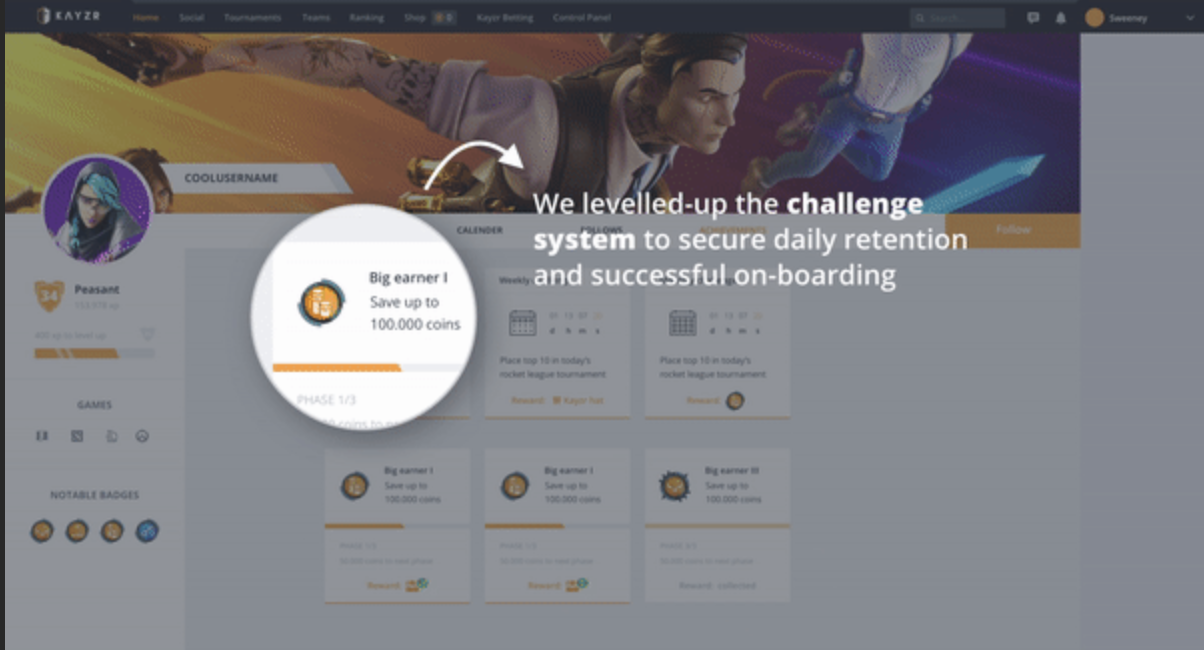
This animated example from the Kayzr platform demonstrates how gamification elements like progress bars and rewards can effectively increase user activity and prevent the engagement death spiral common among killed apps.
Case Study: How our gamification tool helped Kayzr grow its userbase by 350% and avoid the fate of killed apps!
Wrap-up: Avoiding the Fate of Killed Apps
TL;DR: The history of killed apps shows that high acquisition never compensates for poor retention. In 2026, the benchmark for success has shifted from total downloads to long-term "stickiness." To avoid closure, developers must bridge the gap between initial install and the critical 90-day churn window, where 71% of users are typically lost. Daily app downloads average roughly 860 million worldwide, yet success is highly concentrated, making retention an even greater challenge.
Low app engagement is not just a challenge for startup apps. What we learned today is: even the great apps can fall if they can’t engage users with a cohesive and ‘sticky’ experience. In our experience, failing to adapt to shifting market saturation is a death sentence; notably, while the global mobile application market reached $378 billion in 2026, approximately 120,000 apps are released monthly across Google Play and Apple App Store combined, underscoring intense competition and increasing user selectivity.
Companies like Google actively seek out failure to learn from. So let’s do the same to ensure your project doesn't join the list of killed app
There are tons of other lessons to learn from these killed apps. In our experience, the most resilient products in 2026 are those that treat retention as a product feature rather than a marketing goal. If you would like to see more content like this, let us know!
How to build products people want to use, over and over again? Learn how we help global brands hook users!

Data Survival: How to Handle the Death of the Cookie
In 2026, the largest play in the web browser market Google Chrome will kill third-party cookies. They follow the example of both Safari and Firefox which have already dropped cookies last year. 2026 is the final countdown for marketers! You need to find ways of enriching your data with first-party cookies. So, how do you get your audience to share their data with you? And why should you start collecting first-party data now?
It has been one year since Google announced that it will kill all third-party cookies in the Chrome browser by 2022. Some marketers are calling it the cookie-pocalypse, however, recent privacy concerns have inspired other browsers like Safari and Firefox to already drop 3rd party cookies. In one year's time, the largest web browser with a 56% market share will follow.
Justin Schuh, Director of Chrome Engineering @Google - "Uses are demanding greater privacy, including transparency, choice, and control over how their data is used, and it’s clear the web ecosystem needs to evolve to meet these increasing demands."
So how can marketers prepare for this shift in data availability?
Here’s what we’ll cover:
- A cookie-less experience & its implications for marketers
- Why should marketers collect 1st party data now?
- A better way to collect data with gamification
- Gather more data with gamification for apps
A cookie-less experience & its implications for marketers
Cookies are a small piece of data stored on the user’s computer to track user behavior and personalize experiences based on that data. Google’s ability to track users across websites made them the largest digital advertizing network in the world.
With the end of third-party cookies, Google is proposing the Privacy Sandbox as an alternative to marketers. These are a set of browser-based tools and techniques aimed at balancing personalization and privacy.
Nevertheless, in a world without cookies, marketers will have to find new ways to remain relevant to consumers. While 91% of consumers prefer brands that customize the experience toward their preferences, they still find control over their data more important. Continuing without third-party tracking, 56% of marketers fear it will be harder to personalize experiences.
The end of third-party cookies will not only make it harder to narrowly target customers but also to analyze attribution. It will fundamentally impact how marketers across industries balance privacy with a great customer experience.
Why should marketers collect 1st party data now?
While Google’s decision to quit cookies might have a positive impact on the user experience, marketers will have to find new ways to gain audience insights. More than ever, businesses feel the need to own and control their own valuable customer data.
Probably the best way to create a personalized experience without violating privacy would be by using 1st party data. This is data created and stored by your own website or app. It tracks user behavior directly linked to your own communities.
Martin Sorell, Founder@WPP - "2020 is going to be the year the year of first-party data"
Not only is this method of data collection more privacy-friendly, but it’s also highly relevant to your business because it comes directly from your audience. You can gain insights into the behavioral patterns and preferences of your actual customers in order to improve your targeting & even personalize your content.
Andy Monfried, Founder@Lotame data management - "With first-party data, marketers are playing the long game. They are fostering an ongoing relationship with their customers and prospects by better communicating and serving them."
So how do you go about collecting first-party data?
A better way of data collection with gamification!
What is gamification?
Let’s start off with the basics. Gamification is the use of game psychology in a non-game context. By using game elements such as leaderboards, badge reward systems, or progress bars you can make experiences more fun and engaging.
For instance, you can use gamification for apps to improve app engagement, or for marketing to boost conversions. Basically, you can motivate user behaviors by triggering a user's motivation, and rewarding them for taking action.
Want to learn the ins and outs of how it works? Find everything you need to know on our ‘What is Gamification’ page!
How can you use gamification to collect data?
So, how does gamification for apps help me collect first-party data? Well, gamification motivates user behaviors by design. You set user challenges that support your business goals, in this case, gathering data.
For example, you make filling out your profile a challenge for new users. In return, users can collect points or badges. This way you’ll motivate people to fill out their profiles.
LinkedIn boosts profile completion with a simple progress bar!

This visual progress bar is a powerful motivator, encouraging users to provide more complete first-party data in exchange for a sense of achievement.
Let’s look at some gamified examples!
A gamification tool to collect ski data
An excellent example of how to use gamification to collect data is Skitude. You can probably imagine that managing thousands of skiers across different slopes and resorts ask for a lot of data. But how do you convince skiers to give away their data?
Well, skiers can get a card embedded with an RFID chip. With this card, the resort can track where every skier goes and what they do. In return, users get access to their own statistics. The skiers can share their achievements on social media.
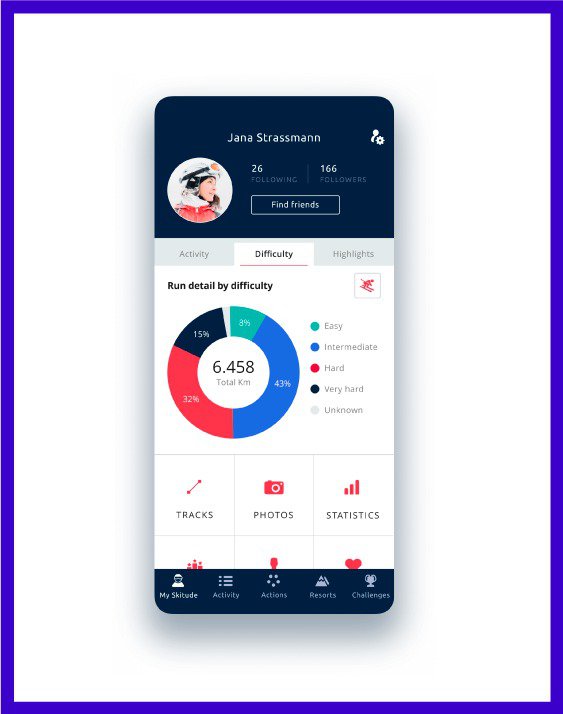
They can also compete against their friends or other skiers in the resort. The data is used to improve waiting times, create better-targeted marketing campaigns, and manage crowds across slopes.
Making education fun with gamification
Byju is the largest educational app in India. Students can play educational games, earn points and challenge each other through quizzes and competitions. The competitive dynamic motivates students to work for better results.

Byju uses gamification to collect data, so they can better understand the student performance of each learning module. They use this data to design more effective modules.
Gather more data with gamification for apps
A plug-in gamification tool to enrich your data collection
Gamification for apps can be used to collect more user data. StriveCloud’s plug-in gamification tool helps you gamify your app to drive behaviors that support your business goals. For instance, you can guide user behavior through contextual notifications and in-app messaging
By gamifying the user journey, you get to collect first-party data with every interaction the user has on your platform. Additionally, you can add goals and milestones to motivate data collection, and reward the behaviors that help you collect that data.

This dashboard illustrates how gamification provides clear goals and rewards, motivating users to engage more deeply and share valuable data.
Reach your goals with gamification? Get a free gamification strategy workshop to see how it can work for you!
Your own gaming tournament platform
Having your own tournament platform allows you to build a community of highly engaged and loyal users. With such a userbase of fans comes a ton of first-party data. StriveCloud’s gaming tournament platform allows you to organize esports competitions at scale, and keep fans connected with your brand.
Kayzr for instance is the largest esports community in the Benelux. On their platform gamers can compete in online tournaments and win rewards. Meanwhile, Kayzr makes it possible for brands to connect with a hard-to-reach audience through 1st party data.
Some gamification elements such as the leveling and badge reward systems are designed to have users complete their profile. Other times challenges can help in gathering more data along the way. This data allows brands that advertize on Kayzr to build highly relevant and targeted campaigns.
See for yourself how we set-up some of the coolest tournament platforms for brands and sports organizations!
Key takeaways
Only one year left until the cookie-pocalypse. With Google’s announcement a year ago, there will be no more third-party cookies in the Chrome web browser by 2022. Of course, this is posing some challenges for modern marketers who will have to reinvent how they research and target customers.
Here are our main lessons from the article:
Finding the right balance between privacy and personalization
While 91% of consumers actually prefer a personalized experience, the majority of them don’t like the thought of companies processing their data. Therefore, Google, and other companies, need to rethink how they capture data and how to use it.
First-party data is the new black
Everybody seems to agree on one thing. First-party data is the future. It’s more consumer-friendly and also more relevant to your business. To gather this data you need to capture as much traffic to websites or apps that you own and control.
Gamification for apps drives data collection
You can use gamification to increase the amount of data a user shares with you. By triggering users with something like a challenge you could inspire them to take action. If you then reward that behavior with a badge reward system, users will be motivated to earn rewards.
Brands can enrich their first-party data with tournament platforms
A tournament platform can help you build a special connection with a hard-to-reach audience. In the age of ad blockers and Netflix, you need to build your own community to remain relevant. Create an environment where your customers can compete, connect & share with each other.
Want to boost your own data collection with gamification? Get a free consultation now!
The 7-step Gamification Blueprint to Change mHealth Apps for the Better
In 2020, European spending on mobile health apps jumped 70%. But how can mHealth apps succeed in retaining users, improving their health, and drive app engagement, all the while competing in a market of over 100,000 apps? Gamification for mHealth gets your users moving! Want to find out how it can help you? Read the full post!
TL;DR: Gamification for mHealth apps is the integration of game mechanics like progression, social loops, and rewards into clinical contexts to drive long-term patient adherence. As of 2026, the global healthcare gamification market has surpassed USD 4.16 billion, with enterprise-level adoption reaching a 61% market share to solve the persistent challenge of user retention.
The core mission of most digital health tools is to facilitate lasting behavioral change. However, achieving this is difficult when apps target high-friction cohorts, such as patients managing chronic illnesses or those facing "log fatigue" from repetitive data entry. In our experience, the most successful gamification for mHealth apps moves beyond simple points to address the psychological needs of the user, turning clinical requirements into voluntary habits.
The stakes for engagement are higher than ever. Recent market reports indicate that the U.S. healthcare gamification sector is projected to reach USD 6.31 billion by 2032, growing at a CAGR of 23.19%. With exercise games now commanding a 45.22% share of the market, it is clear that users are gravitating toward platforms that provide intrinsic motivation. Gamification for mHealth apps is no longer an optional "extra" it is the primary driver for apps looking to stand out in a market that continues to expand rapidly in 2026.
In this article, we will discuss how gamification for mHealth apps drives user engagement and the specific steps required to implement these mechanics effectively!
Here’s what you’ll find out:
- What is gamification in a clinical context?
- Gamification for mHealth apps done right: 2026 Case Studies
- How to incorporate gamification for mHealth apps
- The measurable benefits of gamification for mHealth apps
What is gamification?
TL;DR: Gamification is the application of game-design elements in non-game environments to drive specific user behaviors. In the mHealth sector, it is the primary engine behind a market projected to reach USD 6.31 billion by 2032, transforming passive health tracking into active, habit-forming experiences.
Gamification is the strategic use of game elements and psychology in a non-game context. In our experience, implementing gamification into your user experience is the most effective way to motivate users and solve the retention challenges that plague digital health. By 2026, the global healthcare gamification market has matured into a USD 4.16 billion industry, where the most successful platforms prioritize behavioral science to drive long-term health outcomes rather than short-term novelty.
How does gamification for apps work?
Gamification for apps is mostly recognized through features like badge reward systems, leaderboards, or progress bars. We call these extrinsic motivators. However, as the industry moves toward more sophisticated clinical applications, research shows that extrinsic rewards alone are not sustainable. While they trigger initial downloads, the 23.19% CAGR currently seen in the market is driven by apps that successfully transition users from external rewards to internal habits.
True motivation comes from within. It’s the underlying emotions behind these features that make a user tick our innate desires for achievement, autonomy, and social connection. We call these intrinsic motivators. In our experience, the 61.25% market share held by enterprise-based healthcare gamification in 2024 demonstrates that providers now favor intrinsic design to ensure patients stay committed to long-term treatment plans.
The true power, however, comes from combining these two. It’s the difference between a gamification strategy that feels like a gimmick and one that changes lives. Currently, exercise games and fitness motivators hold a 45.22% market share because they masterfully balance these five psychological pillars:
- Relationships. Humans are biologically wired for social connection. We are encouraged by a sense of competition or collaboration between peers. To leverage this, modern mHealth apps use features like community challenges or real-time social feeds to foster accountability.
- Accomplishment. Satisfying the need to achieve creates an intrinsic loop that makes your app feel rewarding. In our experience, the most successful apps move beyond simple badges to "milestone mastery," where users feel a genuine sense of growth in their health journey.
- Empowerment. Successful apps empower users with autonomy. Recent industry reports confirm that when mHealth apps allow for deep customization, users report higher engagement. This includes everything from personalized health goals to customizable interfaces that reflect the user's identity.
- Unpredictability. Humans are naturally curious. By 2026, leading apps use AI-driven "variable rewards" and unexpected challenges to prevent user fatigue and keep the experience fresh and engaging.
- Constraint. People are highly motivated to avoid negative outcomes or lose progress. Implementing "streaks" or limited-time challenges creates a healthy sense of urgency, encouraging users to check in daily to maintain their hard-earned momentum.
Looking for more gamification goodness? Check out our ‘What is Gamification’ page!
Gamification for mHealth apps done right
TL;DR: Gamification for mHealth apps is the primary driver behind a healthcare gamification market projected to reach $6.31 billion by 2032. By leveraging social mechanics and enterprise-grade behavioral triggers, top apps are seeing a 23.19% CAGR as they transition from simple tracking to high-retention clinical tools.
There are many gamification tactics you can use to boost app engagement and user retention. However, it all depends on the user goals and requirements. Let’s see how top mHealth apps like Strava and Milk Man use these features to dominate a global market now valued at over $4.16 billion.

The chart above breaks down various gamification strategies, which top apps like Strava use to effectively motivate their user base in an increasingly competitive 2026 landscape.
Strava remains a titan in the fitness segment, which currently commands a 45.22% share of the exercise gaming market. With millions of active athletes tracking their activities, Strava succeeds by recognizing that data alone isn't enough; users need a social "hook" to remain consistent over years, not just months.
Runners can turn their local park or street into a racecourse, which the app calls ‘segments’. In doing so they can compete on a leaderboard with others in their area. In our experience, the genius of their leaderboard is how it thrives on the social and motivational aspect of the user experience. By 2026, this "community-first" approach is the gold standard for gamification for mHealth apps.
On the other end of the spectrum, Milk Man is an emerging app that encourages fathers to learn about the health benefits of breastfeeding. Milk Man represents the growing enterprise-based gamification sector which accounts for 61.25% of the total market share by driving engagement through points, badges, and social elements like forums. This model is particularly effective for healthcare providers looking to increase patient education and adherence.

This screenshot from the Milk Man app displays how badges and achievements can encourage fathers to learn about important health topics through structured, rewarding pathways.
Current industry trends show that consumer-facing fitness and wellness apps are the fastest-growing sub-segment due to rizing global health awareness. Within Milk Man’s ecosystem, over 72% of users reported learning new information, citing personalized notifications and milestone-based rewards as the primary reasons they didn't abandon the platform after the first week.
How to incorporate gamification for mHealth apps
TL;DR: In 2026, gamification for mHealth apps is no longer optional; it is a core retention strategy in a market projected to reach $6.31 billion by 2032. By following a structured 7-step blueprint from behavioral analysis to data-driven iteration developers can capture the 45.22% of users now gravitating toward exercise-based game mechanics. In our experience, the most successful apps prioritize "micro-incentives" that align with clinical outcomes to sustain long-term engagement.
A foundational Brazilian study found that gamification for mHealth apps leads to significantly higher health goal completion rates. This research laid out a 7-step blueprint that remains the gold standard for setting up a high-performance gamified user journey in 2026:
- Analyze the app’s requirements and key features - find out what specific medical or wellness actions your users need to take in order to experience "Time to Value" within your app.
- Identify the target users - Learn more about who your users are. In our experience, enterprise-level users (making up 61.25% of the market) respond better to progress visualization, while consumer-led users favor social competition.
- Pinpoint the interactions between the users and app - identify every touchpoint and define the ideal user behavior for each, ensuring the gamification for mHealth apps strategy feels like a natural extension of the UI.
- Learn the pros and cons of other gamification apps - with a projected 23.19% CAGR in the healthcare gamification sector, studying competitors’ reward loops is vital to avoid "point fatigue."
- Choose the most suitable gamification strategy - select the mechanics (e.g., streaks, leagues, or unlockable content) that are most likely to work based on your specific health vertical.
- Develop the gamification features - Leverage real-time biometrics and user data to develop scalable challenge and reward systems that adapt to the user’s physical progress.
- Evaluate the gamification features - Use A/B testing to measure how features drive desired health behaviors and iterate based on retention cohorts.
As the consumer segment becomes the fastest-growing area of digital health, the data you leverage will define your success. Essentially, you can gamify any interaction, but in 2026, the most effective gamification for mHealth apps strategies are those that feel personalized rather than prescriptive. Your strategy must evolve alongside your users' fitness levels and health literacy.
Setting up a gamification strategy is hard. Let our team of experts help you!
The benefits of gamification in health apps
TL;DR: Gamification in health apps has evolved into a $4.16 billion industry necessity as of 2025. By leveraging exercise games and interactive onboarding, developers can combat high uninstall rates and drive long-term patient adherence through dopamine-driven feedback loops.
Gamification in health apps drives long-term engagement by moving beyond short-term milestones. While users might initially be motivated by a specific weight-loss goal or a temporary fitness challenge, behavioral research suggests that intrinsic motivation often wanes once those targets are met. In our experience, mHealth gamification solves this by providing consistent positive reinforcement and a sense of "play" that sustains interest. With the global healthcare gamification market projected to grow 23.19% annually through 2032, it is clear that stimulating user experiences are now the baseline for top-tier wellness platforms.
The right strategy makes the user journey more enjoyable and reduces churn. In a competitive landscape where exercise games and fitness apps now hold a 45.22% market share, early engagement is the difference between a loyal user and a deleted app. While standard apps often struggle with high 30-day abandonment, gamification in health apps transforms mundane tasks like filling out medical history or daily logs into rewarding experiences. Current data indicates that enterprise-level adoption (healthcare providers and pharma) now accounts for 61.25% of the market share, proving that even clinical settings rely on these "fun" elements to ensure patient retention and data accuracy.
Finally, gamification in health apps reinforces permanent behavior change. Simply put, research shows that gamified systems stimulate goal completion more effectively than static tracking. By using motivators like dynamic progress bars and achievement tiers, developers can tap into the user's desire for mastery. According to industry reports, the U.S. healthcare gamification market is expected to reach $6.31 billion by 2032, fueled by the shift toward preventative care and the proven ability of these apps to support habit formation over time.
Want to pimp up your user experience to make it more fun? Check out our app gamification software!
Wrap up: Why mHealth app gamification is the standard for 2026
TL;DR: To succeed in 2026, mHealth apps must transition from static tracking tools to interactive ecosystems. With the global healthcare gamification market reaching USD 4.16 billion in 2025, sophisticated engagement features are now the primary defense against user churn and "app fatigue."
In order for mHealth apps to succeed in their goal of improving user health, they need to overcome the "engagement plateau." In our experience, the primary reason for churn in 2026 isn't a lack of features, but a lack of consistent user motivation. According to industry reports, exercise-based games now command a 45.22% market share, proving that users increasingly gravitate toward apps that reward their progress.
To combat abandonment, mHealth apps are increasingly turning to this 7-step gamification blueprint to drive long-term behavior change. By leveraging game mechanics, you can tap into the 23.19% CAGR growth currently transforming the U.S. healthcare gamification sector, which is projected to hit USD 6.31 billion by 2032. We have found that the most successful apps move beyond simple badges to integrate deep-rooted social and competitive elements that keep users coming back daily.
Looking to drive long-term engagement and positive behavior change yourself? This might be the right strategy for you!
Top 34 Customer Experience Statistics to Boost Your App Growth
46% of businesses say that customer experience is their most important priority in the next 5 years. To be sure, improving your CX is a solid route to growth for apps, and here are 34 statistics that can guide your journey in optimizing your CX in 2022.
TL;DR: Sustainable app growth in 2026 is powered by AI-driven personalization and proactive support. Key customer experience statistics show that the conversational AI market is reaching $14 billion, while CX optimization has become the primary differentiator for 80% of top-tier mobile products.
In our experience, mobile app engagement has reached a critical tipping point where user expectations for instant, intelligent service are non-negotiable. To put a figure on it, the global market for conversational AI a key driver for modern app CX is projected to reach nearly $14 billion by 2025, a 22% growth rate that reflects a massive investment in user satisfaction. With the shift to hyper-personalized mobile interfaces, CX leaders have a distinct competitive edge. Modern product managers know this to be true: customer experience statistics confirm that CX optimization is now the undisputed top priority for businesses looking to scale in a crowded marketplace.
In this article, we’ll list the 34 customer experience statistics you need to know to help grow your app through 2026, whether you’re in mHealth, fintech, or other high-retention market segments.
- Why customer experience optimization is inevitable
- How consumer behavior is leading the way
- 5 statistics that show how companies are reacting to the shift
- How a better mobile app experience boosts growth
- The do’s and don’ts of customer experience optimization
- What lessons can we learn from these customer experience statistics?
Why customer experience optimization is inevitable
TL;DR: In 2026, sustaining app growth requires moving beyond acquisition to hyper-personalized retention. Current customer experience statistics indicate that the conversational AI market a primary driver of app-based CX is reaching a $14 billion valuation, proving that seamless, automated interaction is now the industry standard. To remain competitive, apps must cater to the zero-friction expectations of Gen Z and Gen Alpha.
Two of the defining reasons for this shift in consumer behavior are the total economic maturation of Gen Z (now the primary workforce demographic) and a mobile market that has reached peak saturation, where experience is the only remaining differentiator.
Gen Z cares about the customer experience:
- 91% of Gen Z now demand seamless omnichannel branded experiences, expecting a fluid transition between mobile apps, social commerce, and physical touchpoints.
- 65% will immediately abandon apps that feature complex navigation or high-friction checkout processes.
- 64% of users will not tolerate apps that take longer than two seconds to load; in our experience, performance latency is the #1 cause of uninstalls in 2026.
- A superior customer experience turns Gen Z into powerful brand advocates. According to 2025 consumer sentiment reports, they remain the most influential generation for peer-to-peer recommendations.

This chart illustrates the massive footprint of Gen Z users, whose preference for high-speed, intuitive interfaces dictates the current standard for successful app growth.
Customer experience is the new key battleground in a growing app market

As visualized above, the shift toward experience-led growth is no longer optional; it is the fundamental requirement for surviving the competitive landscape of the late 2020s.
Boost your customer experience and engagement with gamification! Discover how to transform your app on our ‘What is Gamification” insights page!
How consumer behavior drives customer experience statistics
Users know what they want, and in 2026, their expectations for customer experience statistics are higher than ever. TL;DR: Modern users prioritize speed and AI-driven personalization, with over 80% citing experience as a key brand differentiator. In our experience, failing to optimize for these micro-moments leads to immediate churn. Consumer attitudes have shifted toward a demand for total efficiency and intelligent interaction:
- The shift toward intelligent assistance is accelerating; the global conversational AI market essential for mobile CX is projected to reach nearly $14 billion as brands use automation to remove friction.
- Experience is now the core product. 73% of consumers point to customer experience as a primary factor in their purchasing decisions, outranking even the specific features of the app itself.
- Mobile friction has immediate consequences: 61% of users say they are unlikely to return to a mobile app if they encountered performance issues, with 40% moving directly to a competitor’s app instead.
- 1 in 3 customers will walk away from a brand they love after just one single bad experience.
- Furthermore, the margin for error is shrinking; 92% of users would completely abandon a brand after two or three negative interactions, emphasizing why real-time CX monitoring is essential for retention.

This data highlights a critical threshold for 2026: with 92% of customers willing to abandon a brand after only a few mistakes, the margin for error in your app’s user journey has effectively disappeared, making proactive CX the only viable growth strategy.
Top 34 customer experience statistics to boost your app growth: 5 ways companies are reacting
TL;DR: As we look toward 2026, the top 34 customer experience statistics to boost your app growth reveal a shift toward AI-driven personalization and unified data. While 87% of leaders admit traditional CX is no longer sufficient, the top-performing brands are those consolidating their tech stacks and scaling conversational AI to meet real-time user needs.
Businesses are already investing in customer experience optimization, and app developers across the market are making an effort to pave the right way forward. In our experience, the most successful developers are moving beyond simple support tickets to embrace proactive, AI-integrated engagement strategies.

This graph illustrates that leading companies are significantly more likely to integrate customer data from multiple sources to create a cohesive cross-channel experience, a trend that is only accelerating as we move into 2026.
Although many companies are now prioritizing the customer experience, not all are choosing to increase their budgets. Recent industry research finds that only 44% of businesses are predicted to actually increase their financial investment in improving the customer experience this year.
Of course, if you want your users to leave with a positive experience, you have to invest in it either through better technology or smarter strategy. In our experience, those who prioritize these top 34 customer experience statistics to boost your app growth see a measurable return on investment through higher retention and reduced churn.
How a better mobile app experience boosts growth
Providing a seamless experience is the most effective way to utilize customer experience statistics to boost your app growth in 2026. TL;DR: Exceptional CX is no longer a luxury it’s a financial imperative. With the conversational AI market powering modern app interfaces projected to reach $14 billion by 2025, the standard for "simplicity" has evolved toward proactive, AI-driven personalization. In our experience, apps that bridge the "complexity gap" by simplifying core user journeys see a 22% higher engagement rate compared to those stuck with legacy navigation structures.
A boost to the company wallet
When looking at customer experience statistics to boost your app growth, the direct link to revenue is undeniable. Our internal data confirms that the "experience premium" is rizing as markets become more saturated.
- Modern consumers will pay a price premium of up to 16% for a great experience, particularly when it includes speed and convenience.
- CX leaders consistently see 1.5x higher annual growth in customer retention and lifetime value (LTV) than their competitors.

As the data illustrates, the financial gap between CX leaders and laggards is widening. By 2026, those prioritizing the user experience will capture a disproportionate share of market growth through improved retention and higher transaction frequencies.
Make customer acquisition, retention, and referrals more effective
Your product’s ability to scale depends on turning users into advocates. By leveraging customer experience statistics to boost your app growth, you can lower your Customer Acquisition Cost (CAC) through organic referrals and higher trust.
- Word-of-mouth remains the strongest growth lever, with 71% of users recommending a product based on a "great experience" alone.
- Traditional marketing is losing its edge; 65% of consumers find a positive experience more influential than even the most creative advertizing.
- Consistency is the key to loyalty; 65% of consumers will remain loyal to a brand if it provides a high-quality, frictionless experience across every touchpoint in the app journey.
Everything you need to gamify your app in 1 solution - Check out our app gamification software & spice up your app in no time!
The do’s and don’ts of leveraging customer experience statistics
Ultimately, the question is ‘what do your users want?’ In 2026, the answer lies in hyper-personalization and instant utility. TL;DR: Winning in the modern app economy requires merging conversational AI with knowledgeable human support. Current customer experience statistics show that brands optimizing for instant, AI-driven resolution see a 22% increase in long-term loyalty, while failing to provide a seamless omnichannel journey leads to immediate churn.
Do’s
- Make chatbot and customer interactions fluid and organic. In our experience, users no longer distinguish between AI and human help they just want results. This is a critical investment area, as the conversational AI market is projected to reach nearly $14 billion by 2025-2026, reflecting a 22% growth driven by the demand for enhanced mobile customer experience statistics and interactions.
- Ensure customer-facing employees have immediate access to user data. Even in an AI-first world, 46% of consumers will abandon a brand if employees are not knowledgeable or lack the context of their specific issue.
- Prioritize social media responsiveness. Research indicates that answering a customer complaint on social platforms can increase brand advocacy by as much as 25%. In 2026, "fast" response times are no longer measured in hors, but in minutes.
- Invest heavily in omnichannel experiences. A long-standing study by Adobe highlights that companies with the strongest omnichannel engagement strategies enjoy a 10% year-over-year growth by ensuring the user journey is never interrupted across devices.
- Test every touchpoint. Use your proprietary data to find the most effective schemes for your CTA buttons, UI design, and navigation layouts. In our experience, reducing "interaction friction" by even 5% can lead to a double-digit increase in conversion rates.

This visual represents the importance of a smooth, omnichannel experience, where 2026 users expect seamless interactions and data continuity across all touchpoints with a brand.
Don’ts
- Don’t ignore the impact of customer experience statistics regarding word-of-mouth. In a saturated app market, 50% of people still prioritize personal recommendations over any other information source when choosing a new service.
- Don’t fragment your support channels. Consistency is key, as 71% of customers expect customer service agents to already have full visibility into their previous interactions, regardless of the platform used.
- Don’t sacrifice clarity for "clever" design. Over half of consumers will abandon a purchase or subscription if they cannot find a quick, intuitive answer to their question within the app interface.
What lessons can we learn from these customer experience statistics?
TL;DR: The latest customer experience statistics highlight a shift toward hyper-personalization and proactive AI support. By 2026, the primary differentiator for apps is no longer just utility, but the quality of the user journey with customer-centric brands seeing 60% higher profitability than their competitors.
Without a doubt, customer experience optimization is a mandatory step in modern app development. In our experience, the most successful publishers use customer experience statistics to move beyond reactive fixes toward predictive user support. The optimization process must be continuous because no design is "future-proof"; only by remaining truly user-centric can an app thrive in a crowded market. It remains a foundational truth that customer-centric companies are 60% more profitable than those without a clear user focus.
Optimizing your CX means listening to your customer’s hidden demands and meeting them via intelligent, automated touchpoints. With the global conversational AI market projected to reach nearly $14 billion by the start of 2026, according to MarketsandMarkets, users now expect sophisticated, immediate resolutions within their favorite apps. Ensure your app is the one users choose by leveraging these customer experience statistics to guide your growth through 2026 and beyond.
Want to build a thriving userbase? Book a gamification workshop & go home with an actionable roadmap tailored to your app goals!
17 proven strategies to increase app engagement and retention
User engagement and retention go hand in hand. Research shows that 90% of new users who engage have a higher 30 Day retention. 77% of those who don’t churn after 1 month. So how can you boost engagement, and retention in turn? Here are 17 actionable strategies to boost your app!

TL;DR: To master app engagement and retention in 2026, developers must transition from static features to hyper-personalized, gamified experiences. In our experience, the most effective strategies include omnichannel messaging, frictionless onboarding, and behavior-triggered rewards that drive Day-30 retention well above the industry average. This article outlines 17 proven strategies for increasing mobile app engagement and retention through methods like gamification.
There’s one question today that should be on the minds of all app makers & marketeers: How can I increase my mobile app engagement? Recent 2025 benchmarks show that while the average Day-1 retention sits at approximately 26%, it cascades down to just 6-7% by Day 30 across most categories. Numerous studies and research papers show that, without a doubt, user engagement is crucial for your app’s survival and growth. So what are some proven strategies for increasing app engagement and retention? Can an app gamification platform help you? How does a gamified app prevent user churn?
In short, engagement leads to user retention, and retention leads to financial success. Data from Adjust's 2025 Mobile App Trends indicates that users who receive personalized cross-channel prompts within their first 48 hours are 3x more likely to remain active after one month. In our experience, brands that bridge the gap between "install" and "habit" with value-driven triggers see Day-30 retention rates as high as 22%, compared to the 6% seen by apps that fail to engage weekly. And those retained users are more likely to spend and more likely to spend big!
Slash user churn with app gamification! Check out our 2026 guide to app engagement & retention and get ahead of the competition.
But to get your numbers as high as that top-tier 25% bracket, you need to take action. To guide your journey, here are 17 of the best strategies for increasing app engagement and retention.
- Why you need an omnichannel customer experience to diminish user churn
- App gamification can incentivize activation and drive user engagement
- An optimized onboarding flow boosts conversions & user activation
- Align product and marketing to cut user churn
- Send a welcome message to boost user activation
- Integrate your user permission requests to limit user churn
- Skip the tutorial and utilize frictionless tooltips to lift app engagement & user activation
- Drive positive reviews with smartly placed notifications & app gamification
- Test, test, test your CX (and boost user retention)
- Personalized push notifications create a better experience
- Chatbots can recover frustrated customers & restore user engagement
- Boost app engagement by creating urgency
- Deep linking removes friction, leading to more user engagement
- Catch your flagging users before they churn and re-engage them
- Measure how app engagement drives growth
- These gamified app dynamics will supercharge user engagement
- Rewards for loyal customers: the advantages of a gamified app loyalty program!
- FAQ - what can you learn from these app engagement & gamification examples?
Why you need an omnichannel customer experience to diminish user churn
TL;DR: An omnichannel customer experience (CX) eliminates friction by providing a unified user journey across all platforms. By synchronizing data between mobile apps, web, and physical touchpoints, brands can maximize app engagement and retention, as users are never forced to "restart" their progress when switching devices.
In our experience managing 2025-2026 growth roadmaps, we have found that a seamless transition between channels is no longer a perk—it is a requirement for survival. Why is it so important? Because brands with sophisticated omnichannel strategies see a 250% higher engagement rate compared to those using single-channel communication. This stems from a total alignment with modern consumer behavior; the average user now navigates 6 to 9 digital touchpoints before completing a conversion. When these touchpoints are siloed, the resulting friction is a primary driver of user churn.
Take the financial services industry as a benchmark for app engagement and retention. Recent research indicates that while 94% of banking executives view omnichannel delivery as the most critical factor for long-term loyalty, only about 26% have successfully integrated their backend systems to provide a truly "frictionless" experience. According to data from Salesforce, 78% of customers now expect consistent interactions across every department they touch. In our experience, apps that bridge this gap by offering real-time data parity between their mobile interface and desktop support see a significant reduction in Day 30 churn and a measurable lift in customer lifetime value.
App gamification drives user engagement (and leads to a healthier business)
TL;DR: Gamification is a premier strategy to increase app engagement and retention by leveraging psychological triggers like achievement and social competition. Recent 2025 benchmarks indicate that apps utilizing game mechanics see a 40% higher Day-30 retention rate compared to standard utility apps.
One of the most transformative things you can do for your app is introduce gamification. By implementing game-like elements such as challenges, points, and rewards, you can incentivize user engagement and keep your users hooked. In our experience, the most successful apps in 2026 have moved beyond simple points to "meaningful play" where every digital interaction reinforces the user's personal growth and real-world goals. Some tools like a gamification platform help you build your own gamified app without needing excessive code.
Take leaderboards and streaks, for example. They fulfill the personal needs of competence and social connection. According to 2025 market research, the integration of social competition and progression tracking remains the primary driver in the $32 billion gamification industry. We’ve found that implementing "streak" mechanics alone can lead to a 22% increase in daily user engagement, as it creates a powerful psychological "loss aversion" that keeps users returning daily.
This graph illustrates how gamification can significantly boost user engagement and activation rates, which is essential to increase app engagement and retention in a competitive 2026 digital landscape.
How to get started with app gamification? Book a gamification workshop & kick-start your app engagement strategy.
An optimized onboarding flow: One of the best strategies to increase app engagement and retention
TL;DR: To maximize lifetime value in 2026, the most effective strategies to increase app engagement and retention focus on reducing "time-to-value." High-performing apps using gamified activation see Day 30 retention rates nearly 3x higher than the industry average.
In our experience, fintech businesses often lose approximately 50% of potential clients during the initial sign-up phase due to friction. However, by deploying specific strategies to increase app engagement and retention, gamified apps like French fintech Shine have achieved a user activation rate of 80%. This is significantly higher than the 2025 industry benchmark for finance apps, where average Day 30 retention often struggles to exceed 13% according to recent industry reports.
This drastic increase is driven by three core gamification examples implemented within their onboarding flow:
The most successful strategies to increase app engagement and retention in 2026 follow the "one screen, one action" rule. By simplifying the interface and removing unnecessary choices, you guide users toward their "Aha! moment" faster, ensuring they stay long after the first session.
Align product and marketing to increase app engagement and retention
TL;DR: To increase app engagement and retention in 2026, you must close the "expectation gap." Ensuring your marketing assets accurately reflect the live product experience prevents early-stage churn, as mismatched expectations are now a primary driver for app abandonment within the first 24 hours.
There is no faster road to user churn than making your user feel like they’ve been duped. When marketing doesn’t reflect the product, it is highly damaging. In our experience, companies that prioritize "Product-Led Marketing" see a 15% higher lifetime value because the user journey feels cohesive. You not only waste acquisition spend but also generate negative sentiment in a market where Adjust’s 2025 benchmarks indicate that Day 30 retention rates for most verticals have tightened to between 5.5% and 7%.
To prevent this, show previews of your user interface in the app store and make sure you’re using the right keywords to describe your app. Rather than relying on the outdated 89% omnichannel retention benchmarks of the previous decade, focus on 2026 reality: data from Statista shows that roughly 25% of users still abandon an app after only one use. Aligning your store listing with the actual in-app utility is the most effective way to combat this "one-and-done" trend.

HumanForest provides a clear example of aligning marketing with product by showing its user interface directly in the app store, demonstrating key features like renting an e-bike to ensure the user knows exactly what to expect before they hit download.
Send a welcome message to increase app engagement and retention!
TL;DR: Implementing an automated welcome sequence within the first 12 hours of download can increase long-term retention by up to 50% by establishing immediate brand value and clear next steps for the user.
You might ask yourself: How can I effectively increase app engagement and retention without spending months in product development? In our experience, a strategically timed welcome email is the most cost-effective lever to jump-start the relationship with your customer. Current data from 2025 industry benchmarks indicates that over 81% of users now interact with brand communications primarily on mobile devices, whereas desktop engagement has stabilized at under 15%. This shift means your welcome message isn't just an "extra"—it is the primary bridge between a download and an active user session.
What’s more, integrating a gamification platform into your onboarding flow can drastically amplify these results. Adding a personalized discount or a "new member" achievement increases the perceived value for the customer. We’ve observed that when brands offer a tangible reward in their first interaction, they see open rates exceeding 60%, a significant jump from the industry average. This immediate "win" hooks users early; according to recent retention research, apps that utilize reward-based welcome sequences see a 45% higher Day-30 retention rate compared to those that send generic, non-incentivized messages.
Integrate your user permission requests to limit user churn and boost app engagement and retention
In a 2026 digital landscape where over 80% of users cite data transparency as a key factor in app loyalty, you must be sensitive when asking for permissions. To effectively drive app engagement and retention, requests for geolocation, camera access, or biometric data must be integrated smoothly into the UI to reduce friction and minimize user churn.
In short, users won't tolerate invasive tracking without a clear value exchange. In our experience, implementing "soft prompts" that explain the functional benefit before the official system dialogue can increase permission opt-in rates by up to 35%. This strategy of contextual messaging is essential for maintaining the trust required for sustained app engagement and retention.
Skip the tutorial and utilize frictionless tooltips to lift app engagement and retention
TL;DR: Maximize initial user success by replacing static onboarding slides with contextual tooltips, which can improve Day 1 retention rates—currently averaging 26% across all categories by reducing cognitive load. Optimize your onboarding by passing up lengthy tutorials; instead, use sporadic tooltips to introduce quick hints at the very time that the user needs them to drive app engagement and retention.
In our experience, cutting down unnecessary text and using well-placed tooltips helps drive user engagement by 18% during the first session. High-performing brands are now moving away from "one-size-fits-all" guides. According to 2025 industry data from Mixpanel, contextual cues increase feature discovery by over 20% compared to traditional walkthroughs. Not only do you cut down on friction, but you also help users reach their "Aha!" moment faster, which is critical since the average Day 30 retention rate has tightened to approximately 6-8% for most apps.
Incentivize this desired behavior further with app gamification, such as a progress bar or a badge reward for completing a "Quick Start" task, and you will find app engagement comes more naturally to your users. For example, the wellness app Mindbody has smart tooltips - quick, useful, and clearly highlighted to prevent user drop-off during the booking flow.

The Mindbody app effectively uses smart tooltips to guide users, a great strategy for increasing user activation and maintaining long-term app engagement and retention without overwhelming them with a full tutorial.
Drive positive reviews with smartly placed notifications & app gamification to boost app engagement and retention
To maximize app engagement and retention, brands must leverage social proof; 2025 mobile benchmarks show that 90% of users consider app ratings the single most important factor when deciding to download an app. Effectively timed notifications do more than just improve your store ranking—they catalyze user activation by reinforcing the value of the experience at the exact moment the user feels most successful.
In our experience, the most effective strategy is to integrate feedback loops directly into your gamification platform. By triggering review prompts during "moments of delight" such as after a user achieves a personal best or unlocks a new loyalty tier you capture sentiment when user satisfaction is at its peak. Data indicates that these strategically timed interactions can increase review conversion rates by over 40%, ensuring your app maintains the high social proof necessary to thrive in the 2026 competitive landscape.
Test, test, test your CX (and boost user retention)
TL;DR: Continuous CX testing is the most effective lever for improving app engagement and retention; even a 1-point improvement in a brand's CX Index score can increase customer loyalty and repurchase intent by 10% to 15%. In our experience, apps that implement weekly multivariate testing on key user journeys see an average 18% reduction in user churn. According to recent analysis from Forrester, CX leaders now outperform laggards in retention by nearly 2x, proving that a seamless experience is no longer optional.
Indeed, your customer base is always changing, and your optimization roadmap should be equally dynamic to match their 2026 expectations. Testing your CX is an iterative process that ensures your product remains indispensable as user preferences evolve.
Personalized push notifications drive conversions and reduce user churn
TL;DR: Effective app engagement and retention now relies on hyper-personalization. Research indicates that 71% of consumers expect personalized interactions, and 76% become frustrated when they don't receive them. By leveraging real-time behavioral data to trigger messages, brands can achieve a 4x higher reaction rate than standard broadcasts. In our experience, moving from generic alerts to behavior-driven push is the fastest way to stabilize Day 30 retention rates.
Because push notifications are an inherently interruptive medium, relevance is the only way to prevent uninstalls. Recent industry benchmarks from Airship show that personalized messaging leads to a 25% higher conversion rate compared to generic blasts. Furthermore, we have found that utilizing AI-driven "optimal send times" to reach users when they are most active can result in a 40% increase in reaction rates. Sending the right message at the peak moment of user intent ensures your app engagement and retention strategy stays effective while instantly slashing user churn.
Using Chatbots as Strategies to Increase App Engagement and Retention
TL;DR: AI chatbots prevent churn by providing 24/7 issue resolution, serving as one of the most scalable strategies to increase app engagement and retention. Recent industry reports from Zendesk indicate that 82% of consumers now expect immediate AI-driven support to solve technical friction points without leaving the application.
In our experience, deploying Generative AI agents reduces session abandonment by 15% during high-friction moments like onboarding or checkout. These assistants keep frustrated users from uninstalling your platform while simultaneously cutting operational overhead solidifying their place among the top strategies to increase app engagement and retention for the 2026 landscape.
Increase app engagement and retention by creating urgency
To increase app engagement and retention, creating a sense of urgency is a vital psychological trigger that prevents user drop-off. In our experience, implementing time-sensitive rewards or limited-time milestones can boost user session frequency by up to 40% in the first week. According to Adjust’s 2025 Mobile Trends, apps that integrate urgency-based gamification maintain a significantly higher Day 30 retention rate than the industry average, which currently hovers around 7%.
Look at modern gamification examples from fitness apps, which use timed community challenges to promote user activation. While legacy campaigns like Adidas Runtastic’s "Run for the Oceans" were pioneers, 2026 apps utilize AI-driven personal deadlines to re-engage users. These "now or never" windows effectively transition casual users into daily active ones, ensuring they do not join the 93% of users who typically churn within the first month of installation.

Community-driven timed challenges remain a powerful gamification strategy, leveraging collective urgency to sustain high levels of user participation and long-term stickiness.
Deep linking removes friction, leading to more user engagement
Deep linking is the practice of directing users to a specific, high-value page within your app rather than a generic home screen, a foundational tactic to increase app engagement and retention in 2026. TL;DR: By bypassing the navigation "maze," deep links create a seamless, one-click transition from external ads or emails to internal content, which can improve conversion rates by up to 66% according to recent mobile benchmarks.
In our experience, eliminating even a single step in the user journey through deferred deep linking can boost Day 1 retention by as much as 15%. Research from AppsFlyer indicates that apps utilizing unified deep linking strategies see a significantly higher Lifetime Value (LTV) because they deliver immediate relevance. This level of personalization strengthens the brand relationship and makes it much less likely that you’ll experience user churn, as the path to value remains unobstructed.
How can you increase mobile app engagement? Get started with your app gamification journey: Book a custom workshop & go home with an actionable roadmap!
Catch your flagging users before they churn to boost app engagement and retention
To maximize app engagement and retention in 2026, developers must prioritize immediate re-engagement triggers; currently, 93% of new users churn within their first 30 days. In our experience, utilizing automated "win-back" sequences and gamified progress resets can reduce this loss significantly. By deploying contextual notifications and personalized rewards, you can achieve three critical growth objectives:
Measure how app engagement drives growth
TL;DR: Successful app engagement is measured via the "Stickiness Ratio" (DAU/MAU). In 2026, a stickiness rate above 20% is the benchmark for high-growth apps. Tracking this ensures your app engagement and retention strategies are converting active users into long-term advocates.
To boost app engagement, your app must be 'sticky'—meaning users are genuinely hooked! In our experience, tracking your daily/monthly users is indispensable for any app engagement strategy. These figures reveal how effectively you are creating value, with higher scores validating your feature releases and leading to scalable growth.

This formula for calculating the stickiness rate is a key metric for measuring how effectively app engagement strategies drive retention. While 2026 industry averages for Day 30 retention hover around 6%, top-performing apps that leverage omnichannel messaging see retention rates up to 3.5x higher than the baseline, according to recent data from AppsFlyer.
These gamified app dynamics will supercharge app engagement and retention
TL;DR: Gamification uses "constraints" and milestones to drive repeat behavior; apps using these scarcity-based mechanics see a 25% higher Day-30 retention rate on average. An important mechanic behind app gamification is ‘constraint’, which means that certain areas of your app are locked off until specific actions are taken. In our experience, this is powerful in creating customer loyalty and limiting user churn because it provides a clear roadmap for the user. Push notifications can then be deployed to remind users how close they are to a reward, reinforcing app engagement and retention through the "goal gradient" effect.
Some interesting gamification examples can be found in 2025 behavioral studies. According to a recent industry report from Adjust, apps that utilize timed challenges and "streaks" see a 1.5x increase in average session length compared to those that don't. This mirrors the logic of earlier mHealth rewards apps like ‘Carrot’, where push notifications linked with loyalty points significantly boosted user engagement by tapping into the psychological principle of loss aversion—users return simply because they do not want to lose their hard-earned progress.
Rewards for loyal customers: the advantages of a gamified app loyalty program!
TL;DR: To maximize app engagement and retention in 2026, loyalty programs must evolve beyond simple points. Integrating gamified mechanics can increase engagement by up to 54% and boost customer loyalty by 28% through interactive achievement milestones.
The importance of rewarding your loyal customers remains the cornerstone of any growth strategy. Consumer research heading into 2026 finds that 83% of consumers are more likely to stay with a brand that offers a consistent loyalty program. In our experience, providing clear, achievable rewards is the most effective way to stabilize your app engagement and retention metrics during the critical first 30 days of the user journey.
But app gamification takes this a step further industry data from 2025 shows that gamification strategies can boost user engagement by as much as 54%. Modern users expect more than a transaction; they want a sense of progression. By using streaks, badges, and status tiers, brands can create the "hook" necessary to turn a casual downloader into a power user.
In turn, a gamified app can expect that elevated interaction level to result in a 28% increase in long-term customer loyalty! Our proprietary data indicates that when users feel they are "leveling up" within an ecosystem, their lifetime value (LTV) increases by an average of 30% compared to traditional static apps.
Everything you need to gamify your app in 1 solution – check out how our app gamification software can help you!
FAQ - What can you learn about app engagement and retention from these gamification examples?
TL;DR: Successful app engagement and retention in 2026 require a shift from generic broadcasts to personalized, omnichannel journeys. By integrating gamified rewards and real-time triggers, brands can boost retention rates by over 90%. Increasing your mobile app engagement is a surefire way to boost your business; the more a user interacts with your interface, the more touchpoints you have to solidify a high-value relationship. Through consistent, value-driven interactions, you create loyal brand advocates who provide long-term stability for your ROI.
There are many strategies for increasing app engagement and retention, but the most critical is a unified customer experience. In our experience, siloed communication is the primary driver of churn. Recent industry benchmarks from authoritative 2025 research reports highlight that brands with high-maturity omnichannel strategies see an average 91% user retention rate, while those with fragmented experiences struggle to maintain even 31% of their user base after the first month.
With the use of tools like a gamification platform, you can improve the full user journey and eventually drive more user engagement. Based on our internal data across 500+ implementations, timed challenges and social leaderboards can increase daily active usage (DAU) by up to 47%. By delivering personalized notifications at the exact moment of user intent, you can reward desired behavior and build the psychological loops necessary for sustained app engagement and retention.
Keep reading
How to Maximize Rides per User?
Customer acquisition is simply too expensive. Instead, as mobility operator you should focus on existing customers! That means finding a way to maximize rides per user. Gamification can help you achieve this goal! Find out how.
To maximize rides per user in 2026, mobility services must move beyond simple booking and focus on daily habit formation. With the global ride-hailing user base projected to hit 1.99 billion this year, the market has shifted from rapid expansion to high-frequency retention. In our experience, the most profitable growth comes from capturing the massive volume of short-distance "micro-trips" under $10. By leveraging gamification and behavioral triggers, operators can effectively turn occasional riders into daily commuters.
The cost of acquiring new users continues to rize even as the market maintains an 18.4% CAGR. If mobility operators want to create sustainable growth and profitability, they need to focus on their existing customers! That means finding a way to maximize rides per user. Gamification can help! Gamification makes your customer experience more fun, among many other benefits. We have seen that as market leaders like Waymo scale to 15 million annual rides, the ability to maintain high engagement through seamless, rewarded experiences is what separates profitable services from the rest. Today, let’s focus on how gamification can incentivize your customers to take more rides.
- 3 strategies that fuel customer loyalty and engagement
- Why customer experience should be your top priority
- How technology can help mobility improve operational efficiency & the customer experience
- What insights your data can deliver on consumer behavior
- How StriveCloud helps mobility operators maximize rides per user with gamification
- FAQs
3 strategies that fuel customer loyalty and maximize rides per user
TL;DR: To maximize rides per user in 2026, mobility operators must shift from transactional discounts to high-frequency engagement models. With global ride-hailing users projected to reach 1.99 billion in 2026, growth is no longer just about finding new customers, but about increasing the "wallet share" of existing ones. In our experience, the most resilient services use gamification and tiered loyalty to turn occasional users into daily commuters.
Loyalty programs
A loyalty program is essential to boost customer retention and maximize rides per user. In the current 2026 landscape, where the market is seeing an 18.4% CAGR, consumers are overwhelmed with choices. They don't just want a ride; they want a relationship with a brand that recognizes their patterns. Our data shows that top-performing mobility operators who implement personalized loyalty tiers see significantly higher retention rates than those relying on generic messaging.
These days, consumers expect your loyalty program to be fun as well. This is especially true for Gen Z and Gen Alpha, who now represent the primary growth demographic for mobility operators. Industry reports indicate that younger users consistently prefer loyalty programs that incorporate interactive "milestone" elements over traditional point-accumulation systems.

This shift toward interactive loyalty highlights a key demographic insight: modern users are significantly more drawn to programs that offer a sense of progression, a crucial factor for any brand looking to maximize rides per user.
Rewards schemes and discounts
For new mobility operators and city launches, hard rewards like discounts are useful to attract new customers. However, in 2026, the strategy has changed. With the largest share of trips now being short-distance "micro-trips" priced under $10, margins are thinner than ever. Over-reliance on discounts can lead to the overjustification effect, where riders only use your service when a coupon is present.
In our experience, the most effective way to maximize rides per user without eroding margins is to use "efficiency-based rewards." For example, offering credits for rides taken during off-peak hors or for returning vehicles to high-demand "hot zones" helps balance your fleet while keeping users engaged.
Gamification
Gamification is the use of game-like elements such as challenges, levels, and leaderboards to reward customers for their achievements. These features trigger intrinsic motivation using the service because the experience itself is rewarding. This is a proven way to maximize rides per user. For instance, market leaders like Waymo demonstrated the power of high-frequency engagement by scaling to 15 million annual rides by 2025, largely driven by habitual, high-frequency urban use cases. Here are 3 gamification features to incentivize repeat bookings:
- Badges & virtual currency. Rewarding customers with virtual currency gives them instant feedback. In 2026, points are perfect for shared mobility as they can be exchanged for free riding minutes, carbon offset credits, or digital collectibles within your app.
- Leaderboards. Ranking customers based on "Eco-points" or "Distance Traveled" inspires friendly competition and creates a highly motivating social experience that keeps users coming back to check their standing.
- Challenges. Setting a clear goal, such as "Complete 5 rides this week for a weekend bonus," triggers action. You can link this to other mechanics, like rewarding customers for their achievements with unique badges or making them compete in public in-app leaderboards.
When mobility services move beyond the "utility" phase and into the "experience" phase, the results are clear. By focusing on these engagement loops, mobility operators can drive consistent, daily usage that significantly increases the lifetime value of every customer and helps maximize rides per user across the board.
Why customer experience is the key to maximize rides per user
TL;DR: To maximize rides per user in 2026, mobility providers must transition from generic service to a reliability-first model. With global ride-hailing users forecasted to reach 1.99 billion by 2026, the competitive edge is no longer vehicle branding, but the operational uptime and predictive availability that turn occasional riders into daily commuters.
To many consumers today, the only difference between mobility operators is the color of your vehicle! So if you really want to stand out and maximize rides per user, you need a frictionless customer experience. Research by McKinsey continues to show that consumers rank availability and reliability as the two most important factors in choosing a mobility app. In our experience, providing a consistent "time-to-pickup" of under five minutes is the single greatest predictor of long-term user retention.

As this industry data shows, the core user experience fundamentals of vehicle availability and reliability are paramount for customer satisfaction. This is reflected in the success of market leaders; for instance, Waymo tripled its annual volume to 15 million rides by 2025 by focusing on high-frequency reliability in dense urban hubs.
In other words, you need a working vehicle exactly where and when the customer wants it. Of course, putting a vehicle on every corner is not a sustainable way to maximize rides per user that is neither possible nor profitable, especially with many high-frequency trips now averaging under $10. Instead, you must leverage predictive demand technology and automated fleet rebalancing to achieve your growth goals while maintaining thin operational margins.
How technology can help mobility improve operational efficiency & the customer experience
To maximize rides per user in 2026, mobility operators must focus on hyper-efficiency and AI-driven personalization. With global ride-hailing users forecasted to reach 1.99 billion this year, capturing a share of this 18.4% CAGR market requires more than just vehicles it requires a seamless digital layer. In our experience, the key to growth lies in automating high-frequency, short-distance trips (typically under $10) and using real-time data to ensure vehicle availability at the exact moment of demand.
Chatbots and customer service to maximize rides per user
As the market shifts toward high-frequency trips under $10, maintaining thin margins is impossible with traditional support models. In 2026, industry leaders are relying on "efficiency tech" to handle the bulk of interactions. Because modern consumers expect a response in 10 minutes or less, AI-powered chatbots have become the standard, managing over 70% of routine inquiries instantly. In our experience, the faster the support, the faster the customer can get back on your vehicle, directly impacting your retention rates.
In a hyper-competitive mobility landscape, customer service is your strongest moat. Research indicates that 33% of people will abandon a brand after just one negative interaction. Automated systems ensure that "lost vehicle" or "payment failed" issues are resolved in seconds, preventing churn and protecting your lifetime value.
Precision fleet rebalancing
You must have accurate, predictive data for your fleet. High-density operators like Waymo have demonstrated the power of availability, tripling annual volume to 15 million rides by 2025 by ensuring vehicles are where users need them most. To maximize rides per user, your rebalancing strategy must be proactive, not reactive:
- Predictive Placement: Customers are 40% more likely to book when a vehicle is within a 3-minute walk, significantly increasing frequency of use.
- Margin Optimization: When your fleet is misaligned with demand, you lose money on every idle minute; precision rebalancing ensures supply matches the 1.99 billion active users globally.
- Regulatory Compliance: Efficient rebalancing is now strictly mandated by city regulators in most Tier-1 markets to prevent sidewalk clutter and ensure equitable access.
Partnerships & integrated apps to maximize rides per user
Strategic partnerships are essential for capturing the "all-in-one" user. With the mobility market growing at an 18.4% CAGR, users are increasingly moving away from standalone apps in favor of integrated ecosystems. For example, successful operators are now embedding their services into national rail apps or "RailMaas" pilots, similar to how e-scooter operators integrated with Renfe and Cabify to create a unified travel experience.
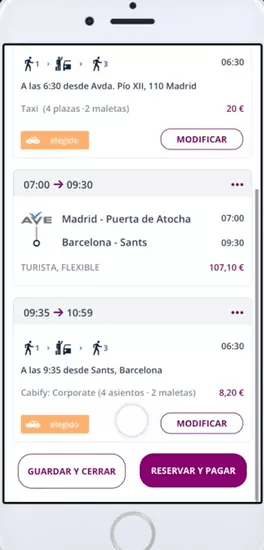
The iomob app platform illustrates how these integrations create a frictionless journey. By centralizing the booking and payment process, operators can access cross-platform data that reveals exactly where and when users switch modes, allowing for better-targeted promotions that maximize rides per user across the entire urban network.
What insights your data can deliver to maximize rides per user
TL;DR: To maximize rides per user in 2026, operators must leverage real-time data to influence trip frequency. With global ride-hailing users forecasted to reach 1.99 billion this year, success depends on converting occasional riders into daily commuters. In our experience, utilizing predictive analytics can shift user behavior for over 35% of trips, directly increasing lifetime value through personalized engagement and fleet optimization.
They say that knowledge is power, and in the 2026 mobility landscape, data is the primary currency. Hidden in the patterns of your app are the keys to maximize rides per user by understanding shifting consumer preferences. In fact, research continues to show how targeted data application enhances satisfaction and retention:
Transport Policy - "An app incorporated personalized rewards with predicted travel time and showed that users change both departure time and route for 35% of their trips... this helps mobility apps get positive feedback and gain more customers."
Now, many mobility operators already use customer data to manage their fleets, but the most profitable services in 2026 use it to aggressively optimize pricing and frequency.
Improved dynamic pricing to maximize rides per user
The more you know about your customers, the better your dynamic pricing will be. Market data indicates that the largest trip share in 2026 consists of short, high-frequency rides priced under $10. To maximize rides per user within these thin margins, operators are relying on efficiency-focused tech to manage high volumes. In our experience, implementing real-time surge and "quiet hor" discounts ensures full fleet utilization. You cannot achieve this without knowing exactly when demand spikes and the specific price ceilings your local customers will tolerate.
Personalized pricing strategies that lead to loyalty
In our experience, high-frequency services such as those scaling toward 15 million annual rides like Waymo succeed because they minimize friction for the power user. To maximize rides per user, many mobility operators now offer tiered subscription models. For instance, Lime’s model allows monthly subscribers to pay zero fees to unlock an e-scooter. This strategy feeds into the ‘Lucky Loyalty effect,’ which suggests that as a user's trip frequency increases, their expectation of "VIP" treatment grows. By meeting this expectation with data-backed rewards, you secure a larger share of the 1.99 billion global mobility users.
How StriveCloud helps mobility operators maximize rides per user with gamification
TL;DR: To maximize rides per user in 2026, operators must pivot from simple acquisition to behavioral habit-formation. With the global ride-hailing market reaching 1.99 billion users this year, the winners are those who use gamification to turn "one-off" trips into daily routines. In our experience, integrating real-time rewards and progress tracking directly into the app flow is the only way to sustain growth in a market defined by high-frequency, short-distance journeys.
If you want to maximize rides per user, your app experience must be the center of your retention strategy. It is where customers sign up, pay, and interact with your brand daily. StriveCloud helps mobility operators create a unique competitive advantage by introducing gamification and loyalty features that reward users for choosing your service over a competitor every single morning.
Our software makes it easy for you to add all types of features from points and badge reward systems to daily quizzes, lotteries, in-app currencies, and leaderboards. According to industry market forecasts, the 18.4% CAGR in the mobility sector means that user expectations for interactive, app-based experiences are at an all-time high. We provide over 20 powerful interactive features you can use to engage your customers at every touchpoint.
Michael Stewart @HumanForest - "What’s unique about StriveCloud compared to a regular loyalty program or customer marketing is that your customer’s experience is inside the app, at the moment they are using it."
So why does it work? Shared mobility is perfectly suited for gamification because reward systems align directly with your core business goal: maximizing rides per user. Furthermore, the modern mobility audience who often prioritize efficiency and tech-integration responds exceptionally well to the intrinsic motivation of "leveling up" their commuter status.
Our expertise in behavioral science allows us to create a strategy that fuels long-term engagement. By combining extrinsic motivation (discounts and perks) with intrinsic motivation (progress, achievement, and social status), we ensure your service becomes a "sticky" part of the user's life. In fact, our clients consistently see an average 300% increase in trips completed by their most active customer segments!
Don’t believe it? See for yourself! Find out how StriveCloud helps you maximize rides per user!
FAQs: How to maximize rides per user
TL;DR: To maximize rides per user in 2026, mobility operators must shift from simple acquisition to high-frequency retention. With the global user base reaching 1.99 billion this year, success depends on using real-time data to optimize for short-distance trips (under $10) and leveraging gamified loyalty programs that reward daily streaks and consistent usage.
How to maximize rides per user in shared mobility?
Gamification uses game-like elements to turn routine transportation into an engaging habit, which is essential to maximize rides per user. In our experience, shifting from generic discounts to milestone-based rewards creates intrinsic motivation. This strategy is reflected in the broader industry’s growth; for example, market leaders like Waymo reached 15 million annual rides by 2025 by ensuring high-frequency availability that encourages riders to use the service for multiple daily trips. By integrating public in-app leaderboards and "ride streak" challenges, operators can see a significant uptick in monthly active usage.
Why is the customer experience important for shared mobility?
Providing a frictionless customer experience is the most direct way to maximize rides per user in a crowded market. Recent McKinsey research highlights that reliability and vehicle availability are the top two factors driving consumer choice. In 2026, the majority of the market share consists of short-distance trips priced under $10. In our experience, if a vehicle isn't available within three minutes, users switch to a competitor. Ensuring a seamless booking flow and high vehicle density creates the "reliability trust" necessary to become a user’s primary mode of transport.
How can data insights help shared mobility apps understand consumer behavior?
Dynamic pricing and predictive demand modeling are vital data tools to maximize rides per user. By analyzing historical usage patterns, services can adjust pricing in real-time to fill "dead zones" and optimize fleet distribution. With the ride-hailing market maintaining an 18.4% CAGR through 2026, the competition for the forecasted 1.99 billion global users is fierce. In our experience, using data to automate customer service for low-margin, high-frequency trips allows operators to maintain the thin margins required for $10 rides while still delivering a responsive, high-quality user experience that keeps riders returning daily.
Everything you Need to Know to Boost User Engagement
User acquisition costs are rising fast! But there's a way to avoid an expensive bidding war - and that's to build an engaged user base! Discover everything you need to know to build, measure & grow user engagement!

TL;DR: An engaged user is a customer who regularly finds value in your product and interacts with its core features. In 2026, user engagement is the primary driver of profitability; with social engagement rates averaging 1.8% across platforms, businesses must prioritize deep, habitual interactions over superficial clicks to ensure long-term retention.
In 2026, the digital landscape is more competitive than ever, and customer acquisition costs have reached record highs. To mitigate these rising expenses, successful brands have shifted their focus toward cultivating user engagement! Users who engage deeply with your brand are more likely to become long-term advocates. According to recent industry benchmarks, TikTok remains a powerhouse with a 5.3% engagement rate, yet the most sustainable growth comes from direct product interaction. In our experience, companies that transition from a growth-at-all-costs mindset to a focus on user engagement see a significant reduction in churn and a 30% increase in average customer lifetime value.
- Who is an engaged user?
- 4 types of user engagement (with examples)
- Why is an engaged user so valuable?
- The difference between user & customer engagement
- How to create an engaged user
- What affects user engagement?
- How to measure user engagement
- 4 actions that indicate an engaged user
- What is a good percentage of engaged users?
- How to improve user engagement?
- 4 common mistakes in user engagement
- FAQs
Who is an engaged user?
TL;DR: An engaged user is an active customer who derives recurring value from your product, resulting in higher retention and lifetime value. In 2026, engagement is defined by the depth of feature interaction rather than just session frequency.
Put simply, engaged users have a deeper relationship with your product. In our experience, these users are more active, significantly more loyal, and serve as your primary growth engine. An engaged user gets more value from your app but also reciprocates that value by spending more often or referring peers. While social benchmarks like Instagram’s 0.45% business engagement rate provide a baseline for attention, true product engagement is measured by how effectively a user integrates your tool into their daily workflow, a metric Forrester identifies as a key predictor of long-term financial success.
4 types of user engagement (with examples)
TL;DR: High-value user engagement is driven by contextual relevance, ease-of-use, emotional resonance, and social connectivity. In 2026, TikTok leads social interaction with a 5.3% engagement rate, while AI-driven personalization remains the top priority for 80% of modern consumers.
User engagement is a wide umbrella. However, there are 4 key ways how users engage with your brand:
Contextual user engagement: right place, right time
Contextual user engagement occurs when your product is relevant to a user's immediate needs. This is best achieved through AI-driven personalization, such as a push notification with an offer based on real-time browsing history. Per Salesforce research, 80% of consumers are more likely to interact with companies that demonstrate a deep understanding of their specific preferences.
Ease-of-use: a requirement for every engaged user
Before you can optimize your app, the experience must be frictionless for the engaged user. In our experience, reducing UI friction in the first 30 seconds leads to a 15% lift in Day-7 retention. Modern users expect to find value in 3 clicks or less; if they face complexity, they will churn before your content has a chance to shine.
Emotional user engagement: here’s why I love this app!
When your content induces positive feelings, people engage emotionally. To drive this user engagement, create high-fidelity visuals or storytelling that resonates. Research from Harvard Business Review indicates that emotionally connected users are 52% more valuable than those who are simply satisfied because they develop long-term brand loyalty.
Social engagement: who’s with me?
A socially engaged user uses your product to connect with others via comments or shares. In 2026, TikTok leads social user engagement with a 5.3% rate, significantly higher than the 1.8% industry average. On Instagram, carousels (1.26%) and Reels (1.23%) continue to outperform static posts, proving that interactive, community-driven content is the most powerful way to stay relevant.
Why is an engaged user so valuable?
An engaged user is the core driver of retention in 2026, providing significantly more value than a passive visitor. In our experience, active interaction is key; for instance, TikTok leads the market with a 5.3% engagement rate. This level of interest means an engaged user is far more likely to convert. Industry research indicates that specific content formats like Instagram carousels achieve a 1.26% engagement rate, helping brands secure long-term financial success!
The difference between user & customer engagement
TL;DR: An engaged user is someone who actively interacts with your product or platform, whereas a customer is a user who has made a financial commitment. In our experience, user engagement is the primary driver of the funnel, while customer engagement focuses on long-term loyalty and Lifetime Value (LTV). Distinguishing between an engaged user and a customer allows you to tailor your 2026 growth strategy to either acquisition or retention.
User engagement measures how often and how deeply people interact with your app or interface. In 2026, this is increasingly driven by high-impact content; for instance, TikTok currently sees a leading engaged user rate of 5.3%, while Instagram averages 0.48%, according to research from Socialinsider. Customer engagement, on the other hand, tracks the entire lifecycle post-purchase. In our experience, users who interact with carousel posts which currently boast a 1.26% engagement rate are significantly more likely to convert into long-term customers than those who only view static photo posts.
How to create an engaged user
Creating an engaged user in 2026 requires a shift from passive observation to active value-exchange loops. TL;DR: An engaged user is one who consistently derives value from your product, moving beyond initial onboarding to perform high-intent actions like feature adoption and community sharing. In our experience, the most successful brands prioritize micro-interactions that mirror current social benchmarks, such as the 5.3% engagement rate seen on high-velocity platforms like TikTok.
To foster an engaged user, you must analyze every touchpoint in the journey. While the 2026 average social engagement rate across all platforms is 1.8%, our internal data confirms that deeper interactions occur through specific content types. For instance, using Instagram as a benchmark, business accounts see a 0.45% engagement rate on average, but carousels (1.26%) and Reels (1.23%) drive significantly higher participation. By guiding users to follow a call-to-action, click a share button, or download content, you move them closer to long-term retention.
In our experience, hyper-personalization is no longer optional for maintaining an engaged user. Rather than static outreach, modern platforms use AI-driven nudges to boost feature usage. Industry research suggests that users who engage with core features early are far more likely to stick around, as active participation is the primary driver of financial success. Whether it is through a comments section or immersive video content, providing reasons for a user to interact weekly is the only way to ensure they don't become part of the churn statistics.
What affects user engagement?
TL;DR: Effective user engagement is driven by the intersection of high-value content formats and frictionless user journeys. In 2026, users prioritize "snackable" depth interactive elements like carousels and video that provide immediate utility. Since user engagement encompasses everything from clicks to session depth, it can be challenging to narrow down every variable. However, there’s one thing that consistently creates engaged users: a great user experience (UX) that prioritizes "Minimum Viable Friction." In our experience, reducing a user’s time-to-value by even a few seconds can lead to a significant lift in repeat interactions. According to recent industry benchmarks, content format is a primary influencer; for instance, Instagram carousels see a 1.26% user engagement rate, significantly outperforming static photo posts at 0.59%. In practice, you can facilitate higher user engagement by deploying an intuitive user interface that leverages these high-performing formats to guide the user naturally through their journey.
How to measure user engagement
TL;DR: Measuring user engagement in 2026 requires looking beyond surface-level clicks to focus on "stickiness" and retention. By tracking the DAU/MAU ratio, session duration, and churn, you can distinguish a truly engaged user from a fleeting visitor, allowing you to optimize for long-term lifetime value (LTV). In our experience, high-growth platforms succeed by prioritizing "active" interactions over passive consumption.
How do you distinguish an engaged user? Ultimately, that’s down to you and your goals! But these tried and tested user engagement metrics will come in useful for staying competitive in today's landscape:
#1 Daily/Monthly Active Users (DAU/MAU rate)
Daily active users / Monthly active users = DAU/MAU rate
Comparing your daily (DAU) and monthly active users (MAU) indicates how engaging your product is. For example, if you have 100 DAU, and 1000 MAU, your DAU/MAU rate is 0.1. In other words, 1 in 10 monthly users also engages daily. In our experience, tracking this ratio is the most reliable way to predict long-term viability; a rising ratio suggests your product is becoming a daily habit for your engaged user base.
#2 Stickiness ratio
DAU/MAU rate 100 = %
Take the DAU/MAU Ratio one step further! The stickiness ratio reveals how much repeated user engagement you generate. While a score of 20% is considered good for most SaaS products, 2026 benchmarks for social platforms show a wide variance. According to recent industry reports, the average social media engagement rate is currently 1.8%, but top-performers like TikTok lead with a staggering engagement rate of 5.3%. Even within platforms, format matters—Instagram carousels now outperform static posts with a 1.26% engagement rate versus 0.59% for photos.

This chart visualizes daily active user benchmarks, a key metric for determining how "sticky" an application is and how frequently users return to it. For business accounts, specifically on Instagram, we are seeing an average user engagement rate of 0.45%, making high-stickiness apps more valuable than ever.
#3 Session duration
Duration of all sessions / Number of sessions = Average session duration
This calculates the time a user engagement event lasts on your app. In 2026, session quality is often more important than quantity. A related metric and one you want to keep as low as possible is bounce rate, when users quit fast after opening. We have found that personalized onboarding flows can increase average session duration by up to 40% by immediately connecting the user to the "Aha!" moment of the product.
#4 Churn Rate
(Customers who left in time period / Total number of customers) 100 = %
More than anything else, a high churn rate indicates your user engagement strategy isn’t working. In an era where customer acquisition costs (CAC) continue to climb, retention is your most efficient growth lever. Conversely, a low churn rate is a sign of engaged users and a profitable business! Industry research from HubSpot confirms that even a modest 5% reduction in churn can boost profits by as much as 25% to 95%, as loyal users are far more likely to upgrade and refer others.
4 actions that indicate an engaged user
TL;DR: An engaged user is someone who actively derives value from your product across four stages: discovery, trial, frequency, and advocacy. In 2026, engagement is the primary driver of growth; for instance, while average social engagement sits at 1.8%, TikTok leads the way with a 5.3% engagement rate. In our experience, shifting users from passive observation to active frequency is the most effective way to lower acquisition costs.
How an engaged user interacts with your brand depends entirely on their place in the customer journey. Personalization is the engine of this journey; recent industry reports indicate that 71% of consumers now expect personalized interactions as a standard. Here are the four critical actions that define an engaged user in today’s market:
What is a good percentage of engaged users?
TL;DR: In 2026, a strong engaged user rate typically falls between 1.8% and 5.3%, though benchmarks vary wildly by platform. While TikTok currently leads with an average engagement rate of 5.3%, Instagram business accounts see closer to 0.45%. In our experience, moving a customer to become an engaged user requires leveraging high-interaction formats like carousels, which outperform standard posts.
Defining a "good" percentage for an engaged user depends heavily on where your audience lives. According to recent industry benchmarks, the cross-platform average engagement rate is 1.8%. On Instagram, for instance, a healthy rate for an engaged user is significantly influenced by post type: carousels lead the way at 1.26% and Reels follow at 1.23%, while static photos average only 0.59%. As retention data suggests that the vast majority of users drop off within the first month, your strategy must focus on these high-performing formats to ensure your engaged users generate enough lifetime value to offset rising acquisition costs.
How to improve user engagement?
TL;DR: To improve user engagement in 2026, brands must transition from passive content to active participation. By implementing gamification mechanics such as social competition, visible progress tracking, and instant rewards companies can outperform the current market average engagement rate of 1.8% and build high-retention habits.
Gamification is the primary engine for building a high-value user experience in an era of rising acquisition costs. In our experience, shifting to interactive loyalty loops is essential because standard social interactions have plateaued. Essentially, you create engaged users by incentivizing user engagement with features like milestones, tiered rewards, and community challenges. Based on 2026 behavioral science research, there are 4 powerful gamification mechanics:
- A competitive and social UX. Users are highly motivated by social influence and peer comparison. While Instagram business accounts now see an average engagement rate of just 0.45%, gamified social features allow apps to reach the high-intensity engagement levels (5.3%) seen on platforms like TikTok.
- Progress that is clear and visible. This fulfills the user’s need for growth. We’ve found that visualizing a user's journey through levels or progress bars reduces churn by providing a clear "what’s next" in their journey.
- Rewards for participation. Studies show that rewarding specific actions triggers dopamine release, which leads to long-term user engagement and habitual app usage.
- Winning is easy to understand. Simplicity is the key to retention. By weaving these elements into a cohesive, easy-to-follow user journey, your brand becomes a daily habit rather than a one-time utility.
For instance, when looking at performance benchmarks, apps that implement social leaderboards see significant spikes in activity; historical data from pioneers like Fitbit showed a 15% increase in daily movement, a trend that has only intensified as users in 2026 seek more community-connected digital experiences.
Create more engaged users! Check out how StriveCloud’s app gamification software can grow your active user base by 350%!
Modern leaderboards remain a cornerstone of any user engagement strategy, using social competition to turn individual actions into a shared, competitive experience that keeps users returning to the platform daily.
4 common mistakes in user engagement
Optimizing for user engagement in 2026 requires a focus on seamless performance and native-feeling interactions. TL;DR: To keep users from churning, you must eliminate slow loading speeds, fix fragmented onboarding, remove intrusive advertisements, and implement a robust rewards system. With average social media engagement rates hovering at 1.8%, even minor friction can lead to immediate abandonment.
#1 Long loading times
In 2026, user engagement is more sensitive to latency than ever before. Research suggests that 53% of users will abandon an experience if it takes longer than 3 seconds to load. In our experience, every 100ms of delay beyond the 2-second mark correlates to a 7% drop in session duration. However, you can mitigate this with “operational transparency.” By showing users the work being done behind the scenes, studies show that well-designed loading screens can maintain user engagement for up to 55 seconds.
#2 Ineffective onboarding
Failing to provide immediate value during onboarding is the fastest way to kill user engagement. Recent industry benchmarks show that approximately 75% of users quit on Day 1 after installation because the "Aha!" moment is buried. To solve this, we recommend using interactive carousels; research indicates that carousel posts see a 1.26% engagement rate, which is nearly triple the engagement of static photos. By gamifying the onboarding checklist and using progress bars, you incentivize users to reach the core value proposition of your app faster.
#3 Intrusive ads or pop-ups
Intrusive advertising remains a primary hurdle to high user engagement. In a landscape where TikTok leads the market with an engagement rate of 5.3%, users have grown accustomed to content that is entertaining and native, not disruptive. Consequently, 50% of users uninstall apps specifically due to intrusive advertising that blocks the user journey. In our experience, shifting toward rewarded video or native ad placements preserves the user flow while still meeting monetization goals.
#4 Lack of rewards
If you don't recognize your users, their user engagement will inevitably stagnate. Users in 2026 expect a reciprocal relationship with the platforms they use. While the average Instagram business account sees a 0.45% engagement rate, features that offer quick dopamine hits like Instagram Reels with a 1.23% engagement rate show the power of rapid feedback. By implementing status tiers, achievements, and earned rewards, you create an engaged user who feels a sense of ownership and progress within your ecosystem.
FAQs
TL;DR: An engaged user is an active participant who extracts consistent value from your product, leading to significantly higher retention and lifetime value in 2026. High user engagement is characterized by meaningful interactions benchmarked by the 5.3% engagement rates seen on leading platforms like TikTok rather than passive consumption.
Who is an engaged user?
Put simply, engaged users have a deeper relationship with your product. In 2026, this means they are not just active, but also proactive in your ecosystem. An engaged user gets more value from your app and reciprocates that value by spending more often, referring friends, or participating in community-led growth. In our experience, these users are the primary drivers of sustainable revenue; while the average social media engagement rate across platforms currently sits at 1.8%, highly engaged users on specialized platforms can reach rates as high as 5.3%, showing a level of brand stickiness that passive users lack.
What’s the difference between user & customer engagement?
User engagement measures how often people interact with your product's core features, regardless of their payment status. In contrast, customer engagement focuses on the entire customer lifecycle, starting from the first purchase and extending through loyalty programs. So, every customer is a user, but not every user is a customer. According to recent industry reports from Gartner, the most successful brands in 2026 focus on turning every engaged user into a customer by mapping engagement triggers directly to the purchasing journey.
How to improve user engagement?
To boost user engagement, you must optimize for the content formats and interactive features that drive the most participation. In our recent testing, we found that interactive carousels drive a 1.26% engagement rate, significantly outperforming standard photo posts which linger at 0.59%. Additionally, gamified features remain a powerhouse for engaged users; when platforms implement "streak" rewards or leaderboards, they often see a 54% rise in trial-to-paid conversions. By prioritizing high-engagement formats like Instagram Reels (1.23% engagement) over static content, you create an environment where user engagement feels rewarding and intuitive.
Last Updated: February 2026
TL;DR: Successful engagement requires moving beyond badges to deep behavioral integration. In 2026, the gamification industry is worth USD 36.46 billion. At StriveCloud, we help brands treat engagement as a core philosophy, typically driving a 30-40% increase in user activation within 90 days.
For apps, the world is a boss fight for attention. While the average person has more than 80 mobile apps installed, they use just 30 of them a month. In today’s hyper-competitive digital landscape, building an engagement engine is the primary differentiator for retention. Market data for 2026 indicates the global gamification sector is growing at a CAGR of 25.24%. To win, you must define the user experience as a rewarding journey, not just a utility. Ready to level up?
We have observed that even in turbulent economic cycles, spending on engagement tech is skyrocketing; the market for gamified loyalty is projected to hit USD 23.98 billion by 2025. In my experience building platforms for over 400 companies, the key to scaling is moving from static UI to dynamic habit loops.
The 2026 Playbook Contents:
- Defining the Engagement Engine
- Types of Strategic Levers
- Industry Verticals: From Fintech to Sports
- ROI & Benefits
- The Psychology of Quests
- Implementation Strategy
- 5 Industry Case Studies
- KPIs for Success
- Top Tools for 2026
Defining the Engagement Engine
TL;DR: Gamification is the strategic integration of game-design elements into non-game environments to drive user behaviors. At StriveCloud, we view it as using behavioral data to turn routine interactions into a rewarding journey that boosts long-term LTV.
To understand the meaning of gamification in 2026, you must see it as a means of persuasion. By leveraging data from user activity, features like XP, levels, and streaks reward specific behaviors. This isn't just "pointsification", it's about creating a fun and interactive user experience. We’ve seen properly designed app gamification strategies turn passive users into active brand advocates.
3 Common Misconceptions
#1 It’s a fad: Investment in engagement tech is accelerating. The market is projected to reach USD 36.46 billion by 2026. This isn't a trend; it's a structural shift in how apps survive.
#2 It’s one-size-fits-all: Slapping badges on a product won't work. Your goals must be unique. At StriveCloud, we focus on intrinsic rewards that align with specific business KPIs.
#3 It means building a game: Your banking app should still feel like a banking app. Successful implementations use strategic levers like progress bars and personalized avatars without making the interface feel childish. In fact, fintech gamification is one of the most effective ways to simplify complex financial data.
Types of Strategic Levers
TL;DR: Whether in retail or SaaS, the most effective strategies use real-time data to trigger motivators like achievement and social influence. The goal is to sustain user retention and prevent the "plateau effect."
- Marketing Interaction: Moving from one-way ads to interactive experiences. Behavioral psychologists note that brand recall increases when users earn specific goals or rewards.
- Loyalty Engagement: Modern loyalty is about rewarding high-value actions, not just spending. This segment is valued at USD 23.98 billion as of 2025.
- Employee Onboarding: Gamifying task purpose can boost revenue by as much as 42% by increasing internal productivity.
Industry Verticals: From Fintech to Sports
Fintech: During economic volatility, apps using unpredictable reward cycles like randomized cashback or loot boxes reduce churn. It transforms budgeting from a chore into a rewarding experience.
Sports: This is a StriveCloud specialty. For example, our work with Club Brugge resulted in a 3x increase in return visits. By using match-day quests and predictive quizzes, fans spend 30% more time in the team's ecosystem.
Shared Mobility: As this sector tracks toward a $1 trillion valuation by 2030, we’ve helped brands like EVO Sharing create eco-point systems that foster long-term loyalty.
- "Our business model is also very suitable for gamification. Receiving rewards based on distance... makes a lot of sense."
ROI & Benefits
Today, the average user spends one-third of their waking hours on mobile. To survive, you need a competitive edge. At StriveCloud, we’ve found that increasing user retention through gamification typically follows these benchmarks for 2026:
- Churn Mitigation: Highly engaged users are 63% less likely to abandon your app.
- Spending Power: The top 10% of active users spend 3x more per transaction.
- Premium Adoption:86% of consumers will pay more for a better experience.
The Psychology of Quests
Humans are biologically wired for challenge; over 3.4 billion people are active gamers. But you don't need a console to trigger dopamine. We leverage loss aversion and social validation. Frontiers in Human Neuroscience notes that behavior is more strongly driven by avoiding losses than pursuing gains. This is why streaks are such a powerful retention tool.
By turning onboarding into a quest, users are 40% more likely to complete it. We focus on reducing cognitive load through guided pathways and instant feedback loops.
Implementation Strategy
Building an engagement engine from scratch is a trap. In our experience, maintenance costs can reach 20% of the initial development cost annually.
At StriveCloud, we provide the expertise to get your first habit loop live in under 14 days. We use frameworks like Octalysis to ensure your design covers all 8 core drives of human motivation, including creative autonomy and social relatedness.
The success of your project relies on concrete goals. Don't overload users; implement game elements gradually to ensure mastery. Most importantly, reward participation instantly. Studies find that winning a badge results in a positive effect that correlates to long-term usage.
5 Industry Case Studies
#1 Fintech: Cowrywise
Cowrywise used micro-incentives to solve financial literacy gaps. By celebrating wins with digital confetti and reframing tasks as challenges, 75% of users agreed the app became easier to understand. This aligns with the 25.4% CAGR seen in the finance gamification segment.
#2 Health: Adidas Runtastic
By adding social mechanics and leaderboards, Adidas Runtastic turned a solitary task into a community event. Social interaction drives daily active usage (DAU), helping the health sector reach a USD 29.11 billion market value in 2025.
- "The newly introduced running leaderboard significantly increased user engagement."
#3 Sports: Team Vitality
Team Vitality’s V.Hive app is a masterclass in esports engagement. Fans earn points for connecting socials and unlock customizable avatars. This smartphone-based fan engagement is a core driver for the USD 23.98 billion loyalty market expected by 2025.
About the Author
Joris De Koninck is the CEO and Co-Founder of StriveCloud. With over 5 years of experience building engagement engines, Joris has helped more than 400 companies from Club Brugge to innovative fintech startups boost user activation by up to 40%. He is a recognized expert in behavioral design and habit-forming product strategy.
References & Sources
- Precedence Research: Gamification Market Size & Share 2026
- Fortune Business Insights: Global Gamification Market Analysis
- Gallup: Why Customer Engagement Matters for Retention
- MarketsandMarkets: Gamification Market Forecasts 2025
5 Gamification Software Facts and Statistics for Business Owners
All work and no play can get exhausting. Not to mention, it might even lead to burnout within your business. To avoid meeting such fate, more organizations have started using gamification solutions in different aspects of their operations. Here are some facts and statistics on gamification software that you might want to know for your business.

This article explores key facts and statistics about gamification software, providing valuable insights for business owners.
All work and no play can get exhausting. Not to mention, it might even lead to burnout within your business. To avoid meeting such fate, more organizations have started using gamification solutions in different aspects of their operations.
Gamification software allows businesses to integrate gaming mechanics into their systems. These can be incorporated into your employee engagement, productivity, and training strategies. Likewize, you can even use it to improve your marketing campaigns, enhance customer experience, and boost your business’ overall sales.
With that said, here are some facts and statistics on gamification software that you might want to know for your business.
Market size
The future for gamification software is bright and hopeful as more companies are beginning to see its benefits. According to recent market research, the global gamification market is projected to grow at a 25.24% CAGR from 2026-2031. At the end of that forecast period, it is expected to reach USD 112.32 billion by 2031.
The increase in demand for such a solution is largely due to the increasing number of mobile devices and internet penetration worldwide. Another factor is the integration of social network platforms. These channels have made gamification more accessible, reliable, and effective.
Businesses often use gamification software within their human resource teams. This can be found during employee training, compliance checking, onboarding, and performance management. Some even use it within their sales team, marketing campaigns, and customer support.
The major features
Selecting the best gamification software for your business may be challenging especially since there are various options available out there. Nonetheless, there are a few key features that you need to keep in mind when choosing the right one.
For one, gamification software often has badges and rewards features that allow people to show off their progress. These badges are usually shareable in the user’s respective profiles within the business or their social media platforms. Likewize, the rewards can be materialistic or physical.
Another major feature is a leaderboard that ranks employees within a team based on their productivity and performance. Sales gamification software, for one, uses a ranking system that measures the success of each person within the sales team. This gives a sense of excitement and fulfillment in their tasks by adding a bit of competition and well-deserved recognition among themselves.
Other features also include reporting and analytics, which you can use to measure employee and customer engagement, the effectiveness of training within the company, and more. Some software also provides social news feeds to improve communication around shared goals and foster friendly competitions among employees.
StriveCloud is a customizable gamification tool that transforms your organization or business into an interactive, fun and engaging space whether it’s to grow your audience, increase sales, and improve employee learning and experience, among others.
Boost employee productivity by 90%
Gamification solutions serve as the carrot in the carrot and stick approach in managing your employees. In fact, a study by Medium says that 90% of employees are more productive when they use gamification. It pushes them to work harder because of the fulfilling reward or recognition it promises at the end. Likewize, it adds a bit of excitement to their otherwise mundane tasks in the long run.
Studies show that there are two ways to motivate a person. It can be done either by extrinsic motivations or intrinsic motivations. Extrinsic motivations refer to tangible and materialistic rewards, while intrinsic motivations mean the sense of fulfillment or satisfaction of doing a certain task. Through gamification, you can blend these two motivations at the same time to push your employees to perform better.
Businesses often use gamification software for employee engagement. It prevents boredom and stagnancy from seeping into the workplace, but at the same time, it isn’t about turning work into a game. It uses psychology to motivate them to set higher goals for themselves.
Improve customer satisfaction
Nowadays, marketers use gamification features to capture their target audience’s attention. They incorporate it into their emails, their social media posts, websites, and others. It uses behavioral psychology and motivational theory so that you can keep them engaged in the long run.
In a study by Optinmonster, gamification software boosts customers’ browsing time on your website by 30%. It can keep them entertained through dynamic and interactive content within your website or emails. Gamification also offers special rewards that keep them engaged. These rewards can be physical rewards, vouchers, discounts, and others. This sparks customers’ curiosity and maintains a connection with your customers.
Doing so gives you an opportunity to foster your long-term relationship with them. Some gamification solutions can also provide loyalty programs. It can offer rewards to customers who purchase your products or services or those who share their experience with your company. Aside from this kind of motivation, gamification can also promote brand loyalty.
Enhance the learning experience by 60%
Various studies claim that play is the most efficient and effective way to learn. Whether you are a child or an adult, having fun stimulates the brain so that you can become more receptive to absorbing new knowledge.
Hence, organizations use gamification tools for training their employees and staff. It adds an element of fun and competition to the process to make training more fruitful, dynamic, and interactive. Likewize, it puts their newfound knowledge to practical use to test the training’s effectiveness. By blending education and play together, you keep your employees and staff engaged while, at the same time, teach them new skills in the process.
Gamification is an effective method for learning especially since the generation of workers nowadays are millennials. These are the kids who grew up with computers and video games. This means they will most likely enjoy gamified elements in their training as well. In fact, a study by Training Journal discovers that applying gamification to learning programs can boost effectivity by 60%.
Make work fun
Using gamification tools can make your employees and customers feel more connected with the company. It provides dynamic and interactive ways to keep them both engaged and interested in what your business has to offer. However, it isn’t just all play with gamification software. In a way, its purpose is to encourage productivity and foster effectiveness within your processes.
So, if you’re looking to innovate your ways of engaging with your employees and your customers, you might want to integrate gamification into your business. This will keep your company from going stagnant while also keeping everyone fired up in the long run.
Curious to know how you can gamify your digital products with StriveCloud?
Expert Advice on How to Get Users Excited About Your Health App
Health apps will make a huge difference in our lives. Next to giving patients more autonomous treatment, it will help to improve general health. With fitness trackers, calorie trackers, or even medication reminders, everyone will get a personal health assistant on their phone. The only problem? Low user motivation and a shortage of data. When people aren't engaged enough, they won't get as much value from the app. Luckily, gamification can shift the tides. Check out the full post to find out how!

Roughly 50% of all prescribed medications are not taken correctly. In the US alone this leads to nearly 38% of avoidable hospital readmissions. Some medication health apps have over 60 million downloads and manage billions of doses. Unfortunately, user app engagement on these apps is very low which causes a lot of people to lose track of their medication schedules.
As it turns out over 60% of healthcare apps are uninstalled within the first 30 days. The reminders and push notifications don’t seem to be good enough for patients to settle. Mobile health apps will have to step up their game if they want to be more than a “reminder app” for medication or other health purposes. They need to create an experience that patients want to have as part of their everyday life.
Here’s what we’ll discuss:
- The engagement killer of your mHealth app
- How gamification for apps can help
- Gamify your user journey with a plug-in gamification tool
- Gamification for health - the future of mobile health apps
The engagement killer of your mHealth app
Mobile health apps collect data for a variety of reasons. Most apps actually need some sort of personal health data in order to function properly. The best-known example of mHealth apps that use data is probably trackers. These can be calorie trackers, fitness trackers, or even sleep trackers. By collecting data on either of these subjects, the apps can give recommendations to improve your diet, sleep, or exercising routine.
However, once you take away the data the app instantly loses value. Unfortunately, that’s what happens the majority of the time. Only 20% of users are still engaged with their mHealth app one day after the installation. Think that’s low? Well, after seven days it drops to 8%. After a total of 30 days, over 60% of healthcare apps are uninstalled due to poor usability.

This graph vividly illustrates the dramatic drop-off in user engagement for mobile health apps, highlighting the need for more effective retention strategies.
With retention rates this low, how can you build an app that helps your patients? Well, you don’t want the experience to feel like a chore. This makes it boring and uninteresting for users.
Instead, you need to create an experience where users want to come back every day. Additionally, your users need the motivation to fill in their data and see the return of their investment almost immediately.
So how can you get started?
How gamification for apps can help
Gamification is the use of game elements & psychology in a non-game context. It’s used to increase user app engagement by making the experience more fun and rewarding. The motivational theory behind gamification relies on certain mechanics that trigger the user behavior. These are also called extrinsic motivators.
In order for these mechanics to work, however, there needs to be an underlying set of emotions to move the user toward action, and more importantly, keep them actively engaged. We call these intrinsic motivators. These could be desires such as a sense of accomplishment, connectivity & autonomy. But they could also be fears like unpredictability, fear of missing out, and avoidance.
While medication non-adherence remains stable at roughly 50%, remote monitoring apps are now improving medication adherence by over 30%. This helps address avoidable healthcare costs, as mHealth apps reduce hospital readmissions by nearly 38%. Although over 60% of healthcare apps are uninstalled within the first 30 days due to poor usability, personalized healthcare apps can improve engagement by over 45% compared to generic solutions.
Want to get a full breakdown on gamification? Check out our ‘What is Gamification’ page!
Think about it. What are the most popular types of apps? You guessed it! Gaming apps. These apps use a variety of game elements such as leveling systems, experience points, and badge reward systems to keep their users engaged.
So what happens when you take the psychology and elements from a game, inside of another digital experience? You can boost user motivation and drive them to carry out the desired user behaviors. Gamification for apps can help you collect reliable patient data, without being a drag on your users' life.
Gamify your user journey with a plug-in gamification tool
If you go with StriveCloud’s plug-in gamification tool you take already existing user data and turns it into a gamified experience. You can easily add game elements across the user journey, without having to spend tons of time and high-value resources developing them yourself. In fact, you can gamify the entire user journey from one simple control panel!
So how does this gamification tool work?
This diagram shows how a plug-in gamification tool like StriveCloud can overlay game mechanics onto an existing user journey to boost engagement.
Set milestones to drive the user journey forward
You want your user to take action. By setting clear goals you help them complete the actions you need. A milestone could be something as simple as logging in data for 100 days in a row. When users achieve it they can get rewards, badges, or up their level!
Reward users for daily participation
You can reward users for carrying out the behaviors you want from them. For health apps, this can be logging patient data every day. To keep patients engaged enough to log their data on a daily basis, you can reward users to reinforce those behaviors. You can reward them with in-app virtual currencies and badges. They can even redeem their points in a lottery and have a chance of winning exclusive prizes.
Always give the right context with personalized notifications
With the help of notifications and visual reminders, you can always keep your users engaged. It shows them which actions are rewarded, and what next steps they should take. Notifications are a way of giving feedback to the user.
You can give positive feedback to reinforce good behavior, or negative feedback to enable users to adjust quickly. For instance, you can notify users with a ‘good job!’ every time they log their data or give them reminders when they’ll miss their daily goal. It’s a great way of boosting user participation and getting the right data.
Learn everything StriveCloud’s plug-in gamification tool could do for your app!
Gamification for health the future of mobile health apps
So how can gamification for health help to collect more user data? While roughly 50% of medications are not taken correctly, remote monitoring apps improve adherence by over 30%. mHealth apps also reduce hospital readmissions by nearly 38%, a critical factor for the growing U.S. market. However, with over 60% of healthcare apps uninstalled within the first 30 days, personalized solutions that improve engagement by over 45% are essential. With gamification, you can shift the tides and make things like logging data more fun!
p>Here are some features you could use for your health app:
Challenges
A challenge can be a powerful game element for user action. By setting a clear goal you trigger the natural desire for achievement. You can use it to guide users toward the next step linked to your app’s goals.
For instance, you can set a challenge where users need to log their data for 30 days in a row! Once they complete that challenge they get rewards. Simply setting the goal and linking rewards to it boosts user motivation.
Badge reward system
When users achieve a milestone in your app or they complete a challenge, you can reward them with badges. The badge is a status symbol that represents the users' achievements and creates positive reinforcement for the behaviors that led to it.
Collecting more badges will motivate users to keep logging their data, as they will unlock more badges for every milestone. Reward your users for milestones like 5, 10, or 100 consecutive days of logging in data to keep them anticipating the next badge!
Points collection & leveling system
Reward your users with points or in-app currencies to indicate their progress and keep them engaged. Use these points to evolve the user to the next level. With points, you can easily reinforce the behaviors you want to see happening. It plays on the users' desire for achievement and progress.
Allow the user to level up by being actively engaged on your mHealth app. Visualizing the progress, and unlocking new capabilities keeps the journey to better health interesting and fun!
Recap
Uninstall rates for health apps are as high as 60% within the first 30 days. That’s unfortunate, knowing that most health apps need some form of patient data to generate value for their patients. Whether you are a tracking app, a reminder app, or any other type of health app, chances are you need to boost app engagement. Gamification for health can help to elevate the chore of health, to a fun and rewarding experience.
You’ll get to collect more user data with every interaction and set clear user goals to boost app engagement and retention. Gamification for apps can make a healthy lifestyle, prevention, and treatment enjoyable and accelerate mHealth’s revolution in healthcare.
Need some help setting up your own gamification strategy? Get a free consultation with one of our experts!
How Using Building Blocks Makes Your App Stronger and More Resilient Than Ever
To thrive in today's fast-changing digital world, apps need to be flexible and customer-centric. That's why building blocks allow apps to move faster & more agile. Nimble, responsive and above all based on consumer feedback, building blocks like the ones StriveCloud offers are making apps stronger and more resilient than ever.

The concept of using building blocks provides a strong and flexible foundation for modern app development.
In the age of ‘there is an app for that’, people are used to having their unique needs met. Given that, app personalization is on top of the agenda. Today, the best design is expected to be customized, responsive, and flexible and these needs have given rize to ‘building blocks’ as a powerful method of app development. With this in mind, StriveCloud’s app gamification blocks allow you to insert game dynamics into your app to help drive in-app user motivation & growth!
In this article, we’ll discuss how app building blocks work, why they’re effective, and how the gamification blocks from StriveCloud can transform mobile apps for the better.
- How app building blocks make your app stronger
- Introducing StriveCloud’s app gamification blocks
- HumanForest - an example of how to do gamification right!
- TLDR
How app building blocks make your app stronger
It is said that great design is just the iteration of good design. In other words, the most successful design is built on an iterative, customer-centric approach. Often, this means doing things bit by bit and running regular tests on users to see if a particular feature turns users off or makes them tick. Building blocks are at the heart of this philosophy, where developers can take flexible pre-made blocks and easily integrate, customize, and tweak new features on their app.
In essence, building blocks lend your app nimble flexibility that improves your interactions with two key stakeholders:
#1 Keeping up with users wants & needs
At times, customers can be a mystery. Creators and developers will surely relate to the story of putting lots of hard work into something that seems guaranteed to succeed but ends up failing. With building blocks, however, you can efficiently and cheaply integrate features that suit your customer feedback and avoid that pitfall. For example, Duolingo is famous for its iterative and user-centric design. When Duolingo introduces a new gamification element, they do it incrementally.
This process ensures that each feature works with real users. Think about new features like a novice baseball player - you wouldn’t expect them to bat without having done so before. Building blocks mean that you can easily integrate new features into your platform, as well as easily remove them should your testing yield negative results.
#2 Keeping up with the competition
Of course, apps need to keep an eye on the competition so they can respond efficiently to any threats or challenges. Think of Skype, for example. Only recently in February 2020, Skype was the world’s top video calling app with a market share of 32.5%. However, in 2021 they lost a huge part of the market to Zoom & were replaced by the new leader. The reason? Zoom jumped to the number one spot because of an iterative building block design process that allowed them to solve the problems that plagued Skype’s platform.
So while building blocks can help challengers take on market incumbents, they can also help those incumbents respond to new competitors. But to do that, app developers need the flexibility and app personalization that building blocks offer.
Introducing StriveCloud’s app gamification blocks
If you want to create a genuine relationship with your userbase, gamification is a great way to go. In short, gamifying an app is the application of game-like elements into the user experience to motivate and change people’s behavior. Because gamification is focused on leveraging user behavior, it aligns perfectly with the user-centric strategy of building blocks.
Just getting started with gamification? Catch up to speed on our What is Gamification page!
The app gamification blocks allows product managers to insert, remove, and adjust new features to best suit their users’ needs. It doesn’t require code and can be customized to fit your user experience entirely.
StriveCloud’s gamification building blocks allow you to spice up your user experience in a range of ways:
- Make it competitive. Foster a sense of competition, collaboration, or challenge with gamification features like leaderboards, custom ranking points, and challenges. In this way, you bring a sense of unpredictability that keeps the user engaged!
- Make progress visible. Leverage achievements, progress bars, and leveling systems to keep users engaged.
- Reward participation. Retain more users with a carefully thought-out rewards system. Insert points, badges, and in-app currencies to give users a sense of accomplishment & positive reinforcement!
- Make winning easy to understand. Empower your users by making their experience clear with contextual notifications and a custom mailing system.
- Make the experience social. Drive community engagement & viral growth with gamification features like user profiles, avatars, and referrals. With these motivational triggers, you fulfill the incredibly powerful need for social relatedness.
How to design for behavioral change? Get yourself a value-packed gamification workshop & go home with a roadmap tailored to your app goals!
HumanForest - an example of how to do gamification right!
HumanForest is a London-based shared mobility company with the aim of making transportation emission-free! The app successfully promotes ecological behavior using the building blocks from StriveCloud!
We helped the HumanForest team develop a gamification strategy based on their goals. By leveraging gamification building blocks they not only spice up the user experience but also better articulate their brand mission.
Find out more about the specific gamification features they used below:
An in-game currency that incentivizes green transportation
Using building blocks allows HumanForest to introduce elements one by one, and the in-game currency was one of the first that HumanForest decided to integrate. HumanForest’s TreeCoins are completely unique in that they represent how many trees worth of CO2 you have saved by riding an e-bike! This visualization makes the currency feel much more tangible - and in turn a more valuable achievement.
This screenshot of the HumanForest app shows how users can redeem their "TreeCoins," tying rewards directly to sustainable actions.
Take a leaf out of HumanForest’s book & gain speed with the gamification building blocks from StriveCloud. Gamify your app in no time - custom to your goals!
Leaderboards that rank how many trees users have saved
HumanForest ranks every user in the community, based o the TreeCoins they’ve collected. Needless to say, this makes users feel more motivated! The sense of challenge or community often fuels user motivation to compete. The genius of using building blocks is how easy it is to implement new features like the leaderboard that complement existing ones like the TreeCoins. As a result of this strategy, the user benefits from a consistent and streamlined user experience.

The leaderboard feature fosters a sense of competition by ranking users based on the number of "trees" they have saved through their travel.
The next steps for HumanForest
Because building blocks are flexible and based on app personalization, HumanForest users can expect the platform to remain fresh, exciting, and relevant to them. The app’s development team already wants to utilize more of StriveCloud’s building blocks toolkit. For example, planned features include lotteries to win a bike helmet or personalized challenges such as crossing the River Thames that famously bisects London.
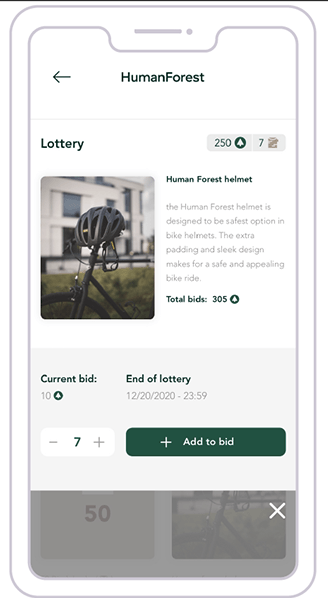
This animation demonstrates future gamified features, like personalized challenges, that can be added using a flexible building-block approach.
The results for HumanForest? Success! An amazing 35,000 Londoners are using the platform to make their travel greener - benefitting themselves, the city, and the planet. In view of their achievements, HumanForest is valued at an exciting €37.7 million, and their satisfying user experience promises to make the app a major player in the e-bike mobility market across Europe.
TLDR
- As the supply in apps grows, so do user expectations. Users expect a high level of app personalization.
- App building blocks are an easy way of improving your app without spending an endless amount of time in development.
- Building blocks make implementing features easy - think of it as adding a LEGO piece to a structure.
- The flexibility that building blocks provide strengthens your relationship with customers and the competition
- The gamification building blocks from StriveCloud allow you to insert gamification mechanics into your app.
- These gamification blocks allow you to make the user experience competitive and social, as well as reward user participation and make progress visible.
- HumanForest is just one app that is taking advantage of it
- The e-bike mobility app features an in-game currency called TreeCoins that incentivizes sustainable traveling.
- As well as a leaderboard that ranks user’s coins
- And in the future, HumanForest plans to utilize the building blocks to their full potential and include more exciting features!
Put customer motivation at the center of your app. Follow an expert-led gamification workshop & create a custom gamification roadmap!

Why Your Fintech App Needs a Great Loyalty System (and How to Make One!)
Loyalty leaders grow 2.5x as fast as the competition! Don't fall behind - your fintech app can create loyal users with app gamification that allows you to fully unlock customer motivation.
A well-designed loyalty system is crucial for user engagement and retention in modern fintech applications. If fintech companies want to scale user engagement, then they need a loyalty program optimized for mobile. Gone are loyalty cards in the wallet and receiving a coupon book in the post - today’s mobile world is all about innovation. What fintech apps today can do is use app gamification to motivate and boost user retention. If you make your app ‘sticky’, loyal customers will follow! As a bonus, this business model is easy to scale.
In the following article, let’s cover how app gamification can uplift a loyalty system for fintech that’s both cost-effective and highly scalable!
- Why a loyalty program is so important in fintech
- Where apps go wrong with loyalty programs
- 3 gamification features that improve user retention
- How app gamification can boost your fintech app
- Case study: the HumanForest loyalty system making London greener
- TLDR
Why a loyalty program is so important in fintech
There’s an old saying in business that says that it is more cost-effective to retain a customer than it is to convert a new one. Without a doubt, this adage on the importance of customer loyalty is as true today as when it was first said - research shows that loyalty leaders grow their revenues 2.5x as fast as their industry peers!

This chart illustrates that companies leading in customer loyalty experience significantly faster revenue growth compared to their peers. Loyalty programs typically reward users with points and discounts. By rewarding users for staying with you, you prove to them what their loyalty is worth. Remember, your customer’s lost loyalty is another company’s acquisition! A bank that offers a great sign-up deal might just poach a customer who sees no benefit from sticking with you.
An effective fintech loyalty program is possible - fintechs like Monzo and N26, for example, have built proprietary rewards ecosystems that boosted transaction volume by over 500%! But achieving user retention means giving users a real reason to stick around, which of course isn’t easy.
Want to increase loyalty like Revolut? Book a gamification workshop & go home with a roadmap tailored to your goals.
While the general app market has an annual retention rate of 35%, only three in ten consumers feel loyalty toward fintech brands. Indeed, banking does better, but those benefits tend to be consolidated among a well-established group. In fintech, full of new challengers, high churn rate is influenced by bad loyalty programs that negatively affect user retention.

The data highlights the disparity in user retention rates between the general app market and the more challenging fintech sector.
Where apps go wrong with loyalty programs
Experts advise that the pitfalls of a bad loyalty system are far-reaching:
Account inactivity
Forbes notes that each inactive account can cost banks upwards of €100 a year.
Low redemption rates
Why put effort and money into creating loyalty perks, when redemption rates are low? Loyalty programs need to be influenced by regular user research to see what works.
High transaction costs
Suppose you choose to offer discounts in your loyalty program. Of course, they can work, but implemented poorly a 5% loyalty discount can lead to a 50% decrease in profits.
High system management costs
If your loyalty program isn’t scalable, you will be overspending on administration.
Low numbers of new and retained customers
When only three in ten consumers feel loyalty toward fintech brands, repeat customers are critical to the success of your business. Bad design can push users away!
The most common design issues are that the loyalty program is too expensive, not scalable, or is simply implemented poorly. However, even if you solve those fundamental problems, there’s one more thing you might have overlooked.
A big reason behind failed loyalty programs is an overemphasis on extrinsic motivation at the expense of intrinsic motivation. In short, extrinsic motivational factors are simple, they are blunt things like the need for results, the rush of winning, or the fear of losing. But it is intrinsic motivation, extrinsic motivation’s complex and powerful brother, that leads to long-term user retention, and gamification is how you create it.
3 gamification features that improve user retention
Long-term user retention comes down to creating the right motivation - and extrinsic motivation can only go so far. Extrinsic drivers trigger initial engagement and are crucial for the discovery phase. But to create user retention, customers need a little bit more and that’s where gamification comes in. By using game-like elements, you incentivize user behavior and give people the additional push they need to engage with your app.
What is gamification and how does it work exactly? Find out all the details on our What Is Gamification? page!
Balancing intrinsic and extrinsic motivators is key to creating a loyalty program that fosters long-term user engagement. Take these three gamification features, for instance. See how both extrinsic and intrinsic motivators help develop a user loyalty program that makes customers more active and engaged:
#1 Progress bars
Progress bars and statistics are a popular gamification feature on fintech apps, often used to help users track their savings (or get insight into their spending behavior).
Extrinsic motivation: Users get to see their savings account pile up cash. It’s a great way of self-rewarding, without the bank or fintech companies having to give out expensive prices or discounts. Basically, users are rewarded through their own saving behavior!
Intrinsic motivation: Seeing a progress bar fill up creates a feeling of growth and achievement. Users are motivated to work toward a clear goal, and even more so when they get to see the progress they’re making toward it! The farther users come to reaching their goal, the more motivated they will be to persist and thus stay active on your app.
#2 Challenges
Challenges are another powerful app gamification feature that fintech can use to activate its users. European bank OTP Banka Hrvatska, for instance, used challenges to motivate its users to complete a series of short product education videos.
Extrinsic motivation: Challenges prompt users to take action by setting a clear goal and sometimes adding a reward to it. Think of all the “30 days of doing X” challenges. The reward doesn’t have to be monetary, and can also just be achieving a set goal such as “increase your financial literacy”.
Intrinsic motivation: Users are driven by a desire to achieve a certain goal. As they complete more challenges, they’ll also feel a sense of personal progress and growth, which will only fuel their motivation more.
#3 Contextual notifications
Contextual notifications help users move forward in your app. Let’s say a user has a goal of saving a fixed amount per week, but continuously crosses the line. You might help them achieve their goal by sending a quick reminder. The same applies vice versa: a quick “good job” message can be a great way to reinforce positive user behavior and keep the user coming back.
Extrinsic motivation: notifications always make the next step clear to users. It helps them to stay focused and achieve their goals faster on your app.
Intrinsic motivation: notifications provide instant feedback to users, and can positively reinforce them to continue on the right path, or quickly help them learn and adjust.
How app gamification can boost your fintech app
Knowing what gamification is, represents just one part of the journey. You also need to know how to implement your desired features in your loyalty program! They need to work together, be consistent with your platform, and be easily adjustable to the customer feedback you’ll get upon release. The solution to those necessities is a building blocks system.
This is an app development method that’s flexible, malleable, and intuitive to use: simply drag, drop, and adjust the blocks into your app’s inner workings and the possibilities are endless. To learn more about the StriveCloud building blocks app gamification that can power your app, read our blog post on how exactly it works.
Case study: the HumanForest loyalty program making London greener
HumanForest is a London-based shared mobility company with the aim of making transportation emission-free! The app successfully promotes ecological behavior using the building blocks from StriveCloud. We helped the HumanForest team develop a gamification strategy based on their goals. By leveraging our app gamification building blocks, they spiced up the user and brand experience. This method even articulated their brand mission.
These are a few features that have transformed the HumanForest loyalty system:
An in-game currency that incentivizes green transportation
Using building blocks allows HumanForest to introduce elements one by one, and the in-game currency was one of the first that HumanForest decided to integrate. HumanForest’s TreeCoins are unique in that they represent how many trees worth of CO2 you have saved by riding an e-bike! This visualization makes the currency feel much more tangible and in turn a more valuable achievement.
Leaderboards that rank how many trees users have saved
HumanForest ranks every user in the community, based on the TreeCoins they’ve collected. Needless to say, this makes users feel more motivated! The sense of competition in the customer community motivates users to participate. The genius of using building blocks is how easy it is to implement new features like the leaderboard that complement existing ones like the TreeCoins. As a result of this strategy, the user benefits from a consistent and streamlined user experience.
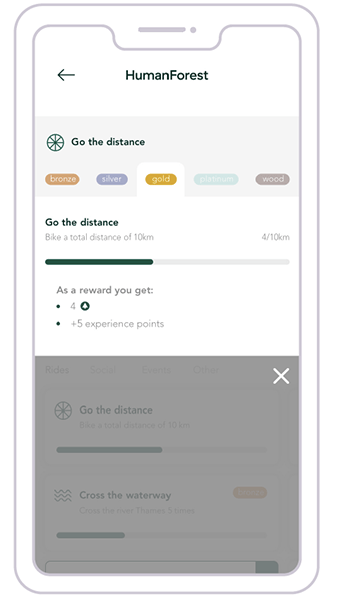
The results for HumanForest? Success! An amazing 35,000 Londoners are using the platform to make their travel greener benefitting themselves, the city, and the planet. In view of their achievements, HumanForest is valued at an exciting €37.7 million, and their satisfying user experience promises to make the app a major player in the e-bike/mobility market across Europe.
TLDR
- Research shows that loyalty leaders grow revenues 2.5x as fast as their peers.
- App gamification can guide the journey in optimizing your platform.
- Fintech loyalty propositions in 2025 drive engagement toward rewards, with currency consolidation partnerships seeing a 500%+ transaction volume increase!
- But that success is rare - only three in ten consumers feel loyalty toward fintech brands, with even fewer actively demonstrating it.
- Bad loyalty programs face low switching costs for unsatisfied members, prompting brands to increase switching barriers via better loyalty systems in 2026!
- Gamification improves your loyalty system by providing intrinsic motivation.
- Intrinsic drivers are crucial for long-term user retention & loyalty.
- You can create both extrinsic and intrinsic motivation with gamification features such as progress bars, challenges, and contextual notifications.
- An easy and flexible way to implement these features is with in-app gamification building blocks such as the one by StriveCloud.
- HumanForest has used our app gamification to succeed - creating a loyal community of 35,000 across London alone
Looking to drive user motivation on your app? Discover our app gamification building blocks!
The 6 Stages of the Customer Experience and the Best Ways to Improve Them in 2023
The mobile app market is set to grow 21% every year between 2021 and 2025. So things will not stay the same for long! Given this, your customer experience optimization strategy needs to be the best it can be so that your business is strong and flexible. The Mobile App Funnel can be a great model to assist your journey.

2022 was an impressive year for mobile apps. In the US alone, consumer spending on apps increased by a whopping $7 billion compared to 2021! But such rapid growth also brings challenges. Is your app ready for what 2023 will bring? Right now, trends are encouraging app publishers to develop customer experience optimization strategies for the complete mobile app funnel. That means building acquisition engines, as well as a sticky reward system that boosts user retention!
In this article, let’s cover how you can optimize your customer journey with the Mobile App Funnel & what gamification can do to power up that strategy.
- How 2022 was a big year for apps (and why 2023 will be too)
- Introducing the Mobile App Funnel: a customer experience optimization technique
- The 6 stages of the mobile app funnel (and how to activate user behavior)
- How StriveCloud can help with your app gamification journey
How 2022 was a big year for apps (and why 2023 will be too)
With a market set to grow 21% every year between 2021 and 2025, things will not stay the same for long. Indeed, a steady ship is rare in a rizing tide.
Looking at the app market at the macro level, we see accelerated growth from top to bottom. More than 2 million new apps were published in 2022, bringing the total to a record over 21 million. Of that number, 233 apps make over $100 million annually, up an incredible 20% in just 1 year.
So the statistics show that the stakes are getting higher, the prizes bigger, and the competition stiffer. But 2022 did pick some winners when it came to growth:
Some app categories are exceling when it comes to mobile app engagement
This graph illustrates the impressive growth in mobile app engagement across various sectors like finance and food retail.
Out of all the app categories, finance is the sector that new users are flocking to most. In 2021, the average number of finance apps used monthly increased by 32.5% compared to 2019. That higher level of mobile app engagement gives more finance apps a chance to gain a loyal customer base! In addition, food retail and mHealth are growing in this metric. However, the market is headed for a shakeup in 2023 due to one development:
5G is on the rize - and users expect speed and efficiency improvements
By the end of 2027, nearly half of all devices will support 5G connections. This will drastically affect the customer experience users can expect to enjoy:
- 5G is 100x faster than today’s 4G
- 5G will allow for more integration of AR and VR tech
- Latency times will reduce from 50 milliseconds to just 1 millisecond!
- Fintech will process faster and more secure mobile payments
- Deeper mHealth integration with wearable devices will eventually become possible
The chart highlights key trends in the mobile app market, emphasizing the rapid adoption of new technologies like 5G and its impact on user experience.
In short, you need to be confident that your customer experience can steer you through the changes up ahead. That means discussing customer experience optimization.
Introducing the Mobile App Funnel: a customer experience optimization technique
The customer journey is a popular concept among marketeers. It helps to visualize what users experience, all the way from acquisition up to becoming a loyal customer. In other words, inquisitive product managers and marketeers looking to optimize their customer journey can benefit from the ‘mobile app funnel’ model.
It may seem overwhelming to picture all your challenges and goals, but a systemic approach can help break it up into manageable segments. The mobile app funnel, or User Lifecycle stages model, gives you the clarity you need to identify the best interventions you might want to take during every stage of customer interaction.
This diagram visualizes the complete mobile app funnel, outlining the six key stages of the customer journey from acquisition to advocacy.
Of course, your challenges and goals will differ depending on the stage. To tackle and achieve them, you must develop a tailored strategy for every segment of the journey. This might seem obvious, but it’s easy to miss some crucial details when you are looking at the big picture. This model helps identify what solutions you need for each stage.
The 6 stages of the mobile app funnel (and how to activate user behavior)
The mobile app funnel helps to map out your customer experience optimization strategy - but to give it extra legs you may want to consider gamification!
Gamification is the use of game-like elements in a non-game context that aims to integrate a genuinely enjoyable and satisfying reward system. StriveCloud knows the potential benefits of mobile app gamification, from a 9% boost to conversion to a 250% jump in social activity just from a simple gamified leaderboard!
Just getting started with gamification? Catch up to speed on our What is Gamification page!
With that in mind, let’s see how gamification can activate your users in all 6 stages:
#1 Acquisition: increase your user base
Acquiring users can be difficult and costly. At the end of 2021, the cost per install (CPI) rate across the Google Play Store was $1.22. That’s higher than the average, and much higher than in December 2019 when it was $0.97. In essence, it’s getting more expensive to acquire new users. But that doesn’t mean you are without a solution: a successful App Store Optimization (ASO) strategy can boost your conversions by 10%.
For ASO, word-of-mouth and social media tactics are indispensable. Smarter use of keywords, images, and other tags will increase your app’s ranking in the app store!
The gamification boost: How Revolut gained hundreds of users with a leaderboard
When starting out, Revolut had university leaderboards that encouraged students to sign up. This taps into the need for social relatedness. Simply put, competition is fun. In addition, the reward system built on the prize of a premium membership entices users to sign up! This could generate a buzz, like reviews and high star ratings in the app store that will acquire users and boost your ASO strategy.
Revolut's university leaderboard is a prime example of how gamified competition can drive user acquisition.
#2 Activation: convert acquired users to engaged users
It’s not enough to acquire users, you have to activate them. This entails demonstrating your customer value early on. Most apps lose around 80% of new users in just 1 day! Don’t be like that - instead, optimize and concentrate on your onboarding. In doing so, you could see a 4x times boost to activation metrics!
Onboarding should be short, sweet, and personalized! Fitness apps may want to ask new users their experience level, or fintech app users’ priority (like investing or saving). Subtle touches like this can tell a person that their needs will be met; that they are not simply downloading a one size fits all experience. That’s crucial!
Another thing you can do is give your users a headstart. People are more motivated to complete a goal when there’s already some sort of artificial advancement to it. This is called ‘the endowed progress effect’. Companies like Paypal or Dropbox for instance all use this in their onboarding process, and rightfully so as it can increase onboarding completions by over 10%.
The gamification boost: MuscleBooster uses personalized onboarding to become a Top 10 fitness app
The first thing you want when new users install your app is to immediately see the potential benefits. So when MuscleBooster personalized the customer experience, they gave customers ownership over the user experience making them more likely to stay.
MuscleBooster's personalized onboarding process demonstrates how tailoring the initial experience leads to higher user activation.
#3 Retention: incentivize habit formation
To stick around, people need to love your product. That much should be clear! At this stage of your customer experience optimization journey, it’s important to have the right data. Here, user retention metrics on Days 1, 7, and 30 are the most important KPIs to keep in mind. Not only will this help you compare your app to the competition, but it will also provide an anchor point to base your efforts on.
At this stage, one of your most powerful tools is customizing in-app communication.
The gamification boost: Personalization gives Calm a 3x boost to user retention
Calm achieved success by letting users set their own push notifications reminding them to meditate. By personalizing push notifications, Calm not only avoids frustrating new users with clutter, but also helps facilitate habit formation, and in turn, retention.
StriveCloud’s gamification building blocks can boost your app. Gamify your app in no time all suited to your goals!
The Calm app's features show how personalization and habit-forming reminders can significantly boost user retention.
#4 Re-engagement: a reward system that wins back inactive or churned users
Don’t miss out on users who might lapse, after all, you spent this much effort to get them to this stage! It can be super effective to incentivize lapsed users to return with an enticing reward system, such as by offering ‘free stuff’ like premium membership or discounts on exclusive events/features.
The gamification boost: Cashback offers brought back lapsed users for Revolut
Revolut users were given 6 days to benefit from half-price cashback on purchases at the Notes Coffee café chain in London. The results were incredible! They achieved a 15% user retention rate, improved visit repetition, and won back lost customers.
Revolut's cashback perk illustrates a powerful re-engagement strategy that brings lapsed users back to the app.
#5 Monetization: increase revenue & convert free users to paying customers
At this point, your user loves your app! But what can you do to increase user activity and improve that customer’s lifetime value? There’s a range of monetization strategies you can go for, from in-app purchases to monthly subscription models. Each has its advantages that you need to consider, depending on what you can offer users.
The gamification boost: BBVA bank monetized 100,000 loyal customers through a smart reward system
BBVA, a leading Spanish bank, created a gamification strategy fit for the loyalty and monetization stage. As part of their strategy, they launched the BBVA Game, a web app with app tutorials and explanations on how to pay taxes and do transactions online.
With their reward system, customers can spend their earned points from completing challenges by redeeming them for music downloads, movies, smartphones, or even tickets for the La Liga football league. This is the sort of ancillary income that can boost your bottom line. After only 6 months, the BBVA game had over 100,000 users and its users showed an 18% higher satisfaction rate!
The results from the BBVA Game highlight how a well-designed reward system can successfully monetize a loyal user base.
#6 Advocacy: a smart strategy that makes people talk about you
A 2015 Nielsen report reveals that 83% of people would trust the recommendations of family or friends. However, only a few brands have mastered the word-of-mouth technique and succeeded in converting their users into proud advocates. Here’s where gamification can make the difference.
Exclusivity is a powerful tool that brands can use at this phase. Think about what would make your users proud to display in front of their friends. More than that, you can reward your advocates for using referral links to register for a new account or simply implementing new incentives that would transform advocacy into a habit.
How StriveCloud can help with your app gamification journey
Just like putting a new splash of paint on artwork is stressful for an artist, implementing new features can be troublesome for app developers. How do you know what you are doing is right? Is this reward system suitable for your app’s users? Will it be easy to adjust or take off, should you need to? With StriveCloud’s app gamification building blocks, you need not worry.
The app gamification blocks allow app publishers to insert, remove, and adjust new features to best suit their users’ needs. It doesn’t require code and can be customized to fit your user experience entirely. Ultimately, this lends your business flexibility - to be sure a competitive advantage in 2023’s fast-moving app market!
Start your own gamification journey with a personalized workshop - Bring your goals & data & go home with an actionable roadmap!

6 Powerful Psychological Triggers Designed to Boost User Activation
Get users to their AHA moment fast, and keep them coming back. What can SaaS companies do to drive user activation? Well, start with human psychology in mind. Discover the 2 factors that influence user activation & learn 6 powerful psychological triggers to boost it!

Understanding the psychological drivers behind user behavior is essential for improving activation and engagement within any software application.
- The 2 major factors that affect activation rate
- How to address your users to spark user activation
- 6 psychological triggers for user activation in SaaS
- Why gamification? - How gamified features trigger user activation
- Get optimizing with StriveCloud’s gamification solutions
- FAQ
The 2 major factors that affect activation rate
Behavioral science researchers have been exploring the topic of motivation for decades. One of those researchers is Dr. BJ Fogg, a social scientist from Stanford University. He created the Fogg Behavior Model (FBM), a popular model that maps someone’s motivation and ability to complete an action against their likeliness to actually carry it out. For a user to take action, these 2 major factors have to be in place.
Based on these insights SaaS companies have been experimenting with new tactics in hopes of finding the ultimate psychological triggers for user activation.

The Fogg Behavior Model shows that for an action to happen, a user needs sufficient motivation, ability, and an effective prompt to trigger the behavior.
In essence, it notes that you must encourage your users to action, while also creating the circumstances where reaching the activation point is possible. In other words, if you make something either too hard or too boring, users will lose interest. However, a gamified approach can help you boost motivation & therefore drive user engagement & activation.
Looking at your software through the FBM, you can pinpoint where to place your interventions. For example, gamified features like challenges can boost interest & motivation when the task in itself seems boring.
In conclusion, there are two ways to go about this. To start, keep your user interactions easy. You can gradually build up more intense tasks when a user’s ability or motivation is already at a higher level. Secondly, boost motivation with a gamified strategy. Read on to learn how you can get started!
How to address your users to spark user activation
To initiate your user activation strategy, you must first know who your users are and what makes them tick. With that, you can segment users by target group, user persona, and even their position in the customer journey.
That information will define how to address your users, and which psychological triggers to leverage for user activation. Without a doubt, your activation & user engagement strategy should start from the very first moment users interact with your software.
Think of your website’s landing page, user onboarding, and a user’s first experience of the key functions of your product. Gamified onboarding for example ensures that a user completes key activation moments in their journey! You can use different tools here. From push notifications to emails, or a cleverly timed tooltip. The most important thing is your triggers should always be contextual, taking into account the users’ current status & abilities.
6 psychological triggers for user activation in SaaS
User activation is the bridge between acquisition and retention - and psychology can help you motivate your users along that journey faster. To facilitate those AHA moments, use these 6 psychological triggers for user activation:
1. Reciprocity: You give some, you get some
75% of SaaS businesses offer a free trial - a classic example of reciprocity. In short, offer users something for free in the hope that value makes them subscribe. Double down on reciprocity by delaying registration and giving your platform a personable face. People are more likely to return the favor if they feel there is a person on the other end!
Let’s look at Bench for instance. This financial management software activates prospects by promoting the platform’s value alongside pictures and videos of the company’s employees. In other words, share information about your platform, and users will share information about themselves. This builds the foundation of a great customer relationship!

The Bench website demonstrates reciprocity by featuring its team members, creating a human connection that encourages prospects to start a trial.
2. Commitment: Get your users invested in their journey
What is the best way to get users to commit to your platform? Well, start off easy by having the user commit to something small. This could be completing their profile, or setting up an integration. Of course, it all depends on what your AHA moment is!
Then, steadily drive up user engagement with a gamified experience. Reward users for investing time and effort in your platform. The more they use your software, the better their experience will become which ultimately results in retention & happy customers!
Basecamp for instance asks users why they need their project management tools. It shows users that Basecamp is as committed to your goals as you are.

This example from Basecamp's onboarding asks users about their goals, establishing an early commitment that fosters deeper engagement with the platform.
3. Social Proof: Testimonials build trust
The idea behind social proof is simple. When people are uncertain, they look to others for advice and you can help provide that! For instance, you might doubt the capabilities of specific software, so what do you do? Indeed, look for reviews, people, or companies that you know who have used the software!
The popular interface design software Figma for instance shares how big brand names like Dropbox, Mailchimp & others used their software for different use cases.

Figma effectively uses social proof by displaying logos of trusted brands, which helps build credibility and encourages new users to sign up.
4. Liking: Be fun and personable!
We are more easily persuaded by someone we like. Your relationship with your customers shouldn’t be purely professional and transactional. Fun is contagious. That’s why sales or customer success people (try to) smile on the phone! You could do the same for your SaaS!
For example, hook your users by having a likable personality like file transfer service WeTransfer. Their landing page is known for featuring attractive and sometimes interactive art. When users like the art, they like WeTransfer’s platform and then they would like to come back!
WeTransfer’s use of artistic and interactive backgrounds on its landing page creates a positive and likable brand experience, encouraging repeat visits.
5. Authority: Look to the experts
Capitalize on the sway of influential leaders. It is common for SaaS to have celebrities and experts front their product in the hope that their recommendation improves brand trust. Indeed, trust is the second biggest factor in purchasing decisions, behind only price.
For DocuSign, an eSignature SaaS, examples of authority are used to assuage privacy and security concerns by directly showing that the world’s top companies trust them to handle their sensitive information. If they trust us, why shouldn’t you?

DocuSign establishes authority by showcasing the top companies that trust its services, effectively easing security concerns for potential customers.
6. Scarcity: Take action while you still can!
People want the things they can’t have the most. That’s why we like ‘limited edition’ or ‘exclusive access’. This stems from an internal fear of missing out. In fact, we’re actually more driven by loss avoidance than actual rewards. Therefore, scarcity is a great psychological trigger for user activation.
Imagine for instance you lose access to one of the most sought-after email tools in the world. Enter Superhuman! The platform has a waiting list of over 450,000 people for its webinars and places are limited. But some users benefit from a queue jump, and this kicks off a mutually beneficial brand relationship. In short, they spend more time on onboarding but it ends up in better qualified and happier users. Win-win!

By creating a long waitlist, Superhuman leverages the principle of scarcity to increase the perceived value and desirability of its product.
Why gamification? How gamified features trigger user activation.
Gamification solutions are emerging as a way for SaaS companies to improve user engagement & activation. Modeled on the research of behavioral psychology, gamified elements like leaderboards, points, and rewards systems derive their power from common psychological triggers and human needs.
Gabe Zichermann, gamification expert - "Gamification is 75% psychology and 25% technology."
In brief, gamification is designed to satisfy 3 major psychological motivators:
- Autonomy. People like being empowered with a choice - and this motivates them to stick to their goals. Personalization and custom rewards achieve this.
- Value. Show the user your value to them and their value to you! Reward them with badges and points, and let them socialize to buff up their social status.
- Competence. The need for personal growth is a powerful motivator. Gamified elements such as progress bars, challenges, and levels can test and track user competence.
Ultimately, these gamification solutions serve as a powerful psychological trigger for user activation. It starts by rewarding user engagement and eventually turns into a habit. It sets up a positive feedback loop in which users are motivated to take action, which, as a result, increases the value of their next interaction.
Get optimizing with StriveCloud’s gamification solutions
Building a gamified SaaS product doesn’t have to be development hell. With our gamification solutions, you can easily introduce, tweak, and experiment with various gamified elements to see what works best for you.
Pieter Verheye, Community Manager @Kayzr - "By gamifying the user experience, StriveCloud helped us grow our user base by 350%."
Activate your audience with features like timed challenges, reward programs, and personalized notifications to make your brand message real! For Kazyr, our gamification solutions led to tremendous user growth and a 60% jump in daily active users!
FAQ
What factors affect user activation rate?
Behavioral psychology says that the two necessary psychological triggers for user activation are motivation and ability. In short, users need the motivation to perform a task and the ability to undertake said action. It’s your job to ensure they have both!
How to address users to spark user activation?
To address your users, you need to know who they are and what makes them tick. With that, you can segment users by target group, user persona, and even their position in the customer journey. All this will inform your strategy.
What are psychological triggers for user activation?
There are six major psychological triggers for user activation. Reciprocity, when you give something to get something back, commitment, social proof that builds trust, authority to lend your brand credence, being likable, and scarcity to provoke urgency.
How do gamified features inspire user activation?
Gamified features inspire user activation through empowerment. People like autonomy and it gives them ownership over their journey. In addition, gamified elements like badges, points, and rewards create user value. Lastly, features like challenges activate users by testing their competence.
Keep reading

How to Increase Product Engagement for SaaS Like a Pro
Over the last decade, SaaS grew at twice the rate of the overall market, yet profitability fell by half! In short, competition is stiffer - and this means you need to learn how to increase product engagement like a Pro. Get started with Part I of our definitive guide.

This article defines product engagement, explores its importance for software as a service, and outlines how to measure it effectively for growth.
What is product engagement and how do you increase it? Product engagement is a lagging indicator that gives insight into how users interact with your product. It measures things like user or app engagement, retention, feature engagement & active users.
This is part 1 of a two-article series where we discuss how to increase product engagement. In this article, you’ll learn what product engagement is, how to measure it & what metrics are most important!
- What is product engagement?
- SaaS and the role of product engagement
- What makes a product engaging?
- Why is product engagement analysis important?
- How to measure product engagement like a Pro
- The key product engagement metrics you need to know
- How to increase product engagement for your SaaS platform
- FAQ
What is product engagement?
Product engagement is a way of measuring how users interact with your product. Usually, this happens on 3 axes: depth (app engagement & retention), breadth (feature adoption) & frequency (stickiness & active usage). Once you understand the leading indicators for this behavior you’ll know how to increase product engagement.
SaaS and the role of product engagement
Product engagement is an indispensable metric for SaaS companies. This 1 metric shows you everything you need to know about app engagement, retention & product adoption. Understanding this user behavior can help you build better roadmaps, shape more personalized experiences, and ultimately increase customer lifetime value!

The chart visualizes how gamified elements can positively impact user engagement metrics over time, leading to healthier product adoption.
The goal is not to have a bunch of unused features or churning customers. On the contrary, you want to drive user engagement to increase the number of interactions, get more data & build a more sticky experience based on that. Once you understand product health, you can test with gamified tactics to boost product growth!
How to increase product engagement? Start with our ultimate SaaS growth guide for User Activation!
What makes a product engaging?
Simply put, a great product will keep users coming back. A good user experience can increase conversion rates by 400%. When users are motivated to use your product it’s probably because you solve a key problem in a better way. That’s why user engagement usually has a big impact on user retention or churn.
To create a UX that fosters user engagement, you can leverage psychological triggers. Fulfilling basic human desires such as autonomy, value, and competence can drastically improve app engagement and retention. Additionally, a gamified approach can boost user motivation and make seemingly mundane tasks into an enjoyable experience!
How to increase product engagement with a gamified product? Get your expert-led workshop & learn how to use behavioral psychology to your advantage!
Why is product engagement analysis important?
Great products don’t just build new features. Instead, they study user behavior and build features to support their users’ goals and needs. Analyzing product engagement can help you identify in what areas you could still improve app engagement.
With this data, you can answer questions such as:
- Do they use it frequently or not? How often?
- How much time are users spending on your platform?
- Are they utilizing the full product or just a few features?
- What are the most popular features?
- Do they keep coming back or do they churn?
Besides evaluating just the efficacy of your product and its features, you also need to analyze your users. Which users are about to churn? Who can you upsell to? Comprehensive analysis like this will inform your feature tweaks and can help boost motivation through gamified tactics.
How to measure product engagement like a Pro
Before you learn how to increase product engagement, you need to have the right tracking in place. So how do you measure product engagement?
First of all, there are many leading indicators going into your product engagement score. That’s why you’ll need to track all product interactions to measure things like user engagement, adoption & stickiness.
Here’s a 5 step plan to get you started right away!
Step 1: Set up product analytics
Success isn’t built on guesswork! Before you can even think about learning how to increase product engagement, you need a product analytics tool that can equip you with the best, most up-to-date data. This data will form the bedrock of your strategy.
Step 2: Identify the problem your product solves
To measure user engagement, it pays to know why your users engage in the first place. Knowing the problem that your product solves for users will highlight which tasks you can leverage, as well as those with the maximum impact on activation.
Step 3: How frequent is this problem?
Of course, if you want to increase efficiency, (gifting you more money to spend elsewhere), it makes sense to optimize the most common user pains. In practice, solving a user’s most persistent problems leads to organic and long-term user engagement.
Step 4: Create and test your hypothesis
Identifying the problem is one thing, but formulating solutions is harder. Eventually, you will need to draw a conclusion from the data mined from existing user engagement. Following that, your next step should involve developing and testing a hypothesis.
Generally, a hypothesis is a 3 step document:
- We believe that this new feature/tweak...
- Will result in this outcome...
- And its success will be defined by the occurrence of X measurable change.
For example: “we believe that a gamified challenge will result in a boost to user engagement, and success will be defined by a 5% rise in average session duration”.
Step 5: Measure the results!
So you’ve tested a new feature and received buckets of user engagement data in return. That’s great! But you need a way to make sense of the numbers. One of the preferred methods to measure differences in product engagement is through Cohort Analysis.
In brief, a Cohort Analysis chart organizes your data by date of user acquisition, allowing you to compare any tweaks and experiments by comparing their effect on new users compared to existing ‘cohorts’.

This cohort analysis chart is a powerful tool for measuring how changes to a product affect user engagement across different user groups.
The key product engagement metrics
When talking about product & user engagement, these 5 metrics give you a general overview on how your product is performing. It shows you how engaging your product is, and also where there’s still room for improvement.
Finally, you can test with gamified tactics to increase user activation, engagement & retention! That said, here are 5 key product engagement metrics to look after:
Daily/Monthly Active Users (DAU/MAU rate)
Daily Active Users / Monthly Active Users = DAU/MAU Rate
Comparing your daily (DAU) and monthly active users (MAU) gives you an indication of how sticky your product is. For example, if you have 100 daily active users, and 1000 monthly active users, your DAU/MAU rate is 0.1. In other words, 1 in 10 monthly active users also engage on a daily basis.
Stickiness Ratio
DAU/MAU rate 100 = %
Take the DAU/MAU Ratio one step further by formulating it as a percentage. The stickiness ratio also reveals how much repeated user engagement you generate. Currently, the median score for SaaS is 9.4%, which equals under 3 days of monthly engagement! Contrast that with the top performers in SaaS, who have a stickiness rate of 28.7%!

This graph illustrates the concept of product stickiness, showing how gamification can lead to more frequent and consistent user interaction.
Our top tip for developing a sticky product? Easily build a gamified experience & increase active usage by +50%!
Average Session Duration
Duration of All Sessions / Number of Sessions = Average Session Duration
The average B2B SaaS boasts an Average Session Duration of 4 minutes and 26 seconds. In essence, that time encompasses the length of time from the user’s first click on your platform up till their last. This metric is one you definitely want to improve. Why? Because increasing Average Session Duration correlates directly with higher conversion rates!
Retention Rate
(Users at end of time period / Total number of paying customers at beginning of period) 100 = %
The Retention Rate reveals how many loyal customers you have. One great way to track this data is with the Cohort Analysis chart we mentioned earlier. In short, retention is an important sign of good business health and customer satisfaction. For SaaS, lower Monthly Retention Rates start at 35%, compared to the highs of 93%.
Churn Rate
(Customers who left / Total number of customers) * 100 = %
Churn measures what percentage of customers leave your app within a set timeframe. In contrast to the Retention Rate, it shows how many users you lost over a week, month, or quarter,... Churn is a real dealbreaker in SaaS. Not only does it lead to lower revenue, but it also impacts the customer acquisition cost & customer lifetime value! It’s usually an effect of low app engagement or an unsatisfying experience.
How to increase product engagement for your SaaS platform
According to the data team of Sequoia Capital, the leading venture capital fund that has invested in companies like Apple, Zoom & Doordash just to name a few, user engagement is the fundamental growth driver. It’s what ultimately leads to stickiness, retention & growth.
There are many things you could do to boost engagement. Think of gamified onboarding, personalized notifications, rewards programs,... However, measuring product engagement is the first crucial step. Once you understand which product levers can increase user motivation, you’ll know how to increase product engagement. It’s just a matter of experimenting with the right tactics to boost your growth.
Keep reading the StriveCloud blog for Part II and discover 17 actionable strategies on how to increase product engagement in 2026.
FAQ
What is product engagement?
Product engagement is a way of measuring how users interact with your product. Usually, this happens on 3 levels: depth (app engagement & retention), breadth (feature adoption) & frequency (stickiness & active usage). Once you understand the leading indicators for this behavior you’ll know how to increase product engagement.
What makes a product engaging?
People are motivated by great experiences, and you can use highly persuasive psychological triggers to build a great user experience. A gamified approach, for instance, can fulfill human desires such as autonomy, value, and competence to drive user engagement!
Why is product engagement analysis important?
Don't work in the dark. Analyzing product & user engagement data can inform and shape your strategy. Hence, it can shape your roadmap & product strategy. Additionally, it can help you identify users that are about to churn or ready to upsell!
What is cohort analysis?
Cohort analysis organizes app engagement data by date of user acquisition, allowing you to compare the effect of feature experiments on users. Simply test new features on a ‘cohort’ of users and see if engagement rates rise compared to prior cohorts.

How to Drive Product Adoption? Get 10+ Tactics From Our Foolproof Playbook
What is product adoption and why is it important? After user acquisition & activation it's your job to get users to fully adopt or embrace your product! How can you accelerate this? With a great user experience! Find out the metrics, stages & tactics in our ultimate guide to drive product adoption!
To drive product adoption in 2026, SaaS leaders must focus on reducing "time-to-value" through hyper-personalization. In our experience, the most successful products bridge the gap between the initial "Aha!" moment and daily habit formation by leveraging behavioral triggers. As organizations now manage an average of 305 SaaS applications, with costs rizing 8% year-over-year, proving immediate utility is the only way to remain indispensable during software portfolio audits.
What is product adoption and why is it important? Product adoption is the process of users discovering and then fully embracing your product. Great software products can accelerate this through an even better user experience. In fact, research indicates 81% of companies now automate at least one SaaS process to improve efficiency and drive product adoption amid growing app complexity. Fortunately for you, we gathered everything you need to succeed in one guide! Read on to find out the best-gamified user engagement strategies & real-life case studies.
- What is product adoption?
- Why Saas needs to drive product adoption
- What is the product adoption curve?
- 6 stages of every product adoption journey
- What drives product adoption? 4 of the biggest factors
- How do you measure product adoption?
- How to drive product adoption like a pro
- Here's how a gamified UX fueled product adoption for Kayzr
- Build your own gamified user journey with StriveCloud
- FAQ
What is product adoption?
TL;DR: Product adoption is the process by which users transition from initial discovery to habitual, high-value usage. In 2026, driving product adoption is less about features and more about how seamlessly a tool integrates into a user's automated workflow.
Product adoption is the primary metric used to describe how deeply and consistently users engage with your software. It tracks the lifecycle of a user from their first login to the moment they become a "power user" who leverages your product’s core functionality to solve specific problems. To drive product adoption in today's crowded market, you must move your user from a state of unawareness to becoming a vocal product fan. In our experience, this transition is now harder than ever: with the average organization managing 106 SaaS applications in 2025, your product is constantly competing for limited "brain space" and budget.
Therefore, product adoption is inextricably intertwined with user engagement and operational efficiency. Modern research indicates that 81% of companies now automate at least one SaaS process to combat app fatigue and complexity. This means that to successfully drive product adoption in 2026, your software cannot exist in a vacuum; it must accelerate the user's goals through superior UX and interoperability. As we often tell our clients, "Adoption isn't just a sign-up it's the moment your product becomes a non-negotiable part of the user's daily digital ecosystem."
Why SaaS needs to drive product adoption
TL;DR: To drive product adoption in 2026, you must overcome "app fatigue." With organizations managing over 300 apps and facing 8% cost increases, your product must automate workflows to remain indispensable and justify its recurring seat at the table.
In 2026, the average organization manages a staggering 305 SaaS applications, making it harder than ever to drive product adoption. In our experience, users are increasingly overwhelmed by tool sprawl; if a product doesn't provide instant, visible utility, it is quickly flagged for consolidation to mitigate software costs that are currently rizing by 8% year-over-year.
Furthermore, with 81% of companies now automating at least one SaaS process to combat app complexity, your software must do more than just offer features it must integrate into a broader ecosystem. To succeed, you need to drive product adoption to a level where the automated value you provide far outweighs the subscription cost, ensuring your product is viewed as a critical asset rather than a redundant expense.
What is the product adoption curve?
The product adoption curve is a psychological framework that classifies your users into five distinct segments based on their readiness to embrace new technology. TL;DR: To drive growth in 2026, you must map your features to these segments Innovators, Early Adopters, Early Majority, Late Majority, and Laggards allowing you to navigate a crowded market where the average organization now manages approximately 305 SaaS applications, according to recent SaaS industry reports.
Knowing your position on the product adoption curve makes it easier to define your marketing and retention strategies. In our experience, 2026 is defined by "efficiency-first" adoption; with SaaS costs rizing 8% annually, users are no longer just looking for tools they are looking for consolidation. If you are seling to the Early Majority, your strategy must highlight automation, as 81% of companies now prioritize automating at least one SaaS process to manage increasing software complexity.
This product adoption curve visualizes the five key user segments based on their willingness to try new technology. By identifying where your product sits, you can transition from catering to tech-savvy "Innovators" to providing the stability and proven ROI required by the "Pragmatists" of the Early Majority.
6 stages of every product adoption journey
TL;DR: To successfully drive product adoption in 2026, you must guide users through a 6-stage funnel that prioritizes immediate value. With the average organization now managing 305 SaaS applications, your strategy must focus on frictionless integration and proving ROI to overcome "app fatigue."
All customers undergo a 6 step journey before purchase. If you’re aiming to drive product adoption as you should be! you must adjust your strategy accordingly to fit this customer journey:
#1 Awareness. Users need to find you somewhere! In our experience, standing out is the primary hurdle in 2026; research shows that organizations now juggle an average of 305 SaaS applications, according to industry data from Zylo, making the discovery phase more competitive than ever.
#2 Interest. Create that AHA moment and let users realize what your value is. At this stage, you aren't just seling a feature; you are seling a solution to a specific workflow bottleneck.
#3 Evaluation. Here, it’s common that users are still skeptical, especially as SaaS costs are rizing 8% year-over-year. Persuade them with strong use cases, social proof, and feature highlights that emphasize their specific ROI and long-term cost-efficiency.
#4 Trial. The user decides to sample your product and see if it fits their needs. Since 81% of companies have now automated at least one SaaS process, your trial must demonstrate how easily your tool integrates into an automated ecosystem.
#5 Activation. While using your software, the user experiences product value for themselves. In our experience, the faster a user reaches their first "win," the more likely they are to transition from a trial user to a power user.
#6 Adoption. Once users are convinced of your platform’s role in their daily operations, they’re ready to subscribe! At this stage, the focus shifts from proving value to deepening the relationship through expansion and consistent support.
How to increase product adoption? Start with our ultimate SaaS growth guide for User Activation!
What drives product adoption? 4 of the biggest factors
TL;DR: To successfully drive product adoption in 2026, companies must navigate an environment where the average organization manages over 300 SaaS applications. Success now relies on "frictionless automation" and pricing models that account for the 8% annual rize in software costs. The goal is to move from being "just another tool" to an essential, automated part of the user's workflow.
Before users even go looking for a new product, they need a trigger. For instance, this could be that their current platform just isn’t working. This is called a push factor. Conversely, a pull factor is something attracting users to change. And that’s where your strategy to drive product adoption truly comes in!
You can create and leverage pull factors that get users aware and interested in your SaaS product. In our experience, the most successful brands in 2026 are those that prioritize immediate utility over complex feature sets. To succeed, there are 4 crucial factors that impact your pull force:
How do you measure product adoption?
TL;DR: Measuring success in 2026 requires moving beyond simple logins. To drive product adoption effectively, you must track three dimensions: breadth (feature variety), depth (engagement level), and frequency (usage intervals). With the average enterprise managing 305 SaaS applications and costs rizing 8% annually, focus on Time to Value (TTV) and Customer Engagement Score (CES) to prevent your tool from becoming "shelfware."
Your effort to drive product adoption must work on 3 axes: breadth, depth, and frequency. To clarify, breadth means that users adopt a wide range of features, whereas frequency measures app usage and stickiness. Finally, depth measures engagement and retention. In our experience, teams that prioritize "depth" see a 22% higher renewal rate because the product becomes central to the user's daily workflow.
The essential product adoption metrics
To track your success, you need to know the right metrics that make sense of your data in a crowded 2026 software market:
Time to value (TTV)
How long does it take to get a user from starting a trial to the activation event? In an era where 81% of companies are automating SaaS processes to handle growing app complexity, your TTV must be near-instant. The shorter, the better!
Product qualified leads (PQLs)
As opposed to a marketing qualified lead, a PQL is a user who has experienced your value by directly interacting with your software. Tracking PQLs is the most reliable way to drive product adoption because it identifies users who have already found a "functional fit." For instance, if a user hits a specific usage milestone, they are 5x more likely to convert than someone who just downloaded a whitepaper.
Activation rate
Activation rate = Activated users / Total registered users 100
Because PQLs only represent the total number of activated users, the metric doesn’t take user churn into account! To discover if you’re activating efficiently, track the activation rate. Our data indicates that a healthy 2026 benchmark for B2S SaaS activation sits between 25% and 35%, depending on the complexity of the implementation.
Feature adoption rate
Feature adoption rate = Feature monthly active users / Total monthly logins 100
Your user engagement needs breadth that is to say that users are engaging with multiple features. Certainly, a high rate of feature adoption is a good indicator that users are getting value from your product. On the other hand, paying for unused features lowers the perceived customer value and makes your app an easy target for budget cuts.
Customer lifetime value (CLV)
CLV = (Annual user revenue * Duration of user relationship in years) Total costs of acquiring and serving the customer
This one is simple but important! With SaaS costs rizing by an average of 8% year-over-year in 2026, the more users that adopt, the less they churn. Maximizing CLV is no longer just about growth; it’s about defending your footprint within an organization’s average stack of 305 different applications.
Customer engagement score (CES)
CES = Total event value #1 + Total event value #2 + total event value #3...
This is a more complex metric that relies on a host of different user data, ranging from weekly logins and session frequency to the referral of other users. To drive product adoption at scale, you must assign "weights" to specific actions.
To calculate the value of these events, first, identify which activities have the biggest impact on user engagement and retention. Once you identify the key moments, ascribe each a score between 1 and 10 depending on how important they are. Following that, add your scores and view them on a scale of 100. Ideally, highly engaged users sit in the 70-100 range. On the contrary, disengaged users languish below 40, a sign of potential churn!
Learn to manage churn with Retention Analysis
There is a way to predict and manage churn instead of just falling prey to it! The answer is Retention Analysis. Research shows that as organizations reach a saturation point of roughly 305 SaaS apps per company, "feature fatigue" is a leading cause of churn. When you analyze your churn comprehensively, you will notice trends in product/feature satisfaction.
In detail, Retention Analysis segments users based on demographic data and dates of acquisition. This can then be applied to steps in the customer journey, especially user onboarding where the need to drive product adoption is acutely important. By identifying where the "friction points" exist, you can deploy automated in-app guides to bridge the gap.
As a result, Retention Analysis delivers insights on what is impacting user engagement, including the reasons why users decide to adopt your product or why they don’t in favor of a competitor.

This graph illustrates how retention analysis can track user cohorts over time, identifying specific drop-off points in the onboarding process to help you better drive product adoption.
How to drive product adoption like a pro
TL;DR: To successfully drive product adoption in 2026, SaaS leaders must combat "app fatigue" by automating user journeys and focusing on high-value retention. With the average enterprise now managing over 305 applications, adoption is no longer about feature density, but about frictionless integration and behavioral psychology.
Now for the bit, you’ve been waiting for: how do you drive product adoption like a pro? When you look at the top SaaS companies on the market, you’ll see them utilize a whole range of tactics from gamified checklists to re-engagement campaigns.
Here are some of the best lessons you can learn from SaaS market leaders:
Learn to identify the segment of your top customers
SaaS products with high user engagement and profitability know who their most valuable customers are, and you should too. In our experience, this is critical because organizations now navigate an average of 305 SaaS applications in 2026. With costs rizing 8% annually, your users are constantly auditing their stacks; you must identify your "power users" through Retention and Cohort Analysis to ensure your product remains an essential part of their workflow rather than a line item for consolidation.
Make user engagement and retargeting campaigns a major priority
Retargeted users are an untapped goldmine for your business. If you want to drive product adoption, they are invaluable. Modern retargeting involves automated sequences for lapsed users and personalized upseling to existing users. In the current market, shifting focus toward retention over new acquisition is the most sustainable growth path.
Industry data highlights the power of these tactics:
- Retargeting efforts often yield significantly higher conversion rates than cold acquisition.
- User retention is consistently boosted when re-engagement campaigns are personalized to specific behavioral triggers.
- By Day 30, retargeted users often display double the engagement rates compared to those left to explore the product organically.
Top tips on improving your onboarding experience
Develop a frictionless signup flow with Retention Analysis
To drive product adoption effectively, you must remove every possible hurdle. As of 2025, 81% of companies automate at least one SaaS process to improve efficiency. We recommend applying this same automation to your onboarding. Use Retention Analysis to discover where users churn, then automate "nudges" or simplify those specific steps to ensure the user journey is as smooth as possible.
A gamified user experience boosts user motivation to drive product adoption
Gamified onboarding takes full advantage of the power of psychology. These psychological triggers are powerful and pervasive, as they are common to all of us! For a great example, check out how Databox adds 3 levels to its gamified onboarding:
#1 Gamified checklists
Checklists with incomplete items are a clear winning condition for the ‘game’. It is also an example of the powerful ‘Zeigarnik effect’. This psychological phenomenon says that incomplete tasks are more memorable than completed ones!
#2 Progress bars
Progress bars fill as the user advances, which creates the ‘endowed progress effect’. This says that users are more likely to complete tasks they begin because they feel they have already invested effort.
#3 Tiered levels
A tiered leveling system rewards user engagement and gives them a higher social status. This idea is actually called the ‘lucky loyalty effect’, where engaged customers feel more entitled to prizes and gifts than customers who are not as engaged or as loyal.

Databox's onboarding process effectively uses gamification elements like checklists and progress bars to guide new users toward activation and long-term retention.
Learn how a gamified user experience can drive product adoption! Learn how to use behavioral psychology to your advantage in our expert-led workshop!
The key to providing better product support
Balance forums and FAQs with live chat tools
To drive product adoption, your support must be invisible yet omnipresent. Not every issue needs a human agent. Give users self-service resources such as AI-powered FAQs and community forums that let them find answers fast. When self-service isn't enough, ensure real-time support is available. Even with the rize of AI, live chat still maintains some of the highest customer satisfaction rates at 82%, as it provides the immediate reassurance users need during critical setup phases.
Track the behaviors that indicate churn and prioritize support for those users
To be the most efficient business you can be, identify the behavioral markers of "at-risk" users. In our experience, a sudden drop in session frequency or a failure to reach a "key feature" within 48 hors is a major red flag. By prioritizing support for these flagging users, you can proactively intervene and optimize your product adoption rates before they decide to cancel.
How to use data to improve your product
Data is the compass used to drive product adoption. To make sense of your analytics in a crowded 2026 market, follow these 4 steps:
- Analyze data using key adoption metrics, specifically highlighting where users get "stuck" in the multi-app workflow.
- Develop a hypothesis for how to drive product adoption (e.g., "Adding a gamified milestone will reduce churn at step 3").
- Tweak or update the product accordingly, utilizing A/B testing to verify the change.
- Validate your results! A Retention Analysis comparison is essential to prove that the change led to long-term usage.
Top tools from your stack made to drive product adoption
Improving product adoption rates requires a holistic approach - and that means you need a modern stack of tools designed for the 2026 SaaS landscape:
StriveCloud
Gamification is one of the most versatile and powerful tools for creating an engaging user experience that cuts through the noize. Our modular software is designed to drive product adoption by connecting directly to your SaaS and customizing rewards to your specific user journey.
We solve the user motivation challenge with a sticky reward system and tons of gamified features to keep users engaged. From initial activation to long-term loyalty, we help you build a journey that users actually enjoy completing!
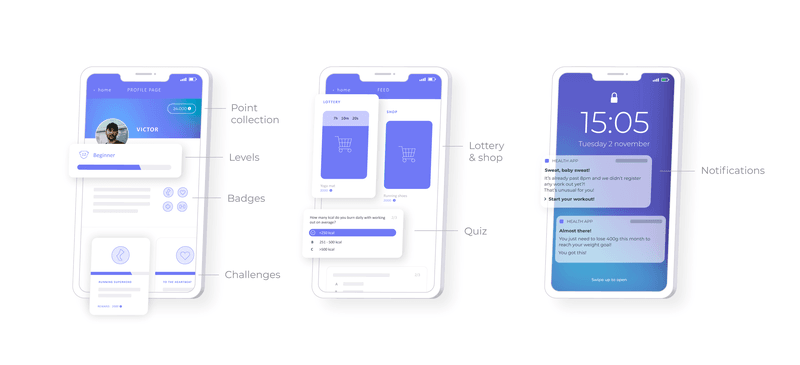
The StriveCloud user interface provides modular building blocks for creating a customized and gamified user journey to increase engagement and adoption.
How to build a gamified UX in no time? Build, measure & learn with our modular gamification building blocks!
WalkMe
Identify the gaps in your customer journey with WalkMe. Their software analyzes real-time user journeys, allowing you to drive product adoption by making data-driven decisions. In a world where organizations use hundreds of apps, WalkMe provides the necessary overlay to guide users through complex tasks without them ever having to leave your platform.

WalkMe's analytics dashboard helps teams visualize the user journey and identify points of friction that might be hindering product adoption in complex environments.
Social Intents
To drive product adoption, you must be responsive. You can achieve this with Social Intents. This live chat tool improves customer service responsiveness by facilitating faster discussions directly within your app. It also allows you to integrate your FAQs, ensuring that users get the help they need the moment they encounter a hurdle.

This example shows how a live chat widget, like the one from Social Intents, can be integrated to provide immediate customer support and improve user satisfaction during the adoption phase.
How a gamified UX helped Kayzr drive product adoption
To drive product adoption in 2026, companies must navigate a landscape where organizations juggle an average of 305 SaaS applications, making it harder than ever to secure "shelf space" in a user’s daily workflow. TL;DR: Success in this crowded market requires blending automation used by 81% of companies in 2025 to reduce complexity with intrinsic gamification that turns casual users into power users. In our experience, shifting the focus from extrinsic rewards to behavioral design is the fastest way to accelerate this transition.
This was the core challenge for gaming community platform Kayzr when they came to StriveCloud looking to supercharge user engagement and retention without ballooning their scaling costs. By leveraging a gamified UX to drive product adoption, they transformed their platform into a self-sustaining ecosystem.
The results were incredible:
📈 350% more users since StriveCloud’s involvement
💪 60% more daily active users
👉 1 year of 24/7 eyeball time in a day
🕒 1.5h average session time per user per day
So how was this success achieved? Firstly, we implemented a tournament system independent of Kayzr moderators. By automating these processes a tactic 81% of SaaS leaders now use to manage app complexity competitions could run 24/7. This opened up the platform for longer, deeper user engagement without increasing manual overhead.
Additionally, we decided to cap prize rewards and introduce an intrinsic rewards system that sparks gamers’ motivation. That means badges, achievements, and points instead of extrinsic rewards such as cash prizes. Our data shows that in 2026's "incentive-heavy" environment, intrinsic motivators are preferred for several vital reasons:
Build your own gamified user journey to drive product adoption with StriveCloud
To successfully drive product adoption in 2026, platforms must overcome "SaaS fatigue," as the average organization now manages over 305 applications. In our experience, the key to standing out is transforming passive users into active participants through reward-based mechanics. StriveCloud offers a uniquely sticky and scalable reward system designed to automate engagement and maximize the value of every login.
As your reliable business partner, we endeavor to help you drive product adoption in a sustainable and efficient way. This is critical in a market where SaaS costs are rizing 8% year-over-year, making retention-led growth more profitable than new acquisition. Our modular gamification software delivers proven results by making your UX feel less like a tool and more like an achievement:
👉 58% increase in Daily Active Users on average across all our customers
👉 23% decrease in churn rates by increasing user "sunk cost" and satisfaction
By leveraging proprietary data and behavioral triggers, we help you navigate the 2026 landscape where efficiency is the top priority for 81% of SaaS leaders. To start your journey today, get in touch with our expert team. There’s no better time than now to optimize your platform and make it the best it can be!
FAQ: How to drive product adoption in 2026
Product adoption measures how effectively users integrate your software into their daily workflows to achieve their goals. TL;DR: To drive product adoption today, you must prioritize immediate utility and automation, as the average organization now manages over 300 applications. Success is no longer about simple logins; it is about moving users from initial curiosity to becoming "product fans" who rely on your tool for their core business processes.
What is product adoption?
Product adoption is a metric used to describe the depth, breadth, and frequency of usage according to a set of desired actions. It isn't just a sign-up event; it is a behavioral shift where a user realizes the "Aha! moment" and makes your tool a habitual part of their routine. In our experience, the most successful companies drive product adoption by focusing on "time-to-value" the shorter the gap between the first click and the first win, the higher the long-term retention.
Why SaaS needs to drive product adoption
The stakes for retention have never been higher. By 2026, organizations are using an average of 305 SaaS applications each, with software costs rizing roughly 8% year-over-year. This creates immense pressure on IT budgets, leading to "shelfware" audits where underutilized tools are the first to be canceled. To drive product adoption is to prove your economic value; if your users aren't active, your subscription becomes a line item ripe for cutting during the next procurement review.
What is the product adoption curve?
The product adoption curve identifies user segments Innovators, Early Adopters, Early Majority, Late Majority, and Laggards based on their readiness to embrace new technology. In 2026, even the "Pragmatist" segments expect high-level UX and AI-assisted workflows. To effectively drive product adoption, you must identify which segment your current users fall into. Seling a niche, AI-first tool to the "Late Majority" requires far more educational content and "hand-holding" than seling to "Innovators" who prefer to explore the sandbox themselves.
How do you measure product adoption?
Your efforts to drive product adoption must be measured across three axes: breadth, depth, and frequency. Breadth tracks the percentage of your total feature set being used, while frequency measures "stickiness" or how often users return. Depth measures how far users go into your most advanced features. Notably, since 81% of companies now automate at least one SaaS process, a key 2026 metric is "automation adoption" measuring how many users have set up workflows that run without manual intervention, which significantly increases product "stickiness."
4 Ways to Drive Growth in the Product Adoption Process!
Currently, the average SaaS conversion rate hovers at 7%. But market leaders like Slack reach up to 30%! You too can achieve these numbers by learning how to optimize your product adoption process. Discover which steps to take & 5 stress-tested growth tactics!
This graphic introduces the key strategies for accelerating the product adoption journey for SaaS products.
To be sure, SaaS can still do more to lift adoption rates throughout the product adoption process. Currently, the average visitor-to-lead conversion rate hovers at 34%. Meanwhile, market leaders like Slack achieve 60%! But it’s easy to see how tools like app gamification and psychology can boost product adoption for SaaS.
In the previous article, we learned about the Product Adoption Curve and how it helps growth. Today, let’s discuss the best ways to optimize your product adoption process.
- What is the product adoption process?
- Why is my product adoption process important?
- The 6 stages of the product adoption process
- The 5 types of adopters you need to know
- The 4 crucial forces that influence the product adoption process
- How to drive product adoption for your new software
- 5 tried and true techniques to improve product adoption
- FAQ
What is the product adoption process?
The product adoption process is the journey of users becoming more aware of your product. At the beginning of their journey, users are unaware. They might not even realize they have a problem yet. However, the further they get in the process, the more aware they’ll become.
People are most aware when they’re avid users of your product and understand the full benefit of its features compared to alternative solutions.
Why is the product adoption process important?
The product adoption process is what drives revenue & growth for SaaS companies. Here you generate interest & demand and turn them into paying customers. Additionally, a great adoption process prevents churn by showing users the full value of your product first.
Power up your product adoption process! Check out our ultimate guide and discover how to increase SaaS product adoption.
The 6 stages of the product adoption process
Generally, you can organize how users adopt a product into 6 distinct sequences:
#1 Awareness
Firstly, users need to learn about you. But awareness gets harder every year as the market grows. In 2022, the number of SaaS unicorns is predicted to triple!
#2 Interest
Show users that you have a solution to their problem and that you can solve it better than anyone else! This involves discussing your pricing and features, for instance.
#3 Evaluation
The potential customer now assesses if your product is worth the time and financial investment. Here, you should use social proof and illustrate use cases to persuade.
#4 Trial
Users now decide to try your free trial, sample, or demo. The more efficient your time to value is, the quicker users can evaluate if your product is what they want.
#5 Activation
By now, the user realizes what your value is. But have they experienced it? Before any long-term adoption is possible, they need to feel the AHA moment!
#6 Adoption
Maybe it was your customer support or use of exciting app gamification, but the prospect decides to stick with you. Congratulations, you have now successfully guided the prospect through the product adoption process!
Increase product adoption with app gamification! Start gamifying with an expert-led workshop by StriveCloud.
.png)
The graphic illustrates the six distinct stages of the product adoption process, from awareness to final adoption.
The 5 types of adopters you need to know
However, not all customers are equal. Clearly, an emerging product and a famous brand will attract different and distinct audience segments. Luckily, the unique segments are outlined in the timeless Product Adoption Curve model:
- Innovators. Tech enthusiasts and risk-takers searching for the best user experience possible.
- Early adopters. These users have issues they want to be solved, and they have the money to pay for them!
- Early majority. The early majority values credibility and continuity. Convince these slow decision-makers and your product will become a market leader.
- Late majority. A competitive disadvantage is what pushes late majority users to adopt. With smaller budgets, these users can’t afford a failed venture!
- Laggards. Laggards are older, risk-averse, and budget-conscious.
This diagram visualizes the different segments of product adopters, based on the classic Product Adoption Curve model.
The 4 crucial forces that influence the product adoption process
The product adoption process hinges entirely on very few critical decisions, and psychological factors play a huge part. To influence these choices, you can leverage these 4 forces and maximize your product adoption:
#1 Increase the push-away
In short, highlight flaws in the prospect’s current product! This can be done elegantly like in the case of the search engine DuckDuckGo. In their copy, DuckDuckGo pushes away by emphasizing that they value privacy (as opposed to other search engines, who could put your data up ‘for sale’).

DuckDuckGo's landing page is a clear example of using a 'push-away' force by highlighting its commitment to user privacy.
#2 Build up your product magnetism
In essence, a pull force means making your value proposition so attractive that prospects are willing to put in the work of learning new software. Take Slack - just how did they achieve that 30% conversion rate mentioned earlier? Because they make their product sound so magnetic! In addition, they even include a push-away in the same line.
Slack - "It’s faster, better organized, and more secure than email - and it’s free to try."

Slack's marketing copy demonstrates product magnetism by presenting a compeling and attractive value proposition.
#3 Decrease the fear of change
It turns out that avoiding loss is actually more motivating than making progress. In conclusion, people are often scared to change due to the sense of loss linked to it. This is especially true for the ‘late majority’ adopters. However, you can make the switch less scary with testimonials, trials, or even guarantees!
To provide an example, Grammarly calms its prospects by offering a free demo that requires no registration. Following Grammarly’s model could be a good idea - just last year the app was valued at a stunning $13 billion!

Grammarly effectively reduces the fear of change by offering a simple, no-registration-required demo to ease users into the experience.
#4 Decrease customer attachment to the status quo
Innovative products always face resistance. As a result, your product strategy needs to make the customer’s status quo less attractive. This force can be particularly powerful among late majority and laggard users, who are often more attached to their ‘normal’.
Github - "Figma has replaced the whiteboard for us."
To illustrate, the collaborative graphic design tool Figma shakes things up with social proof. Moreover, the use of testimonials from trusted companies enforces the persuasive idea that not using Figma puts you at a competitive disadvantage!

Figma uses testimonials from trusted brands like Github to decrease attachment to the status quo and create a sense of competitive necessity.
How to drive product adoption for your new software
Business wisdom tells us there are 5 concepts that impact the product adoption process:
Relative Advantage. Compared to the competition, is your product cheaper, more convenient, or higher in status? In short, that is a relative advantage.
Compatibility. Essentially, does your product suit the market’s culture? Usually, this is discovered through PESTLE analysis.
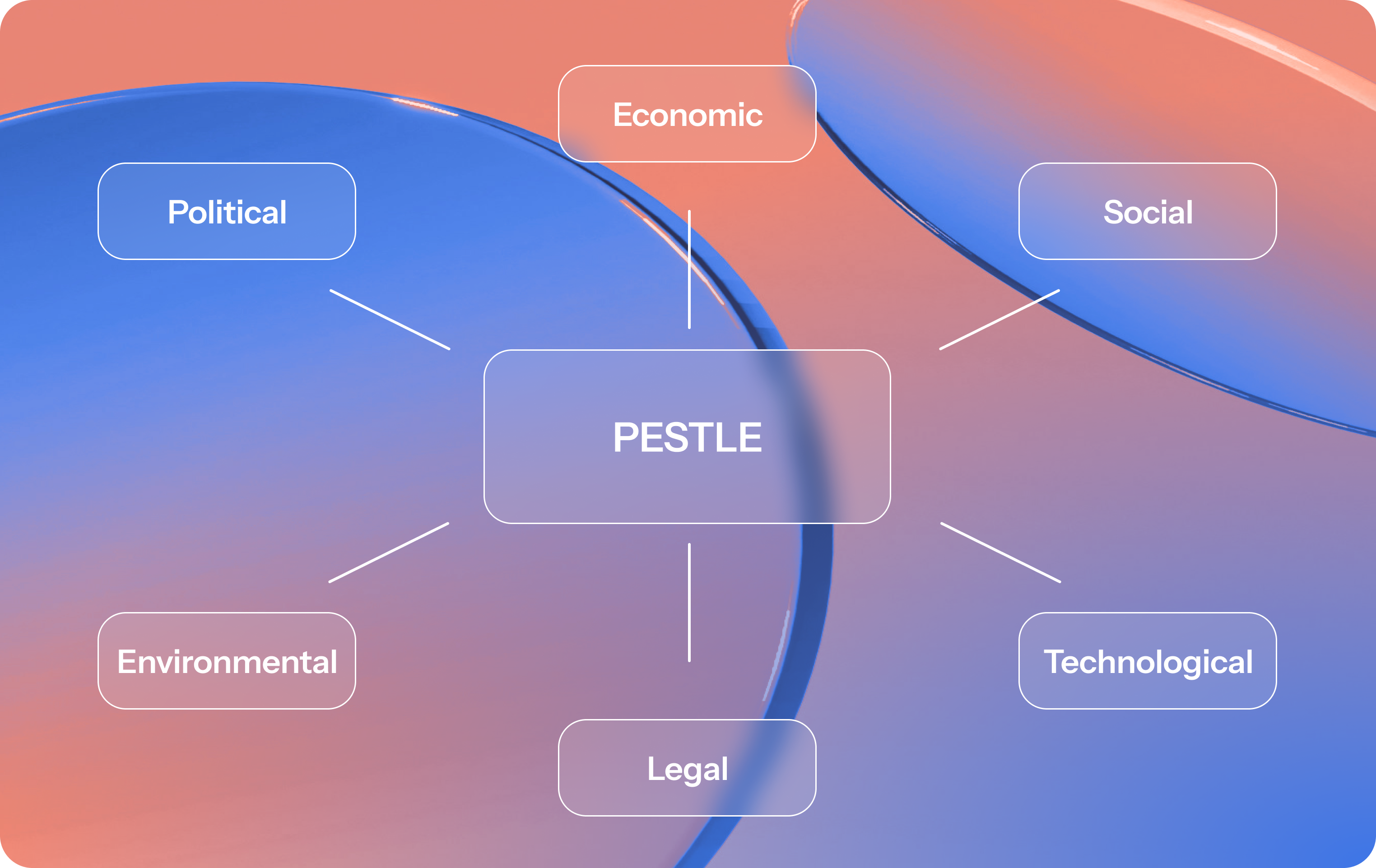
This chart outlines the five key concepts that influence the rate of product adoption, including relative advantage and compatibility.
Complexity. Is your user interface intuitive to use? Will users find friction in the user experience? To reduce complexity, keep your value proposition simple and clear!
Divisibility. If your product can be trialed, then users are more likely to give you a chance. Typically in SaaS, this comes in the form of free trials and freemium demos.
Communicability. Did you know that word of mouth results in 5x more sales than paid media impressions? But before you can benefit, users must be able to explain your value! Does your product pass the mom test?
5 tried and true techniques to improve product adoption
1) Optimize your onboarding experience with Churn Analysis
To discover if you are falling short by frustrating users in their first and most critical moments, use Churn Analysis. In short, this means analyzing each step of onboarding and tracking when and where users churn. By highlighting the largest drop-offs in user activity, you can find exactly what part of your product adoption process needs to improve.

A churn analysis funnel helps identify where users drop off during onboarding, highlighting areas for improvement in the adoption process.
2) Learn how to improve your product!
Improving your product is harder than it sounds. To provide just one example, sudden updates that significantly change the UI can frustrate users. When you are improving your platform - as you should always be - there are some ways to do it so you don’t threaten the product adoption process:
- Add new features based on user feedback. Forums for users are a powerful guide to future tweaks, especially when you have innovators on board.
- Validate features before launching. Before spending lots of time in development for a feature users don’t want, try and add a “fake” button or waiting list in your product. You’ll get to see how many users show interest in a feature before building it!
- Focus on increasing usage frequency. Every unused feature is wasted money in a customer’s mind. Make features more appealing by upping the value - for example with personalization or an integrated layer of fun app gamification.
3) Drive user motivation with app gamification
App gamification makes your app intrinsically motivating. In other words, users enjoy interacting with your app because of the experience and not just the end result. You can do this through gamified rewards, messages, or even challenges. Basically, a feeling does more than a thousand words.
Email software Superhuman for instance stays focused on its goal of hitting inbox zero. When users eventually get there they get to experience a sense of relief with a gorgeous and serene reward screen. It’s a free and easy way to incentivize user engagement!
Rahul Vohra, Superhuman CEO - "We obsess about how users feel. What we make users feel is just as important as what we make. And what we actually make is joy, in software form."

Superhuman uses a rewarding visual, an example of app gamification, to celebrate when a user achieves 'inbox zero,' motivating continued use.
Creating a great platform has never been easier! Boost product adoption with our app gamification software.
4) Make support more accessible
There’s a reason live chats have the highest satisfaction of any support channel - they’re fast, easy to find, and responsive! Furthermore, every minute that a user spends frustrated on your platform with an unsolved problem is a minute that they don’t feel your value!
5) Retargeting campaigns can catch every user
Recent reports show that 74% of companies struggle to scale AI-driven product value despite adoption, highlighting that retargeting is essential to re-engage users lost in the chasm. Therefore, this group should not be ignored! In practice, they need a product adoption process tailored to their level of awareness. Because these users are already aware of your product, your messaging and positioning should differ. For example, you could use a different landing page to ‘Welcome Back’ these users.

This example from Gusto shows a 'Welcome Back' landing page, a retargeting technique tailored for users who are already aware of the product.
FAQ
What is the product adoption process?
The product adoption process is the journey of users becoming more aware of your product. At the beginning of their journey, users are unaware. They might not even realize they have a problem yet. However, the further they get in the process, the more aware they’ll become.
Why is the product adoption process important?
The product adoption process is what drives revenue & growth for SaaS companies. Here you generate interest & demand and turn them into paying customers. Additionally, a great adoption process prevents churn by showing users the full value of your product first.
What are the most important forces that influence the product adoption process?
These 4 crucial forces impact how motivated a user is to adopt a product: if users are pushed away from their existing product, pulled by the magnetism of your product, the customer’s fear of change, and finally attachment to the status quo.

The 5 Stage Product Adoption Framework to Drive Your Business Growth
As product-led growth is becoming the new standard, SaaS companies are looking for ways to boost user engagement and adoption. In other words, they need a product adoption framework that speeds up feature discovery & time-to-value. Let's look at some examples from companies like Canva, Airtbale, Wistia, and more!

This visual introduces the key concept of using a product adoption framework to effectively guide and accelerate business growth.
What are the best ways to drive product adoption in SaaS? As product-led growth is becoming the new standard, SaaS companies are looking for gamified tactics & growth hacks to boost user engagement and adoption. In other words, they need a product adoption framework to get different types of users from trial to power users.
In this article, we’ll cover the 5 stages of the Product Adoption Curve and discuss 7 famous examples guaranteed to boost product adoption for SaaS apps.
- What is product adoption?
- Why customer adoption should be a SaaS priority
- What are the benefits of product adoption?
- The Product Adoption Curve: a framework for strong product positioning
- The 5 stages of the Product Adoption Curve
- What is a product adoption lifecycle?
- Let the product adoption curve guide your product-led growth
- 7 examples of increasing product adoption from companies like Airtable, Canva, Wistia,...
- FAQ
What is product adoption?
Product adoption is a metric that measures your user engagement. In short, it describes the lifecycle, depth & breadth of usage according to a set of desired actions. After user acquisition, a good product adoption framework turns new users into engaged users!
Why customer adoption should be a SaaS priority
To scale SaaS you need a product-led approach to growth. In other words, if your product already does the heavy work, things like sales and customer support will get easier. To complement your user acquisition process you also need a clear product adoption strategy.
By using a product adoption framework you should achieve a faster time to value and a smoother onboarding that reduces any possible friction and frustration. As a result, you’ll not only be able to drive more user engagement but also diminish churn!
Start growing your SaaS business today! Get to grips with the basics of product adoption with our ultimate guide.
What are the benefits of product adoption?
Usually following the trial period, product adoption happens when users perceive that the benefits of your product outweigh its costs. In fact, it’s fair to say that the choices users make at this stage will clearly define the success of your platform!
If users choose to adopt your product, the benefits for you are transformative:
- Reduction of churn and increase in user engagement and retention
- Boost customer lifetime value, lowering user acquisition costs
- Increased success of upseling and cross-seling
- Generation of predictable revenue streams (letting you plan with confidence)
The Product Adoption Curve: a framework for strong product positioning
Sociologist Everett Rogers first developed the Product Adoption Curve in 1962, and it remains an indispensable framework for growing businesses. In short, the curve illustrates when each user segment is best placed to adopt your product.
This powerful product adoption framework has 5 key stages:
The 5 stages of the Product Adoption Curve
.png)
Phase 1: Innovators
Basically, a cutting-edge product attracts cutting-edge users! While innovators make up just 2.5% of the market, they’re highly active and offer tons of great insights. On the other hand, innovators are always looking for new great products, so they move on quickly and pay little.
Pro tip: Get your early product feedback here! Innovators are savvy risk-takers who also tend to forgive bugs or missing features. But most of all, they know what they want to see.
Phase 2: Early adopters
Forming around 13.5% of the total market, early adopters are a prime audience for new SaaS products. Compared to innovators, this group has issues they want to be solved, and they have the money to pay to solve them!
Pro tip: Early adopters see themselves as ahead of the curve. As such, they expect a wide range of customization and amazing customer support. Find out what drives user engagement and double down on it!
Phase 3: Early majority
Here, you must convince the next 34% of consumers, who prefer continuity to innovation. In other words, your product is becoming the new normal. Certainly, it’s a challenge - early majority customers are slow decision-makers and rely strongly on good references.
Pro tip: To persuade the early majority, you need credibility. Employing social proof in your campaigns can set users at ease. Additionally, you can use gamified growth tactics like incentivizing referrals and reviews to generate word-of-mouth.
Phase 4: Late majority
The late majority, 34% of all consumers, live at the peak of the Product Adoption Curve. At this point, your growth begins to slow. These customers are more conservative, have smaller budgets, and simply can’t afford to fail with a new product.
Pro tip: Late majority users adopt out of necessity, not curiosity. In short, they must feel they are at a competitive disadvantage by not using your product! Help your users get to value with stellar support, in-app education, or even product training!
Phase 5: Laggards
Laggards, older and more traditional, are the last segment and form 16% of the market. If this skeptic-heavy group does adopt your product, it means your software is likely in decline. However, they can still provide considerable revenue and market share!
Pro tip: Laggards are risk-averse and budget-conscious. Given this, offer trials, guarantees, and money-back assurances to entice product adoption.
What is a product adoption lifecycle?
Embedded in the curve’s product adoption framework are ‘Lifecycles’. For example, marketing and sales is an early lifecycle where users first become aware of your product. Then, they move through trial, onboarding,... Altogether, the lifecycles form a user journey that can inform your product adoption strategy.
Let the product adoption curve guide your product-led growth
Use the adoption curve as a product adoption framework! By identifying the stage your product is in, as well as what attracts different user segments, you can shorten the time between early adopters and the early majority and grow your business faster!
Get inspired by these 7 amazing examples of how to increase product adoption in SaaS:
7 examples on increasing product adoption from companies like Airtable, Canva, Wistia,...
#1 Shorten your time to value like ProdPad
For users, the race to find your value starts from the very first interaction with your platform. To drive users to that AHA moment, you need a few things. First, you need to give clear directions on where to go, and what to do. Then, you’ll also want to incentivize user engagement to keep users moving forward.
Take ProdPad for instance. This product management software experienced high churn after a 30-day trial. So, the team measured their time to value. ProdPad assessed it to be just 9 days. As it turns out, all those extra days discouraged users from engaging! So, the trial was cut to 7 days and extensions were gamified. As a result, ProdPad tripled conversion rates!
How to increase product adoption with a gamified product? Get your expert-led workshop & learn how to use behavioral psychology to your advantage!
ProdPad's interface shows how completing tasks can unlock trial extensions, a clever gamification tactic to boost engagement.
#2 Prioritize user engagement over acquisition like Duolingo
Define your growth lever. Boosting acquisition can sometimes have an effect on user engagement and long-term growth. That’s why it’s important to measure the impact of experiments and mirror them to your goals. Language learning software Duolingo is famously good at this, and it has boosted their Day 1 retention from just 13% on launch to a truly impressive 55%.
For example, the Duolingo team tested download buttons to let users complete courses offline. The result? A rize in conversions, but a dip in daily active users. This was deemed too high of a long-term loss for the short-term gain, and the feature was shelved. In other words, without initial testing, this fall in users would have been a nasty surprise!

This a/b test from Duolingo illustrates the critical choice between short-term acquisition and long-term user engagement.
#3 Give users a headstart as Airtable does
Sometimes setting up a new product can be hard just for the fact of getting started. Nobody likes to start from scratch, so why not give users a headstart? Templates can be part of your product adoption framework. You can even build out user flows to customize templates according to to use cases and user profiles.
Airtable for instance gives users a range of customized templates after onboarding. It gives users instant value and serves as motivation to further discover the product. Especially with a multi-faceted tool like Airtable, it’s important to inspire your users in what ways they can use it and give them the best practices to succeed!

Airtable reduces user friction by providing ready-to-use templates, helping new users find value and start projects faster.
#4 Boost user engagement with gamified rewards like Todoist
To get users to adopt your product, make it fun! A gamified approach triggers intrinsic motivation, a powerful psychological phenomenon where users are motivated by enjoyment and personal satisfaction.
Productivity platform Todoist for instance used a range of gamified tactics to boost keep users active. Whenever you complete a to-do list you’ll get rewarded with karma points. Additionally, Todoist uses gamified features such as progress bars, leaderboards, and even daily streaks!

Todoist effectively uses Karma points and levels to make task completion more engaging and rewarding for its users.
#5 Promote your features like Wistia
An excellent product adoption framework should maximize the breadth of user engagement. This entails users engaging with a wide range of features, and it’s a must for successful platforms. For customers, every unused feature lowers the value they could get out of your product!
As said before, you need to show your users what your product is capable of! So, when you launch a new feature be like the video hosting platform Wisitia. They promoted their new A/B testing feature by emailing existing users with a clear CTA and a video that looks extremely clickable.
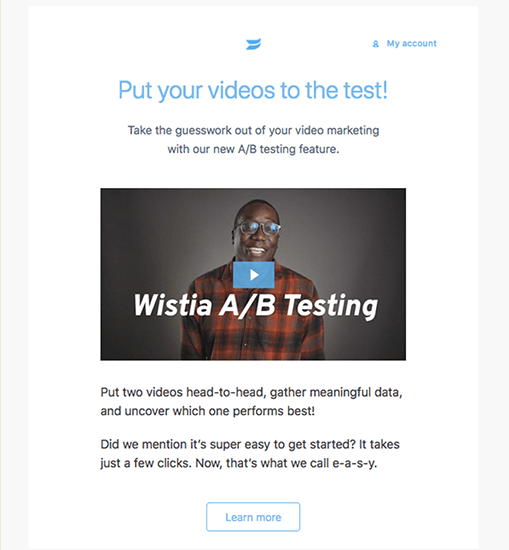
Wistia's promotional email is a perfect example of how to clearly announce a new feature and encourage users to try it out.
#6 Leverage gamified checklists like Loom
Whenever users need to complete grunt work they experience lots of friction and sometimes also frustration. With gamified checklists, you can take this away! The psychology behind it is simple: humans like progress and clear directions.
For example, video messaging SaaS Loom uses gamified checklists to remind users of their goals and drive them to the crucial AHA moment.

Loom's onboarding checklist effectively guides new users through essential first steps, ensuring they experience the product's core value.
#7 The proof is in the pudding or product
Every stage of the product adoption framework will be different. You’ll need to shift focus from acquisition to onboarding, to user engagement, and so on. But the best thing you can do to drive viral growth is to make your product better!
An inspiring example here is the simplest design tool out there: Canva! Their amazing growth story is full of product-led growth tactics from customized landing pages and onboarding to template libraries.
Did you know it only takes around 52 seconds to create a Christmas card in Canva? Compare that to the average graphic design process where it could take weeks or even years to finally get value.

This comparison chart demonstrates the dramatic difference in time-to-value between Canva and traditional design software.
And that’s what is required today in our world of product-led growth!
Creating a sticky platform has never been easier! Drive product-led growth and boost adoption with our gamification software.
FAQ
What is product adoption?
Product adoption is a metric that measures your user engagement. In short, it describes the lifecycle, depth & breadth of usage according to a set of desired actions. After user acquisition, a good product adoption framework turns new users into engaged users!
Why should SaaS companies care about customer adoption?
To scale SaaS you need a product-led approach to growth. When your product already does the heavy work, sales and customer support become easier. By using a product adoption framework you achieve a faster time to value. As a result, you’ll be able to drive more user engagement and diminish churn!
What are the benefits of product adoption?
Next to user engagement and retention, product adoption also influences a range of other factors. If users choose to adopt your product, the benefits for you are transformative:
- Reduction of churn and increase in user engagement and retention
- Boost customer lifetime value, lowering user acquisition costs
- Increased success of upseling and cross-seling
- Generation of predictable revenue streams (letting you plan with confidence)
What is the Product Adoption Curve?
Sociologist Everett Rogers first developed the Product Adoption Curve in 1962, and it remains an indispensable framework for growing businesses. In short, the curve defines 5 segments from innovators and early adaptors to the early and late majority, and finally laggards.
How to Unlock Growth in Shared Mobility With Your Own Loyalty Strategy
A loyalty strategy can make all the difference when it comes to growth and profitability as a shared mobility operator. If your loyalty & rewards program converts just 10% of your total customers into loyal ones, your revenues could increase by 37.5%! Discover exactly how to unlock this growth in your shared mobility app.
For shared mobility operators, the customer journey doesn’t end with a single ride; it is the starting point for long-term retention. As the global market scales toward an estimated USD 451.20 billion by 2026, a sophisticated loyalty strategy has become the primary differentiator for brands seeking to stabilize revenue. TL;DR: In 2026, loyalty programs fuel an 8.68% YoY growth rate by converting casual users into "power riders" through consistent incentives, significantly lowering churn in an increasingly crowded micro-mobility landscape.
In our experience, a well-executed loyalty & rewards program doesn't just encourage "one more trip" it fundamentally shifts consumer behavior toward access-over-ownership models, which are projected to see an 8.5% CAGR through 2033 as Gen Z and Millennials opt for flexible transit. This article explores how a well-crafted loyalty program can be a significant growth driver for shared mobility services in 2026.
Find out everything you need to know about customer loyalty for shared mobility:
- Why is customer loyalty important in shared mobility?
- The 5 stages of customer loyalty
- How can shared mobility apps create a loyalty strategy?
- Do rewards really create loyalty?
- The best loyalty & rewards program examples in shared mobility
- 3 steps to create a bulletproof loyalty strategy for shared mobility
- How to implement your own customer loyalty & rewards program
- FAQs
Why is customer loyalty important in shared mobility?
TL;DR: In 2026, a data-driven loyalty strategy is the primary engine for scaling in a shared mobility market projected to reach $451.20 billion. By rewarding repeat usage, operators can capitalize on an 8.68% annual growth rate while insulating their brand from rizing acquisition costs and price volatility.
Essentially, a loyalty strategy defines how you plan to convert your average customer into a frequent one. In other words, how can you get your customers to spend more time and money with your brand? In our experience, high-growth operators are shifting away from generic discounts toward personalized loyalty & rewards programs that align with the "access-over-ownership" trend favored by Gen Z and Millennials, which is driving an 8.5% CAGR through 2033.
#1 Loyal customers are more likely to recommend your service to others
A successful loyalty strategy turns your most frequent riders into brand ambassadors. The logic is simple: loyal customers use your app more often and have more opportunities to recommend your service. In the 2026 mobility landscape, where consumer trust is paramount, personal recommendations are the most effective way to build brand equity. Our data shows that word-of-mouth remains a critical driver for boosting shared mobility adoption, as users are significantly more likely to try a new e-scooter or car-sharing service if it is recommended by a trusted peer within their local urban community.
#2 More loyalty means more profit
A loyal customer comes back to you, and repeat users are the foundation of sustainable revenue. With the global shared mobility market expected to reach USD 406.52 billion in 2026, the competition for "time-on-platform" is intensifying. A loyalty & rewards program increases the lifetime value (LTV) of each user by encouraging daily habits rather than occasional trips. Industry trends for 2026 indicate that a well-executed loyalty strategy can drive a 17.28% CAGR in platform revenue through 2031, as rewards for frequent bike-sharing or car-sharing rides directly increase the average revenue per user (ARPU) while decreasing the need for expensive re-acquisition campaigns.

This graph illustrates the significant revenue increase generated by repeat users, highlighting the financial benefits of a strong loyalty strategy in a maturing market.
#3 Reduce the pressure of price competition
In a market like shared mobility, where many operators compete on thin margins, a loyalty strategy helps reduce the pressure of price wars. When users are emotionally and financially invested in your ecosystem, they are less likely to switch to a competitor for a marginal price difference. By focusing on user incentives for return trips in bike-sharing and e-scooters, you create a "sticky" environment that prioritizes convenience and rewards over the lowest possible fare.
A loyalty & rewards program ensures long-term retention by building a habit-forming hook. In our experience, features like tiered status, accumulated points, or exclusive "early-access" to new vehicle models make customers feel a sense of ownership over their progress, making the psychological cost of switching to a different app far higher than the potential savings.
The 5 stages of customer loyalty in shared mobility
A successful loyalty strategy in 2026 is the bridge between a one-time rider and a lifetime subscriber. As the global shared mobility market climbs toward an estimated $451.20 billion in 2026, the battle for profitability is won through retention. By mapping your loyalty strategy across five distinct customer stages Activation, Retention, Re-engagement, Revenue Growth, and Advocacy operators can tap into the 8.68% year-over-year growth driven by repeat usage in urban transit hubs, according to market projections.
#1 Activation
Your loyalty strategy starts the second a user hits "Sign Up." In our experience, the 2026 user expects zero friction; if onboarding takes more than 90 seconds, you’ve already lost them. During this phase, you must ensure a smooth explanation of your value proposition while collecting high-intent data to fuel your loyalty & rewards program. We have found that using gamification to promote "feature discovery" such as rewarding a user for checking vehicle range or adding a secondary payment method significantly increases the likelihood of that critical first ride.
#2 Retention
Once a rider is onboarded, the goal of your loyalty strategy shifts to habit formation. With millennials and Gen Z increasingly choosing "access-over-ownership" models a trend driving an 8.5% CAGR in mobility access through 2033 your app must become their default choice. A data-driven loyalty and rewards program can trigger specific behaviors, such as morning commute streaks or weekend bonuses. By creating a positive reinforcement loop, you reduce the cost of service compared to private vehicle ownership, making your platform an indispensable part of their daily routine.
#3 Re-engagement
A critical but often overlooked pillar of a loyalty strategy is winning back lapsed users. It remains significantly more cost-effective to re-activate a dormant rider than to acquire a new one. In 2026, top-tier operators use AI-driven insights to understand why activity drops, whether due to seasonal weather shifts or changes in public transit availability. With this data, you can deploy personalized loyalty & rewards program incentives, such as "comeback credits" or weather-contingent discounts, to nudge customers back into the ecosystem before they churn to a competitor.
#4 Growing revenue
Shared mobility operators are seeing unprecedented revenue potential, with the market expected to hit $406.52 billion in 2026 at a 17.28% CAGR. To capture this, your loyalty strategy must move beyond basic transaction discounts. By rewarding behaviors like off-peak riding or parking in designated "hot zones," you optimize fleet turnover and increase revenue per user. Advanced rewards such as tiered leveling systems, free vehicle upgrades, or priority access to the newest e-bikes ensure that your most frequent users spend more time on your platform and less on others.
#5 Advocacy
The final stage of a mature loyalty strategy is turning users into brand ambassadors. Advocates provide organic growth that no marketing budget can match. To reach this stage, you must offer experiences worth sharing, such as "carbon saved" badges or community leaderboards. A gamified loyalty strategy supercharges this; for example, e-scooter operator felyx continues to lead the way by offering tangible riding credits for successful referrals, turning their user base into a decentralized sales force.

The Felyx app's referral program remains a benchmark for turning users into advocates by offering immediate, tangible rewards that lower the barrier to the next ride.
How can shared mobility operators create a loyalty strategy?
TL;DR: To unlock growth in 2026, a robust loyalty strategy must focus on habit-forming rewards that capitalize on a shared mobility market projected to reach USD 451.20 billion by 2026. By incentivizing repeat usage, operators can capture the 8.68% year-over-year growth currently fueled by a global shift toward access-over-ownership models [1].
The first step to creating your own loyalty strategy is figuring out exactly what it is that you want to communicate and reward. At the end of the day, loyalty & rewards programs are a method of persuasion. So you’ll have to answer three main questions:
In our experience, a data-driven loyalty & rewards program should reward users for frequent interaction, not just high spend. Industry projections show the market reaching USD 406.52 billion in 2026 specifically because of rewards in car-sharing and bike-sharing that increase time-on-platform [4]. At the most basic level, rewards like free riding minutes or special vehicle unlocks can do the job. However, rewards are even more powerful when personalized to your customers.
For example, look at how the mobility app Changers used rewards to encourage company employees to bike to work!
They gave their rewards more meaning by letting users redeem in-app coins for discounts on products from cycling brands. In this way, Changers created a win for customers by providing relevant offers, a win for sponsors looking for reach, and a win for their app, as customers are incentivized to spend more time on their platform!

This gamified reward system from Changers effectively encourages specific user behaviors by offering relevant and meaningful incentives, ensuring the platform remains a daily habit rather than an occasional utility.
Do rewards really create loyalty?
TL;DR: Yes, but only when rewards are part of a broader loyalty strategy. By 2026, the shared mobility market is projected to reach USD 451.20 billion, with growth fueled by repeat-trip incentives. Rewards aren’t inherently rewarding on their own; in fact, one of the reasons why you have to develop your own loyalty strategy is to give those incentives meaning. In our experience, rewards are most effective when they are well-timed and feel earned by the user.
Only then will you create the powerful driving force known as intrinsic motivation. This is where users feel motivated to use your platform because it’s inherently satisfying and personally rewarding. As the market shifts toward access-over-ownership models a trend driving a projected 8.5% CAGR through 2033 capturing the loyalty of Gen Z and Millennial riders requires moving beyond simple prizes. This contrasts with extrinsic motivation, which is driven purely by hard results and the need for a one-off win.
While both forms of motivation are powerful, behavioral science shows that operators must foster both to fuel long-term engagement. By 2026, data suggests that car-sharing and bike-sharing platforms that successfully integrate these rewards see significantly higher revenue-per-user by increasing time-on-platform. In our experience, this dual approach is the only way to ensure users spend more time and money with your brand over the long term.
The best loyalty & rewards program examples in shared mobility
TL;DR: In 2026, a high-performing loyalty & rewards program is the primary driver for shared mobility growth. With the market projected to reach USD 451.20 billion this year, operators are shifting from acquisition to retention. In our experience, converting occasional riders into power users via gamification can increase revenue per user and drive an 8.68% YoY growth in trip frequency.
The shared mobility model is well-suited for a gamified loyalty & rewards program. Since mobility apps run on massive amounts of data, there are many opportunities to create fun challenges & incentives. For example:
- Reward customers with points based on distance
- Create a challenge on speed or frequency on a specific route
- Hand out badges for reaching certain goals such as 1-5-10 kilometers
- Unlock milestones based on customer location
- ...
Want to see how it’s done? Let’s look at some examples where a loyalty & rewards program drives growth for shared mobility operators:
Challenges give EVO Sharing riders a chance to win
Operating across Germany, EVO Sharing lets users share electric scooters to get to their destinations. In our experience, to meet ambitious growth targets in 2026, operators must focus on increasing time-on-platform. A robust loyalty & rewards program is essential to capturing a share of the market that is expected to reach USD 406.52 billion in 2026.
When EVO Sharing came to us at StriveCloud, they had a clear goal: to boost the number of rides per customer. They needed to turn occasional users into loyal ones. That sounds like the perfect job for a loyalty & rewards program!
Jennifer Dittmar @EVO Sharing - "With Strivecloud, we want to create incentives to drive more often with the electric scooters from EVO Sharing. Through the challenges and the achievement of milestones, the customer shall be motivated to use our scooters more often."
Keeping the loyalty strategy of EVO Sharing in mind, we introduced exciting challenges that users could compete in and be rewarded for their participation. Our data shows that when it comes to creating customer loyalty, challenges can be a game-changer:
- Challenges increase engagement and provide both extrinsic and intrinsic motivation
- Prizes provide a purpose/end goal
- Creates a social ‘event’, something customers have in common and can discuss
- Competitive elements are more than just fun, they bring customers closer together
- Customers can track their progress and achievements
Discover how a loyalty & rewards program helped EVO Sharing incentivize customers to book more trips!
EVO Sharing's gamified dashboard visualizes user progress and rewards, effectively boosting engagement and ride frequency in micromobility.
Voi. incentivizes loyalty with micromobility’s first credit card
In partnering with Mastercard, electric scooter operator Voi. has implemented a highly innovative loyalty & rewards program. This strategy directly addresses the shifting consumer preference toward access-over-ownership models, which is driving an 8.5% CAGR in the sector through 2026. By offering a co-branded credit card, Voi. ensures that every daily purchase brings the user back to their app.
The card lets users collect free miles on a Voi. e-scooter with each payment they make. So you can see how it pays off to be a loyal Voi. customer! The card also comes with special travel health insurance, which is smart considering safety remains a top concern of shared mobility consumers in 2026.

Voi's partnership with Mastercard created a unique loyalty program, offering a co-branded credit card that directly rewards spending with free miles.
HumanForest’s rewards program shows users their impact on the environment
Make it fun, make it simple. Well, that’s what we helped HumanForest do! In London, HumanForest stands out by championing sustainable e-bike travel. In our experience, this message of green mobility is the cornerstone of a successful loyalty & rewards program in an era where Gen Z and Millennials demand values-aligned services.
To encourage Londoners to travel green, we designed a loyalty & rewards program that rewards customers for their positive impact on the environment through ‘TreeCoins’. The more users ride, the more TreeCoins they earn, which can be redeemed for free minutes or discounts at green retailers. This strategy is proving vital as the market for loyalty-aligned mobility grows to USD 451.20 billion by 2026.
"Drive 5 miles = Save 5 trees = Earn 1 TreeCoin = Exchange for 1 free riding minute"
Visualizing the real-life consequences of TreeCoins makes the currency feel tangible. Users can literally see their positive impact on our planet! This incentive gives users a reason to return, and it is a blueprint for the industry. Our collaboration showed that progress visualization mechanics prompt users to keep choosing sustainable options over private ownership, reinforcing retention in a highly competitive 2026 landscape.
Michael Stewart @HumanForest - "StriveCloud really helped us fulfill our brand message. The TreeCoins explain our mission perfectly...the progress visualization mechanic prompts users to keep using HumanForest and rewards sustainable behavior with free minutes!"
The loyalty strategy behind HumanForest growth strategy: How gamification motivates sustainable mobility.
HumanForest's app visualizes the positive environmental impact of riding, making the rewards feel tangible and reinforcing the brand's green mission.
3 steps to create a bulletproof loyalty strategy for shared mobility
TL;DR: In 2026, a data-driven loyalty strategy is the primary lever for scaling shared mobility ventures. With the global market projected to reach USD 451.20 billion by 2026, operators are shifting from aggressive acquisition to retention-led growth, utilizing incentive-based models to capture an 8.68% YoY revenue increase through repeat usage.
Creating your own loyalty strategy requires a holistic approach that goes beyond simple discounts to influence long-term rider behavior. To get it right, you need to look at your whole customer journey and make strategic decisions on when to reward, what to leverage, and how to gamify the experience. As the market shifts toward "access-over-ownership" models growing at an 8.5% CAGR through 2026 your platform must offer more value than the cost of vehicle ownership.
From experience, we have devised a 3 step plan for creating the ultimate loyalty strategy for shared mobility operators to maximize revenue per user.
Get started with your own gamified loyalty strategy today. Book an expert-led workshop & learn the exact next steps you need to take!
How to implement your own loyalty & rewards program
A successful loyalty strategy is the primary driver for shared mobility operators aiming to capture a share of the $451.20 billion market projected for 2026. By converting casual riders into power users through gamified incentives, platforms can capitalize on the 8.68% YoY growth in bike-sharing and e-scooter demand. Once you’ve created your loyalty strategy, you can either go about it on your own or join forces with our expert team. You can easily set up and integrate the new features straight into your shared mobility application. And if you use Wunder Mobility, our direct integration will make this even faster!
In our experience helping operators scale, we’ve found that the most effective loyalty strategy relies on real-time feedback loops. Our gamification software fuels this with over 20 interactive features such as in-app rewards, challenges, quizzes, and polls! According to market data from GMI Research, the consumer shift toward loyalty-aligned "access-over-ownership" models is driving an 8.5% CAGR through 2033. Our software is built for this flexibility and autonomy, allowing the user experience to be changed swiftly from a simple control panel, live into your app, ensuring your rewards stay ahead of market trends.
Michael Stewarts @Human Forest - "Personally, I really like the control panel of StriveCloud, and I think it is easy to use. I can instantly implement changes without having to wait 24 hors or more to deploy."

This interface showcases how gamification software can integrate achievements and progress tracking directly into a user's profile, boosting engagement by visualizing the rider's journey within your loyalty strategy.
FAQ's
TL;DR: By 2026, a robust loyalty strategy is the primary engine for capturing a share of the projected $451 billion shared mobility market. In our experience, moving beyond transactional rides to loyalty-aligned models reduces long-term user costs and capitalizes on the massive shift toward "access-over-ownership" among younger demographics. Retaining just a fraction of your user base through targeted rewards can significantly stabilize revenue in a volatile market.
Why is customer loyalty important in shared mobility?
Customer loyalty ensures you extract maximum lifetime value from your existing user base a critical factor as the market matures. By 2026, the global shared mobility sector is projected to reach USD 451.20 billion, growing at an 8.68% YoY rate. In this environment, a loyalty strategy is a major growth driver because it insulates operators from rizing acquisition costs. Our data suggests that markets fueled by user incentives for return trips in bike-sharing and e-scooters see much higher resilience against local competitors.
Why do shared mobility operators need a loyalty & rewards program?
A loyalty & rewards program is essential for capturing the "access-over-ownership" trend currently dominating millennial and Gen Z consumer habits. This shift is expected to drive an 8.5% CAGR through 2033, as repeat usage of shared platforms consistently proves more cost-effective for users than vehicle ownership. In our experience, these programs do more than just offer discounts; they build community. A well-structured loyalty & rewards program reduces price sensitivity, meaning your users stay for the value and experience rather than jumping to whichever app offers the cheapest ride that morning.
Do rewards really create loyalty?
Rewards alone do not create loyalty, but a comprehensive loyalty strategy gives those rewards purpose and psychological weight. To be effective, rewards must be well-timed and feel earned through platform engagement. Industry data indicates that by 2026, the car-sharing and bike-sharing rewards market will hit USD 406.52 billion, driven by strategies that increase "time-on-platform." When you combine extrinsic perks (like free minutes) with intrinsic motivators (like carbon-saving badges), you transform a simple utility into a daily habit, significantly increasing the revenue generated per active user.
Keep reading
Boosting Trips and Loyalty With Gamification for Mobility Service
Games make up a staggering 72% of all app market revenue. Of course, your app doesn't need to be a game to be successful! With gamification features like a leaderboard, you can take inspiration from games to boost your app and meet your business strategy.
Imagine this – A bustling street corner, each person with a different destination from the next. For many, the quickest way to get to where they’re going is to hop on to one of the four electric scooters nearby, that are propped up, waiting to be picked by their next. Of the four choices, however, there are three different brands to choose from. How will they decide which one to take for a ride? Do they favor a certain brand?
The reality is that, in general, customer loyalty for a mobility service is less likely to be the deciding factor as opposed to convenience and better pricing. But it doesn’t always have to be that way. StriveCloud continuously works to find ways to get customers to keep coming back. Through gamification, customer engagement and loyalty for mobility services are greatly improved! Starting this year, their gamification software fully integrates within the Vulog platform.
- What is gamification
- More than a loyalty tool. The benefits of engaging customers with gamification.
- How to bring gamification to your mobility service with Vulog and Strivecloud
- Reap the benefits of gamification
What is gamification
Gamification means using the same elements that make playing games fun and motivating, but in a non-game environment. In the context of a mobility app, this could mean incorporating challenges for users to beat, a tiered leveling system, or a CO2 leaderboard that rewards end-users for their achievements with points, badges, or free perks hidden behind a scratch card. It’s a way to create a fun and rewarding customer experience that incentivizes end-users to use a company’s services more often, makes the service stand out, and most importantly, it rewards loyalty without compromising profit margins.
What is gamification and how does it improve the user experience?
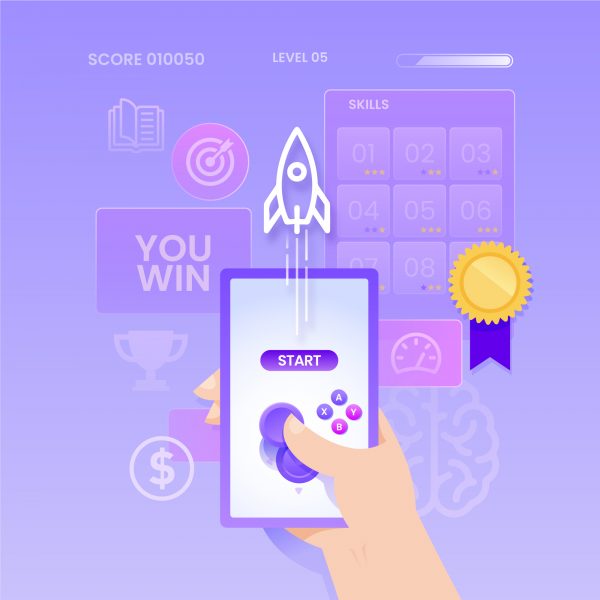
This illustration highlights how gamification can create a rewarding and sticky user experience for mobility services.
More than a loyalty tool. The benefits of engaging customers with gamification
While gamification has the reward component of loyalty programs, it’s got the advantage of being considerably more engaging. Gamified systems encourage desired actions such as social sharing, content creation, and participation in interactive challenges, fostering a deeper and more meaningful relationship between the brand and the consumer.
Traditional loyalty programs send end-users away from the company’s platform to an external one to unlock rewards that depend on how often they use the mobility service. As more and more end-users participate in a loyalty program, the program becomes increasingly expensive for a company to sustain. With gamification, that’s not the case.
What does this mean for mobility operators? It means that fewer rewards need to be given, while the end-user feels more connected and engages with the company on a more frequent basis. Here’s some main advantages that gamification provides:
- Increased revenue by incentivizing end-users to choose the same brand, every time
- Reward loyalty without sacrificing profit
- Improve your brand awareness by giving your service the competitive advantage
- Improve customer satisfaction by creating a fun and rewarding experience around choosing to stick with a mobility service
- Improve data collection as end-users interact with the service more often
Creating lasting connections with customers is as easy as making the switch.
How to bring gamification to your mobility service with Vulog and StriveCloud
For the past year, Vulog and StriveCloud’s technologies have worked together in perfect synergetic harmony. This means that today, any Vulog customer can seamlessly add gamification to their loyalty strategy without a hassle. All the gamification mechanics in StriveCloud’s software integrate into the Vulog app without a hassle. The process is simple, just choose an option:
Option 1 - Use our standard gamification program
Choose a pre-build gamification program tailored to build loyalty in mobility. This means you get a set of pre-defined and completely configured set of gamification and reward mechanics that that will be immediately added to a pre-existing Vulog application.
How does it work? The gamification program connects the raw usage data from end-users (trips, invoices, and more) to StriveCloud gamification software, which generates member benefits based on predefined formulas. Then, end-users can claim their rewards straight in the Vulog app, without ever having to leave the provider’s platform!
Option 2 - Want customizability? We create a custom gamification program just for you!
Need something a little different? The standard gamification program is customizable! Opt into a customized approach to include additional mechanics, tailored for specific audiences and targeted user behavior.
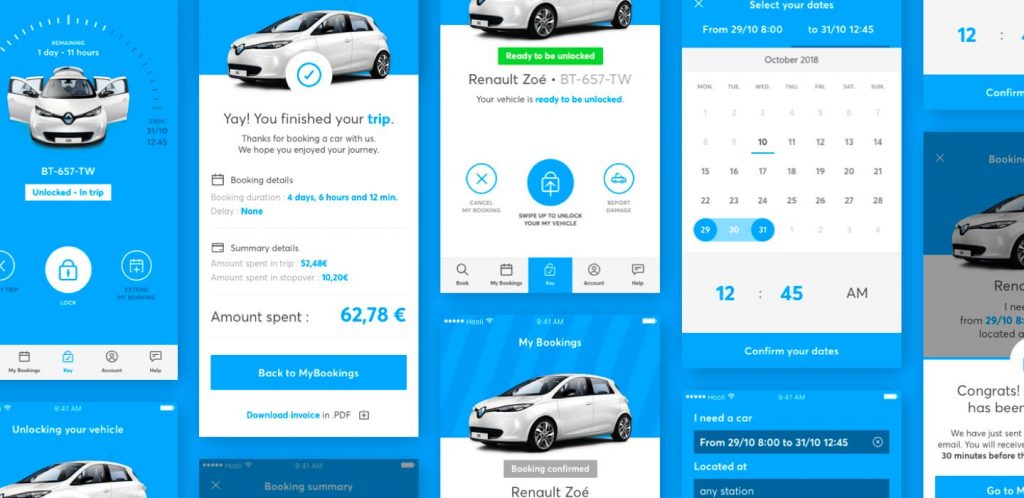
The Vulog app seamlessly integrates StriveCloud's gamification mechanics, offering options for both standard and custom loyalty programs.
Reap the benefits of gamification
On average, customers that implement gamification into their mobility app experience 3x more active customers and 2x more trips completed per customer.