
Dive into top reads
Which gamification software is right for you? Top 5 gamification companies in 2023
Building new gamification features for your app takes expertise, time, and money. Instead, use gamification software! But which gamification company is right for you? Check out our list of the top 5 gamification companies in 2023.
Which gamification software is right for you? Top 5 gamification companies in 2023
When it comes to app development and gamification, you don’t need to build everything yourself! Instead, you can use gamification software. With a gamification company, you can build an engaging user experience with ease! So which software is right for you? Check out our list of the top 5 gamification companies in 2023.
- What is gamification software for web and mobile apps?
- Benefits of using a gamification company
- Why gamify the user experience?
- 5 key features of gamification software
- How to choose the right gamification company for you
- Top 5 gamification companies in 2023
- FAQs
What is gamification software for web and mobile apps?
Gamification software for helps cut down the hard work of gamifying your user experience. It’s simple - instead of spending time and money on coding features like points and levels into your app, you can simply plug in the elements and go!
In addition, software grants you access to a full range of tools to help facilitate and improve your gamification strategy. For example, a gamification company will offer gamification consulting to help you build your ideal user experience. That includes the ability to add elements gradually so that you don’t overwhelm the user. Essentially, gamification software is your one-stop shop for creating a great user experience!
Benefits of using a gamification company
App development takes internal expertise, time, and money. That’s fine for an app giant with deep pockets, but most apps can’t afford it. According to research, the world’s top 200 apps earn an average income of $83,500 a week, whereas apps in the top 8000 make just $3,500. In short, you need money to make money! But there is another way. Smaller apps can achieve scalability with gamification software and enjoy a range of benefits:
Gain the necessary expertise
A gamification company can lend you their knowledge! Gamification companies offer the help of their expert teams, who have spent years crafting gamification strategies. They can act as your support agent and design consultant at the same time. Basically, you can learn from the experience of others, instead of making your own mistakes.
Save time and money
You can start using the add-on gamification features immediately. As a result, you’ll spend less to develop and maintain features that might end up being either underutilized or overwhelming. In fact, if you build features yourself, you would pay 20% of the development cost in maintenance alone!
Why gamify the user experience?
Gamification is the use of game-like features like points, badges, and levels in non-game contexts. But these features are good for more than just fun! Game mechanics and rewards motivate users to perform actions that you want to see. For example, a fitness app might want users to run. Well, if the app ranks runners on a leaderboard, users will be motivated to hit the top and exercise more! In turn, the app provides more value.
Here are 3 big reasons why you should gamify the user experience:
Reduce onboarding churn
As many as 78% of those who download a mobile app will uninstall it in just 24 hours. But using a gamification company can combat that. For example, progress bars can reduce the ‘cognitive load’ of onboarding. In other words, things are easier for the user because you provide the information in steps. As well, simply rewarding new users with a badge after onboarding can ‘positively influence’ users to stick around!
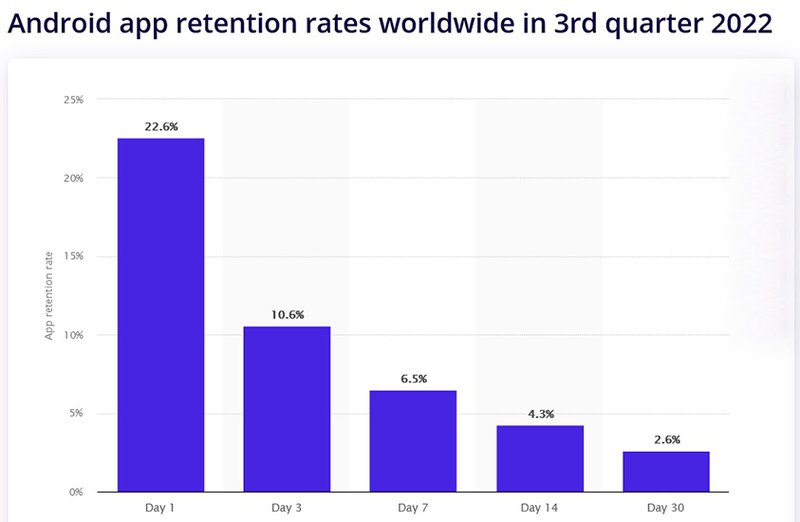
This graph illustrates how gamification principles tap into core psychological drivers to boost and maintain user engagement over time.
User satisfaction
There are two powerful types of motivation: extrinsic and intrinsic. Basically, extrinsic motivators are tangible rewards like prizes, grades, and recognition. These work great - but to be fully satisfied, users also need to be intrinsically motivated! And that’s where gamification comes in! There are 3 needs you must satisfy to unlock intrinsic motivation:
- Autonomy. Use avatars, quests, and content-unlocking to give users control.
- Mastery. Show off your skills with challenges, leaderboards, and points.
- Purpose. Badges, levels, and target-setting give users an end goal.
When you fulfill these needs, you increase user satisfaction. In reality, this is simple behavioral psychology. People like to become better at skills, they like to have a goal, and they also like having choices over their journey. That’s what makes gamification so powerful - every one of us has these needs!
User engagement
Gamification hooks users and engages them with a trigger, action, and reward cycle. This is the ‘Hooked Model’, which successful platforms like Facebook use to make their product a part of our daily lives. Essentially, users are given a cue like a push notification or a gamified challenge. In turn, this drives them into action. Lastly, the user is rewarded for their effort. Ideally, this ‘bit of work’ was so satisfying that they return for more! Indeed, studies show that gamification boosts engagement and leads to habit formation.
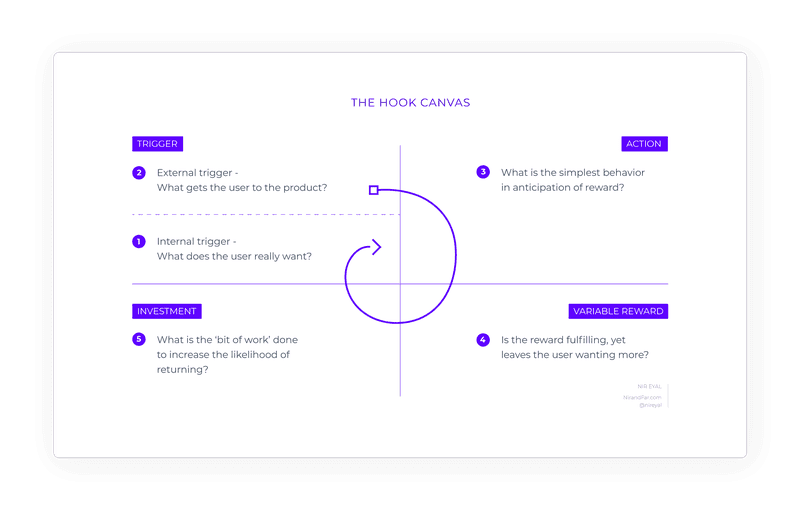
Nir Eyal's Hooked Model canvas shows the cyclical process of trigger, action, variable reward, and investment used to build strong user habits.
3 key features of gamification software
Flexibility
Your choice between build or buy should offer you a lot of flexibility. When choosing a gamification software, this should have various off-the-shelf gamification features such as challenges, quests, memory games, and the possibility to customize the experience after your own look and feel. In this way, you can experiment with different gamification mechanics inside your app and see what works best for your business goal and target audience.
Various Rewards
Of course, no gamification software is complete without a range of rewards! Whether you use points, badges, or discounts, a reward can incentivize users to complete actions like referrals and social media shares. In practice, people just like to know they are getting something for their time!
A/B Testing
Gamification companies make it easy to add new features to your web or mobile app. However, implementation is just half of the battle! To maximize the effectiveness of your changes, your gamification software empowers you with A/B testing capabilities. In short, this lets you test new features, choose the best-written copy, and listen to the feedback of your users. Through this, you can create the perfect platform for your customers.
How to choose the right gamification company for you
Not all gamification companies are created equal. Ultimately, picking gamification software depends on what you wish to make. For instance, you could be at the start of your journey, looking to build a whole new gamified app. Or, you might have an existing app and want to use layers of gamification to generate growth.
To help you make a decision, here is a list of the best gamification companies in 2023:
Top 5 gamification companies in 2023
StriveCloud
Based in Ghent, Belgium, StriveCloud is a leading gamification company. StriveCloud supports clients big and small across industries, from shared mobility operators like HumanForest or EVO Sharing to big enterprises like Siemens, or ABInBev.
In practice, StriveCloud’s gamification software makes creating a great user experience as simple as possible. For example, StriveCloud offers a modular platform, which means that you can select from 30+ gamification & loyalty add-ons and introduce them into your web or mobile app - without a line of code. Alongside that, you’ll always have an expert team free to provide advice and consulting on your gamification strategy. Ultimately, the goal is your growth!

The StriveCloud product dashboard provides a clear overview of available gamification and loyalty features for easy implementation.
Pricing:
StriveCloud is designed to grow as you grow! By segmenting the pricing into tiers based on monthly active users, StriveCloud offers a scalable solution. To be sure, this comes in useful when StriveCloud’s past customers have tripled their number of active users!
Prices start at $599/month for apps under 10k users. Following that, the 25k tier costs $1,199, and apps with up to 100k in users can expect to spend $1,799/month. For the full breakdown, check out the pricing table.
Key Features:
- API integration on web & mobile app/or stand-alone platform (web & mobile app)
- Admin dashboard
- Game thinking & design workshop
Gamification & Loyalty Features:
- Achievements
- Leaderboards
- Challenges
- Timed Challenge
- Leveling
- Hotzone
- Wheel of fortune
- Memory game
- Man of the Match
- Scratch cards
- Raffle/Lottery
- Badges
- Code Redemption
- Currency Bundle
- Virtual Currency Shop
Interactive Content
- Classic poll
- Dynamic poll
- Swipe poll
- Swipe quiz
- Classic quiz
- Time quiz
- Time score quiz
- Personality tests
Michael Stewart @HumanForest - "Personally, I really like the control panel of StriveCloud, and I think it is easy to use. I can instantly implement changes without having to wait 24 hours or more to deploy."
Gamify your app with StriveCloud! Use our gamification software to add loyalty & gamification features that support your app’s goals. Find out more!
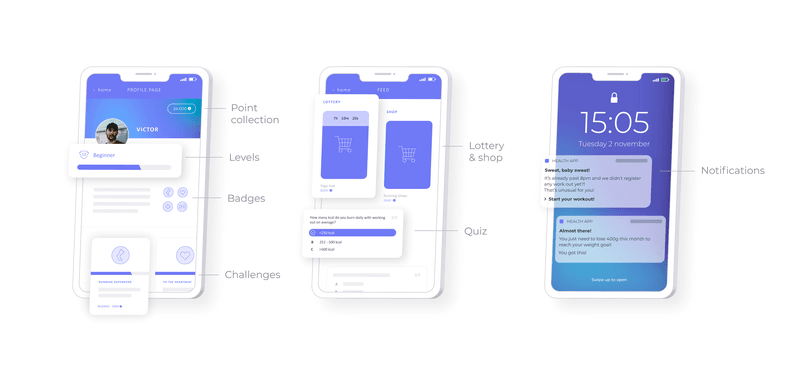
This example from StriveCloud's UI demonstrates how a clean, intuitive interface encourages user interaction with gamified elements.
Funifier
From Canada, Funifier is a stand-alone gamification software that is “purpose-built for the enterprise”. They pride themselves on offering a flexible solution to boost audience engagement. That being said, the app lacks integrations in comparison to the other platforms listed.
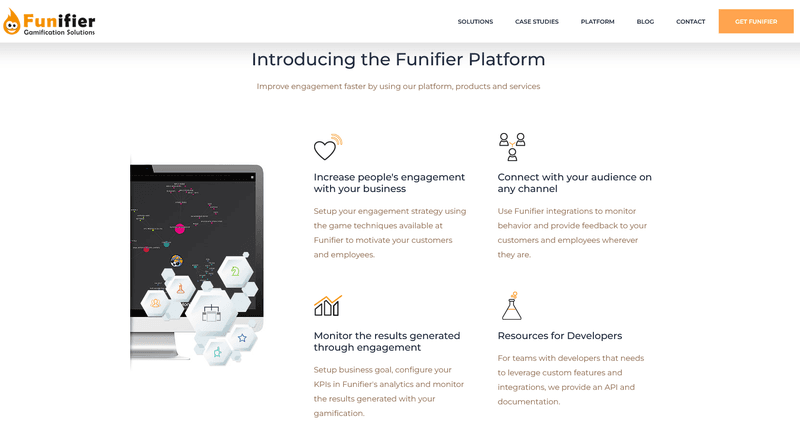
Funifier provides a dedicated dashboard for tracking key engagement metrics, as illustrated in this software example.
Pricing:
Funifier’s pricing is not made public, so you have to contact them for a quote. For B2C apps, there is a tiered pricing model and B2B apps benefit from volume discounts.
Key Features:
- Game thinking & design workshop
- Stand-alone platform (web & mobile app)
Gamification & Loyalty Features:
- Achievements
- Point collection
- In-app currency
- Rewards
- Avatar stats
- Leaderboards
- Progress bars
Influitive
Toronto-based Influitive is another big gamification company. They specialize in building advocacy on their “customer marketing platform” for retail, publishing, and B2B software. In addition, they offer a big knowledge base to learn from, including regularly updated blogs, eBooks, and webinars.
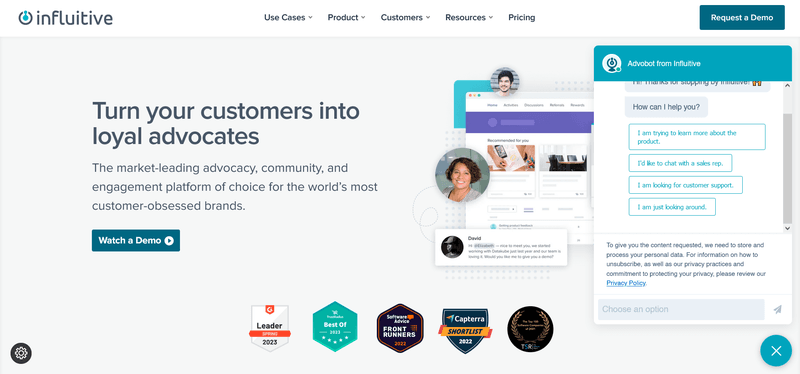
The Influitive platform focuses on creating a community of brand advocates through its integrated challenge and reward system.
Pricing:
Starts at $1,999/month. To access extra community features, you must ask for a quote.
Key Features:
- Stand-alone platform (web & mobile app)
Gamification & Loyalty Features:
- Gamified Q&A (points, badges, and rewards)
- Leaderboards
- Achievements
- Point collection
- Rewards
- Badges
- Gamified virtual event hub
Interactive Content:
- Quizzes
- Surveys
- Live polls
- Q.&A
Other
- Rewards on referrals
- Rewards on references
- Rewards on user-generated content
Insert Coin
Insert Coin is a Swedish start-up for teachers, HR managers, and product owners. Their gamification software is called GWEN, and it comes complete with an admin dashboard and a wide range of features. At the moment, most of their clients are also based in Sweden.
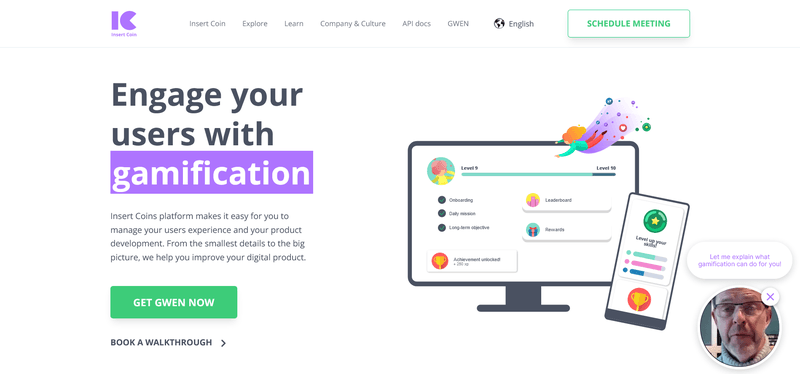
Insert Coin's GWEN software interface shows how it integrates various gamification features for product owners and managers.
Pricing:
Not publicly available. GWEN is listed at around $99/month for every 5,000 monthly active users. However, Insert Coin may quote differently. In addition, this tier comes without any customer service or design assistance.
Key Features:
- API integration on web & mobile app
- Admin dashboard
- A/B testing
Gamification & Loyalty Features:
- Leaderboards
- Levels
- Missions
- Team levels
- Team missions
- Onboarding missions
- Achievements
- In-app currency
- Point collection
- Rewards
SaaSquatch
SaaSquatch, also from Canada, positions itself as a “referral & loyalty software”. In particular, they focus on referral programs, offering the ability to give users points, gift cards, credit, and even discounts. This differentiates them from the other gamification companies on this list, as they are less about the user experience as a whole.

SaaSquatch's platform is geared towards building powerful referral and loyalty programs, as shown in this dashboard example.
Pricing:
Starts at $1,750/month + set-up fee. This is limited to just 25k users, so for more, you need to ask for a custom quote. As well, it excludes Salesforce integrations.
Key Features:
- API integration on web & mobile app
- Integrations with big platforms
- Template library
- Widgets
Gamification & Loyalty Features:
- Rewards
- Points marketplace
- Point collection
- Credit and discounts
- Gift cards
- Leaderboards
Other:
- Cashback programs
- Referral program
FAQs
What is gamification software?
Gamification software is a fast and easy way to apply game mechanics to your app. Instead of building everything yourself, gamification companies offer pre-built, customizable game elements like badges, levels, and rewards to motivate users, increase engagement, and ultimately create sustainable growth!
Why gamify the user experience?
With gamification, you can leverage both extrinsic and intrinsic motivation. And that’s powerful! When you implement features like points and levels, you satisfy intrinsic needs like growth. In turn, this reduces onboarding churn and boosts engagement! Gamification companies make this process easy.
What is the best gamification software in 2023?
StriveCloud is a gamification company trusted by clients across industries - from financial services, shared mobility, edtech, or health, to enterprise customers. Using our gamification software, you can easily build and customize a great app experience. In turn, you’ll increase engagement, retention, and customer lifetime value!
Why gamify? 3 mobility apps unlocking the benefits of mobility app gamification
There are many reasons to gamify your mobility app. But without a clear strategy, your approach could backfire! What are some of the drawbacks behind gamification? In this article, let's learn from 3 mobility operators that successfully implemented gamification, and how you can too!
Why gamify? 3 mobility apps unlocking the benefits of mobility app gamification
TL;DR: High-performance mobility app gamification transforms passive commuters into loyal users by leveraging behavioral psychology. In 2026, leading mobility services use these mechanics to drive a 40% increase in engagement, significantly boosting retention and long-term revenue growth.
Integrating mobility app gamification into your service leads to many benefits, but success requires more than just badges. In our experience working with global transport providers, the difference between a gimmick and a growth engine lies in how well these mechanics align with user goals. According to industry research, companies achieve 40% higher engagement rates through strategic gamification, helping them stand out in an increasingly crowded market.
In this article, we'll explore successful examples of mobility app gamification and the specific strategies used by industry leaders to turn transit into a rewarding daily habit.
- What are the benefits of mobility app gamification?
- 3 successful examples of gamification in mobility services
- When gamification of your mobility service can backfire (and how to avoid that!)
- FAQs
What are the benefits of mobility app gamification?
TL;DR: Strategic mobility app gamification has become a primary driver for sustainable growth in 2026. Current research indicates that gamified apps see 40% higher engagement rates compared to traditional interfaces. By tapping into intrinsic motivation, mobility providers can boost retention, lower churn, and significantly increase the lifetime value of every rider without relying solely on discounts.
#1 Increased customer engagement
It’s simple - when your app is fun to use, customers are more motivated to come back. In our experience, mobility app gamification transforms a utilitarian task into a daily habit, encouraging users to choose your service for even the shortest journeys. This is supported by 2026 industry data showing that companies achieve 40% higher engagement rates through strategic gamification implementation.
Innovation for Sustainable Cities - "When using a mobility app that incorporates gamified elements, citizens are motivated to cycle more and to explore more points of interest in the city."
#2 Enhanced customer loyalty
Customers become loyal to you when you recognize and reward their participation. To do that, most legacy loyalty programs use extrinsic rewards like discounts, but these often lead to diminishing returns. As mobility app gamification evolves in 2026, the focus has shifted toward building emotional loyalty rather than just transactional habit.
Gamification re-introduces unpredictability and fun into the experience! Instead of a tangible prize, gamification plays on "intrinsic rewards." That means fulfilling psychological needs such as the desire for status, connection, or achievement. In fact, research from the University of Louvain finds that intrinsic rewards like those used in mobility app gamification are significantly more effective at fostering long-term brand affinity than pure financial incentives.
What drives customer participation in loyalty programs? - "Extrinsic rewards decrease customer loyalty as they draw the attention from the brand to the reward, and thereby, lower customers’ intrinsic motivation... but intrinsic rewards are particularly effective at enhancing brand loyalty."
#3 Higher customer satisfaction
Customer satisfaction is the ultimate prize in a crowded market. Implementing mobility app gamification helps you stand out and be remembered as more than just a tool. In our work with global mobility partners, we’ve found that gamified features lead to higher App Store ratings and better word-of-mouth marketing, as users feel a sense of pride in their "unlocked" achievements.
The role of gamification in mobile apps - "Gamification increases customer engagement through satisfaction of the needs for competence, autonomy, and relatedness. In turn, engagement leads to greater intention to use and positively rate the app."
#4 Elevated ARPU
Besides being great for branding, mobility app gamification also boosts the average revenue per customer (ARPU). By using progress bars, tiered rewards, and challenges, you encourage riders to complete that extra trip to reach a milestone. This allows you to improve overall profitability and fleet utilization.
The power to boost ARPU comes from how gamification makes your mobility app more engaging. Our 2026 benchmarking shows that when users are strategically motivated by gamified milestones, they transition from "occasional riders" to "power users" who generate significantly higher monthly revenue. By increasing the frequency of use by 40% or more, gamification ensures your service remains the default choice for every commute.
Get started with gamification today & sell up to 3X more trips!
3 successful examples of mobility app gamification in mobility services
TL;DR: Strategic mobility app gamification transforms passive users into loyal advocates by increasing engagement by 40% or more. By implementing behavioral rewards and progress tracking, industry leaders like HumanForest and Felyx drive up to 200% more trips, effectively solving the revenue gap caused by disengaged riders.
When we say mobility app gamification works, we’re talking from experience. In our experience, shared mobility providers see an average return of 200% more trips after gamifying their service. This growth is driven by moving beyond simple transactions to create a rewarding ecosystem that keeps users coming back daily.
HumanForest
How did HumanForest stop 220 tons of CO2 from entering London’s air? With their mobility service powered by mobility app gamification! When HumanForest wanted to encourage higher usage of their e-bikes, we collaborated to build a gamified loyalty program. To achieve these 2026 sustainability benchmarks, we utilized several core gamification mechanics:
- Earn TreeCoins based on the distance covered & exchange them for free-riding minutes!
- Complete weekly challenges to earn bonus TreeCoins and amplify your carbon offset impact!
- Use your TreeCoins to enter a digital lottery system to win high-value partner prizes!
- Climb a global CO2 leaderboard to compete for the title of the greenest rider!
- Progressive leveling: evolve your profile from a "Seedling" to a "Giant Sequoia"!
Michael Stewart @Human Forest - "On one hand, we wanted to create a fun and engaging experience around the concept of HumanForest. On the other hand, we wanted to show our customers the impact they were having on the planet."
Since fully integrating these mechanics, HumanForest e-bikes consistently facilitate over 150,000 trips monthly. Even more impressive for 2026 retention standards, 70% of those trips are now generated by a dedicated core of repeat customers.
Want to grow your service like HumanForest? Discover how our mobility app gamification experts can help you!
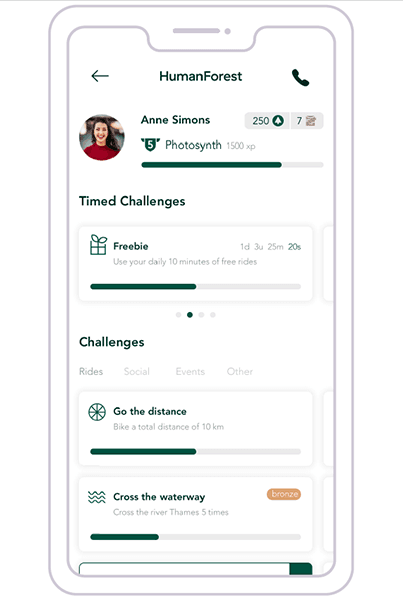
HumanForest uses a challenge system to encourage specific user actions, directly tying engagement to CO2 savings and tangible rewards.
EVO Sharing
In the world of mobility app gamification, the "rookie" experience is a critical conversion point. New EVO Sharing customers start with an empty state: 0 minutes, 0 EVOCoins, and 0 kilometers. To bridge the gap, the app immediately visualizes the path to the first milestone, showing users exactly how close they are to leveling up. Seeing that you only need a few more XP to hit the next tier makes the first ride feel like the start of a journey, not just a chore.
In our experience, these immediate progress indicators are why companies achieve 40% higher engagement rates through strategic gamification. Once a user starts, they are motivated by a loop of positive reinforcement: every kilometer builds toward a tangible benefit, triggering a dopamine response that encourages the next ride.
EVOCoins facilitate this high-frequency feedback loop:
- Users earn EVOCoins dynamically based on the distance of every trip.
- Earned coins are instantly redeemable for discounted riding minute packages.
- This creates a "sunk cost" of loyalty where users prefer to stay in the ecosystem to spend their rewards!
Jennifer Dittmar @EVO Sharing - "Our business model is very suitable for gamification. Receiving rewards based on distance, kilometers, or minutes driven makes a lot of sense to use and goes well together."

EVO Sharing's achievement system clearly visualizes user progress and rewards, motivating customers to continue using the service to unlock the next level.
Felyx
The mobility market is more saturated than ever in 2026. While many operators compete solely on price, mobility app gamification offers a way to bypass the race to the bottom. Since safety and price remain top consumer priorities, Felyx uses gamified tiers to reward loyalty with better pricing, ensuring that the most frequent riders get the best value.
This strategy is backed by behavioral science. Research from Gallup highlights that fully engaged customers represent a 23% premium in share of wallet and revenue compared to the average. Conversely, disengaged customers generate 13% less revenue. By rewarding riders for their frequency, Felyx leverages the "Lucky Loyalty effect," where customers feel their status entitles them to better perks, making them less likely to switch to a competitor for a one-time discount.
By rewarding your loyal customers through a tiered system, you aren't just giving discounts—you are actively extending their lifetime value and protecting your market share!
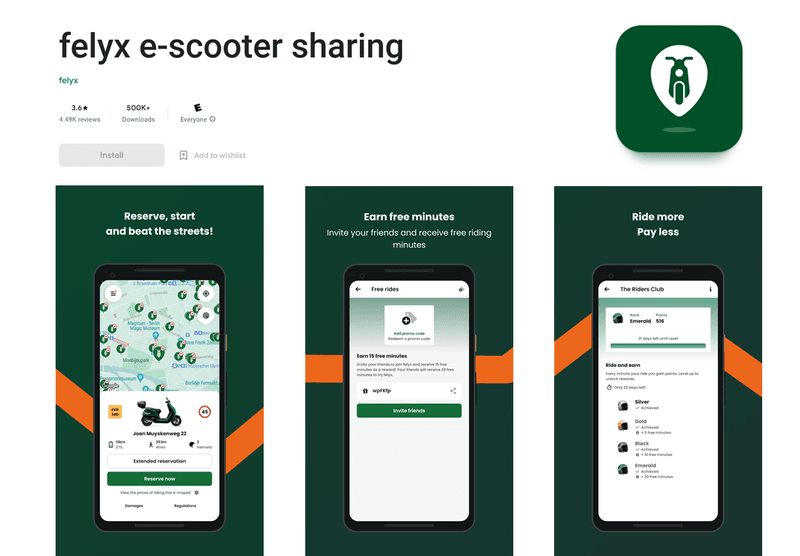
Felyx implements a tiered loyalty system where increased usage unlocks better pricing, demonstrating the "Lucky Loyalty effect" in action.
When mobility app gamification can backfire (and how to avoid that!)
TL;DR: Strategic mobility app gamification can drive 40% higher engagement, but poor implementation leads to user fatigue. To avoid churn in 2026, providers must balance reward frequency with task difficulty. In our experience, the most successful apps prioritize the Fogg Behavior Model, ensuring that prompts align with user ability to prevent the "losing state" that causes disengaged customers to generate 13% less revenue than the average user.
All in all, it’s important to remember that the mobility app gamification of your service is about more than handing out rewards. You need to create a strategy that keeps customers engaged in the long term by focusing on sustainable behavior design rather than short-lived gimmicks.
Given this, here are some drawbacks to look out for:
Too complex, with no clear path of action
Part of what makes mobility app gamification so useful is how it guides the customer journey. When done right, you can set up a clear path of actions linked to rewards to get customers to do exactly what you want. Based on our work with global fleet operators, it works best when you keep it simple. Think of a “do this to get that” mechanism, for instance: park in a designated zone to unlock a "Green Hero" badge and 5% off your next ride.
It’s tempting to keep adding new features to your experience, however, this will only lead to cognitive overwhelm. A great gamified experience combines different elements into one coherent narrative. Research shows that companies achieve 40% higher engagement rates through strategic gamification implementation that prioritizes ease of use over feature density.
Rewards are too plentiful or too easy to get
If rewards are too easy, they lose their purpose! In the context of mobility app gamification, if customers are rewarded for putting in zero effort, there is no psychological "hook" to earn the next one. On that note, overusing rewards can also cause customers to quit due to notification fatigue or a perceived lack of value in the digital currency.
What drives customer participation in loyalty programs? - "Customers can become annoyed by an excessive amount of rewards to the extent that they consider unsubscribing, devaluing the perceived exclusivity of the mobility service."
Rewards are too difficult to get
On the other hand, your mobility app gamification rewards shouldn’t be too difficult to achieve! For customers, impossible rewards result in a lack of progress and growth which can be super frustrating. In our experience, setting "stretch goals" that are mathematically impossible for the average commuter leads to a 25% drop in weekly active usage.
The power lies in finding the right balance between challenge and motivation. By utilizing tiered rewards, you ensure that even casual users feel a sense of accomplishment while power users stay challenged.

This visual represents the Fogg Behavior Model, which highlights the importance of balancing user motivation, ability, and prompts to drive desired actions within any mobility app gamification strategy.
You put customers in a losing state
When done right, mobility app gamification fuels motivation by creating “win states”. However, the opposite can also be true! For instance, when customers fail to complete a challenge, drop on the leaderboard ranking, or lose their daily streak, they enter a "losing state." This gives a feeling of having lost all previous progress, which is highly demotivating.
There are workarounds though! For instance, you can segment people into different leaderboard levels so it always feels like they’re part of the top performers. This is critical because, according to research by Gallup, fully engaged customers generate 23% more revenue than average, while disengaged users who feel they cannot "win" in your app represent a significant loss in potential lifetime value.
Create a proven gamification strategy in an expert-led workshop & learn how to sell 3X more trips with mobility app gamification!
FAQs: Driving Results with Mobility App Gamification
What are the benefits of mobility app gamification?
TL;DR: Strategic mobility app gamification increases user engagement by 40% or more, leading to higher retention and revenue. In our experience working with global fleet operators, we have seen gamified features contribute to a 200% increase in long-term user retention. By transforming a utility into an experience, mobility app gamification ensures your service becomes a daily habit rather than a one-time choice.
How does mobility app gamification boost customer loyalty?
Instead of relying solely on discounts, mobility app gamification leverages intrinsic rewards like personal growth and social recognition. According to 2025 industry research, companies achieve 40% higher engagement rates through strategic gamification implementation. Research finds that these psychological benefits are significantly more effective at fostering long-term loyalty than hard rewards, as they fulfill the user's need for achievement and community belonging.
How does mobility app gamification improve customer engagement?
When an app is interactive, customers are more motivated to use it consistently. Modern mobility app gamification creates a feedback loop that rewards positive behavior, such as choosing eco-friendly routes. Recent studies on urban transit patterns indicate that gamified elements increase overall engagement by 40% or more, making users significantly more motivated to cycle or use shared mobility services. In short, a gamified app transforms a standard commute into an engaging, goal-oriented journey.
Why loyalty programs are changing (and how to keep up!)
Loyalty programs are changing. To build loyalty, the old transactional model is not enough. Instead, you need a user experience that engages from the very outset. With gamification features, you can create a reward system that keeps every user loyal. Welcome to loyalty 4.0.
Why loyalty programs are changing (and how to keep up)
TL;DR: In 2026, loyalty programs have shifted from transactional discounts to holistic engagement ecosystems. With the global loyalty management market projected to reach $18.2 billion this year, the focus has moved toward driving revenue through deep behavioral integration. Modern programs, like Starbucks Rewards, now account for over 53% of total spend, proving that gamification and personalization are no longer optional—they are the primary engines of corporate growth.
While building a reliable user base continues to be a crucial goal for every business, the rules that determine loyalty programs are changing. Historically, loyalty was often a static "buy ten, get one free" model which proved difficult to scale and expensive to maintain. Today, leaders have moved toward "Loyalty 4.0," where the use of gamification features like challenges, raffles, or digital badges adds a layer of intrinsic motivation. In our experience, this approach significantly reduces retention costs because users are motivated by achievement and community, not just the next coupon.
Look at leaders from across the app market like Duolingo in education, Sweatcoin in fitness, or Revolut in banking. These companies have moved beyond legacy metrics to focus on sustained engagement. According to recent industry reports, the rapid growth in the loyalty sector is fueled by this sophisticated tech integration. We have found that by treating loyalty as a core product feature rather than a marketing add-on, brands can achieve the same scale as giants like Starbucks, where loyalty members drive the majority of store revenue.
In this article, let’s review how gamification is improving loyalty programs and how using modular building blocks can enhance your customer retention strategies in this highly competitive $18.2 billion landscape.
- Why a change in how loyalty programs work is inevitable
- What is Loyalty 4.0 - and how is it changing app development
- How to implement loyalty 4.0 in your app
- TLDR
Why a change in how loyalty programs work is inevitable
TL;DR: Modern loyalty programs are shifting from transactional "points for prizes" to immersive, data-driven ecosystems. As the global loyalty management market scales to $18.2 billion by 2026, success now depends on moving beyond simple discounts toward integrated brand experiences that drive sustained revenue. Long-held business wisdom states that the top 20% of customers make up 80% of your revenue, a phenomenon known as the Pareto Principle. That statistic is why businesses have always focused on developing effective loyalty programs. It makes financial sense to build a reward system around those who have the most impact on your wallet!
But while the reward systems of the past were successful for their time, they are not optimized for today’s digital-first landscape. In our experience, legacy models that focused solely on membership counts are being outperformed by engagement-centric platforms. For example, Starbucks Rewards now represents 53% of all spend in U.S. Starbucks stores [1]. This shift highlights how modern loyalty programs have evolved from niche marketing tactics into the primary engine of corporate revenue and customer retention.

This historical example of early digital rewards shows the transition from basic point-collection to the hyper-personalized, mobile-integrated experiences we see today.
Today’s consumers need more than a transactional relationship to remain committed to a brand. We’ve observed that building a reward system around basic offers like ‘buy 10, get 1 free’ fails to leverage the sophisticated toolkit available to app developers. The global loyalty management market is projected to reach $18.2 billion by 2026 [5], reflecting a massive investment in AI-driven personalization and real-time engagement that legacy systems simply cannot match.
So much more must be done to thrive in the competitive app market of 2026. There is one critical driver behind this shift:
Gen Z wants more interaction from loyalty programs
The ‘digital native’ Gen Z demographic, now entering their peak spending years, cares more about brand alignment than any previous generation. To stay loyal, Generation Z members expect consistent engagement and chances to interact with the brand, rather than just being targeted for sales. In our experience, an engaged Gen Z member is 3x more likely to become a brand advocate, but only if they feel heard and can personalize their journey. Most importantly, they are looking for an authentic brand whose values align with theirs.
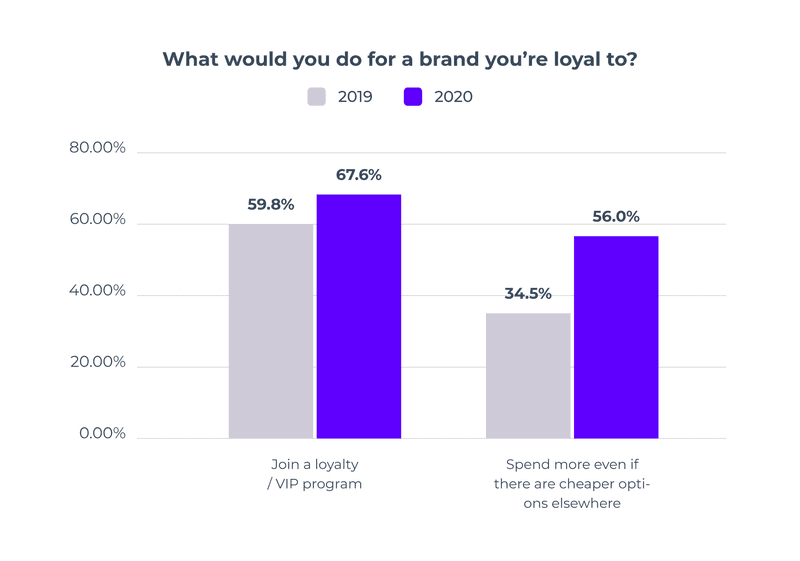
This data underscores Gen Z's demand for community and authenticity, moving loyalty programs away from "spend and save" toward "engage and belong."
Gen Z individuals often buy merchandise from their favorite creators not for the utility of the product, but to represent a community they value. There’s a clear reason why apps have to pay attention to these expectations: Gen Z spends more time and money on mobile than any other cohort. Recent data shows Gen Z is online 8 hours a day, and mobile purchases account for 1/3 of all their transactions [6]. This demographic is the ideal target for loyalty programs, provided those programs offer the exciting, high-frequency interaction they have come to expect from the digital world.
What is Loyalty 4.0- and how is it changing app development
TL;DR: Loyalty 4.0 represents a fundamental shift from transactional "earn-and-burn" points to intrinsic, gamified experiences. In 2026, success is measured by engagement depth rather than just member counts. By prioritizing experiential rewards over simple discounts, apps can scale loyalty more cost-effectively while driving significantly higher lifetime value.
Loyalty 4.0 is the new attitude to loyalty programs that embraces these shifts. The world has moved away from a purely transactional model toward an interactive, experiential method of engagement. Modern market leaders demonstrate this shift’s scale: for instance, Starbucks Rewards now represents 53% of all spend in U.S. stores, proving that modern loyalty is about integrated daily habits rather than occasional perks. The best loyalty programs today use gamification rewards like points, streaks, and badges to create a genuinely engaging ecosystem. These gamification examples are a huge part of what makes Loyalty 4.0 so effective and—most importantly for apps looking to grow—scalable.
While legacy enterprise systems were historically massive investments, the landscape has evolved into a hyper-competitive tech sector. The global loyalty management market is projected to reach $18.2 billion by 2026, reflecting a massive surge in sophisticated, AI-driven program development. In our experience, businesses are moving away from heavy financial incentives toward more affordable, digital-first motivators. Gamification rewards often outperform cash prizes; for example, a simple sprinkle of digital confetti or a "level up" notification can be both cheaper and more psychologically rewarding than a small discount. In our work with high-growth apps, we have seen that switching to these intrinsic "micro-rewards" can increase daily active usage by up to 35% without increasing the marketing budget.
Gamification means implementing game-like elements into a non-game context. In doing so, research shows that you inspire a very human and powerful sense of intrinsic motivation that compels users to participate and engage in your app. This is the heart of Loyalty 4.0—moving from "buying" a customer's behavior to "inspiring" it.
Intrinsic motivators are based on complex goals like personal growth, purpose, and fun. To foster long-term customer loyalty in 2026, this intrinsic motivation is essential. Gamification rewards are so motivating because they make your app experience and reward system feel like a worthwhile journey rather than a digital chore.
Just getting started with gamification? Catch up to speed on our What is Gamification page!
In short, the journey matters more than the destination! That means less emphasis on transactional discount offers that focus on results—what we call extrinsic motivators—and more on intrinsic motivators. Indeed, industry studies and behavioral research show that while extrinsic motivators might push users through the initial discovery phase, reward systems with intrinsic drivers are what sustain long-term loyalty and prevent churn in a crowded app market.
How to implement loyalty 4.0 in your app
TL;DR: Modern loyalty 4.0 focuses on modularity and deep user engagement. With the global loyalty management market projected to reach $18.2 billion by 2026, companies are shifting away from rigid systems toward flexible "building blocks" that allow for rapid scaling and real-time optimization. Success in 2026 requires a strategy that is both user-centric and technically agile.
In our experience, the most resilient apps are those that don't treat gamification as a static feature, but as a dynamic layer. This is where StriveCloud’s gamification building blocks come in. It is a nimble strategy of app development where product managers can construct their app one step at a time. Building blocks allow you to easily create synergetic and consistent gamification features that are highly customizable, ensuring you can pivot as quickly as your customers’ needs evolve.
How to design for customer loyalty? Get yourself a value-packed gamification workshop & go home with a roadmap tailored to your app goals!
Success in 2026 is measured by share of wallet and daily engagement rather than just "lifetime member" counts. For context, industry leaders like Starbucks Rewards now see 53% of all U.S. spend flowing through their loyalty program, a benchmark for how integrated these systems must become. We’ve seen this play out with HumanForest, a sustainable e-bike company. Since their launch in 2019, they have matured into a leading green mobility provider by using StriveCloud’s building blocks to weave loyalty directly into the user’s journey:
An in-app currency that incentivizes green mobility (and gives users power!)
Users earn TreeCoins by riding e-bikes, which visualize exactly how many trees worth of CO2 their cycling has saved. In 2026, value-based rewards are no longer optional; consumers demand to see their personal impact. By linking every mile to a tangible environmental benefit, HumanForest provides the intrinsic motivation needed for long-term retention. In our experience, showing a user that their actions have real-world power is an far more effective motivator than a simple discount code.

HumanForest's app uses 'TreeCoins' as an in-app currency, directly linking user actions to a positive environmental impact and providing intrinsic motivation.
Challenges keep the user experience fresh and exciting
Static rewards lose their luster quickly. Using modular building blocks, HumanForest implements personalized challenges that adapt to user behavior. For instance, users might be challenged to cross the River Thames to unlock new areas of the city, rewarding them with an upgrade to their personal level. This keeps the experience feeling like a discovery rather than a chore.
Leveling systems tailor the app’s identity
Progress tracking is a fundamental human desire. HumanForest leverages StriveCloud’s building blocks to customize their leveling system to match their unique brand identity. In a move that reinforces their mission, the top tier isn't "Platinum" or "Gold"—it's "Wood." This alignment between game mechanics and brand values is a hallmark of sophisticated 2026 loyalty programs.
Leaderboards that rank how many trees users have saved
HumanForest ranks TreeCoins across the entire community, tapping into social proof and healthy competition. Research into psychological need satisfaction shows that these social elements significantly boost motivation. By integrating the reward system with a public leaderboard, the app creates a streamlined, high-engagement user experience that scales effortlessly.

The HumanForest app effectively uses leaderboards and community rankings to foster healthy competition and enhance user motivation.
Make retention a core part of your app strategy with StriveClouds' gamification building blocks. Find out what it could mean for you!
Why loyalty programs are changing: A 2026 TL;DR
TL;DR: In 2026, loyalty is no longer a transaction—it is an experience. As the global loyalty management market scales toward $18.2 billion, brands are moving away from stale points-for-purchase models. Today’s leaders focus on "Loyalty 4.0," leveraging mobile-first gamification to drive intrinsic motivation. In our experience, successful programs now mimic the engagement levels of Starbucks Rewards, which accounts for 53% of all U.S. spend in their stores by prioritizing deep, interactive digital relationships over one-off discounts.
- Loyalty remains the ultimate goal of the customer journey, but the "rulebook" has been rewritten for a mobile-first world.
- Gen Z and Alpha cohorts demand fun, interaction, and social proof, spending more time on mobile apps than any previous generation.
- Modern programs must offer immediate gratification and community-driven rewards to remain relevant in a crowded marketplace.
This has fueled the rise of Loyalty 4.0, which prioritizes these core expectations:
- A reward system powered by gamification features like digital collectibles and interactive milestones—methods that are 3x more effective for retention than traditional cash-back models.
- Intrinsic motivation triggers, such as mastery and social belonging, which sustain long-term engagement better than depleting marketing budgets on heavy discounting.
The StriveCloud gamification platform enables Loyalty 4.0 through:
- Flexible, API-driven building blocks that allow for rapid deployment in high-growth ecosystems.
- Real-time data loops that allow you to adjust mechanics based on user feedback, keeping the experience personal and frictionless.
HumanForest is a leading example of Loyalty 4.0 in action. By utilizing StriveCloud’s gamification infrastructure, they have built a community-centric ecosystem featuring:
- TreeCoins: A proprietary in-app currency that rewards sustainable behavior and empowers eco-conscious commuters.
- Dynamic Challenges: Time-sensitive missions that keep the user experience fresh and prevent "reward fatigue."
- Identity-Linked Levels: Tiered progression systems that evolve alongside the user's journey within the app.
- Impact Leaderboards: Competitive rankings showing exactly how many trees each user has saved, turning individual action into social status.
Ready to scale your engagement? Book an expert-led gamification workshop to build a Loyalty 4.0 action plan for 2026!
Why unlocking user motivation is the key to mHealth success?
The smartphone is at the center of our lives. The rise of mobile health is leveraging this device to provide better patient experiences. They're using data to learn more about general health and gain new insights about diseases, treatments and more. Unfortunately, user retention on these apps is low, and mHealth apps need to be more user-centric in order to keep their users. In this article, we explore how gamification can make the experience better for all parties, by making it fun and engaging!
Why unlocking user motivation is the key to mHealth success?
Mobile health or mHealth refers to mobile-supported public health and treatment. Today, over 100,000 mHealth apps are available. These apps empower patients by allowing them to manage their health more actively and be more independent thanks to self-assessment or other remote care solutions. They also help healthcare professionals treat patients more efficiently. We’ll explore how gamification for health can make the patient experience even better!
With the mission of changing healthcare forever, the industry is experiencing rapid growth. In 2020 the mHealth market in Europe was valued at 6.44 billion dollars and is expected to reach 28.61 billion dollars by 2025. Globally, the market is expected to be valued at 206 billion dollars by 2026.
Mobile health apps will have to become more user-centric to boost stickiness. Overall, they should increase the fun factor and make logging in data feel less like a chore. Additionally, better integration with mHealth will allow professionals to tap into a rich ecosystem of data. This can open new doors in health research, and help to create a better patient experience.
Here’s what we’ll discuss:
- What do mHealth apps look like?
- Low user retention & other challenges for mHealth
- Gamification for health apps
- How gamification for apps works
- Gamification for health apps as the recipe for success
What do mHealth apps look like?
mHealth apps are used in a variety of ways. Since smartphones are at the center of individuals' lives, it makes sense to leverage these devices for health purposes.
1 in 4 deaths is caused due to heart problems. Fitness trackers such as MyFitnessPal can help prevent obesity and cardiovascular diseases by tracking eating and fitness habits and giving real-time advice. For instance, your app could tell you to take a walk or to stay hydrated.
You also have robo-nurses. These apps use technology to help patients with reminders or much-needed answers about their condition. The bots don’t just give canned responses but have real conversations with the patient. VirtualNurse is one of these apps that integrates easily with Google Assistant, Alexa, or even Skype. The combination with voice technology creates a fully personalized experience, to help patients improve their health.
There are also cancer detection and monitoring apps. Today we see apps like Cancer.net and CareZone where patients can log their treatment plan and get advice on how to cope with its side-effects. In the future, these apps could use big data to pre-diagnose skin cancer just by taking a picture and uploading it.
Finally, there are patient apps that allow doctors to monitor patients via their smartphones. These are a natural extension of electronic health records and give a consistent insight into the users' medical history, even if they change doctors.
This image highlights a significant hurdle for mHealth adoption: the lack of trust from both patients and professionals regarding the security of personal data.
However, there is one major drawback for mHealth. The lack of trust with patient data, both from patients and professionals is slowing mHealth adoption.
This is of course a significant problem as almost every health app requires its users to enter personally identifiable data. Surveys, activity trackers, biometric scanners, electronic medical records, and face-to-face consults usually require the individual’s data. Without it, the app functionality goes down immediately.
Low user retention & other challenges for mHealth
According to a report by strategy consultant Accenture, the adoption of health apps had stalled before spiking again during the global pandemic. In fact, usage of these tools dropped from 48% to 35% between 2018 and 2019. Wearable technology such as fitness trackers also decreased from 33% to just 18% in 2020.
Additionally, user engagement on these apps is very low. Data suggests that only 2% of patients are actively engaging with their mHealth apps. About 10% of those retain after the first 90 days. Compared to popular apps like Instagram or Twitter that leaves a lot of room to improve.
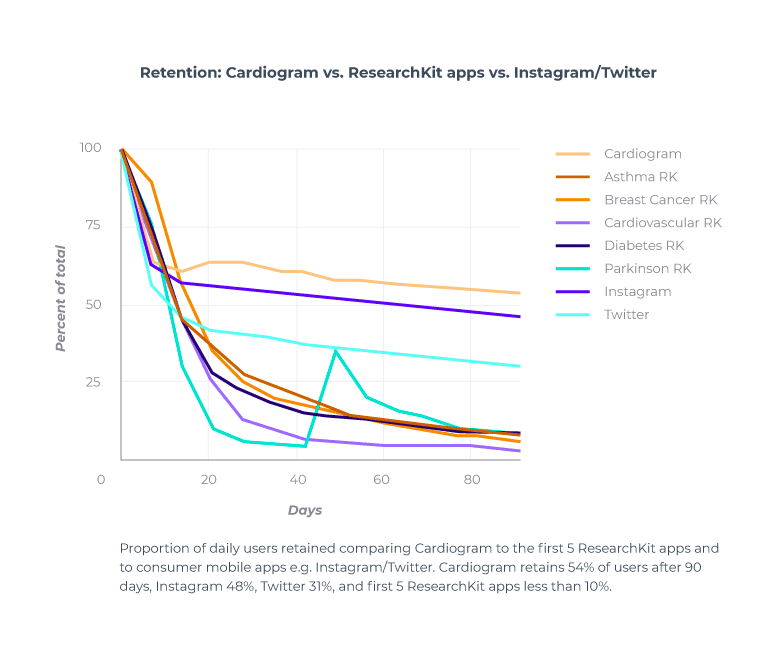
The data clearly shows that very few patients actively engage with mHealth apps long-term, highlighting a significant retention problem for the industry.
It is possible however to do this by applying a few simple design principles. App engagement is about 30% higher for fitness apps that have mastered great user experiences. With apps like Strava and Fitbit adding social elements and gamification to their experience to promote fitness around the world.
So, how do you pimp your app so that your users won’t want to leave?
Gamification for health apps
Gamification is the use of game psychology and elements in a non-game context. You can use it to drive desired user behaviors such as motivating a patient to log their daily activity.
For instance, you can reward patients with 100 points for checking in their daily activity. After checking in 7 days in a row they get bonus points. When they reach 1000 points they go to the next level and earn a badge to showcase on their profile!
Do you see what’s happening here? Gamification for apps can help make the patient experience more fun and engaging. Patients will automatically be more motivated to check in daily, so they can collect points and keep improving their level. If you create a digital experience that users want to return to, collecting patient data will come effortlessly.
Learn about the ins and outs of gamification on our “What is Gamification” page!
How gamification for apps works
Gamification for apps can help you achieve a wide variety of business goals. Once you know what your user journey looks like, you can gamify any data point to supercharge engagement.
Here are 5 steps you can take to start gamifying your user journey:
1) Set clear goals to keep users moving forward
Setting milestones and personalized challenges helps users to keep moving forward. Making the user journey easy to understand limits confusion and drives app adoption.
2) Visualize progress to reinforce user motivation
As your user progresses, it’s important to give them instant feedback. The best way to do this is by visualization. For instance, you can use a progress bar to indicate how far a user is from reaching their goals or the next level.
3) Reward positive user behavior to keep users coming back
You can reward users with points for engaging with your app. For instance, when they check-in daily. They can then use these points to claim rewards or join a lottery. You can also reward users for their achievements. With badge reward systems, you can link certain milestones in the app with fun-designed badges!
Doing so creates positive reinforcement when the user carries out specific behaviors, and improves active user retention.
4) Create a sense of connectedness and competition to drive interaction between users
Allowing users to follow and connect with each other creates a community feeling. To encourage social engagement you can introduce a social feed that displays your users’ latest achievements or actions. Other game elements such as leaderboards introduce competition into your app. Users are often motivated to compete or collaborate with their peers.
5) Target users with in-app messages based on their context
Trigger personalized notifications to keep your users engaged, or to remind them to take certain actions. You can target users based on their behavior, so they will only get messages that are relevant and valuable to them.
How to gamify your own user journey without months of development? Check out our plug-in gamification tool!
Gamification for health apps as the recipe for success
MySugr JR is a diabetes app for children with over 1 million users. The app allows parents to check up with their kids so they can worry a little less. The kids can add entries such as their meals and glucose levels in a fun way. They are then rewarded with points for every entry. It even tells them when to take insulin.
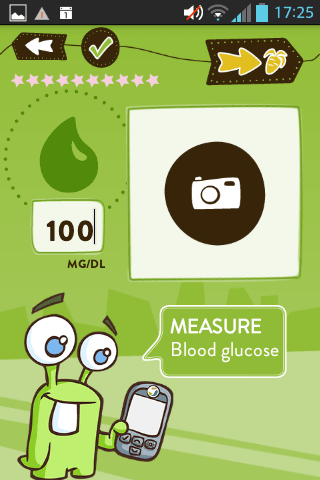
The gamified MySugr JR app interface shown here makes diabetes management a fun and rewarding game for children, encouraging consistent data logging.
Another great example is Bayer’s Didget blood glucose meter. It connects to a Nintendo DS and rewards kids for consistent testing. As they gain more points they can also unlock new levels and rank higher on leaderboards.
Gamification for health apps is also used for medication and chronic condition management. Mango Health created an app that notifies its patients when to take their medication. Users earn points for taking it in time, which they can save towards gift cards or charity donations in weekly raffles.
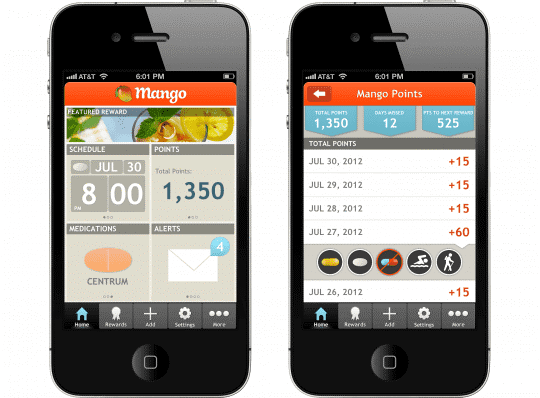
This example from Mango Health demonstrates how earning points for timely medication intake can motivate users toward consistent health habits.
Finally, health apps like MyFitnessPal promote fitness with the help of gamification for apps. They help you set weight loss and activity goals and visualize the progress you’re making towards them. The app also rewards daily streaks for consecutive days users have logged in.

MyFitnessPal effectively uses daily streaks, as seen here, to encourage users to log in consecutively and stay engaged with their fitness goals.
Recap
With the mHealth industry growing as we speak, competition is getting fiercer. However, only 7% of health apps have more than 50,000 monthly active users. The industry is also facing some data security problems, as both patients and healthcare providers have concerns about privacy and safety.
Low user retention & lack of data as the major challenges
mHealth apps are suffering from low engagement rates. This causes a gap in the data healthcare providers need to give sufficient care. To be truly effective most health apps need personal healthcare information. mHealth apps will have to make their experience more fun and engaging to improve retention and trust.
Why mHealth needs gamification for apps
For patients to be truly engaged with their health apps, they need motivation. Gamification helps you apply game design principles and behavioral psychology to do exactly that. By making the app more fun you turn tasks like daily log-ins from a chore into a game. Doing this will create a better patient experience, and make it more rewarding to engage with your app.
How to succeed with gamification for health apps
Several health apps have been successful in gamifying their app. They use game elements like points, badge reward systems, leaderboards, and progress bars to boost patient motivation. By setting clear goals and rewarding desired user behavior you can not only boost app engagement but user retention as well!
Want to get started with gamification? Get a free consultation to find out how you could benefit from gamification!

Why you're not retaining fan engagement
It is harder than ever to create great digital experiences. With the rise of data and analytics, fans expect an experience tailored to their personal needs and preferences. But how can you gear an experience for entirely different behaviors? In this post, we'll be looking at Swiss esports agency eStudios and how they overcame their personalization challenges.
Why you're not retaining fan engagement and what you should do about it
Are you losing your audience to the "anonymity gap"? In 2026, the primary reason for declining fan engagement is a lack of identity-driven personalization. Research shows that sports organizations currently know only 24% of their audience by name, resulting in generic experiences that Millennials—the most commercially valuable demographic—increasingly ignore. To stop the churn, you must bridge the gap between anonymous data and individual fan behavior.
In this guide, you’ll discover:
- How hyper-personalization drives long-term fan engagement
- The role of first-party data in crafting a frictionless, high-value fan experience
- What specific behavioral shifts are currently reshaping the global esports community
- How eStudios leveraged digital identity to solve their community retention challenges
In our experience working with global leagues, fan engagement is no longer a "nice-to-have" luxury; it is the core driver of modern revenue. According to the 2025-2026 WSC Sports Generational Fan Study, younger fans are the most likely to disengage entirely when content formats don’t match their specific consumption habits. This disconnect has massive financial implications. The January 2026 Dizplai Anonymous Fan Index highlights that one in three sports organizations now lose over US$1 million annually due to unmonetized anonymous fans. To retain your audience, your strategy must evolve from broad broadcasting to a documented personalization model that identifies and rewards individual fan actions in real-time.
How personalization drives fan engagement
To maximize fan engagement, organizations must move beyond generic content delivery. TL;DR: Modern fans, particularly Millennials, now ignore formats that don’t align with their specific behaviors; failing to implement data-driven personalization leads to significant revenue loss and audience churn. As Tobias, the CEO of eStudios, noticed: trivial details like naming a button can confuse the users and impact their overall experience as well as fan engagement.
In short, personalization is a process that enables you to tailor customer journeys and experiences to suit the individual needs and preferences of a customer. In our experience, when a digital experience anticipates user needs based on previous interactions, we see a measurable uplift in session duration and return rates.
Personalization is often mistakenly equated with customization. Unlike personalization, customization happens by the user's actions. In those cases, the users select their preferences. On the other hand, personalization stems from the system itself. Both can enhance a user’s experience, but only when carefully implemented.
While you may think of personalization as a nice-to-have luxury, 2026 research shows its fundamental impact on retention. According to the 2025-2026 WSC Sports Generational Fan Study, Millennials—the most commercially valuable audience—are the most likely to disengage when content feels irrelevant, proving that static experiences are the primary driver of audience attrition.
The financial stakes are equally high. The Dizplai Anonymous Fan Index (January 2026) reveals that sports organizations know only 24% of their audience by name on average, leading one in three to lose over US$1 million annually in revenue from unmonetized "anonymous fans." This underscores the urgent need for a documented data strategy to boost fan engagement.
Furthermore, the shift toward data is being driven by commercial partnerships. Currently, 87% of sports organizations face moderate to high pressure from sponsors to deliver measurable fan engagement data, as brands now demand granular personalization metrics before committing to long-term renewals (Dizplai Anonymous Fan Index, 2026).

The success of major streaming platforms highlights a key principle for fan engagement: using first-party data to understand and anticipate user needs is the only way to remain relevant in a crowded digital marketplace.
The role of data in personalization
To maximize fan engagement, data-driven personalization is no longer a luxury; it is the primary engine of revenue. TL;DR: Modern audiences, particularly Millennials, will ignore formats that don’t align with their specific behaviors. According to the 2025-2026 WSC Sports Generational Fan Study, irrelevant content is the leading cause of digital churn. By converting anonymous visitors into known, logged-in users, organizations can recover the average US$1 million in annual revenue currently lost to unmonetized fan data.
In our experience, data is the key to understanding your users and sustaining long-term fan engagement. It all starts with moving beyond basic demographics to knowing exactly who your fans are through their digital fingerprints. Once you analyze the real-time behaviors of your users, you can use that information to better meet their needs and even predict which specific content or offers they might want at a particular touchpoint before they even ask for it.
When deciding which data to use for personalization, you need to keep three critical factors in mind. First, you need to use genuine, first-party data. Because every fan is different, your system should learn user preferences along the way rather than relying on static profiles. While general industry data might be useful for an initial launch, it is insufficient to meet 2026 expectations where 87% of sports organizations face intense pressure from sponsors to deliver precise, measurable fan engagement metrics.
Secondly, you have to use data from all customer touchpoints. This allows you to analyze the entire customer journey from end-to-end, from social media interactions to in-app purchases. In our experience, the more interactions they have, the more tailored the experience will be. Fragmented data leads to fragmented experiences, which is why a unified data strategy is essential for retention.
Finally, you need to ensure the data is fit-for-purpose. Data privacy has evolved into a cornerstone of the user experience. Balancing both personalization and data privacy is a challenge that research firm Gartner still defines as “The privacy paradox.” With only 24% of the average sports audience known by name and contact in 2026, the organizations that win are those that provide enough value to encourage fans to share their data willingly.
Penny Gillespie, VP Analyst @ Gartner - "Organizations that combine identity data with behavioral data will outpace those that don’t. The key is to bring value to customers and keep data use in context while respecting the evolving privacy landscape of 2026."
Different behaviors in the esports fan community: The key to retaining fan engagement
TL;DR: Effectively retaining fan engagement in 2026 requires moving beyond a one-size-fits-all approach. Recent data shows that Millennials and Gen Z disengage immediately when content feels irrelevant to their specific gaming subculture. By shifting from "anonymous fans" to known, data-rich profiles, organizations can recapture the US$1 million+ in annual revenue currently lost to fragmented audience strategies.
In 2026, the esports ecosystem has matured far beyond a niche hobby into a primary entertainment pillar. However, the diversity of the landscape means there is no single "esports fan." You have sports simulation enthusiasts in FIFA or NBA 2K, tactical experts in first-person shooters like CS:GO, and high-intensity players in MOBAs like League of Legends or Battle Royale titles like Fortnite. Each demographic demands a unique experience and displays vastly different digital behaviors.
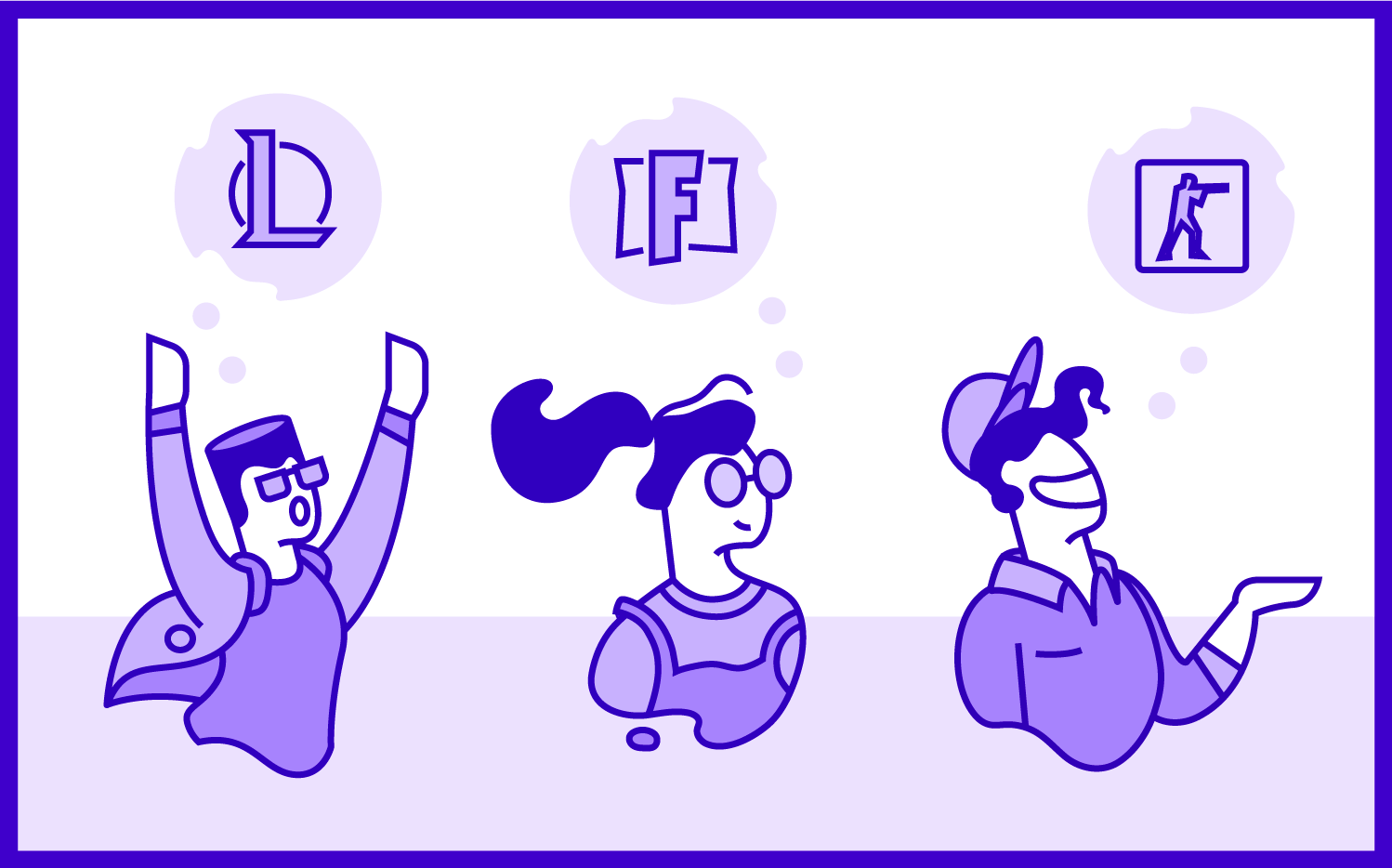
This fragmentation in gaming preferences requires a nuanced approach to retaining fan engagement. In our experience working with competitive platforms, we have seen that engagement rates can drop by up to 40% when a CS:GO fan is served content designed for a mobile-first Clash Royale player. Specificity is no longer a luxury; it is a retention requirement.
Tobias Egartner, CEO @ eStudios - "With GameTurnier the biggest community is in FIFA. Each gaming community has different behaviors. Before StriveCloud we had lots of complaints from the players. We needed a platform for FIFA behavior."
While the industry is often viewed as a monolith, research from the 2025-2026 WSC Sports Generational Fan Study highlights that fans now ignore formats that don’t match their specific gameplay behavior. Millennials—the most commercially valuable audience—are the most likely to disengage when content feels irrelevant. Furthermore, the 2026 Dizplai Anonymous Fan Index found that sports organizations only know 24% of their audience by name. This lack of data makes personalization impossible, leading one in three organizations to lose over US$1 million annually from unmonetized "anonymous" interactions.
Unlike traditional sports, fan loyalty in 2026 is increasingly fluid, often tied to individual streamers or specific game metas rather than a legacy team brand. Influencers bridge the gap between virtual and real-life sports; for example, FIFA fans prioritize content from real-world footballers and associated lifestyle brands. To succeed in retaining fan engagement, your strategy must be tailored to the specific social platforms and community hubs—be it Discord, Twitch, or TikTok—where each specific game community actually lives.
How eStudios solved the challenge of esports fan engagement through a personalized experience
TL;DR: To sustain esports fan engagement, platforms must transition from "anonymous" broadcasting to personalized, data-driven interactions. In our experience, failing to bridge this gap leads to immediate disengagement, particularly among Millennials—the most commercially valuable audience—who now demand content tailored to their specific behaviors. eStudios achieved this by leveraging a gamified, white-label solution to turn a frustrated community into a high-growth asset.
eStudios is a 360-degree Swiss esports startup focused on every aspect a brand needs to enter the gaming space. They also own GameTurnier, the largest gaming tournament platform in Switzerland. However, they faced a common industry hurdle: according to the Dizplai Anonymous Fan Index (January 2026), sports organizations typically know only 24% of their audience by name, leading to significant revenue leakage.
After testing several fan engagement technologies on the gaming tournament platform, they noticed friction within the FIFA community. User complaints revealed that a generic experience was driving players away. This broken UX didn't just frustrate gamers; it made it impossible for eStudios to deliver the measurable esports fan engagement data that 87% of sponsors now demand as a prerequisite for investment.
First, the platform needed a behavior-driven approach for designing a gamified user experience that lifts esports fan engagement. They required a system that could anticipate user needs and provide the 1-to-1 personalization that 2026 fans expect.
Furthermore, they needed a platform that works for multiple campaigns without requiring a total rebuild for every new brand partner.
That’s where StriveCloud comes in! StriveCloud’s white-label solution allowed eStudios to set up new platforms for their client portfolio in no time. Additionally, gamification experts helped analyze FIFA player behavior to create a frictionless experience. This is critical as the 2025-2026 WSC Sports Generational Fan Study highlights that irrelevant content is the primary driver for audience churn in the digital age.
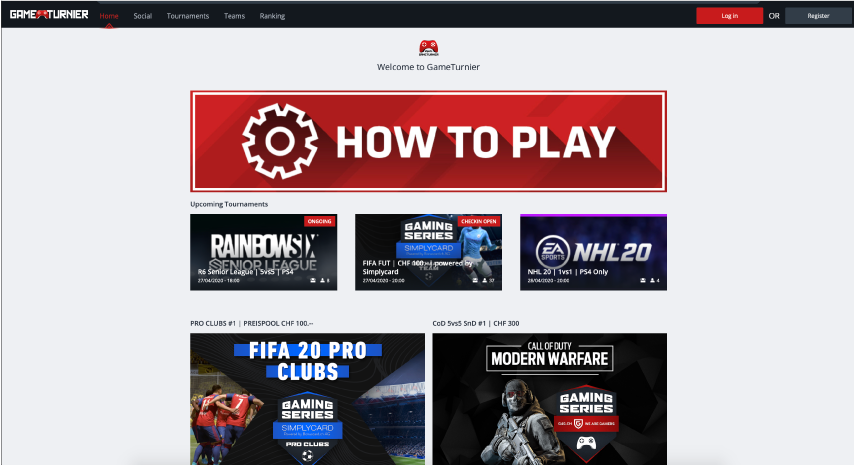
The new GameTurnier platform provides a clear overview for users, streamlining the process of finding and joining competitions while capturing vital first-party data.
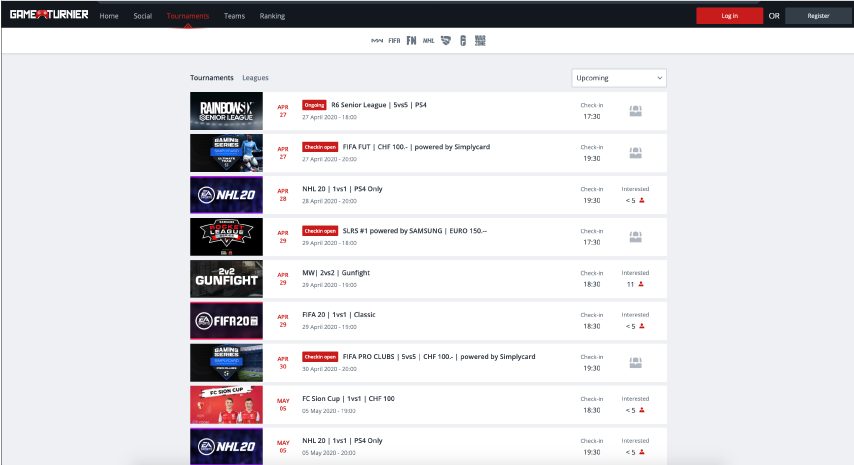
Drilling down into a specific tournament page, the design focuses on a frictionless experience, which was a key factor in improving community satisfaction and meeting modern esports fan engagement benchmarks.
Tobias Egartner, CEO @ eStudios - "We are really good at organizing FIFA competitions. StriveCloud is really good at making the platform work for the community."
The new platform launch was met with immediate acclaim, and in Tobias’ own words: “It was one of the best launches ever.”
The results were astonishing. By moving away from an "anonymous fan" model—which costs one in three organizations over US$1 million annually—Tobias and his team were able to build lucrative new partnerships with brands. The platform shift doubled their user growth and acquisition targets, securing over 4,000 hours of eyeball time in just two months with 600 weekly played competitions.
Nevertheless, they don’t plan to stop here. There is an even bigger opportunity to use StriveCloud in other campaigns to continue scaling their esports fan engagement strategy...

Discover how you can build a more engaging and active community platform with the right tools.
Read how you can engage users on your own community platform!
Why your fintech app needs a great loyalty system (and how to make one!)
Loyalty leaders grow 2.5x as fast as the competition! Don't fall behind - your fintech app can create loyal users with app gamification that allows you to fully unlock customer motivation.
Why your fintech app needs a great loyalty system (and how to make one!)
A well-designed loyalty system is crucial for user engagement and retention in modern fintech applications. If fintech companies want to scale user engagement, then they need a loyalty program optimized for mobile. Gone are loyalty cards in the wallet and receiving a coupon book in the post - today’s mobile world is all about innovation. What fintech apps today can do is use app gamification to motivate and boost user retention. If you make your app ‘sticky’, loyal customers will follow! As a bonus, this business model is easy to scale.
In the following article, let’s cover how app gamification can uplift a loyalty system for fintech that’s both cost-effective and highly scalable!
- Why a loyalty program is so important in fintech
- Where apps go wrong with loyalty programs
- 3 gamification features that improve user retention
- How app gamification can boost your fintech app
- Case study: the HumanForest loyalty system making London greener
- TLDR
Why a loyalty program is so important in fintech
There’s an old saying in business that says that it is more cost-effective to retain a customer than it is to convert a new one. Without a doubt, this adage on the importance of customer loyalty is as true today as when it was first said - research shows that loyalty leaders grow their revenues 2.5x as fast as their industry peers!
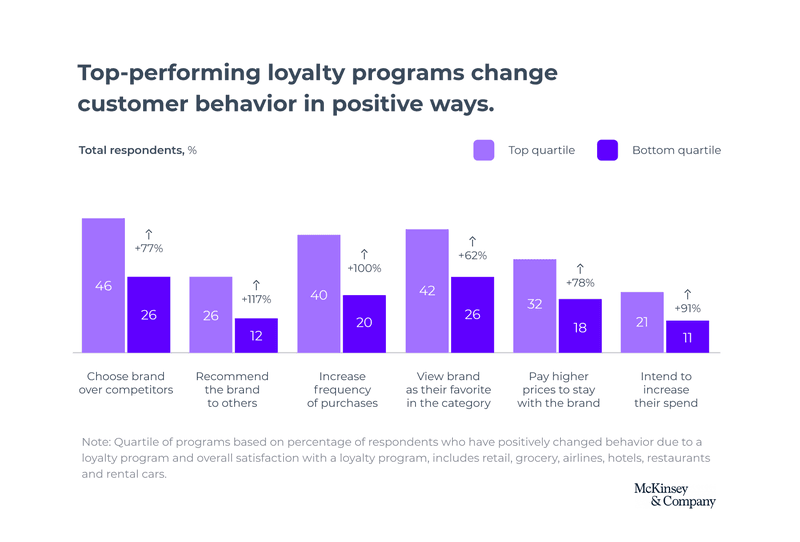
This chart illustrates that companies leading in customer loyalty experience significantly faster revenue growth compared to their peers. Loyalty programs typically reward users with points and discounts. By rewarding users for staying with you, you prove to them what their loyalty is worth. Remember, your customer’s lost loyalty is another company’s acquisition! A bank that offers a great sign-up deal might just poach a customer who sees no benefit from sticking with you.
An effective fintech loyalty program is possible - fintechs like Monzo and N26, for example, have built proprietary rewards ecosystems that boosted transaction volume by over 500%! But achieving user retention means giving users a real reason to stick around, which of course isn’t easy.
Want to increase loyalty like Revolut? Book a gamification workshop & go home with a roadmap tailored to your goals.
While the general app market has an annual retention rate of 35%, only three in ten consumers feel loyalty toward fintech brands. Indeed, banking does better, but those benefits tend to be consolidated among a well-established group. In fintech, full of new challengers, high churn rate is influenced by bad loyalty programs that negatively affect user retention.
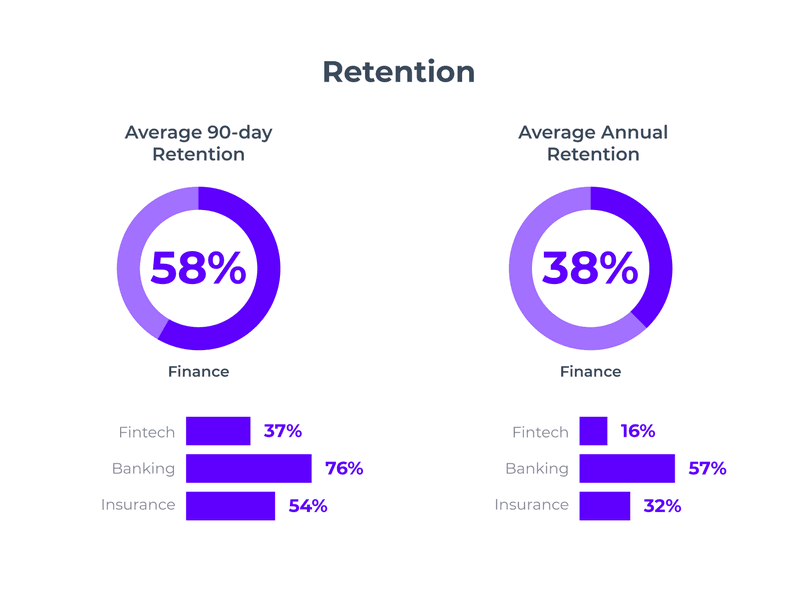
The data highlights the disparity in user retention rates between the general app market and the more challenging fintech sector.
Where apps go wrong with loyalty programs
Experts advise that the pitfalls of a bad loyalty system are far-reaching:
Account inactivity
Forbes notes that each inactive account can cost banks upwards of €100 a year.
Low redemption rates
Why put effort and money into creating loyalty perks, when redemption rates are low? Loyalty programs need to be influenced by regular user research to see what works.
High transaction costs
Suppose you choose to offer discounts in your loyalty program. Of course, they can work, but implemented poorly a 5% loyalty discount can lead to a 50% decrease in profits.
High system management costs
If your loyalty program isn’t scalable, you will be overspending on administration.
Low numbers of new and retained customers
When only three in ten consumers feel loyalty toward fintech brands, repeat customers are critical to the success of your business. Bad design can push users away!
The most common design issues are that the loyalty program is too expensive, not scalable, or is simply implemented poorly. However, even if you solve those fundamental problems, there’s one more thing you might have overlooked.
A big reason behind failed loyalty programs is an overemphasis on extrinsic motivation at the expense of intrinsic motivation. In short, extrinsic motivational factors are simple, they are blunt things like the need for results, the rush of winning, or the fear of losing. But it is intrinsic motivation, extrinsic motivation’s complex and powerful brother, that leads to long-term user retention, and gamification is how you create it.
3 gamification features that improve user retention
Long-term user retention comes down to creating the right motivation - and extrinsic motivation can only go so far. Extrinsic drivers trigger initial engagement and are crucial for the discovery phase. But to create user retention, customers need a little bit more and that’s where gamification comes in. By using game-like elements, you incentivize user behavior and give people the additional push they need to engage with your app.
What is gamification and how does it work exactly? Find out all the details on our What Is Gamification? page!

Balancing intrinsic and extrinsic motivators is key to creating a loyalty program that fosters long-term user engagement. Take these three gamification features, for instance. See how both extrinsic and intrinsic motivators help develop a user loyalty program that makes customers more active and engaged:
#1 Progress bars
Progress bars and statistics are a popular gamification feature on fintech apps, often used to help users track their savings (or get insight into their spending behavior).
Extrinsic motivation: Users get to see their savings account pile up cash. It’s a great way of self-rewarding, without the bank or fintech companies having to give out expensive prices or discounts. Basically, users are rewarded through their own saving behavior!
Intrinsic motivation: Seeing a progress bar fill up creates a feeling of growth and achievement. Users are motivated to work towards a clear goal, and even more so when they get to see the progress they’re making towards it! The farther users come to reaching their goal, the more motivated they will be to persist and thus stay active on your app.
#2 Challenges
Challenges are another powerful app gamification feature that fintech can use to activate its users. European bank OTP Banka Hrvatska, for instance, used challenges to motivate its users to complete a series of short product education videos.
Extrinsic motivation: Challenges prompt users to take action by setting a clear goal and sometimes adding a reward to it. Think of all the “30 days of doing X” challenges. The reward doesn’t have to be monetary, and can also just be achieving a set goal such as “increase your financial literacy”.
Intrinsic motivation: Users are driven by a desire to achieve a certain goal. As they complete more challenges, they’ll also feel a sense of personal progress and growth, which will only fuel their motivation more.
#3 Contextual notifications
Contextual notifications help users move forward in your app. Let’s say a user has a goal of saving a fixed amount per week, but continuously crosses the line. You might help them achieve their goal by sending a quick reminder. The same applies vice versa: a quick “good job” message can be a great way to reinforce positive user behavior and keep the user coming back.
Extrinsic motivation: notifications always make the next step clear to users. It helps them to stay focused and achieve their goals faster on your app.
Intrinsic motivation: notifications provide instant feedback to users, and can positively reinforce them to continue on the right path, or quickly help them learn and adjust.
How app gamification can boost your fintech app
Knowing what gamification is, represents just one part of the journey - you also need to know how to implement your desired features in your loyalty program! They need to work together, be consistent with your platform, and be easily adjustable to the customer feedback you’ll get upon release. The solution to those necessities is a building blocks system.
This is an app development method that’s flexible, malleable, and intuitive to use - simply drag, drop, and adjust the blocks into your app’s inner workings and the possibilities are endless. To learn more about the StriveCloud building blocks app gamification that can power your app, read our blog post on how exactly it works.
Case study: the HumanForest loyalty program making London greener
HumanForest is a London-based shared mobility company with the aim of making transportation emission-free! The app successfully promotes ecological behavior using the building blocks from StriveCloud. We helped the HumanForest team develop a gamification strategy based on their goals. By leveraging our app gamification building blocks, they spiced up the user and brand experience. This method even articulated their brand mission.
These are a few features that have transformed the HumanForest loyalty system:
An in-game currency that incentivizes green transportation
Using building blocks allows HumanForest to introduce elements one by one, and the in-game currency was one of the first that HumanForest decided to integrate. HumanForest’s TreeCoins are unique in that they represent how many trees worth of CO2 you have saved by riding an e-bike! This visualization makes the currency feel much more tangible – and in turn a more valuable achievement.
Leaderboards that rank how many trees users have saved
HumanForest ranks every user in the community, based on the TreeCoins they’ve collected. Needless to say, this makes users feel more motivated! The sense of competition in the customer community motivates users to participate. The genius of using building blocks is how easy it is to implement new features like the leaderboard that complement existing ones like the TreeCoins. As a result of this strategy, the user benefits from a consistent and streamlined user experience.
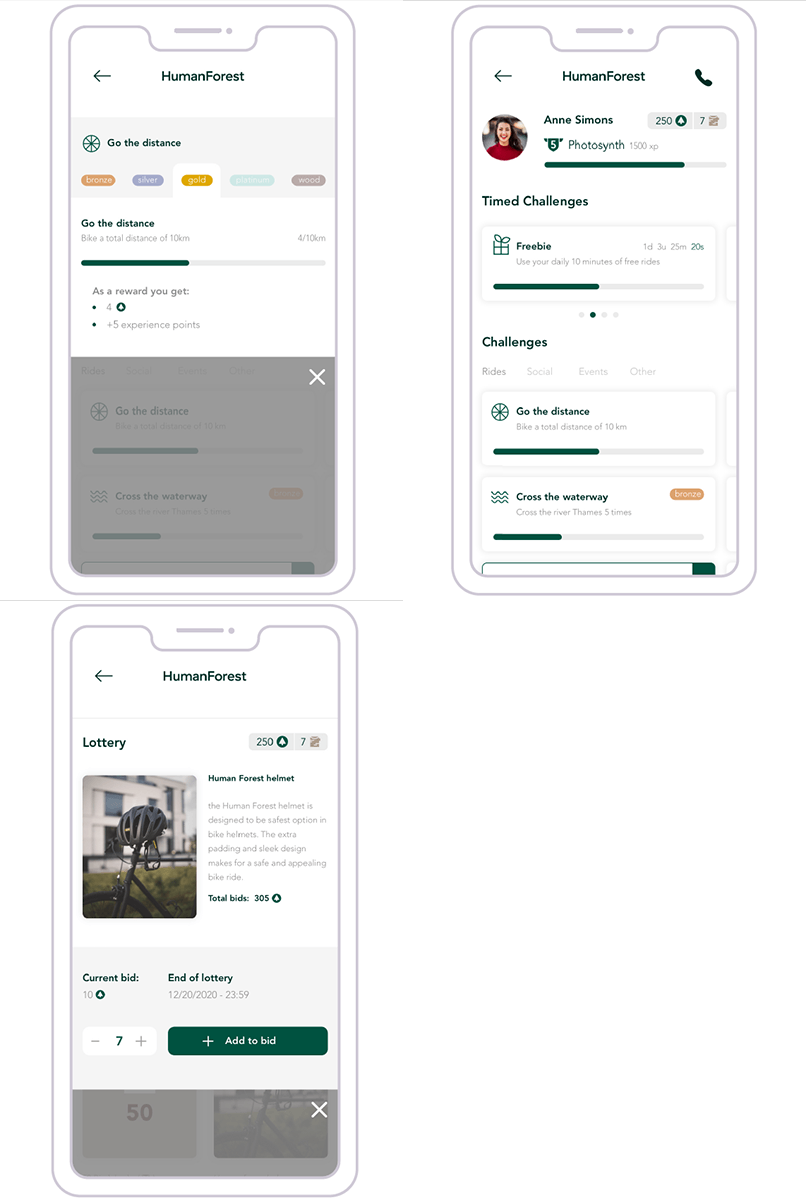
The results for HumanForest? Success! An amazing 35,000 Londoners are using the platform to make their travel greener – benefitting themselves, the city, and the planet. In view of their achievements, HumanForest is valued at an exciting €37.7 million, and their satisfying user experience promises to make the app a major player in the e-bike/mobility market across Europe.
TLDR
- Research shows that loyalty leaders grow revenues 2.5x as fast as their peers.
- App gamification can guide the journey in optimizing your platform.
- Fintech loyalty propositions in 2025 drive engagement toward rewards, with currency consolidation partnerships seeing a 500%+ transaction volume increase!
- But that success is rare - only three in ten consumers feel loyalty toward fintech brands, with even fewer actively demonstrating it.
- Bad loyalty programs face low switching costs for unsatisfied members, prompting brands to increase switching barriers via better loyalty systems in 2026!
- Gamification improves your loyalty system by providing intrinsic motivation.
- Intrinsic drivers are crucial for long-term user retention & loyalty.
- You can create both extrinsic and intrinsic motivation with gamification features such as progress bars, challenges, and contextual notifications.
- An easy and flexible way to implement these features is with in-app gamification building blocks such as the one by StriveCloud.
- HumanForest has used our app gamification to succeed - creating a loyal community of 35,000 across London alone
Looking to drive user motivation on your app? Discover our app gamification building blocks!

This icon introduces the focus of the webinar: capturing audience attention through gamification.
How to win the attention of a distracted audience and maximize engagement using #gamification

The webinar presenter Freek Borghgraef is featured here, ready to discuss modern engagement strategies.
As the digital space turns into a saturated space, grabbing and keeping people’s attention is one of the hardest things marketers today need to accomplish. Brands and organisations are no longer competing in their own market segment, but compete against every other entertainment source for a moment of attention.
So how can modern marketers win back the attention of a distracted audience and maximize engagement? The answer is simple. By gamifying the digital experience.
Join us for this on demand webinar hosted by Vlerick Business School to learn about the different gamification tactics you can start applying now to get your audience attention and inspire them to interact with your brand or organization. We tackle:
- Why the product or service alone is no longer enough if you want to keep your audience engaged
- How gamification moves the needle between intrinsic and extrinsic motivation to maximize engagement
- How you can use game dynamics to spark emotions
- How you can use game mechanics to inspire action
- A brief look into the The Hook Canvas: a tool from the book ‘Hooked’ by Nir Eyal explaining how habits are formed, and engaging products are built
- A practical example: Zack’s journey from a young bystander to an active supporter on a gamified digital experience on StriveCloud
More resources
Webinar Slides →
About the presenter

This is a portrait of Freek Borghgraef, the co-founder of StriveCloud and Kayzr.
Freek Borghgraef
Co-founder @StriveCloud and @Kayzr
Freek is a serial entrepreneur and one of the co-founders of Kayzr and StriveCloud. He is currently leading the Customer Development and Strategic Partnership teams for both companies. He built from ground up both companies, and by doing so, he scaled Kayzr to a community of over 100k users, and launched memorable activations for brands and sports organisations by putting gamification at the core of the user experience.
About the host
Vlerick Business School
Vlerick Business School is a triple-accredited, international business school at the heart of Europe – ranked number one in the Benelux for executive education and 19 in Europe.
Want to learn how modern marketers are using StriveCloud to create engaging digital activations?