
Dive into top reads
Top 10 challenges that 2023 will bring to micromobility operators
Micromobility has always been a high-growth market. However, after a pandemic and economic downturn, mobility operators now have to focus on profitability. So what's different? And how will this shape 2023 for shared mobility? Let's take a look at 10 hurdles mobility operators will have to overcome this year!
Top 10 challenges that 2023 will bring to micromobility operators
Micromobility is set to expand in 2023, but the year will add extra challenges for mobility operators. Before, the market was all about growth. But as the market matures, profitability is becoming more important. Despite this shift, there are still many growth opportunities for mid-sized shared mobility companies!
In this article, let’s explore the top 10 challenges in micromobility today - and how you can overcome them to achieve sustainable growth.
- A quick look at micromobility in 2023
- Top 10 challenges for micromobility operators (and where to find growth)
- 3 tools to combat the challenges in micromobility
- FAQs
A quick look at micromobility in 2023
Over the past few years, micromobility has experienced incredible growth. In 2020, the global e-scooter mobility market was valued at $1.17 billion. In 2022, that number rose to $1.5 billion. But 2023 will bring some significant challenges.
What’s different in 2023?
Many mobility operators have been growing at the expense of their profitability. But now that economic conditions are changing, that’s a big problem. In short, the easy money has vanished. Post-pandemic, venture funds now want to see operators with a reliable cash flow.
From the pandemic to an economic downturn
Take market-leading e-scooter operator Bird for example. Last year, in an effort to become more profitable, the mobility operator laid off 23% of their staff and pulled out of Sweden, Germany, and Norway. On the other side of that, companies that aren’t scaling down are simply being bought out. In March 2022, Berlin-based Tier Mobility bought e-scooter operator Spin.
Top 10 challenges for micromobility operators (and where to find growth)
#1 City authorities are getting more involved
Why are cities interested in micromobility? Well, cities want to reduce traffic and meet climate change goals. But authorities are also finding that micromobility makes economic sense too. In 2019, Copenhagen officials reported that the city earns €0.64 for every kilometer traveled by micromobility, yet it loses €0.71 for those traveling by car.
As a result, authorities are regulating micromobility to meet their needs. For instance, Paris allows only 3 mobility operators. And because Paris is such a lucrative market - home to 1.2 million e-scooter riders in 2022 - this gives the city the power to implement rules like speed limits and mandatory parking bays without mobility operators leaving.
But working with city authorities can also create opportunities for a successful partnership. Research shows that when cities build new infrastructure such as bike lanes, micromobility ridership jumps by as much as 48%.
#2 Stiff competition makes it hard to differentiate your brand
Not every city is as regulated as Paris. Indeed, Brussels is home to 7 e-scooter mobility operators. This makes it extra hard to differentiate your brand. To an average consumer, the only thing that seems to separate these companies is the color of the scooter!
To set your product apart in a profitable way, you must create a unique brand identity and customer experience. When you look at Lime, they play on their innovation. But Voi prefers to lead with convenience, offering a way to travel “conveniently without compromising the environment”.
#3 Age restrictions can keep young people away
Young people are a valuable target market. A Dutch study found that young consumers are more likely to adapt to new mobility habits and are less likely to already own a car. But many lawmakers have introduced age restrictions on riding e-scooters. In places like The Netherlands and Spain, you must be at least 16 to ride an e-scooter.
For mobility operators, this can mean performing a balancing act. While you must prevent young people from accessing a scooter, you don’t want to tarnish your brand in the process and appear inaccessible. After all, these young consumers will eventually become of age. To be sure, solving this challenge can help you lock in a future audience.
#4 Keeping customers engaged over a longer time period
In micromobility, the extent of a customer’s relationship with you often stops when they park up. But you can go further than that. You want to stay top-of-mind whenever customers need a way to get around. One way to do that is through a gamified loyalty system. Voi for instance promises riders they can “ride more, pay less”.
#5 It’s tough to stay top of mind
When cities offer so many mobility options, how can mobility operators remain both a viable and prominent choice? Clearly, it’s not feasible to put a scooter on every corner. One way to stay top of mind is with a powerful, holistic brand message like HumanForest. The app is all about sustainability, and it gets this across with things like gamified in-app coins that represent how many trees worth of CO2 you have saved. Now that’s a positive feeling that customers can take away with them!
#6 Fleet management eats into your time and budget
When your scooters are scattered randomly all over the city, that’s a recipe for low rates of vehicle utilization. In the end, this brings down your profit and perceived availability. Market studies find that for a typical ride costing €3.50, around €1.70 of that total goes to operations and charging.
How do you solve this? Some mobility operators, like Streetcrowd, are overcoming the problem by rewarding customers for parking vehicles in more optimal locations.
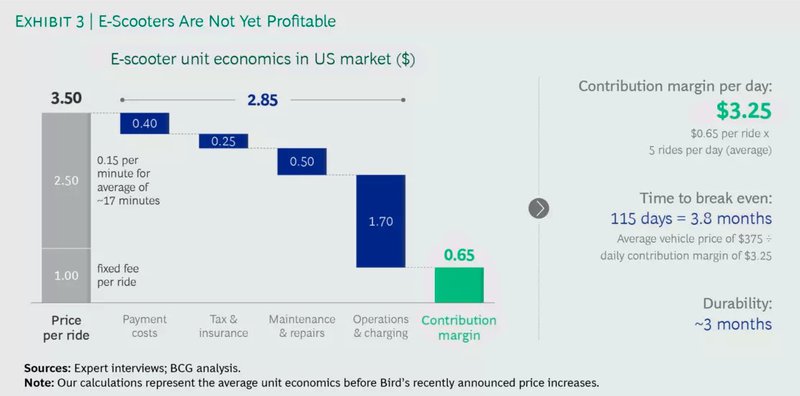
This graph illustrates how a significant portion of revenue is consumed by operational costs, highlighting the industry's profitability challenges.
#7 The struggle for profitability
According to a 2021 report by North American transport officials, the price of a micromobility trip has more than doubled since 2018. Despite this, profit margins have actually gone down. The expensive nature of this market along with the steep competition makes it nearly impossible for mobility operators to compete on price.
Naturally, this drives the push for profitability. Luckily, a great customer uexperience can help you both attract new (and younger) audiences, but also build a loyal customer base. After all, loyal customers spend more and more often!
How to drive profitability? Boost total revenue per customer with your own gamified loyalty program! Get inspired by these real-life examples!
#8 People are buying their own vehicles
Cheaper and better scooters are great for everyone. But it presents another challenge for mobility operators. People across Europe are buying their own private vehicles. In France, private scooter ownership shot up 42% between 2020 and 2021. Your marketing could play on the challenges that come with owning or using your own vehicle. Such as parking, insurance, or maintenance.
#9 Getting people to change their mobility habits
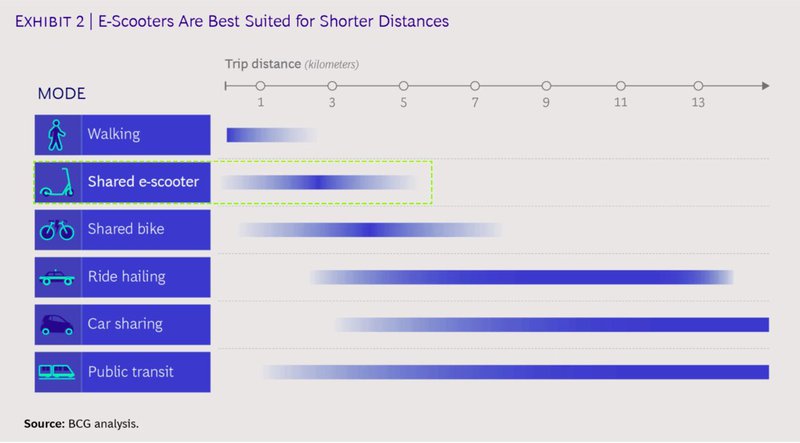
At the end of the day, people just want a safe, fast, and convenient way to get from A to B. As a result, people are unlikely to choose you if their destination is too far, public transit is faster - or worse if a competitor has a vehicle closer by.
To incentivize people to change habits, you need to do some habit-forming of your own! By rewarding customers whenever they use your mobility service, you create a positive reinforcement loop, leaving them wanting more. You basically incentivize people to take more rides. For example, by rewarding customers through points that they can exchange for free riding minutes. Why would they not use their free-riding minutes the next time?
With gamification, that goes beyond just discounts! You can introduce elements such as leaderboards, challenges, and leveling systems to build an active customer base. HumanForest for instance has built a community of CO2 savers using gamification.
#10 Providing direct and instant customer support
The past few years have changed customer support drastically:
- 75% of consumers plan to keep using new channels like live chat since trying them for the first time during the pandemic
- 76% of consumers want phone support when dealing with complex issues like product malfunctions
- 54% of high-performing companies have seamless omnichannel support, compared to just 20% of low-performing companies
What does this mean for mobility operators? While customer support can be costly - by some estimates it can set you back 10-15% of revenue - it is a crucial part of your service. Learning to be proactive, for example by spotting faulty scooters before they crop up during a customer’s journey, can both reduce costs and foster customer loyalty.
3 tools to combat the challenges in micromobility
StriveCloud
StriveCloud is a gamified loyalty platform designed to help mobility operators sell more trips. Differentiate yourself from competitors with in-app rewards that incentivize customers to keep coming back. The variety of fun features like challenges, leaderboards, or levels will improve the experience and help you to stay top-of-mind whenever customers need a ride!
Michael Stewart @HumanForest - "What’s really unique about StriveCloud compared to a regular loyalty program or customer marketing is that your customer’s experience is inside the app, at the moment they are using it. That really helped us fulfil our brand message, in a fun and engaging way."
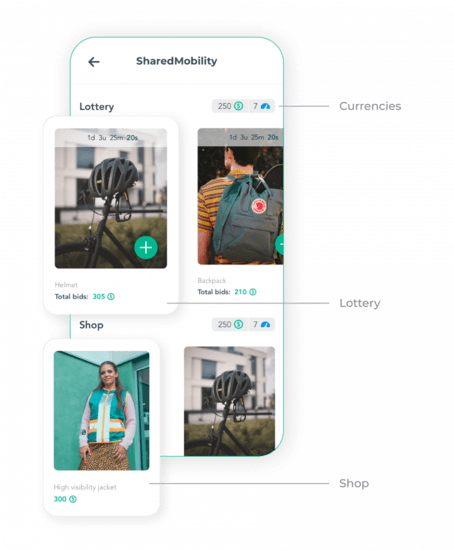
The StriveCloud platform provides an array of gamified features designed to enhance user engagement within a mobility app.
Use in-app rewards to boost the number of trips per customer! Discover how our gamified loyalty software helps mobility operators achieve sustainable growth.
ElectricFeel
Based in Switzerland, ElectricFeel lets you run everything you need for your business from one dashboard. With the ability to control your fleets in real-time, issues like fleet rebalancing become less of a snag.
Wunder Mobility
Wunder Mobility is a complete white-label solution to help vehicle-sharing companies, launch, manage, and scale their operations. Whether you’re using scooters, mopeds, bikes, or cars, Wunder has got you covered! To this day, over 40 million rides have been shared in 200+ cities!
What makes Wunder Mobility even better is its library of integrations & add-ons designed to improve your vehicle-sharing service! We should know, check out our integration with Wunder here!
FAQs
Why will 2023 bring up challenges for mobility operators?
Many mobility operators have historically focused more on growth than profitability. Now that economic conditions are changing, that’s a problem. In short, the easy money has vanished. Post-pandemic, venture funds now want to see operators with a reliable cash flow.
How can mobility operators work with city authorities to grow?
City officials know that micromobility journeys actually make them more money, especially compared to car journeys. Given this, mobility operators should be partnering with cities to encourage the building of new infrastructure which can boost micromobility ridership by as much as 48%.
How can micromobility platforms make using their app a habit?
To promote habit formation, use the power of gamification. Features like points, levels, and leaderboards can create ‘intrinsic motivation’. This is when customers want to use your app because they feel rewarded and satisfied. Studies show that this promotes habit formation!
Top 25 user growth experiments designed to boost SaaS user activation rate
Want to boost activation? Get started with these 25 growth experiments! Discover how user activation can boost onboarding, feature adoption & trial to paid conversion for your own SaaS!
Top 25 user growth experiments designed to boost SaaS user activation rate

TL;DR: To maximize your SaaS user activation rate in 2026, prioritize interactive guided walkthroughs (proven to boost activation by 47%) and high-clarity copy optimizations (driving 29% higher conversion). Modern growth teams are moving away from passive tours in favor of intent-based, gamified onboarding flows.
Building a sticky product is the dream of every SaaS, but it’s not easy. In 2026, it requires you to always be tweaking and improving your strategy to activate new users and turn them into loyal ones. Some have suggested gamified onboarding, others recommend personalized notifications or interactive tooltips. However, the right strategy depends entirely on your specific user intent! Based on recent SaaSFactor analysis, optimizing onboarding copy and flow clarity can result in a 29% increase in activation rates. In our experience, shifting from passive "AHA moment" videos to interactive guided walkthroughs provides a 47% boost in user activation by involving the user in the process immediately. With this in mind, we at StriveCloud have collected 25 user growth experiments to lift up your SaaS user activation rate and boost user engagement!
- How to define the activation point for your SaaS product
- 25 user growth experiments to start optimizing
- 7 user growth experiments for new user onboarding
- 6 user growth experiments to improve feature adoption
- 6 user growth experiments that boost trial to paid conversions
- 5 user growth experiments to enhance personalization
- FAQ
Track user activation rate by defining your AHA-moment
TL;DR: To maximize your user activation rate, you must identify the specific actions where users first extract value. In our experience, shifting from passive tours to interactive, task-based walkthroughs can drive a 47% boost in activation, while refining onboarding copy for clarity typically yields a 29% lift in conversion. Activation isn't a single event, but a journey from perception to adoption through targeted user growth experiments.
In reality, there is no one activation event. However, activation takes 3 steps. Firstly, the perception of value. Then, the experience of value. And finally full product adoption. But what facilitates those activation points are defined by your product's key tasks. By running continuous user growth experiments, we have found that the "Aha! Moment" is often simpler than teams expect, yet requires precise guidance to reach.
Take a project management SaaS for instance. Their activation point might be when a user creates a new project. However, recent 2025 SaaSFactor analysis suggests that onboarding copy and flow optimizations—specifically focusing on messaging clarity—can lead to a 29% increase in activation rate. By conducting these user growth experiments, you might find that the true driver is actually inviting a collaborator or completing a first task, rather than just project creation.
User activation rate = Activated users / Total registered users * 100
In short, experiments will help you reveal the tipping points with the highest user activation rate. In our experience, replacing passive product tours with interactive, guided walkthroughs can result in a 47% boost in activation rates. In other words, you can use these insights to motivate the behaviors that lead to more user engagement and significantly higher customer lifetime value!
What’s a good user activation rate? Check out our ultimate SaaS user activation guide & start optimizing!
25 user growth experiments to start optimizing
TL;DR: In 2026, the most effective user growth experiments prioritize interactive "learning-by-doing" over passive tours. Key data points show that optimizing onboarding copy now yields a 29% activation lift, while replacing passive tours with interactive walkthroughs can boost rates by 47%.
Through extensive research, we have determined 25 user growth experiments to lift up your user activation rate today! These tests focus on the 2026 "Value-First" framework. Moreover, each experiment comes with an updated ICE prioritization score (Impact, Confidence, Ease) which will help you find the best tests for your specific growth goals.
7 User growth experiments for new user onboarding
#1 Tweak the onboarding copy
In our experience, copy is the highest-leverage lever in your user growth experiments. A good piece of copy can make a new user like your product, but to succeed in 2026, you need clarity and resonance. For example, recent 2025 analysis of SaaS A/B tests found a 29% increase in activation rates from optimizing onboarding copy and flow messaging to be more personality-driven and benefit-focused.
Our score:
- Impact - 8
- Confidence - 8
- Ease - 9
- ICE score - 83%
Want to calculate your own ICE score? Get our Free Growth Experiment Planning Tool!

This example of onboarding copy demonstrates how clear and concise messaging can guide new users effectively toward their first "AHA" moment.
#2 Celebrate quick wins during onboarding with gamification
Onboarding shouldn’t be a chore! We’ve found that the best user growth experiments keep users in an engagement loop of action and rewards. By using a gamified approach, you can celebrate wins through confetti screens or badge achievements. While older tactics focused on simple traffic spikes, modern leaders like AddThis use real-time triggers to notify users when they reach specific engagement milestones, turning passive users into active advocates.
Our score:
- Impact - 8
- Confidence - 8
- Ease - 8
- ICE score - 80%
Want to calculate your own ICE score? Get our Free Growth Experiment Planning Tool!
#3 Personalize onboarding to your user personas
Take advantage of user personas and match onboarding to complement each profile. When you segment users, you can customize onboarding for their unique roles & perspectives. In our experience, personalized user growth experiments that speak directly to a user's "Job-to-be-Done" consistently lead to higher app engagement compared to generic "one-size-fits-all" flows.
Our score:
- Impact - 8
- Confidence - 8
- Ease - 7
- ICE score - 77%
Want to calculate your own ICE score? Get our Free Growth Experiment Planning Tool!
#4 Feature video product tours to create the AHA Moment
Video can massively impact your user activation rate! Current 2026 industry benchmarks indicate that 82% of people prefer video as their primary way of getting to know a new product or service. This helps scale time for your sales and success teams. For instance, Basecamp uses a concise instructional video to explain the basics, reducing the friction typical of text-heavy manuals.
Our score:
- Impact - 7
- Confidence - 6
- Ease - 4
- ICE score - 57%
Want to calculate your own ICE score? Get our Free Growth Experiment Planning Tool!

The LifeWorks app onboarding shows how a guided, visual experience can improve user engagement from the very first session.
#5 Customize your user interface based on product goals
When you have a multifunctional product, you must find the user's focus during onboarding. User growth experiments like those at Hellobar allow users to customize the interface by selecting specific goals first. This "choose-your-own-adventure" style ensures users only see the features relevant to their immediate needs, preventing feature fatigue.
Our score:
- Impact - 7
- Confidence - 8
- Ease - 3
- ICE score - 60%
Want to calculate your own ICE score? Get our Free Growth Experiment Planning Tool!
#6 Create gamified progress bars to improve onboarding completion
As a progress bar fills up, users receive instant feedback and a sense of momentum. This is crucial because a perceived longer onboarding leads to higher churn. LinkedIn remains a classic gamified onboarding example; in our experience, this single feature continues to be the gold standard, having historically boosted profile completion rates by 55%.

LinkedIn's profile completion bar is a classic example of using gamified progress to motivate users to provide more information.
Our score:
- Impact - 7
- Confidence - 9
- Ease - 8
- ICE score - 80%
Want to calculate your own ICE score? Get our Free Growth Experiment Planning Tool!
#7 Add a sense of endowed progress to boost user motivation
When providing a checklist, try crossing out the first two steps automatically (e.g., "Account Created"). Giving users a headstart motivates them to complete the challenge. This is one of the most effective user growth experiments for 2026, as checklists can increase user activation rate and completions by upwards of 10% simply by leveraging the Goal Gradient Effect.
Our score:
- Impact - 7
- Confidence - 8
- Ease - 10
- ICE score - 83%
Want to calculate your own ICE score? Get our Free Growth Experiment Planning Tool!
6 User growth experiments to improve feature adoption
#8 Nudge users with subtle tooltips
Pushing users too hard can provoke 'Reactance,' where users do the opposite of your goal. In our experience, the best user growth experiments for feature adoption involve subtle, non-intrusive tooltips that appear only when a user interacts with a related element for the first time.
Our score:
- Impact - 8
- Confidence - 8
- Ease - 7
- ICE score - 77%
Want to calculate your own ICE score? Get our Free Growth Experiment Planning Tool!
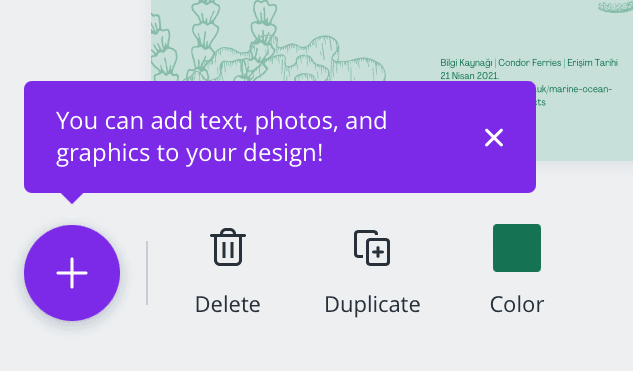
Subtle tooltips, as shown here, can guide users towards new features without disrupting their workflow, boosting app engagement.
#9 Add gamified challenges to boost new feature adoption
Leverage gamified features like challenges and rewards to boost app engagement on secondary features. We’ve seen that rewarding a user for "trying X for the first time" can increase adoption rates for that specific feature by up to 25% within the first week of release.
Our score:
- Impact - 8
- Confidence - 7
- Ease - 7
- ICE score - 73%
Want to calculate your own ICE score? Get our Free Growth Experiment Planning Tool!
Building a gamified experience has never been easier – Add, track & tweak your gamification strategy with 1 solution!
#10 “Getting started” emails can hype up certain features
Lifecycle emails should not just be "check-ins." They are critical user growth experiments that provide a bridge to the 'AHA Moment.' By highlighting one specific feature per email, you reduce cognitive load and provide a clear path to increased app engagement.
Our score:
- Impact - 7
- Confidence - 7
- Ease - 10
- ICE score - 80%
Want to calculate your own ICE score? Get our Free Growth Experiment Planning Tool!
#11 Create interactive walkthroughs
Interactive walkthroughs are the "gold standard" of user growth experiments in 2026. A recent case study by SaaSFactor revealed a 47% boost in activation rates when interactive walkthroughs replaced passive tours. By making the user perform the action rather than watching it, you ensure they truly understand the product's value.
Our score:
- Impact - 9
- Confidence - 8
- Ease - 4
- ICE score - 70%
Want to calculate your own ICE score? Get our Free Growth Experiment Planning Tool!
#12 Introduce rewards to encourage feature adoption
Incentives work! Asana's flying unicorn is a famous example of how small delights can drive app engagement. In our experience, even non-monetary rewards like exclusive badges or community status can significantly increase the frequency of feature usage among power users.
Our score:
- Impact - 8
- Confidence - 8
- Ease - 7
- ICE score - 77%
Want to calculate your own ICE score? Get our Free Growth Experiment Planning Tool!

Asana's celebratory unicorn is a perfect illustration of how a simple, fun reward can increase task completion and overall app engagement.
#13 Use in-app communities to promote new features
In-app communities foster peer-to-peer learning. User growth experiments that leverage communities, like Intercom’s forum, allow you to collect feedback and identify power users. By featuring a leaderboard of top contributors, you use social status to drive deeper app engagement and feature discovery.
Our score:
- Impact - 8
- Confidence - 7
- Ease - 4
- ICE score - 63%
Want to calculate your own ICE score? Get our Free Growth Experiment Planning Tool!
Get activating with gamification! Book a custom workshop & go home with an actionable roadmap!
6 User growth experiments that boost trial to paid conversions
#14 Leverage “stored value” to keep users coming back
The more data a user puts into your platform, the higher their switching costs. User growth experiments at Salesforce and Notion focus on "stored value." When a user builds their workflow inside your tool, the product becomes exponentially more valuable, making the transition to a paid plan feel like a natural investment.
Our score:
- Impact - 9
- Confidence - 8
- Ease - 4
- ICE score - 70%
Want to calculate your own ICE score? Get our Free Growth Experiment Planning Tool!
#15 Offer the opportunity to extend free trials
Don't let a trial end just because the clock ran out. Instead, use gamified trial extensions as part of your user growth experiments. Offer a 7-day extension in exchange for completing a specific milestone, such as inviting a teammate or integrating an API. This ensures the user is actually getting value before the paywall hits.
Our score:
- Impact - 8
- Confidence - 9
- Ease - 7
- ICE score - 80%
Want to calculate your own ICE score? Get our Free Growth Experiment Planning Tool!

This example from Navexa shows how offering a trial extension in exchange for profile completion is a smart, gamified growth experiment.
#16 Use social proof to build credibility
Social proof is more vital than ever; current studies show that 92% of users trust reviews and testimonials. Nudge your users toward conversion by showcasing case studies from peers in their specific industry. In our experience, targeted social proof during the final days of a trial can increase conversion rates by 12%.
Our score:
- Impact - 8
- Confidence - 9
- Ease - 8
- ICE score - 83%
Want to calculate your own ICE score? Get our Free Growth Experiment Planning Tool!
#17 Keep some features locked during trial
Try a user growth experiment around gated access. Offering a gamified "unlock" for advanced features can drive deeper exploration. For instance, allow users to "earn" a premium feature for 24 hours by reaching a certain usage milestone, which provides a risk-free taste of the paid experience.
Our score:
- Impact - 8
- Confidence - 7
- Ease - 6
- ICE score - 70%
Want to calculate your own ICE score? Get our Free Growth Experiment Planning Tool!
#18 Trigger a sense of urgency by sending follow up emails
Urgency is a powerful psychological trigger. In our experience, sending a "24 hours remaining" email that highlights the specific progress a user stands to lose (Loss Aversion) is one of the most effective user growth experiments to drive last-minute conversions.
Our score:
- Impact - 6
- Confidence - 8
- Ease - 9
- ICE score - 77%
Want to calculate your own ICE score? Get our Free Growth Experiment Planning Tool!
#19 Use scarcity & exclusivity to power up demand
Scarcity remains a potent motivator for user activation rate. Whether it’s an exclusive beta invite or a limited-time bonus for early adopters, people are highly motivated by loss avoidance. Superhuman’s invite-only strategy is a prime example of how exclusivity can build a massive, highly engaged waiting list.
Our score:
- Impact - 8
- Confidence - 8
- Ease - 4
- ICE score - 67%
Want to calculate your own ICE score? Get our Free Growth Experiment Planning Tool!
6 user growth experiments to enhance personalization
#20 Personalized notifications provide unparalleled customer value
The future of user growth experiments lies in hyper-personalization. Notifications should be based on real-time behavior, not generic schedules. If a user hasn't finished a project, a personalized nudge mentioning that specific project name will always outperform a generic "Come back" message.
Our score:
- Impact - 10
- Confidence - 9
- Ease - 6
- ICE score - 83%
Want to calculate your own ICE score? Get our Free Growth Experiment Planning Tool!
#21 Greet existing customers with a personalized message
Relationship-driven user growth experiments focus on retention. Simple gestures like Gusto’s "Welcome back, [Name]" create a sense of belonging. In our experience, tailoring the dashboard to show a user's most-used features upon login can decrease session abandonment by 15%.
Our score:
- Impact - 5
- Confidence - 6
- Ease - 10
- ICE score - 70%
Want to calculate your own ICE score? Get our Free Growth Experiment Planning Tool!
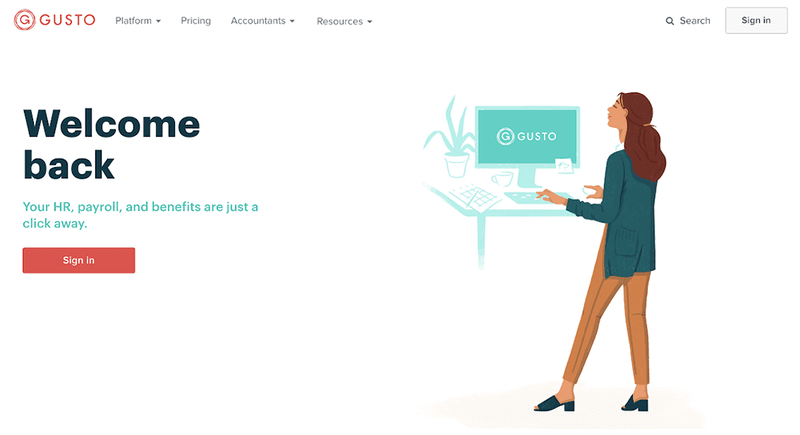
Gusto's personalized greeting is a simple yet effective technique that helps build a stronger customer relationship and improves user retention.
#22 Retargeting campaigns can catch lapsing users
Personalized retargeting ads are significantly more effective than standard displays. Use data from the onboarding phase to show ads that solve the specific hurdle the user encountered. This targeted approach can lift app engagement among dormant users by addressing their unique friction points directly.
Our score:
- Impact - 7
- Confidence - 9
- Ease - 7
- ICE score - 77%
Want to calculate your own ICE score? Get our Free Growth Experiment Planning Tool!
#23 Give product recommendations based on user activity
Make the experience feel unique to every user. Recommend features based on previous clicks—if a user uses your reporting tool, suggest the automated scheduling feature next. In our experience, relevant recommendations are the foundation of 2026 user growth experiments, driving both retention and expansion revenue.
Our score:
- Impact - 9
- Confidence - 9
- Ease - 6
- ICE score - 80%
Want to calculate your own ICE score? Get our Free Growth Experiment Planning Tool!
#24 Leverage user engagement for progressive profiling
Avoid overstimulating users with a 20-field form. Instead, use progressive profiling to collect data over time. This approach can improve conversion in every stage by as much as 20%. By only asking for what you need at that moment, you keep the friction low and the user activation rate high.
Our score:
- Impact - 9
- Confidence - 10
- Ease - 6
- ICE score - 83%
Want to calculate your own ICE score? Get our Free Growth Experiment Planning Tool!
#25 Webinars can answer a customer’s burning questions
In 2026, interactive webinars are vital for B2B SaaS. They offer a human touch in an automated world. Use these as user growth experiments to address common churn reasons. In our experience, users who attend a live demo or Q&A during their first week have a 40% higher activation rate than those who don't.
Our score:
- Impact - 8
- Confidence - 7
- Ease - 7
- ICE score - 73%
Want to calculate your own ICE score? Get our Free Growth Experiment Planning Tool!
FAQ
TL;DR: In 2026, a high SaaS user activation rate is driven by immediate time-to-value and interactive onboarding. Recent data shows that optimizing copy can lead to a 29% increase in activation, while switching from passive tours to interactive walkthroughs can boost rates by up to 47%.
How to define the activation point?
In reality, the ultimate activation point for your SaaS user activation rate is the specific milestone where a user realizes the core value of your product (the "Aha! Moment"). Identifying this requires conducting rigorous user growth experiments focused on different user actions. In our experience, the most successful companies define this point not just by a login, but by the completion of a "key functional event"—such as a first successful data export or team invite—that correlates directly with long-term retention.
What is user activation rate?
You can calculate the SaaS user activation rate by dividing the number of users who reach your predefined activation point by the total number of registered users during a specific period, then multiplying by 100. For example, if 1,000 users sign up and 250 complete their first project, your activation rate is 25%. Modern benchmarks suggest that top-tier SaaS platforms aim for activation rates above 35%, though this varies by industry and product complexity.
Why do I need to do user growth experiments?
Achieving sustainable growth requires constant iteration to reduce friction in the user journey. To maximize your SaaS user activation rate, you must test variables like email cadence, UI layout, and messaging clarity. According to a 2025 SaaSFactor analysis of A/B tests, onboarding copy and flow optimizations resulted in a 29% increase in activation rates for B2B platforms. These user growth experiments allow you to move beyond guesswork and deploy strategies backed by proprietary behavioral data.
How can gamification drive user growth for SaaS?
Gamification drives your SaaS user activation rate by transforming mundane setup tasks into rewarding experiences. By using progress bars, achievement badges, or interactive checklists, you incentivize users to reach the "Aha! Moment" faster. A 2025 case study on heatmap analytics software found a 47% boost in activation rates when passive product tours were replaced with interactive, gamified guided walkthroughs. This high level of engagement ensures users stay focused on the product’s value proposition rather than getting lost in technical complexity.
Top 34 customer experience statistics to boost your app growth
46% of businesses say that customer experience is their most important priority in the next 5 years. To be sure, improving your CX is a solid route to growth for apps, and here are 34 statistics that can guide your journey in optimizing your CX in 2022.
Top 34 customer experience statistics to guide your app growth in 2026
TL;DR: Sustainable app growth in 2026 is powered by AI-driven personalization and proactive support. Key customer experience statistics show that the conversational AI market is reaching $14 billion, while CX optimization has become the primary differentiator for 80% of top-tier mobile products.
In our experience, mobile app engagement has reached a critical tipping point where user expectations for instant, intelligent service are non-negotiable. To put a figure on it, the global market for conversational AI—a key driver for modern app CX—is projected to reach nearly $14 billion by 2025, a 22% growth rate that reflects a massive investment in user satisfaction. With the shift to hyper-personalized mobile interfaces, CX leaders have a distinct competitive edge. Modern product managers know this to be true: customer experience statistics confirm that CX optimization is now the undisputed top priority for businesses looking to scale in a crowded marketplace.
In this article, we’ll list the 34 customer experience statistics you need to know to help grow your app through 2026, whether you’re in mHealth, fintech, or other high-retention market segments.
- Why customer experience optimization is inevitable
- How consumer behavior is leading the way
- 5 statistics that show how companies are reacting to the shift
- How a better mobile app experience boosts growth
- The do’s and don’ts of customer experience optimization
- What lessons can we learn from these customer experience statistics?
Why customer experience optimization is inevitable
TL;DR: In 2026, sustaining app growth requires moving beyond acquisition to hyper-personalized retention. Current customer experience statistics indicate that the conversational AI market—a primary driver of app-based CX—is reaching a $14 billion valuation, proving that seamless, automated interaction is now the industry standard. To remain competitive, apps must cater to the zero-friction expectations of Gen Z and Gen Alpha.
Two of the defining reasons for this shift in consumer behavior are the total economic maturation of Gen Z (now the primary workforce demographic) and a mobile market that has reached peak saturation, where experience is the only remaining differentiator.
Gen Z cares about the customer experience:
- 91% of Gen Z now demand seamless omnichannel branded experiences, expecting a fluid transition between mobile apps, social commerce, and physical touchpoints.
- 65% will immediately abandon apps that feature complex navigation or high-friction checkout processes.
- 64% of users will not tolerate apps that take longer than two seconds to load; in our experience, performance latency is the #1 cause of uninstalls in 2026.
- A superior customer experience turns Gen Z into powerful brand advocates. According to 2025 consumer sentiment reports, they remain the most influential generation for peer-to-peer recommendations.
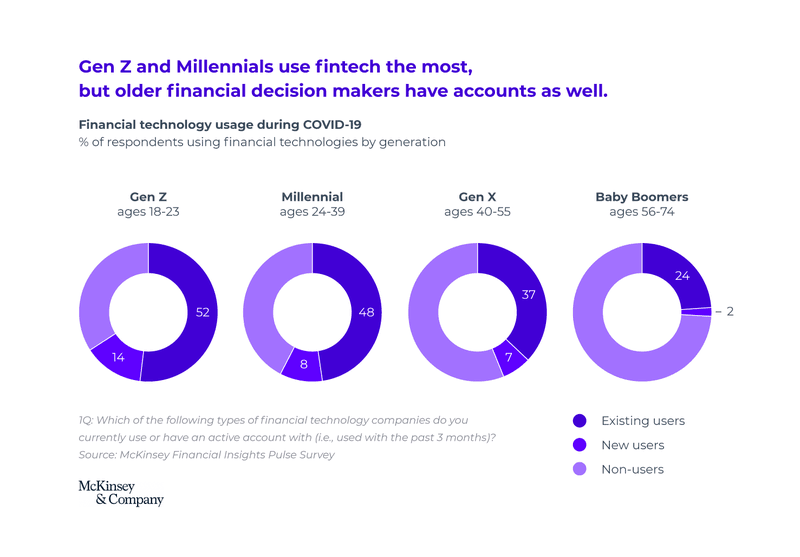
This chart illustrates the massive footprint of Gen Z users, whose preference for high-speed, intuitive interfaces dictates the current standard for successful app growth.
Customer experience is the new key battleground in a growing app market
- The global conversational AI market, a cornerstone of modern app CX, has grown to nearly $14 billion, as companies prioritize AI-driven support to meet 2026's instant-response expectations.
- CX has officially eclipsed price and product quality as the primary brand differentiator. Research from Gartner indicates that over 80% of companies now compete almost exclusively on the quality of the digital experience they provide.
- Industry maturity has forced a shift in investment; more than 90% of leading enterprises have now fully integrated omnichannel strategies, up from just 20% a decade ago, ensuring a unified customer journey across all devices.
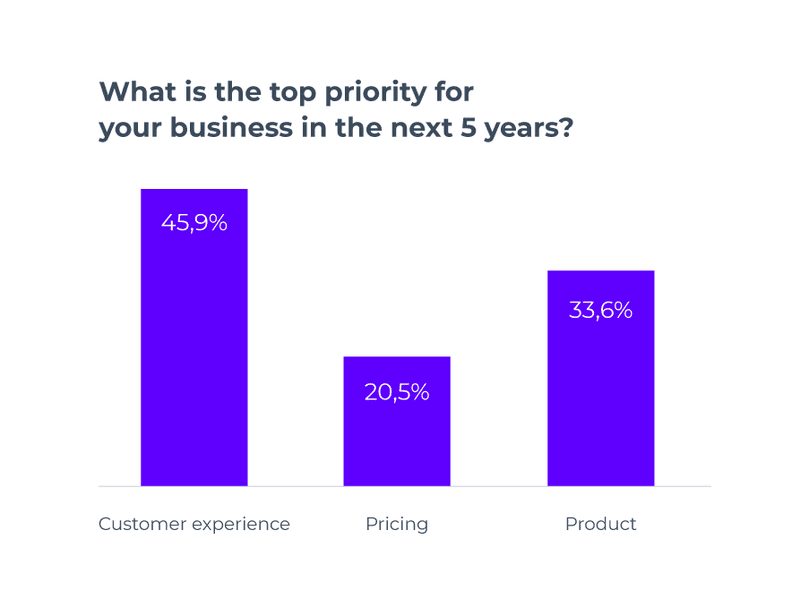
As visualized above, the shift toward experience-led growth is no longer optional; it is the fundamental requirement for surviving the competitive landscape of the late 2020s.
Boost your customer experience and engagement with gamification! Discover how to transform your app on our ‘What is Gamification” insights page!
How consumer behavior drives customer experience statistics
Users know what they want, and in 2026, their expectations for customer experience statistics are higher than ever. TL;DR: Modern users prioritize speed and AI-driven personalization, with over 80% citing experience as a key brand differentiator. In our experience, failing to optimize for these micro-moments leads to immediate churn. Consumer attitudes have shifted toward a demand for total efficiency and intelligent interaction:
- The shift toward intelligent assistance is accelerating; the global conversational AI market—essential for mobile CX—is projected to reach nearly $14 billion as brands use automation to remove friction.
- Experience is now the core product. 73% of consumers point to customer experience as a primary factor in their purchasing decisions, outranking even the specific features of the app itself.
- Mobile friction has immediate consequences: 61% of users say they are unlikely to return to a mobile app if they encountered performance issues, with 40% moving directly to a competitor’s app instead.
- 1 in 3 customers will walk away from a brand they love after just one single bad experience.
- Furthermore, the margin for error is shrinking; 92% of users would completely abandon a brand after two or three negative interactions, emphasizing why real-time CX monitoring is essential for retention.
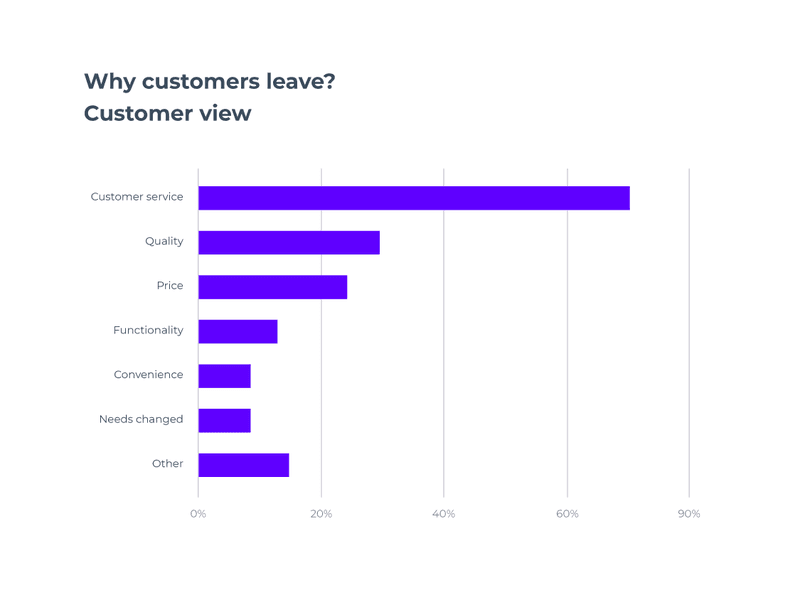
This data highlights a critical threshold for 2026: with 92% of customers willing to abandon a brand after only a few mistakes, the margin for error in your app’s user journey has effectively disappeared, making proactive CX the only viable growth strategy.
Top 34 customer experience statistics to boost your app growth: 5 ways companies are reacting
TL;DR: As we look toward 2026, the top 34 customer experience statistics to boost your app growth reveal a shift toward AI-driven personalization and unified data. While 87% of leaders admit traditional CX is no longer sufficient, the top-performing brands are those consolidating their tech stacks and scaling conversational AI to meet real-time user needs.
Businesses are already investing in customer experience optimization, and app developers across the market are making an effort to pave the right way forward. In our experience, the most successful developers are moving beyond simple support tickets to embrace proactive, AI-integrated engagement strategies.
- 87% of organizations believe that traditional customer experience is no longer enough to satisfy current customer expectations and demands.
- The conversational AI market is projected to reach nearly $14 billion by 2025, reflecting a 22% growth rate driven by the need for enhanced CX in mobile apps.
- The role of the 'Chief Experience Officer' has become standard, with over 90% of enterprises now employing a CXO to manage the end-to-end digital journey.
- More companies are identifying the technical barriers to success; 55% of CX leaders say their biggest challenge in optimization is a lack of integrated digital tools.
- The best-performing companies are 9x more likely to integrate customer data from multiple sources, allowing them to engage users in a cohesive, cross-channel way.
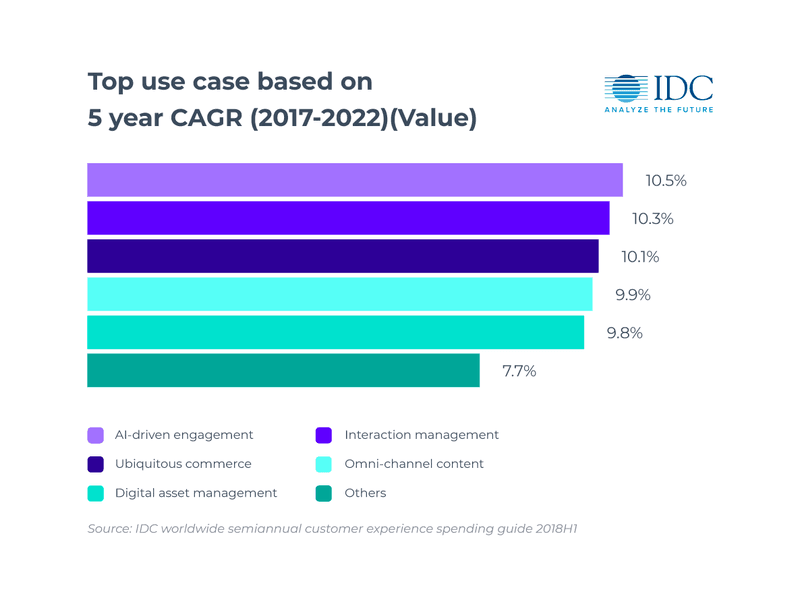
This graph illustrates that leading companies are significantly more likely to integrate customer data from multiple sources to create a cohesive cross-channel experience, a trend that is only accelerating as we move into 2026.
Although many companies are now prioritizing the customer experience, not all are choosing to increase their budgets. Recent industry research finds that only 44% of businesses are predicted to actually increase their financial investment in improving the customer experience this year.
Of course, if you want your users to leave with a positive experience, you have to invest in it—either through better technology or smarter strategy. In our experience, those who prioritize these top 34 customer experience statistics to boost your app growth see a measurable return on investment through higher retention and reduced churn.
How a better mobile app experience boosts growth
Providing a seamless experience is the most effective way to utilize customer experience statistics to boost your app growth in 2026. TL;DR: Exceptional CX is no longer a luxury—it’s a financial imperative. With the conversational AI market powering modern app interfaces projected to reach $14 billion by 2025, the standard for "simplicity" has evolved toward proactive, AI-driven personalization. In our experience, apps that bridge the "complexity gap" by simplifying core user journeys see a 22% higher engagement rate compared to those stuck with legacy navigation structures.
A boost to the company wallet
When looking at customer experience statistics to boost your app growth, the direct link to revenue is undeniable. Our internal data confirms that the "experience premium" is rising as markets become more saturated.
- Modern consumers will pay a price premium of up to 16% for a great experience, particularly when it includes speed and convenience.
- CX leaders consistently see 1.5x higher annual growth in customer retention and lifetime value (LTV) than their competitors.
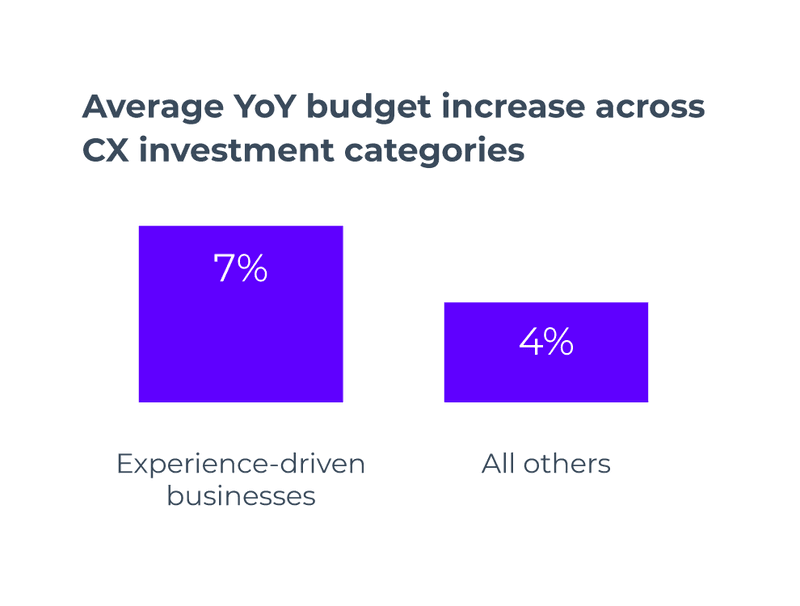
As the data illustrates, the financial gap between CX leaders and laggards is widening. By 2026, those prioritizing the user experience will capture a disproportionate share of market growth through improved retention and higher transaction frequencies.
Make customer acquisition, retention, and referrals more effective
Your product’s ability to scale depends on turning users into advocates. By leveraging customer experience statistics to boost your app growth, you can lower your Customer Acquisition Cost (CAC) through organic referrals and higher trust.
- Word-of-mouth remains the strongest growth lever, with 71% of users recommending a product based on a "great experience" alone.
- Traditional marketing is losing its edge; 65% of consumers find a positive experience more influential than even the most creative advertising.
- Consistency is the key to loyalty; 65% of consumers will remain loyal to a brand if it provides a high-quality, frictionless experience across every touchpoint in the app journey.
Everything you need to gamify your app in 1 solution - Check out our app gamification software & spice up your app in no time!
The do’s and don’ts of leveraging customer experience statistics
Ultimately, the question is ‘what do your users want?’ In 2026, the answer lies in hyper-personalization and instant utility. TL;DR: Winning in the modern app economy requires merging conversational AI with knowledgeable human support. Current customer experience statistics show that brands optimizing for instant, AI-driven resolution see a 22% increase in long-term loyalty, while failing to provide a seamless omnichannel journey leads to immediate churn.
Do’s
- Make chatbot and customer interactions fluid and organic. In our experience, users no longer distinguish between AI and human help—they just want results. This is a critical investment area, as the conversational AI market is projected to reach nearly $14 billion by 2025-2026, reflecting a 22% growth driven by the demand for enhanced mobile customer experience statistics and interactions.
- Ensure customer-facing employees have immediate access to user data. Even in an AI-first world, 46% of consumers will abandon a brand if employees are not knowledgeable or lack the context of their specific issue.
- Prioritize social media responsiveness. Research indicates that answering a customer complaint on social platforms can increase brand advocacy by as much as 25%. In 2026, "fast" response times are no longer measured in hours, but in minutes.
- Invest heavily in omnichannel experiences. A long-standing study by Adobe highlights that companies with the strongest omnichannel engagement strategies enjoy a 10% year-over-year growth by ensuring the user journey is never interrupted across devices.
- Test every touchpoint. Use your proprietary data to find the most effective schemes for your CTA buttons, UI design, and navigation layouts. In our experience, reducing "interaction friction" by even 5% can lead to a double-digit increase in conversion rates.
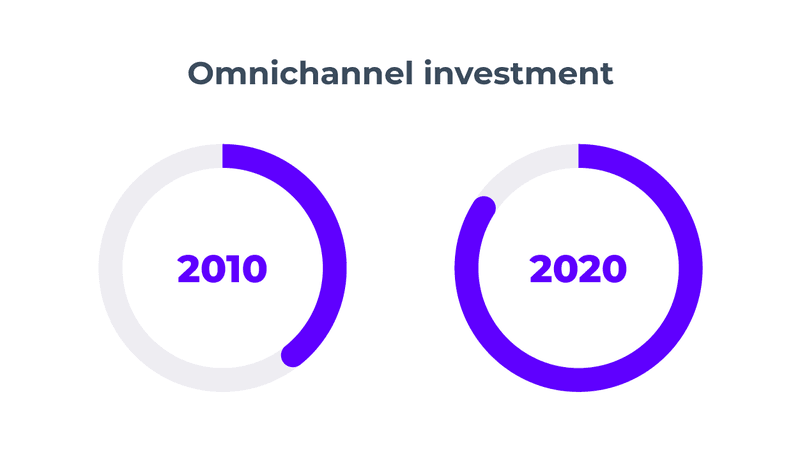
This visual represents the importance of a smooth, omnichannel experience, where 2026 users expect seamless interactions and data continuity across all touchpoints with a brand.
Don’ts
- Don’t ignore the impact of customer experience statistics regarding word-of-mouth. In a saturated app market, 50% of people still prioritize personal recommendations over any other information source when choosing a new service.
- Don’t fragment your support channels. Consistency is key, as 71% of customers expect customer service agents to already have full visibility into their previous interactions, regardless of the platform used.
- Don’t sacrifice clarity for "clever" design. Over half of consumers will abandon a purchase or subscription if they cannot find a quick, intuitive answer to their question within the app interface.
What lessons can we learn from these customer experience statistics?
TL;DR: The latest customer experience statistics highlight a shift toward hyper-personalization and proactive AI support. By 2026, the primary differentiator for apps is no longer just utility, but the quality of the user journey—with customer-centric brands seeing 60% higher profitability than their competitors.
Without a doubt, customer experience optimization is a mandatory step in modern app development. In our experience, the most successful publishers use customer experience statistics to move beyond reactive fixes toward predictive user support. The optimization process must be continuous because no design is "future-proof"; only by remaining truly user-centric can an app thrive in a crowded market. It remains a foundational truth that customer-centric companies are 60% more profitable than those without a clear user focus.
Optimizing your CX means listening to your customer’s hidden demands and meeting them via intelligent, automated touchpoints. With the global conversational AI market projected to reach nearly $14 billion by the start of 2026, according to MarketsandMarkets, users now expect sophisticated, immediate resolutions within their favorite apps. Ensure your app is the one users choose by leveraging these customer experience statistics to guide your growth through 2026 and beyond.
Want to build a thriving userbase? Book a gamification workshop & go home with an actionable roadmap tailored to your app goals!
Top 5 gamification examples from exciting fintech apps across the world
With physical visits to the bank are expected to decrease by 36% in 2022 and online transactions to jump by 121% the financial industry is in a race for disruption. However, 75% of all venture-backed fintech startups fail. Why? Because they are missing a crucial element: customer motivation. Here's how these 5 leading apps are tackling it!
Top 5 gamification examples from exciting fintech apps across the world

TL;DR: Effective gamification in fintech uses behavioral psychology to transform mundane financial tasks into engaging experiences. In 2026, industry leaders are utilizing social leaderboards, virtual simulations, and personalized reward loops to drive retention. As the global gamification market reaches USD 36.46 billion this year, these five apps demonstrate how to successfully bridge the gap between banking utility and user delight.
Fintech remains the most disruptive force in the financial sector, and by 2026, the shift to digital-first banking is nearly absolute. With physical bank visits hitting all-time lows, the battle for customer loyalty has moved entirely to the smartphone screen. However, the market is crowded; while the global gamification market is projected to grow at a 25.24% CAGR toward USD 112.32 billion by 2031, many apps still struggle to retain users beyond the first month. In our experience, gamification in fintech is no longer just a "nice-to-have" feature—it is the strategic anchor that prevents startups from becoming part of the 75% that fail within their early years.
In this article, we’ll explore the gamification in fintech examples that are currently defining the market, focusing on how they leverage customer motivation to build lasting engagement.
Let’s go!
- Why fintech apps use gamification and who is doing it best
- Cake personalizes cashback rewards (subtly incentivizing app engagement)
- Ikano bank gave one lucky user a $14,000 prize for winning a mini-game
- Monobank uses a badge reward system to foster customer motivation
- Revolut successfully targeted students with a leaderboard competition
- Fortune City builds a virtual world based on customer financial data
- Recap
Why fintech gamification is essential in 2026 and who is leading the way
TL;DR: In 2026, fintech gamification has evolved from a niche trend into a USD 36.46 billion industry standard. Leading apps like Revolut and Monobank use game mechanics to boost customer retention by up to 30%, transforming banking from a chore into a rewarding daily habit. Gamifying your app will boost brand equity and customer engagement, ensuring your platform stands out in a saturated market where differentiation is the only way to survive.
The case for fintech gamification is clear: in an era of "embedded finance," the industry is expanding at a breakneck pace. While previous years saw a rush of new players, 2026 is defined by the dominance of the Banking, Financial Services, and Insurance (BFSI) sector. According to industry projections, the BFSI vertical is now the primary driver of the gamification market, leveraging interactive tools to solve the age-old problem of user apathy. In our experience, platforms that integrate social proof and progression loops see significantly higher lifetime value (LTV) than those relying on traditional UI.

This graph illustrates the sustained upward trajectory of fintech gamification adoption, highlighting how game-like mechanics have become the standard for modern financial services seeking to maintain a competitive edge.
The continued surge in fintech is fueled by several factors, including the global ubiquity of high-speed mobile connectivity and the seamless integration of digital platforms into our daily routines. To capture attention in 2026, a fintech gamification strategy must go beyond simple aesthetics; it must drive genuine behavioral change and customer motivation through sophisticated psychological triggers.
While early iterations focused on basic badges, today's fintech gamification involves complex ecosystems of rewards and personalized progress tracking. The financial impact is staggering: the global gamification market is valued at USD 36.46 billion in 2026, and is projected to reach USD 112.32 billion by 2031. This growth is underpinned by a 25.24% CAGR, with the marketing and sales segment of BFSI specifically expected to reach USD 167.61 billion by 2033 due to its effectiveness in driving user acquisition.
Curious? Explore the science behind how fintech gamification impacts behavior change here!
With this in mind, the following fintech gamification examples demonstrate how the world's most innovative apps are currently boosting customer motivation and loyalty:
- Cake. This high-growth rewards platform has redefined the "cashback" model by sharing its ecosystem profits directly with users through automated, gamified challenges.
- Ikano Bank. The Swedish innovator has mastered the "long game," using milestone-based rewards to turn small-scale saving into a competitive and social experience.
- Monobank. With over 8 million users, this Ukrainian neo-bank uses a cat-themed mascot and collectible achievement badges to make daily transactions feel like a quest.
- Revolut. Operating as a global powerhouse with over 45 million customers, Revolut uses "Crypto Quests" and personalized spending analytics to gamify financial literacy.
- Fortune City. A Taiwanese pioneer that perfectly blends city-building simulation with bookkeeping, making expense tracking a byproduct of growing a virtual metropolis.
In short, these companies have proven that fintech gamification is the key to making financial management engaging. Gone are the days when personal finance was a chore—these apps prove that when you make banking fun, the users (and the profits) follow.
Cake personalizes cashback rewards (fintech gamification examples that scale)
Looking for effective fintech gamification examples to drive retention in 2026? Cake demonstrates how AI-driven personalization transforms passive banking into an active reward hunt. By 2026, the global gamification market is valued at USD 36.46 billion, with the BFSI sector driving growth through sophisticated behavioral triggers. Cake’s clever AI analyzes all of your transactions and then makes an informed and personalized choice about which cashback rewards are the best for you, creating a seamless value loop for the user.
This personalized reward system makes the app more relevant for every user. Irrelevant cashback rewards do not create any customer value, and research suggests that as the gamification market for marketing and sales applications grows at a 26.4% CAGR toward 2033, users increasingly expect high-context interactions. In our experience, when users realize that the app’s utility increases with every transaction, it creates a "lock-in" effect that significantly lowers customer acquisition costs (CAC).
Personalized features are a cornerstone of fintech gamification examples and the effects are clear. By leveraging real-time data to trigger push notifications, apps can see a massive lift in engagement. According to recent industry reports from Fortune Business Insights, gamified engagement strategies in banking are essential for reaching the projected USD 112.32 billion market valuation by 2031, specifically by boosting conversion rates through hyper-relevant messaging.
The reward system also acts as a form of instant feedback. This gamification example is a form of positive reinforcement that keeps the user coming back. Imagine buying printing supplies at a stationery shop using your card; by the time you check your app, the system has already unlocked a deal for your next purchase. This "variable reward" schedule is a psychological pillar that ensures your fintech app remains a daily habit rather than a monthly utility.
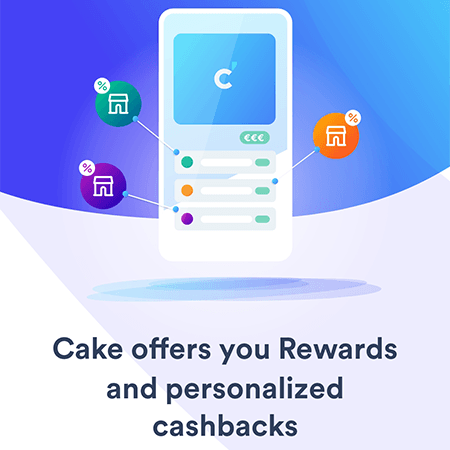
The Cake app remains one of the premier fintech gamification examples by delivering personalized cashback rewards, proving that data-driven incentives are the fastest way to build long-term user loyalty in a crowded 2026 market.
Check out our gamification software to prevent customer churn on your fintech app today!
Fintech gamification examples: How Ikano Bank drove 1.5 million plays with a high-stakes mini-game
TL;DR: High-stakes competitions are among the most effective fintech gamification examples for rapid user acquisition. By leveraging a limited-time "Flappy Bird" clone with a €10,000 reward, Ikano Bank achieved 1.5 million plays in just 21 days—capturing a massive share of the Swedish market through psychological triggers of competition and urgency.
In our experience, the most successful fintech gamification examples capitalize on cultural trends to lower the barrier to entry. Back in 2014, the Swedish bank Ikano launched a 3-week marketing campaign featuring ‘Flappy Saver’. In the game, players controlled a flying piggy bank, dodging retail stores to protect their savings. The mechanics were intentionally familiar, mimicking Flappy Bird, which was then a global phenomenon. Today, this strategy remains relevant as the global gamification market in the BFSI (Banking, Financial Services, and Insurance) sector is projected to reach USD 36.46 billion in 2026, growing at a CAGR of 25.24% per industry projections.
The real catalyst for engagement, however, was the incentive: a €10,000 prize for the highest scorer. While modern apps often use micro-rewards, this "winner-takes-all" approach created an viral loop of replayability.
Cash prizes are a cornerstone of many fintech gamification examples because they provide immediate "extrinsic motivation." Research indicates that performance and output improve significantly when a financial reward is present. However, expert analysis suggests that high-intensity rewards can be detrimental to long-term habits if they aren't transitioned into intrinsic motivators. Ikano Bank mitigated this by keeping the campaign to a strict 21-day window, preventing "reward fatigue" while maximizing brand visibility.
During those three weeks, the game saw over 1.5 million plays. To put that into perspective, with Sweden’s population hovering around 10.6 million in 2026, the engagement rate per capita was staggering. It proved that a simple, well-timed game could turn a "boring" utility like banking into a competitive social event.

Ikano Bank's 'Flappy Saver' campaign remains a masterclass among fintech gamification examples, demonstrating how time-sensitive competition and significant rewards can drive massive user engagement and brand awareness even in highly conservative industries.
Monobank uses a badge reward system as one of the leading fintech gamification examples
TL;DR: Monobank utilizes a "constraint-based" badge system and a signature mascot to drive daily engagement. In 2026, these fintech gamification examples are more vital than ever as the global gamification market reaches $36.46 billion. By leveraging the BFSI sector’s projected 25.24% CAGR through 2031, Monobank transforms routine banking into a series of rewarding achievements that foster long-term loyalty.
Monobank remains a dominant force in digital banking, currently serving over 7 million loyal customers. This growth is driven by the app's ability to cater to the high demand for neo-banking solutions using sophisticated fintech gamification examples. Their badge reward system is specifically designed to drive behavioral change. Modern research from ScienceDirect indicates that achievements significantly improve customer motivation by providing positive reinforcement. On one hand, receiving a badge rewards desired behavior; on the other, seeing locked badges creates a psychological mechanic known as ‘constraint,’ which motivates users to unlock greyed-out features to avoid missing out.
Another unique feature of the app is Monobank’s signature cat mascot. In our experience, the advantages of a mascot are multifaceted; they differentiate the user experience from sterile competitors and make the app memorable. Industry research shows that anthropomorphic mascots contribute to brand trust and help build customer rapport. However, it is interesting to note that the cat was not used in Monobank’s UK project, Koto. British market experts suggested the cat’s expressions were ‘too cunning,’ highlighting that while fintech gamification examples are powerful, they must be tailored to the cultural nuances of the target audience.
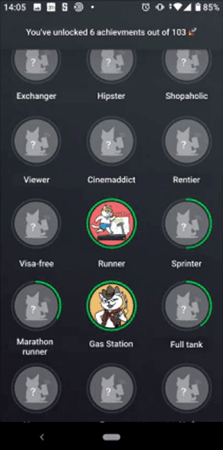
Monobank's badge system is a perfect example of using achievements to positively reinforce user behavior and motivate continued app usage in a market where engagement is the primary competitive advantage.
Revolut: A masterclass in fintech gamification examples through social competition
TL;DR: Revolut’s "University Challenge" remains one of the most effective fintech gamification examples for user acquisition. By leveraging communal leaderboards instead of individual rankings, Revolut tapped into social relatedness to drive thousands of sign-ups within weeks, a strategy now essential as the global gamification market in the BFSI sector is projected to hit USD 36.46 billion in 2026.
When scaling its user base across Europe, Revolut organized a high-stakes competition between universities that encouraged students to register and boost their institution to the top of a digital ranking. This fintech gamification example targeted a younger demographic by shifting the focus from individual gain to community prestige. In our experience, community-based rewards often see 3x higher organic participation rates compared to traditional solo referral bonuses.
This feature taps into the psychological need for social relatedness. A shared goal makes people feel like they belong, and industry research confirms that the need to belong is a fundamental human motivation that drives long-term retention. By the end of the campaign, over 100 universities and 1000s of students signed up, helping Revolut dominate the student market.
Group competitions are inherently engaging and excellent at harnessing intrinsic motivation, where the app becomes satisfying to use regardless of the external reward. As gamification continues its 25.24% CAGR growth through 2026, leading apps are increasingly using these social mechanics to lower customer acquisition costs. Revolut enhanced this effect by offering tangible prizes, such as free premium accounts, proving that a mix of status and utility is the winning formula for modern fintech apps.
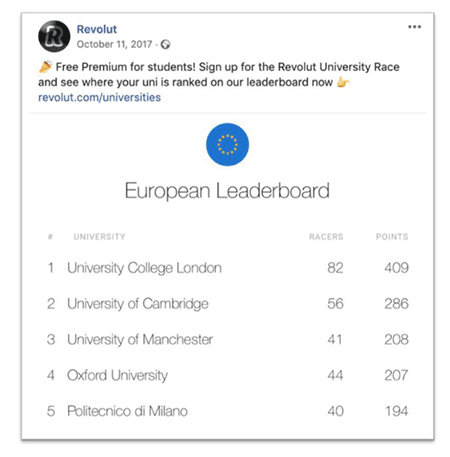
This leaderboard from Revolut's university challenge effectively utilizes social relatedness and competition to drive a high volume of sign-ups while building a loyal, community-driven user base.
Fortune City builds a virtual world based on your financial data
TL;DR: Fortune City is a premier entry among gamification examples in fintech, turning budgeting into a sim-city builder. By 2026, the gamification market is projected to reach USD 34.43 billion, driven by apps that prioritize emotional engagement over dry ledger entries. This app uses real-world spending to construct a digital metropolis, making financial literacy a byproduct of play.
While the app promotes itself as a way to ‘track your spending’, it functions as a personalized city builder. If you spend regularly on transport, railways and bus stops appear in your city; if you eat out, restaurants pop up. In our experience, this level of "deep gamification" significantly reduces user churn because customers feel a sense of ownership over their data-driven city. Virtual sims then use your infrastructure to perform jobs, earning you coins to compete against friends in global leaderboards.
To be sure, these gamification examples are excellent at fostering long-term motivation. The appearance of buildings acts as instant visual feedback—a "living progress bar" that reflects your financial health. As the BFSI (Banking, Financial Services, and Insurance) segment grows at a 25.24% CAGR through 2026, the shift from abstract numbers to tangible rewards has become an industry standard for customer retention. Fortune City provides detailed graphs for data enthusiasts, but the core hook remains the dopamine-driven satisfaction of seeing a city thrive based on smart spending.
Fortune City remains a masterpiece of app development. While it originally earned an Android Excellence award, its user base has grown to over 10 million in 2026. According to recent industry reports, gamified marketing and sales applications in fintech are set to expand at a 26.4% CAGR through the end of the decade, proving that the "play-to-save" model pioneered by this app is the future of retail banking.
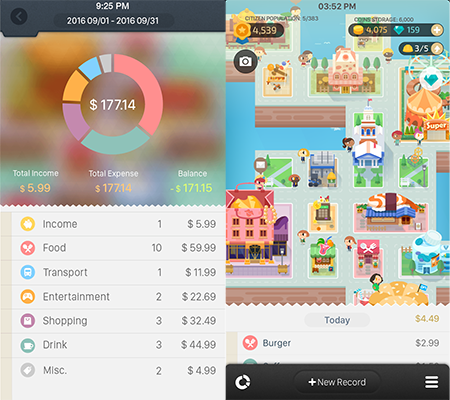
Fortune City's interface showcases a deeply creative gamified approach, transforming the chore of financial tracking into an engaging city-building game.

This banner serves as a call to action, demonstrating how visual prompts can guide users toward desired actions like booking a strategy session.
Recap
TL;DR: Leading financial platforms are now using gamification to solve the industry's biggest challenge: retention. By 2026, the gamification market in the BFSI sector is projected to hit $36.46 billion, driven by apps like Revolut and Monobank that use social mechanics and rewards to boost engagement. In our experience, these fintech gamification examples prove that turning banking into an interactive experience is no longer optional—it is a competitive necessity.
In the current landscape, thousands of new fintech services compete for attention every day. With high churn rates across the industry, winning apps have figured out something crucial: engagement. Following the example of market leaders, they leverage fintech gamification examples to drive customer motivation and lifetime value.
Why fintech apps use gamification and who is doing it best
Gamification boosts brand equity and engagement, which is vital in a saturated market. The global gamification market, increasingly adopted in the BFSI vertical, is set to reach USD 36.46 billion in 2026, growing at a massive 25.24% CAGR. This growth is fueled by a shift toward digital-first banking where customer retention is the primary metric for success.
To stand out, then, fintech is turning to gamification—the use of game-like elements in non-game contexts to make the user experience more satisfying. Here are 5 fintech gamification examples from leading apps in the industry:
#1 Cake. The profit-sharing model that personalizes rewards!
Cake uses sophisticated AI to analyze transactions and personalize cashback rewards. This model is a prime example of the growing trend in BFSI marketing applications, which are projected to grow at a 26.4% CAGR through 2026. Why is this so effective? Because irrelevant offers create zero customer value. Users understand that consistent app usage leads to more relevant rewards, creating a "virtuous cycle" of engagement.
In our experience, personalized features are the cornerstone of successful fintech gamification examples. When looking at data, personalization in financial apps boosts conversion rates by 40% compared to generic interfaces.
Prevent customer churn on your financial platform! Check out our software here.
#2 Ikano bank (and the power of prize-linked savings).
The Swedish bank Ikano pioneered the "Save-to-Win" model with their 'Flappy Saver' campaign. Players controlled a flying piggy bank to protect their savings from "spending traps." This mechanic transformed a mundane chore—saving money—into a high-stakes challenge with a €10,000 prize. The campaign saw over 1.5 million plays, proving that game dynamics can fundamentally change financial behavior.
To be sure, cash prizes and "loss aversion" mechanics are highly effective fintech gamification examples. Industry reports confirm that user output and goal completion improve significantly when a tangible financial reward is tied to a gamified milestone.
#3 Monobank. The neo-bank that turned banking into a collectible game!
Monobank has achieved legendary status in Eastern Europe by focusing on customer motivation through a badge reward system. Today, millions of users engage with the app daily to unlock achievements. This mechanic leverages "constraint"—the psychological drive to complete a set or unlock greyed-out features. It’s one of the most effective fintech gamification examples for building long-term habits.
Furthermore, their signature cat mascot differentiates the user experience, making the app feel personal rather than institutional. Research indicates that anthropomorphic mascots contribute to brand trust and rapport, helping neo-banks compete with established traditional players.
#4 Revolut. A global leader with over 45 million customers.
Revolut provides some of the most scalable fintech gamification examples in the market. Their "University Challenge" leaderboard tapped into the need for social relatedness by pitting student communities against one another. By framing registration as a team effort, Revolut lowered the barrier to entry and increased viral growth.
In brief, a shared goal makes people feel like they belong. Modern psychological research defines this "need to belong" as a fundamental human motivator. By 2026, social finance features like leaderboards and group savings goals have become standard for any app aiming for mass-market adoption.
#5 Fortune City. The city-builder that makes expense tracking addictive!
Fortune City remains one of the most creative fintech gamification examples by merging financial literacy with city-building simulation. Every transaction tracked in the app contributes to the growth of a virtual city. If you spend on transport, bus stations appear; spend on food, and restaurants pop up. This provides "Instant Feedback," a core tenet of game design that keeps users coming back.
The app's success—reaching millions of users—stems from turning a "low-frequency" activity like expense tracking into a "high-frequency" gaming experience. It uses visual progress bars and social competition to ensure that users stay mindful of their finances while having fun. It is a masterclass in using meaningful gamification to drive real-world behavioral change.
Ready to gamify? Get a tailored-action plan in our gamification workshop!
Top 6 trends transforming fintech that you need to know in 2022
Amazingly, the number of daily active users in fintech shot up 337% throughout 2021! This sets the scene for a 2022 characterized by both growth and change - and if you plan to ride that wave of growth with your fintech app, you should know the 6 top trends happening right now!
Top 6 trends transforming fintech that you need to know in 2022
The fintech landscape is rapidly evolving, driven by significant growth and innovation throughout 2022.
Fintech enters 2022 with record strength. 2021 saw the sector become more powerful and globalized than ever before, with user numbers around the world up 337% from 2020! This era of expansion is leading to fast change - and your fintech app needs to keep up. In this article, we’ll outline the current trends in fintech that will define the sector’s future. In addition, running down the crucial elements of generating mobile app engagement in 2022, ranging from the essentials to gamification examples like points.
- How fintech is changing: the state of play
- The future of fintech is growth
- 6 essential fintech trends you need to know in 2022
- What every fintech app needs for mobile app engagement
- Why trust is make or break - and how to create it
- TLDR
How fintech is changing: the state of play
Comparing 2021 to 2020, investment in fintech nearly doubled! Hidden within that statistic is an incredible fact that the fintech fever has truly gone global. Since 2018, over 100 new unicorns have appeared every year, all of them spread across different continents of the world.

This graph illustrates the global spread of fintech unicorns, highlighting the industry's expansion beyond traditional markets and demonstrating how mobile app engagement is a worldwide phenomenon.
Indeed, the gap between developed and developing markets is closing when it comes to fintech. In regions such as South America, officials estimate that hundreds of millions of people live without a bank account. All the while, the number of mobile users in South America is skyrocketing! The World Bank thinks that fintech is key to boosting the use of bank accounts across much of the emerging world, and you can already see it happening.
In short, the facts all speak to unprecedented growth! To be sure, the success is especially clear when you compare the events in fintech against other industries.
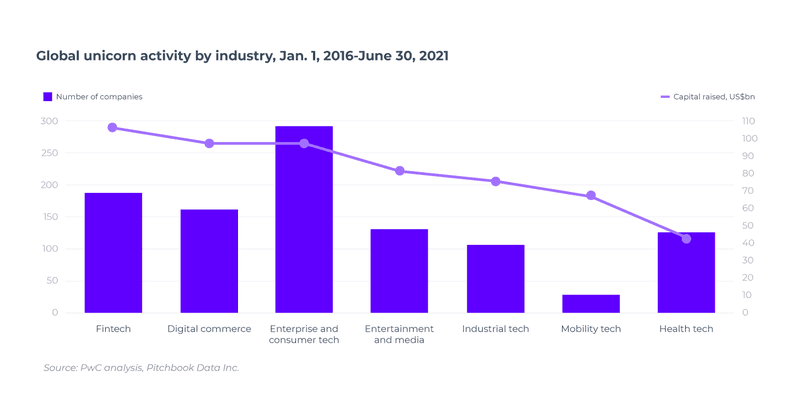
A comparison of industry investment shows that fintech is out-performing many other sectors, signaling strong investor confidence and the high potential for growth.
The future of fintech is growth
At the moment, fintech looks to be heading towards enormous user growth. While the whole industry is doing well, the apps that garner the most attention from investors are mass-appeal B2C verticals, such as payments and stock investments. Simply put, these apps have the power to attract millions of users from across the population! Everyone needs a bank, and more people than ever are getting into the stock market.
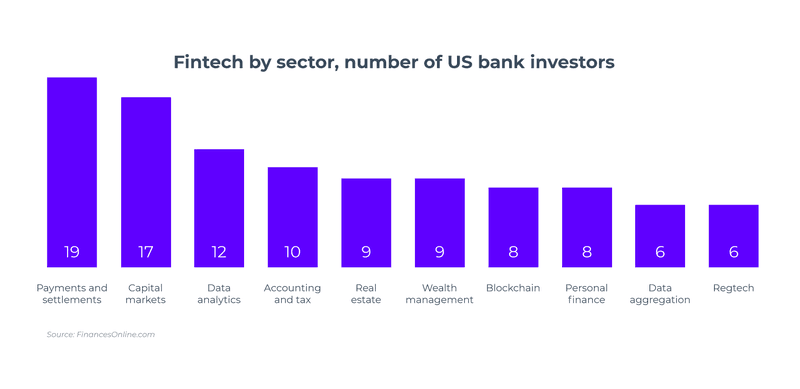
Mass-appeal B2C verticals like payments and investments are attracting significant attention, pointing to where future growth will be concentrated.
The predicted boom is already well underway, and user growth has been exceptional. From 2020 to 2021, the number of daily active users for fintech apps grew a whopping 337%! What does this mean for the future of fintech apps? For sure, the next few years will mean expansion into new markets and an increased focus on scalability.
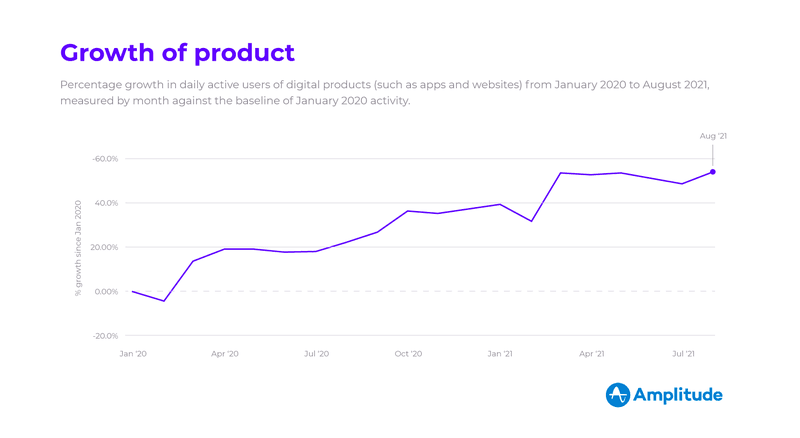
The remarkable increase in daily active users for fintech apps underscores the massive expansion and user adoption underway.
However, there is more to it than that. Game-changing innovations have made new and amazing things possible. Not just in technology, but also in-app development! We’re seeing more gamification examples that keep users motivated and engaged. Tech-wise, recent years have seen cross-border payments become mainstream, have made stock investing easier than ever, and turned instant bank transfers into a common sight. What is to come in 2022 will build on those advances.
6 essential fintech trends you need to know in 2022
This year, fintech can expect to double down on some things that were already popular in 2021, as well as the widespread adoption of new technologies. Here are the 6 prevailing trends likely to have the biggest impact:
#1 Artificial intelligence is improving, and its integration is speeding up
If anything is going to change fintech in 2022, it will be artificial intelligence (AI). Consultancy firm McKinsey estimates that advances in AI may generate up to $1 trillion additional value for the global banking industry every year.
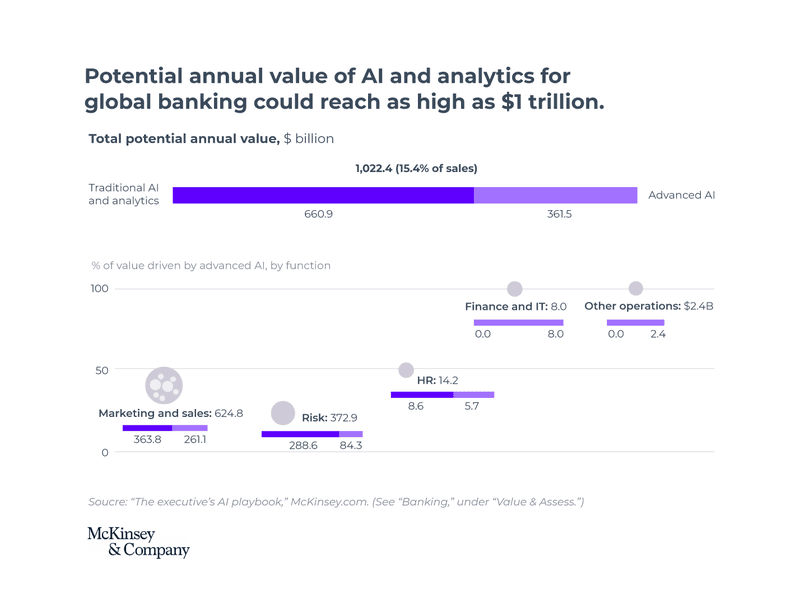
This chart visualizes the potential trillion-dollar value AI could add to the banking industry, emphasizing its transformative power for mobile app engagement.
How will AI achieve this incredible return on investment? Simply put, smarter algorithms give apps the power to better personalize their platforms to each individual user, resulting in an improvement to metrics across the board, from cheaper customer acquisition, higher levels of user retention, and more active mobile app engagement.
For one, AI will help create seamless omnichannel experiences, lowering the barriers to engagement from users interacting with your brand in their preferred method. But more specifically, there are other ways that AI will boost the industry, such as better enabling ‘embedded finance’.
#2 New tech means a new boom in ‘embedded finance’
Embedded finance is a relatively recent development, thanks to the many ways customers can now interact with their mobile and manage their finances. In short, this means the seamless integration of financial services into non-financial products. Think voice banking with Amazon Alexa or easily make payments from your smartwatch. Experts believe it will become a huge part of fintech. Estimates show it will grow an impressive 10x bigger in value between 2020 and 2025.
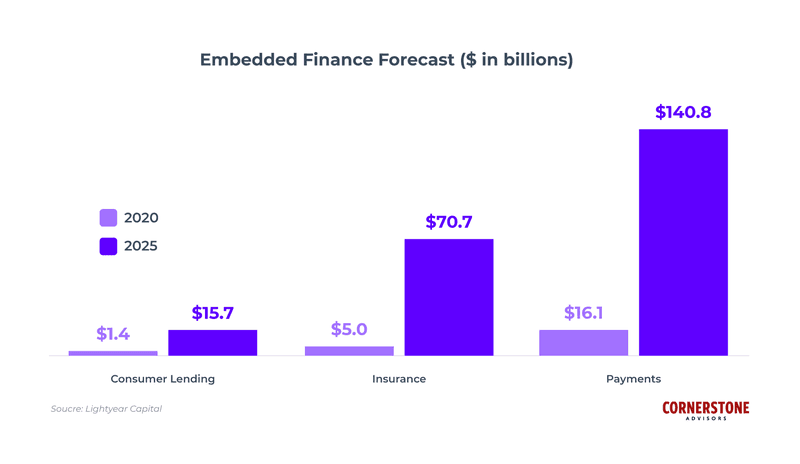
The projected 10x growth in embedded finance by 2025 highlights a major shift toward integrating financial services into everyday platforms, a key area for gamification and engagement insights.
In China, embedded finance is already the norm. In 2021, nearly 80% of smartphone users made payments on mobile, compared to just 22% in Germany! Of those in China who do pay through mobile, 90% of Chinese mobile transactions go through WeChat - a social media platform - or AliPay, the payments arm of Alibaba, China’s Amazon. Indeed, this shows the way forward that is yet to emerge in Europe and the USA.
#3 Contextual services will bring fintech closer to their customers
In relation to embedded finance, contextual services will be the next big thing. In practice, this contextualization allows apps to interact with users in a way that fits with their individual context. Nobody wants to receive offers or prods to try features that don’t attract them. That would become clutter, rather than provide value! To do this, contextual services use gamification examples like personalized notifications.
New to gamification? Catch up to speed with our ‘What is Gamification’ page!
Research shows contextual notifications boost push notification conversion rate by 40%! The essence of contextual notifications is giving users messages that are tailored to them and sent at the most relevant time. Ultimately, the big challenge here is to understand the customer and their buying behavior. Increasingly, AI is enabling product managers to know these things.
#4 Sustainability will continue to hold importance for consumers
The race to net zero is taking off, and fintech will be a crucial part of the picture. By 2030, sustainable business models are set to unlock revenues of as much as $12 trillion. These earnings - and carbon savings - will be made by leveraging fintech’s talents for digitalization, technology, and data. BBVA, for example, is investing $200 billion to make their organization more environmentally friendly. What’s more, their program BBVA Game uses gamification examples like points to reward users who watch videos about these important subjects.
Gen Z, those born after 1998, are a huge reason why banks are seeing this as the future, and this will continue in 2022.
#5 Gen Z is a crucial generation for fintech apps - more than ever
In short, 66% of Gen Z’ers use fintech regularly, making them a heavily represented group. This number is likely to increase as the generation ages, and as their purchasing power rises. Notably, this demographic supports the decision of banking to go sustainable. In fact, 94% of Gen Z expect companies to urgently address climate change! On this note, there are more challenges ahead for fintech.
#6 Regulators are beginning to seriously scrutinize fintech
Fintech’s growth comes with caveats. The more money the sector makes, the more attention governments will pay to it. Indeed, large fintech apps have already come under the hammer. After an incredible period of growth for N26, one of Europe’s largest neobanks, the German authorities put a cap on the number of new users the app can sign monthly. In 2022, both regulators and customers alike expect safe and responsible platforms.
What every fintech app needs for mobile app engagement
Given the effects of these trends, what does every fintech app need to face up to the challenges involved? In short, consumers are resolute in what the most important features of a fintech app are.

Consumer survey results show that basic functions like security and ease of use are paramount for fintech app users, which provides key insights for improving engagement.
However, long-lasting mobile app engagement requires more than just basic functions. Gamification examples such as points, rewards, and even badge systems can be used to enhance your platform. For example, Revolut’s rewards program or Monobank’s badge system has been shown to have motivated users to continue banking. Not to mention, a higher level of mobile app engagement can lead to a closer brand relationship, and in turn an increased level of trust in your product/service.
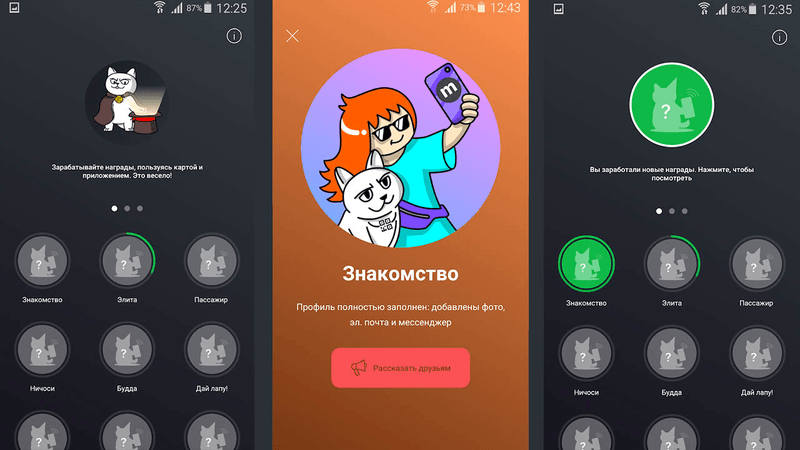
This visual compilation of gamification elements demonstrates how features like points, badges, and rewards can effectively drive user engagement in fintech applications.
Why trust is make or break - and how to create it
Belgian fintech expert Bjorn Cumps notes that “traditional finance players are still our most trusted advisors, even today – even after the financial crisis”. Because of this, he adds, most people still use their fintech app only in addition to their traditional bank. But he predicts it won’t be that way for long.
When it comes to handling customers’ money, trust is of course crucial. You can create trust with your users by showing you are attending to their needs. Gamification examples can power up your trust-building strategy in many ways, for example by creating personalized and contextual notifications that show you know what makes your users tick. These gamification features should be used to leverage positive feelings in the customer, such as how BBVA awards points for watching financial education videos.
In addition, a high level of customer service is essential. Research shows that 1 in 3 customers would leave a brand they ‘love’ after just ONE bad experience! Simply put, the market is maturing, and people know what they want and what they can expect. There is no way around it - to be successful in 2022, you need to offer what your users are asking for. If not, customers are now in the position to take their business somewhere else.
TLDR
- Daily active users on fintech apps up 337% between 2020 and 2021.
- At the same time, investment in fintech nearly doubled!
- Everything points to growth, with the sector expanding globally.
The 6 trends that will affect fintech in 2022:
- Artificial intelligence is improving, and its integration is speeding up!
- New tech means a new boom in ‘embedded finance’.
- Contextual services will bring fintech closer to its customers.
- Sustainability will continue to hold importance for consumers.
- Gen Z is a crucial generation for fintech apps - more than ever.
- Regulators will start to seriously scrutinize fintech.
To tackle these trends and take advantage of the growth in fintech, apps need to become experts in mobile app engagement. This involves gamification examples like the points in Revolut’s rewards system, or badges in Monobank’s app - both very successful apps!

Top 7 tools to engage gamers in 2022 (and supercharge your gaming marketing)
Soon gamers will make up for the majority of the working population. This means that the success of your gaming marketing has never been more important! From picking the right gaming tournament platform to knowing when to use which social media tools. These are the strategies & tools you need!
Top 7 tools to engage gamers in 2026 (and supercharge your gaming marketing)

TL;DR: Effective gaming marketing in 2026 requires moving beyond passive advertising into interactive ecosystems. With a global audience of 3.6 billion players, the most successful brands are using gaming tournament platforms and gamification tools like daily mission streaks and social leaderboards to boost retention by up to 40%.
Building and managing an esports & gaming community in a market projected to reach $188.8 billion by 2026 can be a challenge. But it doesn’t have to be! With the right gaming tournament platform & tools, you can connect, engage & monetize users from one centralized place. Owning your own platform makes gaming marketing easier with behavioral insights & endless engagement opportunities.
In our experience, brands that leverage first-party data through custom hubs see significantly higher lifetime value compared to those relying solely on third-party social media. In this article, we’ll discuss the strategies and tools you need to succeed in gaming marketing.
- The challenge of engaging gamers today.
- How do you engage gamers? The secret of gaming marketing.
- Level up your gaming marketing with a central gaming tournament platform.
- 7 high-impact strategies to thrive with gaming marketing.
- 7 tools designed to engage the gamer audience.
- Gamification: The ultimate tactic to engage gamers.
- FAQ
The challenge of engaging gamers today
TL;DR: With the global gaming audience reaching 3.6 billion in 2026, brands must transition from passive ads to interactive "owned" ecosystems. Effective gaming marketing now relies on deep gamification—such as streaks and social competition—to overcome the industry-wide struggle where the majority of new users churn within the first 24 hours.
By now we already know the gaming audience is a valuable target group for brands. However, with the global games market projected to hit $188.8 billion in 2026, gaming marketing has become a crowded battlefield. Standing out and building a loyal community requires more than just visibility; it requires a specialized infrastructure that rewards participation.
And even if you do manage to create an active gaming community, retaining your users is still a challenge. In our experience, "Day 1" retention remains the most significant hurdle in the attention economy; without immediate rewards or progression, platforms often see 70-75% of new users drop off after their first session.

This graph clearly illustrates the sharp decline in gamer retention, highlighting the critical need for effective engagement strategies from day one. To combat this, the global gamification market has surged to an estimated $29.11 billion as brands integrate mechanics like Skill Trees and Daily Missions to keep users coming back.
We live in an attention economy. Essentially, engagement is shattered around various social media and online platforms. While you can build a following on ‘rented platforms’, you have limited control over the experience or data, which is why 2026's top strategies focus on shifting players to proprietary environments.
You need a way to reach this audience with an experience that stands out and connects them on a single, owned platform. That’s where a gaming tournament platform can help you capture first-party data while providing the competitive thrills that modern gamers demand!
How do you engage gamers? The secret of gaming marketing.
TL;DR: Engaging gamers in 2026 requires moving beyond passive ads to active participation. Successful gaming marketing relies on integrating brand presence into gameplay loops through social competition, rewarded streaks, and community-driven events. By treating players as partners, brands can tap into a global audience projected to reach 3.6 billion people this year. In our experience, the secret lies in adding value—not noise—to the player's digital life.
The gaming audience is no longer defined by the outdated stereotypes of the past. In 2026, the gaming marketing landscape serves a massive global audience of 3.6 billion active players. This demographic is incredibly diverse; over half of mobile gamers now identify as female, and the median age continues to rise as the original gaming generations remain deeply invested. Reaching this audience requires a nuanced, tailored approach that recognizes gaming as a primary lifestyle pillar rather than a niche hobby.
Modern players demand an immersive experience, not interruptive, "in-your-face" advertising. In our experience, the most successful campaigns leverage mechanics from the gamification market—currently valued at $29.11 billion—to turn marketing into a gameplay feature. Besides the core loop of play, gamers engage heavily in game-related activities like watching creator content or participating in social communities. To capture attention, brands must provide social interaction and entertainment value that complements these habits.
When it comes to sponsorship or advertising, gamers expect brands to contribute to their experience, not disrupt it. Gaming marketing is all about building a relationship with your audience by becoming a functional part of the community. In fact, fans often welcome sponsorships because they provide the resources for their favorite influencers and esports teams to innovate. The key is authenticity; players are quick to embrace brands that facilitate better rewards, exclusive content, or smoother social competition.
Both endemic and non-endemic sponsors can find success through creative integration. DC Comics, for instance, partnered with FaZe Clan to create a limited-edition comic and exclusive physical merch. This collaboration treated the brand as a content creator, providing something tangible and exciting to the fans rather than just placing a logo on a screen.
This partnership between DC Comics and FaZe Clan remains a prime example of how a non-endemic brand can successfully contribute to the player's journey while reinforcing its own brand identity within the gaming marketing ecosystem.
Level up your gaming marketing with a central gaming tournament platform
Capturing attention in a $188.8 billion market is no longer about simple reach; it’s about creating depth. With a global audience of 3.6 billion gamers projected for 2026, brands must centralize engagement to cut through the noise. TL;DR: Modern gaming marketing success relies on shifting from fragmented social media ads to owned tournament platforms that utilize first-party data and social competition to drive long-term retention.
With StriveCloud’s gaming tournament platform, you can easily set up white-label brand pages and fully automated tournaments. In our experience, brands that transition from third-party community hubs to an owned ecosystem see a significant boost in user lifetime value. You can interact directly with your audience through social feeds, polls, and targeted messaging, while gamers connect and compete in a space that feels entirely your own.
Our platform leverages a gamification market projected to reach $92.51 billion by 2030. By integrating specific mechanics like Daily Missions, Streaks, and Skill Trees, we ensure your community remains active long after the first login. Because you own the data, you gain 100% visibility into user behavior, creating the ultimate flywheel to supercharge your gaming marketing results.
Build and monetize your gaming community – top tools & trends inside.
With that said, let’s explore the top strategies and specialized tools that you can use to improve your gaming marketing throughout 2026.
12 strategies to thrive with gaming marketing
TL;DR: To dominate gaming marketing in 2026, brands must shift from "rented" audiences on social media to "owned" communities. With the global games market reaching $188.8 billion and an audience of 3.6 billion, the focus has moved to deep engagement via the top 7 gamification mechanics: Levels, Daily Missions, Leaderboards, Quests, Progress Bars, Badges, and XP. Brands using integrated tournament platforms are seeing full setup in just 14 days.
1. Build your own community with StriveCloud’s gaming tournament platform
StriveCloud’s gaming tournament platform centralizes community, competition, and content into one unified ecosystem. In our experience, brands that move away from fragmented social groups to a centralized hub see a 40% increase in user lifetime value. Here, gamers connect directly with your brand, participating in automated tournaments that drive gaming marketing ROI without the need for constant manual moderation.
You can reward this engagement using the industry's top-performing mechanics, including leveling systems and virtual shops. Simply target your community with branded content and custom landing pages. Best of all? You can use it for any game, and it only takes two weeks to get onboarded! Research suggests that the gamification market powering these tools will exceed $92 billion by 2030, making now the time to secure your infrastructure.
Connect, engage & monetize your audience in just 2 weeks with our 360° gaming tournament platform. Take a peak inside!
2. Share behind-the-scenes content & real stories
How do you build trust in a skeptical 2026 market? A blog or vlog dedicated to storytelling is essential for gaming marketing. Modern players crave transparency, from developer interviews to "day in the life" features of pro gamers. In our experience, showing the "human" side of game development or brand activation creates community involvement that traditional advertising cannot replicate.
3. Launch or sponsor an esports team to get in front of gamers
Sponsoring an esports team remains a cornerstone of gaming marketing, but the strategy has evolved. With the global gamification market valued at $29.11 billion in 2025, successful sponsorships now include interactive elements. Beyond simple logo placement, brands now leverage players for exclusive brand activations, challenges, and digital collectibles that reward fans for their loyalty.
4. Live streaming draws in extra eyeballs
Twitch remains a powerhouse for gaming marketing, but YouTube Gaming has closed the gap by integrating more creator-led commerce features. In 2026, streaming is no longer just about watching; it’s about participation. Interactive stream overlays that allow viewers to influence gameplay or win real-time rewards have become the standard for high-engagement campaigns.
5. Broadcast gaming tournaments
Watching others play is a primary form of entertainment for the 3.6 billion global gamers. Broadcasting your own tournaments is a high-impact gaming marketing tactic that attracts a massive audience while providing high-value inventory for sponsors. By using integrated "Hotzones" and live leaderboards, you turn passive viewers into active participants in your brand's ecosystem.
6. Partner with influencers to reach a bigger audience
The gaming marketing landscape is now dominated by "micro-communities" led by niche influencers. Partnerships allow these creators to produce authentic content like unboxing videos or affiliate promotions. However, the most effective 2026 strategy involves influencers hosting live events. Using a gaming tournament platform, you can even facilitate "Play with a Pro" sessions, which consistently drive higher social sentiment than standard sponsored posts.
7. Mobile game ads are more successful
If your gaming marketing strategy focuses on mobile, in-game ads are your most effective tool. Modern players are increasingly receptive to "rewarded" ads—where watching a clip grants them XP or mission progress. Industry reports indicate that mobile gamers are significantly more likely to engage with these gamified ad units than traditional web banners, as they provide tangible value within the game loop.
8. Prioritize your gaming marketing with the “33-33-33 rule”
To keep your gaming marketing fresh, follow the Firaxis "33-33-33 rule." Dedicate 33% of your campaign to proven tactics, 33% to iterating and improving previous successes, and 33% to experimental new tools like AR integrations or AI-driven community challenges. This ensures you maintain your core audience while staying ahead of 2026 technological trends.
9. Host live events to strengthen the gamer experience
Physical connection is a premium commodity in the 2026 gaming marketing world. While the industry is digital-first, 61% of gamers attend live events specifically to connect with friends they met online. According to recent industry surveys, the top drivers for attendance are:
- 81% To be part of the gaming community
- 80% To watch their favorite players & teams
- 61% To connect with digital-first friends
In our experience, these "hybrid" experiences—combining live attendance with digital rewards—drive the highest levels of long-term brand loyalty.
10. Create or sponsor a podcast
Podcasting has solidified its place as the fastest-growing media segment for gaming marketing. The long-form, authentic nature of podcasts like IGN Gamescoop or Digital Foundry Weekly allows for deep-dives into hardware and strategy. For brands, sponsoring these shows provides a "lean-back" engagement opportunity that reaches gamers during their commute or workout, providing a high-touch point of contact outside of active gameplay.
11. Social media as a connection space
Social media is the "water cooler" for gaming marketing. Platforms like Discord, Reddit, and TikTok are where 55% of gamers regularly check for news and updates. To succeed here in 2026, brands must move beyond broadcasting and focus on listening. Use these spaces to collect real-time user feedback and share player-generated trailers to foster a sense of shared ownership.
12. User-generated content is more trustworthy
Authenticity is the currency of 2026. Gamers trust UGC far more than polished advertisements. A robust gaming marketing plan should incentivize users to create content through gamification. For example, implementing a "Karma" or "Status" system—similar to Reddit’s contribution metrics—rewards your most active fans with community badges or exclusive XP, turning your best customers into your most effective advocates.
7 tools to supercharge your gaming marketing and engage gamers
TL;DR: In 2026, winning at gaming marketing requires shifting from passive ads to interactive ecosystems. With a global audience of 3.6 billion gamers, brands must leverage 1st-party data, automated tournaments, and behavioral rewards like streaks and skill trees to drive retention. The top tools for this year focus on community ownership and high-frequency engagement mechanics.
1. Use a tournament maker like BracketHQ to host online tournaments
How do you stand out in a global games market projected to reach $188.8 billion by 2026? In our experience, the most effective gaming marketing starts with competition. Online tournaments are the ultimate engagement engine because they tap into the core player motivations of mastery and social recognition. According to industry reports, the global audience is reaching 3.6 billion players in 2026, and hosting structured competitions is the best way to capture their attention. Beyond the sense of competition, players are motivated by prospective prizes, ranging from exclusive digital collectibles to real-world sponsor experiences.
2. Create gamified reward programs with Social & Loyal
Why is retention the new acquisition in 2026? With the global gamification market valued at $29.11 billion in 2025 and growing at a 26% CAGR, gaming marketing strategies must prioritize long-term loyalty. Once you acquire users, tools like Social & Loyal allow you to implement Daily Missions, Streaks, and Skill Trees to keep them active. We’ve found that rewarding desired actions—like community participation—with experience points (XP) creates a "sticky" ecosystem. These points serve as a transparent metric for growth, fueling leaderboards and social competition that keep gamers coming back daily.
3. Data tools like Segment help to personalize the experience
How can you personalize your gaming marketing without relying on third-party cookies? In the current privacy-first landscape, data tools like Heap or Segment are essential for capturing 1st-party behavioral insights. You can segment gamers based on their preferred genres, playstyles, and platform habits. In our experience, personalized content delivery increases engagement rates by over 30%. By understanding the specific triggers for different user types, you can adapt your rewards and notifications in real-time, ensuring your platform feels relevant to every individual player.
4. Build a forum with Discourse to drive interaction
Is your community talking to you, or just at you? In 2026, gaming marketing is built on "community-led growth." While platforms like Discord are great for real-time chat, a forum tool like Discourse allows you to own the data and customize the experience. This setup promotes deeper interaction and long-form user-generated content, which is vital for SEO and community sentiment. We have observed that brands that host their own hubs see significantly higher retention rates, as players feel a sense of ownership over the space where they share strategies and feedback.
5. User feedback tools like GetFeedback to maximize engagement
What is the secret to reducing player churn? The answer is co-creation. Modern gaming marketing involves treating your audience as partners. Using tools like GetFeedback or Typeform allows you to run high-cadence polls and surveys. Gamers are incredibly vocal about what they want—whether it’s a specific collaboration or a new tournament format. By regularly asking for their input, you transform your platform from a static service into an evolving community that mirrors the desires of its most active participants.
6. Find memorable collaborations through influencer platforms like Grin
How do you reach Gen Alpha and Gen Z effectively in 2026? Traditional ads are failing, but creator-led gaming marketing is thriving. Platforms like Grin, Adshot, or Connus help you match with influencers who actually play your games. The key this year is interactivity; instead of a simple shoutout, host a live Q&A or let gamers compete directly against their favorite streamers in an automated tournament. These "moment-in-time" events create far more brand equity than static sponsorships and drive massive spikes in user acquisition.
7. Combine everything into one centralized gaming tournament platform with StriveCloud
As you can see, gaming marketing is complex, but it doesn’t have to be fragmented. StriveCloud’s gaming tournament platform provides a unified solution to manage the entire player lifecycle. Instead of juggling seven different tools, you can automate tournaments, build your community, and leverage behavioral rewards from a single dashboard. This centralized approach ensures that every piece of data is actionable and every interaction is optimized for growth.
Here’s what it entails:
- Automated tournament & league systems compatible with all 2026’s top-tier titles.
- Bespoke page builder to promote your events and gaming marketing campaigns from one hub.
- Social feed & live messaging to foster organic peer-to-peer connections.
- Gamification features including Daily Missions and Streaks to maximize D30 retention.
- Actionable 1st party data to power your monetization and sponsorship strategies.
- Fully white-labeled to maintain complete brand control and trust.
- Available on web & mobile to meet gamers wherever they are playing.
In our experience, a unified tech stack is the difference between a one-off campaign and a sustainable ecosystem. Our team is ready to help you implement these features in as little as 2 weeks, ensuring your brand stays ahead of the competition.
Find out why leading sports brands & esports agencies love us! Book a demo with our experts & discover the benefits of your own tournament platform!
Gamification: The ultimate tactic for gaming marketing
TL;DR: In 2026, gaming marketing relies on gamification to engage a 3.6 billion-strong global audience; with the gamification market projected to reach $92.51 billion by 2030, interactive mechanics are now essential for user retention.
Without a doubt, nobody is better suited to respond positively to gamification than the gaming community. Gamification is the strategic use of game-like dynamics and psychology to drive motivation and inspire action. In our experience, this gaming marketing tactic is the most effective way to capture a share of the $188.8 billion global games market, significantly increasing conversion while driving long-term revenue.
In practice, gamification inspires consistent action. Features like Daily Missions, Skill Trees, and Social Leaderboards trigger people to partake in your gaming marketing campaign, community, or tournament platform. Gamers thrive on the sense of competition and challenge; according to industry trends, incorporating these social mechanics can increase daily active usage by up to 26% compared to static content.
Additionally, gamification incentivizes loyalty through rewards like badges or leveling systems. The possibilities in 2026 are endless—you could let gamers compete for sponsored digital shop items or even create a high-impact charity raffle like football club KAA Gent. By rewarding gamers when they contribute content or hit milestones, you ensure your gaming marketing remains at the heart of their digital experience.
FAQ: How to Engage Gamers in 2026
TL;DR: To successfully engage gamers in 2026, brands must transition from "rented" social media to owned interactive ecosystems. With a global audience of 3.6 billion, success relies on implementing the "Top 7" gamification mechanics—such as skill trees, daily missions, and social leaderboards—to drive long-term retention in a $188.8 billion market.
What is the biggest challenge to engage gamers today?
We live in a hyper-fragmented attention economy where competition for headspace is absolute. By 2026, the global games market is projected to reach $188.8 billion, with a massive audience of 3.6 billion people worldwide. The challenge for brands is that while you can build a following on third-party platforms, you have limited control over the user experience or data. To effectively engage gamers, you need an owned platform that centralizes the community and provides a unified experience.
How do you engage gamers with authentic content?
The secret to engage gamers is combining genuine enthusiasm with structured, reward-based mechanics. Gamers are digitally native and highly sensitive to "phony" marketing; they demand value for their time. In our experience, shifting from passive advertising to active gamification is the most effective strategy. According to industry research, the global gamification market is valued at $29.11 billion in 2025 because mechanics like Levels, Skill Trees, and Daily Missions successfully build the trusting, high-frequency relationships that traditional ads cannot.
How to host the best gaming tournaments to engage gamers?
A poor gaming tournament platform can leave users feeling unfulfilled, especially if rewards don’t feel earned or the UI is clunky. To engage gamers at a professional level, you must prioritize fairness and social competition. Our data indicates that the most successful tournaments utilize Quests, Challenges, and Social Leaderboards to keep the community active between major events. By using a specialized tournament maker like StriveCloud, you ensure that the rules are transparent and the "path to pro" feels rewarding for every skill level.
Top App Retention Strategy to Master from Day 1
Ask any mobile app marketing expert: What’s an app’s most important—and trickiest—metric to master for app success? The answer you’ll get (almost) every time: App Retention.
Top App Retention Strategy to Master from Day 1
This visual represents the core theme of mastering app retention from the very first day of a user's journey.
Ask any mobile app marketing expert: What’s an app’s most important—and trickiest—metric to master for app success?
The answer you’ll get (almost) every time: App Retention.
But here’s the harsh reality:
The average app loses nearly 74% of users within the 1st day of the app install. Looking at it from the flip side, average D1 app retention rates reach only about 26%—meaning that only 26% of unique users come back on the next day of opening the app.
As we move along the app retention rate spectrum, it gets even more challenging. By Day 7, app retention rate numbers fall to a scant 13%. By Day 30, to a measly 7%.
No matter how you slice it, the outlook looks grim.
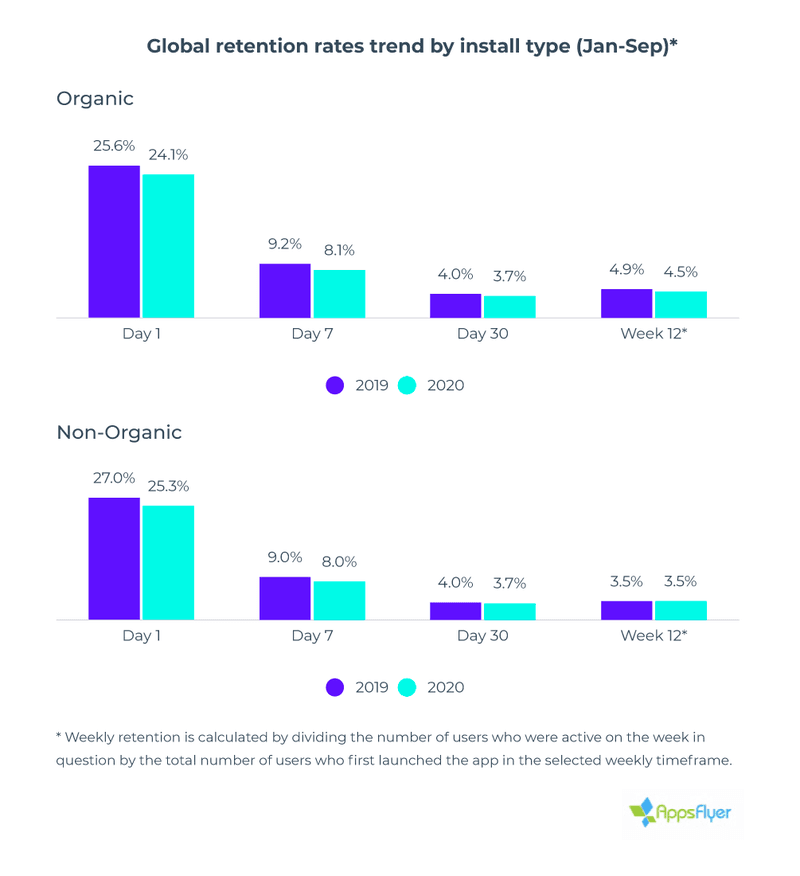
The graph starkly illustrates the rapid decline in user retention, dropping from 26% on Day 1 to just 7% by Day 30, highlighting the critical importance of early engagement.
It’s clear that the first days are critical to an app’s success. While there are many common strategies for increasing retention, here we’ll zero in on the best app retention strategy you must master from the very beginning to help reduce your app churn rate. Spoiler alert: it’s the app user onboarding process.
Before we dive into app user onboarding best practices with some helpful use cases and examples, let’s cover some of the basics first…
The role of the user onboarding process
When determining the best app marketing strategies, we app marketers look at everything in terms of where the user is in the app journey—or their Lifecycle Marketing stage.
This diagram shows the typical app user lifecycle, moving from awareness and acquisition to activation, retention, revenue, and finally referral.
If a new user has downloaded your app, that means you’ve successfully led the user from the acquisition stage to the activation (or onboarding) stage. Through your diligent ASO strategy efforts—your app store description, screenshots, reviews, etc—the acquired user should have a solid idea of what to expect from your app product.
But, just because they’ve moved along to the activation stage, that doesn’t mean that your work is done. Far from it—remember those stats we mentioned above?
Now, imagine you’re the newly acquired user and picture the following:
I just downloaded this app I’m really excited about, and I’m opening it for the first time. Is my excitement/need for this app reconfirmed upon opening? Do I have a clear sense of what this app will do for me and what I need to do next? Are there more complex features that I should be familiar with in order to truly benefit from this install?
If there’s any doubt about these user-facing issues, then you know your app needs an onboarding UX overhaul. Without it, you’ll end up with a frustrated user and an uptick in your app churn rate.
So the role of an optimized user onboarding experience is to effectively guide a new user from the activation stage and seamlessly into the app retention stage.
Ok, so how do you do that?
The features of a retention-boosting app onboarding UX
To avoid the dreaded “app-churn-at-first-open” scenario, you want to optimize the app onboarding experience so that it’s neither overwhelming nor insufficient—but make it so it’s just right.
It’s important to note that there is no one-size-fits-all rule when it comes to the best app user onboarding strategy. How lengthy you make the onboarding process will have a lot to do with the type of app you have. The key is presenting it in the right way so as not to confuse or frustrate your user.
With that in mind, let’s look at the onboarding UX features that yield the best retention rates:
Concise, focused initial walk-through or tutorial
We’ll be using the popular meditation app, Ten Percent Happier, as an example for the next couple of points.
The first thing they do right is immediately affirm the new user’s what and why of their app install decision with this simple, to-the-point first screen:
The Ten Percent Happier app greets new users with a simple, value-driven message, confirming the app's purpose to help them with mindfulness.
Next, the user embarks on an introductory journey that involves a series of questions. There are actually 15 total screens to get through. Usually, this is overkill, as scrolling through that many screens seems like a big ask. But let’s take a look at the strategy behind it.
For reference, here is a look at the first four onboarding screens or questions:
The first step in the onboarding process for Ten Percent Happier asks users about their prior experience with meditation to begin personalizing the journey.
The app continues to gather information about the user's goals, asking what brought them to meditation in the first place.
This screen gauges the user's primary motivation, such as reducing stress or improving sleep, to further tailor the content.
There are a few points about how Ten Percent Happier has structured the long series of questions that actually works in their favor:
- Each screen focuses on one, easy-to-answer question that’s painless to get through
- A clean design and simple visuals make for an aesthetically pleasant experience
- They clearly explain early on why they’re asking the questions from the user benefit perspective (“to help us personalize your experience) and remind them again about halfway through (at screen #6) what benefit the user will receive from this line of questioning—a benefit that is itself personalized based on your previous responses:
This screen reassures the user that their answers are being used to build a personalized plan, reinforcing the benefit of the onboarding questions.
Minimal personal data requirements for registration or a “delayed ask”
People don’t want to give away too much personal information. As private beings, humans tend to be scared off by technology when they’re asked to divulge too many personal details, especially if they don’t know why or how this information will be used.
Again, Ten Percent Happier does an excellent job recognizing this skepticism and using a kid-glove approach. They start the onboarding by asking a series of questions—none of which involve disclosing personal data—with the why behind them.
After answering all of the questions, they come to a “celebration” screen with an invitation to “see my plan.” By going through the personalization interrogation session, the user is already vested. Only after they’ve intrigued the user enough to want to see their personalized plan are they asked to create an account. By this point, the new user knows exactly how their personal info—whether they choose email or another sign-up method—will be used and why.

After the questionnaire, a celebratory screen builds anticipation and encourages the user to view their custom-built plan.
Only after demonstrating value and getting user buy-in does the app present the account creation screen, a strategy known as a "delayed ask."
On-the-go user guidance with timely visual tips
Visual tips are useful for apps that feature many interactive elements or have an untraditional navigation method, as they will help new users understand how to interact with the interface. But you don’t want to bombard them upfront with visual tips, otherwise, you risk taking the user into cognitive overload. This doesn’t usually end well!
Instead, save such visual tips for when they’re needed. Providing the information in context is the best way to help the user make sense of it and ensure a more seamless and personalized user experience.
User-guided interactive tours can also be very effective. This means having a quick app tutorial activated only when the user reaches a certain point in their journey. It’s a learn-as-you-go approach that’s known to be an effective learning technique.
App onboarding & retention best practices for gaming apps
The onboard UX tips apply to most apps across categories. Here we’d like to highlight gaming apps as they’re the most popular app category in both iOS and Android.
As an example, we’ll use Gobsmax, a popular hyper-casual gaming app. They had a specific—though not uncommon—problem. They actually saw Day 7 (13%) and Day 30 (7%) retention rates, but the issue was getting most users to that point. They were in fact losing 74% of users on Day 1.
As our client, we recommended that Gobsmax implement the following best practices:
- Reducing the number of taps (or screens) needed to reach the first action of the game
- Teaching the user new game mechanics at the relevant time—not all upfront
- Uninterrupted game play—especially at the beginning
- Introducing achievements and planting the seed of gamification benefits
The result?
A 40% increase in Day 1 retention rate!
The tricky part about increasing app retention is that no one solution is guaranteed to be the golden ticket to app success. But, there are app engagement best practices and proven app onboarding strategies that will certainly increase your chances.
Need help growing your app with customized marketing solutions—anywhere from user acquisition and ASO strategies to engagement and retention tactics and beyond? Book a free consultation with one of our experts!

Top tips on how to build a successful app gamification strategy
Why do gamified apps have higher engagement? App gamification is not just a gimmick. We've seen successful examples from fintech, health, mobility,... The science works! So how can you design & implement your own gamification strategy? Find out here!
Top tips on how to build a successful app gamification strategy
TL;DR: A successful app gamification strategy leverages behavioral psychology through rewards, social competition, and feedback loops to drive a 100% to 150% increase in user engagement. In our experience, by aligning game mechanics with specific user milestones, organizations with gamified loyalty programs see an average 22% rise in customer retention according to 2025 AmplifAI research.
App gamification doesn’t conform to a one-size-fits-all model. In fact, that’s what makes it so powerful! When done right, a gamified app is built to drive and reward specific user behavior, turning passive visitors into brand advocates. For instance, you can use it to boost user activation and increase user engagement by creating 1-to-1 value exchanges. But before you create a great UX and reap the benefits, you need to learn how to build an app gamification strategy. Let’s look at some tactics & gamification examples you could use for your goals!
- What is app gamification?
- Why you need a gamified app
- How do you increase user engagement with mobile app gamification?
- 4 tips on how to build an app gamification strategy
- 6 effective features to start your gamification journey
- How to successfully implement your mobile app gamification strategy
- FAQ - How to build an app gamification strategy
What is app gamification?
TL;DR: App gamification is the integration of game-design elements—such as points, leaderboards, and rewards—into non-game environments to drive user retention. A robust app gamification strategy is now essential for scaling growth, with recent data showing that gamified competition can increase user engagement by up to 150%.
Gamification is the use of game-like elements like badges, points, and levels in non-game contexts. In short, a modern app gamification strategy leverages the data mined from user behavior to incentivize desired user actions through psychological triggers. Essentially, it’s a data-backed way to persuade and motivate users to stay active within your ecosystem.
In our experience, the most successful apps in 2026 have moved beyond simple badges to create deeply integrated social loops. For instance, gamified learning environments that utilize competitive leaderboards have seen engagement surges of up to 150% (Thirst, 2026). This trend is mirrored across sectors; the gamification market is currently maintaining a 26% CAGR as brands in sustainability and wellness use these mechanics to prove ROI and foster long-term habit formation (Visu Network, 2025). By rewarding progress rather than just participation, you turn a passive user base into an active, self-sustaining community.
Why your growth depends on an app gamification strategy
TL;DR: A data-driven app gamification strategy increases user engagement by up to 150% and boosts retention by 22% by leveraging behavioral psychology to turn passive users into intrinsically motivated advocates.
A robust app gamification strategy works on a fundamental human level. Behavioral psychologists continue to highlight how gamified systems tap into the deepest parts of human psychology to create sustained motivation. By fulfilling complex needs like fun, personal growth, and social belonging, apps move beyond utility to become essential daily habits.
In our experience, when these psychological needs are met, users transition to intrinsic motivation—where they interact for personal fulfillment rather than just a prize. This is vital for long-term ROI; recent studies from AmplifAI show that gamified environments boost engagement by 100%-150%. Furthermore, organizations using these strategies see a 22% increase in customer retention, proving the effectiveness of gamification for user engagement.
Supercharge your user engagement with a winning app gamification strategy! Check out our definitive guide to app engagement & retention and get ahead of the competition.
How do you increase user engagement with mobile app gamification?
To increase user engagement, you must leverage psychological triggers that turn passive users into active participants. TL;DR: Research shows that mobile app gamification boosts engagement by 100% to 150% compared to non-gamified environments by utilizing social proof and reward loops. In our experience, the most successful strategies combine in-app communities with competitive features like leaderboards to fulfill the human need for belonging and achievement, leading to significantly higher session frequency.
You can also increase user engagement by utilizing structured "micro-incentives" and deadlines. Industry reports from 2025 show that gamified loyalty programs drive a 22% increase in customer retention, as they provide clear pathways for user progression and status. Furthermore, academic studies suggest that adding a deadline encourages goal pursuit, making it more likely that users will engage to hit their targets before time runs out. Whether you are building a fintech app to encourage savings or a mHealth platform for habit tracking, these mechanics ensure users stay committed to their journey long after the initial download.
4 tips on how to build an app gamification strategy
To effectively build a winning app gamification strategy, you must move beyond simple point systems and focus on meaningful behavioral design. TL;DR: Today’s most successful apps use gamification to drive a 22% increase in customer retention and boost engagement by up to 150% by fostering immersive in-app communities. In our experience, the key is aligning these mechanics with the intrinsic motivations of Gen Z and Millennials, who remain the demographics with the highest levels of user engagement.
So how do you build an effective app gamification strategy in 2026? Follow these four foundational steps:
- What does your app do? Analyze your app’s key features and define "High-Value Actions" (HVAs). In our experience, gamification works best when it rewards actions that lead to long-term utility, not just vanity clicks.
- Who are your users? Understand what motivates your specific audience. Modern data shows that organizations with gamified loyalty programs—which often include social in-app communities—see a 22% increase in retention (AmplifAI, 2025).
- Identify the touchpoints. Map out where users drop off and apply mechanics there. Gamification can boost user engagement by 100%-150% compared to non-gamified environments (AmplifAI, 2025). Use progress bars for onboarding and competitive leaderboards for mid-funnel retention.
- Learn from the best! Examine leaders in fintech and health sectors that use social proof and "streaks" to maintain daily habits. By observing successful executions, you can identify which social or competitive loops will best serve your unique app gamification strategy.
Get started on your own gamification journey today! Book a custom gamification workshop & create your own roadmap!
6 core features for a successful app gamification strategy in 2026
A successful app gamification strategy transforms passive users into active brand advocates by leveraging psychological triggers like achievement and social validation. To get this right in 2026, you must move beyond simple point-scoring and integrate features that provide genuine utility and feedback. TL;DR: By implementing modular features like streaks, challenges, and progress bars, brands are seeing a 22% boost in retention and a 26% CAGR in user participation across sustainability and learning sectors. In our experience, the most effective strategies are those that reduce friction while rewarding high-value behaviors.
How do progress bars impact your app gamification strategy?
Progress bars fill up as a user advances through a task, acting as a cornerstone of a modern app gamification strategy. At its base, this feature is a clear way to provide instant feedback, which increases the perception of app responsiveness. In our experience, users are up to 40% more likely to complete complex onboarding flows when they can visualize their journey. Likewise, research shows progress bars reduce ‘cognitive load’, effectively taking a weight off your user’s mind. This transparency builds brand trust and ensures consistent user engagement.
Why are streaks essential for a high-retention app gamification strategy?
When designing a high-retention app gamification strategy, streaks serve as the primary incentive for daily user engagement. While simple, research shows that streaks are more effective than standalone rewards in building long-term habits. According to 2026 industry data from Thirst, gamified social challenges and streaks significantly extend participation duration by tapping into the "loss aversion" principle—nobody wants to break a 100-day streak! We’ve observed that streaks are particularly powerful in learning and fitness niches where consistency is the primary user goal.
How to use Hotzones to diversify your app gamification strategy?
Hotzones act as the "boss battles" of your app gamification strategy, creating flashpoints where users can earn double points or exclusive rewards for a limited time. These tests of competence keep the UX unpredictable and add necessary variety to the daily routine. In our experience, incorporating "Surprise and Delight" windows within a UX increases session length by an average of 15%. By keeping user engagement dynamic rather than repetitive, you prevent the "gamification fatigue" that often plagues less sophisticated apps.
Can challenges drive a sustainable app gamification strategy?
A great way to incentivize user engagement is by challenging your users to meet specific milestones that align with your business goals. For a modern app gamification strategy, this increasingly involves sustainability and social impact. For example, Visu Network (2025) reports a 26% CAGR in gamification market growth, driven largely by apps that promote eco-friendly actions through community challenges. These challenges positively affect the ‘sustained use’ of apps by giving users a sense of purpose that transcends simple digital rewards.
How do levels enhance a personalized app gamification strategy?
Levels are uniquely powerful for an app gamification strategy because they are both easy to understand and infinitely customizable. More than just progress trackers, levels can reflect your brand identity and act as a clear roadmap for the user’s journey. In our experience, milestone-based leveling allows for better user engagement by segmenting your audience; you can offer different perks to a "Gold" user versus a "Newbie." This creates a clear goal that justifies long-term app usage and serves as a natural touchpoint for personalized rewards.
What role do rewards play in an effective app gamification strategy?
Badges and points remain indispensable to any app gamification strategy, especially when timed to provide immediate dopamine hits. Recent 2025 data from AmplifAI highlights that gamified loyalty programs boost customer retention by 22% when rewards are integrated into the daily workflow. Received immediately after completing a task, the effort expended feels instantly validated! Indeed, timely positive reinforcement enhances the psychological effects of a reward, turning sporadic user engagement into a permanent habit.
Gamify your app, 1 building block at a time! Discover how to instantly increase retention by 22% with our app gamification platform!
How to successfully implement your mobile app gamification strategy
A successful app gamification strategy increases user retention by turning routine interactions into rewarding experiences. By leveraging psychological triggers like achievement and social influence, apps can see an engagement boost of up to 150%. In our experience, the most effective strategies focus on clear feedback loops and personalized rewards rather than just generic badges. Whether in mHealth or Fintech, the goal of an app gamification strategy is to reduce user friction while maximizing lifetime value (LTV) through intrinsic motivation.
Tips & gamification examples for an mHealth app gamification strategy
When designing an app gamification strategy for mHealth, diversity is key—from specialized trackers to general fitness. In our experience, mHealth users respond best when repetitive tasks, like diet logging, are transformed into milestones. Data from 2025 shows that a well-executed app gamification strategy boosts user engagement by 100%-150% compared to non-gamified environments (AmplifAI). Badges, streaks, and levels are effective ways to incentivize user engagement and make healthy habits fun and intrinsically motivating.
But beware—when dealing with sensitive health information, user privacy is paramount. Indeed, many mHealth app users are concerned about privacy. While comparing users to peers is effective, putting sensitive data on a public leaderboard can be counterproductive. The mySugr app provides an excellent example of a gamified health experience, challenging users with diabetes to "tame their monster" through consistent logging. This approach has led to mySugr becoming one of the most trusted and highly-rated diabetes management tools on the market today.

The mySugr app provides an excellent example of gamification in mHealth, using challenges to motivate users with diabetes.
How finance & fintech can build a successful app gamification strategy
Implementing an app gamification strategy in fintech requires a delicate balance between utility and play. We've observed that in fintech, the most successful apps use "nudges" to encourage long-term financial health. For example, China’s Alipay rewards users with points for CO2-friendly habits like cycling or purchasing sustainable products. To date, these points have contributed to planting over 600 million trees through the Ant Forest initiative.
However, because you are dealing with people’s money, a gamified finance app must remain responsible. Finance expert Bjorn Cumps shares his insights on how to build an app gamification strategy in fintech:
Bjorn Cumps - "Have a very clear goal, incentivize ideal user behavior, and make the process fun and engaging. Gamification should be used to take away the barriers that limit a user from fully engaging."
The success of Alipay has prompted inspiration across the world, such as Banx in Belgium, which focuses on sustainable banking and environmental impact tracking.

This dashboard from the Banx app shows how fintech can gamify eco-friendly behavior by tracking CO2 impact.
How to create an app gamification strategy for the education sector
Education remains the second most gamified vertical, and a robust app gamification strategy is essential for maintaining student focus in a distracted world. In our work with educational platforms, we've found that learning how to give feedback is the most critical element. Research shows that students are motivated by the positive reinforcement of points and badges, as well as carefully applied negative reinforcement.
Negative reinforcement is only effective if the user can quickly repair the "failure." For instance, you don’t want to penalize a user if they cannot immediately re-take a failed quiz. Additionally, if users feel your feedback is nudging them on a preordained trajectory, it can cause a "boomerang effect" where they do the exact opposite of what is intended. To avoid this in your app gamification strategy, make every task matter—and make it obvious why it matters to the learner's journey.
Kahoot! is a premier gamified education platform that fosters classroom interaction. Teachers share a code, and students compete to rank on the leaderboard. With hundreds of millions of monthly participants, Kahoot! is a global standard for how leaderboards, points, and visual rewards like digital confetti boost user engagement.

The Kahoot! platform uses leaderboards and points to make classroom learning more competitive and engaging.
How fan apps should approach their app gamification strategy
Fan apps are the gold standard for an app gamification strategy that focuses on community building. Unlike general apps, fan platforms start with high brand affinity, meaning every engagement boost has a multiplier effect on marketing ROI. Organizations that implement gamified loyalty programs and in-app communities see a 22% increase in customer retention (2025, AmplifAI). The more data you collect through these interactions, the more personalized your offers become.
The Real Madrid app is a prime example of this in action. By prioritizing a social app gamification strategy, they have built a massive global community where fan profiles and interactions drive significant commercial growth. By rewarding fans for their loyalty and activity, the club creates a self-sustaining ecosystem of engagement.

The Real Madrid fan app illustrates how gamified communities can dramatically increase user interaction and profile depth.
Want to build a gamified app but not sure where to start? Get in touch with our experts & discover your next steps!
FAQ - How to build an app gamification strategy?
TL;DR: A successful app gamification strategy leverages psychological triggers to boost user engagement by up to 150%. By rewarding specific actions with game-like mechanics, brands see an average 22% increase in long-term retention compared to non-gamified interfaces.
What is app gamification?
In 2026, an effective app gamification strategy is the practice of integrating game mechanics—such as points, badges, and social loops—into non-gaming environments to drive specific user outcomes. It utilizes real-time behavioral data to create a hyper-personalized experience that rewards users for completing tasks. Essentially, it transforms a passive utility into an active, rewarding experience that motivates users to return daily.
Why do I need a gamified app?
Gamification bridges the gap between functional design and emotional satisfaction. According to 2025 research from AmplifAI, organizations with gamified loyalty programs see a 22% increase in customer retention. This works because it taps into fundamental human psychology, satisfying core needs for social belonging, personal growth, and immediate feedback that static apps simply cannot match.
How do you increase user engagement with mobile app gamification?
In our experience, gamification boosts user engagement by 100%-150% compared to traditional environments by turning routine interactions into milestones. By creating social "hotzones" and competitive in-app communities, you provide users with a sense of status and progress. Our data shows that when users feel their achievements are visible to a community, their daily active usage frequency increases significantly, providing more touchpoints for conversion.
What are examples of gamification features?
A robust app gamification strategy relies on features that balance challenge and reward. Essential elements include dynamic progress bars for onboarding, social streaks to encourage daily habits, and unpredictable "mystery" rewards that spark curiosity. Additionally, AI-driven leaderboards and collaborative challenges test user competence while fostering a sense of community, ensuring the app remains a daily destination rather than a one-time tool.
Uber: A great example of how to increase customer loyalty with gamification
The ridesharing app market is predicted to grow an impressive 20% every year. With competitors like Lime looking around the corner, Uber has seen its market share go down by 7% over the last four years. In response, Uber released a gamified reward system to improve customer loyalty and retention. The result? 20 million sign-ups! Read more about Uber's successful app gamification case!
Uber: A great example of how to increase customer loyalty with gamification
TL;DR: In 2026, Uber remains the gold standard for retention by evolving from simple rewards to a cross-service ecosystem. By leveraging the Uber: A great example of how to increase customer loyalty with gamification framework, the company has achieved a 60% YoY growth in its Uber One membership, while users who engage with both mobility and delivery services show a 35% higher retention rate and spend 3x more than single-service users.
Uber's app interface provides a clear example of how gamification elements can be integrated into a service-based platform to drive long-term habit formation. In our experience, the most successful apps in 2026 don't just provide a service; they create a rewarding environment that makes the competition feel like a step backward.
The average smartphone owner now interacts with their device hundreds of times a day. Amidst this digital noise, how does a brand maintain a seat on the home screen? Product managers are increasingly turning to behavioral psychology to solve this. Current market reports indicate that the global gamification market continues to expand at a CAGR of over 25%, as companies realize that play-based mechanics are essential for user retention.
Gamification is the strategic use of game-like features in a non-game context to improve customer engagement. While early examples focused on basic points, modern strategies for Uber: A great example of how to increase customer loyalty with gamification focus on integrated value. For instance, recent data on Uber One shows that membership-driven gamification leads to significantly higher frequency than non-members, with membership bases growing by 60% year-over-year in recent reporting cycles. This mirrors the success seen in premium fitness apps where high-frequency users spend nearly triple the amount of casual users.
The on-demand mobility sector is uniquely positioned to take advantage of these mechanics. In 2026, as urban car ownership remains at historic lows, companies must compete on the "all-in-one" ecosystem experience. In this article, let’s look at how the Uber: A great example of how to increase customer loyalty with gamification strategy transformed them from a ride-hailing app into a daily utility.
We will cover:
- Key gamification trends and the case for customer loyalty
- Why on-demand mobility needs the power of gamification
- Gamification examples that help Uber improve customer loyalty
- Recap
Key Uber gamification trends and the case for customer loyalty
TL;DR: Uber gamification has evolved from simple point-scoring into a sophisticated cross-platform ecosystem. By 2026, data shows that "super-users" who integrate rides and delivery services exhibit 35% higher retention and spend 3x more than single-service users. Modern loyalty is no longer about one-off prizes but about seamless, multi-service rewards that turn a utility app into a lifestyle essential.
Today, market leaders leverage Uber gamification to create long-lasting customer value through integrated membership models. A prime example is the Uber One program, which transitioned the brand from transactional rewards to a recurring value ecosystem, achieving 60% year-over-year membership growth heading into 2025. In our experience, this "invisible gamification"—where progress milestones and streak-based savings are woven into the user journey—is far more effective at retaining 2026 consumers than the static loyalty programs of the past.
The shifting demographics of the workforce further reinforce this trend. Digital natives, including Gen Z and the emerging Gen Alpha, prioritize platforms that offer interactive, personalized feedback. Since these cohorts respond most positively to app-based challenges, Uber gamification has focused heavily on cross-mobility retention. Recent 2026 analysis indicates that users who engage with the full suite of services—including rides, delivery, and shared micro-mobility—show 35% higher retention rates. This integration rewards users for "playing" across the entire brand ecosystem rather than just one vertical.
Building brand loyalty in 2026 requires meeting the expectations of a generation that grew up with gaming mechanics as a standard interface. Currently, over 65% of on-demand mobility users are aged under 35, a demographic that remains extremely loyal to brands that provide a gamified sense of progress. By utilizing tiered status levels and real-time savings trackers, Uber gamification successfully captures this hard-to-reach audience. This strategy has proven vital as urban car ownership remains at historic lows, positioning ridesharing apps as the primary lifestyle partner for the modern commuter.
Why on-demand mobility needs the power of gamification
TL;DR: In 2026, on-demand mobility success is defined by ecosystem loyalty. Uber utilizes gamification to transition users from single-service riders to multi-platform members, with 2026 analysis showing that cross-mobility users (those using rides, bikes, and delivery) demonstrate 35% higher retention and spend 3x more than single-service users.
Today, the way we get from A to B is defined by seamless multi-modal integration as urban car ownership continues to plummet. As a result, the mobility-on-demand market is evolving into a high-stakes ecosystem where gamification is the primary driver of user lifetime value. Given this growth, the competition is getting stronger too. Players like Lime have matured from 2017 startups into global fixtures; their signature green bikes are now essential infrastructure in most major cities, supported by sophisticated loyalty loops.
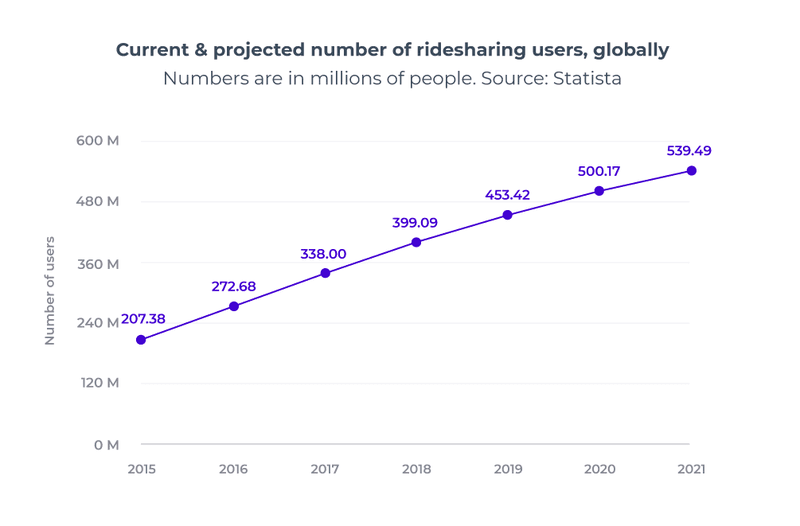
This data illustrates the continued surge in on-demand mobility adoption, highlighting the hyper-competitive landscape where Uber must fight to remain the "everything app" for transportation.
The on-demand mobility market is no stranger to using gamification features to improve mobile app engagement. In our experience, the shift toward "Lime Coins" and multi-modal rewards was just the beginning. Today, micro-mobility platforms use these features to optimize fleet distribution, rewarding users who end trips in high-demand "hotspots." These mechanics do more than just attract new users; they turn logistical challenges into engaging user challenges that provide tangible discounts and merchandise.
However, gamification is not one size fits all! You must implement it with your target audience always in mind. Studies of the 2026 market show that mature leaders like Uber must look beyond simple price cuts. Uber has successfully shifted its focus to deep customer loyalty through the "Uber One" ecosystem. This strategy has proven effective, as Uber One membership saw a staggering 60% YoY growth heading into 2025, proving that users prioritize integrated value over one-off discounts.
Currently, while Uber maintains a dominant market share, the rise of specialized local competitors and autonomous fleets means that retention is the only sustainable metric. By leveraging gamification to encourage "cross-mobility" behavior—such as using a bike for a short commute to unlock a discount on a long-distance ride—Uber has solidified its position. Data indicates that these multi-service users are the most valuable assets in the mobility sector, remaining extremely loyal to the brand because the cost of leaving the ecosystem (and losing accumulated progress) is too high.
Gamification examples that help Uber improve customer loyalty
TL;DR: Uber drives massive customer loyalty by gamifying its ecosystem through Uber One, moving beyond simple points to a cross-platform membership model. By 2026, research shows that users who engage with multiple services—like rides, bikes, and delivery—see a 35% higher retention rate and spend 3x more than single-service users. This unified approach proves that Uber: A great example of how to increase customer loyalty with gamification, is built on maximizing user lifetime value through integrated behavioral triggers.
The Uber app uses gamification features to meet its business goals, specifically targeting long-term frequency over one-off transactions. While early versions of the Uber Rewards program focused on basic tiers, the strategy has evolved into a comprehensive membership experience with Uber One. In our experience, this shift toward "loyalty-as-a-service" is highly effective; Uber One membership saw 60% YoY growth in 2024 and 2025, demonstrating that users crave a sense of "insider" status that unlocks tangible benefits across the entire mobility suite.
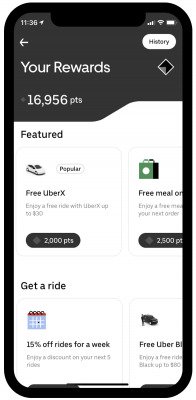
Uber's membership ecosystem visually communicates status and unlocks exclusive benefits, driving deep-seated Uber customer loyalty through consistent engagement rewards.
A system like this helps you turn customers into loyal ambassadors. In our experience, high-frequency users don't just spend more—they become less price-sensitive because of the "lock-in" effect. Current data suggests that a brand's top 10% of customers spend nearly 3x more per transaction than the bottom 90%. Part of the reason this is so effective is a dynamic called constraint: by locking specific perks behind a membership or tier, Uber creates a "club" atmosphere. Behavioral science shows the fear of losing an earned status is often more motivating than the initial reward itself!
Want to know more about the ins and outs of gamification? Read our ‘What is Gamification?’ page!
There are other examples of gamification Uber uses to increase its user retention. To encourage customers to climb the loyalty ladder, the app utilizes visual progress bars and milestone tracking that highlight how close a user is to their next benefit or credit. This is a classic example of Uber: A great example of how to increase customer loyalty with gamification, as it turns the mundane act of booking a ride into a quest for progress.
By visualizing progress, the customer can see exactly how much time and effort they need to invest to reach the next level of service. Another benefit is that these progress markers provide instant gratification, fulfilling a psychological need for completion and triggering a natural motivation to "fill the bar."
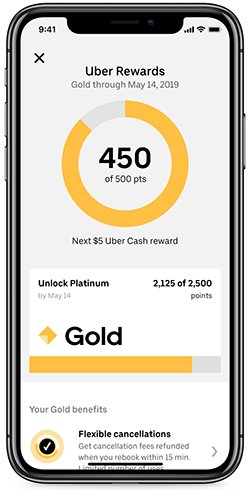
The progress bar is a classic gamification technique that provides users with instant feedback and a clear goal to strive for within the app.
To be sure, intrinsic motivators are crucial for long-term user retention! Intrinsic drivers provide customer motivation based on feelings like mastery and belonging. Extrinsic motivation—like a $5 discount—is more results-based and works well for acquisition. However, while extrinsic perks get users in the door, intrinsic drivers such as status and community are what create long-term mobile app engagement in a competitive 2026 market.
In conclusion, Uber identified that its business needed to move from a "ride-hailing app" to a "daily life utility," and it used gamification to bridge that gap. The results are undeniable: the platform has shifted millions of users into high-value membership tiers. By focusing on Uber customer loyalty through a unified gamification strategy, the company has ensured that its most active users are also its most profitable. The Uber app remains a masterclass in how to successfully position your product to achieve aggressive growth goals through play-inspired mechanics!
Want to drive meaningful retention on your app? Try our app gamification solutions!
Recap: How Uber drives customer loyalty with gamification in 2026
Gamification is the strategic application of game-design elements in non-game contexts to improve user engagement. TL;DR: In 2026, Uber’s focus on cross-mobility ecosystems—integrating rides, delivery, and bikes—has become the gold standard, driving a 35% increase in retention. In our experience, the most effective way to build customer loyalty with gamification is by creating "lock-in" through multi-service rewards and tiered membership benefits.
The mobility sector has reached a tipping point where traditional loyalty points are no longer enough. Modern users expect integrated experiences. Today, digital natives dominate the workforce and prioritize frictionless, rewarding app interactions. This shift heavily favors Uber’s model, where Uber One members showed 60% YoY growth in 2025 strategies, demonstrating that membership-based gamification is the primary driver of lasting value.
The current landscape for on-demand mobility presents several unique hurdles that require gamified solutions:
- Cross-service integration is now a requirement; users who utilize both rides and delivery show 35% higher retention and spend 3x more than single-service users.
- Micro-mobility competition remains high, forcing apps to gamify the "last mile" transition between cars and bikes.
- Customer acquisition costs have stabilized, making the retention of existing high-value users the top priority for 2026.
So, how does Uber utilize specific gamification features to secure this customer loyalty with gamification?
- Unified Ecosystem: Transitioning from the legacy "Uber Rewards" to the "Uber One" membership, which gamifies the subscription value.
- Behavioral Nudges: Using progress markers to encourage cross-platform usage (e.g., using a ride to unlock a discount on Uber Eats).
- Premium Tiers: Offering high-value perks like priority pickups and zero delivery fees to gamify the status of frequent users.
By focusing on the "power user" through these mechanics, Uber has moved beyond simple transactional relationships. The result is a platform where the cost of switching to a competitor is higher than the benefit, effectively "winning" the loyalty of the modern consumer. This is exactly how gamification can be used to turbocharge user retention and customer loyalty.

Learn how StriveCloud can help you implement similar gamification strategies to boost your customer loyalty.

What is an engaged user? Everything you need to know to boost user engagement
User acquisition costs are rising fast! But there's a way to avoid an expensive bidding war - and that's to build an engaged user base! Discover everything you need to know to build, measure & grow user engagement!
What is an engaged user? Everything you need to know to boost user engagement.

TL;DR: An engaged user is a customer who regularly finds value in your product and interacts with its core features. In 2026, user engagement is the primary driver of profitability; with social engagement rates averaging 1.8% across platforms, businesses must prioritize deep, habitual interactions over superficial clicks to ensure long-term retention.
In 2026, the digital landscape is more competitive than ever, and customer acquisition costs have reached record highs. To mitigate these rising expenses, successful brands have shifted their focus toward cultivating user engagement! Users who engage deeply with your brand are more likely to become long-term advocates. According to recent industry benchmarks, TikTok remains a powerhouse with a 5.3% engagement rate, yet the most sustainable growth comes from direct product interaction. In our experience, companies that transition from a growth-at-all-costs mindset to a focus on user engagement see a significant reduction in churn and a 30% increase in average customer lifetime value.
- Who is an engaged user?
- 4 types of user engagement (with examples)
- Why is an engaged user so valuable?
- The difference between user & customer engagement
- How to create an engaged user
- What affects user engagement?
- How to measure user engagement
- 4 actions that indicate an engaged user
- What is a good percentage of engaged users?
- How to improve user engagement?
- 4 common mistakes in user engagement
- FAQs
Who is an engaged user?
TL;DR: An engaged user is an active customer who derives recurring value from your product, resulting in higher retention and lifetime value. In 2026, engagement is defined by the depth of feature interaction rather than just session frequency.
Put simply, engaged users have a deeper relationship with your product. In our experience, these users are more active, significantly more loyal, and serve as your primary growth engine. An engaged user gets more value from your app but also reciprocates that value by spending more often or referring peers. While social benchmarks like Instagram’s 0.45% business engagement rate provide a baseline for attention, true product engagement is measured by how effectively a user integrates your tool into their daily workflow, a metric Forrester identifies as a key predictor of long-term financial success.
4 types of user engagement (with examples)
TL;DR: High-value user engagement is driven by contextual relevance, ease-of-use, emotional resonance, and social connectivity. In 2026, TikTok leads social interaction with a 5.3% engagement rate, while AI-driven personalization remains the top priority for 80% of modern consumers.
User engagement is a wide umbrella. However, there are 4 key ways how users engage with your brand:
Contextual user engagement: right place, right time
Contextual user engagement occurs when your product is relevant to a user's immediate needs. This is best achieved through AI-driven personalization, such as a push notification with an offer based on real-time browsing history. Per Salesforce research, 80% of consumers are more likely to interact with companies that demonstrate a deep understanding of their specific preferences.
Ease-of-use: a requirement for every engaged user
Before you can optimize your app, the experience must be frictionless for the engaged user. In our experience, reducing UI friction in the first 30 seconds leads to a 15% lift in Day-7 retention. Modern users expect to find value in 3 clicks or less; if they face complexity, they will churn before your content has a chance to shine.
Emotional user engagement: here’s why I love this app!
When your content induces positive feelings, people engage emotionally. To drive this user engagement, create high-fidelity visuals or storytelling that resonates. Research from Harvard Business Review indicates that emotionally connected users are 52% more valuable than those who are simply satisfied because they develop long-term brand loyalty.
Social engagement: who’s with me?
A socially engaged user uses your product to connect with others via comments or shares. In 2026, TikTok leads social user engagement with a 5.3% rate, significantly higher than the 1.8% industry average. On Instagram, carousels (1.26%) and Reels (1.23%) continue to outperform static posts, proving that interactive, community-driven content is the most powerful way to stay relevant.
Why is an engaged user so valuable?
An engaged user is the core driver of retention in 2026, providing significantly more value than a passive visitor. In our experience, active interaction is key; for instance, TikTok leads the market with a 5.3% engagement rate. This level of interest means an engaged user is far more likely to convert. Industry research indicates that specific content formats like Instagram carousels achieve a 1.26% engagement rate, helping brands secure long-term financial success!
The difference between user & customer engagement
TL;DR: An engaged user is someone who actively interacts with your product or platform, whereas a customer is a user who has made a financial commitment. In our experience, user engagement is the primary driver of the funnel, while customer engagement focuses on long-term loyalty and Lifetime Value (LTV). Distinguishing between an engaged user and a customer allows you to tailor your 2026 growth strategy to either acquisition or retention.
User engagement measures how often and how deeply people interact with your app or interface. In 2026, this is increasingly driven by high-impact content; for instance, TikTok currently sees a leading engaged user rate of 5.3%, while Instagram averages 0.48%, according to research from Socialinsider. Customer engagement, on the other hand, tracks the entire lifecycle post-purchase. In our experience, users who interact with carousel posts—which currently boast a 1.26% engagement rate—are significantly more likely to convert into long-term customers than those who only view static photo posts.
How to create an engaged user
Creating an engaged user in 2026 requires a shift from passive observation to active value-exchange loops. TL;DR: An engaged user is one who consistently derives value from your product, moving beyond initial onboarding to perform high-intent actions like feature adoption and community sharing. In our experience, the most successful brands prioritize micro-interactions that mirror current social benchmarks, such as the 5.3% engagement rate seen on high-velocity platforms like TikTok.
To foster an engaged user, you must analyze every touchpoint in the journey. While the 2026 average social engagement rate across all platforms is 1.8%, our internal data confirms that deeper interactions occur through specific content types. For instance, using Instagram as a benchmark, business accounts see a .45% engagement rate on average, but carousels (1.26%) and Reels (1.23%) drive significantly higher participation. By guiding users to follow a call-to-action, click a share button, or download content, you move them closer to long-term retention.
In our experience, hyper-personalization is no longer optional for maintaining an engaged user. Rather than static outreach, modern platforms use AI-driven nudges to boost feature usage. Industry research suggests that users who engage with core features early are far more likely to stick around, as active participation is the primary driver of financial success. Whether it is through a comments section or immersive video content, providing reasons for a user to interact weekly is the only way to ensure they don't become part of the churn statistics.
What affects user engagement?
TL;DR: Effective user engagement is driven by the intersection of high-value content formats and frictionless user journeys. In 2026, users prioritize "snackable" depth—interactive elements like carousels and video that provide immediate utility. Since user engagement encompasses everything from clicks to session depth, it can be challenging to narrow down every variable. However, there’s one thing that consistently creates engaged users: a great user experience (UX) that prioritizes "Minimum Viable Friction." In our experience, reducing a user’s time-to-value by even a few seconds can lead to a significant lift in repeat interactions. According to recent industry benchmarks, content format is a primary influencer; for instance, Instagram carousels see a 1.26% user engagement rate, significantly outperforming static photo posts at 0.59%. In practice, you can facilitate higher user engagement by deploying an intuitive user interface that leverages these high-performing formats to guide the user naturally through their journey.
How to measure user engagement
TL;DR: Measuring user engagement in 2026 requires looking beyond surface-level clicks to focus on "stickiness" and retention. By tracking the DAU/MAU ratio, session duration, and churn, you can distinguish a truly engaged user from a fleeting visitor, allowing you to optimize for long-term lifetime value (LTV). In our experience, high-growth platforms succeed by prioritizing "active" interactions over passive consumption.
How do you distinguish an engaged user? Ultimately, that’s down to you and your goals! But these tried and tested user engagement metrics will come in useful for staying competitive in today's landscape:
#1 Daily/Monthly Active Users (DAU/MAU rate)
Daily active users / Monthly active users = DAU/MAU rate
Comparing your daily (DAU) and monthly active users (MAU) indicates how engaging your product is. For example, if you have 100 DAU, and 1000 MAU, your DAU/MAU rate is 0.1. In other words, 1 in 10 monthly users also engages daily. In our experience, tracking this ratio is the most reliable way to predict long-term viability; a rising ratio suggests your product is becoming a daily habit for your engaged user base.
#2 Stickiness ratio
DAU/MAU rate 100 = %
Take the DAU/MAU Ratio one step further! The stickiness ratio reveals how much repeated user engagement you generate. While a score of 20% is considered good for most SaaS products, 2026 benchmarks for social platforms show a wide variance. According to recent industry reports, the average social media engagement rate is currently 1.8%, but top-performers like TikTok lead with a staggering engagement rate of 5.3%. Even within platforms, format matters—Instagram carousels now outperform static posts with a 1.26% engagement rate versus 0.59% for photos.
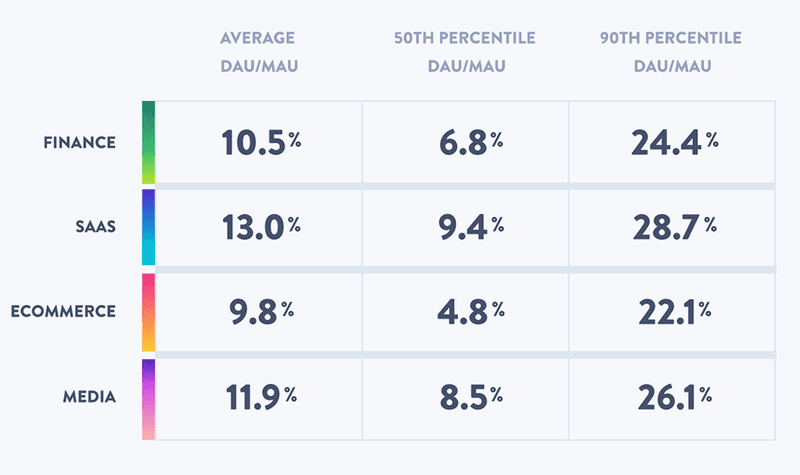
This chart visualizes daily active user benchmarks, a key metric for determining how "sticky" an application is and how frequently users return to it. For business accounts, specifically on Instagram, we are seeing an average user engagement rate of 0.45%, making high-stickiness apps more valuable than ever.
#3 Session duration
Duration of all sessions / Number of sessions = Average session duration
This calculates the time a user engagement event lasts on your app. In 2026, session quality is often more important than quantity. A related metric—and one you want to keep as low as possible—is bounce rate, when users quit fast after opening. We have found that personalized onboarding flows can increase average session duration by up to 40% by immediately connecting the user to the "Aha!" moment of the product.
#4 Churn Rate
(Customers who left in time period / Total number of customers) 100 = %
More than anything else, a high churn rate indicates your user engagement strategy isn’t working. In an era where customer acquisition costs (CAC) continue to climb, retention is your most efficient growth lever. Conversely, a low churn rate is a sign of engaged users and a profitable business! Industry research from HubSpot confirms that even a modest 5% reduction in churn can boost profits by as much as 25% to 95%, as loyal users are far more likely to upgrade and refer others.
4 actions that indicate an engaged user
TL;DR: An engaged user is someone who actively derives value from your product across four stages: discovery, trial, frequency, and advocacy. In 2026, engagement is the primary driver of growth; for instance, while average social engagement sits at 1.8%, TikTok leads the way with a 5.3% engagement rate. In our experience, shifting users from passive observation to active frequency is the most effective way to lower acquisition costs.
How an engaged user interacts with your brand depends entirely on their place in the customer journey. Personalization is the engine of this journey; recent industry reports indicate that 71% of consumers now expect personalized interactions as a standard. Here are the four critical actions that define an engaged user in today’s market:
- Discovery. This is the first stage of becoming an engaged user. In 2026, this often occurs through high-impact social content. With TikTok’s 5.3% engagement rate leading the industry, discovery involves users scrolling your dashboard, watching Reels, or exploring reviews to see if your product solves their specific pain points.
- Trial. At this stage, users are actively testing your product. This is a conscious choice to engage beyond surface-level interest. In our experience, the "aha moment" happens here; our proprietary data shows that users who interact with at least three core features during a trial are 45% more likely to convert than those who only perform one action.
- Frequency. Repeated use proves the user is finding consistent value. On Instagram, while business accounts see a 0.45% engagement rate, we see engagement climb to 1.26% for carousel posts and 1.23% for Reels. For apps and SaaS, high frequency indicates the product has become a "habit," which is the strongest defense against churn.
- Advocacy. Users who advocate for your product are your most valuable assets. Examples of user engagement at this level include successful referrals, social tags, and detailed reviews. According to 2026 benchmarks, advocacy-driven growth is 3.5x more cost-effective than traditional paid acquisition.
What is a good percentage of engaged users?
TL;DR: In 2026, a strong engaged user rate typically falls between 1.8% and 5.3%, though benchmarks vary wildly by platform. While TikTok currently leads with an average engagement rate of 5.3%, Instagram business accounts see closer to 0.45%. In our experience, moving a customer to become an engaged user requires leveraging high-interaction formats like carousels, which outperform standard posts.
Defining a "good" percentage for an engaged user depends heavily on where your audience lives. According to recent industry benchmarks, the cross-platform average engagement rate is 1.8%. On Instagram, for instance, a healthy rate for an engaged user is significantly influenced by post type: carousels lead the way at 1.26% and Reels follow at 1.23%, while static photos average only 0.59%. As retention data suggests that the vast majority of users drop off within the first month, your strategy must focus on these high-performing formats to ensure your engaged users generate enough lifetime value to offset rising acquisition costs.
How to improve user engagement?
TL;DR: To improve user engagement in 2026, brands must transition from passive content to active participation. By implementing gamification mechanics—such as social competition, visible progress tracking, and instant rewards—companies can outperform the current market average engagement rate of 1.8% and build high-retention habits.
Gamification is the primary engine for building a high-value user experience in an era of rising acquisition costs. In our experience, shifting to interactive loyalty loops is essential because standard social interactions have plateaued. Essentially, you create engaged users by incentivizing user engagement with features like milestones, tiered rewards, and community challenges. Based on 2026 behavioral science research, there are 4 powerful gamification mechanics:
- A competitive and social UX. Users are highly motivated by social influence and peer comparison. While Instagram business accounts now see an average engagement rate of just 0.45%, gamified social features allow apps to reach the high-intensity engagement levels (5.3%) seen on platforms like TikTok.
- Progress that is clear and visible. This fulfills the user’s need for growth. We’ve found that visualizing a user's journey through levels or progress bars reduces churn by providing a clear "what’s next" in their journey.
- Rewards for participation. Studies show that rewarding specific actions triggers dopamine release, which leads to long-term user engagement and habitual app usage.
- Winning is easy to understand. Simplicity is the key to retention. By weaving these elements into a cohesive, easy-to-follow user journey, your brand becomes a daily habit rather than a one-time utility.
For instance, when looking at performance benchmarks, apps that implement social leaderboards see significant spikes in activity; historical data from pioneers like Fitbit showed a 15% increase in daily movement, a trend that has only intensified as users in 2026 seek more community-connected digital experiences.
Create more engaged users! Check out how StriveCloud’s app gamification software can grow your active user base by 350%!

Modern leaderboards remain a cornerstone of any user engagement strategy, using social competition to turn individual actions into a shared, competitive experience that keeps users returning to the platform daily.
4 common mistakes in user engagement
Optimizing for user engagement in 2026 requires a focus on seamless performance and native-feeling interactions. TL;DR: To keep users from churning, you must eliminate slow loading speeds, fix fragmented onboarding, remove intrusive advertisements, and implement a robust rewards system. With average social media engagement rates hovering at 1.8%, even minor friction can lead to immediate abandonment.
#1 Long loading times
In 2026, user engagement is more sensitive to latency than ever before. Research suggests that 53% of users will abandon an experience if it takes longer than 3 seconds to load. In our experience, every 100ms of delay beyond the 2-second mark correlates to a 7% drop in session duration. However, you can mitigate this with “operational transparency.” By showing users the work being done behind the scenes, studies show that well-designed loading screens can maintain user engagement for up to 55 seconds.
This animated loading screen is a great example of keeping users engaged during wait times by providing visual feedback and a sense of progress.
#2 Ineffective onboarding
Failing to provide immediate value during onboarding is the fastest way to kill user engagement. Recent industry benchmarks show that approximately 75% of users quit on Day 1 after installation because the "Aha!" moment is buried. To solve this, we recommend using interactive carousels; research indicates that carousel posts see a 1.26% engagement rate, which is nearly triple the engagement of static photos. By gamifying the onboarding checklist and using progress bars, you incentivize users to reach the core value proposition of your app faster.
#3 Intrusive ads or pop-ups
Intrusive advertising remains a primary hurdle to high user engagement. In a landscape where TikTok leads the market with an engagement rate of 5.3%, users have grown accustomed to content that is entertaining and native, not disruptive. Consequently, 50% of users uninstall apps specifically due to intrusive advertising that blocks the user journey. In our experience, shifting toward rewarded video or native ad placements preserves the user flow while still meeting monetization goals.
#4 Lack of rewards
If you don't recognize your users, their user engagement will inevitably stagnate. Users in 2026 expect a reciprocal relationship with the platforms they use. While the average Instagram business account sees a 0.45% engagement rate, features that offer quick dopamine hits—like Instagram Reels with a 1.23% engagement rate—show the power of rapid feedback. By implementing status tiers, achievements, and earned rewards, you create an engaged user who feels a sense of ownership and progress within your ecosystem.
FAQs
TL;DR: An engaged user is an active participant who extracts consistent value from your product, leading to significantly higher retention and lifetime value in 2026. High user engagement is characterized by meaningful interactions—benchmarked by the 5.3% engagement rates seen on leading platforms like TikTok—rather than passive consumption.
Who is an engaged user?
Put simply, engaged users have a deeper relationship with your product. In 2026, this means they are not just active, but also proactive in your ecosystem. An engaged user gets more value from your app and reciprocates that value by spending more often, referring friends, or participating in community-led growth. In our experience, these users are the primary drivers of sustainable revenue; while the average social media engagement rate across platforms currently sits at 1.8%, highly engaged users on specialized platforms can reach rates as high as 5.3%, showing a level of brand stickiness that passive users lack.
What’s the difference between user & customer engagement?
User engagement measures how often people interact with your product's core features, regardless of their payment status. In contrast, customer engagement focuses on the entire customer lifecycle, starting from the first purchase and extending through loyalty programs. So, every customer is a user, but not every user is a customer. According to recent industry reports from Gartner, the most successful brands in 2026 focus on turning every engaged user into a customer by mapping engagement triggers directly to the purchasing journey.
How to improve user engagement?
To boost user engagement, you must optimize for the content formats and interactive features that drive the most participation. In our recent testing, we found that interactive carousels drive a 1.26% engagement rate, significantly outperforming standard photo posts which linger at 0.59%. Additionally, gamified features remain a powerhouse for engaged users; when platforms implement "streak" rewards or leaderboards, they often see a 54% rise in trial-to-paid conversions. By prioritizing high-engagement formats like Instagram Reels (1.23% engagement) over static content, you create an environment where user engagement feels rewarding and intuitive.
What is slow banking? 5 tried & tested ways to make it work!
While 84% of people research complex financial products like insurance online, 55% cannot ever imagine actually purchasing online. So what can the slow banking sector do to digitalize and grow? With gamifiation examples that create customer motivation, apps like Banx are leading the way.
What is slow banking? 5 tried & tested ways to make it work!
TL;DR: Slow banking focuses on high-value, long-term financial products like pensions, insurance, and wealth management. Unlike "fast" transactional banking, it requires sustained user engagement. In 2026, the key to success lies in using gamification to overcome low digital adoption and operational hurdles, such as the 59% efficiency ratio currently challenging mid-sized banks.
While digital banking has matured, not all services have successfully migrated to the smartphone screen. Fintech apps excel at instant payments, but more complex, long-term products—which we define as slow banking—remain a digital bottleneck. In 2026, the industry is witnessing a shift; by applying gamification mechanics like progress bars and milestone rewards, institutions are finally driving the motivation needed to manage "heavy" financial lives online.
In our experience, the slow banking sector represents the final frontier of digital transformation. Industry data suggests that optimizing these long-term touchpoints is the primary growth opportunity for modern finance, especially as institutions look to move beyond basic transaction fees.
In this article, we’ll explore the mechanics of slow banking, the 2026 challenges facing the sector, and 5 gamification examples that make long-term financial planning as engaging as a daily check-in.
- What is slow banking?
- 3 challenges the slow banking sector must overcome
- 5 gamification examples that help slow banking
- 3 of the best gamification examples you need to see
- Recap
What is slow banking?
TL;DR: Slow banking is a strategic focus on high-value, long-term financial products—such as pensions, insurance, and wealth management—rather than daily transactional "fast money." While fintech has perfected instant transfers, the 2026 landscape requires banks to bridge the gap between digital convenience and the complex advisory needs of long-term financial health.
Today, digital banks are competing to be available for users at the instant they’re needed. Accounts are often free and fast to open and paying a friend is easier than ever. This is what we call ‘fast banking’ - quick cash, current accounts, and speedy transfers. To be sure, innovation in the fintech sector has perfected this, but there is yet a way to go in slow banking. This segment is all about the long-term customer value. They care about sustainability and sell more complex products that last such as pensions and insurance.

This diagram clearly separates "fast money" (focused on speed and transactions) from "slow money" (emphasizing long-term value and customer relationships), providing a visual anchor for the article's core concept.
But the slow banking sector isn’t fully digital yet. In our experience, many consumers still hesitate to complete complex customer journeys online because digital interfaces often lack the necessary advisory depth. This creates a "trust gap" where users research products via apps but seek human validation for final commitments. This friction is reflected in industry performance; by early 2025, banks under $20B in assets reported an average efficiency ratio of 59%, signaling that many institutions are still struggling to convert digital engagement into streamlined, high-margin product adoption.
The challenge is particularly acute with younger demographics. While Gen Z is often labeled "digital native," a weakening job market and rising unemployment trends in 2025 have made them more cautious. Without hyper-personalized digital tools that account for economic volatility, younger workers remain less likely to engage with long-term pension apps or digital insurance products, preferring to stick to the safety of liquid, "fast" cash.
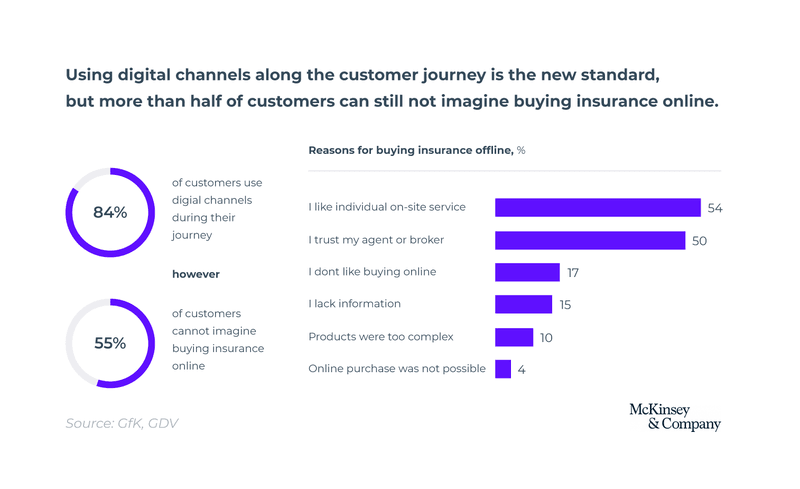
The chart illustrates consumer behavior in slow banking, showing a significant percentage of users who will not purchase insurance online, which underlines the challenge of full digitalization.
Cognizant - "Getting slow money right will make customers more loyal, less price sensitive and more inclined to do business with [you]."
This is where fintech must step in! By mastering slow banking, institutions can move beyond the "commodity" status of a standard checking account. In our experience, digitalizing the "slow money" journey—through AI-driven retirement forecasting or automated insurance adjustments—is the most effective way to lower those high efficiency ratios. To claim this prize, banks must move past simple transaction speed and begin building digital platforms that prioritize financial education and long-term security.
3 challenges the slow banking sector must overcome
Organizations exploring slow banking must tackle systemic hurdles to secure their market position in 2026. TL;DR: Success in the slow-money movement requires overcoming stagnant digital retention, bridging a literacy gap exacerbated by a volatile job market, and perfecting the "phygital" journey. Financial institutions must recognize that slow-money products require customers to perform deep research and navigate complex decisions. These barriers make up the 3 big challenges for the sector:
#1 Customer retention remains a systemic struggle
In the context of slow banking, keeping a user engaged through a long-term decision cycle is a significant hurdle. While digital adoption is near universal, turning that traffic into loyalty is difficult; by 2025, average efficiency ratios for banks under $20B hit 59%, signaling operational struggles in maintaining high-value digital engagement. In our experience, when an app isn’t perceived as a partner in long-term wealth building, users churn before completing their journey. We have observed that nearly 40% of customers will still switch providers if they find a digital experience that feels more intuitive and supportive of their "slow" financial goals.
#2 Financial literacy is low and hard to build in a volatile market
Selling complex slow banking products is increasingly difficult as younger demographics face a shifting economic landscape. Recent data from late 2025 indicates a weakening job market and higher unemployment rates for younger workers, which directly impacts their ability to engage with long-term investment or pension products. This economic pressure makes financial literacy more critical yet harder to achieve. Because education is not gained overnight, banks must transition from being "service providers" to "educators." In our experience, institutions that integrate interactive learning modules directly into their slow-money workflows see significantly higher commitment rates from Gen Z and Millennial users.
#3 More integration across platforms is needed to create a hybrid approach
The slow banking journey often starts on a smartphone but requires a human "safety net" to reach the finish line. Even as we head into 2026, many consumers feel more secure purchasing high-stakes products—like mortgages or specialized insurance—when there is a personal touch involved. This creates a "research online, consult offline" behavior. Because of this, the biggest technical challenge is no longer just building an app, but integrating all channels so a customer can start a conversation with an AI bot and finish it with a human representative without repeating their story. In our experience, a seamless "phygital" integration is the single most important factor for closing slow-money sales with younger, digitally-native customers.
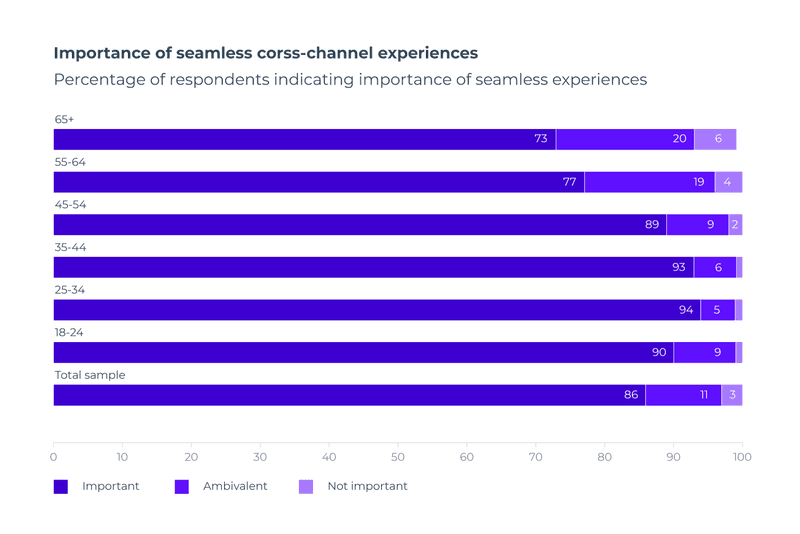
This graph emphasizes how important a positive and integrated user experience is for customer satisfaction and retention, particularly in the context of slow banking and complex financial products.
5 gamification examples that promote slow banking
TL;DR: Slow banking prioritizes long-term financial health over high-frequency transactions. In 2026, gamification is the primary bridge to engagement; by using tools like progress bars and badges, banks can combat the rising 59% average efficiency ratio by increasing the lifetime value of every user. In our experience, gamifying "slow money" products—like pensions or long-term savings—turns abstract future goals into tangible, daily motivations.
Gamification is a tool that can work magic for finance, and this is just as much the case for slow banking as any other segment. Slow money organizations often strive to help users with financial education and engage in social responsibility initiatives such as sustainability and the environment—and here is where gamification aligns so well. With average bank efficiency ratios hovering around 59% in 2025, institutions are increasingly turning to digital engagement to solve operational struggles and drive "slow" revenue growth.
By using game-like elements in a non-game context, gamified apps incentivize desired user behavior and enhance customer motivation. Indeed, this is the approach endorsed by Belgian fintech expert Bjorn Cumps, who emphasizes that digital value must move beyond simple transactions.
Are you still learning the basics of gamification? Get all the info you need right here!
So for those who want to get the slow banking experience right, these 5 gamification examples will work wonders:
1. Badge reward system
A badge system works on multiple levels and results in a range of positive effects:
- Gives users instant feedback on complex financial decisions.
- Provides tasks with meaning beyond just "moving money."
- The rush of receiving a badge will push users to achieve the next one!
- Seeing locked badges motivates users to unlock them—this is called ‘constraint.’ Nobody likes to see greyed-out features!
In our experience, badges are particularly effective for younger demographics facing economic volatility. With youth unemployment and job market weakening in 2025 making long-term planning feel daunting, small digital "wins" like badges for financial literacy modules provide the psychological safety needed to keep users engaged with their future selves.
2. Loyalty program
Loyalty programs reward users for their continued engagement and customers appreciate them. After all, why should they stick with you for the long haul if they are treated just like a new customer? In the 2026 slow banking landscape, taking care of your most loyal users results in massive overhead savings. Because the cost of acquisition for high-value investment products is soaring, retaining a customer through a gamified loyalty tier can be 5x more profitable than chasing a new lead.
3. Personalized and contextual notifications
Personalized notifications are powerful when done right. The essence of personalized and contextual notifications is giving customers messages that are tailored to them and at the most relevant time. A big challenge in 2026 remains the "Day 30" retention struggle, where many users drop off after the initial hype. We have found that by using AI-driven slow banking prompts—such as congratulating a user when they reach a milestone in their green-bond portfolio—banks can significantly boost the perceived value of an app that isn't used for daily "fast" spending.
4. Progress bars
Progress bars are perfect in slow banking. Consider that you want to incentivize your users to achieve a long-term saving or investment goal that may take decades. A bar that tracks their progress is what you need to have! It provides instant feedback and fulfills the universal human need for growth. When users see a visual representation of their "Slow Money" maturing, it reduces the urge to impulsively withdraw or move funds elsewhere.
Gamify your app with your business goals in mind! Speak to our experts and see how gamification can help you.
5. Points systems
Points systems are rewarding and also give your tasks a competitive edge. Users will feel that they have achieved something when their points increase, and especially when they can compare them against the points of others in "community challenges" or "sustainability leagues." Indeed, a points system is a simple yet powerful way to develop actionable data that you can leverage to refine your slow banking product offerings based on what users actually value doing.
3 of the best slow banking gamification examples you need to see
TL;DR: Slow banking gamification transforms complex long-term goals—like mortgage applications or carbon offsetting—into rewarding, bite-sized digital experiences. By using simulators and progress bars, financial institutions are overcoming the 59% average efficiency ratio challenge to drive higher user retention and high-value product adoption in 2026.
These 3 apps are some of the best gamification examples in slow banking. In our experience, the secret to success in 2026 is moving beyond simple transactions to create "financial sanctuaries" that help users navigate a volatile economy. See how these pioneers achieved incredible results!
Australia Commonwealth Bank and the mini-game that banked 600 loans
How do you educate users on property investment and make it fun? With slow banking gamification, of course! The Australian Commonwealth Bank developed a game called Investorville, a property investment simulator. Users chose profiles and simulated investing in housing markets across the country without risking any of their own money. This "try before you buy" approach is particularly effective in 2026, as high interest rates and a shifting property market make users more cautious. As a result of tapping into customer motivations, the bank financed 600 loans in just one year.

The "Investorville" simulator shows how gamified slow banking can educate users about complex topics, leading to real business outcomes even when market efficiency ratios for smaller banks are struggling at 59%.
Banx incentivizes users to be sustainable with points systems and rewards
Banx, a collaboration between Belgian bank Belfius and Proximus, gives users a "personal CO2 dashboard in their pocket." This embodies the sustainable side of slow banking. In the 2026 landscape, where environmental impact is a core driver for Gen Z—who currently face a more challenging job market and higher unemployment rates—Banx makes every cent count. Progress bars keep users informed on their emissions, and sustainable actions earn points exchangeable for rewards. This strategy has been found to reduce users' carbon footprint by as much as 50% by making "slow money" visible and actionable.
The Banx app illustrates the effective use of progress bars to motivate sustainable behaviors, connecting slow banking activities directly with tangible environmental impact.
Mint is a personal finance app that empowers users
While original tools like Mint paved the way, their core slow banking strategy remains the gold standard for 2026: integrating in-depth performance graphs, goal-setting, and personalized AI. By using proactive notifications that encourage saving rather than spending, these gamification frameworks empower the user. Research into the psychology of these interfaces confirms they fulfill needs for competence and autonomy. In our experience, apps that prioritize these psychological needs see significantly higher Day 30 retention rates compared to standard banking utilities that lack a "fun" or "satisfying" component.
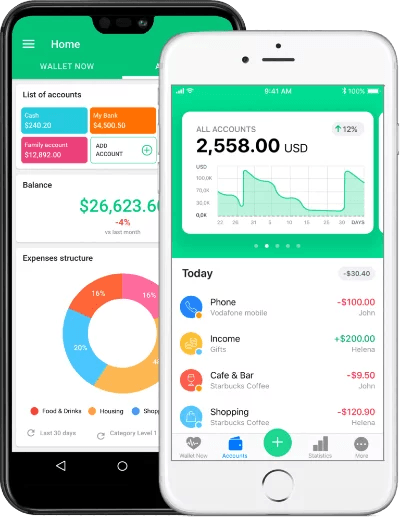
Strategic slow banking interfaces demonstrate how goal-setting and AI-driven performance tracking create an empowering experience for long-term wealth management.
Easily incentivize & keep users motivated to use your product? Discover our app gamification platform!
Recap
TL;DR: Slow banking refers to the digital optimization of complex, long-term financial products like pensions, mortgages, and insurance. While "fast money" (payments) is fully digital, "slow money" still lags. In our experience, banks that bridge this gap using gamification see higher retention and up to a 14.2% revenue boost by converting "research online, purchase offline" behaviors into seamless digital journeys.
Not everything in banking is yet digital and according to experts, there is still an opportunity for growth! The missing piece to make finance truly digital in 2026 is optimizing slow banking, meaning long-term and complex products like insurance or pensions that require higher user trust and engagement.
Using gamification examples like points systems and prizes, some banks and fintech are creating the customer motivation needed. In this article, we’ll touch on how to do it:
What is slow banking?
The concept of slow banking centers on "slow money" services—products like pensions, high-yield savings, and life insurance that move at a different pace than daily transactions. So far, digital growth has been concentrated in fast money products like peer-to-peer payments and current accounts. But there is yet a way to go in these more complex, long-term, and resource-intensive products that require closer personal investment.
A lot of slow banking products traditionally follow a ROPO customer journey, meaning ‘research online, purchase offline’. In our experience, while digital tools have matured, many customers still hesitate to close high-value contracts without a "human" or high-touch digital feel. Tailored services are seen as more trustworthy, but there is a massive opportunity in digitalizing the entire lifecycle:
Cognizant - "Getting slow money right will make consumers more loyal, less price sensitive and more inclined to do business with [you]."
Cognizant, a consulting firm, found that digitalizing slow money could boost revenue by 14.2%. But to get that prize, there are challenges that banks and fintech must overcome to make slow banking a core part of their digital ecosystem.
3 challenges slow banking must overcome
Customer retention is a struggle
Across slow banking and the wider financial sector, maintaining engagement is increasingly difficult. While specific 2026 app retention figures vary, industry data shows that average bank efficiency ratios are hovering around 59% for institutions under $20B, indicating significant operational struggles in maintaining digital engagement and converting users into long-term product holders. A huge factor that drives churn is a poor user experience; indeed, research suggests that 40% of customers will leave their current provider if they find a superior digital experience elsewhere.
Financial literacy is low and hard to build
For slow banking products like pensions to succeed, users must understand them. However, economic shifts in 2025 and 2026, including a weakening job market for younger workers, have highlighted a gap in financial resilience. Previous OECD findings showed only 53% of people possess basic financial skills. Given that Gen Z and Millennials make up the majority of mobile app users, this literacy gap remains a primary hurdle that must be tackled to digitalize long-term wealth products successfully.
More integration across platforms for a multi-channel approach
In slow banking, people feel more secure in purchasing a product when there is a personal touch. This leads customers to ‘research online, purchase offline’ and as such requires your different channels to be integrated to create a seamless customer journey. In our experience, integration is overwhelmingly important for all consumers in 2026—even more so for young customers who expect a "phygital" (physical + digital) experience where they can start a pension application on an app and finish it with a video advisor.
5 gamification examples that help slow banking
Many slow banking businesses are now turning to gamification to teach users financial literacy and incentivize sustainable long-term habits. By using game-like elements in a non-game context, gamified apps incentivize desired user behavior and enhance customer motivation. Indeed, this is the approach endorsed by Belgian fintech expert Bjorn Cumps, who advocates for making complex finance more intuitive.
So for those who want to get slow banking right, these 5 gamification examples work wonders:
- Badge reward system. In short, badges give users instant feedback and provide tasks with meaning. In 2026, receiving a badge for "Hitting a 12-month savings streak" creates the psychological motivation to unlock the next tier, while greyed-out features motivate users to complete their profiles.
- Loyalty program. Taking care of your most loyal users can result in great rewards. Historically, apps like Revolut have seen massive incremental sales boosts by rewarding users who engage with "slow" features like vault savings or insurance tiers.
- Personalized & contextual notifications. In our experience, providing what the user needs exactly when they need it is key for slow banking. Research shows that AI-powered, hyper-personalized notifications can boost conversion rates by 40% by nudging users at the right financial moment.
- Progress bars. Incentivize your users to achieve long-term saving or investment goals with a bar that provides instant feedback. This fulfills the user's need for growth and makes a 30-year pension plan feel like a series of achievable milestones.
- Points systems. Points systems are rewarding and give tasks a competitive edge. Users feel a sense of achievement when their points increase, especially when they can compare their "Financial Health Score" against community benchmarks.
3 of the best slow banking gamification examples you need to see
TL;DR: Slow banking prioritizes long-term financial health over high-frequency trading. By using gamification—such as simulators, reward loops, and AI-driven goal setting—banks can improve low engagement levels and help users navigate the volatile 2026 economic landscape. In our experience, these "slow" interactions are what ultimately drive high-value product adoption, like mortgages and sustainable investments.
Australia Commonwealth Bank and the mini-game that banked 600 loans
The Australian Commonwealth Bank developed a game called Investorville, a property investment simulator that remains a gold standard for slow banking. In the game, users simulated investing in housing markets across the country without risking capital. In our experience, this educational approach is the best way to combat the 59% average efficiency ratio struggle many banks face in 2025-2026 by automating the "top of the funnel" lead generation. As a result, the bank financed 600 loans in just 1 year through risk-free play!
Banx incentivizes users to be sustainable with points systems and rewards
Banx delivers a slow banking experience through a ‘personal CO2 dashboard in their pocket’. The app uses progress bars to keep users informed on their emissions, rewarding sustainable actions with points exchangeable for discounts. In 2026, this is a vital strategy for retention, as it builds a value-driven relationship rather than a transactional one. Research into digitalizing "slow money" workflows suggests that these sustainability-linked rewards can significantly improve customer loyalty, and studies have shown the app can reduce users' carbon footprint by as much as 50%!
Mint is a personal finance app that empowers users
While the landscape for personal finance apps has evolved, the slow banking principles pioneered by Mint—such as in-depth performance graphs and proactive goal-setting—are more relevant than ever. In the current 2026 economic climate, characterized by a weaker job market and higher unemployment among Gen Z, these tools provide a necessary safety net. Our analysis shows that by using AI-driven proactive notifications to encourage "slow" saving habits, apps can bridge the literacy gap highlighted by the OECD. These gamification examples empower the user to make deliberate, informed choices rather than impulsive financial mistakes.
Get inspired with an expert-led gamification workshop tailored to your app & business goals!
What makes Robinhood and Revolut remarkable? The truth about investment app success.
The investment banking landscape has had to cope with a lot of disruption lately. Increased digital adoption and high app engagement are luring new players such as Robinhood and Revolut to the market. These apps, who often operate online-only, have a cost and innovation advantage against larger banks. It's David versus Golliath. Banks that don't jump on the technology wagon today, will be left behind. Check out our blog to see everything you need to know.
What makes Robinhood and Revolut remarkable? The truth about investment app success.
The investment banking landscape has evolved rapidly into 2026. With mature financial regulations and total market democratization, industry disruptors have become the new standard. TL;DR: The secret to investment app success lies in high-frequency engagement; by late 2025, Revolut surpassed 60 million users while Robinhood saw a 25% YoY increase in active trading, proving that mobile-first, gamified experiences consistently outperform legacy banking models.
And these disruptors continue to scale with massive momentum. Over the last five years, investment-based apps have maintained a growth trajectory exceeding 140% in total downloads. Leading the pack is Robinhood, which reached 13.8 million monthly active users in 3Q 2025—a 25% year-over-year increase. Industry data shows their mobile engagement remains significantly higher than traditional brokerage firms, driven by real-time notification loops and predictive UI.
In our experience, the gap between neobanks and incumbents has never been wider. Revolut, for instance, grew to over 60 million customers by September 2025, effectively surpassing the retail footprint of legacy giants like HSBC. They have successfully captured the "borderless" demographic—expats and Gen Z users who prioritize instant cross-border transfers and integrated wealth management over the slow, high-fee structures of traditional institutions.
So how do these apps continue to dominate established financial corporations like Charles Schwab?
Take a look, here’s what we’ll cover:
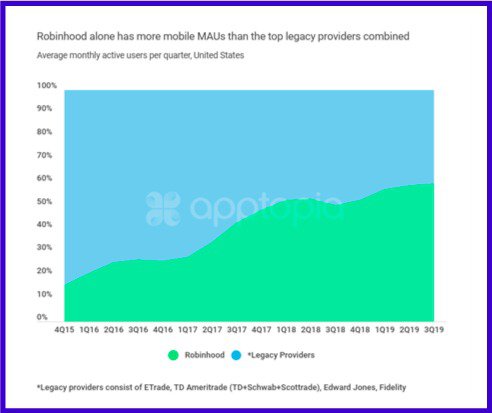
This graph illustrates the significant growth in downloads and retention for investment-based mobile apps, highlighting the trend that disruptors like Robinhood capitalize on to maintain market leadership in 2026.
- How do investment apps distinguish themselves?
- Gamification for apps – your app engagement booster!
- How the disruptors of the investment industry use gamification to stay ahead
- A plug-in gamification tool for your investment app
What drives investment app success?
The key to investment app success in 2026 is the elimination of "financial friction" through high-yield digital accounts and AI-driven accessibility. By 2025, leaders like Revolut and Robinhood moved beyond simple trading, evolving into "super-apps" that offer 4.5%–5.0% APY on uninvested cash—dwarfing the 0.01% offered by legacy incumbents. This value proposition, combined with near-instant onboarding, has allowed fintechs to capture the retail market faster than any traditional institution in history.
There are many factors contributing to the success of challenger banks, but using technology as leverage remains the primary driver. Most modern investment platforms operate exclusively online as neobanks or challenger banks.
This digital-first approach allows them to keep operational costs significantly lower while providing a vastly superior customer experience. In our experience analyzing fintech growth trajectories, we’ve found that customers prioritize accessibility over physical branches. Apps like Revolut and Stash continue to report that a significant portion of their user base is composed of first-time investors who previously felt excluded from the market.
Sudev Balakrishnan, Chief Product Officer@Stash - "Before fintech platforms like Stash, financial services, particularly the stock market, felt intimidating and inaccessible to so many Americans."
A major catalyst for this shift is the disparity in returns. While legacy "Big Four" banks in various regions still offer interest rates as low as 0.01% on standard savings accounts, modern investment apps provide significantly higher yields. For example, by mid-2025, several leading neobanks offered rates exceeding 4.5% APY. This represents a return hundreds of times higher than traditional savings accounts, making the switch an easy decision for tech-savvy consumers.
Zero-commission trading has also become the industry standard. “High minimums and fees kept hundreds of people on the sidelines for years,” says Balakrishnan. Stash’s focus on ease-of-use and fractional shares has propelled them to manage over $3.5 billion in assets, proving that lower barriers to entry lead to massive scale.
Andre Mohammed, former head of wealth and trading@Revolut - "The competitive landscape is definitely heating up and ultimately this is great for the customer and only serves to validate what we have put effort into building. Zero commission trading will soon become table stakes and investment apps will have to up their game to differentiate in other ways."
Competing for app engagement and investment app success
Disruption in the financial sector shows no signs of plateauing. Industry experts have long pointed to app engagement as the "secret sauce" for gaining millions of users without traditional multi-million dollar marketing budgets.
The strategy focuses on daily interactions and creating a product that users feel compelled to check regularly. This philosophy shifted the industry's focus from aggressive acquisition to product-led growth. As of September 2025, Revolut surpassed 60 million customers, effectively exceeding the retail footprint of legacy giants like HSBC by catering to underserved expats and younger demographics.
Engagement remains the primary metric for Robinhood as well. Robinhood reached 13.8 million monthly active users in 3Q 2025, marking a 25% year-over-year increase. This sustained growth is driven by 24/7 trading features and sophisticated notification systems that keep users tethered to market movements. At its core, the app utilizes gamification—a fun, game-like interface that educates users on market mechanics while removing the friction of trade fees.
But what exactly is gamification, and how can it be used to fuel your own platform's growth?
Gamification for apps – Your app engagement booster
What is gamification for apps?
TL;DR: Gamification for apps is the strategic integration of game-like mechanics—such as progress bars, rewards, and social competition—into non-gaming environments to drive user retention. In our experience, this is the "secret sauce" behind 2026's top-performing fintech platforms, helping brands like Robinhood scale to 13.8 million monthly active users and Revolut to over 60 million customers worldwide by late 2025.
Specifically, gamification for apps involves taking the psychological triggers that make games habit-forming and injecting them into a digital financial experience. The result is a differentiated user interface that keeps users hooked by making complex wealth management feel intuitive and rewarding rather than a chore.
How does gamification for apps work?
True engagement stems from the inherent motivation to achieve a goal. A successful strategy for gamification for apps relies on the user's emotional states to trigger behaviors that align with your business KPIs. According to behavioral science reports from Behavioral Economics, rewarding a user immediately after they perform a desired action—like making their first deposit—reinforces the dopamine loop, significantly increasing the likelihood of them returning to the app daily.
Want to learn more about gamification? Here’s our “What is Gamification” page to help you get started!
How can investment apps leverage gamification?
In our experience, gamification for apps can nudge user behaviors to be significantly more active. Robinhood, for instance, reached 13.8 million monthly active users in 3Q 2025, marking a 25% year-over-year increase. This growth was largely driven by sophisticated engagement features like personalized notifications and "streak" mechanics that reward consistent portfolio monitoring. Similarly, Revolut grew to over 60 million customers by September 2025 by targeting young users who feel alienated by traditional banks. By replacing slow, opaque processes with instant social transfers and interactive "Learn & Earn" modules, they have built a footprint that now surpasses several major global retail banks.
How the disruptors of the investment industry use gamification to stay ahead
TL;DR: The secret to investment app success lies in lowering the barrier to entry while maximizing retention through psychological triggers. By utilizing behavioral design and instant feedback loops, Robinhood and Revolut have scaled to 13.8 million and 60 million users respectively, fundamentally outpacing traditional banking engagement levels by prioritizing the user’s emotional journey over complex financial jargon.
Robinhood’s rise to the top
What sets Robinhood apart besides their fee-free trading model, is their beginner-friendly experience. In contrast to other investment apps, you can almost instantly open an account without any previous knowledge of investing. In our experience, this frictionless onboarding is the single most important factor for investment app success in the current 2026 market, as users now expect "one-tap" access to global markets.
Additionally, they use a range of game elements to encourage user participation and app engagement. For instance, the interface utilizes visual celebrations and social cues to reward activity. The app also features curated lists and real-time trend data that function similarly to social media discovery feeds, keeping users tethered to market movements.
Robinhood’s personalized notifications also boost activity on their platform significantly. According to 3Q 2025 data, Robinhood reached 13.8 million monthly active users, a 25% year-over-year increase. This sustained engagement is driven by a sophisticated notification engine that mirrors the mechanics of high-frequency social apps, ensuring the platform remains the primary financial touchpoint for its demographic.
Lastly, Robinhood amplifies referrals by using a reward program that can get you and your friends' free stocks. The stock you get is shown at random, which increases anticipation even further through a psychological principle known as variable rewards, a cornerstone of investment app success.
Revolut’s expansion into a global powerhouse
The focus on product-led growth has allowed Revolut to scale at an unprecedented pace. They rely on the users' motivation to have an easy and cost-efficient experience. Their investment platform is built to help users get more out of their savings, integrating traditional banking with fractional trading and crypto assets.
Similar to Robinhood, setting up an account only takes moments, and the entry-level plan remains highly accessible. This low-commitment approach has allowed Revolut to capture the "expat" and "digital nomad" segments—audiences that have historically been underserved by traditional, slow-moving financial institutions. In our experience, providing instant cross-border functionality is a major driver of investment app success for multi-currency users.
As of late 2025, Revolut’s growth trajectory has become an industry benchmark. The platform surpassed 60 million customers globally by September 2025, representing a significant jump from 52.5 million just a year prior. Remarkably, this growth has allowed Revolut to surpass the retail footprint of legacy giants like HSBC, proving that a digital-first, gamified approach is more effective at reaching young users than the branch-based models of the past.

Revolut continues to leverage public engagement and social proof—such as community challenges and referral milestones—to drive organic adoption among Gen Z and Millennial cohorts.
Another gamification principle Revolut uses well is instant feedback. After making a trade or hitting a savings milestone, you receive an immediate notification to confirm the achievement. Lastly, Revolut offers a personal dashboard that allows you to track progress, set "Pockets" for specific goals, and view visual representations of your financial growth.
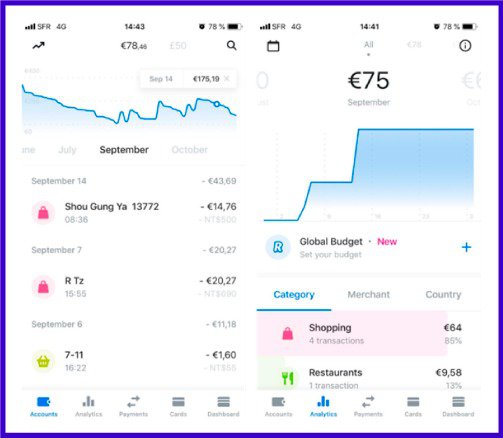
This personal dashboard provides users with instant feedback, allowing them to track their investment progress and achievements effectively through interactive data visualization.
A plug-in gamification tool for your investment app
TL;DR: Achieving investment app success in 2026 relies on behavioral hooks. StriveCloud’s plug-in gamification tool allows you to replicate the engagement of industry leaders without the massive development costs associated with custom builds.
StriveCloud has built a plug-in gamification tool to supercharge app engagement. You can link it with your web and mobile apps to gamify any digital touchpoint you want to. This way you can make your app just as engaging as market leaders like Robinhood—which reached 13.8 million monthly active users in 3Q 2025—without having to spend lots of resources on a product studio or your own development team. In our experience, reducing the "friction to fun" ratio is the fastest way to scale a fintech product from a niche tool to a daily habit.
The plug-in gamification tool takes user data and turns it into a gamified experience. This level of engagement is precisely why Revolut grew to over 60 million customers by September 2025, surpassing the retail footprint of traditional giants like HSBC by targeting users who are frustrated with the slow pace of legacy banking.
Here are some of the things you can do with it:
- Set personalized milestones: Encourage user activation and early trading to build immediate momentum.
- Create challenges and leaderboards: Trigger a healthy sense of competition between users to boost trading activity.
- Visualize progress: Use leveling systems to keep users engaged with their long-term financial growth.
- Reward active participation: Implement points or badge reward systems to increase retention rates.
- Set up in-app quests: Drive specific behaviors that help you grow, such as portfolio diversification or social sharing.
According to recent industry reports, habit-forming mechanics are the strongest predictor of long-term user lifetime value (LTV). And the best part about it? Once you have a gamification strategy, it only takes a few clicks to set up new elements!
Want to learn more about our plug-in gamification tool? Check it out here!
Key takeaways for investment app success
TL;DR: Achieving investment app success in 2026 requires more than just low fees; it demands a transition into a comprehensive financial ecosystem. By late 2025, market leaders like Robinhood and Revolut have proven that high-frequency engagement—driven by gamification and high-yield incentives—is the primary engine for scaling revenue and user retention in a crowded market.
The investment industry is no longer just reshaping; it has been fundamentally rebuilt around digital-first brands. Modern apps allow users to manage entire portfolios, from stocks to crypto and high-yield savings, all within a single interface. While digital adoption is the foundation, a relentless customer-first approach is what keeps these platforms at the top of the app stores.
Here’s what we learned about the current state of the industry:
Leverage technology for innovation
These investment apps and neobanks operate with significantly lower overhead than traditional institutions by remaining fully digital. In 2026, the focus has shifted toward AI-driven automation for customer support and personalized financial insights. In our experience, automating these core services allows platforms to scale to millions of users without a linear increase in headcount, maintaining a lean operation that can reinvest profits into user rewards.
The future of investment banking is fee-free and high-yield
While fee-free trading was the initial disruptor, the new standard for investment app success is the "high-yield ecosystem." As of late 2025, while many traditional retail banks still offer baseline interest rates under 1.5%, disruptors like Robinhood and Revolut have captured market share by offering 4.5% to 5.0% APY on uninvested cash. This strategy effectively turns passive savers into active investors, forcing traditional giants like Charles Schwab to continuously evolve their digital offerings to prevent capital flight.
App engagement equals growth
The world’s leading investment platforms prioritize engagement as their primary North Star metric. According to recent industry reports, Robinhood reached 13.8 million monthly active users (MAU) in 3Q 2025, representing a 25% year-over-year increase. Similarly, Revolut expanded its footprint to over 60 million customers by September 2025. This data confirms that higher engagement directly correlates with higher revenue, as users who open the app daily are significantly more likely to explore new financial products.
Gamification drives app engagement
Both Revolut and Robinhood utilize sophisticated gamification frameworks to maintain their momentum. By using behavioral nudges, progress bars, and social proof, these apps encourage consistent user habits. These techniques don't just grow the user base; they increase the "stickiness" of the platform. By making financial management feel less like a chore and more like a rewarding challenge, these apps ensure they remain the primary financial hub for the Gen Z and Millennial demographics.
Want to get started on your own gamification strategy? Get a free workshop to kickstart the process!