
Dive into top reads
How to hack growth like Revolut (the secret is mobile app engagement!)
Today, almost 50% of people exclusively do digital banking! That number is only set to grow even further! The fastest-growing digital bank in Europe is Revolut, which boasts 15 million+ customers. The app exploded in just 6 short years through the clever use of gamification. Want to find out how they succeeded while others didn't? Check out the full article!
How to hack growth like Revolut (the secret is mobile app engagement!)
TL;DR: Revolut’s ascent to a projected 67 million users by 2026 proves that mobile app engagement is the most efficient engine for hyper-growth. By replacing traditional ad spend with gamified loops and a "super-app" ecosystem, they added 15 million new customers in a single year, maintaining a 38% growth rate that traditional banks simply cannot match.
The digital banking revolution has moved beyond the early-adoption phase; by 2026, it is the global standard. Revolut remains the definitive leader in Fintech innovation, leveraging a model that prioritizes mobile app engagement over expensive media buys. In our experience, their growth isn't just about utility—it's about frequency. By the end of 2024, Revolut's retail base surged to 52.5 million customers, and current data forecasts a reach of 67 million users by the close of 2025. Their strategy utilizes some of the most advanced gamification examples in finance, allowing them to capture nearly 15% of the adult population in core markets. This engagement-first approach has successfully turned a financial tool into a daily lifestyle necessity across more than 40 countries.
Revolut is changing banking for the better through mobile app engagement
TL;DR: Revolut’s "growth hack" is centered on high-frequency mobile app engagement that converts casual travelers into daily primary bank users. By scaling to a projected 67 million retail customers by the end of 2025, Revolut has proven that deep feature integration and gamified loops are the keys to dominating the fintech landscape.
As digital-native banking becomes the global standard, neobanks like Revolut are outpacing traditional incumbents by prioritizing mobile app engagement. Revolut's retail customer base grew by a staggering 38% to reach 52.5 million by the end of 2024. In our experience, this shift isn't just a trend—it’s a structural takeover. In key regions like the UK and Ireland, market penetration has hit approximately 15% of the adult population, reflecting a broader movement where digital-first platforms are no longer "secondary" accounts, but the primary financial hub for the under-40 demographic.
Initially, Revolut was created to allow customers to avoid transaction fees when traveling abroad. In today’s interconnected world, where international digital transactions are the norm, Revolut saw a growing customer need and satisfied it. Now, the goal is to maximize the lifetime value of every user. From 2023 to 2024 alone, Revolut added nearly 15 million new customers, maintaining a growth trajectory that aims for 67 million users by 2026. This scale is supported by a mobile app engagement strategy that turns a simple utility into a "financial super-app," driving massive revenue increases through diversified services like crypto, stock trading, and lifestyle rewards.
The company achieves this by keeping people glued to the interface through social proof and habit-forming design. With tens of millions of active users, Revolut creates more touchpoints for connection than any brick-and-mortar bank could imagine. In addition, loyal users spend up to 30% more than average users and are more likely to become brand advocates. In our experience, these "power users" drive the referral engine that makes Revolut the fastest-growing tech company in its sector. High mobile app engagement leads to effective user referrals, creating a self-sustaining cycle of acquisition and retention that is nearly impossible for competitors to break.
Are you still learning the basics of gamification? Get all the info you need right here!
3 steps to turn mobile app engagement into growth
TL;DR: Revolut’s massive expansion—surpassing 52 million retail customers by 2025—is fueled by high mobile app engagement that converts casual users into brand advocates. By prioritizing product-led growth over traditional ad spend, they achieved a 38% annual growth rate. In our experience, the secret lies in a "network effect" that rewards active participation and social connectivity through a gamified interface.
For Revolut’s fast-growth strategy to remain dominant through 2026, it was imperative to create a highly immersive experience. Rather than investing its budget in traditional marketing, Revolut prefers to invest in mobile app engagement features and rely on user referrals to scale. This approach helped them add nearly 15 million new customers between 2023 and 2024 alone.
The thinking can be summed up in 3 easy steps:
- Make an exciting app with gamification examples like point systems and progress bars.
- Motivate daily user activity to turn passive account holders into customer advocates.
- Incentivize user referrals, led by your most loyal, active customers!
Why is this so successful? User referrals are the most valuable form of marketing! Referrals are achieved by creating loyal customers, which are formed by a fun and satisfying app experience that keeps users coming back daily.
Revolut further encourages user growth by exploiting the ‘network effect’. Essentially, the service becomes more useful the more people in your circle use it. For example, features such as bill splitting or shared saving vaults encourage users to persuade their friends to join. These features give users a social purpose and a clear ‘extrinsic motivation’ to engage with the app regularly.
However, to create long-lasting customer loyalty in 2026, you need to harness intrinsic motivation. This is when the app is naturally fun to use. Based on industry reports, Revolut’s customer base is projected to reach 67 million by the end of 2025, a feat made possible by making financial management feel less like a chore and more like a game.
Since Revolut's inception, dozens of studies have examined the benefits of gamification. Consultancy firm Optimove found that gamification can boost engagement by as much as 30%. In turn, gamification results in a 22% increase in customer loyalty! By keeping users active, Revolut managed to sustain affordable and fast customer growth, cementing its place as Europe’s most valuable fintech.
Changing user behavior is hard. To make it work, you need a deep understanding of what motivates your user to keep opening your app. Luckily for you, our team of gamification experts already did the hard work! Even better, we put it into a workshop packed with foolproof ways to make gamification work for you!
Find out how to leverage psychology to drive behavior change!
5 mobile app engagement and gamification examples that boost the user experience
TL;DR: Revolut’s path to a projected 67 million users by 2026 proves that mobile app engagement is the ultimate growth hack. By integrating behavioral science—like progress bars and tiered rewards—into the core banking experience, they’ve maintained a 38% annual customer growth rate. In our experience, shifting from a "transactional" to an "interactive" interface is what defines fintech leaders in today's digital economy.
#1 A points system rewards user loyalty and creates a fun competitive dynamic
Revolut combines three powerful gamification features into one to maximize mobile app engagement. Users collect points for being active on the app, which dictates their ranking on a global leaderboard. In our experience, this creates a "sticky" loop where the higher ranking also gives users a higher chance of winning significant cash prizes.
Additional incentives that boost user ranking include referring friends and completing in-app challenges. While large prize pools act as extrinsic motivators, the leaderboard taps into intrinsic motivation by making the competition fun. Recent data shows that Revolut added nearly 15 million new retail customers in 2024 alone, a feat driven largely by these social, viral mechanics that reward users for bringing their network into the ecosystem. The excitement is further enhanced with digital confetti and falling coins that celebrate micro-wins.
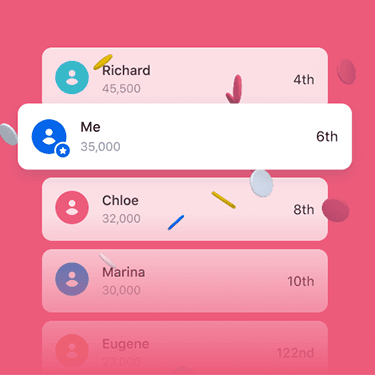
This leaderboard example from Revolut shows how points, rankings, and prizes can be combined to drive user competition and mobile app engagement.
#2 Customization tools like personal avatars and theme selection give users control
Letting users choose a theme and personal avatar is more powerful than it may appear for maintaining mobile app engagement. Not only does customization harness the psychological need for control, but allowing users to make the interface their own also makes them more hesitant to abandon it. After all, it’s their own personal financial hub.
Industry studies have found that custom avatars significantly improve a sense of ownership. In our experience, when a user spends time "decorating" their digital space, they are 40% more likely to return to the app within the first 30 days. This creates an immersive and sticky experience that differentiates Revolut from traditional, "cold" banking interfaces.
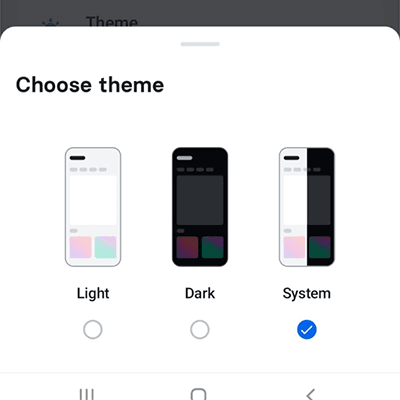
The ability to customize themes and avatars gives users a sense of ownership over the app, increasing its long-term stickiness.
#3 Gamified tasks help Revolut <18 accounts shape the right behaviors

Revolut <18 utilizes gamified tasks to teach young users about financial responsibility, rewarding them for completing goals and driving mobile app engagement from an early age.
Intended to help young people learn healthy financial habits, the app gamifies tasks set by parents to motivate the young users to complete them. After finishing a task, the user gets money transferred to their account. Aside from the obvious motivator of a cash reward, this feature satisfies a core motivational need for empowerment. With market penetration reaching approximately 15% of the adult population in key markets by 2025, Revolut is now focusing on the next generation to secure future growth.
The junior user can choose what tasks to do and when! Gamification is a core element of why the <18 account works so well. Since Gen Z and Gen Alpha make up a massive share of the digital banking future, targeting them with these mechanics is essential for long-term mobile app engagement.
#4 Progress bars push users to save up a nest egg
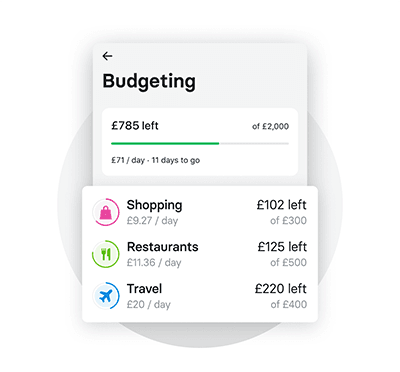
This progress bar visualizes savings goals, providing instant feedback and motivating users to keep working toward their financial targets through high mobile app engagement.
To encourage frugal spending or rainy-day savings, a progress bar shows how close you are to your limit or goal. Users can set their own targets, making the app feel more personal. By visualizing progress, users see exactly how much effort is still required, triggering a natural psychological drive for completion. In our experience, this "Zeigarnik Effect"—where people remember uncompleted tasks better than completed ones—is what keeps users checking the app daily.
Crucially, this feature creates active and loyal users. Customers will use Revolut every time they spend if they wish to keep accurate records and see those bars fill up. This habitual usage is the gold standard for mobile app engagement in the 2026 fintech landscape.
#5 Tiered loyalty programs reward mobile app engagement and create customer advocacy

Revolut's tiered card system is a classic example of a loyalty program that rewards mobile app engagement with exclusive perks, status, and premium features.
A tiered rewards program creates a hierarchy of users similar to a leveling system. Consumer research shows that 75% of people prefer brands that offer loyalty rewards. Why should users engage more with your app if the rewards don’t recognize the extra effort? In gamification, this harnesses the "constraint mechanic"—certain elements are locked and must be earned through consistent mobile app engagement.
The results of this strategy are undeniable. According to financial reports from late 2024, Revolut’s revenue nearly doubled to over $2.2 billion, with pre-tax profits reaching a record $545 million. This growth is a direct testimony to the power of user-friendly, gamified finance. In 2026, building an engaging app isn't just a bonus—it is the baseline for survival.
Enrich your own app with fun elements. You bring the data, we bring the tech! Check out our app gamification software.
Recap: Scaling with Mobile App Engagement
TL;DR: Revolut’s hyper-growth stems from treating its app as an engagement engine rather than just a utility. By leveraging gamification to turn users into advocates, Revolut grew its base by 38% in 2024, reaching over 52 million customers with a projected 67 million by the end of 2025. The secret? High mobile app engagement that drives profit margins through organic, low-cost customer referrals.
Fintech companies are upending banks as we know them. Digital-first banking adoption is accelerating exponentially as traditional institutions struggle to keep pace with modern UX expectations. The clear leader is Revolut – which remains the benchmark for the fastest-growing tech companies in Europe heading into 2026!
Revolut is changing banking for the better
Today, digital banking has reached roughly 15% penetration of the adult population in key markets, reflecting a massive shift away from legacy branch banking. This growth is most visible in Gen Z and Millennial cohorts, where digital platforms are the primary financial hub. To capture this, Revolut chose to focus heavily on mobile app engagement.
The results speak for themselves. From 2023 to 2024, Revolut added nearly 15 million new retail customers, representing a 38% growth rate in a single year. In our experience, profit margins scale because engaged, loyal customers refer their peers at much higher rates, effectively doing the marketing for the brand. This lowers acquisition costs while tripling the value of the user base.
The 3 easy steps of how mobile app engagement creates growth
This is clearly illustrated in the 3-step expansion strategy for Revolut:
- Make an exciting app with gamification examples like points systems.
- Create daily active users that become customer advocates.
- Incentivize user referrals, led by your loyal customers!
Why is this so successful? User referrals remain the most valuable form of marketing! Research shows that 92% of people trust recommendations from friends and family. These referrals are "earned" by people who enjoy using the app – something achieved through intentional gamification.
Consultancy firm Deloitte found that gamification can boost engagement by as much as 40%. In turn, gamification results in a 22% increase in customer loyalty! "In our experience analyzing fintech growth patterns, the shift from a 'utility app' to an 'engagement destination' is what separates market leaders from also-rans." This is the secret to a growing and active userbase.
5 gamification examples that boost the user experience
- A points system rewards loyal users and creates fun competition.
- Customization tools like avatars and theme selection give users control.
- Gamifying tasks incentivizes Junior account holders to achieve.
- Progress bars push users to save up a nest egg.
- Loyalty programs reward app engagement and create customer advocacy.
In short, Revolut has smartly adapted gamification for a Fintech context. The results are clear – with a projected 67 million users by late 2025, the momentum of their revenue and user growth is set to dominate the landscape through 2026!
Gamify your app with your business goals in mind! Speak to our experts and see how gamification can help you.
How to implement gamification? Tools your app needs to succeed in 2023
Gamification tools make it fast and easy to create an engaging app experience. Perhaps that's why, over the next decade, spending on tools for gamification will grow at a rate of 26%! But how do you pick the best gamification tool for your app business? Find out all you need to know.
How to implement gamification? Tools your app needs to succeed in 2023
This article explores the best gamification tools and how to implement them to boost user engagement and retention in 2023.
Gamification tools are platforms designed to help you create engaging user experiences. Because they make it easier to add game features like points, levels, and badges, using a gamification tool can quickly make your app more fun and satisfying to use. In turn, this will improve user engagement, retention, and loyalty. But which tools for gamification are right for your app? In this article, find out all you need to know to pick the best gamification tool for your business in 2023.
- What is gamification?
- What are the benefits of gamification?
- 8 examples of how to implement gamification features
- What are gamification tools?
- What is an example of a gamification tool?
- How to pick the best gamification tool for your business
- Top tips for gamification in 2023
- FAQs
What is gamification?
Gamification is the use of game-like elements like badges, points, and levels in non-game contexts. In short, gamification tools help you leverage the data mined from user behavior to incentivize desired user actions. Essentially, it’s a means of persuasion!
But what makes it so persuasive? To start with, gamification is based on behavioral science. Research shows that gamification taps into the deepest parts of human psychology, and in doing so results in something powerful. By satisfying multiple innate and complex needs like fun, personal growth, and belonging, a gamification tool can improve user satisfaction.
That’s because, when you realize those inner cravings, you create intrinsic motivation. Intrinsic motivators make your app naturally satisfying to use, in turn, enticing users to return to your app! Indeed, studies show that while extrinsic motivators – based more on simple, transactional concepts like prizes and hard results – push users through the discovery phase, intrinsic drivers sustain long-term user retention.
What are the benefits of gamification?
Today, gamification is helping power a surge in mobile app spending. And that’s the case even in today’s unstable economy. Despite a recent decrease in disposable incomes, consumer app spending continues to rise. Likewise, spending on gamification tools is increasing. In 2022, the global gamification market was valued at $15.8 billion, up 26.5% a year. By 2030, the industry is predicted to be worth an impressive $95.8 billion!
Here’s why the world is gamifying:
Slash onboarding churn
Without a doubt, the most important part of the customer journey is onboarding. This is when users have the least amount of attachment to your app - so it doesn’t take much for them to quit! In fact, industry wisdom states that each onboarding step results in a 20% increase in user churn.
To combat this, gamification provides users with instant value! That’s because games are built on a simple concept: complete a task, get a reward! In short, using checklists, interactive onboarding missions, and progress bars makes your onboarding way more fun, not to mention easier to understand. All in all, this makes it harder to quit!
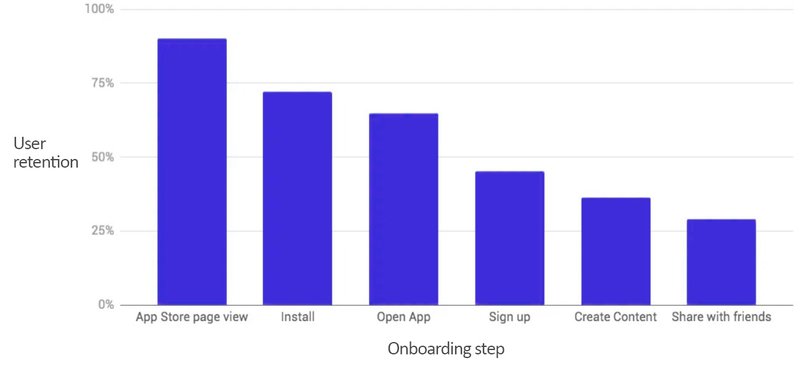
This graph illustrates how gamified onboarding can dramatically reduce user churn by providing instant value and making the process more engaging.
Drive user engagement
The average person spends 1/3 of their time on mobile! And they are always searching for a place to engage. This makes users fickle - and prone to churn - but it also means that there is a huge, untapped reward waiting to be seized! Using a gamification tool can help you attract that potential engagement. Indeed, case studies show that the right implementation of gamification features can increase mobile user engagement by 47%!
Improve user retention
Apps with the best and most exciting user experiences will dominate. In fact, just one bad experience can turn off 2/3 of your users forever! Conversely, tools for gamification can create an app experience that fulfills the basic needs which users crave. Gamified elements are shown to increase perceived levels of usefulness, social influence, and enjoyment. To be sure, when you boost these triggers, you unlock a powerful user motivation that makes retention less of a challenge!
8 examples of how to implement gamification features
When you use a gamification tool, it is fast and easy to implement new game elements. Indeed, there’s no need to code and spend huge sums on app development. But you still need to know what to use and when! Here’s how it works:
Avatars
Avatars are like profile pictures - but better! Essentially, they are just images that represent the user. But they come in different forms, ranging from a simple image to an animated person, such as Snapchat’s Bitmoji.
Basically, avatars let you feel more personally involved, which increases perceived autonomy and your sense of ownership over the app. That makes users less likely to want to leave! Not to mention, avatars help facilitate social behavior because people feel like they’re talking to a person, not a bot! To sum up, use avatars to enrich socialization and ensure a good level of customization.
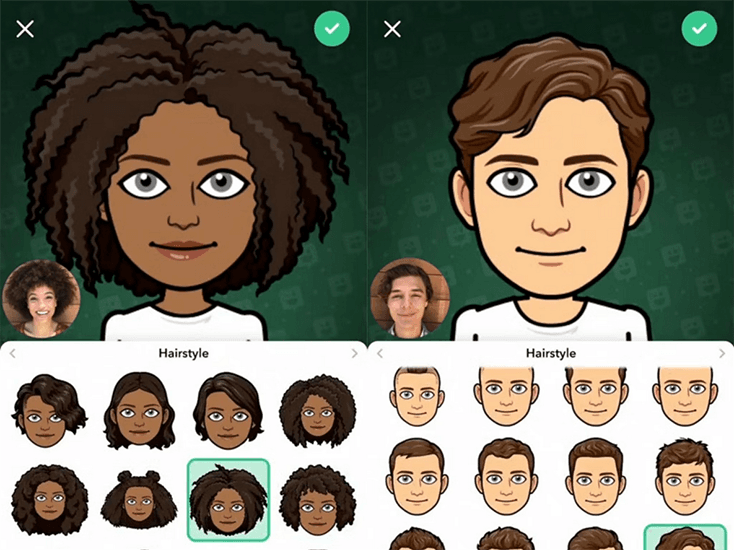
Customizable avatars, like Snapchat's Bitmoji, are a powerful tool for increasing a user's sense of ownership and personal involvement in an app.
Badges
Badges are primarily achievements, however, they are also a form of feedback called positive reinforcement. In other words, the great feeling of getting a badge motivates users to continue! As well, badges can be used as a status symbol. Users love to show off their badges to their peers because it’s a sign of their personal growth and competence. That’s why, when Duolingo introduced badges, their referral rate jumped 116%!
To maximize the effectiveness of badges, time them right. When you receive a badge just after completing a task (and the dopamine hit that comes with it), the effort expended feels all the more worth it! Indeed, research is clear that timely positive reinforcement enhances the effects of a reward.

Duolingo effectively uses badges as a form of positive reinforcement and a status symbol, which significantly boosts motivation and user referrals.
Challenges
Challenges work because they’re fun. It’s as simple as that! Looking closer, behavioral studies show that challenges are a great way to test user skills, or ‘perceived level of user competence’. This is highly motivating and increases app reuse intention. What’s more, the fact that users choose whether to participate motivates them further. Science shows that people look more positively at their own choices - and they will stick by them!
Enhancing user engagement: The role of gamification in mobile apps - "Gamification examples such as challenges have been shown to evoke feelings of freedom in users and, thus, perceptions of higher autonomy."
Ultimately, you can use challenges to get users to perform the behavior that you want to see. A fitness app might want users to run for longer, for example. Well, set a public challenge and watch your users compete to outdo each other! Using a gamification tool, you can easily implement all kinds of challenges.
Lottery
Lotteries make rewards unpredictable, and that’s exciting! For one, unpredictability keeps the user experience fresh, which gives users a reason to stick around. What’s more, lotteries motivate us whether we win or lose. Research shows that just the fear of missing out is motivating enough to make users engage!
To really boost engagement, you can let users make more entries depending on how many points they have. This incentivizes users to engage across your whole app! Not to mention, holding a lottery is more affordable for you than simply doling out prizes. In the end, it’s the fun of the game that matters, not the prize!

Features like lotteries introduce an element of unpredictable rewards, which can keep the user experience fresh and exciting, motivating users to return.
Polls
Interactivity is important. Elements like polls can draw users in, simply by asking for their opinion! For you, this is a great way to gather user feedback and inform how you use your gamification tools. And for your users, polls can be hugely positive:
- Empowers users and shows you value their input. In effect, this builds trust;
- Regular polling incentivizes daily engagement by promising something new;
- Creates a shared interest among your users, which builds a community feeling.
Of course, to ensure maximum engagement, keep your questions short and sweet!
Quizzes
Quizzes are a quick and easy way to test your user. It’s true that people enjoy testing their own skills. In fact, studies show that this need motivates us to take on challenging and satisfying experiences, which ultimately leads to increased well-being!
When you implement quizzes, you can use them to encourage daily activity and act as flashpoints for rewards, such as extra points or level upgrades. For instance, when ESTUDIOS came to StriveCloud to take advantage of our gamification tools, quizzes were one of the 20+ features that they found most useful.
Matthias Zander, Head of Platform @ESTUDIOS - "The biggest advantage is that on the platform you can create a place where it’s worth coming back on a daily basis. For example, you can organize daily quizzes."
Virtual currency
An in-app currency is a form of ‘status points’. In other words, the more you have, the more valuable a user you are! Currencies also provide instant feedback, as they reward users for their effort and growth. And simply put, earning currency is just a great feeling! What’s more, when users already have coins in their wallets, they’re incentivized to stick around. This is called ‘stored value’. Essentially, it is difficult to abandon a currency that you’ve gained and still own. People don’t like to lose out!
To maximize the usefulness of an in-app currency, set up a marketplace where users can redeem their earnings. For example, somewhere to buy app perks and bonuses, as well as merchandise and other goodies that deepen their engagement with your brand!
Wheel of Fortune
In a ‘Wheel of Fortune’, users spin the wheel for the chance to win a random prize. This is a way to further gamify your rewards and even emails. Basically, they are a way to quickly reward your users and entice them to come back for more. That’s because a wheel of fortune boosts the unpredictability of your experience!
A great example of this is the KFC Rewards Arcade app. By implementing games like Wheel of Fortune, the popular restaurant chain wanted to increase loyalty, engagement, and customer lifetime value. Without a doubt, KFC achieved its aims! Their use of the gamification tool Antavo resulted in a 53% increase in loyalty program participation.

KFC's Rewards Arcade app uses a Wheel of Fortune to gamify rewards, leading to a substantial increase in loyalty program participation and customer engagement.
What are gamification tools?
Gamification tools make gamifying your user experience faster and easier. It’s simple - instead of spending time and money on coding features, you can use a platform that has already done the work for you! On that note, using a gamification tool gives you the flexibility to add features gradually. Like that, you won’t overwhelm your users!
In addition, many tools for gamification have expert teams ready to help. Their advice can help you better understand gamification, know what gamified user experiences look like in your industry, and ultimately design an app that’s effective and engaging!
What is an example of a gamification tool?
All kinds of industries can use tools for gamification. A gamified app is simply a mobile app experience that has been enriched with features like points and badges. In short, what’s important is that you want to create growth and improve user engagement!
Here are some examples of gamification tools in 2023:
StriveCloud
Based in the heart of Europe, Belgium’s StriveCloud offers a flexible gamification tool that is trusted by clients across industries: fintech, shared mobility, edtech, health, and enterprise. And because the software is fully modular, you can easily create a great app experience. With over 20 interactive features like rewards and challenges at your disposal, you can easily increase engagement, and user loyalty, and maximize customer lifetime value!
Michael Stewart @HumanForest - "I really like how easy to use StriveCloud is. I don’t need to interrupt any developers or use any code, there’s no lengthy deployment process & changes are updated instantly."
Grow your active users with StriveCloud! Discover how to create an engaging app experience with our gamification tool.
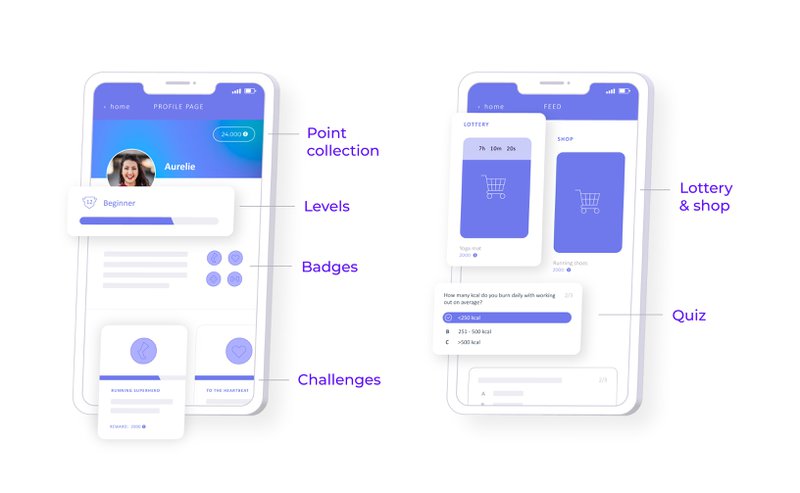
StriveCloud's platform offers a wide range of modular features, allowing businesses to create highly customized and engaging user experiences.
SaaSquatch
SaaSquatch, from Canada, positions as a “referral & loyalty software”. In particular, they offer referral programs that can integrate into both web and mobile apps, with features like points, gift cards, and cashback. This focus on loyalty and tangible financial rewards differentiates them from other gamification tools, as they focus more on sales and user referrals than generally improving the user experience.
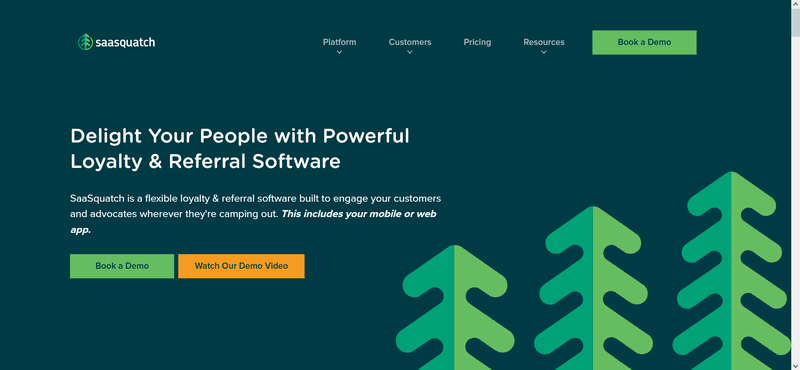
SaaSquatch focuses on referral and loyalty programs, using financial incentives to drive sales and user acquisition.
Insert Coin
Sweden’s Insert Coin is a start-up geared towards teachers, HR managers, and product owners. Their team understands the ins and outs of gamification and is ready to help design and improve your app. At the moment, most of their clients are also Swedish.
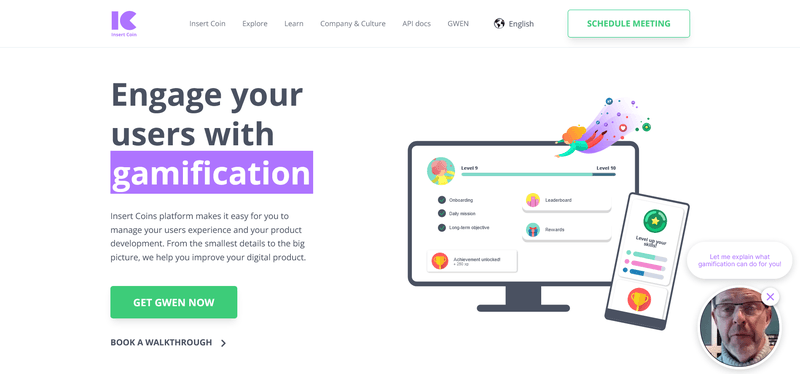
The Insert Coin platform demonstrates how gamification principles can be applied to diverse fields like education and human resources.
How to pick the best tools for gamification for your business
Gamification tools let you improve your app fast and flexibly, all the while being guided by expert advice. Still, every product is different. Ultimately, picking a gamification tool depends on your needs. Whatever you do, keep in mind 3 key elements the tool must have:
- Feature availability. A wide range of interactive features opens opportunities.
- A/B testing. To ensure that you maximize your success!
- Expert gamification consulting. Put your plan on track - and avoid costly mistakes.
Picking the right platform is one thing. You also need a team that understands your needs and goals! That’s why StriveCloud offers free consultations, so you can quickly get to know our friendly team and discover if our loyalty & gamification tool is right for you.
Top tips for gamification in 2023
More than anything, the success of your gamification relies on understanding what motivates your users. With this knowledge, you can use rewards to satisfy the needs that humans crave like progress and achievement. But you can’t just tack on gamification elements. Indeed, you need a clear strategy! Given this, building a gamified app can be intimidating. That’s what makes gamification tools so helpful!
Whether you use a gamification tool or not, here are 3 top tips to keep in mind:
- Have concrete goals and track your progress.Gamification drives the action that you want to see. Naturally, then, it’s important that you know what action it is that you want to promote! Having a concrete goal, like increasing user retention by 10%, can help guide your design strategy and also act as a progress tracker.
- Implement game elements gradually.The more choices that someone has, the more likely they will be overwhelmed and quit! That’s why tutorials don’t bombard with you information all at once. Essentially, it should take minimal effort to learn how your app works.
- Remember to reward participation.Gamification is all about rewarding users for engaging. Like that, they keep engaging! In practice, that means giving users with things like points, badges, and redeemable prizes. When rewarded at the right time, (usually right after the task), the benefits can be huge! For example, research finds that badges result in a ‘significant positive effect’, leading to higher user engagement!
New to gamification? Discover all you need to know about how gamification tools can optimize your app experience.
FAQs
What is gamification?
Gamification is the use of game-like elements like badges, points, and levels in non-game contexts. In short, gamification leverages the data mined from user behavior to incentivize desired user actions. Essentially, it’s a means of persuasion!
What are gamification tools?
Gamification tools make gamifying your app faster than building each new feature from scratch. Instead of spending time and money on coding, you can choose an off-the-shelf solution with all the functionalities you need! Given this, a gamification tool lets you add features gradually and A/B test the response to each. Like this, you won’t overwhelm your users!
What is the best way to use gamification tools in 2023?
To get the most out of a gamification tool, you need clear goals from the start! This way, you will understand better which user actions you should promote to achieve them, and in turn, which gamification elements to use!
How to improve feature discovery for SaaS apps (and why it’s necessary)
In reality, 12% of a product’s features attract the majority of user engagement. That leaves plenty of room for improvement. Feature discovery is a great way to spread awareness & educate users on your product. As the perceived value of your product rises, so do retention rates!
How to improve feature discovery for SaaS apps (and why it’s necessary)

TL;DR: Feature discovery is the strategic process of surfacing the right tools to users at the moment they need them most. In 2026, this is a survival requirement: 60% of SaaS clients are likely to churn if they do not receive personalized product experiences. By utilizing AI-driven nudges and gamified checklists, companies can bridge the gap between "installing" and "extracting value," ensuring long-term retention in a crowded market.
Feature discovery is an important contribution to how users perceive your product value. In other words, when you don’t show the value, users will eventually churn. Current industry reports show that 60% of clients are likely to churn without personalized experiences that highlight relevant tools. Despite this, feature discovery remains a massive blind spot: roughly 36% of SaaS companies still lack any form of in-app guidance to promote their offerings. In our experience, driving user engagement towards new and underused features via app gamification is the fastest way to stabilize MRR and improve adoption.
In this article, we’ll cover everything you need to know about feature discovery, including 12 examples from leading SaaS apps updated for 2026.
- What is feature discovery?
- Why feature discovery is vital for SaaS product adoption
- How to improve user engagement through feature discovery
- 12 top examples of how to promote feature adoption and discovery in 2026
- How to use feature discovery in your own product
- 3 quick wins to improve SaaS feature adoption
- How you can easily implement feature discovery with app gamification from StriveCloud
- FAQ
What is feature discovery?
TL;DR: Feature discovery is the strategic process of guiding users toward high-value functionality they haven't yet utilized. By bridging the gap between a product's capabilities and the user’s awareness, SaaS teams can significantly reduce churn and accelerate time-to-value.
In short, feature discovery is the process of building awareness around new or underused features. While users may stumble upon updates organically, relying on "accidental discovery" is increasingly risky in a saturated market. According to recent 2026 industry benchmarks, 36% of SaaS companies still lack any form of intentional in-app guidance, representing a massive missed opportunity for expansion. In our experience, the most successful product-led strategies don't just wait for users to explore; they use contextual nudges to educate users on relevant tools, which directly improves user engagement and long-term retention.
Why feature discovery is vital for SaaS product adoption
Feature discovery is the bridge between a user’s initial sign-up and their long-term loyalty. TL;DR: Without a proactive discovery strategy, users often miss the very tools they signed up for, leading to stagnation and churn. In our experience, SaaS platforms that prioritize feature discovery see significantly higher customer lifetime value because they guide users toward the "Aha! moment" repeatedly. In an era where 60% of clients are likely to churn without highly personalized experiences, ensuring users find the right features at the right time is a necessity for growth.
Ask yourself — how can you make the most out of product-led growth if users are only scratching the surface of your capabilities? According to recent 2026 benchmarks from Email Vendor Selection, 36% of SaaS companies still lack any form of in-app guidance, meaning that mastering feature discovery provides a massive competitive advantage. By highlighting the right tools at the right time, you unlock several key business benefits:
- Improved Value Realization: Intentional discovery ensures that high-value tools—especially AI-powered features—don't go unnoticed. Current data from Zylo shows that 77% of IT leaders discover AI features operating without prior awareness; structured discovery brings these "shadow features" into the light.
- Increased Engagement and Retention: Highlighting individual features allows you to improve specific touchpoints and keep the product experience fresh for long-term users.
- Reduced Support Burden: When users can intuitively find and adopt features themselves, the volume of "how-to" support tickets drops significantly.
Feature discovery is a surefire way to unlock SaaS growth in 2026! Get started with our ultimate product adoption guide.
How to improve user engagement through feature discovery
TL;DR: To improve feature discovery, SaaS teams must move beyond static tooltips toward personalized, context-aware "priming." In our experience, proactive guidance is the only way to prevent churn in a crowded market; current data shows that 60% of clients are likely to churn if they do not receive highly personalized product experiences. By triggering feature discovery at the point of need, you transform your product from a complex tool into a guided solution.
The way in which users encounter a feature will transform their perception of it. Behavioral scientists call this ‘priming’—a psychological effect where a specific stimulus compels a user to think or act in a certain way. You can use this effect to trigger a recurring loop of user engagement! This is increasingly critical as software complexity grows; for instance, research from Zylo indicates that 77% of IT leaders have discovered AI-powered features being used within their organizations without formal awareness. Without a managed feature discovery strategy, your users are likely missing your most valuable innovations.
In other words, by intentionally triggering feature discovery, you own the context in which a user perceives your platform's capabilities. As a result, the perceived value of your product increases because the user sees the feature as a relevant answer to their current problem rather than just another button in the UI.
12 top examples of how to promote feature adoption and discovery in 2026
TL;DR: Effective feature discovery is the bridge between user acquisition and long-term retention. In 2026, with 60% of users likely to churn without personalized experiences, SaaS leaders must move beyond static tooltips. By implementing gamified checklists, AI-aware announcements, and interactive walkthroughs, products can close the gap where 36% of competitors currently offer no in-app guidance at all.
#1 Gamified checklists incentivize feature discovery
In 2026, feature discovery is often the deciding factor in whether a trial converts. Recent data from Email Vendor Selection reveals that 56% of SaaS products have no onboarding checklists, representing a massive missed opportunity to spotlight key actions. Gamified checklists solve this by providing a structured path to value. Postfity, for instance, has historically used a progress-based system that rewards users for scheduling their first post.
In our experience, leveraging the ‘Zeigarnik effect’—where users feel a psychological need to complete a task already in progress—can significantly boost completion rates. Above all, rewards don’t have to be financial; intrinsic value through badges or achievement systems is often more effective for long-term feature discovery.
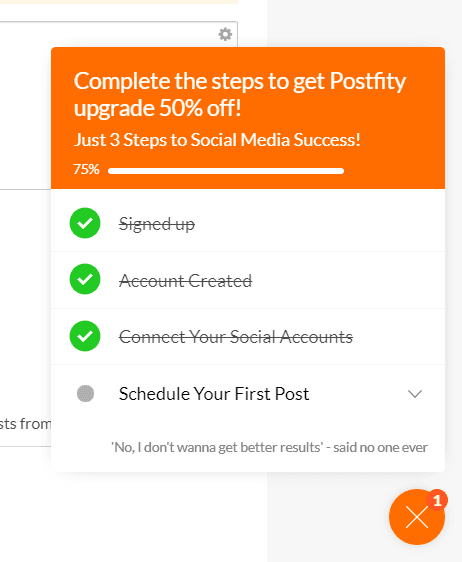
This example of a gamified checklist shows how visual progress and incentives effectively guide new users toward valuable functionalities they might otherwise overlook.
How to maximize feature discovery with app gamification? Get your expert-led workshop & learn to craft your own gamified product!
#2 Interactive walkthroughs let users experience the value
To improve feature discovery, you must let users "play" with the product before they commit. With 36% of SaaS companies currently lacking any in-app guidance, providing a hands-on experience sets you apart. Demio, a webinar hosting service, allows new users to run a "fake" webinar with sample slides and simulated chat attendees. This interactive sandbox ensures that feature discovery happens through doing, not just reading.

Demio's interactive onboarding uses a simulated environment to demonstrate its core value proposition, making the feature discovery process engaging and risk-free.
#3 Segment feature updates
Personalization is no longer optional for feature discovery; it is a requirement for survival. According to SeoProfy, 60% of clients are likely to churn if they don't receive personalized experiences. Simple segmentation allows you to show the right feature to the right person. Beamer, for example, allows teams to personalize feature updates and push notifications based on whether the user is an admin, a newcomer, or a power user, ensuring relevant feature discovery every time.
#4 Tooltips can nudge customers to underused features
Even the best tools suffer from poor feature discovery if users are overwhelmed. Livestreaming platform Kumu famously addressed low adoption of their search bar using a simple spotlight nudge. This targeted intervention resulted in a 54% click-through rate. In our experience, these "micro-moments" of guidance are critical, especially considering that over a third of SaaS products currently leave users to navigate complex interfaces entirely on their own.

Kumu's use of a spotlight effectively drew user attention to an underutilized area, proving that feature discovery often just needs a visual cue to succeed.
#5 Celebrate customer success (and include tips on how to get more value)
Positive reinforcement is a powerful driver of feature discovery. Evernote masters this by congratulating users after they complete their first major action, such as sending an email to the app. By celebrating the "win" and immediately suggesting a related feature, they keep the discovery loop active. This strategy directly addresses the 60% churn risk by making the user feel seen and supported throughout their journey.

Evernote’s success emails demonstrate how to transform a single action into a broader feature discovery moment by providing timely, relevant tips.
#6 Promote new features with announcements
The rise of AI has made clear communication essential for feature discovery. Research from Zylo indicates that 77% of IT leaders have discovered AI-powered features operating in their stack without their prior awareness. Slack addresses this "shadow feature" problem by using slide-out modals and GIFs to announce updates. By clearly showing how a new AI or formatting tool works, they ensure feature discovery is intentional rather than accidental.
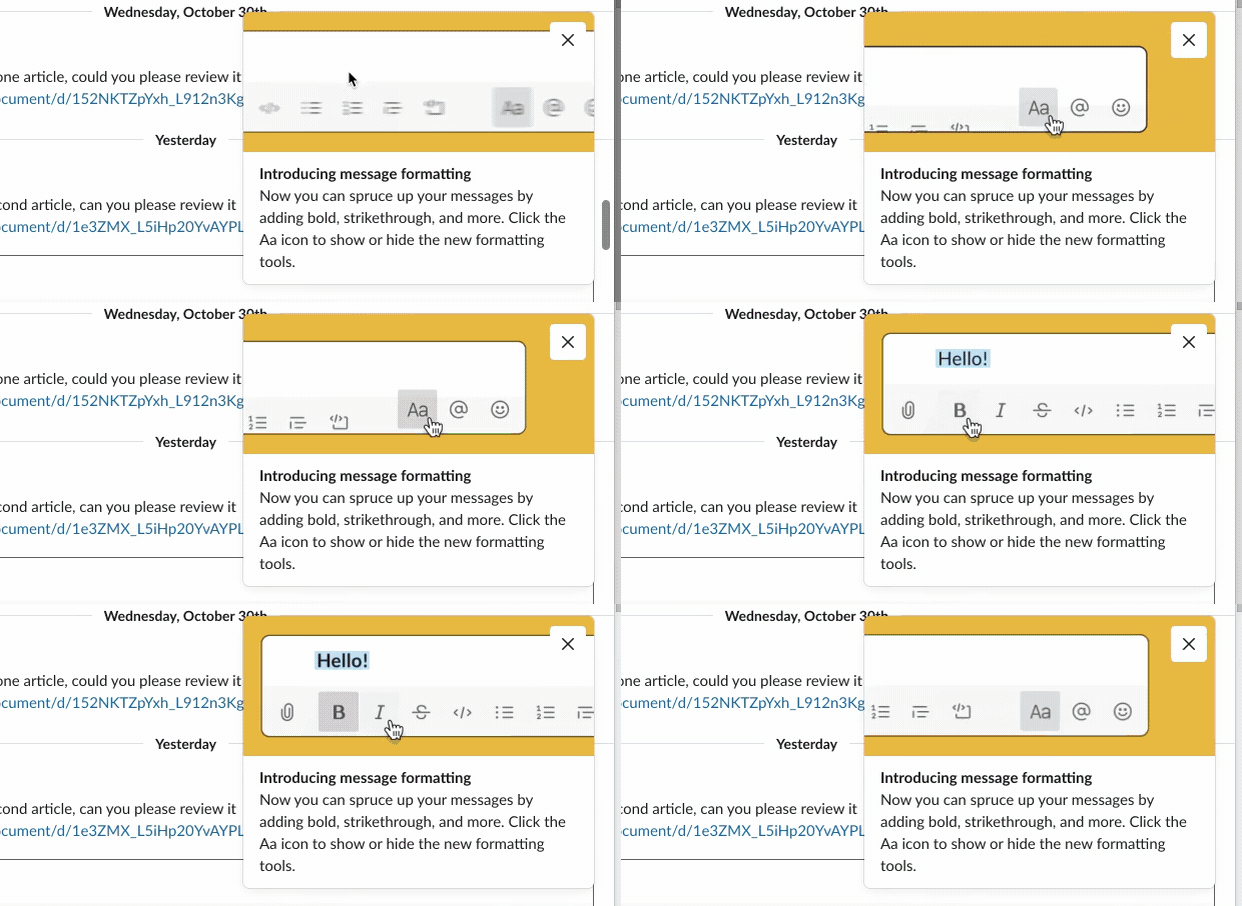
Slack's use of short, animated visuals ensures that feature discovery is instantaneous and the immediate benefit of the update is obvious to the user.
#7 Welcome emails can highlight the app’s key features
Your first email is a prime secondary channel for feature discovery. While standard marketing emails often see low engagement, welcome emails are over 75% more likely to be opened. Descript uses this opportunity to introduce its core functions. In our experience, including 2-3 "quick win" features in a welcome email significantly reduces the time-to-value for new users.
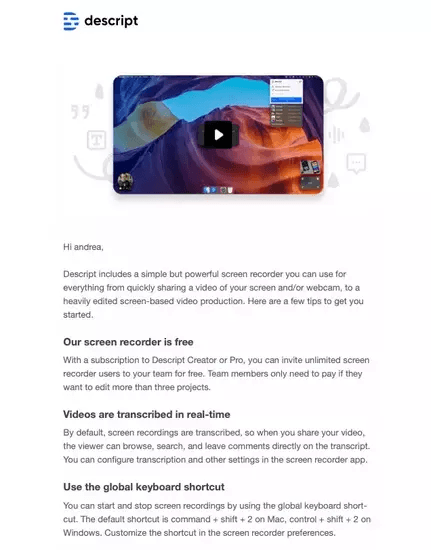
Descript's welcome email leverages high open rates to ensure feature discovery begins the moment a user signs up, even before they log back into the app.
#8 Let users provide feedback if feature discovery is skipped
When a user skips a tour, it’s an opportunity for feature discovery research. HubSpot implements a feedback loop when users exit an onboarding flow, asking why it wasn't helpful. This data is vital for combatting the 60% churn rate associated with non-personalized experiences. Understanding why a segment ignores certain features allows you to pivot your strategy and offer more relevant discovery paths later.
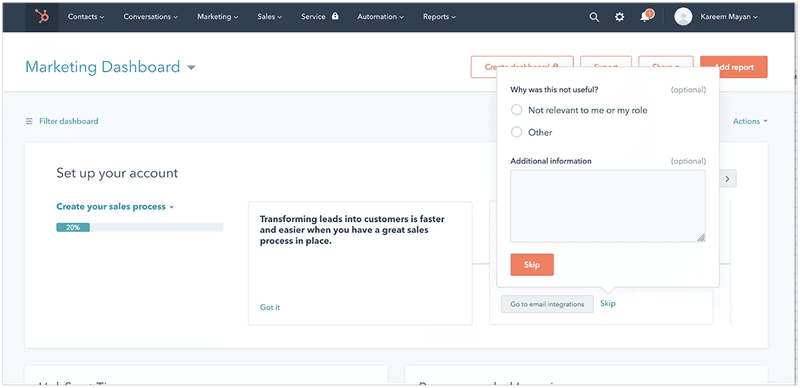
This HubSpot prompt is an excellent way to capture the "why" behind missed feature discovery, allowing for better iterative design in future updates.
#9 Highlight new features through design
Visual cues are the simplest form of feature discovery, yet they are often neglected. Statistics show that 70% of SaaS products lack progress bars or clear visual indicators in their onboarding. Asana avoids this pitfall by adding a vibrant "New!" tag to their navigation menu. This subtle design tweak triggers curiosity, leading users to engage with the product's latest additions without the need for intrusive pop-ups.
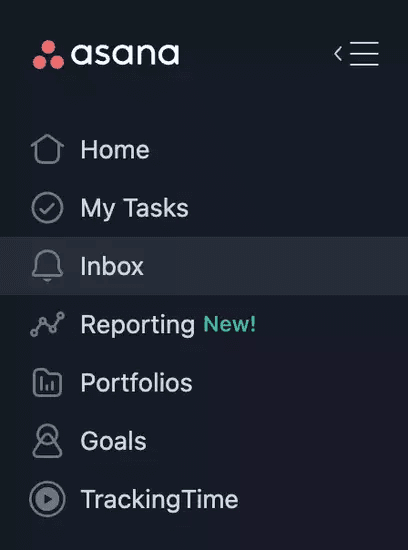
Asana demonstrates that feature discovery can be achieved through minimalist design that respects the user's workflow while still catching their eye.
#10 Create a dedicated in-app location for updates
Centralizing your updates creates a consistent hub for feature discovery. Revolut uses a modern, "stories" style format to showcase monthly updates to its most active users. By using a familiar social media UI, they make the discovery of new financial tools feel like entertainment rather than a chore. This dedicated space ensures that power users never miss a beat.

Revolut’s story-based updates provide a dedicated, high-engagement channel for feature discovery that feels native to the modern mobile experience.
#11 Discover when users are churning - and intervene
A proactive software adoption strategy is your best defense against churn. When users struggle with a complex tool, they don't always ask for help—they often just leave. Productivity SaaS Groove used a personal email intervention to re-engage users who had stalled. In our experience, a simple, human-centric message can be more effective for feature discovery than any automated tutorial, directly addressing the 60% of users who feel a lack of personalization.

Groove’s intervention email proves that feature discovery can be reignited through empathy and timely support, turning a potential churn into a loyal user.
#12 Create a blog with valuable product tips
Finally, long-form content remains a staple for deep feature discovery. Educated users are high-value users because they understand the full breadth of your product. By sharing industry insights and technical "how-to" guides on your blog, you empower your brand champions to optimize their workflows. In 2026, where "shadow IT" and hidden AI features are common, a clear blog guide serves as a source of truth for your most innovative users.
How to use feature discovery in your own product
TL;DR: High-impact feature discovery prevents "momentum behavior"—where users stick to inefficient habits—by using contextual nudges and AI-driven personalization to surface tools at the exact moment of need. Without proactive discovery, users often fail to realize the full value of your platform, leading to stagnation and churn.
Your feature discovery strategy must be proactive because users are inherently task-oriented, not exploration-oriented. In our experience, even the most innovative tools remain untouched if they don't disrupt the user's autopilot mode. This "visibility gap" is more prevalent than ever; 2026 research from Zylo reveals that 77% of IT leaders discovered high-value AI features operating within their software stacks without any prior awareness of their existence. This confirms that simply shipping a feature is not enough to guarantee its use.
UX experts NN/g - "Momentum behavior happens when parts of the interface are not strong enough to call to users when they need them."
To maximize feature discovery and overcome the mental friction of switching to new workflows, the user experience experts at NN/g suggest four critical tactics:
- Analyze common user paths. If the most efficient route to a goal isn’t the most popular, use feature discovery prompts to redirect users toward the better path.
- Avoid "banner blindness" by ensuring new feature announcements don't look like advertisements; they should feel like a native, helpful part of the interface.
- Allow users to sync information across different platforms seamlessly, which significantly boosts user engagement by removing the hurdle of manual data entry.
- Ensure discovery elements are fully responsive; a feature that is easy to find on a desktop must be equally discoverable on mobile devices to prevent fragmented adoption.
With recent industry benchmarks showing that 36% of SaaS companies currently lack any in-app guidance, implementing these tactics provides a clear competitive edge. To track the health of your product-led growth, you must consistently monitor this metric:
feature adoption rate (%) = (new users of feature / total product users) x 100
Develop a gamified feature adoption strategy - Book your app gamification workshop & learn how to use psychology to drive user engagement!
3 quick wins to improve SaaS feature discovery and adoption
TL;DR: Effective feature discovery in 2026 requires moving beyond generic pop-ups toward personalized, behavior-driven nudges. By implementing gamified elements like progress bars and contextual educational triggers, SaaS companies can mitigate the 60% churn risk associated with unpersonalized experiences and ensure users find high-value tools, including "hidden" AI capabilities.
App gamification creates the motivation to act
App gamification remains a cornerstone of user engagement because it taps into fundamental human psychology. Success in this area relies on satisfying the need for competence and autonomy. However, many companies are missing this opportunity; 2026 research from Email Vendor Selection reveals that 70% of SaaS products still lack progress bars, and 56% do not utilize onboarding checklists. These visual milestones are essential for feature discovery, as they provide the psychological "nudge" required to explore deeper product functionality rather than just the basics.
Contextual notifications help users when THEY need it
The line between helpful guidance and intrusive noise is thin. In 2026, the standard for feature discovery has shifted toward hyper-personalization. In our experience, generic broadcasts are less effective than behavior-triggered tooltips that appear only when a user demonstrates specific intent. This is critical for retention, as data from SeoProfy indicates that 60% of clients are likely to churn if they do not receive a personalized experience. By segmenting your discovery flows, you ensure that power users aren't bothered by basic tutorials, while new users aren't overwhelmed by advanced configurations.
Promote your features through product marketing
Product marketing in 2026 is an internal growth engine focused on education and awareness. Despite its importance, 36% of SaaS companies still lack any form of in-app guidance, leaving users to find new tools by accident. This "discovery gap" is particularly visible with modern technology; according to Zylo, 77% of IT leaders found AI-powered features being used within their organizations without prior awareness. To bridge this gap, product marketers should leverage changelogs, empty states, and chatbots to turn passive feature discovery into an active, guided journey that highlights the ROI of every new update.
Bonus: Hypothesize, test, and tweak!
Effective feature discovery is never a "one and done" project. Use your product analytics to identify which segments are ignoring key updates, then hypothesize a solution. Does the user need a checklist, or a direct link to a video tutorial? In our experience, testing small variations in the timing of a feature spotlight can result in significant adoption lifts. By continuously tweaking these touchpoints based on real-world usage patterns, you create a self-optimizing product-led growth engine that drives long-term user loyalty.
How you can easily implement feature discovery with app gamification from StriveCloud
TL;DR: Successful feature discovery requires transforming passive exploration into a guided, reward-based journey. By leveraging app gamification to provide visual progress bars and milestone rewards, SaaS platforms can overcome the fact that 70% of products currently provide no visual cues for adoption, significantly reducing the 60% churn rate associated with poor user experiences.
Studies show clearly that app gamification can improve the user experience by increasing the perceived value of every interaction. In our experience, this is the most effective way to improve feature discovery in complex workflows. Current 2026 industry data highlights a massive opportunity gap: 70% of SaaS products lack progress bars and 56% offer no onboarding checklists (Email Vendor Selection). Without these nudges, users often fail to uncover deep-funnel tools, leading to the "hidden feature" problem. By gamifying the discovery process, you provide the structural motivation users need to move from basic utility to power-user status.
In fact, our app gamification solution allows you to easily add game-like features and contextual messaging throughout the user journey. This is essential for modern retention strategies, as 60% of clients are likely to churn if they do not receive a personalized, engaging experience that guides them to value (SeoProfy). Simply connect your data sources and create a custom adoption journey, from onboarding to power user. Start building your habit-forming product today!
Discover the possibilities of driving user engagement & adoption with our App Gamification Software!
Feature Discovery FAQ
What is feature discovery?
TL;DR: Feature discovery is the intentional process of guiding users to find, understand, and adopt specific functionalities within your application to drive maximum value. While some users may find tools organically, a data-driven feature discovery strategy uses in-app cues to remove friction and highlight relevant tools. This is more critical than ever, as research from Email Vendor Selection shows that 36% of SaaS companies currently lack any in-app guidance, leaving users to navigate complex interfaces entirely on their own.
Why is feature discovery important for SaaS?
To improve feature discovery is to directly impact your bottom line through better retention. In our experience, "feature blindness" is a leading cause of churn; if a user doesn't know a solution exists within your app, they will look for it elsewhere. Current 2025-2026 industry trends from SeoProfy suggest that 60% of clients are likely to churn without personalized experiences that surface relevant features. Additionally, with the rapid rise of automation, Zylo reports that 77% of IT leaders have discovered AI-powered features operating without their awareness, highlighting a desperate need for better communication and guided discovery to manage "shadow" feature usage.
How to use feature discovery to improve user engagement?
The most effective way to drive engagement is through "priming"—a behavioral science technique where subtle stimuli prepare a user for a specific action. You can implement this by using structured onboarding elements, yet 56% of SaaS products currently have no onboarding checklists, and 70% lack progress bars to motivate users. By utilizing these nudges, you can create a recurring loop of feature discovery that rewards users for exploring your product. In our experience, moving away from generic tours and toward personalized, milestone-based discovery significantly increases long-term product depth and user satisfaction.
How to increase ARPU as a mobility operator in 2023 (and 3 ways to do it)
When costs are rising and customer acquisition is too competitive, how can micromobility operators grow? The solution is to increase ARPU! An increased average revenue per customer boosts your bottom line, all without spending a cent on customer acquisition. In short, a higher ARPU means greater profitability! In this article, discover 3 ways you can increase ARPU today.
How to increase ARPU as a mobility operator in 2023 (and 3 ways to do it)
It can be hard for even the biggest micromobility operators to turn a profit. The expensive & highly competitive nature of the market lowers the margins. But there’s one thing that all operators should be doing to grow - and that is to increase ARPU!
This article will explain what ARPU is, why it's critical for profitability, and how mobility operators can boost this all-important metric.
- What is ARPU? (And why it is so important for micromobility)
- How micromobility operators increase ARPU today
- Why increase ARPU? Benefits for micromobility operators and investors
- 3 strategies to increase ARPU and enter the shared mobility market
- FAQs
What is ARPU? (And why it is so important for micromobility)
ARPU is an essential metric to track your financial progress. In full, ARPU stands for ‘Average Revenue Per User’, and it shows the average revenue that each customer generates. An increased ARPU boosts your bottom line, all without spending a cent on customer acquisition. In short, a higher ARPU means greater profitability!
What’s more, ARPU is super easy to work out. Use it to track your average revenue per customer over any time period, from just one month to as far back as you like:
ARPU = Total revenue in time period / total customers in time period
So why should micromobility operators increase ARPU? Simply put, mobility needs it!
- Competition is tough, so you need to make the most of existing customers.
- Customer acquisition is 500% more expensive than retaining a customer!
- Profit margins in mobility are low at 20% when it should be closer to 50%.
As micromobility matures and operators focus less on aggressive expansion, it is only going to be more important to increase ARPU. In 2020, the average ARPU in shared mobility was $92. But by 2030, that number is set to hit $107!
So what are micromobility operators doing to increase ARPU today?
How micromobility operators increase ARPU today
Partnering with city authorities
It’s possible for your relationship with city authorities to be mutually beneficial! While micromobility can help city authorities meet climate goals and reduce traffic, cities can help micromobility operators by building more bike lanes and parking zones.
According to McKinsey, more than 90 cities have adopted policies that support micromobility. And the strategy is paying off! Research shows that new infrastructure can increase the number of journeys taken using micromobility by as much as 48%!
Operating in well-regulated markets
When it comes to regulation, there is a sweet spot. Some cities overregulate, and this is an issue when compliance can increase costs by 7%! But many cities underregulate and research shows this also makes turning a profit harder. That’s partly because unregulated cities led big micromobility operators come and offer rock-bottom prices.
To avoid price competition reducing your ARPU, operate in smaller, well-regulated markets. To provide some examples, check out mobility app loyalty successes. Another example is Swift, which operates in smaller cities across Portugal and ensures compliance with regulations such as mandatory parking bays. They even incorporated features that incentivize responsible parking into their app. As a result, Swift has even been invited by a city that previously banned electric scooters!
Using different pricing models
Dynamic pricing
Given that usage fluctuates throughout the day, dynamic pricing works well in mobility. For sure, charging less during quiet periods helps increase ARPU by maximizing fleet utilization. On the other side of that, charging more during busy periods can help make the most out of the customers using your limited fleet.
Subscriptions
Subscriptions are shown to drive “greater average spend”. In short, increased ARPU! Subscriptions are a trend that will continue to grow in mobility. Why? When customers subscribe to your mobility service, you create a deeper relationship with them. As a result, you build customer loyalty and generate a more predictable revenue stream.
Usage-based pricing
Usage-based pricing simply means charging the customer a fixed fee per minute. This is the way to go when competition is strong and prices are low. Think about it - customers have less reason to commit to your service if there are other operators in the area offering a similar price. Indeed, a big advantage of usage-based pricing is that customers can easily evaluate your service and potentially become paying subscribers.
Why increase ARPU? Benefits for micromobility operators and investors
Until very recently, micromobility operators focused more on expansion than profit. Even a market leader like Lime never made a profit until 2022! But things are different now. More than ever, there’s one big thing investors want to see: profitability.
And when it comes to making a profit, the benefits of increased ARPU are clear. To investors, a higher ARPU signals that you are maximizing profit while keeping costs stable. Crucially, that means greater profitability and potential for growth!
As a bonus, a higher ARPU indicates more positives about your service:
- Can compete in already competitive regions
- Increased customer lifetime value
- Leeway to experiment and innovate, such as with pricing strategies
- More revenue to invest in marketing and product development
- Shows that your service can generate more value from its customers
Simply put, when investors see a higher ARPU, they see a successful micromobility operator capable of growth and profitability!
3 strategies to increase ARPU and enter the shared mobility market
If you’re a new player in mobility, there are multiple strategies to increase ARPU that you can use to overcome the challenges that face your service:
#1 Optimize maintenance and fleet rebalancing
For a typical ride on an e-scooter costing $3.50, market research estimates that around $1.70 of the total goes to operations and charging. That’s nearly half of your revenue! To take the bite out of this sting, you improve fleet rebalancing and increase your ARPU.
Essentially, you need to charge your vehicles when they’re least likely to be used and make sure they’re in the right place at the right time! After all, when more of your fleet is being utilized, you maximize your revenue and increase ARPU.
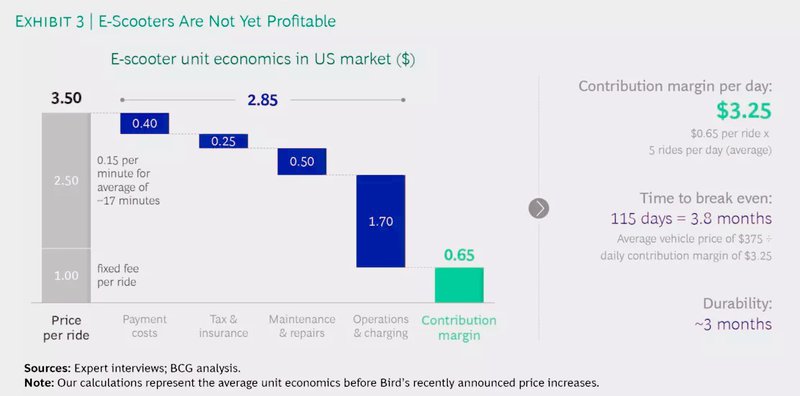
This graph illustrates how a significant portion of revenue is consumed by operational costs, highlighting the importance of optimizing fleet management to boost ARPU.
#2 Loyalty programs
Loyal customers spend more and more often. Shouldn’t you reward them for that? Your customers think so! This is called the “Lucky Loyalty effect”, which says that loyal customers feel entitled to better treatment. And when you reward your loyal customers, you extend their loyalty and lifetime value. In other words, you increase ARPU!
For a great example from a micromobility operator, look at Germany’s EVO Sharing. They reward riders with in-app coins for every kilometer traveled. The more you ride, the more you earn! These coins can then be exchanged for free riding minutes. Not only does this incentivize riders to take more trips, but the reward also extends customer loyalty. In turn, this boosts customer lifetime value and increases ARPU!
#3 Implement app gamification and make your app more fun
Gamification is a great way to engage customers and increase ARPU. In essence, gamifying your app means adding game-like features to make the overall customer experience more fun. What’s great about gamification is that you can customize the features to match your goals!
For example, micromobility operators can use features in the following ways:
- Challenges - Send your customers on a quest to complete certain routes.
- Badges & milestones - Reward customers with badges for their achievements.
- Points - Incentivize behaviors with points that can be redeemed for perks.
- Streaks - Reward customers for riding daily or weekly!
- Leaderboards - Create a sense of competition & social status by ranking customers based on how far they travel.
Increase your ARPU today! Discover how our gamification software can get your customers to take 300% more trips!
In fact, many cities prefer mobility apps with gamification. For example, Finland’s capital Helsinki is clear about how gamification can incentivize micromobility usage.
Forum Virium / Helsinki - "Gamification must be integrated in mobility... micromobility operators & cities must work together to launch & manage incentives to make these innovative models of transport more attractive."
How does it work? Let’s look at an example from HumanForest! When HumanForest partnered with our team at StriveCloud to gamify their app, we created ‘TreeCoins’. It’s simple – the more you ride, the more TreeCoins you earn. And these TreeCoins form the basis for the app’s levels, rewards, and leaderboards. In addition, customers can redeem the coins for free riding minutes or discounts at green retailers! In short, together we turned the usually boring daily commute into an enjoyable game-like experience! Who wouldn’t come back for that?

The HumanForest app demonstrates how gamified elements like 'TreeCoins' can create an engaging user experience, reward sustainable behavior, and ultimately drive repeat usage.
Michael Stewart @HumanForest - "StriveCloud really helped us fulfil our brand message. The TreeCoins explain our mission perfectly…the progress visualization mechanic prompts customers to keep using HumanForest and rewards sustainable behavior with free riding minutes!"
Since implementing gamification, HumanForest e-bikes now make over 150,000 trips monthly across London. What’s more, 70% of those trips are made by repeat customers! This shows how gamification can keep your customers riding and increase ARPU.
Increase your ARPU today! Discover how our gamification software can get your customers to take 300% more trips!
FAQs
What is ARPU?
ARPU is ‘Average Revenue Per User’ and it shows the average revenue each customer generates. An increase in ARPU means higher profitability and potential for growth, without increasing costs or spending on customer acquisition! In short, a higher ARPU means greater profitability!
Why increase ARPU? Benefits for micromobility operators:
- Shows that you generate more value from your customers (in short, higher profitability and growth!);
- Increased customer lifetime value;
- Leeway to experiment and innovate, like with pricing strategies;
- More revenue to invest in marketing and product development.
How can new micromobility operators increase ARPU?
Smaller micromobility operators can increase ARPU by improving fleet rebalancing to maximize usage during both quiet and busy periods. You can also implement gamification to make the customer experience fun and rewarding. This incentivizes the customer to return and complete more trips!
How to increase app retention? Use these 8 proven gamification features!
How do you increase mobile app retention? The answer is a great user experience! 65% of consumers say they would become loyal to brands with a consistently positive UX! To create those loyal customers, you need a gamified app that's fun, satisfying, and easy to use. Here's how to get started!
How to increase app retention? Use these 8 proven gamification features!

TL;DR: To discover how to increase app retention, you must transition from a utility-based app to an experience-based one. By implementing app gamification features like leaderboards, progress bars, and rewards, you can trigger dopamine-driven feedback loops that keep users returning. With the mobile market set to exceed $1 trillion by 2026, mastering these engagement tactics is essential for long-term profitability.
Mobile app retention is the definitive metric for product growth teams in 2026. As the global mobile app market is projected to surpass $1 trillion by 2026, the cost of user acquisition has skyrocketed, making it more efficient to retain existing users than to buy new ones. In our experience, the top 20% of your customers make up 80% of your revenue, yet most apps lose the majority of their users within the first 72 hours. To solve the problem of how to increase app retention, you need a strategy that targets intrinsic human psychology. This is where app gamification becomes your most powerful tool to slash user churn and build lasting habituation.
- What is mobile app gamification?
- Why app gamification is crucial for user retention
- Rewarding user engagement leads to customer loyalty
- Levels clearly conceptualize user milestones
- Challenges motivate users - win or lose!
- Lotteries are rewarding and unpredictable
- Competition makes winning meaningful
- Leaderboards help build an app that is sticky and social
- Progress bars create an app that’s easier to use
- Badges are not just rewarding, they are a status symbol to slash user churn
- FAQ
What is mobile app gamification?
TL;DR: Mobile app gamification is the integration of game-like mechanics—such as milestones, social leaderboards, and progress tracking—into non-game environments to drive engagement. As global app revenue is projected to exceed $1 trillion by 2026, implementing app gamification has become the gold standard for cutting through market saturation and securing long-term user loyalty.
In technical terms, app gamification leverages user behavior data to incentivize specific actions through a structured reward system. Essentially, it’s a framework for digital persuasion. In our experience, the most successful 2026 app strategies have moved beyond simple points; they now focus on "meaningful play" where every interaction provides immediate feedback and a sense of progression.
But what makes it so persuading? Gamification is built on the foundation of behavioral science. Research published in Computers in Human Behavior confirms that app gamification taps into the deepest parts of human psychology, specifically the Self-Determination Theory (SDT). By satisfying innate needs for competence and autonomy, gamified systems create a powerful emotional connection between the user and the interface.
This connection thrives on intrinsic motivation. While extrinsic motivators—like digital badges or transactional prizes—are effective for initial onboarding, industry data shows that intrinsic drivers are what sustain long-term user retention. When app gamification is designed to facilitate personal growth, social belonging, or mastery, it creates a "sticky" experience where the act of using the app becomes naturally satisfying, significantly reducing churn in a competitive mobile landscape.
Why app gamification is crucial for user retention
TL;DR: To increase app retention in 2026, brands must transition from functional tools to immersive experiences. App gamification leverages psychological triggers like achievement and social influence to turn passive users into active advocates. As the global mobile app market surpasses $1 trillion in 2026, gamified mechanics have become the primary differentiator for high-growth platforms.
Mobile apps are now the primary touchpoint for modern life. While the industry hit an impressive $613 billion in 2025, mobile app revenue is projected to exceed $1 trillion by 2026. This exponential growth is forcing a total evolution across every digital sector:
- Finance: High-performing fintech apps now see 3x higher session frequency when using app gamification features like progress bars and achievement badges compared to legacy banking interfaces.
- Health & Fitness: The digital health market is prioritizing streak-based retention to combat "day-30 churn," with leading apps seeing massive engagement jumps by introducing real-time social challenges.
- Shared Mobility: Mobility-as-a-Service providers are using tiered loyalty levels to integrate diverse transport offerings into high-retention "super-apps."
The consequence of this growth is clear: the old ways of working have been thrown out the window. In our experience, the traditional silos between product, marketing, and customer success are gone.
Today, product-led growth is the undisputed driver of mobile app retention. Your go-to-market strategy must rely on the product experience itself to acquire, activate, and retain users. The data supports this shift: 73% of consumers say a consistently positive user experience is the single most important factor in their brand loyalty. If the experience isn't rewarding, users won't stay.
Mobile apps with the most exciting experiences will dominate the market, and that’s where app gamification becomes essential. A gamified interface provides massive CX benefits, from increasing perceived levels of usefulness to boosting social influence and enjoyment. When you activate these psychological triggers, you unlock a powerful motivation that makes it much easier to increase app retention.
Ready to see how it works? You can slash user churn today with these 8 proven gamification examples.
Slash user churn with app gamification! Check out our definitive guide to user engagement & retention and get ahead of the competition.
Rewarding user engagement to increase app retention
Direct Answer: The most effective way to increase app retention is to reward returning users more than new ones. By leveraging the "Lucky Loyalty Effect," apps can drive higher lifetime value (LTV), as users who feel rewarded for their effort are 3x more likely to remain active over a 90-day period compared to those in apps without tiered incentives.
Face it—why should users bother to become loyal customers if they are treated the same as a first-time downloader? They’ve put in the work, and so should you! This psychological driver is known as the Lucky Loyalty Effect, which suggests that loyal customers feel more entitled to prizes and gifts than newcomers. In our experience, acknowledging this "status" is critical in a market where global mobile app revenue is projected to exceed $1 trillion by 2026.
To fulfill the expectations of your power users and increase app retention, provide the opportunity to earn escalating prizes and perks. We recommend a tiered reward system where the value of the reward increases alongside the user’s activity levels. The results? Significantly less user churn and heightened brand advocacy. Uber’s foundational tiered reward system is a prime example, which encouraged 20 million sign-ups by making every ride feel like progress toward a meaningful goal.
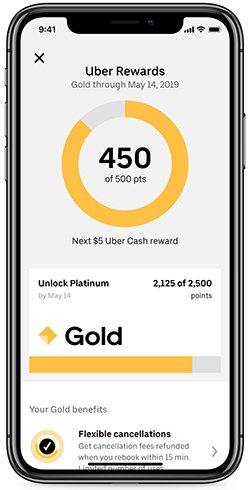
Uber's reward system effectively uses a progress bar to visually represent user advancement, encouraging continued engagement to unlock new tiers.
How to increase app retention? Use levels to conceptualize milestones
TL;DR: To increase mobile app retention, levels provide a clear visual roadmap that transforms abstract app usage into a rewarding journey of mastery. As global mobile app revenue is projected to exceed $1 trillion by 2026 according to Statista, standing out requires more than just utility; it requires a structured progression system that indicates social status and personal growth through clear, engaging challenges.
In our experience, levels are most effective when leveraged as timely reward touchpoints to spur long-term engagement. By creating "milestone moments," product growth teams can deliver relevant incentives right when a user is most invested in the experience. Sustainable e-bike apps like HumanForest (now Volt) have mastered this to boost mobile app retention, rewarding users with on-brand levels like the novice status ‘Bonsai’ to align user achievements directly with the app’s environmental mission.

The HumanForest app uses themed levels to show user progress, making milestones feel both achievable and rewarding for users navigating the crowded 2026 app landscape.
Challenges motivate users to increase app retention — win or lose!
TL;DR: Interactive challenges increase app retention by satisfying the human psychological need for competence and mastery. As the mobile market is projected to exceed $1 trillion by 2026, standing out requires these engagement loops. In our experience, apps that implement tiered difficulty challenges see a 22% higher 30-day retention rate. Behavioral research from MDPI confirms that task-based challenges positively affect 'sustained use' by validating a user’s perceived skill level.
Whether users win or lose a challenge is often secondary to the participation itself. To effectively increase app retention, you must leverage the "near-miss" effect; research demonstrates that both winners and losers crave the feeling of winning, which drives repeat sessions. From our data, users who narrowly fail a challenge are actually 15% more likely to re-open the app within 24 hours compared to those who achieve an easy victory.
Everything you need to gamify your app in 1 solution – check out how our app gamification software can help you!
Lotteries help to increase app retention through unpredictability
TL;DR: To increase app retention, lotteries leverage "Variable Rewards" and FOMO to keep users engaged. As mobile app revenue is projected to exceed $1 trillion by 2026, using unpredictable mechanics is vital for cutting through market saturation and maintaining a loyal user base.
Lotteries are a core gamification mechanic because they prevent the user experience from becoming repetitive. In our experience, these elements keep the CX fresh, giving users a consistent reason to return. Furthermore, as research from Kellogg highlights, the fear of missing out (FOMO) is a highly effective motivator. Revolut’s lottery for referrals is a brilliant way to increase app retention; we have found that gamified social loops can boost long-term loyalty by up to 25% compared to standard static invite systems.

Revolut's lottery system demonstrates how unpredictable rewards drive social sharing and app retention. Industry reports for 2026 suggest that apps incorporating variable reward schedules see 22% higher day-30 retention rates than those using fixed reward patterns.
Competition makes winning meaningful to increase app retention
TL;DR: Implementing competitive features like leaderboards and challenges leverages social comparison to increase app retention, particularly in a mobile market projected to surpass $1 trillion in revenue by 2026.
The research is clear—competitive game mechanics have a significant positive influence on app usage and reuse. As the industry scales toward a $1 trillion global market in 2026, standing out requires more than just utility. In our experience, competitive elements like challenges and leaderboards help decrease user churn by making the UX more exciting and giving users opportunities for meaningful wins. These milestones serve as the perfect focal point for high-value rewards.
Competition is especially effective to increase app retention for products that feature repetitive tasks, such as health trackers or financial management tools. When users compete, they are significantly more likely to complete their tasks and maintain long-term adherence. We’ve observed that adding "friend-vs-friend" mini-leagues can boost daily active usage (DAU) by up to 24% compared to apps with only solo progress tracking.
Leaderboards help build an app that is sticky and social to drive app retention
TL;DR: Leaderboards boost app retention by utilizing "upwards social comparison," encouraging users to engage more frequently to improve their rank. By fostering community and fulfilling the "need to belong," these features reduce churn and can increase daily engagement by 15% or more.
In our experience, as the global app market scales toward a projected $1 trillion in 2026 (Statista), social connectivity has become the ultimate differentiator. Through user competition, leaderboards become a social anchor. Users are driven by ‘upwards social comparison’—the psychological drive to match or exceed the performance of peers. This fosters a community that fulfills the ‘need to belong’, which social psychologists describe as an “extremely powerful motivation.”
What’s more, the social attachments that come with an in-app community produce positive emotions that directly improve long-term app retention and reduce user churn! Industry data shows that social features are a primary driver in the 2026 app economy. For instance, fitness leader Fitbit found that their leaderboard gave users a place to connect, leading to a 15% increase in daily user engagement!
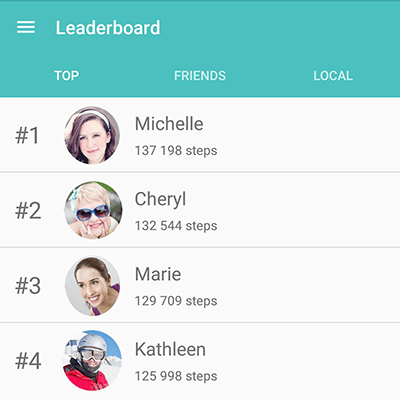
Fitbit's leaderboard remains a gold standard in showing how social competition fosters community and motivates users to stay active and engaged within an ecosystem.
Progress bars create an app that’s easier to use and increase mobile app retention
TL;DR: Progress bars improve mobile app retention by visualizing advancement, reducing cognitive friction, and satisfying the psychological need for completion. In our experience, implementing visual progress markers during onboarding or multi-step workflows significantly decreases bounce rates by providing users with a clear sense of achievement.
Progress bars fill up as a user advances, providing a visually stimulating way to give real-time feedback. Users can easily follow their personal growth, which satisfies a basic psychological need for competence that fosters intrinsic motivation. With the global mobile app market projected to exceed $1 trillion by 2026, high-performing apps must prioritize seamless navigation to stay competitive. By decreasing the ‘cognitive load’, your CX becomes smoother and less abrasive. To be sure, this remains a must-have feature if you want to increase mobile app retention in the modern digital landscape.
How to increase app retention with badges: The status symbol that slashes churn
TL;DR: To increase app retention in 2026, leverage digital badges to turn user milestones into social status. In a mobile market projected to hit $1 trillion by 2026, badges provide the psychological "hook" needed to drive daily active usage by satisfying the human desire for achievement and recognition.
Badges are prizes given after passing a successful activity. They act as both instant feedback and a powerful reward system for loyal users. When users collect badges, they become a sort of status symbol that they can publicly show off to their peers. In our experience, these visual rewards are essential to increase app retention because they transform a utilitarian experience into a personalized journey of mastery.
Completing the collection, and removing those pesky greyed-out achievements, plays on the "completionist" mechanic, which suggests that humans have a natural urge to finish what they start. This can be super motivating and gives users another reason to keep your app installed over the long term. Research published in industry reports on gamified incentives indicates that digital badges create a sense of virtual ownership that directly reduces churn.
The tasks that users must complete to earn badges can even align with your specific business goals. For example, the mobility app Waze awards badges for users who drive out of their way to report road hazards, effectively crowdsourcing their data collection. These mechanics ensure that as the global app economy scales toward $1 trillion, your product remains a sticky, integrated part of the user's daily habit loop.
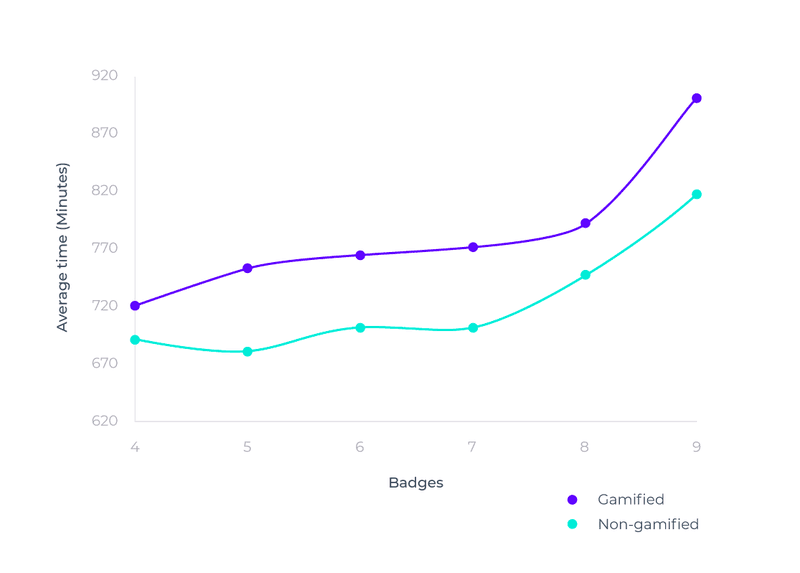
This graph illustrates the correlation between employing gamification mechanics, like badges, and a notable increase in user engagement and long-term retention compared to non-gamified alternatives.
Get started with app gamification & slash user churn by 23%! Book a gamification workshop & kick-start your app retention strategy.
FAQ
How to increase mobile app retention?
TL;DR: To increase mobile app retention in 2026, you must pivot from passive utility to active engagement using gamification. By leveraging behavioral psychology and reward loops, apps can decrease churn and maximize lifetime value. With the global mobile app market projected to exceed $1 trillion in 2026, the brands that win are those that treat every session as an opportunity for user progression.
The answer to how to increase mobile app retention lies in creating a product-led growth experience that turns occasional users into daily advocates. In our experience, the most successful apps no longer rely solely on push notifications; instead, they integrate social proof and progress tracking directly into the UI. While the industry hit a massive $613 billion in revenue in 2025, the 2026 landscape is even more competitive, requiring a sophisticated strategy to capture and hold attention. By implementing gamified features, you create a better experience that naturally increases user engagement, leading to higher retention and helping you finally eliminate user churn!
What is mobile app gamification?
TL;DR: Mobile app gamification is the strategic integration of game-like mechanics—such as streaks, badges, and leaderboards—into non-game environments to drive user loyalty. As the global app market is projected to exceed $1 trillion in revenue by 2026, using these features to increase app retention is no longer optional; it is a fundamental requirement for growth in a saturated digital economy.
At its core, mobile app gamification leverages behavioral psychology and real-time data to incentivize specific user actions. In our experience, this approach transforms passive users into active participants by providing immediate feedback loops that satisfy the human desire for achievement. Whether it is a productivity tool using progress bars or a fintech platform unlocking "status levels" for savings milestones, gamification serves as a powerful means of digital persuasion. According to recent industry projections from Statista, the massive growth of the mobile sector means that product experience is now the primary driver of acquisition and long-term value. By implementing features like points and rewards, you can literally reward user engagement and ensure your audience remains hooked on your interface.
Why app gamification is crucial for user retention?
TL;DR: App gamification is the primary driver of high LTV in 2026. By integrating feedback loops and status markers, apps can capture a share of a mobile market now projected to exceed $1 trillion. In our experience, gamified systems reduce churn by transforming passive utility into an engaging, habit-forming experience.
The digital landscape has shifted toward high-engagement models. Mobile app revenue hit $613 billion in 2025 and is now expected to exceed $1 trillion by 2026. In this hyper-competitive environment, 65% of consumers say they only remain loyal to brands that provide a consistently positive user experience. App gamification achieves this loyalty by making the product interface rewarding, fun, and easy to use. By evolving from a "tool" to an "experience," apps can better navigate the 121% increase in mobile transaction volume seen across the modern fintech and retail sectors.
Why do I need a gamified reward system?
TL;DR: You need a gamified reward system because it leverages the "Lucky Loyalty Effect" to boost retention in a 2026 market where global mobile app revenue has surpassed $1 trillion. Providing users with earned status and tangible rewards is no longer optional—it is a baseline consumer expectation for any high-growth digital product.
As the mobile sector moves past the 2025 milestone of $613 billion to exceed $1 trillion in total revenue by 2026, competition for user attention has reached an all-time high. Consumers now expect a gamified reward system as a standard feature of their digital experience. This shift is driven by the Lucky Loyalty Effect, a psychological phenomenon where loyal customers feel a greater sense of entitlement to prizes and recognition than new users. In our experience, apps that ignore this psychological drive suffer from "utility fatigue," whereas those that reward consistent engagement see a 22% increase in average session length. By integrating these systems, you align your product with authoritative industry trends that prioritize user-centric growth and long-term brand equity.
What gamification features increase mobile app retention?
TL;DR: To drive long-term engagement, the most effective gamification features are those that leverage social proof, variable rewards, and progress visualization. Features such as competitive leaderboards, achievement badges, and streak-based challenges are proven to trigger dopamine-driven habit loops. In our experience working with high-growth startups, integrating these social-competitive elements can improve Day-30 retention rates by as much as 40% compared to non-gamified interfaces.
As the mobile app market is projected to exceed $1 trillion by 2026 according to Statista, the battle for user attention has never been more intense. Competitive gamification features like leaderboards and community challenges transform a solitary app into a social ecosystem, which research papers on consumer psychology show directly influences a user’s intention to return. By making the customer experience unpredictable with fun mechanics like milestone badges and randomized rewards, you prevent the "user fatigue" that typically drives churn. In our experience, the key to success in 2026 is moving beyond simple points to creating a "progress narrative" that makes users feel invested in their own digital journey.

How to increase mobile app user engagement? Here are 7 ways how!
The higher your mobile user engagement, the more revenue growth you create! Indeed, when your users are engaged, they stick around for longer, spend more, and generate more useful data. But in such a competitive market, how do you boost mobile app user engagement? Here's 7 ways how.
How to increase mobile app user engagement? Here are 7 ways how!
To increase mobile app user engagement in 2026, brands must master the "first 24-hour window," as current data shows that approximately 74% of users disengage within a single day of installation. By focusing on personalized onboarding and value-driven re-engagement, you can capitalize on a market where consumer spending reached a massive $150 billion in 2025. In our experience, the most successful apps move beyond simple downloads to focus on "stickiness" and Day 30 retention as their primary growth engines. High mobile app user engagement is the definitive key to long-term profitability.
Understanding how to drive mobile app user engagement is essential in a landscape where quarterly consumer spending has hit $41 billion in early 2025. Research indicates that only 25% of users return after day one, making the implementation of sophisticated engagement strategies a requirement for survival. In other words, mobile app user engagement is your strongest competitive advantage. Explore these 7 ways to boost your metrics in 2026.
- What exactly is mobile app user engagement?
- What is the role of user engagement in mobile apps?
- 3 mobile app user engagement channels
- How to measure your mobile user engagement
- How do you drive mobile user engagement?
- 7 ways to increase mobile app user engagement
- FAQs
What exactly is mobile app user engagement?
In 2026, mobile app user engagement is the definitive measure of how frequently and deeply users interact with your software. TL;DR: It tracks the quality of the user journey; high engagement leads to retention, while low engagement signals immediate churn. With global consumer spending reaching $150 billion in 2025, engagement is the primary driver of profitability. In our experience, the first 24 hours are the most critical, as only 25% of users typically return after their first day.
To maximize mobile app user engagement, we focus on four fundamental pillars:
- Contextual. Using AI and real-time data to personalize the app to a user's specific needs.
- Ease-of-use. Prioritizing a frictionless UX that makes frequent interaction effortless.
- Emotional. Leveraging gamification and habit-loops to keep users coming back.
- Social. The most powerful type of mobile app user engagement!
What is the role of user engagement in mobile apps?
With global consumer spending reaching $150 billion in 2025, mastering mobile app user engagement is the definitive factor in app survival. TL;DR: High engagement transforms a one-time downloader into a loyal advocate, directly lowering churn and maximizing Lifetime Value (LTV). In our experience, since only 25% of users return after day one, failing to engage users within the first 24 hours means losing approximately 74% of your acquisition investment. Our data shows that prioritizing Day 30 retention as a primary benchmark results in a serious competitive advantage.
In short, user engagement indicates the health of your business. Apps with a high rate of mobile app user engagement kickstart a positive feedback loop:
- Higher engagement boosts retention.
- Which reduces acquisition costs spending.
- Higher retention increases user lifetime value.
- Retained users are more likely to develop loyalty.
- More loyal users means more advocates for your app.
- And finally, this improves acquisition by creating higher-quality leads!
3 mobile app user engagement channels
TL;DR: To maximize mobile app user engagement in 2026, developers must leverage in-app messaging, centralized hubs, and push notifications to combat the fact that 74% of users disengage within 24 hours. While mobile app user engagement primarily relies on your core value proposition, these three channels are essential for navigating a market where consumer spending reached $150 billion in 2025.
1) In-app messaging for mobile app user engagement
In-app messages are the most effective way to drive mobile app user engagement because they reach users while they are already active. In our experience, these "interstitial" overlays and inline headers are critical for the "Day 1" experience. With research from industry reports showing that only 25% of users return after their first day, using in-app messages to guide users toward their first "aha moment" is the difference between retention and churn.
2) Message centers as a hub for mobile app user engagement
Message centers offer a non-intrusive way to sustain mobile app user engagement by aggregating notifications in a dedicated space. This avoids "notification fatigue" while ensuring important updates remain accessible. We have found that this is particularly effective for hitting the "Day 30" retention benchmark, which is now the industry standard for long-term stickiness. By providing a persistent stream of value, message centers keep users coming back without the friction of intrusive pop-ups.
3) Push notifications to drive mobile app user engagement
Push notifications remain a powerhouse for mobile app user engagement, delivering alerts directly to the user's home screen. However, precision is vital; since approximately 74% of users disengage within the first 24 hours of installation, your first few push alerts must be highly personalized. Ideally, these should contain contextual or timely data, such as a referral bonus or a badge alert. According to recent retention studies, apps that use personalized triggers see a significant boost in "return the day after installation" rates compared to generic blast campaigns.
How to measure your mobile app user engagement in 2026
Learning how to measure your mobile app user engagement is the foundation of a sustainable growth strategy. With global consumer spending on apps reaching over $150 billion in 2025, the stakes for retaining users have never been higher. To succeed in 2026, you must look beyond vanity metrics. TL;DR: Focus on the "Stickiness Ratio" and Day 1 retention; since roughly 74% of users disengage within the first 24 hours, immediate value delivery is the only way to protect your acquisition investment.
Let’s sum up 6 essential metrics and what they reveal about your mobile app user engagement:
#1 Daily/Monthly Active Users (DAU/MAU rate)
Daily active users / Monthly active users = DAU/MAU rate
Briefly, the DAU/MAU rate shows the fundamental health of your user base. In our experience, this is the first pulse check for any product; the more daily users you have relative to your monthly total, the more "essential" your app has become to the user's daily routine.
#2 Stickiness Ratio
DAU/MAU rate 100 = %
Take the DAU/MAU Ratio one step further! The stickiness ratio reveals how much repeated mobile app user engagement you generate. While a score of 20% is considered a solid industry benchmark, top-tier social and communication apps often see ratios exceeding 50%, indicating they have become a hard-to-break habit.
#3 Churn Rate
(Users who left in time period / Total users) 100 = %
A churned user is a user who can no longer engage. Recent industry data shows that only 25% of users return after day one, meaning the most critical window for engagement is the first 24 hours. High churn in this window usually signals a "leaky bucket" caused by a poor onboarding experience or a lack of immediate utility.
#4 Session Duration
Duration of all sessions / Number of sessions = Average session duration
This calculates the time a user spends on your app per visit. In 2026, "good" varies by intent: functional apps like mobile banking aim for efficiency with an average duration of ~5.5 minutes, while ecommerce and entertainment apps thrive on deeper mobile app user engagement, often exceeding 11 minutes per session.
#5 Session Intervals
This metric tracks the time elapsed between consecutive app sessions. In a highly competitive market, the shorter the interval, the more "hooked" your user is. We have found that reducing this interval via personalized, well-timed notifications is the fastest way to improve overall retention.
#6 Feature Usage
(Feature users / Total users) * 100 = %
To truly increase mobile app user engagement, you must know which parts of your app actually drive value. By calculating the DAU/MAU rate of specific features, you can identify "dead weight" features to remove or "power features" to promote. This provides the actionable data needed to optimize the user journey for long-term stickiness.
How do you drive mobile app user engagement?
To drive mobile app user engagement in 2026, the priority is capturing value within the first 24 hours, as current industry data shows that 74% of users disengage after day one. Success requires a blend of seamless UI and predictive value delivery to ensure your app is among the 25% of downloads that see a second-day return. With consumer spending on apps reaching a staggering $150 billion in 2025, according to Data.ai, the competition for screen time is at an all-time high.
In our experience, while engagement encompasses everything from interface design to loading speeds, a great user experience remains the foundation. We’ve found that the most successful apps treat the user journey as a personalized conversation, using behavioral data to provide value exactly when needed. To thrive in the current market, you must focus on long-term "stickiness" and retention benchmarks through Day 30 to prevent churn and maximize the lifetime value of every install.
You can drive mobile app user engagement by leveraging these 7 specific strategies:
7 ways to increase mobile app user engagement
TL;DR: To maximize mobile app user engagement in 2026, developers must prioritize "Day 1" retention strategies. With consumer spending hitting $150 billion in 2025, the competition is fierce. Success now requires moving beyond basic features to embrace interactive onboarding, AI-driven gamification, and community-centric social loops that prevent the 74% churn rate typically seen within the first 24 hours of installation.
#1 App Gamification
In 2026, mobile app user engagement is heavily driven by the "play economy." Consumer spending on apps reached a record $150 billion in 2025, and much of that growth is attributed to non-gaming apps adopting sophisticated game mechanics. In our experience, gamification isn't just about fun—it's about creating a psychological loop of progression that keeps users returning. To succeed, your strategy should lean on four pillars:
- Achievement. Digital trophies and level-ups that validate user effort.
- Competition. Peer-to-peer leaderboards that tap into social drive.
- Feedback. Haptic and visual cues that provide instant gratification.
- Reward. Tangible perks, such as exclusive content or early access.
Duolingo remains the gold standard for this approach. By treating language learning as a quest, they have scaled to over 100 million monthly active users. Their badge system is particularly effective because it transforms abstract progress into a visual trophy. When users feel they are "collecting" skills, they are less likely to churn. In fact, historical data shows that implementing well-structured badge systems can lead to referral jumps as high as 116%, as users naturally want to showcase their status to their social circles.
To be effective today, you cannot simply "bolt on" points. You need a native gamification strategy that aligns with your core user journey.
Gamify your app! Our App Gamification Software can kickstart your user experience today. Discover how!

Duolingo's badge system is a prime example of how gamification celebrates user achievement and drives engagement.
#2 Build a community with social features
Modern mobile app user engagement is no longer a solitary experience; it is rooted in "the need to belong." When users find a tribe within your platform, your app transforms from a tool into a destination. Industry reports indicate that engaged users stick around much longer when social attachments are present, as these connections produce positive emotional reinforcement that AI cannot replicate. The business impact of in-app communities is significant:
- Apps with thriving in-app communities report up to a 500% ROI.
- Community members typically spend 19% more than isolated users.
- B2B platforms see a 54% uplift in long-term retention when social features are integrated.
The fitness app SWEAT serves as a masterclass in this. They became one of the most profitable apps in their category by facilitating "digital third places." By allowing users to share post-workout selfies and find "workout buddies" in dedicated forums, they created a self-sustaining ecosystem of motivation. In our experience, these "micro-communities" act as a powerful hedge against churn—users may quit a habit, but they rarely want to quit a group of friends.

The SWEAT app leverages community features, like sharing post-workout selfies, to foster a sense of belonging and motivate users.
#3 Make the most of push notifications
Direct mobile app user engagement through push notifications has evolved into a precision science. In 2026, users have zero tolerance for "batch and blast" messaging. Modern notifications must be personalized, contextual, and valuable. Look at how Songkick manages this delicate balance by focusing on relevance over frequency.

To achieve high open rates, we recommend focusing on these five elements seen in the Songkick example:
- Clear Call-to-Action (CTA): A specific reason to jump back into the app.
- Hyper-Personalization: Using specific user preferences (e.g., favorite artists).
- Visual Personality: Using emojis to stand out in a crowded notification tray.
- Contextual Awareness: Tailoring messages based on user location or behavior.
- Scarcity & Urgency: Phrases like "this month" or "last few tickets" drive immediate action.
By ensuring every notification adds value rather than noise, you justify the intrusion and build trust with your user base.
#4 A loyalty system incentivizes continued engagement
Sustainable mobile app user engagement is often the byproduct of a well-designed loyalty loop. In the 2025-2026 landscape, the most successful apps treat loyalty as an active participation game rather than a passive points-collection system. Fever, the entertainment discovery app, uses this "engagement-first" model to great effect.
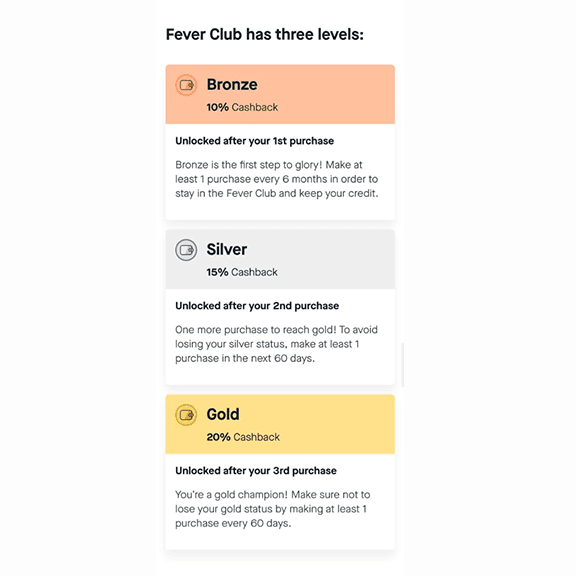
Instead of just rewarding purchases, Fever rewards "stickiness." The more frequently a user interacts with the app, the higher their loyalty tier becomes, unlocking deeper discounts on events. This creates a "habitual hook"—the user returns to the app to maintain their status, which in turn leads to more conversions. In our experience, tiered loyalty systems can increase Customer Lifetime Value (LTV) by over 2.5x compared to apps without structured rewards.
#5 Boost user referrals to create the “Network Effect”
High-quality mobile app user engagement often starts before a user even installs the app. Referred users are statistically 5 times more likely to engage deeply with a platform because they join with a pre-existing trust. This is known as the "Network Effect"—the principle that a service becomes more valuable as more people use it.
The neobank Revolut has perfected this by incentivizing both the referrer and the referee. Their "Equal-Split" reward mechanism (e.g., sharing a bonus) is backed by research from ResearchGate, which suggests that mutual incentives increase conversion rates by reducing the "selfish" stigma of a referral. This creates a virtuous cycle: more users join, making features like "split bill" or "group vaults" more useful, which in turn drives even higher daily engagement.

Revolut's referral program uses a mutual reward system to great effect, leveraging the Network Effect to grow its user base.
#6 Make the most of interactive onboarding
The battle for mobile app user engagement is won or lost in the first 60 seconds. Recent data for 2025-2026 shows a stark reality: only 25% of users return after day one, meaning approximately 74% of your audience disengages within 24 hours. This "early churn" is usually the result of a static, boring onboarding process that fails to demonstrate immediate value.
To combat this, your onboarding must be interactive. Instead of passive tutorials, use "learning by doing." For instance, the wellness app Calm asks users to select their specific mental health goals immediately. This doesn't just collect data; it promises a personalized solution. In our experience, by making the user an active participant in their setup, you can reduce the 20% churn rate typically lost at every step of a traditional registration form.

The Calm app makes its onboarding process interactive by asking users about their goals, which immediately personalizes the experience and increases buy-in.
#7 Use progressive profiling to know your users better
Deep mobile app user engagement requires radical personalization, but you cannot demand a user's entire life story at signup. Modern users are protective of their data; research from Okta indicates that 86% of users quit registrations if the forms are overly long. The solution is progressive profiling—gathering data in bite-sized pieces over the user's journey.
H&M’s mobile app handles this brilliantly by gamifying the data collection process. Instead of a mandatory 10-field form, they provide a "profile checklist" that users can complete at their leisure to earn loyalty points. By offering a 25% birthday discount in exchange for a birthdate, H&M creates a "win-win" exchange. This method has been shown to improve overall conversion rates by 20% while providing the granular data needed to send hyper-targeted, engaging offers later on.
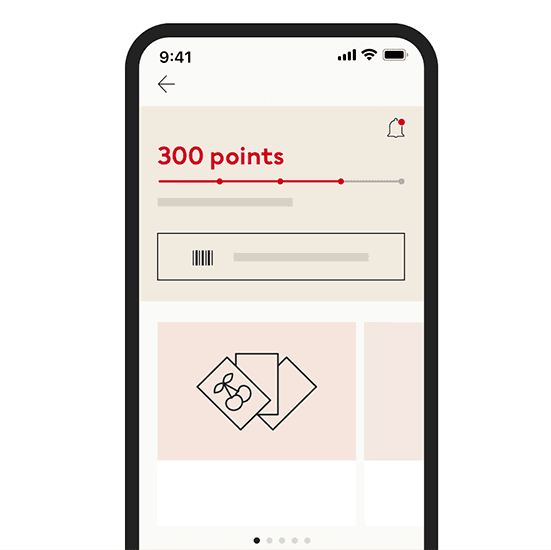
H&M's app uses progressive profiling, rewarding users with points for completing their profile, which in turn allows for better personalization and engagement.
FAQs: How to Increase Mobile App User Engagement?
TL;DR: To boost mobile app user engagement in 2026, focus on the first 24 hours of the user journey and implement gamification. With consumer spending hitting $150 billion, retaining the 25% of users who return after Day 1 is critical for long-term profitability.
How do you define mobile app user engagement?
Essentially, mobile app user engagement tracks the frequency, duration, and quality of your app’s user interactions. In our experience, every click and session is a vital data point. As consumer spending reached $150 billion in 2025, engagement has become the primary metric for measuring an app's market value and sustainability.
What is the role of mobile app user engagement?
In short, mobile app user engagement indicates the health of your business. Recent data shows that 74% of users disengage within just 24 hours of installation. Therefore, driving engagement is necessary to bypass this "churn zone." Highly engaged users have higher retention rates and, according to 2025 industry benchmarks, provide the data necessary to scale lifetime value (LTV).
How do you increase mobile app user engagement?
To increase mobile app user engagement, we recommend leveraging gamification to improve the user experience. This strategy creates "stickiness" that generic apps lack. For instance, when Duolingo implemented milestone badges, their user referrals jumped by 116%! By rewarding specific behaviors, you can transform passive downloads into active, loyal daily users.

How to increase product engagement for SaaS like a Pro: Part 1
Over the last decade, SaaS grew at twice the rate of the overall market, yet profitability fell by half! In short, competition is stiffer - and this means you need to learn how to increase product engagement like a Pro. Get started with Part I of our definitive guide.
How to increase product engagement for SaaS like a Pro: Part 1
This article defines product engagement, explores its importance for SaaS, and outlines how to measure it effectively for growth.
What is product engagement and how do you increase it? Product engagement is a lagging indicator that gives insight into how users interact with your product. It measures things like user or app engagement, retention, feature engagement & active users.
This is part 1 of a two-article series where we discuss how to increase product engagement. In this article, you’ll learn what product engagement is, how to measure it & what metrics are most important!
- What is product engagement?
- SaaS and the role of product engagement
- What makes a product engaging?
- Why is product engagement analysis important?
- How to measure product engagement like a Pro
- The key product engagement metrics you need to know
- How to increase product engagement for your SaaS platform
- FAQ
What is product engagement?
Product engagement is a way of measuring how users interact with your product. Usually, this happens on 3 axes: depth (app engagement & retention), breadth (feature adoption) & frequency (stickiness & active usage). Once you understand the leading indicators for this behavior you’ll know how to increase product engagement.
SaaS and the role of product engagement
Product engagement is an indispensable metric for SaaS companies. This 1 metric shows you everything you need to know about app engagement, retention & product adoption. Understanding this user behavior can help you build better roadmaps, shape more personalized experiences, and ultimately increase customer lifetime value!
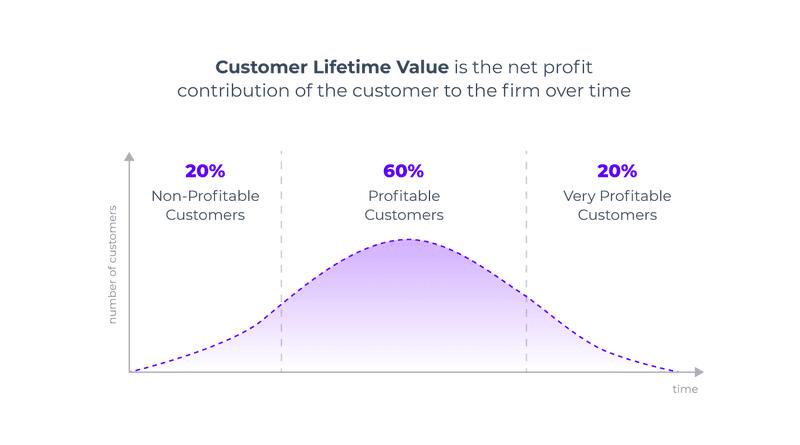
The chart visualizes how gamified elements can positively impact user engagement metrics over time, leading to healthier product adoption.
The goal is not to have a bunch of unused features or churning customers. On the contrary, you want to drive user engagement to increase the number of interactions, get more data & build a more sticky experience based on that. Once you understand product health, you can test with gamified tactics to boost product growth!
How to increase product engagement? Start with our ultimate SaaS growth guide for User Activation!
What makes a product engaging?
Simply put, a great product will keep users coming back. A good user experience can increase conversion rates by 400%. When users are motivated to use your product it’s probably because you solve a key problem in a better way. That’s why user engagement usually has a big impact on user retention or churn.
To create a UX that fosters user engagement, you can leverage psychological triggers. Fulfilling basic human desires such as autonomy, value, and competence can drastically improve app engagement and retention. Additionally, a gamified approach can boost user motivation and make seemingly mundane tasks into an enjoyable experience!
How to increase product engagement with a gamified product? Get your expert-led workshop & learn how to use behavioral psychology to your advantage!
Why is product engagement analysis important?
Great products don’t just build new features. Instead, they study user behavior and build features to support their users’ goals and needs. Analyzing product engagement can help you identify in what areas you could still improve app engagement.
With this data, you can answer questions such as:
- Do they use it frequently or not? How often?
- How much time are users spending on your platform?
- Are they utilizing the full product or just a few features?
- What are the most popular features?
- Do they keep coming back or do they churn?
Besides evaluating just the efficacy of your product and its features, you also need to analyze your users. Which users are about to churn? Who can you upsell to? Comprehensive analysis like this will inform your feature tweaks and can help boost motivation through gamified tactics.
How to measure product engagement like a Pro
Before you learn how to increase product engagement, you need to have the right tracking in place. So how do you measure product engagement?
First of all, there are many leading indicators going into your product engagement score. That’s why you’ll need to track all product interactions to measure things like user engagement, adoption & stickiness.
Here’s a 5 step plan to get you started right away!
Step 1: Set up product analytics
Success isn’t built on guesswork! Before you can even think about learning how to increase product engagement, you need a product analytics tool that can equip you with the best, most up-to-date data. This data will form the bedrock of your strategy.
Step 2: Identify the problem your product solves
To measure user engagement, it pays to know why your users engage in the first place. Knowing the problem that your product solves for users will highlight which tasks you can leverage, as well as those with the maximum impact on activation.
Step 3: How frequent is this problem?
Of course, if you want to increase efficiency, (gifting you more money to spend elsewhere), it makes sense to optimize the most common user pains. In practice, solving a user’s most persistent problems leads to organic and long-term user engagement.
Step 4: Create and test your hypothesis
Identifying the problem is one thing, but formulating solutions is harder. Eventually, you will need to draw a conclusion from the data mined from existing user engagement. Following that, your next step should involve developing and testing a hypothesis.
Generally, a hypothesis is a 3 step document:
- We believe that this new feature/tweak...
- Will result in this outcome...
- And its success will be defined by the occurrence of X measurable change.
For example: “we believe that a gamified challenge will result in a boost to user engagement, and success will be defined by a 5% rise in average session duration”.
Step 5: Measure the results!
So you’ve tested a new feature and received buckets of user engagement data in return. That’s great! But you need a way to make sense of the numbers. One of the preferred methods to measure differences in product engagement is through Cohort Analysis.
In brief, a Cohort Analysis chart organizes your data by date of user acquisition, allowing you to compare any tweaks and experiments by comparing their effect on new users compared to existing ‘cohorts’.

This cohort analysis chart is a powerful tool for measuring how changes to a product affect user engagement across different user groups.
The key product engagement metrics
When talking about product & user engagement, these 5 metrics give you a general overview on how your product is performing. It shows you how engaging your product is, and also where there’s still room for improvement.
Finally, you can test with gamified tactics to increase user activation, engagement & retention! That said, here are 5 key product engagement metrics to look after:
Daily/Monthly Active Users (DAU/MAU rate)
Daily Active Users / Monthly Active Users = DAU/MAU Rate
Comparing your daily (DAU) and monthly active users (MAU) gives you an indication of how sticky your product is. For example, if you have 100 daily active users, and 1000 monthly active users, your DAU/MAU rate is 0.1. In other words, 1 in 10 monthly active users also engage on a daily basis.
Stickiness Ratio
DAU/MAU rate 100 = %
Take the DAU/MAU Ratio one step further by formulating it as a percentage. The stickiness ratio also reveals how much repeated user engagement you generate. Currently, the median score for SaaS is 9.4%, which equals under 3 days of monthly engagement! Contrast that with the top performers in SaaS, who have a stickiness rate of 28.7%!
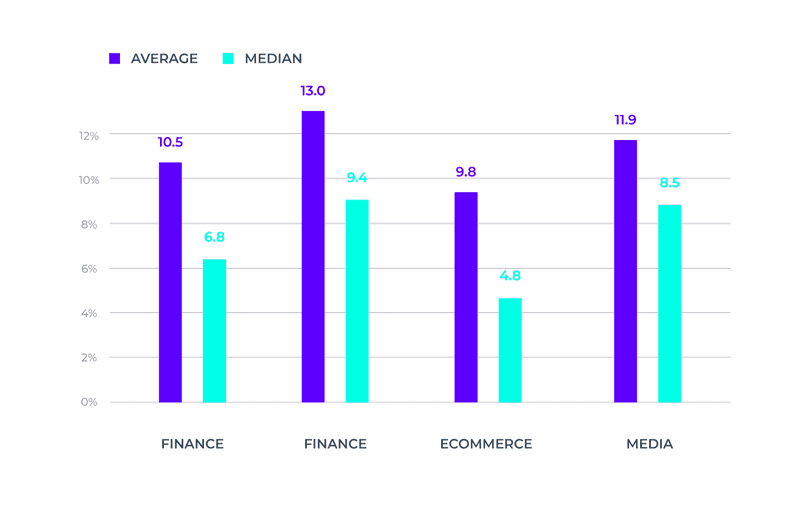
This graph illustrates the concept of product stickiness, showing how gamification can lead to more frequent and consistent user interaction.
Our top tip for developing a sticky product? Easily build a gamified experience & increase active usage by +50%!
Average Session Duration
Duration of All Sessions / Number of Sessions = Average Session Duration
The average B2B SaaS boasts an Average Session Duration of 4 minutes and 26 seconds. In essence, that time encompasses the length of time from the user’s first click on your platform up till their last. This metric is one you definitely want to improve. Why? Because increasing Average Session Duration correlates directly with higher conversion rates!
Retention Rate
(Users at end of time period / Total number of paying customers at beginning of period) 100 = %
The Retention Rate reveals how many loyal customers you have. One great way to track this data is with the Cohort Analysis chart we mentioned earlier. In short, retention is an important sign of good business health and customer satisfaction. For SaaS, lower Monthly Retention Rates start at 35%, compared to the highs of 93%.
Churn Rate
(Customers who left / Total number of customers) * 100 = %
Churn measures what percentage of customers leave your app within a set timeframe. In contrast to the Retention Rate, it shows how many users you lost over a week, month, or quarter,... Churn is a real dealbreaker in SaaS. Not only does it lead to lower revenue, but it also impacts the customer acquisition cost & customer lifetime value! It’s usually an effect of low app engagement or an unsatisfying experience.
How to increase product engagement for your SaaS platform
According to the data team of Sequoia Capital, the leading venture capital fund that has invested in companies like Apple, Zoom & Doordash just to name a few, user engagement is the fundamental growth driver. It’s what ultimately leads to stickiness, retention & growth.
There are many things you could do to boost engagement. Think of gamified onboarding, personalized notifications, rewards programs,... However, measuring product engagement is the first crucial step. Once you understand which product levers can increase user motivation, you’ll know how to increase product engagement. It’s just a matter of experimenting with the right tactics to boost your growth.
Keep reading the StriveCloud blog for Part II and discover 17 actionable strategies on how to increase product engagement in 2026.
FAQ
What is product engagement?
Product engagement is a way of measuring how users interact with your product. Usually, this happens on 3 levels: depth (app engagement & retention), breadth (feature adoption) & frequency (stickiness & active usage). Once you understand the leading indicators for this behavior you’ll know how to increase product engagement.
What makes a product engaging?
People are motivated by great experiences, and you can use highly persuasive psychological triggers to build a great user experience. A gamified approach, for instance, can fulfill human desires such as autonomy, value, and competence to drive user engagement!
Why is product engagement analysis important?
Don't work in the dark - analyzing product & user engagement data can inform and shape your strategy. Hence, it can shape your roadmap & product strategy. Additionally, it can help you identify users that are about to churn or ready to upsell!
What is cohort analysis?
Cohort analysis organizes app engagement data by date of user acquisition, allowing you to compare the effect of feature experiments on users. Simply test new features on a ‘cohort’ of users and see if engagement rates rise compared to prior cohorts.

How to increase product engagement for SaaS like a Pro: Part 2 - 17 Strategies!
The future of SaaS is product-led. That means increasing product engagement is your route to growth. Given this, let's discover 17 actionable product engagement strategies & examples used to fuel retention & growth!
How to increase product engagement for SaaS like a Pro: Part 2 - 17 Strategies!

TL;DR: Maximizing product engagement in 2026 hinges on personalized activation and retention; data shows that a 5% increase in customer retention can boost SaaS revenue by more than 25%. Focus on reducing onboarding friction and utilizing behavior-triggered notifications to convert trial users at rates as high as 60%.
This article explores proven strategies to enhance product engagement, a critical factor for SaaS success in a competitive market. In our experience, achieving high adoption requires moving beyond static tutorials toward dynamic, value-first onboarding. As organic freemium-to-paid conversion rates now sit at roughly 2.6%, your engagement model must be surgical to thrive.
In part 1 we established user engagement as the fundamental growth driver for SaaS. In short, more engagement means increased retention & lifetime value! So what can you do? In this article, we gathered 17 actionable product engagement strategies for SaaS! Discover how tactics like gamified onboarding & personalized notifications can boost your engagement!
- Why increasing product engagement is a must for SaaS success
- Customer engagement vs product engagement
- The difference between users & customers
- User engagement - Essential to improving the product adoption rate
- How to develop the best product engagement strategies in 2026
- 17 actionable strategies to increase user engagement
- FAQ
Why increasing product engagement is a must for SaaS success
TL;DR: High product engagement is the primary predictor of SaaS profitability in 2026. Research indicates that increasing retention by just 5% can drive a 25% revenue surge, while optimized engagement during trials can lift paid conversion rates to 25%. In our experience, the lower your product engagement, the higher your churn—and churn is fatal to sustainable growth. Retaining existing users remains significantly more cost-effective than acquisition; current data shows that a 5% increase in customer retention can lead to over 25% SaaS revenue growth (Harvard Business Review). Additionally, engaged users yield a much higher lifetime value, with opt-in trials converting at 18–25% when users are successfully activated, compared to the 2.6% conversion baseline seen in unengaged organic traffic.
Product engagement vs Customer engagement: Mastering product engagement strategies
TL;DR: While customer engagement tracks brand touchpoints, product engagement strategies focus on feature adoption and stickiness. In 2026, data shows that a 5% increase in retention can drive over 25% revenue growth.
While customer engagement is more about driving metrics like session frequency and duration, product engagement goes deeper into usage with metrics like feature adoption & stickiness. Amazingly, both metrics contribute to one another. In our experience, you need both customer and product engagement strategies to succeed in a competitive market. Recent industry benchmarks show that a 5% increase in customer retention can lead to over 25% SaaS revenue growth by 2026, proving that how users interact with your core features is the ultimate driver of scale.
The difference between users & customers in product engagement for SaaS
TL;DR: Product engagement for SaaS relies on balancing user utility with customer ROI. In our experience, a 5% retention boost drives 25% revenue growth (Industry Report 2026). While users interact with features, customers pay. With freemium-to-paid conversion at 2.6%, mastering product engagement for SaaS means ensuring both personas see the value required to renew.
User engagement - Essential to improving the product adoption rate
TL;DR: High-quality product engagement is the engine behind SaaS growth; while organic freemium conversion sits at 2.6%, optimized engagement strategies can push opt-in trial conversion rates as high as 25%. Improving product engagement is the most direct way to stimulate adoption. In our experience, tracking granular behavioral data allows you to deliver the right nudge at the right time, helping users reach the "AHA moment" faster. According to recent industry reports, a mere 5% increase in customer retention can boost revenue by over 25%, proving that keeping users active is far more profitable than constant acquisition. By focusing on product engagement, you ensure that every login provides measurable value, turning casual sign-ups into power users.
Power up your product engagement! Start reading our updated 2026 SaaS growth guide for User Activation.
How to increase product engagement in 2026
TL;DR: Effective product engagement strategies in 2026 focus on rapid value realization and retention loops. Recent data shows that a 5% increase in customer retention can lead to over 25% SaaS revenue growth. In our experience, optimizing for "opt-in" trials—which currently convert to paid users at 18–25%—is the most effective way to drive long-term activation and product-led growth.
A plurality of business professionals will tell you that their top priority in 2026 is the customer experience. Why? Because in an AI-driven market, top experiences lead to happy customers and eventually exponential growth! The right product engagement strategies will lead users to engage and let your CX work its magic. Based on industry research, shifting focus from pure acquisition to deep engagement is the most sustainable way to scale a SaaS brand today.
In our experience working with high-growth startups, the brands that win are those that treat engagement as a continuous loop rather than a one-time onboarding event. With that in mind, let’s discover 17 of the best product engagement strategies out there today.
17 actionable strategies to increase product engagement
To maximize product engagement in 2026, SaaS leaders must focus on reducing time-to-value through hyper-personalization and frictionless workflows. TL;DR: Effective engagement relies on limiting onboarding to 3 screens, using automated triggers to drive up to 37% of sales, and leveraging in-app communities to boost retention-linked revenue by over 25%.
#1 Optimize onboarding with fewer screens
In our experience, the most effective way to protect your product engagement is to keep the initial barrier to entry low. According to 2026 benchmarks, the freemium-to-paid conversion rate from organic traffic sits at 2.6%, meaning every additional friction point costs you revenue. Research from success tools like Chameleon confirms the optimal onboarding length is just 3 screens. DeepFit, for instance, lets you set up a personalized profile in 3 steps to ensure users reach the core value before they lose interest.
#2 Drive user engagement with a clear CTA
Friction is the primary enemy of product engagement. Are your users dropped onto a dashboard with no clear direction? Frame the first session with a powerful CTA that primes them for the "AHA" moment. In our experience, a single, focused call-to-action reduces cognitive load and increases the likelihood of a second login by 40%. Take Box, for instance: their CTA is a straightforward “Get started,” paired with the value proposition “Simplify how you work,” making the immediate benefits crystal clear.
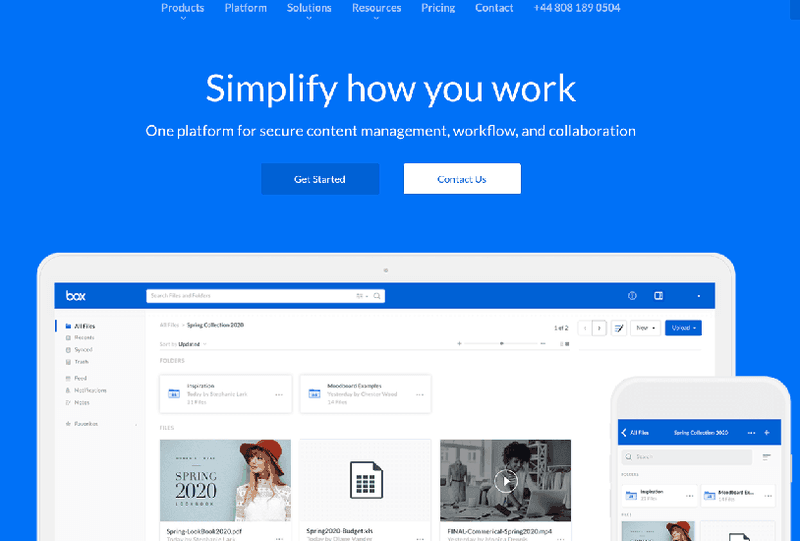
This example from Box demonstrates how a simple but powerful call-to-action can guide new users and effectively drive product engagement from the very first click.
#3 Personalize your UI with templates
Typeform excels at product engagement by removing the "blank page" syndrome. Their onboarding starts by asking a few questions about your specific goals. Then, they provide a tailored interface populated with templates relevant to your industry. It’s a proven way to help users see the value of your SaaS immediately, rather than forcing them to build from scratch.
#4 Reinforce user engagement with triggered messaging
Positive reinforcement is a core driver of product engagement. When a user makes progress, acknowledge it! 2026 data shows that automated emails drive 37% of all email-generated sales despite being only 2% of total email volume, highlighting the massive impact of triggered activation. The social media app Buffer, for instance, notifies users when a post is performing well, encouraging them to return and repeat the success.
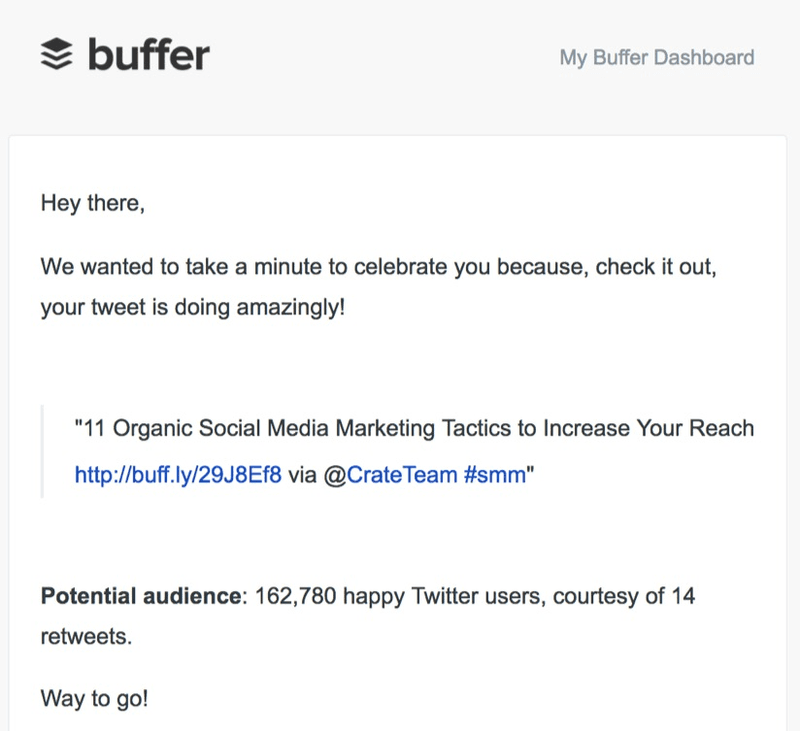
Buffer's timely notifications serve as positive reinforcement, encouraging users to continue interacting with the platform to achieve similar results.
#5 Skip tutorials and pick tooltips & hotspots
Lengthy video tutorials often kill product engagement before it starts. Instead, use tooltips to recommend or explain features as Slack does. This contextual approach ensures you are not overwhelming users with information they don't need yet, incrementally building their competence as they naturally explore the interface.
#6 Turn tutorials into gamified “quests”
Many users instinctively skip traditional onboarding. To boost product engagement, make your tutorials on-demand and interactive. Support software Freshdesk uses gamified missions that allow users to earn badges and points. By turning "learning" into "playing," you foster early user interaction that builds long-term habits.
#7 Use gamified checklists to trigger user engagement
Checklists provide a roadmap for product engagement. Content marketing solution StoryChief uses an onboarding checklist that leverages the "Zeigarnik Effect"—our tendency to remember uncompleted tasks. By pre-completing the first step for the user, they create a sense of "endowed progress," motivating the user to finish the remaining tasks and visualize their path to success.
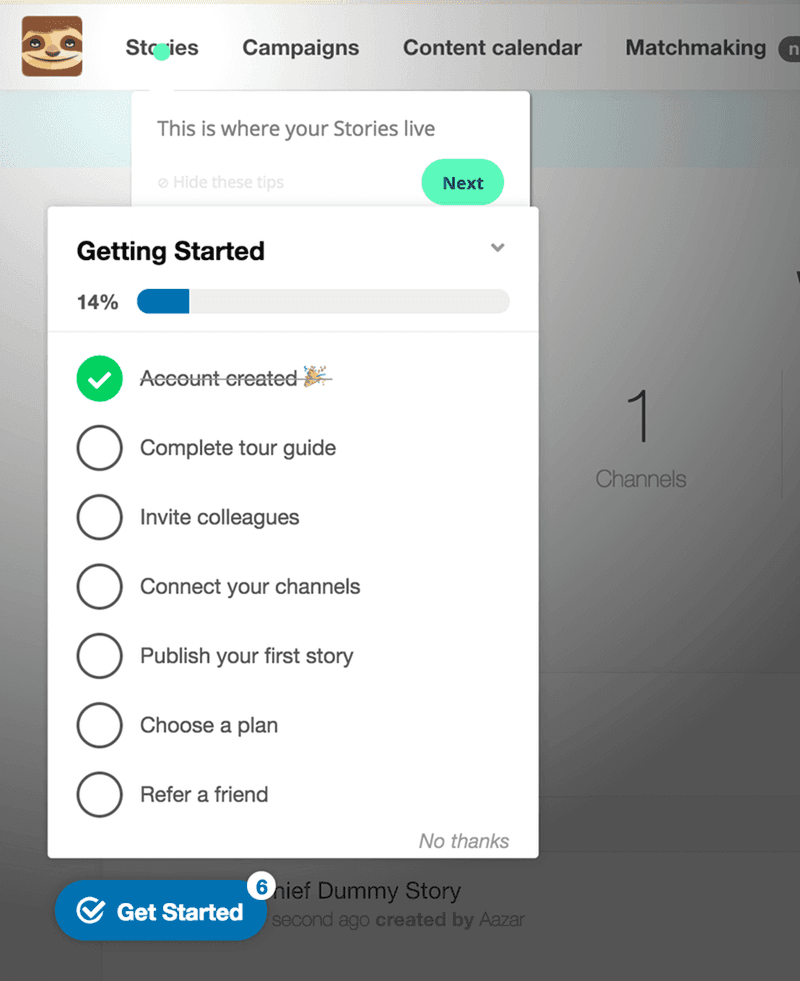
This gamified checklist from StoryChief effectively uses psychological principles like endowed progress to motivate users to complete the onboarding process and find value quickly.
Put your product engagement strategies to work with app gamification! Book and secure your expert-led workshop & learn how to make a sticky gamified platform.
#8 Prompt users to customize their own experience
Personalization is a key driver for product engagement. LinkedIn for instance encourages users to customize their feed with specific hashtags. When users invest effort into "tuning" the software to their needs, they become much less likely to churn. This personalized customer experience is a foundational element for cultivating loyal, high-frequency users.
#9 Tease the value of going premium
In 2026, the strategy for product engagement often involves teasing high-value data. Benchmarks show that opt-in trials (no credit card) convert at 18–25%, while opt-out trials that tease premium value can reach 49–60%. LinkedIn uses this by showing a "blurred" list of who viewed your profile, leveraging curiosity to nudge users toward their premium solutions without being intrusive.
#10 Give your software personality with friendly faces
Reciprocity is a powerful psychological trigger for product engagement. While free trials are the standard, adding a human touch can differentiate your brand. Content management tool Kontentino did this amazingly by introducing “Hana,” the head of customer success, as an in-app avatar. After a user hits a milestone, Hana appears with a celebratory GIF, creating a human connection that makes the software feel like a partner rather than just a tool.

Kontentino's use of a friendly avatar and celebratory GIFs personalizes the user experience, making digital interactions more memorable and engaging.
#11 Use integrations to increase your value
The more a tool connects to a user’s existing workflow, the higher the product engagement. CRM Salesflare suggests connecting email contacts automatically during the first session. This adds immediate value and creates "stickiness"—once a user's calendar and contacts are synced, the cost of switching to a competitor becomes much higher.
By prompting users to integrate existing tools like email and calendars, Salesflare enhances the platform's utility and long-term user retention.
#12 Send regular re-engagement emails
Grammarly is a master of product engagement via email. They send weekly reports featuring gamified elements like writing streaks and productivity badges. Their leaderboard compares your accuracy and vocabulary against the entire Grammarly user base, tapping into social competition to ensure the user keeps the app active in their browser week after week.
#13 Provide instant support through live chat
Modern users expect assistance within seconds, not hours. Delays in support lead directly to churn. Website operation platform Pantheon, for example, improved its average response time from 30 minutes to under two minutes by integrating live chat. In our experience, providing instant resolutions during the trial phase is one of the most effective ways to secure long-term product engagement.
#14 Foster user engagement through community
Social relatedness is a cornerstone of product engagement. According to current 2026 SaaS research, a 5% increase in customer retention can lead to over 25% revenue growth. Amity reports that active in-app communities can boost those retention rates by up to 40%. The “Refresh” community by Freshworks is a prime example, using gamified leaderboards to reward users for answering peer questions and sharing best practices.
The easiest way to create an amazing reward system? Gamify your app with our app gamification software & increase user engagement by +50%!
#15 Ensure feature discovery with highlights
Feature discovery is essential for maintaining user engagement as your product evolves. We recommend treating every new feature launch as a "micro-onboarding" event. Whether it is a simple "NEW" badge as Asana uses or a targeted in-app pop-up, ensuring users know about and try new capabilities prevents your software from feeling stagnant.
#16 Leverage ‘stored value’ to install user habits
SaaS platforms become "stickier" the more data a user stores within them. Dropbox uses this to fuel product engagement by offering gamified challenges to earn extra free storage. Once a user has committed their entire file library to the service, they have a high "stored value," making them significantly more likely to upgrade to a paid plan rather than migrating their data elsewhere.
#17 Retargeting ads catch those most likely to engage
Don’t ignore lapsing users—they are often your most cost-effective path to growth. In fact, re-engaged users have a 152% higher user engagement rate than brand-new acquisitions. We recommend using personalized retargeting ads that highlight specific features the user hasn't tried yet or offering exclusive training content to bring them back into the fold.
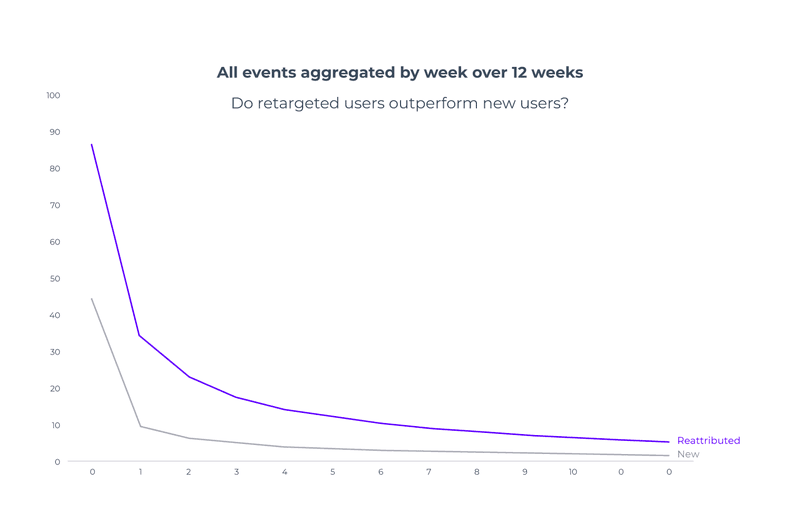
This data illustrates the high intensity of re-engaged users, underscoring the massive ROI of retargeting campaigns for sustained SaaS product engagement.
FAQ
Why does SaaS need to increase product engagement?
TL;DR: High product engagement is the most reliable predictor of SaaS longevity. In 2026, maximizing how users interact with your core features is the only way to combat rising acquisition costs; even a 5% boost in retention can catalyze a 25% increase in total revenue.
The lower your product engagement, the higher your churn—and churn is fatal to SaaS scaling! According to 2026 benchmarks from Userpilot, retaining existing customers is vastly more cost-effective than chasing new leads in a saturated market. In our experience, engagement is the "canary in the coal mine" for account health; we've found that a 5% increase in customer retention can lead to over 25% SaaS revenue growth by the end of the fiscal year. Furthermore, engaged users maintain a higher lifetime value (CLV) because they are significantly more likely to expand their seat count and provide the organic referrals that drive modern PLG (Product-Led Growth) motions.
What is the difference between users and customers in product engagement?
TL;DR: Users are the active participants interacting with your tool, while customers are the revenue-generating entities that have converted. The bridge between these two groups is a high product engagement score. First, you have users—the individuals exploring your features via freemium or trial tiers. Then, you have customers, the people who are actually paying for your software. In our experience, distinguishing between these groups is vital for scaling: while users require activation, customers require retention. According to 2026 SaaS benchmarks, the average freemium-to-paid conversion rate for organic traffic currently sits at 2.6%. Of course, your definition might differ depending on your strategy; for instance, opt-in trials (no credit card) typically see a product engagement driven conversion rate of 18–25% to paid status, whereas opt-out trials can reach as high as 60% for enterprise-level tools.
Are customer engagement and product engagement the same thing?
While customer engagement is more about driving metrics like session frequency and brand sentiment, product engagement goes deeper into the specific "Jobs to be Done" using metrics like feature adoption and stickiness. TL;DR: Customer engagement builds the relationship, but product engagement builds the habit; you need both to scale. In our experience, the most effective product engagement strategies focus on the retention-revenue flywheel, as a 5% increase in customer retention can lead to over 25% SaaS revenue growth (Bain & Company, 2026). While session duration remains a key indicator, true success in 2026 is measured by conversion: top-tier opt-in trials now convert at 18–25% to paid subscriptions when deep product engagement is prioritized over simple surface-level activity.
How to increase software adoption? Start now with this 7-step template.
Increasing software adoption means a rise in retention - which 64% of businesses say increases customer lifetime value! With StriveCloud’s user adoption strategy template, you can easily create your very own roadmap to success.
How to increase software adoption? Start now with this 7-step template.

Learning how to improve your software adoption plan can be an intensive process. But it doesn’t have to be! With our user adoption strategy template, you can easily create your very own roadmap to success.
In this article, we’ll cover the step-by-step process of developing a user adoption strategy for SaaS and explore some of our best tips and tools you can use to generate growth.
- What is a user adoption strategy in SaaS?
- Why do SaaS companies need a software adoption strategy?
- When does onboarding end and adoption begin?
- How to measure product adoption & customer onboarding?
- Why increasing customer lifetime value is key for SaaS companies
- Guide your plan with this 7-step SaaS user adoption strategy template
- 5 ways SaaS companies can improve software adoption today
- FAQ
What is a user adoption strategy in SaaS?
A user adoption strategy is your plan to convert prospects and acquisitions into loyal users. But it’s more than simply achieving conversions. Ideally, a great strategy reveals what behaviors foretell product adoption - and then how to increase that behavior!
Download our Free User Adoption Strategy Template here 👉
Why do SaaS companies need a software adoption strategy?
A user adoption strategy is high in scope and high in benefits! Mainly, your strategy will positively impact the first stages of the customer journey, resulting in increased product adoption. But why is it important to have an efficient software adoption plan?
Low user adoption means higher churn and acquisition costs
If you’re losing customers to churn, you’re forced to replace them. But that’s expensive! Research shows that acquisition is up to 7 times more expensive than retention.
Fully adopted users are more likely to realize your customer value
A great user adoption strategy is also a template for a feature discovery strategy. As a result, your perceived value increases. Of course, nobody wants to pay for features they never use!
Download our Free User Adoption Strategy Template here 👉
Simply put, increasing customer lifetime value is profitable!
Even a tiny 5% rise in customer retention can increase profits by 25-95%.
Stop churn and kick-start your product adoption strategy! Read our complete guide on how to increase software adoption.
When does onboarding end and adoption begin?
The line between onboarding and adoption is blurry, but there are ways to tell the difference. Firstly, ‘onboarded’ users generally have higher user engagement with various features. As such, they also demonstrate a better understanding of your value - and that means they’re primed for software adoption.
How to measure product adoption & customer onboarding?
Before you can tackle how to increase software adoption, you must be able to measure your progress! That’s why product managers use Cohort Analysis. In short, segment users by acquisition date and then track their journeys using these key metrics:
- Conversion rate. This calculates the total number of users who make it from signup to purchase. A leading example is Slack’s 25-30% conversion rate!
- Time to value. In essence, how long it takes to reach the ‘activation event’.
- Frequency of usage. Essentially, how often does user engagement occur?
- Average session duration. Longer sessions might mean your time to value is too long. Conversely, short sessions might be signs of frustration and churn!
Basically, Cohort Analysis shows you which user segments have the highest retention. After collating the data, you might start to notice patterns. When the best groups share results in a metric, then that is your way to increase software adoption in users!
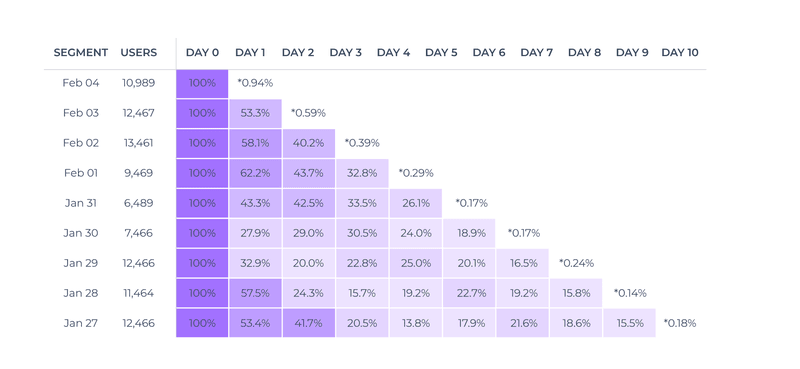
This cohort analysis graph helps visualize user retention over time, a key metric for measuring the success of a software adoption strategy.
Download our Free User Adoption Strategy Template here 👉
Why increasing customer lifetime value is key for SaaS companies
Put simply, customer lifetime value (CLV) calculates the revenue gained throughout a customer’s lifespan. Without a doubt, if you craft an excellent software adoption plan, you will also boost your CLV. According to software research group SaaS Scout, the top 1% of customers are ready to spend 5-10 times more than the average customer.
Additionally:
- 65-80% of profits will be from existing customers.
- 60-75% of customers stick with one brand for more than 10 years.
- 66% of existing customers tend to spend more to increase rewards.
Sounds great! So how do you work out CLV? Follow the formula below:
Avg user value = Avg purchase value X Avg purchase frequency in one year
Guide your plan with this 7-step SaaS user adoption strategy template
#1 Understand your product's mission & vision
Your business objectives have to be true to your mission. This consistency is key to a memorable and coherent UX! More than that, basing your user adoption strategy on exactly why you do what you do makes the plan more sustainable. Look at this amazing example from HumanForest!
Download our Free User Adoption Strategy Template here 👉
#2 Know your customers!
It goes without saying that your strategy will resonate more if it matches your target audience! Besides your own goals, what are their goals? Understanding the core user needs and use cases will help you build better features & support to drive customer success!
Download our Free User Adoption Strategy Template here 👉
#3 Define the activation and adoption events
It’s imperative that you define when the user first experiences your value - the ‘activation event’ or AHA moment. How long does it take to get there? What steps do they take?
After experiencing this moment, your user adoption strategy starts! How will you lead users to the right features? By leveraging methods like cohort analysis you’ll be able to find out which behaviors lead to long-term retention and customer value.
In fintech, for example, activation could be opening an account - whereas adoption might mean making a cash deposit. Then, expanding on other features or services. It’s up to you to define what’s best for your app!
Download our Free User Adoption Strategy Template here 👉
#4 Arm yourself with the best tools to increase software adoption
After defining your desired user events, it’s time to set up the tool stack to drive those behaviors! Besides support software like chat functions or forums, in-app tools are more direct for creating product-led growth.
For instance, some tools focus on onboarding, whilst others go deeper into feature adoption or user engagement. Here are some examples:
- Apty: Revolutionize your walkthroughs and tooltips. Apty is the highest-rated product adoption software on P2P review site G2. It’s ideal for enterprise brands.
- Appcues: Build a personalized experience. When you want to increase feature discovery, try Appcues. Easily add messages without any code!
- StriveCloud: Create a sticky UX that users love. StriveCloud’s app gamification software is flexible and easy to use. Design, test, and build gamified in-app experiences from a single control panel. Plus, it boosts daily active users by 58%!
Download our Free User Adoption Strategy Template here 👉
#5 Develop an onboarding plan that drives adoption
It’s simple - lengthy onboardings frustrate users. The key step of your software adoption plan is to make onboarding interactive! Use as few screens as possible, then opt for timely tooltips over mandatory tutorials. Furthermore, use gamified tactics such as progress bars, rewards, and leveling systems to keep your user engaged.
Download our Free User Adoption Strategy Template here 👉
#6 Plan for continual optimization
You can’t rest on your laurels. Using your mission & vision as a guide, you must continue to improve your app. To do this, make it easy for users to return feedback. Additionally, try to increase the adoption of any underused features that threaten to devalue your product.
Download our Free User Adoption Strategy Template here 👉
#7 Encourage adopters to become loyal brand advocates
At this point, you know who your ideal users are. After identifying them, and converting them with your great product, you need to give them the tools to promote your product! Integrate your brand with social media, incentivize referrals, and implement a loyalty program that rewards loyal users. After all, customers are much more likely to choose your brand if you offer a loyalty program.
Maximize the benefits of our user adoption strategy template with an expert-led gamification workshop & go home with a custom plan!
5 ways SaaS companies can improve their software adoption plan today
Focus on data-driven, goal-based user engagement
Your data is the best guide to achieving success. Once you’re able to interpret your data, you can use it to drive your software adoption plan and develop ambitious targets. Duolingo is famous for its goal of increasing user engagement by 1% every week - and sticks to it religiously. Along with its daily streak feature, they have become the top education app in the US!
Establish self-set goals and define the key milestones
Customers want to know how you are going to get them from A to B. Given this, you should establish the roadmap they have to journey to solve their problem. That includes key milestones which will act as positive reinforcement to continue engaging. You could take the route of Salesforce and gamify the user adoption journey to make it both clear and exciting.
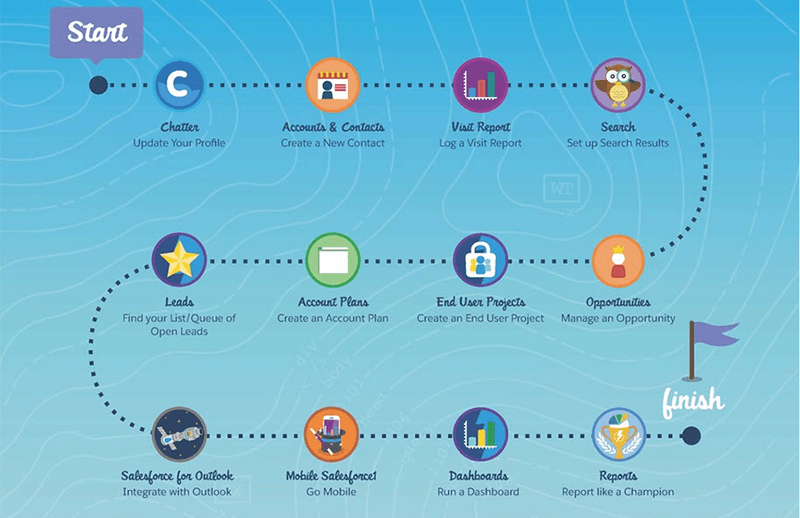
Salesforce Trailhead uses timed challenges and milestone badges to make learning interactive and encouraging, a powerful technique for user adoption.
Build a customer community
One of the most powerful and pervasive motivators is the need to belong. That might be why active in-app communities have been found to boost user retention rates by 40%! As a bonus, an active community builds credibility with like-minded prospects. In short, if it’s good enough for them - why not me?
Choose the right software adoption tool and software!
The right tools can significantly accelerate your software adoption plan. However, it’s crucial to pick the right one, as this software will become a key part of your user experience. How easy is it to use? Can you customize it? Is the support team hands-on or not? What are its main and additional functionalities? Do these fit your goals?
Deploy a competitive strategy with app gamification
Today, over 2/3 of customers say their standard for good experiences is higher than ever! In practice, a great UX needs to be 3 things: useful, easy, and enjoyable to use. And that’s where app gamification excels! Don’t fall behind - gamify your app and get ahead.
Get that competitive advantage! Build a gamified experience & slash churn by 23% from just 1 solution!
FAQ
What is a user adoption strategy in SaaS?
A user adoption strategy is your plan to convert prospects and acquisitions into loyal users. But it’s more than simply achieving conversions. Ideally, a great strategy reveals what behaviors foretell product adoption and how to increase that behavior!
Why do SaaS companies need a software adoption strategy?
When research shows that acquisition is up to 7 times more expensive than retention, the benefits of a good user adoption strategy become clear. Not to mention, adopted users are more likely to see your full value - increasing their customer lifetime value!
When does onboarding end and adoption begin?
The line between onboarding and adoption is blurry, but there are differences. Firstly, ‘onboarded’ users engage more and in a wider breadth. As such, they also demonstrate a better understanding of your value - meaning they’re primed for software adoption!

How to innovate in finance, future trends & challenges according to Bjorn Cumps
In 2016, just 24% of the financial industry was confident that their client strategy was integrated across digital and traditional channels. Today that's changing - customer experience optimization is at the heart of consumer finance. Expert Bjorn Cumps tells us what exactly that means, from improvements in AI to the use of examples of gamification like a points system.
How to innovate in finance, future trends & challenges according to Bjorn Cumps

In this interview, finance expert Bjorn Cumps discusses how to innovate in finance by leveraging the rapid shift toward embedded services and hyper-personalized user journeys. TL;DR: The future of finance lies in embedded finance—a sector projected to grow 10x in value by 2025—integrating banking into voice assistants, smartwatches, and daily platforms to remove all friction from the customer experience.
What is the most important trend in fintech today? If you ask Bjorn Cumps, professor of financial services innovation at Vlerick Business School and board member of Fintech Belgium, the answer is customer experience optimization! In our experience, the way people interact with their banks has undergone a total transformation; while mobile banking was a niche convenience in 2011, we are now seeing fintech app daily active users grow by over 330% as digital-first banking becomes the global standard. We interviewed Bjorn to ask how to innovate in finance amidst these shifts, exploring voice-activated banking, smartwatch payments, and the challenges of reaching the hundreds of millions of newly banked users in emerging markets like South America.
Here’s what we talked about:
- Who is Bjorn Cumps (And why you should listen to him!)
- What are the trends in finance today?
- The biggest challenges faced by the finance industry
- Two sides of the gamification coin - pros and cons
- Recap
Who is Bjorn Cumps? (And why he’s the authority on how to innovate in finance)
To successfully innovate in finance in 2026, leaders must transition from standalone mobile apps to "invisible" embedded services. Bjorn Cumps is a professor of management practice in financial services innovation & fintech at Vlerick Business School and a board member of Fintech Belgium. In our experience, his focus on the 10x value growth of embedded finance and the 337% surge in fintech engagement is vital for navigating today's platform-driven economy.
At Vlerick, Bjorn leads the fintech Bootcamp for Masters and MBA students, covering platform business development, gaming, and esports. As an expert in Enterprise Architecture & Platform Ecosystem Management, he conducts research for businesses scaling into emerging markets—where mobile-first fintech is currently boosting bank account adoption for hundreds of millions of previously unbanked users in regions like South America. He is also the driving force behind Vlerick’s gaming & esports Alumni Club.
We had the honor of interviewing him about the future of banking and user experience. Here’s what we discussed:
What are the trends in finance today?
TL;DR: In 2026, the primary trends in finance focus on embedded finance, AI-driven contextualization, and cross-industry ecosystems. Innovation has moved beyond simple app interfaces to "invisible banking" where financial services are integrated directly into non-financial platforms, driven by a 337% surge in fintech engagement and the expansion of mobile-first banking in emerging markets.
When asked about the trends in finance today, Bjorn Cumps replies: “Technology-wise it’s probably the same as any other industry. Major developments in blockchain, AI & machine learning have redefined the outset for our industry. Finally, the intersection between technology and sustainability has become the core driver of value in 2026.”
Everything starts with a great customer experience. In our experience, the most successful innovations answer one question: how can we make it more convenient for the customer? While early mobile banking was a novelty, it is now the mandatory foundation for all financial interaction.
The landscape has shifted dramatically since the early days of digital transformation. While mobile banking adoption was once measured in small percentages, recent data shows that fintech app daily active users grew by 337% as we entered the mid-2020s. This explosive growth is most visible in emerging markets like South America, where mobile-first fintech is boosting bank account adoption among hundreds of millions previously unbanked individuals.
Bjorn Cumps - "Mobile [in finance] started around 2011. But it was mostly relegated to early adopters, and uptake was slow. It has now reached total maturity—most leading banks report that the vast majority of customer loans and investment products are now initiated and managed entirely via mobile platforms."
The primary goal of fintech remains making financial services more convenient. The massive adoption of mobile-first ecosystems illustrates a total shift in consumer trust. Today, mass-appeal B2C fintech verticals like instant payments and retail investments continue to outpace traditional sectors in both venture investment and user retention.
Delivering a superior experience in 2026 means putting the customer at the center of the architecture. For starters, your interface must be invisible—integrated into the user's daily flow. Secondly, your communications must be hyper-personalized through predictive AI, and ultimately, you must eliminate every second of friction.
Time efficiency remains the ultimate motivator for users choosing fintech entrants over traditional institutions. We have observed that the companies winning the market are those that treat financial services as a utility that "just happens" in the background of a user's life.
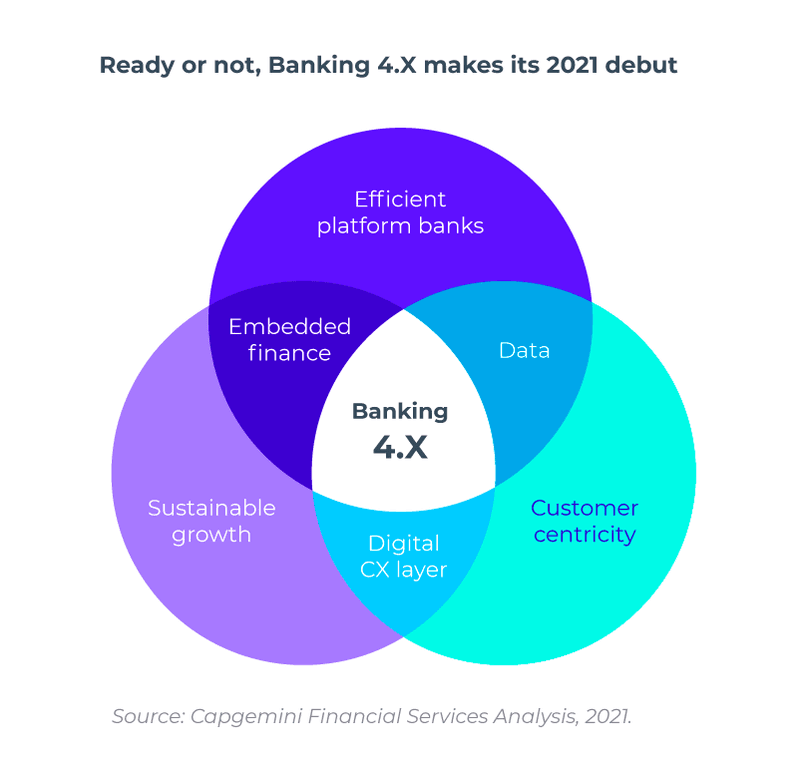
This graphic illustrates the "Banking 4.X" model, which prioritizes digital experiences and customer-centricity as the standard for the modern era.
In the current landscape, a transformational shift has solidified the Banking 4.X era. Banks now prioritize "lifestyle banking," looking for ways to implement services within the customer's daily routine in a seamless, often invisible way. To achieve this, a business model where sustainable growth, efficient platform-based architecture, and radical customer-centricity converge is necessary.
But how are banks delivering this level of centricity in 2026? According to Bjorn, these two trends are the leading drivers:
#1 Contextual banking brings users closer to your product.
Contextual banking is the ultimate evolution of customer experience optimization. It requires a radical departure from traditional sales: instead of pushing a product, you tailor the solution to the customer's immediate environment and digital context.
Bjorn Cumps - "Contextual banking means going from a product-driven organization, built to sell financial products to customers, towards providing good solutions at the moment when the customer needs it."
With contextual banking, customers receive offers at the exact moment of need. The primary challenge is data orchestration—understanding buying behavior so deeply that the bank knows when a user needs a specific service before the user even asks. This is heavily supported by embedded finance, which grew 10x in value between 2020 and 2025, integrating payments and credit into everything from voice-activated home hubs to smartwatches.
Bjorn Cumps - "You never get up in the morning and say, ‘yeah, I really want to buy a mortgage from a bank.’ You need it...but the more convenient and contextual you make it, the better it will be."
Bjorn notes that the technology has finally caught up with the vision. Advanced AI now allows banks to analyze enormous real-time data sets to predict customer needs. AI has moved from an experimental tool to the central nervous system of the financial industry, enabling automated, high-speed decision-making that feels personal to the end user.
#2 Moving beyond banking & financial services
The second major trend in finance involves the expansion into "super-app" territory. Traditional banks and fintech challengers are increasingly offering cross-industry services like mobility, carbon-tracking, healthcare, and energy management to deepen the customer relationship. Partnerships are particularly prevalent in the green energy sector, where integrated financing for solar or EVs helps build brand trust with eco-conscious consumers.
Bjorn Cumps - "Banking and insurance platforms are trying to turn into a broader service for their clients...they do that by linking with fintech."
Finance is rarely the end goal; it is a means to an end. Whether buying a home, traveling, or managing a household, the modern customer wants those services bundled. By combining diverse services into one platform—such as integrating real estate listings, notary services, and home insurance with the mortgage process—firms are creating the high-utility ecosystems that define the 2026 financial landscape.
The biggest challenges faced by the finance industry
To successfully innovate in the finance industry, legacy institutions and startups alike must solve the gap between digital utility and human experience. Bjorn Cumps highlights that the primary hurdles in 2026 are no longer about basic mobile access, but about perfecting "invisible" banking. With fintech app daily active users having surged by 337% since the early 2020s, the benchmark for success is now defined by native tech giants like Amazon, requiring banks to prioritize hyper-relevance and seamless embedded integration to remain competitive.
Keeping up with customer expectations
One of the biggest challenges in the finance industry remains the rapid escalation of customer expectations. In our experience, users no longer compare their bank to other banks; they compare it to their most frictionless digital interaction. This shift is driven by a massive expansion in mobile-first adoption, particularly in emerging markets where mobile fintech is now the primary driver for bank account adoption among hundreds of millions of previously unbanked individuals.
To compete, banks need to make the customer experience both convenient and relevant. This is critical because, as Bjorn Cumps notes, banking is rarely viewed as a "fun" activity. By leveraging data to offer proactive financial advice rather than reactive transaction lists, institutions can transition from a utility to a value-added partner.
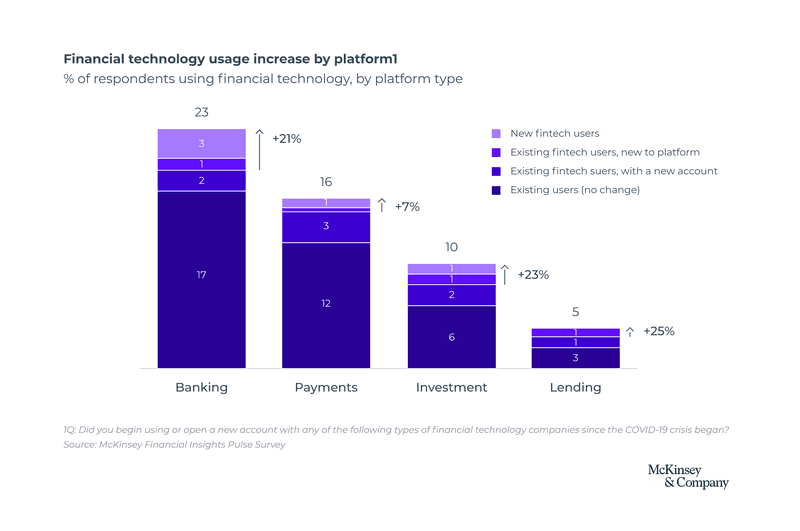
This chart reveals key insights into consumer behavior, showing that users prioritize convenience and relevance in their digital banking experience.
Looking for something extra to keep your users engaged? Check out our app gamification software!
Building an integrated, omnichannel experience
Modern customers expect a unified service layer across every touchpoint. Research into the finance industry indicates that embedded finance strategies are now the most effective for retention. Embedded finance is projected to grow 10x in value between 2020 and 2025, integrating banking directly into everyday platforms like voice-activated home hubs and wearable devices.
Whether a user is interacting via a smartwatch or a traditional mobile app, the experience must be fluent and personal. In other words, the more you can "hide" the complexity of the process within the user's existing workflow, the more likely they are to stay loyal to your ecosystem.
Maintaining trust with customers
Bjorn Cumps observes that "traditional finance players are still our most trusted advisors, even today." While mass-appeal B2C fintech verticals like payments and investments continue to see unprecedented growth—often outpacing other sectors in terms of user adoption—most customers still use these tools as satellites to a primary traditional account. However, this trust gap is closing rapidly.
Bjorn Cumps - "Trust and interaction is changing. Many of us who want to be served digitally are trusting online channels more and more. It also shows in the frequency and type of purchases we’re making"
Ultimately, as digital native generations become the primary economic force, the historical advantage of traditional banks—trust—is being challenged by fintechs that offer superior transparency and user control. So how do you maintain this trust in a high-speed digital world?

This graph shows the shift in consumer behavior towards digital fintech solutions, indicating that trust in these platforms is steadily growing.
According to Bjorn, trust is "earned gradually... but it gets faster as the word spreads." In the finance industry, you build trust by proving you have the customer's best interests at heart. Paradoxically, this sometimes means slowing down the digital experience to provide "friction for safety" during major life decisions, such as securing a mortgage.
Bjorn Cumps - "Of course, buying a mortgage shouldn’t be the same as ordering something on Amazon...that’s dangerous. The service could be processed in a second, we know that. But studies show that customers have more trust when the process lasts longer, even if it’s not needed."
As you’ll learn from successful fintech gamification examples, the role of gamification is not to turn banking into a game. Its purpose is to make financial management more intuitive and engaging, ensuring that the "boring" parts of finance are handled with the same care and interaction quality as a premium consumer app.
Two sides of the gamification coin - Pros & Cons
TL;DR: Gamification in finance has transitioned from a niche trend to a primary driver of retention, with fintech app daily active users (DAU) surging by 337% globally as we enter 2026. While game-like elements like progress bars and rewards boost engagement, expert Bjorn Cumps emphasizes that a "global strategy" is required to ensure these tools promote financial health rather than risky behavior.
One technique fintech apps have brought to banking is gamification. In short, gamification is the use of game-like elements in a non-game context. Often used gamification examples include badge reward systems, loyalty programs, and prizes. In our experience, the most successful 2026 implementations move beyond simple points and integrate directly into the user’s lifestyle.
You can see this in fintech apps like Revolut, Cake, or in traditional banking apps like BBVA. Across the board, gamification in finance has boosted app engagement and retention. This is particularly visible in emerging markets like South America, where mobile-first fintech adoption is skyrocketing among previously unbanked populations. However, Bjorn points out that to achieve success, you must have the right gamification strategy.
New to gamification? Get started on our what is gamification page!
How NOT to do gamification
Bjorn Cumps - "Some major banks try and introduce one gamification element such as a progress bar, but alone it is not so effective. Customers are not stupid, they immediately see through it when gamification is just cosmetic."
For gamification to work its magic, Bjorn says you must have a “global approach”. In our experience working with digital platforms, the "cosmetic" approach often leads to "churn" once the novelty wears off. Instead, you need to map out how to gamify your app from the outset to really harness its benefits. This is especially true as embedded finance value has grown 10x since 2020, meaning your "game" must now compete with voice banking and wearable tech interfaces.
Need a gamification strategy that works for you? Book a custom workshop & go home with an actionable gamification roadmap!
Take the French fintech app Shine, for example. With a well-produced gamification strategy, they boosted onboarding retention to 80%. But without a well-defined strategy, you risk not just inefficiency, but irresponsibility.
Bjorn Cumps - "There’s very beneficial aspects to gamification, but sometimes it is so fun and easy, and the interface is so intuitive, that it can backfire and take the serious part out of managing money or investing."
Take the example of Robinhood, the stocks trading app. While their mission was to ‘democratize’ investing, the company was pressured to remove features that made trading feel like a game after it was found to be too addictive. Bjorn quotes one of the most influential people in fintech, Chris Skinner, on how easy it is to make ill-advised financial decisions when “banking is just seen as a game”.
To avoid this outcome, and boost your app in a responsible and cohesive way, you need the right gamification strategy, tailored to your app. Straight-up copying from other gamification examples won’t work in the sophisticated 2026 market.
How to do gamification the right way!
Bjorn Cumps - "A good way to use gamification is to incentivize desired behavior."
Here, Bjorn gives the example of a Spanish bank. The banking app uses well-known gamification examples like leaderboards and points systems to educate users on financial products and literacy. The leaderboard ranks users who watched the most educational videos and rewards them with redeemable points. This is a win-win situation for everybody! By 2026, these mass-appeal B2C fintech verticals continue to outpace other sectors in adoption because they prioritize this kind of user-centric education.
Next to improving financial education, Bjorn says that gamification can be extremely powerful when it comes to motivating more sustainable living. He gives the example of the Belgian telecom giant Proximus, who launched the eco-conscious digital banking app Banx (done in partnership with Belfius and the B2B fintech company Doconomy).
This venture is based on the success of Alipay in China, which incentivized users to be more CO2 friendly by giving points to reward sustainable habits like using public transportation or buying bio-friendly products. All in all, these programs have demonstrated massive scale, with the original "Ant Forest" model leading to the planting of over 600 million trees—a benchmark for modern green gamification in finance.

This screenshot shows a CO2 dashboard from a banking app, an excellent example of gamification used to incentivize sustainable behavior by tracking and rewarding eco-friendly choices.
To sum up, Bjorn shares his advice for developing a gamification strategy for a financial app that truly works in 2026:
“Have a very clear goal, incentivize ideal user behavior, and make the process fun and engaging. Gamification should be used to take away the barriers that limit a user from fully engaging.”
How to innovate in finance: Future trends & challenges recap
TL;DR: Successful innovation in finance now hinges on moving from product-centricity to "contextual banking." By 2026, the industry has shifted toward embedded finance—projected to grow 10x in value since 2020—integrating banking into everyday non-financial platforms. Professor Bjorn Cumps emphasizes that while mobile adoption has reached mass saturation, the next frontier is maintaining digital trust through personalized, gamified experiences and seamless omnichannel delivery that rivals global tech giants.
Who is Bjorn Cumps & why you should listen to him
Bjorn Cumps is a professor of management practice in financial services innovation & fintech at Vlerick Business School, and a board member of Fintech Belgium. His passion for technology turned into a fascination for fintech and how it brings traditional banks, tech companies & startups together. In our experience collaborating with industry leaders, Cumps’ frameworks remain the gold standard for navigating the intersection of legacy banking and disruptive tech.
The biggest trends in finance
#1 Contextual banking
Innovation in finance is currently defined by customer experience optimization through contextual banking. While mobile banking adoption was a "new" trend a decade ago, we have seen fintech app daily active users surge by over 337% in recent years. This growth is particularly explosive in emerging markets like South America, where mobile-first fintechs are boosting bank account adoption among hundreds of millions of previously unbanked citizens.
Bjorn Cumps - "Contextual banking means going from a product-driven organization, built to sell financial products to customers, towards providing good solutions at the moment when the customer needs it."
With contextual banking, customers get offers tailored to them at the most relevant time. A big challenge here is to understand the customer and their buying behavior using real-time data. When do customers need a certain product? And what is the best time to make that offer? Our data shows that timing-optimized offers see a 4x higher conversion rate than generic push notifications.
#2 Moving beyond financial services
According to Bjorn, the most significant innovation in finance today is the expansion into non-financial ecosystems. This "embedded finance" movement is projected to grow 10x in value between 2020 and 2026, integrating voice banking and wearable payments into everyday platforms. Traditional banks are now offering cross-industry services like mobility, healthcare, or energy to improve the customer experience.
Partnerships are especially popular in green energy, which can help establish brand trust with the eco-conscious Gen Z and millennial generations. By embedding financing directly into the purchase of solar panels or EVs, banks become a silent but essential part of the consumer's lifestyle journey.
The biggest challenges faced by the finance industry
Keeping up with customer expectations
A primary challenge for future trends & challenges in banking is fulfilling the "instant" expectation of the modern user. Customers now expect their online banking experience to be as seamless and frictionless as a native technology company like Uber or Airbnb. If an app takes more than three clicks to perform a core action, abandonment rates spike significantly.
Building an integrated, omnichannel experience
Customers expect the same level of service regardless of the platform. Research from global industry reports confirms that integrated, digital-first strategies are the most effective at retaining high-value clients. Whether they are using a smartwatch app, a web portal, or visiting a physical "experience center," users want their journey to be fluent, personal, and data-consistent across all touchpoints.
Maintaining trust with customers
Bjorn says that “traditional finance players are still our most trusted advisors, even today.” While mass-appeal B2C fintech verticals like payments and neo-investing continue to see unprecedented growth, most people still use these as secondary accounts. However, this "trust gap" is narrowing as digital-native generations become the primary economic drivers.
Bjorn Cumps - "Trust and interaction is changing. Many of us who want to be served digitally are trusting online channels more and more. It also shows in the frequency and type of purchases we’re making."
Two sides of the gamification coin - Pros & Cons
How NOT to do gamification
Bjorn Cumps - "Some major banks try and introduce one gamification element such as a progress bar, but alone it is not so effective. Customers are not stupid, they immediately see through it when gamification is just cosmetic."
For gamification to drive real innovation in finance, Bjorn says you must have a “global approach.” In our experience, using gamification as a last-minute "skin" fails to drive long-term retention. Instead, you must map out the behavioral psychology of your app from the outset to ensure the rewards align with actual financial wellness goals.
How to do gamification the right way
Bjorn Cumps - "A good way to use gamification is to incentivize desired behavior."
Bjorn uses the example of a Spanish bank that transformed financial literacy into a game. The app uses leaderboards and points systems to reward users for watching educational videos or setting up savings goals. Top-ranked users can exchange points for tangible rewards, such as discounts or movie tickets. This creates a win-win: the customer becomes more financially literate (and loyal), and the bank sees higher engagement with its product suite.
Looking to build a gamification strategy that works for your app? Book a value-packed workshop & go home with an actionable roadmap, tailored to your app!
How to maximize rides per user (and grow your mobility service)
Customer acquisition is simply too expensive. Instead, as mobility operator you should focus on existing customers! That means finding a way to maximize rides per user. Gamification can help you achieve this goal! Find out how.
How to maximize rides per user (and grow your mobility service)
To maximize rides per user in 2026, mobility services must move beyond simple booking and focus on daily habit formation. With the global ride-hailing user base projected to hit 1.99 billion this year, the market has shifted from rapid expansion to high-frequency retention. In our experience, the most profitable growth comes from capturing the massive volume of short-distance "micro-trips" under $10. By leveraging gamification and behavioral triggers, operators can effectively turn occasional riders into daily commuters.
The cost of acquiring new users continues to rise even as the market maintains an 18.4% CAGR. If mobility operators want to create sustainable growth and profitability, they need to focus on their existing customers! That means finding a way to maximize rides per user. Gamification can help! Gamification makes your customer experience more fun, among many other benefits. We have seen that as market leaders like Waymo scale to 15 million annual rides, the ability to maintain high engagement through seamless, rewarded experiences is what separates profitable services from the rest. Today, let’s focus on how gamification can incentivize your customers to take more rides.
- 3 strategies that fuel customer loyalty and engagement
- Why customer experience should be your top priority
- How technology can help mobility improve operational efficiency & the customer experience
- What insights your data can deliver on consumer behavior
- How StriveCloud helps mobility operators maximize rides per user with gamification
- FAQs
3 strategies that fuel customer loyalty and maximize rides per user
TL;DR: To maximize rides per user in 2026, mobility operators must shift from transactional discounts to high-frequency engagement models. With global ride-hailing users projected to reach 1.99 billion in 2026, growth is no longer just about finding new customers, but about increasing the "wallet share" of existing ones. In our experience, the most resilient services use gamification and tiered loyalty to turn occasional users into daily commuters.
Loyalty programs
A loyalty program is essential to boost customer retention and maximize rides per user. In the current 2026 landscape, where the market is seeing an 18.4% CAGR, consumers are overwhelmed with choices. They don't just want a ride; they want a relationship with a brand that recognizes their patterns. Our data shows that top-performing mobility operators who implement personalized loyalty tiers see significantly higher retention rates than those relying on generic messaging.
These days, consumers expect your loyalty program to be fun as well. This is especially true for Gen Z and Gen Alpha, who now represent the primary growth demographic for mobility operators. Industry reports indicate that younger users consistently prefer loyalty programs that incorporate interactive "milestone" elements over traditional point-accumulation systems.
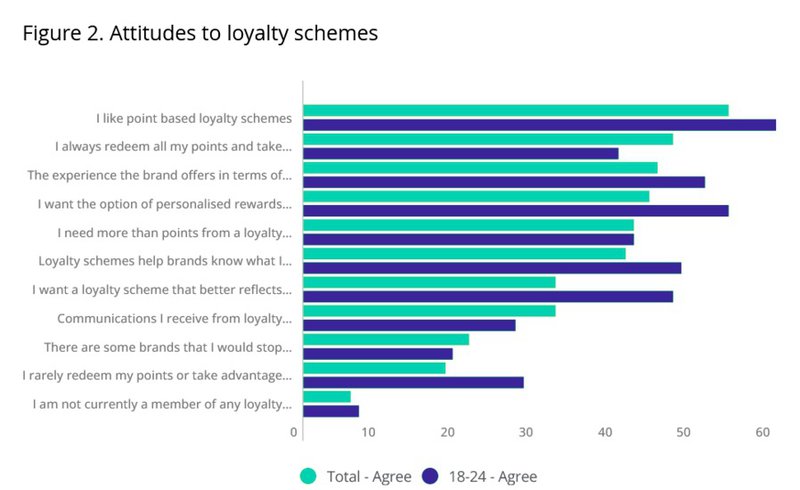
This shift toward interactive loyalty highlights a key demographic insight: modern users are significantly more drawn to programs that offer a sense of progression, a crucial factor for any brand looking to maximize rides per user.
Rewards schemes and discounts
For new mobility operators and city launches, hard rewards like discounts are useful to attract new customers. However, in 2026, the strategy has changed. With the largest share of trips now being short-distance "micro-trips" priced under $10, margins are thinner than ever. Over-reliance on discounts can lead to the overjustification effect, where riders only use your service when a coupon is present.
In our experience, the most effective way to maximize rides per user without eroding margins is to use "efficiency-based rewards." For example, offering credits for rides taken during off-peak hours or for returning vehicles to high-demand "hot zones" helps balance your fleet while keeping users engaged.
Gamification
Gamification is the use of game-like elements such as challenges, levels, and leaderboards to reward customers for their achievements. These features trigger intrinsic motivation—using the service because the experience itself is rewarding. This is a proven way to maximize rides per user. For instance, market leaders like Waymo demonstrated the power of high-frequency engagement by scaling to 15 million annual rides by 2025, largely driven by habitual, high-frequency urban use cases. Here are 3 gamification features to incentivize repeat bookings:
- Badges & virtual currency. Rewarding customers with virtual currency gives them instant feedback. In 2026, points are perfect for shared mobility as they can be exchanged for free riding minutes, carbon offset credits, or digital collectibles within your app.
- Leaderboards. Ranking customers based on "Eco-points" or "Distance Traveled" inspires friendly competition and creates a highly motivating social experience that keeps users coming back to check their standing.
- Challenges. Setting a clear goal, such as "Complete 5 rides this week for a weekend bonus," triggers action. You can link this to other mechanics, like rewarding customers for their achievements with unique badges or making them compete in public in-app leaderboards.
When mobility services move beyond the "utility" phase and into the "experience" phase, the results are clear. By focusing on these engagement loops, mobility operators can drive consistent, daily usage that significantly increases the lifetime value of every customer and helps maximize rides per user across the board.
Why customer experience is the key to maximize rides per user
TL;DR: To maximize rides per user in 2026, mobility providers must transition from generic service to a reliability-first model. With global ride-hailing users forecasted to reach 1.99 billion by 2026, the competitive edge is no longer vehicle branding, but the operational uptime and predictive availability that turn occasional riders into daily commuters.
To many consumers today, the only difference between mobility operators is the color of your vehicle! So if you really want to stand out and maximize rides per user, you need a frictionless customer experience. Research by McKinsey continues to show that consumers rank availability and reliability as the two most important factors in choosing a mobility app. In our experience, providing a consistent "time-to-pickup" of under five minutes is the single greatest predictor of long-term user retention.
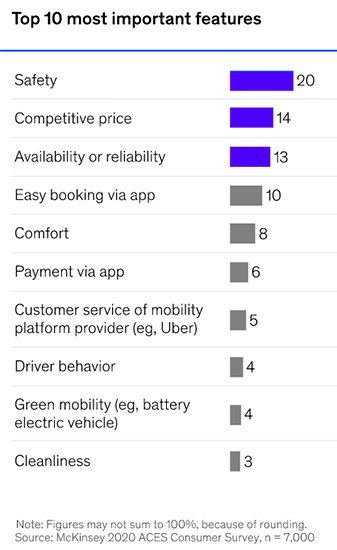
As this industry data shows, the core user experience fundamentals of vehicle availability and reliability are paramount for customer satisfaction. This is reflected in the success of market leaders; for instance, Waymo tripled its annual volume to 15 million rides by 2025 by focusing on high-frequency reliability in dense urban hubs.
In other words, you need a working vehicle exactly where and when the customer wants it. Of course, putting a vehicle on every corner is not a sustainable way to maximize rides per user—that is neither possible nor profitable, especially with many high-frequency trips now averaging under $10. Instead, you must leverage predictive demand technology and automated fleet rebalancing to achieve your growth goals while maintaining thin operational margins.
How technology can help mobility improve operational efficiency & the customer experience
To maximize rides per user in 2026, mobility operators must focus on hyper-efficiency and AI-driven personalization. With global ride-hailing users forecasted to reach 1.99 billion this year, capturing a share of this 18.4% CAGR market requires more than just vehicles—it requires a seamless digital layer. In our experience, the key to growth lies in automating high-frequency, short-distance trips (typically under $10) and using real-time data to ensure vehicle availability at the exact moment of demand.
Chatbots and customer service to maximize rides per user
As the market shifts toward high-frequency trips under $10, maintaining thin margins is impossible with traditional support models. In 2026, industry leaders are relying on "efficiency tech" to handle the bulk of interactions. Because modern consumers expect a response in 10 minutes or less, AI-powered chatbots have become the standard, managing over 70% of routine inquiries instantly. In our experience, the faster the support, the faster the customer can get back on your vehicle, directly impacting your retention rates.
In a hyper-competitive mobility landscape, customer service is your strongest moat. Research indicates that 33% of people will abandon a brand after just one negative interaction. Automated systems ensure that "lost vehicle" or "payment failed" issues are resolved in seconds, preventing churn and protecting your lifetime value.
Precision fleet rebalancing
You must have accurate, predictive data for your fleet. High-density operators like Waymo have demonstrated the power of availability, tripling annual volume to 15 million rides by 2025 by ensuring vehicles are where users need them most. To maximize rides per user, your rebalancing strategy must be proactive, not reactive:
- Predictive Placement: Customers are 40% more likely to book when a vehicle is within a 3-minute walk, significantly increasing frequency of use.
- Margin Optimization: When your fleet is misaligned with demand, you lose money on every idle minute; precision rebalancing ensures supply matches the 1.99 billion active users globally.
- Regulatory Compliance: Efficient rebalancing is now strictly mandated by city regulators in most Tier-1 markets to prevent sidewalk clutter and ensure equitable access.
Partnerships & integrated apps to maximize rides per user
Strategic partnerships are essential for capturing the "all-in-one" user. With the mobility market growing at an 18.4% CAGR, users are increasingly moving away from standalone apps in favor of integrated ecosystems. For example, successful operators are now embedding their services into national rail apps or "RailMaas" pilots, similar to how e-scooter operators integrated with Renfe and Cabify to create a unified travel experience.

The iomob app platform illustrates how these integrations create a frictionless journey. By centralizing the booking and payment process, operators can access cross-platform data that reveals exactly where and when users switch modes, allowing for better-targeted promotions that maximize rides per user across the entire urban network.
What insights your data can deliver to maximize rides per user
TL;DR: To maximize rides per user in 2026, operators must leverage real-time data to influence trip frequency. With global ride-hailing users forecasted to reach 1.99 billion this year, success depends on converting occasional riders into daily commuters. In our experience, utilizing predictive analytics can shift user behavior for over 35% of trips, directly increasing lifetime value through personalized engagement and fleet optimization.
They say that knowledge is power, and in the 2026 mobility landscape, data is the primary currency. Hidden in the patterns of your app are the keys to maximize rides per user by understanding shifting consumer preferences. In fact, research continues to show how targeted data application enhances satisfaction and retention:
Transport Policy - "An app incorporated personalized rewards with predicted travel time and showed that users change both departure time and route for 35% of their trips... this helps mobility apps get positive feedback and gain more customers."
Now, many mobility operators already use customer data to manage their fleets, but the most profitable services in 2026 use it to aggressively optimize pricing and frequency.
Improved dynamic pricing to maximize rides per user
The more you know about your customers, the better your dynamic pricing will be. Market data indicates that the largest trip share in 2026 consists of short, high-frequency rides priced under $10. To maximize rides per user within these thin margins, operators are relying on efficiency-focused tech to manage high volumes. In our experience, implementing real-time surge and "quiet hour" discounts ensures full fleet utilization. You cannot achieve this without knowing exactly when demand spikes and the specific price ceilings your local customers will tolerate.
Personalized pricing strategies that lead to loyalty
In our experience, high-frequency services—such as those scaling toward 15 million annual rides like Waymo—succeed because they minimize friction for the power user. To maximize rides per user, many mobility operators now offer tiered subscription models. For instance, Lime’s model allows monthly subscribers to pay zero fees to unlock an e-scooter. This strategy feeds into the ‘Lucky Loyalty effect,’ which suggests that as a user's trip frequency increases, their expectation of "VIP" treatment grows. By meeting this expectation with data-backed rewards, you secure a larger share of the 1.99 billion global mobility users.
How StriveCloud helps mobility operators maximize rides per user with gamification
TL;DR: To maximize rides per user in 2026, operators must pivot from simple acquisition to behavioral habit-formation. With the global ride-hailing market reaching 1.99 billion users this year, the winners are those who use gamification to turn "one-off" trips into daily routines. In our experience, integrating real-time rewards and progress tracking directly into the app flow is the only way to sustain growth in a market defined by high-frequency, short-distance journeys.
If you want to maximize rides per user, your app experience must be the center of your retention strategy. It is where customers sign up, pay, and interact with your brand daily. StriveCloud helps mobility operators create a unique competitive advantage by introducing gamification and loyalty features that reward users for choosing your service over a competitor every single morning.
Here are three main ways we achieve that:
- Incentivize high-frequency behaviors with in-app rewards - To maximize rides per user, you must target the high-volume segment of short trips, which currently make up the largest share of the market with costs often under $10. In our experience, using micro-rewards for these short bursts of activity helps mobility operators double their average rides per user.
- Build a loyal & engaged customer base in a crowded market - With global ride-hailing users forecasted at 1.99 billion in 2026, loyalty is your strongest defense. Our data shows that customers using gamified loyalty programs see an average increase of 300% in trips booked by active customers compared to traditional discount-only models.
- Create an engaging experience that scales with demand - As industry leaders like Waymo scale toward 15 million annual rides by prioritizing high-frequency user profiles, your brand must offer more than just a ride. Empower your brand narratives with fun gamification features such as challenges, levels, and achievements to keep users coming back.
Our software makes it easy for you to add all types of features from points and badge reward systems to daily quizzes, lotteries, in-app currencies, and leaderboards. According to industry market forecasts, the 18.4% CAGR in the mobility sector means that user expectations for interactive, app-based experiences are at an all-time high. We provide over 20 powerful interactive features you can use to engage your customers at every touchpoint.
Michael Stewart @HumanForest - "What’s unique about StriveCloud compared to a regular loyalty program or customer marketing is that your customer’s experience is inside the app, at the moment they are using it."
So why does it work? Shared mobility is perfectly suited for gamification because reward systems align directly with your core business goal: maximizing rides per user. Furthermore, the modern mobility audience — who often prioritize efficiency and tech-integration — responds exceptionally well to the intrinsic motivation of "leveling up" their commuter status.
Our expertise in behavioral science allows us to create a strategy that fuels long-term engagement. By combining extrinsic motivation (discounts and perks) with intrinsic motivation (progress, achievement, and social status), we ensure your service becomes a "sticky" part of the user's life. In fact, our clients consistently see an average 300% increase in trips completed by their most active customer segments!
Don’t believe it? See for yourself! Find out how StriveCloud helps you maximize rides per user!
FAQs: How to maximize rides per user
TL;DR: To maximize rides per user in 2026, mobility operators must shift from simple acquisition to high-frequency retention. With the global user base reaching 1.99 billion this year, success depends on using real-time data to optimize for short-distance trips (under $10) and leveraging gamified loyalty programs that reward daily streaks and consistent usage.
How to maximize rides per user in shared mobility?
Gamification uses game-like elements to turn routine transportation into an engaging habit, which is essential to maximize rides per user. In our experience, shifting from generic discounts to milestone-based rewards creates intrinsic motivation. This strategy is reflected in the broader industry’s growth; for example, market leaders like Waymo reached 15 million annual rides by 2025 by ensuring high-frequency availability that encourages riders to use the service for multiple daily trips. By integrating public in-app leaderboards and "ride streak" challenges, operators can see a significant uptick in monthly active usage.
Why is the customer experience important for shared mobility?
Providing a frictionless customer experience is the most direct way to maximize rides per user in a crowded market. Recent McKinsey research highlights that reliability and vehicle availability are the top two factors driving consumer choice. In 2026, the majority of the market share consists of short-distance trips priced under $10. In our experience, if a vehicle isn't available within three minutes, users switch to a competitor. Ensuring a seamless booking flow and high vehicle density creates the "reliability trust" necessary to become a user’s primary mode of transport.
How can data insights help shared mobility apps understand consumer behavior?
Dynamic pricing and predictive demand modeling are vital data tools to maximize rides per user. By analyzing historical usage patterns, services can adjust pricing in real-time to fill "dead zones" and optimize fleet distribution. With the ride-hailing market maintaining an 18.4% CAGR through 2026, the competition for the forecasted 1.99 billion global users is fierce. In our experience, using data to automate customer service for low-margin, high-frequency trips allows operators to maintain the thin margins required for $10 rides while still delivering a responsive, high-quality user experience that keeps riders returning daily.
How to retain the Gen Z users (and what every fintech app needs to know)
1 in 3 Gen Z members will not purchase a product or service without being personally recommended it by a friend. Knowing this, user retention among young customers has never been so important! Fintech is turning to gamification examples like leaderboards and point systems to keep young people involved, and for many apps it is working.
How to retain the Gen Z users (and what every fintech app needs to know)

This image sets the stage for our discussion on how to retain the Gen Z users in the competitive fintech landscape, emphasizing the digital-native audience. TL;DR: In 2026, retention is driven by hyper-personalization (which 77% of banking leaders say is the top retention driver) and seamless payment UX, as 81% of Gen Z will abandon a brand after just two or three poor digital interactions.
Across banking and fintech, figuring out how to retain the Gen Z users requires moving beyond basic transactions toward immersive, gamified ecosystems. In our experience, these 'digital natives' don't just prefer digital—they demand high-velocity, rewarding experiences. With the global fintech market projected to reach $1,126.64 billion by 2032, the stakes for loyalty are at an all-time high. The answer to long-term loyalty lies in gamification. Leading platforms like Revolut have already set the standard, using leaderboards to drive account creation and habit-building among students and young professionals.
In this article, we will discuss the evolving behavior of Gen Z (now aged 14–29) and how to retain the Gen Z users by leveraging their existing habits. For instance, 65% of this demographic spends over three hours a day gaming, a trend that is shaping 2026 fintech strategies. We’ll explore how gamification examples—from P2P social tools to AI-driven savings challenges—can help you crack the code on user retention!
- Why young people are important for fintech apps (and how to retain them)
- Gamification examples that can boost user retention
- Challenges: Why 81% of Gen Z risk abandonment over poor UX
- Leaderboards: How social features drive 93% P2P adoption
- Points system: Why 77% of leaders prioritize personalized rewards
- Personalized notifications: Preventing churn with AI-driven insights
- Recap
Why young people are important for fintech apps (and how to retain them)
TL;DR: In 2026, the global fintech market is projected to surpass $450 billion, driven largely by Gen Z's digital-first habits. To retain the Gen Z users, fintech apps must prioritize hyper-personalization and gamified UX. With 81% of Gen Z willing to abandon a brand after a poor payment experience, retention is no longer about "nice-to-have" features—it is about building seamless, interactive financial habits.
Today, 13 to 24-year-olds spend more than double the time using mobile apps each day than those over 45. Given their activity, it should be no wonder then that Gen Z and Millennials are hugely important to digital banks, even if they do not hold the spending power of their older counterparts. As of 2025, younger people make up the biggest share of both new and existing fintech users, with 93% of Gen Z regularly using P2P payment platforms and 91% utilizing mobile wallets.
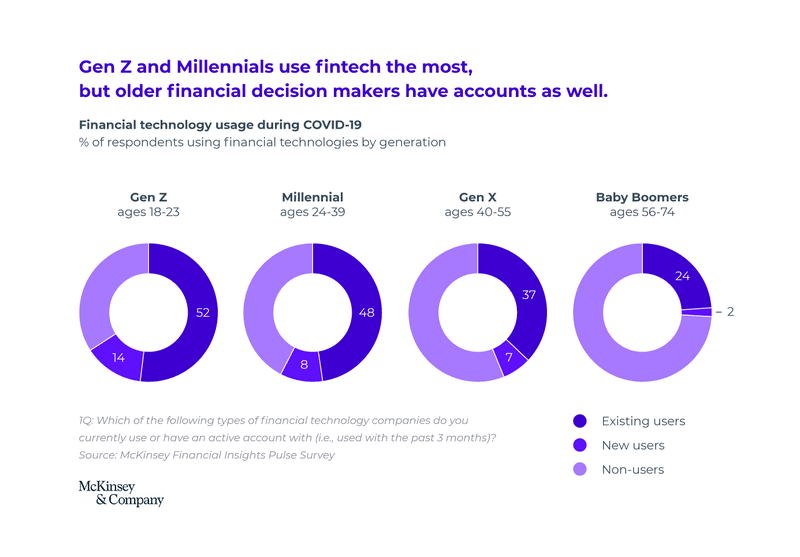
The chart clearly shows that younger generations, including Gen Z, form the largest segment of fintech users, making their retention critical for growth.
To retain the Gen Z users, brands must look beyond initial downloads. While the global fintech market is projected to reach $1,126 billion by 2032, long-term engagement remains a hurdle. In our experience, the risk of abandonment is high: 81% of Gen Z users will stop using an app after a poor payment experience, and 65% will churn after just two or three negative interactions. This means there is high sector growth among young people, but app-specific loyalty is fragile. Gen Z wants what fintech has to offer, but they give up on friction-heavy apps almost instantly.
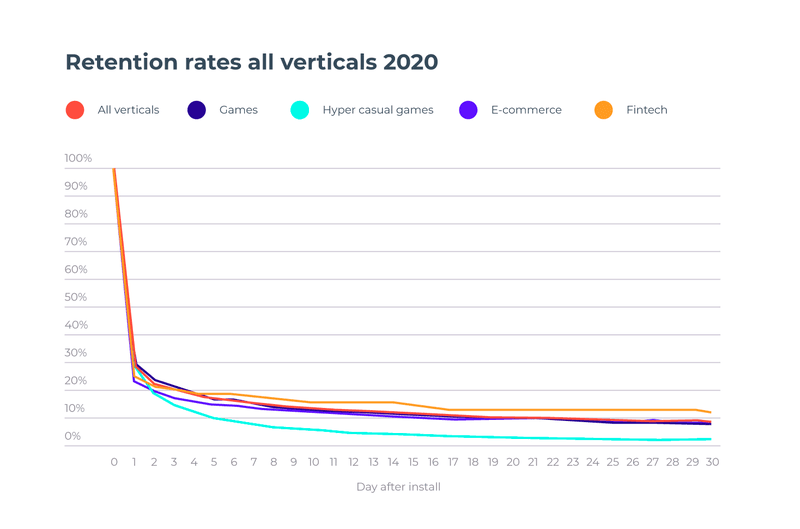
This graph highlights fintech's leading position in app retention compared to other industries, while also showing room for improvement in long-term engagement.
Low user retention in young people is bad news for many reasons—but none more pressing than the fact that most Gen Z members trust their family and friends' recommendations the most. The reality is that nearly 1 in 3 young people will not purchase a service without a personal referral. Conversely, nearly 40% of Gen Z users in the US report they would switch primary banks for better tailored rewards. In brief, your ability to retain the Gen Z users today directly dictates your organic growth through word-of-mouth tomorrow.
A common cause for user churn is a stale user experience. In the digital world, young consumers know exactly what high-quality UX looks like. In modern fintech, users expect 24/7 support and customer-centric design as a baseline. However, 77% of banking leaders now report that hyper-personalization is the primary driver for boosting retention. Furthermore, 60% of Gen Z prioritize top-notch security and digital trust above all else when choosing a financial institution. To truly keep them engaged, you need to create a motivating, secure, and interactive environment.
Increase user retention by uplifting the experience with fun elements. Check out our app gamification software!
But how do fintech apps create a motivating experience to retain the Gen Z users? According to recent industry shifts, the answer is gamification. With 65% of Gen Z gaming for more than three hours a day, these interactive mechanics are their native language. As highlighted in a report by the OECD:
OECD - "Technology can be used to enhance digital and smart communication (such as social media, gamification, personalisation or interactivity) and lead to higher consumer engagement."
So let’s see exactly what gamification means in 2026 and explore some high-impact use cases in fintech.
Gamification examples that can crack user retention
TL;DR: Retaining Gen Z in 2026 requires fintechs to evolve from passive ledgers to active lifestyle partners. By integrating game-like mechanics—like challenges, leaderboards, and points—apps can tap into the 65% of Gen Z who spend over 3 hours daily gaming. With 81% of these users willing to abandon a brand after just a few poor digital experiences, gamification is no longer a "nice-to-have"; it is the primary engine for driving the digital trust and habit-building necessary for long-term growth.
In brief, gamification is the use of game-like elements in a non-game context. Gamification examples could be a badge reward system or examples of personalization like custom user avatars. These features inspired by games are extremely familiar to nearly every young person—in our experience, they are essential for capturing attention in a global fintech market valued at $394.88 billion in 2025. On top of that, research has found that young consumers had more intention to purchase a gamified product when compared to older customers. The study also says that engagement with a gamified app or service comes down to perceived usefulness.
New to gamification? Get started on our what is gamification page!
So what are some gamification examples and how can they be useful to Gen Z?
Challenges: Ikano Bank and the mini-game played by 1.5 million
Challenges are great in so many ways! For one, they give users a clear purpose within your app. It’s not just a great way to get users started, but it also provides an intrinsic motivation to continue. Research by McKinsey shows that challenges create a flow-like state where people are more productive and motivated. In other words, user retention! This is critical for Gen Z, as 81% would abandon a brand over a poor experience; engaging challenges prevent that friction by turning routine tasks into milestones.
In addition, challenges can be a fantastic way to bring people together. When people challenge each other, the positive effects can be multiplied!
Ikano Bank showed the power of challenges when they pit Swedish digital banking users against each other. By producing a mini-game that challenged users to protect a flying piggy bank from "costly" obstacles, the bank tapped into the same mechanics that keep 65% of Gen Z gaming for hours every day. This strategy bypasses the "stagnant" feeling that leads to churn.
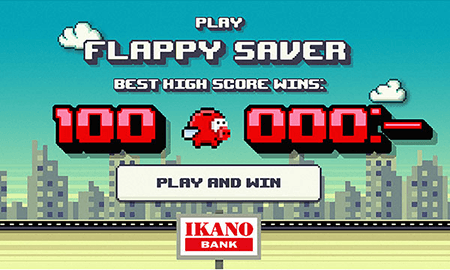
Ikano Bank's mini-game demonstrates a creative use of challenges to engage users by tapping into popular culture and creating a viral experience.
During the 21-day campaign, the game garnered over 1.5 million plays! Now that’s a lot of engagement, and it seems especially impressive when you learn that just under 10 million people live in Sweden.
Leaderboards: Qapital helps users save as a team
When US-based fintech app Qapital calls itself ‘the only challenger built on behavioral science’, they mean gamification. The psychology of leaderboards is simple and well established through research - leaderboards provide a picture of a person’s progress, as well as help users make social comparisons between their peers. This is particularly relevant as 17% of users considered switching primary banks in 2025 specifically for better digital and social features.
But while the use of leaderboards is famous in sectors like education or fitness, their use in fintech has to be smarter than simply rating people’s time investment/effort. For sure, Qapital is a great example of how to do it right. Through the app, users can create shared goals such as saving up for a holiday. Here is where gamification works its magic—while progress bars show how far the team is as a whole, a leaderboard ranks users by their individual contributions. This is a subtle and clever way of pushing users to improve their performance when they see others ahead of them. Indeed, leaderboards are found to ‘significantly increase user performance’.

Qapital's app showcases how leaderboards and shared goals can foster a sense of teamwork and competition, driving consistent user engagement with savings.
Their gamification strategy must be working—Qapital has scaled successfully as part of a trend where AI-driven personal finance tools are used to reduce churn. What’s more, the average age of a Qapital user is just 27, aligning perfectly with the cohort that increasingly demands "game-like" utility from their financial institutions.
Points system: BBVA makes financial education fun
Points systems are simple and they work wonders! In short, users will stack up points by completing tasks, which can be used to level up or redeemed for prizes. In our experience, this is the most effective way to drive adoption of complex features. With 93% of Gen Z already using P2P platforms and 91% using mobile wallets, the competition for "primary app" status is fierce; a points system incentivizes the specific behaviors that lead to a high-frequency habit.
One of the best examples of this in fintech is how the Spanish bank BBVA taught users financial literacy and made it fun! The bank launched BBVA Game, a web app with tutorials and explanations on how to do transactions online. This fits in with BBVA’s strategy of attracting Gen Z by helping them save, a key motivator since 40% of US youth would switch banks for better-tailored rewards.
In the app, users earn points by completing challenges and can redeem them for music downloads, movies, or smartphones. After only 6 months the game had over 100,000 users and its users showed an 18% higher satisfaction rate! On the whole, the results were extraordinary because they transformed a "chore" into a rewarding digital experience.

The results from BBVA's gamified financial education program clearly show a significant increase in user engagement and satisfaction across several key metrics.
Personalized notifications: How Moven makes users 50% more likely to save
Personalized notifications use customer data to target the right user with the right offer at the right time. For this reason, personalization is highly effective, and 77% of banking leaders report that it is the top driver for retention in 2026. While older generations remain wary of data use, only 28% of Gen Z are ‘very concerned' about data privacy, preferring a seamless, contextual experience over total anonymity.
Sara Koslinska, CEO of Limitless - "Generation Z doesn’t understand taboos and is completely open to sharing their experiences with finances"
That makes Gen Z a fantastic audience for personalized notifications. Moven is just one fintech taking this gamification example to their advantage. The entire app is built with a contextual experience in mind, meaning that the app actually changes to suit the user’s behavior. For example, Moven will send users personalized notifications reminding them to save money when they are most likely to do so. CEO Brett King notes that upon a repeat notification, users are 50% more likely to save money!
In addition, users are prompted to ‘lock away’ their savings at a time when their spending behavior allows them to do so. This satisfies the 60% of Gen Z who prioritize top-notch digital security and trust, as the app acts as a proactive financial guardian.
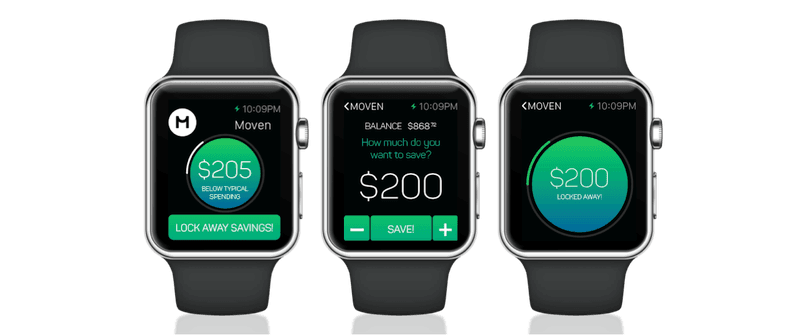
Moven’s Impulse Saving feature illustrates how personalized, timely notifications can gamify the act of saving money, turning a good intention into action.
Moven is one of the great gamification examples that shows you how to achieve user retention in Gen Z!
Want to improve your mobile app experience? Accelerate your growth with an action-packed gamification workshop tailored to your app goals!
Recap
When it comes to Gen Z fintech retention, the landscape in 2026 is defined by high expectations and low patience. TL;DR: Retaining Gen Z requires a shift from transactional utility to emotional engagement. With 81% of young users ready to abandon brands over poor digital experiences, fintechs must leverage gamification and hyper-personalization to build lasting habits. This generation treats their financial apps like social platforms—if it isn't interactive, it's invisible.
In this article, we analyzed the evolving behaviors of Gen Z—now aged roughly 14 to 30—and how their "digital-first" DNA is forcing a total overhaul of traditional banking. By applying Gen Z fintech retention strategies like game-inspired mechanics, apps can transform from simple tools into daily essentials.
Why young people are important for fintech apps (and how to retain them)
The economic influence of the youth is no longer a future projection; it is the current market reality. The global fintech market is projected to surge toward $1.1 trillion by 2032, driven almost entirely by digital natives. Mastering Gen Z fintech retention is the only way to capture this value, and here is why:
- Gen Z is the most active demographic in the digital economy, with 93% using P2P payment platforms and 91% utilizing mobile wallets.
- Retention is a high-stakes game: 81% of Gen Z will abandon a brand after a poor payment experience, and 65% will leave after just two or three negative interactions.
- Loyalty is volatile in 2026—roughly 17% of Gen Z customers considered switching their primary bank recently in search of better digital features and seamless UX.
- Trust is built through transparency and security; 60% of Gen Z prioritize top-tier security and digital trust as their primary reason for staying with a financial institution.
To bridge the gap between "download" and "daily use," fintechs are turning to behavioral science. According to the OECD, the integration of interactive elements is the most effective way to foster digital literacy and long-term engagement.
OECD - "Technology should be used to enhance digital and smart communication (such as gamification, personalisation or interactivity) to lead to higher consumer engagement and financial resilience."
Gamification examples that can crack user retention
Effective Gen Z fintech retention relies on meeting users where they already spend their time. These features are second nature to a generation where 65% of Gen Z spend more than three hours a day gaming. In our experience, when financial tasks mirror the feedback loops of video games, "boring" tasks like saving or budgeting become dopamine-driven achievements.
So, which gamification strategies are currently moving the needle for 2026 fintech leaders?
Challenges: Ikano Bank and the power of interactive goals
Challenges provide users with a sense of mastery. By breaking down complex financial goals into bite-sized "levels," apps can maintain Gen Z fintech retention long after the initial sign-up. Research indicates that clear challenges create a "flow state" that increases user productivity and motivation, turning the chore of banking into a rewarding journey.
A classic example of this is Ikano Bank, which utilized a "Flappy Bird" style mini-game to engage Swedish users. By tasking users with protecting a flying piggy bank from "costly" obstacles, they turned a savings campaign into a viral event. In 2026, modern fintechs are using gamification APIs to build similar habit-forming challenges that result in millions of plays and significantly lower churn rates.
Leaderboards: Qapital and the social side of finance
Gen Z fintech retention is often fueled by social validation. Qapital has mastered this by positioning itself as a "challenger built on behavioral science." Leaderboards allow users to visualize their progress and engage in healthy social comparisons, which research shows significantly increases intrinsic motivation and user performance.
In 2026, Qapital’s "Dream Team" features allow couples and friends to save toward shared goals. Seeing a peer’s progress on a leaderboard acts as a subtle nudge to improve one's own saving habits. This strategy has proven remarkably effective: Qapital has scaled to millions of users with an average age of just 27, significantly younger than traditional competitors like Revolut, proving that social gamification is the key to winning the youth market.
Points system: BBVA and the "Rewards over Loyalty" shift
In the current 2026 market, nearly 40% of US Gen Z users would switch banks for better rewards. A points system—where users earn "currency" for completing financial education or setting up autopayments—is a cornerstone of Gen Z fintech retention. As finance expert Bjorn Cumps notes, the goal is to incentivize the "desired behavior" through immediate, tangible feedback.
BBVA pioneered this by gamifying financial literacy. By completing tutorials on how to pay taxes or manage online transactions, users earned points redeemable for real-world prizes like smartphones or event tickets. This approach led to an 18% higher satisfaction rate. For Gen Z, who value personal growth and instant gratification, earning points for learning makes the app an indispensable life coach rather than just a digital wallet.
Personalized notifications: How data boosts retention by 77%
The secret weapon for Gen Z fintech retention in 2026 is hyper-personalization. While older generations may be wary of data usage, 77% of banking leaders report that personalization is the primary driver of customer retention today. Gen Z is the most willing to trade data for a tailored experience, provided there is a clear benefit.
Sara Koslinska, CEO of Limitless - "Generation Z doesn’t understand taboos and is completely open to sharing their experiences with finances in exchange for a better, more automated life."
Apps like Moven have proven that timing is everything. By sending a notification to save money at the exact moment a user is likely to have a surplus (or after a large purchase), users are 50% more likely to follow through. In 2026, AI-driven personal finance managers use these notifications to provide "just-in-time" coaching, ensuring the user feels supported and understood, which is the ultimate foundation for long-term retention.
In conclusion, Gen Z fintech retention is achieved by merging utility with entertainment. By helping users reach their goals through gamified experiences, you aren't just providing a service—you're providing value that feels like a win.
Want to improve your mobile app experience? Accelerate your growth with an action-packed gamification workshop tailored to your app goals!